


Twins Video
The late 1980s were when ranking Major League Baseball prospects was just beginning. Before that, I’m sure each team had opinions or unofficial rankings of their minor leaguers and other organizations’ potential top players. Still, the late 80s seem to be a time when publications started focusing on this category of baseball operations and development. Baseball America started ranking prospects in the mid-1980s and created its first Top 100 list in 1990. The Sporting News also came out with a Top 150 list in 1990. MLB.com got into the prospect ranking business later. MLB Pipeline, FanGraphs, ESPN, and others have gotten into ranking prospects. Devoted fans love looking ahead at what might be.
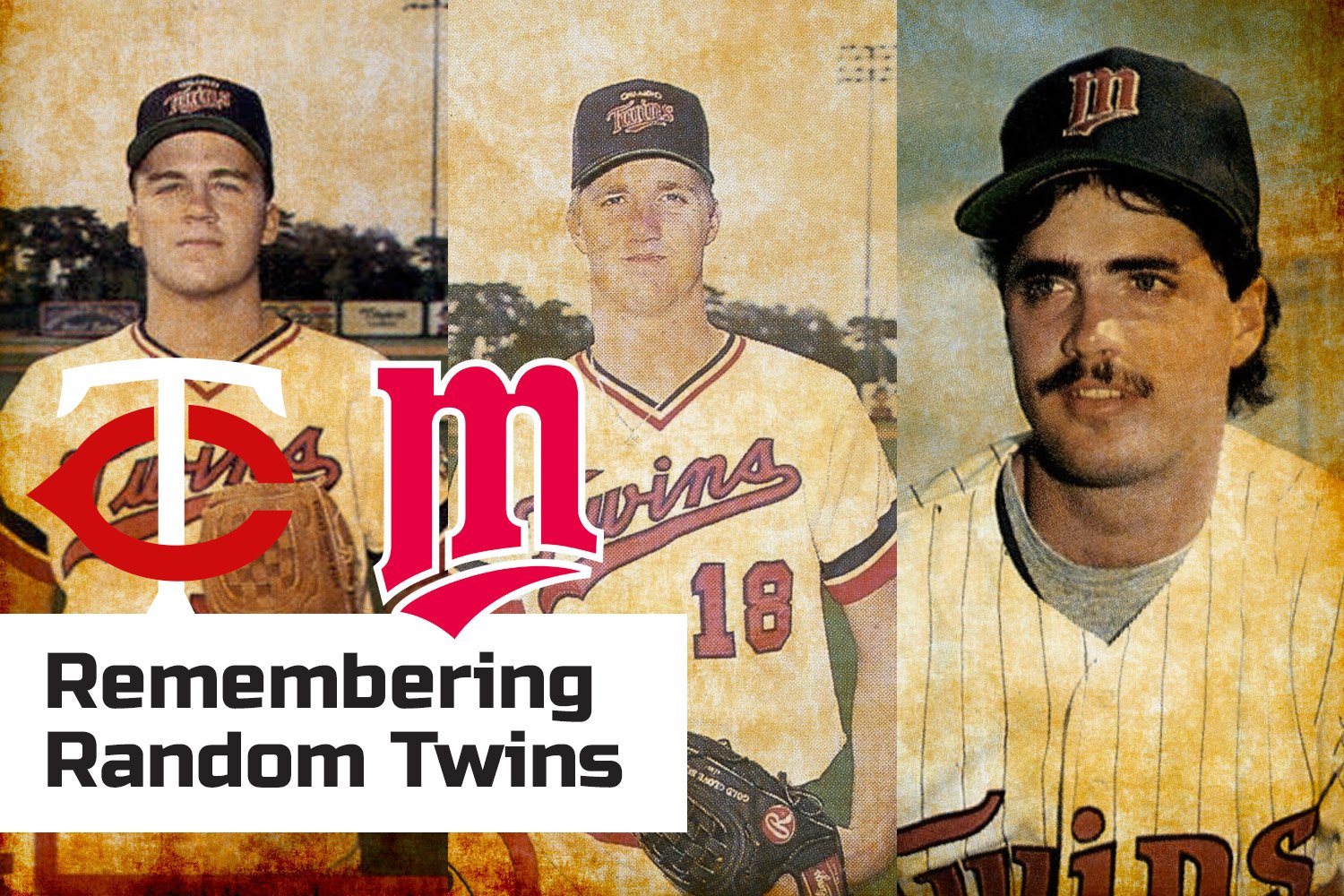
When I was young, my dad always listened to WCCO. I mean always. Anyway, one of the segments I tolerated was the Sunday morning Sports Huddle with Sid Hartman and Dave Mona. I maybe even loved it. I don’t even know if I was a fan of Sid, but if nothing else, he was interesting, and Dave would keep Sid in check. Sid was a homer, optimist, and advocate for the home teams. I distinctly remember the trio listed above as being hyped by Sid and other local media in the mid to late 80s. My dad and I were convinced these guys would carry the team to the promised land. Then the hype continued, and it almost became a joke after a year or two that Gasser, Bumgarner, and Pittman would lead the franchise to untold success. Woohoo! (My italics mean sarcasm).
And it wasn’t just Sid pumping these guys. I know other local sports writers and media talked about them. Even General Manager Andy MacPhail was convinced each would be something special.
On August 1, 1987, the Star Tribune reported that the first-place Twins were trying to acquire veteran pitching for the stretch drive, but other teams were asking for one of the trio of top pitching prospects – Gasser, Bumgarner, or Pittman. The Twins stopped discussions at that point – those guys were off-limits. MacPhail wanted to improve the club without depleting its farm system. In the August 9, 1987, Star Tribune, MacPhail said of Gasser, Bumgarner, and Pittman, “We aren’t going to give up any one of those three in any type of trade.” On August 15, 1987, also from the Star Tribune, MacPhail was quoted, “The prospects we have left in our system are the very, very high-premium types. We aren’t going to give up prospects like…Park Pittman, Jeff Bumgarner, and Steve Gasser. Those are the types of kids you can’t make available unless you get a major contributing type of player with many years left.”
The December 29, 1987, edition of the Star Tribune reported that Baseball America listed the Twins' top prospects in the following order: catcher Derek Parks, then pitchers Willie Banks, Steve Gasser, Jeff Bumgarner, and Park Pittman.
This is to say that plenty of local media, national publications, and even team officials viewed this trio of pitchers as something special. What happened? How did they pan out?
Steve Gasser
Steve Gasser was a second-round draft pick of the Twins in the 1985 MLB June Amateur Draft. He was drafted as an 18-year-old straight out of high school in New Philadelphia, Ohio. Gasser stood 6’3” and was a right-hander who threw with some speed. In the minor leagues, he produced a high strikeout per inning pitched but also had a high WHIP and a losing record each season. Nevertheless, he marched up the minor league ladder to Class AAA Portland in 1987. Once there, he suddenly lost control, walking 16.1 per nine innings. He began the 1988 season back in class AA, started one game, walked all six batters he faced, got no outs, and that was the end of his season. He was simply unable to throw strikes. After the 1988 season, Gasser was traded to the Mets in a package with two other pitchers for second baseman Wally Backman and a pitcher, Mike Santiago, who never threw a pitch in the Twins system. Gasser went from being untouchable to being a part of a package for players without much left to offer. Backman was the Twins' main second basemen in 1989 but had a pathetic .591 OPS and was allowed to leave as a free agent in the offseason without the Twins putting up much of a fight.
After being traded from the Twins, the big right-hander did not pitch in 1989. In 1990, Gasser appeared in 24 innings for Class A teams in the Mets and Braves systems. His combined ERA was 11.25, and his WHIP was 2.833. He was done.
Jeff Bumgarner
Jeff Bumgarner was drafted one round before Steve Gasser. Bumgarner was the Twins’ first-round draft pick in the 1985 MLB June Amateur Draft. Like Gasser, Bumgarner was drafted straight out of high school from Hanford High School in Richland, Washington. Bumgarner was even bigger at 6’6” and 210 pounds – a prototypical starting pitcher. This right-hander’s minor league statistics do not show much promise to me. His strikeout rate was low – only 5.5 per inning pitched. His walk rate was high at 4.8 per inning pitched. He also gave up a lot of hits at 9.5 per inning pitched. His ERA in the low minors was OK but ballooned at Class AA and AAA. He almost always had a losing record. He topped out at class AAA Portland with a 2.571 WHIP and a 7.71 ERA in 25.2 innings with the Twins organization. After the 1988 season, the former first-round pick and former untouchable was traded to the Mets in the same package as Gasser for Wally Backman.
After being traded from the Twins, Bumgarner pitched four more seasons in the minor leagues, always at the A or AA level. He never again reached class AAA, let alone Major League Baseball. After 1992, he was out of baseball.
Park Pittman
Park Pittman stuck around the longest. The six-foot right-hander was still around in 1989 Spring Training. On August 1, 1987, Star Tribune, Twins Hall of Famer, and former Farm Director Jim Rantz said of Pittman, “He can throw it 90 miles an hour or more. He will be a winner for us someday.”
The Twins drafted Pittman in the fourth round of the 1986 MLB June Amateur Draft. Unlike his cohorts above, Pittman was drafted from college – Ohio State University. He was immediately assigned to the rookie ball at Elizabethton. He showed a crazy high strikeout rate of 13.3 per 9 innings pitched. In hindsight, his walk rate of 4.7 per nine innings was high. But he finished the season with a 2.45 ERA. The following season, 1987, was at class A Visalia. His strikeout rate decreased to 11.0, and his walk rate increased to 7.7, which was not a good sign. This trend continued as he moved up the minor league hierarchy. By AAA Portland in 1990, he struck out only 7.0 per nine innings and walked 10.8. He threw only 28.1 innings in 1990, and that was it for his baseball career.
So, there you go. These three guys have been stuck in my head since the mid-1980s. They were supposed to be phenomenal and lead the next generation of Twins’ pitchers to untold success. But all three failed miserably. They never even made the Major Leagues with the Twins or elsewhere – never pitched an inning. Looking back at the minor league statistics, I struggle even to see the hype. Each had a high WHIP, mostly high ERA, and poor record. They each must have had a big fastball with some sort of secondary pitches. But I don’t know; results should take precedence over hype. After researching their stats, none of them seemed particularly good.
There’s been a lot of top prospects who turned into colossal failures. And there’s been plenty of under-the-radar prospects who turned into quality players. Prospecting is an inexact science.
What do you all think? Who are some others who didn’t live up to the hype?
Do you approve of Twins ownership?

Are you interested in Twins history? Then check out the Minnesota Twins Players Project, a community-driven project to discover and collect great information on every player to wear a Twins uniform!
View The Players ProjectFollow Twins Daily For Minnesota Twins News & Analysis



- nclahammer and Karbo
-
 2
2


Recommended Comments
Create an account or sign in to comment
You need to be a member in order to leave a comment
Create an account
Sign up for a new account in our community. It's easy!
Register a new accountSign in
Already have an account? Sign in here.
Sign In Now