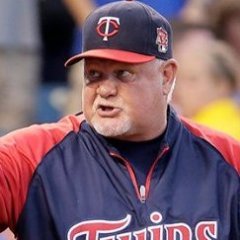
The revolving door in the Minnesota Twins bullpen kept spinning on Tuesday. Minnesota optioned right-hander Woo-Suk Go to Triple-A St. Paul and recalled Jack Anderson, the organization's newest bullpen addition. It's another move that highlights the reality of the Twins' season: they're still searching for anyone capable of providing consistent innings out of one of baseball's least reliable bullpens.
Go's latest opportunity came to an abrupt end after Monday's outing, when he surrendered three runs on four hits while recording just three outs. It was another reminder that, despite the intriguing upside that made him worth acquiring, the results simply weren't there.
When Minnesota initially acquired Go, the club was required to place him on the active roster because of a clause in his contract. That requirement never meant the Twins had to keep him in the majors indefinitely, and after four appearances, they decided it was time for him to continue working at Triple-A.
The numbers made that decision relatively straightforward. Over four innings with Minnesota, Go allowed four earned runs on eight hits while posting a 5-to-2 strikeout-to-walk ratio. The strike-throwing wasn't necessarily the issue. Instead, opposing hitters consistently squared him up.
A 53.5% hard-hit rate paired with a 94.9 mph average exit velocity tells the story. Big league hitters were making loud contact and that's a difficult formula for any reliever to survive, especially one trying to establish himself with a new organization.
The Twins clearly still believe there's something to work with. Otherwise, they wouldn't have targeted him in the first place. But for now, Triple-A offers a better environment to make adjustments without the pressure of protecting late leads in the American League playoff race.
His departure opens the door for another fresh arm. Minnesota claimed Anderson from the Boston Red Sox organization just over a week ago, and Tuesday marks his first opportunity with his new club.
The 27-year-old already checked one milestone off his list this season by making his major league debut with Boston. He also represented Great Britain during the World Baseball Classic, where he threw three innings, allowing one earned run while striking out three.
In limited major league action with the Red Sox, Anderson logged eight innings across three appearances, allowing three runs on eight hits with six strikeouts and only two walks. It's a small sample, but one that showed enough promise for Minnesota to take a chance. His Triple-A numbers were more modest, posting a 4.57 ERA while striking out 20.0% of opposing hitters and walking 8.1%.
Anderson isn't going to overpower hitters. His fastball sits just above 90 mph, but his arsenal relies more heavily on movement than velocity. He leans on an 81.4 mph sinker and an 80.9 mph slider, giving hitters a different look than many of the power arms found throughout today's game.
Whether that profile translates consistently at the major league level remains to be seen. For the Twins, though, this isn't about finding the next All-Star closer. It's about finding competent innings.
The bullpen has been one of the organization's biggest weaknesses throughout the season, forcing the front office to cycle through waiver claims, internal promotions, and role changes in hopes of uncovering a reliable contributor. Anderson becomes the latest pitcher to receive that opportunity.
Sometimes those moves produce unexpected success stories. Other times, they're simply placeholders until someone else earns the next chance. Minnesota hopes Anderson falls into the first category.
For now, the latest bullpen shuffle reflects where the organization is today: rebuilding relief depth one roster move at a time.
The Minnesota Twins will once again get a chance to showcase the future of their organization later this month.
Major League Baseball’s third annual Spring Breakout event will take place from March 19 through March 22, highlighting the game’s top prospects in exhibition matchups during spring training. Minnesota will host the Philadelphia Phillies prospects on Thursday, March 19, at 12:05 p.m. CT. Fans will have several ways to watch the game. It will air on MLB Network and MNNT, and stream for free on MLB.TV, MLB.com, and the MLB app.
For the Twins, this year’s game should feature several players who could eventually factor into the team’s long-term plans.
The Twins were hoping to showcase outfielder Walker Jenkins, the club’s top-ranked prospect. However, his status for the event remains uncertain after he recently suffered a left hamstring injury. He is still included in the initial player pool listed below.
Because pitchers must remain on their scheduled throwing days during spring training, it can be difficult to predict exactly who will appear in the game. Even so, Minnesota has no shortage of candidates who could take the mound during the showcase.
How the roster works
According to MLB.com, Spring Breakout rosters are created using MLB Pipeline’s Top 30 prospects for each organization as a foundation. Players who still maintain rookie eligibility for the 2026 season are eligible to be selected for the event.
This year, the process includes two phases. Teams first submit a preliminary 40-player pool, then trim it down to a final roster of roughly 23 to 27 players shortly before the event.
The larger pool allows teams to adjust for injuries, pitching schedules, and the player movement that can occur during spring training. It also accounts for prospects who may be unavailable because of assignments in the Dominican Summer League or other roster considerations.
Minnesota’s preliminary group features a strong mix of highly ranked prospects and additional depth players. Even if a few names are unavailable by the time the final roster is set, the Twins should still field a group worth watching when they face the Phillies' prospects.
The Minnesota Twins have made it clear they are trying to modernize the viewing experience. Since shifting to Twins.TV last season, the organization has experimented with new camera angles, broadcast enhancements, and presentation tweaks designed to keep fans engaged in a rapidly changing media landscape. On Monday night, they added another new element.
Facing the Detroit Tigers, the Twins rolled out a player introduction straight out of the Monday Night Football playbook. Instead of the usual lineup graphic, each starter appeared on screen, introducing themselves and shouting out their college or high school. It was polished, energetic, and honestly, pretty cool.
The concept worked. The execution, for the most part, worked too. What did not work was everything happening behind it.
As each player delivered their introduction, the broadcast occasionally cut to wider shots of Target Field. That is where things took a turn. The backdrop for this primetime style rollout was a sea of empty seats, a visual contradiction that social media was quick to notice. No one was really taking aim at the idea itself. The production value was solid, and the players seemed to enjoy it. But pairing a bold declaration that Monday Night Baseball could rival Monday Night Football with a visibly sparse crowd felt like a miss.
There are, of course, explanations. The weather did not cooperate, with temperatures dipping and wind chills settling into the 20s. It was also a crowded sports night, with the NCAA men’s basketball national championship drawing attention elsewhere. Those factors matter, and they are real.
But they are not the whole story. The Twins drew just 1,768,728 fans in 2025, the lowest total the franchise has seen in a quarter century and the smallest in the history of Target Field. Early returns this season have not suggested a meaningful rebound. Through the first handful of home games, the team is averaging 19,381 in announced attendance, a number based on tickets sold rather than scanned. On Monday, the official figure was 12,569. Anyone watching could tell the actual turnout was lighter than that.
There is a growing disconnect between the product on the field, the presentation on the screen, and the relationship with the fan base. Some of the most loyal supporters have become increasingly vocal about ownership, and in some cases, have chosen to stay home.
That is what made Monday night feel so strange. The Twins delivered something fresh and entertaining, a glimpse at how baseball broadcasts can evolve and feel more personal. It should have been a moment that added energy to the ballpark and the viewing experience alike.
Instead, it became a reminder that presentation can only do so much. You can dress up the broadcast, add personality, and borrow from the biggest stages in sports. But when the camera pulls back, the reality in the stands still matters.
The idea was fun. The players bought in. The broadcast team executed it well. Now the challenge is making sure the atmosphere matches the moment next time they try it.
Minnesota's roster makeover continued Saturday. Less than 24 hours after adding another starting pitcher before the trade deadline, the Twins announced another round of transactions ahead of their matchup with the Seattle Mariners. The headline move was expected: newly acquired left-handed reliever A.J. Minter was officially activated.
To make room on the 26-man roster, the Twins optioned right-hander Zebby Matthews to Triple-A St. Paul. The move isn't necessarily an indictment of Matthews' performance on Friday night. He gave Minnesota five innings, allowed three earned runs, and struck out an impressive 10 hitters against Seattle. However, his overall July results painted a different picture. Across 24 2/3 innings, Matthews posted a 7.66 ERA and 5.69 FIP while recording 23 strikeouts against 14 walks.
With Dean Kremer acquired to bolster the rotation, Matthews became the logical candidate to head back to Triple-A. The timing gives the Twins a fresh bullpen arm in Minter while creating what appears to be a clear opening for Kremer to slide into the starting rotation.
Minnesota also made a change to its 40-man roster, designating right-hander Cody Laweryson for assignment. Laweryson appeared in 15 games for the Twins this season, logging 16 2/3 innings with a 4.86 ERA and 5.08 FIP while striking out 18 and walking eight. Although he flashed intriguing stuff at times, injuries have impacted him this season. A right forearm strain sidelined Laweryson for much of April and May, and after he was optioned to Triple-A in early July, Laweryson has been on the St. Paul injured list since July 19.
His departure immediately created room for another pitcher. Right-hander Garrett Acton was reinstated from the 60-day injured list and optioned to Triple-A St. Paul. Minnesota acquired Acton from the Miami Marlins this spring in exchange for Logan Whitaker, but he has been limited to four appearances after suffering a right shoulder strain that landed him on the injured list at the end of April.
Acton's rehab assignment offered plenty of encouragement. In six innings for St. Paul, he surrendered just one earned run while striking out eight and walking only one. Opponents managed just a .053 batting average against him during that stretch. If the shoulder continues to respond well, Acton could quickly emerge as another bullpen option for a Twins club that has spent the past week aggressively reshaping its pitching staff.
With Minter now in the bullpen, Kremer expected to join the rotation, and additional depth returning from injury, Minnesota's pitching staff looks noticeably different than it did just a few days ago, and the Twins might not be done adding before Monday’s deadline.
Major League Baseball released its annual snapshot of Opening Day demographics this week, and while the numbers still point to a long road ahead, there are signs of meaningful progress. After dipping to a historic low in 2024, the percentage of African American players across the league has now risen in consecutive seasons, something the sport has not seen in roughly two decades.
This year, African American players make up 6.5% of Opening Day rosters and injured lists, a noticeable increase from 5.7% the year prior and slightly above the 6.0% mark from two seasons ago. It is not a dramatic jump, but it is a step in the right direction for a league that has been searching for ways to rebuild its connection with Black communities.
Development Programs Beginning to Show Results
League officials have pointed to their investment in youth initiatives as a key factor behind the recent uptick. Programs such as MLB’s youth academies, the Dream Series, and the Breakthrough Series are starting to produce big-league talent. Of the 62 African American players on Opening Day rosters, 20 have participated in one of those pipelines.
There is also a growing presence of high-end talent within that group. Nine of those players were former first-round picks, suggesting that the league is not only increasing participation but also developing impact players.
The age distribution offers additional optimism. More than half of the current group is 27 or younger, while only a small handful are on the back side of their careers. That youth movement could help sustain growth if development systems continue to feed the pipeline.
Twins Among League Leaders
While the league-wide numbers are trending upward, the distribution across teams remains uneven. Six organizations began the season without a single African American player, highlighting how inconsistent representation still is from roster to roster.
That is where the Minnesota Twins stand out. Minnesota enters the season with six African American players, tying them for the highest total in baseball alongside the Cincinnati Reds. For a smaller-market club, that level of representation is significant, especially when considering that the Twins alone account for a sizable portion of the league’s overall total.
The group is not just filling out the roster either. It includes key contributors on both sides of the ball, including starting pitchers Taj Bradley and Simeon Woods Richardson, along with Byron Buxton and Josh Bell on the offensive side. Having that presence in prominent roles matters, both in terms of visibility and impact.
At a time when more than a third of the league has one or zero African American players, the Twins are providing a blueprint for what a more inclusive roster can look like.
Areas Where the Game Still Lags
Despite the positive momentum, representation remains limited in some areas. Certain positions continue to lack diversity, particularly behind the plate and on the mound.
There are only a small number of African American pitchers across the league, a striking reality given the size of pitching staffs. Catcher is another position where representation has been historically low, making each breakthrough at that spot even more meaningful.
Additionally, more than a third of MLB teams have one or fewer African American players, including several high-profile organizations. That imbalance underscores the importance of continued investment in grassroots development and access to the sport.
A Path Forward
The broader picture shows a sport attempting to reverse a decades-long decline. International participation continues to grow, and MLB remains a global game, but rebuilding domestic diversity is clearly a priority.
For the Twins, this moment reflects both organizational success and an opportunity. Their roster composition places them among the league leaders in representation, aligning with MLB’s broader efforts to create more inclusive pathways to the majors.
Progress is happening, even if it is gradual. And for a franchise like Minnesota, being at the forefront of that movement is something worth recognizing as the game continues to evolve.
The Twins made a low-risk addition to their bullpen depth on Sunday, acquiring right-handed reliever Woo-Suk Go from the Detroit Tigers in exchange for cash considerations. While the move won't generate significant excitement, it gives Minnesota another intriguing arm to evaluate as the club continues to fight for an American League Wild Card spot.
Because Go had an assignment clause in his contract, the Twins must add him to the 40-man roster. Fortunately, Minnesota already had an open 40-man roster spot, so no corresponding move was necessary.
Go signed a minor league contract with Detroit last December after spending the 2024 season in the Miami Marlins organization. The Tigers never promoted him to the major league roster, despite an impressive first half with Triple-A Toledo.
Across 27 2/3 innings this season, Go posted a 2.60 ERA while striking out 29.1% of opposing hitters. He also has yet to surrender a home run. Some of those numbers have been helped by a favorable .239 batting average on balls in play, but the underlying traits remain appealing. His ability to miss bats and keep the ball on the ground gives the Twins another bullpen option with upside. That profile is especially valuable considering Minnesota's struggles to find consistency in relief.
Outside of Yoendrys Gómez and Andrew Morris, few Twins relievers have provided dependable production throughout the first half. Morris owns an above-average 17.1 K-BB% rate and a 3.04 xERA over 40 innings. Gómez has taken on the closer role and has posted a 234 ERA+ with a 15.6 K-BB%.
As a unit, Minnesota's bullpen has posted a 5.28 ERA with a 19.9% strikeout rate, an 11.5% walk rate, and a 39.7% ground-ball rate. All four marks rank among the bottom ten bullpens in Major League Baseball. Only five teams have a lower fWAR total, and their -1.2 WPA ranks 23rd overall.
Adding Go doesn't solve those issues overnight, but it represents another attempt by the front office to uncover value without sacrificing future assets. The 26-year-old arrives with an impressive résumé from Korea. Before coming to Major League Baseball, Go was one of the KBO League's top closers, relying on a lively fastball and swing-and-miss slider to pile up saves. His transition to affiliated baseball has been uneven, particularly with his command, but his strikeout ability has continued to show up whenever he's been healthy.
Minnesota is betting that those traits can translate against major league hitters. The timing also makes sense. The Twins improved to 44-47 with Sunday's victory over the Yankees and remain only two games behind an American League Wild Card spot. With the trade deadline still several weeks away, the front office isn't locked into either buying or selling. Moves like this allow the organization to add potential contributors while maintaining payroll flexibility and preserving its prospect depth.
According to reports, Go is expected to join the Twins on Tuesday and should have an opportunity to make his major league debut shortly thereafter. How long he remains in Minnesota may ultimately depend on both his performance and the club's direction over the next few weeks.
If the Twins stay in the postseason race, Go will have to earn every appearance in a competitive bullpen. If Minnesota slips further behind before the trade deadline, he could receive a longer opportunity to prove he belongs as the organization evaluates arms for both the remainder of 2026 and beyond.
The Minnesota Twins are adding another experienced arm to the organization, agreeing to a minor league deal with veteran right-hander Luis García. The 39-year-old reliever is expected to report to Triple-A St. Paul, giving the Twins a no-risk opportunity to evaluate whether he still has something left in the tank.
García opened the season with the New York Mets after signing a one-year deal worth $1.75 million over the winter. That partnership didn’t last long. After just six appearances, the Mets decided to move on, cutting ties following a brief stretch where García struggled to find consistency. In 6 1/3 innings, he allowed five earned runs on 11 hits while walking two and striking out four.
It’s an ugly line on the surface, but it also represents a very small sample size. For a pitcher with García’s track record, six outings are hardly enough to draw a definitive conclusion. Still, the Mets saw enough to pivot quickly, eating the remainder of his salary rather than attempting to stash him in the minors.
That decision opens the door for Minnesota. Even at 39, García isn’t far removed from being a useful bullpen piece. Just last season, he logged over 50 innings across multiple teams while posting a 3.42 ERA. He leaned on a heavy sinker that generated ground balls at an impressive clip, helping him work around less-than-elite strikeout and walk numbers. It wasn’t dominant, but it was effective, and that’s exactly the type of profile the Twins have targeted in the past when building bullpen depth.
The concern now is whether that version of García still exists. Early returns this season showed a noticeable dip in velocity. His sinker, which sat in the upper 90s a year ago, has backed off by a couple of miles per hour. His secondary pitches have followed a similar trend. For a pitcher who relies on movement and weak contact, even a slight drop in stuff can make a meaningful difference.
That’s where this signing becomes interesting. Minnesota doesn’t need García to be a high-leverage weapon. They don’t even need him in the majors right away. What they do need is depth, especially with the unpredictable nature of modern bullpens. By bringing him in on a minor league deal, the Twins can give him time to work in St. Paul, evaluate his stuff in a lower-stakes environment, and determine if any adjustments can help him regain effectiveness.
There’s also a financial advantage built into the move. Because the Mets released him, they remain responsible for the bulk of his salary. If García works his way onto Minnesota’s roster, the Twins would only owe him the prorated league minimum. For a team always mindful of payroll flexibility, that’s about as low-risk as it gets.
If it clicks, the Twins could uncover a steady veteran capable of soaking up innings and generating ground balls in the middle innings. If it doesn’t, they can move on without consequence.
Moves like this rarely grab headlines, but they often matter over the course of a long season. Bullpen attrition is inevitable, and organizations that can cycle through experienced options tend to weather that storm better than most.
For now, García is simply the latest name added to that mix. Whether he becomes anything more will depend on what he shows in St. Paul and whether the Twins can help him turn back the clock, even just a little.
The Minnesota Twins have spent the past three seasons watching one of the most talented prospects in baseball climb through their farm system. Now, after a brief injury scare this spring, Walker Jenkins appears to be getting back on track.
According to Matthew Leach of MLB.com, Jenkins is “tracking well” to be available for Opening Day with the St. Paul Saints. The update came Sunday from Twins general manager Jeremy Zoll, offering a positive outlook for the organization’s most important young player.
Jenkins suffered a Grade 1 left hamstring strain on February 28, an injury that forced the Twins to slow his spring workload. Fortunately for both the player and the organization, the strain was considered mild, and his recovery has gone smoothly.
The 21-year-old outfielder is expected to begin appearing in Minor League games by the end of the upcoming week as he continues ramping up his activity. His availability for the Twins’ upcoming Spring Breakout showcase on Thursday remains uncertain, and the club is unlikely to rush him into that event if he is not fully ready.
Even without the Spring Breakout appearance, the most important goal for Jenkins is simply returning to a regular schedule before the Minor League season begins. Jenkins is widely considered the top prospect in the Twins system and one of the best prospects in baseball. Baseball America ranks him as the no. 9 overall prospect, a reflection of the tools that made him the fifth overall pick in the 2023 MLB Draft. Last week, Twins Daily profiled him as the organization’s top prospect.
Since entering professional baseball, Jenkins has done little to challenge those expectations. Scouts praise his advanced hitting approach, elite bat-to-ball skills, and the type of plate discipline rarely seen from a player his age. His combination of athleticism and offensive potential has led many evaluators to project him as a future cornerstone in the middle of the Twins' lineup.
The Twins believe the best path forward is allowing Jenkins to start the season with St. Paul, where he can continue facing upper-level pitching while adjusting to the grind of a full professional season. Triple-A will provide the final developmental stage before a potential big league opportunity.
That timeline also gives the organization flexibility. If Jenkins performs well and stays healthy, the Twins could view him as a legitimate option for the major league roster during the second half of the season. For now, the most important step is simply getting back on the field.
A return to Minor League games in the coming days would represent another step in Jenkins’ steady climb through the system. If everything continues trending in the right direction, the Twins may soon have one of baseball’s brightest young talents knocking on the door of the big leagues.
Looking for any solution in the bullpen, the Minnesota Twins have made another addition.
The Twins on Wednesday acquired right-handed reliever Yoendrys Gomez from the Tampa Bay Rays for cash considerations. Right-handed reliever Christian Roa, who was at Triple-A St. Paul, was designated for assignment to make room for Gomez on the 40-man roster. Another move will have to be made in the next day or two to add Gomez to the 26-man roster.
Gomez had been DFA'd by the Rays after making nine appearances and posting a 6.23 ERA in 17⅓ innings, walking 10 and striking out 13. He allowed runs in seven of his outings, ironically not in his last game a week ago Wednesday when he went two scoreless innings against the Cleveland Guardians.
Roa had been claimed off waivers April 23 by the Twins following being DFA'd by the Houston Astros. In three appearances at St. Paul, he allowed two runs on two hits and two walks with three strikeouts in 2⅓ innings. That came after seven games with the Astros in which he allowed five runs in 8⅔ innings with seven walks and six strikeouts.
On Tuesday, the Minnesota Twins sent catcher Jhonny Pereda to the Seattle Mariners for cash considerations. Pereda was designated for assignment on Friday as the club managed a crowded catching situation from several offseason moves.
Pereda joined the Twins as experienced depth and did exactly what the organization asked of him when injuries and roster needs created an opening last season. The Venezuelan-born catcher appeared in 28 games with Minnesota and the Athletics in 2025, slashing .246/.325/.333 (.658 ) with an 84 OPS+. Across his major league career, he has appeared in 48 games, compiling a .241 average in 118 plate appearances.
While the offensive production at the major league level has been modest, Pereda has long been valued internally for his defensive reliability and work with pitching staffs. He owns a strong arm and a solid overall defensive reputation, traits that have helped him carve out a lengthy professional career. In the upper minors, he has been a consistently productive hitter, slashing .296/.392/.419 (.811) across nearly 1000 Triple-A plate appearances.
The reality for the Twins is that the catching picture changed significantly this winter. The signing of Victor Caratini to a two-year deal gave the club a veteran complement to Ryan Jeffers. New manager Derek Shelton expects Jeffers to handle close to 100 games behind the plate this season. Caratini provides flexibility with the ability to contribute at first base or designated hitter,
Earlier this winter, the Twins traded for Alex Jackson, another catcher, from the Orioles in exchange for minor league infielder Payton Eeles. Jackson doesn’t have any minor league options, so it might be a situation where the Twins carry three catchers. However, it's hard to imagine any team surrendering a valuable bench spot to a catcher who would be used sparingly.
With Pereda, the numbers simply did not work on the 40-man roster. Moving him now allows another organization to benefit from his depth and experience while giving the Twins additional roster clarity heading toward spring training.
Pereda’s career reflects perseverance. Signed internationally by the Cubs in 2013, he spent over a decade in the minors, passing through several organizations before reaching the majors in 2024. His journey has earned respect and trust in the clubhouse.
As camp nears, the Twins will keep evaluating roster fit, especially behind the plate. Moving Pereda reflects a logjam from offseason additions, not his ability. More adjustments may come as Minnesota fine-tunes the roster for Opening Day.
The Minnesota Twins have traded right-handed pitcher Simeon Woods Richardson to the Toronto Blue Jays in exchange for cash considerations.
The move comes just days after the Twins designated Woods Richardson for assignment following his emergency start on Saturday. In that outing, the right-hander allowed five runs in 2 2/3 innings, raising his season ERA to 7.74.
Once Woods Richardson was designated for assignment, the Twins had the opportunity to trade him before placing him on outright waivers. Teams interested in acquiring him could jump the waiver line by working out a trade, and the Blue Jays were seemingly the only club willing to do so. As a result, Minnesota's return was limited to cash considerations.
The trade marks a return to the organization where Woods Richardson first emerged a top pitching prospect. He was acquired by the Twins alongside Austin Martin from Toronto at the 2021 trade deadline in exchange for José Berríos.
Over parts of five seasons with Minnesota, Woods Richardson logged 302 1/3 innings at the major-league level, posting a 4.76 ERA while making 62 appearances.
What do you think of the move? Did the Twins make the right decision by moving on from Woods Richardson, or would you have preferred they hold onto him for additional depth?
As spring training enters its final stretch, roster decisions accelerate. For the Minnesota Twins, Monday brought further clarity as the club trimmed nine players from big-league camp.
The group included several names with at least some path to the Opening Day roster, as well as a few prospects whose strong springs made the timing a little surprising. With less than three weeks until the regular season begins, the Twins are now narrowing their focus to the players who will make the final push.
Among the pitchers sent out of camp, Connor Prielipp and Marco Raya were probably the closest to legitimate Opening Day roster consideration. Both pitchers have already reached Triple-A and could have potentially filled bullpen roles if the Twins wanted to bring a young arm north.
Prielipp, however, is still being stretched out as a starter and did not do enough this spring to earn more time in camp. Across three Grapefruit League appearances, he pitched 5 1/3 innings, allowing four runs on six hits, including two home runs. He also finished with six strikeouts and six walks. The raw stuff is still intriguing, but the command will need to sharpen as he continues building innings.
Raya’s outing this spring was even more difficult. Last season was already a challenging one as he posted a 6.02 ERA across 98 2/3 innings at Triple A. Now transitioning into a relief role, Raya allowed five runs in just 2 1/3 innings this spring while issuing five walks and striking out only two.
Both pitchers still appear likely to factor into the major league picture at some point during the season. For now, though, they will head back to the minor leagues to continue refining their roles and consistency before Minnesota calls again.
The same can be said for Andrew Morris and John Klein. Morris struggled during Grapefruit League action, giving up four runs on seven hits across 6 2/3 innings. He currently sits as the seventh or eighth starter on the organizational depth chart, so he will be in Minnesota at some point this year. Klein appeared in only a single game during camp, limiting his evaluation. However, the Twins added him to the 40-man roster this winter, making him a call-up candidate when the need arises.
The most surprising move from Monday’s cuts was the demotion of top outfield prospect Emmanuel Rodriguez. There was never a strong expectation that Rodriguez would break camp with the Twins, but the timing still stands out considering how well he performed during exhibition play. In 11 Grapefruit League games, Rodriguez slashed an impressive .421/.476/.789 (1.265). He collected a double and two home runs while drawing two walks and striking out nine times.
Rodriguez already has experience at Triple-A after posting an .853 OPS in 52 games there last season. Capable of playing center field, he continues to look like one of the organization’s most dynamic offensive talents. The next step in his development remains familiar. Rodriguez does an excellent job commanding the strike zone and has often produced walk rates north of 20 percent. The issue is that the strikeouts remain high as well, with the outfielder still striking out close to one-third of the time. If he can trim that rate while staying healthy, the Twins may not be able to keep him in St. Paul for very long.
Another hitter sent out at the same time was Gabriel Gonzalez, who also enjoyed an impressive spring. Gonzalez homered on Monday and finished camp 9-for-18 (.500 BA) with three doubles and a home run. If he can carry that momentum into the regular season, he could quickly put himself into the conversation for a corner outfield role. Hendry Mendez remains a bit further from the big league picture, while catcher Patrick Winkel profiles primarily as organizational depth behind the plate.
Kendry Rojas, however, is a name that could become important again this season. The left-hander is expected to serve as part of the starting pitching depth at Triple-A, a role the Twins leaned on heavily a year ago. Rojas was part of the reason Minnesota felt comfortable moving Louie Varland at last year’s trade deadline. A fringe Top 100 prospect at the time, the young left-hander flashed impressive velocity and the type of strikeout ability that caught the organization’s attention.
This spring, Rojas allowed seven runs on seven hits in Grapefruit League action, but the underlying numbers were encouraging. He recorded seven strikeouts compared to just one walk, continuing to show the swing-and-miss ability that has long made him intriguing. A strong start at Triple-A St. Paul could quickly put him back on the radar as a promotion candidate.
For the Twins, these latest cuts help finalize the Opening Day roster and strengthen organizational depth. Players sent down Monday are still key for 2026, and could return if there are injuries or new opportunities, making them important to follow in the coming months.
The Minnesota Twins made another round of spring roster cuts, optioning both Ryan Kreidler and Eric Wagaman to Triple-A as Opening Day draws closer. While neither move comes as a complete surprise, the decisions help clarify how the bench picture is forming under new manager Derek Shelton.
Kreidler’s path to the roster always felt like a narrow one. Claimed off waivers from the Pittsburgh organization in October, he brought some familiarity for Shelton, who previously spent time with the Pirates. That connection made him an intriguing under-the-radar candidate to win a backup middle infield role, especially given his defensive versatility.
Ultimately, the bat did not provide enough support for the glove. Kreidler appeared in 17 spring games and went 6-for-39, good for a .154 average, with one home run and an 11-to-3 strikeout-to-walk ratio. The broader offensive track record paints a similar picture. Across 89 career big-league games, he owns a .383 OPS, which translates to an 11 OPS+. That level of production makes it difficult to justify a roster spot unless the defensive value is elite, and even then, there are limits to how much a team can carry offensively.
Wagaman’s case is a bit different, but the result is the same. Acquired in early January in a trade that sent left-handed reliever Kade Bragg to Miami, Wagaman brought a more balanced offensive profile. He logged 140 games for the Marlins last season and hit .250/.296/.378 (.674). His 28 doubles and nine home runs helped him post an 86 OPS+, suggesting he can at least provide some pop off the bench.
This spring, Wagaman showed flashes of that ability, going 10-for-39 with one home run and a 13-to-5 strikeout-to-walk ratio in 18 games. Still, without the same defensive upside as Kreidler, he needed to clearly separate himself offensively. That did not quite happen, leaving him on the outside looking in as the Twins finalized their bench mix.
All signs now point to Orlando Arcia securing a spot on the Opening Day roster. The veteran infielder and former All-Star brings a longer track record and the ability to handle shortstop behind Brooks Lee. Even with a difficult 2025 season that saw him post a 42 OPS+ and -1.2 rWAR across 76 games between Atlanta and Colorado, Minnesota appears willing to bet on experience and defensive reliability in a reserve role.
There is still time for things to shift at the margins, but this decision signals a clear preference from the Twins coaching staff. They are prioritizing stability up the middle while keeping additional depth in Triple-A should injuries or performance issues arise.
In the end, both Kreidler and Wagaman remain part of the organizational picture. Each offers a different skill set that could become useful over the course of a long season. For now, though, the message is simple. The Twins are narrowing their focus, and the Opening Day roster is beginning to come into view.
With the calendar turning toward the final week of spring training, the Minnesota Twins continue to narrow down their roster. On Tuesday, the club reassigned three more non-roster position players to minor league camp, signaling that decisions are becoming more real with each passing day.
Outfielders Kala’i Rosario and Kyler Fedko, along with infielder Tanner Schobel, were the latest cuts. Rosario and Fedko were among a group of Twins prospects announced for the team’s Spring Breakout game on Thursday. The moves come just ahead of an off day on Wednesday, March 18, and leave the Twins with 21 position players remaining in big league camp. That group still includes a handful of non-roster invitees, but the competition is clearly tightening.
Rosario may have made the strongest impression of the trio this spring. The 23-year-old went 5-for-15 in Grapefruit League action, showing some pop with a home run and driving in four. He also drew three walks, though the seven strikeouts highlight the continued development needed in his offensive approach. A fifth-round pick in 2020, Rosario finished last season at Double-A and remains an intriguing power bat in the system.
Fedko, 26, brings versatility with experience at both first base and the outfield, but his spring numbers did not jump off the page. He collected three hits in 23 at-bats while striking out eight times. After splitting last season between Double- and Triple-A, he looks ticketed to provide organizational depth at the upper levels.
Schobel, a 2022 second-round pick, also flashed some ability despite limited opportunities. The 24-year-old recorded two hits in 15 at-bats, including a home run, while working three walks. He reached Triple-A last season, and the Twins have continued to challenge him with aggressive assignments since drafting him.
At this stage of camp, these moves are less about performance and more about roster realities. The Twins need to allocate at-bats and innings to players still competing for Opening Day roles, and that often means sending promising but not quite ready contributors back to the minor league side.
None of Rosario, Fedko, or Schobel was expected to break camp with the major league club, but all three remain firmly in the picture for 2026. Each should factor into Triple-A depth at St Paul, positioning themselves as potential call-up options when injuries or roster needs inevitably arise during the season.
Spring training is entering its final stretch, and the roster decisions are starting to come quickly.
With Opening Day set for March 26 against the Baltimore Orioles at Camden Yards, the Minnesota Twins are beginning to finalize the final pieces of their pitching staff. On Monday, the club reduced its bullpen competition by sending two relievers out of major league camp.
Minnesota reassigned right-handers Julian Merryweather and Grant Hartwig to minor league camp as the organization inches closer to setting its Opening Day bullpen.
Both pitchers entered camp as non-roster invitees looking to pitch their way onto the major league roster. With the calendar now showing mid-March, the Twins are clearly entering the phase of spring where roster battles become more defined.
The moves leave the organization with 45 players still active in big league camp, including 21 pitchers. However, that number does not fully reflect the group competing for Opening Day jobs. Right-hander David Festa is expected to begin the season on the injured list, while right-hander Travis Adams has been limited by elbow inflammation during camp.
If Adams is not ready for the start of the season, the Twins would be left with roughly 13 relievers competing for what is expected to be eight bullpen spots on the 26-man roster.
Merryweather showed flashes early in camp before his progress was halted by injury. The hard-throwing right-hander strained his left hamstring during his first Grapefruit League appearance on February 24. Since then, he has thrown several bullpen sessions but has not yet returned to game action.
Hartwig saw plenty of work this spring, appearing in seven Grapefruit League games. The results were uneven as he allowed eight earned runs on seven hits and two walks across 7 1/3 innings.
For both pitchers, the reassignment does not necessarily close the door on helping the Twins later this season. Injuries and performance fluctuations often lead to bullpen shuffling throughout the year, and strong outings in the minors can quickly put a reliever back on the radar.
For now, though, Minnesota continues narrowing the field. With only days remaining before the season opener in Baltimore, the Twins are quickly approaching the moment when speculation ends, and the final 26-man roster becomes reality.
On X/Twitter, Danny Gallagher describes himself as an Expos historian with 11 books about the franchise.
On Friday morning, he posted a tweet about former Twins closer Jeff Reardon. The tweet shows a picture of the 70-year-old following the surgery. He's still got his signature beard. He has his blanket or robe on but his chest. You can see the large incision down the center of his chest and electrodes stuck in various places around his chest. I won't show that photo here as I would imagine not everyone would want to see it. (Gallagher notes in a subsequent tweet that the photo came from Reardon's Facebook page).
Reardon spent three of his 16 major league seasons with the Minnesota Twins. He joined the team right before the start of the 1987 season. Six weeks into his Twins career, he had a 10.80 ERA. However, over the remainder of the season, he had a 3.03 ERA. Overall, he went 8-8 with a 4.48 ERA and 31 saves.
He pitched in four World Series games that season and gave up no runs over 5 2/3 innings. In Game 7, Frank Viola gave up two runs in the second inning. That was it. He gave up two runs on six hits over eight innings. But when the Twins had a 4-2 lead over the Cardinals after eight innings Viola had thrown 95 pitches, and a case could be made for him to go out for the ninth. However, Tom Kelly later said that they were going to do what they did all year which was go to Reardon in that situation. Reardon got Tom Herr to fly out to centerfield. Curt Ford pinch hit and popped up to third base. And we all love seeing Willie McGee grounding to Gary Gaetti at third base. The Gold Glove winner threw across the diamond to Kent Hrbek. The Twins were World Champions. The image of Hrbek leaping into the air, and the bench racing out to the middle of the diamond where teammates embraced in celebration.
Reardon spent two more seasons with the Twins. In 1988, he was at his best and made an All-Star appearance. He went 2-4 with a 2.47 ERA and had 42 saves. In 1989, he went 5-4 with a 4.07 ERA and 31 saves.
The Terminator, as he was affectionately nicknamed, made his big-league debut with the Mets in 1979. He was traded to the Expos during the shortened 1981 season. He was an All Star for Montreal in 1985 and 1986. In February of 1987, he came to the Twins with catcher Tom Nieto in exchange for LHPs Neal Heaton and Yorkis Perez, RHP Al Cardwood, and former first-round pick catcher Jeff Reed.
Following the 1989 season, he became a free agent and signed a four-year contract with the Red Sox and made one All-Star appearance for Boston. In August of 1992, he was traded to the Atlanta Braves.
Then things got weird for The Bearded One. In 1993, he signed with the Reds. In 1994, he signed with the New York Yankees. Both teams did not allow players to have beards, so Reardon shaved and was left with only his mustache.
When he retired in 1994, Reardon was the All-Time leader with 367 Saves.
Join us in wishing Jeff Reardon good health following his quadruple bypass surgery.
The Minnesota Twins and Royce Lewis avoided arbitration on Thursday, agreeing to a one-year contract for the 2026 season. According to KSTP’s Darren Wolfson, Lewis will earn $2.85 million, slightly below the $3 million projection from MLB Trade Rumors. For a player whose recent seasons have been defined by both brilliance and frustration, the Twins have been hyping him up this winter.
No one needs to be reminded what Lewis is capable of. He remembers it. Twins fans certainly remember it. Even his new manager remembers it.
At his healthiest, Lewis has been one of the most dynamic, most dangerous, and best players in baseball. He keyed the Twins' run to the postseason with a tremendous second-half surge in 2023, and before a late slump in 2024, he was driving them toward another apparent playoff berth. Few players in the organization have shown that kind of ability to change the direction of a season.
Since late 2024, Lewis has searched not only for health but for consistent form at the plate. If he can recapture the magic of his first 100 or so big league games, the entire outlook for the 2026 Twins would change. He slashed .309/.372/.548 (.920) in 58 games in 2023 and was slugging .685 in 23 games before the All-Star break in 2024. When Lewis is right, the lineup looks different. Pitchers approach him differently. Games feel shorter.
“I truly believe if I play at the level that I’ve shown before, that I can be one of the best hitters in the league, on any team,” Lewis said.
The Twins are likely to run back much of the same roster in 2026. Any real optimism for a rebound rests on the young core producing closer to its ceiling. That group includes Brooks Lee and Matt Wallner, but it starts with Lewis.
“This guy has a chance to be a superstar,” said Twins manager Derek Shelton.
Lewis’ struggles have come from a complicated mix of factors, with health chief among them. He suffered a hamstring injury in Spring Training in 2025 and now believes he returned too quickly. That decision led to a slow start at the plate, and just as he appeared to be finding his timing again, he aggravated the injury and missed more time. When Lewis finally had an extended stretch of health in the second half of 2025, the consistency still did not fully return.
Soon after being hired, Shelton traveled to Texas to visit Lewis. The gesture resonated.
“We definitely vibed really well,” Lewis said. “He came out to Texas to see me, and honestly I told him that meant my whole year. I was blown away that he came out to see me. I didn’t realize that I was that important to him and to the organization. I felt like I was starting to lose that kind of feeling, and I just felt like a different vibe at the end of last year, parts of last year, but he definitely corrected that. And we’re still keeping in touch.”
Even during an uneven 2025, Lewis showed signs that matter. Defensively, he looked smooth and athletic down the stretch. He began running again, stealing bases and trusting his body. From a physical standpoint, he finally started to resemble the player the Twins envisioned when they drafted him first overall.
Now comes the hard part. Staying healthy. Finding rhythm. Letting confidence snowball instead of doubt. None of that is guaranteed. The Twins still believe in Lewis, and 2026 is the most critical season in his young career.
According to KSTP’s Darren Wolfson, the Twins and Trevor Larnach have agreed to terms on a $4.475 million contract for next season, avoiding an arbitration hearing. MLB Trade Rumors had projected Larnach to earn $4.7 million, so the final number comes in just under expectations and gives the Twins a bit of financial clarity as they continue to shape the roster for 2026.
On the surface, avoiding arbitration feels like standard operating procedure. Dig a little deeper, though, and this agreement says more about the Twins’ current roster crunch than it does about a long-term commitment to Larnach. There had been speculation that Minnesota could non-tender the outfielder altogether, mainly because the organization is flush with younger, cheaper alternatives. While $4.475 million is not the most expensive arbitration salary on the roster, it represents roughly five percent of a payroll estimated to land around $100 million in 2026. For this front office, every dollar still matters.
Larnach agreeing to terms with the Twins does not mean his future in Minnesota is secure. In fact, the opposite may be true. The Twins now have six left-handed hitting outfielders on the 40-man roster, and that group includes Larnach, Hendry Mendez, James Outman, Alan Roden, Emmanuel Rodriguez, and Matt Wallner. That list does not even include top prospect Walker Jenkins, who is waiting in the wings at Triple-A and is very much part of the long-term plan.
As things stand, the Twins favor Wallner and Roden for regular roles early in 2026, with Outman serving as the primary backup to Byron Buxton in center field. Rodriguez and Mendez are expected to open the season in the minors, though Rodriguez in particular has the kind of upside that will force the issue if he is healthy and productive. In that context, it is difficult to find a clear path to consistent playing time for Larnach outside of a shared DH role.
With a set salary in place for 2026, Larnach becomes easier to move in a trade than he was during the arbitration guessing game. Cost certainty matters to other clubs, especially those trying to fill a corner outfield need without committing to a long-term deal.
From a performance standpoint, Larnach’s 2025 season was steady but unspectacular. He set a career high with 142 games played and led the team in that category, but his overall production landed just below league average. A 99 OPS+, a .250/.323/.404 (.727) slash line, 17 home runs, 60 RBI, a 9.3 BB%, and a 21.5 K% added up to a 0.1 bWAR. There is value there, particularly in durability, but it is not the kind of profile that brings back a significant return on its own.
The most realistic recent comparison for a potential Larnach deal is the Twins trading Nick Gordon for Steven Okert during spring training in 2024. That type of modest swap feels far more plausible than anything splashy. The challenge will be finding the right partner. Minnesota needs a team that is thin in the corner outfield and deep in bullpen arms, a combination that is not especially common around the league.
In the end, the Twins and Larnach avoiding arbitration is less about stability and more about flexibility. Minnesota gets a known cost on a player who still has some appeal, and Larnach gets paid without the uncertainty of a hearing. Whether he spends that season in a Twins uniform is another question entirely. As the outfield picture continues to crowd itself, this agreement feels like one step toward an eventual resolution rather than the final word.
Now we know the full picture of why the Minnesota Twins are calling up two of their top pitching prospects.
In a big blow to the starting rotation, the Twins will be placing right-hander Mick Abel on the 15-day injured list with right elbow inflammation. The move will be made before Tuesday's series opener against the New York Mets.
On Sunday, news broke that left-handers Kendry Rojas and Connor Prielipp were joining the team in New York. One part of the equation as to whose roster spots they would take was another left-hander, Kody Funderburk, is set to go on the paternity list. Rojas and Prielipp are both already on the 40-man roster.
The Abel injury answers the other half of that.
Abel, 24, has appeared in four games, including three starts, this season with a 3.98 ERA. He has been especially sharp in his last two starts, tossing 13 shutout innings against the Detroit Tigers and Boston Red Sox. He struck out 16 in those two games, including 10 Tuesday vs. the Red Sox.
Abel joins star right-hander Pablo Lopez, who is out for the season after having his right UCL repaired in late February.
The Minnesota Twins' dwindling pitching depth took another hit Sunday.
The Twins placed right-handed starter Bailey Ober on the 15-day injured list with inflammation in his right elbow. Right-hander Mike Paredes had his contract selected from Triple-A St. Paul and will be making his MLB debut. Also, the Twins called up Travis Adams and optioned fellow right-handed reliever John Klein to St. Paul.
Ober was tagged for eight runs in 4⅔ innings of Saturday's 10-9 loss to the Pittsburgh Pirates. He becomes the seventh Twins pitcher to go on the IL this season. Ober has been uneven this season, including giving up three homers Saturday and seven long balls in his last three starts. He has a 4.59 ERA with a 6.4% walk rate and 16.4% strikeout rate in his 12 starts this season, which includes a shutout.
Paredes is an 18th-round draft choice in 2021 out of San Diego State and has pitched for Double-A Wichita and Triple-A St. Paul this season. Between the two stops, he has made 13 appearances, including 10 starts, and thrown 48⅔ innings, walking nine and striking out 54.
Adams is making his third trip up from St. Paul this month after beginning the season on the 15-day injured list with a strained right triceps. Adams has appeared in seven games, throwing 10 innings with five walks and 12 strikeouts for a 7.20 ERA. The bullpen was in need of a fresh arm.
Klein went two innings Saturday after being called up earlier in the day. He didn't allow a run, although he walked three and gave up a hit. Klein made his MLB debut this month and has now appeared in three games, allowing two runs in 4⅓ innings.
05/31/26 Minnesota Twins placed RHP Bailey Ober on the 15-day injured list. Right elbow inflammation.
05/31/26 Minnesota Twins selected the contract of RHP Mike Paredes from St. Paul Saints.
05/31/26 Minnesota Twins recalled RHP Travis Adams from St. Paul Saints.
05/31/26 Minnesota Twins optioned RHP John Klein to St. Paul Saints.
In his latest article, Bobby Nightengale reported that the Twins had talks with the Mariners at the trade deadline, but a deal never came together because Seattle was unwilling to include two of their best prospects. Minnesota’s ask? Two top-100 prospects.
Nightengale also noted that the Twins actually preferred 18-year-old catcher Eduardo Tait over Phillies shortstop prospect Aidan Miller. The hesitation with Miller, ranked #17 in baseball by MLB Pipeline, came from concerns about his ability to stick at shortstop long-term. Miller, currently in Double A, has posted a .740 OPS this season. The Twins felt Tait carried more upside and made him their request from Philadelphia instead.
Major League Baseball wasted no time announcing the 2025 Gold Glove winners less than 24 hours removed from one of the best World Series in recent memory.
While no current Minnesota Twins were finalists (was Buxton snubbed??), two former Twins first basemen were up for the award. On Sunday evening, it was announced that Ty France beat out Carlos Santana and Vladimir Guerrero Jr. for his 1st career Gold Glove.
France, signed by the Twins last February, is not typically known for his glove, but something changed in 2025. After posting six consecutive seasons of a negative Outs Above Average (OAA) to start his career, France produced 10 OAA this season between the Twins and Toronto Blue Jays. The number ranked in the 96th percentile across baseball, per Baseball Savant. Additionally, his defense provided a Run Value of 7, which was second best of all first basemen, one behind Matt Olson of the Atlanta Braves.
From MLB.com, Established in 1957, the Gold Glove Award honors the best defensive player at each position in each league. The voting process is made up of MLB managers and coaches (75%) and the sabermetrics community (25%). Managers and coaches vote only within their own league and cannot vote for players on their own teams.
The Twins are in need of a first baseman. Despite his hitting woes, should they look to bring back France? Let us know in the comments!
There are nights when the conversation after a game centers on a big swing or a dominant pitching performance. Then there are nights like this one, where the spotlight shifts squarely behind the plate.
On Sunday, home plate umpire Hunter Wendelstedt had a difficult outing in the matchup between the Cincinnati Reds and Minnesota Twins, missing 22 ball and strike calls over the course of the game. Notably, sixteen of those calls went against Cincinnati, including four blown strikeouts, ultimately creating a +2.78 run value in favor of Minnesota. Despite that imbalance, the Reds walked away with a 7-4 win in 10 innings, overcoming both the Twins and a strike zone that never quite settled in.
Missed calls occur in every game, but this game's total and several key mistakes significantly affected the outcome and further highlight debates on umpire reliability. It was also the seventh game this season in which an umpire has missed 20 or more ball-and-strike calls, continuing a trend that has kept the automated ball-strike system in the conversation around the league.
The Calls That Mattered Most While the total number is eye-opening, a few specific moments carried the most weight in terms of run expectancy.
In the top of the fourth inning, with one out and a runner on first, Bailey Ober appeared to lose a full count battle against Spencer Steer. A pitch ruled a strike should have been ball four, ending the at-bat and putting another runner aboard. Instead, the Reds lost that opportunity.
An inning later, Ober benefited again. Facing Matt McLain with two outs and a runner on second in a 1-2 count, a pitch off the plate was called strike three to end the inning. That erased a chance for Cincinnati to extend the frame and potentially push across a run.
Minnesota was not entirely immune. In the bottom of the seventh, Connor Phillips appeared to punch out Trevor Larnach on a full count with two outs and nobody on. Instead, the pitch was called a ball, resulting in a walk that prolonged the inning.
Still, the overall trend was clear. The majority of impactful misses leaned in Minnesota’s direction. To Cincinnati’s credit, the game did not spiral. Even with the inconsistencies, the Reds continued to grind through at-bats and leaned on timely hitting to keep things close. They also successfully used a challenge in extras, a fitting end on a night where the strike zone had been under scrutiny from the first inning on.
For Minnesota, this is a frustrating kind of loss. The numbers suggest they were on the favorable side of the missed calls, yet they still could not convert that advantage into a win.
Games like this highlight a larger issue. Even when external factors tilt in a team’s favor, execution still determines the outcome. The Twins had opportunities, some aided by the strike zone, but could not deliver the knockout blow.
Umpiring will always be part of the game’s human element, but nights like this add fuel to the ongoing debate about consistency and potential technological solutions. When 22 calls are missed, and the imbalance is this pronounced, it becomes impossible to ignore.
Major League Baseball’s ABS system has brought changes to the game, and teams are still ironing out its wrinkles. With only a limited number of challenges available, every decision carries weight.
It did not take long for players to realize that this system is not just about accuracy, it is also about strategy. On Tuesday night, Victor Caratini may have given the clearest example yet of how gamesmanship can play a role in this new era.
Catchers have traditionally built their value around pitch framing, subtly moving their glove to influence an umpire’s call. The ABS system changes that dynamic. With the ability to challenge pitches, framing becomes less essential in the traditional sense. But that does not mean it is irrelevant. In fact, Caratini showed it can still be a weapon, just in a different way.
With Andruw Monasterio at the plate, Caratini received a pitch that clearly went through the bottom half of the strike zone. Instead of presenting it cleanly, he exaggerated his glove movement well outside the zone. The visual suggested a clear ball, even though the pitch itself was a strike.
That was the trap. Monasterio took the bait and called for a challenge, convinced the pitch had missed. Moments later, the review confirmed what Caratini already knew. The pitch was a strike. The Red Sox lost a challenge, and Monasterio was left with a long, quiet walk back to the dugout.
It was a small moment in the game, but one that could have larger implications. Challenges are a finite resource, and burning one on a pitch that was never close is a costly mistake. By manipulating perception, Caratini essentially gave his pitcher an advantage without throwing another pitch.
This kind of thinking is exactly what many expected when ABS was first implemented. Players and coaches are constantly looking for edges, and this is simply the latest example.
Aaron and John talked about this scenario playing out on Wednesday’s mailbag episode of Gleeman and the Geek. Aaron agreed that it could be something that is seen more regularly this season. However, John had a tough time imagining the situation playing out the way it did for Monasterio.
There is also a psychological layer to it. Hitters trust their eyes and instincts, but when a catcher presents a pitch in a misleading way, it introduces doubt. In a system where players can challenge calls, that doubt can turn into a costly decision.
For Minnesota, it was another example of doing the little things right in a win over Boston. Now, fans will have to wait and see if any other batters fall for a similar tactic.
Spring training is always about optimism, but it is also about information. The Minnesota Twins added a healthy dose of both on Friday when they announced their internal non-roster invites for major league camp. These are players already in the organization but not on the 40-man roster who will get a chance to share fields, lockers, and moments with the big-league group in Fort Myers.
The headliners are impossible to miss. Walker Jenkins and Kaelen Culpepper are two of the most important position players in the system, and both arrive with plenty of helium. Jenkins continues to look like the rare prospect who forces timelines to move, not because of need but because of undeniable talent. He finished last season at Triple-A after posting a 154 wRC+ at Double-A.
Culpepper took a massive step forward last season, showing he can impact the game with his bat while sticking at shortstop. In 113 games, he posted a 138 wRC+. The organization named him the minor league player of the year, and he enters 2026 as a consensus top-100 prospect. His presence, along with Jenkins's, guarantees that early-morning workouts will draw extra eyes.
The list also rewards performance: Kala'i Rosario and Kyler Fedko were among the system’s most productive hitters last year. Spring training is typically where that type of momentum earns recognition. Rosario brings loud contact (25 homers, 131 wRC+) and improved plate discipline, while Fedko made his mark on the bases (38 steals, 130 wRC+). Neither is expected to break camp, but both gain from time around the major league staff early.
Beyond the marquee names, this group offers a little of everything. Trent Baker and Cory Lewis provide rotation depth and a chance to evaluate arms against higher-level competition, while Christian MacLeod continues his push back into the picture after showing signs of life last season. Meanwhile, Ricardo Olivar and Noah Cardenas give the catching group extra reps and flexibility during long camp days.
On the position player side, Aaron Sabato, a former first-round pick, remains one of the more fascinating cases in the system. The power is real, and spring training offers another opportunity to show progress in the rest of his game. Tanner Schobel and Patrick Winkel are solid organizational performers who do many things well and help keep the environment competitive.
Non-roster invites rarely tell a complete story on their own, but together these players offer clues about the Twins’ current priorities. By bringing in their best prospects, recent standouts, and valuable depth, the Twins reinforce that spring training isn’t just about preparing the Opening Day roster; it’s also about developing the next wave by giving them firsthand experience of what it takes to succeed.