



Tom Froemming
-
Posts
5,260 -
Joined
-
Last visited
-
Days Won
22
Content Type
Profiles
News
Minnesota Twins Videos
2026 Minnesota Twins Top Prospects Ranking
2022 Minnesota Twins Draft Picks
Minnesota Twins Free Agent & Trade Rumors, Notes, & Tidbits
Guides & Resources
2023 Minnesota Twins Draft Picks
The Minnesota Twins Players Project
2024 Minnesota Twins Draft Picks
2025 Minnesota Twins Draft Pick Tracker
2026 Minnesota Twins Draft Tracker: Picks & Bonuses
Forums
Blogs
Events
Store
Downloads
Gallery
Everything posted by Tom Froemming
-
 Agreed, and it's nice to see him figuring out how to navigate through some trouble. He was so dominant last year he didn't really have to do that often. It looks like he's facing older hitters almost 90 percent of the time, so Double A should be plenty enough of a challenge for him this year. There are a lot of the top bullpen arms who are coming off some sort of injury and haven't really been used in back-to-back games often, if at all. And I know Pressly has struggled so far, but it's important to put into context that if you put him back in the minors I'm sure he'd put up numbers just as impressive as anybody. People seem a little fixated on Burdi. I get it, he's got triple-digit heat, but in my eyes there are a few other guys ahead of him in the pecking order right now. Burdi only threw three innings last season, and over a grand total of 60.1 innings in Double A he's averaged 5.5 BB/9. He needs to have an extended stretch where he's healthy and throwing strikes. We may be witnessing the start of that stretch (he's down to 2.6 BB/9 so far in 2017), but he has not pitched back-to-back days yet. I'm excited about Burdi, but I really don't expect him up with the Twins until maybe September, if at all this year.
 -
Jose Berrios made his triumphant return to the majors, turning in a performance that got Twins fans’ hearts all aflutter. It was also a banner day in the minor leagues highlighted by a near no hitter, two dramatic comebacks and numerous noteworthy performances. Oh, and everybody won. Find out what else happened around the Twins' minor leagues on Saturday.Transactions Michael Tonkin cleared waivers and was assigned to Rochester. Things didn’t go the way he had hoped with the Twins, but he’ll surely be an asset for the Red Wings. Over 118.2 innings in Triple A, he has a 2.65 ERA, 1.045 WHIP, 9.7 K/9 and 5.12 K/BB ratio. RED WINGS REPORT Rochester 3, Pawtucket 1 Box Score Aaron Slegers completed six no-hit innings for the second time this season, as he and battery mate Mitch Garver led the Wings to victory. Slegers went 7.1 innings, surrendering one run on three hits and a walk while striking out five. Along with helping guide Slegers through a masterful performance, Garver went 3-for-4 and slugged his second homer of the year. The ninth-rounder from 2013 boosted his batting line to .269/.415/.500. Busenitz, acquired in the same deal that brought Hector Santiago to the Twins, now has a 2.84 ERA, 0.95 WHIP and 16 strikeouts over 12.2 innings this season. CHATTANOOGA CHATTER Chattanooga 9, Birmingham 6 Box Score With the Lookouts trailing 3-1 in the bottom of the seventh, LaMonte Wade drew a leadoff walk that sparked a three-run rally. Unfortunately, the Chattanooga bullpen blew that lead, meaning Wade’s services were needed once again in the eighth. Wade lined a leadoff single, stole second base and scored. The Looks batted around, and just for good measure Wade drew yet another walk later in the inning. His OBP is up to .465. Of course, the only reason Wade batted three times in two innings was his Chattanooga teammates were beating up the Barons as well. Edgar Corcino started the game on the bench and still managed to drive in four runs on a pair of hits. Nick Gordon had another excellent night out of the leadoff spot, going 2-for-4 with a walk and two RBI. First baseman Jonathan Rodriguez was 3-for-5 and scored twice. Fernando Romero had a rough first couple of appearances for Chattanooga, but Saturday he pitched into the sixth inning for the fifth-straight start. The 22-year-old gave up two runs in the first inning, but he surrendered just one more unearned run from there. He struck out four over 5.2 innings. The Twins have more relief prospects than you can shake a stick at, which is pretty much all opposing hitters could do in the box against Luke Bard. The No. 42 overall pick of the 2012 draft, Bard struck out the first five batters he faced, gave up a double, then got the next batter on strikes for his sixth K of the evening. Bard has now struck out 31 batters in 18.2 innings. That’s preposterous. Just silly what he’s doing to Southern League hitters right now. Unfortunately, Mason Melotakis allowed that inherited runner of Bard’s to score. Todd Van Steensel tallied two strikeouts of his own in the ninth inning, giving him 20 Ks in 15.1 innings on the season. MIRACLE MATTERS Fort Myers 7, Charlotte 6 Box Score Down 6-1 heading into the top of the eighth, it seemed Fort Myers needed, well ... a miracle to pull out a victory Saturday night. Turned out all they needed was some rain. With the rain falling the Miracle managed to score four runs in the eighth before adding the game-tying and go-ahead runs in the top of the ninth. Chris Paul was right in the thick of things each of those epic final two innings. A sixth-round pick in 2015, Paul delivered a single to load the bases in the eighth and later came around to score. He followed that up by driving in the game-winning run on a double in the ninth. After a three-hit night, Paul’s average is up to .317. The rain didn’t seem to faze Sam Clay, who held Charlotte scoreless over the final two innings to earn his fourth win out of the bullpen. It was Clay’s 10th consecutive scoreless appearance, a streak that stretches 19.2 innings. Shane Kennedy went 2-for-4 with a triple, a walk and both scored and drove in a pair of runs. Catcher Kevin Garcia also had two RBI, Max Murphy scored twice and stole a base and Zander Wiel went 2-for-5 with his fourth triple of the season. Dereck Rodriguez extended his streak of completing six or more innings to six straight starts. He gave up four runs on seven hits and a walk while striking out four. KERNELS NUGGETS Cedar Rapids 7, Bowling Green 5 Box Score There was no comeback needed for the Kernels, as they racked up five first-inning runs and piled on another pair of runs in the second. Lewin Diaz was 3-for-5 with his fourth home run, two RBI and two runs scored. Christian Cavaness went 2-for-4 and slugged his second homer, a two-run shot. Clark Beeker, who was cruising through six innings, picked up his fifth win but his performance was somewhat tainted by giving up three runs in the seventh. Colton Davis, Andrew Vasquez and Hector Lujan combined to pitch three scoreless innings in relief. Vasquez, a lefty, struck out four batters, giving him 23 K's in 14.2 innings on the year. TWINS DAILY PLAYERS OF THE DAY Twins Daily Minor League Pitcher of the Day – Aaron Slegers (had a no-hitter through 6.1 innings) Twins Daily Minor League Hitter of the Day – Chris Paul (delivered game-winning hit in crazy Miracle comeback win) SUNDAY’S PROBABLE STARTERS Rochester at Pawtucket, 12:35 CT, Kyle Gibson (4.50 ERA, 1.17 WHIP) Chattanooga vs. Birmingham, 1:15 CT, Paul Clemens (4.06 ERA, 1.48 WHIP) Fort Myers OFF Cedar Rapids OFF Please feel free to ask any questions and discuss Saturday's games. Click here to view the article
-
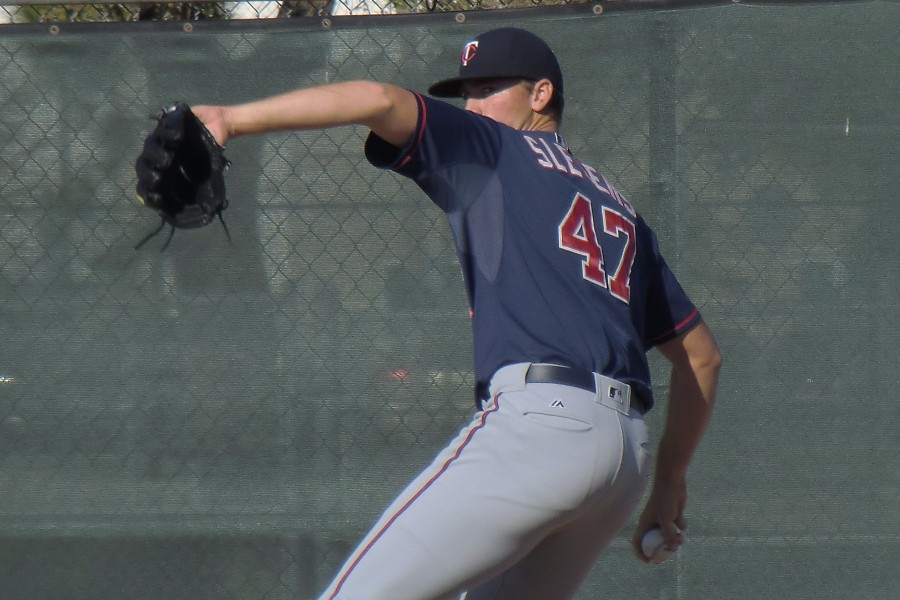 Transactions Michael Tonkin cleared waivers and was assigned to Rochester. Things didn’t go the way he had hoped with the Twins, but he’ll surely be an asset for the Red Wings. Over 118.2 innings in Triple A, he has a 2.65 ERA, 1.045 WHIP, 9.7 K/9 and 5.12 K/BB ratio. RED WINGS REPORT Rochester 3, Pawtucket 1 Box Score Aaron Slegers completed six no-hit innings for the second time this season, as he and battery mate Mitch Garver led the Wings to victory. Slegers went 7.1 innings, surrendering one run on three hits and a walk while striking out five. Along with helping guide Slegers through a masterful performance, Garver went 3-for-4 and slugged his second homer of the year. The ninth-rounder from 2013 boosted his batting line to .269/.415/.500. https://twitter.com/BaseballByTom/status/863494559254425601 Ben Paulsen was 2-for-4 with a pair of doubles and a run scored. ByungHo Park notched his first hit since returning from the DL, and it was a #ParkBang. https://twitter.com/BaseballByTom/status/863496821288693761 D.J. Baxendale was the first man out of the pen, recording the final two outs of the eighth. Buddy Boshers retired the first two batters he faced in the ninth before walking cleanup man Sam Travis. Alan Busenitz came in and walked another batter, putting the tying run on base, before striking out the next hitter on a nasty curveball to end it. https://twitter.com/BaseballByTom/status/863503937768443909 Busenitz, acquired in the same deal that brought Hector Santiago to the Twins, now has a 2.84 ERA, 0.95 WHIP and 16 strikeouts over 12.2 innings this season. CHATTANOOGA CHATTER Chattanooga 9, Birmingham 6 Box Score With the Lookouts trailing 3-1 in the bottom of the seventh, LaMonte Wade drew a leadoff walk that sparked a three-run rally. Unfortunately, the Chattanooga bullpen blew that lead, meaning Wade’s services were needed once again in the eighth. Wade lined a leadoff single, stole second base and scored. The Looks batted around, and just for good measure Wade drew yet another walk later in the inning. His OBP is up to .465. Of course, the only reason Wade batted three times in two innings was his Chattanooga teammates were beating up the Barons as well. Edgar Corcino started the game on the bench and still managed to drive in four runs on a pair of hits. Nick Gordon had another excellent night out of the leadoff spot, going 2-for-4 with a walk and two RBI. First baseman Jonathan Rodriguez was 3-for-5 and scored twice. Fernando Romero had a rough first couple of appearances for Chattanooga, but Saturday he pitched into the sixth inning for the fifth-straight start. The 22-year-old gave up two runs in the first inning, but he surrendered just one more unearned run from there. He struck out four over 5.2 innings. The Twins have more relief prospects than you can shake a stick at, which is pretty much all opposing hitters could do in the box against Luke Bard. The No. 42 overall pick of the 2012 draft, Bard struck out the first five batters he faced, gave up a double, then got the next batter on strikes for his sixth K of the evening. Bard has now struck out 31 batters in 18.2 innings. That’s preposterous. Just silly what he’s doing to Southern League hitters right now. Unfortunately, Mason Melotakis allowed that inherited runner of Bard’s to score. Todd Van Steensel tallied two strikeouts of his own in the ninth inning, giving him 20 Ks in 15.1 innings on the season. MIRACLE MATTERS Fort Myers 7, Charlotte 6 Box Score Down 6-1 heading into the top of the eighth, it seemed Fort Myers needed, well ... a miracle to pull out a victory Saturday night. Turned out all they needed was some rain. With the rain falling the Miracle managed to score four runs in the eighth before adding the game-tying and go-ahead runs in the top of the ninth. Chris Paul was right in the thick of things each of those epic final two innings. A sixth-round pick in 2015, Paul delivered a single to load the bases in the eighth and later came around to score. He followed that up by driving in the game-winning run on a double in the ninth. After a three-hit night, Paul’s average is up to .317. The rain didn’t seem to faze Sam Clay, who held Charlotte scoreless over the final two innings to earn his fourth win out of the bullpen. It was Clay’s 10th consecutive scoreless appearance, a streak that stretches 19.2 innings. Shane Kennedy went 2-for-4 with a triple, a walk and both scored and drove in a pair of runs. Catcher Kevin Garcia also had two RBI, Max Murphy scored twice and stole a base and Zander Wiel went 2-for-5 with his fourth triple of the season. Dereck Rodriguez extended his streak of completing six or more innings to six straight starts. He gave up four runs on seven hits and a walk while striking out four. KERNELS NUGGETS Cedar Rapids 7, Bowling Green 5 Box Score There was no comeback needed for the Kernels, as they racked up five first-inning runs and piled on another pair of runs in the second. Lewin Diaz was 3-for-5 with his fourth home run, two RBI and two runs scored. Christian Cavaness went 2-for-4 and slugged his second homer, a two-run shot. Clark Beeker, who was cruising through six innings, picked up his fifth win but his performance was somewhat tainted by giving up three runs in the seventh. Colton Davis, Andrew Vasquez and Hector Lujan combined to pitch three scoreless innings in relief. Vasquez, a lefty, struck out four batters, giving him 23 K's in 14.2 innings on the year. TWINS DAILY PLAYERS OF THE DAY Twins Daily Minor League Pitcher of the Day – Aaron Slegers (had a no-hitter through 6.1 innings) Twins Daily Minor League Hitter of the Day – Chris Paul (delivered game-winning hit in crazy Miracle comeback win) SUNDAY’S PROBABLE STARTERS Rochester at Pawtucket, 12:35 CT, Kyle Gibson (4.50 ERA, 1.17 WHIP) Chattanooga vs. Birmingham, 1:15 CT, Paul Clemens (4.06 ERA, 1.48 WHIP) Fort Myers OFF Cedar Rapids OFF Please feel free to ask any questions and discuss Saturday's games.
 -
I'm especially high on Hildy, with his delivery I think he could be a dominant right-handed specialist. Last season, RHers hit .168/.192/.240 off him. They have an OPS of .655 off him so far this year, but it's mainly that high because he's already given up a HR. In 25 PAs vs. RHB he has nine strikeouts (36 K%). That's a fair point, I did see quite a few Boston jerseys at the park on Friday. Even saw a Jason Bay and a Rusney Castillo. That's how they're using Buddy Boshers, and basically what they did with Rucinski too. But yeah, the Belisles and Breslows get in the way of expanding that philosophy, and I'd much rather see a Hildenberger or Melotakis used in that capacity.
-
There has been a reshuffling of the Twins roster, but the pitching staff still isn’t getting any younger. Per Baseball-Reference, the Twins have trotted out the fourth-oldest pitching staff in baseball with a weighted average age of 30.2. The 2016 Twins pitching staff had an average age right at league average, which was 28.3. So after 103 losses, they got older and are continuing to do so. Justin Haley is the youngest pitcher on the active roster, he turns 26 in a little over a month. Taylor Rogers and Tyler Duffey are the only other Twins hurlers currently on the 25-man roster who were born in the 1990s.The Rockies, who have the second-best record in the NL, have the youngest pitching staff in baseball. They have three pitchers younger than Haley ... in their rotation. Among the numerous roster moves made the past few weeks included the additions of Nick Tepesch (28) and Drew Rucinski (28) to the roster. Wednesday evening, the team optioned Rucinski back to Triple A to make room for 29-year-old Adam Wilk. As the 250-plus comments (and counting) on Seth’s writeup of the Wilk addition suggest, it was a bit of a controversial and puzzling move. It sounds like Wilk is likely to pitch out of the pen, alleviating some of the Jose Berrios outrage, but having a 29-year-old with little or no upside in the bullpen doesn’t make much sense either, especially considering the other options. ***UPDATE*** Berrios is starting Saturday, woooooooooo!!! Obviously, the 22-year-old Berrios and 23-year-old Adalbert Mejia would represent a youth movement in the rotation, but there are a number of bullpen guys the Twins have pitching well in the minors who are already in their mid-20s. Relievers Trevor Hildenberger, D.J. Baxendale, Alan Busenitz and Luke Bard are all 26-years-old. Mason Melotakis is 25 and both John Curtiss and Nick Burdi are 24. I’m not saying all seven of those guys are ready for The Show, but I gotta believe at least one of them deserves a look in a low-leverage role over a guy like Wilk. But hey, what do I know? The Twins entered the evening with a 16-14 record, which is pretty remarkable. As I noted a while back, the last 24 teams who lost 100 averaged another 95 losses the next year. Only two of those teams bounced back with a winning record. And there doesn’t seem to be any fan apathy either, as the paid attendance eclipsed 90,000 for last weekend’s series against the Red Sox. I guess some people (me) will always have an ax to grind. Rosario Off to a Rosie Start On the flip side, the Twins have the second-youngest hitters by average age this season at 27.1. One of the young hitters who doesn't seem to be getting much attention is Eddie Rosario. The 25-year-old entered this year with a strikeout rate of 25.2 percent, but he has managed to cut that to 17.7 so far this year. Download attachment: RosarioGraph.png Rosario is still swinging at as many balls as ever, he's just hitting them more often. His contact rate on balls out of the zone is up from 65.5 percent in 2016 to 70.6 so far this season. Download attachment: RosarioOContact.png Rosario also leads all of baseball in making medium contact, with a rate of 62.9 percent. While that's not a particularly great accomplishment, it does correlate to a nice drop in his frequency of making bad contact. His soft contact rate is 11.2 percent, which puts him is inside the top 20 among 184 qualified hitters. Download attachment: RosarioSoftContact.png Rosario is also among the top 20 percent of hitters in hitting the ball the other way. His rate of going to the opposite field has increased from 24.1 percent in 2016 to 29.2 this year. Download attachment: RosarioOppo.png ADDITIONAL NOTES -I typically like to include some notes about the expected pitching matchups over the weekend, but the Twins have yet to officially announce who will be starting Saturday or Sunday. But we do know the bats will dodge a bullet in Cleveland, facing Josh Tomlin, Mike Clevinger and Trevor Bauer. No disrespect to those guys, but it’s nice to miss Corey Kluber, Carlos Carrasco and Danny Salazar. -The Twins staff is still dead last in swinging-strike rate at 8.2%. They also have the third-worst K/9 (6.98) and K% (17.9). They've also allowed highest contact percent at 82.5, which is two points higher than the next team. -Miguel Sano has the lowest soft contact rate at 1.7 percent. That's 5.5 percent better than any other qualified hitter. -Only the Reds have a higher rating in Defensive Runs Above Average than the Twins. The Twins lead the league in outfield arm runs. Yes, that is a real stat (ARM on Fangraphs). But curiously, the Twins have been the second-worst team at GIDP rate. This is calculated by dividing double plays turned by the number of PAs against with a runner on first and less than two outs. -Daniel Palka (.240/.301/.423) has cooled off some after a hot start, but he has been doing a great job in cutting down on the Ks. After striking out in 38.6 percent of his at-bats for Rochester in 2016, he’s cut that rate to 23.9 so far this season. -LaMonte Wade (.937) and Nick Gordon (.880) both rank in the top 10 in OPS among Southern League hitters. Click here to view the article
-
On Lack of Pitching Youth, Eddie Rosario's Progress and Other Notes
Tom Froemming posted an article in Twins
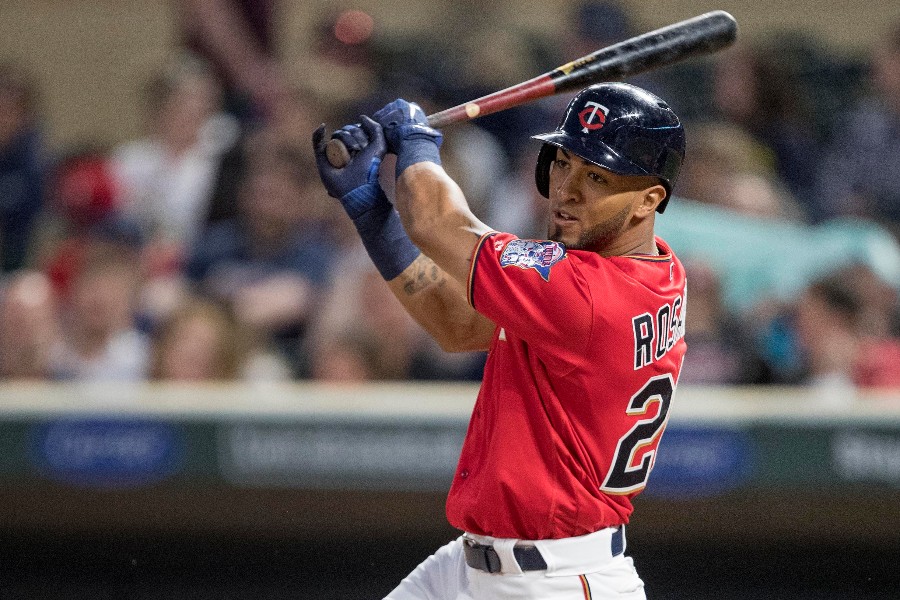 The Rockies, who have the second-best record in the NL, have the youngest pitching staff in baseball. They have three pitchers younger than Haley ... in their rotation. Among the numerous roster moves made the past few weeks included the additions of Nick Tepesch (28) and Drew Rucinski (28) to the roster. Wednesday evening, the team optioned Rucinski back to Triple A to make room for 29-year-old Adam Wilk. As the 250-plus comments (and counting) on Seth’s writeup of the Wilk addition suggest, it was a bit of a controversial and puzzling move. It sounds like Wilk is likely to pitch out of the pen, alleviating some of the Jose Berrios outrage, but having a 29-year-old with little or no upside in the bullpen doesn’t make much sense either, especially considering the other options. ***UPDATE*** Berrios is starting Saturday, woooooooooo!!! https://twitter.com/MikeBerardino/status/862878473660116992 Obviously, the 22-year-old Berrios and 23-year-old Adalbert Mejia would represent a youth movement in the rotation, but there are a number of bullpen guys the Twins have pitching well in the minors who are already in their mid-20s. Relievers Trevor Hildenberger, D.J. Baxendale, Alan Busenitz and Luke Bard are all 26-years-old. Mason Melotakis is 25 and both John Curtiss and Nick Burdi are 24. I’m not saying all seven of those guys are ready for The Show, but I gotta believe at least one of them deserves a look in a low-leverage role over a guy like Wilk. But hey, what do I know? The Twins entered the evening with a 16-14 record, which is pretty remarkable. As I noted a while back, the last 24 teams who lost 100 averaged another 95 losses the next year. Only two of those teams bounced back with a winning record. And there doesn’t seem to be any fan apathy either, as the paid attendance eclipsed 90,000 for last weekend’s series against the Red Sox. I guess some people (me) will always have an ax to grind. Rosario Off to a Rosie Start On the flip side, the Twins have the second-youngest hitters by average age this season at 27.1. One of the young hitters who doesn't seem to be getting much attention is Eddie Rosario. The 25-year-old entered this year with a strikeout rate of 25.2 percent, but he has managed to cut that to 17.7 so far this year. Rosario is still swinging at as many balls as ever, he's just hitting them more often. His contact rate on balls out of the zone is up from 65.5 percent in 2016 to 70.6 so far this season. Rosario also leads all of baseball in making medium contact, with a rate of 62.9 percent. While that's not a particularly great accomplishment, it does correlate to a nice drop in his frequency of making bad contact. His soft contact rate is 11.2 percent, which puts him is inside the top 20 among 184 qualified hitters. Rosario is also among the top 20 percent of hitters in hitting the ball the other way. His rate of going to the opposite field has increased from 24.1 percent in 2016 to 29.2 this year. ADDITIONAL NOTES -I typically like to include some notes about the expected pitching matchups over the weekend, but the Twins have yet to officially announce who will be starting Saturday or Sunday. But we do know the bats will dodge a bullet in Cleveland, facing Josh Tomlin, Mike Clevinger and Trevor Bauer. No disrespect to those guys, but it’s nice to miss Corey Kluber, Carlos Carrasco and Danny Salazar. -The Twins staff is still dead last in swinging-strike rate at 8.2%. They also have the third-worst K/9 (6.98) and K% (17.9). They've also allowed highest contact percent at 82.5, which is two points higher than the next team. -Miguel Sano has the lowest soft contact rate at 1.7 percent. That's 5.5 percent better than any other qualified hitter. -Only the Reds have a higher rating in Defensive Runs Above Average than the Twins. The Twins lead the league in outfield arm runs. Yes, that is a real stat (ARM on Fangraphs). But curiously, the Twins have been the second-worst team at GIDP rate. This is calculated by dividing double plays turned by the number of PAs against with a runner on first and less than two outs. -Daniel Palka (.240/.301/.423) has cooled off some after a hot start, but he has been doing a great job in cutting down on the Ks. After striking out in 38.6 percent of his at-bats for Rochester in 2016, he’s cut that rate to 23.9 so far this season. -LaMonte Wade (.937) and Nick Gordon (.880) both rank in the top 10 in OPS among Southern League hitters.
 -
Great to see Daniel Palka get two hits off Aaron Nola. Also encouraging to see he's dropped his strikeout rate from 38.6% with ROC in '16 to 23.9% so far this year.
- 16 replies
-
- 6
-

-
- shane carrier
- david hurlbut
- (and 3 more)
-
Great stuff, thanks for this.
-
Article: Twins Claim LHP Adam Wilk From Mets
Tom Froemming replied to Seth Stohs's topic in Twins Daily Front Page News
Dudes like Adam Wilk are available all the time. This makes no sense to me. Pretty sure whatever Jose Berrios is working on in Triple A he can continue to work on in the majors. -
It was Cinco De Mauer at Target Field, as Joe Mauer cracked his first career walk-off home run to beat the Red Sox. But there were some other big offensive performances on the minor league level Friday night, as both Chattanooga and Cedar Rapids won in blowout fashion. There were also plenty of transactions, as Rochester added Zack Granite, Kyle Gibson and Justin Haley. Find out what else happened around the Twins' minor leagues on Friday.RED WINGS REPORT Pawtucket 7, Rochester 2 Box Score Marcus Walden threw six innings of one-hit ball for the Red Wi, er … wait a minute, he’s not with the Twins anymore. Walden, who was with Rochester last season, set the tone for a strong performance from the Pawtucket pitching staff, as the Wings mustered two runs on just four hits. Adalberto Mejia, who hadn’t pitched since April 28, was a bit of a mess in this one. He lasted just four innings and surrendered six runs on eight hits and three walks. Justin Haley made the first appearance of his rehab assignment, and struck out two in a perfect inning. Rochester’s first five hitters combined to go 0-for-18. Niko Goodrum hit a triple and Leonardo Reginatto went 2-for-3 with a run and an RBI. CHATTANOOGA CHATTER Chattanooga 8, Pensacola 1 Box Score Nick Gordon and Engelb Vielma both had three hits, Randy LeBlanc pitched around trouble and the bullpen dominated to deliver a victory for the Lookouts. Though they’ve swapped defensive positions back and forth, one thing that has stayed consistent with the up-the-middle duo of Gordon (who is batting .340) and Vielma (.326) has been their bats. LeBlanc’s Double A debut, his previous start, was a dud, but he came back with five innings of one-run ball. He did allow seven hits and four walks while striking out just one, though. Randy Rosario came out of the pen to throw three perfect innings, striking out four. He impressed Chris Blessing of Baseball HQ. Nick Burdi sealed the deal with a perfect 1-2-3 ninth, all on strikeouts. The former second-round pick lowered his ERA to under 1.00 and has now struck out 13 batters in 9.1 innings while issuing just three walks. Levi Michael, who has transitioned to center field, was 2-for-3 and two runs scored. He also drew a walk to spark a massive five-run two-out rally for Chattanooga in the second inning. LaMonte Wade, who entered the game with a .419 OBP, drew three walks. MIRACLE MATTERS St. Lucie 3, Fort Myers 1 Box Score There weren’t many bright spots for the Miracle, but reliever Nick Anderson did extend his scoreless inning streak to start the season to 11.1 innings. A native of Crosby, Minn., Anderson threw two perfect innings, and has given up just five hits and one walk to go with 11 strikeouts on the season. Lachlan Wells struggled a bit for Fort Myers, giving up three runs over four innings. The southpaw from Down Under gave up a home run, two walks, hit a batter and threw a wild pitch. Chris Paul was the only Miracle batter to get two hits. His batting line is now up to .318/.342/.400. Zander Wiel hit a double and walked twice. KERNELS NUGGETS Cedar Rapids 12, Fort Wayne 4 Box Score Thrusday eveneing, the Kernels failed to deliver with the bases loaded. Tonight there weer no such troubles. Jermaine Palacios, Twins Daily Minor League Hitter of the Month for April, continued his blistering start by driving in four runs, three of them on a bases-clearing double in the fifth inning. Lewin Diaz has really started to heat up as well. The Dominican product was 2-for-4 with a double, a triple (!) and a walk. Over his last 10 games, Diaz is hitting .359. Jayin Davis had a multi-hit game and scored a pair of runs, Brandon Lopez had a double and a pair of walks, Christian Cavaness drove in two runs … it was pretty much a banner day all around for the offense. Sean Poppen pitched 6.1 innings for the Kernels. He got tagged for nine hits and walked a couple of batters, but only two of the four runs he gave up were earned. He tallied five strikeouts. Jeff Johnson of the Cedar Rapids Gazette featured Poppen in his game story, it’s worth your time. Hector Lujan cleaned things up from there, firing 2.2 scoreless innings. The Kernels also made back-to-back web gems in the sixth inning, first this great stop and rocket throw by Caleb Hamilton. Which was followed by this great diving catch by Palacios. TWINS DAILY PLAYERS OF THE DAY Twins Daily Minor League Pitcher of the Day – Sean Poppen (6.1 IP, 9 H, 4 R, 2 ER, 2 BB, 5 K), who pitched better than his line suggests, a result, in part, to his own error. Twins Daily Minor League Hitter of the Day – Can I say Joe Mauer? Is that allowed? No, OK, then I’ll go with Nick Gordon (3-for-5, 2 2Bs, 2 R, 2 RBI). SUNDAY’S PROBABLE STARTERS Rochester vs. Pawtucket, 12:35 CT, Aaron Slegers (4.37 ERA, 1.50 WHIP) Chattanooga va. Pensacola, 4:15 CT, Matt Tracy (3.32 ERA, 1.52 WHIP) Chattanooga vs. Pensacola, Game 2, TBD Fort Myers at St. Lucie, 5:30 CT, Chris Anderson (27.00 ERA, 3.00 WHIP) Cedar Rapids vs. Fort Wayne, 6:35 CT, Domenick Carlini (6.97 ERA, 1.65 WHIP) Please feel free to ask any questions and discuss Friday's games. Click here to view the article
-
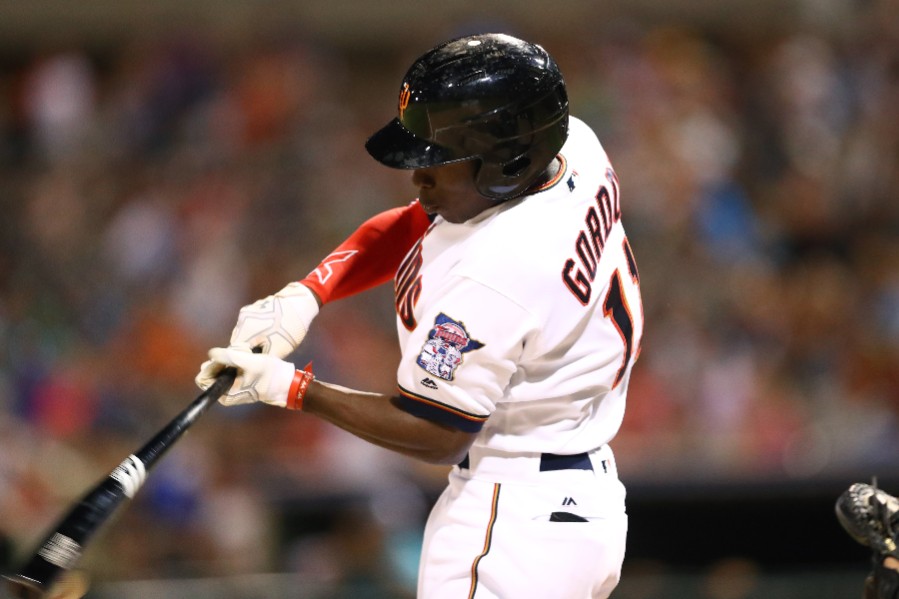 RED WINGS REPORT Pawtucket 7, Rochester 2 Box Score Marcus Walden threw six innings of one-hit ball for the Red Wi, er … wait a minute, he’s not with the Twins anymore. Walden, who was with Rochester last season, set the tone for a strong performance from the Pawtucket pitching staff, as the Wings mustered two runs on just four hits. Adalberto Mejia, who hadn’t pitched since April 28, was a bit of a mess in this one. He lasted just four innings and surrendered six runs on eight hits and three walks. Justin Haley made the first appearance of his rehab assignment, and struck out two in a perfect inning. Rochester’s first five hitters combined to go 0-for-18. Niko Goodrum hit a triple and Leonardo Reginatto went 2-for-3 with a run and an RBI. CHATTANOOGA CHATTER Chattanooga 8, Pensacola 1 Box Score Nick Gordon and Engelb Vielma both had three hits, Randy LeBlanc pitched around trouble and the bullpen dominated to deliver a victory for the Lookouts. Though they’ve swapped defensive positions back and forth, one thing that has stayed consistent with the up-the-middle duo of Gordon (who is batting .340) and Vielma (.326) has been their bats. LeBlanc’s Double A debut, his previous start, was a dud, but he came back with five innings of one-run ball. He did allow seven hits and four walks while striking out just one, though. Randy Rosario came out of the pen to throw three perfect innings, striking out four. He impressed Chris Blessing of Baseball HQ. https://twitter.com/C_Blessing/status/860695237118885888 Nick Burdi sealed the deal with a perfect 1-2-3 ninth, all on strikeouts. The former second-round pick lowered his ERA to under 1.00 and has now struck out 13 batters in 9.1 innings while issuing just three walks. Levi Michael, who has transitioned to center field, was 2-for-3 and two runs scored. He also drew a walk to spark a massive five-run two-out rally for Chattanooga in the second inning. LaMonte Wade, who entered the game with a .419 OBP, drew three walks. MIRACLE MATTERS St. Lucie 3, Fort Myers 1 Box Score There weren’t many bright spots for the Miracle, but reliever Nick Anderson did extend his scoreless inning streak to start the season to 11.1 innings. A native of Crosby, Minn., Anderson threw two perfect innings, and has given up just five hits and one walk to go with 11 strikeouts on the season. Lachlan Wells struggled a bit for Fort Myers, giving up three runs over four innings. The southpaw from Down Under gave up a home run, two walks, hit a batter and threw a wild pitch. Chris Paul was the only Miracle batter to get two hits. His batting line is now up to .318/.342/.400. Zander Wiel hit a double and walked twice. KERNELS NUGGETS Cedar Rapids 12, Fort Wayne 4 Box Score Thrusday eveneing, the Kernels failed to deliver with the bases loaded. Tonight there weer no such troubles. Jermaine Palacios, Twins Daily Minor League Hitter of the Month for April, continued his blistering start by driving in four runs, three of them on a bases-clearing double in the fifth inning. Lewin Diaz has really started to heat up as well. The Dominican product was 2-for-4 with a double, a triple (!) and a walk. Over his last 10 games, Diaz is hitting .359. Jayin Davis had a multi-hit game and scored a pair of runs, Brandon Lopez had a double and a pair of walks, Christian Cavaness drove in two runs … it was pretty much a banner day all around for the offense. Sean Poppen pitched 6.1 innings for the Kernels. He got tagged for nine hits and walked a couple of batters, but only two of the four runs he gave up were earned. He tallied five strikeouts. Jeff Johnson of the Cedar Rapids Gazette featured Poppen in his game story, it’s worth your time. Hector Lujan cleaned things up from there, firing 2.2 scoreless innings. The Kernels also made back-to-back web gems in the sixth inning, first this great stop and rocket throw by Caleb Hamilton. Which was followed by this great diving catch by Palacios. TWINS DAILY PLAYERS OF THE DAY Twins Daily Minor League Pitcher of the Day – Sean Poppen (6.1 IP, 9 H, 4 R, 2 ER, 2 BB, 5 K), who pitched better than his line suggests, a result, in part, to his own error. Twins Daily Minor League Hitter of the Day – Can I say Joe Mauer? Is that allowed? No, OK, then I’ll go with Nick Gordon (3-for-5, 2 2Bs, 2 R, 2 RBI). SUNDAY’S PROBABLE STARTERS Rochester vs. Pawtucket, 12:35 CT, Aaron Slegers (4.37 ERA, 1.50 WHIP) Chattanooga va. Pensacola, 4:15 CT, Matt Tracy (3.32 ERA, 1.52 WHIP) Chattanooga vs. Pensacola, Game 2, TBD Fort Myers at St. Lucie, 5:30 CT, Chris Anderson (27.00 ERA, 3.00 WHIP) Cedar Rapids vs. Fort Wayne, 6:35 CT, Domenick Carlini (6.97 ERA, 1.65 WHIP) Please feel free to ask any questions and discuss Friday's games.
 -
Nope, that same Matt Bush is currently the Rangers closer. He's certainly a bust, but he has accumulated 2.2 WAR.
-
We’re a little over a month away from the 2017 MLB Draft, and it appears two frontrunners have emerged as candidates for the No. 1 pick: Brendan McKay from the University of Louisville and Hunter Greene from Notre Dame High School in Los Angeles. They are similar in talent, both are incredibly gifted on the mound and in the batter’s box, but there’s a big age difference between the two. McKay, born 12/18/1995, is only 19 months younger than Jose Berrios. Greene was born 8/6/1999, about two months after Jacque Jones made his Major League debut. If that doesn’t make you feel old, I don’t know what will.Jeremy Nygaard provided a recent draft update last Tuesday. He’s your go-to guy when it comes to breaking down the players in this year’s crop and mining information on what the Twins may do, but I found a couple of interesting tidbits of information to share on college guys vs. high school kids I wanted to pass along. -The most recent No. 1 pick out of college who has made it to the majors is Dansby Swanson (2015, ARI). He played just 127 games in the minors before emerging for the Braves and was 22 years and 188 days old. -The most recent No. 1 pick out of high school who has made it to the majors is Carlos Correa (2012, HOU). He played 282 games in the minors and debuted at 20 years, 259 days old. -Of the last 20 Hall of Famers elected by the BBWAA who were draft eligible (no international guys), 12 of them were drafted out of high school. Just five of those 20 Hall of Famers were first-round picks. -Of the 20 active leaders in career bWAR (again excluding international guys), 11 of them were drafted out of high school. Of those 20, 13 were drafted in the first round. -Of the last 20 No. 1 overall picks, 12 were position players and it’s split right down the middle with 10 of them being drafted out of high school and 10 out of college. -It seems to be a generally accepted idea that high school players carry more risk, but the last two No. 1 overall picks who had negative WAR over their careers were both college pitchers: Bryan Bullington (2002, PIT) and Matt Anderson (1997, DET). So what does all this mean in relation to McKay vs. Greene? Well, nothing really. But it does show that there’s really no way you can say for certain whether it’s better to target college players or high school players. And it may not be just a two-horse race at this point. There are a few more guys who appear to be in the mix for the first overall pick. It’ll be fascinating to follow the Twins’ process of finding their guy. The MLB draft is such a crapshoot. Trying to compare a 21-year-old collegiate player to a 17-year-old high school player seems like about as difficult a task as you could assign to an evaluator. McKay has been outstanding, but can you imagine what a 21-year-old Hunter Greene would look like playing in the Big East? I’d better pump the breaks, Greene doesn’t need any more hype. Sports Illustrated is already calling him baseball’s LeBron James, the next Babe Ruth and they compared him to Noah Syndergaard on the mound and Alex Rodriguez in the field. No pressure, kid. Two-Way Players I don’t know about all this Thor plus A-Rod talk, but Green can hit 100 mph on the mound and has won some high-profile showcase home run derbys. McKay has a 2.15 ERA and 12.8 K/9 on the hill and .390 average with 14 homers, four of which he hit in one game. Both are expected to be drafted as pitchers, but J.J. Cooper of Baseball America recently speculated that both would still be first-round picks as strictly hitters. With them both expecting to be such high-profile picks, it seems unlikely either will continue to be two-way players in their professional careers, but who knows? NPB superstar Shohei Otani is such a dominant force on both sides of the game that it wouldn’t shock me for an MLB team to try to develop a two-way superstar at some point. There are always guys here and there that successfully convert from one aspect of the game to another. Rick Ankiel was a major leaguer as a pitcher and a position player, just never both at the same time. Guys like Kenley Jansen, Joe Nathan and Matt Bush (among many more examples) were drafted as position players and converted to pitchers. The Padres have experimented with using Christian Bethancourt as a two-way player, but he’s currently in the minors trying to develop his feel on the mound. Last season, the Cubs used pitcher Travis Wood in left field three games... that counts for something. Reds reliever Michael Lorenzen has a pinch-hit homer this year. Obviously those are all baby steps, but it certainly seems some teams are becoming more open to the idea. Former Twins center fielder Jordan Schafer was attempting to convert to a two-way guy for the Cardinals, but his elbow blew out. Same thing happened to Dariel Alvarez of the Orioles in his attempt to transition to the mound. Even Otani is injured right now, but he's just out a few weeks with a strained thigh muscle. The increased risk for injury is why we probably won’t see Greene or McKay be two-way players in the pros, but I think before too long there will be a handful of two-way role players in the MLB. UPCOMING Friday: Eduardo Rodriguez (2.70 ERA, 1.24 WHIP) vs. Phil Hughes (5.06 ERA, 1.43 WHIP) Current Twins have a .364/.462/.545 line against Rodriguez. In just eight PAs, Brian Dozier homered twice off him. In 43 PAs against Hughes, Dustin Pedroia has hit .390/.419/.829. Ouch. Saturday: Rick Porcello (4.46 ERA, 1.38 WHIP) vs. Nick Tepesch (-) No batter in the league has faced Porcello more than Joe Mauer, who has hit just .259/.317/.345 off the defending AL Cy Young Award winner. Tepesch will be making his Twins debut, and could be in line for an extended look with Kyle Gibson being demoted to Triple A. Sunday: Chris Sale (1.38 ERA, 0.75 WHIP) vs. Ervin Santana (0.66 ERA, 0.71 WHIP) What a matchup, huh? Sale has struggled at Target Field, posting a 4.44 ERA (his career ERA is 2.94). Dozier has three homers to go with a .973 OPS in 41 PAs against Sale. Current Red Sox hitters have hit just .198/.275/.321 over 91 PAs against Ervin. ADDITIONAL NOTES -The Twins allowed their first bunt hits of the season Thursday. Only three other teams had lasted this long without giving up a bunt hit. -Phil Hughes has given up the most contact in baseball. Batters have a 88.3 contact percentage against him. -The Twins pitching staff has the highest foul ball strike percentage in the league at 30.8 percent. -Ehire Adrianza’s rehab assignment ends May 10. While down on the farm, he has hit .310/.383/.357 and appeared in the outfield for the first time in his professional career. -Max Kepler had his struggles in the second half of 2016, batting .223/.304/.391. It was nice to see him put together a tremendous April (.280/.368/.476). -On Thursday, Eddie Rosario extended his hitting streak to 14 games with a home run. He also drew his fourth walk of the season. It took him 95 PAs to reach that mark, which isn’t great, but last year it took him 158 PAs to get to four unintentional walks. Click here to view the article
-
On College vs. Prep Draftees, Two-Way Players and Other Notes
Tom Froemming posted an article in Twins
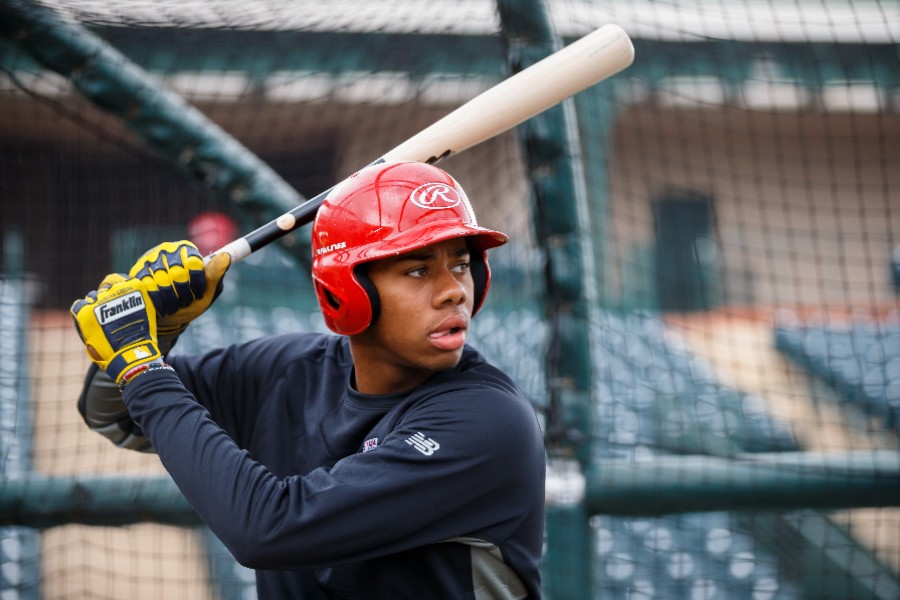 Jeremy Nygaard provided a recent draft update last Tuesday. He’s your go-to guy when it comes to breaking down the players in this year’s crop and mining information on what the Twins may do, but I found a couple of interesting tidbits of information to share on college guys vs. high school kids I wanted to pass along. -The most recent No. 1 pick out of college who has made it to the majors is Dansby Swanson (2015, ARI). He played just 127 games in the minors before emerging for the Braves and was 22 years and 188 days old. -The most recent No. 1 pick out of high school who has made it to the majors is Carlos Correa (2012, HOU). He played 282 games in the minors and debuted at 20 years, 259 days old. -Of the last 20 Hall of Famers elected by the BBWAA who were draft eligible (no international guys), 12 of them were drafted out of high school. Just five of those 20 Hall of Famers were first-round picks. -Of the 20 active leaders in career bWAR (again excluding international guys), 11 of them were drafted out of high school. Of those 20, 13 were drafted in the first round. -Of the last 20 No. 1 overall picks, 12 were position players and it’s split right down the middle with 10 of them being drafted out of high school and 10 out of college. -It seems to be a generally accepted idea that high school players carry more risk, but the last two No. 1 overall picks who had negative WAR over their careers were both college pitchers: Bryan Bullington (2002, PIT) and Matt Anderson (1997, DET). So what does all this mean in relation to McKay vs. Greene? Well, nothing really. But it does show that there’s really no way you can say for certain whether it’s better to target college players or high school players. And it may not be just a two-horse race at this point. There are a few more guys who appear to be in the mix for the first overall pick. It’ll be fascinating to follow the Twins’ process of finding their guy. The MLB draft is such a crapshoot. Trying to compare a 21-year-old collegiate player to a 17-year-old high school player seems like about as difficult a task as you could assign to an evaluator. McKay has been outstanding, but can you imagine what a 21-year-old Hunter Greene would look like playing in the Big East? I’d better pump the breaks, Greene doesn’t need any more hype. Sports Illustrated is already calling him baseball’s LeBron James, the next Babe Ruth and they compared him to Noah Syndergaard on the mound and Alex Rodriguez in the field. No pressure, kid. Two-Way Players I don’t know about all this Thor plus A-Rod talk, but Green can hit 100 mph on the mound and has won some high-profile showcase home run derbys. McKay has a 2.15 ERA and 12.8 K/9 on the hill and .390 average with 14 homers, four of which he hit in one game. Both are expected to be drafted as pitchers, but J.J. Cooper of Baseball America recently speculated that both would still be first-round picks as strictly hitters. With them both expecting to be such high-profile picks, it seems unlikely either will continue to be two-way players in their professional careers, but who knows? NPB superstar Shohei Otani is such a dominant force on both sides of the game that it wouldn’t shock me for an MLB team to try to develop a two-way superstar at some point. There are always guys here and there that successfully convert from one aspect of the game to another. Rick Ankiel was a major leaguer as a pitcher and a position player, just never both at the same time. Guys like Kenley Jansen, Joe Nathan and Matt Bush (among many more examples) were drafted as position players and converted to pitchers. The Padres have experimented with using Christian Bethancourt as a two-way player, but he’s currently in the minors trying to develop his feel on the mound. Last season, the Cubs used pitcher Travis Wood in left field three games... that counts for something. Reds reliever Michael Lorenzen has a pinch-hit homer this year. Obviously those are all baby steps, but it certainly seems some teams are becoming more open to the idea. Former Twins center fielder Jordan Schafer was attempting to convert to a two-way guy for the Cardinals, but his elbow blew out. Same thing happened to Dariel Alvarez of the Orioles in his attempt to transition to the mound. Even Otani is injured right now, but he's just out a few weeks with a strained thigh muscle. The increased risk for injury is why we probably won’t see Greene or McKay be two-way players in the pros, but I think before too long there will be a handful of two-way role players in the MLB. UPCOMING Friday: Eduardo Rodriguez (2.70 ERA, 1.24 WHIP) vs. Phil Hughes (5.06 ERA, 1.43 WHIP) Current Twins have a .364/.462/.545 line against Rodriguez. In just eight PAs, Brian Dozier homered twice off him. In 43 PAs against Hughes, Dustin Pedroia has hit .390/.419/.829. Ouch. Saturday: Rick Porcello (4.46 ERA, 1.38 WHIP) vs. Nick Tepesch (-) No batter in the league has faced Porcello more than Joe Mauer, who has hit just .259/.317/.345 off the defending AL Cy Young Award winner. Tepesch will be making his Twins debut, and could be in line for an extended look with Kyle Gibson being demoted to Triple A. Sunday: Chris Sale (1.38 ERA, 0.75 WHIP) vs. Ervin Santana (0.66 ERA, 0.71 WHIP) What a matchup, huh? Sale has struggled at Target Field, posting a 4.44 ERA (his career ERA is 2.94). Dozier has three homers to go with a .973 OPS in 41 PAs against Sale. Current Red Sox hitters have hit just .198/.275/.321 over 91 PAs against Ervin. ADDITIONAL NOTES -The Twins allowed their first bunt hits of the season Thursday. Only three other teams had lasted this long without giving up a bunt hit. -Phil Hughes has given up the most contact in baseball. Batters have a 88.3 contact percentage against him. -The Twins pitching staff has the highest foul ball strike percentage in the league at 30.8 percent. -Ehire Adrianza’s rehab assignment ends May 10. While down on the farm, he has hit .310/.383/.357 and appeared in the outfield for the first time in his professional career. -Max Kepler had his struggles in the second half of 2016, batting .223/.304/.391. It was nice to see him put together a tremendous April (.280/.368/.476). -On Thursday, Eddie Rosario extended his hitting streak to 14 games with a home run. He also drew his fourth walk of the season. It took him 95 PAs to reach that mark, which isn’t great, but last year it took him 158 PAs to get to four unintentional walks.
 -
I don't know that there's anything Gibson could work on or prove in Triple A, but you're right. Considering the rotation depth vs. bullpen strength, sending him down to continue starting seems to be the right move if he's bumped. That's a good sell, maybe the Twins should take you along to the Winter Meetings this year It's a good point, Minnesota should be an attractive destination for pitchers looking to re-establish their value. Giving up four runs over five innings isn't getting pounded? That's a 7.20 ERA. Either way, I think you're right in that he still has some leash left, and ... ... I think it's very possible he teases us with a great start this afternoon against a poor Oakland lineup and buys himself a little more time in the rotation. It is very frustrating. Personally, I'm ready to move on, but it's not like I'm going to root against the guy in hopes the team dumps him. So when he pitches well it's like "great, that'll buy him another couple months of pitching like crap."
-
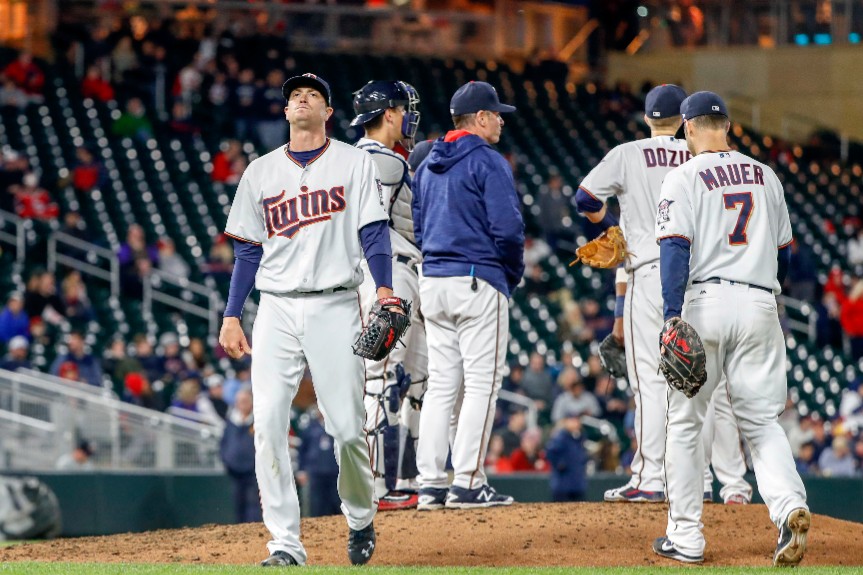 With how poorly Gibson has pitched, it's surprising he's held on to his rotation spot this long. Gibson had a marvelous first half of 2015, but since then he's pitched to a 5.39 ERA over 250.2 innings. Opposing batters have an OPS over .800 against him and his WHIP is 1.53 in that time frame. Gibson's career ERA+ is at 86, which is exactly the same as Nick Blackburn's career mark. Meanwhile, Berrios was named Twins Daily's Minor League Pitcher of the month for April after posting a 1.09 ERA and 0.79 WHIP for Rochester. Adalberto Mejia, who made three rough starts with the Twins, looked great in his lone start for the Red Wings (he's scheduled to pitch again Thursday). Nick Tepesch will slot in as the fifth starter Saturday. The 28-year-old had a 2.00 ERA and 1.33 WHIP over three starts for Rochester. If Tepesch can establish himself as a reliable starter, that may cause Gibson more trouble than anything. When they feel the time is right Berrios is coming up, it's just a matter of who gets booted from the rotation. Last Sunday on Go 96.3's excellent weekly programs Inside Twins and The Paul Molitor Show, both Derek Falvey and Molitor mentioned first-pitch strikes when asked about Gibson. Here's what Falvey told Cory Provus: "Sometimes he's trying to get a hitter to swing at something out of the zone early and what ends up happening is major league hitters make adjustments, just as pitchers do, and he has a tendency to be too fine." Among pitchers with at least 20 innings this season, Gibson has the third-worst first-pitch strike percentage at 50.5. He was at 59.4 last season. During that excellent first half of 2015, he was all the way up to 63. It's pretty much universal that pitchers do much better when ahead in the count, but is that especially more important to Gibson than any other pitcher? Here's a look at how his career numbers compare to the other veteran starters on the Twins. For additional reference I also included Corey Kluber, Justin Verlander and Jose Quintana's numbers. Batter Ahead Minus Pitcher Ahead OPS Hughes: .332 (.943 OPS-.611 OPS) Quintana: .352 (.896-.544) Gibson: .358 (.919-.561) Santiago: .373 (.931-.558) Santana: .407 (.956-.549) Verlander: .461 (.918-.457) Kluber: .484 (.946-.462) So being ahead hasn't been especially key to Gibson compared to these other pitchers. In fact, among the Twins' starters Gibson has the lowest OPS against when he's behind. But how about that first pitch in particular? After 1-0 Count Minus After 0-1 Count OPS Quintana: .116 (.762 OPS-.646 OPS) Hughes: .121 (.804-.683) Santiago: .150 (.788-.638) Gibson: .171 (.814-.643) Verlander: .191 (.743-.552) Santana: .192 (.815-.623) Kluber: .228 (.757-.529) So, getting the first-pitch strike doesn't exactly make a huge swing for Gibson in comparison to these other pitchers, either. But again, it's always better to get that first strike, no matter who you are. Career First Pitch Strike Percentage Hughes 67.3 Quintana 65.7 Kluber 62.4 Santana 62.2 Verlander 61.5 Gibson 58.1 Santiago 56.5 I'm going to start calling my boy Hector Santiago "The Exception" because he's the outlier in so many situations. Terrible first-pitch strike percentage, yet still has a career ERA+ of 105, go figure. Gibson, like most other muggles (I suspect Hector may be a wizard), has not been able to overcome that poor first-strike rate. So what's the point of all this madness? Well, before I pulled all these numbers I was wishfully hoping I'd find Gibson was a pitcher who was better than average when ahead in the count. That way, I could at least buy into the idea that with more first-pitch strikes he could return to being a solid piece to the rotation. That does not appear to be the case. There's also the issue that Gibson has been dreadful the second time through a lineup over his career. One more goofy made-up stat ... Second PA Minus First PA OPS Gibson 107 (.827 OPS-.720 OPS) Santana 58 (.742-.684) Kluber 39 (.706-.667) Hughes 15 (.755-.740) Verlander -1 (.637-.638) Quintana -30 (.665-.695) Santiago -66 (.668-.734) Brad Radke -73 (.704-.777, had to toss him in just for fun) Most starters really struggle the third time through a lineup, but Gibson doesn't make it that far. He gets clobbered the second time around. If that doesn't scream "reliever!" I don't know what does. So, even if he does a better job at starting out with strikes, Gibson's upside is probably mediocre at best. But let's assume for a moment he does bounce back to respectability, then what? Gibson's only making $2.9 million this season, but that'll increase through arbitration. While that's very affordable for a starting pitcher, his competitors make the league minimum and will continue to do so next season. How many more starts would you give Gibson? And if he's removed from the rotation, would you rather see him in the Twins' bullpen or the Rochester rotation?
 -
Kyle Gibson will make his 104th start for the Twins tomorrow night, and a lot of fans are wondering if it could it be his last chance. To his credit, Gibson is coming off his best game of the season, but he's given up at least three runs in every start and has yet to complete six innings. Altogether Gibson has an 8.06 ERA, 1.836 WHIP and he's averaging nearly as many walks (4.0 BB/9) as strikeouts (5.2 K/9). Meanwhile, Jose Berrios is pitching like he has no intention of sticking around in Rochester for long.With how poorly Gibson has pitched, it's surprising he's held on to his rotation spot this long. Gibson had a marvelous first half of 2015, but since then he's pitched to a 5.39 ERA over 250.2 innings. Opposing batters have an OPS over .800 against him and his WHIP is 1.53 in that time frame. Gibson's career ERA+ is at 86, which is exactly the same as Nick Blackburn's career mark. Meanwhile, Berrios was named Twins Daily's Minor League Pitcher of the month for April after posting a 1.09 ERA and 0.79 WHIP for Rochester. Adalberto Mejia, who made three rough starts with the Twins, looked great in his lone start for the Red Wings (he's scheduled to pitch again Thursday). Nick Tepesch will slot in as the fifth starter Saturday. The 28-year-old had a 2.00 ERA and 1.33 WHIP over three starts for Rochester. If Tepesch can establish himself as a reliable starter, that may cause Gibson more trouble than anything. When they feel the time is right Berrios is coming up, it's just a matter of who gets booted from the rotation. Last Sunday on Go 96.3's excellent weekly programs Inside Twins and The Paul Molitor Show, both Derek Falvey and Molitor mentioned first-pitch strikes when asked about Gibson. Here's what Falvey told Cory Provus: "Sometimes he's trying to get a hitter to swing at something out of the zone early and what ends up happening is major league hitters make adjustments, just as pitchers do, and he has a tendency to be too fine." Among pitchers with at least 20 innings this season, Gibson has the third-worst first-pitch strike percentage at 50.5. He was at 59.4 last season. During that excellent first half of 2015, he was all the way up to 63. It's pretty much universal that pitchers do much better when ahead in the count, but is that especially more important to Gibson than any other pitcher? Here's a look at how his career numbers compare to the other veteran starters on the Twins. For additional reference I also included Corey Kluber, Justin Verlander and Jose Quintana's numbers. Batter Ahead Minus Pitcher Ahead OPS Hughes: .332 (.943 OPS-.611 OPS) Quintana: .352 (.896-.544) Gibson: .358 (.919-.561) Santiago: .373 (.931-.558) Santana: .407 (.956-.549) Verlander: .461 (.918-.457) Kluber: .484 (.946-.462) So being ahead hasn't been especially key to Gibson compared to these other pitchers. In fact, among the Twins' starters Gibson has the lowest OPS against when he's behind. But how about that first pitch in particular? After 1-0 Count Minus After 0-1 Count OPS Quintana: .116 (.762 OPS-.646 OPS) Hughes: .121 (.804-.683) Santiago: .150 (.788-.638) Gibson: .171 (.814-.643) Verlander: .191 (.743-.552) Santana: .192 (.815-.623) Kluber: .228 (.757-.529) So, getting the first-pitch strike doesn't exactly make a huge swing for Gibson in comparison to these other pitchers, either. But again, it's always better to get that first strike, no matter who you are. Career First Pitch Strike Percentage Hughes 67.3 Quintana 65.7 Kluber 62.4 Santana 62.2 Verlander 61.5 Gibson 58.1 Santiago 56.5 I'm going to start calling my boy Hector Santiago "The Exception" because he's the outlier in so many situations. Terrible first-pitch strike percentage, yet still has a career ERA+ of 105, go figure. Gibson, like most other muggles (I suspect Hector may be a wizard), has not been able to overcome that poor first-strike rate. So what's the point of all this madness? Well, before I pulled all these numbers I was wishfully hoping I'd find Gibson was a pitcher who was better than average when ahead in the count. That way, I could at least buy into the idea that with more first-pitch strikes he could return to being a solid piece to the rotation. That does not appear to be the case. There's also the issue that Gibson has been dreadful the second time through a lineup over his career. One more goofy made-up stat ... Second PA Minus First PA OPS Gibson 107 (.827 OPS-.720 OPS) Santana 58 (.742-.684) Kluber 39 (.706-.667) Hughes 15 (.755-.740) Verlander -1 (.637-.638) Quintana -30 (.665-.695) Santiago -66 (.668-.734) Brad Radke -73 (.704-.777, had to toss him in just for fun) Most starters really struggle the third time through a lineup, but Gibson doesn't make it that far. He gets clobbered the second time around. If that doesn't scream "reliever!" I don't know what does. So, even if he does a better job at starting out with strikes, Gibson's upside is probably mediocre at best. But let's assume for a moment he does bounce back to respectability, then what? Gibson's only making $2.9 million this season, but that'll increase through arbitration. While that's very affordable for a starting pitcher, his competitors make the league minimum and will continue to do so next season. How many more starts would you give Gibson? And if he's removed from the rotation, would you rather see him in the Twins' bullpen or the Rochester rotation? Click here to view the article
-
Article: AL Central Marked By Mediocrity
Tom Froemming replied to Cody Christie's topic in Twins Daily Front Page News
Before anybody gets too excited about the White Sox, or reacts too strongly to anything in April, just remember Chicago was 17-8 last April.- 20 replies
-
- 3
-
-
- todd frazier
- francisco lindor
- (and 3 more)
-
Tyler Wells is one of the more intimidating pitchers I've ever seen. Obviously, his size helps in that regard (6-8, 265 lbs), but he also brings an intense focus to the mound. He keeps his cap tilted low and just looks kinda ornery out there. I love it.
- 25 replies
-
- 6
-
-
- jose berrios
- nik turley
- (and 3 more)
-
Agreed, except I'd put (3) as take a break on the DL Something's clearly not right with Kohl. He never had the greatest command, but this is getting ridiculous. I'm not saying I disagree with this ranking or the statement, but it is worth mentioning that Mitch had his fifth passed ball yesterday. He had seven total in 2016. But, that .935 OPS certainly sticks out.
- 16 replies
-
- 1
-
-
- aaron slegers
- tommy field
- (and 3 more)
-
Tommy Field had a banner day with the stick in support of Aaron Slegers' excellent performance, lifting Rochester to victory over the Louisville Bats. But the system couldn't match its perfect Thursday night, as both the Lookouts and Miracle let their games slip away. Just like the Twins, the Kernels were rained out. Find out what else happened around the Twins' minor leagues on Saturday.***TRANSACTION ALERT*** RED WINGS REPORT Rochester 7, Louisville 1 Box Score The Rochester lineup struck early and Aaron Slegers pitched masterfully with the lead as the Wings cruised to victory. Already leading 2-0, Rochester batted around in the third inning, tallying five runs in the process That was more than enough support for the efficient Slegers, who was in attack mode throughout this contest and didn't get into a three-ball count until the sixth inning. Slegers, who was coming off a couple of rough outings, pitched eight innings, giving up one unearned run (due to his own fielding error) while limiting the Bats' bats to seven hits. He walked one and struck out four. Second baseman Tommy Field had a field day at the plate, going 3-for-3 with a homer, two doubles and a walk. Field, 30, is now hitting .318/.387/.561 (.947 OPS). Matt Hague and Leonardo Reginatto each had a pair of hits. Niko Goodrum scored a pair of runs, marking the fifth-straight game he's crossed the plate. CHATTANOOGA CHATTER Jackson 7, Chattanooga 4 Box Score Things got off to such a great start for Chattanooga. Nick Gordon led off the game with a base hit and later came around to score. By the time Kohl Stewart took the hill he had a 2-0 lead, and he even struck out the first batter he faced. Stewart lasted only four innings and while he only gave up two runs things did not go well. He issued four walks and threw a wild pitch that allowed a run to score. In 19.1 innings, Stewart has now walked 20 batters and has almost as many wild pitches (10) as strikeouts (11). Matt Tracy came in to pitch the final four innings, but had the opposite issue. Tracy notched six strikeouts, but he also gave up five runs. Right fielder Edgar Corcino had a nice game, going 2-for-3 with a walk and a run scored. LaMonte Wade had a sac fly, a double and fought the wind to make a great leaping catch at the wall in left field. MIRACLE MATTERS Dunedin 6, Fort Myers 2 Box Score A pair of errors committed in the third inning proved costly, especially against the potent Dunedin lineup that leads the Florida State League in OPS by 20 points. It's not like Dunedin needed any extra help, as they pounded out 15 hits on the evening. Minnesota native Max Murphy recorded his third-consecutive multi-hit game for the Miracle, going 2-for-5 with a double and a run scored. After a slow start, the 24-year-old has hit .371 with six walks in his last 10 games. The only other hitter to record two hits for Fort Myers was Rafael Valera. Zander Wiel missed just one game after being hit in the face on Thursday by a 95 mph fastball. He was the DH in his return tonight, and recorded his eighth double of the year. In 21 games, the Vanderbilt product has 13 extra-base hits. Lachlan Wells started for Fort Myers, he gave up five runs in as many innings but just two of them were earned. With four more strikeouts, the 20-year-old Aussie is up to 24 Ks in 22 innings pitched for Fort Myers. KERNELS NUGGETS Cedar Rapids at Peoria (POSTPONED) Rain prevented this game from being played. These two teams will face off in a doubleheader Sunday. TWINS DAILY PLAYERS OF THE DAY Twins Daily Minor League Pitcher of the Day – Aaron Slegers (8 IP, 0 ER, 7 H, 1 BB, 4 Ks) Twins Daily Minor League Hitter of the Day – Tommy Field (3-for-3, HR, 2 2Bs, walk, 2 runs,) SUNDAY’S PROBABLE STARTERS Rochester vs. Louisville (12:35 CT) Jose Berrios (1.44 ERA, 0.88 WHIP) Chattanooga at Jackson (2:05 CT) TBD Fort Myers vs. Dunedin (3:05 CT) Dereck Rodriguez (3.24 ERA, 1.28 WHIP) Cedar Rapids at Peoria (Noon CT) Clark Beeker (2.08 ERA, 1.15 WHIP) Cedar Rapids at Peoria (Game 2) Tyler Beardsley (3.94 ERA, 1.25 WHIP) Please feel free to ask any questions and discuss Saturday's games. Click here to view the article
- 16 replies
-
- 2
-
-
- aaron slegers
- tommy field
- (and 3 more)
-
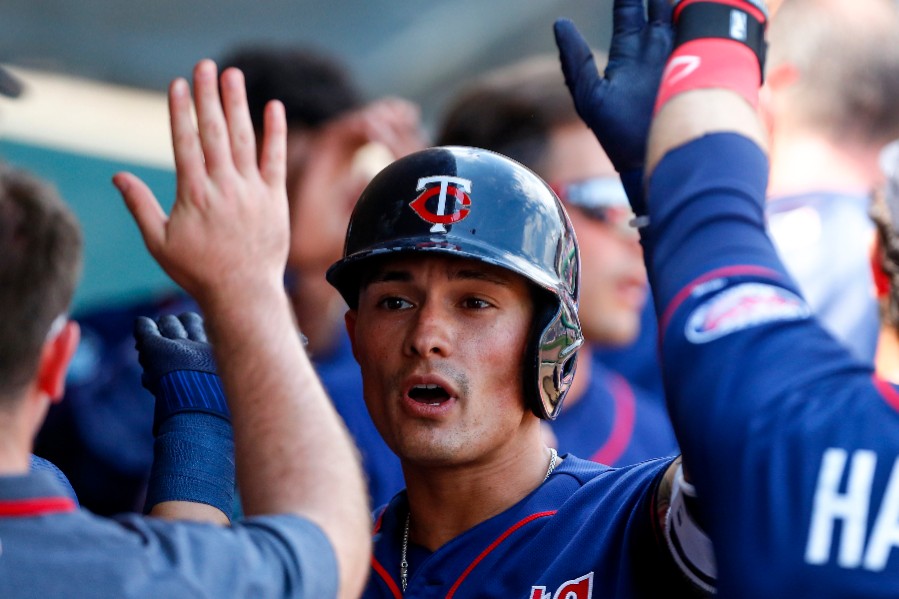 ***TRANSACTION ALERT*** https://twitter.com/MorrieSilver8/status/858649095455592451 ***INJURY UPDATE*** RED WINGS REPORT Rochester 7, Louisville 1 Box Score The Rochester lineup struck early and Aaron Slegers pitched masterfully with the lead as the Wings cruised to victory. Already leading 2-0, Rochester batted around in the third inning, tallying five runs in the process That was more than enough support for the efficient Slegers, who was in attack mode throughout this contest and didn't get into a three-ball count until the sixth inning. Slegers, who was coming off a couple of rough outings, pitched eight innings, giving up one unearned run (due to his own fielding error) while limiting the Bats' bats to seven hits. He walked one and struck out four. Second baseman Tommy Field had a field day at the plate, going 3-for-3 with a homer, two doubles and a walk. Field, 30, is now hitting .318/.387/.561 (.947 OPS). Matt Hague and Leonardo Reginatto each had a pair of hits. Niko Goodrum scored a pair of runs, marking the fifth-straight game he's crossed the plate. CHATTANOOGA CHATTER Jackson 7, Chattanooga 4 Box Score Things got off to such a great start for Chattanooga. Nick Gordon led off the game with a base hit and later came around to score. By the time Kohl Stewart took the hill he had a 2-0 lead, and he even struck out the first batter he faced. Stewart lasted only four innings and while he only gave up two runs things did not go well. He issued four walks and threw a wild pitch that allowed a run to score. In 19.1 innings, Stewart has now walked 20 batters and has almost as many wild pitches (10) as strikeouts (11). Matt Tracy came in to pitch the final four innings, but had the opposite issue. Tracy notched six strikeouts, but he also gave up five runs. Right fielder Edgar Corcino had a nice game, going 2-for-3 with a walk and a run scored. LaMonte Wade had a sac fly, a double and fought the wind to make a great leaping catch at the wall in left field. MIRACLE MATTERS Dunedin 6, Fort Myers 2 Box Score A pair of errors committed in the third inning proved costly, especially against the potent Dunedin lineup that leads the Florida State League in OPS by 20 points. It's not like Dunedin needed any extra help, as they pounded out 15 hits on the evening. Minnesota native Max Murphy recorded his third-consecutive multi-hit game for the Miracle, going 2-for-5 with a double and a run scored. After a slow start, the 24-year-old has hit .371 with six walks in his last 10 games. The only other hitter to record two hits for Fort Myers was Rafael Valera. Zander Wiel missed just one game after being hit in the face on Thursday by a 95 mph fastball. He was the DH in his return tonight, and recorded his eighth double of the year. In 21 games, the Vanderbilt product has 13 extra-base hits. Lachlan Wells started for Fort Myers, he gave up five runs in as many innings but just two of them were earned. With four more strikeouts, the 20-year-old Aussie is up to 24 Ks in 22 innings pitched for Fort Myers. KERNELS NUGGETS Cedar Rapids at Peoria (POSTPONED) Rain prevented this game from being played. These two teams will face off in a doubleheader Sunday. TWINS DAILY PLAYERS OF THE DAY Twins Daily Minor League Pitcher of the Day – Aaron Slegers (8 IP, 0 ER, 7 H, 1 BB, 4 Ks) Twins Daily Minor League Hitter of the Day – Tommy Field (3-for-3, HR, 2 2Bs, walk, 2 runs,) SUNDAY’S PROBABLE STARTERS Rochester vs. Louisville (12:35 CT) Jose Berrios (1.44 ERA, 0.88 WHIP) Chattanooga at Jackson (2:05 CT) TBD Fort Myers vs. Dunedin (3:05 CT) Dereck Rodriguez (3.24 ERA, 1.28 WHIP) Cedar Rapids at Peoria (Noon CT) Clark Beeker (2.08 ERA, 1.15 WHIP) Cedar Rapids at Peoria (Game 2) Tyler Beardsley (3.94 ERA, 1.25 WHIP) Please feel free to ask any questions and discuss Saturday's games.
 -
All I'm trying to say is there were plenty of legit reasons to be concerned about Polanco's ability to play the position. Nobody "aped" on to some report. It's not a fabrication that they took him off SS in the minors. It happened. And it wasn't a narrative that said "he sucks," it was the data. His performance thus far has eased those concerns. Apparently you were always a believer. Congrats, you were right. Nicely done. I was wrong, and am very happy to admit that, but I take issue with you trying to suggest that it was ridiculous for anyone to have been concerned about Jorge's ability to play short or that those concerns were baseless.
-
It's absolutely true, take a look at his minor league numbers. Polanco played 75 games for Rochester last season, not a single inning of which was at shortstop.
-
One more Mauer fun stat: he has hit 29 balls 95+ MPH, per Baseball Savant. There are only 15 hitters who have 30 or more. Derek Wetmore recently wrote a nice piece about the defensive turnaround in which he noted that Gene Glynn has been working a lot with Polanco. For sure, I was under the impression these two would need to mirror over to the right side ASAP, with Polanco at 2B and Sano at 1B. That will probably still be where they end up as they age, but those moves seem to be years down the line now. Not being worried about Polanco would've been ridiculous. There were 38 players to log 300 or more innings at SS last year. Polanco ranked 37th in Defensive Runs Above Average and was dead last in UZR/150. The Twins thought so highly of him as a shortstop that they took him off the position. It's not like he was pushed to 2B by Wilfredo Tovar. In 2014 he made 35 errors at SS and 28 in 2015.
