



Tom Froemming
-
Posts
5,260 -
Joined
-
Last visited
-
Days Won
22
Content Type
Profiles
News
Minnesota Twins Videos
2026 Minnesota Twins Top Prospects Ranking
2022 Minnesota Twins Draft Picks
Minnesota Twins Free Agent & Trade Rumors, Notes, & Tidbits
Guides & Resources
2023 Minnesota Twins Draft Picks
The Minnesota Twins Players Project
2024 Minnesota Twins Draft Picks
2025 Minnesota Twins Draft Pick Tracker
2026 Minnesota Twins Draft Tracker: Picks & Bonuses
Forums
Blogs
Events
Store
Downloads
Gallery
Everything posted by Tom Froemming
-
 Yes to all of the above. I think the less stuff you have the more important it is to have control/command. Jose Berrios can afford to have some control/command concerns because he's so nasty. A guy like Slegers has to be an artist. He can't afford to miss spots and he's gonna get hammered if he falls behind in the count too often. In his minor league career Slegers has a 2.0 BB/9 and only gave up 38 homers in 601 minor league innings (0.6 HR/9). I'd think that suggest that along with just not walking guys he's hitting his spots in the zone too. Just for reference, those are nearly the exact numbers Adalberto Mejia posted in the minors. How many super tall guys get that part of their game figured out by the time they're 25? Basically what I'm saying is Slegers has the building blocks, now it's time to figure out how all those other things you mentioned can be manipulated to his advantage. Can they figure out how to use his unique release point/extension and tweak something to give his pitches a boost? Maybe, maybe not, but at least we know this guy can put the ball where he wants it to go. It's a good starting point.
 -
In the sample of 315 pitchers Baseball Savant lists as starters, Arrieta ranked 73rd in average spin rate and Slegers 290th. But spin is kinda like velocity in that just because you have a high number doesn't mean you're going to be a good pitcher. Nik Turley had the third-best spin rate in that sample and Dallas Keuchel was 270th. Again I'm not a spin expert, but from what I understand there is such thing as effective spin. There may be a certain gap between your pitches you want to shoot for in terms of spin rate, so more spin isn't always a good thing. So to really break a guy down in terms of effective spin it seems you'd want to look at each of his individual pitches, which is a little out of my league at this point. But I think it's safe to say Slegers would likely benefit from more spin. The good thing is we know guys can effectively mess around with these things to a point. The Twins most certainly learned some things from having Craig Breslow around last year. Maybe they can take some of those lessons learned and apply them to a guy like Slegers and see what happens.
-
Aaron Slegers is one of the tallest pitchers to ever grace a major league mound, standing 6-foot-10. That height comes with some advantages, but exactly how does he stand to benefit from being so tall? Having that extreme length makes his fastball appear a few clicks quicker and allows him to throw from a unique release point without making any other dramatic alterations to his mechanics. Just how unique?Well, among the 562 right-handed pitchers Baseball Savant has data on from 2017, Slegers is one of just three who averaged a release point of at least 6.2 feet vertically and 3.3 feet horizontally. What’s especially surprising is he uses his length more horizontally. Slegers’ vertical release point was 6.33 feet, in the top 13 percent among right-handers, but his horizontal release point was inside the top three percent at 3.34 feet. It would make sense to guess that former Twin Alex Meyer is in that same class. After all, he’s 6-foot-9. Well it appears Meyer may not make as good use of his height, as his vertical (5.38 feet) and horizontal (2.13 feet) release points both trail Slegers by nearly a foot. So who are those other two pitchers similar to Slegers and how do they accomplish such a unique angle to pitch from? One of them is 6-foot-6 reliever Taylor Jungmann. He only threw 0.2 innings for the Brewers last season, so there’s not much data to dig into. The other guy, however, is much more interesting. That would be 6'4" free agent Jake Arrieta. How is that possible? He must have freakishly long arms or the ability to get incredible extension, right? No, for Arrieta it’s more about his feet than his arms. Arrieta accomplishes his release point by throwing from the extreme third base side of the rubber. During his 2015 Cy Young Award season, Rob Arthur over at FiveThirtyEight wrote an excellent piece about that release point evolution. Circling back to Meyer, the main reason why he has a less dramatic release point is the fact he pitches more in the middle, or maybe even slightly toward the first base side of the rubber. I’d guess that’s in an effort to keep more of his pitches in the strike zone. To give you more of a visual, here are the release point charts from Baseball Savant, starting with Slegers: Download attachment: SlegersRelease.png Below is Arrieta’s chart. It’s worth noting that there are likely some more inconsistencies because he threw a ton more pitches in the majors than Slegers last year: Download attachment: ArrietaRelease.png And finally, just for further reference here’s Meyer’s chart: Download attachment: MeyerRelease.png This is inconsistent to the point I would assume Meyer was tinkering around with his release during the year. Maybe something for you fantasy baseball players out there to look into over the winter. It’s usually pretty great to have something in common with a former Cy Young Award winner, but what does it mean? I’m not sure, but I want to make it clear that I’m not calling Aaron Slegers the next Jake Arrieta. The reason behind avoiding that comparison, however, may be different than you’d think. The perception seems to be that Slegers is a soft tosser. Yes, he did only average 90.6 mph on his fastballs during his time with the Twins, but his height/extension comes into play. Of 746 pitchers to log data at Baseball Savant in 2017, Slegers had the fourth-highest increase in effective fastball velocity vs. actual fastball velocity at +1.7 mph, meaning the effective velocity on his fastballs was 92.3 mph. Of the 315 players classified as starting pitchers by Baseball Savant, that mark ranks 116th, or inside the top 36.8 percent. Still not elite velocity, and Slegers is never going to be a power pitcher, but there’s nothing to suggest he can’t be successful because he doesn’t throw hard enough. Slegers actually had a better effective fastball velocity than Arrieta’s 91.75 mph in 2017, but he had much less impressive spin rates. Arrieta averaged 2,308 rpm on all his pitches, Slegers just 1,954 rpm. Lumping all their pitch types together is a very simplified way to look at it, but I’m not a spin rate expert, so I’ll leave it at that for now. Simply put, Arrieta has far superior stuff. So what am I trying to say here? Aaron Slegers is a lot more interesting a pitcher than I think most people realized, myself included. I’ve seen multiple people both at Twins Daily and elsewhere suggest he’s a DFA candidate. This is a pitcher entering his age 25 season coming off a strong showing in Triple-A. Nick Nelson made an interesting point in a recent article, noting Slegers’ strong finish and saying “I'm very curious to see if he can pick up where he left off, and what type of untapped potential might lie in him yet, especially if he returns to the Twins and jibes with new pitching coach Garvin Alston.” Arrieta clearly overhauled his mechanics in order to throw from a slot that Slegers is already able to pitch from naturally. Here's a look at how Arriet's horizontal slot has evolved over the years: Download attachment: ArrietaBBChart.jpeg It will be interesting to see if Slegers benefits from some of the changes that have been made to the pitching analysis and instruction staff. Is there someone in the org who can help him get more effective spin and improve the quality of his arsenal? It seems a lot of the lack of excitement is related to the fact that Slegers wasn’t, and still isn’t, considered a top prospect, but a lot of that has to do with the fact that he barely pitched as an amateur. According to this New York Times article, Slegers grew seven inches between his junior and senior years of high school. That put so much stress on his body he was barely able to pitch his senior year. What if instead he stayed healthy and had a great season? He ended up going to college at Indiana University and was able to pitch only six total games his freshman and sophomore seasons due to injuries. He was the Big Ten Pitcher of the Year as a junior, but do you think the Twins would’ve been able to get him in the fifth round of the 2013 Draft had there not been so many questions surrounding his ability to stay healthy? In his first four full seasons as a professional, Slegers has made 23, 25, 25 and 27 starts. How much earlier would he have gone If you could’ve assured teams he was going to be this durable? Of course none of that stuff really matters in the grand scheme of things at this point, but I do imagine if Slegers had been drafted a few rounds higher and put up these exact same numbers people would look at him much differently. Is Slegers someone the Twins should be making room for in their 2017 rotation? Absolutely not, but this is an intriguing pitcher who has had a successful minor league career and won’t even be arbitration eligible until 2021. That’s a great depth piece to have in case of emergency. Considering the Twins difficulties in developing starting pitchers, this is not somebody you just cast aside. Click here to view the article
-
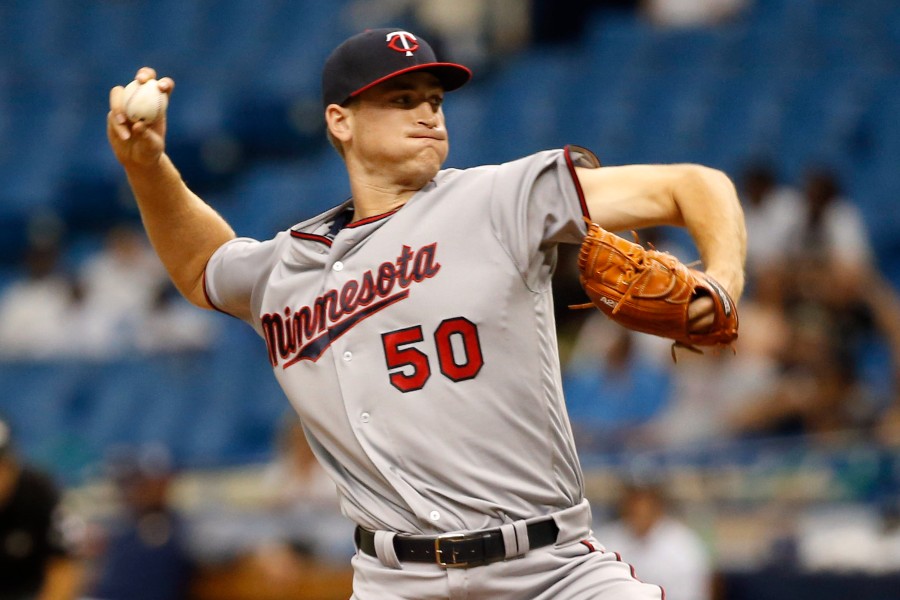 Well, among the 562 right-handed pitchers Baseball Savant has data on from 2017, Slegers is one of just three who averaged a release point of at least 6.2 feet vertically and 3.3 feet horizontally. What’s especially surprising is he uses his length more horizontally. Slegers’ vertical release point was 6.33 feet, in the top 13 percent among right-handers, but his horizontal release point was inside the top three percent at 3.34 feet. It would make sense to guess that former Twin Alex Meyer is in that same class. After all, he’s 6-foot-9. Well it appears Meyer may not make as good use of his height, as his vertical (5.38 feet) and horizontal (2.13 feet) release points both trail Slegers by nearly a foot. So who are those other two pitchers similar to Slegers and how do they accomplish such a unique angle to pitch from? One of them is 6-foot-6 reliever Taylor Jungmann. He only threw 0.2 innings for the Brewers last season, so there’s not much data to dig into. The other guy, however, is much more interesting. That would be 6'4" free agent Jake Arrieta. How is that possible? He must have freakishly long arms or the ability to get incredible extension, right? No, for Arrieta it’s more about his feet than his arms. Arrieta accomplishes his release point by throwing from the extreme third base side of the rubber. During his 2015 Cy Young Award season, Rob Arthur over at FiveThirtyEight wrote an excellent piece about that release point evolution. Circling back to Meyer, the main reason why he has a less dramatic release point is the fact he pitches more in the middle, or maybe even slightly toward the first base side of the rubber. I’d guess that’s in an effort to keep more of his pitches in the strike zone. To give you more of a visual, here are the release point charts from Baseball Savant, starting with Slegers: Below is Arrieta’s chart. It’s worth noting that there are likely some more inconsistencies because he threw a ton more pitches in the majors than Slegers last year: And finally, just for further reference here’s Meyer’s chart: This is inconsistent to the point I would assume Meyer was tinkering around with his release during the year. Maybe something for you fantasy baseball players out there to look into over the winter. It’s usually pretty great to have something in common with a former Cy Young Award winner, but what does it mean? I’m not sure, but I want to make it clear that I’m not calling Aaron Slegers the next Jake Arrieta. The reason behind avoiding that comparison, however, may be different than you’d think. The perception seems to be that Slegers is a soft tosser. Yes, he did only average 90.6 mph on his fastballs during his time with the Twins, but his height/extension comes into play. Of 746 pitchers to log data at Baseball Savant in 2017, Slegers had the fourth-highest increase in effective fastball velocity vs. actual fastball velocity at +1.7 mph, meaning the effective velocity on his fastballs was 92.3 mph. Of the 315 players classified as starting pitchers by Baseball Savant, that mark ranks 116th, or inside the top 36.8 percent. Still not elite velocity, and Slegers is never going to be a power pitcher, but there’s nothing to suggest he can’t be successful because he doesn’t throw hard enough. Slegers actually had a better effective fastball velocity than Arrieta’s 91.75 mph in 2017, but he had much less impressive spin rates. Arrieta averaged 2,308 rpm on all his pitches, Slegers just 1,954 rpm. Lumping all their pitch types together is a very simplified way to look at it, but I’m not a spin rate expert, so I’ll leave it at that for now. Simply put, Arrieta has far superior stuff. So what am I trying to say here? Aaron Slegers is a lot more interesting a pitcher than I think most people realized, myself included. I’ve seen multiple people both at Twins Daily and elsewhere suggest he’s a DFA candidate. This is a pitcher entering his age 25 season coming off a strong showing in Triple-A. Nick Nelson made an interesting point in a recent article, noting Slegers’ strong finish and saying “I'm very curious to see if he can pick up where he left off, and what type of untapped potential might lie in him yet, especially if he returns to the Twins and jibes with new pitching coach Garvin Alston.” Arrieta clearly overhauled his mechanics in order to throw from a slot that Slegers is already able to pitch from naturally. Here's a look at how Arriet's horizontal slot has evolved over the years: It will be interesting to see if Slegers benefits from some of the changes that have been made to the pitching analysis and instruction staff. Is there someone in the org who can help him get more effective spin and improve the quality of his arsenal? It seems a lot of the lack of excitement is related to the fact that Slegers wasn’t, and still isn’t, considered a top prospect, but a lot of that has to do with the fact that he barely pitched as an amateur. According to this New York Times article, Slegers grew seven inches between his junior and senior years of high school. That put so much stress on his body he was barely able to pitch his senior year. What if instead he stayed healthy and had a great season? He ended up going to college at Indiana University and was able to pitch only six total games his freshman and sophomore seasons due to injuries. He was the Big Ten Pitcher of the Year as a junior, but do you think the Twins would’ve been able to get him in the fifth round of the 2013 Draft had there not been so many questions surrounding his ability to stay healthy? In his first four full seasons as a professional, Slegers has made 23, 25, 25 and 27 starts. How much earlier would he have gone If you could’ve assured teams he was going to be this durable? Of course none of that stuff really matters in the grand scheme of things at this point, but I do imagine if Slegers had been drafted a few rounds higher and put up these exact same numbers people would look at him much differently. Is Slegers someone the Twins should be making room for in their 2017 rotation? Absolutely not, but this is an intriguing pitcher who has had a successful minor league career and won’t even be arbitration eligible until 2021. That’s a great depth piece to have in case of emergency. Considering the Twins difficulties in developing starting pitchers, this is not somebody you just cast aside.
 -
Article: Thank You Moderators!
Tom Froemming replied to John Bonnes's topic in Twins Daily Front Page News
Cheers to the moderators! Thank you all. -
Not saying he should be any higher right now, but I think Ricky De La Torre could be the guy to make the biggest jump over the next year.
- 55 replies
-
- 1
-

-
- royce lewis
- jacob pearson
- (and 3 more)
-
Care to share any thoughts on Dietrich Enns?
-
La Velle just confirmed that was exactly the case. Maitan took less to go to the Angels.
-
I believe given the unusual circumstances teams were allowed to use their 2018 international pools to sign the Braves guys if they wanted, so the Twins probably could've still afforded him even while doing these moves. But if I was Maitan I don't think I'd want to come here unless the Twins were able to overpay, given the glut of shortstops in the system. Also, I've heard people suggest Maitan will drop quite a bit in the 2018 preseason rankings from where he was on those 2017 midseason lists.
- 140 replies
-
- 5
-
-
- david banuelos
- shohei ohtani
- (and 2 more)
-
Free baseball players ... what's not to like?
- 140 replies
-
- 15
-
-
- david banuelos
- shohei ohtani
- (and 2 more)
-
I'm not certain that growth all happened in one year. He was 5-8 when he signed in 2014 and I just think nobody (MiLB/B-Ref/Fangrpahs/etc) updated his profile until right before this season. I could be wrong though. On a related note, I guess Aaron Slegers grew seven inches between his junior and senior years of high school and that absolutely crushed his development. So much stress on his tendons he couldn't pitch. Lots of injury trouble in his early years of college too.
-
Article: The Impending Rochester Rotation Crunch
Tom Froemming replied to Nick Nelson's topic in Twins Daily Front Page News
Steve Adams at MLB Trade Rumors predicted the Twins would sign Darvish in his latest chat. Obviously he was just speculating, but it wasn't baseless. Those guys pay as close attention to things around the league as anybody. Maybe they don't land Yu, but I am to the point where I expect them to sign one of those top 4 starters. But you're absolutely right, there's a lot of competition for those guys so I doubt they get two in that class. As far as the second spot, I could see the team either trading for a Cole/Odorizzi/Straily type or it wouldn't surprise me if there's a second-tier free agent that appeals to this front office for some specific reason. Maybe they think getting Chatwood out of Denver could be a game changer for him or they can fix Chacin or Tillman's wildness. They liked Jaime Garcia enough to trade for him. Would that be overkill? Maybe, but guys are going to get hurt. If you want five decent starters all year you probably realistically need to have like 10 of them in house.- 102 replies
-
- 3
-
-
- aaron slegers
- stephen gonsalves
- (and 1 more)
-
Article: The Impending Rochester Rotation Crunch
Tom Froemming replied to Nick Nelson's topic in Twins Daily Front Page News
Agreed, but that's just not Lewis Thorpe right now. He's 22 and hasn't pitched 200 total innings as a professional. He hasn't reached 90 IP in a season yet. I get that he's on the 40-man roster now, but I have a hard time imagining him as a guy who has a chance at impacting the MLB team in 2018 seeing that he's behind a bunch of other guys in that regard and will certainly be on an innings limit. He's absolutely a legit prospect to be excited about, but this season will be all about staying healthy.- 102 replies
-
- 5
-
-
- aaron slegers
- stephen gonsalves
- (and 1 more)
-
Article: The Impending Rochester Rotation Crunch
Tom Froemming replied to Nick Nelson's topic in Twins Daily Front Page News
Yes, and I believe all the rehab coordinators/a lot of the medical staff are based out of Fort Myers, so there could be some advantage to sending a guy down there if you were concerned about his readiness. On the other hand, if you do feel like a guy is ready, sending him to Rochester to test out how he handles the cold could be kind of an effective final checkpoint. Is he really ready to come back, or are there still stiffness/soreness issues popping up? -
Article: The Impending Rochester Rotation Crunch
Tom Froemming replied to Nick Nelson's topic in Twins Daily Front Page News
I think the average player in the FSL is something like 23-years-old, so Thorpe and Wells would still be young for that level. Also, neither of those two have pitched healthy through an entire year of full-season ball yet. I would feel comfortable starting the year with both of them on the Miracle.- 102 replies
-
- 2
-
-
- aaron slegers
- stephen gonsalves
- (and 1 more)
-
Article: The Impending Rochester Rotation Crunch
Tom Froemming replied to Nick Nelson's topic in Twins Daily Front Page News
Great stuff as always, really shows Falvine are in a good spot. Sounds like they may have the financial flexibility to sign a guy or two and at the same time they have depth to use as either injury insurance or trade bait. My guess right now ... MLB: Erv, Berrios, Gibson, NEW, NEW AAA: Mejia, May (as he builds arm strength), Slegers, Gonsalves, Enns AA: Jorge, Littell, Romero, Stewart, Eades Obviously trades/Rule 5 draft stuff and injuries could open up spots, but I'd suspect the team will also sign at least one minor league free agent to add to this mix too. But the fact they let Dereck Rodriguez and David Hurlbut go says they feel pretty comfortable with their depth in the upper minors. There are arguments for all those guys I listed in the AA rotation to be in Rochester, but the five guys I listed in the Red Wings rotation need to be in AAA (though I am interested in Nick's idea of Enns in the pen). I don't think it would hurt any of those guys listed to go back to Chattanooga. Looking down into Fort Myers, I don't see anybody that really needs to move up to AA start the year. Thorpe only made 15 starts there and is still going to be building innings, nothing wrong with him going back to the FSL as a 22-year-old to open the year. If they only ended up adding one MLB SP, Mejia moves up to the Twins, Jorge moves up to Rochester and somebody like Randy LeBlanc or Sean Poppen enters the Chattanooga rotation. Phil Hughes is going to need to fit in somewhere too (Triple A bullpen until he's 100% healthy?) and I'm sure I'm forgetting somebody else.- 102 replies
-
- 6
-
-
- aaron slegers
- stephen gonsalves
- (and 1 more)
-
Article: The Impending Rochester Rotation Crunch
Tom Froemming replied to Nick Nelson's topic in Twins Daily Front Page News
Romero is still only entering his age 23 season and has pitched 24 games in Double A, Littell will be in his age 22 season and has only pitched 14 games in Double A. I don't see any reason to feel the need to bump those guys up right away to start the year. Can always move them up during the year if needed.- 102 replies
-
- 11
-
-
- aaron slegers
- stephen gonsalves
- (and 1 more)
-
As a way to look back at a great minor league season and look ahead toward the release of the 2018 Twins Prospect Handbook, I’ll be writing a series of features on prospects I am especially high on. Next to receive the spotlight treatment is left-handed starting pitcher Lachlan Wells.Ranking prospects is a difficult task and everyone has a bit of a different methodology. This series isn’t meant to be critical of any of the other lists out there, it’s all about presenting a positive case for the featured player. We’re starting at the bottom of my list and working up from there. Here’s a look at what’s on deck: Range 41-50 spotlight: Zander Wiel, No. 48 Range 31-40 spotlight: Tom Hackimer, No. 36 Range 21-30 spotlight: Lachlan Wells, No. 22 Range 11-20 spotlight: Coming Dec. 12 Range 1-10 spotlight: Coming Dec. 19 While the first couple of players I’ve highlighted in this series were drafted out of college and have been a little old for their level, the exact opposite is true of Wells. Signed out of Australia in 2014, Wells has been on an aggressive path. He faced older hitters 91.2 percent of the time last season and was three years younger than the average player in his league. At just 20-years-old, he was the youngest player to pitch for the Miracle and the third youngest in the Florida State League to throw at least 80 innings. Here’s the list of pitchers who logged at least 80 innings for Fort Myers in their age 20 season since 2010: 2017: Lachlan Wells, 81.1 IP 2015 Kohl Stewart, 129.1 IP 2014: Jose Berrios, 96.0 IP After turning heads by posting a 1.77 ERA, 1.02 WHIP and 7.9 K/9 with Cedar Rapids in 2016, Wells had a 3.98 ERA for Fort Myers. While he didn’t have as easy a time carving through FSL lineups despite the notoriously pitcher-friendly atmosphere, there are still plenty of reasons to be excited about Wells’ future. He still had a 1.17 WHIP and 3.58 K:BB ratio. Those marks ranked 11th and 16th, respectively, among the 48 pitchers with at least 80 IP in the FSL last season. So what’s with the much uglier ERA? Giving up a .276/.328/.496 line (.824 OPS) with runners on certainly didn’t help. Wells’ 2017 got off to an exciting start, as he was able to represent his home country during the World Baseball Classic. On March 8, he pitched 2.0 innings perfect innings out of the bullpen with two strikeouts for Australia against Japan in front of more than 41,000 fans in the Tokyo Dome. One of the hitters he struck out, Yoshi Tsutsugo, led the NPB with 44 home runs in 2016 and was eventually named the WBC Pool B Most Valuable Player. Wells also got off to an excellent start with Fort Myers. In his first three games, he only gave up one run over 14.0 innings (0.64 ERA) with 17 strikeouts and just one walk. On May 17 he pitched a nine-inning complete game, throwing just 90 pitches, a pretty impressive feat considering only five other pitchers had a nine-inning complete game in the FSL last season. Unfortunately, Wells missed all of July and most of August with an elbow flexor muscle strain, but he still established a new career high of 85.1 innings (he made a 4.0 inning rehab appearance in the GCL). He also managed to end 2017 on a high note, throwing 5.0 shutout innings with seven strikeouts in his final start. Over the past three seasons, Wells has pitched 204.0 innings to the tune of a 2.74 ERA, 8.2 K/9 and 2.1 BB/9. I honestly feel like his prospect stock was suppressed by some outlets last year because his online profiles all listed him as only standing 5-foot-8 for so long. Almost any write-ups I could find that year made reference to how small he was. He’s still not the biggest guy, but those profiles have since all been updated to 6-foot-1. Still, his relatively unimpressive stat line in the FSL combined with an influx of talent into the system from both the draft and trades will keep him from shooting up most rankings. Along with the WBC, Wells has had the honor of representing his country on a few other occasions. He was teammates with Lewis Thorpe at the 2013 18U World Cup in Taiwan. Lachlan has a twin brother, Alex, who was named the Orioles’ Minor League Player of the Year for 2017 after posting a 2.38 ERA and 0.91 WHIP over 140.0 innings, though he was playing a step below Lachlan in the South Atlantic League. It has to be somewhat beneficial to have not only a large group of Australian pitchers as teammates in the Twins system, but also a sibling going through the same process of trying to fight through the minor leagues. Per Baseball America, Wells was already able to occasionally touch 90 mph when he signed back in 2014. In a piece for BA in April 2016, Phil Miller reported Wells sits in the low 90s comfortably, but his best pitches are his curveball and changeup. I typically like to lean on the numbers, but there’s something about Wells’ delivery that I like. He starts out slow and smooth and then everything speeds up, especially with his upper body, and his head even does a subtle jerk, almost like you’d see from max-effort little league pitchers. Maybe that’s not ideal mechanics, but the action seems to create especially good deception for his off-speed offerings. Everything looks like it’s coming in hard. Again, I don’t pretend to have an eye for scouting that kind of stuff, but below is a little bit of video from YouTube of his rehab appearance with the GCL Twins. You can kinda see what I’m talking about in the parts that were shot from the first-base side (starting around the 1:00 mark). The lack of workload is a concern, but it’s worth noting that while Wells’ innings only increased 19.6 percent from 2016 to ’17, his total pitches thrown increased by 26.2 percent. Only time will tell if Wells can make it as a starter, but if he’s forced to the bullpen at some point the fact he’s a lefty helps. With a three-pitch mix and especially strong secondary options, he seems like a safe bet to continue to progress. There’s obviously no guarantee he see advances in his fastball, but if anything it’s only going tick up and he already has very good control. For more on Lachlan Wells and about 170 other Twins minor leaguers, be sure to pick up a copy of the 2018 Twins Prospect Handbook, which will be available later this winter. Click here to view the article
-
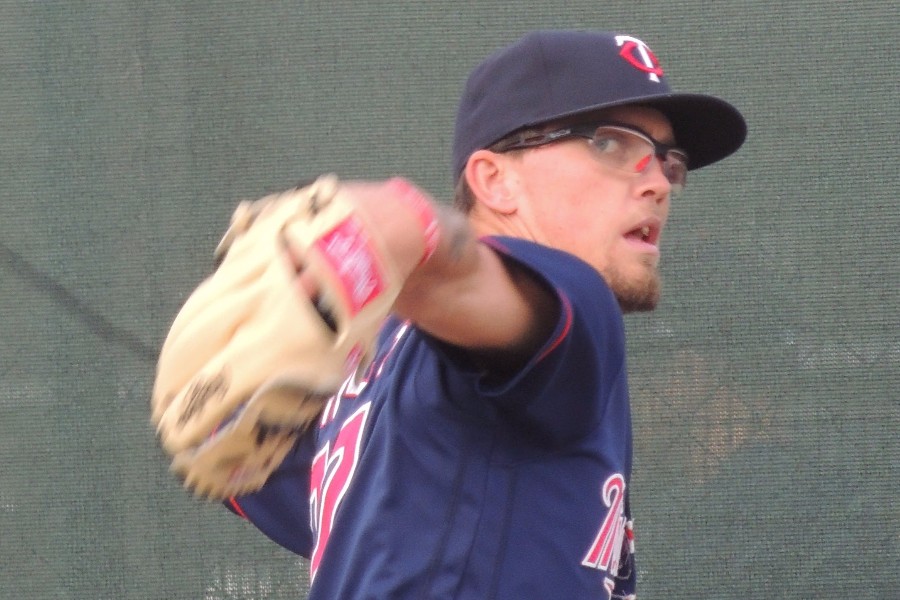 Ranking prospects is a difficult task and everyone has a bit of a different methodology. This series isn’t meant to be critical of any of the other lists out there, it’s all about presenting a positive case for the featured player. We’re starting at the bottom of my list and working up from there. Here’s a look at what’s on deck: Range 41-50 spotlight: Zander Wiel, No. 48 Range 31-40 spotlight: Tom Hackimer, No. 36 Range 21-30 spotlight: Lachlan Wells, No. 22 Range 11-20 spotlight: Coming Dec. 12 Range 1-10 spotlight: Coming Dec. 19 While the first couple of players I’ve highlighted in this series were drafted out of college and have been a little old for their level, the exact opposite is true of Wells. Signed out of Australia in 2014, Wells has been on an aggressive path. He faced older hitters 91.2 percent of the time last season and was three years younger than the average player in his league. At just 20-years-old, he was the youngest player to pitch for the Miracle and the third youngest in the Florida State League to throw at least 80 innings. Here’s the list of pitchers who logged at least 80 innings for Fort Myers in their age 20 season since 2010: 2017: Lachlan Wells, 81.1 IP 2015 Kohl Stewart, 129.1 IP 2014: Jose Berrios, 96.0 IP After turning heads by posting a 1.77 ERA, 1.02 WHIP and 7.9 K/9 with Cedar Rapids in 2016, Wells had a 3.98 ERA for Fort Myers. While he didn’t have as easy a time carving through FSL lineups despite the notoriously pitcher-friendly atmosphere, there are still plenty of reasons to be excited about Wells’ future. He still had a 1.17 WHIP and 3.58 K:BB ratio. Those marks ranked 11th and 16th, respectively, among the 48 pitchers with at least 80 IP in the FSL last season. So what’s with the much uglier ERA? Giving up a .276/.328/.496 line (.824 OPS) with runners on certainly didn’t help. Wells’ 2017 got off to an exciting start, as he was able to represent his home country during the World Baseball Classic. On March 8, he pitched 2.0 innings perfect innings out of the bullpen with two strikeouts for Australia against Japan in front of more than 41,000 fans in the Tokyo Dome. One of the hitters he struck out, Yoshi Tsutsugo, led the NPB with 44 home runs in 2016 and was eventually named the WBC Pool B Most Valuable Player. Wells also got off to an excellent start with Fort Myers. In his first three games, he only gave up one run over 14.0 innings (0.64 ERA) with 17 strikeouts and just one walk. On May 17 he pitched a nine-inning complete game, throwing just 90 pitches, a pretty impressive feat considering only five other pitchers had a nine-inning complete game in the FSL last season. Unfortunately, Wells missed all of July and most of August with an elbow flexor muscle strain, but he still established a new career high of 85.1 innings (he made a 4.0 inning rehab appearance in the GCL). He also managed to end 2017 on a high note, throwing 5.0 shutout innings with seven strikeouts in his final start. Over the past three seasons, Wells has pitched 204.0 innings to the tune of a 2.74 ERA, 8.2 K/9 and 2.1 BB/9. I honestly feel like his prospect stock was suppressed by some outlets last year because his online profiles all listed him as only standing 5-foot-8 for so long. Almost any write-ups I could find that year made reference to how small he was. He’s still not the biggest guy, but those profiles have since all been updated to 6-foot-1. Still, his relatively unimpressive stat line in the FSL combined with an influx of talent into the system from both the draft and trades will keep him from shooting up most rankings. Along with the WBC, Wells has had the honor of representing his country on a few other occasions. He was teammates with Lewis Thorpe at the 2013 18U World Cup in Taiwan. Lachlan has a twin brother, Alex, who was named the Orioles’ Minor League Player of the Year for 2017 after posting a 2.38 ERA and 0.91 WHIP over 140.0 innings, though he was playing a step below Lachlan in the South Atlantic League. It has to be somewhat beneficial to have not only a large group of Australian pitchers as teammates in the Twins system, but also a sibling going through the same process of trying to fight through the minor leagues. Per Baseball America, Wells was already able to occasionally touch 90 mph when he signed back in 2014. In a piece for BA in April 2016, Phil Miller reported Wells sits in the low 90s comfortably, but his best pitches are his curveball and changeup. I typically like to lean on the numbers, but there’s something about Wells’ delivery that I like. He starts out slow and smooth and then everything speeds up, especially with his upper body, and his head even does a subtle jerk, almost like you’d see from max-effort little league pitchers. Maybe that’s not ideal mechanics, but the action seems to create especially good deception for his off-speed offerings. Everything looks like it’s coming in hard. Again, I don’t pretend to have an eye for scouting that kind of stuff, but below is a little bit of video from YouTube of his rehab appearance with the GCL Twins. You can kinda see what I’m talking about in the parts that were shot from the first-base side (starting around the 1:00 mark). The lack of workload is a concern, but it’s worth noting that while Wells’ innings only increased 19.6 percent from 2016 to ’17, his total pitches thrown increased by 26.2 percent. Only time will tell if Wells can make it as a starter, but if he’s forced to the bullpen at some point the fact he’s a lefty helps. With a three-pitch mix and especially strong secondary options, he seems like a safe bet to continue to progress. There’s obviously no guarantee he see advances in his fastball, but if anything it’s only going tick up and he already has very good control. For more on Lachlan Wells and about 170 other Twins minor leaguers, be sure to pick up a copy of the 2018 Twins Prospect Handbook, which will be available later this winter.
 -
Article: Hopes And Plans For Trevor May
Tom Froemming replied to Seth Stohs's topic in Twins Daily Front Page News
Thanks for the update. I'm not sure how the Twins should be planning May's future, but I will say that ever since Joe Nathan had Tommy John I've looked at this surgery a lot differently. I think we're a little desensitized to it, since it's so common and so many players bounce back, but it's a big recovery and some guys need that 24 month timetable to really get back. Nathan had the surgery in March of 2010 and made the Opening Day roster the next season. It looked like he was toast in his first year back, but nope, he still had two more amazing years in him that the Rangers benefited from. 2004-09: 1.87 ERA, 0.93 WHIP, 11.1 K/9 2011: 4.84 ERA, 1.16 WHIP, 8.7 K/9 2012-13: 2.09 ERA, 0.98 WHIP, 10.5 K/9 It's going to be a really tough message to deliver to a 28-year-old Trevor May who I'm sure is absolutely chomping at the bit to get on the mound and prove himself, but it's going to be important that he and the team remain patient.- 33 replies
-
- 1
-
-
- trevor may
- john smoltz
- (and 3 more)
-
No, We Don't All Look Alike
Tom Froemming commented on Twins and Losses's blog entry in Twins and Losses
I agree, this is getting embarrassing. You did a great job touching on the racial issues, but people also overreact to the Park and Nishioka signings. They weren't even disasters. The investments made were modest and I even think there's still some debate that either guy may have panned out if they hadn't have gotten injured. With posting fees and everything else a grand total of $38.85MM was committed to those two players. Nishi was a $5MM posting and a $9MM contract, Park was $12.85MM posting and a $12MM contract. And some of that was even recuperated when each of those guys returned home. These weren't six-figure signings. Their failures did not cripple the franchise. These are fans who saw their club give Ricky Nolasco $49MM and Phil Hughes a $42MM extension, if anything the argument should be don't give pitchers money. But then again ... Why am I even arguing this!?!?!? Park and Nishioka have nothing to do with Darvish, Ohtani or anyone else!!! It's just the worst take ever on so many levels and I've seen it like a hundred times now. Barf. Those fans don't deserve to get to see Darvish or Ohtani pitch for their team.- 8 comments
-
- 5
-
-
- shohei ohtani
- byungho park
- (and 3 more)
-
Oh no, in the grand scheme of things for the Twins creating more competition and making those guys force their way in is certainly not a bad thing. But just from a selfish viewpoint of my own fandom, am I going to be more excited/invested in seeing Gonsalves/Romero or even Aaron Slegers or Trevor May pitch in the rotation, or a free agent? My heart wants to see our young guys get a shot, but my head wants the Twins to sign two starters and two relievers.
- 68 replies
-
- 4
-
-
- royce lewis
- stephen gonsalves
- (and 3 more)
-
I've been thinking a lot about whether they should leave a rotation spot open for one of these guys too, but it's so tough to know how a guy is going to handle his first taste in the bigs. The advantage of being a non-contender is you can give prospects a test run and if they fail it doesn't matter (like Berrios in 2016). I'm excited to hear the front office talk about trying to catch Cleveland, don't get me wrong, but it is kind of a bummer that being a contender probably also means it's probably going to be more difficult for these young guys to break in.
- 68 replies
-
- 1
-
-
- royce lewis
- stephen gonsalves
- (and 3 more)
-
In the FSL. I wasn't all that impressed with him pounding on kids in the Appy League, but what he did with the Miracle was unbelievable. There were only 15 hitters who had more HRs in the FSL, and Rooker was only there for 40 games. I shared this on Twitter yesterday ... PA/HR for Fort Myers 14.7 Brent Rooker, 2017 15.2 Miguel Sano, 2013 20.4 David Ortiz, 1997 The strikeouts are a concern, especially since they didn't come with a gaudy walk rate, but the power is so hot. The guy hit 41 homers in 129 games total last year between college and the minors. I get it if some people don't buy into the hype, especially given the small sample and his apparent lack of positive defensive value at this point, but I'm allowing myself to get excited already.
- 59 replies
-
- 2
-
-
- brent rooker
- brusdar graterol
- (and 3 more)
-
Yeah, I've wondered that same thing in concern to adding Neshek as a free agent. Hackimer is a couple inches shorter than Hildy, and I'd guess he doesn't throw his changeup as often, but them being too similar would definitely still be something you'd worry about. That's a good way of looking at it. FWIW, Hackimer also had that kind of thing happen in the AFL. Had one bad outing of his 10 games where gave up two runs and walked four in an inning. So he seems a tad prone to those blowups but is otherwise dominant. I suspect as he gets more comfortable on the mound we'll see fewer of those hiccups.
