



Steven Buhr
-
Posts
1,682 -
Joined
-
Last visited
Content Type
Profiles
Minnesota Twins News, Rumors & Analysis
Minnesota Twins Videos
2026 Minnesota Twins Top Prospect Rankings
2022 Minnesota Twins Draft Picks & Signing Bonuses
Minnesota Twins Trade & Free Agent Rumors
Minnesota Twins Fan Guides & Resources
2023 Minnesota Twins Draft Picks & Signing Bonuses
The Minnesota Twins Players Project
2024 Minnesota Twins Draft Picks & Signing Bonuses
2025 Minnesota Twins Draft Picks & Signing Bonuses
2026 Minnesota Twins Draft Picks & Signing Bonuses
Forums
Blogs
Events
Store
Downloads
Gallery
Everything posted by Steven Buhr
-
Imagine for a moment that you grew up in an area where high temperatures each day run between 80 and 85 degrees, year-round. You enjoy sports, especially baseball, and you can literally play ball every day, all year, if you want. You realize your dream of signing a professional baseball contract and then, one day, you’re pitching for the Cedar Rapids Kernels, a mere 2,600 miles, as the crow flies, from your home town. Then you walk out to the mound to pitch your first game of the season and it’s 37 degrees with a 15 mile per hour wind slapping you in the face. Image courtesy of Steve Buhr (photo of Edwar Colina) Imagine for a moment that you grew up in an area where high temperatures each day run between 80 and 85 degrees, year-round. You enjoy sports, especially baseball, and you can literally play ball every day, all year, if you want. You realize your dream of signing a professional baseball contract and then, one day, you’re pitching for the Cedar Rapids Kernels, a mere 2,600 miles, as the crow flies, from your home town. Then you walk out to the mound to pitch your first game of the season and it’s 37 degrees with a 15 mile per hour wind slapping you in the face. Welcome to the world of Kernels pitcher Edwar Colina, as it existed on April 7 this spring when he took to the mound for his first start in full-season professional baseball. “It was hard for me,” Colina recalled this weekend, concerning his introduction to Midwest spring weather. “It was the first time in my life that I see snow. The weather was really hard. In my home, the regular weather is 85 degrees. 85 to 90 all year. So when I came here, the first week was really hard for me. But the experience is all (part of) baseball. That’s part of the process, you know? “It was hard, because I never pitched in that weather, but you just try to compete and I think I did a good job with the weather.” Indeed he did. Colina accorded himself quite well, considering the circumstances that night, when he got the start for the Kernels’ home opener. He surrendered two runs, just one of which was earned, in four innings of work in what would become a 4-3 Cedar Rapids win. Thanks, in part, to a streak of unplayable weather that followed the Kernels across the Midwest for a week, Colina didn’t get another chance to start until more than two weeks later. In fact, he’s had only three starts this season. He gave up just a pair of hits over five shutout innings in a start on April 24, recording his first win on the year in a game where the temperature was 74 degrees at first pitch, exactly twice what it had been in his first start. That’s pretty good, but both the weather and his performance levels were both just starting to warm up. In his start on Tuesday, May 1 (two days before his 21st birthday), it was 80 degrees in Cedar Rapids when he took the mound for the first inning. When he left the game, he not only had shut out the South Bend Cubs over his six innings of work, he’d also held them without a hit. After Jovani Moran provided three innings of no-hit relief, the pair had combined to throw the first no-hitter for the Kernels in just over five years and Colina’s record rose to 2-0. The no-hitter was a first for Colina. “That was my first no-hitter ever at any level, amateur or professional,” a smiling Colina acknowledged. “It was the first no-hitter of my life.” Whether by tradition or due to superstition, common baseball practice is to pretty much leave a pitcher alone between innings when he has something as meaningful as a no-hitter going on, but that’s not what Colina was doing on Tuesday. “No, I talked to my teammates a lot during the game,” he said. “I talked to the catcher. How we feel comfortable throwing what pitches. I just tried to be a good team mate with my position guys and I did not pay attention, really, to the no-hitter. I just tried to keep focus on the game and to help my team.” Edwar Colina pitches during the Kernels home opener on April 7, 2018 (Photo by SD Buhr) That comment reflects a level of maturity that extends beyond the playing field, as well. Maybe that’s because his path to professional baseball in the United States took a little different route than some Latin American players do. Typically, most of what we hear and read about concerning signings out of Latin America involve 16-year-olds getting significant signing bonuses. You won’t find any old press clippings announcing a huge bonus being paid to a young Edwar Colina, however. Colina wasn’t signed by the Twins until September of 2015, a few months after the hard throwing right-hander turned 18 years old, meaning he missed out on the sort of bonus that the most sought after foreign players are paid. If Colina was disappointed not to be signed as a 16-year-old, he didn’t let that deter him from chasing his dream. “I was not signed when I was 16,” Colina explained, “but I kept working hard for that because I love baseball. And when (the Twins offer) happened, I just took the opportunity.” In 2016, he started 13 games for the Twins’ Dominican Summer League team and began last season in extended spring training before making 12 appearances (11 of them starts) for Elizabethton. Not only has he proven increasingly successful on the mound, he’s also learned the importance of assimilating into his new environment in the United States. Since arriving in this country not much more than a year ago, he’s worked hard to learn English well enough to communicate with teammates and coaches, not to mention fans and the media. While the Twins do offer their foreign-born prospects English classes, Colina credits a fellow minor leaguer from the Netherlands, Taylor Clemensia, with helping him accelerate his understanding of the language. “When I went (to the U.S.) last year, I spent a lot of time with my friend (Clemensia), he’s from Netherlands. I spent like every single day with him and he doesn’t speak Spanish. He helped me a lot. "When I moved to (Elizabethton) Tennessee, you don’t see too many people that speak Spanish there, so that helped me more. You keep practicing with the players. Every day I asked different things to somebody about whatever. You just try to hear some English and that helped me.” Again, his maturity level becomes evident when Colina discusses why he feels learning English quickly is important for more than just being able to carry on a conversation with a reporter. “You never know what would happen later,” he explained. “That’s what I said when I (came) here. Hey, you never know what happens after baseball. Probably, you’ll need your English, so I would do it quick.” With a level head and an arm that generates a mid-90s fastball, one can’t help but wonder what kind of performance Colina will be capable of once game time temperatures get up into the 85-90 degree range he’s more accustomed to pitching in back home in Venezuela. Edwar Colina signing autographs following the Kernels game on May 6, 2018 (Photo by SD Buhr) Of course, if his performance continues to improve at its current pace, he may be pitching in much warmer temperatures in Ft. Myers, Florida, before long. “That’s what I try to do,” he acknowledged, concerning the possibility of a mid-season promotion to the class high-A level. “Try to move quick, fast as I can. I’m working hard every single day to fix my mistakes.” His manager, Toby Gardenhire, has noticed and is a big supporter of the right-hander. “He’s got plus stuff,” Gardenhire said of Colina. “He’s got a really good fastball, obviously, he runs it up there 95, 96 (miles per hour) a lot of times. He’s got a really good slider and a good change-up that he’s been working on. And the ball moves, that’s the biggest thing. He’s 95, 96 and it doesn’t go straight. He’s got a lot of sink. “So his biggest thing is, can he control it? Because he has a tendency to kind of dabble around the plate a little bit. When he’s good, he throws a lot of strikes. He’s done that the last couple of times, so hopefully he just keeps getting better with that, too.” (This article was originally posted at Knuckleballsblog.com) View full article
- 6 replies
-
- 1
-

-
- edwar colina
- jovani moran
- (and 1 more)
-
 Welcome to the world of Kernels pitcher Edwar Colina, as it existed on April 7 this spring when he took to the mound for his first start in full-season professional baseball. “It was hard for me,” Colina recalled this weekend, concerning his introduction to Midwest spring weather. “It was the first time in my life that I see snow. The weather was really hard. In my home, the regular weather is 85 degrees. 85 to 90 all year. So when I came here, the first week was really hard for me. But the experience is all (part of) baseball. That’s part of the process, you know? “It was hard, because I never pitched in that weather, but you just try to compete and I think I did a good job with the weather.” Indeed he did. Colina accorded himself quite well, considering the circumstances that night, when he got the start for the Kernels’ home opener. He surrendered two runs, just one of which was earned, in four innings of work in what would become a 4-3 Cedar Rapids win. Thanks, in part, to a streak of unplayable weather that followed the Kernels across the Midwest for a week, Colina didn’t get another chance to start until more than two weeks later. In fact, he’s had only three starts this season. He gave up just a pair of hits over five shutout innings in a start on April 24, recording his first win on the year in a game where the temperature was 74 degrees at first pitch, exactly twice what it had been in his first start. That’s pretty good, but both the weather and his performance levels were both just starting to warm up. In his start on Tuesday, May 1 (two days before his 21st birthday), it was 80 degrees in Cedar Rapids when he took the mound for the first inning. When he left the game, he not only had shut out the South Bend Cubs over his six innings of work, he’d also held them without a hit. After Jovani Moran provided three innings of no-hit relief, the pair had combined to throw the first no-hitter for the Kernels in just over five years and Colina’s record rose to 2-0. The no-hitter was a first for Colina. “That was my first no-hitter ever at any level, amateur or professional,” a smiling Colina acknowledged. “It was the first no-hitter of my life.” Whether by tradition or due to superstition, common baseball practice is to pretty much leave a pitcher alone between innings when he has something as meaningful as a no-hitter going on, but that’s not what Colina was doing on Tuesday. “No, I talked to my teammates a lot during the game,” he said. “I talked to the catcher. How we feel comfortable throwing what pitches. I just tried to be a good team mate with my position guys and I did not pay attention, really, to the no-hitter. I just tried to keep focus on the game and to help my team.” Edwar Colina pitches during the Kernels home opener on April 7, 2018 (Photo by SD Buhr) That comment reflects a level of maturity that extends beyond the playing field, as well. Maybe that’s because his path to professional baseball in the United States took a little different route than some Latin American players do. Typically, most of what we hear and read about concerning signings out of Latin America involve 16-year-olds getting significant signing bonuses. You won’t find any old press clippings announcing a huge bonus being paid to a young Edwar Colina, however. Colina wasn’t signed by the Twins until September of 2015, a few months after the hard throwing right-hander turned 18 years old, meaning he missed out on the sort of bonus that the most sought after foreign players are paid. If Colina was disappointed not to be signed as a 16-year-old, he didn’t let that deter him from chasing his dream. “I was not signed when I was 16,” Colina explained, “but I kept working hard for that because I love baseball. And when (the Twins offer) happened, I just took the opportunity.” In 2016, he started 13 games for the Twins’ Dominican Summer League team and began last season in extended spring training before making 12 appearances (11 of them starts) for Elizabethton. Not only has he proven increasingly successful on the mound, he’s also learned the importance of assimilating into his new environment in the United States. Since arriving in this country not much more than a year ago, he’s worked hard to learn English well enough to communicate with teammates and coaches, not to mention fans and the media. While the Twins do offer their foreign-born prospects English classes, Colina credits a fellow minor leaguer from the Netherlands, Taylor Clemensia, with helping him accelerate his understanding of the language. “When I went (to the U.S.) last year, I spent a lot of time with my friend (Clemensia), he’s from Netherlands. I spent like every single day with him and he doesn’t speak Spanish. He helped me a lot. "When I moved to (Elizabethton) Tennessee, you don’t see too many people that speak Spanish there, so that helped me more. You keep practicing with the players. Every day I asked different things to somebody about whatever. You just try to hear some English and that helped me.” Again, his maturity level becomes evident when Colina discusses why he feels learning English quickly is important for more than just being able to carry on a conversation with a reporter. “You never know what would happen later,” he explained. “That’s what I said when I (came) here. Hey, you never know what happens after baseball. Probably, you’ll need your English, so I would do it quick.” With a level head and an arm that generates a mid-90s fastball, one can’t help but wonder what kind of performance Colina will be capable of once game time temperatures get up into the 85-90 degree range he’s more accustomed to pitching in back home in Venezuela. Edwar Colina signing autographs following the Kernels game on May 6, 2018 (Photo by SD Buhr) Of course, if his performance continues to improve at its current pace, he may be pitching in much warmer temperatures in Ft. Myers, Florida, before long. “That’s what I try to do,” he acknowledged, concerning the possibility of a mid-season promotion to the class high-A level. “Try to move quick, fast as I can. I’m working hard every single day to fix my mistakes.” His manager, Toby Gardenhire, has noticed and is a big supporter of the right-hander. “He’s got plus stuff,” Gardenhire said of Colina. “He’s got a really good fastball, obviously, he runs it up there 95, 96 (miles per hour) a lot of times. He’s got a really good slider and a good change-up that he’s been working on. And the ball moves, that’s the biggest thing. He’s 95, 96 and it doesn’t go straight. He’s got a lot of sink. “So his biggest thing is, can he control it? Because he has a tendency to kind of dabble around the plate a little bit. When he’s good, he throws a lot of strikes. He’s done that the last couple of times, so hopefully he just keeps getting better with that, too.” (This article was originally posted at Knuckleballsblog.com)
-
Edwar Colina: From Chilly Home Opener to No-Hitter
Steven Buhr posted a blog entry in SD Buhr/Jim Crikket
Imagine for a moment that you grew up in an area where high temperatures each day run between 80 and 85 degrees, year-round. http://knuckleballsblog.com/blog/wp-content/uploads/2018/05/Colina2018b-600x400.jpg Edwar Colina (Photo by SD Buhr) You enjoy sports, especially baseball, and you can literally play ball every day, all year, if you want. You realize your dream of signing a professional baseball contract and then, one day, you’re pitching for the Cedar Rapids Kernels, a mere 2,600 miles, as the crow flies, from your home town. Then you walk out to the mound to pitch your first game of the season and it’s 37 degrees with a 15 mile per hour wind slapping you in the face. Welcome to the world of Kernels pitcher Edwar Colina, as it existed on April 7 this spring when he took to the mound for his first start in full-season professional baseball. “It was hard for me,” Colina recalled this weekend, concerning his introduction to Midwest spring weather. “It was the first time in my life that I see snow. The weather was really hard. In my home, the regular weather is 85 degrees. 85 to 90 all year. So when I came here, the first week was really hard for me. But the experience is all (part of) baseball. That’s part of the process, you know? “It was hard, because I never pitched in that weather, but you just try to compete and I think I did a good job with the weather.” Indeed he did. Colina accorded himself quite well, considering the circumstances that night, when he got the start for the Kernels’ home opener. He surrendered two runs, just one of which was earned, in four innings of work in what would become a 4-3 Cedar Rapids win. Thanks, in part, to a streak of unplayable weather that followed the Kernels across the Midwest for a week, Colina didn’t get another chance to start until more than two weeks later. In fact, he’s had only three starts this season. He gave up just a pair of hits over five shutout innings in a start on April 24, recording his first Win on the year in a game where the temperature was 74 degrees at first pitch, exactly twice what it had been in his first start. That’s pretty good, but both the weather and his performance levels were both just starting to warm up. In his start on Tuesday, May 1 (two days before his 21st birthday), it was 80 degrees in Cedar Rapids when he took the mound for the first inning. When he left the game, he not only had shut out the South Bend Cubs over his six innings of work, he’d also held them without a hit. After Jovani Moran provided three innings of no-hit relief, the pair had combined to throw the first no-hitter for the Kernels in just over five years and Colina’s record rose to 2-0. The no-hitter was a first for Colina. “That was my first no-hitter ever at any level, amateur or professional,” a smiling Colina acknowledged. “It was the first no-hitter of my life.” Whether by tradition or due to superstition, common baseball practice is to pretty much leave a pitcher alone between innings when he has something as meaningful as a no-hitter going on, but that’s not what Colina was doing on Tuesday. “No, I talked to my team mates a lot during the game,” he said. “I talked to the catcher. How we feel comfortable throwing what pitches. I just tried to be a good team mate with my position guys and I did not pay attention, really, to the no-hitter. I just tried to keep focus on the game and to help my team.” http://knuckleballsblog.com/blog/wp-content/uploads/2018/05/Colina0407d-600x400.jpg Edwar Colina pitches during the Kernels home opener on April 7, 2018 (Photo by SD Buhr) That comment reflects a level of maturity that extends beyond the playing field, as well. Maybe that’s because his path to professional baseball in the United States took a little different route than some Latin American players do. Typically, most of what we hear and read about concerning signings out of Latin America involve 16-year-olds getting significant signing bonuses. You won’t find any old press clippings announcing a huge bonus being paid to a young Edwar Colina, however. Colina wasn’t signed by the Twins until September of 2015, a few months after the hard throwing right-hander turned 18 years old, meaning he missed out on the sort of bonus that the most sought after foreign players are paid. If Colina was disappointed not to be signed as a 16-year-old, he didn’t let that deter him from chasing his dream. “I was not signed when I was 16,” Colina explained, “but I kept working hard for that because I love baseball. And when (the Twins offer) happened, I just took the opportunity.” In 2016, he started 13 games for the Twins’ Dominican Summer League team and began last season in Extended Spring Training before making 12 appearances (11 of them starts) for Elizabethton. Not only has he proven increasingly successful on the mound, he’s also learned the importance of assimilating into his new environment in the United States. Since arriving in this country not much more than a year ago, he’s worked hard to learn English well enough to communicate with team mates and coaches, not to mention fans and the media. While the Twins do offer their foreign-born prospects English classes, Colina credits a fellow minor leaguer from the Netherlands, Taylor Clemensia, with helping him accelerate his understanding of the language. “When I went (to the U.S.) last year, I spent a lot of time with my friend (Clemensia), he’s from Netherlands. I spent like every single day with him and he doesn’t speak Spanish. He helped me a lot. "When I moved to (Elizabethton) Tennessee, you don’t see too many people that speak Spanish there, so that helped me more. You keep practicing with the players. Every day I asked different things to somebody about whatever. You just try to hear some English and that helped me.” Again, his maturity level becomes evident when Colina discusses why he feels learning English quickly is important for more than just being able to carry on a conversation with a reporter. “You never know what would happen later,” he explained. “That’s what I said when I (came) here. Hey, you never know what happens after baseball. Probably, you’ll need your English, so I would do it quick.” With a level head and an arm that generates a mid-90s fastball, one can’t help but wonder what kind of performance Colina will be capable of once game time temperatures get up into the 85-90 degree range he’s more accustomed to pitching in back home in Venezuela. http://knuckleballsblog.com/blog/wp-content/uploads/2018/05/Colina2018a-400x600.jpg Edwar Colina signing autographs following the Kernels game on May 6, 2018 (Photo by SD Buhr) Of course, if his performance continues to improve at its current pace, he may be pitching in much warmer temperatures in Ft. Myers, Florida, before long. “That’s what I try to do,” he acknowledged, concerning the possibility of a mid-season promotion to the class high-A level. “Try to move quick, fast as I can. I’m working hard every single day to fix my mistakes.” His manager, Toby Gardenhire, has noticed and is a big supporter of the right-hander. “He’s got plus stuff,” Gardenhire said of Colina. “He’s got a really good fastball, obviously, he runs it up there 95, 96 (miles per hour) a lot of times. He’s got a really good slider and a good change-up that he’s been working on. And the ball moves, that’s the biggest thing. He’s 95, 96 and it doesn’t go straight. He’s got a lot of sink. “So his biggest thing is, can he control it? Because he has a tendency to kind of dabble around the plate a little bit. When he’s good, he throws a lot of strikes. He’s done that the last couple of times, so hopefully he just keeps getting better with that, too.” (This article was originally posted at Knuckleballsblog.com) -
What a difference a year makes. A year ago, Ben Rortvedt was getting his first taste of full-season minor league baseball after having been drafted out of high school in the second round of the 2016 amateur draft by the Minnesota Twins. Things did not go well for the young catcher from Verona, Wisconsin. Through April, he was hitting only .096 with an OPS of just .229. This spring, it was obviously important for the young catcher to get off on the right foot in 2018 and put that 2017 start well behind him. Just 19 years old when he opened his first year of full-season minor league ball last season, Rortvedt admits he wasn’t used to dealing with the sorts of struggles he encountered a year ago. “Yeah, last year did not go my way at all and I truly wasn’t used to that,” he recalled. “Since I started slow, I didn’t really know how to handle that. It was kind of rough for the first month or so. I tried to dig out of it and it was really kind of hard for me. I tried to change a lot of things.” While he recovered over the second half of the season to hit right at .280 over the course of June, July and August, he decided this past offseason to go back to what he was familiar with, an approach he described as, “just simplifying everything and seeing the ball. That’s what I did going into spring training.” Whatever he did, it seems to be working. http://knuckleballsblog.com/blog/wp-content/uploads/2018/04/Rortvedt0413d-600x400.jpg Ben Rortvedt (Photo : SD Buhr) Despite a 1-for-11 stretch at the plate in his last three games going into Tuesday night, Rortvedt is still hitting .321 with an OPS of .773. He can feel the difference, too. “I feel really good,” he said. “I’m really comfortable with the league. I know what it’s about. I’ve been seeing the ball well and finding the barrel. “ His manager, Toby Gardenhire, can see the difference, too. “There’s a reason they put guys in the minor leagues and they have them develop and they work them up through the system,” Gardnehire said. “It’s amazing what a year in a place like this will do. He comes back and he’s a totally different guy. He’s more confident now. He knows what to expect. He knows how to go about his day-to-day business a lot better than he did last year. He’s putting in the work and he’s having results.” Gardenhire has noticed more than just greater experience, though. He’s seeing a level of self-confidence in Rortvedt that wasn’t there a year ago. “It’s a confidence thing. If you go up to the plate and you don’t know what to expect from yourself and you’re just trying to make contact and you’re hoping that you do well, that doesn’t usually go very well,” the manager pointed out. “But when you’re going up there and you have a plan because you’ve been there and done it a little bit, then it changes your whole mentality and that’s what Ben’s doing right now. “He’s got kind of a chip on his shoulder where he wants to go up there and be the guy. Last year, he kind of questioned himself a little bit, but this year I don’t see a whole lot of questioning himself in him.” http://knuckleballsblog.com/blog/wp-content/uploads/2018/04/Rortvedt0413b-600x400.jpg Ben Rortvedt (Photo: SD Buhr) Hitting is a good thing, of course, especially for a guy drafted as high as Rortvedt was. But, as a catcher, what he does behind the plate is equally important, if not more so. That’s an area where he’s making some adjustments to his game, as well. For the first time since he joined the organization, the Twins have hired a catching coordinator to work with their minor league backstops. Tanner Swanson joined the organization in that capacity and Rortvedt couldn’t be happier about it. “It was kind of frustrating not having someone to talk to about catching,” Rortvedt said, adding that Swanson’s arrival has changed that. “He’s very hands on, a very approachable guy.” It has meant, however, that Rortvedt is working on changing the way he goes about his business behind the plate. “The new big thing is receiving metrics, working a lot on receiving the ball the right way. It’s different from how I grew up catching. http://knuckleballsblog.com/blog/wp-content/uploads/2018/03/Rortvedt2-400x600.jpg Ben Rortvedt (Photo: SD Buhr) “I grew up with more of an old style of catching, which was catch the ball where it is, try to make it look the best you can, be strong with the baseball. We’re moving more towards moving the baseball, trying to create strikes. So I’m kind of redefining myself behind the plate, trying to find a balance where I can still have my own flavor, but I can also move the baseball a little bit and create more strikes.” It hasn’t necessarily been an easy adjustment to make all the time for Rortvedt. “I grew up catching in seventh or eighth grade and I got really good at being strong with the baseball, so I’ve been fine tuning my game,” he explained. “It was almost frustrating in the beginning, but I think I’m starting to get more the hang of it. It’s a work in progress, just something to add to my game.” Rortvedt’s workmanlike approach to the game is reflected in a simple goal for this year. “I’m just out here to improve myself and win games,” he said. “If you win games, you’re probably doing well and contributing to the team.” This article was originally posted at Knuckleballsblog.com. Image courtesy of SD Buhr, Knuckleballsblog.com View full article
-
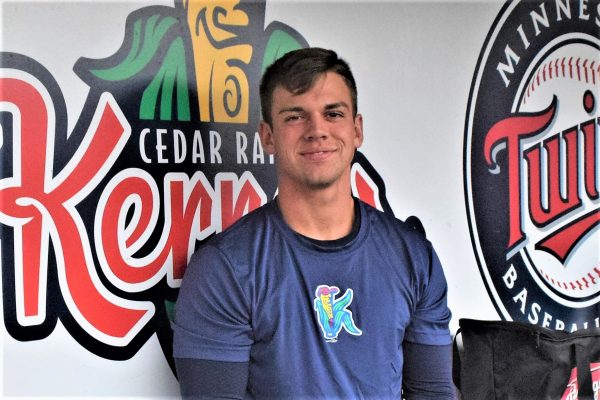 Just 19 years old when he opened his first year of full-season minor league ball last season, Rortvedt admits he wasn’t used to dealing with the sorts of struggles he encountered a year ago. “Yeah, last year did not go my way at all and I truly wasn’t used to that,” he recalled. “Since I started slow, I didn’t really know how to handle that. It was kind of rough for the first month or so. I tried to dig out of it and it was really kind of hard for me. I tried to change a lot of things.” While he recovered over the second half of the season to hit right at .280 over the course of June, July and August, he decided this past offseason to go back to what he was familiar with, an approach he described as, “just simplifying everything and seeing the ball. That’s what I did going into spring training.” Whatever he did, it seems to be working. http://knuckleballsblog.com/blog/wp-content/uploads/2018/04/Rortvedt0413d-600x400.jpg Ben Rortvedt (Photo : SD Buhr) Despite a 1-for-11 stretch at the plate in his last three games going into Tuesday night, Rortvedt is still hitting .321 with an OPS of .773. He can feel the difference, too. “I feel really good,” he said. “I’m really comfortable with the league. I know what it’s about. I’ve been seeing the ball well and finding the barrel. “ His manager, Toby Gardenhire, can see the difference, too. “There’s a reason they put guys in the minor leagues and they have them develop and they work them up through the system,” Gardnehire said. “It’s amazing what a year in a place like this will do. He comes back and he’s a totally different guy. He’s more confident now. He knows what to expect. He knows how to go about his day-to-day business a lot better than he did last year. He’s putting in the work and he’s having results.” Gardenhire has noticed more than just greater experience, though. He’s seeing a level of self-confidence in Rortvedt that wasn’t there a year ago. “It’s a confidence thing. If you go up to the plate and you don’t know what to expect from yourself and you’re just trying to make contact and you’re hoping that you do well, that doesn’t usually go very well,” the manager pointed out. “But when you’re going up there and you have a plan because you’ve been there and done it a little bit, then it changes your whole mentality and that’s what Ben’s doing right now. “He’s got kind of a chip on his shoulder where he wants to go up there and be the guy. Last year, he kind of questioned himself a little bit, but this year I don’t see a whole lot of questioning himself in him.” http://knuckleballsblog.com/blog/wp-content/uploads/2018/04/Rortvedt0413b-600x400.jpg Ben Rortvedt (Photo: SD Buhr) Hitting is a good thing, of course, especially for a guy drafted as high as Rortvedt was. But, as a catcher, what he does behind the plate is equally important, if not more so. That’s an area where he’s making some adjustments to his game, as well. For the first time since he joined the organization, the Twins have hired a catching coordinator to work with their minor league backstops. Tanner Swanson joined the organization in that capacity and Rortvedt couldn’t be happier about it. “It was kind of frustrating not having someone to talk to about catching,” Rortvedt said, adding that Swanson’s arrival has changed that. “He’s very hands on, a very approachable guy.” It has meant, however, that Rortvedt is working on changing the way he goes about his business behind the plate. “The new big thing is receiving metrics, working a lot on receiving the ball the right way. It’s different from how I grew up catching. http://knuckleballsblog.com/blog/wp-content/uploads/2018/03/Rortvedt2-400x600.jpg Ben Rortvedt (Photo: SD Buhr) “I grew up with more of an old style of catching, which was catch the ball where it is, try to make it look the best you can, be strong with the baseball. We’re moving more towards moving the baseball, trying to create strikes. So I’m kind of redefining myself behind the plate, trying to find a balance where I can still have my own flavor, but I can also move the baseball a little bit and create more strikes.” It hasn’t necessarily been an easy adjustment to make all the time for Rortvedt. “I grew up catching in seventh or eighth grade and I got really good at being strong with the baseball, so I’ve been fine tuning my game,” he explained. “It was almost frustrating in the beginning, but I think I’m starting to get more the hang of it. It’s a work in progress, just something to add to my game.” Rortvedt’s workmanlike approach to the game is reflected in a simple goal for this year. “I’m just out here to improve myself and win games,” he said. “If you win games, you’re probably doing well and contributing to the team.” This article was originally posted at Knuckleballsblog.com.
-
What a difference a year makes. http://knuckleballsblog.com/blog/wp-content/uploads/2018/04/Rortvedt0413a-600x400.jpg Ben Rortvedt (Photo: SD Buhr) A year ago, Ben Rortvedt was getting his first taste of full-season minor league baseball after having been drafted out of high school in the second round of the 2016 amateur draft by the Minnesota Twins. Things did not go well for the young catcher from Verona, Wisconsin. Through April, he was hitting only .096 with an OPS of just .229. This spring, it was obviously important for the young catcher to get off on the right foot in 2018 and put that 2017 start well behind him. Just 19 years old when he opened his first year of full-season minor league ball last season, Rortvedt admits he wasn’t used to dealing with the sorts of struggles he encountered a year ago. “Yeah, last year did not go my way at all and I truly wasn’t used to that,” he recalled. “Since I started slow, I didn’t really know how to handle that. It was kind of rough for the first month or so. I tried to dig out of it and it was really kind of hard for me. I tried to change a lot of things.” While he recovered over the second half of the season to hit right at .280 over the course of June, July and August, he decided this past offseason to go back to what he was familiar with, an approach he described as, “just simplifying everything and seeing the ball. That’s what I did going into spring training.” Whatever he did, it seems to be working. http://knuckleballsblog.com/blog/wp-content/uploads/2018/04/Rortvedt0413d-600x400.jpg Ben Rortvedt (Photo : SD Buhr) Despite a 1 for 11 stretch at the plate in his last three games going into Tuesday night, Rortvedt is still hitting .321 with an OPS of .773. He can feel the difference, too. “I feel really good,” he said. “I’m really comfortable with the league. I know what it’s about. I’ve been seeing the ball well and finding the barrel. “ His manager, Toby Gardenhire, can see the difference, too. “There’s a reason they put guys in the minor leagues and they have them develop and they work them up through the system,” Gardnehire said. “It’s amazing what a year in a place like this will do. He comes back and he’s a totally different guy. He’s more confident now. He knows what to expect. He knows how to go about his day-to-day business a lot better than he did last year. He’s putting in the work and he’s having results.” Gardenhire has noticed more than just greater experience, though. He’s seeing a level of self-confidence in Rortvedt that wasn’t there a year ago. “It’s a confidence thing. If you go up to the plate and you don’t know what to expect from yourself and you’re just trying to make contact and you’re hoping that you do well, that doesn’t usually go very well,” the manager pointed out. “But when you’re going up there and you have a plan because you’ve been there and done it a little bit, then it changes your whole mentality and that’s what Ben’s doing right now. “He’s got kind of a chip on his shoulder where he wants to go up there and be the guy. Last year, he kind of questioned himself a little bit, but this year I don’t see a whole lot of questioning himself in him.” http://knuckleballsblog.com/blog/wp-content/uploads/2018/04/Rortvedt0413b-600x400.jpg Ben Rortvedt (Photo: SD Buhr) Hitting is a good thing, of course, especially for a guy drafted as high as what Rortvedt was. But, as a catcher, what he does behind the plate is equally important, if not more so. That’s an area where he’s making some adjustments to his game, as well. For the first time since he joined the organization, the Twins have hired a Catching Coordinator to work with their minor league backstops. Tanner Swanson joined the organization in that capacity and Rortvedt couldn’t be happier about it. “It was kind of frustrating not having someone to talk to about catching,” Rortvedt said, adding that Swanson’s arrival has changed that. “He’s very hands on, a very approachable guy.” It has meant, however, that Rortvedt is working on changing the way he goes about his business behind the plate. “The new big thing is receiving metrics, working a lot on receiving the ball the right way. It’s different from how I grew up catching. http://knuckleballsblog.com/blog/wp-content/uploads/2018/03/Rortvedt2-400x600.jpg Ben Rortvedt (Photo: SD Buhr) “I grew up with more of an old style of catching, which was catch the ball where it is, try to make it look the best you can, be strong with the baseball. We’re moving more towards moving the baseball, trying to create strikes. So I’m kind of redefining myself behind the plate, trying to find a balance where I can still have my own flavor, but I can also move the baseball a little bit and create more strikes.” It hasn’t necessarily been an easy adjustment to make all the time for Rortvedt. “I grew up catching in 7th or 8th grade and I got really good at being strong with the baseball, so I’ve been fine tuning my game,” he explained. “It was almost frustrating in the beginning, but I think I’m starting to get more the hang of it. It’s a work in progress, just something to add to my game.” Rortvedt’s workmanlike approach to the game is reflected in a simple goal for this year. “I’m just out here to improve myself and win games,” he said. “If you win games, you’re probably doing well and contributing to the team.” (This article was originally posted at Knuckleballsblog.com)
-
You may have heard that the "Field of Dreams" site near Dyersville, Iowa, was severely vandalized not long ago, with thousands of dollars of damage done to the ball field at the movie's site, which remains a popular tourist attraction decades after the iconic movie was released. This week, even with snow on the ground, staff and grounds crews from the Cedar Rapids Kernels, Quad Cities River Bandits, Clinton Lumberkings and Iowa Cubs came together with other volunteers to work on repairs. Pretty cool story and just one example of how these minor league organizations work to benefit communities. Link to story with video from KWWL in Waterloo (Realize that "Minor Leagues" might not be the appropriate topic under which to post this. but figure moderators can move it if they wish)
-
The Cedar Rapids Kernels hit the frozen ground running this season, jumping off to a 6-0 record before finally suffering their first loss of the year on Friday night against Clinton. Don’t say the start surprised their manager, Toby Gardenhire, though. With a lineup as full of highly regarded prospects as this Kernels roster is, he’s not going to be too surprised with short term success. Image courtesy of SD Buhr (photo of Bryan Sammons) The Cedar Rapids Kernels hit the frozen ground running this season, jumping off to a 6-0 record before finally suffering their first loss of the year on Friday night against Clinton. Don’t say the start surprised their manager, Toby Gardenhire, though. With a lineup as full of highly regarded prospects as this Kernels roster is, he’s not going to be too surprised with short term success. “I don’t know if I’d call it surprised,” Gardenhire said on Friday before that night’s frigid game. “We’ve got a lot of guys that are doing some really good things right now. Any time you can run off a stretch like we’ve done here, it means there are a lot of people doing their job and doing a really good job of it. “That’s the nice thing about our lineup,” he continued. “We have a whole bunch of guys that are really exciting. Whether they’re going to do it on a given night, that’s the question, but we’ve had a lot of guys step up and do some pretty impressive things, so it’s been fun.” Still, even if the early success isn’t surprising, this is not exactly how the Cedar Rapids Kernels’ season was supposed to start out. You simply don’t expect four of your first 11 games (including three of your first five home dates) to be postponed due to cold and snow. Cold or not, you can’t argue with success. Cedar Rapids opened the 2018 campaign April 5 with a 2-0 shutout of the Quad Cities River Bandits in Davenport, then had the next night’s game postponed. They topped Quad Cities again, 4-3, in Cedar Rapids’ home opener on April 7. Then had another postponement the next day. They did get an entire four-game series played in Peoria during the middle of the week and it’s a good thing they did, too! The Kernels swept all four games from the Chiefs. They won the first game of the series 3-1, which means they had outscored their opponents 9-4 through the first three games they played. It wasn’t exactly a demonstration of the kind of offensive fire power that fans were expecting to see from a lineup that included two first round draft choices and often saw “slot picks” (players drafted in the first 10 rounds of the amateur draft) at all nine spots in the batting order. That all changed as the weather crawled up to more normal levels over the final three games of the series in Peoria. The Kernels scored eight, 12 and nine runs, respectively, in those games while posting their perfect 6-0 record through Thursday. In three of those four games against the Chiefs, Cedar Rapids had to mount comebacks after falling behind Peoria. That fact wasn’t lost on their manager, either. “That’s our lineup,” the manager said. “You don’t expect that, but I would say, at this point, right now, we don’t really ever feel like we’re out of it with the group of guys that we’ve got going. “Now that changes, it fluctuates throughout the season. There’s days when you’re going to be down and think, ‘uh oh, we’re never going to come back in this one,’ but with the way the guys are playing right now and swinging, their confidence level is very high right now and that helps out a ton, too. With these guys’ confidence level right now, being down doesn’t scare them.” Alex Kirilloff, the first round pick of the Twins in 2016, had a two-home run game in the series and 2017 first overall pick Royce Lewis notched his first home run of the season during the Peoria series, as well. http://knuckleballsblog.com/blog/wp-content/uploads/2018/04/Gardenhire0413a-400x600.jpg Kernels manager Toby Gardenhire (Photo: SD Buhr) For our purposes, we’ll just try to pretend Friday night’s 2-0 loss to Clinton didn’t happen. I’m sure the Kernels hitters would like to, anyway, after managing just a pair of singles and one walk against the Lumberkings on a frigid night in Cedar Rapids. (Games 2 and 3 of the scheduled weekend series were postponed due to cold and snow). That one forgettable game aside, it’s been a pretty impressive opening act for this group of Minnesota Twins prospects. On a team with a pair of first round picks, it might come as a surprise that outfielder Mark Contreras has led the team’s offense, so far. The Twins’ ninth round pick out of UC-Riverside is off to a hot start in the five games he’s played, with a .444 batting average and a 1.029 OPS. And that’s after an 0-for-3 night against Clinton on Friday. Catcher (and 2016 2nd round pick) Ben Rortvedt also went 0-for-3 against the Lumberkings, but Rortvedt is still hitting .400 and has a healthy .979 OPS. Obviously, this early in the season, these are all small sample sizes and it would be unwise to put much (or any, really) stock in stat lines that accumulate over just a handful of games, most of which took place in very unpleasant weather conditions. Still, that 6-1 record is looking pretty good, so far. As encouraging as the way his young lineup is playing under challenging conditions, Gardenhire is just as happy with what he’s seeing from his pitching corps. “Our starting pitching has been good,” Gardehire observed. “They’ve been able to get us into the fourth or fifth inning just about every game.” That may not seem like much and, later in the season when temperatures warm up and arms are healthy and loose, the bar will be set at a much different level. But this is April and many of these games have had game time temperatures around 40 degrees. Maybe lower. “In the beginning of the season,” the manager explained, “(getting four to five innings) is all you’re hoping for. Get us 75 to 80 pitches and get us into the fifth. Past the fifth is great. And they’ve been doing that just about every game and keeping it close while they do it.” Bryan Sammons, the only Kernels starting pitcher to take the mound for two starts so far, has a 0.96 ERA in those two starts, spanning 9 1/3 innings, and a WHIP of just 1.07. But four or five innings is only half the game and the Kernels have been holding opponents in check after that, as well, as Gardenhire pointed out about his relief arms. “Our bullpen has been great. They’ve just done a really good job. Guys are starting to get comfortable. This early in the season, you expect a lot more of the yips and guys being pretty nervous going out there. And we haven’t had a ton of that. We’ve had some guys go out there and be a little bit nervous, but for the most part, guys have stepped up and done really well.” http://knuckleballsblog.com/blog/wp-content/uploads/2018/04/Molina0413a-600x400.jpg Kernels pitcher Derek Molina (Photo: SD Buhr) Three members of the bullpen, Jared Finkel, Calvin Faucher and Derek Molina, have yet to surrender an earned run. Finkel has made three appearances and Faucher a pair of them. Molina threw two scoreless innings of relief Friday night after joining the team as a replacement for Ryan Mason, who had been so effective in his three appearances that he earned a promotion to Class High-A Fort Myers. All told, ten of the fourteen pitchers who have made at least one appearance for the Kernels so far have early-season ERAs of 2.25 or lower. Of course, it’s early and nobody will claim ERA means everything (or even much) when it comes to judging a pitcher’s effectiveness, but up and down the stat list, several Kernels are striking out a batter or more per inning and walking fewer than half of the number of batters they are striking out. It’s an encouraging start. The Kernels have a scheduled off day on Monday, following the two unscheduled days off on the weekend. Then they head to Beloit for a three-game series against the Snappers, where temperatures are projected to run anywhere from a low of 25 to a high of 45 over those three days. Oh, and there’s a fair chance of snow on Wednesday. Of course there is. All of these postponements are going to wreak havoc on an already hectic schedule for the Kernels in May, too. They start out the month of May with series against Eastern Division clubs and will go on the road to Dayton and then Bowling Green. Their only scheduled day off in the entire month is Sunday, May 13. But since that’s the day after their series finale in Bowling Green the night of the 12th, how do you think that day is going to be spent? If you guessed a very long bus ride throughout the night and into the morning, you’d be correct. Then from May 14 through June 3, the Kernels will play 24 games in 21 days. Their make up game with Quad Cities will be on May 16. This will be a “split double header,” with the first game being the regularly scheduled noon game and the nightcap starting at 6:35. Both games will be seven-inning games, just as traditional doubleheader games are in the Midwest League. Memorial Day weekend could be the real gauntlet for the ballclub, though. That’s the next time that Clinton is scheduled to return to Cedar Rapids and both of this weekend’s games will be made up as part of traditional doubleheaders over the Holiday weekend. One on Saturday, May 26, starting at 5:05, and the other on Sunday, May 27, beginning at 2:05. I know it’s probably not going to be necessary, but I’m thinking I’m going to loosen up the throwing arm earlier that week. You just have to figure Gardenhire and his pitching coaches are going to be looking around for anyone who can throw the ball 60 feet by the time that Sunday evening rolls around. That’s next month’s concern, of course, so we’ll worry about that when the time comes. The next home series in Cedar Rapids kicks off this coming Friday night, April 20, and it’s a special one. Royce Lewis is the first “number one overall” draft pick to suit up for the club and the Kernels are celebrating with a “Royce Lewis Bobblehead” promotion. While the Kernels have done bobblehead promotions honoring past players with some level of frequency, this is the first time they’ve honored a current Kernels player in that manner. Only the first 1.000 fans through the gates will get a bobblehead, though, so if you want one, you probably should plan to get in line early. This article was originally posted at Knuckleballsblog.com. View full article
-
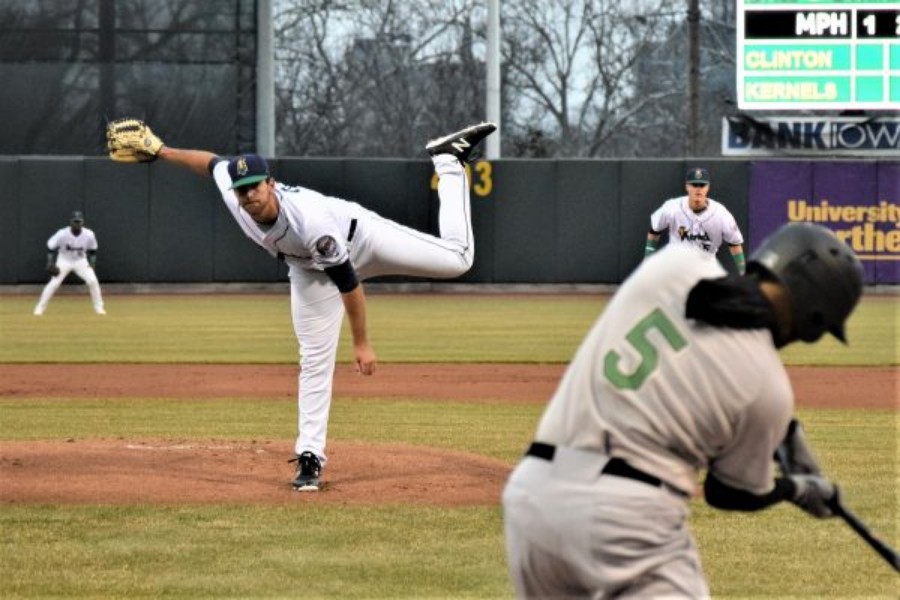 “I don’t know if I’d call it surprised,” Gardenhire said on Friday before that night’s frigid game. “We’ve got a lot of guys that are doing some really good things right now. Any time you can run off a stretch like we’ve done here, it means there are a lot of people doing their job and doing a really good job of it. “That’s the nice thing about our lineup,” he continued. “We have a whole bunch of guys that are really exciting. Whether they’re going to do it on a given night, that’s the question, but we’ve had a lot of guys step up and do some pretty impressive things, so it’s been fun.” Still, even if the early success isn’t surprising, this is not exactly how the Cedar Rapids Kernels’ season was supposed to start out. You simply don’t expect four of your first 11 games (including three of your first five home dates) to be postponed due to cold and snow. Cold or not, you can’t argue with success. Cedar Rapids opened the 2018 campaign April 5 with a 2-0 shutout of the Quad Cities River Bandits in Davenport, then had the next night’s game postponed. They topped Quad Cities again, 4-3, in Cedar Rapids’ home opener on April 7. Then had another postponement the next day. They did get an entire four-game series played in Peoria during the middle of the week and it’s a good thing they did, too! The Kernels swept all four games from the Chiefs. They won the first game of the series 3-1, which means they had outscored their opponents 9-4 through the first three games they played. It wasn’t exactly a demonstration of the kind of offensive fire power that fans were expecting to see from a lineup that included two first round draft choices and often saw “slot picks” (players drafted in the first 10 rounds of the amateur draft) at all nine spots in the batting order. That all changed as the weather crawled up to more normal levels over the final three games of the series in Peoria. The Kernels scored eight, 12 and nine runs, respectively, in those games while posting their perfect 6-0 record through Thursday. In three of those four games against the Chiefs, Cedar Rapids had to mount comebacks after falling behind Peoria. That fact wasn’t lost on their manager, either. “That’s our lineup,” the manager said. “You don’t expect that, but I would say, at this point, right now, we don’t really ever feel like we’re out of it with the group of guys that we’ve got going. “Now that changes, it fluctuates throughout the season. There’s days when you’re going to be down and think, ‘uh oh, we’re never going to come back in this one,’ but with the way the guys are playing right now and swinging, their confidence level is very high right now and that helps out a ton, too. With these guys’ confidence level right now, being down doesn’t scare them.” Alex Kirilloff, the first round pick of the Twins in 2016, had a two-home run game in the series and 2017 first overall pick Royce Lewis notched his first home run of the season during the Peoria series, as well. http://knuckleballsblog.com/blog/wp-content/uploads/2018/04/Gardenhire0413a-400x600.jpg Kernels manager Toby Gardenhire (Photo: SD Buhr) For our purposes, we’ll just try to pretend Friday night’s 2-0 loss to Clinton didn’t happen. I’m sure the Kernels hitters would like to, anyway, after managing just a pair of singles and one walk against the Lumberkings on a frigid night in Cedar Rapids. (Games 2 and 3 of the scheduled weekend series were postponed due to cold and snow). That one forgettable game aside, it’s been a pretty impressive opening act for this group of Minnesota Twins prospects. On a team with a pair of first round picks, it might come as a surprise that outfielder Mark Contreras has led the team’s offense, so far. The Twins’ ninth round pick out of UC-Riverside is off to a hot start in the five games he’s played, with a .444 batting average and a 1.029 OPS. And that’s after an 0-for-3 night against Clinton on Friday. Catcher (and 2016 2nd round pick) Ben Rortvedt also went 0-for-3 against the Lumberkings, but Rortvedt is still hitting .400 and has a healthy .979 OPS. Obviously, this early in the season, these are all small sample sizes and it would be unwise to put much (or any, really) stock in stat lines that accumulate over just a handful of games, most of which took place in very unpleasant weather conditions. Still, that 6-1 record is looking pretty good, so far. As encouraging as the way his young lineup is playing under challenging conditions, Gardenhire is just as happy with what he’s seeing from his pitching corps. “Our starting pitching has been good,” Gardehire observed. “They’ve been able to get us into the fourth or fifth inning just about every game.” That may not seem like much and, later in the season when temperatures warm up and arms are healthy and loose, the bar will be set at a much different level. But this is April and many of these games have had game time temperatures around 40 degrees. Maybe lower. “In the beginning of the season,” the manager explained, “(getting four to five innings) is all you’re hoping for. Get us 75 to 80 pitches and get us into the fifth. Past the fifth is great. And they’ve been doing that just about every game and keeping it close while they do it.” Bryan Sammons, the only Kernels starting pitcher to take the mound for two starts so far, has a 0.96 ERA in those two starts, spanning 9 1/3 innings, and a WHIP of just 1.07. But four or five innings is only half the game and the Kernels have been holding opponents in check after that, as well, as Gardenhire pointed out about his relief arms. “Our bullpen has been great. They’ve just done a really good job. Guys are starting to get comfortable. This early in the season, you expect a lot more of the yips and guys being pretty nervous going out there. And we haven’t had a ton of that. We’ve had some guys go out there and be a little bit nervous, but for the most part, guys have stepped up and done really well.” http://knuckleballsblog.com/blog/wp-content/uploads/2018/04/Molina0413a-600x400.jpg Kernels pitcher Derek Molina (Photo: SD Buhr) Three members of the bullpen, Jared Finkel, Calvin Faucher and Derek Molina, have yet to surrender an earned run. Finkel has made three appearances and Faucher a pair of them. Molina threw two scoreless innings of relief Friday night after joining the team as a replacement for Ryan Mason, who had been so effective in his three appearances that he earned a promotion to Class High-A Fort Myers. All told, ten of the fourteen pitchers who have made at least one appearance for the Kernels so far have early-season ERAs of 2.25 or lower. Of course, it’s early and nobody will claim ERA means everything (or even much) when it comes to judging a pitcher’s effectiveness, but up and down the stat list, several Kernels are striking out a batter or more per inning and walking fewer than half of the number of batters they are striking out. It’s an encouraging start. The Kernels have a scheduled off day on Monday, following the two unscheduled days off on the weekend. Then they head to Beloit for a three-game series against the Snappers, where temperatures are projected to run anywhere from a low of 25 to a high of 45 over those three days. Oh, and there’s a fair chance of snow on Wednesday. Of course there is. All of these postponements are going to wreak havoc on an already hectic schedule for the Kernels in May, too. They start out the month of May with series against Eastern Division clubs and will go on the road to Dayton and then Bowling Green. Their only scheduled day off in the entire month is Sunday, May 13. But since that’s the day after their series finale in Bowling Green the night of the 12th, how do you think that day is going to be spent? If you guessed a very long bus ride throughout the night and into the morning, you’d be correct. Then from May 14 through June 3, the Kernels will play 24 games in 21 days. Their make up game with Quad Cities will be on May 16. This will be a “split double header,” with the first game being the regularly scheduled noon game and the nightcap starting at 6:35. Both games will be seven-inning games, just as traditional doubleheader games are in the Midwest League. Memorial Day weekend could be the real gauntlet for the ballclub, though. That’s the next time that Clinton is scheduled to return to Cedar Rapids and both of this weekend’s games will be made up as part of traditional doubleheaders over the Holiday weekend. One on Saturday, May 26, starting at 5:05, and the other on Sunday, May 27, beginning at 2:05. I know it’s probably not going to be necessary, but I’m thinking I’m going to loosen up the throwing arm earlier that week. You just have to figure Gardenhire and his pitching coaches are going to be looking around for anyone who can throw the ball 60 feet by the time that Sunday evening rolls around. That’s next month’s concern, of course, so we’ll worry about that when the time comes. The next home series in Cedar Rapids kicks off this coming Friday night, April 20, and it’s a special one. Royce Lewis is the first “number one overall” draft pick to suit up for the club and the Kernels are celebrating with a “Royce Lewis Bobblehead” promotion. While the Kernels have done bobblehead promotions honoring past players with some level of frequency, this is the first time they’ve honored a current Kernels player in that manner. Only the first 1.000 fans through the gates will get a bobblehead, though, so if you want one, you probably should plan to get in line early. This article was originally posted at Knuckleballsblog.com.
-
Kernels: "Lot of Guys Doing Some Really Good Things"
Steven Buhr posted a blog entry in SD Buhr/Jim Crikket
The Cedar Rapids Kernels hit the frozen ground running this season, jumping off to a 6-0 record before finally suffering their first loss of the year on Friday night against Clinton. http://knuckleballsblog.com/blog/wp-content/uploads/2018/04/Sammons0413e-600x400.jpg Bryan Sammons delivers a pitch Friday, April 13, against Clinton (Photo: SD Buhr) Don’t say the start surprised their manager, Toby Gardenhire, though. With a lineup as full of highly regarded prospects as this Kernels roster is, he’s not going to be too surprised with short term success. “I don’t know if I’d call it surprised,” Gardenhire said on Friday before that night’s frigid game. “We’ve got a lot of guys that are doing some really good things right now. Any time you can run off a stretch like we’ve done here, it means there are a lot of people doing their job and doing a really good job of it. “That’s the nice thing about our lineup,” he continued. “We have a whole bunch of guys that are really exciting. Whether they’re going to do it on a given night, that’s the question, but we’ve had a lot of guys step up and do some pretty impressive things, so it’s been fun.” Still, even if the early success isn’t surprising, this is not exactly how the Cedar Rapids Kernels’ season was supposed to start out. You simply don’t expect four of your first 11 games (including three of your first five home dates) to be postponed due to cold and snow. Cold or not, you can’t argue with success. Cedar Rapids opened the 2018 campaign April 5 with a 2-0 shutout of the Quad Cities River Bandits in Davenport, then had the next night’s game postponed. They topped Quad Cities again, 4-3, in Cedar Rapids’ home opener on April 7. Then had another postponement the next day. They did get an entire four-game series played in Peoria during the middle of the week and it’s a good thing they did, too! The Kernels swept all four games from the Chiefs. They won the first game of the series 3-1, which means they had outscored their opponents 9-4 through the first three games they played. It wasn’t exactly a demonstration of the kind of offensive fire power that fans were expecting to see from a lineup that included two first round draft choices and often saw “slot picks” (players drafted in the first 10 rounds of the amateur draft) at all nine spots in the batting order. That all changed as the weather crawled up to more normal levels over the final three games of the series in Peoria. The Kernels scored 8, 12 and 9 runs, respectively, in those games while posting their perfect 6-0 record through Thursday. In three of those four games against the Chiefs, Cedar Rapids had to mount comebacks after falling behind Peoria. That fact wasn’t lost on their manager, either. “That’s our lineup,” the manager said. “You don’t expect that, but I would say, at this point, right now, we don’t really ever feel like we’re out of it with the group of guys that we’ve got going. “Now that changes, it fluctuates throughout the season. There’s days when you’re going to be down and think, ‘uh oh, we’re never going to come back in this one,’ but with the way the guys are playing right now and swinging, their confidence level is very high right now and that helps out a ton, too. With these guys’ confidence level right now, being down doesn’t scare them.” Alex Kirilloff, the first round pick of the Twins in 2016, had a two-home run game in the series and 2017 first overall pick Royce Lewis notched his first home run of the season during the Peoria series, as well. http://knuckleballsblog.com/blog/wp-content/uploads/2018/04/Gardenhire0413a-400x600.jpg Kernels manager Toby Gardenhire (Photo: SD Buhr) For our purposes, we’ll just try to pretend Friday night’s 2-0 loss to Clinton didn’t happen. I’m sure the Kernels hitters would like to, anyway, after managing just a pair of singles and one walk against the Lumberkings on a frigid night in Cedar Rapids. (Games 2 and 3 of the scheduled weekend series were postponed due to cold and snow). That one forgettable game aside, it’s been a pretty impressive opening act for this group of Minnesota Twins prospects. On a team with a pair of first round picks, it might come as a surprise that outfielder Mark Contreras has led the team’s offense, so far. The Twins’ 9th round pick out of UC-Riverside is off to a hot start in the five games he’s played, with a .444 batting average and a 1.029 OPS. And that’s after an 0-3 night against Clinton on Friday. Catcher (and 2016 2nd round pick) Ben Rortvedt also went 0-3 against the Lumberkings, but Rortvedt is still hitting .400 and has a healthy .979 OPS. Obviously, this early in the season, these are all small sample sizes and it would be unwise to put much (or any, really) stock in stat lines that accumulate over just a handful of games, most of which took place in very unpleasant weather conditions. Still, that 6-1 record is looking pretty good, so far. As encouraging as the way his young lineup is playing under challenging conditions, Gardenhire is just as happy with what he’s seeing from his pitching corps. “Our starting pitching has been good,” Gardehire observed. “They’ve been able to get us into the fourth or fifth inning just about every game.” That may not seem like much and, later in the season when temperatures warm up and arms are healthy and loose, the bar will be set at a much different level. But this is April and many of these games have had game time temperatures around 40 degrees. Maybe lower. “In the beginning of the season,” the manager explained, “(getting 4-5 innings) is all you’re hoping for. Get us 75 to 80 pitches and get us into the fifth. Past the fifth is great. And they’ve been doing that just about every game and keeping it close while they do it.” Bryan Sammons, the only Kernels starting pitcher to take the mound for two starts so far, has a 0.96 ERA in those two starts, spanning 9 1/3 innings, and a WHIP of just 1.07. But four or five innings is only half the game and the Kernels have been holding opponents in check after that, as well, as Gardenhire pointed out about his relief arms. “Our bullpen has been great. They’ve just done a really good job. Guys are starting to get comfortable. This early in the season, you expect a lot more of the yips and guys being pretty nervous going out there. And we haven’t had a ton of that. We’ve had some guys go out there and be a little bit nervous, but for the most part, guys have stepped up and done really well.” http://knuckleballsblog.com/blog/wp-content/uploads/2018/04/Molina0413a-600x400.jpg Kernels pitcher Derek Molina (Photo: SD Buhr) Three members of the bullpen, Jared Finkel, Calvin Faucher and Derek Molina, have yet to surrender an earned run. Finkel has made three appearances and Faucher a pair of them. Molina threw two scoreless innings of relief Friday night after joining the team as a replacement for Ryan Mason, who had been so effective in his three appearances that he earned a promotion to Class High-A Fort Myers. All told, ten of the fourteen pitchers who have made at least one appearance for the Kernels so far have early-season ERAs of 2.25 or lower. Of course, it’s early and nobody will claim ERA means everything (or even much) when it comes to judging a pitcher’s effectiveness, but up and down the stat list, several Kernels are striking out a batter or more per inning and walking less than half of the number of batters they are striking out. It’s an encouraging start. The Kernels have a scheduled off day on Monday, following the two unscheduled days off on the weekend. Then they head to Beloit for a three-game series against the Snappers, where temperatures are projected to run anywhere from a low of 25 to a high of 45 over those three days. Oh, and there’s a fair chance of snow on Wednesday. Of course there is. All of these postponements are going to wreak havoc on an already hectic schedule for the Kernels in May, too. They start out the month of May with series against Eastern Division clubs and will go on the road to Dayton and then Bowling Green. Their only scheduled day off in the entire month is Sunday, May 13. But since that’s the day after their series finale in Bowling Green the night of the 12th, how do you think that day is going to be spent? If you guessed a very long bus ride throughout the night and into the morning, you’d be correct. Then from May 14 through June 3, the Kernels will play 24 games in 21 days. Their make up game with Quad Cities will be on May 16. This will be a “split double header,” with the first game being the regularly scheduled noon game and the nightcap starting at 6:35. Both games will be 7-inning games, just as traditional double header games are in the Midwest League. Memorial Day weekend could be the real gauntlet for the ballclub, though. That’s the next time that Clinton is scheduled to return to Cedar Rapids and both of this weekend’s games will be made up as part of traditional double headers over the Holiday weekend. One on Saturday, May 26, starting at 5:05, and the other on Sunday, May 27, beginning at 2:05. I know it’s probably not going to be necessary, but I’m thinking I’m going to loosen up the throwing arm earlier that week. You just have to figure Gardenhire and his pitching coaches are going to be looking around for anyone who can throw the ball 60 feet by the time that Sunday evening rolls around. That’s next month’s concern, of course, so we’ll worry about that when the time comes. The next home series in Cedar Rapids kicks off this coming Friday night, April 20, and it’s a special one. Royce Lewis is the first “number one overall” draft pick to suit up for the club and the Kernels are celebrating with a “Royce Lewis Bobblehead” promotion. While the Kernels have done bobblehead promotions honoring past players with some level of frequency, this is the first time they’ve honored a current Kernels player in that manner. Only the first 1.000 fans through the gates will get a bobblehead, though, so if you want one, you probably should plan to get in line early. http://knuckleballsblog.com/blog/wp-content/uploads/2018/04/Lewis-and-bobblehead-600x600.jpg Royce Lewis poses with his bobblehead (Photo lifted from Kernels Twitter feed, but if you don't tell them, I won't tell them, ok?) (This article was originally posted at Knuckleballsblog.com) -
Kernels Media Night Highlights
Steven Buhr commented on Steven Buhr's blog entry in SD Buhr/Jim Crikket
There are a few places in CR with very good pizza, imo, but if you told me I could only have pizza from one place in town, it would still be Leonardo's at the top of my list, I think. Oh, and for the past several years, they've had a promotion with the Kernels where ticket stubs have a coupon for a couple bucks off the price of the pizza. Not sure if that will be the case this year, too, but I assume it will. -
The tarp covering the infield in Cedar Rapids was wet from a mix of rain and snow flurries over the past couple of days, but fortunately the only "work" that this year's Cedar Rapids Kernels had to do on Tuesday was do a meet and greet with fans on the concourse and, for a select few, survive a brief media inquisition. Image courtesy of SD Buhr (L to R: pitching coach Cibney Bello, manager Toby Gardenhire, hitting coach Brian Dinkelman, pitching coach Justin Willard) The tarp covering the infield in Cedar Rapids was wet from a mix of rain and snow flurries over the past couple of days, but fortunately the only "work" that this year's Cedar Rapids Kernels had to do on Tuesday was do a meet and greet with fans on the concourse and, for a select few, survive a brief media inquisition. As has almost become a tradition in Cedar Rapids, the weather for "Meet the Kernels Night" at the ballpark was cold and damp. The forecast for their Opening Day in Davenport on Thursday is for a mix of rain and snow with a high during the day around 50 degrees. The good news is that it's supposed to be sunny in Cedar Rapids for the home opener on Saturday. The less-good news is that the high temperature that day is projected to be 37 degrees. Welcome to Midwest League baseball in April. But let's worry about the weather later. For now, how about some snippets from the Kernels' introductory press conference? To start things off, manager Toby Gardenhire and coaches Brian Dinkelman, Cibney Bello and Justin Willard fielded questions from local media. One of those questions pertained to the evident shift in philosophies being ingrained by the Twins front office with regard to greater collection and use of analytical data at all levels of the organization. "We have definitely dug into the analytical part of baseball now," said Dinkelman. "We're definitely taking the next step trying to keep up with the game of baseball. Any information we can receive is good information. We try to just filter out what's good and what's bad and provide it to the players as necessary." Gardenhire concurred with his hitting coach. "I would say we're definitely diving into the more analytical way of doing things, the less old-school way of doing things, than we ever have before, with the new front office. They hired a lot of new people this year and a lot of those people are analytical-type people. "What happens with the analytical side of it is you get a whole bunch of information. All of these things that Dink was just saying, they give you a lot of information and how you deal with that information is going to be different with every organization. We have all that information now, so we're on the cutting edge." A lot has justifiably been made of the fact that the Kernels will have not just one first round draft choice, but a pair of them, in their everyday lineup. Royce Lewis was the first overall selection of 2017's draft class and Alex Kirilloff was the Twins' first round selection the year before. Dinkelman was asked about his impressions of the highly touted pair during spring training. "Royce got stronger since last year. One of the first things that I thought of when he came back hitting BP is that the ball is coming off his bat harder than it was last year. Alex, it was the first time I got to really look at him in spring training, but he looks good. He's a hitter first. He plays defense well. So it will be exciting to have both those guys on the team." One thing that's new within the Twins minor league system this year is that two pitching coaches have been assigned to minor league affiliates. In Cedar Rapids, Bello and Willard will fill those roles. "Two sets of eyes are always better than one," Willard explained. "And the theory is that the manager is usually a hitting guy and then you've got the hitting coach. You've got half the team that's pitchers, why not have another set of eyes on those guys? I'm excited to work with Cibney, for sure." While the lineup in Cedar Rapids is going to be full of high draft picks and highly regarded international prospects, Bello expressed confidence that his pitching staff would hold up their end of things, as well, despite perhaps being less heralded than their position-player team mates. "We have a few guys that are maybe not mentioned a lot, but it's going to be fun to see them pitching in the games," Bello said. "They're not afraid. They have good stuff, too. Maybe they were not drafted as a higher pick, but we're going to be fine. We're going to battle. We're going to compete and we're going to make people have fun." Next up, it was catcher Ben Rortvedt and pitcher Blayne Enlow at the table. Rortvedt is returning to Cedar Rapids for the second season while Enlow will be seeing his first "full season" in professional ball and is scheduled to pitch the home opener on Saturday. http://knuckleballsblog.com/blog/wp-content/uploads/2018/04/DSC_0078-2-1-600x400.jpg Catcher Ben Rortvedt and pitcher Blayne Enlow (Photo: SD Buhr) After pitching only for the Gulf Coast League Twins after being drafted in the third round last June, Enlow didn't enter spring training with any assurance that he'd be skipping the higher rookie league level in Elizabethton to open the year with the Kernels. Of course, that also means opening the season in temperatures that are likely to be well below anything he dealt with while playing high school ball in his native Louisiana. "I think spring went really good," Enlow said, "but still it's like you're unsure where you're going to go. When they finally told us, of course I was excited. And then they're like, 'it's cold.' I was like, 'it can't be that bad.' Yeah, it is. Yeah, it is. But you've just got to get through it. It's just a new challenge. Just got to try to keep on pitching, keep on filling up with strikes, get people out and just win games." Rortvedt will be largely splitting the Kernels catching duties with David Banuelos. Ben Rodriguez, who has been a catcher by trade in previous seasons, is being converted to first base, though he likely will continue to get a few opportunities behind the plate. "I think me and David are going to split time pretty much the whole way this season," Rortvedt explained, while also mentioning that Rodriguez has been a successful catcher and will be filling the role of the team's third catcher. "(Banuelos) was very good back there in college at Long Beach State. So, yeah, I've been looking forward to it, just learning from each other and talking baseball, talking catching. So yeah it'll be fun." Rortvedt also spoke glowingly of some of the changes in the Twins' minor league operation. "There's a lot of new management with the Twins. We've got a new farm director and a lot of new people. There's a lot of younger faces now and a lot of people are very approachable, which I really enjoy. We've got a new catching rover, which we never had in the past, which is just amazing for the catchers, working one-on-one with us." http://knuckleballsblog.com/blog/wp-content/uploads/2018/04/DSC_0081-2-1-600x400.jpg Shortstop Royce Lewis and outfielder Alex Kirilloff (Photo: SD Buhr) Finally, the Minnesota Twins' first-round draft picks from 2016 and 2017, Alex Kirilloff and Royce Lewis, took their turns addressing media questions. Lewis was asked how he felt he was different now than what he was as a player at the end of last season in Cedar Rapids. "To start, I've already gained 15-20 pounds, so that's a big step in my power," he answered. "And just the mental side of it, more relaxed and kind of know how to play the game of baseball a bit more. Knowing the surroundings in Cedar Rapids around here just makes me feel calm and relaxed." Kirilloff talked about the challenges he had to face as he sat out all of the 2017 season after elbow surgery. "Definitely never the news you want to hear," he conceded. "I got it around spring training (last year) where my arm wasn't feeling the way it should and the best option was to get surgery, so to get that news was tough. "For me, there's two ways you can look at it. You can harp on it and get down on yourself or you can take it as a challenge and try to make yourself better from it. I tried to do that. I got a lot stronger. Tried to pick up on things that maybe I wouldn't have if I was playing throughout the year. I think you've just got to try to make the best of it and come back better." Both players acknowledged that the roster they're a part of to start the season in Cedar Rapids includes an exceptional number of highly regarded hitting prospects, while also noting that the group can't just show up and expect to be successful on the field. "Yeah, it's like we're the Yankees on paper. That's what I'd say, for sure," said Lewis. "I mean, they've got the Bronx bombers, you've got a lot of home run hitters in this lineup. "A couple of people were joking back in spring training, there's a lot of money you've got involved with this team. Which is kind of funny, but it's kind of true. But as for being prospects, we're just going to have fun and we're a good young team. I'm excited and we're going to work as hard as we can to win all those games." "There's a lot of exciting players with the group and good people, as well," Kirilloff concurred. "I'm happy to be a part of the group. It's one thing to look at the paper and be impressed by it, but we've still got to go out and do our job and play hard every day." Weather permitting, the Kernels will open their season Thursday evening in Davenport against the Quad Cities River Bandits (Astros affiliate). The home opener is scheduled for Saturday in Cedar Rapids. Originally published at KnuckleballsBlog.com. Related Cedar Rapids Preview: Kernels Class Of 2018 "Should Be Pretty Entertaining" Fort Myers Preview: Miracle Hope Experience Translates On The Field View full article
-
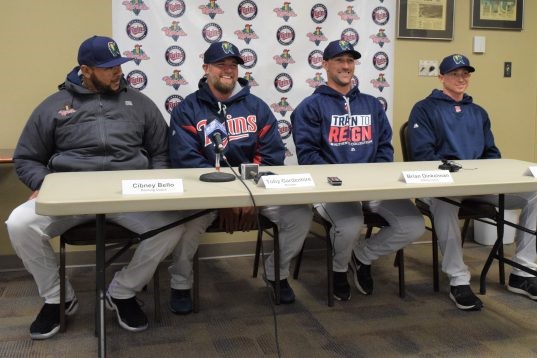 As has almost become a tradition in Cedar Rapids, the weather for "Meet the Kernels Night" at the ballpark was cold and damp. The forecast for their Opening Day in Davenport on Thursday is for a mix of rain and snow with a high during the day around 50 degrees. The good news is that it's supposed to be sunny in Cedar Rapids for the home opener on Saturday. The less-good news is that the high temperature that day is projected to be 37 degrees. Welcome to Midwest League baseball in April. But let's worry about the weather later. For now, how about some snippets from the Kernels' introductory press conference? To start things off, manager Toby Gardenhire and coaches Brian Dinkelman, Cibney Bello and Justin Willard fielded questions from local media. One of those questions pertained to the evident shift in philosophies being ingrained by the Twins front office with regard to greater collection and use of analytical data at all levels of the organization. "We have definitely dug into the analytical part of baseball now," said Dinkelman. "We're definitely taking the next step trying to keep up with the game of baseball. Any information we can receive is good information. We try to just filter out what's good and what's bad and provide it to the players as necessary." Gardenhire concurred with his hitting coach. "I would say we're definitely diving into the more analytical way of doing things, the less old-school way of doing things, than we ever have before, with the new front office. They hired a lot of new people this year and a lot of those people are analytical-type people. "What happens with the analytical side of it is you get a whole bunch of information. All of these things that Dink was just saying, they give you a lot of information and how you deal with that information is going to be different with every organization. We have all that information now, so we're on the cutting edge." A lot has justifiably been made of the fact that the Kernels will have not just one first round draft choice, but a pair of them, in their everyday lineup. Royce Lewis was the first overall selection of 2017's draft class and Alex Kirilloff was the Twins' first round selection the year before. Dinkelman was asked about his impressions of the highly touted pair during spring training. "Royce got stronger since last year. One of the first things that I thought of when he came back hitting BP is that the ball is coming off his bat harder than it was last year. Alex, it was the first time I got to really look at him in spring training, but he looks good. He's a hitter first. He plays defense well. So it will be exciting to have both those guys on the team." One thing that's new within the Twins minor league system this year is that two pitching coaches have been assigned to minor league affiliates. In Cedar Rapids, Bello and Willard will fill those roles. "Two sets of eyes are always better than one," Willard explained. "And the theory is that the manager is usually a hitting guy and then you've got the hitting coach. You've got half the team that's pitchers, why not have another set of eyes on those guys? I'm excited to work with Cibney, for sure." While the lineup in Cedar Rapids is going to be full of high draft picks and highly regarded international prospects, Bello expressed confidence that his pitching staff would hold up their end of things, as well, despite perhaps being less heralded than their position-player team mates. "We have a few guys that are maybe not mentioned a lot, but it's going to be fun to see them pitching in the games," Bello said. "They're not afraid. They have good stuff, too. Maybe they were not drafted as a higher pick, but we're going to be fine. We're going to battle. We're going to compete and we're going to make people have fun." Next up, it was catcher Ben Rortvedt and pitcher Blayne Enlow at the table. Rortvedt is returning to Cedar Rapids for the second season while Enlow will be seeing his first "full season" in professional ball and is scheduled to pitch the home opener on Saturday. http://knuckleballsblog.com/blog/wp-content/uploads/2018/04/DSC_0078-2-1-600x400.jpg Catcher Ben Rortvedt and pitcher Blayne Enlow (Photo: SD Buhr) After pitching only for the Gulf Coast League Twins after being drafted in the third round last June, Enlow didn't enter spring training with any assurance that he'd be skipping the higher rookie league level in Elizabethton to open the year with the Kernels. Of course, that also means opening the season in temperatures that are likely to be well below anything he dealt with while playing high school ball in his native Louisiana. "I think spring went really good," Enlow said, "but still it's like you're unsure where you're going to go. When they finally told us, of course I was excited. And then they're like, 'it's cold.' I was like, 'it can't be that bad.' Yeah, it is. Yeah, it is. But you've just got to get through it. It's just a new challenge. Just got to try to keep on pitching, keep on filling up with strikes, get people out and just win games." Rortvedt will be largely splitting the Kernels catching duties with David Banuelos. Ben Rodriguez, who has been a catcher by trade in previous seasons, is being converted to first base, though he likely will continue to get a few opportunities behind the plate. "I think me and David are going to split time pretty much the whole way this season," Rortvedt explained, while also mentioning that Rodriguez has been a successful catcher and will be filling the role of the team's third catcher. "(Banuelos) was very good back there in college at Long Beach State. So, yeah, I've been looking forward to it, just learning from each other and talking baseball, talking catching. So yeah it'll be fun." Rortvedt also spoke glowingly of some of the changes in the Twins' minor league operation. "There's a lot of new management with the Twins. We've got a new farm director and a lot of new people. There's a lot of younger faces now and a lot of people are very approachable, which I really enjoy. We've got a new catching rover, which we never had in the past, which is just amazing for the catchers, working one-on-one with us." http://knuckleballsblog.com/blog/wp-content/uploads/2018/04/DSC_0081-2-1-600x400.jpg Shortstop Royce Lewis and outfielder Alex Kirilloff (Photo: SD Buhr) Finally, the Minnesota Twins' first-round draft picks from 2016 and 2017, Alex Kirilloff and Royce Lewis, took their turns addressing media questions. Lewis was asked how he felt he was different now than what he was as a player at the end of last season in Cedar Rapids. "To start, I've already gained 15-20 pounds, so that's a big step in my power," he answered. "And just the mental side of it, more relaxed and kind of know how to play the game of baseball a bit more. Knowing the surroundings in Cedar Rapids around here just makes me feel calm and relaxed." Kirilloff talked about the challenges he had to face as he sat out all of the 2017 season after elbow surgery. "Definitely never the news you want to hear," he conceded. "I got it around spring training (last year) where my arm wasn't feeling the way it should and the best option was to get surgery, so to get that news was tough. "For me, there's two ways you can look at it. You can harp on it and get down on yourself or you can take it as a challenge and try to make yourself better from it. I tried to do that. I got a lot stronger. Tried to pick up on things that maybe I wouldn't have if I was playing throughout the year. I think you've just got to try to make the best of it and come back better." Both players acknowledged that the roster they're a part of to start the season in Cedar Rapids includes an exceptional number of highly regarded hitting prospects, while also noting that the group can't just show up and expect to be successful on the field. "Yeah, it's like we're the Yankees on paper. That's what I'd say, for sure," said Lewis. "I mean, they've got the Bronx bombers, you've got a lot of home run hitters in this lineup. "A couple of people were joking back in spring training, there's a lot of money you've got involved with this team. Which is kind of funny, but it's kind of true. But as for being prospects, we're just going to have fun and we're a good young team. I'm excited and we're going to work as hard as we can to win all those games." "There's a lot of exciting players with the group and good people, as well," Kirilloff concurred. "I'm happy to be a part of the group. It's one thing to look at the paper and be impressed by it, but we've still got to go out and do our job and play hard every day." Weather permitting, the Kernels will open their season Thursday evening in Davenport against the Quad Cities River Bandits (Astros affiliate). The home opener is scheduled for Saturday in Cedar Rapids. Originally published at KnuckleballsBlog.com. Related Cedar Rapids Preview: Kernels Class Of 2018 "Should Be Pretty Entertaining" Fort Myers Preview: Miracle Hope Experience Translates On The Field
-
The tarp covering the infield in Cedar Rapids was wet from a mix of rain and snow flurries over the past couple of days, but fortunately the only "work" that this year's Cedar Rapids Kernels had to do on Tuesday was do a meet and greet with fans on the concourse and, for a select few, survive a brief media inquisition. http://knuckleballsblog.com/blog/wp-content/uploads/2018/04/DSC_0075-2-1-600x358.jpg L to R: pitching coach Cibney Bello, manager Toby Gardenhire, hitting coach Brian Dinkelman, pitching coach Justin Willard (Photo: SD Buhr) As has almost become a tradition in Cedar Rapids, the weather for "Meet the Kernels Night" at the ballpark was cold and damp. The forecast for their Opening Day in Davenport on Thursday is for a mix of rain and snow with a high during the day around 50 degrees. The good news is that it's supposed to be sunny in Cedar Rapids for the home opener on Saturday. The less-good news is that the high temperature that day is projected to be 37 degrees. Welcome to Midwest League baseball in April. But let's worry about the weather later. For now, how about some snippets from the Kernels' introductory press conference? To start things off, manager Toby Gardenhire and coaches Brian Dinkelman, Cibney Bello and Justin Willard fielded questions from local media. One of those questions pertained to the evident shift in philosophies being ingrained by the Twins front office with regard to greater collection and use of analytical data at all levels of the organization. "We have definitely dug into the analytical part of baseball now," said Dinkelman.. "We're definitely taking the next step trying to keep up with the game of baseball. Any information we can receive is good information. We try to just filter out what's good and what's bad and provide it to the players as necessary." Gardenhire concurred with his hitting coach. "I would say we're definitely diving into the more analytical way of doing things. the less old-school way of doing things, than we ever have before, with the new front office. They hired a lot of new people this year and a lot of those people are analytical-type people. "What happens with the analytical side of it is you get a whole bunch of information. All of these things that Dink was just saying, they give you a lot of information and how you deal with that information is going to be different with every organization. We have all that information now, so we're on the cutting edge." A lot has justifiably been made of the fact that the Kernels will have not just one first round draft choice, but a pair of them, in their everyday lineup. Royce Lewis was the first overall selection of 2017's draft class and Alex Kirilloff was the Twins' first round selection the year before. Dinkelman was asked about his impressions of the highly touted pair during spring training. "Royce got stronger since last year. One of the first things that I thought of when he came back hitting BP is that the ball is coming off his bat harder than it was last year. Alex, it was the first time I got to really look at him in spring training, but he looks good. He's a hitter first. He plays defense well. So it will be exciting to have both those guys on the team." One thing that's new within the Twins minor league system this year is that two pitching coaches have been assigned to minor league affiliates. In Cedar Rapids, Bello and Willard will fill those roles. "Two sets of eyes are always better than one," Willard explained. "And the theory is that the manager is usually a hitting guy and then you've got the hitting coach. You've got half the team that's pitchers, why not have another set of eyes on those guys? I'm excited to work with Cibney, for sure." While the lineup in Cedar Rapids is going to be full of high draft picks and highly regarded international prospects, Bello expressed confidence that his pitching staff would hold up their end of things, as well, despite perhaps being less heralded than their position-player team mates. "We have a few guys that are maybe not mentioned a lot, but it's going to be fun to see them pitching in the games," Bello said. "They're not afraid. They have good stuff, too. Maybe they were not drafted as a higher pick, but we're going to be fine. We're going to battle. We're going to compete and we're going to make people have fun." Next up, it was catcher Ben Rortvedt and pitcher Blayne Enlow at the table. Rortvedt is returning to Cedar Rapids for the second season while Enlow will be seeing his first "full season" in professional ball and is scheduled to pitch the home opener on Saturday. http://knuckleballsblog.com/blog/wp-content/uploads/2018/04/DSC_0078-2-1-600x400.jpg Catcher Ben Rortvedt and pitcher Blayne Enlow (Photo: SD Buhr) After pitching only for the Gulf Coast League Twins after being drafted in the third round last June, Enlow didn't enter spring training with any assurance that he'd be skipping the higher rookie league level in Elizabethton to open the year with the Kernels. Of course, that also means opening the season in temperatures that are likely to be well below anything he dealt with while playing high school ball in his native Louisiana. "I think spring went really good," Enlow said, "but still it's like you're unsure where you're going to go. When they finally told us, of course I was excited. And then they're like, 'it's cold.' I was like, 'it can't be that bad.' Yeah, it is. Yeah, it is. But you've just got to get through it. It's just a new challenge. Just got to try to keep on pitching, keep on filling up with strikes, get people out and just win games." Rortvedt will be largely splitting the Kernels catching duties with David Banuelos. Ben Rodriguez, who has been a catcher by trade in previous seasons, is being converted to first base, though he likely will continue to get a few opportunities behind the plate. "I think me and David are going to split time pretty much the whole way this season," Rortvedt explained, while also mentioning that Rodriguez has been a successful catcher and will be filling the role of the team's third catcher. "(Banuelos) was very good back there in college at Long Beach State. So, yeah, I've been looking forward to it, just learning from each other and talking baseball, talking catching. So yeah it'll be fun." Rortvedt also spoke glowingly of some of the changes in the Twins' minor league operation. "There's a lot of new management with the Twins. We've got a new farm director and a lot of new people. There's a lot of younger faces now and a lot of people are very approachable, which I really enjoy. We've got a new catching rover, which we never had in the past, which is just amazing for the catchers, working one-on-one with us." http://knuckleballsblog.com/blog/wp-content/uploads/2018/04/DSC_0081-2-1-600x400.jpg Shortstop Royce Lewis and outfielder Alex Kirilloff (Photo: SD Buhr)[/caption] Finally, the Minnesota Twins' first-round draft picks from 2016 and 2017, Alex Kirilloff and Royce Lewis, took their turns addressing media questions. Lewis was asked how he felt he was different now than what he was as a player at the end of last season in Cedar Rapids. "To start, I've already gained 15-20 pounds, so that's a big step in my power," he answered. "And just the mental side of it, more relaxed and kind of know how to play the game of baseball a bit more. Knowing the surroundings in Cedar Rapids around here just makes me feel calm and relaxed." Kirilloff talked about the challenges he had to face as he sat out all of the 2017 season after elbow surgery. "Definitely never the news you want to hear," he conceded. "I got it around spring training (last year) where my arm wasn't feeling the way it should and the best option was to get surgery, so to get that news was tough. "For me, there's two ways you can look at it. You can harp on it and get down on yourself or you can take it as a challenge and try to make yourself better from it. I tried to do that. I got a lot stronger. Tried to pick up on things that maybe I wouldn't have if I was playing throughout the year. I think you've just got to try to make the best of it and come back better." Both players acknowledged that the roster they're a part of to start the season in Cedar Rapids includes an exceptional number of highly regarded hitting prospects, while also noting that the group can't just show up and expect to be successful on the field. "Yeah, it's like we're the Yankees on paper. That's what I'd say, for sure," said Lewis. "I mean, they've got the Bronx bombers, you've got a lot of home run hitters in this lineup. "A couple of people were joking back in spring training, there's a lot of money you've got involved with this team. Which is kind of funny, but it's kind of true. But as for being prospects, we're just going to have fun and we're a good young team. I'm excited and we're going to work as hard as we can to win all those games." "There's a lot of exciting players with the group and good people, as well," Kirilloff concurred. "I'm happy to be a part of the group. It's one thing to look at the paper and be impressed by it, but we've still got to go out and do our job and play hard every day." Weather permitting, the Kernels will open their season Thursday evening in Davenport against the Quad Cities River Bandits (Astros affiliate). The home opener is scheduled for Saturday in Cedar Rapids.
-
It seems like just yesterday, doesn't it? The Minnesota Twins and Cedar Rapids Kernels were entering the very first year of their brand new affiliation agreement in the spring of 2013 and there was plenty to be excited about with the baseball talent the Twins were planning to send through Cedar Rapids that season. Three of that year's Kernels had been handed signing bonuses of over $1 million and 11 more from their opening day roster that season had received six-figure bonuses. In short, it was as loaded as any Cedar Rapids roster had been in several years. http://knuckleballsblog.com/blog/wp-content/uploads/2018/03/Buxton31-600x437.jpg Byron Buxton as a Cedar Rapids Kernel in 2013 (Photo: SD Buhr) Optimism was high and not only for the Kernels. That Cedar Rapids class of 2013 represented, to many, the future of the Minnesota Twins franchise - a franchise that had fallen on tough times after nearly a decade of postseason participation. As with any roster of Class A ballplayers, you don't have to look too hard to find players that, despite being early round draft picks or well-regarded international free agents, would ultimately fall short of their goals of having successful Major League careers. But you also don't have to look far down that 2013 roster to find names that have since become part of the core group of players that led the Twins to a wild card berth in 2017, with even greater expectations for the next several seasons. Byron Buxton and Jorge Polanco were on that opening day roster in Cedar Rapids in 2013, as were pitchers Tyler Duffey and Taylor Rogers. Then there were two more mid-season additions to the Kernels that are also now playing major roles in Minnesota, Max Kepler and Jose Berrios. But that was five years ago. Several additional Cedar Rapids alumni are poised to contribute to whatever success the Twins have in the near future, as well, but that class of 2013 will long be remembered by Kernels fans. But is it possible that the class of 2018 could end up being even better? It's certainly not impossible. The class of 2013 had Buxton, the Twins' 2012 first round pick in the amateur draft (second selection overall), but the 2018 Kernels roster will include a pair of first rounders. Shortstop Royce Lewis, the first overall selection in 2017, will start the season in Cedar Rapids after suiting up for the Kernels for the final month of the 2017 season. He will be joined by the Twins' first round pick in 2016, as well. Outfielder Alex Kirilloff missed last season after elbow surgery, but will wear a Kernels uniform on Opening Day this year. http://knuckleballsblog.com/blog/wp-content/uploads/2018/03/Kirilloff1-2-600x400.jpg Alex Kirilloff (Photo: SD Buhr) That's not bad for a start, but when you look over the Kernels' roster, It's easy to find plenty of other players who were highly touted draft picks and international signings. That group includes two Compensation round picks, outfielder Akil Baddoo and infielder Jose Miranda, and a second rounder, catcher Ben Rortvedt (who spent 2017 in Cedar Rapids). http://knuckleballsblog.com/blog/wp-content/uploads/2018/03/BaddooGardenhire-600x400.jpg Kernels manager Toby Gardenhire and Akil Baddoo (Photo: SD Buhr)http://knuckleballsblog.com/blog/wp-content/uploads/2018/03/Miranda1-1-600x400.jpg Jose Miranda (Photo: SD Buhr) http://knuckleballsblog.com/blog/wp-content/uploads/2018/03/Rortvedt2-400x600.jpg Ben Rortvedt (Photo: SD Buhr) Right handed pitcher Blayne Enlow was selected by the Twins in the third round of 2017's draft and will open 2018 in Cedar Rapids' rotation. http://knuckleballsblog.com/blog/wp-content/uploads/2018/03/Enlow1-600x401.jpg Blayne Enlow (Photo: SD Buhr) Trey Cabbage, who is slated to be part of the Kernels' outfield, but could also play the corner infield spots, is also returning to Cedar Rapids, where he finished the 2017 season. Cabbage was the Twins' fourth round pick in 2015. http://knuckleballsblog.com/blog/wp-content/uploads/2018/03/Cabbage2-400x600.jpg Trey Cabbage (Photo: SD Buhr) The Kernels will have 2017 fifth round pick Andrew Bechtold at third base and David Banuelos, who was Seattle's fifth round pick in 2017, will share time with Rortvedt behind the plate. Banuelos was obtained by the Twins from the Mariners over the off-season in return for a million dollars worth if international bonus cap space. http://knuckleballsblog.com/blog/wp-content/uploads/2018/03/Bechtold1-600x400.jpg Andrew Bechtold[ (Photo: SD Buhr)http://knuckleballsblog.com/blog/wp-content/uploads/2018/03/Banuelos1-600x400.jpg David Banuelos (Photo: SD Buhr) Lewis, Rortvedt and Cabbage aren't the only Kernels alums who are returning to open the 2018 campaign. Randy Dobnak, Bryan Sammons and Tyler Watson are all slated to open the season in Cedar Rapids' starting rotation after seeing time with the Kernels last year. http://knuckleballsblog.com/blog/wp-content/uploads/2018/03/Dobnak2-600x400.jpg Randy Dobnak (Photo: SD Buhr)http://knuckleballsblog.com/blog/wp-content/uploads/2018/03/Bryan-Sammons-2-600x450.jpg Bryan Sammons (Photo: Seth Stohs)http://knuckleballsblog.com/blog/wp-content/uploads/2018/03/Watson1-600x401.jpg Tyler Watson (Photo: SD Buhr) Logan Lombana and Ryan Mason return to the Kernels' bullpen after playing key relief rolls for Cedar Rapids in 2017. http://knuckleballsblog.com/blog/wp-content/uploads/2016/04/Lombana16f-600x400.jpg Logan Lombana (Photo: SD Buhr)http://knuckleballsblog.com/blog/wp-content/uploads/2018/03/Mason1-600x400.jpg Ryan Mason (Photo: SD Buhr) Infielder Jordan Gore and ouitfielder Shane Carrier also returning to Cedar Rapids to open the season. http://knuckleballsblog.com/blog/wp-content/uploads/2018/03/Gore1-2-400x600.jpg Jordan Gore (Photo:SD Buhr) http://knuckleballsblog.com/blog/wp-content/uploads/2018/03/Carrier1-600x400.jpg Shane Carrier (Photo: SD Buhr) Other players slated to suit up for the Kernels for the first time to start the season include pitchers Nick Brown, Edwar Colina, Calvin Faucher, Jared Finkel, Kevin Marnon, Jose Martinez and Jovani Moran. They'll be joined by first-time Kernels position players Ben Rodriguez (1B) and Mark Contreras (OF). New Cedar Rapids manager Toby Gardenhire is optimistic about his Kernels and knows he's being entrusted with a number of the Twins' most prized young prospects. "It should be a lot of fun. We've got a really good group of kids," Gardenhire said as spring training was winding down. "They've been playing really hard and they're ready to get (to Cedar Rapids), I know that. "We're definitely young, but there's a lot of guys that have a lot of ability - a lot of talent, that the Twins think very highly of. It makes them fun to watch. I've been watching them all spring and we've got some exciting guys, so it should be pretty entertaining." Today's Twins fans are hoping that Buxton, Kepler, Berrios and other Kernels alumni of the past five years will lead the parent club through a period of postseason success. Five years from now, will the Cedar Rapids class of 2018 be preparing to step in and join - or perhaps take over for - their predecessors? Only time will tell. But Kernels fans in Cedar Rapids will soon be getting a good opportunity to see just how good this next wave of young Twins prospects can look. Image courtesy of SD Buhr (photo of Royce Lewis) View full article
- 24 replies
-
- 3
-
-
- royce lewis
- alex kirilloff
- (and 3 more)
-
Kernels Class Of 2018 "Should Be Pretty Entertaining"
Steven Buhr posted an article in Minor Leagues
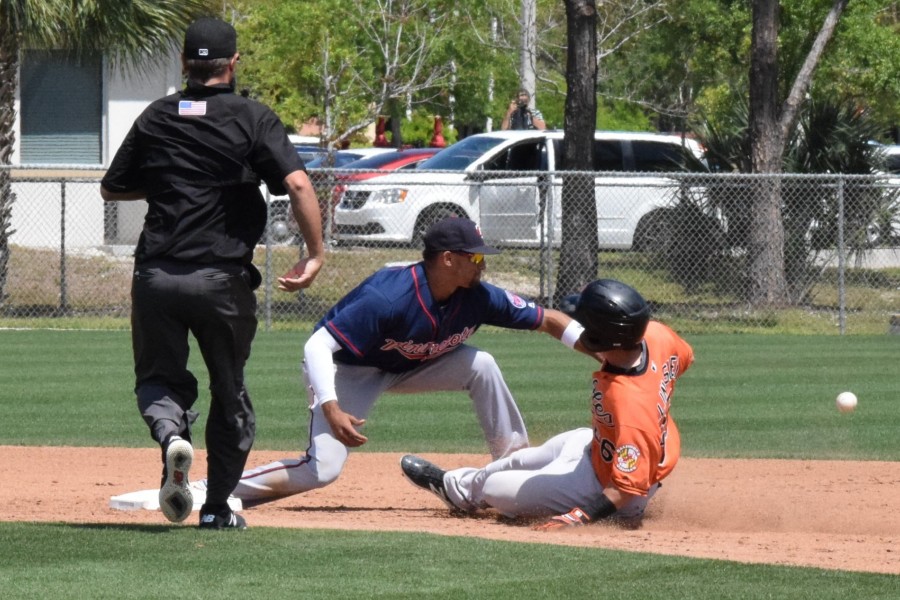 http://knuckleballsblog.com/blog/wp-content/uploads/2018/03/Buxton31-600x437.jpg Byron Buxton as a Cedar Rapids Kernel in 2013 (Photo: SD Buhr) Optimism was high and not only for the Kernels. That Cedar Rapids class of 2013 represented, to many, the future of the Minnesota Twins franchise - a franchise that had fallen on tough times after nearly a decade of postseason participation. As with any roster of Class A ballplayers, you don't have to look too hard to find players that, despite being early round draft picks or well-regarded international free agents, would ultimately fall short of their goals of having successful Major League careers. But you also don't have to look far down that 2013 roster to find names that have since become part of the core group of players that led the Twins to a wild card berth in 2017, with even greater expectations for the next several seasons. Byron Buxton and Jorge Polanco were on that opening day roster in Cedar Rapids in 2013, as were pitchers Tyler Duffey and Taylor Rogers. Then there were two more mid-season additions to the Kernels that are also now playing major roles in Minnesota, Max Kepler and Jose Berrios. But that was five years ago. Several additional Cedar Rapids alumni are poised to contribute to whatever success the Twins have in the near future, as well, but that class of 2013 will long be remembered by Kernels fans. But is it possible that the class of 2018 could end up being even better? It's certainly not impossible. The class of 2013 had Buxton, the Twins' 2012 first round pick in the amateur draft (second selection overall), but the 2018 Kernels roster will include a pair of first rounders. Shortstop Royce Lewis, the first overall selection in 2017, will start the season in Cedar Rapids after suiting up for the Kernels for the final month of the 2017 season. He will be joined by the Twins' first round pick in 2016, as well. Outfielder Alex Kirilloff missed last season after elbow surgery, but will wear a Kernels uniform on Opening Day this year. http://knuckleballsblog.com/blog/wp-content/uploads/2018/03/Kirilloff1-2-600x400.jpg Alex Kirilloff (Photo: SD Buhr) That's not bad for a start, but when you look over the Kernels' roster, It's easy to find plenty of other players who were highly touted draft picks and international signings. That group includes two Compensation round picks, outfielder Akil Baddoo and infielder Jose Miranda, and a second rounder, catcher Ben Rortvedt (who spent 2017 in Cedar Rapids). http://knuckleballsblog.com/blog/wp-content/uploads/2018/03/BaddooGardenhire-600x400.jpg Kernels manager Toby Gardenhire and Akil Baddoo (Photo: SD Buhr)http://knuckleballsblog.com/blog/wp-content/uploads/2018/03/Miranda1-1-600x400.jpg Jose Miranda (Photo: SD Buhr) http://knuckleballsblog.com/blog/wp-content/uploads/2018/03/Rortvedt2-400x600.jpg Ben Rortvedt (Photo: SD Buhr) Right handed pitcher Blayne Enlow was selected by the Twins in the third round of 2017's draft and will open 2018 in Cedar Rapids' rotation. http://knuckleballsblog.com/blog/wp-content/uploads/2018/03/Enlow1-600x401.jpg Blayne Enlow (Photo: SD Buhr) Trey Cabbage, who is slated to be part of the Kernels' outfield, but could also play the corner infield spots, is also returning to Cedar Rapids, where he finished the 2017 season. Cabbage was the Twins' fourth round pick in 2015. http://knuckleballsblog.com/blog/wp-content/uploads/2018/03/Cabbage2-400x600.jpg Trey Cabbage (Photo: SD Buhr) The Kernels will have 2017 fifth round pick Andrew Bechtold at third base and David Banuelos, who was Seattle's fifth round pick in 2017, will share time with Rortvedt behind the plate. Banuelos was obtained by the Twins from the Mariners over the off-season in return for a million dollars worth if international bonus cap space. http://knuckleballsblog.com/blog/wp-content/uploads/2018/03/Bechtold1-600x400.jpg Andrew Bechtold[ (Photo: SD Buhr)http://knuckleballsblog.com/blog/wp-content/uploads/2018/03/Banuelos1-600x400.jpg David Banuelos (Photo: SD Buhr) Lewis, Rortvedt and Cabbage aren't the only Kernels alums who are returning to open the 2018 campaign. Randy Dobnak, Bryan Sammons and Tyler Watson are all slated to open the season in Cedar Rapids' starting rotation after seeing time with the Kernels last year. http://knuckleballsblog.com/blog/wp-content/uploads/2018/03/Dobnak2-600x400.jpg Randy Dobnak (Photo: SD Buhr)http://knuckleballsblog.com/blog/wp-content/uploads/2018/03/Bryan-Sammons-2-600x450.jpg Bryan Sammons (Photo: Seth Stohs)http://knuckleballsblog.com/blog/wp-content/uploads/2018/03/Watson1-600x401.jpg Tyler Watson (Photo: SD Buhr) Logan Lombana and Ryan Mason return to the Kernels' bullpen after playing key relief rolls for Cedar Rapids in 2017. http://knuckleballsblog.com/blog/wp-content/uploads/2016/04/Lombana16f-600x400.jpg Logan Lombana (Photo: SD Buhr)http://knuckleballsblog.com/blog/wp-content/uploads/2018/03/Mason1-600x400.jpg Ryan Mason (Photo: SD Buhr) Infielder Jordan Gore and ouitfielder Shane Carrier also returning to Cedar Rapids to open the season. http://knuckleballsblog.com/blog/wp-content/uploads/2018/03/Gore1-2-400x600.jpg Jordan Gore (Photo:SD Buhr) http://knuckleballsblog.com/blog/wp-content/uploads/2018/03/Carrier1-600x400.jpg Shane Carrier (Photo: SD Buhr) Other players slated to suit up for the Kernels for the first time to start the season include pitchers Nick Brown, Edwar Colina, Calvin Faucher, Jared Finkel, Kevin Marnon, Jose Martinez and Jovani Moran. They'll be joined by first-time Kernels position players Ben Rodriguez (1B) and Mark Contreras (OF). New Cedar Rapids manager Toby Gardenhire is optimistic about his Kernels and knows he's being entrusted with a number of the Twins' most prized young prospects. "It should be a lot of fun. We've got a really good group of kids," Gardenhire said as spring training was winding down. "They've been playing really hard and they're ready to get (to Cedar Rapids), I know that. "We're definitely young, but there's a lot of guys that have a lot of ability - a lot of talent, that the Twins think very highly of. It makes them fun to watch. I've been watching them all spring and we've got some exciting guys, so it should be pretty entertaining." Today's Twins fans are hoping that Buxton, Kepler, Berrios and other Kernels alumni of the past five years will lead the parent club through a period of postseason success. Five years from now, will the Cedar Rapids class of 2018 be preparing to step in and join - or perhaps take over for - their predecessors? Only time will tell. But Kernels fans in Cedar Rapids will soon be getting a good opportunity to see just how good this next wave of young Twins prospects can look.
-
Will Congress Screw Minor League Players Today?
Steven Buhr commented on Steven Buhr's blog entry in SD Buhr/Jim Crikket
I'm afraid you don't understand the way minor leaguers get paid. It has nothing to do with whether minor league team owners are "getting rich." They don't pay the players, the billionaire MLB owners do. And that pay has absolutely NOTHING to do with how many people attend minor league games. -
Will Congress Screw Minor League Players Today?
Steven Buhr commented on Steven Buhr's blog entry in SD Buhr/Jim Crikket
The US minimum wage is 7.85 in 2018, not 7.50. But either way, you are basing your calculations on a typical 40 hour work week. Take a look at a minor league schedule and see how many 5 day weeks those guys get. And consider that the "off days" are almost always "travel days" so they are spending most (if not all) of that day traveling for their work. People act like these guys only work 3-4 hours a day, but from the time they arrive at the ballpark to the time they leave is often, if not always 8+ hours. And, as I mentioned above, they don't just work 5 days a week. They aren't paid for spring training or extended spring training (for those players not placed on a full season roster at the end of spring training). Those top 10 round guys that get bonuses also make up the great majority of players who ultimately make the major leagues and make that big payday. The others are going to be career minor leaguers. You should also take a look at the size of the bonuses for guys drafted after the top 4-5 rounds and ask yourself how long that bonus would last as a "safety net." If you choose not to feel any "angst" for these players, that's fine. I'm sure the billionaire owners appreciate your support. -
Will Congress Screw Minor League Players Today?
Steven Buhr commented on Steven Buhr's blog entry in SD Buhr/Jim Crikket
The players union represents it's members, which are the MLB players. As long as that's the case, they won't bend over backward to work for minor leaguers. One could argue they have enough problems right now trying to keep from screwing over their dues paying members. As of several weeks ago, my official voter registration category is "no party." The only specific elected official I've seen tied to this legislation is Senate Majority Leader McConnel (R-KY). My understanding, however, is that MLB has enlisted bi-partisan support. -
Will Congress Screw Minor League Players Today?
Steven Buhr posted a blog entry in SD Buhr/Jim Crikket
If you believe that maintaining the status quo in minor league baseball is important, you aren't going to like this article. http://knuckleballsblog.com/blog/wp-content/uploads/2016/04/baseballMoney900-1-600x401.jpg However, if you believe that some things - like simple human decency in the area of fair pay - are more important than whether or not the current minor league model is continued, I suspect you'll be joining me in raising your voice in objection to what Major League Baseball (along with their weak sister organization, Minor League Baseball) are conspiring with members of the U.S. Congress to do as early as today. The Washington Post is reporting that MLB lobbyists and a handful of Congressmen plan to attach an amendment to the $1.3 trillion spending bill that must become law this week in order to avoid another government shutdown. That amendment would specifically hand baseball an exemption to federal labor laws for their treatment of minor league ballplayers. Congressmen in MLB/MiLB's pockets introduced a separate bill to grant this exemption a couple of years ago, but it has gone nowhere. So, now, it's apparently time to slip the provisions into a bill that has nothing whatsoever to do with anything related to baseball. It's what's commonly called a "Christmas Tree Ornament" amendment that gets attached to a big "tree," in this case the critical spending bill. And guess who's getting the big present? Yes, 30 multi-billionaires who simply don't want to share even a fraction of the enormous revenues that fans are giving them with the very poorest of their players. And the amendment's supporters aren't even being up front with their intention to hang this ornament on the spending bill tree. According to the Post report, the amendment has not been included in any of the drafts of the bill distributed thus far. The intent, clearly, was to hang this particular ornament on the tree at the last minute, when nobody was looking closely enough to even notice it. Let me pose this question, for any of you who may still think there's nothing wrong with 20 year old ballplayers working for far less than minimum wage. If giving MLB this exemption is the right thing to do, why hide it this way, even from other members of Congress? Players at lower levels (such as with the Class A Cedar Rapids Kernels) are making maybe $1,200 per month. That's GROSS pay, by the way. The players that will be sent to Cedar Rapids at the beginning of April aren't getting paid that while they're down in Ft. Myers for spring training, either. They get paid only for time spent on an active minor league roster. In the minor leagues, that's five months... at most. Many players play in "short season" leagues that run only three months during the summer. Just for reference, I made better money working for a fast food burger chain... in 1976. MLB has obviously been threatening the minor league organization, along with those who own and operate affiliated minor league teams, with all manner of catastrophic consequences (up to and including contraction of teams/classes within the minor league system, no doubt) should MLB end up required to pay their minor leaguers anything remotely close to a livable wage. You see, despite the millions of dollars MLB's billionaires have paid their lobbyists, 30 wealth old white guys only can carry so much clout with Congress. But when you threaten the hundreds of minor league teams in Congressional districts across the country and get the front offices and fans of those teams involved with personal lobbying to save their local teams, now you've got yourself some effective lobbying. Lobbying that MLB didn't even have to pay for, just use a little not-so-subtle coercion. Don't think this is what's going on? Listen to this quote within the Post story from Pat O'Conner, the head of MiLB. “We’re in 42 states, 160 cities. We’ve got over $3 billion of infrastructure, much of which is still being paid off by the clubs and the communities where they exist,” he said. “This is about constituents, this is about jobs at home, and this is about quality of life at home.” So, obviously, the concern is for the, "quality of life at home," for the local fans, rather than the quality of life for players, many of whom are from poor Latin American countries and most of whom did not receive anything close to the large signing bonuses that get all the media attention when they sign contracts with a MLB team. The minimum wage in the big leagues is approaching $600,000. For the roughly price of one minimum wage big leaguer on each team, MLB could afford to pay an extra $1,200 per month to 100 of their minor league players (that's four rosters worth of players). For under a million of their precious dollars per year, MLB owners could effectively make this issue go away. The Twins reportedly will have an Opening Day big league payroll of $130,000,000 (and they are only in the middle of the pack among their MLB peers in payroll). Think about that for just a moment. It's not a coincidence that minor league pay is determined by negotiations with the MLB players' union - a union that minor leaguers are not actually members of. In effect, the billionaire owners are putting the screws to minor league operators and fans (not to mention the players) in order to save themselves from having to spend a small fraction of 1% of their annual revenues on additional minor league pay. The contract between MLB and MiLB that sets the terms for how affiliates operate together is due to expire in 2020 and MLB isn't going to renew it until this matter is resolved. They are obviously using the contract as leverage to get the minor league organizations to lobby Congress on their behalf. It's coercion, plain and simple, and it's shameful. Yet, because Congress is Congress, don't be surprised if it's also effective. (This article was originally posted at Knuckleballsblog.com.) -
Mitch Garver & Zack Granite back in CR for Winter Caravan
Steven Buhr posted a blog entry in SD Buhr/Jim Crikket
Wednesday night, the Cedar Rapids Kernels and their Major League partner, the Minnesota Twins, combined to put on a terrific program for eastern Iowa baseball fans as the Twins once again included a stop in Cedar Rapids for their annual Winter Caravan in conjunction with the Kernels' annual Hot Stove Banquet. http://knuckleballsblog.com/blog/wp-content/uploads/2018/01/Caravan2018Panel-600x229.jpg Kris Atteberry (far left) tosses questions to Winter Caravan panelists (seated L to R) Brian Dinkelman, Toby Gardenhire, Jeremy Zoll, Zack Granite and Mitch Garver. (photo: SD Buhr) The Eastbank Venue & Lounge, along the banks of the Cedar River in downtown Cedar Rapids, was a new venue for the event and was a great choice (despite the predominantly purplish lighting, which resulted in a heavy blue hue in virtually every photograph I took at the event, with or without a flash). There was no shortage of both familiar and less familiar faces among the Winter Caravan panel the Twins sent to town for the evening. The program was emceed by Twins radio broadcaster Kris Atteberry, who distributed questions to the panel. Two new faces shared the stage with three that were more familiar to local fans. http://knuckleballsblog.com/blog/wp-content/uploads/2018/01/Zoll2018-600x400.jpg Twins farm director Jeremy Zoll (photo: SD Buhr) New Kernels manager Toby Gardenhire (son of Ron Gardenhire, the longtime manager of the Twins who will be taking the reins in the Detroit Tigers dugout this season) was in attendance, as was his new boss, Jeremy Zoll. The 27-year-old Zoll enters his first season as the Twins' Director of Minor League Operations. Atteberry may have had the best line of the night, telling the crowd that his first question for Zoll was going to be the same question the bartender had asked Zoll, "Can I see your ID?" Kernels hitting coach Brian Dinkelman, who returns to the Kernels again in 2018, was joined by two other familiar faces: former Kernels Mitch Garver and Zack Granite. Both players have now made their big league debuts, finishing the 2017 season with the Twins, and will be going to spring training intent on earning spots on the Twins' opening day roster. The featured guests were made available to the media for interviews for a few minutes before the event kicked off and I had the opportunity to speak to Garver and Granite about the paths their careers had taken since their days with the Kernels. Garver played in 120 games for the 2014 version of the Kernels and hit for a .298 average. His career has steadily progressed each year since. Granite's time in Cedar Rapids was cut short by injury in 2014, but he returned in 2015 and immediately hit so well that he earned a quick promotion to Class A Advanced Fort Myers. Wanting to make the most of what time I had with each player, I asked them both the same question to kick off the interviews. If you could go back in time, knowing what you know now, and give the Cedar Rapids Kernels version of yourself one piece of advice, what would it be? "I would say relax," answered Garver. "Because when I was at this level, I put a lot of pressure on myself to succeed. Being a senior sign, kind of having that rope get a little bit shorter as my age goes up. It's like, man, I need to get promoted. I need to prove well at every level. I need to do this and that and I need to do it quickly. And I think that kind of took a toll on me. "I did have a really good learning process while I was (in Cedar Rapids), but if I could have just told myself, 'just trust the process, you're going to get there. Believe in yourself.' It would have gone a lot smoother." But would he have been concerned that might have caused his younger self to relax too much? "No, I don't think so. I've always been pedal to the metal. I want to do the best I can at everything I do. "So if I'd have known all that back then, I'd have had the same thought process, going about my work and improving, but I could have gotten (to the Major Leagues) with a little more sleep maybe." http://knuckleballsblog.com/blog/wp-content/uploads/2018/01/GraniteGarver2018-600x400.jpg Zack Granite and Mitch Garver (photo: SD Buhr) And what would today's Zack Granite tell his younger self to do? "Probably to grow up," he said. "I was probably a little immature, took too many at-bats too seriously. "It's a long season. I kind of didn't really know that yet. I'd never played a full season (of professional baseball) yet. There's so many at-bats in a season and if you get out or make a mistake, it's on to the next one. That's how you've got to be. "I feel like that's the only way to be successful, to clear your mind. Every at-bat is different and don't take one at-bat into the next. I did that when I was younger. I've kind of grown out of that and that's helped me along the way." Was that a tough adjustment for Granite to make, after years where you get so many fewer opportunities to bat in a season? "It took some time for me to get used to that. Even when I was at Elizabethton, it's a short season. I never really played a full season until I got to here. "My first season (in Cedar Rapids) I got hurt, so I didn't play too much. Then I came back and did pretty well and went to Fort Myers. But even in that short time I was here, I was kind of taking at-bats into the next one. "I think if I would have done that at an earlier age, took every at-bat separately, I think I would have been more successful." The Twins and Kernels will enter their sixth season as affiliates this spring. Seeing young players like Mitch Garver and Zack Granite realize the big league dream they were working so hard to achieve when they were busing around the Midwest League, then come back to town as Major Leaguers, has been one of the best aspects of the Kernels/Twins relationship. -Steve P.S. Once again, apologies for the "blue-tinted" photos. I suppose I could have spent a bunch of time editing the color out, but frankly, I just didn't feel like devoting the time necessary to do that. So let's just pretend I did it all on purpose, as an homage to the Vikings' playoff run. (This article was originally posted at knuckleballsblog.com) -
On acquiring Yu Darvish or Gerrit Cole
Steven Buhr commented on Hosken Bombo Disco's blog entry in Hosken's Blog
You know, IF you're the Twins and IF the Cole for Gordon/Jay/Granite deal is something you consider fair, why wouldn't you make that deal EVEN IF you do get Darvish signed? Those three prospects for 2 years of Cole seems a little high to me, but given my admitted bias toward Twins young players, that probably means it's pretty close to being a reasonable deal. I just don't quite understand why you would hold off on making it until you get an answer from Darvish. In fact, adding Cole might even show Darvish how serious you are about competing right now.- 11 comments
-
- 5
-
-
- yu darvish
- nick gordon
- (and 3 more)
-
It all begins today with the National Football League's Wildcard games. This is the year that the Minnesota Vikings exorcize their demons one week at a time. http://knuckleballsblog.com/blog/wp-content/uploads/2018/01/Joe-Kapp-600x405.jpg I'm calling it right now. The Vikes are going to erase the memory of past failures every time they take the field in the postseason. Think about it... what are arguably the biggest disappointments in Minnesota Viking history? For my money, I'd list them this way Every Super Bowl loss. I don't care if it was the first against the Chiefs or any of the other three against the Dolphins, Steelers and Raiders, they all sucked. Super Bowl Sunday was one dark blotch on the entire decade of the 70s. Gary Anderson's missed field goal in the 1999 NFC Championship game against the Atlanta Falcons. I mean the guy NEVER missed. EVER. But that one time, he did. And the Vikings' shot at a redeeming Super Bowl win died. Bountygate and Brett Favre's ill-advised pass against the New Orleans Saints in the 2010 NFC Championship game that, once-again, ended what we all hoped would be a Super Bowl season. This is the year the Vikings settle all family business. Of course, it will require the Falcons and Saints to do their parts and win their Wildcard games this weekend. But once the Falcons eliminate the Rams and the Saints send the Panthers home, the Vikings' Redemption Tour can get underway. First up, they get revenge for 2010 and end the Saints' season. And if they just happen to beat up Drew Brees so badly that he retires from football, well, that would just be karma. To set up the next exorcism, the Falcons will have to dump the Eagles, but honestly, does anyone really see Nick Foles leading his team to a playoff win against, well, anybody? I don't. That sets up a do-over of 1998's gut-punch and this time the Vikings have a kicker that has already missed his first field goal of the season... and his second... and his third... and his fourth... and his fifth... and his sixth. Let's face it, the last thing Kai Forbath will have to think about as he lines up to kick a potential winning field goal is, "this would be a bad time to miss my first field goal of the season." Just to be safe, of course, it would be best if the rest of the team spends the first 59 minutes of the game destroying the Falcons so we don't have to wonder what Forbath is thinking when he sets up for a clutch field goal (or PAT attempt, for that matter). That brings us to what we've all been looking forward to - the Vikings hosting the Super Bowl in their own home stadium. Now, I know most of the prognosticators are saying they'll face the New England Patriots in the Big Game. And that would be fun, I agree. http://knuckleballsblog.com/blog/wp-content/uploads/2018/01/Chuck-Forman.jpg It would also be very cool to see the Buffalo Bills somehow weave their way through the AFC playoff minefield and set up a contest between the two franchises with easily the sorriest Super Bowl histories in the NFL. After all, one fanbase would finally have something to really celebrate. But no, the Vikings must face either the Kansas City Chiefs, who topped the Joe Kapp led Vikings (yes, Joe Kapp actually led a team to the Super Bowl... I still don't understand how that happened, but it did) in the 1970 Super Bowl, or the Pittsburgh Steelers, who out-defensed the Vikings in 1975's version. Either the Chiefs or Steelers would serve as an appropriate representative from which the Vikings could garner vindication for all four past Super Bowl losses. That path, extinguishing the flames of the Saints, Falcons and either the Chiefs or Steelers and leading to the franchise's first Lombardi Trophy, all taking place in U.S. Bank Stadium, no doubt in front of Bud Grant, Fran Tarkenton and a host of past Vikings greats, would finally put to rest all of the ghosts that have haunted the Vikings over the past five decades. Make it so. (This article originally posted at Knuckleballsblog.com)
-
Ridiculously Premature Enthusiasm for Kernels' 2018
Steven Buhr commented on Steven Buhr's blog entry in SD Buhr/Jim Crikket
I knew your May timeline was off a bit, but I was going to let it pass Interesting factoid I've mentioned before: Buxton and Kepler were on the CR roster together for exactly one series - the first series after the MWL All-Star game that June. But, years from now, if/when you hear fans talk about how they saw those two play together in Cedar Rapids, you can be pretty certain they're being less than 100% accurate. Their only series together was a road series in Appleton. I figured it might be Buxton's last games with CR and I wanted to get an early look at Kepler, so I drove up for the series and I'm pretty sure I was about the only Cedar Rapidian in the ballpark. I spoke with Terry Ryan for a bit and he told me that series was the first he'd seen of Buxton that season and he wanted to see him play firsthand before deciding on a possible promotion. Guess he liked what he saw. They announced his promotion on the bus during their ride back to CR after the final game of that series. -
Welcome to the world of independent blog contributors at TD. We may be having jackets made. Two years ago, I'd have been 100% sure that Mauer would get the kind of 2-3 year deal being talked about here. As theBOMisthebomb said, "that is how we do things," in Minnesota. I think, though, the fact that he isn't already signed to some sort of extension is a reminder that this is not the Twins front office it used to be. Mauer is going to have to show that 2017 wasn't a fluke - that he is indeed once again the on-base machine he was this past season. This front office doesn't seem to be terribly prone to taking action based on sentiment. Not that they would want to treat a hometown hero with disrespect, but if Joe and his agent are disinclined to accept team-friendly terms and/or a reduced role - or if Mauer's productivity declines at all in 2018 - I don't think Falvine will hesitate to cut ties. There are too many unknowns for me to give odds on what happens with Mauer, yet. Rooker's progress, the uncertainty of Sano's situation, as well as Mauer's own health and productivity. But right this moment, I don't think the chances he returns are quite as high as we might otherwise think.
