



Steven Buhr
-
Posts
1,682 -
Joined
-
Last visited
Content Type
Profiles
News
Minnesota Twins Videos
2026 Minnesota Twins Top Prospects Ranking
2022 Minnesota Twins Draft Picks
Minnesota Twins Free Agent & Trade Rumors, Notes, & Tidbits
Guides & Resources
2023 Minnesota Twins Draft Picks
The Minnesota Twins Players Project
2024 Minnesota Twins Draft Picks
2025 Minnesota Twins Draft Pick Tracker
2026 Minnesota Twins Draft Tracker: Picks & Bonuses
Forums
Blogs
Events
Store
Downloads
Gallery
Everything posted by Steven Buhr
-
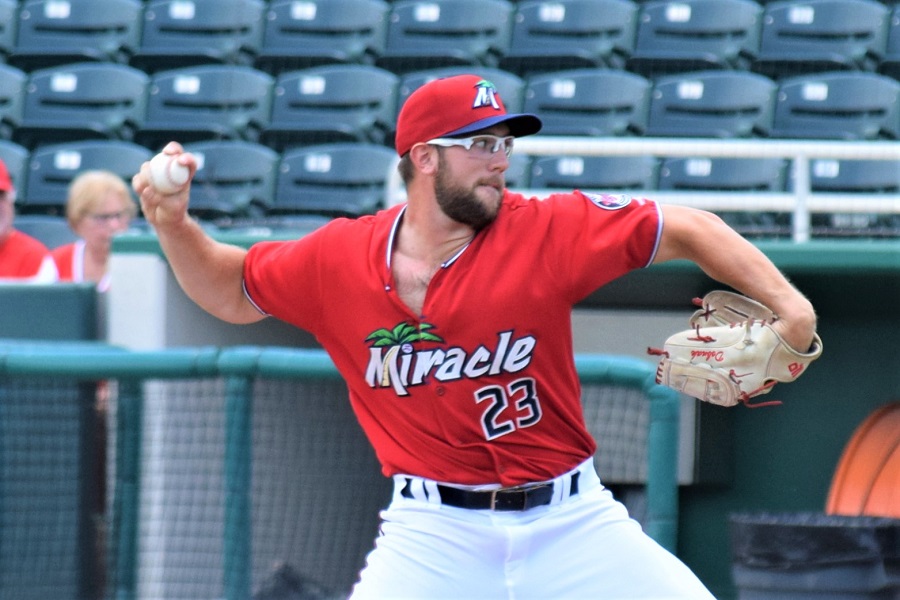 The Miracle have indeed had some good things happen on the offensive front this season, but when you dig into what’s been a major cause of the club’s encouraging start, it’s the pitching side of the ledger that draws the attention very quickly. The Miracle have employed a six-man starting rotation and all six have had strong performances at one time or another this season. Three of them, however, have been better than just “good.” Bailey Ober, Randy Dobnak and Bryan Sammons have 13 starts between them and have allowed a total of two earned runs, collectively. Through his four starts, Ober has kept his ERA at a pristine 0.00. He’s struck out 26 batters and walked just three. Ober had been scheduled to make his fifth start on Friday in Palm Beach, but was placed on the Injured List Wednesday, with a right ulnar nerve sublation. Sammons’ strike out total is similar to Ober’s at 25. His fifth start, on Tuesday, was the first tough start of his season. He threw 38 pitches in the first inning, giving up two hits and walking a pair, but also notching two strikeouts. He created a bases-loaded jam for himself, but still managed to work out of it without giving up a run. The Twins typically do not allow their young arms to go back out for another inning after tossing 35 or more pitches in an inning and, true to form, Sammons exited the game after one inning on Tuesday. Dobnak doesn’t get the strikeouts that Bailey and Sammons typically rack up, but he also has kept opponents from crossing the plate. He gave up his first earned run (first run of any kind, in fact) on Sunday. Dobnak was rewarded for his strong early work with a promotion to Class Double-A Pensacola on Wednesday. As Sammons prepared for his start on Tuesday, Ober and Dobnak sat down and discussed the strong start that Miracle pitching, and those three starters in particular, have gotten off to in 2019. “A lot of it, I believe, is going into our pregame preparations,” Ober said. “We’re doing a really good job this year of going into detail on hitters. Really making sure the pitchers and the catchers are on the same game plan throughout the entire game instead of just the first time through the lineup.” “We have meetings before each series, the whole pitching staff and the catchers.” Dobnak added. “We go across the lineup, briefly for everybody, and then we get pretty in-depth for the top three of four guys, the power guys, guys that get on base a lot.” “One of the bigger adjustments that we’ve made is being able to go through a lineup and say, ‘their guys have made changes that we didn’t have in our notes,’” Ober added. Dobnak was also quick to credit the defense playing behind him. “For me, the defense has been really good,” he said. “This year, I’ve been throwing a lot of sinkers, so I’m trying to get ground balls a lot. I don’t have many strikeouts so I rely on the defense, which has been really good for me.” Dobnak said he started focusing on the sinker toward the end of his season in Cedar Rapids last season, adding, “This year’s it’s been my primary pitch. I think it’s worked out for me a lot.” Asking about Ober’s go-to pitch gets a smile from both pitchers. “High fastball,” said Ober. So, high heat? “Oh yeah,” confirmed Bailey. “No matter what,” added a laughing Dobnak. “I don’t know what it is, but (hitters) like it. They’re intrigued by the high fastball,” Bailey said. “Bailey’s got the high carry,” Gardenhire confirmed later. “He’s been doing a good job with everything, too. His (velocity) is down just a little bit from what it was last year. The amazing thing is, he’s got such carry that he’s still throwing his fastball by people and his off-speed pitches are all good. He’s got a good breaking ball, he’s got a good slider, he’s got a good change up and he uses all those. He’s just a really good pitcher. He’s done a nice job.” Gardenhire managed both pitchers in Cedar Rapids last year and was equally complimentary of Dobnak. “Randy worked really hard in the offseason,” he said.”He did a velo camp down here before spring training. He’s done a good job and the work’s paying off for him. His stuff looks really good. It’s sharp. We saw him a lot last year (in Cedar Rapids), we know he’s got good stuff. We know he’s a competitor. He’s going to give you everything he’s got every time out. He just keeps getting better. Pretty proud of him." Despite the hiccup on Sunday, Gardenhire remains very appreciative of Sammons’ work, as well. “He’s been throwing the ball great. Sammons has been good all year for us,” Gardenhire said. “(Tuesday night) was tough. He battled through and got through the inning, but they did a good job of fouling pitches off, hanging in at-bats, and he just threw too many pitches. He’s a good kid and we want to keep him healthy, so too many pitches in the first inning. Got to get him out of there.” With Dobnak now wearing a Blue Wahoos uniform and Ober temporarily on the shelf for the Miracle, it’ll be up to Sammons and the rest of the Fort Myers rotation to pick up the slack. Miracle Notes Fort Myers’ 17-10 record has them nipping right at the heels of the Bradenton Marauders (PIT) and Palm Beach Cardinals (STL) in the FSL-South standings. They trail by just a half-game. Hitting: (stats through Wednesday) Lewin Diaz has been the hottest Miracle hitter early in the season, slashing .317/.348/349 (.697 OPS). Ben Rortvedt has hit .250, but his five doubles, one triple and two home runs have pushed his OPS up to a team-high .842. Akil Baddoo has three doubles, three triples and three home runs. Trevor Larnach has a team-high seven doubles.(eighth down was on Thursday) Pitching: (stats through Wednesday) In addition to Ober, Dobnak and Sammons, other a couple of relief pitchers are also off to excellent starts: Tom Hackimer has a 0.68 ERA in 13.1 IP over eight appearances, striking out 23. Alex Phillips has matched Ober’s 0.00 ERA, striking out 20 and walking just three in 13.2 IP over nine games. Special note: Melvi Acosta made his first start of the season in a spot start after throwing 16 innings of relief work this season over five appearances. All he did in his spot start was throw six shutout innings for the Miracle in the nightcap of their double header Thursday night.
 -
Their jerseys may say Kernels on the outside, but underneath, the guys on Cedar Rapids pitching coach Virgil Vasquez’s staff have adopted a more burning mindset. The pitching staff has adopted an “Enter the Dragon” motto that is reflected not only on the back of the T-shirts they wear under their uniforms, but in the intensity with which they attack opposing batters.“The dragon is like, you enter in this attack mode. We call it the dragon spirit,” Vasquez explained. “All your preparation, all your determination, all your belief in yourself, all the love you have for the game and everything you do.” The approach seems to be working. Through their first 16 games of this young season, Kernels pitchers are setting down batters at a remarkable clip of 10.8 strikeouts per nine innings. How impressive is that? The franchise record for a season, set in 1964 by the Cedar Rapids Red Raiders, is 9.2 Ks per nine innings. Since the team became the Kernels in 1993, the best rate a team has recorded for a season was 8.7, a mark set just last season. It’s not just a couple of guys racking up all the strikeouts, either. Ten of the 14 pitchers who have appeared for Cedar Rapids (not including infielder Joe Cronin, who made a one-inning mop up appearance) have struck out batters at a rate of at least one per inning pitched, with reliever Joe Record (21.2 K/9 IP) and starter Jordan Balazovic (16.0 K/9 IP) leading the way. It’s early in the season, of course, but if it seems like the increase in strikeouts might be part of a philosophical approach to the art of pitching, there’s a reason for that. Coach Vasquez explains. “The strikeout is the best outcome for a pitcher, right? It takes out luck on balls in play, because when a ball’s in play, the average (for the batter reaching base) is .300. So, if we can get more strikeouts, we’re going to keep the game in our control more. “Everybody on our (staff) has weapons for strikeouts, so it’s about how do I use them? Where do I use them? So yeah there’s an emphasis (on strikeouts) for our guys.” Trying to strike everybody out can run up the pitch count, however. That’s not something any organization wants to do with its young arms. photo by Steve Buhr of Derek Molina As a result, Vasquez points out that there’s a time for getting quick outs and a time to… well… unleash the dragon and go for that strikeout. “Early in the count, the mindset is ‘end the at-bat with every pitch you throw.’ You get strike one, control the count, finish the hitter,” he pointed out. “And then, as you get to 0-2, 1-2, let’s finish him! You own him. 2-2, let’s finish him! Either way, you have to throw a pitch, so why not throw a pitch where you’re going to get a swing and miss? So, understanding your swing and miss percentage, understanding where that is in the zone with those certain pitches, it’s a real benefit for you.” Just thinking about all those strikeouts gets Vasquez smiling. “It’s so much fun! Like, what good is a hitter when they strike out? Go back to the dugout, you’re no good! Thank you very much! And it’s been a lot of fun to watch them. We have this aggressive mindset as a staff and they all encourage each other.” With Game of Thrones being arguably the most talked-about program currently running on television, one might think the pitching staff’s dragon-themed motto is tied to the popular HBO series in which dragons play a major role. But the reality is that the motto has an old-school origin. Vasquez said he saw the 1973 Bruce Lee film Enter the Dragon over the offseason and that provided the genesis of the staff’s motto. “(The movie) was very philosophical and there’s this warrior spirit to him. I kind of resonated with that,” Vasquez recalled. “I’m always trying to help them create a feeling of what they’re going to be like when they accomplish that feeling, not just the thing, but what’s the feeling? “There’s this feeling that goes along with it and we’re all embodying it and I think that goes along with the strikeouts that we’re getting. It’s just attacking and trusting and believing and doing it for your team because you know what’s good for your team is also good for you.” Cedar Rapids ranks third in the Midwest League in pitching staff strikeouts and second among teams in the league’s Western Division. Still, the team sits fifth in the standings of their eight-team division with a 7-9 record, as they start a road trip Monday night. photo by Steve Buhr (Virgil Vasquez with hitting coach Ryan Smith) Vasquez doesn’t sound concerned about that, however. “Our record doesn’t reflect who we are,” he said. “Because the first few series, we were getting to know each other. You come into the season, you played together for five days or seven days in spring training, there’s a little, ‘who are we?’ kind of thing.” He may have a point. The Kernels are 6-4 in their past ten games after getting off to a slow 1-5 record the first week of the season. “We had communication, we kept preparing, we kept going and then all of a sudden, it’s like, this is what we do. As that’s happened, we’ve won more games. Ryan (Smith, the team’s hitting coach) has done a great job, too. We just kept improving that process and kept saying, ‘this is what we do.’ But changing it and adapting it so works better and more efficient. It’s a lot more fluid now. “This is my first year being my own pitching coach and the feeling I have with the team, my heart feels so good just to have these guys connect the way they do with each other and how tight we are as a group. I feel like we’re seeing who we are now. Everybody’s been working hard. I hope all my seasons are like this.” Kernels Notes The Kernels have pulled up out of the MWL Western Division cellar and sit in 5th place with a 7-9 record.They lead the MWL in stolen base efficiency (92.9%), successfully nabbing 13 stolen bases while being caught just once. Gilberto Celestino’s 4 SB lead the team, with the rest of the thefts spread among seven other Kernels.Hitting:Trey Cabbage continues to swing a hot bat, now with 5 HR (tied for 2nd in MWL), 1 3B, 1 2B and slashing .346/.443/.692 (1.135 OPS is 3rd in MWL)Gabriel Maciel is off to a scorching start in his first 4 games with CR. .312/.500/.588 (1.088)Gabe Snyder, through his first 8 games, has 2 2B, 1 3B, 1 HR and is slashing .379/.457/.621 (1.078)Pitching:Joe Record, in 4 relief appearances covering 4.2 IP, has surrendered 0 ER, 1 H, 1 BB and struck out 11 with a 0.43 WHIPReliever Brian Rapp has thrown 9 IP over 4 appearances, striking out 9. Since giving up 1 ER on April 5, he has not given up another run, earned or otherwise.Austin Schulfer has been dominant in 3 of his 4 bullpen appearances, primarily in long relief. 3 shutout IP on April 4, 4 scoreless IP on April 12 and most recently, 3 shutout innings on April 18.Starter Jordan Balazovic has struck out 9, 9 and 8 in his three starts this season, totaling 14.2 IP. He has a 2-1 record, a 1.02 WHIP and a 2.45 ERA. His 26 K ranks him 1st in the MWL.Cole Sands has a 0-0 record but has shutout opponents in 2 of his 3 starts, throwing 5 innings in each of those 2 starts. He’s struck out 18 over 14 IP.Want to read more about the Kernels? Click the links to read Cedar Rapids Gazette’s beat reporter, Jeff Johnson.Trey Cabbage's Hot Start ContinuesJordan Balazovic Continues His Progression Click here to view the article
-
- 2
-

-
- virgil vasquez
- jordan balazovic
- (and 3 more)
-
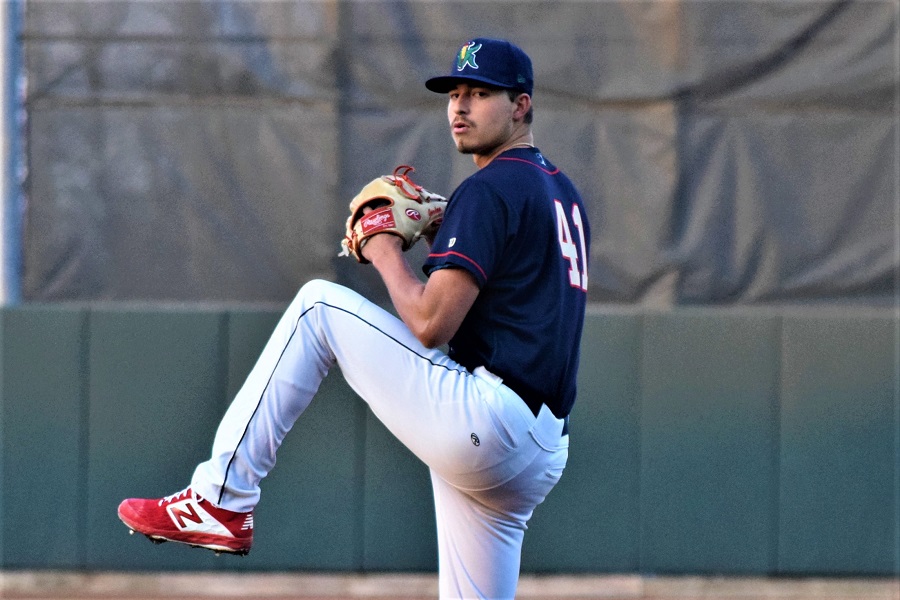 “The dragon is like, you enter in this attack mode. We call it the dragon spirit,” Vasquez explained. “All your preparation, all your determination, all your belief in yourself, all the love you have for the game and everything you do.” The approach seems to be working. Through their first 16 games of this young season, Kernels pitchers are setting down batters at a remarkable clip of 10.8 strikeouts per nine innings. How impressive is that? The franchise record for a season, set in 1964 by the Cedar Rapids Red Raiders, is 9.2 Ks per nine innings. Since the team became the Kernels in 1993, the best rate a team has recorded for a season was 8.7, a mark set just last season. It’s not just a couple of guys racking up all the strikeouts, either. Ten of the 14 pitchers who have appeared for Cedar Rapids (not including infielder Joe Cronin, who made a one-inning mop up appearance) have struck out batters at a rate of at least one per inning pitched, with reliever Joe Record (21.2 K/9 IP) and starter Jordan Balazovic (16.0 K/9 IP) leading the way. It’s early in the season, of course, but if it seems like the increase in strikeouts might be part of a philosophical approach to the art of pitching, there’s a reason for that. Coach Vasquez explains. “The strikeout is the best outcome for a pitcher, right? It takes out luck on balls in play, because when a ball’s in play, the average (for the batter reaching base) is .300. So, if we can get more strikeouts, we’re going to keep the game in our control more. “Everybody on our (staff) has weapons for strikeouts, so it’s about how do I use them? Where do I use them? So yeah there’s an emphasis (on strikeouts) for our guys.” Trying to strike everybody out can run up the pitch count, however. That’s not something any organization wants to do with its young arms. photo by Steve Buhr of Derek Molina As a result, Vasquez points out that there’s a time for getting quick outs and a time to… well… unleash the dragon and go for that strikeout. “Early in the count, the mindset is ‘end the at-bat with every pitch you throw.’ You get strike one, control the count, finish the hitter,” he pointed out. “And then, as you get to 0-2, 1-2, let’s finish him! You own him. 2-2, let’s finish him! Either way, you have to throw a pitch, so why not throw a pitch where you’re going to get a swing and miss? So, understanding your swing and miss percentage, understanding where that is in the zone with those certain pitches, it’s a real benefit for you.” Just thinking about all those strikeouts gets Vasquez smiling. “It’s so much fun! Like, what good is a hitter when they strike out? Go back to the dugout, you’re no good! Thank you very much! And it’s been a lot of fun to watch them. We have this aggressive mindset as a staff and they all encourage each other.” With Game of Thrones being arguably the most talked-about program currently running on television, one might think the pitching staff’s dragon-themed motto is tied to the popular HBO series in which dragons play a major role. But the reality is that the motto has an old-school origin. Vasquez said he saw the 1973 Bruce Lee film Enter the Dragon over the offseason and that provided the genesis of the staff’s motto. “(The movie) was very philosophical and there’s this warrior spirit to him. I kind of resonated with that,” Vasquez recalled. “I’m always trying to help them create a feeling of what they’re going to be like when they accomplish that feeling, not just the thing, but what’s the feeling? “There’s this feeling that goes along with it and we’re all embodying it and I think that goes along with the strikeouts that we’re getting. It’s just attacking and trusting and believing and doing it for your team because you know what’s good for your team is also good for you.” Cedar Rapids ranks third in the Midwest League in pitching staff strikeouts and second among teams in the league’s Western Division. Still, the team sits fifth in the standings of their eight-team division with a 7-9 record, as they start a road trip Monday night. photo by Steve Buhr (Virgil Vasquez with hitting coach Ryan Smith) Vasquez doesn’t sound concerned about that, however. “Our record doesn’t reflect who we are,” he said. “Because the first few series, we were getting to know each other. You come into the season, you played together for five days or seven days in spring training, there’s a little, ‘who are we?’ kind of thing.” He may have a point. The Kernels are 6-4 in their past ten games after getting off to a slow 1-5 record the first week of the season. “We had communication, we kept preparing, we kept going and then all of a sudden, it’s like, this is what we do. As that’s happened, we’ve won more games. Ryan (Smith, the team’s hitting coach) has done a great job, too. We just kept improving that process and kept saying, ‘this is what we do.’ But changing it and adapting it so works better and more efficient. It’s a lot more fluid now. “This is my first year being my own pitching coach and the feeling I have with the team, my heart feels so good just to have these guys connect the way they do with each other and how tight we are as a group. I feel like we’re seeing who we are now. Everybody’s been working hard. I hope all my seasons are like this.” Kernels Notes The Kernels have pulled up out of the MWL Western Division cellar and sit in 5th place with a 7-9 record. They lead the MWL in stolen base efficiency (92.9%), successfully nabbing 13 stolen bases while being caught just once. Gilberto Celestino’s 4 SB lead the team, with the rest of the thefts spread among seven other Kernels. Hitting: Trey Cabbage continues to swing a hot bat, now with 5 HR (tied for 2nd in MWL), 1 3B, 1 2B and slashing .346/.443/.692 (1.135 OPS is 3rd in MWL) Gabriel Maciel is off to a scorching start in his first 4 games with CR. .312/.500/.588 (1.088) Gabe Snyder, through his first 8 games, has 2 2B, 1 3B, 1 HR and is slashing .379/.457/.621 (1.078) Pitching: Joe Record, in 4 relief appearances covering 4.2 IP, has surrendered 0 ER, 1 H, 1 BB and struck out 11 with a 0.43 WHIP Reliever Brian Rapp has thrown 9 IP over 4 appearances, striking out 9. Since giving up 1 ER on April 5, he has not given up another run, earned or otherwise. Austin Schulfer has been dominant in 3 of his 4 bullpen appearances, primarily in long relief. 3 shutout IP on April 4, 4 scoreless IP on April 12 and most recently, 3 shutout innings on April 18. Starter Jordan Balazovic has struck out 9, 9 and 8 in his three starts this season, totaling 14.2 IP. He has a 2-1 record, a 1.02 WHIP and a 2.45 ERA. His 26 K ranks him 1st in the MWL. Cole Sands has a 0-0 record but has shutout opponents in 2 of his 3 starts, throwing 5 innings in each of those 2 starts. He’s struck out 18 over 14 IP. Want to read more about the Kernels? Click the links to read Cedar Rapids Gazette’s beat reporter, Jeff Johnson. Trey Cabbage's Hot Start Continues Jordan Balazovic Continues His Progression
 -
Go back through the minor league histories of most players who ultimately become big leaguers. You can often see a point in the career timelines where they went from just another young player trying to figure it all out to a legitimate professional ballplayer with a chance to make his dreams come true. A point at which a metaphorical switch was flipped. If Trey Cabbage’s dreams of playing Major League Baseball ultimately are realized, the spring of 2019 might just be the point in time that we identify his switch as having been flipped.The Minnesota Twins selected Cabbage with their fourth-round pick in the Amateur Draft in June, 2015, out of Grainger High School in Rutledge, Tennessee, and, like most high school draftees, they assigned him to their Gulf Coast League affiliate in Fort Myers. Also like most high school draftees, Cabbage found playing ball professionally, even at the lowest US-based levels, was nothing like high school. In his first four summers of pro ball, starting with that first summer with the GCL Twins and followed by about a season and a half each with Elizabethton and Cedar Rapids, Cabbage hit just .236 while striking out in almost one-third of his plate appearances. Of course, a propensity for strikeouts is something most organizations accept for their power hitters. The problem, for Cabbage, was that his eight home runs for the Kernels in 2018 constituted a career high in round trippers, which certainly threatened to disqualify him from membership in the “power hitter” club. While still just 21 years old, the 2019 season suddenly loomed as a critical year for Cabbage. Something had to change. Though this season is still less than a month old, it’s becoming clear that something has indeed changed for Cabbage. Maybe a couple of somethings. First, and most discernible to the casual observer, he’s up to 224 pounds and none of it is in places it shouldn’t be. If you’re one of those people who like to shake a player’s hand when you ask for his autograph, you might want to just settle for his signature. His handshake could affect your ability to sign your own name for a couple of days if you aren’t prepared for it. Even with the additional strength, though, it turns out the “something” that’s changed the most is the one square foot of space between Cabbage’s ears. photo by Steve Buhr Through Wednesday, he’s sporting a .364/.417./.705 (1.121 OPS) slash line that’s unlike anything the Twins have seen from him before. It takes more than additional strength to make that kind of turnaround, even if the season is less than a month old. Ironically, perhaps, the primary reason for his statistical turnaround may be a new personal disregard for the numbers. “Working with Pete Fatse, our hitting coordinator, and Ryan Smith, our hitting coach here, I’ve got more of a process-oriented mindset instead of a numbers mindset,” Cabbage explained this week. “Because if you’re worried about trying to get hits for the numbers, then you’re going to start manipulating your swing and that’s going to cause you to start overthinking and swinging at bad pitches. At least it does for me.” His manager, Brian Dinkelman, agrees and has seen the difference in Cabbage already. “I think the mental thing is probably the big thing for him. Just not trying to overthink things or change up too much all the time,” Dinkelman said. “Stick to what his plan is and swinging at strikes, that’s the main thing for him. Nobody hits really when they expand the zone. If you’re swinging at pitches in the zone, then you can do some damage. Once he makes contact with the ball, he usually hits it pretty hard.” Which brings us back to the subject of those strikeouts. Through Wednesday, Cabbage has been striking out just over one time every four plate appearances. Not a major reduction from the one-in-three rate previously, perhaps, especially considering the small sample size reflected in 11 games worth of plate appearances, but arguably a step in the right direction. Cabbage isn’t doing any one thing in particular to focus on reducing his strikeout rate but feels his new mental approach to hitting will take care of that. “I think with the mindset of doing more damage, the big thing was to zone up and not try to cover all 17 inches of the plate at all times,” he explained. “When you’re in an offensive count, there’s no need to be fighting off a pitch on the outer black – fighting off the nasty slider or change up that they’re throwing when you’re in an offensive count. You should look for pitches you can do damage. “So, (hitting coach Ryan Smith) was telling me to zone up and doing that has allowed me to have more of a clear vision of what I’m looking for. Not just be like, ‘Alright that looks like it could be a strike, let’s take a hack at it.’ That’s what I’ve done in the past and I was having too broad of a zone when I was ahead in the count.” photo by Steve Buhr Having suited up for the Kernels for 47 games in 2017 and the entire 2018 season, nobody could blame Cabbage for not wanting to spend any more time back in Cedar Rapids this season than is absolutely necessary. After all, the goal of every minor league player is to get promoted to the next level and, while he’s still close to the average age for a player at the Class A level, this is still his third calendar year with the Kernels. While Cedar Rapids understandably wasn’t his preferred destination to start the current season, Cabbage took the re-assignment to the Kernels in stride. “I was with the Fort Myers (Class High-A) group through most of spring training and I was busting my hind end trying to stay on that roster as long as I could and of course I wanted to start the season there,” he admitted. “But that’s out of my hands and all I can do is just go out and take care of my work and whatever happens, happens. “I won’t lie to you, I wanted to be there really bad, but there are a lot worse places to be than Cedar Rapids. I still have a job and I’m still playing.” photo by Steve Buhr He’s also not letting himself get distracted by thoughts of a potential promotion, even with his hot start. “If I was wishing, ‘Oh, I should be there, I’m out-playing somebody,’ that’s just bad karma, it doesn’t help anybody,” he said. “Then you start saying, ‘oh, well he got two hits, I’ve got to go get two hits.’ Then you press and overdo things. “I’m just trying to go out and play day by day and take care of myself. That’s how you got to the level where you’re at. You’ve got to take it one pitch at a time and make sure you beat the (pitcher) on every pitch that you see.” For those who have watched his on-deck circle routine for a couple of years (which always begins with a ‘Happy Gilmore’ hop-skip-swing), it’s natural to wonder if Cabbage is attributing any of his success to new routines, but that’s not really the case. Not too much, anyway. “I feel good at the plate right now. I’ve always been a routine-based guy, so I know what’s going on right now feels good, so I’m not thinking, ‘OK well this is good, if I do a little bit more, I can make it a little bit better,’ he explained. “I’m only a little ‘stitious,’ I’m not ‘SUPERstitious.’ So, I like to keep the same routine, but I’m not in a panic mode if something doesn’t go exactly right. It’s just coming in and getting the work in every day. Not trying to overdo it. Not trying to overthink it. And then when the game (starts), you go out and play. You’re not overthinking or over critiquing yourself pitch by pitch.” Other Kernels Notes Cedar Rapids’ record is just 5-8, tied for last place in the Midwest League’s Western Division currently.Cabbage has been the brightest spot in the Kernels’ lineup thus far, but others may be starting to step up and carry their share of the load.Michael Davis is now hitting .314 with an .862 OPS.Gabe Snyder, who joined the team last week, is slashing .455/.500/.773 (1.273 OPS) through his first six games in CR.Gabriel Maciel recently arrived and promptly went 3 for 5 in his first game with the Kernels.On the pitching side, most of the rotation has had a start that didn’t go particularly well and at least one other that went much better.Blayne Enlow has given up just one earned run, in total, over his last two starts.Jordan Balazovic struck out nine batters in each of his two starts this season.Josh Winder struck out nine batters over five innings pitched in his last start.Reliever Brian Rapp has a 0.78 WHIP and a 1.00 ERA over his first nine innings of relief work.Tyler Palm has a 0.86 WHIP and a 1.29 ERA over seven innings of relief.Zach Neff and Carlos Suniaga have each struck out nine batters over their first six innings out of the bullpen.Joe Record has yet to give up an earned run while striking out seven over 2.2 Innings Pitched over three relief appearances.Looking for more information on the Kernels? Check out these stories from the Cedar Rapids Gazette’s beat reporter, Jeff Johnson:Reliever Joe Record Looking Forward to First Pro Outing, Two Years in the MakingReliever Tyler Palm Takes the Road Less Traveled to Affiliated BallGabe Snyder Makes Good Early Impression for Kernels Click here to view the article
- 11 replies
-
- 2
-
-
- trey cabbage
- blayne enlow
- (and 3 more)
-
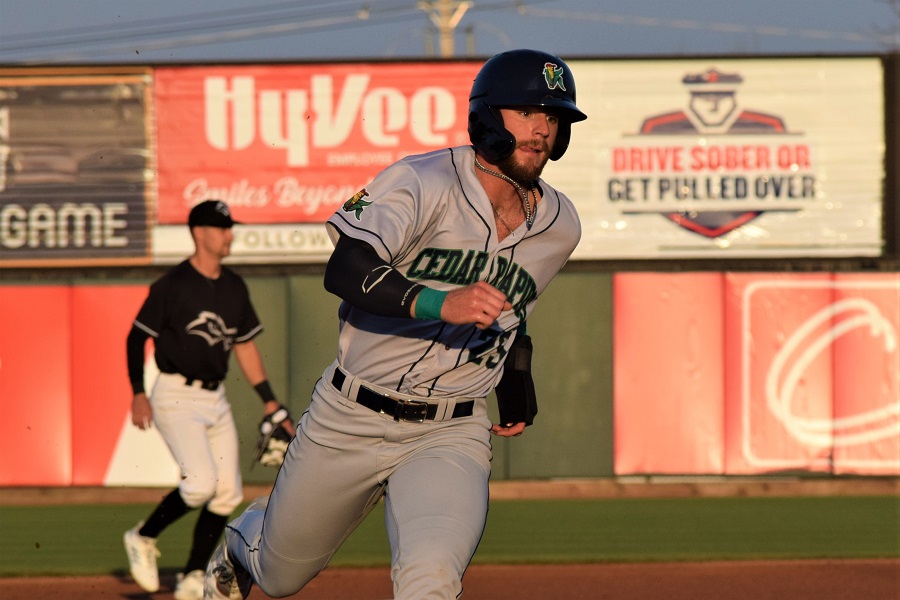 The Minnesota Twins selected Cabbage with their fourth-round pick in the Amateur Draft in June, 2015, out of Grainger High School in Rutledge, Tennessee, and, like most high school draftees, they assigned him to their Gulf Coast League affiliate in Fort Myers. Also like most high school draftees, Cabbage found playing ball professionally, even at the lowest US-based levels, was nothing like high school. In his first four summers of pro ball, starting with that first summer with the GCL Twins and followed by about a season and a half each with Elizabethton and Cedar Rapids, Cabbage hit just .236 while striking out in almost one-third of his plate appearances. Of course, a propensity for strikeouts is something most organizations accept for their power hitters. The problem, for Cabbage, was that his eight home runs for the Kernels in 2018 constituted a career high in round trippers, which certainly threatened to disqualify him from membership in the “power hitter” club. While still just 21 years old, the 2019 season suddenly loomed as a critical year for Cabbage. Something had to change. Though this season is still less than a month old, it’s becoming clear that something has indeed changed for Cabbage. Maybe a couple of somethings. First, and most discernible to the casual observer, he’s up to 224 pounds and none of it is in places it shouldn’t be. If you’re one of those people who like to shake a player’s hand when you ask for his autograph, you might want to just settle for his signature. His handshake could affect your ability to sign your own name for a couple of days if you aren’t prepared for it. Even with the additional strength, though, it turns out the “something” that’s changed the most is the one square foot of space between Cabbage’s ears. photo by Steve Buhr Through Wednesday, he’s sporting a .364/.417./.705 (1.121 OPS) slash line that’s unlike anything the Twins have seen from him before. It takes more than additional strength to make that kind of turnaround, even if the season is less than a month old. Ironically, perhaps, the primary reason for his statistical turnaround may be a new personal disregard for the numbers. “Working with Pete Fatse, our hitting coordinator, and Ryan Smith, our hitting coach here, I’ve got more of a process-oriented mindset instead of a numbers mindset,” Cabbage explained this week. “Because if you’re worried about trying to get hits for the numbers, then you’re going to start manipulating your swing and that’s going to cause you to start overthinking and swinging at bad pitches. At least it does for me.” His manager, Brian Dinkelman, agrees and has seen the difference in Cabbage already. “I think the mental thing is probably the big thing for him. Just not trying to overthink things or change up too much all the time,” Dinkelman said. “Stick to what his plan is and swinging at strikes, that’s the main thing for him. Nobody hits really when they expand the zone. If you’re swinging at pitches in the zone, then you can do some damage. Once he makes contact with the ball, he usually hits it pretty hard.” Which brings us back to the subject of those strikeouts. Through Wednesday, Cabbage has been striking out just over one time every four plate appearances. Not a major reduction from the one-in-three rate previously, perhaps, especially considering the small sample size reflected in 11 games worth of plate appearances, but arguably a step in the right direction. Cabbage isn’t doing any one thing in particular to focus on reducing his strikeout rate but feels his new mental approach to hitting will take care of that. “I think with the mindset of doing more damage, the big thing was to zone up and not try to cover all 17 inches of the plate at all times,” he explained. “When you’re in an offensive count, there’s no need to be fighting off a pitch on the outer black – fighting off the nasty slider or change up that they’re throwing when you’re in an offensive count. You should look for pitches you can do damage. “So, (hitting coach Ryan Smith) was telling me to zone up and doing that has allowed me to have more of a clear vision of what I’m looking for. Not just be like, ‘Alright that looks like it could be a strike, let’s take a hack at it.’ That’s what I’ve done in the past and I was having too broad of a zone when I was ahead in the count.” photo by Steve Buhr Having suited up for the Kernels for 47 games in 2017 and the entire 2018 season, nobody could blame Cabbage for not wanting to spend any more time back in Cedar Rapids this season than is absolutely necessary. After all, the goal of every minor league player is to get promoted to the next level and, while he’s still close to the average age for a player at the Class A level, this is still his third calendar year with the Kernels. While Cedar Rapids understandably wasn’t his preferred destination to start the current season, Cabbage took the re-assignment to the Kernels in stride. “I was with the Fort Myers (Class High-A) group through most of spring training and I was busting my hind end trying to stay on that roster as long as I could and of course I wanted to start the season there,” he admitted. “But that’s out of my hands and all I can do is just go out and take care of my work and whatever happens, happens. “I won’t lie to you, I wanted to be there really bad, but there are a lot worse places to be than Cedar Rapids. I still have a job and I’m still playing.” photo by Steve Buhr He’s also not letting himself get distracted by thoughts of a potential promotion, even with his hot start. “If I was wishing, ‘Oh, I should be there, I’m out-playing somebody,’ that’s just bad karma, it doesn’t help anybody,” he said. “Then you start saying, ‘oh, well he got two hits, I’ve got to go get two hits.’ Then you press and overdo things. “I’m just trying to go out and play day by day and take care of myself. That’s how you got to the level where you’re at. You’ve got to take it one pitch at a time and make sure you beat the (pitcher) on every pitch that you see.” For those who have watched his on-deck circle routine for a couple of years (which always begins with a ‘Happy Gilmore’ hop-skip-swing), it’s natural to wonder if Cabbage is attributing any of his success to new routines, but that’s not really the case. Not too much, anyway. “I feel good at the plate right now. I’ve always been a routine-based guy, so I know what’s going on right now feels good, so I’m not thinking, ‘OK well this is good, if I do a little bit more, I can make it a little bit better,’ he explained. “I’m only a little ‘stitious,’ I’m not ‘SUPERstitious.’ So, I like to keep the same routine, but I’m not in a panic mode if something doesn’t go exactly right. It’s just coming in and getting the work in every day. Not trying to overdo it. Not trying to overthink it. And then when the game (starts), you go out and play. You’re not overthinking or over critiquing yourself pitch by pitch.” Other Kernels Notes Cedar Rapids’ record is just 5-8, tied for last place in the Midwest League’s Western Division currently. Cabbage has been the brightest spot in the Kernels’ lineup thus far, but others may be starting to step up and carry their share of the load.Michael Davis is now hitting .314 with an .862 OPS. Gabe Snyder, who joined the team last week, is slashing .455/.500/.773 (1.273 OPS) through his first six games in CR. Gabriel Maciel recently arrived and promptly went 3 for 5 in his first game with the Kernels. [*]On the pitching side, most of the rotation has had a start that didn’t go particularly well and at least one other that went much better. Blayne Enlow has given up just one earned run, in total, over his last two starts. Jordan Balazovic struck out nine batters in each of his two starts this season. Josh Winder struck out nine batters over five innings pitched in his last start. Reliever Brian Rapp has a 0.78 WHIP and a 1.00 ERA over his first nine innings of relief work. Tyler Palm has a 0.86 WHIP and a 1.29 ERA over seven innings of relief. Zach Neff and Carlos Suniaga have each struck out nine batters over their first six innings out of the bullpen. Joe Record has yet to give up an earned run while striking out seven over 2.2 Innings Pitched over three relief appearances. Looking for more information on the Kernels? Check out these stories from the Cedar Rapids Gazette’s beat reporter, Jeff Johnson: Reliever Joe Record Looking Forward to First Pro Outing, Two Years in the Making Reliever Tyler Palm Takes the Road Less Traveled to Affiliated Ball Gabe Snyder Makes Good Early Impression for Kernels
 -
When the Cedar Rapids Kernels host the Lansing Lugnuts in a three-game series beginning July 13 of this summer, Lugnuts players will have one significant advantage over their counterparts in the home team dugout. They’ll be getting paid more than 50% more than the Kernels players.It doesn’t mean the Jays’ farm hands necessarily win every contest against the Kernels on the field, nor will they be swimming in riches on their paydays, certainly, but it’s a baby step in the right direction and players in every organization can only hope it’s a trend that spreads across affiliated minor league baseball. According to a story by The Athletic’s Ken Rosenthal and Emily Waldon, Blue Jays executives told The Athletic that they are finalizing a plan to raise their minor leaguers’ pay by more than 50 percent across all levels from the Dominican Summer League through Triple A. (The Athletic site has a paywall, but if there’s a single site that deserves your consideration for subscribing, it’s the Athletic, in my opinion.) According to that article, Class A minimum salaries are rising from $1,100 to $1,160 per month this season, so players for Lansing, the Blue Jays’ Midwest League affiliate, will be north of $1,740, about $600 a month more than the Minnesota Twins are obligated to pay players assigned to Cedar Rapids. Toronto vice president of baseball operations Ben Cherrington told The Athletic, “We hope that it allows our players to have the freedom and comfort to make some good choices, whether it’s where to live, where to eat, etc. We just feel like it’s consistent with our values of trying to be a player-centered organization and give them every resource possible to be at their best.” We could debate whether $1,740 a month is enough money to provide much “freedom and comfort” but there’s no doubt it’s provides more of those things than $1,160 does. Minor leaguers are not paid while attending spring training and extended spring training (MLB claims these are merely extended “try-outs”), receiving their meager pay only once assigned to an active minor league team’s roster. A raise similar to what Toronto is offering would certainly benefit the Twins’ players in Cedar Rapids where players already benefit from a healthy and generous host-family program, which allows players to re-allocate money that would otherwise go toward rent. Toronto’s move coincidentally (perhaps) came about roughly the same time that Waldon authored another article for which she interviewed over 30 people, many of them minor league players, concerning the plight of players trying to subsist on minor league pay. The big question, now, is whether Toronto’s unilateral first volley on minor league pay will be answered by other MLB teams. Certainly, there are 25 guys getting ready to fly to Cedar Rapids in April that hope so. Click here to view the article
-
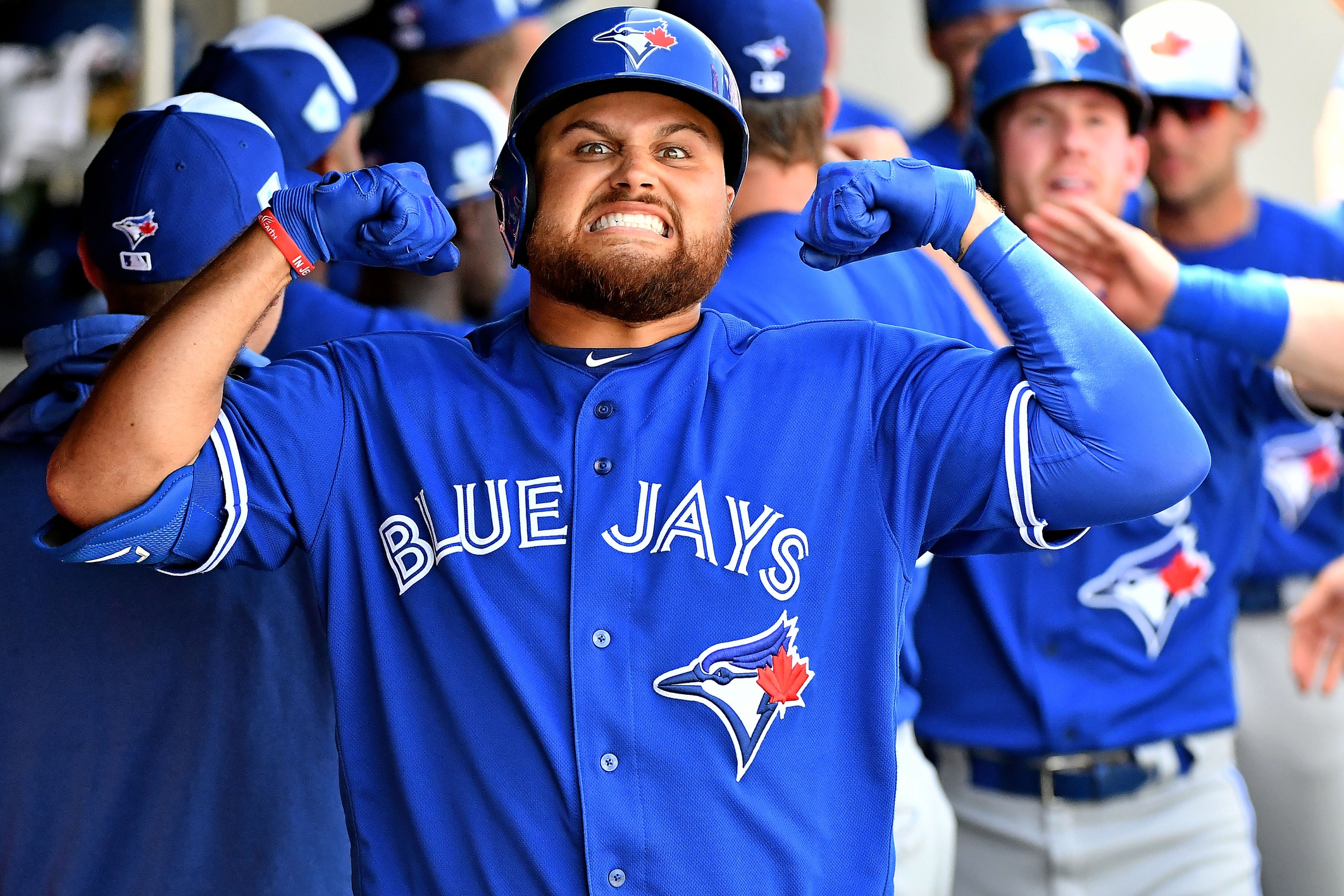 It doesn’t mean the Jays’ farm hands necessarily win every contest against the Kernels on the field, nor will they be swimming in riches on their paydays, certainly, but it’s a baby step in the right direction and players in every organization can only hope it’s a trend that spreads across affiliated minor league baseball. According to a story by The Athletic’s Ken Rosenthal and Emily Waldon, Blue Jays executives told The Athletic that they are finalizing a plan to raise their minor leaguers’ pay by more than 50 percent across all levels from the Dominican Summer League through Triple A. (The Athletic site has a paywall, but if there’s a single site that deserves your consideration for subscribing, it’s the Athletic, in my opinion.) According to that article, Class A minimum salaries are rising from $1,100 to $1,160 per month this season, so players for Lansing, the Blue Jays’ Midwest League affiliate, will be north of $1,740, about $600 a month more than the Minnesota Twins are obligated to pay players assigned to Cedar Rapids. Toronto vice president of baseball operations Ben Cherrington told The Athletic, “We hope that it allows our players to have the freedom and comfort to make some good choices, whether it’s where to live, where to eat, etc. We just feel like it’s consistent with our values of trying to be a player-centered organization and give them every resource possible to be at their best.” We could debate whether $1,740 a month is enough money to provide much “freedom and comfort” but there’s no doubt it’s provides more of those things than $1,160 does. Minor leaguers are not paid while attending spring training and extended spring training (MLB claims these are merely extended “try-outs”), receiving their meager pay only once assigned to an active minor league team’s roster. A raise similar to what Toronto is offering would certainly benefit the Twins’ players in Cedar Rapids where players already benefit from a healthy and generous host-family program, which allows players to re-allocate money that would otherwise go toward rent. Toronto’s move coincidentally (perhaps) came about roughly the same time that Waldon authored another article for which she interviewed over 30 people, many of them minor league players, concerning the plight of players trying to subsist on minor league pay. The big question, now, is whether Toronto’s unilateral first volley on minor league pay will be answered by other MLB teams. Certainly, there are 25 guys getting ready to fly to Cedar Rapids in April that hope so.
 -
When the Cedar Rapids Kernels host the Lansing Lugnuts in a three-game series beginning July 13 of this summer, Lugnuts players will have one significant advantage over their counterparts in the home team dugout. They’ll be getting paid more than 50% more than the Kernels players. http://knuckleballsblog.com/blog/wp-content/uploads/2016/04/baseballMoney900.jpg It doesn’t mean the Jays’ farm hands necessarily win every contest against the Kernels on the field, nor will they be swimming in riches on their paydays, certainly, but it’s a baby step in the right direction and players in every organization can only hope it’s a trend that spreads across affiliated minor league baseball. According to a story by The Athletic’s Ken Rosenthal and Emily Waldon, Blue Jays executives told The Athletic that they are finalizing a plan to raise their minor leaguers’ pay by more than 50 percent across all levels from the Dominican Summer League through Triple A. (The Athletic site has a paywall, but if there’s a single site that deserves your consideration for subscribing, it’s the Athletic, in my opinion.) According to that article, Class A minimum salaries are rising from $1,100 to $1,160 per month this season, so players for Lansing, the Blue Jays’ Midwest League affiliate, will be north of $1,740, about $600 a month more than the Minnesota Twins are obligated to pay players assigned to Cedar Rapids. Toronto vice president of baseball operations Ben Cherrington told The Athletic, “We hope that it allows our players to have the freedom and comfort to make some good choices, whether it’s where to live, where to eat, etc. We just feel like it’s consistent with our values of trying to be a player-centered organization and give them every resource possible to be at their best.” We could debate whether $1,740 a month is enough money to provide much “freedom and comfort” but there’s no doubt it’s provides more of those things than $1,160 does. Minor leaguers are not paid while attending spring training and extended spring training (MLB claims these are merely extended “try-outs”), receiving their meager pay only once assigned to an active minor league team’s roster. A raise similar to what Toronto is offering would certainly benefit the Twins’ players in Cedar Rapids where players already benefit from a healthy and generous host-family program, which allows players to re-allocate money that would otherwise go toward rent. Toronto’s move coincidentally (perhaps) came about roughly the same time that Waldon authored another article for which she interviewed over 30 people, many of them minor league players, concerning the plight of players trying to subsist on minor league pay. The big question, now, is whether Toronto’s unilateral first volley on minor league pay will be answered by other MLB teams. Certainly, there are 25 guys getting ready to fly to Cedar Rapids in April that hope so.
-
Will Players Be Willing to Stand Up For Themselves?
Steven Buhr commented on Steven Buhr's blog entry in SD Buhr/Jim Crikket
Great input, all. Some interesting points. I think one problem is that today's players are woefully unaware of what their predecessors went through. Ask a player today what the "reserve clause" is/was and how come it is no longer in their contracts. I wonder how many could give you an accurate answer. When the minimum wage for a union member is in excess of a half million dollars per season, it's understandable, I suppose, that they are more willing to just complain about things their bosses do that piss them off than to actually do something about it which could put them at risk of losing that money, even for a few weeks. So, I suspect they'll just go on complaining about the people they work for (which, after all, isn't much different than what 99% of fans who are not self-employed do, too.) -
Will Players Be Willing to Stand Up For Themselves?
Steven Buhr commented on Steven Buhr's blog entry in SD Buhr/Jim Crikket
Thanks for reading and sharing your thoughts. I agree that it's hard to generate sympathy for millionaire players. But when the "other side" is billionaire owners, I think we can throw the whole, "who do you sympathize with?" question out the window. It's not about who you sympathize with, it's merely about how you believe the growing revenue stream should be divided between ownership and labor. There's a good case to be made that labor has done a poor job of assuring their side continues to get its fair share. But that's because their side has sucked at presenting a unified front and being willing to take a firm stand. If/when that changes, the status quo may change. I'm not going to hold my breath, however. -
Will Players Be Willing to Stand Up For Themselves?
Steven Buhr posted a blog entry in SD Buhr/Jim Crikket
So much is being written and debated concerning MLB ownership’s unwillingness to spend on free agency, whether the big ticket guys like Machado and Harper, or more middle of the pack veterans. (This article was originally posted at Knuckleballsblog.com) The players’ union obviously got completely dominated in the last couple of rounds of negotiations over the Collective Bargaining Agreement. Limits on amatuer player signing bonuses, limits on international player bonuses and a completely ineffective policy on artificially restricting service time are all evidence of just how impotent the MLBPA has been. Now, everyone talks about how baseball is broken, because clubs “tank” and justify it with fans as an effective way to “rebuild.” But can anyone really expect things to change? Given the history of players failing to agree to act in a unified manner, can we really expect to see much change in the next round of CBA negotiations? In fact, it may already be too late for players to get their acts together by the time the current agreement expires following the 2021 season. Players can’t just wait until parties are sitting at the negotiating table. If they do, they’ve already lost. There’s a terrific article by Michael Baumann over at The Ringer that describes just how difficult it will be for the players to make any progress in the next CBA and why a work stoppage might be their only recourse. He argues that players need to immediately start publicly calling out their ownerships for non-competititve practices. Putting their case in front of the fans, however, is just the start. “But it’s not enough for players to win over the fans—they have to present a united front within the union as well. Whether deliberately or through extremely fortuitous coincidence, MLB teams have put financial solidarity above the desire to compete. But players are routinely encouraged to go above and beyond the strict call of duty in order to gain an edge over their competitors. Being the self-motivated, hypercompetitive folks that they are, athletes usually oblige, by accepting team-friendly contracts, putting in extra hours training, or agreeing to wear biometric monitors and trading privacy for a perceived competitive edge.” Similarly, ESPN’s Buster Olney published a New Years Eve article (behind ESPN paywall) that disclosed content of a memo that Buster Posey’s agent, Jeff Berry, has been distributing that outlines some actions that players should consider taking to bring attention to the players’ issues and prepare themselves (and fans) for the upcoming labor battle. Among the suggestions are what are known as “work to rule” actions, including: Players refusing to report earlier for Spring Training than the contractually mandated day of February 23. Players refusing to participate in non-contractually mandated team events such as fan fests. Players and agents not attending MLB’s Winter Meetings. Players boycotting MLB-owned media outlets, such as MLB.com and the MLB Network. Berry’s memo also proposes that players take a page out of the front offices’ playbook, by funding, “a comprehensive study that analytically supports recommended guidelines for player usage for the stated purpose of maximizing health and performance, maintaining/improving tools and athleticism, and mitigating age- and usage-related decline. Basically, a reverse-engineering of the aging curves and usage rates that teams are currently weaponizing against the players.” In other words, stop letting teams get all the benefit of statistical analysis, especially when the result includes practices detrimental to the players, such as the service time maninpulation that the Minnesota Twins did with Byron Buxton in September when they decided not to promote him, thereby assuring they would benefit from an extra year of his services before he becomes a free agent. Berry argued that, “Front offices are praised as ‘smart’ when working within the rules to extract maximum performance value for minimal monetary cost. Shouldn’t players also be ‘smart’ and likewise make calculated decisions within the rules to maintain and extend their maximum performance levels at maximum monetary values?” Obviously Berry and the authors of these articles are right. The only way the owners and front offices will discontinue the offending practices will be if they are forced to. And they won’t be forced to by the players politely asking for change at the negotiating table in 2021. The question is, will players unify enough between now and then to take actions such as those being suggested? Can you imagine your favorite Twins players staying away from Twins Fest? The established players already no longer participate in the Twins Caravan, but what happens to the caravans if NO players agree to participate? Would minor league players also agree to stand with their MLB counterparts and not participate in Twins Fest and the Caravans… even though the union they’d be asked to support has done absolutely nothing to improve the plight of minor leaguers (in fact, often giving away concessions on minor league pay and bonuses in order to get more favorable terms for big league players)? In the past, it has been almost impossible to get superstars making $20 million a year, veterans trying to get a couple extra million dollars and young players still under club control to agree on any unified strategy. They fight amonst themselves and, even when they can agree, they’ve failed miserably at getting the fans behind them. (Hard to imagine boycotting fan fests would help in that area unless, as Berry suggests, they get together to hold similar player-organized events.) If players can’t – or won’t – do what’s necessary between now and 2021 to lay the groundwork for a more balanced negotiation with owners, it’s difficult to imagine the next CBA being anything significantly more competition-encouraging than the current version. But if the players won’t do what’s obviously necessary to improve their situations, it will be hard to feel too sorry for them when they end up stuck with another half-decade or more of similarly one-sided business practices by owners. The players have themselves to blame for the ownership practices they find offensive because they allowed their union to be steamrolled. If they allow it again, it will just reinforce how individually selfish and short-sighted they are and they’ll deserve exactly what they get. -
Fixing Free Agency, MLB’s Dark Cloud
Steven Buhr commented on Ted Schwerzler 's blog entry in Off The Baggy
Platoon pretty much nailed it. Players would actually likely be better off financially if they could convince MLB to reduce the number of playoff teams, but the players all want to get to the postseason just as much as fans do, so that's not likely to go anywhere in MLBPA meetings. What players and agents want in the next CBA will be for players, as a group, to get a bigger piece of the revenue pie. But it's going to be difficult, if not impossible, for them to get it without giving up something or being willing to strike. More likely, the union is going to have to decide whether to change how the existing payroll numbers are distributed. If minimum wage players are taking away veteran jobs, then maybe they push to significantly raise the minimum or reduce the years of team control (which also likely wouldn't happen without a strike). So giving more money to young players would mean a counter adjustment that would take that money from someone else at the higher end of the scale. Not going to be easy to get star veteran players to vote for that. The players absolutely have taken a beating in CBA deals over the past decade or two. But knowing that doesn't mean it will automatically change the next time around. I simply don't believe players have the backbone to do anything but complain about it... and that won't get them anything better than they have now. -
Miracle & Twins Extend Agreement Thru 2022
Steven Buhr commented on Steven Buhr's blog entry in SD Buhr/Jim Crikket
We could hear something on the Twins' AA affiliation any day. Last I looked into the governing rule, organizations had to formally file their intent to investigate new affiliation options by September 11 and notices were distributed to all affected MLB and MiLB organizations by September 15. Then negotiations/agreements could formally take place from September 16-30. That's the period in which we typically hear of new affiliation agreements taking place and we are starting to see that this year, too. For example, the A's just announced they would be affiliating with Las Vegas for their AAA needs. -
Miracle & Twins Extend Agreement Thru 2022
Steven Buhr commented on Steven Buhr's blog entry in SD Buhr/Jim Crikket
Compared to Midland, Amarillo is downright urbane. Either way, there'd be a lot of very long bus rides from either of those places. If I'm Royce Lewis and Alex Kirilloff, I'm lobbying for Tennessee or Pensacola. -
With the closing of the minor league baseball season on the field, we open up the biennial minor league affiliation-swap season and, to nobody's surprise, the Twins have extended their affiliation with the Class High A Fort Myers Miracle. http://knuckleballsblog.com/blog/wp-content/uploads/2018/09/fortmyersmiraclebaseball-600x416.jpg Teams are allowed to sign agreements for either two or four years and the Twins/Miracle extension will run through the 2022 season. With the current governing agreement between Major League Baseball and Minor League Baseball (aka MiLB) scheduled to run only through 2020, not many affiliation agreements between MLB teams and their minor league partners have been renewed beyond 2020. The Twins and Mriacle, however, have become the tenth partnership to be renewed through 2022. The others are Salt Lake City (LAA-AAA), Tacoma (SEA-AAA), Altoona (PIT-AA), Mobile (LAA-AA), Trenton (NYY-AA), West Michigan (DET-A), Wisconsin (MIL-A), Eugene (CHC-Short A) and Vancouver (TOR-Short A). Of course, there are also about 40 minor league teams that are now owned in whole or in part by their MLB parents, so those agreements are virtually locked in place in perpetuity, though those teams can (and sometimes do) change cities. For example, the Twins own their Rookie level club in Elizabethton, but that doesn't mean they couldn't elect to move that club's operation to another city. The Twins are signed with their AAA affiliate in Rochester and their A affiliate in Cedar Rapids through 2020, but their AA agreement with the Chattanooga Lookouts expired with the end of the 2018 season. The Twins have been in Chattanooga only four years, but the facilities there are widely known not to measure up to most newer modern AA level sites. The fact that the Twins and Lookouts did not sign an extension before the season came to a close indicates that one or both parties was interested in exploring other options. If the Twins do want to look for a new host for their AA level club, their options are apparently limited. The website BallparkDigest.com does a great job of keeping up with affiliate agreements and hosts a very helpful page where they keep tabls on the status of all MLB/MiLB affiliations. According to the Ballpark Digest list, only four other AA affiliation agreements have expired in 2018. Those cities (and current MLB affiiliate) are Midland TX (OAK), Pensacola FL (CIN), Amarillo TX (SD) (moving from San Antonio) and Knoxville TN (CHC). 2020 could potentially see an avalanche of affiliation agreements expiring, so it wouldn't be surprising to see the Twins and Chattanooga decide to sign a two-year extension, but it certainly wouldn't be a shock to see the Twins announce a move to one of the other four locations, either. Unrelated to anything having to do directly with the Twins is the interesting way that some minor league relocations are affecting the landscape. Colorado Springs has been a long-time member of the AAA Pacific Coast League, but their ownership is moving the club to San Antonio, which had previously been home to a AA Texas League club. The former AA San Antonio team is moving to Amarillo, where they will open a new $45+ million ballpark, which I have to believe the Twins (and others) would love to call home. Colorado Springs, meanwhile, will have to settle for hosting a Rookie level short season club, relocating there from Helena MT. (This article was originally posted at Knuckleballsblog.com)
-
Ask Akil Baddoo about his mentality as the Cedar Rapids Kernels’ leadoff hitter and the young center fielder keeps it pretty simple."Just score runs. That’s the goal and that’s how you win games." Of course being a consistently productive leadoff hitter at any professional level really is a little more complicated than that. “Just really getting on base,” Baddoo said in an interview late last week. “If I get a walk, I’ll be satisfied with a walk because I know I’ll turn a walk into a double when I end up stealing second base. I’m just trying to find a way to get into scoring position so my third hitter and fourth hitter, which we have studs in the third hole and the fourth hole, just can knock me in.” You also won’t see Baddoo swinging at the first pitch often. His aversion to first-pitch cuts may not be quite as severe as the current leadoff hitter for the parent club Minnesota Twins, but at least in his first at-bat of the game, his approach does appear more than a little bit Joe Mauer-ish. “I’m just seeing what the pitcher has, how his curveball is, what the fastball’s doing,” Baddoo explained. “Then, if I get a base hit, then that’s a good thing, it’s a positive. But mostly it’s like a sacrifice, I’m just trying to figure out what he has, so I’m prepared in my next at-bat and third at-bat and going on. Then I can translate that to my other players. I can tell them, ‘Hey the breaking ball is 12 and 6,’ or ‘it’s side-to-side and the fastball has a little run to it.’ That’s what I kind of do my first at-bat. And then, if I get a hit, that’s good, that’s positive. But I know what he has.” Baddoo’s “just score runs” philosophy has translated to results on the field. http://knuckleballsblog.com/blog/wp-content/uploads/2018/08/Baddoo052018d-600x401.jpg Akil Baddoo (Photo by SD Buhr) Through Sunday’s 3-2 win at Wisconsin, Baddoo had crossed the plate a team-high 77 times for the Kernels in 2018. That’s 25 more than any of his Kernels teammates and only two players in the Midwest League have scored more runs than Baddoo this season. So how does a guy sporting a modest .238 batting average score so many runs? “Akil is an athlete and a good baseball player,” Kernels hitting coach Brian Dinkelman explained. “ He goes through stretches where he’s really good and he goes through stretches where he has tough times. I think he’s still learning the game and learning himself, to be a consistent ballplayer all the time. But if you look at his numbers, I mean, double digits in homers, doubles, triples, stolen bases. So he can do a little bit of everything.” Indeed, Baddoo’s 10 home runs tie him with Ben Rodriguez for third most among Kernels this season and since both of the guys ahead of them on the list are now playing for the Ft. Myers Miracle, you could say they are the active team co-leaders. His 20 doubles also make him the “active” team leader in that category, tied with Alex Kirilloff and trailing only Royce Lewis and Jose Miranda – and all three have been promoted to Ft. Myers. Baddoo isn’t looking up at anyone on the triples list as his 10 three-baggers not only leads the Kernels, but the entire Midwest League. He’s stolen 21 bases, good enough for second among Kernels this season, and he would look to be in position to claim the team lead soon as he trails the departed Lewis by a single stolen base. And don’t forget the walks. With 69 walks on the season, Baddoo leads his team and ranks fourth on the MWL leaderboard. Not too bad for a guy who just celebrated his 20th birthday last week and is in his first year of full-season professional baseball. Baddoo was a Lottery Round B (74th overall) draft selection by the Twins in 2016 out of Salem High School in Conyers, Georgia – about 20 miles east of Atlanta. Unsurprisingly, perhaps, it took a while for a Georgia kid to adjust to the chilly Midwest as the season got underway, but as the weather warmed up, so did Baddoo. After hitting just .196 in April, he nudged that average up to .240 in May and his .245 batting average in June was accompanied by an OPS of .820. He followed that up by hitting .280 in July, again with an OPS north of .800 for the month. August has not been particularly kind to Baddoo, so it’s possible that the long season is catching up to him. His 105 games played is also a team-high number. http://knuckleballsblog.com/blog/wp-content/uploads/2018/08/Baddoo060618a-600x400.jpg Akil Baddoo (Photo by SD Buhr) “He’s going through a little rough spell where he’s striking out a little bit more, missing pitches,” Dinkelman observed. “We’re getting late in the season. I don’t know if maybe he’s getting a little bit tired, he’s been playing a lot of games for us. I’m sure fatigue probably is a little bit of a factor. Hopefully, he can find some extra energy the last couple of weeks.” Energy isn’t something the casual observer would ever think the dynamic Baddoo runs low on, but he’s also not all that concerned about his stat line. “I don’t really go too much on stats,” he said. “I know some people do, but it’s mostly about development and I feel myself getting better defensively and offensively. I’ve drawn a lot of walks, I’m getting on base, I’m scoring runs. I’m stealing bases. That’s really the goal and that’s what I’m trying to accomplish. I’m satisfied with what I’m doing, so far.” One thing we know for sure is that it’s not the Iowa summer, with temperatures through most of the past month running consistently in the upper 80s and into the 90s, that’s worn him down. “Exactly like Georgia, I love this weather right now,” Baddoo said. “They told me that, too, they said, ‘Once it dies down and not cold anymore, it’s going to get hot and it’s perfect.’ And they were right. This is amazing. I love it. Great baseball weather!” With just two weeks left in the Midwest League’s regular season, Baddoo said he’s looking forward to the drive toward the postseason, but doesn’t want to change his approach down the stretch. “No, not really, just keep getting after it,” he said. “Just going 110% and that’s what I do. I continue to work hard.” Under the MWL playoff format, teams that finish first and second in each of the league’s two division during the first half of the season already have postseason spots locked up, while the remaining 14 teams battle for the four second-half qualifying spots. With two weeks left, the Kernels hold the top spot in the MWL West Division, but need to hold off at least two of Beloit (3 games back), Kane County (4 games back) and Wisconsin (6 games back) to earn a playoff spot. Baddoo’s smile lights up when the subject of potential for postseason play is the topic and he likes his team’s chances of making a deep postseason run. “Now we’re in a race. We’re in a race for the playoffs,” he said. “I kind of like it though. We have a great team, coaches that have prepared us for this moment and we’ve been playing great baseball lately. “You’ve got to realize that the teams that qualified in the first half, some of those guys aren’t there.”http://knuckleballsblog.com/blog/wp-content/uploads/2018/08/Baddoo062418c-600x400.jpg Akil Baddoo with the stolen base (Photo by SD Buhr) It’s the second straight season that Baddoo has been a part of a playoff contender, after playing for Appalachian League champion Elizabethton in 2017. “E-town was great, I enjoyed E-town,” he said, smiling big. “We won it all, that was pretty cool.” Of course, that’s a pretty familiar refrain to Cedar Rapids fans who have heard about Rookie level championship rosters before, only to see many of the same players fall short of a Midwest League title the following year. Cedar Rapids hasn’t won the MWL since 1992. Baddoo hopes this is the year that trend changes. “Maybe this year we’ll pull it off! We’re trying. We’ll try our best.” Click here to view the article
-
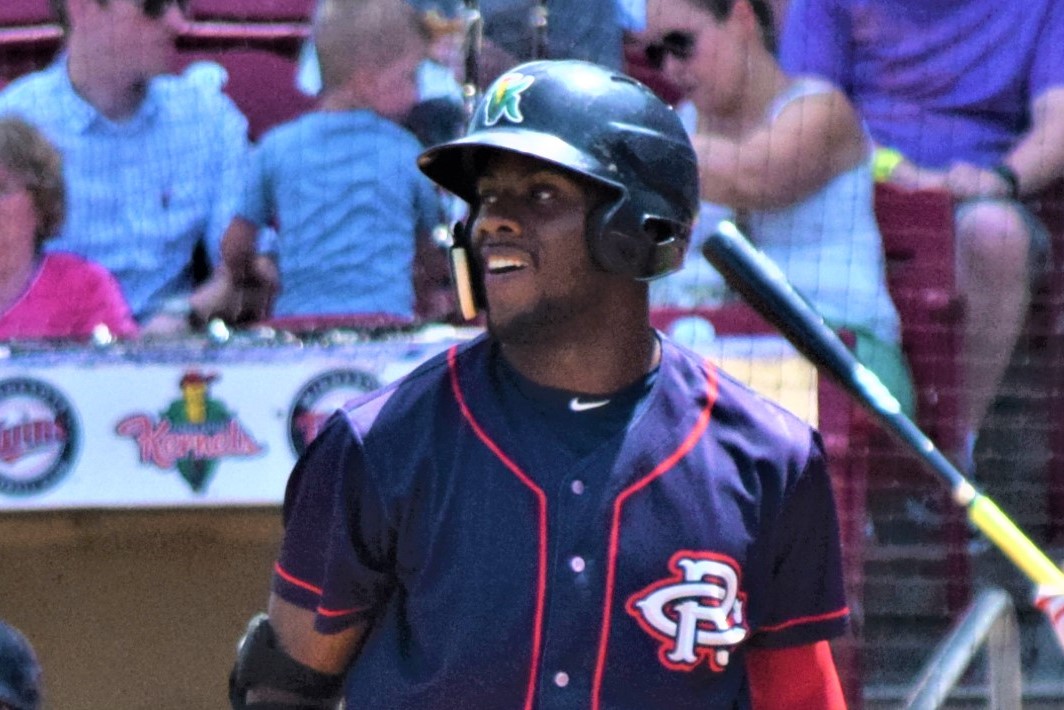 "Just score runs. That’s the goal and that’s how you win games." Of course being a consistently productive leadoff hitter at any professional level really is a little more complicated than that. “Just really getting on base,” Baddoo said in an interview late last week. “If I get a walk, I’ll be satisfied with a walk because I know I’ll turn a walk into a double when I end up stealing second base. I’m just trying to find a way to get into scoring position so my third hitter and fourth hitter, which we have studs in the third hole and the fourth hole, just can knock me in.” You also won’t see Baddoo swinging at the first pitch often. His aversion to first-pitch cuts may not be quite as severe as the current leadoff hitter for the parent club Minnesota Twins, but at least in his first at-bat of the game, his approach does appear more than a little bit Joe Mauer-ish. “I’m just seeing what the pitcher has, how his curveball is, what the fastball’s doing,” Baddoo explained. “Then, if I get a base hit, then that’s a good thing, it’s a positive. But mostly it’s like a sacrifice, I’m just trying to figure out what he has, so I’m prepared in my next at-bat and third at-bat and going on. Then I can translate that to my other players. I can tell them, ‘Hey the breaking ball is 12 and 6,’ or ‘it’s side-to-side and the fastball has a little run to it.’ That’s what I kind of do my first at-bat. And then, if I get a hit, that’s good, that’s positive. But I know what he has.” Baddoo’s “just score runs” philosophy has translated to results on the field. http://knuckleballsblog.com/blog/wp-content/uploads/2018/08/Baddoo052018d-600x401.jpg Akil Baddoo (Photo by SD Buhr) Through Sunday’s 3-2 win at Wisconsin, Baddoo had crossed the plate a team-high 77 times for the Kernels in 2018. That’s 25 more than any of his Kernels teammates and only two players in the Midwest League have scored more runs than Baddoo this season. So how does a guy sporting a modest .238 batting average score so many runs? “Akil is an athlete and a good baseball player,” Kernels hitting coach Brian Dinkelman explained. “ He goes through stretches where he’s really good and he goes through stretches where he has tough times. I think he’s still learning the game and learning himself, to be a consistent ballplayer all the time. But if you look at his numbers, I mean, double digits in homers, doubles, triples, stolen bases. So he can do a little bit of everything.” Indeed, Baddoo’s 10 home runs tie him with Ben Rodriguez for third most among Kernels this season and since both of the guys ahead of them on the list are now playing for the Ft. Myers Miracle, you could say they are the active team co-leaders. His 20 doubles also make him the “active” team leader in that category, tied with Alex Kirilloff and trailing only Royce Lewis and Jose Miranda – and all three have been promoted to Ft. Myers. Baddoo isn’t looking up at anyone on the triples list as his 10 three-baggers not only leads the Kernels, but the entire Midwest League. He’s stolen 21 bases, good enough for second among Kernels this season, and he would look to be in position to claim the team lead soon as he trails the departed Lewis by a single stolen base. And don’t forget the walks. With 69 walks on the season, Baddoo leads his team and ranks fourth on the MWL leaderboard. Not too bad for a guy who just celebrated his 20th birthday last week and is in his first year of full-season professional baseball. Baddoo was a Lottery Round B (74th overall) draft selection by the Twins in 2016 out of Salem High School in Conyers, Georgia – about 20 miles east of Atlanta. Unsurprisingly, perhaps, it took a while for a Georgia kid to adjust to the chilly Midwest as the season got underway, but as the weather warmed up, so did Baddoo. After hitting just .196 in April, he nudged that average up to .240 in May and his .245 batting average in June was accompanied by an OPS of .820. He followed that up by hitting .280 in July, again with an OPS north of .800 for the month. August has not been particularly kind to Baddoo, so it’s possible that the long season is catching up to him. His 105 games played is also a team-high number. http://knuckleballsblog.com/blog/wp-content/uploads/2018/08/Baddoo060618a-600x400.jpg Akil Baddoo (Photo by SD Buhr) “He’s going through a little rough spell where he’s striking out a little bit more, missing pitches,” Dinkelman observed. “We’re getting late in the season. I don’t know if maybe he’s getting a little bit tired, he’s been playing a lot of games for us. I’m sure fatigue probably is a little bit of a factor. Hopefully, he can find some extra energy the last couple of weeks.” Energy isn’t something the casual observer would ever think the dynamic Baddoo runs low on, but he’s also not all that concerned about his stat line. “I don’t really go too much on stats,” he said. “I know some people do, but it’s mostly about development and I feel myself getting better defensively and offensively. I’ve drawn a lot of walks, I’m getting on base, I’m scoring runs. I’m stealing bases. That’s really the goal and that’s what I’m trying to accomplish. I’m satisfied with what I’m doing, so far.” One thing we know for sure is that it’s not the Iowa summer, with temperatures through most of the past month running consistently in the upper 80s and into the 90s, that’s worn him down. “Exactly like Georgia, I love this weather right now,” Baddoo said. “They told me that, too, they said, ‘Once it dies down and not cold anymore, it’s going to get hot and it’s perfect.’ And they were right. This is amazing. I love it. Great baseball weather!” With just two weeks left in the Midwest League’s regular season, Baddoo said he’s looking forward to the drive toward the postseason, but doesn’t want to change his approach down the stretch. “No, not really, just keep getting after it,” he said. “Just going 110% and that’s what I do. I continue to work hard.” Under the MWL playoff format, teams that finish first and second in each of the league’s two division during the first half of the season already have postseason spots locked up, while the remaining 14 teams battle for the four second-half qualifying spots. With two weeks left, the Kernels hold the top spot in the MWL West Division, but need to hold off at least two of Beloit (3 games back), Kane County (4 games back) and Wisconsin (6 games back) to earn a playoff spot. Baddoo’s smile lights up when the subject of potential for postseason play is the topic and he likes his team’s chances of making a deep postseason run. “Now we’re in a race. We’re in a race for the playoffs,” he said. “I kind of like it though. We have a great team, coaches that have prepared us for this moment and we’ve been playing great baseball lately. “You’ve got to realize that the teams that qualified in the first half, some of those guys aren’t there.”http://knuckleballsblog.com/blog/wp-content/uploads/2018/08/Baddoo062418c-600x400.jpg Akil Baddoo with the stolen base (Photo by SD Buhr) It’s the second straight season that Baddoo has been a part of a playoff contender, after playing for Appalachian League champion Elizabethton in 2017. “E-town was great, I enjoyed E-town,” he said, smiling big. “We won it all, that was pretty cool.” Of course, that’s a pretty familiar refrain to Cedar Rapids fans who have heard about Rookie level championship rosters before, only to see many of the same players fall short of a Midwest League title the following year. Cedar Rapids hasn’t won the MWL since 1992. Baddoo hopes this is the year that trend changes. “Maybe this year we’ll pull it off! We’re trying. We’ll try our best.”
 -
Ask Akil Baddoo about his mentality as the Cedar Rapids Kernels’ leadoff hitter and the young centerfielder keeps it pretty simple. “Just score runs. That’s the goal and that’s how you win games.” http://knuckleballsblog.com/blog/wp-content/uploads/2018/08/Baddoo062418a-2-600x400.jpg Akil Baddoo (Photo by SD Buhr) Of course, being a consistently productive leadoff hitter at any professional level, is really is a little more complicated than that. “Just really getting on base,” Baddoo said in an interview late last week. “If I get a walk, I’ll be satisfied with a walk because I know I’ll turn a walk into a double when I end up stealing second base. I’m just trying to find a way to get into scoring position so my third hitter and fourth hitter, which we have studs in the third hole and the fourth hole, just can knock me in.” You also won’t see Baddoo swinging at the first pitch often. His aversion to first-pitch cuts may not be quite as severe as the current leadoff hitter for the parent club Minnesota Twins, but at least in his first at-bat of the game, his approach does appear more than a little bit Joe Mauer-ish. “I’m just seeing what the pitcher has, how his curveball is, what the fastball’s doing,” Baddoo explained. “Then, if I get a base hit, then that’s a good thing, it’s a positive. But mostly it’s like a sacrifice, I’m just trying to figure out what he has, so I’m prepared in my next at-bat and third at-bat and going on. Then I can translate that to my other players. I can tell them, ‘Hey the breaking ball is 12 and 6,’ or ‘it’s side-to-side and the fastball has a little run to it.’ That’s what I kind of do my first at-bat. And then, if I get a hit, that’s good, that’s positive. But I know what he has.” Baddoo’s “just score runs” philosophy has translated to results on the field. http://knuckleballsblog.com/blog/wp-content/uploads/2018/08/Baddoo052018d-600x401.jpg Akil Baddoo (Photo by SD Buhr) Through Sunday’s 3-2 win at Wisconsin, Baddoo had crossed the plate a team-high 77 times for the Kernels in 2018. That’s 25 more than any of his Kernels teammates and only two players in the Midwest League have scored more runs than Baddoo this season. So how does a guy sporting a modest .238 batting average score so many runs? “Akil is an athlete and a good baseball player,” Kernels hitting coach Brian Dinkelman explained. “ He goes through stretches where he’s really good and he goes through stretches where he has tough times. I think he’s still learning the game and learning himself, to be a consistent ballplayer all the time. But if you look at his numbers, I mean, double digits in homers, doubles, triples, stolen bases. So he can do a little bit of everything.” Indeed, Baddoo’s 10 home runs tie him with Ben Rodriguez for third most among Kernels this season and since both of the guys ahead of them on the list are now playing for the Ft. Myers Miracle, you could say they are the active team co-leaders. His 20 doubles also make him the “active” team leader in that category, tied with Alex Kirilloff and trailing only Royce Lewis and Jose Miranda – all three of which have been promoted to Ft. Myers. Baddoo isn’t looking up at anyone on the triples list as his 10 three-baggers not only leads the Kernels, but the entire Midwest League. He’s stolen 21 bases, good enough for second among Kernels this season, and he would look to be in position to claim the team lead soon as he trails the departed Lewis by a single stolen base. And don’t forget the walks. With 69 walks on the season, Baddoo leads his team and ranks fourth on the MWL leaderboard. Not too bad for a guy that just celebrated his 20th birthday last week and is in his first year of full-season professional baseball. Baddoo was a Lottery Round B (74th overall) draft selection by the Twins in 2016 out of Salem High School in Conyers, Georgia – about 20 miles east of Atlanta. Unsurprisingly, perhaps, it took a while for a Georgia kid to adjust to the chilly Midwest as the season got underway, but as the weather warmed up, so did Baddoo. After hitting just .196 in April, he nudged that average up to .240 in May and his .245 batting average in June was accompanied by an OPS of .820. He followed that up by hitting .280 in July, again with an OPS north of .800 for the month. August has not been particularly kind to Baddoo, so it’s possible that the long season is catching up to him. His 105 games played is also a team-high number. http://knuckleballsblog.com/blog/wp-content/uploads/2018/08/Baddoo060618a-600x400.jpg Akil Baddoo (Photo by SD Buhr) “He’s going through a little rough spell where he’s striking out a little bit more, missing pitches,” Dinkelman observed. “We’re getting late in the season. I don’t know if maybe he’s getting a little bit tired, he’s been playing a lot of games for us. I’m sure fatigue probably is a little bit of a factor. Hopefully, he can find some extra energy the last couple of weeks.” Energy isn’t something the casual observer would ever think the dynamic Baddoo runs low on, but he’s also not all that concerned about his stat line. “I don’t really go too much on stats,” he said. “I know some people do, but it’s mostly about development and I feel myself getting better defensively and offensively. I’ve drawn a lot of walks, I’m getting on base, I’m scoring runs. I’m stealing bases. That’s really the goal and that’s what I’m trying to accomplish. I’m satisfied with what I’m doing, so far.” One thing we know for sure is that it’s not the Iowa summer, with temperatures through most of the past month running consistently in the upper 80s and into the 90s, that’s worn him down. “Exactly like Georgia, I love this weather right now,” Baddoo said. “They told me that, too, they said, ‘Once it dies down and not cold anymore, it’s going to get hot and it’s perfect.’ And they were right. This is amazing. I love it. Great baseball weather!” With just two weeks left in the Midwest League’s regular season, Baddoo said he’s looking forward to the drive toward the postseason, but doesn’t want to change his approach down the stretch. “No, not really, just keep getting after it,” he said. “Just going 110% and that’s what I do. I continue to work hard.” Under the MWL playoff format, teams that finish first and second in each of the league’s two division during the first half of the season already have postseason spots locked up, while the remaining 14 teams battle for the four second-half qualifying spots. With two weeks left, the Kernels hold the top spot in the MWL West Division, but need to hold off at least two of Beloit (3 games back), Kane County (4 games back) and Wisconsin (6 games back) to earn a playoff spot. Baddoo’s smile lights up when the subject of potential for postseason play is the topic and he likes his team’s chances of making a deep postseason run. “Now we’re in a race. We’re in a race for the playoffs,” he said. “I kind of like it though. We have a great team, coaches that have prepared us for this moment and we’ve been playing great baseball lately. “You’ve got to realize that the teams that qualified in the first half, some of those guys aren’t there.” http://knuckleballsblog.com/blog/wp-content/uploads/2018/08/Baddoo062418c-600x400.jpg Akil Baddoo with the stolen base (Photo by SD Buhr) It’s the second straight season that Baddoo has been a part of a playoff contender, after playing for Appalachian League champion Elizabethton in 2017. “E-town was great, I enjoyed E-town,” he said, smiling big. “We won it all, that was pretty cool.” Of course, that’s a pretty familiar refrain to Cedar Rapids fans who have heard about Rookie level championship rosters before, only to see many of the same players fall short of a Midwest League title the following year. Cedar Rapids hasn’t won the MWL since 1992. Baddoo hopes this is the year that trend changes. “Maybe this year we’ll pull it off! We’re trying. We’ll try our best.” (This article was originally posted at Knuckleballsblog.com)
-
Like a lot of Twins fans, I think, I’ve been coasting a bit with my fandom. The results on the field have been disappointing. Ervin Santana, Miguel Sano, Byron Buxton and Jorge Polanco hadn’t even been on the field much, if at all, during most of the first half of the season. The expected two-team competition for the American League Central Division title quickly became no race at all, with Cleveland outpacing the pack. So, I fell in line with the expectation that the Minnesota front office should and would be sellers at the July non-waiver trade deadline. But a funny thing happens to me when I start to hear so many voices saying, “Sell!” in unison. I start looking for reasons to buy.Yeah, my portfolio took a hit Thursday when Facebook shares dropped almost 20%. But I didn’t sell. I’m holding onto my Facebook stock. In fact, I’m probably going to add to my existing position after letting the dust settle for a few days. I think that’s what the Twins should do, too. No, I don’t mean they should invest in Facebook (though it wouldn’t be the worst investment the Twins have made over the years), I mean they should hold and maybe even buy. When the chorus grew so loud in support of the Twins being a seller at the deadline that there was support for not only trading players with expiring contracts and/or little expectation that they’d be part of the 2019 roster, but also for sending Kyle Gibson and Ryan Pressly packing, I took a step back from the cliff. If so many people were that convinced it was time to not only trade spare parts, but important 2019 cogs in the machinery, I wondered if maybe it’s time to do the opposite. After all, a year ago, the front office gave up and started selling about this time (though it turned out they didn’t have a ton of guys that other teams were interested in buying). As we all know, the Twins overcame that lack of faith, forcing their way into the one-and-done AL Wild Card game. But this is not 2017, obviously. At the end of July a year ago, Minnesota trailed Cleveland by 6 ½ games in AL Central. This year, they trail by 7 after Thursday night’s win over Boston. Last year, the Royals also stood between the Twins and the top of the Division. Not so this year. If Minnesota doesn’t mount a challenge, Cleveland will stroll to the Division title. A year ago, not only were the Twins well off the pace being set by Cleveland, they were going the wrong direction. They had started the month of July three games above .500, tied for the second AL Wild Card spot and just two games behind the Indians in the Division race. They finished the month tied with Baltimore, 4 ½ games behind the Royals in the race for the second Wild Card and two games behind Seattle and Tampa. Whatever momentum they had was moving them in the wrong direction so, of course, you sell. But this is not 2017. First of all, unlike a season ago, Minnesota will not be contending for an AL Wild Card spot. A year ago, there was one very good AL team in Houston and a lot of mediocrity after that. This year, there are a pair of teams in the East and three in the West that are leaving pretty much everyone else, including the Twins (and Cleveland, for that matter), in the dust. Entering July this season, the Twins at 35-44, were nine games under .500, eight games behind Cleveland in the standings and 15 ½ games back of the second WC spot. That’s not ideal, I grant. They’ve gone 13-9 this month and only managed to trim one game off their deficit to the Division leaders. That being the case, nobody can be blamed for advocating that the Twins replace player surnames with “FOR SALE” on back of most players’ jerseys. Unlike a year ago, however, Minnesota doesn’t need to claw their way through a crowded field in the hopes of earning a single play-in game at Yankee Stadium. They’re chasing one team and, if they should catch them, the reward is at least one full postseason series. And, unlike a year ago, their momentum is moving them in the right direction, notwithstanding last weekend’s debacle in Kansas City. The Twins also will face Cleveland ten times between now and the end of August. And it’s not like Minnesota has been beaten up by the Tribe this season, either. On the contrary. The Twins have won six of the nine games the two teams have completed this year. Everyone seems to think this is the same Cleveland team that went to the World Series a couple years ago. It isn’t. Yes, they have three guys at the top of their batting order that are very good. You want to include Edwin Encarnacion, I’ll let you. But after that? Who are you really afraid of? They have some pitching, yes. But that pitching hasn’t translated into as many wins in July as the Twins have notched and the Twins just added Ervin Santana, who didn’t look too rusty in his season debut this week. Yes, the Minnesota front office could throw in the towel now. It appears that not a lot of fans would blame them. It has been a disappointing year, to this point. They could get what they can for the guys with expiring contracts. Discard Lance Lynn, Brian Dozier, Eduardo Escobar, Zach Duke, even Joe Mauer if he’s inclined to approve of a deal to a contender. Probably add Jake Odorizzi to the list if you’re not of a mind to offer him arbitration for 2019. Likewise, maybe get someone interested in Santana if you don’t think you’ll pick up his $14 million club option for 2019. Make way for the next round of young talent that’s stewing in Rochester and Chattanooga. Let them get their feet wet in August and September, then be ready to re-engage the battle for AL Central supremacy in 2019. But is this really what we’ve come to? Baseball seasons are just four months long? If you’re a few games out of the top spot in your Division at the end of July, you pack it in and, “wait ‘til next year?” I’m sure the folks running Cleveland’s club are hoping that’s what the Twins will do. If so, they can virtually coast through the final two months and prepare for the postseason. I get that trading some (or all) of those players would potentially add a few pretty decent young prospects. And if the Twins’ farm system was in dire straights without much talent in the pipeline, maybe I’d go along with a fire sale right now. But that is not the case. The Twins have some really good talent at every level of their minor league organization right now. Sure, you always want more because some guys with high ceilings just don’t pan out, but as much as I enjoy watching minor league baseball, let’s not lose sight of the fact that the purpose in all of this is to win at the Major League level. As things stand, the Twins have a rotation of Santana, Berrios, Gibson, Lynn and Odorizzi. It may not be the equal of Cleveland’s, but it ain’t bad. If you think Fernando Romero, Aaron Slegers or Stephen Gonsalves would perform better in the fifth spot than Odorizzi, then make that move. But do it because you think it not only will make your team better in 2019 but will also improve their chances to catch and pass Cleveland this year. Or, here’s a thought – if you think you could improve your rotation, maybe trade FOR a better pitcher (ideally, one with at least another year of control left after this season), rather than selling off the ones you’ve got. And please, just stop the talk about trading Kyle Gibson already. This is not a rebuild. If you really have given up on 2018, fine, but don’t give up on 2019, too. With all of the problems this organization has had finding really good starting pitching, why would you trade a guy just when it looks like he’s becoming a really good starting pitcher and still has a year of team control left? Just because you could get somewhat better prospects in return? They’re still prospects and you’re probably just going to hope that one of them ends up developing into a pitcher as good as Gibson. As a fan base, we’ve been lulled into this never-ending routine that emphasizes acquisition and development of quality minor league talent. That’s all well and good until it takes over the organization’s mentality to the extent that they let a few games’ deficit in the standings in July keep them from even bothering to try to compete through the rest of the season. I say let’s go for it! What are you afraid of? If it doesn't work out, you still have all the quality young talent waiting to fill in where needed next season and so much payroll money coming off the books that you won't be able to figure out how to spend it all. If you don’t take advantage of those 10 head-to-head meetings with Cleveland, there are still likely to be waiver deals to be made before the end of August. No, the returns may not be as good as they would be right now, but I’m pretty satisfied with where the Twins’ farm system sits now. I don’t need more. I don’t want my baseball season to keep being four months long. I want the full six months. I want to see if Santana, Buxton and Sano can overcome their personal setbacks and help turn the Twins into the kind of team nobody wants to have to face in September. I want to see if this team, that was supposed to be a contender, can get some traction and do something to make Cleveland sweat a little bit. Don’t just hand them the Division. Let’s make things interesting for them. That’s what competing is all about, isn’t it? (This article was originally posted at Knuckleballsblog.com) Click here to view the article
-
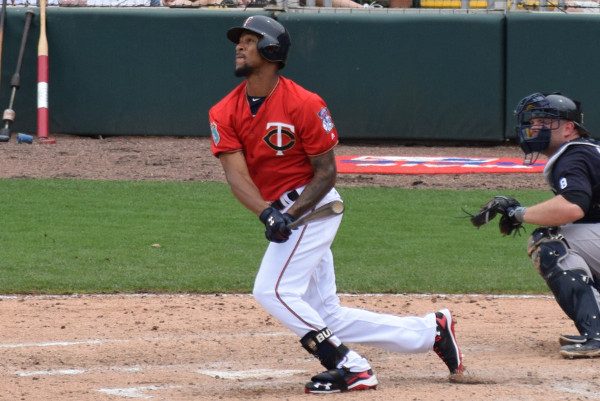 Yeah, my portfolio took a hit Thursday when Facebook shares dropped almost 20%. But I didn’t sell. I’m holding onto my Facebook stock. In fact, I’m probably going to add to my existing position after letting the dust settle for a few days. I think that’s what the Twins should do, too. No, I don’t mean they should invest in Facebook (though it wouldn’t be the worst investment the Twins have made over the years), I mean they should hold and maybe even buy. When the chorus grew so loud in support of the Twins being a seller at the deadline that there was support for not only trading players with expiring contracts and/or little expectation that they’d be part of the 2019 roster, but also for sending Kyle Gibson and Ryan Pressly packing, I took a step back from the cliff. If so many people were that convinced it was time to not only trade spare parts, but important 2019 cogs in the machinery, I wondered if maybe it’s time to do the opposite. After all, a year ago, the front office gave up and started selling about this time (though it turned out they didn’t have a ton of guys that other teams were interested in buying). As we all know, the Twins overcame that lack of faith, forcing their way into the one-and-done AL Wild Card game. But this is not 2017, obviously. At the end of July a year ago, Minnesota trailed Cleveland by 6 ½ games in AL Central. This year, they trail by 7 after Thursday night’s win over Boston. Last year, the Royals also stood between the Twins and the top of the Division. Not so this year. If Minnesota doesn’t mount a challenge, Cleveland will stroll to the Division title. A year ago, not only were the Twins well off the pace being set by Cleveland, they were going the wrong direction. They had started the month of July three games above .500, tied for the second AL Wild Card spot and just two games behind the Indians in the Division race. They finished the month tied with Baltimore, 4 ½ games behind the Royals in the race for the second Wild Card and two games behind Seattle and Tampa. Whatever momentum they had was moving them in the wrong direction so, of course, you sell. But this is not 2017. First of all, unlike a season ago, Minnesota will not be contending for an AL Wild Card spot. A year ago, there was one very good AL team in Houston and a lot of mediocrity after that. This year, there are a pair of teams in the East and three in the West that are leaving pretty much everyone else, including the Twins (and Cleveland, for that matter), in the dust. Entering July this season, the Twins at 35-44, were nine games under .500, eight games behind Cleveland in the standings and 15 ½ games back of the second WC spot. That’s not ideal, I grant. They’ve gone 13-9 this month and only managed to trim one game off their deficit to the Division leaders. That being the case, nobody can be blamed for advocating that the Twins replace player surnames with “FOR SALE” on back of most players’ jerseys. Unlike a year ago, however, Minnesota doesn’t need to claw their way through a crowded field in the hopes of earning a single play-in game at Yankee Stadium. They’re chasing one team and, if they should catch them, the reward is at least one full postseason series. And, unlike a year ago, their momentum is moving them in the right direction, notwithstanding last weekend’s debacle in Kansas City. The Twins also will face Cleveland ten times between now and the end of August. And it’s not like Minnesota has been beaten up by the Tribe this season, either. On the contrary. The Twins have won six of the nine games the two teams have completed this year. Everyone seems to think this is the same Cleveland team that went to the World Series a couple years ago. It isn’t. Yes, they have three guys at the top of their batting order that are very good. You want to include Edwin Encarnacion, I’ll let you. But after that? Who are you really afraid of? They have some pitching, yes. But that pitching hasn’t translated into as many wins in July as the Twins have notched and the Twins just added Ervin Santana, who didn’t look too rusty in his season debut this week. Yes, the Minnesota front office could throw in the towel now. It appears that not a lot of fans would blame them. It has been a disappointing year, to this point. They could get what they can for the guys with expiring contracts. Discard Lance Lynn, Brian Dozier, Eduardo Escobar, Zach Duke, even Joe Mauer if he’s inclined to approve of a deal to a contender. Probably add Jake Odorizzi to the list if you’re not of a mind to offer him arbitration for 2019. Likewise, maybe get someone interested in Santana if you don’t think you’ll pick up his $14 million club option for 2019. Make way for the next round of young talent that’s stewing in Rochester and Chattanooga. Let them get their feet wet in August and September, then be ready to re-engage the battle for AL Central supremacy in 2019. But is this really what we’ve come to? Baseball seasons are just four months long? If you’re a few games out of the top spot in your Division at the end of July, you pack it in and, “wait ‘til next year?” I’m sure the folks running Cleveland’s club are hoping that’s what the Twins will do. If so, they can virtually coast through the final two months and prepare for the postseason. I get that trading some (or all) of those players would potentially add a few pretty decent young prospects. And if the Twins’ farm system was in dire straights without much talent in the pipeline, maybe I’d go along with a fire sale right now. But that is not the case. The Twins have some really good talent at every level of their minor league organization right now. Sure, you always want more because some guys with high ceilings just don’t pan out, but as much as I enjoy watching minor league baseball, let’s not lose sight of the fact that the purpose in all of this is to win at the Major League level. As things stand, the Twins have a rotation of Santana, Berrios, Gibson, Lynn and Odorizzi. It may not be the equal of Cleveland’s, but it ain’t bad. If you think Fernando Romero, Aaron Slegers or Stephen Gonsalves would perform better in the fifth spot than Odorizzi, then make that move. But do it because you think it not only will make your team better in 2019 but will also improve their chances to catch and pass Cleveland this year. Or, here’s a thought – if you think you could improve your rotation, maybe trade FOR a better pitcher (ideally, one with at least another year of control left after this season), rather than selling off the ones you’ve got. And please, just stop the talk about trading Kyle Gibson already. This is not a rebuild. If you really have given up on 2018, fine, but don’t give up on 2019, too. With all of the problems this organization has had finding really good starting pitching, why would you trade a guy just when it looks like he’s becoming a really good starting pitcher and still has a year of team control left? Just because you could get somewhat better prospects in return? They’re still prospects and you’re probably just going to hope that one of them ends up developing into a pitcher as good as Gibson. As a fan base, we’ve been lulled into this never-ending routine that emphasizes acquisition and development of quality minor league talent. That’s all well and good until it takes over the organization’s mentality to the extent that they let a few games’ deficit in the standings in July keep them from even bothering to try to compete through the rest of the season. I say let’s go for it! What are you afraid of? If it doesn't work out, you still have all the quality young talent waiting to fill in where needed next season and so much payroll money coming off the books that you won't be able to figure out how to spend it all. If you don’t take advantage of those 10 head-to-head meetings with Cleveland, there are still likely to be waiver deals to be made before the end of August. No, the returns may not be as good as they would be right now, but I’m pretty satisfied with where the Twins’ farm system sits now. I don’t need more. I don’t want my baseball season to keep being four months long. I want the full six months. I want to see if Santana, Buxton and Sano can overcome their personal setbacks and help turn the Twins into the kind of team nobody wants to have to face in September. I want to see if this team, that was supposed to be a contender, can get some traction and do something to make Cleveland sweat a little bit. Don’t just hand them the Division. Let’s make things interesting for them. That’s what competing is all about, isn’t it? (This article was originally posted at Knuckleballsblog.com)
 -
Like a lot of Twins fans, I think, I’ve been coasting a bit with my fandom. The results on the field have been disappointing. http://knuckleballsblog.com/blog/wp-content/uploads/2016/06/Buxton16STa9x6600-600x401.jpg Byron Buxton (photo by SD Buhr) Ervin Santana, Miguel Sano, Byron Buxton and Jorge Polanco hadn’t even been on the field much, if at all, during most of the first half of the season. The expected two-team competition for the American League Central Division title quickly became no race at all, with Cleveland outpacing the pack. So, I fell in line with the expectation that the Minnesota front office should and would be sellers at the July non-waiver trade deadline. But a funny thing happens to me when I start to hear so many voices saying, “Sell!” in unison. I start looking for reasons to buy. Yeah, my portfolio took a hit Thursday when Facebook shares dropped almost 20%. But I didn’t sell. I’m holding onto my Facebook stock. In fact, I’m probably going to add to my existing position after letting the dust settle for a few days. I think that’s what the Twins should do, too. No, I don’t mean they should invest in Facebook (though it wouldn’t be the worst investment the Twins have made over the years), I mean they should hold and maybe even buy. When the chorus grew so loud in support of the Twins being a seller at the deadline that there was support for not only trading players with expiring contracts and/or little expectation that they’d be part of the 2019 roster, but also for sending Kyle Gibson and Ryan Pressly packing, I took a step back from the cliff. If so many people were that convinced it was time to not only trade spare parts, but important 2019 cogs in the machinery, I wondered if maybe it’s time to do the opposite. After all, a year ago, the front office gave up and started selling about this time (though it turned out they didn’t have a ton of guys that other teams were interested in buying). As we all know, the Twins overcame that lack of faith, forcing their way into the one-and-done AL Wild Card game. But this is not 2017, obviously. At the end of July a year ago, Minnesota trailed Cleveland by 6 ½ games in AL Central. This year, they trail by 7 after Thursday night’s win over Boston. http://knuckleballsblog.com/blog/wp-content/uploads/2017/03/DSC_1128-600x400.jpg Jorge Polanco (Photo by SD Buhr) Last year, the Royals also stood between the Twins and the top of the Division. Not so this year. If Minnesota doesn’t mount a challenge, Cleveland will stroll to the Division title. A year ago, not only were the Twins well off the pace being set by Cleveland, they were going the wrong direction. They had started the month of July three games above .500, tied for the second AL Wild Card spot and just two games behind the Indians in the Division race. They finished the month tied with Baltimore, 4 ½ games behind the Royals in the race for the second Wild Card and two games behind Seattle and Tampa. Whatever momentum they had was moving them in the wrong direction so, of course, you sell. But this is not 2017. First of all, unlike a season ago, Minnesota will not be contending for an AL Wild Card spot. A year ago, there was one very good AL team in Houston and a lot of mediocrity after that. This year, there are a pair of teams in the East and three in the West that are leaving pretty much everyone else, including the Twins (and Cleveland, for that matter), in the dust. Entering July this season, the Twins at 35-44, were nine games under .500, eight games behind Cleveland in the standings and 15 ½ games back of the second WC spot. That’s not ideal, I grant. They’ve gone 13-9 this month and only managed to trim one game off their deficit to the Division leaders. That being the case, nobody can be blamed for advocating that the Twins replace player surnames with “FOR SALE” on back of most players’ jerseys. Unlike a year ago, however, Minnesota doesn’t need to claw their way through a crowded field in the hopes of earning a single play-in game at Yankee Stadium. They’re chasing one team and, if they should catch them, the reward is at least one full postseason series. And, unlike a year ago, their momentum is moving them in the right direction, notwithstanding last weekend’s debacle in Kansas City. The Twins also will face Cleveland ten times between now and the end of August. And it’s not like Minnesota has been beaten up by the Tribe this season, either. On the contrary. The Twins have won six of the nine games the two teams have completed this year. Everyone seems to think this is the same Cleveland team that went to the World Series a couple years ago. It isn’t. Yes, they have three guys at the top of their batting order that are very good. You want to include Edwin Encarnacion, I’ll let you. But after that? Who are you really afraid of? They have some pitching, yes. But that pitching hasn’t translated into as many wins in July as the Twins have notched and the Twins just added Ervin Santana, who didn’t look too rusty in his season debut this week. Yes, the Minnesota front office could throw in the towel now. It appears that not a lot of fans would blame them. It has been a disappointing year, to this point. They could get what they can for the guys with expiring contracts. Discard Lance Lynn, Brian Dozier, Eduardo Escobar, Zach Duke, even Joe Mauer if he’s inclined to approve of a deal to a contender. Probably add Jake Odorizzi to the list if you’re not of a mind to offer him arbitration for 2019. Likewise, maybe get someone interested in Santana if you don’t think you’ll pick up his $14 million club option for 2019. Make way for the next round of young talent that’s stewing in Rochester and Chattanooga. Let them get their feet wet in August and September, then be ready to re-engage the battle for AL Central supremacy in 2019. But is this really what we’ve come to? Baseball seasons are just four months long? If you’re a few games out of the top spot in your Division at the end of July, you pack it in and, “wait ‘til next year?” I’m sure the folks running Cleveland’s club are hoping that’s what the Twins will do. If so, they can virtually coast through the final two months and prepare for the postseason. I get that trading some (or all) of those players would potentially add a few pretty decent young prospects. And if the Twins’ farm system was in dire straights without much talent in the pipeline, maybe I’d go along with a fire sale right now. But that is not the case. The Twins have some really good talent at every level of their minor league organization right now. Sure, you always want more because some guys with high ceilings just don’t pan out, but as much as I enjoy watching minor league baseball, let’s not lose sight of the fact that the purpose in all of this is to win at the Major League level. As things stand, the Twins have a rotation of Santana, Berrios, Gibson, Lynn and Odorizzi. It may not be the equal of Cleveland’s, but it ain’t bad. If you think Fernando Romero, Aaron Slegers or Stephen Gonsalves would perform better in the fifth spot than Odorizzi, then make that move. But do it because you think it not only will make your team better in 2019 but will also improve their chances to catch and pass Cleveland this year. Or, here’s a thought – if you think you could improve your rotation, maybe trade FOR a better pitcher (ideally, one with at least another year of control left after this season), rather than selling off the ones you’ve got. And please, just stop the talk about trading Kyle Gibson already. This is not a rebuild. If you really have given up on 2018, fine, but don’t give up on 2019, too. With all of the problems this organization has had finding really good starting pitching, why would you trade a guy just when it looks like he’s becoming a really good starting pitcher and still has a year of team control left? Just because you could get somewhat better prospects in return? They’re still prospects and you’re probably just going to hope that one of them ends up developing into a pitcher as good as Gibson. As a fan base, we’ve been lulled into this never-ending routine that emphasizes acquisition and development of quality minor league talent. That’s all well and good until it takes over the organization’s mentality to the extent that they let a few games’ deficit in the standings in July keep them from even bothering to try to compete through the rest of the season. I say let’s go for it! What are you afraid of? If it doesn't work out, you still have all the quality young talent waiting to fill in where needed next season and so much payroll money coming off the books that you won't be able to figure out how to spend it all. If you don’t take advantage of those 10 head-to-head meetings with Cleveland, there are still likely to be waiver deals to be made before the end of August. No, the returns may not be as good as they would be right now, but I’m pretty satisfied with where the Twins’ farm system sits now. I don’t need more. I don’t want my baseball season to keep being four months long. I want the full six months. I want to see if Santana, Buxton and Sano can overcome their personal setbacks and help turn the Twins into the kind of team nobody wants to have to face in September. I want to see if this team, that was supposed to be a contender, can get some traction and do something to make Cleveland sweat a little bit. Don’t just hand them the Division. Let’s make things interesting for them. That’s what competing is all about, isn’t it? (This article was originally posted at Knuckleballsblog.com)
-
Trey Cabbage says he absolutely does not hate Cedar Rapids. He may be hitting like he hates his team’s home town, but he insists that doesn’t mean he hates the city. Recently, Steve Buhr caught up with an intriguing prospect on the Cedar Rapids Kernels roster, Trey Cabbage.“Honestly, I don’t,” he claimed, with a smile, during an interview late last week. “I want to get out of here, but not because it’s Cedar Rapids. It wouldn’t matter if it was California, North Carolina or wherever, it’s just to move up to the next level.” But sometimes it sure seems like he’s hitting like he has something against the town he’s been playing home ballgames in since about this time a year ago. It’s not unusual in professional baseball for players to hit a little better at home than they do on the road or even a bit better than usual in one or two opponents’ ballparks. As Cedar Rapids Kernels manager Toby Gardenhire explains, “Sometimes you see the ball better in different ballparks, sometimes with different backdrops, just different settings.” But Cabbage, the Twins’ 21-year old 2015 4th round draft pick, has taken things to a very unusual extreme this season. Through Monday’s game, he’s played in 67 games for the Kernels and put up a .257/.331/.447 split and a .778 OPS. He’s also been on a roll this month, hitting .375 in his last ten games. The overall numbers are what they are, but it’s the home/road split that’s eye-popping. In 36 home games, he’s hit just .218, gotten on base at a .279 rate and slugged .353 for a .632 OPS. He’s hit a pair of home runs among his ten extra-base hits on Perfect Game Field at Veterans Memorial Stadium in Cedar Rapids. That includes a 3-hit game on Monday afternoon in a home series finale against Lake County that included a pair of two-baggers. But in his 31 road games for the Kernels, he’s hit .299, reached base at a .384 clip and slugged .551, giving him a road OPS of .935. That’s 178 points higher than he’s put up at home. Maybe he just really likes wearing grey uniform pants? “It’s not the grey pants,” he claimed. “I guess, on the road, as soon as (batting practice) is over it’s like food – stretch – game. Here (at home games), there’s a little bit more time to sit down, so I don’t know if my body gets a little bit more lackadaisical or whatever. I go out there with the same intensity every game. I don’t know what it is. http://knuckleballsblog.com/blog/wp-content/uploads/2018/07/Cabbage071318d-600x401.jpg Trey Cabbage watches what will become a double to the left-centerfield wall (Photo by SD Buhr) “Me and Jordan (Gore) were talking during the (MWL) All-Star break, and I said, ‘Man, I don’t know what it is, I just like playing on the road.’ I guess with people, not really booing us, but kind of heckling us a little bit more. There’s almost a little bit of a chip on your shoulder.” Last Thursday, however, Cabbage found a solution to his home woes, at least for one night. He went 4-for-4 with a home run (just his second round tripper at home, compared to five he’s smacked on the road this season) in a 6-2 win over Ft. Wayne. “The first 4-hit game I’ve ever had in my life,” he said the next day. “I don’t know what I did, but I’m going to try to do the same thing today as I did yesterday. I put my socks on the same way, I’ll eat the same stuff. I’m a little superstitious.” A superstitious baseball player? Imagine that. Cabbage claims he’s not really that superstitious, but he does have certain routines that he follows consistently. “Like going up on deck I do the same thing,” he explained. “I do the Happy Gilmore swing, I push my helmet to my forehead, tap it twice and then fix my bill. Then I do a top hand swing drill that I’ve done with (Elizabethton Twins hitting coach) Jeff Reed in E-Town. And then from then on, it’s just timing up the pitcher, but that’s my one thing I try to do every at-bat, every time I go on deck, I do that little routine. http://knuckleballsblog.com/blog/wp-content/uploads/2018/07/CabbageGardenhire071318-600x401.jpg Kernels manager Toby Gardenhire (left) and Trey Cabbage with a batting practice discussion. (Photo by SD Buhr) “It’s funny because I look in behind (the backstop fence) and sometimes you’ll see people like, ‘look at this guy on deck, what the heck’s he doing?’” Maybe those fans should start heckling him like a visiting player, instead. It’s just a thought. His manager has been seeing consistency in more than just his on-deck circle routine, however, and Gardenhire has liked what he’s seen. “He’s been very consistent all year and that’s one of the things going into the year that we talked to him about,” Gardenhire said. “In the past, he’ll be going along and something doesn’t go right and he wants to change things, then he wants to change it again and he wants to change it again. “At some point, you’ve got to get where you’re consistent with things so you can let it play out a little bit. That’s what we talked to him about this year, was being consistent with his approach, be consistent with the things he does. And he’s done a really good job all year of that.” A lot has been said and written this season about the game of professional baseball becoming a contest where “three true outcomes” dominate the game. For better or worse, with the way pitchers are ramping up velocities and throwing more breaking balls, it has been becoming a game of strikeouts, walks and home runs. It’s all about fastball velocity and exit velocity (the speed at which the ball comes off the bat). Cabbage, at 6’ 3” and just a bit over 200 pounds, may be exactly that type of player as his game evolves and his body continues to develop. “He’s a big, strong guy and he’s got a big beard now, so he doesn’t look young, but he’s young,” his manager said. “He’s probably still got a ways to go with some things, but he’s improved a lot. He’s going to strike out some. He’s a big power hitter guy. That’s what power hitters do, strike out some. But he’s also going to light some fastballs up and that’s what he’s done this year. It’s been good to watch, it’s fun.” When he talks hitting philosophy, Cabbage certainly sounds like a guy intent on being a power hitter. “I don’t worry about manipulating the ball,” he said. “That’s what I was doing early in the season, that’s when I was late, swinging and missing or fouling balls off that I should be hitting.” What Cabbage has been doing lately when he makes contact could hardly be described as manipulating the ball with his bat. http://knuckleballsblog.com/blog/wp-content/uploads/2018/07/Cabbage071318b-400x600.jpg Trey Cabbage (Photo by SD Buhr) “Baseball, it doesn’t ever really even out from hard hit balls getting caught to bleeders falling in, but I would rather be out by hitting the ball hard right at somebody or somebody running it down and making a great play than saying, ‘well, I was trying to inside-out that ball because it was outside.’ “If you hit to get hits, then you’re trying to be perfect. If you’re hitting to get hits, it’s basically hitting to not make outs, which is when you start manipulating, changing the swing, changing the approach, in between pitches, during an at-bat, in between at-bats. “I just go up there trying to make hard contact. I’d rather play with that and take my chances, than flipping balls over. Usually guys with higher exit velos and more barrels, they’re going to hit for a higher average than a guy that’s just up there trying to flip balls. Now, obviously with two strikes, you’ve got more of a defensive mindset, just trying to make contact, but if it’s an optimal count, you try to do damage.” Cabbage has been doing his share of damage in the second half of the season and is one reason his team has been sitting at or near the top of the Midwest League’s Western Division second-half standings. But Gardenhire also likes what he’s been seeing of Cabbage’s defense. http://knuckleballsblog.com/blog/wp-content/uploads/2018/07/Cabbage071318a-600x400.jpg Trey Cabbage (Photo by SD Buhr) “I’ve really been pleasantly surprised with how good he is in the outfield,” the skipper said. “He’s very athletic out there. He’s got a good arm. He moves to the ball really well. “You know, sometimes that’s tough to do for a guy that’s coming from the infield to the outfield. He was a third baseman and we put him at first some, but when we put him in the outfield, he moved around really well out there, so he can do that for sure. I’ve been impressed with that.” Now, we just need to get him to be as impressive at home as he’s been on the road. I still think they should make him wear grey uniform pants at home. Click here to view the article
-
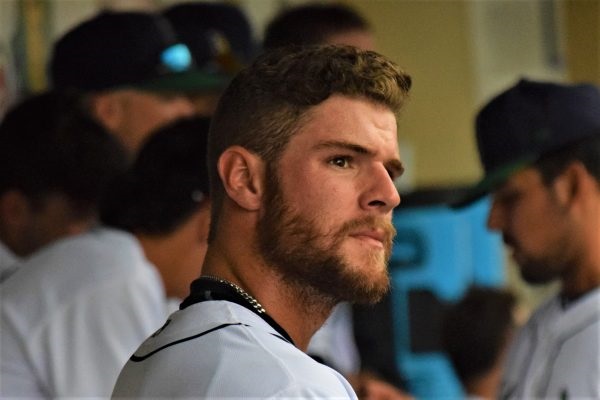 “Honestly, I don’t,” he claimed, with a smile, during an interview late last week. “I want to get out of here, but not because it’s Cedar Rapids. It wouldn’t matter if it was California, North Carolina or wherever, it’s just to move up to the next level.” But sometimes it sure seems like he’s hitting like he has something against the town he’s been playing home ballgames in since about this time a year ago. It’s not unusual in professional baseball for players to hit a little better at home than they do on the road or even a bit better than usual in one or two opponents’ ballparks. As Cedar Rapids Kernels manager Toby Gardenhire explains, “Sometimes you see the ball better in different ballparks, sometimes with different backdrops, just different settings.” But Cabbage, the Twins’ 21-year old 2015 4th round draft pick, has taken things to a very unusual extreme this season. Through Monday’s game, he’s played in 67 games for the Kernels and put up a .257/.331/.447 split and a .778 OPS. He’s also been on a roll this month, hitting .375 in his last ten games. The overall numbers are what they are, but it’s the home/road split that’s eye-popping. In 36 home games, he’s hit just .218, gotten on base at a .279 rate and slugged .353 for a .632 OPS. He’s hit a pair of home runs among his ten extra-base hits on Perfect Game Field at Veterans Memorial Stadium in Cedar Rapids. That includes a 3-hit game on Monday afternoon in a home series finale against Lake County that included a pair of two-baggers. But in his 31 road games for the Kernels, he’s hit .299, reached base at a .384 clip and slugged .551, giving him a road OPS of .935. That’s 178 points higher than he’s put up at home. Maybe he just really likes wearing grey uniform pants? “It’s not the grey pants,” he claimed. “I guess, on the road, as soon as (batting practice) is over it’s like food – stretch – game. Here (at home games), there’s a little bit more time to sit down, so I don’t know if my body gets a little bit more lackadaisical or whatever. I go out there with the same intensity every game. I don’t know what it is. http://knuckleballsblog.com/blog/wp-content/uploads/2018/07/Cabbage071318d-600x401.jpg Trey Cabbage watches what will become a double to the left-centerfield wall (Photo by SD Buhr) “Me and Jordan (Gore) were talking during the (MWL) All-Star break, and I said, ‘Man, I don’t know what it is, I just like playing on the road.’ I guess with people, not really booing us, but kind of heckling us a little bit more. There’s almost a little bit of a chip on your shoulder.” Last Thursday, however, Cabbage found a solution to his home woes, at least for one night. He went 4-for-4 with a home run (just his second round tripper at home, compared to five he’s smacked on the road this season) in a 6-2 win over Ft. Wayne. “The first 4-hit game I’ve ever had in my life,” he said the next day. “I don’t know what I did, but I’m going to try to do the same thing today as I did yesterday. I put my socks on the same way, I’ll eat the same stuff. I’m a little superstitious.” A superstitious baseball player? Imagine that. Cabbage claims he’s not really that superstitious, but he does have certain routines that he follows consistently. “Like going up on deck I do the same thing,” he explained. “I do the Happy Gilmore swing, I push my helmet to my forehead, tap it twice and then fix my bill. Then I do a top hand swing drill that I’ve done with (Elizabethton Twins hitting coach) Jeff Reed in E-Town. And then from then on, it’s just timing up the pitcher, but that’s my one thing I try to do every at-bat, every time I go on deck, I do that little routine. http://knuckleballsblog.com/blog/wp-content/uploads/2018/07/CabbageGardenhire071318-600x401.jpg Kernels manager Toby Gardenhire (left) and Trey Cabbage with a batting practice discussion. (Photo by SD Buhr) “It’s funny because I look in behind (the backstop fence) and sometimes you’ll see people like, ‘look at this guy on deck, what the heck’s he doing?’” Maybe those fans should start heckling him like a visiting player, instead. It’s just a thought. His manager has been seeing consistency in more than just his on-deck circle routine, however, and Gardenhire has liked what he’s seen. “He’s been very consistent all year and that’s one of the things going into the year that we talked to him about,” Gardenhire said. “In the past, he’ll be going along and something doesn’t go right and he wants to change things, then he wants to change it again and he wants to change it again. “At some point, you’ve got to get where you’re consistent with things so you can let it play out a little bit. That’s what we talked to him about this year, was being consistent with his approach, be consistent with the things he does. And he’s done a really good job all year of that.” A lot has been said and written this season about the game of professional baseball becoming a contest where “three true outcomes” dominate the game. For better or worse, with the way pitchers are ramping up velocities and throwing more breaking balls, it has been becoming a game of strikeouts, walks and home runs. It’s all about fastball velocity and exit velocity (the speed at which the ball comes off the bat). Cabbage, at 6’ 3” and just a bit over 200 pounds, may be exactly that type of player as his game evolves and his body continues to develop. “He’s a big, strong guy and he’s got a big beard now, so he doesn’t look young, but he’s young,” his manager said. “He’s probably still got a ways to go with some things, but he’s improved a lot. He’s going to strike out some. He’s a big power hitter guy. That’s what power hitters do, strike out some. But he’s also going to light some fastballs up and that’s what he’s done this year. It’s been good to watch, it’s fun.” When he talks hitting philosophy, Cabbage certainly sounds like a guy intent on being a power hitter. “I don’t worry about manipulating the ball,” he said. “That’s what I was doing early in the season, that’s when I was late, swinging and missing or fouling balls off that I should be hitting.” What Cabbage has been doing lately when he makes contact could hardly be described as manipulating the ball with his bat. http://knuckleballsblog.com/blog/wp-content/uploads/2018/07/Cabbage071318b-400x600.jpg Trey Cabbage (Photo by SD Buhr) “Baseball, it doesn’t ever really even out from hard hit balls getting caught to bleeders falling in, but I would rather be out by hitting the ball hard right at somebody or somebody running it down and making a great play than saying, ‘well, I was trying to inside-out that ball because it was outside.’ “If you hit to get hits, then you’re trying to be perfect. If you’re hitting to get hits, it’s basically hitting to not make outs, which is when you start manipulating, changing the swing, changing the approach, in between pitches, during an at-bat, in between at-bats. “I just go up there trying to make hard contact. I’d rather play with that and take my chances, than flipping balls over. Usually guys with higher exit velos and more barrels, they’re going to hit for a higher average than a guy that’s just up there trying to flip balls. Now, obviously with two strikes, you’ve got more of a defensive mindset, just trying to make contact, but if it’s an optimal count, you try to do damage.” Cabbage has been doing his share of damage in the second half of the season and is one reason his team has been sitting at or near the top of the Midwest League’s Western Division second-half standings. But Gardenhire also likes what he’s been seeing of Cabbage’s defense. http://knuckleballsblog.com/blog/wp-content/uploads/2018/07/Cabbage071318a-600x400.jpg Trey Cabbage (Photo by SD Buhr) “I’ve really been pleasantly surprised with how good he is in the outfield,” the skipper said. “He’s very athletic out there. He’s got a good arm. He moves to the ball really well. “You know, sometimes that’s tough to do for a guy that’s coming from the infield to the outfield. He was a third baseman and we put him at first some, but when we put him in the outfield, he moved around really well out there, so he can do that for sure. I’ve been impressed with that.” Now, we just need to get him to be as impressive at home as he’s been on the road. I still think they should make him wear grey uniform pants at home.
 -
After the Cedar Rapids Kernels finished batting practice on a warm, humid July 4 afternoon, two of the most productive players on their roster agreed to sit down and talk about the season. One, an infielder, has been hitting over .300 with an on-base percentage around .400 virtually all season. (And three days after the interview, his bags were packed for Chattanooga, where he’d been promoted to join former Kernels manager Tommy Watkins’ Lookouts.) The other, a starting pitcher, is 6-2 on the season and leads the Kernels in innings pitched.Unless you’re a pretty serious student of the Minnesota Twins’ minor league system or a Kernels season ticket holder, there’s a chance you’ve never heard of either of them. Jordan Gore was selected by the Twins out of Coastal Carolina in the 17th round of the 2017 draft and Randy Dobnak never got a post-draft call at all after completing his college career at Alderson Broaddus University in West Virginia. They made the most of their college days on and off the field, both making the Dean’s List regularly at their respective schools. Gore started his college career at South Carolina before transferring to Coastal Carolina in his hometown of Conway, SC, where he underwent Tommy John surgery and ended up sitting out the Chanticleers’ NCAA championship season in 2016. Having to sit out that championship season wasn’t as tough for Gore as one might think. http://knuckleballsblog.com/blog/wp-content/uploads/2018/07/Gore062418a-600x400.jpg Jordan Gore (Photo by SD Buhr) “Honestly you can say so,” Gore said, “but I’ve said this time and time again. That was best group of guys that I’ve ever been around as far as pulling for each other, working hard, all around good personalities and good people. It was probably better for me to sit back and watch how they did it. They taught me a lot about how to play the game the right way. “I’ve got nothing but love for everybody at Coastal. I tell you what, it made me a lot better person and a player.” Dobnak pitched for Alderson Broadus University in Philippi, West Virginia, where he had a career 26-12 record and set a Great Midwest Athletic Conference record with 284 career strikeouts. You wouldn’t fault Gore, a shortstop by trade, if he had been more than a little troubled by the fact that he was drafted by an organization that also used the first overall pick of the 2017 draft to select a guy who plays the same position. But Gore says he wasn’t concerned at all at the prospect of trying to work his way up through the Twins farm system virtually in tandem with top prospect Royce Lewis. “Honestly, I was just happy to get the call because after my last (college) game it kind of hit me, man this could be the last time I lace my spikes up,” Gore said, concerning his draft position, “and Royce is a great guy. It’s great to be playing with him. It’s a lot of fun.” Gore didn’t exactly follow the draft moment by moment, waiting to hear his name called, but admits being relieved when it was over. “I tried to keep my mind off of it,” he recalled. “I tried to just stay away from thinking about it too much. When I finally did get the call, it was a lot off my shoulders because you can try not to think about it as much as you want, but it’s always going to be there.” While Gore had to be patient on draft day, Dobnak wasn’t all that surprised that he didn’t get a call when the draft had been completed. http://knuckleballsblog.com/blog/wp-content/uploads/2018/07/Dobnak062718a-600x400.jpg Randy Dobnak (Photo by SD Buhr) “Being in the mountains of West Virginia, there were a few teams that were talking to me or my coaches,” he explained. “But when they’d try and come see me play, we’d get rained out, snowed out. too cold. So, I didn’t really know what to expect (on draft day).” Not being drafted didn’t mean Dobnak was ready to call it a career, however. He used a connection made in his freshman year of college to land a spot on the pitching staff of the Utica Unicorns, an independent minor league team in a four-team league about an hour outside Detroit, Michigan. “I played there for like a month. I had played with (the manager’s) son. He was my catcher my freshmen and sophomore year (of college). After a freshman year tournament, we were all out to eat and his dad was like, ‘I want you come play for my team once you graduate.’ Three years later, I’m like, ‘Alright, let’s do this thing.’” A few weeks later, he signed with the Twins and he spent the rest of last summer in Elizabethton and Cedar Rapids. Dobnak put up a combined ERA of 2.43 and a WHIP of 0.96 in six appearances (four as a starter) at the two 2017 stops and has followed that up with a very solid first three months with the Kernels this summer. In 14 appearances (11 of them as a starter), he has a 3.74 ERA and has struck out 49 batters, while walking just 13. He has averaged seven innings of work in his last five starts for the Kernels. At the time of his promotion to Chattanooga on July 7, Gore was hitting .307 with a solid .770 OPS and had a .333 average and 1.044 OPS in the month of July. While splitting infield time with Royce Lewis, Andrew Bechtold and Jose Miranda, Gore has made 33 appearances at second base, 23 at shortstop, five at third base and even made one late-game mop up appearance on the mound for Cedar Rapids. On a team seemingly filled with very young talent, Gore and Dobnak have stood out as 23-year-olds and their manager, Toby Gardenhire, has appreciated the level of effort and leadership they’ve brough to the field, as well as the clubhouse. “He’s been great,” the manager said of Dobnak. “He grabs the ball and goes out there and does whatever you want him to do. He works really hard every day, shows up ready to go. He’s the epitome of the guy that you want on your team. He doesn’t say much, he just goes out there and does his job every day. “His skill level has been great, he’s done a great job, but the big thing for us is that he’s very professional with everything that he does. When you have this many young guys on a team like we do that you’re trying to teach how to be professionals, then you need guys like him where you can say, ‘Hey you see how Dobnak does this? You see what he does? You see how he goes about his business? That’s the way it needs to be. That’s how you have to act.’ “So, aside from the fact that he’s doing great, which is all credit to him and how hard he works, he’s just a great person. He’s a great leader for us.” Gardenhire offered a similar strong endorsement for Gore. http://knuckleballsblog.com/blog/wp-content/uploads/2018/07/Gore070418a-600x400.jpg Jordan Gore (Photo by SD Buhr) “Gore’s the same way,” his manager said. “He’s ‘game on.’ He’s funny, but the way he goes about his business, the way he goes out and gets it every day – when you put him in the lineup, you know what you’re going to get from him. You’re going to get effort. Dives all over the place and will do anything to win baseball games. “You would think that with baseball players in professional baseball, you’re going to have a whole group of guys that just want to try to win games, that will do anything for the team, but it’s not always like that. That’s a taught trait. You either have something in you that says ‘Hey, I’ll do whatever it takes to win this game’ or you have to learn that. He’s one of those guys, he just has it. That’s what he wants. He wants to win and he’ll do anything. “I always call those guys dirtballs. He’s driving all over the place. You’re not going to see him with his uniform clean for very long in a game. That’s one of those things, again, when you have a whole bunch of young talented guys like we have, to have a guy like that who shows them the way. They see him diving all over the place. He’s mad when we lose and he gets fired up. They see that and it starts to kind of rub off on them. That’s what you want.” A couple of relatively unheralded players on a team stocked with highly-regarded younger prospects could be forgiven if they felt some pressure to perform well enough to get noticed by their front office, but neither Gore nor Dobnak sounded like that was the case for them. “I don’t think it’s pressure,” Gore said. “Speaking for myself, I come out here and want to work hard. This is fun for us! I mean it’s the best job in the world, right? “Yep,” concurred Dobnak. “I mean, come on, who wouldn’t want to come out here and work hard?” asked Gore, “because when you work hard, you tend to play well. It makes it a lot more fun.” Neither player is concerning himself too much with what’s going on with the Twins’ affiliates at the higher levels, however. http://knuckleballsblog.com/blog/wp-content/uploads/2018/07/Dobnak070418a-400x600.jpg Randy Dobnak (Photo by SD Buhr) “I check out the scores and see how some of the guys I know are doing,” conceded Dobnak. “I just think if you prove to your coaches or front office that you’re good enough to move up, they’ll move you up. But all the guys, they work hard. They all work the same. You go out there and do whatever you’ve got to do. Compete.” “I try not to think about (promotions), I’ll be honest with you,” said Gore. “I’m around a great bunch of guys every day and it’s a lot of fun. It doesn’t really pop into your head much. We’re just out here trying to win and we’ve been doing that here lately.” Given that Gore earned a promotion three days after those comments, his approach obviously worked for him. One thing that comes through in virtually every conversation you have with any of this group of Kernels is how much they enjoy their teammates. It’s a close group, but even in the tightest of clubhouses, there will be differences. Gore and Dobnak are not completely in agreement in one aspect of the game. Dobnak’s Twitter profile includes a reference to the hashtag #BanTheDH. Gore doesn’t sound ready to give away the at-bats he gets on days he DHs. “Let the pitchers hit,” said Dobnak. And why? “Because it’s more fun for the pitchers. When you grow up, you pitch, you hit, you play the infield!” It’s all about the pitchers, right Jordan? “No offense to the pitchers out there, but you’re probably giving up an out every time,” a smiling Gore responded. “I’m just kidding,” the professional hitter in the conversation added. “We’ve got a lot of good athletes on the (pitching staff), I’m sure they could probably pick up a stick and hit it.” Click here to view the article
- 8 replies
-
- 1
-
-
- randy dobnak
- jordan gore
- (and 2 more)
-
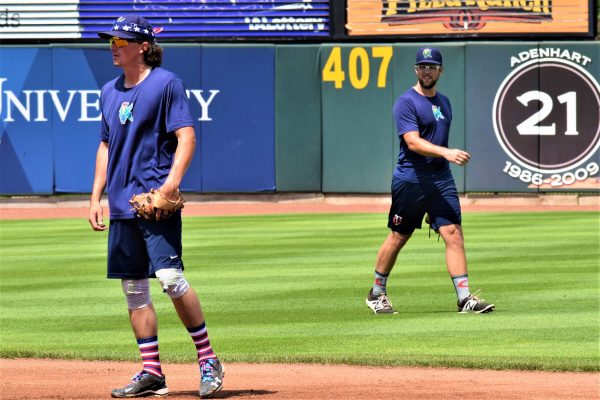 Unless you’re a pretty serious student of the Minnesota Twins’ minor league system or a Kernels season ticket holder, there’s a chance you’ve never heard of either of them. Jordan Gore was selected by the Twins out of Coastal Carolina in the 17th round of the 2017 draft and Randy Dobnak never got a post-draft call at all after completing his college career at Alderson Broaddus University in West Virginia. They made the most of their college days on and off the field, both making the Dean’s List regularly at their respective schools. Gore started his college career at South Carolina before transferring to Coastal Carolina in his hometown of Conway, SC, where he underwent Tommy John surgery and ended up sitting out the Chanticleers’ NCAA championship season in 2016. Having to sit out that championship season wasn’t as tough for Gore as one might think. http://knuckleballsblog.com/blog/wp-content/uploads/2018/07/Gore062418a-600x400.jpg Jordan Gore (Photo by SD Buhr) “Honestly you can say so,” Gore said, “but I’ve said this time and time again. That was best group of guys that I’ve ever been around as far as pulling for each other, working hard, all around good personalities and good people. It was probably better for me to sit back and watch how they did it. They taught me a lot about how to play the game the right way. “I’ve got nothing but love for everybody at Coastal. I tell you what, it made me a lot better person and a player.” Dobnak pitched for Alderson Broadus University in Philippi, West Virginia, where he had a career 26-12 record and set a Great Midwest Athletic Conference record with 284 career strikeouts. You wouldn’t fault Gore, a shortstop by trade, if he had been more than a little troubled by the fact that he was drafted by an organization that also used the first overall pick of the 2017 draft to select a guy who plays the same position. But Gore says he wasn’t concerned at all at the prospect of trying to work his way up through the Twins farm system virtually in tandem with top prospect Royce Lewis. “Honestly, I was just happy to get the call because after my last (college) game it kind of hit me, man this could be the last time I lace my spikes up,” Gore said, concerning his draft position, “and Royce is a great guy. It’s great to be playing with him. It’s a lot of fun.” Gore didn’t exactly follow the draft moment by moment, waiting to hear his name called, but admits being relieved when it was over. “I tried to keep my mind off of it,” he recalled. “I tried to just stay away from thinking about it too much. When I finally did get the call, it was a lot off my shoulders because you can try not to think about it as much as you want, but it’s always going to be there.” While Gore had to be patient on draft day, Dobnak wasn’t all that surprised that he didn’t get a call when the draft had been completed. http://knuckleballsblog.com/blog/wp-content/uploads/2018/07/Dobnak062718a-600x400.jpg Randy Dobnak (Photo by SD Buhr) “Being in the mountains of West Virginia, there were a few teams that were talking to me or my coaches,” he explained. “But when they’d try and come see me play, we’d get rained out, snowed out. too cold. So, I didn’t really know what to expect (on draft day).” Not being drafted didn’t mean Dobnak was ready to call it a career, however. He used a connection made in his freshman year of college to land a spot on the pitching staff of the Utica Unicorns, an independent minor league team in a four-team league about an hour outside Detroit, Michigan. “I played there for like a month. I had played with (the manager’s) son. He was my catcher my freshmen and sophomore year (of college). After a freshman year tournament, we were all out to eat and his dad was like, ‘I want you come play for my team once you graduate.’ Three years later, I’m like, ‘Alright, let’s do this thing.’” A few weeks later, he signed with the Twins and he spent the rest of last summer in Elizabethton and Cedar Rapids. Dobnak put up a combined ERA of 2.43 and a WHIP of 0.96 in six appearances (four as a starter) at the two 2017 stops and has followed that up with a very solid first three months with the Kernels this summer. In 14 appearances (11 of them as a starter), he has a 3.74 ERA and has struck out 49 batters, while walking just 13. He has averaged seven innings of work in his last five starts for the Kernels. At the time of his promotion to Chattanooga on July 7, Gore was hitting .307 with a solid .770 OPS and had a .333 average and 1.044 OPS in the month of July. While splitting infield time with Royce Lewis, Andrew Bechtold and Jose Miranda, Gore has made 33 appearances at second base, 23 at shortstop, five at third base and even made one late-game mop up appearance on the mound for Cedar Rapids. On a team seemingly filled with very young talent, Gore and Dobnak have stood out as 23-year-olds and their manager, Toby Gardenhire, has appreciated the level of effort and leadership they’ve brough to the field, as well as the clubhouse. “He’s been great,” the manager said of Dobnak. “He grabs the ball and goes out there and does whatever you want him to do. He works really hard every day, shows up ready to go. He’s the epitome of the guy that you want on your team. He doesn’t say much, he just goes out there and does his job every day. “His skill level has been great, he’s done a great job, but the big thing for us is that he’s very professional with everything that he does. When you have this many young guys on a team like we do that you’re trying to teach how to be professionals, then you need guys like him where you can say, ‘Hey you see how Dobnak does this? You see what he does? You see how he goes about his business? That’s the way it needs to be. That’s how you have to act.’ “So, aside from the fact that he’s doing great, which is all credit to him and how hard he works, he’s just a great person. He’s a great leader for us.” Gardenhire offered a similar strong endorsement for Gore. http://knuckleballsblog.com/blog/wp-content/uploads/2018/07/Gore070418a-600x400.jpg Jordan Gore (Photo by SD Buhr) “Gore’s the same way,” his manager said. “He’s ‘game on.’ He’s funny, but the way he goes about his business, the way he goes out and gets it every day – when you put him in the lineup, you know what you’re going to get from him. You’re going to get effort. Dives all over the place and will do anything to win baseball games. “You would think that with baseball players in professional baseball, you’re going to have a whole group of guys that just want to try to win games, that will do anything for the team, but it’s not always like that. That’s a taught trait. You either have something in you that says ‘Hey, I’ll do whatever it takes to win this game’ or you have to learn that. He’s one of those guys, he just has it. That’s what he wants. He wants to win and he’ll do anything. “I always call those guys dirtballs. He’s driving all over the place. You’re not going to see him with his uniform clean for very long in a game. That’s one of those things, again, when you have a whole bunch of young talented guys like we have, to have a guy like that who shows them the way. They see him diving all over the place. He’s mad when we lose and he gets fired up. They see that and it starts to kind of rub off on them. That’s what you want.” A couple of relatively unheralded players on a team stocked with highly-regarded younger prospects could be forgiven if they felt some pressure to perform well enough to get noticed by their front office, but neither Gore nor Dobnak sounded like that was the case for them. “I don’t think it’s pressure,” Gore said. “Speaking for myself, I come out here and want to work hard. This is fun for us! I mean it’s the best job in the world, right? “Yep,” concurred Dobnak. “I mean, come on, who wouldn’t want to come out here and work hard?” asked Gore, “because when you work hard, you tend to play well. It makes it a lot more fun.” Neither player is concerning himself too much with what’s going on with the Twins’ affiliates at the higher levels, however. http://knuckleballsblog.com/blog/wp-content/uploads/2018/07/Dobnak070418a-400x600.jpg Randy Dobnak (Photo by SD Buhr) “I check out the scores and see how some of the guys I know are doing,” conceded Dobnak. “I just think if you prove to your coaches or front office that you’re good enough to move up, they’ll move you up. But all the guys, they work hard. They all work the same. You go out there and do whatever you’ve got to do. Compete.” “I try not to think about (promotions), I’ll be honest with you,” said Gore. “I’m around a great bunch of guys every day and it’s a lot of fun. It doesn’t really pop into your head much. We’re just out here trying to win and we’ve been doing that here lately.” Given that Gore earned a promotion three days after those comments, his approach obviously worked for him. One thing that comes through in virtually every conversation you have with any of this group of Kernels is how much they enjoy their teammates. It’s a close group, but even in the tightest of clubhouses, there will be differences. Gore and Dobnak are not completely in agreement in one aspect of the game. Dobnak’s Twitter profile includes a reference to the hashtag #BanTheDH. Gore doesn’t sound ready to give away the at-bats he gets on days he DHs. “Let the pitchers hit,” said Dobnak. And why? “Because it’s more fun for the pitchers. When you grow up, you pitch, you hit, you play the infield!” It’s all about the pitchers, right Jordan? “No offense to the pitchers out there, but you’re probably giving up an out every time,” a smiling Gore responded. “I’m just kidding,” the professional hitter in the conversation added. “We’ve got a lot of good athletes on the (pitching staff), I’m sure they could probably pick up a stick and hit it.”
