



Steven Buhr
-
Posts
1,682 -
Joined
-
Last visited
Content Type
Profiles
News
Minnesota Twins Videos
2026 Minnesota Twins Top Prospects Ranking
2022 Minnesota Twins Draft Picks
Minnesota Twins Free Agent & Trade Rumors, Notes, & Tidbits
Guides & Resources
2023 Minnesota Twins Draft Picks
The Minnesota Twins Players Project
2024 Minnesota Twins Draft Picks
2025 Minnesota Twins Draft Pick Tracker
2026 Minnesota Twins Draft Tracker: Picks & Bonuses
Forums
Blogs
Events
Store
Downloads
Gallery
Everything posted by Steven Buhr
-
When I posted Part 3 of this "Bet On It!" series back on March 8, it's unlikely any of us could have foreseen that four months later we still wouldn't have seen Major League Baseball's Opening Day. Within just a couple of weeks from the time that article was posted, pretty much all MLB bets had been taken off the board at the sportsbooks. Now, as we try to celebrate our nation's birthday, the two books that I'm a member of have begun to post some MLB baseball action, though neither William Hill nor Elite Sportsbook have a full range of options available yet. (This article was originally posted at Knuckleballsblog.com) There are enough, however, that it's worth taking a fresh look at how the bookies are feeling about which teams are most likely to emerge with trophy hardware this season and, in particular, how they're feeling about the Minnesota Twins. To review, William Hill had the Twins at 12-1 odds to win the American League pennant and 22-1 to win the World Series before the club signed Josh Donaldson. After adding the slugger, betters at both William Hill and Elite have pushed those odds southward, to the point where, in early March, William Hill had the Twins at 7-1 to win the AL and 14-1 to win the Series. Elite was a little less enthusiastic about the Twins' chances, setting their odds at 8-1 (AL) and 20-1 (WS) in March. While William Hill has maintained their 7-1 line for the Twins to win the AL, their odds on winning the Series bounced back up to the 16-1 level they were at in mid-February. Elite, meanwhile, is liking the Twins more than they did in March, rather than less. They now offer just 6-1 odds on a Twins pennant and 15-1 odds on a WS trophy. Only William Hill has re-opened betting on team wins, setting the over/under at 35 wins for the Twins. Given the uncertainty of just how many of the scheduled 60 games will actually get played, I think I'll leave that number alone. Interestingly, though, William Hill puts the line at 33.5 wins for Cleveland and maybe even more interestingly, 32.5 wins for the White Sox. That seems high for Chicago, but I suppose it reflects an optimism based on them getting to play a significant percentage of their games against Detroit and Kansas City (not to mention the Pirates). Still, I'm going to have to consider putting some money on the under there. Here's something I'm still trying to figure out, though. The futures bets I placed during the offseason at Elite are still active, while those I booked at William Hill no longer show up in my account. On Elite, I booked the Twins to win the AL Central back when I could still get even 1-1 odds and took a flyer on the Angels to win it all at 35-1 odds. But I also booked the Twins to win the AL at 11-1 and to win the Series at 22-1 on William Hill and those bets are nowhere to be found. I've started combing through communications from William Hill concerning how they were going to treat MLB bets and all I've seen is that they would void bets on cancelled events (and I can appreciate them cancelling bets on team wins), but other futures bets would remain alive as long as a winner is eventually determined. So, yeah, I'd love to still have those 11-1/22-1 bets in play. Neither of my sportsbooks appear to be offering bets on MLB Division winners at this point and the only prop bet I found featuring individual players was at Elite, where we can put some money on who we think will be the MLB home run king. Mike Trout and Pete Alonso are listed at 8-1, while Christian Yelich and Cody Bellinger are at 10-1. We can also get 10- on "the field" and that seems to be a choice worth considering, to me. Miguel Sano, at 20-1, is the sole Twins slugger among the 25 players listed. Think I'll pass on that, thanks. Revisiting a few of the other contenders, it doesn't look like either William Hill or Elite have significantly changed their views on the MLB big dogs. The Dodgers have overtaken the Yankees (barely) as the odds-on favorite to be the World Series Champion. The Dodgers are at +325 and the Yankees at +350 on William Hill. Both teams sit at 7-2 on Elite. The Astros have tumbled a bit, though, on both sites. The two books have always viewed Houston's chances very differently. In March, Wm Hill had them at 9-1, while Elite was more optimistic at 5-1. Now, William Hill has them posted at 12-1 and Elite at 6-1. I have to admit, if it didn't mean having to potentially find myself rooting for the Astros, that 12-1 offering would be tough to pass up. There's a lot of talk about how the 60-game season could open the door for mediocre teams to get hot, qualify for the postseason and then potentially knock off one or two better teams to make a run toward the World Series. So, maybe we should look for decent value bets along those lines. I like my bet on the Angels at 35-1 to win it all (if Trout decides to play, anyway), but are there other options, too? As much as I'd love to see it happen, it's hard for me to imagine anyone in the AL East finishing above the Yankees. The Red Sox are still sitting at a relatively inviting 17-1 to win the AL pennant, but they'd not only have to get hot enough to finish ahead of New York, but also top a pretty strong Tampa Bay team. I could see the Angels or Athletics topping the Astros in the AL West, but I already have money on Los Angeles. Elite is offering 12-1 on Oakland winning the pennant, though, so that's at least worth considering. Forget the AL Central. The White Sox are at 12-1 on both sites, but I just don't see them topping both Cleveland and Minnesota and then ALSO staying hot enough to nail down a pennant. They're at least a year from putting that kind of run together. In the National League, the Braves and Nationals will be tough, of course, but 10-1 on the Mets to win the NL pennant is worth thinking about, anyway. If you're feeling adventurous, William Hill is giving you 15-1 on the Phillies, but that probably has something to do with having to fight through a gauntlet in that division (and their cross-league competition in the AL East), just to get to the postseason. Like the Yankees in the AL East, the Dodgers in the NL West make it almost pointless to consider one of their Divisional rivals, but if you could hit on the Padres (20-1) or D'Backs (25-1) winning the NL pennant, the payoff would be healthy. That leaves the NL Central and there's perhaps at least one interesting option there. I don't see an obvious dominant team (the two books can't even agree on whether the Cubs or Cardinals are more likely to win the NL), so it wouldn't be beyond reason to imagine the Reds or Brewers riding a hot streak or two. Both teams are listed at 15-1 on Elite and either might be an option at that number. But over at William Hill, things get more interesting. They only give you 10-1 on the Reds, but they offer 20-1 on Milwaukee. That's tempting. That's enough for today, I guess. I don't know whether we'll actually see MLB play games this summer and, honestly, I'm still not 100% convinced they should be playing. But that won't keep me from keeping an eye on the betting lines.
-
It may be because I’ve spent years enjoying Class A Midwest League baseball, which routinely splits its season into two halves with every team’s record resetting to 0-0 by mid-to-late June, but I find myself embracing the plans for big leaguers to sprint through a 60-game Major League season in 2020. I am not only embracing it, I’m excited about it! (This article was originally posted at Knuckleballsblog.com) In fact, the only thing tempering my enthusiasm is the concern we all (I would hope) have about potential COVID-related health issues for players, coaches and other people necessary to field teams and put on the games. I’m an unapologetic, mask-wearing believer in just how serious this pandemic is, and I’m concerned that we’re all moving way too fast to re-open everything. I wasn’t in charge of deciding to try to have some kind of MLB season and if I had been, I’m not sure we all wouldn’t be throwing in the towel on 2020 and crossing our fingers while we hope to have some sort of normal 2021. But since the owners and players mutually decided to give this a shot, I’m trying to focus on what “is,” rather than what I personally think “should be.” And what “is” is a season unlike anything any of us has ever seen Major League Baseball do. The old cliché is that baseball (at least at the Major League level) is a marathon, not a sprint. But when you slice 102 games off the normal 162-game schedule, that cliché goes into the scrapheap. Make no mistake, the 2020 MLB regular season will at least seem like a sprint to many of the people involved. A lot of people, including some fans and writers I respect, maintain that a 60-game season is a farce – that mediocre teams (or worse) will find a way to slip into the postseason at the expense of good teams who simply have the misfortune of suffering too many losing streaks caused by injuries, illnesses and bad hops. And those people are right. While it’s not like mediocre teams have never unexpectedly found themselves in the postseason or even winning a World Series (anyone remember the 1987 Twins?), the likelihood of pretenders crashing the postseason party at the expense of contenders this year is admitedly greater. But I have an answer for that. I simply do not care. I’ve watched the Cedar Rapids Kernels play what is essentially a pair of 70-game seasons every summer for years. And guess what… yes, getting hot or turning cold at some point makes a ton of difference, but I’ve never heard a single fan complain about it. The minor leagues that play split seasons do so for a couple of reasons. First, rosters (particularly at the lower MiLB levels) see significant turnover as parent clubs move players up and down (and out of) the organizational ladder throughout the season, so the rosters teams finish the season with seldom closely resemble the Opening Day rosters. But just as important (at least to the MiLB affiliate front offices trying to at least break even financially), it makes it more likely that every team in the league will at least be in contention for a postseason spot during much (if not most) of July and August, perhaps the two most important months in MiLB baseball in terms of retaining fan engagement. So, in this bizarre summer, Major League Baseball is going to take a page out of the MiLB playbook and, as a result, fans in Kansas City and Detroit will be tuning in to watch their teams play ball in August in greater numbers than would have been likely in a normal season. I fail to understand why that’s a bad thing. Is it because it’s possible the Yankees or Dodgers might have a bad stretch and not make the postseason? Cry me a river. I realize that the team I’m a fan of, the Minnesota Twins, are now one of those teams that were built to compete over 162 games. They arguably have more depth than almost any other team in the American League and that advantage could be negated by the shortened regular season (though that pesky pandemic thing could certainly still make depth a critical factor). If the Twins have one too many rough stretches and find themselves on the outside of the postseason looking in, so be it. They’re still almost certainly going to be playing meaningful baseball right to the wire, so I’ll be watching (and if you care enough about baseball that you’re reading this, I’d bet you will be watching, too). Could MLB have played 100 games if owners and players had been able to come to an agreement sooner? Maybe. But even if they had, would that have made the season any more legitimate than what we’re dealing with now? There simply was no way that MLB was going to play anything close to a normal number of regular season games in 2020, so I’m not sure why anyone is even still complaining about the legitimacy issue. That issue is moot, so let’s move on. The beat writers covering the American League Central Division teams for The Athletic posted a piece where they discussed each AL Central team’s outlook going into a 60-game season and those writers each made a compelling case for why fans in each of the five markets should have genuine interest in what transpires over the shortened season. Even as a Twins fan, it got me excited about following the fortunes of the other four Divisional rivals, as well. (I admit, this may have been influenced some by Tigers beat writer Cody Stavenhagen answering the question “Is there a player on your team who could rise to prominence during this shortened season?” by suggesting we “keep an eye on” Niko Goodrum, one of my personal favorite Kernels alums.) I’m not even worked up about the plans to use the minor league rule that places a runner on second base to start each extra inning. I didn’t like it when it was adopted for MiLB games, but I understood it was intended to reduce the chances that valuable young pitching arms would be over-worked in extended extra-inning games. But that’s only part of why MLB is using it in 2020. Sure, it will reduce some wear and tear on relief pitching in a season where each team’s pool of potential roster replacements could be limited due to the minor league seasons being cancelled entirely. More importantly though, it could help reduce the chances of players, coaches and other personnel contracting the COVID virus by keeping game times for extra-inning games to a minimum. It’s hard for me to object to that and it’s preferable to simply allowing games to end in a tie after nine innings. If you are upset that a 60-game season just won’t be what a 162-game season would have been, you’re right. It won’t be. But as a fan who typically watches a local minor league team essentially play two short seasons every summer, I can assure you that if you embrace it, a 60-game season has the potential to cram a lot of excitement into a couple of months of baseball. And, by the way, if you want to do your part to make sure the players and coaches stay healthy, maybe consider wearing a mask whenever you’re out and about. If we all do that, we can be more certain that the people we come into contact with who then come into contact with someone who comes into contact with a player or coach won’t pass something onto that guy that would keep him from getting through this season safe, healthy and productive. We’ve never seen a MLB season like what’s happening in 2020 and, God willing, we will never see another one like it. I’m praying that all involved get through this season healthy and if prayer is your thing, too, please join me. If not, then… I dunno… cross your fingers and toes or something and just hope for the best. A 60-game season is certainly not ideal. But it’s what we have. And it is has the potential to be very exciting. I’m embracing that and I hope you’ll eventually join me. It could be one heck of a ride.
-
Fifty games? In a Major League Baseball season? It's some kind of joke, right? We wish it was, but in 2020, the year a pandemic threatened to scratch entire professional and college sports seasons, it's starting to feel like baseball fans will be lucky to get even a 50-game season. I know. "Lucky" isn't how I really feel, either. But when you consider that we're almost certainly going to see zero minor league games in 2020, a 50-game MLB regular season, followed by an expanded post-season, is starting to look not so bad. But how would you possibly put together a 50-game schedule that would result in anything resembling legitimate results? Well, first of all, you need to immediately expand your usual standards for "legitimacy." Let's face it, from the moment MLB sent players home from their spring training sites to wait out the pandemic crisis, there was never going to be a MLB season with even a trace of legitimacy to it. Individual and team records will mean nothing within any historical context. This was never going to be anything but a glorified exhibition season, so let's just not get wrapped up in what can or can't be considered "legitimate." Yes, it could have been MORE legitimate if MLB owners had been willing to play 100+ games. as the MLB Players Association proposed. But that would have meant the teams' owners would lose a few more dollars and we know that nobody parts with a nickel more reluctantly than MLB owners (unless it's to pay off lobbyists and politicians to get favorable treatment from Congress, but that's a totally different issue). It looks like it will be something like a 50-game schedule or nothing at all. "Nothing at all" would be a black eye for both MLB and the players' union, so let's assume they'll eventually agree to the short season. Admittedly, the two sides probably deserve that black eye, given that neither of them has shown any regard for baseball fans throughout this process. But there's a whole new round of negotiations over a new Collective Bargaining Agreement on the horizon in the next year, so there will be plenty of time and opportunities for both parties to demonstrate just how much of a (dang) they don't give about fans then. Back to the topic du jour. How could they make a 50-game schedule work? First, throw out the American and National League labels fans have gotten accustomed to. We're going to have a bunch of divisions based strictly on geography. This accomplishes a couple of things. First, from a safety standpoint, it limits travel for teams. Let's not forget that the COVID situation is not yet resolved. You minimize travel and you minimize the circle of contacts the uniformed members of each team have with different opponents. Then you only play teams in your division. Period. Not only does this minimize contact with other groups of players until the playoffs begin, but it at least offers some level of legitimacy to the results on the field. If you play 50 games against 15 or 20 different teams, you don't face any of those teams often enough to determine relative strength. But if you play all 50 games against just a few rivals, you stand a much better chance of at least crowning legitimate Division Champions. How many teams in a division? Well, it obviously has to be an even number or you'd always have one team taking several consecutive days off. So we're talking about five 6-team divisions, which allows teams to play ten games against each of their five divisional rivals. That may not be as many games as they would typically play against division rivals in a 162-game season, but it's a lot more than, say, major college teams play against one another, and conferences still seem to think that's enough to declare conference champions. So, you play 50 games and then start the postseason. But what would the postseason look like? Well, if the owners had their way, they'd probably forgo the regular season entirely and just throw together a 30-team tournament. The prorated salary agreement from March only applies to regular-season games. No regular-season means no prorated player salaries. Problem solved! But those greedy ballplayers won't stand for that, will they? They're going to want to get paid. Reports are that both sides would agree to an expanded playoff structure this year, so let's say it's 16 teams, which seems to be the most prevalent number you hear being tossed around. How do you get 16 teams from five divisions, especially when there have been absolutely no cross-divisional games? It's not so hard, really. Obviously, the five Division Champions go in. You'd probably even say the five Division runner-ups should all go into the postseason. So there are ten of the 16 teams. I suppose you could say the six remaining teams with the best regular-season records should get the remaining spots, but how do you know a third place team in Division A, with a record a couple games above .500 is really better than the third place team in Division B, with a record a couple of games under .500, when you have no cross-divisional head-to-head games to base that opinion on? So, I say we just add the five 3rd place finishers into the mix, giving us 15 teams. But who gets that final 16th spot? Since I'm one of those people who actually LIKES the current system that forces two teams in each league to play a one-game, win-or-go-home wild card game every year, I'm going to suggest expanding the postseason field to 17 (or, potentially, more) teams. Of the remaining 15 teams, the two with the best record play a one-game play-in game. If there are ties for those spots, you play additional one-game play-in games to get to the play-in game. Just the way you can potentially have multiple "game 163" scenarios in a normal season. Let's start the postseason with some immediate drama! Once we have 16 teams, we have the issue of seeding. Seemingly, the simplest thing to do is seed the teams 1-16 based on regular-season record. (1-15, really. The wild card play-in game winner would be the automatic 16th seed). Seeding of teams with identical records could be determined by: 1) assuring they don't play a team from their own division in the first round (no guarantees that might not happen in round 2, however), and 2) coin flip/draw straws/rock-paper-scissors/whatever. Not fair? So what. It's one freaking season that barely counts as a season anyway. Get over it. So let's plug teams into these divisions and see how this might play out. One Good Earthquake and We're in the Ocean Division: Seattle, San Francisco, Oakland, LA Angels, LA Dodgers, San Diego Deserts, Mountains and Other Wastelands Division: Arizona, Colorado, Texas, Houston, St. Louis, Kansas City We Think We're So Good We Don't Know Why They Let Anyone Else Play Division: NY Yankees, NY Mets, Boston, Philadelphia, Pittsburgh, Toronto Damn It's Cold Here Division: Minnesota, Milwaukee, Chi White Sox, Chi Cubs, Detroit, Cleveland We Didn't Fit Anywhere Else Division: Cincinnati, Baltimore, Washington, Atlanta, Tampa Bay, Miami Could you make an argument for slightly different alignments? Absolutely. Do I want to hear your arguments? Not really. Playing only 50 games, at six games per week, you only need a little over eight weeks to play your season. Kick things off Friday, July 10 and you can be finished with your regular season over Labor Day Weekend (just like the minor leagues do in any normal season). With five divisions and only 50 games being played, you know you're going to have several very interesting series over the holiday. Then play your play-in game on Labor Day, itself. TV ratings, anyone? So, 50 games later, we have standings that look like this: Earthquake Division: 1-Dodgers 2-Oakland 3-Angels 4-San Diego 5-Seattle 6-San Francisco (Don't like these picks? I don't care) Wastelands Division: 1-Houston 2-Arizona 3-St. Louis 4-Texas 5-Colorado 6-Kansas City (I still don't think Houston should even be allowed in the postseason, but that ship sailed) Arrogant A-holes Division: 1-Philadelphia 2-Boston 3-Pittsburgh 5-Toronto 6-Mets (NYY in 4th?! Yeah. Screw the Yankees) Ice Division: 1-Minnesota 2-Cleveland 3-Milwaukee 4-Cubs 5-White Sox 6-Detroit (Cubs in 4th? Yeah. See "Yankees" above. Same deal) Leftovers Division: 1-Washington 2-Atlanta 3-Tampa Bay 4-Cincinnati 5-Baltimore 6-Miami (hey look, we found a way the Orioles might not finish in last place!) We're going to say the Yankees and Cubs get the play-in game because, come on, who WOULDN'T want to hear the media and those two fan bases bitch forever about how they got screwed by having to play one game to get into the postseason? We'll say the Cubs win. I'll admit this is possibly influenced by me not wanting there to be any chance the Twins have to face the Yankees in the postseason. For the sake of brevity, we're just going to assume the 16 teams get seeded using a zig-zag process. Frankly, for this situation, it would probably make more sense than trying to analyze completely unrelated schedules to determine legitimate seeds, anyway. So we end up with 1-Dodgers 2-Houston 3-Philadelphia 4-Minnesota 5-Washington 6-Atlanta 7-Cleveland 8-Boston 9-Arizona 10-Oakland 11-Angels 12-St. Louis 13-Pittsburgh 14-Milwaukee 15-Tampa Bay 16-Cubs Feel better about seeing it in a (very informal) bracket? I'd love to show it to you, but I apparently can no longer upload my own pictures to go with my articles. So, you can either plug those seedings into one of the regions of that March Madness bracket you didn't get to use this spring or you can click this link to take you over to Knuckleballsblog.com where my informal bracket does show up. With all of the teams set after Labor Day, we can kick off the postseason on, let's say, Wednesday, September 9. Let's allow 13 calendar days for each of the first couple of rounds, simply because you know the networks aren't going to want several games being played at once. First round: September 9-22. Elite 8: September 24-October 7. For the semi-finals and World Series, we can use the same schedule MLB uses for League Championships and World Series any other year. Start the semi-finals on a Friday and the World Series on a Tuesday (because that's how the networks want it, dammit). That gives us the semi-final series from October 9-18. Which sets up the World Series beginning Tuesday, October 20-28. We are all finished before November 1. Easy-peasy. Now, explain to me why you wouldn't watch these games. I know I would.
-
I thought I'd made it to a pretty decent selection of ballparks over the years I was traveling for work, but of all of these, the only one I ever made it to a game at was Turner Field... and it left absolutely no impression on me at all. I did get fogged in at LGA once and had to get a hotel room near the airport to spend an extra night. When I walked out the hotel door, there was Shea Stadium virtually across the highway from the hotel. It had been completely encased in fog when I checked in the night before.
-
It has been over a month since we checked in on the MLB “Futures” at the William Hill and Elite sportsbooks and with spring training now well underway, it seems like a good time to see how the betting odds for the Twins (and others) are looking. Of course, even if I see something really interesting, it won’t do me any good right now since I’m in Florida at least through the end of the month and the Sunshine State has not legalized sports betting, yet. So, while I can look up odds at the two booking sites I subscribe to, I can’t actually place any bets until I get back in Iowa. Then again, with my inability to accurately predict college basketball games, that’s probably a good thing. First, let’s take a look at an updated version of the chart outlining the Twins’ odds to succeed at various levels in 2020. http://knuckleballsblog.com/blog/wp-content/uploads/2020/03/Odds-Mar-8-scaled.jpg A couple of things jump out at us here and they’re mostly reflective of the folks at William Hill coming around to thinking the Twins might be better than originally thought. William Hill’s odds on the Twins to win the American League pennant and the World Series have continued to drop. Before the Twins signed Josh Donaldson, William Hill had the Twins at 12-1 and 22-1 to win the AL and World Series, respectively. Those numbers have improved to where they stand at 7-1 and 14-1 now. Interestingly, while Elite has adjusted their line on a Twins AL pennant from 10-1 to 8-1, they continue to see them as 20-1 longshots to win WS rings. Overall, I’m feeling pretty good about booking my bets on the Twins to win the AL at 11-1 and the Series at 22-1. Now, all I need is for the guys to actually, you know, win! Both books have increased the over/under on Twins regular season wins by one win since the end of January, with William Hill still projecting one more win than Elite does. A few other interesting notes, just glancing at the differences between the two sportsbook sites: Like everyone, they both like the Yankees to win it all. You get just a little above even money on the Yankees to win the AL pennant and a bit better than 3-1 odds on a bet to win the WS. There are so many other good teams that those odds don’t seem worthwhile to me. Let the Yankee fans feed the rest of us. If you think the Astros can overcome their issues and ride their “us against the world” mentality into a repeat championship, you want to look at William Hill where you can get 9-1 odds on a Houston title. Elite is offering just 5-1 on the ‘stros. Both are third on the list behind the Yankees and Dodgers (3-1 WmH & 4-1 Elite). In the last article, we saw a huge discrepancy between the two sites where the Red Sox were concerned. WmH had them at 12-1 to win the AL, while Elite had them at 5-1. Man, the people who took that 5-1 bet are kicking themselves. They’ve become 18-1 at WmHill and 12-1 at Elite. We also looked in on the Angels last time, when Elite was offering 17-1 odds on winning the AL and an almost irresistible 35-1 odds to win the Series (at least it was irresistible to me). That’s come down to 14-1 to win the AL and 30-1 on the WS now. The odds have remained at 10-1 (AL) and 18-1 (WS) at WmH. How about that pesky team in Cleveland? They were getting 7-1 at Elite and 14-1 at WmH to win the AL last we checked in. Today, they’re at 12-1 at Elite, while remaining at 14-1 at WmH. Looking at the American League Central race, while both sites have the Twins as favorites and the same predicted order of finish, there are some differences in the odds. Cleveland gets just +120 to win the ALC at Elite, but 3-1 odds at WmH. The White Sox get nearly identical lines (+350 Elite and +325 WmH). Of note, that puts Cleveland and Chicago in a virtual dead heat for the second spot in the Central, according to WmH. I had to check the Royals lines several times to believe what I was seeing. I’m not sure I’ve ever seen a discrepancy between the two sportsbooks like Kansas City’s odds to win the AL Central. Elite set the line at +750. That’s 15-2 (or 7 1/2 – 1). But WmH will give you 60-1 odds on a Royals division championship. Now, I don’t see any way in hell the Royals win the AL Central, so maybe the odds don’t matter. But, still, that’s an incredible difference and a prime example of why you always want to shop around. Imaging being the Royals fan who decided to put a few bucks on their favorite team at Elite, only to later find out they could have gotten 60-1 odds at WmH. The Tigers, of course, pull up the back end of the division, getting 125-1 odds at Elite and 300-1 at WmH. Interestingly, Elite has Cleveland and Minnesota both at 20-1 to win the World Series (along with Milwaukee and Philadelphia at the same odds, placing them tied for 10th on the list of WS favorites). WmHill likes the Twins twice as much as Cleveland, though. While the Twins are at 14-1, Cleveland is at 28-1. William Hill has set some additional prop bets that weren’t out there before, such as pitting two teams against one another in a race to see which will win 30 games first. For instance, you can bet on whether the Twins or Braves will reach 30 Ws first. Braves are even odds, Twins at -120. When you shift to Twins vs Astros on the same bet, the Astros are favorites at -130, while the Twins get you +110. The Twins are favored to get to 30 before the A’s. Twins paying -125, while Oakland gets +105. Are you tired of RBIs not being a meaningful offensive statistic? Put a little money on Nelson Cruz to be the MLB leader in ribbies at 15-1 odds. Or go crazy and take Josh Donaldson at 60-1. Eddie Rosario & Miguel Sano both list at 100-1. Jorge Polanco will get you 28-1 odds if he finishes as the MLB leader in hits. What will it take to lead the Majors in home runs this season? Is the ball still juiced or will it be deadened? The over/under is set at 50 1/2 bombas. Think Jose Berrios is going to become the ace we’ve been waiting for? Go get the 40-1 odds being offered on Berrios being the MLB ERA leader. So many options. How will I possibly be able to wait three weeks before I can throw my money away on them?
-
A couple of weeks ago, in the aftermath of the Minnesota Twins signing free agent third baseman Josh Donaldson, I checked in with sportsbooks at William Hill and Elite to see what effect the addition of the Bringer of Rain was having on the oddsmakers' views of the Twins' chances of winning their Division, the American League Pennant and the World Series in 2020. As it turned out, the bookies weren't exactly joining in Twins' fans euphoria. The odds had shifted very little or not at all. As I wrote then, however, I decided to follow this throughout the rest of the offseason (maybe even into the season) and see whether things change. In addition, I also noticed a few other interesting lines as I perused the William Hill and Elite Sportsbook sites this morning. First, let's take a look at what's happening with the Twins' odds for the 2020 season. http://knuckleballsblog.com/blog/wp-content/uploads/2020/01/Jan-30-2-scaled.jpg The long and short of it is that there isn't a lot of movement and the differences between the two sportsbooks are shrinking or even disappearing, in some cases. The one bet where it still pays to shop around is with regard to Minnesota's odds to repeat as the American League Central Champions. At William Hill, the Twins' odds have moved from -175 to -160, so they're becoming bigger believers as time moves on. But if you want to put money on the Twins to win their Division, you still want to go to Elite to do it. They continue to list the Twins as an even-odds favorite to repeat. (A $100 bet on the Twins at William Hill will win you just $62.50 if they win the Central, where the same bet gets you $100 at Elite's 1-1 odds.) William Hill has brought their odds on the Twins winning the AL Pennant and the World Series directly in line with Elite's line, which hasn't changed since we checked in a couple of weeks ago. William Hill has brought their projected regular season wins total back a half-win, to 91 1/2 wins, however. Elite is where you want to go if you want to bet the over on Twins wins, however. They're at 90 1/2 wins. I couldn't find where I checked what Elite had for Twins Total Wins a couple of weeks ago. So, that's the story on the Twins. But let's move on and look at where else you might want to have some fun. In the last article, I pointed out that, if you're inclined to throw you're money away, you could get much healthier odds on the Tigers and Royals to win the World Series at William Hill than at Elite. That's still the case. In fact, the odds against the projected AL Central doormats are getting even longer. At William Hill, the Royals have moved from 200-1 to 250-1, currently. Previously at 500-1, the Tigers (along with the Orioles) are now at 750-1. At Elite, the Royals and Tigers sit at 125-1. But if you're really looking to flush your money down the toilet... I mean... if you're looking for a value-buy, check out the Orioles. At Elite, the Orioles get you a measly 100-1 odds. But at William Hill, they sit right there with the Tigers at 750-1! I mean, if you're going to throw $100 on a long shot, do you want to get ten grand when it pays off or would you prefer $75,000? Silly talk right? Yeah, but I bet there's one member of my immediate family who, assuming he reads this, is sitting there right now thinking hard about that Orioles bet. There are a couple of more realistic (relatively speaking, anyway) options to give some thought to, though, when you compare odds being offered at these two books. The Red Sox are still sitting at 5-1 odds to win the American League on Elite, but you can get 12-1 on the same bet at William Hill. Have to say, 12-1 on a Boston AL Pennant is pretty tempting. If you think the AL East is just too tough for the Red Sox to fight through, how about a team that's in a Division most people see as much easier to win? How are you feeling about Cleveland, for example? Yeah the Twins are loaded on offense, but Cleveland still has pitching and defense and that's what wins championships, right? Again, stay away from Elite, where they offer just 7-1 odds. You can get twice that (14-1) on Cleveland to win the American League at William Hill. You might start to think that William Hill is simply the place to go for better odds, right? Not always, no. You know the Angels have been making some pretty strong moves. Maybe you think the Astros will falter when they're forced to use trash cans just to collect trash. The Angels front office seems to think this is the year to go for it. What if they're right? If you want to get on the Halos' bandwagon, you turn your attention away from William Hill (where they offer just 10-1 odds to win the AL Pennant) and give Elite your business, taking them up on their 17-1 offering for the same bet. Believe it or not, though, they also play baseball in the National League! Let's take a peek over there. People in Minnesota may not be aware of this, but the Chicago Cubs have a pretty big following (especially down here in Eastern Iowa). I know, there's no accounting for taste, but some people were just raised poorly and we shouldn't hold it against them. Most of these people, you would think, learned a long, long time ago never to bet on the Cubs. But some of them, still drunk on finally winning it all a few years ago, might be optimistic enough to consider putting some money on the Cubbies in 2020. If that describes anyone you know, the place to go is William Hill, where you can get 12-1 odds on the Cubs winning the National League (vs. just 6-1 at Elite) and an even healthier 25-1 on a Cubs World Series Championship (compared to 12-1 at Elite). Yes, that means you get the same return at William Hill for the Cubs "merely" winning the NL Pennant that Elite is requiring a Cubs World Series trophy to get. Of course, if you want the longest odds on Cubs bets, you might want to wait a few days. Now that Kris Bryant lost his case and is under club control for the extra year, it's only a matter of time before he's traded, right? That should bump the odds up a bit. I guess that's enough to ponder for today. Maybe we'll check back in about the time Spring Training is getting underway.
-
Twins Moves Improve Postseason Chances? Bet On It!
Steven Buhr commented on Steven Buhr's blog entry in SD Buhr/Jim Crikket
Yeah, Cleveland is interesting. At Elite, while Twins are slightly favored to win the Division, Cleveland is favored to win the AL and the WS, compared to the Twins. That is not the case at William Hill, where the Twins are more heavily favored to win the AL Central and also shorter odds for the Pennant and WS than Cleveland. Again, an example of why I have accounts at multiple sportsbooks. In fact, since the casino in Northwood (near the Minn border on I-35) uses FanDuel, I may stop in there at some point and set up an account with them, too, just to have another option. -
Twins Moves Improve Postseason Chances? Bet On It!
Steven Buhr posted a blog entry in SD Buhr/Jim Crikket
If you follow me on Twitter, you know I've been taking advantage of legalized sports betting in Iowa. Not many days go by between my comments or observations concerning the betting lines on the teams and sports that I tend to follow. http://knuckleballsblog.com/blog/wp-content/uploads/2020/01/Elitesports-screen-3-e1579315630183.jpg Naturally, that means I had to check out the shifts in what the oddsmakers set for the Minnesota Twins chances of success are in 2020 after the Twins front office signed Josh Donaldson to a hefty free agent contract. The signing has been widely seen as a signal to their fan base and any other interested parties that the Twins are serious about taking advantage of their current window of competitive opportunity. Winning the American League Central Division title is nice, but with the strong core of talent on the Twins roster, you can't blame fans for wanting more. We want postseason success! Winning 101 games was terrific! Losing three straight games to the Yankees in the American League Division Series, not so much. The signing of Donaldson to a contract far beyond anything the Twins have ever offered to a free agent before appears to indicate that the front office agrees. So the question remains, does the addition of Donaldson, which allows the Twins to assemble what could arguably be considered the most dangerous offensive lineup in Major League Baseball, really improve the Twins' chances of winning an American League Pennant or, if we're allowed to dream, even their first World Series Championship since 1991? Or will it still take more (a top-of-the-rotation starting pitcher, perhaps) to significantly improve those chances? There's no shortage of opinions on the subject out there. Here's the thing, though - all of those opinions are worth exactly what you pay for them. Nothing. In fact, if you are paying a subscription fee to read the analysis behind those opinions, they're worth even less than what you pay for them. While I'm still a relative novice at the sports betting thing, here's something it didn't take me long to learn: The people who set the gambling odds know what they're doing. They don't let emotion and personal bias determine the betting lines they set... at least not their own emotions and personal biases. They will absolutely take into account the bettors' emotions and biases if they believe it means those bettors will let their emotions influence their bets. Take the betting lines set for the Twins' 2020 season, for example. First, don't let anyone tell you that the Twins aren't the favorites to repeat as champions of the American League Central Division. Yes, the White Sox have made some significant moves. Yes, Cleveland still has talent on their roster. That's nice, but the sportsbooks are having none of it. I have accounts with Elites Sportsbook and William Hill and I've learned it does pay to shop around. That runs true with regard to the Twins in 2020, as well. Both sportsbooks see the Twins as the favorite to win the AL Central. Elite sets the odds for the Twins at even (1/1). You bet $100 and you win $100 if they repeat as Division champions. At William Hill, the odds are just -175, which means if you bet $100 and they win the Division, you only make $57.15. The difference seems to be how the two sportsbooks see Cleveland's chances of clawing their way back up past the Twins and how strong a challenge Chicago's capable of making. At Elite, they set Cleveland's odds at 6-5 and the upstart White Sox at 7-2. William Hill, however, sets both of the Twins' top Divisional competitors at 3-1. By the way, if you're one of those bettors that like to bet the longshots, don't bother with Elite, who sets the Royals at 75-1 and the Tigers at 150-1. You want to go to William Hill where you can get 200-1 on your Royals money and a whopping 500-1 if you're willing to bet on former Twins manager's Detroit squad. But let's start looking at the Donaldson effect. I never bothered to look at what the sportsbooks set for odds of the Twins winning their Division, because to me they were the obvious favorite and where's the challenge in betting on the favorite in a horse race? A couple of weeks ago, I did see the over/under on Twins wins during the regular season at William Hill was 90 1/2 wins. Today, post-Donaldson signing, it's up to 92 wins. So you can still allow for some regression to the mean and yet make even money on the "over" bet. After all, the Twins didn't shell out all that money to just get an extra win and a half, right? But let's face it, we all expect the Twins to repeat as Divisional champs. They're going to do fine over the course of 162 games, right? With Donaldson in the fold, we're looking for more. We're looking to get to the World Series and once you're there, you might as well win it! Will they still need starting pitching better than what they had against the Yankees in October? Yes. But the extra oomph the Twins get from Donaldson's bat and the improved defense he brings to the infield give the Twins some flexibility with regard to how and when they improve that rotation. There's no longer a significant rush to get another top-end starting pitcher (or two). They can stand pat into spring training and see whether other teams' demands in terms of prospect returns come down. They can even arguably wait until mid season to see which teams fall out of contention and are ready to deal their aces for help rebuilding their systems. Waiting also gives Michael Pineda, Rich Hill and the bevy of young arms the Twins feel are ready to break out their chances to prove themselves worthy of "top starter" status. Right now, I'm optimistic (perhaps unrealistically so) that the Twins will not enter the postseason short on starting pitching. But that's me and my personal bias showing. What do the bookmakers think? Before Donaldson, the Twins were a 12-1 shot to win the American League Pennant. Now, it's down to 11-1. That doesn't seem like the oddsmakers are all that impressed, does it? Still better than the 10-1 they offer at Elite, though. That lack of Josh respect is nothing compared to what we see when we look at the Twins' shot at taking home the World Series trophy. Back on November 1, the Twins were 20-1 shots to win the 2020 World Series at William Hill. Last week, still before Donaldson, those odds had risen to 22-1 at the same sportsbook. Now, with Donaldson in the fold... it's still 22-1 at William Hill. (It's 20-1 at Elite.) Talk about no respect! Of course, the thing we have to keep in mind is that the oddsmakers aren't making their decision strictly on what they feel a team's chances are. For them, it's all about getting money bet on both sides of the line so their bosses make money regardless of who wins. They're setting these lines where they feel they can get people to bet on both sides. To me, they're telling us, "We don't think people who bet money on this stuff are convinced the Twins' chances of winning the AL Pennant are much improved with Donaldson... and their chances of winning the World Series aren't any better than they were before he signed." Do you disagree? Are you amazed that not only are the Twins a bigger longshot to win the Series now than they were when last season ended, but that Donaldson doesn't move the needle in their direction at all? Me, too. But how strongly do you disagree? It's never been easier to put your money where your beliefs are. No, I'm not suggesting anyone mortgage their house and put the money on the Twins to get World Series rings. In fact, I'm usually not inclined to bet much money at all on teams I have a genuine rooting interest in. Emotion and gambling don't mix well. But I have to admit, it just seems weird to me that the betting community, the oddsmakers and the gamblers, don't see Josh Donaldson's addition as improving the Twins' chances of finishing the season with some hardware. Does it make them a favorite for anything beyond winning the AL Central again, no. You still have to beat the Yankees at some point and that won't be easy. But the argument that Donaldson makes that only slightly more likely... and not at all more likely to top whoever comes out of the National League in the World Series... just is a tough one for me to understand. It's a tough betting line for me to ignore. In fact, I couldn't ignore it. I put a little something on the Twins at 20-1 back in November and I've added a bit more at 22-1. I also put a bit on the 12-1 odds to win the AL and I've added some to the "over" at 92 wins. I couldn't pull the trigger on 90 1/2 before Donaldson - I simply had little confidence that ownership would ever sign that kind of check - but I wish I had. It will be interesting (to me, anyway) to follow these betting lines over the coming weeks to see if there's any sort of movement as we get closer to Opening Day, 2020. (This article was originally posted at Knuckleballblog.com) -
This morning, the Ft. Myers Miracle had a major announcement. Starting today, they are the Ft. Myers Mighty Mussels.With an 11:30 announcement at Hammond Stadium opened by Minnesota Twins Hall of Fame broadcaster John Gordon, the Twins' Class A-Advanced affiliate became the Fort Myers Mighty Mussels. photo of John Gordon by Steve Buhr Known as the Miracle since their final years in Miami before moving to Fort Myers in 1992, the organization was bought by Andrew Kaufmann's Zawyer Sports before last season. The Mussels' Broadcast and Media Relations Manager, Marshall Kelner, explained the change after the announcement ceremony. "We just wanted to start a new era of baseball in Fort Myers," Kelner said. "It doesn't take away from all of the great history of the Miracle, as we covered today with all of the former Twins players like Torii Hunter, Michael Cuddyer and Joe Mauer, who played for the Miracle on their way to the big leagues and the current core of the Twins all came through here. We also had a Twins Hall of Famer, Johan Santana here, so pretty cool all these Twins legends and local community leaders here." photo of Johan Santana by Steve Buhr In a press statement released in conjunction with the rebranding announcement, the Mussels indicated that the mascot, Mussel Man, would be sharing mascot duties with Sway, the palm tree mascot that's been roaming the stands at Fort Myers games since 2015. Graphic from Fort Myers Mighty Mussels Click here to view the article
-
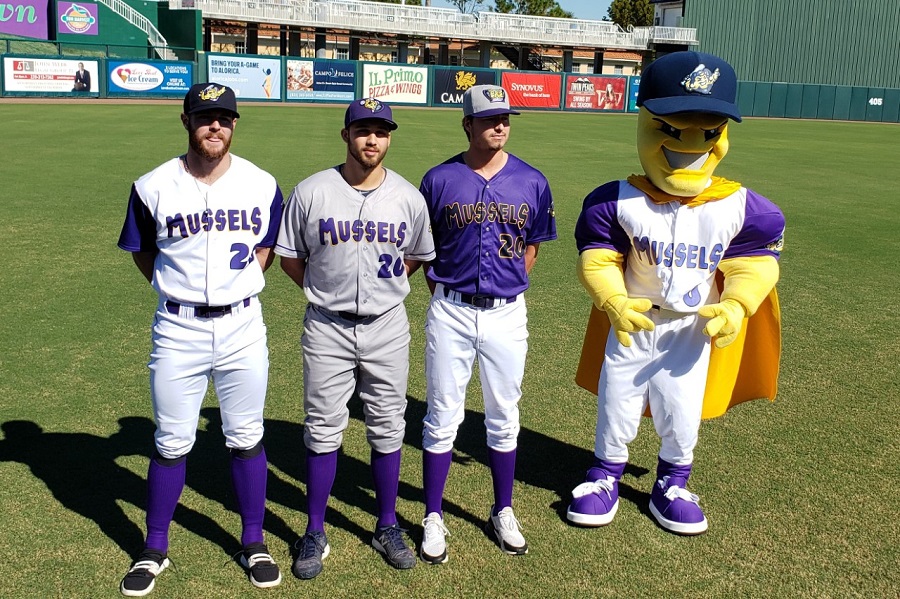 With an 11:30 announcement at Hammond Stadium opened by Minnesota Twins Hall of Fame broadcaster John Gordon, the Twins' Class A-Advanced affiliate became the Fort Myers Mighty Mussels. photo of John Gordon by Steve Buhr Known as the Miracle since their final years in Miami before moving to Fort Myers in 1992, the organization was bought by Andrew Kaufmann's Zawyer Sports before last season. The Mussels' Broadcast and Media Relations Manager, Marshall Kelner, explained the change after the announcement ceremony. "We just wanted to start a new era of baseball in Fort Myers," Kelner said. "It doesn't take away from all of the great history of the Miracle, as we covered today with all of the former Twins players like Torii Hunter, Michael Cuddyer and Joe Mauer, who played for the Miracle on their way to the big leagues and the current core of the Twins all came through here. We also had a Twins Hall of Famer, Johan Santana here, so pretty cool all these Twins legends and local community leaders here." photo of Johan Santana by Steve Buhr In a press statement released in conjunction with the rebranding announcement, the Mussels indicated that the mascot, Mussel Man, would be sharing mascot duties with Sway, the palm tree mascot that's been roaming the stands at Fort Myers games since 2015. Graphic from Fort Myers Mighty Mussels
 -
The possible challenges that professional pitchers can face on the mound can seem endless and varied. But problem solving is nothing new for Matt Canterino, the Minnesota Twins’ second-round selection (54th overall) in the 2019 draft this past June out of Rice University in Houston.When he was asked in an interview late last week what kinds of things he likes to do when he’s away from the ballpark, Canterino, who is currently tentatively slated to start game 2 of the Cedar Rapids Kernels’ first-round playoff series against Quad Cities this week, at first gave a pretty standard response. “I like hanging out with friends. I’ll do pretty much whatever anyone wants to. Play cards, go fishing. I’m a big Marvel fan,” he said. But then he added, “I had a lot of people back at Rice that I loved doing those problem sets with. It was a pretty cool experience.” Problem sets? If, like Canterino, you were a Mechanical Engineering Major in school, maybe you’d have given the same sort of response. The rest of us, though, maybe not so much. In any event, if working through the engineering problem sets is what Canterino has enjoyed doing with his down time, we can probably safely assume he’s capable of analyzing and working through any challenges that arise while he’s on the mound. Using analysis to improve himself is a constant theme that runs through many threads of an interview with the 21-year-old right-hander. For example, Canterino spent the summer following his sophomore year of college playing in the prestigious Cape Cod League. What did he take away from that experience? “For me, it was mostly about picking a lot of different peoples’ brains,” he said, immediately. “Not even just coaches, but it’s a very good concentration of college talent. To be able to see what makes these college pitchers good, pick up on some of their habits. Not necessarily use all their habits, but ‘OK this works,’ trying something out, then trying to improve upon that. For me, that was like, ‘what makes a pitcher good?’ “One thing I picked up was, I wanted to make my slider a little bit harder. My sophomore year, I was throwing my slider more like 79 to 81 (miles per hour), touching 82. I wanted to make it a little bit harder, a little bit tighter. I changed my grip a little bit and I was able to get it more into the mid-eighties instead. And it became a better pitch for me.” And how is he adjusting to the professional game since completing his junior season at Rice earlier this year? “I feel like I’m incorporating new things and (trying) to improve upon them has been the focus since I’ve gotten here,” he said. “I like the analytic side of the game. Analyzing how our pitches move, what makes good pitch combinations, stuff like that is definitely something that we’ve started exploring more. “Rice did not have much of that whatsoever. I always had some thoughts about what makes some of my stuff play pretty good against hitters, but to see it in numbers form and be able to get concrete results and say, ‘this is what happens when I do this and this is what happens when I do that.’ And if I put them together to become even better, then that was something that we really wanted to address. I just feel like I’ve gotten to know myself even better. So, the organization has really helped already.” Sounds kind of like a mechanical engineer talking about pitching, doesn’t it? As a starting pitcher, scouting reports give Canterino high grades for his command, his breaking balls (the slider in particular) and his low-to-mid nineties fastball, while generally opining that his change-up is a work in progress. The concern, if there is one, may be with what is occasionally referred to as a high-effort delivery. It’s the delivery that has some in the industry wondering if he’ll eventually become most effective out of the bullpen. If that conversion is going to happen, it won’t be right now, however. There’s no doubt, though, that Canterino is active on (and around) the pitcher’s mound. “He brings energy,” Kernels manager Brian Dinkelman said. “When he’s out on the mound, he competes really well. His pitches are good. Good fastball. Changeup and breaking ball are both very good. I think sometimes he gets a little amped up early in the game. He’s excited to be out there. His last start was really good. He calmed himself down and pounded the strike zone and threw five really good innings for us.” It’s impossible not to notice that energy his manager speaks of when Canterino is on the bump. He will sometimes circle the mound. He’ll walk more than halfway toward third base to get the ball from his third baseman after the infield throws it around the horn, smiling and having a quick exchange with his teammate there. He’ll walk a step or three off the front of the mound to get the ball from his catcher after a pitch, then practically stalk his way back to the rubber. “Yeah, I like being out there!” he explained. “I just feel like, if you bring some energy and you stay involved with the game, it helps your teammates stay involved in it, as well. It just provides a little bit different aura in the game. It makes everybody a little bit more happy to be there because it makes the game feel a little bit different than the other hundred and odd some games you play in the season.” When an inning is complete, you won’t see him walking to the dugout the way most pitchers do. You won’t even see him jog in like the other eight guys he’s sharing a defensive alignment with. Canterino virtually sprints to the dugout when his work on the mound is finished for the inning. “For sure! Get back in the dugout and let’s go hit,” he said. As scouts have reported, the delivery is, indeed, unique. With hands together, they come up sharply at the same time his left knee comes up, followed by a high-energy delivery that doesn’t appear to give batters much time to pick up the ball in his right hand. “It (the delivery) was something I actually picked up in high school,” Canterino explained. “I went to a day camp for pitching and we were doing a drill where we moved our hands and our leg up and down in unison to try to keep our top half and our lower half in sync. Then when I was throwing a bullpen later, they said, ‘your bottom half gets out in front of your top half a little bit, so maybe work on that drill where you try to keep your top half and lower half in sync.’ “For some reason, it just stuck with me. I kept on trying to repeat it and it just stuck with me, bringing my hands up high. It’s a little bit more exaggerated than everybody else, but it’s helped me to this point and if it’s added a little bit of deception, that’s alright, too.” As the Kernels prepare for what they hope to be a deep playoff run, Canterino could play a critical role. Many starting pitchers at the lower levels are near to reaching organization-established innings limits, but Canterino is hoping he’s good for at least a couple more games, despite throwing a season’s worth of innings at Rice this spring. His workload this year hasn’t been much different than in previous seasons. “I threw 96 (innings) my freshman year. 94 my sophomore year, but another 25 to 30 during the summer. And then 99 1/3 this year, but I have 25 more (in professional ball). I’m about the same inning total that I had last year.” Unlike his peers that have been making starts roughly once a week since the season began, Canterino had several weeks of rest between the end of his college season and his first professional work. In addition to giving some extended mid-season rest, he also believes the break has helped his velocity. “I feel like maybe I’ve gotten stronger, a little bit, so I think (the fastball velocity has) ticked up a little bit towards the start of when I came (to Cedar Rapids),” he said. “The arm feels good and the velo is definitely where I want it to be.” “He does have a limit on how many innings and pitches he can throw a night,” Dinkelman confirmed. “That’s been set in stone ever since he’s been with us. So, we’ll get him out there, let him pitch and hopefully give us five good innings every time.” As for that mechanical engineering degree, Canterino said he’s 21 credit hours short of graduating from Rice and he definitely plans to compete that degree. “I know that, with where I stand right now, regardless of what happens with baseball, I still want to be an engineer after I’m done playing,” he said. But as much as he might enjoy those problem sets, he’s not planning on heading back to school anytime soon. “After baseball. Not until after baseball,” he said, with conviction. “I feel comfortable with where I’m at right now.” Follow Matt Canterino on Twitter at @Cotton_Cante. Click here to view the article
-
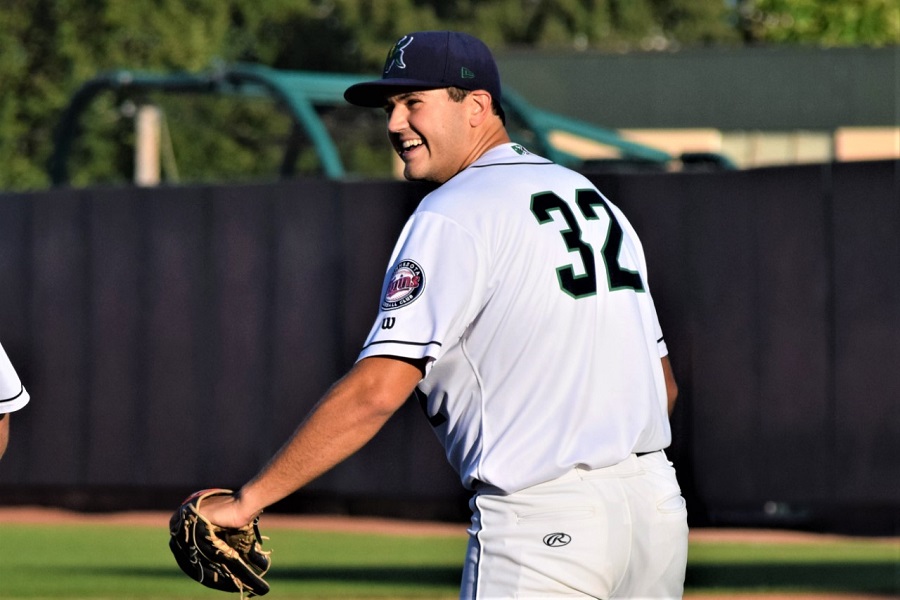 When he was asked in an interview late last week what kinds of things he likes to do when he’s away from the ballpark, Canterino, who is currently tentatively slated to start game 2 of the Cedar Rapids Kernels’ first-round playoff series against Quad Cities this week, at first gave a pretty standard response. “I like hanging out with friends. I’ll do pretty much whatever anyone wants to. Play cards, go fishing. I’m a big Marvel fan,” he said. But then he added, “I had a lot of people back at Rice that I loved doing those problem sets with. It was a pretty cool experience.” Problem sets? If, like Canterino, you were a Mechanical Engineering Major in school, maybe you’d have given the same sort of response. The rest of us, though, maybe not so much. In any event, if working through the engineering problem sets is what Canterino has enjoyed doing with his down time, we can probably safely assume he’s capable of analyzing and working through any challenges that arise while he’s on the mound. Using analysis to improve himself is a constant theme that runs through many threads of an interview with the 21-year-old right-hander. For example, Canterino spent the summer following his sophomore year of college playing in the prestigious Cape Cod League. What did he take away from that experience? “For me, it was mostly about picking a lot of different peoples’ brains,” he said, immediately. “Not even just coaches, but it’s a very good concentration of college talent. To be able to see what makes these college pitchers good, pick up on some of their habits. Not necessarily use all their habits, but ‘OK this works,’ trying something out, then trying to improve upon that. For me, that was like, ‘what makes a pitcher good?’ “One thing I picked up was, I wanted to make my slider a little bit harder. My sophomore year, I was throwing my slider more like 79 to 81 (miles per hour), touching 82. I wanted to make it a little bit harder, a little bit tighter. I changed my grip a little bit and I was able to get it more into the mid-eighties instead. And it became a better pitch for me.” And how is he adjusting to the professional game since completing his junior season at Rice earlier this year? “I feel like I’m incorporating new things and (trying) to improve upon them has been the focus since I’ve gotten here,” he said. “I like the analytic side of the game. Analyzing how our pitches move, what makes good pitch combinations, stuff like that is definitely something that we’ve started exploring more. “Rice did not have much of that whatsoever. I always had some thoughts about what makes some of my stuff play pretty good against hitters, but to see it in numbers form and be able to get concrete results and say, ‘this is what happens when I do this and this is what happens when I do that.’ And if I put them together to become even better, then that was something that we really wanted to address. I just feel like I’ve gotten to know myself even better. So, the organization has really helped already.” Sounds kind of like a mechanical engineer talking about pitching, doesn’t it? As a starting pitcher, scouting reports give Canterino high grades for his command, his breaking balls (the slider in particular) and his low-to-mid nineties fastball, while generally opining that his change-up is a work in progress. The concern, if there is one, may be with what is occasionally referred to as a high-effort delivery. It’s the delivery that has some in the industry wondering if he’ll eventually become most effective out of the bullpen. If that conversion is going to happen, it won’t be right now, however. There’s no doubt, though, that Canterino is active on (and around) the pitcher’s mound. “He brings energy,” Kernels manager Brian Dinkelman said. “When he’s out on the mound, he competes really well. His pitches are good. Good fastball. Changeup and breaking ball are both very good. I think sometimes he gets a little amped up early in the game. He’s excited to be out there. His last start was really good. He calmed himself down and pounded the strike zone and threw five really good innings for us.” It’s impossible not to notice that energy his manager speaks of when Canterino is on the bump. He will sometimes circle the mound. He’ll walk more than halfway toward third base to get the ball from his third baseman after the infield throws it around the horn, smiling and having a quick exchange with his teammate there. He’ll walk a step or three off the front of the mound to get the ball from his catcher after a pitch, then practically stalk his way back to the rubber. “Yeah, I like being out there!” he explained. “I just feel like, if you bring some energy and you stay involved with the game, it helps your teammates stay involved in it, as well. It just provides a little bit different aura in the game. It makes everybody a little bit more happy to be there because it makes the game feel a little bit different than the other hundred and odd some games you play in the season.” When an inning is complete, you won’t see him walking to the dugout the way most pitchers do. You won’t even see him jog in like the other eight guys he’s sharing a defensive alignment with. Canterino virtually sprints to the dugout when his work on the mound is finished for the inning. “For sure! Get back in the dugout and let’s go hit,” he said. As scouts have reported, the delivery is, indeed, unique. With hands together, they come up sharply at the same time his left knee comes up, followed by a high-energy delivery that doesn’t appear to give batters much time to pick up the ball in his right hand. “It (the delivery) was something I actually picked up in high school,” Canterino explained. “I went to a day camp for pitching and we were doing a drill where we moved our hands and our leg up and down in unison to try to keep our top half and our lower half in sync. Then when I was throwing a bullpen later, they said, ‘your bottom half gets out in front of your top half a little bit, so maybe work on that drill where you try to keep your top half and lower half in sync.’ “For some reason, it just stuck with me. I kept on trying to repeat it and it just stuck with me, bringing my hands up high. It’s a little bit more exaggerated than everybody else, but it’s helped me to this point and if it’s added a little bit of deception, that’s alright, too.” As the Kernels prepare for what they hope to be a deep playoff run, Canterino could play a critical role. Many starting pitchers at the lower levels are near to reaching organization-established innings limits, but Canterino is hoping he’s good for at least a couple more games, despite throwing a season’s worth of innings at Rice this spring. His workload this year hasn’t been much different than in previous seasons. “I threw 96 (innings) my freshman year. 94 my sophomore year, but another 25 to 30 during the summer. And then 99 1/3 this year, but I have 25 more (in professional ball). I’m about the same inning total that I had last year.” Unlike his peers that have been making starts roughly once a week since the season began, Canterino had several weeks of rest between the end of his college season and his first professional work. In addition to giving some extended mid-season rest, he also believes the break has helped his velocity. “I feel like maybe I’ve gotten stronger, a little bit, so I think (the fastball velocity has) ticked up a little bit towards the start of when I came (to Cedar Rapids),” he said. “The arm feels good and the velo is definitely where I want it to be.” “He does have a limit on how many innings and pitches he can throw a night,” Dinkelman confirmed. “That’s been set in stone ever since he’s been with us. So, we’ll get him out there, let him pitch and hopefully give us five good innings every time.” As for that mechanical engineering degree, Canterino said he’s 21 credit hours short of graduating from Rice and he definitely plans to compete that degree. “I know that, with where I stand right now, regardless of what happens with baseball, I still want to be an engineer after I’m done playing,” he said. But as much as he might enjoy those problem sets, he’s not planning on heading back to school anytime soon. “After baseball. Not until after baseball,” he said, with conviction. “I feel comfortable with where I’m at right now.” Follow Matt Canterino on Twitter at @Cotton_Cante.
 -
For the first time in perhaps a decade or more, the Minnesota Twins are a true “buyer” as the July 31 trade deadline approaches, looking for pitching help to solidify not only their bullpen, but also perhaps their starting rotation. They’ve been linked through media reports to virtually every top of the rotation starting pitcher that non-contenders may be making available.That means that, for the first time in the professional baseball careers of virtually every Twins minor leaguer, there’s a chance that any one of them could find themselves packing their bags this week and moving on to another organization. Fort Myers Miracle pitcher Blayne Enlow knows the score. “No one is safe,” Enlow said on Sunday. “Not even Royce (Lewis), who is their number one prospect. If he’s not safe, no one’s safe. You can always get traded.” Enlow, the 2017 third round draft choice of the Twins, is the organization’s 12th ranked prospect, according to MLB.com, making him just about as likely to be a name on the lips of GMs talking trades with Twins brass Derek Falvey and Thad Levine this week as any other Twins prospect. Enlow said that he doesn’t feel like the trade possibilities are at the forefront of players’ minds, even as Lewin Diaz, their teammate with the Miracle until a promotion sent him up to Double-A Pensacola a few weeks ago, got the news Saturday night that he had been traded to the Marlins organization in return for reliever Sergio Romo, minor league arm Chris Vallimont and a player to be named later. “It is what it is. You get a lot of relationships and you become close to a lot of guys, but at any moment you could be traded,” he said. “So, do you (let it) get into your head? No. It’s not like you’re always thinking about (getting) traded, but if it happens, you’ve got to accept it. What are you going to do? You can’t do nothing. The Twins have got a really, really good season going. They’re trying to chase that ring and they’re going to do whatever is necessary to get it.” His manger in Fort Myers, Toby Gardenhire, agrees. “I don’t think it’s an issue at all,” he said. “The players deal with it the way they deal with it. They don’t really honestly know whether you’re buyers or sellers.” With a smile, Gardenhire added, “These guys haven’t been in pro ball long enough to really realize what that means. So, every year at the trade deadline, they all think they’re going to get traded and it doesn’t happen. “This year’s a little bit different,” he conceded. “The Twins are trying to get guys this year, so we know, as a staff, there’s a chance that some of these guys might get traded. But I don’t really think it affects them as players. I think they just go out there and play the game.” For a young player, getting traded can be a mixed bag. On the one hand, you’re having to leave the teammates, coaches and development staff you’ve been working and playing with, perhaps, as with Diaz, for your entire professional career. On the other hand, as may also be the case with Diaz, the trade could open up a door to accelerate your opportunity to get to the big leagues. And in the end, that’s the ultimate goal of every minor leaguer. The Diaz trade also brought out mixed emotions for Gardenhire, who managed the first baseman during the first half of the 2019 season. “It’s tough because I really like that kid and he did a really good job. I think he’s got a very bright future,” he said. “But at the same time, I do know that the Twins got a pitcher that they desperately needed. We got some other guys in return. So, it’s a good thing for the organization. “I think for Lewin it’s going to be a good thing, also. He’s got a chance to go over there, he might be in the big leagues by the end of the year. So, it’s tough because I really like the kid and I’m happy for him. But I know he’s got mixed feelings, too, because he liked the organization and he wanted to be around, too. So, it’s tough. “I hope he goes over there and gets plenty of opportunities, which I’m sure he will. When you trade for somebody like that and you trade away a couple of guys, you want to see what you have. Hopefully, (the Marlins) will give him a shot up there and hopefully, he’ll be up there (to the big leagues) this year.” Enlow is also a big fan of his former teammate. “It don’t matter what’s coming, Lewin Diaz is unreal with the bat,” Enlow said. “He’s got incredible hand-eye coordination and he can just put it wherever he wants. Just ridiculous. I’ve seen him put balls, (that I thought) ‘how is that even hittable?’, four hundred feet out. He’s a really gifted hitter and he’s a really good dude. You never want to see one of your teammates go, but I want to see him succeed. Hopefully, it does bring him closer (to the big leagues).” For his part, the 20-year-old Enlow has had the kind of season that is almost certainly being noticed by scouts and GMs across baseball. After opening the season in Cedar Rapids and putting up a 4-3 record in eight starts for the Kernels, Enlow was promoted to Class High-A Fort Myers near the end of May. His first five starts in a Miracle uniform were quality starts. The sixth start, though, was problematic. Enlow took a comebacker off his throwing elbow in the first inning and came out of the game. He returned to the mound for his next start seven days later, but lasted just three innings. He surrendered four earned runs in five innings in his following start and gave up five earned in his most recent start on Friday. He did work a full seven innings Friday, however, facing just the minimum nine batters in the final three innings. Enlow dismissed the suggestion that maybe his elbow has had some residual effect on his mound performances this month. “I think everything’s perfectly fine,” he said. “It hit the elbow, so it was going to hurt. But nothing terrible happened. Michael Helman (Miracle infielder) got hit in the forearm the other day and broke his bone, so I’m just blessed it wasn’t something too serious. I don’t think (the elbow) has affected me. It’s just like, it happens. It’s baseball. You’re going to get hit some days and you’re going to do good (other days). Just got to keep on keeping on.” The right-hander has had some dramatic splits this season in one area. He’s notched a 2.08 ERA and .204 Batting Average Against when he faces right-handed hitters, while lefties have touched him for a .302 BAA and 5.91 ERA. Interestingly, a year ago, he had far more success against left-handers than righties. Asked about the splits, Enlow had an explanation ready “I didn’t really have a curve ball last year, so the righties felt more comfortable,” he explained. “And I had a really good change up last year which had the lefties uncomfortable at the plate. This year I’ve got my curve ball and now I’m just dominating the righties more so. But the lefties, I’ve been leaving a lot of stuff right down the middle and if you make a mistake, they’re going to punish you for it.” Gardenhire, who also managed Enlow in Cedar Rapids in 2018, is in his pitcher’s corner and likes what he’s seen out of him since he joined the Miracle. “He’s made big strides from last year with the way he goes about his business,” the manager said. “He’s still a kid. He’s only 20. So, learning how to be a professional pitcher, I think, has been the most important part for him and he’s definitely getting there. He’s making big strides, big improvements. He’s got good stuff. It’s just a matter of figuring out how to use that and how to be ready to use it all on a day to day basis is his biggest thing. So, like I said, big strides this year.” Now, we all just have to sit back and see if Enlow’s still making those strides as a member of the Twins organization come August 1. Click here to view the article
- 5 replies
-
- 4
-

-
- blayne enlow
- toby gardenhire
- (and 2 more)
-
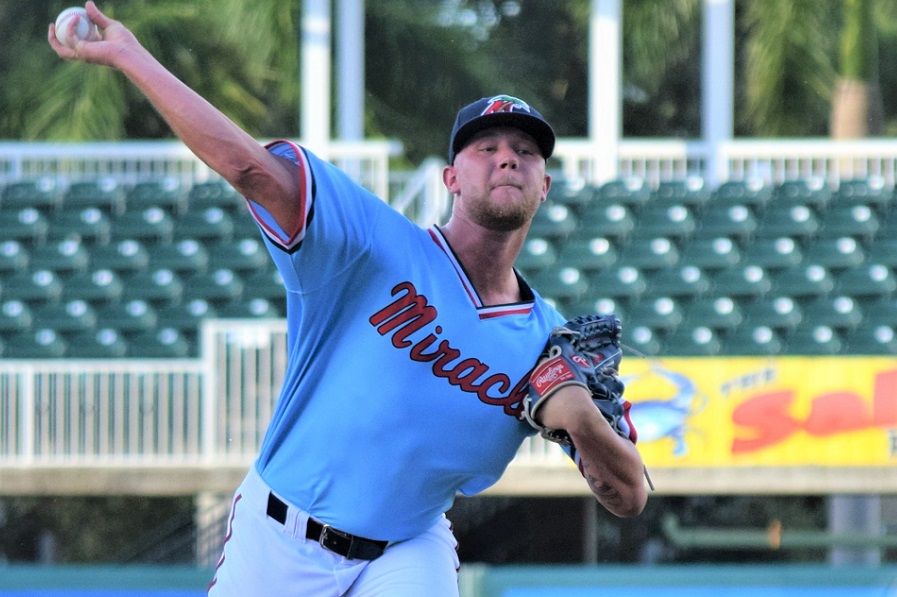 That means that, for the first time in the professional baseball careers of virtually every Twins minor leaguer, there’s a chance that any one of them could find themselves packing their bags this week and moving on to another organization. Fort Myers Miracle pitcher Blayne Enlow knows the score. “No one is safe,” Enlow said on Sunday. “Not even Royce (Lewis), who is their number one prospect. If he’s not safe, no one’s safe. You can always get traded.” Enlow, the 2017 third round draft choice of the Twins, is the organization’s 12th ranked prospect, according to MLB.com, making him just about as likely to be a name on the lips of GMs talking trades with Twins brass Derek Falvey and Thad Levine this week as any other Twins prospect. Enlow said that he doesn’t feel like the trade possibilities are at the forefront of players’ minds, even as Lewin Diaz, their teammate with the Miracle until a promotion sent him up to Double-A Pensacola a few weeks ago, got the news Saturday night that he had been traded to the Marlins organization in return for reliever Sergio Romo, minor league arm Chris Vallimont and a player to be named later. “It is what it is. You get a lot of relationships and you become close to a lot of guys, but at any moment you could be traded,” he said. “So, do you (let it) get into your head? No. It’s not like you’re always thinking about (getting) traded, but if it happens, you’ve got to accept it. What are you going to do? You can’t do nothing. The Twins have got a really, really good season going. They’re trying to chase that ring and they’re going to do whatever is necessary to get it.” His manger in Fort Myers, Toby Gardenhire, agrees. “I don’t think it’s an issue at all,” he said. “The players deal with it the way they deal with it. They don’t really honestly know whether you’re buyers or sellers.” With a smile, Gardenhire added, “These guys haven’t been in pro ball long enough to really realize what that means. So, every year at the trade deadline, they all think they’re going to get traded and it doesn’t happen. “This year’s a little bit different,” he conceded. “The Twins are trying to get guys this year, so we know, as a staff, there’s a chance that some of these guys might get traded. But I don’t really think it affects them as players. I think they just go out there and play the game.” For a young player, getting traded can be a mixed bag. On the one hand, you’re having to leave the teammates, coaches and development staff you’ve been working and playing with, perhaps, as with Diaz, for your entire professional career. On the other hand, as may also be the case with Diaz, the trade could open up a door to accelerate your opportunity to get to the big leagues. And in the end, that’s the ultimate goal of every minor leaguer. The Diaz trade also brought out mixed emotions for Gardenhire, who managed the first baseman during the first half of the 2019 season. “It’s tough because I really like that kid and he did a really good job. I think he’s got a very bright future,” he said. “But at the same time, I do know that the Twins got a pitcher that they desperately needed. We got some other guys in return. So, it’s a good thing for the organization. “I think for Lewin it’s going to be a good thing, also. He’s got a chance to go over there, he might be in the big leagues by the end of the year. So, it’s tough because I really like the kid and I’m happy for him. But I know he’s got mixed feelings, too, because he liked the organization and he wanted to be around, too. So, it’s tough. “I hope he goes over there and gets plenty of opportunities, which I’m sure he will. When you trade for somebody like that and you trade away a couple of guys, you want to see what you have. Hopefully, (the Marlins) will give him a shot up there and hopefully, he’ll be up there (to the big leagues) this year.” Enlow is also a big fan of his former teammate. “It don’t matter what’s coming, Lewin Diaz is unreal with the bat,” Enlow said. “He’s got incredible hand-eye coordination and he can just put it wherever he wants. Just ridiculous. I’ve seen him put balls, (that I thought) ‘how is that even hittable?’, four hundred feet out. He’s a really gifted hitter and he’s a really good dude. You never want to see one of your teammates go, but I want to see him succeed. Hopefully, it does bring him closer (to the big leagues).” For his part, the 20-year-old Enlow has had the kind of season that is almost certainly being noticed by scouts and GMs across baseball. After opening the season in Cedar Rapids and putting up a 4-3 record in eight starts for the Kernels, Enlow was promoted to Class High-A Fort Myers near the end of May. His first five starts in a Miracle uniform were quality starts. The sixth start, though, was problematic. Enlow took a comebacker off his throwing elbow in the first inning and came out of the game. He returned to the mound for his next start seven days later, but lasted just three innings. He surrendered four earned runs in five innings in his following start and gave up five earned in his most recent start on Friday. He did work a full seven innings Friday, however, facing just the minimum nine batters in the final three innings. Enlow dismissed the suggestion that maybe his elbow has had some residual effect on his mound performances this month. “I think everything’s perfectly fine,” he said. “It hit the elbow, so it was going to hurt. But nothing terrible happened. Michael Helman (Miracle infielder) got hit in the forearm the other day and broke his bone, so I’m just blessed it wasn’t something too serious. I don’t think (the elbow) has affected me. It’s just like, it happens. It’s baseball. You’re going to get hit some days and you’re going to do good (other days). Just got to keep on keeping on.” The right-hander has had some dramatic splits this season in one area. He’s notched a 2.08 ERA and .204 Batting Average Against when he faces right-handed hitters, while lefties have touched him for a .302 BAA and 5.91 ERA. Interestingly, a year ago, he had far more success against left-handers than righties. Asked about the splits, Enlow had an explanation ready “I didn’t really have a curve ball last year, so the righties felt more comfortable,” he explained. “And I had a really good change up last year which had the lefties uncomfortable at the plate. This year I’ve got my curve ball and now I’m just dominating the righties more so. But the lefties, I’ve been leaving a lot of stuff right down the middle and if you make a mistake, they’re going to punish you for it.” Gardenhire, who also managed Enlow in Cedar Rapids in 2018, is in his pitcher’s corner and likes what he’s seen out of him since he joined the Miracle. “He’s made big strides from last year with the way he goes about his business,” the manager said. “He’s still a kid. He’s only 20. So, learning how to be a professional pitcher, I think, has been the most important part for him and he’s definitely getting there. He’s making big strides, big improvements. He’s got good stuff. It’s just a matter of figuring out how to use that and how to be ready to use it all on a day to day basis is his biggest thing. So, like I said, big strides this year.” Now, we all just have to sit back and see if Enlow’s still making those strides as a member of the Twins organization come August 1.
 -
The last thirty or so days have been interesting for the Cedar Rapids Kernels, to say the least. As the Minnesota Twins’ Class A affiliate entered the final weekend of the first half of their Midwest League season, they needed to win every game and needed to see the Burlington Bees drop a game or two in order for the Kernels to nab the runner-up spot in the league’s Western Division and guarantee themselves a postseason slot. And that’s exactly what happened.Cedar Rapids topped Clinton on Friday night, then saw their Saturday tilt against the Lumber Kings suspended due to rain. The next day, they swept the suspended game and the regularly scheduled contest against the Clinton. When Burlington fell to Peoria on that final day of the first half, the Kernels had qualified for the postseason. 2019 is the seventh consecutive season that the Kernels will participate in the MWL playoffs. That’s every season since the Kernels and Twins affiliation began with the 2013 season. It took a major comeback from a very slow start to the season for Cedar Rapids to even be within shouting distance of a playoff spot by mid-June. “We were scuffling a little bit, not playing our best baseball,” recalled manager Brian Dinkelman, this week. “A lot of new players in their first year of pro ball, so getting their feet wet. It was still cold. “Then guys started playing better, it warmed up a little bit. Guys got comfortable. Hitters started swinging the bat a lot better there, the middle of May, finally. They helped out our pitching staff a little bit. Yeah, the last few weeks we made a run. The boys competed well there at the very end. I think they had a sense that they were getting closer, they had a chance to possibly make a playoff spot, so that helped drive them.” The Kernels started the second half of the season a little sluggish, dropping six of the ten games played through the rest of June. But once July rolled in, the Kernels started rolling, as well. They won eight straight games to start the month before suffering a three-game series sweep to Great Lakes. The Kernels’ pitching has been solid to very good all season long and the hitting has started to show signs of coming alive this month. Of course, this being minor league baseball, as soon as a player starts showing he can be consistently successful at this level, he’s getting a ticket to the next level up in the organizational ladder. Four of the Kernels’ top hitters on the season, measured by OPS, have been promoted out of of Cedar Rapids. Only first catcher/first baseman Chris Williams (.836) and baseman Gabe Snyder (.789) remain of the seven position players that put up better than a .650 OPS in a Kernels uniform this season (minimum 10 games with Cedar Rapids). “It’s my fourth year here (in Cedar Rapids) and every year it’s the same,” said Dinkelman. “The guys who do well in the first half usually stick around for all of the first half, then right after the All-Star break, head down to Fort Myers and join the Miracle. That’s the way the game is and it’s good for the players who do well here to move on to the next level and challenge themselves a little bit more and get closer to the big leagues.” Josh Winder put together a string of seven consecutive quality starts. Andrew Cabezas followed up a strong June with a complete game one-hit shutout in his first start of July. Luis Rijo, Tyler Palm, Kai-Wei Teng and Austin Schulfer have all put up quality starts in each of their two July starts. Out of the bullpen, Moises Gomez has had three one-inning scoreless outings, while striking out seven batters. In addition to Snyder’s .341 BA and .962 OPS in July and Williams’ .897 July OPS (despite just a .211 BA for the month), Gilberto Celestino has contributed a .297 BA and .840 OPS during the month. Mauer Inducted into Hall of Fame No, not that Mauer and, no, not that HOF. Though that day may certainly come. On Wednesday night, former Kernels manager Jake Mauer was inducted, along with three others, into the Cedar Rapids Baseball Hall of Fame. Mauer managed the Kernels for four seasons, beginning with 2013, the inaugural season of the Twins/Kernels affiliation. He led Cedar Rapids to four consecutive postseason berths, including a trip to the MWL Championship series in 2015. Interviewed during the game that night and after the on-field ceremony, his comments were absolutely Mauer-esque. “It’s pretty cool coming into here, seeing the lights,” he said, concerning his family’s arrival back in Cedar Rapids for the first time since the end of the 2016 season. “The kids remembered it right away. It’s pretty neat.” Mauer, now working in the family’s Twin Cities auto dealerships and coaching his kids’ softball and baseball teams, seems content with his decision to leave the grind of minor league professional baseball. “I miss the guys. I miss being around, being around the boys, competing and games and that stuff,” he admitted,. “But there was so much more that I was missing back home with those kids growing up that now I get to be a part of.” Baseball is still in the blood, though. Asked if he’d consider an opportunity, if offered, to return to pro ball, he certainly didn’t rule it out. “I would say if the situation was right, I would. For sure, yeah. The travel, that’d be tough. Tough to do bus rides and all that, but if the situation was right and made sense professionally and with the kids and the wife, too, I would definitely get back in.” Watkins Returns On his staff for several of those seasons was Tommy Watkins, who now coaches first base for the Twins. Watkins, in Cedar Rapids over the MLB All-Star break, was in attendance the night Mauer was honored at the ballpark. As the Twins’ first base/outfield coach, Watkins has had a first-hand view of the incredible start to a Twins’ 2019 season that has them sitting atop the American League Central Division race by several games over the Cleveland Indians. Did he see this kind of success on the horizon when he was working with the team in spring training? “I tell you what, when you leave spring training, I think you always think you have a chance to compete for something and leaving spring training, I felt like we had a good chance to play for something,” Watkins said. “The group of guys that we have are amazing. Everybody. They’re all talented. At each position, they all can hit. I think we’ve got like ten guys with double-digit homers right now. That’s crazy. So, it’s been fun to watch.” Of course, spring training is still just spring training and you hesitate to put too much stock in what happens down in Florida during February and March. “You do,” Watkins concurred. “And you just saw in spring training, I guess we didn’t have the whole lineup playing together every day, but every day you had somebody in the lineup that can hurt you with the long ball. You would hope it would carry over (to the regular season).” Click here to view the article
- 4 replies
-
- 2
-
-
- brian dinkelman
- tommy watkins
- (and 2 more)
-
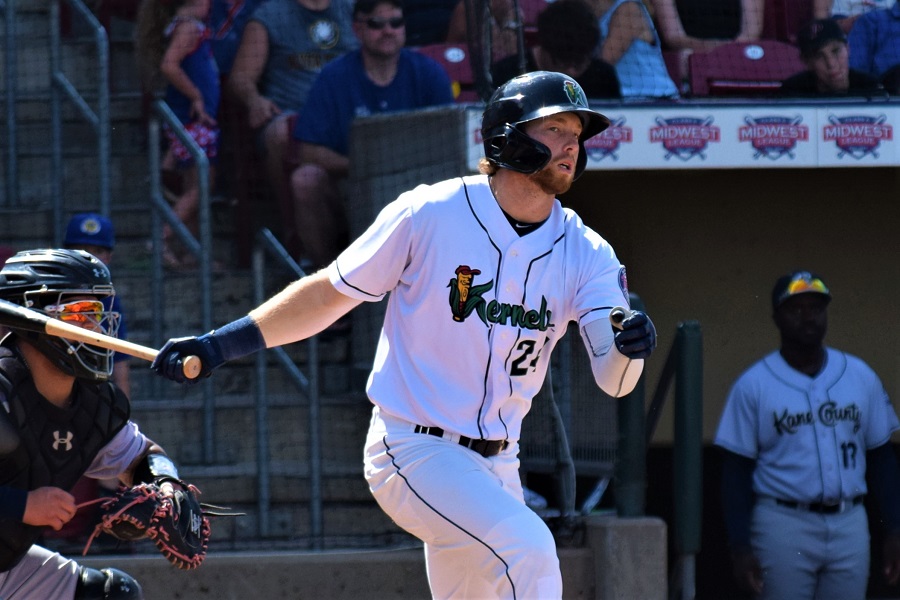 Cedar Rapids topped Clinton on Friday night, then saw their Saturday tilt against the Lumber Kings suspended due to rain. The next day, they swept the suspended game and the regularly scheduled contest against the Clinton. When Burlington fell to Peoria on that final day of the first half, the Kernels had qualified for the postseason. 2019 is the seventh consecutive season that the Kernels will participate in the MWL playoffs. That’s every season since the Kernels and Twins affiliation began with the 2013 season. It took a major comeback from a very slow start to the season for Cedar Rapids to even be within shouting distance of a playoff spot by mid-June. “We were scuffling a little bit, not playing our best baseball,” recalled manager Brian Dinkelman, this week. “A lot of new players in their first year of pro ball, so getting their feet wet. It was still cold. “Then guys started playing better, it warmed up a little bit. Guys got comfortable. Hitters started swinging the bat a lot better there, the middle of May, finally. They helped out our pitching staff a little bit. Yeah, the last few weeks we made a run. The boys competed well there at the very end. I think they had a sense that they were getting closer, they had a chance to possibly make a playoff spot, so that helped drive them.” The Kernels started the second half of the season a little sluggish, dropping six of the ten games played through the rest of June. But once July rolled in, the Kernels started rolling, as well. They won eight straight games to start the month before suffering a three-game series sweep to Great Lakes. The Kernels’ pitching has been solid to very good all season long and the hitting has started to show signs of coming alive this month. Of course, this being minor league baseball, as soon as a player starts showing he can be consistently successful at this level, he’s getting a ticket to the next level up in the organizational ladder. Four of the Kernels’ top hitters on the season, measured by OPS, have been promoted out of of Cedar Rapids. Only first catcher/first baseman Chris Williams (.836) and baseman Gabe Snyder (.789) remain of the seven position players that put up better than a .650 OPS in a Kernels uniform this season (minimum 10 games with Cedar Rapids). “It’s my fourth year here (in Cedar Rapids) and every year it’s the same,” said Dinkelman. “The guys who do well in the first half usually stick around for all of the first half, then right after the All-Star break, head down to Fort Myers and join the Miracle. That’s the way the game is and it’s good for the players who do well here to move on to the next level and challenge themselves a little bit more and get closer to the big leagues.” Josh Winder put together a string of seven consecutive quality starts. Andrew Cabezas followed up a strong June with a complete game one-hit shutout in his first start of July. Luis Rijo, Tyler Palm, Kai-Wei Teng and Austin Schulfer have all put up quality starts in each of their two July starts. Out of the bullpen, Moises Gomez has had three one-inning scoreless outings, while striking out seven batters. In addition to Snyder’s .341 BA and .962 OPS in July and Williams’ .897 July OPS (despite just a .211 BA for the month), Gilberto Celestino has contributed a .297 BA and .840 OPS during the month. Mauer Inducted into Hall of Fame No, not that Mauer and, no, not that HOF. Though that day may certainly come. On Wednesday night, former Kernels manager Jake Mauer was inducted, along with three others, into the Cedar Rapids Baseball Hall of Fame. Mauer managed the Kernels for four seasons, beginning with 2013, the inaugural season of the Twins/Kernels affiliation. He led Cedar Rapids to four consecutive postseason berths, including a trip to the MWL Championship series in 2015. Interviewed during the game that night and after the on-field ceremony, his comments were absolutely Mauer-esque. “It’s pretty cool coming into here, seeing the lights,” he said, concerning his family’s arrival back in Cedar Rapids for the first time since the end of the 2016 season. “The kids remembered it right away. It’s pretty neat.” Mauer, now working in the family’s Twin Cities auto dealerships and coaching his kids’ softball and baseball teams, seems content with his decision to leave the grind of minor league professional baseball. “I miss the guys. I miss being around, being around the boys, competing and games and that stuff,” he admitted,. “But there was so much more that I was missing back home with those kids growing up that now I get to be a part of.” Baseball is still in the blood, though. Asked if he’d consider an opportunity, if offered, to return to pro ball, he certainly didn’t rule it out. “I would say if the situation was right, I would. For sure, yeah. The travel, that’d be tough. Tough to do bus rides and all that, but if the situation was right and made sense professionally and with the kids and the wife, too, I would definitely get back in.” Watkins Returns On his staff for several of those seasons was Tommy Watkins, who now coaches first base for the Twins. Watkins, in Cedar Rapids over the MLB All-Star break, was in attendance the night Mauer was honored at the ballpark. As the Twins’ first base/outfield coach, Watkins has had a first-hand view of the incredible start to a Twins’ 2019 season that has them sitting atop the American League Central Division race by several games over the Cleveland Indians. Did he see this kind of success on the horizon when he was working with the team in spring training? “I tell you what, when you leave spring training, I think you always think you have a chance to compete for something and leaving spring training, I felt like we had a good chance to play for something,” Watkins said. “The group of guys that we have are amazing. Everybody. They’re all talented. At each position, they all can hit. I think we’ve got like ten guys with double-digit homers right now. That’s crazy. So, it’s been fun to watch.” Of course, spring training is still just spring training and you hesitate to put too much stock in what happens down in Florida during February and March. “You do,” Watkins concurred. “And you just saw in spring training, I guess we didn’t have the whole lineup playing together every day, but every day you had somebody in the lineup that can hurt you with the long ball. You would hope it would carry over (to the regular season).”
 -
Article: Giving Opponents Ls in Fort Myers
Steven Buhr posted a topic in Twins Daily Front Page News
“Triple-L,” “Give ‘em HeLLL,” however you want to say it, “Lewis, Lewin and Larnach” is all Fort Myers Miracle manager Toby Gardenhire has to remember when it comes to filling out the top of his lineup card as his team makes a drive to lock up a postseason spot by winning the South Division of the Florida State League this week.Even with a roster about half full of organizational top prospects at his disposal, it’s pretty easy for the manager to pencil in two first-round draft picks sandwiched around a top-10 international signing in those top three spots in the batting order. Royce Lewis, baseball’s first overall draft pick in 2017 generally leads off for Gardenhire’s club, followed by Lewin Diaz, who was MLB.com’s tenth-ranked international prospect in 2013 when he signed with the Twins as a 16-year-old. The third spot in the order is most often anchored by 2018 first round pick Trevor Larnach. That’s over $10 million worth of talent if you measure that sort of thing by the size of their signing bonuses. Of course, that’s not how you measure baseball talent once the players have to suit up and perform on the field, but all three of these players have shown why Twins fans have good reason to feel confident that, down the road, they’ll eventually fit very nicely onto a Twins roster seemingly poised to open an extended window of competitiveness among the American League’s top teams. Lewin Diaz Lewin Diaz had four hits for the Miracle on Opening Day and hasn’t looked back. He hit in April. He hit in May. He’s hitting in June. Heading into a scheduled double-header with Tampa on Tuesday evening, he leads the Florida State League in slugging percentage (.557) and OPS (.903). His 13 home runs rank him second in the league in that category. No player among the top 20 home run hitters in the FSL has fewer strikeouts than Diaz. “He’s been probably the best hitter in the league,” Gardenhire said. Already this season, Diaz has set a couple of Miracle franchise power records. On May 16, he became the first Miracle hitter to swat three home runs in a game. He also set a franchise record for home runs in a month. His ten dingers left former co-leaders Miguel Sano and Matt LeCroy one behind him in the record books. From a guy who saw his OPS drop below the .600 mark by the end of the 2018 season, that’s a remarkable turn-around. You could almost say he’s a whole new man. In fact, if you saw Diaz play last year in Fort Myers or even the season before in Cedar Rapids, you couldn’t be faulted for not recognizing him this season. The change hasn’t just been statistical, it’s physical as well. “I have like 25 less pounds,” he said, with a smile, in an interview last week. “I just ate good food. Go work out.” Described by one scouting service in 2013 as a “thickly built outfielder,” Diaz now looks absolutely svelte in uniform, but he’s lost none of his strength. Through teammate/interpreter Hector Lujan, Diaz explained why he undertook the physical transformation. Diaz said he, “just wanted to take the road of the new program. Try something different. See if it would work out for me. I feel it was the right choice for me. I feel a lot better. I move a lot better, feel stronger.” Diaz said he told himself, “If I’m going to lose weight, I’ve got to keep my power, so I started lifting more weight, getting stronger because then you’ve got to substitute more strength for less weight. It’s working out for me.” Diaz said he started the program during the offseason in his native Dominican Republic, then, in January, came back to Fort Myers and, “worked on it some more.” While in the DR, Diaz said he, "worked on getting strength and not really focusing on losing weight.” Once he got to Florida, he began his new program and, “continued losing weight and building more power. Coming here was a way easier transition because the food here that they provide for us is very healthy.” So, no McDonalds? “No, no McDonalds!” Diaz also has made some perhaps subtle changes to his hitting approach. Previously, Diaz said, he would, “always just tell myself, ‘I want to hit the ball up the middle hard.’” Now he focuses on, “wherever the ball is pitched, that’s where I want to hit it hard, whether it’s left field, center or right field. I don’t just want to focus on one certain area of driving the ball. I want to be able to drive it everywhere.” “Lewin’s doing a really good job,” Gardenhire said of Diaz. “He had a tough year last year, he had some injuries. It’s really good to see him come out this year and do the things he’s doing. He’s got a ton more confidence and he’s swinging the bat great. “He’s very strong. You know he broke his wrist last year. When you break your wrist, you lose a lot of strength. You can’t do anything with your upper half. And he’s starting to gain that back a lot now. You can see how strong he is by how hard he hits the ball. It’s been pretty impressive to watch. I’m really happy for that kid.” Trevor Larnach With the Major League draft just completed a week ago, it’s worthwhile to take note of the performance the Miracle are getting out of last year’s first round selection. The Twins drafted college outfielder Trevor Larnach and, after signing, he split the rest of the summer between rookie level Elizabethton and Class A Cedar Rapids, hitting .303 combined between the two levels while hitting 13 doubles and five home runs. Larnach got off to a bit of a slow start in April this season with the Miracle, but he’s more than made up for it with his performance in May and June. He’s leading the FSL in hitting at .308, sits third in on-base percentage (.381) and third in OPS (.855). He also has a league-leading 20 doubles to go with five home runs. Larnach is, “just continuing to rake,” his manager said. “He’s very smart and he knows his swing really well. “Going into the year, I kind of questioned whether he was going to be able to make adjustments because that’s always one of the biggest things. He can hit. You saw him hit in college. But in pro ball, you have to learn and you have to make adjustments as you go because (opponents) make adjustments on you. “So, I knew they were going to make adjustments against him and he’s really done a good job of being able to make the adjustments that he needs to make to be able to hit pitchers that are making adjustments against him. That takes a special hitter to do it and he’s really been able to prove that he’s a special guy. “With all the preparation, all the video, all the scouting that we have here, I mean we know everything about everybody now. To be able to go up there and hit when they know all your weaknesses and they know exactly how they’re planning to attack you, it’s hard and it takes a good hitter. And Larnach really knows how to (make) adjustments. He knows what they’re trying to do to him and he works on how he’s going to battle that. He’s pretty good.” Larnach acknowledged that he got off to a bit of a slow start in April and had to adjust some, but says he’s a, “process guy,” and had confidence in his process. “Yeah, my first month here, I was hitting the ball hard almost every game and some of it just didn’t seem to fall,” he said. “That’s just part of it. Baseball is all mental, really. Ninety per cent mental and ten per cent physical and in the back of my mind, I know that if I’m hitting the ball hard and I’m getting out, then they’ll come. You’ve just got to stick with it and you can’t get too down and you can’t get too up.” Larnach talked about how goes about making adjustments, when necessary. “I think, for me, personally, video has always been my go-to. That shows everything that the pitcher’s doing, it shows what he’s missing. Yeah, in statistics and analytics, you have spin rate and how much the pitch moves and all that stuff, but video is showing what he’s been doing. “Video shows what the hitter’s been doing mechanically, all that kind of stuff. So that’s been one of my favorite things, is looking at video.” Drafted just a year ago out after an NCAA National Championship run at Oregon State, memories of that draft day remain fresh in Larnach’s mind. “Yeah, I remember I was nervous. I remember I was just really anxious to get picked,” he recalled. “I’ve worked my tail off my whole life and my parents have done that even more so for me. It’s kind of a really big deal for you and your life. It’s a changing stage and a new chapter. Everything that you’ve done pays off and now you have another step to go through. “I was talking to all my college teammates and wishing them the best and congratulating them and all that, so I was happy for everyone that got picked and hopefully I’d see them at some point in the minors.” Asked if there was any advice he’d like to go back in time a year to give himself on that day, Larnach paused briefly in thought before responding. “I’m not sure it would be draft day because that’s kind of its own kind of category. That’s a day for celebration. But, when I was in college, yeah, there’s a lot I would say to myself. But those are the times that I’ve learned and have gotten me to the point where I am today. “Take that into account sometimes, you see young guys in the system with you. You know, Royce is younger, Jose (Miranda) and there’s plenty of guys that are younger. You kind of just want to let them know that, hey, you’ve got 400 at bats, you don’t need to get too down on yourself, because there’s going to be 300 more coming. “Just stuff like that. Helping mindset and mechanically and just little stuff. I don’t want to just look at myself and be ‘I wish I had told myself this.’ I want to kind of spread what I’ve learned to other guys, too.” Royce Lewis You need to look a little further down the leader boards to find Royce Lewis’ name in most offensive categories this year than has been the case in the past. The 2017 first-overall draft pick is hitting just .221 with an OPS hovering just over the .600 mark. You’ll find his name among the top ten in the Florida State League in doubles (13) and stolen bases (11 in 16 attempts), but this is a young player who has been accustomed to seeing hitting-related numbers much higher than he’s sporting currently. His manager isn’t concerned about the numbers. He’s seeing progress in Lewis’ development and that’s the important thing, in particular for a player who just turned 20 years old earlier this month. “Yeah, he’s doing a good job,” Gardenhire said, almost chuckling at the question concerning Lewis’ performance to-date. “You know, he’s a kid. He’s young, he’s still learning. He was only in high school two years ago. This is a league with a lot of older guys and it’s tough. It’s not an easy league, so Royce is trying to figure some things out with his swing. He’s figuring a lot of things out defensively. He’s doing a good job with everything he’s doing. “I don’t have any thoughts in my mind that Royce isn’t going to be a big leaguer someday. He’s going to be a big leaguer. He’s got all the tools. It’s just a matter of figuring it out. Everyone figures it out at a different pace.” The discussion turned to a play at shortstop that Lewis made a couple of nights earlier, laying all the way out to snag a sharp ground ball up the middle, then popping up and throwing a strike to Diaz at first base. “He does things that other people can’t do out there,” the manager said. “When you have guys that can do that, it’s pretty special. It’s fun to watch. It’s fun for me to just see him improve and keep getting better and better because you know someday, you’re going to see him on TV and he’s going to be doing those things in front of everybody.” For his part, Lewis doesn’t come across concerned, either, that he’s not hitting the way that his performance over the first two years of his professional career have conditioned fans to expect. He’s never going to hit .425, after all. “If I could hit .425, that would be a miracle,” Lewis said, with the smile that seemingly never leaves his face when you’re talking baseball with him. “I’m just happy to be on the Miracle team and on a winning team and making that playoff push early in the first half. It’s different than a full year (pennant race), you’ve got first half and second half. We might be able to win and make a playoff push for that first half spot already.” Watching him hit for a week, it did appear he was squaring up a lot of balls that just weren’t all falling in for hits. He and his teammates (not to mention opposing batters) had a lot of balls seeming to come up just short of the Hammond Stadium outfield wall. “It’s like that every day, pretty much,” he concurred. “Every day we’re sitting there saying either someone on the opposing team or on our team hit a ball to the track where most likely it’s a home run anywhere else. At the same time, you learn to hit here. “I think it’s just a tough league. A lot of our guys, we’ve been barreling the ball up as a team. You know, we’ve got a lot of good hitters on this team, so it’s fun to be a part of this lineup. As long as we’re always consistently barreling the ball up, that’s what turns into wins.” As with his manager, Lewis feels he’s making the progress developmentally he needs to be focusing on. “Yeah, it’s a long minor league career. You don’t expect to go straight to the big leagues out of high school or out of college. When that happens, it’s pretty spectacular and you hear a lot about it because it’s so rare. So, to me, it’s just a long process. Just the whole compound effect of each and every day I put in the grind and the work is going to end up making me a better player.” Lewis received a non-roster invitation to participate in the Twins’ big league spring training before this season and is enjoying watching the parent club’s success this year. He also feels some of that Twins chemistry is rubbing off on the minor league teams. “For sure. I mean every year the goal is to win, and to see them winning and having fun up there is really cool. To me, it all started in spring training, the chemistry they all started to grow. Being lucky enough to be in the dugout and watch that was pretty special. And I feel like for all of us minor leaguers that were in the dugout and participated and were watching that, being a part of that, we brought that to all of our teams and as you can see in the minor leagues, we’re all pretty much doing good and at the top of our divisions.” Miracle Notes: (Note that stats were before playing on Tuesday, June 11) Beyond Diaz, Larnach and Lewis, there’s no shortage of star-level performances happening with the Miracle this season, offensively and on the mound. Not surprisingly, the Miracle have outpaced the league in home runs, with 51 on the season. They also have the top slugging percentage (.383) and sit third in OPS as a team (.696). Catcher Ryan Jeffers is sporting a .782 OPS with nine doubles and six home runs. Aaron Whitefield’s 19 stolen bases is good enough for the second spot on the Florida State League leaderboard in that category. On the pitching side of the ledger, the team ERA of 3.03 is second best in the FSL, they have the best WHIP (1.17) and the second highest number of strikeouts (588), averaging 1.07 Ks per inning, as a staff. The back of the Miracle bullpen has been virtually lights-out: Alex Phillips has put up a 0.34 ERA in 15 appearances covering 26 1/3 innings, striking out 36 and walking seven. His WHIP is just 0.65. Phillips has allowed earned runs in just three of his 15 appearances. Hector Lujan has a 2.04 ERA in 20 relief appearances over 39 2/3 innings. He’s K’d 35 and walked seven while posting a 0.96 WHIP. He allowed earned runs in four of his 20 appearances, including a string of 12 straight games without an ER that was snapped on June 5. There’s been plenty of talent on display in the Miracle rotation, as well. Jordan Balazovic is 4-0 and has a 2.03 ERA over six starts since his promotion, striking out 42 and walking 6 in 31 innings. Blayne Enlow’s record in his three starts since being promoted is 2-1, while posting a 1.50 ERA over 18 innings. He’s struck out 13 and walked four. Edwar Colina started the season on the Injured List and has made just six starts for the Miracle. The last five, however, have been of the Quality Start variety, holding opponents to three or fewer earned runs and completing at least six innings on the mound. The workhorses of the rotation this season have been Tyler Watson and Jhoan Duran, who have ten starts each and have thrown 56 and 49 1/3 innings, respectively. Duran struggled some in early to mid May, but is now working on a three-start Quality Start streak which began on May 26 with a 14 K/2 BB effort. Click here to view the article- 17 replies
-
- 2
-
-
- royce lewis
- lewin diaz
- (and 3 more)
-
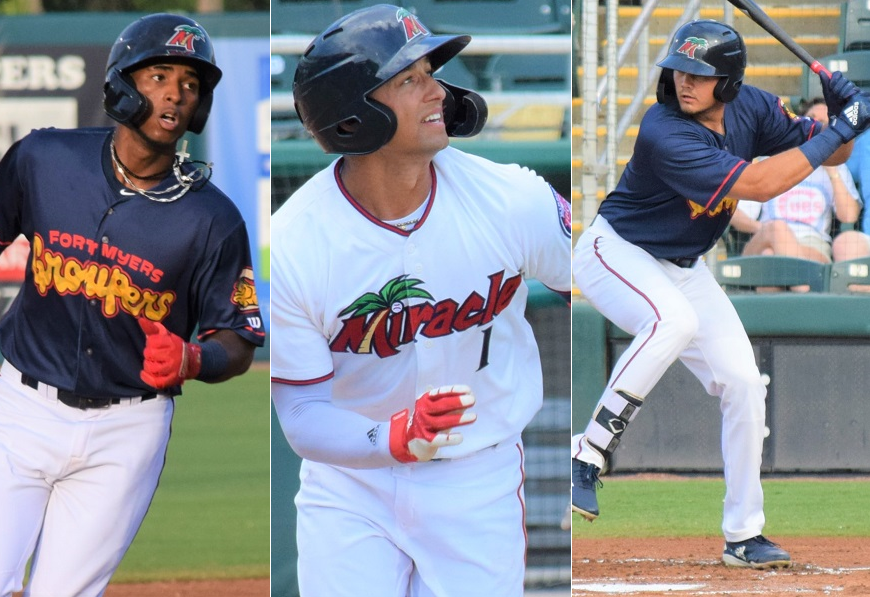 Even with a roster about half full of organizational top prospects at his disposal, it’s pretty easy for the manager to pencil in two first-round draft picks sandwiched around a top-10 international signing in those top three spots in the batting order. Royce Lewis, baseball’s first overall draft pick in 2017 generally leads off for Gardenhire’s club, followed by Lewin Diaz, who was MLB.com’s tenth-ranked international prospect in 2013 when he signed with the Twins as a 16-year-old. The third spot in the order is most often anchored by 2018 first round pick Trevor Larnach. That’s over $10 million worth of talent if you measure that sort of thing by the size of their signing bonuses. Of course, that’s not how you measure baseball talent once the players have to suit up and perform on the field, but all three of these players have shown why Twins fans have good reason to feel confident that, down the road, they’ll eventually fit very nicely onto a Twins roster seemingly poised to open an extended window of competitiveness among the American League’s top teams. Lewin Diaz Lewin Diaz had four hits for the Miracle on Opening Day and hasn’t looked back. He hit in April. He hit in May. He’s hitting in June. Heading into a scheduled double-header with Tampa on Tuesday evening, he leads the Florida State League in slugging percentage (.557) and OPS (.903). His 13 home runs rank him second in the league in that category. No player among the top 20 home run hitters in the FSL has fewer strikeouts than Diaz. “He’s been probably the best hitter in the league,” Gardenhire said. Already this season, Diaz has set a couple of Miracle franchise power records. On May 16, he became the first Miracle hitter to swat three home runs in a game. He also set a franchise record for home runs in a month. His ten dingers left former co-leaders Miguel Sano and Matt LeCroy one behind him in the record books. From a guy who saw his OPS drop below the .600 mark by the end of the 2018 season, that’s a remarkable turn-around. You could almost say he’s a whole new man. In fact, if you saw Diaz play last year in Fort Myers or even the season before in Cedar Rapids, you couldn’t be faulted for not recognizing him this season. The change hasn’t just been statistical, it’s physical as well. “I have like 25 less pounds,” he said, with a smile, in an interview last week. “I just ate good food. Go work out.” Described by one scouting service in 2013 as a “thickly built outfielder,” Diaz now looks absolutely svelte in uniform, but he’s lost none of his strength. Through teammate/interpreter Hector Lujan, Diaz explained why he undertook the physical transformation. Diaz said he, “just wanted to take the road of the new program. Try something different. See if it would work out for me. I feel it was the right choice for me. I feel a lot better. I move a lot better, feel stronger.” Diaz said he told himself, “If I’m going to lose weight, I’ve got to keep my power, so I started lifting more weight, getting stronger because then you’ve got to substitute more strength for less weight. It’s working out for me.” Diaz said he started the program during the offseason in his native Dominican Republic, then, in January, came back to Fort Myers and, “worked on it some more.” While in the DR, Diaz said he, "worked on getting strength and not really focusing on losing weight.” Once he got to Florida, he began his new program and, “continued losing weight and building more power. Coming here was a way easier transition because the food here that they provide for us is very healthy.” So, no McDonalds? “No, no McDonalds!” Diaz also has made some perhaps subtle changes to his hitting approach. Previously, Diaz said, he would, “always just tell myself, ‘I want to hit the ball up the middle hard.’” Now he focuses on, “wherever the ball is pitched, that’s where I want to hit it hard, whether it’s left field, center or right field. I don’t just want to focus on one certain area of driving the ball. I want to be able to drive it everywhere.” “Lewin’s doing a really good job,” Gardenhire said of Diaz. “He had a tough year last year, he had some injuries. It’s really good to see him come out this year and do the things he’s doing. He’s got a ton more confidence and he’s swinging the bat great. “He’s very strong. You know he broke his wrist last year. When you break your wrist, you lose a lot of strength. You can’t do anything with your upper half. And he’s starting to gain that back a lot now. You can see how strong he is by how hard he hits the ball. It’s been pretty impressive to watch. I’m really happy for that kid.” Trevor Larnach With the Major League draft just completed a week ago, it’s worthwhile to take note of the performance the Miracle are getting out of last year’s first round selection. The Twins drafted college outfielder Trevor Larnach and, after signing, he split the rest of the summer between rookie level Elizabethton and Class A Cedar Rapids, hitting .303 combined between the two levels while hitting 13 doubles and five home runs. Larnach got off to a bit of a slow start in April this season with the Miracle, but he’s more than made up for it with his performance in May and June. He’s leading the FSL in hitting at .308, sits third in on-base percentage (.381) and third in OPS (.855). He also has a league-leading 20 doubles to go with five home runs. Larnach is, “just continuing to rake,” his manager said. “He’s very smart and he knows his swing really well. “Going into the year, I kind of questioned whether he was going to be able to make adjustments because that’s always one of the biggest things. He can hit. You saw him hit in college. But in pro ball, you have to learn and you have to make adjustments as you go because (opponents) make adjustments on you. “So, I knew they were going to make adjustments against him and he’s really done a good job of being able to make the adjustments that he needs to make to be able to hit pitchers that are making adjustments against him. That takes a special hitter to do it and he’s really been able to prove that he’s a special guy. “With all the preparation, all the video, all the scouting that we have here, I mean we know everything about everybody now. To be able to go up there and hit when they know all your weaknesses and they know exactly how they’re planning to attack you, it’s hard and it takes a good hitter. And Larnach really knows how to (make) adjustments. He knows what they’re trying to do to him and he works on how he’s going to battle that. He’s pretty good.” Larnach acknowledged that he got off to a bit of a slow start in April and had to adjust some, but says he’s a, “process guy,” and had confidence in his process. “Yeah, my first month here, I was hitting the ball hard almost every game and some of it just didn’t seem to fall,” he said. “That’s just part of it. Baseball is all mental, really. Ninety per cent mental and ten per cent physical and in the back of my mind, I know that if I’m hitting the ball hard and I’m getting out, then they’ll come. You’ve just got to stick with it and you can’t get too down and you can’t get too up.” Larnach talked about how goes about making adjustments, when necessary. “I think, for me, personally, video has always been my go-to. That shows everything that the pitcher’s doing, it shows what he’s missing. Yeah, in statistics and analytics, you have spin rate and how much the pitch moves and all that stuff, but video is showing what he’s been doing. “Video shows what the hitter’s been doing mechanically, all that kind of stuff. So that’s been one of my favorite things, is looking at video.” Drafted just a year ago out after an NCAA National Championship run at Oregon State, memories of that draft day remain fresh in Larnach’s mind. “Yeah, I remember I was nervous. I remember I was just really anxious to get picked,” he recalled. “I’ve worked my tail off my whole life and my parents have done that even more so for me. It’s kind of a really big deal for you and your life. It’s a changing stage and a new chapter. Everything that you’ve done pays off and now you have another step to go through. “I was talking to all my college teammates and wishing them the best and congratulating them and all that, so I was happy for everyone that got picked and hopefully I’d see them at some point in the minors.” Asked if there was any advice he’d like to go back in time a year to give himself on that day, Larnach paused briefly in thought before responding. “I’m not sure it would be draft day because that’s kind of its own kind of category. That’s a day for celebration. But, when I was in college, yeah, there’s a lot I would say to myself. But those are the times that I’ve learned and have gotten me to the point where I am today. “Take that into account sometimes, you see young guys in the system with you. You know, Royce is younger, Jose (Miranda) and there’s plenty of guys that are younger. You kind of just want to let them know that, hey, you’ve got 400 at bats, you don’t need to get too down on yourself, because there’s going to be 300 more coming. “Just stuff like that. Helping mindset and mechanically and just little stuff. I don’t want to just look at myself and be ‘I wish I had told myself this.’ I want to kind of spread what I’ve learned to other guys, too.” Royce Lewis You need to look a little further down the leader boards to find Royce Lewis’ name in most offensive categories this year than has been the case in the past. The 2017 first-overall draft pick is hitting just .221 with an OPS hovering just over the .600 mark. You’ll find his name among the top ten in the Florida State League in doubles (13) and stolen bases (11 in 16 attempts), but this is a young player who has been accustomed to seeing hitting-related numbers much higher than he’s sporting currently. His manager isn’t concerned about the numbers. He’s seeing progress in Lewis’ development and that’s the important thing, in particular for a player who just turned 20 years old earlier this month. “Yeah, he’s doing a good job,” Gardenhire said, almost chuckling at the question concerning Lewis’ performance to-date. “You know, he’s a kid. He’s young, he’s still learning. He was only in high school two years ago. This is a league with a lot of older guys and it’s tough. It’s not an easy league, so Royce is trying to figure some things out with his swing. He’s figuring a lot of things out defensively. He’s doing a good job with everything he’s doing. “I don’t have any thoughts in my mind that Royce isn’t going to be a big leaguer someday. He’s going to be a big leaguer. He’s got all the tools. It’s just a matter of figuring it out. Everyone figures it out at a different pace.” The discussion turned to a play at shortstop that Lewis made a couple of nights earlier, laying all the way out to snag a sharp ground ball up the middle, then popping up and throwing a strike to Diaz at first base. “He does things that other people can’t do out there,” the manager said. “When you have guys that can do that, it’s pretty special. It’s fun to watch. It’s fun for me to just see him improve and keep getting better and better because you know someday, you’re going to see him on TV and he’s going to be doing those things in front of everybody.” For his part, Lewis doesn’t come across concerned, either, that he’s not hitting the way that his performance over the first two years of his professional career have conditioned fans to expect. He’s never going to hit .425, after all. “If I could hit .425, that would be a miracle,” Lewis said, with the smile that seemingly never leaves his face when you’re talking baseball with him. “I’m just happy to be on the Miracle team and on a winning team and making that playoff push early in the first half. It’s different than a full year (pennant race), you’ve got first half and second half. We might be able to win and make a playoff push for that first half spot already.” Watching him hit for a week, it did appear he was squaring up a lot of balls that just weren’t all falling in for hits. He and his teammates (not to mention opposing batters) had a lot of balls seeming to come up just short of the Hammond Stadium outfield wall. “It’s like that every day, pretty much,” he concurred. “Every day we’re sitting there saying either someone on the opposing team or on our team hit a ball to the track where most likely it’s a home run anywhere else. At the same time, you learn to hit here. “I think it’s just a tough league. A lot of our guys, we’ve been barreling the ball up as a team. You know, we’ve got a lot of good hitters on this team, so it’s fun to be a part of this lineup. As long as we’re always consistently barreling the ball up, that’s what turns into wins.” As with his manager, Lewis feels he’s making the progress developmentally he needs to be focusing on. “Yeah, it’s a long minor league career. You don’t expect to go straight to the big leagues out of high school or out of college. When that happens, it’s pretty spectacular and you hear a lot about it because it’s so rare. So, to me, it’s just a long process. Just the whole compound effect of each and every day I put in the grind and the work is going to end up making me a better player.” Lewis received a non-roster invitation to participate in the Twins’ big league spring training before this season and is enjoying watching the parent club’s success this year. He also feels some of that Twins chemistry is rubbing off on the minor league teams. “For sure. I mean every year the goal is to win, and to see them winning and having fun up there is really cool. To me, it all started in spring training, the chemistry they all started to grow. Being lucky enough to be in the dugout and watch that was pretty special. And I feel like for all of us minor leaguers that were in the dugout and participated and were watching that, being a part of that, we brought that to all of our teams and as you can see in the minor leagues, we’re all pretty much doing good and at the top of our divisions.” Miracle Notes: (Note that stats were before playing on Tuesday, June 11) Beyond Diaz, Larnach and Lewis, there’s no shortage of star-level performances happening with the Miracle this season, offensively and on the mound. Not surprisingly, the Miracle have outpaced the league in home runs, with 51 on the season. They also have the top slugging percentage (.383) and sit third in OPS as a team (.696). Catcher Ryan Jeffers is sporting a .782 OPS with nine doubles and six home runs. Aaron Whitefield’s 19 stolen bases is good enough for the second spot on the Florida State League leaderboard in that category. On the pitching side of the ledger, the team ERA of 3.03 is second best in the FSL, they have the best WHIP (1.17) and the second highest number of strikeouts (588), averaging 1.07 Ks per inning, as a staff. The back of the Miracle bullpen has been virtually lights-out: Alex Phillips has put up a 0.34 ERA in 15 appearances covering 26 1/3 innings, striking out 36 and walking seven. His WHIP is just 0.65. Phillips has allowed earned runs in just three of his 15 appearances. Hector Lujan has a 2.04 ERA in 20 relief appearances over 39 2/3 innings. He’s K’d 35 and walked seven while posting a 0.96 WHIP. He allowed earned runs in four of his 20 appearances, including a string of 12 straight games without an ER that was snapped on June 5. There’s been plenty of talent on display in the Miracle rotation, as well. Jordan Balazovic is 4-0 and has a 2.03 ERA over six starts since his promotion, striking out 42 and walking 6 in 31 innings. Blayne Enlow’s record in his three starts since being promoted is 2-1, while posting a 1.50 ERA over 18 innings. He’s struck out 13 and walked four. Edwar Colina started the season on the Injured List and has made just six starts for the Miracle. The last five, however, have been of the Quality Start variety, holding opponents to three or fewer earned runs and completing at least six innings on the mound. The workhorses of the rotation this season have been Tyler Watson and Jhoan Duran, who have ten starts each and have thrown 56 and 49 1/3 innings, respectively. Duran struggled some in early to mid May, but is now working on a three-start Quality Start streak which began on May 26 with a 14 K/2 BB effort.
 -
When you look through this summer’s Fort Myers Miracle roster, you can see it’s packed with several of the Minnesota Twins’ top prospects. At least ten players were selected within the top five rounds of the annual MLB amateur entry draft and others were international players that garnered hefty signing bonuses. Eight players among MLB.com’s pre-season top 30 Twins prospects are currently toiling in the Florida heat for the Miracle and another is currently on the Fort Myers Injured List.One name you won’t find on many list of high round picks or consensus top-ranked prospects is Hector Lujan. You would have to go to some kind of top “performers” list to find Lujan and, when you do, you’re likely to find the relief pitcher’s name near the top of that list. Lujan got off to a sluggish start this season, surrendering six runs, all earned, in his first five appearances out of the Miracle bullpen, covering 12 2/3 innings from opening day through April 22. Over the six-plus weeks that followed, however, Lujan threw 22 innings during 12 appearances without giving up another earned run, while notching a 28/4 strikeout-to-walk ratio. His performance earned him Twins Daily’s Relief Pitcher of the Month award for May. The Corona, California, native was selected by the Twins with their 35th round pick in the 2015 draft out of Westmont College, just three rounds after the Twins selected his college teammate, Andrew Vasquez with their 32nd round pick. As you can imagine, the draft week experience for Lujan was perhaps somewhat different than it was for those Miracle teammates that were selected among the top few rounds of the draft. Lujan knew he’d be waiting until the final day of the draft to learn his fate. “I remember getting a text (early) in the morning,” he recalled in an interview last week. “My scout texted me, ‘you ready for this?’ I was like, ‘whatever opportunity you give me, I’m ready.’ Right then and there, I woke up. It was like 5:45 in the morning. I’d just gotten the text and I woke up. I just couldn’t go back to sleep. I woke up, my hands were sweating the entire day. “Rounds were going through, they hit 20, I decided to go for a drive, try to relax. I could see all the names of my buddies going and I was getting excited. Then I decided to come back home, it was like the 30th round. I sat down, relaxed, and then I saw Vasquez go. Texted him and as soon as I texted him, I got a message from him saying ‘thank you,’ and right then I looked at my phone again and my scout’s saying, ‘hey, we took you in the 35th round. Welcome to the Twins.’ “Right then and there, I just jumped up, almost hit the ceiling fan. My parents were excited, so it was an awesome moment.” The 35th round. And the right-hander wears the number 35 on the back of his Fort Myers jersey. Just a coincidence? Maybe, maybe not. Being selected with just five rounds remaining in the 40-round draft could make you question your chances of professional success on the field, but that wasn’t Lujan’s mindset. “Honestly, at the time for me, it was just like, you know what? I’m excited whether I was the very last pick or the very first pick, it doesn’t matter,” he said. “I just wanted an opportunity to play. Just, you know what, I’m going to make the most out of it. However long my career is, whether it’s five, ten, twenty years. It was just an exciting moment. I was like, I’ve got to take advantage of it as best I can.” After moderate success with the Twins’ rookie league teams in his draft year and 2016, Lujan appeared to find his stride at Cedar Rapids in 2017 where he notched a 1.33 ERA and 0.91 WHIP over 42 appearances, all in relief, and converted 17 of 19 save opportunities for the Kernels. His results weren’t as strong a year ago in his first season at class High-A in Fort Myers, but he did finish the campaign with a very strong August, striking out 16 and walking only two batters in 12 1/3 innings of work. His WHIP that month was a stingy 0.63 and batters hit just .133 against him. The six-plus week of near perfection beginning in late April this spring came to a crashing end on June 5 when the Florida Fire Frogs touched him up for three runs on six hits in two innings of work. After that hiccup, Lujan was philosophical about things. “I try to just take the positives and negatives and kind of just flush it after,” he said the next day. “Then the next day, just carry on. There’s plenty more outings for me.” What does a pitcher think about when he’s out there experiencing that kind of outing after several weeks of nothing but success? “When I was out there, I felt like I was making good pitches and the results just weren’t going my way,” he said. “I just kept telling myself, ‘hey you know what, you got yourself into this mess, you can keep getting yourself out.’ “Sometimes, my thing, I go out there and try to get everybody out. Put up zeros and help our team win. Everybody has those outings where things aren’t just falling your way. Whether it’s a bloop hit, if you’re getting hit, if you’re walking guys, not getting calls. I just kept telling myself, ‘you know what? It is what it is. Let’s go, keep attacking the zone. Make the guy put the ball in play and get some outs.’ I’ve got my defense behind me; I’m just going to keep letting them work and make good pitches and let the rest play out.” And when it’s all played out? “You’ve just got to flush it and once the inning’s over, ‘right, that happened,’ and just focus on your next inning.” That poise has been noticed by manager Toby Gardenhire. “That’s part of growing up as a pitcher. Part of growing up as a player, in general,” Gardenhire noted. “Lujan’s done a really good job with that, where he doesn’t let things affect him that much. He’s got a really good split-change thing that he’s throwing right now. Has a good breaking ball. He attacks hitters. He doesn’t get flustered out there. He’s got a lot of things that you want in a reliever. He’s doing really good.” Lujan’s next inning came three nights later against Jupiter, when he hung a zero on the board in his inning of work to preserve a 4-2 win for his club and tally his fifth save of the season. Heading into the final series of the first half of the Florida State League season, the Miracle owned a slim one-game lead in the South Division standings and Lujan sounded like he’s enjoying the playoff race with his teammates. “Overall yeah, Awesome teammates, the team chemistry right now is fantastic. We’re lucky enough to be in a playoff race, to clinch the first half. I wouldn’t want any other guys behind me, so it’s pretty awesome.” Manager Toby Gardenhire OK’d Lujan hitting ground balls to infielders during batting practice. “He always comes out and hits fungos. He doesn’t want to shag out in the outfield with the outfielders, so I said, ‘whatever you want to do, just don’t get hurt.’” Click here to view the article
- 5 replies
-
- 1
-
-
- hector lujan
- andrew vasquez
- (and 1 more)
-
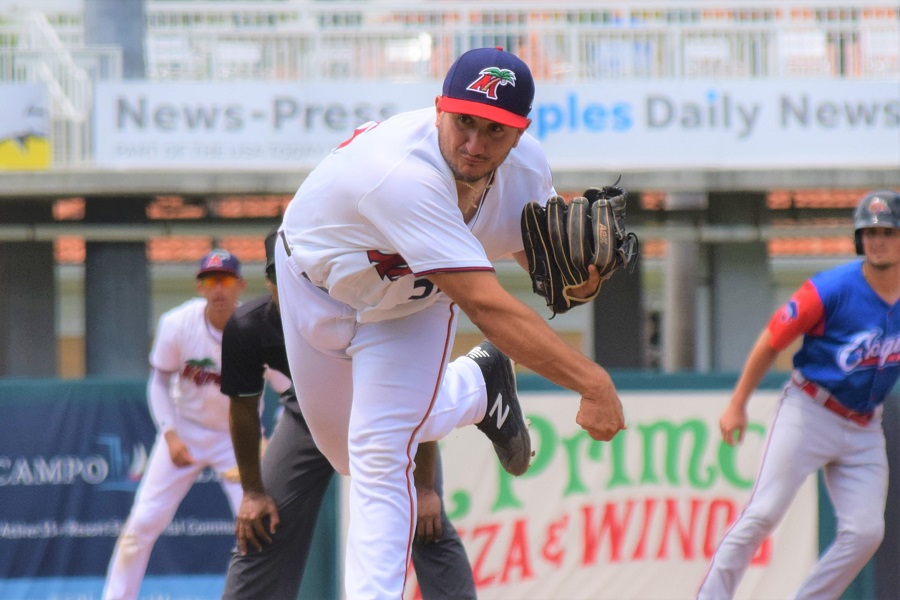 One name you won’t find on many list of high round picks or consensus top-ranked prospects is Hector Lujan. You would have to go to some kind of top “performers” list to find Lujan and, when you do, you’re likely to find the relief pitcher’s name near the top of that list. Lujan got off to a sluggish start this season, surrendering six runs, all earned, in his first five appearances out of the Miracle bullpen, covering 12 2/3 innings from opening day through April 22. Over the six-plus weeks that followed, however, Lujan threw 22 innings during 12 appearances without giving up another earned run, while notching a 28/4 strikeout-to-walk ratio. His performance earned him Twins Daily’s Relief Pitcher of the Month award for May. The Corona, California, native was selected by the Twins with their 35th round pick in the 2015 draft out of Westmont College, just three rounds after the Twins selected his college teammate, Andrew Vasquez with their 32nd round pick. As you can imagine, the draft week experience for Lujan was perhaps somewhat different than it was for those Miracle teammates that were selected among the top few rounds of the draft. Lujan knew he’d be waiting until the final day of the draft to learn his fate. “I remember getting a text (early) in the morning,” he recalled in an interview last week. “My scout texted me, ‘you ready for this?’ I was like, ‘whatever opportunity you give me, I’m ready.’ Right then and there, I woke up. It was like 5:45 in the morning. I’d just gotten the text and I woke up. I just couldn’t go back to sleep. I woke up, my hands were sweating the entire day. “Rounds were going through, they hit 20, I decided to go for a drive, try to relax. I could see all the names of my buddies going and I was getting excited. Then I decided to come back home, it was like the 30th round. I sat down, relaxed, and then I saw Vasquez go. Texted him and as soon as I texted him, I got a message from him saying ‘thank you,’ and right then I looked at my phone again and my scout’s saying, ‘hey, we took you in the 35th round. Welcome to the Twins.’ “Right then and there, I just jumped up, almost hit the ceiling fan. My parents were excited, so it was an awesome moment.” The 35th round. And the right-hander wears the number 35 on the back of his Fort Myers jersey. Just a coincidence? Maybe, maybe not. Being selected with just five rounds remaining in the 40-round draft could make you question your chances of professional success on the field, but that wasn’t Lujan’s mindset. “Honestly, at the time for me, it was just like, you know what? I’m excited whether I was the very last pick or the very first pick, it doesn’t matter,” he said. “I just wanted an opportunity to play. Just, you know what, I’m going to make the most out of it. However long my career is, whether it’s five, ten, twenty years. It was just an exciting moment. I was like, I’ve got to take advantage of it as best I can.” After moderate success with the Twins’ rookie league teams in his draft year and 2016, Lujan appeared to find his stride at Cedar Rapids in 2017 where he notched a 1.33 ERA and 0.91 WHIP over 42 appearances, all in relief, and converted 17 of 19 save opportunities for the Kernels. His results weren’t as strong a year ago in his first season at class High-A in Fort Myers, but he did finish the campaign with a very strong August, striking out 16 and walking only two batters in 12 1/3 innings of work. His WHIP that month was a stingy 0.63 and batters hit just .133 against him. The six-plus week of near perfection beginning in late April this spring came to a crashing end on June 5 when the Florida Fire Frogs touched him up for three runs on six hits in two innings of work. After that hiccup, Lujan was philosophical about things. “I try to just take the positives and negatives and kind of just flush it after,” he said the next day. “Then the next day, just carry on. There’s plenty more outings for me.” What does a pitcher think about when he’s out there experiencing that kind of outing after several weeks of nothing but success? “When I was out there, I felt like I was making good pitches and the results just weren’t going my way,” he said. “I just kept telling myself, ‘hey you know what, you got yourself into this mess, you can keep getting yourself out.’ “Sometimes, my thing, I go out there and try to get everybody out. Put up zeros and help our team win. Everybody has those outings where things aren’t just falling your way. Whether it’s a bloop hit, if you’re getting hit, if you’re walking guys, not getting calls. I just kept telling myself, ‘you know what? It is what it is. Let’s go, keep attacking the zone. Make the guy put the ball in play and get some outs.’ I’ve got my defense behind me; I’m just going to keep letting them work and make good pitches and let the rest play out.” And when it’s all played out? “You’ve just got to flush it and once the inning’s over, ‘right, that happened,’ and just focus on your next inning.” That poise has been noticed by manager Toby Gardenhire. “That’s part of growing up as a pitcher. Part of growing up as a player, in general,” Gardenhire noted. “Lujan’s done a really good job with that, where he doesn’t let things affect him that much. He’s got a really good split-change thing that he’s throwing right now. Has a good breaking ball. He attacks hitters. He doesn’t get flustered out there. He’s got a lot of things that you want in a reliever. He’s doing really good.” Lujan’s next inning came three nights later against Jupiter, when he hung a zero on the board in his inning of work to preserve a 4-2 win for his club and tally his fifth save of the season. Heading into the final series of the first half of the Florida State League season, the Miracle owned a slim one-game lead in the South Division standings and Lujan sounded like he’s enjoying the playoff race with his teammates. “Overall yeah, Awesome teammates, the team chemistry right now is fantastic. We’re lucky enough to be in a playoff race, to clinch the first half. I wouldn’t want any other guys behind me, so it’s pretty awesome.” Manager Toby Gardenhire OK’d Lujan hitting ground balls to infielders during batting practice. “He always comes out and hits fungos. He doesn’t want to shag out in the outfield with the outfielders, so I said, ‘whatever you want to do, just don’t get hurt.’”
 -
Baseball players are a superstitious lot and pitchers perhaps more than the others. Don’t believe it? Count how often a pitcher steps on the first baseline on his way to or from the mound between innings. If you get to “one,” it would be a shock. So, when you hear that Cedar Rapids Kernels starting pitcher Josh Winder makes a practice of cleaning his room on the mornings of days he’s scheduled to start, you could assume he’s just another superstitious ballplayer. You could, but you’d be wrong.“I kind of like cleaning my room,” Winder explained in an interview a day after his most recent start (a seven-inning/seven-strikeout outing on Sunday in which he held Peoria to one earned run on four hits and one walk). “Making sure everything’s in order, kind of clearing my mind out while I’m doing it. Kind of therapeutic almost. I like laying everything out before my start, getting into that mindset on the day of my start, as opposed to going to the game kind of scatterbrained.” That may seem unusual, but then Winder didn’t come to professional baseball via quite the same path as most other college pitchers. When you consider that the Twins drafted him in the seventh round of last June’s amateur draft out of Virginia Military Institute, a habit of cleaning his room shouldn’t be unexpected at all. Winder admits he didn’t choose to attend VMI with the goal of a military career in mind, but primarily to play baseball and get a good education. (He accomplished both, by the way. After last season ended, he returned to school and got his degree in Economics and Business in December.) So how does a guy without a definitive interest in the military end up at Virginia Military Institute? Of course, the obvious answer is that they offered him a baseball scholarship, but there must be more to it than that. “It’s actually a funny story,” the 6’ 5” right-hander said. “We played a travel ball showcase tournament up there. I remember saying to my dad when we were driving away from the campus, ‘I have no idea why anybody would ever come here.’ A couple years later, I ended up going on a visit there. “The coaches saw me at a camp and liked my stuff, liked the way I pitched and everything. They got me on campus, showed me around. Really sold me on all the benefits of the place, all the good attributes and traits you acquire, almost by default, by being around that kind of environment. “Also, I fell in love with the coaching staff and fell in love with the atmosphere, the brotherhood and camaraderie in the locker room. It was something I really wanted to be a part of, and I made that decision, committed in my junior year and honestly, I wouldn’t be here if I didn’t make that decision because it ended up being the best place for me.” It was certainly a more structured and disciplined environment than most college campuses and it had immediate effects on Winder. “It kind of changes you without you even realizing it,” he explained. “I remember going home for Christmas break my freshman year. Once I got home, I probably slept the whole first day because I was exhausted. But then after that, I’m cleaning my room, making my bed, kind of like setting out each day and making plans, not even realizing it had changed me into (being) much more disciplined, more on top of things. Planning things out.” Asked if his mother wondered who this stranger was and what he had done with her son, Winder didn’t hesitate. “She wasn’t complaining,” he said. “I was folding all the laundry. Yeah, she wasn’t too upset about it.” On the mound this season, Winder has been working with Kernels pitching coach Virgil Vasquez to rediscover the secrets of how to consistently miss bats and felt that Sunday’s outing might have been his best of the season. “Really good game (Sunday). That’s probably the best I’ve felt on the mound this year,” Winder said. “I’ve kind of been searching for that feeling and really feeling like I can beat guys and get the swings I wanted.” After notching nine strikeouts in a five-inning outing on April 13 against Burlington, the record holder for strikeouts per nine-innings at VMI failed to average a strikeout per inning pitched over his next five starts leading into Sunday’s performance, though most of his other stats were more than acceptable. In fact, in three of his four starts during May, Winder completed seven or more innings of work. “Definitely been very efficient the last few weeks, getting ahead,” he said. “Been working really well with my catchers.” As for the strikeouts… “I’ve been kind of struggling to put guys away,” he conceded. “Haven’t struggled to get to two strikes, but as far as striking people out and putting them away, I’ve kind of struggled. That’s something me and Virgil worked on this week and obviously the work paid off. Seven strikeouts yesterday, so we did a much better job kind of throwing pitches in tougher places to hit with two strikes.” Winder has an effective three-pitch repertoire and his primary focus this spring has been to add a more effective change-up to the mix. “I actually went down to Florida a month early for spring training to work on that change-up,” he said. “Work on that grip and (develop) a consistent pitch for me to add to my curveball. And then I have a cutter-slider, as well, in addition to the four-seam fastball. “So, we’re looking to develop that change-up to keep lefties off balance as well as throw it to righties some the second or third time through the lineup. Get them off my fastball. Just get something else in their head. Keep them off balance, so it complements all my other pitches.” At times, pitchers coming out of college programs get anxious to move up the organizational ladder quickly, but Winder’s not about to be putting that kind of pressure on himself. “No, I really try to stay away from thinking like that,” he said. “It’s still my first full professional season. “My mindset going through this whole journey, this whole process, started last year when I was a junior and got drafted, decided to take the draft instead of going back to school. I just try to approach everything to become the best baseball player I can be and once I become the best baseball player I can be, I’ll see where I end up.” Kernels Notes Since returning from their road trip to the Midwest League’s Eastern Division on May 11, the Kernels have posted a 10-5 record and have moved up to 5th place in the MWL Western Division. They’ve also evened their record on the year at 25-25. They still stand 8 ½ games behind Division leading Quad Cities, but only 3 ½ games behind second place Burlington for the all-important second spot in the first half race, which also qualifies for the postseason. Wander Javier, ranked as the Twins’ #4 prospect by MLB Pipeline and Baseball America, joined the Kernels from Extended Spring Training on Saturday. The local fans haven’t had much of an opportunity to see him, yet, however. He played Saturday night, sat out Sunday’s game and Monday’s holiday matinee was rained out. The Kernels now begin a season-long 14 game road trip (while their home, Veteran’s Memorial Stadium, plays host to the NCAA Division III World Series). Hitting: Jared Akins arrived from EST on May 14 and went 0-3 in his first game. He hasn’t been held hitless since and now holds an 11-game hitting streak in which he has hit .419 with three doubles, two triples and four home runs. The streak is the longest of Akins’ career and the longest of any Kernels hitter this season. Andrew Bechtold has a streak of his own going on. He’s reached base in 17 straight games, going back to May 9. He’s hitting .333 in his last ten games and went 6-10 during the three-game series with Peoria over the weekend. Yeltsin Encarnacion has been hitting .318 in his last ten games, bringing his average for the year up to .270 and his OBP to .343. Pitching: Austin Schulfer and Jose Martinez combined to throw a no-hitter against Burlington on May 22 in the seven-inning nightcap of that day’s doubleheader. In Schulfer’s prior appearance, he struck out eight batters in three innings of relief work. Blayne Enlow held opponents to just three earned runs over a combined 18 innings of work in his last three starts, earning himself a promotion to Fort Myers. Reliever Zach Neff has allowed just two earned runs over 17 innings of work covering his last eight appearances. He has a 24/5 K/BB ratio in that stretch, including a 7K 3-inning performance on May 17. Derek Molina had a tough first couple of relief appearances to start 2019, but in the ten appearances since then, he’s surrendered a grand total of one earned run, striking out 18 in 13 innings of work. If you’d like to read more about the Kernels, check out these articles from The Gazette’s beat reporter Jeff Johnson: Emphatically Back to Break-Even for Cedar Rapids KernelsJared Akins Just Keeps RakingZach Neff - One Class Shy of Masters Degree Click here to view the article
- 4 replies
-
- 3
-
-
- josh winder
- zach neff
- (and 3 more)
-
Josh Winder: Clean Room, Clear Head, And a New Change-up
Steven Buhr posted an article in Minor Leagues
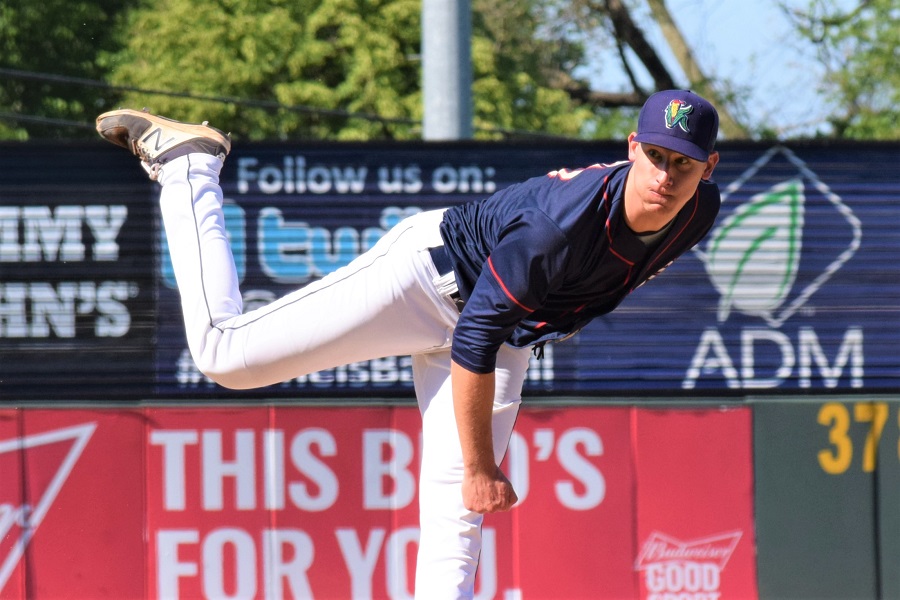 “I kind of like cleaning my room,” Winder explained in an interview a day after his most recent start (a seven-inning/seven-strikeout outing on Sunday in which he held Peoria to one earned run on four hits and one walk). “Making sure everything’s in order, kind of clearing my mind out while I’m doing it. Kind of therapeutic almost. I like laying everything out before my start, getting into that mindset on the day of my start, as opposed to going to the game kind of scatterbrained.” That may seem unusual, but then Winder didn’t come to professional baseball via quite the same path as most other college pitchers. When you consider that the Twins drafted him in the seventh round of last June’s amateur draft out of Virginia Military Institute, a habit of cleaning his room shouldn’t be unexpected at all. Winder admits he didn’t choose to attend VMI with the goal of a military career in mind, but primarily to play baseball and get a good education. (He accomplished both, by the way. After last season ended, he returned to school and got his degree in Economics and Business in December.) So how does a guy without a definitive interest in the military end up at Virginia Military Institute? Of course, the obvious answer is that they offered him a baseball scholarship, but there must be more to it than that. “It’s actually a funny story,” the 6’ 5” right-hander said. “We played a travel ball showcase tournament up there. I remember saying to my dad when we were driving away from the campus, ‘I have no idea why anybody would ever come here.’ A couple years later, I ended up going on a visit there. “The coaches saw me at a camp and liked my stuff, liked the way I pitched and everything. They got me on campus, showed me around. Really sold me on all the benefits of the place, all the good attributes and traits you acquire, almost by default, by being around that kind of environment. “Also, I fell in love with the coaching staff and fell in love with the atmosphere, the brotherhood and camaraderie in the locker room. It was something I really wanted to be a part of, and I made that decision, committed in my junior year and honestly, I wouldn’t be here if I didn’t make that decision because it ended up being the best place for me.” It was certainly a more structured and disciplined environment than most college campuses and it had immediate effects on Winder. “It kind of changes you without you even realizing it,” he explained. “I remember going home for Christmas break my freshman year. Once I got home, I probably slept the whole first day because I was exhausted. But then after that, I’m cleaning my room, making my bed, kind of like setting out each day and making plans, not even realizing it had changed me into (being) much more disciplined, more on top of things. Planning things out.” Asked if his mother wondered who this stranger was and what he had done with her son, Winder didn’t hesitate. “She wasn’t complaining,” he said. “I was folding all the laundry. Yeah, she wasn’t too upset about it.” On the mound this season, Winder has been working with Kernels pitching coach Virgil Vasquez to rediscover the secrets of how to consistently miss bats and felt that Sunday’s outing might have been his best of the season. “Really good game (Sunday). That’s probably the best I’ve felt on the mound this year,” Winder said. “I’ve kind of been searching for that feeling and really feeling like I can beat guys and get the swings I wanted.” After notching nine strikeouts in a five-inning outing on April 13 against Burlington, the record holder for strikeouts per nine-innings at VMI failed to average a strikeout per inning pitched over his next five starts leading into Sunday’s performance, though most of his other stats were more than acceptable. In fact, in three of his four starts during May, Winder completed seven or more innings of work. “Definitely been very efficient the last few weeks, getting ahead,” he said. “Been working really well with my catchers.” As for the strikeouts… “I’ve been kind of struggling to put guys away,” he conceded. “Haven’t struggled to get to two strikes, but as far as striking people out and putting them away, I’ve kind of struggled. That’s something me and Virgil worked on this week and obviously the work paid off. Seven strikeouts yesterday, so we did a much better job kind of throwing pitches in tougher places to hit with two strikes.” Winder has an effective three-pitch repertoire and his primary focus this spring has been to add a more effective change-up to the mix. “I actually went down to Florida a month early for spring training to work on that change-up,” he said. “Work on that grip and (develop) a consistent pitch for me to add to my curveball. And then I have a cutter-slider, as well, in addition to the four-seam fastball. “So, we’re looking to develop that change-up to keep lefties off balance as well as throw it to righties some the second or third time through the lineup. Get them off my fastball. Just get something else in their head. Keep them off balance, so it complements all my other pitches.” At times, pitchers coming out of college programs get anxious to move up the organizational ladder quickly, but Winder’s not about to be putting that kind of pressure on himself. “No, I really try to stay away from thinking like that,” he said. “It’s still my first full professional season. “My mindset going through this whole journey, this whole process, started last year when I was a junior and got drafted, decided to take the draft instead of going back to school. I just try to approach everything to become the best baseball player I can be and once I become the best baseball player I can be, I’ll see where I end up.” Kernels Notes Since returning from their road trip to the Midwest League’s Eastern Division on May 11, the Kernels have posted a 10-5 record and have moved up to 5th place in the MWL Western Division. They’ve also evened their record on the year at 25-25. They still stand 8 ½ games behind Division leading Quad Cities, but only 3 ½ games behind second place Burlington for the all-important second spot in the first half race, which also qualifies for the postseason. Wander Javier, ranked as the Twins’ #4 prospect by MLB Pipeline and Baseball America, joined the Kernels from Extended Spring Training on Saturday. The local fans haven’t had much of an opportunity to see him, yet, however. He played Saturday night, sat out Sunday’s game and Monday’s holiday matinee was rained out. The Kernels now begin a season-long 14 game road trip (while their home, Veteran’s Memorial Stadium, plays host to the NCAA Division III World Series). Hitting: Jared Akins arrived from EST on May 14 and went 0-3 in his first game. He hasn’t been held hitless since and now holds an 11-game hitting streak in which he has hit .419 with three doubles, two triples and four home runs. The streak is the longest of Akins’ career and the longest of any Kernels hitter this season. Andrew Bechtold has a streak of his own going on. He’s reached base in 17 straight games, going back to May 9. He’s hitting .333 in his last ten games and went 6-10 during the three-game series with Peoria over the weekend. Yeltsin Encarnacion has been hitting .318 in his last ten games, bringing his average for the year up to .270 and his OBP to .343. Pitching: Austin Schulfer and Jose Martinez combined to throw a no-hitter against Burlington on May 22 in the seven-inning nightcap of that day’s doubleheader. In Schulfer’s prior appearance, he struck out eight batters in three innings of relief work. Blayne Enlow held opponents to just three earned runs over a combined 18 innings of work in his last three starts, earning himself a promotion to Fort Myers. Reliever Zach Neff has allowed just two earned runs over 17 innings of work covering his last eight appearances. He has a 24/5 K/BB ratio in that stretch, including a 7K 3-inning performance on May 17. Derek Molina had a tough first couple of relief appearances to start 2019, but in the ten appearances since then, he’s surrendered a grand total of one earned run, striking out 18 in 13 innings of work. If you’d like to read more about the Kernels, check out these articles from The Gazette’s beat reporter Jeff Johnson: Emphatically Back to Break-Even for Cedar Rapids Kernels Jared Akins Just Keeps Raking Zach Neff - One Class Shy of Masters Degree
 -
How do you define success? When the subject is a minor league baseball team, that can sometimes be a thorny question. By most traditional measurements, you’d have to twist yourself into a few knots to come up with a way to describe the first six weeks of the Cedar Rapids Kernels’ 2019 campaign as a success.As the Kernels begin a four-game commuter series against the Clinton Lumberkings on Thursday night, they’re pretty well entrenched deep into the lower half of the Midwest League’s eight-team Western Division standings with a 17-22 record. They sit in seventh place, eight games behind Division-leading Quad Cities and six games behind second place Burlington, which is important because the top two finishers in each division during the league’s first half will qualify for the postseason. The Kernels have won just three of the season’s first 13 series and none since they won back-to-back series against Beloit and Wisconsin in mid-April. Their .219 team batting average and .654 OPS place them 14th in each of those offensive categories among the 16 teams in the MWL. There isn’t much in those numbers that shouts “success,” with just over four weeks remaining in the season’s first-half race and, to be sure, Kernels fans and the local front office would love to start seeing more productivity on the field and, frankly, more wins. But when you’re talking about the Class-A minor league level, success is as much, if not more, about developing young ballplayers and preparing them for the challenges awaiting them at the next rung on the professional baseball organizational ladder. And that’s one area where manager Brian Dinkelman and his coaching staff can take justifiable pride in their squad’s success this year. “You like to keep guys here as long as possible to try to win games,” Dinkelman said earlier this week, “but once they’re developed and feel like they’re ready for the next level, then that’s the thing for them to get up to the next level and get them closer to the big leagues.” Already this year, five of the players who came north out of spring training as part of the Kernels’ Opening Day roster have been promoted. Shortstop Joe Cronin is now playing Class Double-A ball with the Pensacola Blue Wahoos, while outfielder Trey Cabbage, relief pitcher Joe Record and starting pitcher Jordan Balazovic are all playing key roles with Class High-A Fort Myers. The most recent promotion was catcher David Banuelos, who got his plane ticket to Fort Myers earlier this week after doing excellent work behind the plate for the Kernels and showing some power with seven extra-base hits on his stat line. Banuelos had one hit in four at-bats in his first game with the Miracle. Cronin is still trying to find his groove at the plate in Pensacola after putting up a 1.106 OPS for Cedar Rapids, but all three of the other players the Kernels have sent to the Miracle in Fort Myers have immediately become among their new team’s statistical leaders. In Cedar Rapids, Cabbage was hitting .313 with an OPS of 1.029 and six home runs (which is still good enough to tie him for fourth place in the Midwest League, a full two weeks after his departure from the Kernels) when he was promoted. In his nine games with the Miracle, he’s hit .344 with an OPS of .964. He’s yet to go yard for the Miracle, but he’s knocked four doubles and a triple. “I was happy for Trey,” Dinkelman said. “He’d been (in Cedar Rapids) a couple of years and he got off to a great start for us, was hitting the ball well. We knew it was time for him to move on up there and see what he can do at the next level.” Joe Record didn’t allow even one earned run during his seven appearances out of the Kernels’ bullpen, while notching five saves as the club’s closer and striking out almost two batters per inning pitched. While he can’t boast the same perfect 0.00 ERA in Fort Myers, he’s kept his WHIP down to just 0.95, while continuing to strike out just under one batter per inning. And then there’s Jordan Balazovic. The 6’ 4” 20-year-old pitched well in his four pre-promotion starts for Cedar Rapids, notching a 2.18 ERA, a 0.92 WHIP, holding hitters to a .195 batting average and striking out 33 batters in his 20 2/3 innings. All he did in his Miracle debut was throw seven perfect innings. His second outing only lasted five innings and he gave up a pair of earned runs, but he also struck out 12 batters. Those performances impressed his former manager. If he keeps having performances like he had his first two outings, he may not be (in Fort Myers) long,” a smiling Dinkelman said of Balazovic. “Ten strikeouts and 12 strikeouts, something like that. It’s good to see those guys go up there and play well.” And it’s unlikely the flow of talent through the Cedar Rapids-to-Fort Myers pipeline is going to stop any time soon. Their record may not show it, but there are still several individual success stories being written in Cedar Rapids. First baseman Gabe Snyder wasn’t on the Kernels’ Opening Day roster this year, but he arrived just a week into the season and he’s hit .319 with a dozen extra-base hits, including three home runs. The Cedar Rapids rotation misses Balazovic, obviously, but other members of that group have continued to keep the Kernels in games through the first several innings, anyway. “I feel like our starting pitching is giving us a chance,” Dinkelman said. “Now they’re going five or six innings a game, keeping us in the ballgame, giving our offense a chance to put some runs on the board. Starting pitching in baseball is the key. If you can get a starter to go out there and give you six, seven strong innings, keep your team in the game, give you a chance to win, that’s all you can ask for.” Dinkelman is getting that kind of result from several of his starting pitchers. Cole Sands has a 2.59 ERA through six starts, striking out 36 batters in 31 1/3 innings. He has yet to surrender a home run this season. Josh Winder has a 2.97 ERA, also through six starts. He’s notched a 1.05 WHIP while striking out 32 batters in 36 1/3 innings. Andrew Cabezas’ 1-3 record belies his actual performance. His 1.10 WHIP and 30 strikeouts through 32 2/3 innings are among the team’s leaders. His most recent performance, in a start on Wednesday against division-leading Quad Cities, was his best of the year. In seven shutout innings, he surrendered just one hit and issued no walks while striking out nine. Blayne Enlow is the lone top-10 rated organizational prospect in the Kernels roster and, while he’s had a couple of tough outings among his six starts, he’s also shown glimpses of the talent that scouts have been impressed with. In his most recent start on May 9, he struck out six over six innings of work, without surrendering an earned run. (He is scheduled to start Thursday night’s game in Clinton.) It won’t be easy for the Kernels to catch up to the division leaders in time to lock up a postseason berth during the season’s first half, but that’s the beauty of the minor league split-season format. They get to start over on June 20. The locals are hoping that uber-prospect Wander Javier will prove himself healthy enough to provide some spark to the Kernels’ lineup well before that date. So far, however, the young shortstop has not been able to stay on the field long enough for the Twins to feel comfortable sending him to Cedar Rapids. In the end, regardless of what we see in the standings, we can be certain there will be plenty of individual success stories coming through Cedar Rapids during the summer. Kernels Notes Hitting: Gabe Snyder leads all qualifying hitters in the MWL in OPS (.957), is tied for 4th in BA (.319), 2nd in SLG (.542), 5th in OBP (.414)Yeltsin Encarnacion had a 7-game hitting streak snapped on Wednesday.Pitching: (We covered the starting pitching pretty thoroughly in the article, but there are a couple of relief arms that are also performing well this month.)Derek Molina has not surrendered an earned run since April 15. In his last 8 appearances, totaling 10 IP, while not giving up an earned run, he has struck out 14 and walked 3.Zach Neff has surrendered just 1 earned run in his last 5 appearances out of the bullpen covering 8 2/3 innings, striking out 14 while walking just 1 in that stretch.Want to read more about the Kernels? Click on these links for stories from The Gazette’s Kernels beat reporter, Jeff Johnson. Kernels coach and former Twins infielder Luis Rodriguez is thinking about Venezuela.RHP Cole Sands was impressive in earning his first professional win.RHP Andrew Cabezas keep hitters off balance with a variety of windups. (This article from JJ includes an imbedded video of one of Cabezas’ most interesting windups this season.) Click here to view the article
- 10 replies
-
- 6
-
-
- blayne enlow
- gabe snyder
- (and 3 more)
-
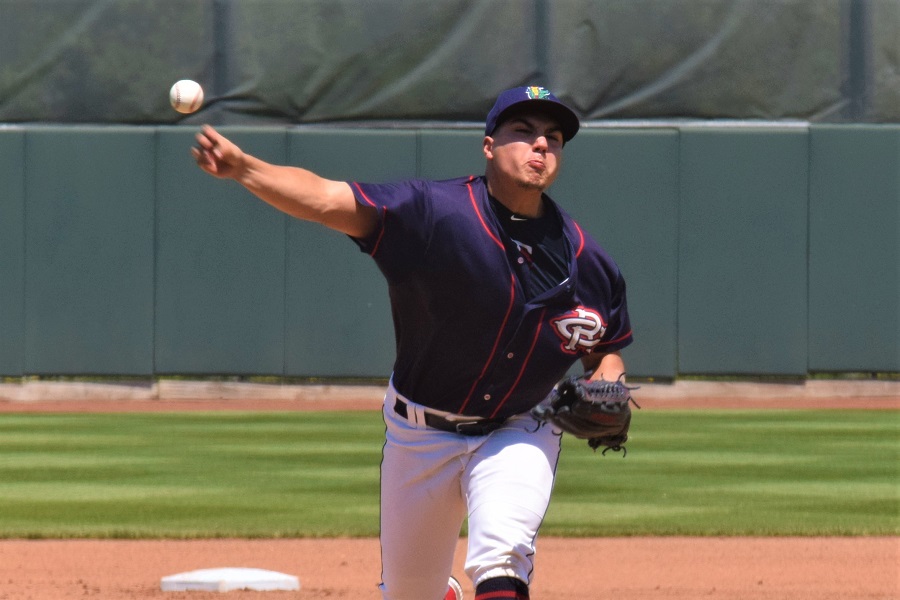 As the Kernels begin a four-game commuter series against the Clinton Lumberkings on Thursday night, they’re pretty well entrenched deep into the lower half of the Midwest League’s eight-team Western Division standings with a 17-22 record. They sit in seventh place, eight games behind Division-leading Quad Cities and six games behind second place Burlington, which is important because the top two finishers in each division during the league’s first half will qualify for the postseason. The Kernels have won just three of the season’s first 13 series and none since they won back-to-back series against Beloit and Wisconsin in mid-April. Their .219 team batting average and .654 OPS place them 14th in each of those offensive categories among the 16 teams in the MWL. There isn’t much in those numbers that shouts “success,” with just over four weeks remaining in the season’s first-half race and, to be sure, Kernels fans and the local front office would love to start seeing more productivity on the field and, frankly, more wins. But when you’re talking about the Class-A minor league level, success is as much, if not more, about developing young ballplayers and preparing them for the challenges awaiting them at the next rung on the professional baseball organizational ladder. And that’s one area where manager Brian Dinkelman and his coaching staff can take justifiable pride in their squad’s success this year. “You like to keep guys here as long as possible to try to win games,” Dinkelman said earlier this week, “but once they’re developed and feel like they’re ready for the next level, then that’s the thing for them to get up to the next level and get them closer to the big leagues.” Already this year, five of the players who came north out of spring training as part of the Kernels’ Opening Day roster have been promoted. Shortstop Joe Cronin is now playing Class Double-A ball with the Pensacola Blue Wahoos, while outfielder Trey Cabbage, relief pitcher Joe Record and starting pitcher Jordan Balazovic are all playing key roles with Class High-A Fort Myers. The most recent promotion was catcher David Banuelos, who got his plane ticket to Fort Myers earlier this week after doing excellent work behind the plate for the Kernels and showing some power with seven extra-base hits on his stat line. Banuelos had one hit in four at-bats in his first game with the Miracle. Cronin is still trying to find his groove at the plate in Pensacola after putting up a 1.106 OPS for Cedar Rapids, but all three of the other players the Kernels have sent to the Miracle in Fort Myers have immediately become among their new team’s statistical leaders. In Cedar Rapids, Cabbage was hitting .313 with an OPS of 1.029 and six home runs (which is still good enough to tie him for fourth place in the Midwest League, a full two weeks after his departure from the Kernels) when he was promoted. In his nine games with the Miracle, he’s hit .344 with an OPS of .964. He’s yet to go yard for the Miracle, but he’s knocked four doubles and a triple. “I was happy for Trey,” Dinkelman said. “He’d been (in Cedar Rapids) a couple of years and he got off to a great start for us, was hitting the ball well. We knew it was time for him to move on up there and see what he can do at the next level.” Joe Record didn’t allow even one earned run during his seven appearances out of the Kernels’ bullpen, while notching five saves as the club’s closer and striking out almost two batters per inning pitched. While he can’t boast the same perfect 0.00 ERA in Fort Myers, he’s kept his WHIP down to just 0.95, while continuing to strike out just under one batter per inning. And then there’s Jordan Balazovic. The 6’ 4” 20-year-old pitched well in his four pre-promotion starts for Cedar Rapids, notching a 2.18 ERA, a 0.92 WHIP, holding hitters to a .195 batting average and striking out 33 batters in his 20 2/3 innings. All he did in his Miracle debut was throw seven perfect innings. His second outing only lasted five innings and he gave up a pair of earned runs, but he also struck out 12 batters. Those performances impressed his former manager. If he keeps having performances like he had his first two outings, he may not be (in Fort Myers) long,” a smiling Dinkelman said of Balazovic. “Ten strikeouts and 12 strikeouts, something like that. It’s good to see those guys go up there and play well.” And it’s unlikely the flow of talent through the Cedar Rapids-to-Fort Myers pipeline is going to stop any time soon. Their record may not show it, but there are still several individual success stories being written in Cedar Rapids. First baseman Gabe Snyder wasn’t on the Kernels’ Opening Day roster this year, but he arrived just a week into the season and he’s hit .319 with a dozen extra-base hits, including three home runs. The Cedar Rapids rotation misses Balazovic, obviously, but other members of that group have continued to keep the Kernels in games through the first several innings, anyway. “I feel like our starting pitching is giving us a chance,” Dinkelman said. “Now they’re going five or six innings a game, keeping us in the ballgame, giving our offense a chance to put some runs on the board. Starting pitching in baseball is the key. If you can get a starter to go out there and give you six, seven strong innings, keep your team in the game, give you a chance to win, that’s all you can ask for.” Dinkelman is getting that kind of result from several of his starting pitchers. Cole Sands has a 2.59 ERA through six starts, striking out 36 batters in 31 1/3 innings. He has yet to surrender a home run this season. Josh Winder has a 2.97 ERA, also through six starts. He’s notched a 1.05 WHIP while striking out 32 batters in 36 1/3 innings. Andrew Cabezas’ 1-3 record belies his actual performance. His 1.10 WHIP and 30 strikeouts through 32 2/3 innings are among the team’s leaders. His most recent performance, in a start on Wednesday against division-leading Quad Cities, was his best of the year. In seven shutout innings, he surrendered just one hit and issued no walks while striking out nine. Blayne Enlow is the lone top-10 rated organizational prospect in the Kernels roster and, while he’s had a couple of tough outings among his six starts, he’s also shown glimpses of the talent that scouts have been impressed with. In his most recent start on May 9, he struck out six over six innings of work, without surrendering an earned run. (He is scheduled to start Thursday night’s game in Clinton.) It won’t be easy for the Kernels to catch up to the division leaders in time to lock up a postseason berth during the season’s first half, but that’s the beauty of the minor league split-season format. They get to start over on June 20. The locals are hoping that uber-prospect Wander Javier will prove himself healthy enough to provide some spark to the Kernels’ lineup well before that date. So far, however, the young shortstop has not been able to stay on the field long enough for the Twins to feel comfortable sending him to Cedar Rapids. In the end, regardless of what we see in the standings, we can be certain there will be plenty of individual success stories coming through Cedar Rapids during the summer. Kernels Notes Hitting: Gabe Snyder leads all qualifying hitters in the MWL in OPS (.957), is tied for 4th in BA (.319), 2nd in SLG (.542), 5th in OBP (.414) Yeltsin Encarnacion had a 7-game hitting streak snapped on Wednesday. Pitching: (We covered the starting pitching pretty thoroughly in the article, but there are a couple of relief arms that are also performing well this month.) Derek Molina has not surrendered an earned run since April 15. In his last 8 appearances, totaling 10 IP, while not giving up an earned run, he has struck out 14 and walked 3. Zach Neff has surrendered just 1 earned run in his last 5 appearances out of the bullpen covering 8 2/3 innings, striking out 14 while walking just 1 in that stretch. Want to read more about the Kernels? Click on these links for stories from The Gazette’s Kernels beat reporter, Jeff Johnson. Kernels coach and former Twins infielder Luis Rodriguez is thinking about Venezuela. RHP Cole Sands was impressive in earning his first professional win. RHP Andrew Cabezas keep hitters off balance with a variety of windups. (This article from JJ includes an imbedded video of one of Cabezas’ most interesting windups this season.)
 -
As April turned to May, the Fort Myers Miracle were in close pursuit of Bradenton and Palm Beach for the top spot in the Florida State League’s South Division standings, with a 17-10 record after sweeping a double header with Clearwater on Thursday night. Of course, you’d expect a squad with a pair of first round draft picks and two more second rounders to be competitive and manager Toby Gardenhire has exactly that going for him. He has 2017’s first overall pick Royce Lewis playing shortstop for him and the Twins’ 2018 first rounder, Trevor Larnach in the outfield. Two catchers that Gardenhire has to choose from when he fills out his lineup card were Twins second rounders, Ben Rortvedt in 2016 and Ryan Jeffers in 2018.The Miracle have indeed had some good things happen on the offensive front this season, but when you dig into what’s been a major cause of the club’s encouraging start, it’s the pitching side of the ledger that draws the attention very quickly. The Miracle have employed a six-man starting rotation and all six have had strong performances at one time or another this season. Three of them, however, have been better than just “good.” Bailey Ober, Randy Dobnak and Bryan Sammons have 13 starts between them and have allowed a total of two earned runs, collectively. Through his four starts, Ober has kept his ERA at a pristine 0.00. He’s struck out 26 batters and walked just three. Ober had been scheduled to make his fifth start on Friday in Palm Beach, but was placed on the Injured List Wednesday, with a right ulnar nerve sublation. Sammons’ strike out total is similar to Ober’s at 25. His fifth start, on Tuesday, was the first tough start of his season. He threw 38 pitches in the first inning, giving up two hits and walking a pair, but also notching two strikeouts. He created a bases-loaded jam for himself, but still managed to work out of it without giving up a run. The Twins typically do not allow their young arms to go back out for another inning after tossing 35 or more pitches in an inning and, true to form, Sammons exited the game after one inning on Tuesday. Dobnak doesn’t get the strikeouts that Bailey and Sammons typically rack up, but he also has kept opponents from crossing the plate. He gave up his first earned run (first run of any kind, in fact) on Sunday. Dobnak was rewarded for his strong early work with a promotion to Class Double-A Pensacola on Wednesday. As Sammons prepared for his start on Tuesday, Ober and Dobnak sat down and discussed the strong start that Miracle pitching, and those three starters in particular, have gotten off to in 2019. “A lot of it, I believe, is going into our pregame preparations,” Ober said. “We’re doing a really good job this year of going into detail on hitters. Really making sure the pitchers and the catchers are on the same game plan throughout the entire game instead of just the first time through the lineup.” “We have meetings before each series, the whole pitching staff and the catchers.” Dobnak added. “We go across the lineup, briefly for everybody, and then we get pretty in-depth for the top three of four guys, the power guys, guys that get on base a lot.” “One of the bigger adjustments that we’ve made is being able to go through a lineup and say, ‘their guys have made changes that we didn’t have in our notes,’” Ober added. Dobnak was also quick to credit the defense playing behind him. “For me, the defense has been really good,” he said. “This year, I’ve been throwing a lot of sinkers, so I’m trying to get ground balls a lot. I don’t have many strikeouts so I rely on the defense, which has been really good for me.” Dobnak said he started focusing on the sinker toward the end of his season in Cedar Rapids last season, adding, “This year’s it’s been my primary pitch. I think it’s worked out for me a lot.” Asking about Ober’s go-to pitch gets a smile from both pitchers. “High fastball,” said Ober. So, high heat? “Oh yeah,” confirmed Bailey. “No matter what,” added a laughing Dobnak. “I don’t know what it is, but (hitters) like it. They’re intrigued by the high fastball,” Bailey said. “Bailey’s got the high carry,” Gardenhire confirmed later. “He’s been doing a good job with everything, too. His (velocity) is down just a little bit from what it was last year. The amazing thing is, he’s got such carry that he’s still throwing his fastball by people and his off-speed pitches are all good. He’s got a good breaking ball, he’s got a good slider, he’s got a good change up and he uses all those. He’s just a really good pitcher. He’s done a nice job.” Gardenhire managed both pitchers in Cedar Rapids last year and was equally complimentary of Dobnak. “Randy worked really hard in the offseason,” he said.”He did a velo camp down here before spring training. He’s done a good job and the work’s paying off for him. His stuff looks really good. It’s sharp. We saw him a lot last year (in Cedar Rapids), we know he’s got good stuff. We know he’s a competitor. He’s going to give you everything he’s got every time out. He just keeps getting better. Pretty proud of him." Despite the hiccup on Sunday, Gardenhire remains very appreciative of Sammons’ work, as well. “He’s been throwing the ball great. Sammons has been good all year for us,” Gardenhire said. “(Tuesday night) was tough. He battled through and got through the inning, but they did a good job of fouling pitches off, hanging in at-bats, and he just threw too many pitches. He’s a good kid and we want to keep him healthy, so too many pitches in the first inning. Got to get him out of there.” With Dobnak now wearing a Blue Wahoos uniform and Ober temporarily on the shelf for the Miracle, it’ll be up to Sammons and the rest of the Fort Myers rotation to pick up the slack. Miracle Notes Fort Myers’ 17-10 record has them nipping right at the heels of the Bradenton Marauders (PIT) and Palm Beach Cardinals (STL) in the FSL-South standings. They trail by just a half-game. Hitting: (stats through Wednesday) Lewin Diaz has been the hottest Miracle hitter early in the season, slashing .317/.348/349 (.697 OPS).Ben Rortvedt has hit .250, but his five doubles, one triple and two home runs have pushed his OPS up to a team-high .842.Akil Baddoo has three doubles, three triples and three home runs.Trevor Larnach has a team-high seven doubles.(eighth down was on Thursday)Pitching: (stats through Wednesday) In addition to Ober, Dobnak and Sammons, other a couple of relief pitchers are also off to excellent starts:Tom Hackimer has a 0.68 ERA in 13.1 IP over eight appearances, striking out 23.Alex Phillips has matched Ober’s 0.00 ERA, striking out 20 and walking just three in 13.2 IP over nine games.Special note: Melvi Acosta made his first start of the season in a spot start after throwing 16 innings of relief work this season over five appearances. All he did in his spot start was throw six shutout innings for the Miracle in the nightcap of their double header Thursday night. Click here to view the article
- 7 replies
-
- 5
-
-
- royce lewis
- trevor larnach
- (and 3 more)
