



Ted Schwerzler
-
Posts
5,149 -
Joined
-
Last visited
Content Type
Profiles
News
Minnesota Twins Videos
2026 Minnesota Twins Top Prospects Ranking
2022 Minnesota Twins Draft Picks
Minnesota Twins Free Agent & Trade Rumors, Notes, & Tidbits
Guides & Resources
2023 Minnesota Twins Draft Picks
The Minnesota Twins Players Project
2024 Minnesota Twins Draft Picks
2025 Minnesota Twins Draft Pick Tracker
2026 Minnesota Twins Draft Tracker: Picks & Bonuses
Forums
Blogs
Events
Store
Downloads
Gallery
Everything posted by Ted Schwerzler
-
Adding talent at the MLB trade deadline is well and good. It's crucial that a contending team needing to finish strongly in order to establish playoff position be an active buyer. For the Minnesota Twins, though, this season's deadline additions will have to come with some 40-man roster pruning. Image courtesy of © Matt Krohn-USA TODAY Sports As things stand, Rocco Baldelli’s club is in the thick of an AL Central race. They are seeking an opportunity to repeat as division champions, and while the Cleveland Guardians' schedule gets tough down the stretch, the Twins need reinforcements to track them down. The lineup is in a good place for the Twins, and it should only get better as Minnesota gets healthier. Royce Lewis and José Miranda will return this weekend, and Carlos Correa could be fairly close behind them. With a couple of additional options at Triple-A, there is little reason or room to add a bat. Pitching is a different story, though. They do need more depth on that side of the roster, but finding room for that upgrade is difficult. Derek Falvey has a full 40-man roster, and more than a handful of big-leaguers are on the injured list. Justin Topa will eventually need to come off the 60-day injured list, and players like Kyle Farmer or Alex Kirilloff could get healthy and become options, as well. Wherever possible, then, the Twins have to look for ways to trade players at the back end of their current 40-man roster over the next six days. Here is a list of theoretical candidates. Matt Wallner A rumored trade candidate for weeks while he mashed on the farm, Wallner going now would be a more difficult sell. He has returned to the big-league lineup and been an asset. With Max Kepler's free agency looming and Wallner's bat hot, a trade of the young slugger feels unlikely, but teams will certainly be asking about him. Alex Kirilloff Currently on the injured list with a back issue, Kirilloff doesn't have much of a future with the Twins. The relationship between both sides here can’t be in a great place, and a change of scenery could be beneficial for everyone involved. The value isn’t going to be substantial, but freeing up the roster spot would be valuable, in itself. Yunior Severino After showing enough high-minors thump to earn a roster spot last season, Severino was abysmal to start the year. He has since turned it around, and owns an .806 OPS on the season for Triple-A St. Paul. There's big power potential here, if he can hit enough to get to it. Severino is a first baseman, and not great with the glove. There isn’t room for him with the Twins at that position this season, and he could be passed over next year, as well. With significant team control left, though, and at just 24 years old, he could appeal widely to sellers looking to rebuild their offense. Josh Winder Previously debuting as a starter two years ago, and then working out of the bullpen last year, Winder's career has been a mixed bag. He was hurt to start the season, and he hasn’t been great at any level. His value isn’t going to be high, but he could be a throw-in, based on team control and future projection. Ronny Henriquez Acquired in the Mitch Garver trade with Texas, Henriquez made it back to the big leagues after a tough Triple-A season last year. He’s been solid for the Saints in 2024, but has been shuttled back and forth as relief depth. If there’s a better relief acquisition to be made at the deadline, and especially one with future control, then sending Henriquez out (even if it be a simple DFA) would make sense. Matt Canterino There are few players with better stuff to dream on in the organization than Canterino. It all remains a dream, though, because health has continued to escape him. If Canterino isn’t sent packing (his value would likely be nonexistent), then continuing to hold him on the 40-man only gets more difficult. Kyle Farmer Since the demotion of Edouard Julien earlier this year, Farmer has been better against lefties. Providing veteran leadership and hitting southpaws is what he is on the roster for. Moving someone from the 26-man in the midst of a playoff run is always tricky business. This would save the Twins some money, though, and that’s something they’ve been looking to do all year. He could go the other way in a trade that sees the team take on a player with a significant contract, to ease both roster and money math. What 40-man options do you see the Twins dangling in trade talks? View full article
-
Get to Know 2024 Minnesota Twins Draft Pick: Eli Jones
Ted Schwerzler posted an article in MLB Draft
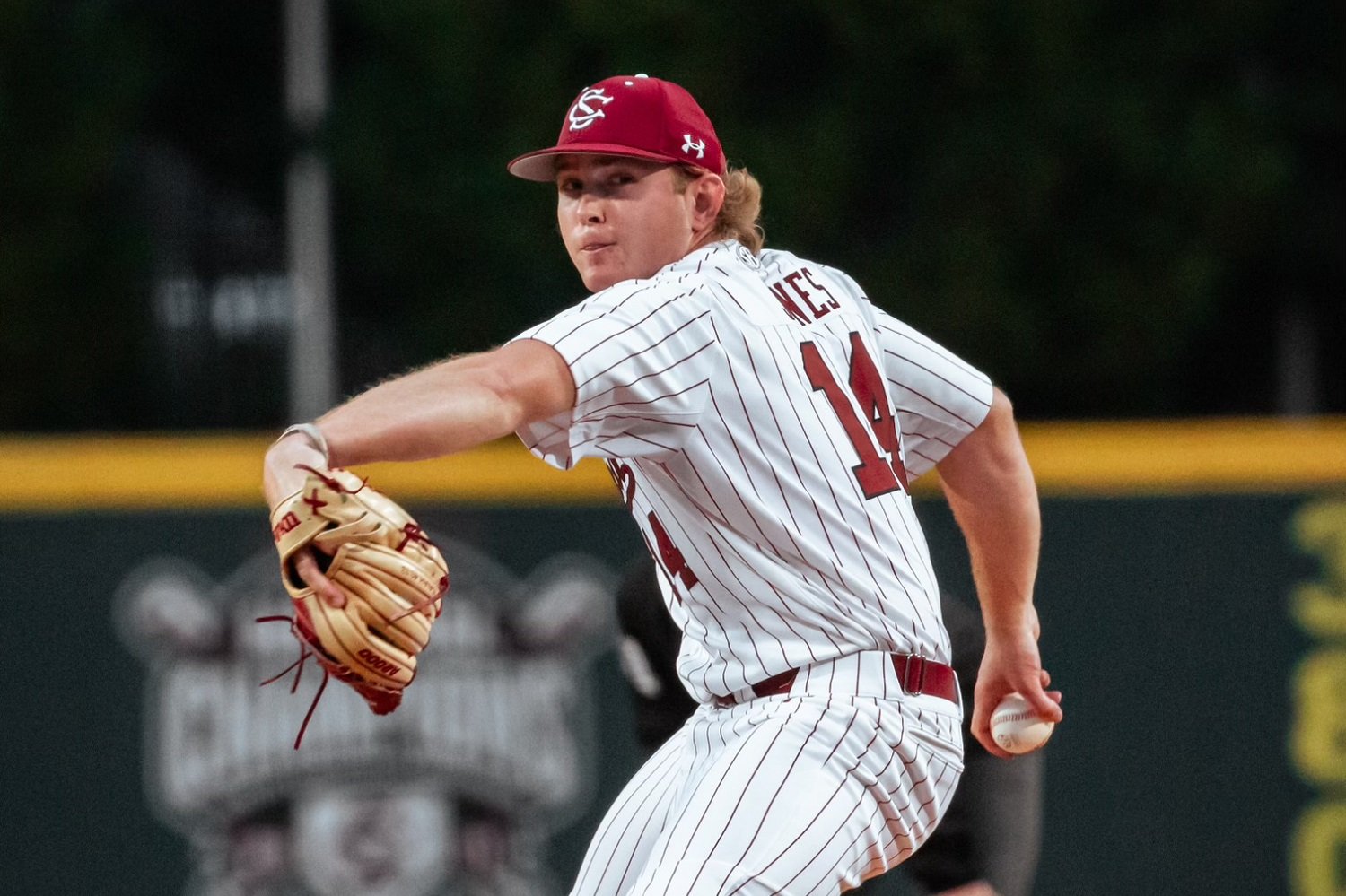 Born in Alabama, raised in Georgia, Eli Jones has made the South his home, as he headed to South Carolina for college ball. Pitching three seasons for the Gamecocks, Jones really exploded in 2023, when he put up a 3.95 ERA and 10.4 K/9 across 54 2/3 innings. After working primarily as a reliever in 2023, Jones returned to the mound as a starter this past season. Jones flirted with a perfect game in March this year for the Gamecocks, and he racked up 56 strikeouts across 68 2/3 innings. The Twins grabbed a moldable prospect in the righty, and are certainly looking forward to working with him as he starts his career. Before that takes place, I was able to catch up with him. Twins Daily: As a pitcher working in one of the nation's toughest conferences, how do you feel like the SEC has set you up for success at the next level? Eli Jones: Pitching in the SEC has definitely prepared me to better perform at the next level. Although it is not professional ball, the SEC holds the best amateur players in the country, and I had the opportunity of facing them week in and week out. I have even accumulated at-bats against current big leaguers in my time at South Carolina. TD: Last season you worked quite a bit out of the bullpen, and then you started almost exclusively this year. What sparked that transition, and how did it change your approach? EJ: I think that going from the bullpen to a starter was mostly [attributable] to my growth as a player. I feel like I have had a steady track of developing, which allowed me to take on different roles at South Carolina. Going from the bullpen to a starter is definitely a transition in which I had to gradually learn how to navigate lineups two or three times. TD: What does your repertoire look like? What pitch do you feel is your best, and where do you go when needing to locate? EJ: I have a sinker, slider, curve, and changeup, with the sinker being my best pitch. When it is at its best, I am able to throw it at the bottom of the zone to both sides of the plate, to right- and left-handed hitters. TD: Is there a major-league pitcher you feel like you have modeled your game after, or someone you try to emulate? Who is your favorite? EJ: I loved watching Walker Buehler growing up. I don’t necessarily relate to him from a pitch shaping or mechanical standpoint, but I love the way he competes on the mound. I like to think being a competitor on the mound is one of my best qualities. TD: The Twins pitching pipeline has taken off in recent seasons. What do you know about the organization and Minnesota as a whole? EJ: Growing up in the South, I did not know much about the organization, but in recent years I have started to learn more while becoming a bigger fan of the game. I love the direction in which they are going and am extremely excited to get to work and be a part of something great. TD: How do you feel about the automated strike zone at the next level? Have you worked with that at all before? EJ: I completely understand and am intrigued by the growth of technology in the game but I’m not quite on board with the automated strike zone. Umpires and human error have been a part of the game since the beginning and I think if the game loses that, it loses a large part of its history. Welcome to Twins Territory, Eli!
 -
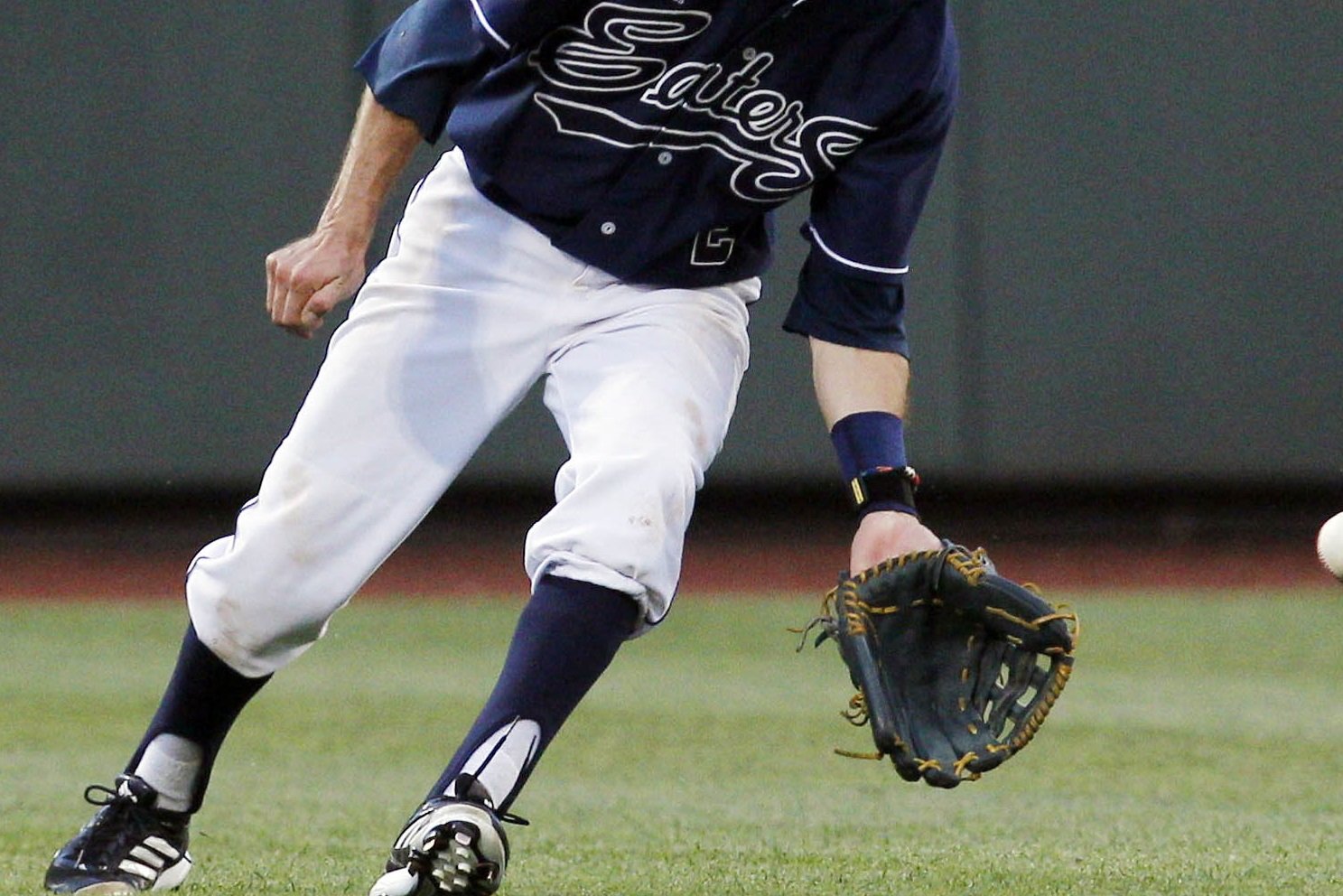 UC-Irvine has been an impressive baseball program for some time, and grabbing a player like Caden Kendle in the fifth round is a nice come-up for the Twins. If you remember, Irvine is where Twins star Royce Lewis was committed prior to going first overall in the draft. Jacob King, who recently returned from the 60-day injured list of the Mighty Mussels, was an Anteater. Current Twins prospect Dillon Tatum also played with Kendle at Irvine. Kendle is a talented outfielder that posted an OPS north of 1.000 for the first time this season as a senior. He has continued to get better each year, and looks the part of a contact hitter that could quickly blitz the system. Following his selection on Monday afternoon, I was able to catch up with him to introduce him to Twins Territory. Twins Daily: This isn't your first rodeo after having been drafted by the Cardinals last year. What went into the decision to go back to school? Caden Kendle: The decision was mainly to finish up my last year in college. You only get those memories one time in your life. I didn’t want to miss out on that opportunity with such a great team as well. I also wanted to finish my degree. TD: You put up the best numbers of your collegiate career, and significantly improved your draft spot because of it. What changes attributed to that? CK: I didn’t really change much at the plate. I trained hard in the offseason to control the strike zone better and be more aggressive early on in counts. I wanted to hit more home runs, but oh well. TD: You're definitely a high average and on-base guy. What can you tell use about your style at the plate and how you play the outfield? CK: I just try to get my best swing off early in the count on good pitches. I am definitely an all-out player. I believe I play the game the right way, and will never take a pitch or play off. You never know when you are going to hang up the cleats, so I just try to play every game like it’s my last. TD: Is there a current or former big leaguer that you have emulated or feel like you have characteristics of? CK: I have always looked up to Mike Trout because the Angels are 20 minutes from me. I try to play like him and appreciate how humble he is. I feel like my fire and passion from the game is kind of like the way Bryce Harper plays. TD: What is your knowledge of the Twins organization and Minnesota as a whole? Have you ever been to Target Field? CK: I don’t really have any knowledge about the Twins, but I am fired up to play for them. My old teammate Dillon Tatum and Jacob King play for them as well. TD: What do you like to do away from baseball that helps you reset? What do you do for fun? CK: I love to play poker, fish when I have time, skateboard, body surf, and boogie board. Already inked to a deal with the Twins, Kendle can't wait to get started.
-
- 1
-

-
- caden kendle
- dillon tatum
- (and 1 more)
-
The Minnesota Twins are currently scouring the trade market, and it remains highly likely that they will be active prior to the July 31 trade deadline. Despite any outside additions costing money, the internal talent that is already being paid remains the great assets down the stretch. With just days remaining prior to the 2024 Major League Baseball trade deadline, you can bet that Derek Falvey is working the phones. Despite massive payroll cuts from ownership going into the year, there just isn’t a legitimate explanation to not supplement Rocco Baldelli’s roster. Short of adding a starting pitcher like Yusei Kikuchi though, the splashes shouldn’t be expected to make waves. A couple of years ago the Twins swung big and added arms like Tyler Mahle and Jorge Lopez. Both went horribly wrong and they are moves still chided to this day. There shouldn’t be any realistic expectation for those types of moves to be made this time around, but waves could come like a tsunami if everything goes right internally. Carlos Correa On the injured list following the All-Star Break, Correa is dealing with plantar fasciitis in his other foot. A year ago that sapped him of looking even a decent percentile of himself, and the hope would be that he can avoid the same outcome this time around. With a 3.6 fWAR, he is the current leader for the Twins, and as a deserving All-Star, he is having one of the best seasons he has posted during his career. Correa isn’t going to miss the rest of the season, and he’s going to play through some pain. If the issue can be mitigated and managed to the point that it isn’t an issue, the outcome would be a best case scenario. Correa has been a staple for Baldelli this year, and remaining as such would be massive. Royce Lewis Having missed substantial time this season due to a pair of soft tissue injuries, Lewis is back off the injured list. When healthy, he has been arguably the best player in baseball on a per-game basis. It is impossible to quantify his impact for Minnesota, and making sure he remains capable of providing that the rest of the way is a must. It’s likely that the groin issue was tied to the quad issue. Lewis may need to do additional treatment or be cautious with his preparation the rest of the way, but if he can be healthy, he’ll be a problem (for the opposition). We already saw what Lewis did in his first taste of the postseason. Pablo Lopez Unlike the first two names here, the Twins ace just needs to be himself. All season the numbers have suggested he isn’t the guy that lifting the hood says he is. He has a sub 3.00 ERA over his last five starts, and he’s striking everyone out again. Despite getting hit around by the Astros during that stretch, opposing hitters have posted just a .505 ops against him. Lopez doesn’t need to be Cy Young good the rest of the way, but if he pitches like the guy that Minnesota extended then opposing lineups are in trouble. No one will care what the regular season ERA was if Lopez can take the ball during game one of the postseason and shove. No better arm will be moved at the deadline. Brock Stewart Out since May 1 with what the Twins initially called shoulder tendinitis, Stewart has thrown just 13 1/3 innings this year. Similar to last season, he’ll return for the stretch run, and has been arguably baseball’s best reliever when on the mound. The Twins have continued to believe in Stewart and get him right. The version that takes the ball is virtually unhittable. When looking at adding relief help, the Twins should be scouring the market. They could use more additions from the left side with Caleb Thielbar struggling and Kody Funderburk hurt. Still, no arm moved in the next handful of days will hold a candle to what Stewart is, including Tanner Scott. Justin Topa Yet to pitch for the Twins after suffering a knee injury as spring training wrapped up, Minnesota is still waiting to cash in on the Jorge Polanco deal. That trade was not made for Anthony De Sclafani, and Gabriel Gonzalez won’t pay off for years. Topa was great as a regular reliever for the Seattle Mariners last season, and eating middle-innings for Baldelli could be key. Recently kicking off a rehab assignment, Topa is tracking toward a return. His presence in the bullpen would be equal to grabbing a mid-level reliever from a selling team, but he wouldn’t cost anything to put him in the group. Topa was a solid pickup this offseason, and turning him loose is something that Minnesota must be excited about. The fact that the Twins have internal options getting healthy shouldn’t stop them from adding. All of these players are among the names mentioned because they have been unavailable. However, the path to crushing the competition is more reliant on internal talent than it is figuring out which trade target can be had and for how much. View full article
-
A great Simeon Woods Richardson start was wasted on Tuesday night as the rough version of Jhoan Duran showed up again. Evening the series against the best team in baseball, Minnesota will look to take the rubber match on Wednesday night. Image courtesy of © Jesse Johnson-USA TODAY Sports Box Score SP: Simeon Woods Richardson 6.0 IP, 3 H, 0 R 0 ER, 1 BB, 5 K (88 pitches, 57 strikes) Home Runs: N/A Bottom 3 WPA: Jhoan Duran (-.599), Willi Castro (-.138), Austin Martin (-.110) Win Probability Chart (via FanGraphs) Defense Does it Early In the first inning, as the first batter of the game, Kyle Schwarber stepped in against Simeon Woods Richardson. He clobbered a ball that would have been a home run in Philadelphia, but the Target Field dimensions are different and Max Kepler exists. Carlos Santana wasn’t ready to be upstaged, and his diving catch in the second inning robbed Nick Castellanos of a drive to right. Woods Richardson cruised through six innings, and his final frame was punctuated by a Matt Wallner cannon. Trea Turner is incredibly fast, and he steals a lot of bases, but he tested the wrong outfielder and the Forest Lake native told him he shouldn’t have found out. A liner off the wall was met with a howitzer to second and Minnesota turned the frame over. Late Game Meltdown Griffin Jax worked a scoreless eighth inning for Minnesota, and the Twins then squared off against Jeff Hoffman. The reliever that was jettisoned following a great camp in 2023, and wound up facing Willi Castro in the All-Star Game, was getting a shot at Target Field. The Phillies reliever got the Minnesota All-Star on strikes this time, and after walking Christian Vazquez to kick off the inning, had his first out. Byron Buxton came on as a pinch runner and swiped second base, so Baldelli’s club had the tying run 180 feet from home. Getting Santana on strikes, Hoffman gave way to Gregory Soto for the final out. Facing Max Kepler, Soto there a pair of balls before uncorking a wild pitch allowing the runners to move up. On the next pitch he walked the bases loaded and Ryan Jeffers stepped in for Edouard Julien. After working a 3-1 count, Jeffers grounded out to Alec Bohm and it was Jhoan Duran time. The Twins closer came on and got an out before giving up an opposite field double to Bryce Harper. After walking Bohm and J.T. Realmuto, the bases were loaded with just a single out and Minnesota was in a tough spot. Brandon Marsh lofted a fly ball to Wallner in left, scoring Harper, and the scoreless tie had finally been broken. Duran struggled to find velocity again this evening, topping out at 101.7 mph, and Castellanos’ double brought home a pair to make it 3-0. The Twins closer’s up and down season continued, and this was certainly not a highlight. After leaving the bases loaded in the eighth inning, Minnesota watched their arm get got in the ninth inning. Duran was lifted for Ronny Henriquez. Matt Strahm was called upon for the ninth inning and was looking to wrap things up for the Phillies. Starting Brooks Lee off with a pair of balls, he came back with three straight strikes to punch him out. Manuel Margot took over for Wallner and quickly grounded out to make Austin Martin the final hope. Minnesota’s center fielder struck out on the fifth pitch of his at bat and Philadelphia knotted the series at one. Notes Royce Lewis kicked off a rehab assignment with St. Paul on Tuesday night. Batting second and playing third, it was the second time with Toby Gardenhire’s squad this season. He went 0-for-3 with a pair of strikeouts. The hope would be that he could be ready to join Minnesota on Friday in Detroit. Jose Miranda is also closing in on a return to action, and he could play for the Saints on Wednesday. If Minnesota wants to infuse their roster with some big additions before the weekend series, Miranda would get just Wednesday’s day game prior to his activation. Brock Stewart, who has been out since May 1st, is expected to be activated from the injured listed on Wednesday. His return to the roster likely is bad news for Ronny Henriquez, who would be an easy arm to option. Reliever Justin Topa, who was acquired in the Jorge Polanco trade and has yet to pitch for the Twins, was assigned to Low-A Fort Myers on a rehab assignment. He will need to build back up before being a possibility for the big league club. In his 2024 debut, he worked a single inning with a walk and strikeout. National reporter Lauren Shehadi has been in town for the Phillies series. Today she shared a cool story about her beginnings in Minot, ND. That also happens to be the hometown of Marney Gellner, who recently called a series of Twins games. What’s Next? Wrapping up a series with the best team in baseball, Minnesota will oppose Aaron Nola on Thursday afternoon. Needing a starter to take Chris Paddack's spot, they'll counter with a bullpen game. Steven Okert is set to start, and David Festa will be promoted to work as the bulk man. Despite Randy Dobnak looking strong the last two months at Triple-A, Minnesota couldn't find room on the 40-man. Postgame Interviews Bullpen Usage Spreadsheet View full article
- 41 replies
-
- 1
-
-
- simeon woods richardson
- jhoan duran
- (and 2 more)
-
Final: Phillies 3, Twins 0 - Minnesota Misses the Mark on a Great Start
Ted Schwerzler posted an article in Twins
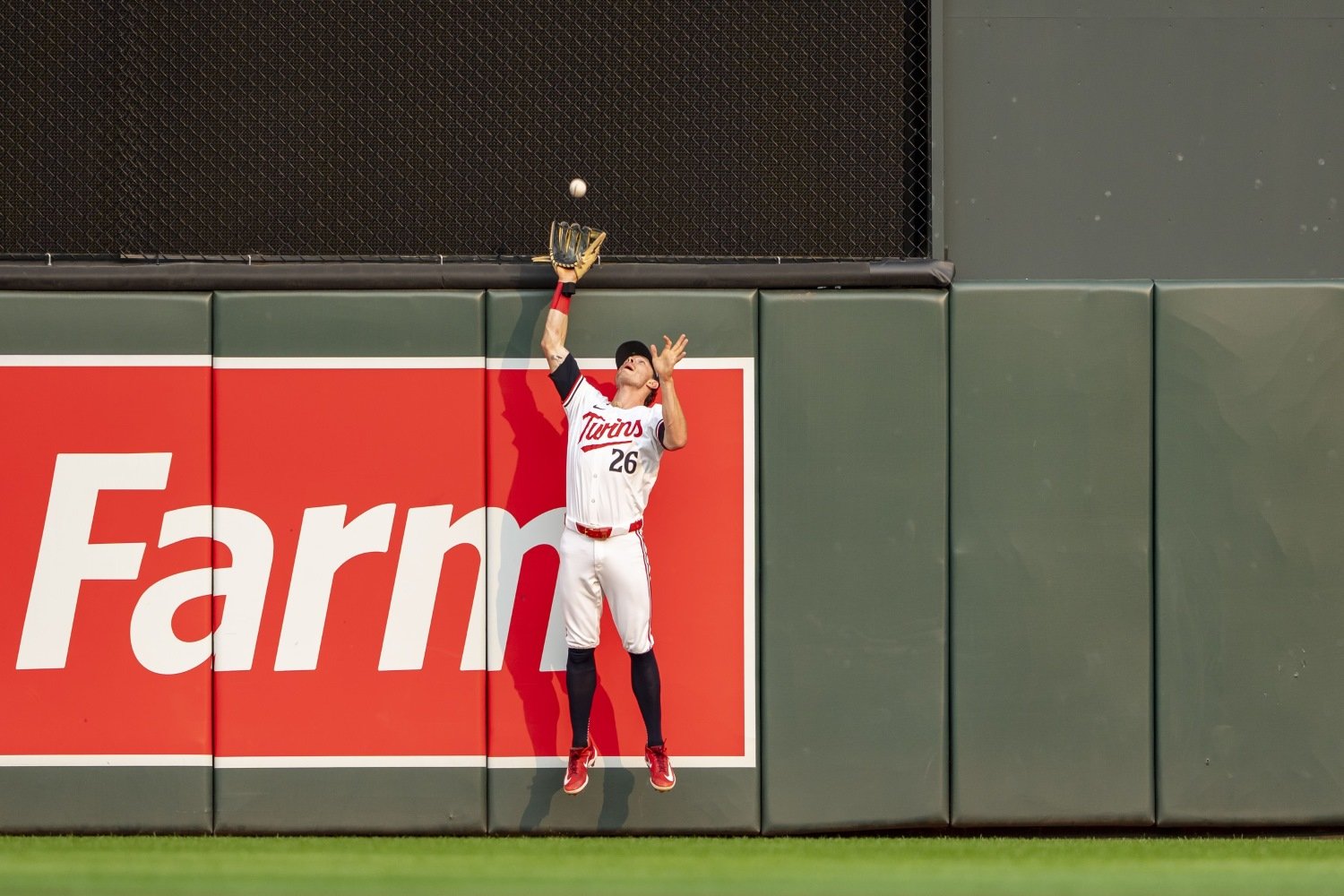 Box Score SP: Simeon Woods Richardson 6.0 IP, 3 H, 0 R 0 ER, 1 BB, 5 K (88 pitches, 57 strikes) Home Runs: N/A Bottom 3 WPA: Jhoan Duran (-.599), Willi Castro (-.138), Austin Martin (-.110) Win Probability Chart (via FanGraphs) Defense Does it Early In the first inning, as the first batter of the game, Kyle Schwarber stepped in against Simeon Woods Richardson. He clobbered a ball that would have been a home run in Philadelphia, but the Target Field dimensions are different and Max Kepler exists. Carlos Santana wasn’t ready to be upstaged, and his diving catch in the second inning robbed Nick Castellanos of a drive to right. Woods Richardson cruised through six innings, and his final frame was punctuated by a Matt Wallner cannon. Trea Turner is incredibly fast, and he steals a lot of bases, but he tested the wrong outfielder and the Forest Lake native told him he shouldn’t have found out. A liner off the wall was met with a howitzer to second and Minnesota turned the frame over. Late Game Meltdown Griffin Jax worked a scoreless eighth inning for Minnesota, and the Twins then squared off against Jeff Hoffman. The reliever that was jettisoned following a great camp in 2023, and wound up facing Willi Castro in the All-Star Game, was getting a shot at Target Field. The Phillies reliever got the Minnesota All-Star on strikes this time, and after walking Christian Vazquez to kick off the inning, had his first out. Byron Buxton came on as a pinch runner and swiped second base, so Baldelli’s club had the tying run 180 feet from home. Getting Santana on strikes, Hoffman gave way to Gregory Soto for the final out. Facing Max Kepler, Soto there a pair of balls before uncorking a wild pitch allowing the runners to move up. On the next pitch he walked the bases loaded and Ryan Jeffers stepped in for Edouard Julien. After working a 3-1 count, Jeffers grounded out to Alec Bohm and it was Jhoan Duran time. The Twins closer came on and got an out before giving up an opposite field double to Bryce Harper. After walking Bohm and J.T. Realmuto, the bases were loaded with just a single out and Minnesota was in a tough spot. Brandon Marsh lofted a fly ball to Wallner in left, scoring Harper, and the scoreless tie had finally been broken. Duran struggled to find velocity again this evening, topping out at 101.7 mph, and Castellanos’ double brought home a pair to make it 3-0. The Twins closer’s up and down season continued, and this was certainly not a highlight. After leaving the bases loaded in the eighth inning, Minnesota watched their arm get got in the ninth inning. Duran was lifted for Ronny Henriquez. Matt Strahm was called upon for the ninth inning and was looking to wrap things up for the Phillies. Starting Brooks Lee off with a pair of balls, he came back with three straight strikes to punch him out. Manuel Margot took over for Wallner and quickly grounded out to make Austin Martin the final hope. Minnesota’s center fielder struck out on the fifth pitch of his at bat and Philadelphia knotted the series at one. Notes Royce Lewis kicked off a rehab assignment with St. Paul on Tuesday night. Batting second and playing third, it was the second time with Toby Gardenhire’s squad this season. He went 0-for-3 with a pair of strikeouts. The hope would be that he could be ready to join Minnesota on Friday in Detroit. Jose Miranda is also closing in on a return to action, and he could play for the Saints on Wednesday. If Minnesota wants to infuse their roster with some big additions before the weekend series, Miranda would get just Wednesday’s day game prior to his activation. Brock Stewart, who has been out since May 1st, is expected to be activated from the injured listed on Wednesday. His return to the roster likely is bad news for Ronny Henriquez, who would be an easy arm to option. Reliever Justin Topa, who was acquired in the Jorge Polanco trade and has yet to pitch for the Twins, was assigned to Low-A Fort Myers on a rehab assignment. He will need to build back up before being a possibility for the big league club. In his 2024 debut, he worked a single inning with a walk and strikeout. National reporter Lauren Shehadi has been in town for the Phillies series. Today she shared a cool story about her beginnings in Minot, ND. That also happens to be the hometown of Marney Gellner, who recently called a series of Twins games. What’s Next? Wrapping up a series with the best team in baseball, Minnesota will oppose Aaron Nola on Thursday afternoon. Needing a starter to take Chris Paddack's spot, they'll counter with a bullpen game. Steven Okert is set to start, and David Festa will be promoted to work as the bulk man. Despite Randy Dobnak looking strong the last two months at Triple-A, Minnesota couldn't find room on the 40-man. Postgame Interviews Bullpen Usage Spreadsheet
 -
In the privileged position of having relatively few and non-urgent needs, the Minnesota Twins might not be overwhelmingly aggressive at the 2024 MLB trade deadline. Whatever moves they do make will have to be carefully considered, too, because they lack financial flexibility. One southpaw reliever, though, could be the perfect fit. Image courtesy of © Rick Osentoski-USA TODAY Sports The Miami Marlins have been a dumpster fire for some time. That remains accurate this season, and they have already indicated they will be sellers. Having already shipped Luis Arráez to the San Diego Padres, they have indicated a willingness to listen on Jazz Chisholm Jr. Tanner Scott, and others, too. While Scott draws all the excitement out of the Miami bullpen, it’s Andrew Nardi who might be the better get. Scott has been great, and since every team has to have an All-Star representative, he was probably the right one. He owns a 1.27 ERA and has racked up 16 saves. There is reason to expect some regression, though, as Scott is carrying a 3.26 FIP and walking a whopping 5.3 batters per nine innings. He’s going to have a ton of suitors, and that should drive up the return for Miami, On the flip side, Nardi owns a 5.30 ERA and is just begging for a more capable organization to employ him. The 3.33 FIP is the lowest mark of his career, and he has a 30% strikeout rate. Part of Nardi’s problem this season has been an uncharacteristic 61.9% strand rate, and he’s getting BABIP’d to death, carrying a .337 there. For Rocco Baldelli, Nardi not only would represent another relief option, but he would shore up the softest spot in the bullpen. Right now, Minnesota is lacking trustworthy lefties. Kody Funderburk hit the injured list with an oblique strain. Steven Okert has been shaky. Caleb Thielbar looks to be at the end of his line. Nardi would bring a southpaw look and a ceiling that should be higher than any of the aforementioned names. Given the payroll constraints they face, it seems unlikely that Minnesota would add substantial dollars to the payroll. Nardi is currently making the major-league minimum, though, and he doesn’t even hit arbitration until 2026. While that is going to raise the expected return, it should still be a manageable package, given what acquiring a reliever typically entails. He's also exactly the kind of pitcher they like. He throws a 94-MPH fastball with good carry, and his slider has two-plane movement off of that. It's why he misses so many bats, and could be a profile with some staying power. Looking at making noise in the postseason, the Twins are set up well as they currently sit. They lack the depth to withstand that race toward a World Series, though, and the pitching staff, especially, needs just a bit more. The starting rotation is the big focus on that front, but a reliever or two could impact multiple games down the stretch and in October. As postseason expansion has reduced the number of sellers across the league each year, the available talent is somewhat watered down. A player like Nardi might be overlooked on the surface, but he's a perfect acquisition for a good franchise to get the best out of. Coming into the year, the Twins hoped to have one of the best bullpens in baseball. So far, that hasn’t happened, but they could bolster the group with this sort of addition. View full article
-
A Perfect Relief Pitcher Trade Target for the Twins: The Nard Dawg
Ted Schwerzler posted an article in Twins
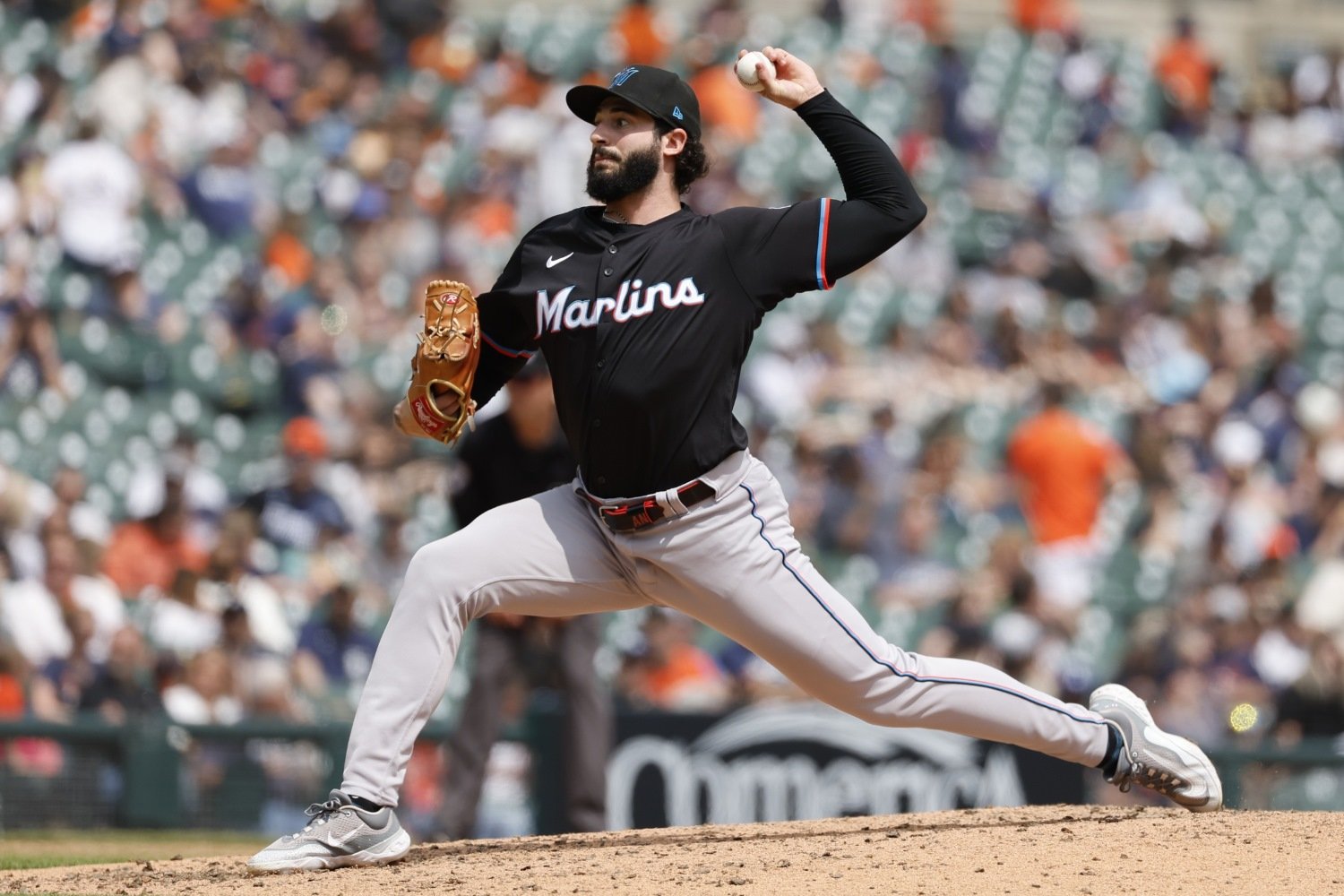 The Miami Marlins have been a dumpster fire for some time. That remains accurate this season, and they have already indicated they will be sellers. Having already shipped Luis Arráez to the San Diego Padres, they have indicated a willingness to listen on Jazz Chisholm Jr. Tanner Scott, and others, too. While Scott draws all the excitement out of the Miami bullpen, it’s Andrew Nardi who might be the better get. Scott has been great, and since every team has to have an All-Star representative, he was probably the right one. He owns a 1.27 ERA and has racked up 16 saves. There is reason to expect some regression, though, as Scott is carrying a 3.26 FIP and walking a whopping 5.3 batters per nine innings. He’s going to have a ton of suitors, and that should drive up the return for Miami, On the flip side, Nardi owns a 5.30 ERA and is just begging for a more capable organization to employ him. The 3.33 FIP is the lowest mark of his career, and he has a 30% strikeout rate. Part of Nardi’s problem this season has been an uncharacteristic 61.9% strand rate, and he’s getting BABIP’d to death, carrying a .337 there. For Rocco Baldelli, Nardi not only would represent another relief option, but he would shore up the softest spot in the bullpen. Right now, Minnesota is lacking trustworthy lefties. Kody Funderburk hit the injured list with an oblique strain. Steven Okert has been shaky. Caleb Thielbar looks to be at the end of his line. Nardi would bring a southpaw look and a ceiling that should be higher than any of the aforementioned names. Given the payroll constraints they face, it seems unlikely that Minnesota would add substantial dollars to the payroll. Nardi is currently making the major-league minimum, though, and he doesn’t even hit arbitration until 2026. While that is going to raise the expected return, it should still be a manageable package, given what acquiring a reliever typically entails. He's also exactly the kind of pitcher they like. He throws a 94-MPH fastball with good carry, and his slider has two-plane movement off of that. It's why he misses so many bats, and could be a profile with some staying power. Looking at making noise in the postseason, the Twins are set up well as they currently sit. They lack the depth to withstand that race toward a World Series, though, and the pitching staff, especially, needs just a bit more. The starting rotation is the big focus on that front, but a reliever or two could impact multiple games down the stretch and in October. As postseason expansion has reduced the number of sellers across the league each year, the available talent is somewhat watered down. A player like Nardi might be overlooked on the surface, but he's a perfect acquisition for a good franchise to get the best out of. Coming into the year, the Twins hoped to have one of the best bullpens in baseball. So far, that hasn’t happened, but they could bolster the group with this sort of addition.
- 11 comments
-
- 4
-
-
- andrew nardi
- tanner scott
- (and 3 more)
-
Get to Know 2024 Minnesota Twins Draft Pick: Logan Whitaker
Ted Schwerzler posted an article in MLB Draft
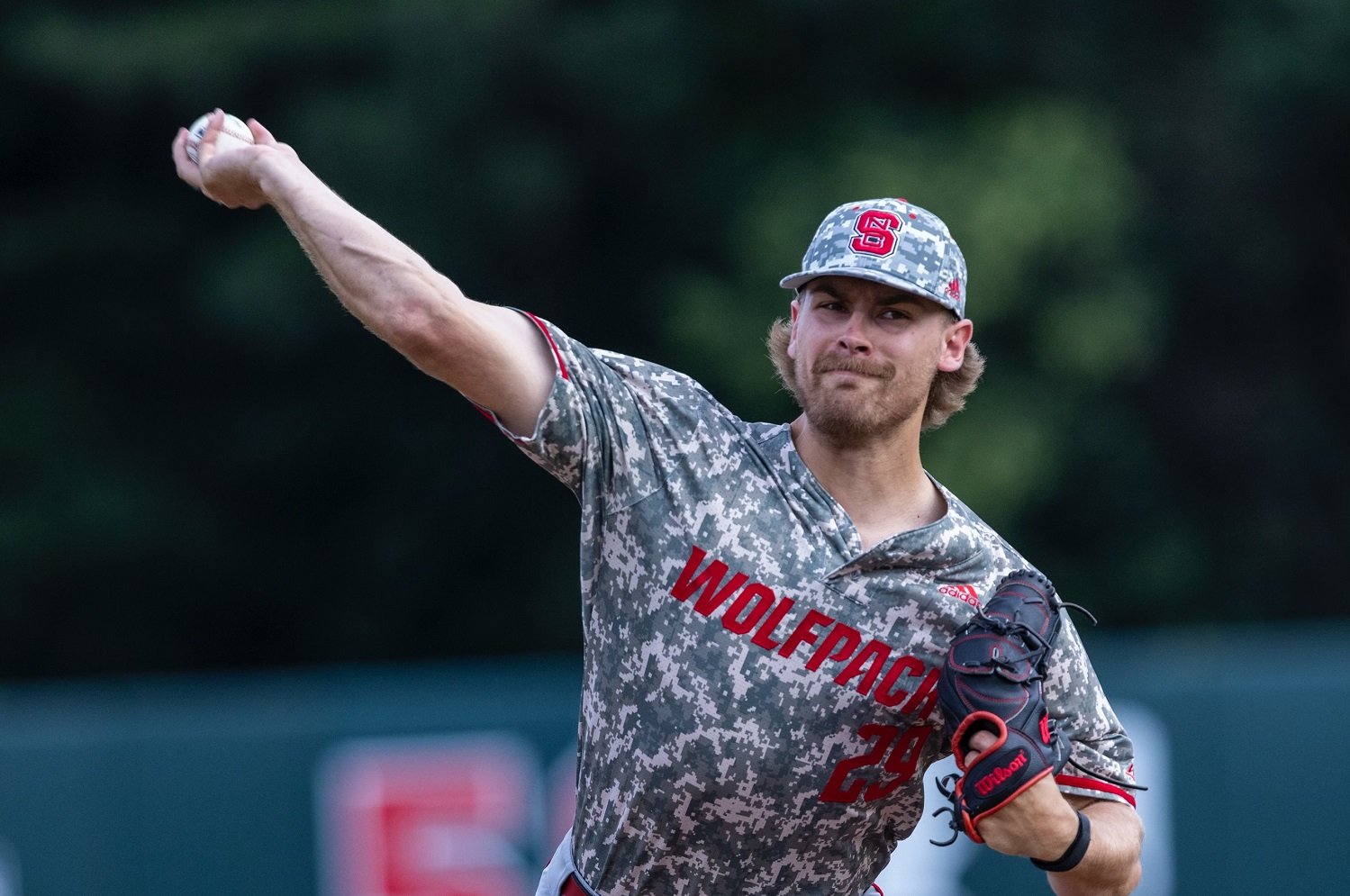 The North Carolina native stayed home for school, as Logan Whitaker attended NC State. Pitching three seasons for the Wolfpack, the kid who's now Minnesota's newest pitching prospect spent the vast majority of his time working as a starting pitcher. Nearly surpassing 80 innings a year ago, and topping double-digit strikeouts per nine innings this season, he has done it all on the mound. As a redshirt senior, Whitaker's experience came in handy during the NCAA Tournament. He led all Wolfpack pitchers with 23 strikeouts, and opposing batters hit just .161 off of him. Striking out a career-high 10 Florida State hitters during the NCAA Tournament, Whitaker was dominant, working seven innings of one-run relief. Before Whitaker kicks off his pro career, I caught up with the Wolfpack alum to introduce him to Twins Territory. Twins Daily: Being born in North Carolina and then heading to NC State, what was it like pitching at such a high level in your home state? Logan Whitaker: The experience pitching for NC State in my home state was exciting, not being too far from home but just far enough. Some games that were closer to home, a lot of people who supported me through high school were able to attend. That is always special. This past year was even more special, hosting a regional in our stadium was an exhilarating experience. TD: You started for three years with NC State. How did you continue to show durability and pile up innings? LW: Getting around the right people that I could learn from and grow on how the body is able to recover. How the body moves and how I can move efficiently to best help my recovery and ability to continue to grow as a player. I piled up innings because of my competitive nature, on hating losing more than I like winning. I had some time to make up because I am a bit older. But, piling up innings would get me to my ultimate goal, professional baseball. TD: What does your repertoire look like? What are your go-to pitches and what do you feel most comfortable attacking hitters with? LW: I throw a four-seam fastball, curveball, slider, and four-seam changeup. I can attack hitters with any pitch in any count. I feel most comfortable attacking hitters with the fastball early. If I get behind and know I’m in a fastball count, I’m very comfortable throwing a changeup in those counts. TD: You saw a sizable jump in strikeouts this year. What changes did you make to increase your numbers? LW: It started kind of from the ground up. Putting more mass on my frame for starters, so I could pile on innings and still feel really good. With that added mass came a couple ticks up in my velocity. Last year I would sit 89-92, this year I was 92-95. The tick up allowed my off-speed pitches to develop and grow as well. I have always been very sound in locating and commanding all my pitches. Fastball and change-up command to both sides of the plate in any count is my main contributor to more strikeouts. TD: The Twins have helped to add velocity for a handful of arms. What do you know about the organization and Minnesota in general? LW: I do not know a whole lot about the Twins. I am very excited to get to draft camp and get going! TD: Data continues to be a huge proponent of development. How much do you lean into that for development? Any thoughts on pro ball starting to use the electronic strike zone? LW: I think data is a very useful tool. I don’t use it a whole whole lot because in game that data isn’t gonna keep that batter from hitting off of you. The competitive nature, determination, and knowledge is what’s gonna get the batter out. The data can be used as a stepping stool to sharpen pitches, body mechanics, etc. but too much of it and it can become the main focus. I have no thoughts on the electronic zone. It’ll be something that’s new and unused by me up to this point. TD: What do you do for fun to help you reset, and what do you enjoy away from the diamond? LW: Fishing offshore, any kind of cars, and coffee. Also going to the beach or lake with friends and family. I also hunt with my dad a good bit. Welcome to Twins Territory, Logan!
 -
In the later rounds of the Major League Baseball draft, organizations look to find players they can pay to entice them towards turning pro. That's exactly what happened when the Minnesota Twins took Michael Ross from Samford University, and bolstered their pitching ranks. After pitching three seasons for Samford University, Michael Ross took his game up another level this year. After pitching nearly 80 innings during the 2022 season, and adding another 31 over that summer in the New England Collegiate Baseball League, Ross missed the entirety of 2023 due to Tommy John surgery. He rebounded in a big way this year, and his 3.27 ERA across 96 1/3 innings was a career-best. Set to transfer into the SEC and play for the Florida Gators, Minnesota needed to go above the $150k value to sway the amateur arm towards becoming pro. Ross has consistently hovered around a strikeout per inning, and he has been consistent in avoiding free passes. There is a lot to work with for the Twins, and grabbing this type of talent late in the draft is a definite come up. Prior to him getting his professional career going, I caught up with him to introduce him to Twins Territory. Twins Daily: After working as a reliever in your freshman year, you made your way to the rotation and really exploded last year. What led to the development and growth? Michael Ross: A lot of the development and growth came from the mental side of the game. Just being able to slow the game down at the next level and trust that your stuff is good enough. Of course coupled with making physical strides and building my body up to perform at a higher level. TD: You came back this season after being injured last year. What did the time off teach you about adversity and how did you work your way back? MR: The time off from having Tommy John surgery is a very crucial time. Those who go through it can attest that it is very emotionally taxing. I really just treated each day like an individual win and that helped to deal with such a long time horizon to be back on the field. I am very proud of the way that I handled that adversity as I didn’t miss a day of rehab in the entire 11 month return process. TD: Your numbers this season for Samford were impressive. How did you find so much success, and keep your body prepared to put up 96 innings of work? MR: Similarly to the rehab process, I think I had so much success this season because I treated each week individually and just tried to win a week at a time. The season is long in college and only gets longer at the pro level so I think it’s important to compartmentalize your success and your failures. Just attacking each week with a professional approach whether in the weight room, training room, or on the field helped bring this success and build my body up for the workload. TD: The Twins have developed something of a pitching pipeline by adding velocity and sustaining development. What do you know about the organization or Minnesota as a whole? MR: I know the Twins have very talented pitching. I specifically remember the 2023 team had an incredible rotation. As someone whose goal it is to make it to that level one day it’s inspiring to see the success that those guys are having and speaks to the organization's ability to develop pitchers. TD: What do you do away from the field for fun? How do you reset? MR: In the rare off day or time I get away from the field, I would have to say that golf is the way that I can “reset.” That or just spending time with friends and family. Welcome to Twins Territory, Michael! View full article
-
When the dust settled on the 2024 Minnesota Twins draft, nine of the final 10 selections made were pitchers. Logan Whitaker was among them, and the right-handed thrower from NC State is ready to get going in pro ball. Image courtesy of NC State Athletics The North Carolina native stayed home for school as Logan Whitaker attended NC State. Pitching three seasons for the Wolfpack, Minnesota's newest prospect spent the vast majority of his time working as a starting pitcher. Nearly surpassing 80 innings a year ago, and topping double-digit strikeouts per nine innings this season, he has done it all on the mound. As a redshirt senior, Whitaker's experience came in handy during the NCAA Tournament. He led all Wolfpack pitchers with 23 strikeouts, and opposing batters hit just .161 off of him. Striking out a career-high 10 Florida State hitters during the NCAA Tournament, Whitaker was dominant working seven innings of one-run relief. Before Whitaker kicks off his pro career, I caught up with the Wolfpack alum to introduce him to Twins Territory. Twins Daily: Being born in North Carolina and then heading to NC State, what was it like pitching at such a high level in your home state? Logan Whitaker: The experience pitching for NC State in my home state was exciting, not being too far from home but just far enough. Some games that were closer to home, a lot of people that supported me through high school were able to attend. That is always special. This past year was even more special, hosting a regional in our stadium was an exhilarating experience. TD: You started for three years with NC State. How did you continue to show durability and pile up innings? LW: Getting around the right people that I could learn from and grow on how the body is able to recover. How the body moves and how I can move efficiently to best help my recovery and ability to continue to grow as a player. I piled up innings because of my competitive nature on hating losing more than I like winning. I had some time to make up because I am a bit older. But, piling up innings would get me to my ultimate goal, professional baseball. TD: What does your repertoire look like? What are your go to pitches and what do you feel most comfortable attacking hitters with? LW: I throw a four seam fastball, curveball, slider, and four-seam change-up. I can attack hitters with any pitch in any count. I feel most comfortable attacking hitters with the fastball early. If I get behind and know I’m in a fastball count, I’m very comfortable throwing a change-up in those counts. TD: You saw a sizable jump in strikeouts this year. What changes did you make to increase your numbers? LW: It started kind of from the ground up. Putting more mass on my frame for starters, so I could pile on innings and still feel really good. With that added mass came a couple ticks up in my velocity. Last year I would sit 89-92, this year I was 92-95. The tick up allowed my off-speed pitches to develop and grow as well. I have always been very sound in locating and commanding all my pitches. Fastball and change-up command to both sides of the plate in any count is my main contributor to more strikeouts. TD: The Twins have helped to add velocity for a handful of arms. What do you know about the organization and Minnesota in general? LW: I do not know a whole lot about the Twins. I am very excited to get to draft camp and get going! TD: Data continues to be a huge proponent of development. How much do you lean into that for development? Any thoughts on pro ball starting to use the electronic strike zone? LW: I think data is a very useful tool. I don’t use it a whole whole lot because in game that data isn’t gonna keep that batter from hitting off of you. The competitive nature, determination, and knowledge is what’s gonna get the batter out. The data can be used as a stepping stool to sharpen pitches, body mechanics, etc. but too much of it and it can become the main focus. I have no thoughts on the electronic zone. It’ll be something that’s new and unused by me up to this point. TD: What do you do for fun to help you reset and what do you enjoy away from the diamond? LW: Fishing off shore, any kind of cars, and coffee. Also going to the beach or lake with friends and family. I also hunt with my dad a good bit. Welcome to Twins Territory, Logan! View full article
-
Get to Know Minnesota Twins 2024 Draft Pick: Jason Doktorczyk
Ted Schwerzler posted an article in MLB Draft
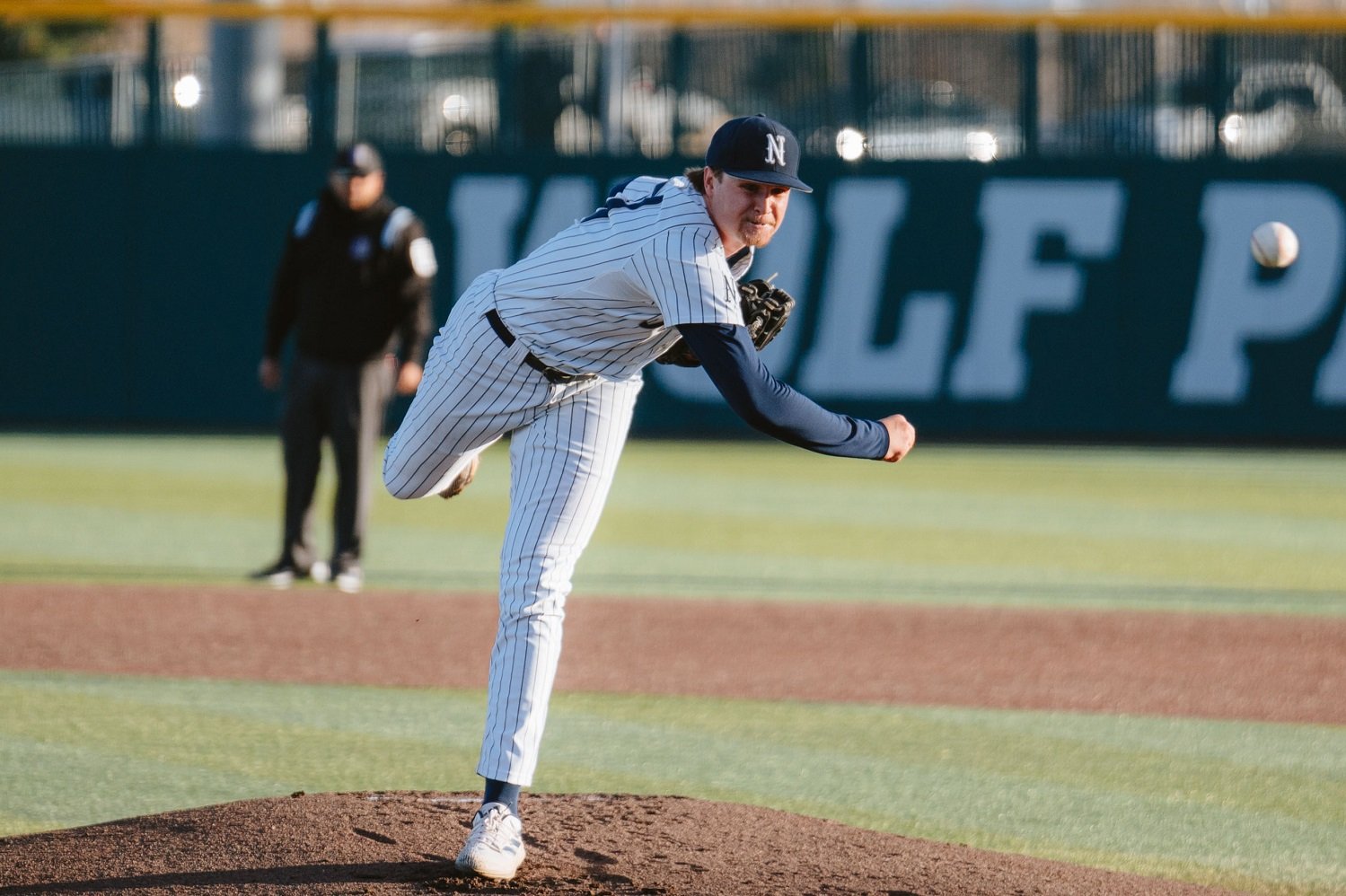 A 6'6" junior, Jason Doktorczyk is an imposing presence on the mound. The big right-handed pitcher is a name to watch as he progresses through the Twins system, after he put up some impressive numbers with the Wolfpack. After transferring from Sonoma State, Doktorczyk started during his two seasons with Nevada. Last year, he owned a 3.95 ERA across 84 1/3 innings, while striking out 91 batters. Doktorczyk has been tested at some of the highest levels of amateur baseball, as well. He pitched just shy of 30 innings in the Cape Cod League, and racked up strikeouts in bunches there as well. Named to the All-Mountain West First Team this past season, Doktorczyk has continued to make his name known. Prior to him getting started with the Twins, I caught up with him to introduce Doktorczyk to Twins Territory. Twins Daily: You've been a starter over the entirety of your college career. How have you been able to manage your body and continue to build up your innings? Jason Doktorczyk: It all comes with learning and preparation. I have had the opportunity to be around a lot of great players and major league-level coaches, and having a routine is one of the biggest things that they believe brings success and longevity. I have spent a lot of time over the past few years perfecting my routine and preparation, to ensure that I can be my best self on the mound, eat up innings, and give my team a chance to win. TD: This season was a pretty significant step forward in the ERA department. What adjustments helped you to be a more complete and effective pitcher? JD: The biggest tweak that helped me increase my numbers this year was shifting to the third-base side of the rubber. It brought out a funky release angle, to go with my competitive gameplay. TD: What's your repertoire on the mound like? What do you feel is your best pitch, and what are your most confident offerings? JD: I am a competitor who will pound the zone with authority. I have a lot of run on my fastball, which is my favorite pitch to throw in all counts. Over the past couple years, I have worked a lot on my changeup and sweeping slider and have developed a good pitch overlay, which gives me confidence to throw either in any count. TD: Is there a pitcher you have emulated or looked up to through your development? Someone you maybe model your game after? JD: I grew up an Angels fan, living 20 minutes from the stadium, so when I was younger, I looked up to guys like Jered Weaver and Ervin Santana. Now, I try to model my mound presence after Max Scherzer and pitch with some fire. TD: The Twins are known as a solid pitching development organization, both in getting more from mid-round picks and adding velocity. What do you know about Minnesota, or the organization? JD: My pitching coach at the University of Nevada, Mark Moriarty, is the former pitching coach of the Cedar Rapids Kernels. So for the past couple years, I have been exposed to a lot of workouts and training practices that are used within the organization. I have learned a lot of new things about the game and about myself being under this coaching for the past couple years, and I expect it to only help my progress in the Twins organization. TD: What are you most looking forward to in playing pro ball and ultimately striving toward a debut at Target Field? JD: The biggest thing that I’m looking forward to in pro ball is continuously getting better everyday, while being surrounded by great talent from all around the world and playing the game I love. Welcome to Twins Territory, Jason!
 -
An Eyewitness Account of Joe Mauer's Ascent to Baseball Nirvana
Ted Schwerzler posted an article in Twins
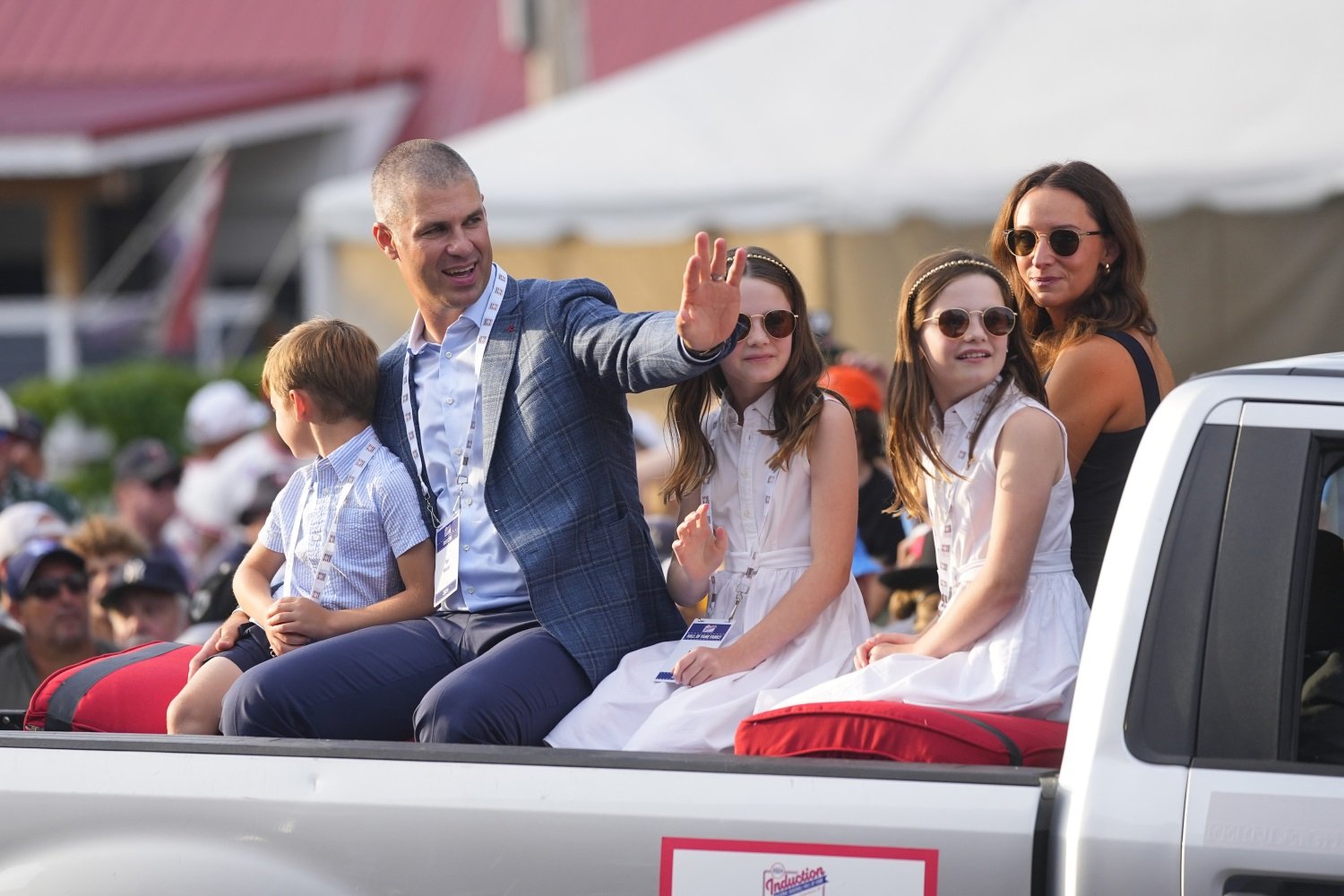 Getting into town on Wednesday, my first stop was a trip to the National Baseball Hall of Fame. If you have yet to make your pilgrimage to the Mecca that is Cooperstown, NY, it's hard to describe the scope of what awaits you. Having been multiple times previously, and for the induction ceremony of Ken Griffey Jr. and Mike Piazza, I had an idea of what to expect. The Hall itself is beautiful, and there are always new exhibits to examine. But it's only part of the experience. This city breathes baseball, and while Hall of Fame weekend is the jewel event, it is felt in many other ways. A trip out to Brewery Ommegang highlighted the number of youth looking to start their careers at Cooperstown Dreams park. Traveling to the brewery following a hard earned day on the diamond, the sport simply transitioned to a wiffle ball version of the same activity they had participated in all day. The vibe was different for a weekend headlined by Joe Mauer than for my previous Induction Weekend visit. Griffey and Piazza welcomed a then-second-best crowd of over 50,000. Surpassing every class aside from Cal Ripken Jr. and Tony Gwynn, they set a new gold standard set for Hall of Fame inductees. This group of Mauer, Adrián Beltré, Todd Helton, and Jim Leyland was not the same thing. For a Twins fan though, it was more. Despite there being a noticeably lacking amount of merchandise and memorabilia options for the Twins legend at stores along Main Street, everyone knew Joe. Twins fans flocked to the upstate New York area, outnumbering any other fan base by a considerable margin. All of that remained true despite Microsoft wreaking havoc on airline traffic and causing many hopeful attendees to have their travel plans thwarted. Saturday night’s Parade of Legends that again put Mauer in the spotlight. Despite a substantial number of living Hall of Famers returning to Cooperstown, it was Mauer that acted as the anchor for the parade. He drew cheers from all, and even with stars like Cal Ripken Jr. and Mariano Rivera signing autographs after disembarking from their trucks, it was Mauer’s entrance to the bus that generated the loudest applause. On Sunday afternoon at the Clark Sports Center, fans took their claimed seats throughout the grassy knoll. This wasn’t a crowd that made necessity of the hill in the back, and thanks to a breeze and cloud cover, buying out the local high schoolers of water wasn’t necessary. It was a perfect sized gathering, with perfect weather, for a seemingly perfect baseball player. As Helton wrapped up a very strong speech, in which he gave a nod to legendary NFL quarterback Peyton Manning, Beltre took the stage to the tune of instrumentals from fans. He talked about Nelson Cruz, and David Ortiz rubbed his head in an otherwise unwelcomed fashion. The Rangers legend delivered an ode that was nothing short of spectacular. Plenty of former players showed up for this group, and a large part of that was because of the lives manager Jim Leyland had touched. Bonds showed up for him, as did Gary Sheffield. Both appeared on the lawn of a ceremony they have otherwise been shut out of. Talking about great talents in the World Baseball Classic, the former Tigers skipper choked up. He thanked fans for what they mean to the game and then turned it over to Mauer. In the midst of being presented his plaque, and taking pictures amongst silence, T.I.’s “What you know” emanated from a speaker. The Twins legend, following his first ballot, was set to take his rightful throne. Mauer’s father and grandfather, both Jake, were looking down on him in this moment. The catcher acknowledged that and spoke on both fondly. He then turned attention to Teresa, his mother. Calling her the matriarch of the family and noting how she first raised him to be a good person, nothing could be more close to the truth. A small minority of Twins fans have wrongly chided Mauer about his contract as he entered his final seasons. Although he didn’t address them directly, Mauer thanked the Pohlad family for committing to him, and allowing an opportunity to wear the same uniform for the entirety of his career. That’s something Helton also got to experience on this day, but something that is not customary across the sport. Then, in closing, Joe brought it home by being a dad. Mauer was, and will forever be, among the best to ever play the game of baseball. That didn’t allow him to overlook what Maren and Emily meant to him, especially from the moment of that final game to today. He has grown in the role of father, and the girls very clearly are the apple of his eye. As he talked about Charlie (Chip), and noted his birth just two days following his retirement, the game lives on. He gets to coach the little man and sees himself through his eyes daily. Wrapping up his speech, and concluding both the program and week, Joseph Patrick Mauer earned a sendoff like only he could. Cheers, applause, and praise rained down on the Twins legend. Teammates from Nick Punto to Trevor Plouffe were present. Fans who grew up with him, pre-dated him, and never saw him play, were all in attendance. A week for many was largely encapsulated by one man.
 -
Joe Mauer played his final Major League Baseball game in 2018. Five years later, on the first ballot, he received the ultimate validation of his illustrious career, when he was elected to the Hall of Fame in January. On Sunday, he was formally inducted, and it's a moment many Twins fans will treasure always. Image courtesy of © Gregory Fisher-USA TODAY Sports Getting into town on Wednesday, my first stop was a trip to the National Baseball Hall of Fame. If you have yet to make your pilgrimage to the Mecca that is Cooperstown, NY, it's hard to describe the scope of what awaits you. Having been multiple times previously, and for the induction ceremony of Ken Griffey Jr. and Mike Piazza, I had an idea of what to expect. The Hall itself is beautiful, and there are always new exhibits to examine. But it's only part of the experience. This city breathes baseball, and while Hall of Fame weekend is the jewel event, it is felt in many other ways. A trip out to Brewery Ommegang highlighted the number of youth looking to start their careers at Cooperstown Dreams park. Traveling to the brewery following a hard earned day on the diamond, the sport simply transitioned to a wiffle ball version of the same activity they had participated in all day. The vibe was different for a weekend headlined by Joe Mauer than for my previous Induction Weekend visit. Griffey and Piazza welcomed a then-second-best crowd of over 50,000. Surpassing every class aside from Cal Ripken Jr. and Tony Gwynn, they set a new gold standard set for Hall of Fame inductees. This group of Mauer, Adrián Beltré, Todd Helton, and Jim Leyland was not the same thing. For a Twins fan though, it was more. Despite there being a noticeably lacking amount of merchandise and memorabilia options for the Twins legend at stores along Main Street, everyone knew Joe. Twins fans flocked to the upstate New York area, outnumbering any other fan base by a considerable margin. All of that remained true despite Microsoft wreaking havoc on airline traffic and causing many hopeful attendees to have their travel plans thwarted. Saturday night’s Parade of Legends that again put Mauer in the spotlight. Despite a substantial number of living Hall of Famers returning to Cooperstown, it was Mauer that acted as the anchor for the parade. He drew cheers from all, and even with stars like Cal Ripken Jr. and Mariano Rivera signing autographs after disembarking from their trucks, it was Mauer’s entrance to the bus that generated the loudest applause. On Sunday afternoon at the Clark Sports Center, fans took their claimed seats throughout the grassy knoll. This wasn’t a crowd that made necessity of the hill in the back, and thanks to a breeze and cloud cover, buying out the local high schoolers of water wasn’t necessary. It was a perfect sized gathering, with perfect weather, for a seemingly perfect baseball player. As Helton wrapped up a very strong speech, in which he gave a nod to legendary NFL quarterback Peyton Manning, Beltre took the stage to the tune of instrumentals from fans. He talked about Nelson Cruz, and David Ortiz rubbed his head in an otherwise unwelcomed fashion. The Rangers legend delivered an ode that was nothing short of spectacular. Plenty of former players showed up for this group, and a large part of that was because of the lives manager Jim Leyland had touched. Bonds showed up for him, as did Gary Sheffield. Both appeared on the lawn of a ceremony they have otherwise been shut out of. Talking about great talents in the World Baseball Classic, the former Tigers skipper choked up. He thanked fans for what they mean to the game and then turned it over to Mauer. In the midst of being presented his plaque, and taking pictures amongst silence, T.I.’s “What you know” emanated from a speaker. The Twins legend, following his first ballot, was set to take his rightful throne. Mauer’s father and grandfather, both Jake, were looking down on him in this moment. The catcher acknowledged that and spoke on both fondly. He then turned attention to Teresa, his mother. Calling her the matriarch of the family and noting how she first raised him to be a good person, nothing could be more close to the truth. A small minority of Twins fans have wrongly chided Mauer about his contract as he entered his final seasons. Although he didn’t address them directly, Mauer thanked the Pohlad family for committing to him, and allowing an opportunity to wear the same uniform for the entirety of his career. That’s something Helton also got to experience on this day, but something that is not customary across the sport. Then, in closing, Joe brought it home by being a dad. Mauer was, and will forever be, among the best to ever play the game of baseball. That didn’t allow him to overlook what Maren and Emily meant to him, especially from the moment of that final game to today. He has grown in the role of father, and the girls very clearly are the apple of his eye. As he talked about Charlie (Chip), and noted his birth just two days following his retirement, the game lives on. He gets to coach the little man and sees himself through his eyes daily. Wrapping up his speech, and concluding both the program and week, Joseph Patrick Mauer earned a sendoff like only he could. Cheers, applause, and praise rained down on the Twins legend. Teammates from Nick Punto to Trevor Plouffe were present. Fans who grew up with him, pre-dated him, and never saw him play, were all in attendance. A week for many was largely encapsulated by one man. View full article
-
One of the richer histories in collegiate baseball belongs to the South Carolina Gamecocks. The Minnesota Twins dipped into their ranks selecting pitcher Eli Jones during the 7th round of the 2024 Major League Baseball Draft. Image courtesy of South Carolina Athletics Born in Alabama, and a native of Georgia, Eli Jones has made the south his home as he headed to South Carolina for college ball. Pitching three seasons for the Gamecocks, Jones really exploded in 2023 when he put up a 3.95 ERA and 10.4 K/9 across 54 2/3 innings. After working as primarily a reliever in 2023, Jones returned to the mound as a starter this past season. Jones flirted with a perfect game in March this year for the Gamecocks, and he racked up 56 strikeouts across 68 2/3 innings. The Twins grabbed a moldable prospect in the righty, and are certainly looking forward to working with him as he starts his career. Before that takes place, I was able to catch up with him. Twins Daily: As a pitcher working in one of the nation's toughest conferences, how do you feel like the SEC has set you up for success at the next level? Eli Jones: Pitching in the SEC has definitely prepared me to better perform at the next level. Although it is not professional ball, the SEC holds the best amateur players in the country and I had the opportunity of facing them week in and week out. I have even accumulated at bats against current big leaguers in my time at South Carolina. TD: Last season you worked quite a bit out of the bullpen, and then you started almost exclusively this year. What sparked that transition and how did it change your approach? EJ: I think that going from the bullpen to a starter was mostly contributed to my growth as a player. I feel like I have had a steady track of developing which allowed me to take on different roles at South Carolina. Going from the bullpen to a starter is definitely a transition in which I had to gradually learn how to navigate lineups 2-3 times. TD: What does your repertoire look like? What pitch do you feel is your best, and where do you go when needing to locate? EJ: I have a sinker, slider, curve, and change up with the sinker being my best pitch. When it is at its best I am able to throw it at the bottom of the zone to both side of the plate to right and left handed hitters. TD: Is there a major league pitcher you feel like you have modeled your game after, or someone you try to emulate? Who is your favorite? EJ: I loved watching Walker Buehler growing up. I don’t necessarily relate to him from a pitch shaping or mechanical standpoint but I love the way he competes on the mound. I like to think being a competitor on the mound is one of if not my best quality. TD: The Twins pitching pipeline has taken off in recent seasons. What do you know about the organization and Minnesota as a whole? EJ: Growing up in the south, I did not know much about the organization but in recent years I have started to learn more while becoming a bigger fan of the game. I love the direction in which they are going and am extremely excited to get to work and be a part of something great. TD: How do you feel about the automated strike zone at the next level? Have you worked with that at all before? EJ: I completely understand and am intrigued by the growth of technology in the game but I’m not quite on board with the automated strike zone. Umpires and human error have been a part of the game since the beginning and I think if the game loses that, it loses a large part of its history. Welcome to Twins Territory, Eli! View full article
-
53.5 Reasons to Love Joe Mauer on Induction Day
Ted Schwerzler replied to Ted Schwerzler 's topic in Twins Daily Front Page News
Not sure how to interpret this? -
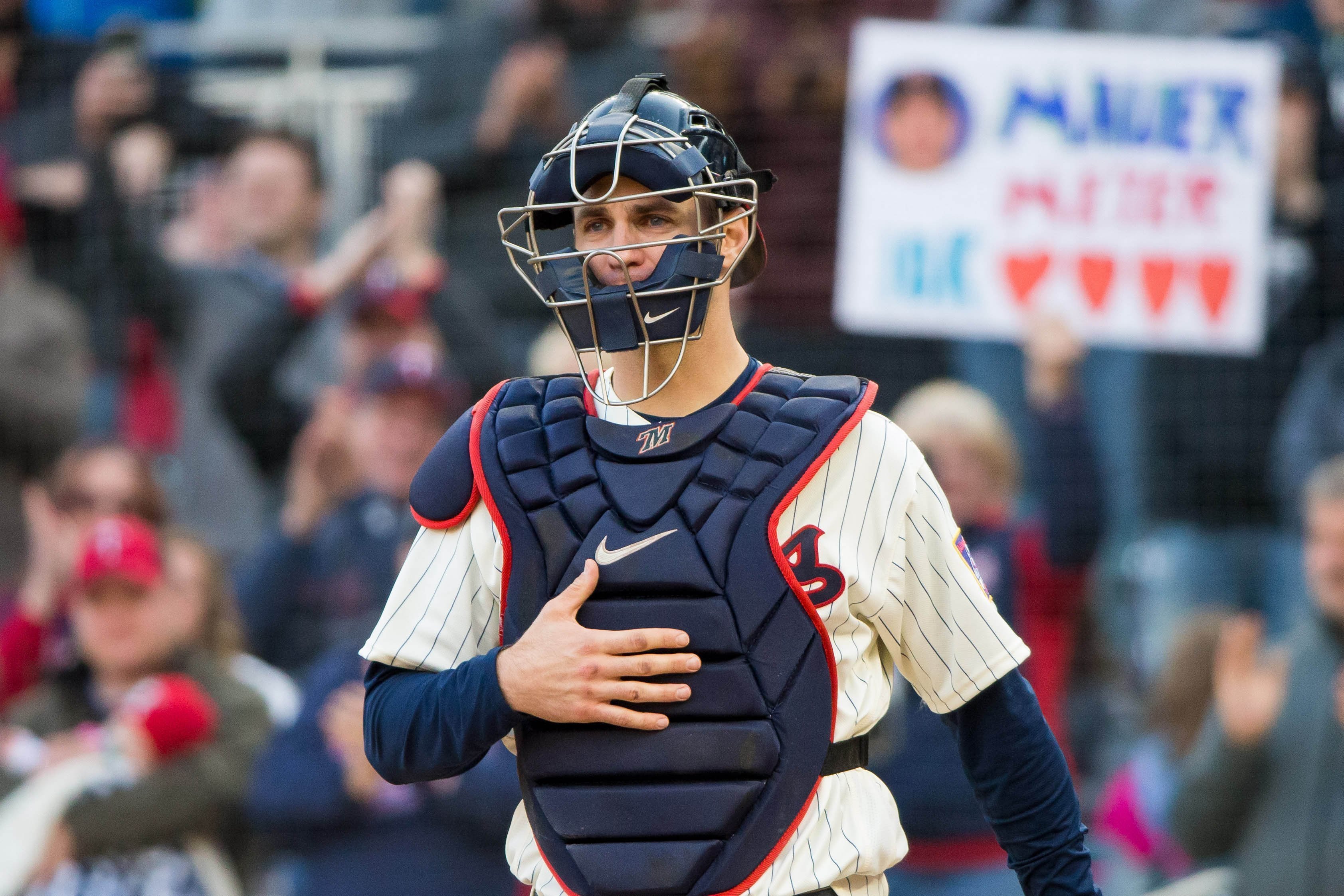 Joe Mauer has been a fan-favorite for Twins Territory since he was taken first overall during the 2001 Major League Baseball Draft. Turning from Mark Prior, Minnesota continued the storybook that was being written about a kid from St. Paul. Now etched in baseball lore forever, Mauer becomes the youngest living Hall of Famer, and he’ll have an opportunity to share thoughts on the ground of the Clark Sports Center. Before he does though, here are 53.5 (one for each tally of his WAR) reasons to celebrate the man that was everything Twins Territory could have hoped for. He lived up to the billing. Being drafted number one overall generally means you’ll make the big leagues. It doesn’t mean you’ll make an impact or be a superstar. Joe becomes the fourth first overall pick (Ken Griffey Jr., Chipper Jones, Harold Baines) to reach the Hall of Fame. He won batting titles. Winning a batting title is hard. Winning multiple is even more difficult. Doing it while dealing with the rigors of the catcher position is virtually unthinkable. He batted .306. Ending his career in an age where velocity started to become king, he still hit. The .278 average across his final 680 games watered down how special he was at the plate, but the final number still remained above .300. He won an MVP award. What Joe Mauer did during that 2009 season was nothing short of magical. He won three Gold Gloves. Mauer’s story was not about just how good of a hitter he was. Despite his stature, he was incredible behind the dish as well. He went to six All-Star Games. Although the Twins don’t always get a player voted into the All-Star Game, Mauer’s talent and personality made him a lock for years. He tallied five Silver Slugger awards. Although the home runs never replicated that 2009 season, his bat was an asset in every way possible. The 428 doubles were plenty productive too. He stayed home, and was worth the contract. Mauer could have gone elsewhere for a larger payday. He didn’t, and provided significantly more value to the organization than what he was paid. He was on video games. Still to this day, Mauer is the only player to appear on the cover of the popular MLB The Show videogame twice. Well played, Mauer. He learned a new position. After a brain injury forced him from behind the plate, he took up first base and was deserving of a Gold Glove there (no thanks to Eric Hosmer). He gave us an epic retirement moment. In his final game, getting back behind the plate for a single pitch, Mauer brought tears to the eyes of many. It was incredible. He was the American Idol. Thanks to the Sports Illustrated cover from August 2006, Mauer was dubbed an “American Idol” on what is now an iconic image. He made the net catch. Immortalized as a bobblehead by the Twins, Mauer’s net catch at Target Field was truly amazing. He gave us Target Field. The Metrodome was a dump -- our dump, but a dump. Because of Mauer staying in Minnesota, the organization was able to parlay the excitement into a gorgeous new stadium. He made the backstop snag. One of the most impressive plays to show off Mauer’s athleticism and coordination was his backhanded stab of a foul ball. It happened to be former teammate Denard Span in the box too. He chose baseball. Mauer could have went to Florida State on a scholarship to play football. He probably would have been in that Hall of Fame too. He struck out just once. Of course you know he struck out only once during his entire high school career. Reuniting him with Paul Feiner at Target Field was cool. He asked us what we know. Clifford Harris, better known as T.I., had his track “What You Know” become synonymous with Mauer stepping to the plate. He even made Joe a retirement video. He made the play at home. Diving to take out New York Yankees Brett Gardner at the plate, Mauer pump-faked a throw and nabbed him for the out. He walked it off. It took quite some time, but Mauer’s first walkoff home run came in 2017 at Target Field. It was an epic moment to beat the Boston Red Sox. He added a new number to the wall. “7” wasn’t Mauer’s preferred number, he didn’t pick it. I guess you could say it chose him though, and in 2019 the Twins retired the digit so that no one will ever wear it again. He gave back. Mauer was and continues to be active in a community that he grew up in. As a young Hall of Famer, he should be an expected presence for years to come. He lived it as a dad. If there’s a way to buy into a team name, making them part of your life is one way. Mauer and his wife Maddie welcomed twin girls during their first pregnancy. He hit 2,000. At this point in the lifespan of baseball, reaching 3,000 hits is a near impossible milestone. Mauer notched his 2,000 on April 13, 2018. He was the only one to do it. Just three catchers have ever won a batting title, but Mauer was the only that played in the American League. He was All-State. Sure, Mauer was amazing at baseball and football, but averaging more than 20 points per game in basketball, he was named All-Star for Cretin-Derham Hall. He was the Gatorade Player of the Year. In 2001, prior to being drafted by the Twins, Gatorade made Mauer the Player of the Year in football. He played for the world. After baseball was cut from the olympics, Mauer played for Team USA in the 2013 World Baseball classic. He was a heartthrob. From the sideburns to the physique, Mauer was adored by many and found plenty of success appearing in different forms of marketing throughout his career. He gave us the Quickswing. While there are plenty of training devices and tools out there, Mauer’s quickswing was a simple device that his dad invented and was a must-have for players in Minnesota. He was made a kid. Although he wasn’t on the cover of the popular Backyard Baseball series, Mauer was playable in the 2009 version of the game. He gave us the M&M boys. Without Mauer, there would have been no pairing with Justin Morneau. They provided two of the greatest intertwined careers in Twins history. He welcomed a son. In 2018 Joe and Maddie brought Charles Joseph (Chip) into the world. Maybe someday he’ll wear the same jersey his dad did. He almost never struck out. Mauer’s 13% strikeout rate is unheard of in today’s game, especially for a player at his position and level of productivity. He will get a statue. When the Minnesota Twins commemorate Mauer in bronze remains to be seen, but it’s a matter of when not if. He likely will also have a gate outside of Target Field. He never hit free agency. Mauer signed his extension before exploring the open market, and his transaction log doesn’t note free agency until he had officially decided upon retirement. He did it the right way. There has never been any sort of scandal, cheating, or disturbing allegations surrounding Mauer. Despite living in the limelight for the vast majority of his life, he carried himself the right way. He told an important story. Joe Schmitt recently worked with Mauer to write a children’s book. It’s a good read and shares an important message. He gave us great arguments. Playing at the same time as Buster Posey and Yadier Molina, the debates about greatness were always fun to have. He showed off his arm. Throwing out 27% of base stealers, nothing rivals the 2007 season in which Mauer caught 53% of would be base stealers by throwing out 24 runners. He made Phil Cuzzi famous. Umpires are often known by name when they make a poor call. That couldn’t have been more true than when Phil Cuzzi incorrectly ruled Mauer’s double foul during the 2009 ALDS. He had cool shoes. Thanks to his partnership with MLB The Show, Nike made Mauer a sweet limited edition pair of Playstation inspired Huarache’s. He rocked the glasses. Mauer putting on the Twins uniform, over a USA Baseball, while rocking the Harry Potters-esque spectacles on draft day will always be a widely recognized image. He was a WAR monster. His 8.3 fWAR from the 2009 MVP was the third best in Twins history trailing only Rod Carew (1977 8.6) and Joe Cronin (1930 8.4). He has us begging for another. Someone like Mauer is never going to be replaced, but Twins fans continue to hold out hope that every new top prospect will following in his footsteps. Brooks Lee and Royce Lewis are currently working towards that. He has a street. Not surprisingly there is a street named after Mauer in St. Paul. He kept pushing. After suffering his brain injury, Mauer could have hung up his cleats rather than moving to first base. He was too much of a competitor for that, and reworked his game to continue showing up for Minnesota. He draws the crowds. During both his number retirement and Twins Hall of Fame induction ceremonies, it was evident how well-liked he is by those within the organization. Those there to support his accomplishments are always numerous. He was honored for high school accolades. Prior to becoming a professional, Mauer dominated everything at the high school stage. He was recently inducted into the National High School Hall of Fame. He pulled off a surprise. Despite a contentious Hall of Fame candidacy, Mauer was well received by the Baseball Writers Association of America and earned induction during his first year on the ballot. He was the ultimate come-up. Mark Prior was the popular choice to go first overall in the 2001 draft. Due to injuries, he played just five seasons for the Chicago Cubs. He had the sweetest swing. While kids emulated Griffey Jr. and Gary Sheffield, it was Mauer’s swing that was well known across Twins Territory just from the gracefulness of its path. He was a great conversation. Whether talking with reporters postgame, or engaging with fans during Twins Fest, the smile and genuine interest in what was being said remained present. 53.5 Joe Mauer, forever, one of us. For everything Joe, thank you. Enjoy your day.
 -
After 15 years and nearly 2,000 games at the major league level, Joe Mauer was voted into the National Baseball Hall of Fame. Today he’ll be enshrined in Cooperstown, New York, and he couldn’t be more deserving. Image courtesy of Brad Rempel, USA TODAY Sports Joe Mauer has been a fan-favorite for Twins Territory since he was taken first overall during the 2001 Major League Baseball Draft. Turning from Mark Prior, Minnesota continued the storybook that was being written about a kid from St. Paul. Now etched in baseball lore forever, Mauer becomes the youngest living Hall of Famer, and he’ll have an opportunity to share thoughts on the ground of the Clark Sports Center. Before he does though, here are 53.5 (one for each tally of his WAR) reasons to celebrate the man that was everything Twins Territory could have hoped for. He lived up to the billing. Being drafted number one overall generally means you’ll make the big leagues. It doesn’t mean you’ll make an impact or be a superstar. Joe becomes the fourth first overall pick (Ken Griffey Jr., Chipper Jones, Harold Baines) to reach the Hall of Fame. He won batting titles. Winning a batting title is hard. Winning multiple is even more difficult. Doing it while dealing with the rigors of the catcher position is virtually unthinkable. He batted .306. Ending his career in an age where velocity started to become king, he still hit. The .278 average across his final 680 games watered down how special he was at the plate, but the final number still remained above .300. He won an MVP award. What Joe Mauer did during that 2009 season was nothing short of magical. He won three Gold Gloves. Mauer’s story was not about just how good of a hitter he was. Despite his stature, he was incredible behind the dish as well. He went to six All-Star Games. Although the Twins don’t always get a player voted into the All-Star Game, Mauer’s talent and personality made him a lock for years. He tallied five Silver Slugger awards. Although the home runs never replicated that 2009 season, his bat was an asset in every way possible. The 428 doubles were plenty productive too. He stayed home, and was worth the contract. Mauer could have gone elsewhere for a larger payday. He didn’t, and provided significantly more value to the organization than what he was paid. He was on video games. Still to this day, Mauer is the only player to appear on the cover of the popular MLB The Show videogame twice. Well played, Mauer. He learned a new position. After a brain injury forced him from behind the plate, he took up first base and was deserving of a Gold Glove there (no thanks to Eric Hosmer). He gave us an epic retirement moment. In his final game, getting back behind the plate for a single pitch, Mauer brought tears to the eyes of many. It was incredible. He was the American Idol. Thanks to the Sports Illustrated cover from August 2006, Mauer was dubbed an “American Idol” on what is now an iconic image. He made the net catch. Immortalized as a bobblehead by the Twins, Mauer’s net catch at Target Field was truly amazing. He gave us Target Field. The Metrodome was a dump -- our dump, but a dump. Because of Mauer staying in Minnesota, the organization was able to parlay the excitement into a gorgeous new stadium. He made the backstop snag. One of the most impressive plays to show off Mauer’s athleticism and coordination was his backhanded stab of a foul ball. It happened to be former teammate Denard Span in the box too. He chose baseball. Mauer could have went to Florida State on a scholarship to play football. He probably would have been in that Hall of Fame too. He struck out just once. Of course you know he struck out only once during his entire high school career. Reuniting him with Paul Feiner at Target Field was cool. He asked us what we know. Clifford Harris, better known as T.I., had his track “What You Know” become synonymous with Mauer stepping to the plate. He even made Joe a retirement video. He made the play at home. Diving to take out New York Yankees Brett Gardner at the plate, Mauer pump-faked a throw and nabbed him for the out. He walked it off. It took quite some time, but Mauer’s first walkoff home run came in 2017 at Target Field. It was an epic moment to beat the Boston Red Sox. He added a new number to the wall. “7” wasn’t Mauer’s preferred number, he didn’t pick it. I guess you could say it chose him though, and in 2019 the Twins retired the digit so that no one will ever wear it again. He gave back. Mauer was and continues to be active in a community that he grew up in. As a young Hall of Famer, he should be an expected presence for years to come. He lived it as a dad. If there’s a way to buy into a team name, making them part of your life is one way. Mauer and his wife Maddie welcomed twin girls during their first pregnancy. He hit 2,000. At this point in the lifespan of baseball, reaching 3,000 hits is a near impossible milestone. Mauer notched his 2,000 on April 13, 2018. He was the only one to do it. Just three catchers have ever won a batting title, but Mauer was the only that played in the American League. He was All-State. Sure, Mauer was amazing at baseball and football, but averaging more than 20 points per game in basketball, he was named All-Star for Cretin-Derham Hall. He was the Gatorade Player of the Year. In 2001, prior to being drafted by the Twins, Gatorade made Mauer the Player of the Year in football. He played for the world. After baseball was cut from the olympics, Mauer played for Team USA in the 2013 World Baseball classic. He was a heartthrob. From the sideburns to the physique, Mauer was adored by many and found plenty of success appearing in different forms of marketing throughout his career. He gave us the Quickswing. While there are plenty of training devices and tools out there, Mauer’s quickswing was a simple device that his dad invented and was a must-have for players in Minnesota. He was made a kid. Although he wasn’t on the cover of the popular Backyard Baseball series, Mauer was playable in the 2009 version of the game. He gave us the M&M boys. Without Mauer, there would have been no pairing with Justin Morneau. They provided two of the greatest intertwined careers in Twins history. He welcomed a son. In 2018 Joe and Maddie brought Charles Joseph (Chip) into the world. Maybe someday he’ll wear the same jersey his dad did. He almost never struck out. Mauer’s 13% strikeout rate is unheard of in today’s game, especially for a player at his position and level of productivity. He will get a statue. When the Minnesota Twins commemorate Mauer in bronze remains to be seen, but it’s a matter of when not if. He likely will also have a gate outside of Target Field. He never hit free agency. Mauer signed his extension before exploring the open market, and his transaction log doesn’t note free agency until he had officially decided upon retirement. He did it the right way. There has never been any sort of scandal, cheating, or disturbing allegations surrounding Mauer. Despite living in the limelight for the vast majority of his life, he carried himself the right way. He told an important story. Joe Schmitt recently worked with Mauer to write a children’s book. It’s a good read and shares an important message. He gave us great arguments. Playing at the same time as Buster Posey and Yadier Molina, the debates about greatness were always fun to have. He showed off his arm. Throwing out 27% of base stealers, nothing rivals the 2007 season in which Mauer caught 53% of would be base stealers by throwing out 24 runners. He made Phil Cuzzi famous. Umpires are often known by name when they make a poor call. That couldn’t have been more true than when Phil Cuzzi incorrectly ruled Mauer’s double foul during the 2009 ALDS. He had cool shoes. Thanks to his partnership with MLB The Show, Nike made Mauer a sweet limited edition pair of Playstation inspired Huarache’s. He rocked the glasses. Mauer putting on the Twins uniform, over a USA Baseball, while rocking the Harry Potters-esque spectacles on draft day will always be a widely recognized image. He was a WAR monster. His 8.3 fWAR from the 2009 MVP was the third best in Twins history trailing only Rod Carew (1977 8.6) and Joe Cronin (1930 8.4). He has us begging for another. Someone like Mauer is never going to be replaced, but Twins fans continue to hold out hope that every new top prospect will following in his footsteps. Brooks Lee and Royce Lewis are currently working towards that. He has a street. Not surprisingly there is a street named after Mauer in St. Paul. He kept pushing. After suffering his brain injury, Mauer could have hung up his cleats rather than moving to first base. He was too much of a competitor for that, and reworked his game to continue showing up for Minnesota. He draws the crowds. During both his number retirement and Twins Hall of Fame induction ceremonies, it was evident how well-liked he is by those within the organization. Those there to support his accomplishments are always numerous. He was honored for high school accolades. Prior to becoming a professional, Mauer dominated everything at the high school stage. He was recently inducted into the National High School Hall of Fame. He pulled off a surprise. Despite a contentious Hall of Fame candidacy, Mauer was well received by the Baseball Writers Association of America and earned induction during his first year on the ballot. He was the ultimate come-up. Mark Prior was the popular choice to go first overall in the 2001 draft. Due to injuries, he played just five seasons for the Chicago Cubs. He had the sweetest swing. While kids emulated Griffey Jr. and Gary Sheffield, it was Mauer’s swing that was well known across Twins Territory just from the gracefulness of its path. He was a great conversation. Whether talking with reporters postgame, or engaging with fans during Twins Fest, the smile and genuine interest in what was being said remained present. 53.5 Joe Mauer, forever, one of us. For everything Joe, thank you. Enjoy your day. View full article
-
After the Minnesota Twins kicked off their 2024 Major League Baseball Draft with a few position players, they turned the focus to pitching prospects. Michael Carpenter was the 11th round selection, and being from Wisconsin, he was nearly a local selection. Of course Wisconsin is more than likely home to Brewers country, but Michael Carpenter is plenty familiar with the Minnesota Twins as well. Recently named the NJCAA Division II pitcher of the year, it was clear that he would draw draft interest. Slated to play for East Carolina next season, the Twins needed to (and did) do enough to sway him from his collegiate commitments. Posting a 1.03 ERA and 10.1 K/BB last season, Carpenter was nothing short of dominant. He also appeared in Northwoods League action, and received further exposure to what the next level might look like. Headed out to professional action in short order, I was able to catch up to him prior to his career kicking off. Twins Daily: You had an incredible season picking up NJCAA Pitcher of the Year honors. What went into such a dominant season and where do you feel like that success came from? Michael Carpenter: That success came from hard work in the off-season with preparation every start. Being prepared before every start took the stress away from me being ready. I would say going into every start I just knew everything was gonna be the same as a start before, and I kept my mindset that way. It kept driving me to pitch better every single outing. Also, from offseason work I developed way better command with my fastball from the year before. This helped me have lower amount of walks and more strikeouts this year, which led to getting all those honors. TD: Last summer you spent time in the Northwoods League and were dominant there as well. What was that experience like against wood bats and how does it help you in pro ball? MC: The season I had with Lakeshore really helped me improve in the fact of facing better hitters that were at division one schools. It also helped me learn the importance of preparation before every start. I learned a lot from the guys on the team about what they do before and after games. I wasn’t told about any of that at my junior college during my freshman year. It really helped me move forward my sophomore year at Madison to help me develop and be more prepared every outing. I would say pitching against wood bats was a cool experience and different than the college spring season. TD: A 45-inning scoreless streak is ridiculous. What do you do mentally each time you go out to lock in and make sure you aren't thinking about that while still competing? MC: For a while during the season, I was not paying attention to my stats. That isn’t that unusual for me. I don’t really like looking at my stats until after the season. This really helped me just focus on competing and pitching well every single game. Mentally it was easy, and made me just have a lot of confidence going into every start. TD: What does your repertoire look like? You clearly have strikeout stuff. What is your favorite pitch, or what you go to when you absolutely need a strike? MC: My repertoire is four-seam, two-seam, knuckle curve, and change up. My pitch when I need a strike is my four-seam fastball, which I can throw about anywhere in the zone for a strike. My favorite pitch would be my knuckle curve, just because I’ve been throwing it for the longest and it has always been my strikeout pitch. TD: As a Wisconsin native, and playing so close to Twins Territory, what do you know about the organization? I assume you were a Brewers fan growing up? MC: I don't know too much about the organization, and I’ve never really watched too many Twins games. I was always a big Brewers fan but now I get to learn more about a great organization with the Twins. TD: Obviously the game is always changing. It sounds like the electronic strike zone could be more highly implemented in pro ball. Do you feel like that benefits you? MC: I feel like the electronic strike zone would definitely help me to be more consistent and knowing exactly what the zone looks like every outing. At the same time, I like when I have the umpires back there just for the sake of the game and the history behind it. TD: What do you do away from the game for fun to reset? What are your hobbies? MC: My hobbies off the field would be playing golf, fantasy football, shooting hoops, hanging out with family and friends, card games, and watching sports. Welcome to Twins Territory, Michael! View full article
-
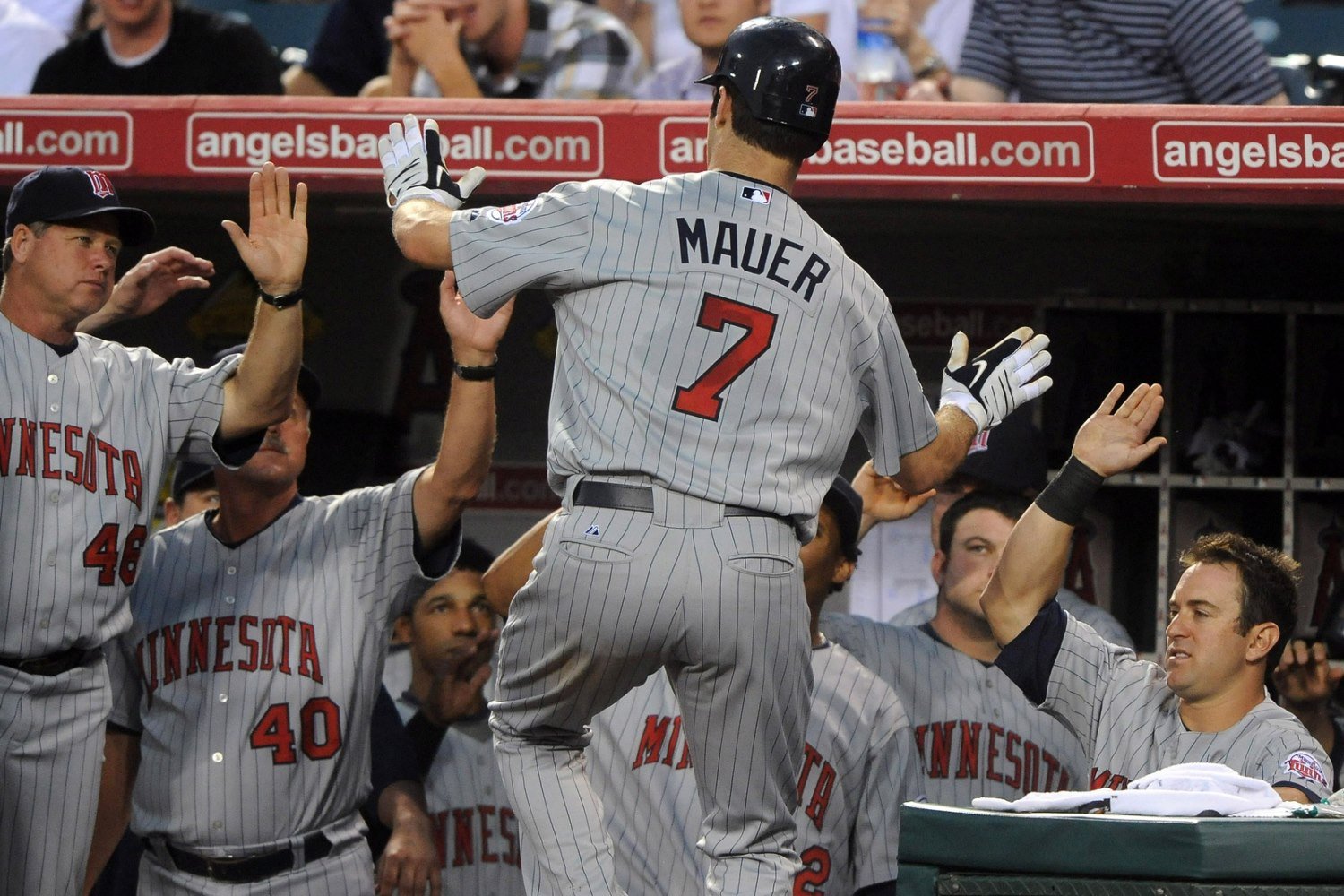 Going into 2009, Joe Mauer had already been in the big leagues for five years. He had a pair of All-Star Game selections, two Silver Slugger awards, and he had just won his first Gold Glove. He'd won as many batting titles as all the other catchers in American League history, combined. None of that was enough to foreshadow what he was about to do. Playing in 138 games, Mauer won his third batting title, at a career-best .365. He posted a 1.031 OPS, while hitting 28 home runs--some 15 more than he had ever previously achieved. His 191 hits were a career-best total. It was a transcendent season, good enough to launch him as a national celebrity. Landing on the cover of MLB The Show, he also signed an eight-year, $184-million contract extension to stay with the Twins. Looking back at it, Mauer’s 2009 season was among the greatest to ever happen in a Twins uniform. By fWAR, only Rod Carew has had a better year in franchise history. What games stood out along the way, though? May 17 @ New York Minnesota lost this game in extras, and Mauer was just 2-for-4, with a pair of measly singles. However, he made arguably the greatest defensive play of his career in this contest. Francisco Cervelli's comebacker off the glove of José Mijares came back enough to allow Mauer to pounce on it. He faked a throw to first, and chased down Brett Gardner with a dive at home. In a tie game, during the ninth inning, Mauer made his mark. May 21 @ Chicago In an early-season laugher, the Twins bludgeoned the White Sox for 20 runs. Mauer had a team-high six RBIs. He roped a pair of doubles, and homered off a pitcher named Jimmy Gobble. Bartolo Colón was the opposing starter in the contest, and Michael Cuddyer made hay with four hits of his own. May 23 vs Milwaukee Going 3-for-3 with three runs scored, Mauer was a menace for Brewers pitching. He blasted a fifth-inning home run against Braden Looper, and his six total bases led Minnesota. Driving in a pair and drawing a walk, it was as close to perfection as it gets. After this game, his batting average stood at .429. June 16 vs Pittsburgh Going 4-for-4, Mauer was still hitting .429 through the season’s first 66 games--though, of course, he had played several fewer. Just one of his base hits in this one went for extra bases, a double off Jeff Karstens. He scored a pair of runs and drove in one that night. Minnesota trounced a mediocre Pirates squad by an 8-2 tally. July 24 @ Anaheim In the first multi-homer game of his season, Mauer went deep twice in California. He was just 2-for-4 on the evening, but he got John Lackey both times. Famous for its light-colored rock array in left-center field, Angel Stadium can be a hard place to hit for left-handed batters. Mauer was no ordinary lefty, though. In 194 plate appearances there, he hit .350/.407/.503. These two homers were the first of five for him there in his career. August 4 @ Cleveland Mauer was known much more as a doubles hitter than a true slugger. This game was an extreme example, in which he put up a season-high three two-baggers. The Twins cashed him in each time he got on base, and Mauer brought a run home himself. Among those to feel his wrath were infamous Guardians broadcaster Jensen Lewis. Minnesota won 10-1. August 13 vs Kansas City In a Thursday afternoon game, Mauer contributed a season-high .309 WPA. His fifth-inning home run off Gil Meche brought the Twins within one. Ultimately, they couldn’t scratch a run across against Joakim Soria and fell 5-4, but Mauer was 2-for-4 on the day and also recorded a double. His four RBI were the second-highest total of his season. August 18 @ Texas Facing a solid Rangers team, Mauer posted the second of two multi-home run games. He went 3-for-5, including taking Jason Jennings and Scott Feldman deep. The home runs drove in three, and the Twins won, 9-6. Delmon Young also went deep. Of course, the year ended in heartbreak; no one told Phil Cuzzi that it was a season of destiny for Mauer. New York knocked the Twins out of the postseason with a 3-0 series sweep, but Mauer will forever have his MVP award--and without that season, he probably wouldn't be receiving the game's greatest honor this weekend.
- 2 comments
-
- 3
-

-
-
- joe mauer
- josh hamilton
- (and 3 more)
-
Get to Know Minnesota Twins 2024 Draft Pick Kyle DeBarge
Ted Schwerzler posted an article in MLB Draft
 When the Minnesota Twins opted against re-signing Cy Young-contending starter Sonny Gray, they got a draft pick in exchange. Since Gray signed for more than $50 million with St. Louis over the winter, that selection wound up being 33rd overall in the 2024 Major League Baseball Draft, and they used it on Kyle DeBarge. The shortstop out of Louisiana-Lafayette set records for the Ragin' Cajuns, and he was a worthy record-breaker of a pick as well. Coming out of high school as a catcher, DeBarge (similar to current Twins veteran Kyle Farmer) moved to shortstop. He was the Sun Belt Player of the Year this spring, and if there's an optimistic big-league parallel to draw, perhaps it's former Minnesota infielder Luis Arráez. DeBarge is an elite contact hitter, and he doesn't strike out. Power may come as he settles in at the next level, and he did get a taste of wood-bat ball in the Cape Cod League. Speed is very much part of DeBarge's game, and he should be able to play either spot on the left side of the infield. Set to sign officially with Minnesota over the weekend, DeBarge will get just south of the slot value of his draft position, at $2.4 million. Prior to him kicking off his pro career, I caught up with the Louisiana native. Twins Daily: Picking up Sun Belt Player of the Year honors, and becoming the highest-drafted Ragin' Cajun in history, what has this last year been like for you, personally? Kyle DeBarge: This year has been full of dreams coming true. I honestly couldn’t have written a better script for all the success I’ve had. With all the awards and then becoming the highest-drafted player in school history, it’s hard to wrap my head around all of it. I’m very blessed to have all of the people God has put in my life up to this point in time. TD: How was the draft process for you? Did you have an indication of where you were going to go? KD: As far as draft process, I was hearing that first round was a long shot and that it would probably be second round. Then again, it’s the draft, so I sort of felt you really don’t know until you get a call. TD: You spent a summer on the Cape, before exploding your junior year. How did the wood bat experience help you? Where did the power come from this season? KD: The wood bat experience in the Cape made me look in the mirror and realize I had to go back to school and gain weight and get stronger. I crushed the weight room, gained the weight I felt like I needed to get to. The power this season came from gaining weight, but also changing my swing path from steep to more of a flat swing path. TD: When thinking about your game translating to the next level, is there someone you try to emulate or feel your skills are similar to? KD: Alex Bregman is someone I emulate or watch the most. He can hit for average or power, or even both. He can play everywhere and can also swipe some bags if needed. TD: What do you know about the Twins organization and Minnesota as a whole? Have you ever been to Target Field? KD: Player development and winning is at the forefront of the organization. They like players that can play everywhere as well, which fits my play style. Being from Louisiana, Minnesota is a long ways from home, so I’ve never been to Target Field or Minnesota. TD: What keeps you loose off the field? What do you like to do for fun or recharge? KD: Off the field, I enjoy playing golf and honestly just driving around listening to music. I play some video games if I just want to hang around the house, as well. Welcome to Twins Territory, Kyle!
 -
The Minnesota Twins had a pair of first-round draft picks for the 2024 Major League Baseball Draft, and both were used on college hitters. Kyle DeBarge joined Kaelen Culpepper on the first night, and he became the highest pick ever produced by the NCAA's Ragin' Cajuns. Image courtesy of Ben Massey, UL Athletics When the Minnesota Twins opted against re-signing Cy Young-contending starter Sonny Gray, they got a draft pick in exchange. Since Gray signed for more than $50 million with St. Louis over the winter, that selection wound up being 33rd overall in the 2024 Major League Baseball Draft, and they used it on Kyle DeBarge. The shortstop out of Louisiana-Lafayette set records for the Ragin' Cajuns, and he was a worthy record-breaker of a pick as well. Coming out of high school as a catcher, DeBarge (similar to current Twins veteran Kyle Farmer) moved to shortstop. He was the Sun Belt Player of the Year this spring, and if there's an optimistic big-league parallel to draw, perhaps it's former Minnesota infielder Luis Arráez. DeBarge is an elite contact hitter, and he doesn't strike out. Power may come as he settles in at the next level, and he did get a taste of wood-bat ball in the Cape Cod League. Speed is very much part of DeBarge's game, and he should be able to play either spot on the left side of the infield. Set to sign officially with Minnesota over the weekend, DeBarge will get just south of the slot value of his draft position, at $2.4 million. Prior to him kicking off his pro career, I caught up with the Louisiana native. Twins Daily: Picking up Sun Belt Player of the Year honors, and becoming the highest-drafted Ragin' Cajun in history, what has this last year been like for you, personally? Kyle DeBarge: This year has been full of dreams coming true. I honestly couldn’t have written a better script for all the success I’ve had. With all the awards and then becoming the highest-drafted player in school history, it’s hard to wrap my head around all of it. I’m very blessed to have all of the people God has put in my life up to this point in time. TD: How was the draft process for you? Did you have an indication of where you were going to go? KD: As far as draft process, I was hearing that first round was a long shot and that it would probably be second round. Then again, it’s the draft, so I sort of felt you really don’t know until you get a call. TD: You spent a summer on the Cape, before exploding your junior year. How did the wood bat experience help you? Where did the power come from this season? KD: The wood bat experience in the Cape made me look in the mirror and realize I had to go back to school and gain weight and get stronger. I crushed the weight room, gained the weight I felt like I needed to get to. The power this season came from gaining weight, but also changing my swing path from steep to more of a flat swing path. TD: When thinking about your game translating to the next level, is there someone you try to emulate or feel your skills are similar to? KD: Alex Bregman is someone I emulate or watch the most. He can hit for average or power, or even both. He can play everywhere and can also swipe some bags if needed. TD: What do you know about the Twins organization and Minnesota as a whole? Have you ever been to Target Field? KD: Player development and winning is at the forefront of the organization. They like players that can play everywhere as well, which fits my play style. Being from Louisiana, Minnesota is a long ways from home, so I’ve never been to Target Field or Minnesota. TD: What keeps you loose off the field? What do you like to do for fun or recharge? KD: Off the field, I enjoy playing golf and honestly just driving around listening to music. I play some video games if I just want to hang around the house, as well. Welcome to Twins Territory, Kyle! View full article
-
After not selecting a catcher at all during the 2023 Major League Baseball Draft, the Minnesota Twins picked up a pair of them this season. Loyola Marymount's Khadim Diaw was the first they chose, and he found his name being called early. Image courtesy of © Ron Schloerb/Cape Cod Times / USA TODAY NETWORK In recent seasons, the Twins have gone back and forth on prioritizing the catcher position during the Major League Baseball Draft. Taking two in the first six rounds of this year's draft, Minnesota restocked on backstop prospects in the system. Khadim Diaw was selected in the third round, becoming Minnesota's first catcher taken that early since Ryan Jeffers during the 2018 draft. Catchers going early haven't been a priority for the Twins, but they clearly believed strongly in this one. Diaw was born in Hoboken, New Jersey, and played prep baseball in California. He did become the first player of Senegalese descent to be selected in the draft, however. Diaw's father has a rich soccer background while his mother played softball. A fan of Derek Jeter growing up, Diaw looks to continue paving his own path. I was able to catch up with him prior to kicking off his professional career. Twins Daily: Playing high school ball at Notre Dame (HS, in Sherman Oaks, Cal.), with alums like Giancarlo Stanton and Hunter Greene, what was it like to stand out and make a name for yourself there? Khadim Diaw: I think it was more important to embrace the high level of competition, rather than stand out. While playing at Notre Dame, I got the chance to play against a plethora of future D1 and MLB-drafted players in the Mission League and surrounding LA area. Great talent made it hard to stand out. My Junior year, I played on a team that had 15-plus D1 commits, some of which were going to big-time Power 5 schools. Playing at a school like Notre Dame helped elevate my standards as a player. I was able to see how great high school players trained and performed, and began to follow in their footsteps, hoping to get the chance to play D1. Notre Dame HS culture is all about high-level baseball and playing at a winning level, and I think the "pressure" to perform and win is ultimately what helped to stand out as a player. TD: The Twins announced their selection of you as a catcher, but you have played the outfield as well. How would you describe your defensive profile? KD: I am a versatile player with the ability to play both behind the plate and in the outfield. At school, I have played more right field while catching some, but in stints in the Cape Cod League and Alaska baseball league I have gotten to play more center field while catching some. I played catcher in high school and was recruited as a catcher to LMU, However, I sat behind a 15th-round pick to the Phillies (Jared Thomas) last year, so didn't get many opportunities behind the dish and had to play outfield. Catching is my primary position and what I feel the best at. Had I not been hurt I would have caught more this year. I also feel confident in the outfield and am ultimately willing to play any position the organization wants me at. TD: You have missed some time due to injury over the course of your collegiate career. What has that taught you about dealing with adversity, and where do you think your game can grow the most? KD: I have had some freak injuries that always came as a surprise. Initially, it feels super unfair, and it can be tough to find enjoyment when you don't get to play and help your team win. Dealing with that mental battle has taught me to stay positive and ready to jump back into action when healthy. This year, I knew I was going to come back from my broken hand, and so instead of dwelling on the unfortunate circumstances, I took it as an opportunity to get better in every way that I physically was capable of. Injuries aren't fun, and availability is the best ability, so I hope during my pro career I get the chance to play as many games as possible. More at-bats and live reps will help me grow as a player. TD: What's your approach in the box? Do you see yourself as more of an all-around hitter or have a specific contact type you strive for? KD: I see myself as an all-around hitter. I have an aggressive approach at the plate, I look for elevated fastballs early and try to do damage. I love to put the ball in play and hate striking out. For me, it is super important to battle with two strikes and apply pressure to the defense. I am confident in my bat-to-ball skills and the ability to barrel the ball up. My main focus as an offensive player is to apply pressure to the pitcher and defense. TD: Minnesota obviously had a historically great catcher in Joe Mauer. What do you know about the Twins organization? Have you ever been to Target Field?' KD: I have never been to Target Field, I cannot wait to visit and watch a big-league game. I am super excited to play for the Twins organization, as I have heard nothing but great things as far as developing players. As a curious person, I love to learn, and I cannot wait to work with the minor league staff in order to continue to elevate my game. My head coach Donegal Fergus worked as the hitting coordinator for the Twins, so I feel prepared for the transition to pro ball and the Twins organization because his style of development was based upon his pro experience. TD: What are you most excited about getting started on the journey with pro baseball? KD: I am most excited to get the chance to play against the best players in the world. Playing against the highest level of competition will be challenging, but will create lessons, and experiences that I believe will help me become a better person and player. Welcome to Twins Territory, Khadim! View full article
-
Get to Know Minnesota Twins 2024 Draft Pick: Khadim Diaw
Ted Schwerzler posted an article in MLB Draft
 In recent seasons, the Twins have gone back and forth on prioritizing the catcher position during the Major League Baseball Draft. Taking two in the first six rounds of this year's draft, Minnesota restocked on backstop prospects in the system. Khadim Diaw was selected in the third round, becoming Minnesota's first catcher taken that early since Ryan Jeffers during the 2018 draft. Catchers going early haven't been a priority for the Twins, but they clearly believed strongly in this one. Diaw was born in Hoboken, New Jersey, and played prep baseball in California. He did become the first player of Senegalese descent to be selected in the draft, however. Diaw's father has a rich soccer background while his mother played softball. A fan of Derek Jeter growing up, Diaw looks to continue paving his own path. I was able to catch up with him prior to kicking off his professional career. Twins Daily: Playing high school ball at Notre Dame (HS, in Sherman Oaks, Cal.), with alums like Giancarlo Stanton and Hunter Greene, what was it like to stand out and make a name for yourself there? Khadim Diaw: I think it was more important to embrace the high level of competition, rather than stand out. While playing at Notre Dame, I got the chance to play against a plethora of future D1 and MLB-drafted players in the Mission League and surrounding LA area. Great talent made it hard to stand out. My Junior year, I played on a team that had 15-plus D1 commits, some of which were going to big-time Power 5 schools. Playing at a school like Notre Dame helped elevate my standards as a player. I was able to see how great high school players trained and performed, and began to follow in their footsteps, hoping to get the chance to play D1. Notre Dame HS culture is all about high-level baseball and playing at a winning level, and I think the "pressure" to perform and win is ultimately what helped to stand out as a player. TD: The Twins announced their selection of you as a catcher, but you have played the outfield as well. How would you describe your defensive profile? KD: I am a versatile player with the ability to play both behind the plate and in the outfield. At school, I have played more right field while catching some, but in stints in the Cape Cod League and Alaska baseball league I have gotten to play more center field while catching some. I played catcher in high school and was recruited as a catcher to LMU, However, I sat behind a 15th-round pick to the Phillies (Jared Thomas) last year, so didn't get many opportunities behind the dish and had to play outfield. Catching is my primary position and what I feel the best at. Had I not been hurt I would have caught more this year. I also feel confident in the outfield and am ultimately willing to play any position the organization wants me at. TD: You have missed some time due to injury over the course of your collegiate career. What has that taught you about dealing with adversity, and where do you think your game can grow the most? KD: I have had some freak injuries that always came as a surprise. Initially, it feels super unfair, and it can be tough to find enjoyment when you don't get to play and help your team win. Dealing with that mental battle has taught me to stay positive and ready to jump back into action when healthy. This year, I knew I was going to come back from my broken hand, and so instead of dwelling on the unfortunate circumstances, I took it as an opportunity to get better in every way that I physically was capable of. Injuries aren't fun, and availability is the best ability, so I hope during my pro career I get the chance to play as many games as possible. More at-bats and live reps will help me grow as a player. TD: What's your approach in the box? Do you see yourself as more of an all-around hitter or have a specific contact type you strive for? KD: I see myself as an all-around hitter. I have an aggressive approach at the plate, I look for elevated fastballs early and try to do damage. I love to put the ball in play and hate striking out. For me, it is super important to battle with two strikes and apply pressure to the defense. I am confident in my bat-to-ball skills and the ability to barrel the ball up. My main focus as an offensive player is to apply pressure to the pitcher and defense. TD: Minnesota obviously had a historically great catcher in Joe Mauer. What do you know about the Twins organization? Have you ever been to Target Field?' KD: I have never been to Target Field, I cannot wait to visit and watch a big-league game. I am super excited to play for the Twins organization, as I have heard nothing but great things as far as developing players. As a curious person, I love to learn, and I cannot wait to work with the minor league staff in order to continue to elevate my game. My head coach Donegal Fergus worked as the hitting coordinator for the Twins, so I feel prepared for the transition to pro ball and the Twins organization because his style of development was based upon his pro experience. TD: What are you most excited about getting started on the journey with pro baseball? KD: I am most excited to get the chance to play against the best players in the world. Playing against the highest level of competition will be challenging, but will create lessons, and experiences that I believe will help me become a better person and player. Welcome to Twins Territory, Khadim!
 -
When the Minnesota Twins began selecting new prospects during the 2024 Major League Baseball Draft they went with hitters first. Then the run on pitchers came and Nevada's Jason Doktorczyk was the name called for their ninth round pick. Image courtesy of Andressa Cholodovskis/Nevada Athletics A 6'6" junior, Jason Doktorczyk is an imposing presence on the mound. The big right handed pitcher is a name to watch as he progresses through the Twins system, and he put up some impressive numbers with the Wolfpack. After transferring from Sonoma State, Doktorczyk started over two seasons with Nevada. Last year he owned a 3.95 ERA across 84 1/3 innings while striking out 91 batters. Doktorczyk has been tested at some of the highest levels of amateur baseball as well. He pitched just shy of 30 innings on the Cape and racked up strikeouts in droves there as well. Named to the All-Mountain West First Team this past season, Doktorczyk has continued to make his name known. Prior to getting started with the Twins, I caught up with him to introduce Doktorczyk to Twins Territory. Twins Daily: You've been a starter over the entirety of your college career. How have you been able to manage your body and continue to build adding innings? Jason Doktorczyk: It all comes with learning and preparation. I have had the opportunity to be around a lot of great players and major league level coaches, and having a routine is one of the biggest things that they believe brings success and longevity. I have spent a lot of time over the past few years perfecting my routine and preparation to ensure that I can be my best self on the mound, eat up innings, and give my team a chance to win. TD: This season was a pretty significant step forward in the ERA department. What tweaks helped you to be a more complete and effective pitcher? JD: The biggest tweak that helped me increase my numbers this year was shifting to the third base side of the rubber. It brought out a funky release angle to go with my competitive gameplay. TD: What's your repertoire on the mound like? What do you feel is your best pitch, and what are your most confident offerings? JD: I am a competitor who will pound the zone with authority. I have a lot of run on my fastball which is my favorite pitch to throw in all counts. Over the past couple years I have worked a lot on my changeup and sweeping slider and have developed a good pitch overlay, which gives me confidence to throw either in any count. TD: Is there a pitcher you have emulated or looked up to through your development? Someone you maybe model your game after? JD: I grew up an Angels fan, living 20 minutes from the stadium, so when I was younger I looked up to guys like Jered Weaver and Ervin Santana. Now, I try to model my mound presence after Max Scherzer and pitch with some fire. TD: The Twins are known as a solid pitching development organization, both in getting more from mid-round picks and adding velocity. What do you know about Minnesota, or the organization? JD: My pitching coach at the University of Nevada, Mark Moriarty, is the former pitching coach of the Cedar Rapids Kernels. So for the past couple years, I have been exposed to a lot of workouts and training practices that are used within the organization. I have learned a lot of new things about the game and about myself being under this coaching for the past couple years, and I expect it to only help my progress in the Twins organization. TD: What are you most looking forward to in playing pro ball and ultimately striving toward a debut at Target Field? JD: The biggest thing that I’m looking forward to in pro ball is continuously getting better everyday while being surrounded by great talent from all around the world and playing the game I love. Welcome to Twins Territory, Jason! View full article
