



Jamie Cameron
-
Posts
1,341 -
Joined
-
Last visited
-
Days Won
4
Content Type
Profiles
News
Minnesota Twins Videos
2026 Minnesota Twins Top Prospects Ranking
2022 Minnesota Twins Draft Picks
Minnesota Twins Free Agent & Trade Rumors, Notes, & Tidbits
Guides & Resources
2023 Minnesota Twins Draft Picks
The Minnesota Twins Players Project
2024 Minnesota Twins Draft Picks
2025 Minnesota Twins Draft Pick Tracker
2026 Minnesota Twins Draft Tracker: Picks & Bonuses
Forums
Blogs
Events
Store
Downloads
Gallery
Everything posted by Jamie Cameron
-
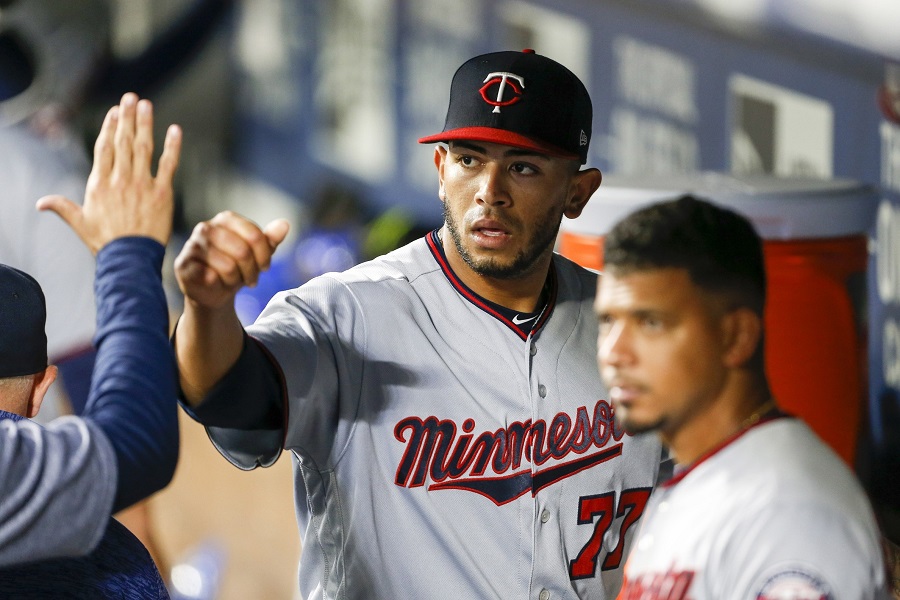 Seth Stohs posed an interesting question on Twitter this week, asking Twins fans how to proportionally assign blame for the current state of the team between injuries/suspensions, player performance, front office, and managing. A stock practice of Twins fans and writers has been to build the term ‘young, talented core’ into recent Twins lexicon. Young and talented they still are, but between injuries (Buxton, Sano), suspensions (Polanco), and under performance (Kepler) it’s hard for fans to be confident that the young troupe that formed the backbone of the epic stretch run in 2018 can replicate the same level of success with consistency, whether due to performance or an inability to stay on the field. With that in mind, here are some moves the Twins might make to find out what they have and what they need, heading into 2019. Trade Deadline There has been ample speculation on what the Twins should do at the deadline. I would be open to moving the following players: Lance Lynn – one year signing. Has been pretty ineffective, will net a minimal return Logan Morrison – see above. Fernando Rodney/Zach Duke – One year bullpen signings who can help contenders. They should both be moved. Eduardo Escobar – I love Escobar, if the price is right, I would move him, unless the Twins are confident of signing him to an extension or plan to give him a qualifying offer. Brian Dozier – Expiring contract. Major disappointment who typically surges in the second half. Sell low option. Catcher Immediately DFA Brian Wilson, he is currently serving no purpose on the team. The organizational strategy at catcher currently is bizarre. Garver has hit well over the last month but is still on a 60-40 time share with Wilson. Is there reticence for Garver to catch over concerns about his defense? Possibly. The only way the Twins will figure out if Garver can be a mainstay at catcher is to play him. Since Willians Astudillo has been promoted he’s played almost every position except catcher. This suggests that despite his legend growing from his no-look pick off in spring training, the Twins don’t see him as a viable option at catcher. If that’s true, find an alternative backup for Garver who plays every third night. Alternatively, keep Wilson if you want a higher draft pick. Infield The infield seems one of the murkiest positional groups with not a ton of big league-ready prospects for the second half of 2018. Jorge Polanco is back after an 80 game PED suspension. His second half performance will be worth watching closely to see if he can replicate his team-sparking heroics from the second half of 2017, in which he put together a .293/.359/.511 line with a 128 wRC+. Miguel Sano should be back with the Twins as soon as he figures his swing out, however long that takes. The Twins need to ensure that Sano is a viable long-term part of their big league plans moving into 2019. After a wretched start, Ehire Adrianza has put up decent production at the plate and assuming his relatively swift return from a hamstring injury, is showing himself to be a consistent SS for the Twins (1 fWAR 2017, 0.5 fWAR 2018). If Escobar and Dozier are moved, Adrianza will likely play every day in the second half. He’s a solid utility infielder for the Twins moving forward. A decent number of people have been calling for Nick Gordon from AAA Rochester. While Gordon still seems on track to be a solid every-day contributor, he’s struggled at AAA, managing a .233/.254/.331 line with a decreasing walk rate, increasing strikeout rate, and wRC+ of 59. None of this is incredibly surprising or unusual for a minor league hitter moving up a rung. If he turns it around and looks ready, the Twins should give him a shot. If not, there is no need to rush him. He has historically struggled in the minors in the second half of the season after getting off to torrid starts. Outfield Eddie Rosario has been an All-Star for the Twins in the first half of the season, nothing much to add here. As soon as Byron Buxton begins hitting with consistency at Rochester, he should be back with the Twins. Buxton’s young career has been marred by injuries thus far. It’s much too early to give up on a player with his ability. The Twins will want him to get as many at-bats as possible in the second half. Jake Cave has shown flashes of power and some solid play in CF since he has been given the nod over Pirates of the Caribbean extra Ryan LaMarre. Cave should see an extended run in the second half as he has the skill set to function as a backup outfielder for the Twins in 2019 and beyond. Max Kepler is an interesting conundrum for the Twins. Having been up with the team full time since 2016, he has put up a wRC+ of 93 (2016), 92 (2017), and 86 (2018). Kepler is still young at 25, but there’s a decent chance he turns out to be a slightly less than average MLB hitter at this point. He’s still valuable, given his above-average play in right field and typically solidly base-running (with the exception of 2018, in which every Twin has forgotten how to run the bases). Kepler once seemed like a lock for an extension, now, I’m not so sure. LaMonte Wade and Zack Granite are both worth consideration for major league playing time. Granite has struggled significantly this season. Wade has a very intriguing skill set, carrying an outstanding BB% throughout his minor league career. Currently at AAA Rochester, Wade has a .269/.404/.447 batting line with a wRC+ 145. His AAA OBP, SLG, and wRC+ are extremely consistent with his numbers throughout his minor league career. The Twins rank 23rd in MLB in OBP (.308), so giving Wade a chance to see if he can get on base at the highest level seems worthwhile. Starters Fernando Romero should be back with the Twins in the second half, albeit with an innings limit. Anyone concerned with Romero’s recent big-league mediocrity should be reminded of the 58 innings Jose Berrios threw in 2016 to the tune of an 8.02 ERA, 6.20 FIP, and 5.40 BB/9. Romero has looked good overall with the Twins this year. The team should do whatever it can to get him more major league experience. Ervin Santana may return to the team in the second half of the season. Whether he does or does not, he will not be a Twin in 2019. Assuming Lance Lynn is traded (and possibly Kyle Gibson), the Twins will have an open rotation spot for portions of the second half of the season. The Twins should give Zack Littell, Adalberto Mejia, Stephen Gonsalves, and Aaron Slegers whatever unfilled starts remain in the second half and see who rises to the occasion. You’d like to think the Twins have two back end starters in this group to compeiment Berrios, Romero and Odorizzi in 2019. Bullpen DFA Matt Belisle immediately. He will not contribute to the Twins in 2019 and does not help you assess your current talent or future needs. Assuming the Twins trade Fernando Rodney and Zach Duke, they will have at least 2-3 bullpen spots to play with in the second half. I’d move Pressley into the closer role. Despite a recent rocky stretch, he has a FIP of 3.08, a K/9 of 13.28, and until recently, looked to be in contention for an All-Star spot. Continue to use Hildenberger and Reed in higher leverage situations (when Reed is back on track). In 2014, the Twins drafted a bullpen between rounds 2-5. The organization has a slew of AAA arms they need to assess to determine if they can help the big league pen moving forwards. John Curtiss, Jake Reed, Luke Bard, Alan Busenitz, and Gabriel Moya should all see significant big league time in the second half of the season. All of these names have at least some upside, and have either been blocked from the majors, or given 4-5 innings with the Twins at a time, which is no way to establish what they are capable of at the big league level. September Call-Ups The Twins should use September call-ups to give some of their prospects some major league experience. Potentially, Nick Gordon and Brent Rooker are names which stand out here. After a slow start, Rooker is heating up. He’s now hit 14 HR, and slugged .503 at AA Chattanooga, with a 127 wRC+. If he keeps mashing in the second half, the Twins should get a look at their future LF/1B/DH. Anyone who has a chance to make the big league club in 2019 should get a shot this fall with the Twins, hopefully decreasing their need to adjust when they are called up permanently. Extensions The final implication for the Twins 2018 second half is extensions. Prior to the 2018 season, it could have been argued that Rosario, Kepler, Buxton, Sano and Berrios were all extension candidates. Where would you focus your attention now? I would attempt to lock up Rosario and Berrios, who have both excelled this season, in addition to Buxton as a ‘buy low’ option on an extension. It remains to be seen where the Twins will end up this season. After an incredibly disappointing first half of 2018, it’s time to put this year behind us, and look toward 2019 and beyond. What are the moves you think the Twins should make at the deadline? Who are players in the minors you would most like to see in the second half of 2018? Who are the players in the Twins young core you’d like to see the organization extend?
 -
Nick Nelson wrote an excellent article asking if Paul Molitor is the right man to take the Twins to the next level. I already have my answer, it’s no. For the purposes of this discussion though, I’ll ask a different question: Was Torey Lovullo better suited to lead this Twins organization, given its own unique context, to consistent relevance? I think the answer is yes."Now, if we could just find some offense." I’ve seen this evergreen sentiment regarding the Twins frustratingly up and down play since April. 2018 has been a season of irritation for Twins fans, characterized by an anemic offense, a bullpen which has been solid but ineffective in the most critical situations, and comical base-running on a daily basis. Molitor won Manager of the Year in 2017 after a historically impressive second half from the Twins offense. Let’s reground ourselves in some of those numbers: Download attachment: Molitor1.png If we look at Molitor’s record as manager outside this sliver of a season, it’s pretty bleak. Download attachment: Molitor2.png It might seem like I’m cherry picking here by leaving out August-October of 2017. Two points to counter that argument: firstly, how often does your team offense click enough to lead every important offensive category as a team, over a two month stretch? Secondly, Molitor’s Twins teams do not have a consistent track record of being competitive. This brings us to the really challenging aspects of evaluating team, organizations, and roles - culture and climate. It’s impossible to measure or begin to assess Molitor’s true impact on the Twins, because the nature of teams and organizations is that the problems and challenges they are attempting to overcome are adaptive, not technical. What we can do, is look at indicators of Molitor’s impact. The best place to start is on the field. Matt Magill was called up to the Twins at the end of April. Since then, he’s put up solid numbers in limited relief work for the Twins, managing a K/9 of 8.04 and BB/9 of 1.29. While Magill’s 2.45 ERA doesn’t match his 3.92 FIP, he’s at worst, an average MLB reliever. Since being called up, Magill has made 15 further appearances for the Twins. Ryan Pressly and Addison Reed, have made 51 combined appearances in that time, with decreasing effectiveness. Molitor had a similar issue with Trevor Hildenberger in 2017, pitching him almost nightly until his effectiveness diminished. The Twins are not playing in one run games on a nightly basis, so why not spread out the work load more? Another aspect of Molitor’s vaunted baseball mind was his technical skill as a base-runner. The Twins are not a base-stealing team in 2018, particularly with no Byron Buxton. They only have 25 stolen bases (league average is 39). They are however, second in pickoffs with 12, with only four other major league teams having more than 7. There is no excuse for being picked off regularly, particularly for a team who isn’t really trying to run in the first place. The most popular counter argument to these ‘team issues’ is to ground them in individual player execution as opposed to managerial impact (particularly base running). This where I think Molitor has a higher degree of culpability than most. While he can’t make the players execute, if he can’t compel their performance towards competence, what is his use and roll? In the business world, the primary work of leaders is to manage through others, in this case, players and coaches. Sometimes the best performers are the worst teachers, and Molitor and his coaches seem to have had a challenging time compelling the 2018 Twins team towards consistent, high level execution. This brings us to Lovullo, the current manager of the Arizona Diamondbacks. Lovullo has presided over his own turnaround in Phoenix, where he won 2017 NL MOY after reversing the Diamondbacks 69-93 record in 2016 to 93-69 in 2017. Currently, the 2018 Diamondback sit in first place at 45-34, in spite of franchise player Paul Goldschmidt getting off to a slow start and their number one starter, Robbie Ray, being sidelined for most of the season with an oblique strain. Lovullo has quickly become known through major league baseball for embracing the analytical side of the game. While Molitor is often thought of as a great baseball mind, modern analytic trends tend to show up less in his decision making, such as a lineup constructed around Brian Dozier hitting leadoff and Joe Mauer hitting second in recent history (although the two recently flip-flopped positions). More importantly, Lovullo has become known for a strong culture of clear and transparent communication with his players since taking on the role. Upon taking the job, Lovullo expressed some of his initial organizational goals ‘Establishing a culture of togetherness and family and unity was the most important thing to me’. The culture is not simply reflected in Lovullo’s own thoughts, but also those of his players. Zack Godley said of Lovullo ‘We just really enjoy playing for him. I think the trust he puts in us allows us to put the trust in him as well.’ While these reflections may sound like a trite, sports movie cliché, I think they are particularly important given the context of the Twins organization. The current Minnesota team has a core of talented young players. What’s typically true about young teams is that highs are higher and lows are lower. There is often a need for more intentional and vocal leadership on such teams. I find myself wondering increasingly if Lovullo was a better contextual fit with the Twins than Molitor was. The final thought I have is a wondering. Over the last few seasons, the Twins have brought in several players whose strengths have fallen under the mantle of ‘clubhouse leader’. Matt Belisle is a perfect example of this. He has no business being on the Twins roster with Busenitz, Duffey, Curtiss, Bard, Moya, and Reed all offering more upside. If the Twins are in such dire need of clubhouse leadership then both their veteran players, and Molitor himself, have a lot to answer for. Click here to view the article
-
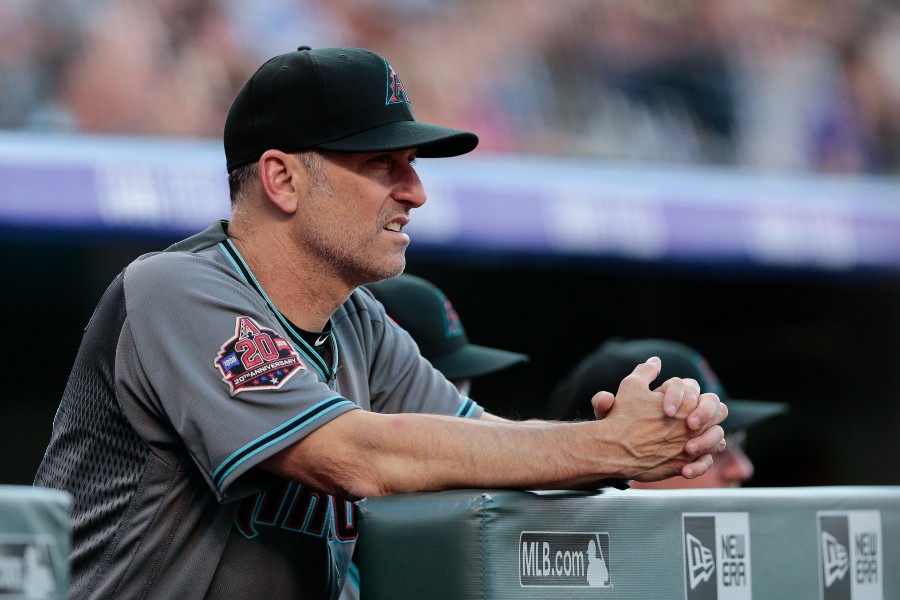 "Now, if we could just find some offense." I’ve seen this evergreen sentiment regarding the Twins frustratingly up and down play since April. 2018 has been a season of irritation for Twins fans, characterized by an anemic offense, a bullpen which has been solid but ineffective in the most critical situations, and comical base-running on a daily basis. Molitor won Manager of the Year in 2017 after a historically impressive second half from the Twins offense. Let’s reground ourselves in some of those numbers: If we look at Molitor’s record as manager outside this sliver of a season, it’s pretty bleak. It might seem like I’m cherry picking here by leaving out August-October of 2017. Two points to counter that argument: firstly, how often does your team offense click enough to lead every important offensive category as a team, over a two month stretch? Secondly, Molitor’s Twins teams do not have a consistent track record of being competitive. This brings us to the really challenging aspects of evaluating team, organizations, and roles - culture and climate. It’s impossible to measure or begin to assess Molitor’s true impact on the Twins, because the nature of teams and organizations is that the problems and challenges they are attempting to overcome are adaptive, not technical. What we can do, is look at indicators of Molitor’s impact. The best place to start is on the field. Matt Magill was called up to the Twins at the end of April. Since then, he’s put up solid numbers in limited relief work for the Twins, managing a K/9 of 8.04 and BB/9 of 1.29. While Magill’s 2.45 ERA doesn’t match his 3.92 FIP, he’s at worst, an average MLB reliever. Since being called up, Magill has made 15 further appearances for the Twins. Ryan Pressly and Addison Reed, have made 51 combined appearances in that time, with decreasing effectiveness. Molitor had a similar issue with Trevor Hildenberger in 2017, pitching him almost nightly until his effectiveness diminished. The Twins are not playing in one run games on a nightly basis, so why not spread out the work load more? Another aspect of Molitor’s vaunted baseball mind was his technical skill as a base-runner. The Twins are not a base-stealing team in 2018, particularly with no Byron Buxton. They only have 25 stolen bases (league average is 39). They are however, second in pickoffs with 12, with only four other major league teams having more than 7. There is no excuse for being picked off regularly, particularly for a team who isn’t really trying to run in the first place. The most popular counter argument to these ‘team issues’ is to ground them in individual player execution as opposed to managerial impact (particularly base running). This where I think Molitor has a higher degree of culpability than most. While he can’t make the players execute, if he can’t compel their performance towards competence, what is his use and roll? In the business world, the primary work of leaders is to manage through others, in this case, players and coaches. Sometimes the best performers are the worst teachers, and Molitor and his coaches seem to have had a challenging time compelling the 2018 Twins team towards consistent, high level execution. This brings us to Lovullo, the current manager of the Arizona Diamondbacks. Lovullo has presided over his own turnaround in Phoenix, where he won 2017 NL MOY after reversing the Diamondbacks 69-93 record in 2016 to 93-69 in 2017. Currently, the 2018 Diamondback sit in first place at 45-34, in spite of franchise player Paul Goldschmidt getting off to a slow start and their number one starter, Robbie Ray, being sidelined for most of the season with an oblique strain. Lovullo has quickly become known through major league baseball for embracing the analytical side of the game. While Molitor is often thought of as a great baseball mind, modern analytic trends tend to show up less in his decision making, such as a lineup constructed around Brian Dozier hitting leadoff and Joe Mauer hitting second in recent history (although the two recently flip-flopped positions). More importantly, Lovullo has become known for a strong culture of clear and transparent communication with his players since taking on the role. Upon taking the job, Lovullo expressed some of his initial organizational goals ‘Establishing a culture of togetherness and family and unity was the most important thing to me’. The culture is not simply reflected in Lovullo’s own thoughts, but also those of his players. Zack Godley said of Lovullo ‘We just really enjoy playing for him. I think the trust he puts in us allows us to put the trust in him as well.’ While these reflections may sound like a trite, sports movie cliché, I think they are particularly important given the context of the Twins organization. The current Minnesota team has a core of talented young players. What’s typically true about young teams is that highs are higher and lows are lower. There is often a need for more intentional and vocal leadership on such teams. I find myself wondering increasingly if Lovullo was a better contextual fit with the Twins than Molitor was. The final thought I have is a wondering. Over the last few seasons, the Twins have brought in several players whose strengths have fallen under the mantle of ‘clubhouse leader’. Matt Belisle is a perfect example of this. He has no business being on the Twins roster with Busenitz, Duffey, Curtiss, Bard, Moya, and Reed all offering more upside. If the Twins are in such dire need of clubhouse leadership then both their veteran players, and Molitor himself, have a lot to answer for.
 -
Spending time with my in-laws by choice. The Minnesota Twins stealing a base. Paul Molitor using Matt Magill out of the Twins bullpen. These are all things which happen sparingly. But why? Magill has been excellent for the Twins bullpen since his promotion in April. So who is Matt Magill? What does he throw? Is his success sustainable? If it is, why hasn’t another major league team helped him figure it out?Magill was a late selection of the Los Angeles Dodgers (Round 31, pick 15) in the 2008 June Amateur Draft out of Royal HS. Magill’s high school scouting report has pretty typical of a high school pitching prospect: "Magill has a tall, projectable frame. His fastball sit in the 88-90 mph range, but it’s straight and hittable when left up in the zone. He’ll need to develop sink and movement to succeed with his fastball at higher levels." (Courtesy of Baseball America). After being drafted, Magill progressed steadily through the Dodgers organization, being groomed as a starter. His minor league success peaked with his 2012 season at AA Chattanooga. That season, he put up a 3.45 ERA in 146+ IP, while striking out 168. Magill made his major league debut with the Dodgers in 2013, with a disastrous six game stretch which produced a 6.51 ERA and a BB/9 of 9.11. Magill bounced around at various levels of the minor leagues in the years following, making brief major league stops with Cincinnati and spending time in the Padres organization. Magill began the 2018 season as a 28-year-old at AAA Rochester, before getting the call to Minnesota in late April. Magill is off to a strong start as a Twin. Through 23.2 IP (as of Wednesday night) he has produced the following: Download attachment: MagillChart.png Magill has a strange set of numbers to examine. He doesn’t fit a particular mold. He’s no longer producing the high strikeout numbers he did as a prospect early in his career. He also has a low ground ball rate of just 36%. Magill is 10th in BB/9 among major league relievers who have thrown at least 20 innings and has the 15th lowest BaBIP of pitchers in MLB. Finally, he has stranded 98.9% of runners on base, a figure tied for the major league lead with recently traded former Royals closer Kelvin Herrera. Magill’s BaBIP and LOB% seem unsustainable, but his SIERA is indicative that he has produced consistently strong performances for the Twins. SIERA (skill-interactive ERA) is a development from FIP and xFIP which attempts to weight the various reasons pitchers are successful or unsuccessful. Magill’s 2018 SIERA is 3.67, a figure that lands him in between the range of above average (3.75) and great (3.25) according to FanGraphs. So what does Magill do on the mound and how has he established some MLB stability after struggling to do so previously in his career? Magill has a difficult pitch mix to evaluate, because his major league sample is so small it’s still developing. Magill can throw a four-seam fastball, sinker, cutter, curveball, slider and changeup. He predominantly uses his four-seam, slider, and cutter, with an occasional changeup mixed in. Remember Magill’s big, projectable frame? The move from starter to reliever has allowed him to add a little extra to his fastball, his average velocity when he first reached the majors in 2013 sat between 90-92 mph, in 2018, it has averaged 95 mph. The final development Magill has made which has contributed to his success, is the development of his cutter. In Magill’s previous stints in the major, he threw his cutter between 6-11% of the time. In the last few months with Minnesota, he has used it roughly 22% of the time. Magill’s cutter has heavy sink and sweep to it. Consider this, between Magill’s fastball (with much more refined control) and his cutter, Magill allowed an opposing wRC+ of 185 in 2013, 285 in 2016, and just 45 in 2018. Magill might be due for some regression in the near future, but why Molitor refuses to spread the work load and ease the burden on Addison Reed, Ryan Pressly, and Trevor Hildenberger is a mystery. Click here to view the article
-
 Magill was a late selection of the Los Angeles Dodgers (Round 31, pick 15) in the 2008 June Amateur Draft out of Royal HS. Magill’s high school scouting report has pretty typical of a high school pitching prospect: "Magill has a tall, projectable frame. His fastball sit in the 88-90 mph range, but it’s straight and hittable when left up in the zone. He’ll need to develop sink and movement to succeed with his fastball at higher levels." (Courtesy of Baseball America). After being drafted, Magill progressed steadily through the Dodgers organization, being groomed as a starter. His minor league success peaked with his 2012 season at AA Chattanooga. That season, he put up a 3.45 ERA in 146+ IP, while striking out 168. Magill made his major league debut with the Dodgers in 2013, with a disastrous six game stretch which produced a 6.51 ERA and a BB/9 of 9.11. Magill bounced around at various levels of the minor leagues in the years following, making brief major league stops with Cincinnati and spending time in the Padres organization. Magill began the 2018 season as a 28-year-old at AAA Rochester, before getting the call to Minnesota in late April. Magill is off to a strong start as a Twin. Through 23.2 IP (as of Wednesday night) he has produced the following: Magill has a strange set of numbers to examine. He doesn’t fit a particular mold. He’s no longer producing the high strikeout numbers he did as a prospect early in his career. He also has a low ground ball rate of just 36%. Magill is 10th in BB/9 among major league relievers who have thrown at least 20 innings and has the 15th lowest BaBIP of pitchers in MLB. Finally, he has stranded 98.9% of runners on base, a figure tied for the major league lead with recently traded former Royals closer Kelvin Herrera. Magill’s BaBIP and LOB% seem unsustainable, but his SIERA is indicative that he has produced consistently strong performances for the Twins. SIERA (skill-interactive ERA) is a development from FIP and xFIP which attempts to weight the various reasons pitchers are successful or unsuccessful. Magill’s 2018 SIERA is 3.67, a figure that lands him in between the range of above average (3.75) and great (3.25) according to FanGraphs. So what does Magill do on the mound and how has he established some MLB stability after struggling to do so previously in his career? Magill has a difficult pitch mix to evaluate, because his major league sample is so small it’s still developing. Magill can throw a four-seam fastball, sinker, cutter, curveball, slider and changeup. He predominantly uses his four-seam, slider, and cutter, with an occasional changeup mixed in. Remember Magill’s big, projectable frame? The move from starter to reliever has allowed him to add a little extra to his fastball, his average velocity when he first reached the majors in 2013 sat between 90-92 mph, in 2018, it has averaged 95 mph. The final development Magill has made which has contributed to his success, is the development of his cutter. In Magill’s previous stints in the major, he threw his cutter between 6-11% of the time. In the last few months with Minnesota, he has used it roughly 22% of the time. Magill’s cutter has heavy sink and sweep to it. Consider this, between Magill’s fastball (with much more refined control) and his cutter, Magill allowed an opposing wRC+ of 185 in 2013, 285 in 2016, and just 45 in 2018. Magill might be due for some regression in the near future, but why Molitor refuses to spread the work load and ease the burden on Addison Reed, Ryan Pressly, and Trevor Hildenberger is a mystery.
 -
Article: Trying to Get a Reed on Addison
Jamie Cameron posted a topic in Twins Daily Front Page News
Twins fans were thrilled when they signed Addison Reed this offseason on a two year deal worth approximately $16 million. Given the nature of the free agent relief pitching market in recent years, the Reed signing seemed not only to be a great get for the Twins, but a significant bargain given the deals that Rockies handed out to Bryan Shaw, Greg Holland and Jake McGee. The Twins, it seemed, had obtained a reliable reliever with a proven track record who could take on a high workload of high leverage innings and support Fernando Rodney at the back end of the bullpen.Wednesday night in Detroit was the culmination of a rough few weeks for Reed. Over his last 15 appearances (13.2 innings), he’s held a 5.27 ERA, 1.68 WHIP, and surrendered some key leads. Despite his season-long numbers being relatively in line with his career figures, any kind of digging into Reed’s numbers this season lead to an inevitable conclusion: he’s in rapid decline. Peripheral Stats Looking at the last 3 years lead to some worrying conclusions about Reed’s early season form with the Twins. Download attachment: ReedGraphic.png It’s worth pointing out that Reed and Ryan Pressly have been significantly over-worked by Paul Molitor this season in a similar fashion to Trevor Hildenberger in 2017. Both have taken significant steps backwards in the past few weeks. While Pressly’s peripheral numbers line up almost exactly with his current performance, the same cannot be said for Reed. While overuse is certainly a factor to consider with Reed, his effectiveness is also quite clearly decreasing. Reed has never been a ground ball pitcher, but everything he throws this year is getting hit in the air, with an increasing fly ball and HR rate, it has led to him being less effective, and more noticeably, in high leverage situations. Let’s talk about WPA for a second. No it’s not a bougie craft beer, win probability added measures how much a given player increases or decreases their team's probability of winning. Reed has been especially brutal in high leverage situations. His figure of -0.62 is already two thirds of a win below league average. He has the 21st worst WPA in the entire league, right behind Blaine Boyer of the Royals (11.60 ERA). That is a problem for a pitcher Molitor frequently relies on as his ‘eighth inning guy’ who is constantly pitching in high leverage situations with the game on the line. Velocity Reed’s velocity has also been in steady decline over the last few years. In the last 3 years, Reed’s average fastball velocity has fallen from 93.2 mph (2016), to 92.8 mph (2017), to 91.8 mph (2018). While velocity isn’t everything, consider this; Reed’s fastball was worth 12.9 runs above average in 2017, through roughly one third of the season in 2018, it’s worth 0.5 runs above average. Reed’s decline in velocity, combined with a decreasing number of ground balls and no Byron Buxton, is hurting Reed’s 2018 effectiveness significantly. Moving Forwards It’s fair to say I’m picking on Reed in the middle of a rough patch. It’s also true that a stagnant Twins offense could have reduced his disappointing WPA by scoring more freely (or at all) against sub-standard opposing pitchers. The Twins bullpen in general has been poor in high leverage situations (not aided by very little margin for error). Moving forward I’d argue that Trevor Hildenberger should be pitching in as many close and late situations as possible. He the Twins’ leader in WPA at 0.37 (68th best in the league). Since struggling in the first month of the season, Hildy has been rolling. In May and June, he’s given up a .347 SLG and 3 ER in 20.2 IP. Reed can undoubtedly be effective contributor for the Twins over the next season and a half, but Minnesota would do well to move him to a less impactful spot in a bullpen which this year has very little margin for error. Click here to view the article -
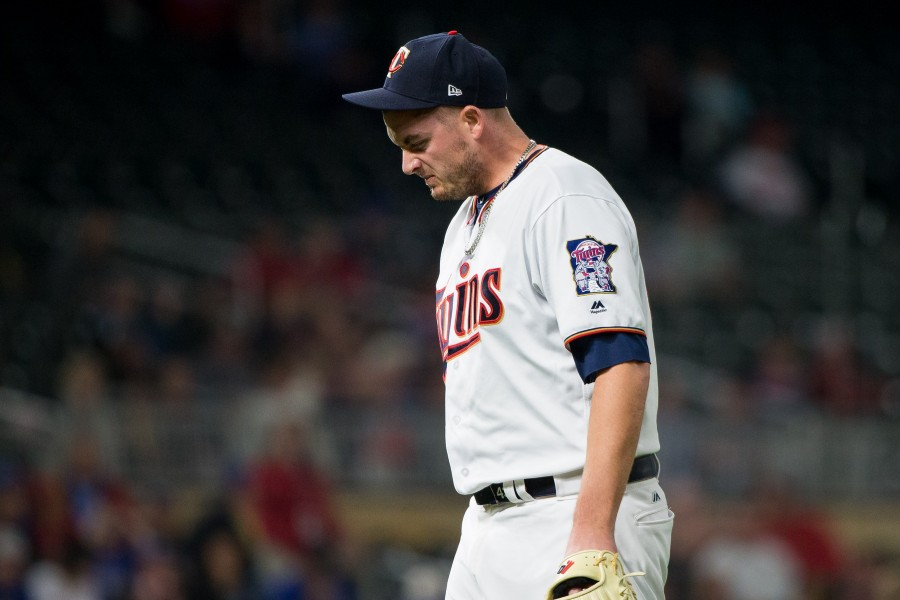 Wednesday night in Detroit was the culmination of a rough few weeks for Reed. Over his last 15 appearances (13.2 innings), he’s held a 5.27 ERA, 1.68 WHIP, and surrendered some key leads. Despite his season-long numbers being relatively in line with his career figures, any kind of digging into Reed’s numbers this season lead to an inevitable conclusion: he’s in rapid decline. Peripheral Stats Looking at the last 3 years lead to some worrying conclusions about Reed’s early season form with the Twins. It’s worth pointing out that Reed and Ryan Pressly have been significantly over-worked by Paul Molitor this season in a similar fashion to Trevor Hildenberger in 2017. Both have taken significant steps backwards in the past few weeks. While Pressly’s peripheral numbers line up almost exactly with his current performance, the same cannot be said for Reed. While overuse is certainly a factor to consider with Reed, his effectiveness is also quite clearly decreasing. Reed has never been a ground ball pitcher, but everything he throws this year is getting hit in the air, with an increasing fly ball and HR rate, it has led to him being less effective, and more noticeably, in high leverage situations. Let’s talk about WPA for a second. No it’s not a bougie craft beer, win probability added measures how much a given player increases or decreases their team's probability of winning. Reed has been especially brutal in high leverage situations. His figure of -0.62 is already two thirds of a win below league average. He has the 21st worst WPA in the entire league, right behind Blaine Boyer of the Royals (11.60 ERA). That is a problem for a pitcher Molitor frequently relies on as his ‘eighth inning guy’ who is constantly pitching in high leverage situations with the game on the line. Velocity Reed’s velocity has also been in steady decline over the last few years. In the last 3 years, Reed’s average fastball velocity has fallen from 93.2 mph (2016), to 92.8 mph (2017), to 91.8 mph (2018). While velocity isn’t everything, consider this; Reed’s fastball was worth 12.9 runs above average in 2017, through roughly one third of the season in 2018, it’s worth 0.5 runs above average. Reed’s decline in velocity, combined with a decreasing number of ground balls and no Byron Buxton, is hurting Reed’s 2018 effectiveness significantly. Moving Forwards It’s fair to say I’m picking on Reed in the middle of a rough patch. It’s also true that a stagnant Twins offense could have reduced his disappointing WPA by scoring more freely (or at all) against sub-standard opposing pitchers. The Twins bullpen in general has been poor in high leverage situations (not aided by very little margin for error). Moving forward I’d argue that Trevor Hildenberger should be pitching in as many close and late situations as possible. He the Twins’ leader in WPA at 0.37 (68th best in the league). Since struggling in the first month of the season, Hildy has been rolling. In May and June, he’s given up a .347 SLG and 3 ER in 20.2 IP. Reed can undoubtedly be effective contributor for the Twins over the next season and a half, but Minnesota would do well to move him to a less impactful spot in a bullpen which this year has very little margin for error.
 -
How could we have all been so wrong? Riding a wave of offseason optimism into the beginning of 2018, Twins fans wouldn’t have been unreasonable to be confident about the state of their team's young offensive core, on the back of an incredible second half of 2017 resplendent with breakout performances.Let’s take a trip down memory lane to a better time. Here’s a look at some key offensive metrics in the final few months of 2017 compared to the beginning of this season: Download attachment: Comp.png So here’s the thing. It’s possible we may have seen the best two-month stretch from a Twins offense we will see, like, ever. Partial exaggeration aside, how often does your team lead the league in almost every offensive category for any significant length of time with so many young players experiencing simultaneous breakouts and hot streaks? Most Twins fans thought the offense would regress from its stratospheric ascent. In spite of this, almost no one would have predicted that they would be a bottom 5-10 offense. So what has gone wrong for the offense? What has worked? And what can we expect moving forwards? Outfield Excellence There has been plenty to be excited about for Twins fan so far. Eddie Rosario and Max Kepler have held the offense up with solid performances across the board. Despite Rosario looking like he was playing fruit ninja at the plate in the first week or so of the season, he has been outstanding ever since. Through Tuesday, Rosario has put together a .302/.325/.523 line, with a truly insane 3.4% BB% and a wRC+ of 126. Rosario has picked up where he left off in 2017 and is playing at a borderline All-Star level. Rosario is a top 40 player in league by wOBA (.360). If he had even moderate plate discipline, his offensive value would be enormous. Even so, among outfielders, Rosario ranks 16th in the league in fWAR at 1.4. This appears to be who he is as a hitter, remarkable considering some were calling for him to be traded or released in favor of Zack Granite after a poor beginning to 2017. Did you know Max Kepler is 6’4? I don’t think I knew Max Kepler is 6’4. Kepler has taken a massive step forward in 2018. After being tipped to be a potential breakout candidate preseason by the likes of Keith Law, Kepler has significantly improved his approach against lefties. In 2017, Kepler was dire against lefties. He put together a .152/.213/.240 line with a 30 K%, a 5.1 BB%, and a wRC+ of 16. Yikes. Fast forward to 2018 and Kepler has taken around half the ABs he took against lefties in 2017, with striking results. Kepler has put together a staggering .353/.414/.725 line with a 13 K%, 10 BB%, and 11 extra base hits. Kepler leads the league as a LHH vs LHP in SLG (.725), OPS (1.139), ISO (.373), and wRC+ (201) To put that into context, only two MLB players have a higher wRC+ this season, Mookie Betts at 212, and Mike Trout at 201. Granted this sample is less than half of Kepler’s plate appearances. His number against lefties will likely stabilize and drop, but it’s still a remarkable performance. Other Highlights Other Twins hitters have carried the offense at various points throughout the season. Eduardo Escobar had an outstanding March/April, putting together a .301/.348/.578 line with a 142 wRC+. Escobar has been struggling of late, but has shown signs of getting back in the groove, notching a multi-hit game against the Royals on Wednesday night. Prior to his DL stint (which until Thursday evening, looked to be coming to a close), Joe Mauer had returned to excellent form. His .404 OBP ranked 9th in the majors, his BB% of 16.8% being largely unappreciated (7th in MLB). Paul Molitor finally took the step of switching Mauer and Dozier in the batting order before Mauer’s injury and Dozier’s slump derailed any opportunity to examine the progress and success of the move. The Disappointing Brian Dozier’s recent seasons with the Twins have been punctuated by streakiness. He has typically had huge second halves. In the second half of 2017 Dozier went on what has, for him, become a characteristic tear. He put up a .304/.394/.591 batting line with a .287 ISO and wRC+ of 158. Impressive. After a hot start to 2018, Dozier has been wretched at the plate. Dozier got on base at a .319 clip in March/April and is down to a .303 clip in May. Prior to Wednesday night’s game against the Royals, his last home run has come on May 11th against the Angels. Throughout the course of the season, Dozier has performed around 10% worse than a league-average hitter at his position, an even more stark contrast considering his all-star caliber second half performance in 2017. Dozier is actually striking out less in 2018, but he’s also walking less. Dozier has hit an increased number of ground balls thus far in 2018, and is pulling the ball less. Whatever the mechanical issues behind Dozier’s struggles at the plate (he has commented in not getting into his legs during his swing), his sub-par performance has had a massive impact on a Twins team missing a significant number of their young core of offensive talent. Injuries and Suspensions Since the beginning of the season, the Twins have been without Jorge Polanco (128 wRC+ in second half of 2017). The Twins have missed a month of Miguel Sano (124 wRC+ in 2017), and have lost Jason Castro for the season (who was performing horribly but also owned a BaBIP of .216, compared to .318 in 2017). Minnesota has also had to contend with a hamstrung Byron Buxton (.300/.347/.546 in the second half of 2017) either limping throughout uncompetitive plate appearances or being shelved on the DL. The Twins have a lot to answer for in their handling of Buxton. Knowing his first half struggles in 2017, Buxton should have had a rehab stint before joining the big league team. Additionally, allowing him to not fully heal from a broken toe not only resulted in him putting together an offensive line more representative of a pitcher (.156/.183/.200), but will have the additional impact of the Twins needing to use Ryan LaMarre and Robbie Grossman more significantly in the outfield, the former of who has not hit for the Twins since his strong start, the latter being a disaster in the outfield. Buxton owns a wRC+ of -3 in 2018, a truly remarkable feat of incompetence which now seems to have very little to do with him and much more to do with questionable decision-making surrounding how his injuries have been handled. Bottom of the Order One of the greatest challenges the Twins offense has combated this season is a lack of depth. Injuries and suspensions have plagued the Twins, but the players called on to replace injured and suspended players have truly struggled. Download attachment: Bottom.png It’s worth noting that only one AL club has a worse performance from its number nine spot (White Sox) and the Twins are outperformed in the metrics by a ton of NL clubs…where the pitcher hits. The primary strength of the Twins lineup in the second half of 2017 was its depth. Throughout the lineup, the offense was producing at a high level, without having hitters producing at a superstar level. With so many injuries and suspensions in 2018, the Twins' lack of upper-level minor league hitting depth has been exposed. Gregorio Petit, Ryan LaMarre and Bobby Wilson, although serviceable, are the not type of players who can meaningfully contribute consistently to a viable and competitive major league offense. General Trends Other aspect of the Twins offense I was keen to dig into were some other more general offensive outcomes. The Twins have had a difficult time hitting with runners in scoring position. This tends to stabilize over the course of the season. In spite of this, there is a pretty obvious RISP discrepancy between the 2017 and 2018 offenses. Download attachment: Trends.png It’s also worth noting that the Twins SLG with RISP is a real pain point. Not only are the Twins having fewer desirable outcomes with RISP, they are additionally having fewer high impact outcomes in those situations. It seems obvious to connect the lack of offensive depth with these outcomes. While these numbers will likely improve with Mauer (maybe) and Polanco set to return at some point this season, it may be too late for the 2018 team if they have a poor home stand with several forthcoming series against AL Central teams. While the Twins have plenty to be excited about for the future offensively, 2018 is off to a disastrous start. What do you think is at the root of the Twins offensive struggles? Who are you most disappointed and excited by, both now, and for the future? Click here to view the article
-
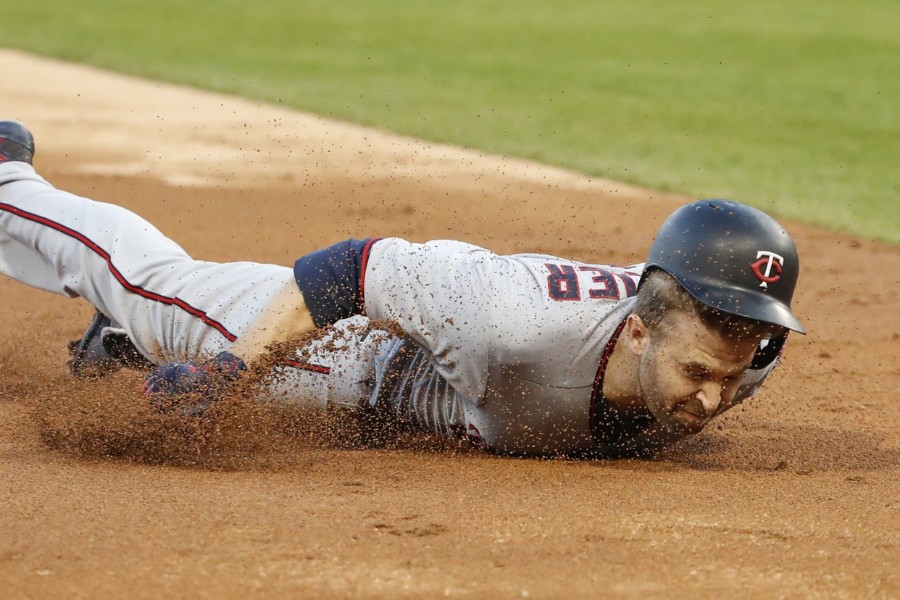 Let’s take a trip down memory lane to a better time. Here’s a look at some key offensive metrics in the final few months of 2017 compared to the beginning of this season: So here’s the thing. It’s possible we may have seen the best two-month stretch from a Twins offense we will see, like, ever. Partial exaggeration aside, how often does your team lead the league in almost every offensive category for any significant length of time with so many young players experiencing simultaneous breakouts and hot streaks? Most Twins fans thought the offense would regress from its stratospheric ascent. In spite of this, almost no one would have predicted that they would be a bottom 5-10 offense. So what has gone wrong for the offense? What has worked? And what can we expect moving forwards? Outfield Excellence There has been plenty to be excited about for Twins fan so far. Eddie Rosario and Max Kepler have held the offense up with solid performances across the board. Despite Rosario looking like he was playing fruit ninja at the plate in the first week or so of the season, he has been outstanding ever since. Through Tuesday, Rosario has put together a .302/.325/.523 line, with a truly insane 3.4% BB% and a wRC+ of 126. Rosario has picked up where he left off in 2017 and is playing at a borderline All-Star level. Rosario is a top 40 player in league by wOBA (.360). If he had even moderate plate discipline, his offensive value would be enormous. Even so, among outfielders, Rosario ranks 16th in the league in fWAR at 1.4. This appears to be who he is as a hitter, remarkable considering some were calling for him to be traded or released in favor of Zack Granite after a poor beginning to 2017. Did you know Max Kepler is 6’4? I don’t think I knew Max Kepler is 6’4. Kepler has taken a massive step forward in 2018. After being tipped to be a potential breakout candidate preseason by the likes of Keith Law, Kepler has significantly improved his approach against lefties. In 2017, Kepler was dire against lefties. He put together a .152/.213/.240 line with a 30 K%, a 5.1 BB%, and a wRC+ of 16. Yikes. Fast forward to 2018 and Kepler has taken around half the ABs he took against lefties in 2017, with striking results. Kepler has put together a staggering .353/.414/.725 line with a 13 K%, 10 BB%, and 11 extra base hits. Kepler leads the league as a LHH vs LHP in SLG (.725), OPS (1.139), ISO (.373), and wRC+ (201) To put that into context, only two MLB players have a higher wRC+ this season, Mookie Betts at 212, and Mike Trout at 201. Granted this sample is less than half of Kepler’s plate appearances. His number against lefties will likely stabilize and drop, but it’s still a remarkable performance. Other Highlights Other Twins hitters have carried the offense at various points throughout the season. Eduardo Escobar had an outstanding March/April, putting together a .301/.348/.578 line with a 142 wRC+. Escobar has been struggling of late, but has shown signs of getting back in the groove, notching a multi-hit game against the Royals on Wednesday night. Prior to his DL stint (which until Thursday evening, looked to be coming to a close), Joe Mauer had returned to excellent form. His .404 OBP ranked 9th in the majors, his BB% of 16.8% being largely unappreciated (7th in MLB). Paul Molitor finally took the step of switching Mauer and Dozier in the batting order before Mauer’s injury and Dozier’s slump derailed any opportunity to examine the progress and success of the move. The Disappointing Brian Dozier’s recent seasons with the Twins have been punctuated by streakiness. He has typically had huge second halves. In the second half of 2017 Dozier went on what has, for him, become a characteristic tear. He put up a .304/.394/.591 batting line with a .287 ISO and wRC+ of 158. Impressive. After a hot start to 2018, Dozier has been wretched at the plate. Dozier got on base at a .319 clip in March/April and is down to a .303 clip in May. Prior to Wednesday night’s game against the Royals, his last home run has come on May 11th against the Angels. Throughout the course of the season, Dozier has performed around 10% worse than a league-average hitter at his position, an even more stark contrast considering his all-star caliber second half performance in 2017. Dozier is actually striking out less in 2018, but he’s also walking less. Dozier has hit an increased number of ground balls thus far in 2018, and is pulling the ball less. Whatever the mechanical issues behind Dozier’s struggles at the plate (he has commented in not getting into his legs during his swing), his sub-par performance has had a massive impact on a Twins team missing a significant number of their young core of offensive talent. Injuries and Suspensions Since the beginning of the season, the Twins have been without Jorge Polanco (128 wRC+ in second half of 2017). The Twins have missed a month of Miguel Sano (124 wRC+ in 2017), and have lost Jason Castro for the season (who was performing horribly but also owned a BaBIP of .216, compared to .318 in 2017). Minnesota has also had to contend with a hamstrung Byron Buxton (.300/.347/.546 in the second half of 2017) either limping throughout uncompetitive plate appearances or being shelved on the DL. The Twins have a lot to answer for in their handling of Buxton. Knowing his first half struggles in 2017, Buxton should have had a rehab stint before joining the big league team. Additionally, allowing him to not fully heal from a broken toe not only resulted in him putting together an offensive line more representative of a pitcher (.156/.183/.200), but will have the additional impact of the Twins needing to use Ryan LaMarre and Robbie Grossman more significantly in the outfield, the former of who has not hit for the Twins since his strong start, the latter being a disaster in the outfield. Buxton owns a wRC+ of -3 in 2018, a truly remarkable feat of incompetence which now seems to have very little to do with him and much more to do with questionable decision-making surrounding how his injuries have been handled. Bottom of the Order One of the greatest challenges the Twins offense has combated this season is a lack of depth. Injuries and suspensions have plagued the Twins, but the players called on to replace injured and suspended players have truly struggled. It’s worth noting that only one AL club has a worse performance from its number nine spot (White Sox) and the Twins are outperformed in the metrics by a ton of NL clubs…where the pitcher hits. The primary strength of the Twins lineup in the second half of 2017 was its depth. Throughout the lineup, the offense was producing at a high level, without having hitters producing at a superstar level. With so many injuries and suspensions in 2018, the Twins' lack of upper-level minor league hitting depth has been exposed. Gregorio Petit, Ryan LaMarre and Bobby Wilson, although serviceable, are the not type of players who can meaningfully contribute consistently to a viable and competitive major league offense. General Trends Other aspect of the Twins offense I was keen to dig into were some other more general offensive outcomes. The Twins have had a difficult time hitting with runners in scoring position. This tends to stabilize over the course of the season. In spite of this, there is a pretty obvious RISP discrepancy between the 2017 and 2018 offenses. It’s also worth noting that the Twins SLG with RISP is a real pain point. Not only are the Twins having fewer desirable outcomes with RISP, they are additionally having fewer high impact outcomes in those situations. It seems obvious to connect the lack of offensive depth with these outcomes. While these numbers will likely improve with Mauer (maybe) and Polanco set to return at some point this season, it may be too late for the 2018 team if they have a poor home stand with several forthcoming series against AL Central teams. While the Twins have plenty to be excited about for the future offensively, 2018 is off to a disastrous start. What do you think is at the root of the Twins offensive struggles? Who are you most disappointed and excited by, both now, and for the future?
 -
Jason Castro recently became the latest in a series of injuries and suspension which have contributed to a pedestrian start to the 2018 season for the Minnesota Twins. Castro was struggling offensively, his slow start already stimulating debate around how much playing time Mitch Garver should have.Since Castro hit the DL on May 5th, Garver and local happy hour goer Bobby Wilson have surprisingly split reps at catcher. Garver has caught nine games, played once at DH and served as a PH twice, while Wilson has caught eight games himself. This seems odd. Garver is clearly an upgrade over Wilson offensively. While he has had some blunders in the field, Garver has also been far from a liability and even shown some areas of catching strength (throwing out base runners). This led me to ask the question: Why are the Twins handling their catching situation the way they are? What can we expect from the club moving forwards, assuming they can stay within striking distance of Cleveland? Hitting Castro was having an appalling offensive start before he went down with a meniscus injury which ultimately ended his season. In my previous piece on Castro, I contended that he put up fairly average offensive numbers for a catcher, ranking sixth among catchers in OBP in 2017 (minimum 400 plate appearances), and first in BB% (11.1%). Castro had been putrid his year, managing a .257 OBP (compared to .333 in 2017). This was not aided by an unbelievable .216 BABIP. Perhaps Castro has been inhibited by his injury throughout the season, we’ll never know. What we do know is that his ‘generally solid offensive production for a catcher’ was way down. Garver was thought to be an offensive upgrade over Castro. So far, that has proven to be the case, at least over the 2018 version of Castro. Garver has a 5.5% BB% (Eddie Rosario was at 5.9% in his ‘more disciplined’ 2017), and a 30% K% (Miguel Sano was 35% in 2017). Garver has gotten on base at a .303 clip, not great but significantly better than 2018 Castro. These numbers are still a small major league sample. His walk rate, in particular, should stabilize and increase over time to around the 10% he has averaged throughout his career. Wilson, despite delivering some big hits for the Twins so far, is an offensive liability. In nine seasons, he has a .213/.266/.321 offensive line in 875 plate appearances. Make no mistake, despite Castro’s awful start, he’s light years ahead of Bobby Wilson. Regular Fielding DRS (defensive runs saved – which measures fielders by the number of runs above or below average) is a particularly limited statistic to use on catchers because catching is so complicated and encompasses so many different elements than ‘regular’ fielding does. Additionally, it’s particularly prone to fairly volatile variations and doesn’t usually stabilize until hit a larger sample (at least a season). In 2017 Castro had a DRS of +10 (Gold Glove winner Martin Maldonado was +22). In 620 innings caught in 2016 (his last season consistently playing in the majors) Wilson had a DRS of -3. This is fascinating because as an offensive no-show, Wilson is automatically described as having value as a ‘solid defender’ and ‘good club-house guy’. Those may both be true, but Wilson’s last season with a positive DRS was 2015. In 145.0 early innings for the 2018 Twins, Garver is -2. Other than naming this, it’s much too early to read further into Garver’s general fielding of his position. Preventing Base Stealing Both Castro and Garver have done a god job at preventing the running game this season for the Twins. For context here, of active catchers, the best active career caught stealing% is Yadier Molina at just under 41%, Castro is 25th among active catchers at 26%, Kurt Suzuki, a pretty sub-par defensive catcher, is 36th at 23% (Joe Mauer is 10th on this list at 33%!). The Twins trio fit interesting here, fully acknowledging that we are early in the season and there is an extremely small sample size. Through Sunday, Castro was at 40%, Garver 30%, and Wilson 0% (only 2 attempts). What has been clear in the early going, is Garver has a good, and accurate, arm, and seemingly a solid approach to getting runners. Statcast allows us to be even more precise with this breakdown. Interestingly, Castro and Garver excel in slightly different areas, with Wilson unsurprisingly lagging behind. Pop time measures the amount of time from the pitch hitting the catcher’s mitt to the moment the ball reaches the fielder’s receiving point at the center of the base. Mitch Garver has the fastest pop time of the three, averaging 2.03 seconds, good for 40th out of 75th catchers. Wilson is 75th at 2.32. This is the pop time equivalent to Albert Pujols running to first base, extremely pedestrian. Castro ranked 48th before his injury, close to Garver. In exchange (the amount of time it takes to get the ball out of the glove), Castro is a top-20 catcher, with an average time of 0.70. This is a much less developed skill for Garver, who comes in 65th at 0.79. Wilson, again, ranks last in MLB at 0.90. These increments might seem small, but they mater when you’re trying to throw out folks running at 29 feet per second. Of course, while all of these factors contribute to being able to throw out base runners, the runner himself and the time the pitcher takes to get the ball to the catcher are also vital factors. These numbers do bear out however, that we can trust our eyes and assume that Bobby Wilson is the least athletic catching option the Twins have. Game Management Through Sunday May 20th, the table below was true of Twins pitching when being caught by each of the team’s catchers. I don’t think there’s a ton to read into this. These numbers undoubtedly ebb and flow with the fortunes of how the team is playing in general. Castro caught the majority of games in the Twins miserable stretch that culminated in a series of butt-whoopings by the Yankees. I don’t think there’s any doubt that Castro can call an excellent game. This potentially is where Wilson may have an edge on Garver. One way to take advantage of Wilson’s increased game calling experience would be to pair him with a specific pitcher (Fernando Romero would be an excellent candidate), in order to develop a strong pitcher/catcher relationship and develop a relationship with his stuff. The Twins however, should not be splitting or near splitting catching time from an offensive standpoint. Even with Garver’s numbers still being a small sample, he should be getting closer to 80% of playing time rather than 50%. Download attachment: CatchingGraph.png Twins Next Steps It will be fascinating to see what the Twins do at catcher as the season progresses. What’s clear from this examination is that Bobby Wilson, while fitting the ‘loveable, defensively dependable backup’ narrative, is actually a pretty terrible option, particularly offensively. There will be some bigger names on the trade market this summer, such as JT Realmuto, whom I wouldn’t expect the Twins to aggressively pursue. The Twins could get a moderate upgrade on Wilson via trade for a far smaller price, who they could use in a more effective time split with Garver. Alternatively, it would be fascinating to see if AAA catcher Willians Astudillo gets any consideration for major league catching time. In 99 ABs for the Rochester Red Wings, Astudillo has a .273/.305/.495 line with five HR. What do you think of the current Twins time share at catcher? Would you make a move? Stick with Wilson? Or give Astudillo a chance? Click here to view the article
-
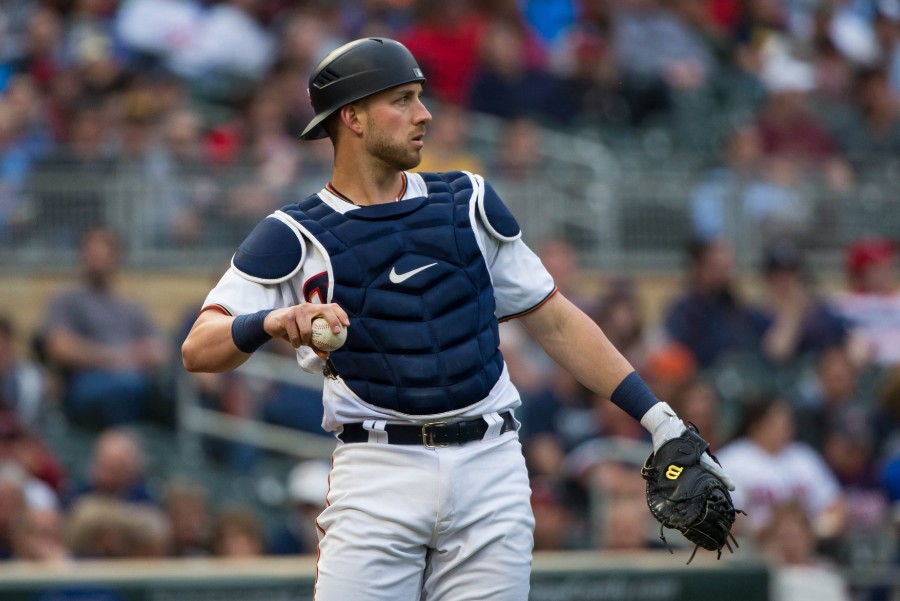 Since Castro hit the DL on May 5th, Garver and local happy hour goer Bobby Wilson have surprisingly split reps at catcher. Garver has caught nine games, played once at DH and served as a PH twice, while Wilson has caught eight games himself. This seems odd. Garver is clearly an upgrade over Wilson offensively. While he has had some blunders in the field, Garver has also been far from a liability and even shown some areas of catching strength (throwing out base runners). This led me to ask the question: Why are the Twins handling their catching situation the way they are? What can we expect from the club moving forwards, assuming they can stay within striking distance of Cleveland? Hitting Castro was having an appalling offensive start before he went down with a meniscus injury which ultimately ended his season. In my previous piece on Castro, I contended that he put up fairly average offensive numbers for a catcher, ranking sixth among catchers in OBP in 2017 (minimum 400 plate appearances), and first in BB% (11.1%). Castro had been putrid his year, managing a .257 OBP (compared to .333 in 2017). This was not aided by an unbelievable .216 BABIP. Perhaps Castro has been inhibited by his injury throughout the season, we’ll never know. What we do know is that his ‘generally solid offensive production for a catcher’ was way down. Garver was thought to be an offensive upgrade over Castro. So far, that has proven to be the case, at least over the 2018 version of Castro. Garver has a 5.5% BB% (Eddie Rosario was at 5.9% in his ‘more disciplined’ 2017), and a 30% K% (Miguel Sano was 35% in 2017). Garver has gotten on base at a .303 clip, not great but significantly better than 2018 Castro. These numbers are still a small major league sample. His walk rate, in particular, should stabilize and increase over time to around the 10% he has averaged throughout his career. Wilson, despite delivering some big hits for the Twins so far, is an offensive liability. In nine seasons, he has a .213/.266/.321 offensive line in 875 plate appearances. Make no mistake, despite Castro’s awful start, he’s light years ahead of Bobby Wilson. Regular Fielding DRS (defensive runs saved – which measures fielders by the number of runs above or below average) is a particularly limited statistic to use on catchers because catching is so complicated and encompasses so many different elements than ‘regular’ fielding does. Additionally, it’s particularly prone to fairly volatile variations and doesn’t usually stabilize until hit a larger sample (at least a season). In 2017 Castro had a DRS of +10 (Gold Glove winner Martin Maldonado was +22). In 620 innings caught in 2016 (his last season consistently playing in the majors) Wilson had a DRS of -3. This is fascinating because as an offensive no-show, Wilson is automatically described as having value as a ‘solid defender’ and ‘good club-house guy’. Those may both be true, but Wilson’s last season with a positive DRS was 2015. In 145.0 early innings for the 2018 Twins, Garver is -2. Other than naming this, it’s much too early to read further into Garver’s general fielding of his position. Preventing Base Stealing Both Castro and Garver have done a god job at preventing the running game this season for the Twins. For context here, of active catchers, the best active career caught stealing% is Yadier Molina at just under 41%, Castro is 25th among active catchers at 26%, Kurt Suzuki, a pretty sub-par defensive catcher, is 36th at 23% (Joe Mauer is 10th on this list at 33%!). The Twins trio fit interesting here, fully acknowledging that we are early in the season and there is an extremely small sample size. Through Sunday, Castro was at 40%, Garver 30%, and Wilson 0% (only 2 attempts). What has been clear in the early going, is Garver has a good, and accurate, arm, and seemingly a solid approach to getting runners. Statcast allows us to be even more precise with this breakdown. Interestingly, Castro and Garver excel in slightly different areas, with Wilson unsurprisingly lagging behind. Pop time measures the amount of time from the pitch hitting the catcher’s mitt to the moment the ball reaches the fielder’s receiving point at the center of the base. Mitch Garver has the fastest pop time of the three, averaging 2.03 seconds, good for 40th out of 75th catchers. Wilson is 75th at 2.32. This is the pop time equivalent to Albert Pujols running to first base, extremely pedestrian. Castro ranked 48th before his injury, close to Garver. In exchange (the amount of time it takes to get the ball out of the glove), Castro is a top-20 catcher, with an average time of 0.70. This is a much less developed skill for Garver, who comes in 65th at 0.79. Wilson, again, ranks last in MLB at 0.90. These increments might seem small, but they mater when you’re trying to throw out folks running at 29 feet per second. Of course, while all of these factors contribute to being able to throw out base runners, the runner himself and the time the pitcher takes to get the ball to the catcher are also vital factors. These numbers do bear out however, that we can trust our eyes and assume that Bobby Wilson is the least athletic catching option the Twins have. Game Management Through Sunday May 20th, the table below was true of Twins pitching when being caught by each of the team’s catchers. I don’t think there’s a ton to read into this. These numbers undoubtedly ebb and flow with the fortunes of how the team is playing in general. Castro caught the majority of games in the Twins miserable stretch that culminated in a series of butt-whoopings by the Yankees. I don’t think there’s any doubt that Castro can call an excellent game. This potentially is where Wilson may have an edge on Garver. One way to take advantage of Wilson’s increased game calling experience would be to pair him with a specific pitcher (Fernando Romero would be an excellent candidate), in order to develop a strong pitcher/catcher relationship and develop a relationship with his stuff. The Twins however, should not be splitting or near splitting catching time from an offensive standpoint. Even with Garver’s numbers still being a small sample, he should be getting closer to 80% of playing time rather than 50%. Twins Next Steps It will be fascinating to see what the Twins do at catcher as the season progresses. What’s clear from this examination is that Bobby Wilson, while fitting the ‘loveable, defensively dependable backup’ narrative, is actually a pretty terrible option, particularly offensively. There will be some bigger names on the trade market this summer, such as JT Realmuto, whom I wouldn’t expect the Twins to aggressively pursue. The Twins could get a moderate upgrade on Wilson via trade for a far smaller price, who they could use in a more effective time split with Garver. Alternatively, it would be fascinating to see if AAA catcher Willians Astudillo gets any consideration for major league catching time. In 99 ABs for the Rochester Red Wings, Astudillo has a .273/.305/.495 line with five HR. What do you think of the current Twins time share at catcher? Would you make a move? Stick with Wilson? Or give Astudillo a chance?
 -
La Makina – The Machine. Jose Berrios’ moniker is best applied to his work rate. Follow Berrios on social media in the off-season and you will likely see him pushing giant tires, sprinting on an idyllic beach in his native Puerto Rico, or even pulling a truck. Hard work isn’t common only to Berrios, of course. What comes across, however, from listening to him speak about pitching, from following him and studying the trajectory of his young career is clear: He is singular in his desire to maximize his talent, and relentless in his pursuit of greatness.Draft and potential Berrios was drafted with the 32nd overall pick in the 2012 draft which also produced Byron Buxton, Carlos Correa, Lance McCullers, Corey Seager and Marcus Stroman, to name a few. When Berrios was taken by the Twins with the first pick in Round Comp A, his scouting report hailed his ‘absolute hammer’ of a power breaking ball. While some scouts were wary of Berrios’ smaller frame and lack of projectability, he was thought to be drawing interest from teams at the back end of the first round. Berrios made short work at every level of minor league baseball. He eventually hit a K/9 of at least 8.5 at every level of minor league ball, with xFIP typically in the 2.00 – 3.00 range. Berrios was cruising through professional lineups without resistance for four years, until he arrived at Target Field in 2016. Disastrous Debut to Solid 2017 When Berrios made his major league debut in 2016, there was a palpable air of excitement for Twins fans. The Twins faithful had been waiting on a frontline starter since Francisco Liriano’s emergence was derailed by injury. Berrios struggled initially at the major league level. In 58 innings, he put up an 8.02 ERA, BB/9 of 5.40 and an xFIP of 5.64. Berrios had never had to ‘figure it out’ in his journey through the minor leagues, 2016 was his first taste of professional baseball adversity. One of the first major steps in Berrios’ major league evolution was developing a more well-rounded pitch mix. When first called up, Berrios threw his fastball up to 60% of the time. For secondary pitches, Berrios relied almost as heavily on his changeup as his excellent curveball. Berrios’ fastball and changeup were hammered in 2016, to the tune of a .813 and 2.000 SLG% in May respectively. Berrios had dominated hitters with his fastball throughout his major league career, but it was getting crushed at the major league level. Berrios came back in 2017 with a new approach, throwing his fastball around 31% of the time and his curveball, on average 33% of the time. The impact was immediate. With the exception of a small sample in October, Berrios SLG% against on these two pitches fell to a month long high of .541 and .458 respectively. Berrios made two small but important mechanical adjustments in 2017 which have been well documented by Jeff Sullivan and Matthew Trueblood, among others. Berrios lowered his arm slot and moved from the first base side of the rubber to the third base side. The cumulative impact of these seemingly small adjustments was to increase the verticality of Berrios’ spine and the consistency of his delivery. This also resulted in an uptick in spin rate on his fastball and curveball. Berrios additionally made significant improvements to both his control and command in 2017, lowering his BB/9 from 5.40 in 2016 to 2.97 in 2017. Another aspect of Berrios’ 2017/18 evolution was his curveball. It began to take on more tilt and break more significantly down and away from right-handed hitters. This is exacerbated by his shift to the third base side of the rubber. For right-handed hitters, Berrios’ curveball is now more difficult to pick up as it’s traveling across their field of vision and their bodies more dramatically. The final improvement in Berrios’ curveball is his ability to command it. Peek at the difference between his curveball heat map in 2016 (curveball only VS RHH) and the beginning of his 2018 season (curveball only VS RHH). As you can see, Berrios is significantly more proficient in spotting his curveball on the lower and outer half of the plate. This is in spite of a recent month-long stretch where he lost command of his curveball altogether. Download attachment: Berrios1.png Download attachment: Berrios2.png It’s the difference between Berrios’ curveball looking like this (excellent) Download attachment: Berrios3.gif Or this (unhittable) Download attachment: Berrios4.gif Berrios lost his curveball in a recent four-start stretch which saw a significant reduction in strikeout rate (just 11 Ks). Additionally, Berrios gave up 18 earned runs in just 18.1 innings of work and had Twins fans concerned he might be headed for a stint on the DL. Berrios allayed those fears with a dominant 10 K performance against St. Louis on Tuesday. Given what Berrios has been through the get to where he is and the fanaticism with which he hones his craft, Twins fans shouldn’t be surprised at his quick turnaround. Berrios will be an outstanding major league pitcher for a long time. He’s shown his ability to adjust and evolve time and time again. La Makina is automatic. Click here to view the article
-
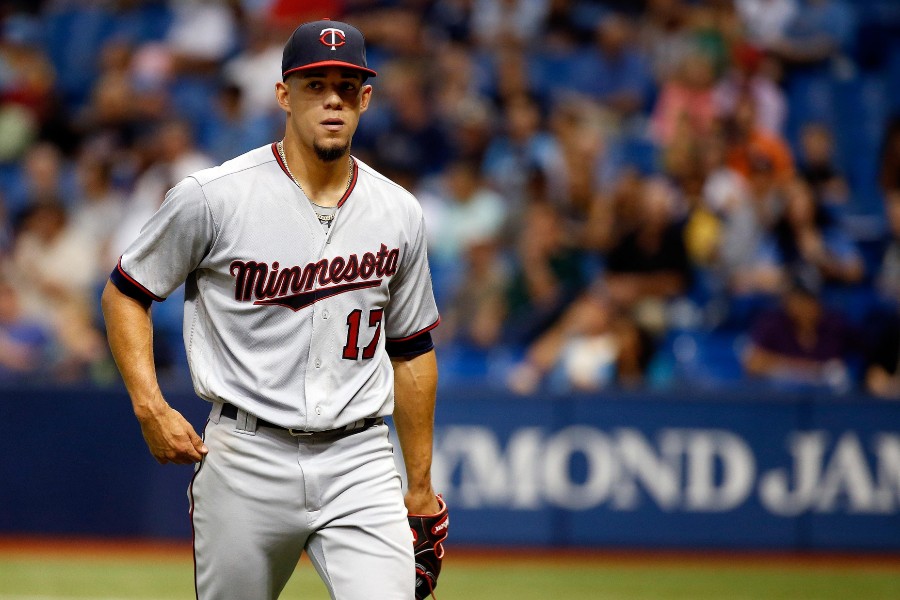 Draft and potential Berrios was drafted with the 32nd overall pick in the 2012 draft which also produced Byron Buxton, Carlos Correa, Lance McCullers, Corey Seager and Marcus Stroman, to name a few. When Berrios was taken by the Twins with the first pick in Round Comp A, his scouting report hailed his ‘absolute hammer’ of a power breaking ball. While some scouts were wary of Berrios’ smaller frame and lack of projectability, he was thought to be drawing interest from teams at the back end of the first round. Berrios made short work at every level of minor league baseball. He eventually hit a K/9 of at least 8.5 at every level of minor league ball, with xFIP typically in the 2.00 – 3.00 range. Berrios was cruising through professional lineups without resistance for four years, until he arrived at Target Field in 2016. Disastrous Debut to Solid 2017 When Berrios made his major league debut in 2016, there was a palpable air of excitement for Twins fans. The Twins faithful had been waiting on a frontline starter since Francisco Liriano’s emergence was derailed by injury. Berrios struggled initially at the major league level. In 58 innings, he put up an 8.02 ERA, BB/9 of 5.40 and an xFIP of 5.64. Berrios had never had to ‘figure it out’ in his journey through the minor leagues, 2016 was his first taste of professional baseball adversity. One of the first major steps in Berrios’ major league evolution was developing a more well-rounded pitch mix. When first called up, Berrios threw his fastball up to 60% of the time. For secondary pitches, Berrios relied almost as heavily on his changeup as his excellent curveball. Berrios’ fastball and changeup were hammered in 2016, to the tune of a .813 and 2.000 SLG% in May respectively. Berrios had dominated hitters with his fastball throughout his major league career, but it was getting crushed at the major league level. Berrios came back in 2017 with a new approach, throwing his fastball around 31% of the time and his curveball, on average 33% of the time. The impact was immediate. With the exception of a small sample in October, Berrios SLG% against on these two pitches fell to a month long high of .541 and .458 respectively. Berrios made two small but important mechanical adjustments in 2017 which have been well documented by Jeff Sullivan and Matthew Trueblood, among others. Berrios lowered his arm slot and moved from the first base side of the rubber to the third base side. The cumulative impact of these seemingly small adjustments was to increase the verticality of Berrios’ spine and the consistency of his delivery. This also resulted in an uptick in spin rate on his fastball and curveball. Berrios additionally made significant improvements to both his control and command in 2017, lowering his BB/9 from 5.40 in 2016 to 2.97 in 2017. Another aspect of Berrios’ 2017/18 evolution was his curveball. It began to take on more tilt and break more significantly down and away from right-handed hitters. This is exacerbated by his shift to the third base side of the rubber. For right-handed hitters, Berrios’ curveball is now more difficult to pick up as it’s traveling across their field of vision and their bodies more dramatically. The final improvement in Berrios’ curveball is his ability to command it. Peek at the difference between his curveball heat map in 2016 (curveball only VS RHH) and the beginning of his 2018 season (curveball only VS RHH). As you can see, Berrios is significantly more proficient in spotting his curveball on the lower and outer half of the plate. This is in spite of a recent month-long stretch where he lost command of his curveball altogether. It’s the difference between Berrios’ curveball looking like this (excellent) Or this (unhittable) Berrios lost his curveball in a recent four-start stretch which saw a significant reduction in strikeout rate (just 11 Ks). Additionally, Berrios gave up 18 earned runs in just 18.1 innings of work and had Twins fans concerned he might be headed for a stint on the DL. Berrios allayed those fears with a dominant 10 K performance against St. Louis on Tuesday. Given what Berrios has been through the get to where he is and the fanaticism with which he hones his craft, Twins fans shouldn’t be surprised at his quick turnaround. Berrios will be an outstanding major league pitcher for a long time. He’s shown his ability to adjust and evolve time and time again. La Makina is automatic.
 -
Nick Nelson made me think today, and it hurt. In a Twitter discussion, the point was made that the Twins are 10th in the AL in runs scored per game. Prior to Wednesday’s game against Toronto, the Twins had been struggling significantly with what was supposed to be an explosive offense. Here’s some data to put that into context along with MLB rankings for each category.Download attachment: Screenshot 2018-05-03 at 6.09.03 PM.png Minnesota is also second in the majors, leaving an average of 4.2 runners in scoring position per game. Scoring position. Per game! Not only has the Twins offense suffered overall (particularly their power numbers), they have struggled to drive home runners at a frankly unsustainable rate. This has to get better, right? Here’s some evidence that it will. Top of the Order Joe Mauer has had a strong start to the season. He is currently getting on base at a .439 clip, good for seventh in MLB. At the top of the lineup, Brian Dozier is trending in the opposite direction. Dozier sat on Wednesday after managing a .203/.250/.250 line in his last 15 games. Justin Morneau (who has been excellent in the booth during the Toronto series) made mention of Dozier losing the reliance on his legs. Dozier has often been a streaky hitter for the Twins, prone to mediocre first halves and explosive barrages of home runs after the All-Star break. The Twins should consider letting Mauer lead off and Dozier hit second when he gets back on track. Unexpected Excellence John Olson, of the excellent Twins Daily ‘Four Six Three’ blog pointed out today that unexpectedly, Max Kepler and Eduardo Escobar have been in scintillating form at the plate for the Twins. Leading the team with a .919 and .918 OPS respectively. It’s difficult to fathom where the Twins would be without their two most consistent offensive contributors so far. As of Wednesday night, Kepler has managed an impressive .300/.364/.556 line with a BB% of just over 9%, while cutting his K% in half from 20.1% to 10.1% and increasing his ISO from .182 in 2017 to .256 in 2018, a remarkable start for a player Keith Law tipped to break out in 2018. What is perhaps most impressive about Kepler’s performance is his improvement against lefties. In his first 20 PA Kepler has managed a .316/.350/.632 line, compared to .152/.213/.240 effort in 2017. While this probably isn’t sustainable, it’s clear he’s made an adjustment. Escobar is an equally remarkable story. A throw-away in a trade that was deemed of little value to the Twins when Francisco Liriano was traded to the White Sox, Escobar has transformed from future utility infielder, to Minnesota’s version of Eric Gordon, 6th man of the year. In Escobar’s first full season with the Twins (2014), he managed a .275/.315/.406 line with 6 HR. So far in 2018, Escobar has put up a .299/.344/.575 effort with 4 HR, off the back of a 21 HR season in 2017. Escobar is a free agent at the end of 2018. While the majority of Twins free agency talk has centered around its young core, locking up Escobar, an increasingly key offensive contributor and overwhelmingly liked clubhouse presence, should be a priority for the front office. Heating Up After slow starts. Eddie Rosario and Logan Morrison are heating up. Morrison is .286/.400/.476 in his last seven games. Rosario had an outstanding home stand in what was a rough six game stretch for the Twins. In his last seven games, Rosario has caught fire, hitting .360/.385/.800! With three home runs. Worryingly for Rosario, he is regressing in some of his plate discipline peripherals from 2017. Through the first month of the season, Rosario is swinging at more pitches outside the strike zone, making significantly less contact on pitches outside the zone (62% in 2018 compared with 72% in 2017), and has a career high 16.3% SwStr% (career low 11.9% in 2017). Rosario will never be selective, but thus far, has given up too many strikes too readily. Injury Question Marks The health of Miguel Sano and Byron Buxton is undoubtedly a major issue for the Twins in attempting to turn around their slow start. Predictably, the narrative around Sano has re-shifted to his weight. I’m not here to engage in that. The overriding outcome for Sano in recent months (including the end of 2017) is he has been unable to stay on the field consistently. Despite his historic strikeout totals, the Twins lineup is more potent with him in it. Buxton’s departure from the Twins offense has been interesting. It’s provoked narratives around the Twins ‘lacking spark’. I’m not sure how much spark the Twins have had from a .476 OPS so far in 2018. While not slipping to the depths of his initial 2017 slump, Buxton has not caught fire (or even warmed up) yet. Where he is irreplaceably missed is on defense, where the combination of his single-handed propping up of the outfield and the cascade of mediocrity replacing it is evident. The discrepency is magnified by Robbie Grossman lumbering around in right field, awkwardly misplaying hops and fly balls alike. Bench Depth Much was made of Jorge Polanco’s half-season suspension and its impact on the Twins season. Perhaps the most noticeable effect is the lack of bench depth. With Escobar occupying an everyday role, Ryan LaMarre and Gregorio Petit are now the Twins go-to bench depth for outfield and infield respectively. As a super-utility bench bat, Escobar had an fWAR of 1.7 in 2017. LaMarre and Petit will become more and more noticeable, the longer they are pressed into service for the Twins. The Twins are beginning a four-game set against the White Sox at the end of the week. Several writers have commented on how well Minnesota should perform against the Sox, Detroit and Kansas City, with over 50 games remaining against the three in 2018. Chicago, like Minnesota, has had one of the worst pitching staffs in MLB this season. If there’s a series for the offense to get on track, it’s here. It’s also worth noting that the second half of 2017 was truly outstanding. The Twins experienced breakout and extremely high quality offensive performances from half the lineup at once, most notably Buxton, Polanco, Rosario and Dozier. While the first month of 2018 has been defined by consistently poor execution throughout the team, should we be surprised to see some regression for an offense which was firing on all cylinders for the last few months of last season? What are your thoughts on the Twins offense so far in 2018? What are the bright spots? Who do you think will turn it around? Who do you think will continue to struggle? Click here to view the article
-
 Minnesota is also second in the majors, leaving an average of 4.2 runners in scoring position per game. Scoring position. Per game! Not only has the Twins offense suffered overall (particularly their power numbers), they have struggled to drive home runners at a frankly unsustainable rate. This has to get better, right? Here’s some evidence that it will. Top of the Order Joe Mauer has had a strong start to the season. He is currently getting on base at a .439 clip, good for seventh in MLB. At the top of the lineup, Brian Dozier is trending in the opposite direction. Dozier sat on Wednesday after managing a .203/.250/.250 line in his last 15 games. Justin Morneau (who has been excellent in the booth during the Toronto series) made mention of Dozier losing the reliance on his legs. Dozier has often been a streaky hitter for the Twins, prone to mediocre first halves and explosive barrages of home runs after the All-Star break. The Twins should consider letting Mauer lead off and Dozier hit second when he gets back on track. Unexpected Excellence John Olson, of the excellent Twins Daily ‘Four Six Three’ blog pointed out today that unexpectedly, Max Kepler and Eduardo Escobar have been in scintillating form at the plate for the Twins. Leading the team with a .919 and .918 OPS respectively. It’s difficult to fathom where the Twins would be without their two most consistent offensive contributors so far. As of Wednesday night, Kepler has managed an impressive .300/.364/.556 line with a BB% of just over 9%, while cutting his K% in half from 20.1% to 10.1% and increasing his ISO from .182 in 2017 to .256 in 2018, a remarkable start for a player Keith Law tipped to break out in 2018. What is perhaps most impressive about Kepler’s performance is his improvement against lefties. In his first 20 PA Kepler has managed a .316/.350/.632 line, compared to .152/.213/.240 effort in 2017. While this probably isn’t sustainable, it’s clear he’s made an adjustment. Escobar is an equally remarkable story. A throw-away in a trade that was deemed of little value to the Twins when Francisco Liriano was traded to the White Sox, Escobar has transformed from future utility infielder, to Minnesota’s version of Eric Gordon, 6th man of the year. In Escobar’s first full season with the Twins (2014), he managed a .275/.315/.406 line with 6 HR. So far in 2018, Escobar has put up a .299/.344/.575 effort with 4 HR, off the back of a 21 HR season in 2017. Escobar is a free agent at the end of 2018. While the majority of Twins free agency talk has centered around its young core, locking up Escobar, an increasingly key offensive contributor and overwhelmingly liked clubhouse presence, should be a priority for the front office. Heating Up After slow starts. Eddie Rosario and Logan Morrison are heating up. Morrison is .286/.400/.476 in his last seven games. Rosario had an outstanding home stand in what was a rough six game stretch for the Twins. In his last seven games, Rosario has caught fire, hitting .360/.385/.800! With three home runs. Worryingly for Rosario, he is regressing in some of his plate discipline peripherals from 2017. Through the first month of the season, Rosario is swinging at more pitches outside the strike zone, making significantly less contact on pitches outside the zone (62% in 2018 compared with 72% in 2017), and has a career high 16.3% SwStr% (career low 11.9% in 2017). Rosario will never be selective, but thus far, has given up too many strikes too readily. Injury Question Marks The health of Miguel Sano and Byron Buxton is undoubtedly a major issue for the Twins in attempting to turn around their slow start. Predictably, the narrative around Sano has re-shifted to his weight. I’m not here to engage in that. The overriding outcome for Sano in recent months (including the end of 2017) is he has been unable to stay on the field consistently. Despite his historic strikeout totals, the Twins lineup is more potent with him in it. Buxton’s departure from the Twins offense has been interesting. It’s provoked narratives around the Twins ‘lacking spark’. I’m not sure how much spark the Twins have had from a .476 OPS so far in 2018. While not slipping to the depths of his initial 2017 slump, Buxton has not caught fire (or even warmed up) yet. Where he is irreplaceably missed is on defense, where the combination of his single-handed propping up of the outfield and the cascade of mediocrity replacing it is evident. The discrepency is magnified by Robbie Grossman lumbering around in right field, awkwardly misplaying hops and fly balls alike. Bench Depth Much was made of Jorge Polanco’s half-season suspension and its impact on the Twins season. Perhaps the most noticeable effect is the lack of bench depth. With Escobar occupying an everyday role, Ryan LaMarre and Gregorio Petit are now the Twins go-to bench depth for outfield and infield respectively. As a super-utility bench bat, Escobar had an fWAR of 1.7 in 2017. LaMarre and Petit will become more and more noticeable, the longer they are pressed into service for the Twins. The Twins are beginning a four-game set against the White Sox at the end of the week. Several writers have commented on how well Minnesota should perform against the Sox, Detroit and Kansas City, with over 50 games remaining against the three in 2018. Chicago, like Minnesota, has had one of the worst pitching staffs in MLB this season. If there’s a series for the offense to get on track, it’s here. It’s also worth noting that the second half of 2017 was truly outstanding. The Twins experienced breakout and extremely high quality offensive performances from half the lineup at once, most notably Buxton, Polanco, Rosario and Dozier. While the first month of 2018 has been defined by consistently poor execution throughout the team, should we be surprised to see some regression for an offense which was firing on all cylinders for the last few months of last season? What are your thoughts on the Twins offense so far in 2018? What are the bright spots? Who do you think will turn it around? Who do you think will continue to struggle?
 -
I would agree with that. He has not yet been punished for the ones he's hung, which will surely change. Definitely an upwards trend in command of breaking pitches overall.
-
In mid-March, I wrote about Ryan Pressly, noting some details about his vertical release point and breaking ball command limiting his 2017 ceiling. Pressly is off to an incredibly hot start. Through 12 IP, Pressly has a 12.0 K/9, 2.25 BB/9, and a FIP of just 1.26.Looking at Pressly’s vertical release points (which have natural variance over the course of the season) there was some splitting of his release points of his fastball and slider in May of 2017 (in which he put up an ERA of 11.00). In other words, his release points were getting further away from each other, potentially resulting in tipping his fastball or slider to opposing hitters. Thus far in 2018, his vertical release points have been extremely consistent, he’s even brought the release of his fastball and slider closer together. Download attachment: Pressly1.jpg Let’s check in on Pressly’s slider. Here’s a snapshot of Pressly’s slider location in 2017. Download attachment: Pressly2.png Here’s the 2018 version so far. Download attachment: Pressly3.png So far so good. Not only is Pressly throwing his slider a significant amount more, he’s doing do with infinitely better command. Pressly has consistently located breaking pitches down and away from RHH and down and in to LHH thus far in 2018. The results have been highly effective. Download attachment: PresslySnip1.PNG Meanwhile, elsewhere in baseball, there have been some notable starting pitching performances this season. New names like Ohtani have impressed, and established powerhouses like Scherzer have continued to dominate. Two pitchers who have made notable strides in 2018 are Astros Gerrit Cole and Diamondbacks Patrick Corbin. While these two pitchers didn’t start the season with the same pedigree, both have something in common. They’ve moved away from their fastball in favor of an increased reliance on a dominant breaking pitch. Recent seasons have seen analytically inclined teams moving front line starting pitchers away from ‘establishing the fastball’ to relying on their best breaking pitch. This is hardly a ground-breaking thought. Throw what you throw best, more of the time. For both Cole and Corbin, a shift in pitch-mix has had an incredible impact on their early 2018 performance. Consider the following: Download attachment: PresslySnip2.PNG OK, who cares? Well, this shift in starting pitcher pitch mix has been coupled with pitchers throwing an increased number of pitches outside the strike zone. But what about relievers? What are the implications for relief pitchers who throw more than two pitches dabbling with their pitch mix? Here’s a look at Ryan Pressly’s mix over the last two seasons. Download attachment: PresslySnip3.PNG It’s extremely early in the season, so there’s a chance Pressly’s breaking pitch usage will revert to something resembling last year. Throughout his career, he has oscillated between throwing his breaking pitches in the range of 40%-50%, although never with such control. Pressly has even seen small increases in spin rate of both his slider and curveball in 2018. The adjustment in his pitch mix so far however (combined with much improved command) is similar to those of Cole and Corbin and has had strikingly similar results. It’s also probable that Pressly will come back down to earth in the near future. However, his start is one of the few encouraging signs for a Twins team whose relief pitching as a whole, has been a severe letdown in 2018. Click here to view the article
-
 Looking at Pressly’s vertical release points (which have natural variance over the course of the season) there was some splitting of his release points of his fastball and slider in May of 2017 (in which he put up an ERA of 11.00). In other words, his release points were getting further away from each other, potentially resulting in tipping his fastball or slider to opposing hitters. Thus far in 2018, his vertical release points have been extremely consistent, he’s even brought the release of his fastball and slider closer together. Let’s check in on Pressly’s slider. Here’s a snapshot of Pressly’s slider location in 2017. Here’s the 2018 version so far. So far so good. Not only is Pressly throwing his slider a significant amount more, he’s doing do with infinitely better command. Pressly has consistently located breaking pitches down and away from RHH and down and in to LHH thus far in 2018. The results have been highly effective. Meanwhile, elsewhere in baseball, there have been some notable starting pitching performances this season. New names like Ohtani have impressed, and established powerhouses like Scherzer have continued to dominate. Two pitchers who have made notable strides in 2018 are Astros Gerrit Cole and Diamondbacks Patrick Corbin. While these two pitchers didn’t start the season with the same pedigree, both have something in common. They’ve moved away from their fastball in favor of an increased reliance on a dominant breaking pitch. Recent seasons have seen analytically inclined teams moving front line starting pitchers away from ‘establishing the fastball’ to relying on their best breaking pitch. This is hardly a ground-breaking thought. Throw what you throw best, more of the time. For both Cole and Corbin, a shift in pitch-mix has had an incredible impact on their early 2018 performance. Consider the following: OK, who cares? Well, this shift in starting pitcher pitch mix has been coupled with pitchers throwing an increased number of pitches outside the strike zone. But what about relievers? What are the implications for relief pitchers who throw more than two pitches dabbling with their pitch mix? Here’s a look at Ryan Pressly’s mix over the last two seasons. It’s extremely early in the season, so there’s a chance Pressly’s breaking pitch usage will revert to something resembling last year. Throughout his career, he has oscillated between throwing his breaking pitches in the range of 40%-50%, although never with such control. Pressly has even seen small increases in spin rate of both his slider and curveball in 2018. The adjustment in his pitch mix so far however (combined with much improved command) is similar to those of Cole and Corbin and has had strikingly similar results. It’s also probable that Pressly will come back down to earth in the near future. However, his start is one of the few encouraging signs for a Twins team whose relief pitching as a whole, has been a severe letdown in 2018.
 -
Max Kepler, in and of himself, is a marvel. Not too many European players make it to the major leagues. Kepler signed for the Twins for around $800,000 in 2009. Nine year later, he looks like he’s on the cusp of a major offensive breakout which could propel the Twins’ already excellent outfield to one of best and most balanced in the majors. None of this is news, however, the terms of Kepler’s offensive improvement are intriguing.Kepler put up decent numbers in 2017. Through 147 games he managed a .243/.312/.425 line with 19 HR and 69 RBI, nice. Digging a little deeper into Kepler’s 2017, there were some troubling trends. Kepler’s BB% decreased, down to 8.3%, while his K% remained consistent, around 20%. Kepler’s wOBA remained remarkably consistent to its 2016 figure, an unremarkable .315. Hitting Lefties It’s also been well documented that Kepler really struggled against lefties. It’s important here to take a step back and realize just how horrible most lefties are against lefties. Justin Morneau, one of the best left-handed Twins of all time, hit just .253 against lefties. Joe Mauer, Mr. 2,000 himself, has a career .290 average against lefties. He is an exception. My point here is simply that it’s not unusual for left handed hitters to have extreme splits in their offensive numbers. Unless your name is Ichiro Suzuki (.330 career avg. against LHP), the struggle is real. In 2017 however, Kepler was truly rancid against left-handed pitching. In 125 ABs he managed a .125/.213/.240 line with a 5% BB% and a K% of 30. Rough. By contrast, against righties in 2017 Kepler put together a strong .272/.343/.484 line with almost double the walks and almost half the strikeouts. Kepler’s hitting of lefties is a little like the Vikings O-Line going into 2017, it doesn’t have to be great, because there’s a lot else to like. It just has to be good enough. This spring, Kepler spent significant time with the aforementioned Morneau, who had similar splits early in his career with the Twins, before improving significantly against LHP later in his career with the Twins. So far, the results have been encouraging. Through an incredibly small sample, Kepler is hitting .250/.400/.500 against LHP, and has yet to strike out. Time will tell if Kepler is improving against LHP, but in a lineup dominated by left-handed bats, it’s an important step to maximize Paul Molitor’s lineup flexibility. Pitch Recognition Another area of interest in digging into Kepler’s numbers is pitch recognition. It’s been noted repeatedly that opposing pitchers are going after several young Twins hitters (most notably Miguel Sano and Byron Buxton) increasingly with breaking pitches. Here’s a look at Kepler’s results against pitches he saw at least 200 of in 2017. Download attachment: Kepler1.png Looking at the numbers, it’s evident that Kepler was struggling significantly to recognize and react to breaking pitches. Hardly uncommon for a young hitter, but for the sake of comparison, Byron Buxton hit .206 and .250 against sliders and curveballs respectively, in 2017. Now let’s look at the early returns from Kepler’s 2018. Download attachment: Kepler2.png *Info does not include data from the Puerto Rico games. Please don’t hit me with the ‘small sample size’ comments. I get it, it’s incredibly early. Kepler however, is showing some improvement in recognizing breaking pitches, evidenced by destroying two for homeruns against the defending champion Houston Astros in a game the Twins tried extremely hard to throw away. It’s early, but be encouraged. Overall, Kepler’s early start shows several promising trends. His BB% is up to 16%, his K% is down to under 10%, and his OBP is up 60 points to .381. Launch Angle and Exit Velocity The last noticing on Kepler’s hot start is how the ball is coming off the bat. Mike Berardino wrote an excellent article in March detailing Kepler’s approach at the plate. “For me, it’s not about launch angle, it’s about getting my bat head in the zone as early as possible”, Kepler offers to Berardino. What Kepler is referring to squaring up the ball, the plane of his swing, and generating excellent bat speed. Launch angle is to hitting as framing is to catching, it has become THE encompassing soundbite in a skill set made up of dozens of important factors. Exit velocity is actually a better predictor of outcomes for hitters. The harder you hit the ball, the better things are likely to go. In 2017, Kepler’s average exit velocity was 88.3 mph. Early in 2018, it’s up to 91.8 mph. Drilling down to isolating breaking pitches, the contrast is even more stark. In 2017, Kepler’s exit velocity on sliders and curveballs was 86mph. Thus far in 2018, it is 97.9 mph. That’s not the kind of difference you can generate unless your pitch recognition has improved significantly. It’s still incredibly early in the season, particularly for the Twins (who are several games behind everyone else!) Kepler’s start however, should have Twins fans excited, as it appears he has made some important adjustments throughout the offseason. What do you think Kepler’s ceiling is this year? What kind of numbers are you expecting from him? I’m excited to be contributing regularly at Twins Daily with a new column. Here’s the concept: Typically, the productivity of the average American plummets on a Friday afternoon. I am looking to take full advantage with a weekly amalgam of thoughts on the Twins to be released every Friday as folks are looking to pass the time between actually stopping work and heading home or to happy hour. Typically this will focus on a player of interest. However, I’m eager to write about what folks want to read about, so if you have a question or an idea, please leave it in the comments or hit me up on Twitter @J_D_Cameron. Thanks for reading! Click here to view the article
-
 Kepler put up decent numbers in 2017. Through 147 games he managed a .243/.312/.425 line with 19 HR and 69 RBI, nice. Digging a little deeper into Kepler’s 2017, there were some troubling trends. Kepler’s BB% decreased, down to 8.3%, while his K% remained consistent, around 20%. Kepler’s wOBA remained remarkably consistent to its 2016 figure, an unremarkable .315. Hitting Lefties It’s also been well documented that Kepler really struggled against lefties. It’s important here to take a step back and realize just how horrible most lefties are against lefties. Justin Morneau, one of the best left-handed Twins of all time, hit just .253 against lefties. Joe Mauer, Mr. 2,000 himself, has a career .290 average against lefties. He is an exception. My point here is simply that it’s not unusual for left handed hitters to have extreme splits in their offensive numbers. Unless your name is Ichiro Suzuki (.330 career avg. against LHP), the struggle is real. In 2017 however, Kepler was truly rancid against left-handed pitching. In 125 ABs he managed a .125/.213/.240 line with a 5% BB% and a K% of 30. Rough. By contrast, against righties in 2017 Kepler put together a strong .272/.343/.484 line with almost double the walks and almost half the strikeouts. Kepler’s hitting of lefties is a little like the Vikings O-Line going into 2017, it doesn’t have to be great, because there’s a lot else to like. It just has to be good enough. This spring, Kepler spent significant time with the aforementioned Morneau, who had similar splits early in his career with the Twins, before improving significantly against LHP later in his career with the Twins. So far, the results have been encouraging. Through an incredibly small sample, Kepler is hitting .250/.400/.500 against LHP, and has yet to strike out. Time will tell if Kepler is improving against LHP, but in a lineup dominated by left-handed bats, it’s an important step to maximize Paul Molitor’s lineup flexibility. Pitch Recognition Another area of interest in digging into Kepler’s numbers is pitch recognition. It’s been noted repeatedly that opposing pitchers are going after several young Twins hitters (most notably Miguel Sano and Byron Buxton) increasingly with breaking pitches. Here’s a look at Kepler’s results against pitches he saw at least 200 of in 2017. Looking at the numbers, it’s evident that Kepler was struggling significantly to recognize and react to breaking pitches. Hardly uncommon for a young hitter, but for the sake of comparison, Byron Buxton hit .206 and .250 against sliders and curveballs respectively, in 2017. Now let’s look at the early returns from Kepler’s 2018. *Info does not include data from the Puerto Rico games. Please don’t hit me with the ‘small sample size’ comments. I get it, it’s incredibly early. Kepler however, is showing some improvement in recognizing breaking pitches, evidenced by destroying two for homeruns against the defending champion Houston Astros in a game the Twins tried extremely hard to throw away. It’s early, but be encouraged. Overall, Kepler’s early start shows several promising trends. His BB% is up to 16%, his K% is down to under 10%, and his OBP is up 60 points to .381. Launch Angle and Exit Velocity The last noticing on Kepler’s hot start is how the ball is coming off the bat. Mike Berardino wrote an excellent article in March detailing Kepler’s approach at the plate. “For me, it’s not about launch angle, it’s about getting my bat head in the zone as early as possible”, Kepler offers to Berardino. What Kepler is referring to squaring up the ball, the plane of his swing, and generating excellent bat speed. Launch angle is to hitting as framing is to catching, it has become THE encompassing soundbite in a skill set made up of dozens of important factors. Exit velocity is actually a better predictor of outcomes for hitters. The harder you hit the ball, the better things are likely to go. In 2017, Kepler’s average exit velocity was 88.3 mph. Early in 2018, it’s up to 91.8 mph. Drilling down to isolating breaking pitches, the contrast is even more stark. In 2017, Kepler’s exit velocity on sliders and curveballs was 86mph. Thus far in 2018, it is 97.9 mph. That’s not the kind of difference you can generate unless your pitch recognition has improved significantly. It’s still incredibly early in the season, particularly for the Twins (who are several games behind everyone else!) Kepler’s start however, should have Twins fans excited, as it appears he has made some important adjustments throughout the offseason. What do you think Kepler’s ceiling is this year? What kind of numbers are you expecting from him? I’m excited to be contributing regularly at Twins Daily with a new column. Here’s the concept: Typically, the productivity of the average American plummets on a Friday afternoon. I am looking to take full advantage with a weekly amalgam of thoughts on the Twins to be released every Friday as folks are looking to pass the time between actually stopping work and heading home or to happy hour. Typically this will focus on a player of interest. However, I’m eager to write about what folks want to read about, so if you have a question or an idea, please leave it in the comments or hit me up on Twitter @J_D_Cameron. Thanks for reading!
 -
Article: Jason Castro and a Cup of Coffee
Jamie Cameron replied to Jamie Cameron's topic in Twins Daily Front Page News
Agree with this 100% -
Article: Jason Castro and a Cup of Coffee
Jamie Cameron replied to Jamie Cameron's topic in Twins Daily Front Page News
Thanks for reading! I think something you speak to which is impossible to measure is Castro's impact on the staff. Established catcher with solid D gives him cred with veterans like Santana and confidence in him from up and comers like Berrios. -
Article: Jason Castro and a Cup of Coffee
Jamie Cameron replied to Jamie Cameron's topic in Twins Daily Front Page News
Great point, I would agree. -
Article: Jason Castro and a Cup of Coffee
Jamie Cameron replied to Jamie Cameron's topic in Twins Daily Front Page News
Thanks for sharing, great stories! -
Article: Jason Castro and a Cup of Coffee
Jamie Cameron replied to Jamie Cameron's topic in Twins Daily Front Page News
Thanks, Brock! Really appreciate it!


