



John Bonnes
-
Posts
6,785 -
Joined
-
Last visited
-
Days Won
4
Content Type
Profiles
News
Minnesota Twins Videos
2026 Minnesota Twins Top Prospects Ranking
2022 Minnesota Twins Draft Picks
Minnesota Twins Free Agent & Trade Rumors, Notes, & Tidbits
Guides & Resources
2023 Minnesota Twins Draft Picks
The Minnesota Twins Players Project
2024 Minnesota Twins Draft Picks
2025 Minnesota Twins Draft Pick Tracker
2026 Minnesota Twins Draft Tracker: Picks & Bonuses
Forums
Blogs
Events
Store
Downloads
Gallery
Everything posted by John Bonnes
-
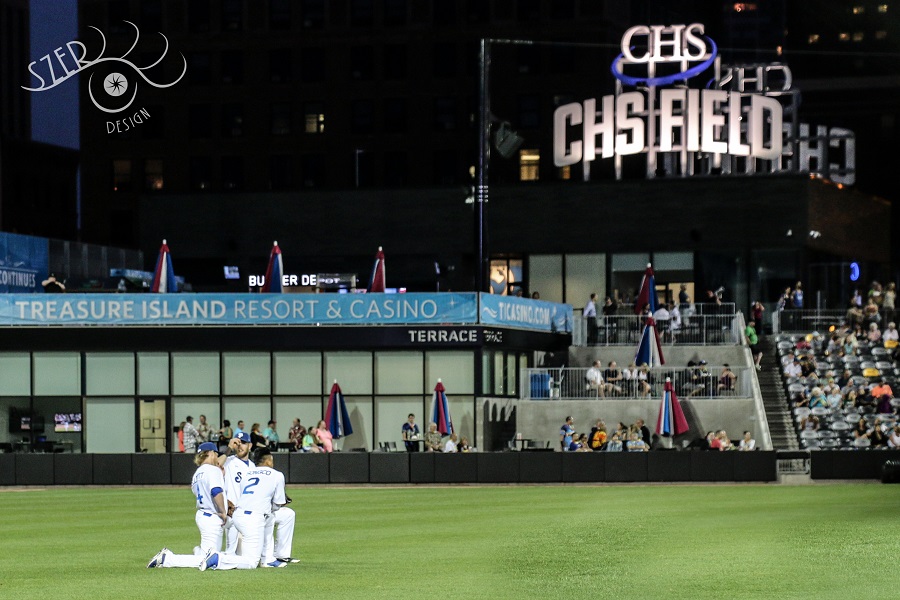 We will not want our Picnic With The Saints party to end, so we’ve including an exclusive 'After Party' at Tin Whiskers Brewing, just a few minutes walk from CHS Field. Tin Whiskers will provide special beer pricing to Twins Daily attendees AND is extending their hours until midnight to accommodate us. So to recap: pregame buffet picnic in the outfield, Saints game, postgame fireworks, Saints zaniness, craft beer corner, World Series rings, AWESOME PEOPLE and Tin Whiskers After Party, all for just $20/person and $10/kid. Tickets go on sale TOMORROW (Fri) at 8 AM on this very page. They are limited. If you haven’t already asked your family and friends to join you, do so tonight, so you can make sure to get yours before they sell out. You can get all the details for this July 14th event below. Or, if you have any questions, put them in the comments section below. See you there! Win Replica World Series Rings! So far, we’ve revealed a buffet picnic in the outfield, a Saints game and fireworks all for just $20 (and $10 for kids). Now we're adding one of our coolest giveaways: a replica 1987 and 1991 World Series ring set. One lucky attendee will get to take the rings home, but everyone will get a chance to wear them and have their picture taken with them. In fact, you need to in order to win them.At the game, we’ll have a Twitter contest during the pregame picnic where you, your family and your friends can have your picture taken with the rings. Post the pictures on Twitter with a special hashtag and you’ll be entered to win the rings. The more you post, the better will be your chances of winning. So add that to the list of reasons you should be back here on Friday morning at 8:00. And I’ll add one more: you’re going to be getting together with a great group of people. And I’ll add another – tomorrow, when we talk about the After Party….. Unbelievable Family-Friendly Price! Yesterday we announced our Picnic With The Saints, including a buffet-style picnic in the outfield, a Saints game and postgame fireworks, but we only teased the price. Today, I’m happy to announce we’ll be selling the tickets for just $20 for adults and $10 for kids 17 and under. Why so low? Because Twins Daily is all about gathering. It’s a core value, and we want you, your family and your friends to meet and talk baseball in a beautiful setting doing awesome stuff. To refresh your memory, here are the details: It is Friday night, July 14th. Before the game we’ll all gather for a pregame buffet- style picnic in the outfield. By itself, this is a $17 value. We will sit down the left field line and watch the Saints beat up the Fargo-Moorhead Red Hawks. After the game, there will be fireworks as part of Xcel Energy Friday Night Fireworks. There will be a giveaway (announced Wednesday) that you and your kids are going to love. Even if you don’t win it, you’re going to want to experience it. You’ll also get entry to an exclusive After Party (announced Thursday) at a local taproom to unwind after the game. There will also be all kinds of other Saints fun, like their in-game craziness and the Beer Dabbler Craft Beer Corner which is coincidentally near our seats.(Ron Howard voice: “It was no coincidence.”) Tickets go on sale this Friday (the 16th) on this page and will likely sell out. The minor leagues are traditionally about affordable entertainment. The Saints are all about fun. Twins Daily is all about coming together. And Minnesota is all about being outdoors. So please get this on your calendar and on your friends’ calendars, and we’ll see you Friday morning when tickets are available. Picnic In The Saints Outfield! It’s time to watch some baseball! And the whole family is invited! Friday July 14th is Picnic With The Saints, the Twins Daily community’s trip to CHS Field. For a special price (and even a more special price for kids under 18), 200+ of us will invade CHS, picnic in the Saints outfield and witness the Saints beat up the Fargo-Moorhead RedHawks before watching postgame fireworks. Here are the details: Before the game we’ll all gather for a pregame buffet- style picnic in the outfield. We did this same event two years ago and I guarantee you nobody will come away hungry. (That may not stop your kids from asking for ice cream in the 7th inning. But you probably know that.) After the game, there will be fireworks as part of Xcel Energy Friday Night Fireworks. During the game, you might want to check out the Beer Dabbler Craft Beer Corner which has something like 40 local craft beers for you and your adult friends. The special Twins Daily price (announced tomorrow) will reflect Twins Daily’s core mission to build community and make this one of THE events for Minnesota baseball fans and their families. We are far more interested in selling this out than breaking even. There will be a giveaway (announced Wednesday) that you and your kids are going to love. Even if you don’t win it, you’re going to want to experience it. You’ll get entry to an exclusive After Party (announced Thursday) at a local taproom to unwind after the game. Tickets go on sale this Friday at 8:00 AM on this page on Twins Daily. So reserve July 14th on your family calendar, send this link to your friends and set an alarm for Friday morning. We only have 200 tickets, they cannot be bought at the ballpark, and (especially after you see the price tomorrow) there is a high likelihood of a sellout. It’ll be really great to see everyone again. See you then and stop by all week for more details.
 -
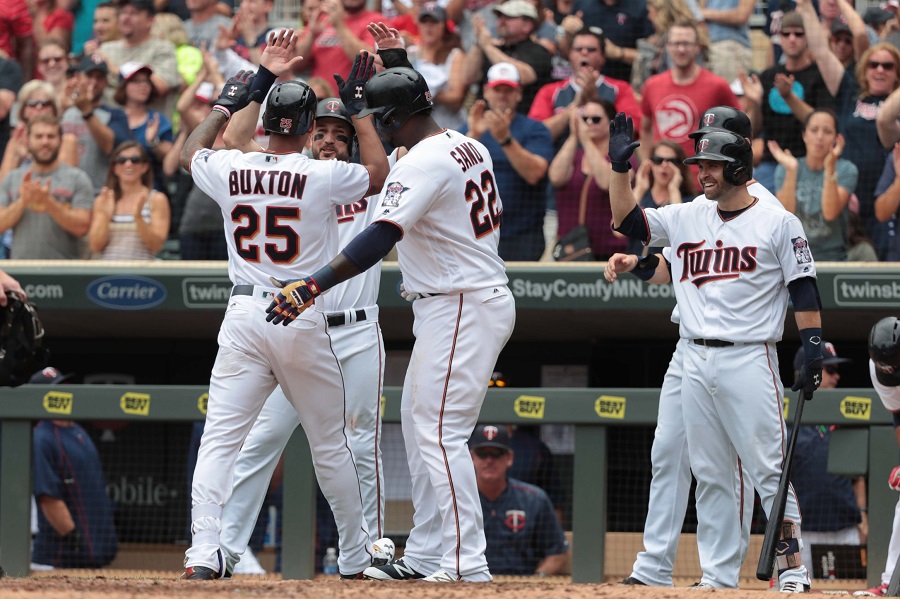
 Aaron and John talk about the Twins signing Bartolo Colon and calling up Zack Granite, review the Twins' first half by picking team MVPs, biggest disappointments, and biggest surprises, plus go over which prospects might get the call in the second half, Byron Buxton's amazing sprint home, break down Angel Hernandez's lawsuit with Bye, Goff, and Rhode, and what to do with Jorge Polanco. You can listen by downloading us from iTunes, Stitcher or find it at GleemanAndTheGeek.com. Or just click this link. http://traffic.libsy...3?dest-id=74590 Click here to view the article
 -
 http://traffic.libsyn.com/gleemangeek/79_FINAL.mp3?dest-id=74590
 -
Aaron and John return to Lynlake Brewery for a special midweek podcast to check in on the Twins top prospects' first halves, and then rate them as possible second half contributors and also trade deadline assets. You can listen by downloading us from iTunes, Stitcher or find it at GleemanAndTheGeek.com. Or just click this link.http://traffic.libsy...3?dest-id=74590 Click here to view the article
-
 http://traffic.libsyn.com/gleemangeek/Episode_321_Midseason_Prospects_Check-in.mp3?dest-id=74590
 -
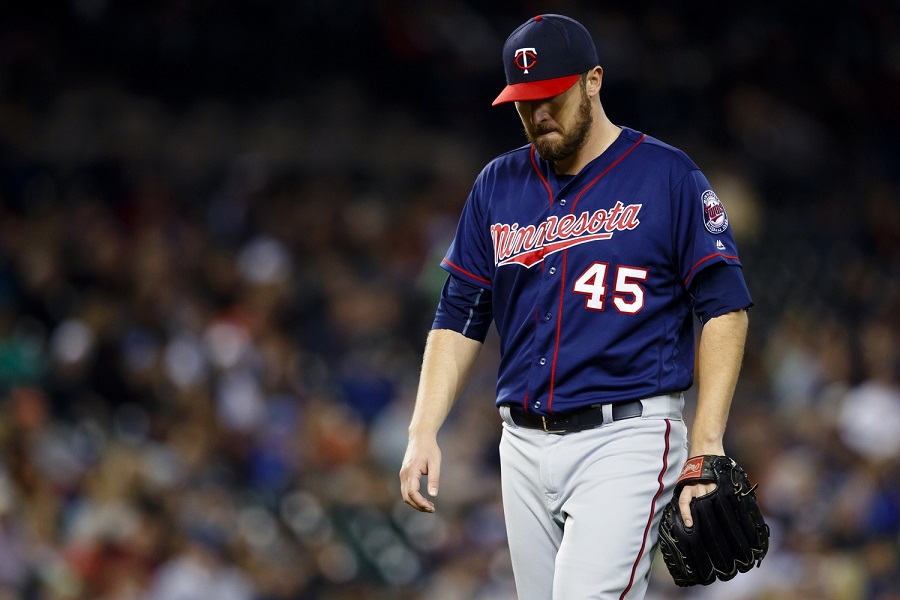
Aaron and John talk about the Twins' never-ending pitching problems, falling into a second-place tie with the Royals, how much longer the leash is for Hector Santiago, Thad Levine's quotes about the Twins' trade deadline approach, investing $3 million in 16-year-old Jelfry Marte, Kyle Gibson vs. Jered Weaver, and the latest changes to Byron Buxton's swing. You can listen by downloading us from iTunes, Stitcher or find it at GleemanAndTheGeek.com. Or just click this link. http://traffic.libsy...3?dest-id=74590 Click here to view the article
-
Gleeman & The Geek, Ep 320: Pitching Problems (Part Infinity)
John Bonnes posted an article in Twins
 http://traffic.libsyn.com/gleemangeek/72_part_FINAL.mp3?dest-id=74590
 -
Aaron and John about the Twins sweeping the Indians and re-taking first place, the tough upcoming schedule giving little time to celebrate, spending over slot to sign the draft class, getting to know Alan Busenitz and Trevor Hildenberger, the legalities of the Indians' mascot with Bye, Goff, and Rhode, the status of Hector Santiago and Phil Hughes, and LaTroy Hawkins being a breath of fresh air on the Twins' television broadcast. You can listen by downloading us from iTunes, Stitcher or find it at GleemanAndTheGeek.com. Or just click this link.http://traffic.libsy...3?dest-id=74590 Click here to view the article
-
 http://traffic.libsyn.com/gleemangeek/GATG_06_25_17_FINAL.mp3?dest-id=74590
 -
With their epic two-week road trip in the rear-view mirror, the Saints settled back into CHS field on June, 12 to face the Sioux City Explorers for three games. Back-to- back awards, a series victory and some fancy singing made the quick stop at home not feel as short.Prior to the first game of the home stand the league announced that Saints outfielder, Anthony Gallas was awarded the Pointstreak American Association Player of the Week for June 5 – June 11. And yes, you are remembering correctly from my last article, that makes it two consecutive Player of the Week honors for Saints players. Gallas’ crazy stat line from his winning week included a .571 BA, .670 OBP, two RBI and 3three runs scored. Way to go, Anthony! To begin the series, it appeared the Explorers don’t believe in the phrase “home sweet home.” They defeated the Saints 7-5 while getting 17 hits, a season high given up by the Saints. The second game went much better for the home team, ending in a 10-5 victory. The Saints big run total was aided by scoring in each of the first four innings, including two two-run bombs by Gallas and Max Garrett in the four-run fourth inning. Game three was another lopsided affair tilted towards the good guys. Ryan Zimmerman shut down his former team for seven solid innings, allowing only one run. The red-hot Gallas continued his run at the plate with a three-RBI double in the first that began the scoring on the way to an 8-1 win. The series finale was another big win because it was Saints Manager, George Tsamis’ 50th birthday. Per the Saints stats guru’s, the team is now 6-5 overall in games played on the skipper’s big day. Happy Birthday George! One of the many fun moments during the home stand came during the Monday Night Variety Show when Host Fancy Ray joined Seigo Masubuchi for Sing Along with Seigo during one of the inning breaks. Together they sang a rousing rendition of Feeling Hot Hot Hot. The fun never ends at a Saints game. After what I’m sure felt like a ten-minute nap in their own beds, the Saints hit the road again for six games, going from Winnipeg to Sioux Falls. First up was a trip across the border to battle the Goldeyes at Shaw Park in Winnipeg. The Saints won two of three from the second-place team in the North Division extending their lead to two games. Next up was a three-game stop in Sioux Falls. The Saints took two of three from the Explorers again, but the big story of the series came on the mound for the Saints. In the first game, former Twins prospect Mark Hamburger threw his record breaking, fifteenth career complete game in the victory. I’ve said it before, the most amazing stat of the record is how few games it took him to break the mark. It took former record holder; Ben Moore 121 starts to get to fourteen. It took Hamburger just 48 starts to get to fifteen. Just amazing. Congrats Mark! With the series win, the Saints are now 21-11 and have a three-game lead over the Winnipeg Goldeyes in the North Division. And now the Saints return home for ten games in eleven days. First up is the North Division second place Goldeyes for a four-game showdown. After an off-day Monday, the Sioux City Explorers visit St. Paul for a mid-week three-game series. And finishing off the home stand is a four-game set versus the Gary SouthShore Railcats. Ten games in eleven days at home, I can already feel the Fun is Good oozing out of CHS Field. So, let’s get to some of the fun for the upcoming home stand. Highlighting the stand is the second bobblehead giveaway of the year, June 24th. This time it is Kevin Millar and Bill Murray together as the collectable recreates a classic picture of the two from Midway Stadium. There will also be fireworks, fireworks, and more fireworks. Three nights of fireworks! This home stand there are two Friday night shows and the big Independence Day Super Show with food trucks on the field as well. Other promotional nights include: I saw my old girlfriend at the …X-Games Night, June 25, Larry Doby Night, June 27, and Spam’s 80th Birthday Celebration, June 28. Don't miss your chance to join TwinsDaily.com at a family-friendly Saints event on July 14. Just $20 for adults and $10 for kids gets you a pregame buffet in the outfield, a Saints ticket, fireworks and an after party at Tin Whiskers. Get more information and tickets (while they last) here. For more on the Saints, including tickets to this weekend's games, stop by SaintsBaseball.com. Click here to view the article
-
Aaron and John talk about the Indians sweeping the Twins out of first place, recapping the Twins' draft and no. 1 pick Royce Lewis signing for $6.7 million, Byron Buxton's underappreciated defense, in-house options to address the Twins' growing rotation and bullpen problems, Eddie Rosario putting the Zach Granite talk on hold, and Jorge Polanco vs. Eduardo Escobar. You can listen by downloading us from iTunes, Stitcher or find it at GleemanAndTheGeek.com. Or just click this link.http://traffic.libsy...3?dest-id=74590 Click here to view the article
-
 http://traffic.libsyn.com/gleemangeek/GATG_06_18_17_Final.mp3?dest-id=74590
 -
:-) I went out and found these replica rings. I'm really excited about these.
-
In a special midweek show, Aaron and John dissect the Twins' draft picks and draft strategy, beginning with no. 1 overall pick Royce Lewis and the outrage that followed, plus Brent Rooker, Landon Leach, and Blayne Enlow, all while visiting Sisyphus Brewing. You can listen by downloading us from iTunes, Stitcher or find it at GleemanAndTheGeek.com. Or just click this link. Click here to view the article
-
 http://traffic.libsyn.com/gleemangeek/Episode_316_Draft_DRAFT_DRAFT.mp3
 -
Article: Twins Draft Blayne Enlow, Seven More
John Bonnes replied to Jeremy Nygaard's topic in Twins Daily Front Page News
Wagwan, It sounds like your concerns are mostly about how the first four picks were handled, and I can get that. I have concerns about it too. I certainly did this morning. The fourth pick, Enlow, helps alleviate those concerns. Unless they did this strategy, he simply would not have been available. His signing slot is (likely) higher than even their #35 pick, so accumulating some money means they ended up with a guy 40 slots higher in the 3rd round than they would have otherwise. But I also wasn't a huge fan of McKay, who seemed like a pick without a lot of upside. And the Twins have had some good luck scouting and drafting toolsy prep players like Lewis in the past.- 352 replies
-
- 7
-

-
- mlb draft
- royce lewis
- (and 1 more)
-
Article: Twins Daily’s Instant Draft Reaction: WTF?
John Bonnes replied to John Bonnes's topic in Twins Daily Front Page News
Looking at this story... I was in a rush to post last night so I wish I added a paragraph just before the theories. It would have clarified that I'm not disappointed that the Twins didn't get Carlson. I don't have any strong feelings about him either way. I'm disappointed that the Twins didn't get anyone "over slot". The $1M+ they saved on Lewis didn't go to anyone ranked in the top 40 of the draft. Both 35 and 37 are good enough picks, but both went (at best) about where you would expect them to go. So now the Twins are going into Day 2 with $1M+ extra dollars that is increasingly harder to spend and with 75 players off the board. Anyway, I just wanted to clarify: this isn't about Carlson, at least not for me.- 209 replies
-
- 5
-
-
- royce lewis
- sam carlson
- (and 2 more)
-
Article: Twins Draft Blayne Enlow, Seven More
John Bonnes replied to Jeremy Nygaard's topic in Twins Daily Front Page News
Earliest remaining is a high school shortstop at #29. Only five remaining under #50 and four of them are high schoolers. A dozen left under #70 and all but two are high schoolers. If the Twins' strategy was to use the extra $1M they saved to approach remaining players overnight and snag a top 40 pick, it doesn't appear there is a lot left.- 352 replies
-
- 3
-
-
- mlb draft
- royce lewis
- (and 1 more)
-
Article: Twins Draft Blayne Enlow, Seven More
John Bonnes replied to Jeremy Nygaard's topic in Twins Daily Front Page News
Anyone have a list of best remaining players in the draft? -
We set a record for page views yesterday, approaching 100,000. A lot of that was on our Day 1 Draft Day thread. And starting at about the 500th comment or so, the reaction could be summarized in three letters: W. T. F. To the community’s credit, that was not the thought process immediately, when the Twins surprised everyone by picking prep shortstop Royce Lewis first overall. That’s because a good chunk of the wonks on this site understand there is a strategy that can accompany just such a pick, one which I explained in a series of tweets, starting with this one, yesterday afternoon. You can click through, but I’ll give the gist…Saving money on the first overall pick is a common strategy for MLB teams and has been used with much success. Drafting Lewis, who was considered along with Kyle Wright and Brendan McKay, to be a half step below Hunter Greene in terms of talent, could essentially give the Twins extra quality in some of their following picks. Again, click on the tweet for the details. So Lewis was the surprise pick at #1, but we heard reports that he was the pick because he gave the Twins a discount which they could use to essentially accumulate higher picks later in the draft. That’s a solid strategy; additional quality picks helps both with risk mitigation and with higher upside. And it costs nothing but a little negotiation. Plus, selfishly, it makes the rest of the night that much more fun. The Twins had two more picks last night, the 35th and 37th picks and lots of leftover money. Signing Lewis “below slot” gave them the opportunity to sign some higher ranked players who seemed to “tumble” down the draft board, not because there was anything wrong with them, but because they wanted more money than teams above the Twins in the draft (but below them in leftover money) could offer. What’s more, the most obvious of those players was a high school pitcher from Burnsville. Sam Carlson was projected to be a mid-first round pick. He’s a pitcher. He’s a hometown boy. And the fact that he was available at pick 35 made it seem like the Twins and he had conspired to allow him to fall into the Twins lap. Except that isn’t what happened. The Twins picked a college outfielder, Brent Rooker at 35. They picked a prep (Canadian) pitcher, Landon Leach, at 37. Both are legitimate top 100 prospects, but neither was a top 20 or even perceived to be a top 30 pick. In fact, one could reasonably project that both of them could also sign “under slot.” Carlson ended up going 55th to the Mariners who don’t seem to have the money to sign him. So WTF happened? We won’t find out all the signing amounts for several days, but I’ll float some scenarios, and you can add your own in the comment below. 1. Lewis didn’t sign for less than slot. I think that it’s already been reported that he did, but these moves make a lot more sense if Lewis' agent, Scott Boras, didn’t let Lewis sign for less than slot, or something happened that the Twins weren’t sure they had that extra money. 2. The Twins got sniped before #35. Whoever the Twins targeted with the 35th pick, was taken before they got their pick. Which would mean that either the player’s agent was incompetent, or the Twins didn’t get word to the player to make sure teams knew they needed to pass, or another team called their bluff or figured out a way to get their own leftover money. 3. A Carlson deal fell through. But they why do the Mariners take him at #55? They have to know they can sign him if they're going to use their second round pick on him, right? 4. The Twins have no intention of using their whole $14M draft budget. They saved money to save money. This just seems crazy. It would be a complete betrayal. 5. They're going to use the money on Day 2. OK, but now the top picks are already done. (Late add: track the Day 2 moves on Twins Daily's Day 2 Thread!) We are all left scratching our heads. Perhaps we'll get more information that clarifies what we witnessed. Or maybe this is the mess it appears to be. Click here to view the article
- 209 replies
-
- 9
-
-
- royce lewis
- sam carlson
- (and 2 more)
-
 Saving money on the first overall pick is a common strategy for MLB teams and has been used with much success. Drafting Lewis, who was considered along with Kyle Wright and Brendan McKay, to be a half step below Hunter Greene in terms of talent, could essentially give the Twins extra quality in some of their following picks. Again, click on the tweet for the details. So Lewis was the surprise pick at #1, but we heard reports that he was the pick because he gave the Twins a discount which they could use to essentially accumulate higher picks later in the draft. That’s a solid strategy; additional quality picks helps both with risk mitigation and with higher upside. And it costs nothing but a little negotiation. Plus, selfishly, it makes the rest of the night that much more fun. The Twins had two more picks last night, the 35th and 37th picks and lots of leftover money. Signing Lewis “below slot” gave them the opportunity to sign some higher ranked players who seemed to “tumble” down the draft board, not because there was anything wrong with them, but because they wanted more money than teams above the Twins in the draft (but below them in leftover money) could offer. What’s more, the most obvious of those players was a high school pitcher from Burnsville. Sam Carlson was projected to be a mid-first round pick. He’s a pitcher. He’s a hometown boy. And the fact that he was available at pick 35 made it seem like the Twins and he had conspired to allow him to fall into the Twins lap. Except that isn’t what happened. The Twins picked a college outfielder, Brent Rooker at 35. They picked a prep (Canadian) pitcher, Landon Leach, at 37. Both are legitimate top 100 prospects, but neither was a top 20 or even perceived to be a top 30 pick. In fact, one could reasonably project that both of them could also sign “under slot.” Carlson ended up going 55th to the Mariners who don’t seem to have the money to sign him. So WTF happened? We won’t find out all the signing amounts for several days, but I’ll float some scenarios, and you can add your own in the comment below. 1. Lewis didn’t sign for less than slot. I think that it’s already been reported that he did, but these moves make a lot more sense if Lewis' agent, Scott Boras, didn’t let Lewis sign for less than slot, or something happened that the Twins weren’t sure they had that extra money. 2. The Twins got sniped before #35. Whoever the Twins targeted with the 35th pick, was taken before they got their pick. Which would mean that either the player’s agent was incompetent, or the Twins didn’t get word to the player to make sure teams knew they needed to pass, or another team called their bluff or figured out a way to get their own leftover money. 3. A Carlson deal fell through. But they why do the Mariners take him at #55? They have to know they can sign him if they're going to use their second round pick on him, right? 4. The Twins have no intention of using their whole $14M draft budget. They saved money to save money. This just seems crazy. It would be a complete betrayal. 5. They're going to use the money on Day 2. OK, but now the top picks are already done. (Late add: track the Day 2 moves on Twins Daily's Day 2 Thread!) We are all left scratching our heads. Perhaps we'll get more information that clarifies what we witnessed. Or maybe this is the mess it appears to be.
 -
Article: Twins Daily Official MLB Draft Day 1
John Bonnes replied to Seth Stohs's topic in Twins Daily Front Page News
I'm looking for theories here. I have no idea what happened. My current theorems: 1. These latter two picks make sense IF they didn't get any kind of discount from Boras and Lewis. That is certainly possible. 2. Their choice got sniped sometime before 35. Either the agent they were working with didn't get the word out or a team saved money someplace else. 3. They couldn't come to agreement with Carlson (who seemed to be the obvious pick). Anything I'm missing?- 720 replies
-
- 2
-
-
- hunter greene
- brendan mckay
- (and 3 more)
-
Article: Twins Daily Official MLB Draft Day 1
John Bonnes replied to Seth Stohs's topic in Twins Daily Front Page News
The devil is going to be in the details. If their strategy gets money that allows them to sign some prospect considerably up the chart from 35 and 37, you can argue that they did both: mitigate risk by getting more talented guys AND chased upside by getting higher quality players.- 720 replies
-
- 6
-
-
- hunter greene
- brendan mckay
- (and 3 more)
-
Article: Twins Daily Official MLB Draft Day 1
John Bonnes replied to Seth Stohs's topic in Twins Daily Front Page News
Do we have any names of mid 1st round picks that the Twins could have special interest in if they do save money with that first pick? -
Article: Twins Daily Official MLB Draft Day 1
John Bonnes replied to Seth Stohs's topic in Twins Daily Front Page News
Jeremy Nygaard laid out an interesting scenario in which the Twins take Royce Lewis #1 in a Twitter thread. https://twitter.com/jeremynygaard/status/873932994616197121 The way he lays it out, the Twins would end up with a top end talent, also get a toolsy prep position player (which is something they do) and save a ton of money for another big pick with their 35th or 37th picks. It's interesting.
