



John Bonnes
-
Posts
6,784 -
Joined
-
Last visited
-
Days Won
4
Content Type
Profiles
News
Minnesota Twins Videos
2026 Minnesota Twins Top Prospects Ranking
2022 Minnesota Twins Draft Picks
Minnesota Twins Free Agent & Trade Rumors, Notes, & Tidbits
Guides & Resources
2023 Minnesota Twins Draft Picks
The Minnesota Twins Players Project
2024 Minnesota Twins Draft Picks
2025 Minnesota Twins Draft Pick Tracker
2026 Minnesota Twins Draft Tracker: Picks & Bonuses
Forums
Blogs
Events
Store
Downloads
Gallery
Everything posted by John Bonnes
-
 Yep. It says sponsored content both on the front page and at the top. We agreed to it because we thought it might be of interest to a fair number of member in our community.
 -
Aaron and John talk about snow wiping away three games at Target Field, Joe Mauer's 2,000th career hit and Hall of Fame chances, Jose Berrios' dominant outings, Byron Buxton's stolen base excellence, Paul Molitor's usage of Zach Duke, Ryan LaMarre making way for Alan Busenitz, Ervin Santana, Trevor May, and Michael Pineda on the comeback trail, and betting on whether Bonnes or Gleeman lives longer. You can listen by downloading us from iTunes, Stitcher or find it at GleemanAndTheGeek.com. Or just click this link. Sponsored by Sota Stick, Away Travel, and Bye, Goff & Rhode. Click here to view the article
-
 http://traffic.libsyn.com/gleemangeek/2018-04-15_Final.mp3 Sponsored by Sota Stick, Away Travel, and Bye, Goff & Rhode.
 -
Aaron and John talk about the Twins playing home games in between snowouts, the Fernando Rodney Experience, the John Bonnes College Experience, changing plans for Phil Hughes, reports that Byron Buxton, Jose Berrios, and Max Kepler turned down contract extensions, bullpen leverage, agreeing to do one book signing, and drinking beer at Chapel Brewing. You can listen by downloading us from iTunes, Stitcher or find it at GleemanAndTheGeek.com. Or just click this link.http://traffic.libsy...3?dest-id=74590 Sponsored by Delaware North, Casper Mattresses, Seatgeek, and Draft. Click here to view the article
-
 http://traffic.libsyn.com/gleemangeek/Ep_363_FINAL.mp3?dest-id=74590 Sponsored by Delaware North, Casper Mattresses, Seatgeek, and Draft.
 -
Happy Opening Day! We might be jumping the gun a bit, but we want to kick off a VERY special giveaway in honor of the Home Opener for Twins fans. You can win two passes to mingle with Logan Morrison at Utepils Brewing, courtesy of Twins Daily and Fan HQ. The event is this Sunday (April 8th) from 6:00-7:00 PM. Only 99 tickets are available for this intimate gathering in which Morrison will be your host, mingling, signing autographs, posing for photos and partying with YOU and other Twins fans. For a chance to win a pair of event admissions, sign up here. The drawing happens at noon on Friday, and you can greatly increase your chances of winning by sharing the giveaway with friends, as you’ll see below.Morrison joined the Twins this year in a surprise move to be the team’s primary designated hitter. The 30-year-old had a breakthrough year in 2017 with the Tampa Rays, slugging 38 home runs. But since you’ll be hanging out with him, what you really care about is this: immediately following his introductory press conference a group of Tampa beat writers approached the Twins press corps saingy “You’re really going to love covering this guy. He’s a lot of fun.” Your tickets to the event will include one autograph on any item and a picture with “LoMo.” If you miss out, you can also buy tickets here. But before you do that, you can greatly increase your chances of winning by encouraging friends to share the event. Here’s how. 1. When you enter, you'll get a custom URL to the contest that you can send to friends to enter. 2. If they enter using that link, you'll get FIVE additional entries. Plus, they'll also get an entry, and a URL that they can share too. So spread the word! The more you let your friends know, the better your chances of winning. Plus, maybe they'll win and invite you. Twins Daily is all about growing the community, and this is a great way to share your Twins fandom with friends and family. Happy Home Opener everyone! Enter now and best of luck! Click here to view the article
-
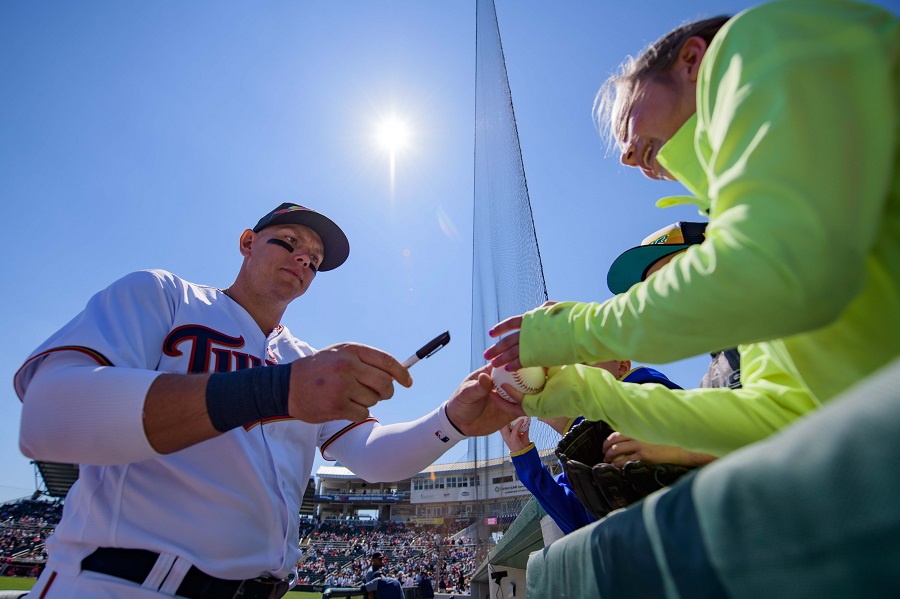 Morrison joined the Twins this year in a surprise move to be the team’s primary designated hitter. The 30-year-old had a breakthrough year in 2017 with the Tampa Rays, slugging 38 home runs. But since you’ll be hanging out with him, what you really care about is this: immediately following his introductory press conference a group of Tampa beat writers approached the Twins press corps saingy “You’re really going to love covering this guy. He’s a lot of fun.” Your tickets to the event will include one autograph on any item and a picture with “LoMo.” If you miss out, you can also buy tickets here. But before you do that, you can greatly increase your chances of winning by encouraging friends to share the event. Here’s how. 1. When you enter, you'll get a custom URL to the contest that you can send to friends to enter. 2. If they enter using that link, you'll get FIVE additional entries. Plus, they'll also get an entry, and a URL that they can share too. So spread the word! The more you let your friends know, the better your chances of winning. Plus, maybe they'll win and invite you. Twins Daily is all about growing the community, and this is a great way to share your Twins fandom with friends and family. Happy Home Opener everyone! Enter now and best of luck!
 -
The Minnesota Twins, Delaware North and Target Field unveiled new spaces, new designs, new food and new beer. Given the last, we sent our resident drunk local beer expert, John Bonnes, to sample the fare. Here are his reports: These rank among some of the biggest improvement we've seen in Target Field. I'm looking forward to hearing people's impressions as they attend this first homestand. Click here to view the article
-
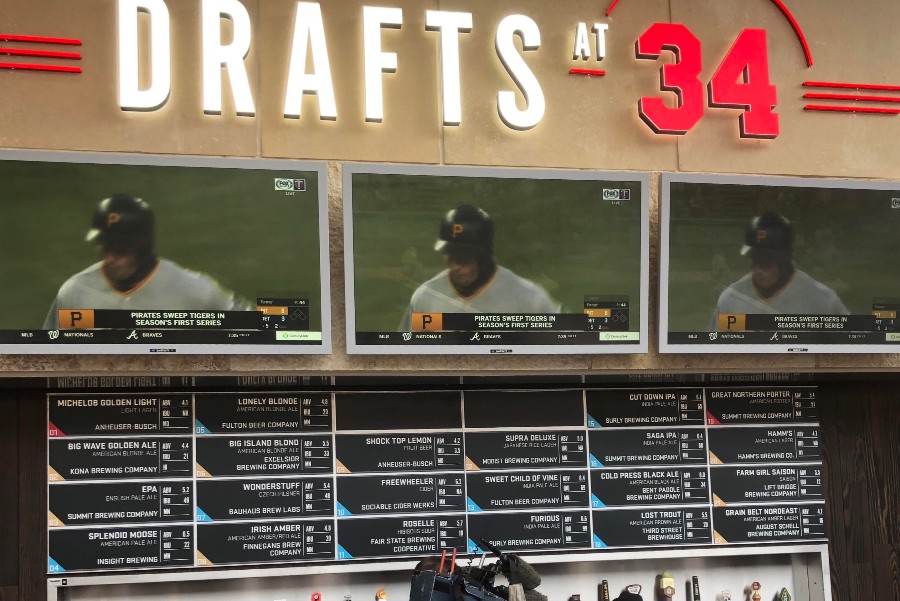 https://twitter.com/TwinsGeek/status/980799357795622912 https://twitter.com/TwinsGeek/status/980800564899565571 https://twitter.com/TwinsGeek/status/980800860442824704 https://twitter.com/TwinsGeek/status/980801401638080512 https://twitter.com/TwinsGeek/status/980802557856702464 And then the event began; here are a few of the reports. For the whole collection, head over to @TwinsDaily on Twitter. While you're there, maybe follow them too.... https://twitter.com/twinsdaily/status/980843262457143301 https://twitter.com/twinsdaily/status/980845182005514240 Those were delicious by the way. I expect them to be pretty popular. There are also the old stand-bys...... https://twitter.com/twinsdaily/status/980848309362417664 And then we get to the important stuff... https://twitter.com/twinsdaily/status/980849479183159296 https://twitter.com/twinsdaily/status/980850301493227520 But as good as that was, the real highlight is the new Bat & Barrel space in right field, which is now open to all visitors. https://twitter.com/twinsdaily/status/980852688396185602 https://twitter.com/twinsdaily/status/980857436469891072 https://twitter.com/twinsdaily/status/980863022444007434 https://twitter.com/twinsdaily/status/980863510598111233 https://twitter.com/twinsdaily/status/980865594131210242 https://twitter.com/twinsdaily/status/980872814591991808 And finally a few other food notes: https://twitter.com/twinsdaily/status/980881755627577345 https://twitter.com/twinsdaily/status/980882457393356800 https://twitter.com/twinsdaily/status/980847714517897221 Finally, there was some great artwork, too. https://twitter.com/TwinsGeek/status/980842241961971712 https://twitter.com/ChrissieTVoR/status/980853075199045634 https://twitter.com/twinsdaily/status/980895502286893056 These rank among some of the biggest improvement we've seen in Target Field. I'm looking forward to hearing people's impressions as they attend this first homestand.
 -
Aaron and John talk about the Minnesota Twins' opening weekend series against the Orioles, Paul Molitor's in-game decision-making, scoreless starts from Jake Odorizzi, Kyle Gibson, and Jose Berrios, the Kennys Vargas waiver wire saga, Ryan LaMarre's surprising path to a roster spot, and getting the red-ass about bunting. You can listen by downloading us from iTunes, Stitcher or find it at GleemanAndTheGeek.com. Or just click this link.http://traffic.libsy...3?dest-id=74590 Sponsored by Delaware North, Simple Contacts, Harry's Razors & Pick and Shovel. Click here to view the article
-
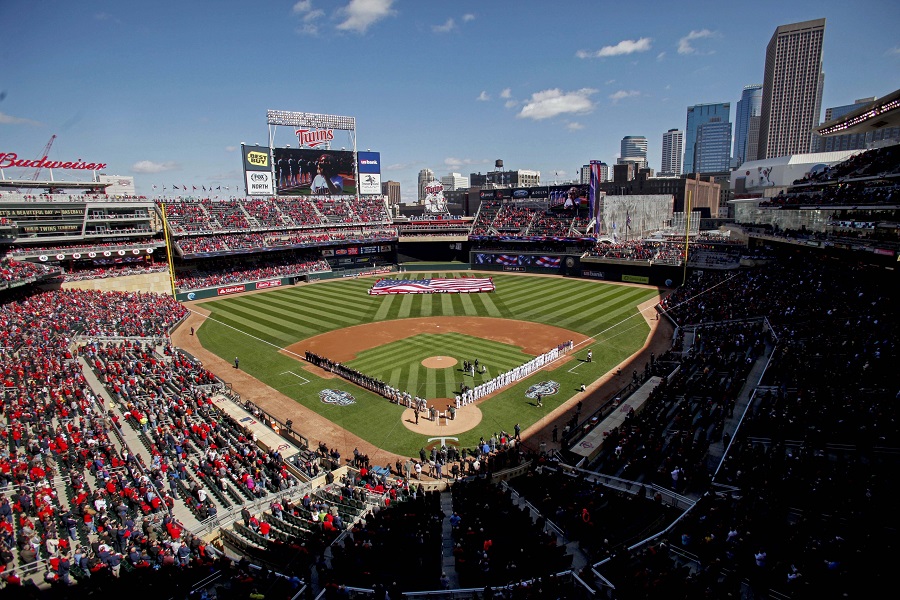 http://traffic.libsyn.com/gleemangeek/ep_362_Opening_Day.mp3?dest-id=74590 Sponsored by Delaware North, Simple Contacts, Harry's Razors & Pick and Shovel.
 -
Aaron and John discuss the impact of Jorge Polanco's suspension, preview the 2018 Minnesota Twins season, review John's brush with Olympic curling greatness, bet on the rest of the AL Central and revel in Aaron's new life as a book distributor. You can listen by downloading us from iTunes, Stitcher or find it at GleemanAndTheGeek.com. Or just click this link.http://traffic.libsy...3?dest-id=74590 Sponsored by Pick and Shovel, Seatgeek, RxBar & Brady Mason Click here to view the article
-
Gleeman & The Geek, Ep 361: Minnesota Twins 2018 Season Preview
John Bonnes posted an article in Twins
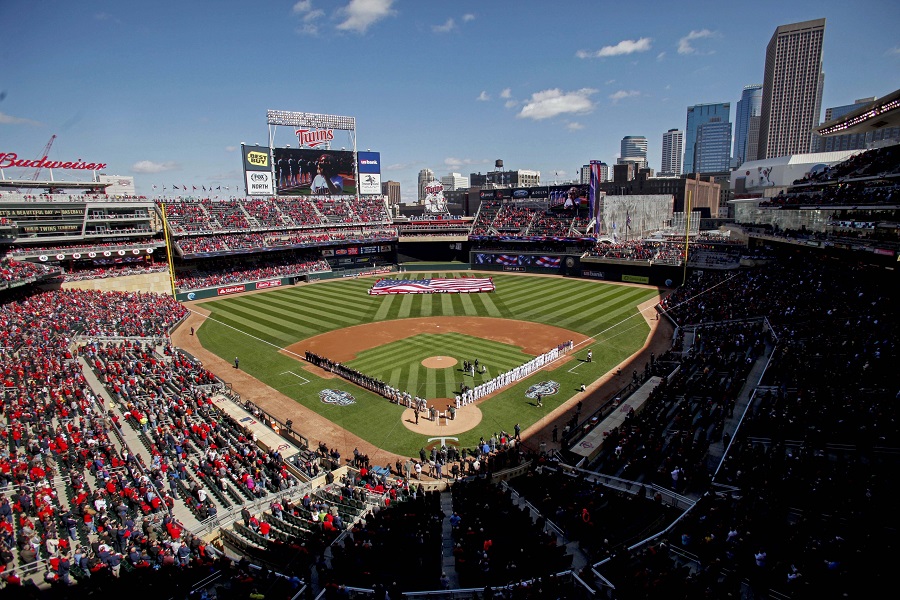 http://traffic.libsyn.com/gleemangeek/Ep_361_Twins_Season_Preview.mp3?dest-id=74590 Sponsored by Pick and Shovel, Seatgeek, RxBar & Brady Mason
 -
We are happy to announce that Tom Froemming has agreed to become Twins Daily’s first editor. The whole community already knows Tom from his extensive Twins Daily writing which included last year’s great game recap series. We hope you’ll all congratulate him as he works with both established and new writers to keep Twins Daily’s front page the pride of Twins junkies.The decision to formally establish this role was a result of concerns we expressed in a story back on December 26th. To help ensure the long term viability of Twins Daily, we understand that we both need to formalize some of our part-time roles and to reach out to and compensate new writers. Tom will be doing both and we are planning additional announcements and activities to strengthen our community soon. We’re thrilled Tom agreed to take on this responsibility. He’s talented, organized, creative, tireless and incredibly passionate. He’s exactly the writer for which Twins Daily was established. But he’s certainly not alone in that regard; just look at the names on our front page, our blogs and our forums. You’ll find many others who help the community thrive and would’ve made great candidates. Maybe you’re one of them? If you would like to try writing for Twins Daily, we encourage you to set up a blog and reach out to Tom. We compensate each independent writer for all gross revenues the views from their stories generate. They will also get help editing and honing their writing, both from other writers and from the community. And of course, you get to reach the thousands of Twins fans who stop by Twins Daily each day. We are determined to continue to grow Twins Daily and expose new voices and great writing to as many passionate Twins fans as we can reach. We think Tom will be an important part of that, and we think you will be too. I hope you’ll join us in rallying around Tom in his new role and continuing to support Twins Daily, Gratefully, Brock, Seth, Nick, Parker & John Click here to view the article
-
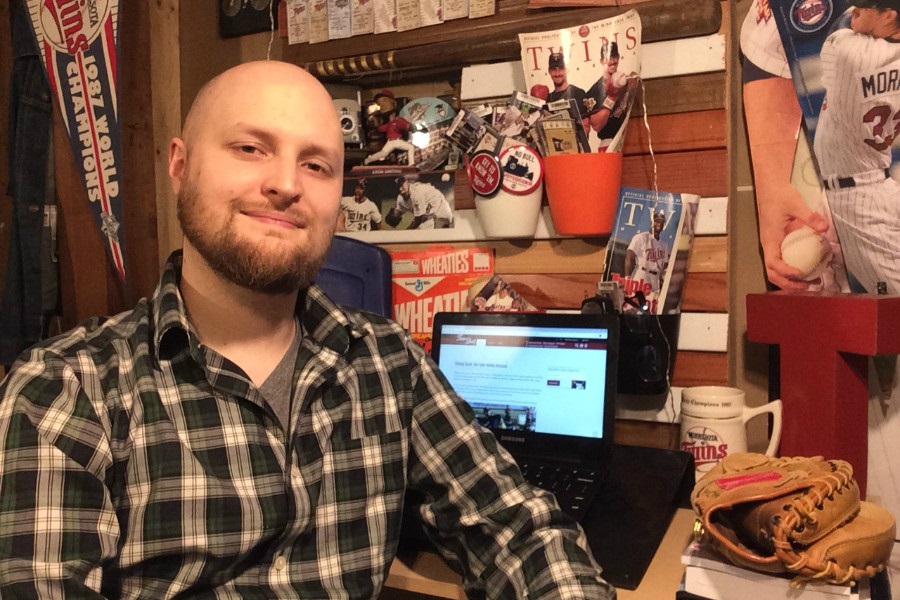 The decision to formally establish this role was a result of concerns we expressed in a story back on December 26th. To help ensure the long term viability of Twins Daily, we understand that we both need to formalize some of our part-time roles and to reach out to and compensate new writers. Tom will be doing both and we are planning additional announcements and activities to strengthen our community soon. We’re thrilled Tom agreed to take on this responsibility. He’s talented, organized, creative, tireless and incredibly passionate. He’s exactly the writer for which Twins Daily was established. But he’s certainly not alone in that regard; just look at the names on our front page, our blogs and our forums. You’ll find many others who help the community thrive and would’ve made great candidates. Maybe you’re one of them? If you would like to try writing for Twins Daily, we encourage you to set up a blog and reach out to Tom. We compensate each independent writer for all gross revenues the views from their stories generate. They will also get help editing and honing their writing, both from other writers and from the community. And of course, you get to reach the thousands of Twins fans who stop by Twins Daily each day. We are determined to continue to grow Twins Daily and expose new voices and great writing to as many passionate Twins fans as we can reach. We think Tom will be an important part of that, and we think you will be too. I hope you’ll join us in rallying around Tom in his new role and continuing to support Twins Daily, Gratefully, Brock, Seth, Nick, Parker & John
 -
Seth gives the conveys the nightly wrap from spring training, including interviews with Jorge Polanco and Twins GM Derek Falvey and (of course) minor league notes. You can listen to it here, or better yet, subscribe to it on your smartphone using the directions below.To add this podcast to your iPhone podcast app, do the following: 1. Open up this page in your iphone and copy this link: http://twinsdaily.libsyn.com/rss 2. Go into your iPhone podcast app and click on the "Library" tab at the bottom and then click on "Edit" in the upper right-hand corner: 3. Click on "Add a Podcast by URL..." 4. Paste the link you just copied into the dialog box and click on 'Subscribe'. Now you'll get every episode delivered to your phone to listen to whenever you want Click here to view the article
-
Aaron and John review the Minnesota Twins latest spring training roster moves and then preview the AL East and AL West using Las Vegas' over/under numbers. You can listen by downloading us from iTunes, Stitcher or find it at GleemanAndTheGeek.com. Or just click this link. Sponsored by Sota Stick, Away Travel and Casper Mattresses. http://traffic.libsy...3?dest-id=74590 Click here to view the article
-
 http://traffic.libsyn.com/gleemangeek/2018_Over-Under_Pt_1.mp3?dest-id=74590
 -
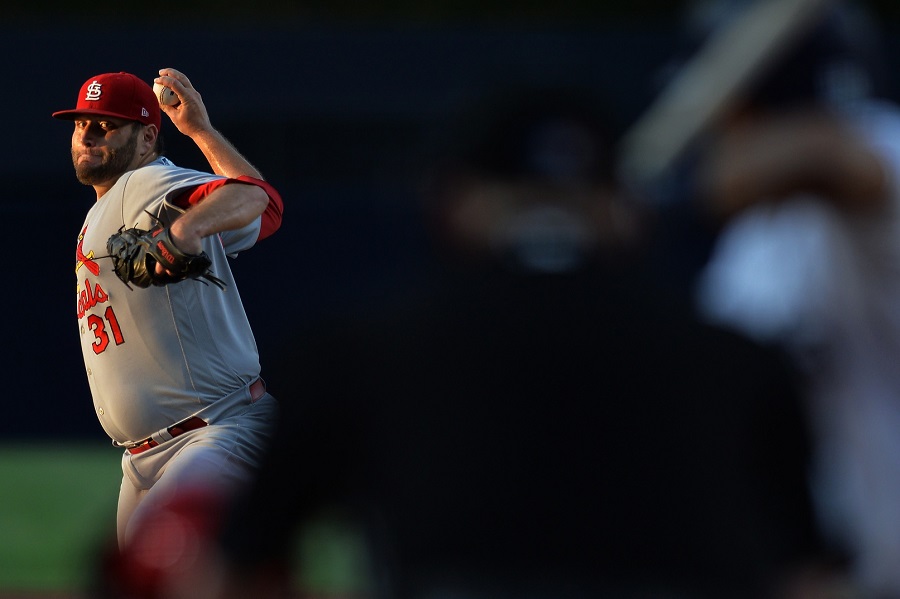
Aaron and John reunite to discuss the Minnesota Twins signing of Lance Lynn and John's trip to spring training. Sponsored by Bombfell and Seatgeek. You can listen by downloading us from iTunes, Stitcher or find it at GleemanAndTheGeek.com. Or just click this link.http://traffic.libsy...3?dest-id=74590 Click here to view the article
-
 http://traffic.libsyn.com/gleemangeek/Ep_359_Lance_Lynn.mp3?dest-id=74590
 -
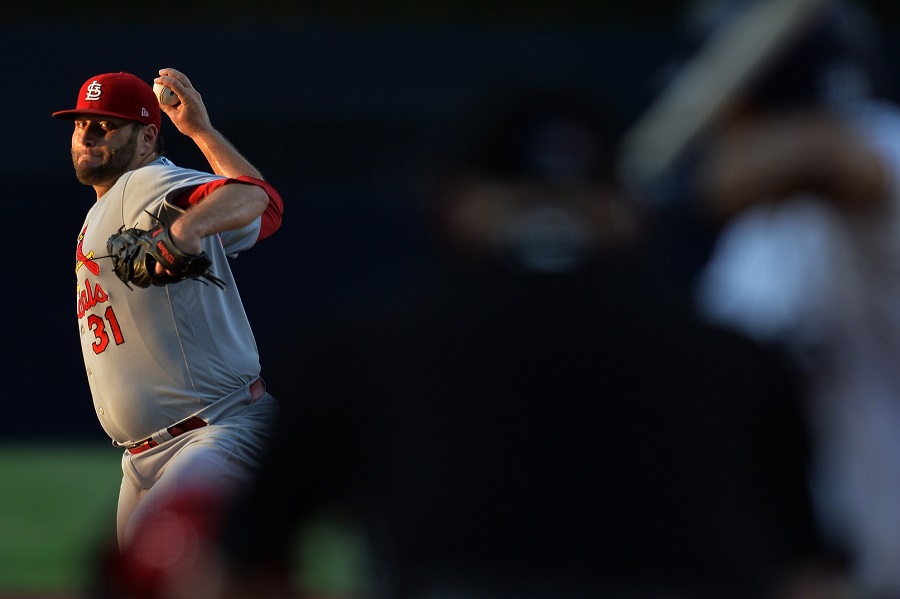
FT MYERS - Past administrations of the Twins would’ve signed Lance Lynn. In fact, they’ve done so repeatedly, except his name was Phil Hughes, Ricky Nolasco and Ervin Santana. These were all second-tier starting pitchers, capable of earning a “B” grade from fans and pundits. But what separates this move from those are all the “A” grades that surround it.“A” for Contract The most obvious difference between those players and this one is the contract the Twins offered. Most of the similar pitchers that the Twins signed received four-year deals, and Lynn probably expected as much for himself this year. In fact, MLBTradeRumors.com predicted a 4 year, $56 million contract at the beginning of the offseason, which would have been right in line with the Santana and Nolasco deals. But there was a historic adjustment in the free agent market this offseason that left a dozen top free agents unsigned as spring training started. The Twins got lucky in that way, but they also made their own luck, showing flexibility and being aggressive when the opportunity presented itself. Which they could do because they also get: “A” for Payroll I was as skeptical as anyone regarding the Twins willingness to upgrade their payroll this offseason, and up until this move, that seemed prudent. But as a result of this move, not only will the Twins have a payroll near $130 million, the largest payroll in their history, it’ll be up $25 million dollars from last year. It’s not totally clear that was the plan all along; just last week Twins Chief Baseball Officer claimed there was a “high likelihood” they were done spending. And $130M doesn’t put them among the biggest spenders in baseball, or probably even in the upper half. But it’s a big step in the right direction, and shows that the team is willing to spend when they need to. And they need to, because: “A” for Competitive Curve Despite all the Twins moves this winter, and their young and improving core, they are not one of the top tier teams in the American League. Prior to this move, Las Vegas had them listed as the sixth best team in the AL, which would mean they would just miss the postseason. Which makes this the time to spend. No longer can pundits excuse a passive attitude with a “they can’t compete anyway.” They are competing. And they needed a boost to help them get a half step closer to that first tier of teams. This move doesn’t guarantee anything – remember, Lynn is a “B” upgrade – but the Twins are in a position where half steps matter. And the Twins have made a lot of half-step moves this offseason: “A” for Overall Offseason Fans might be disappointed by not getting the “A” name this offseason, when ace pitcher Yu Darvish decided to sign with the Cubs. But if the Twins would’ve exited this offseason with Lynn and relievers Addison Reed and Fernando Rodney, it would’ve been good for an “A-“ grade. Not only did that, but they added another LH reliever (Zach Duke), a possible top-of-the-rotation pitcher for next year (Michael Pineda) and a middle rotation starting pitcher for this year (Jake Odorizzi). That is a team (and a management team) that is going for it this year. They get an overall “A” grade for doing so. Click here to view the article
-
 “A” for Contract The most obvious difference between those players and this one is the contract the Twins offered. Most of the similar pitchers that the Twins signed received four-year deals, and Lynn probably expected as much for himself this year. In fact, MLBTradeRumors.com predicted a 4 year, $56 million contract at the beginning of the offseason, which would have been right in line with the Santana and Nolasco deals. But there was a historic adjustment in the free agent market this offseason that left a dozen top free agents unsigned as spring training started. The Twins got lucky in that way, but they also made their own luck, showing flexibility and being aggressive when the opportunity presented itself. Which they could do because they also get: “A” for Payroll I was as skeptical as anyone regarding the Twins willingness to upgrade their payroll this offseason, and up until this move, that seemed prudent. But as a result of this move, not only will the Twins have a payroll near $130 million, the largest payroll in their history, it’ll be up $25 million dollars from last year. It’s not totally clear that was the plan all along; just last week Twins Chief Baseball Officer claimed there was a “high likelihood” they were done spending. And $130M doesn’t put them among the biggest spenders in baseball, or probably even in the upper half. But it’s a big step in the right direction, and shows that the team is willing to spend when they need to. And they need to, because: “A” for Competitive Curve Despite all the Twins moves this winter, and their young and improving core, they are not one of the top tier teams in the American League. Prior to this move, Las Vegas had them listed as the sixth best team in the AL, which would mean they would just miss the postseason. Which makes this the time to spend. No longer can pundits excuse a passive attitude with a “they can’t compete anyway.” They are competing. And they needed a boost to help them get a half step closer to that first tier of teams. This move doesn’t guarantee anything – remember, Lynn is a “B” upgrade – but the Twins are in a position where half steps matter. And the Twins have made a lot of half-step moves this offseason: “A” for Overall Offseason Fans might be disappointed by not getting the “A” name this offseason, when ace pitcher Yu Darvish decided to sign with the Cubs. But if the Twins would’ve exited this offseason with Lynn and relievers Addison Reed and Fernando Rodney, it would’ve been good for an “A-“ grade. Not only did that, but they added another LH reliever (Zach Duke), a possible top-of-the-rotation pitcher for next year (Michael Pineda) and a middle rotation starting pitcher for this year (Jake Odorizzi). That is a team (and a management team) that is going for it this year. They get an overall “A” grade for doing so.
 -
Even if the Twins make it to the playoffs again this year, will their success be tainted by a weak AL Central? Just how weak is the Twins schedule? When the Twins were winning championships in the mid-2000s but being bounced out of the playoffs by the Yankees, one of the popular narratives was that their success was tainted because the AL Central was weak. With 76 games versus that division, and with several weak teams in that division, the Twins could rack up wins but fold against stronger competition.Yesterday, I did a quick analysis of how much it is worth to the Twins to be in the AL Central, where three teams appear to be only nominally competing this year. The answer was that it was worth about 2.5 wins, so the Twins baseline would be an 83-84 win team. But the rest of the American League (and some interleague foes) await and might affect that number. So let’s look at the Twins whole schedule today, again in a back-of-napkin kind of way. I promise you, you can do this with a spreadsheet and it takes no math more complicated than some long division. We’ll do the same thing as yesterday: 1. Find out the over/under for each team from Vegas and turn it into a win percentage. 2. Multiply that percentage times the number games the Twins play against each one of them. That will give the average number of times an opponent should win or lose versus them. Here are the final result: Download attachment: Twins Scheduled.PNG The Twins (as we suspected) face a weak schedule, but the weakness turns about 1.5 games from losses to wins. As a result, the Twins baseline seems to be about 82-83 wins, which is coincidentally exactly what Vegas is has for the Twins over/under number this year: 82.5. Funny how that works out. The back-of-the-napkin analysis suggests that the argument about weakness of schedule in the 2000s was itself a little weak. It’s hard to imagine a division being much weaker than this year’s AL Central. But it’s still just a 1.5 game downhill slope for a team lucky enough to be in it. On the other hand, It’s not nothing. By comparison, Eduardo Escobar last year was a 1.3 WAR player. Having him on the team last year was absolutely a benefit, especially when Sano was hurt. Or, if you want to go back to that era, in 2008, Christian Guzman had a 1.4 WAR in 2004, his last year with the Twins. It’s the difference between a useful player and a guy you get off the waiver wire. Any team will take an extra 1.5 wins, but that impact feels small in the larger view of the season. No, any success the Twins might have should not be tainted. For that matter, neither should the success they had a decade ago. (A lot more research could be done on this, and if you would like to do so, here is a head start. This is the spreadsheet I used. It’s view only, so you’ll need to download it or copy it to your own Google account to work with it, but if you find something interesting, feel free to share it in the comments below.) Click here to view the article
-
 Yesterday, I did a quick analysis of how much it is worth to the Twins to be in the AL Central, where three teams appear to be only nominally competing this year. The answer was that it was worth about 2.5 wins, so the Twins baseline would be an 83-84 win team. But the rest of the American League (and some interleague foes) await and might affect that number. So let’s look at the Twins whole schedule today, again in a back-of-napkin kind of way. I promise you, you can do this with a spreadsheet and it takes no math more complicated than some long division. We’ll do the same thing as yesterday: 1. Find out the over/under for each team from Vegas and turn it into a win percentage. 2. Multiply that percentage times the number games the Twins play against each one of them. That will give the average number of times an opponent should win or lose versus them. Here are the final result: The Twins (as we suspected) face a weak schedule, but the weakness turns about 1.5 games from losses to wins. As a result, the Twins baseline seems to be about 82-83 wins, which is coincidentally exactly what Vegas is has for the Twins over/under number this year: 82.5. Funny how that works out. The back-of-the-napkin analysis suggests that the argument about weakness of schedule in the 2000s was itself a little weak. It’s hard to imagine a division being much weaker than this year’s AL Central. But it’s still just a 1.5 game downhill slope for a team lucky enough to be in it. On the other hand, It’s not nothing. By comparison, Eduardo Escobar last year was a 1.3 WAR player. Having him on the team last year was absolutely a benefit, especially when Sano was hurt. Or, if you want to go back to that era, in 2008, Christian Guzman had a 1.4 WAR in 2004, his last year with the Twins. It’s the difference between a useful player and a guy you get off the waiver wire. Any team will take an extra 1.5 wins, but that impact feels small in the larger view of the season. No, any success the Twins might have should not be tainted. For that matter, neither should the success they had a decade ago. (A lot more research could be done on this, and if you would like to do so, here is a head start. This is the spreadsheet I used. It’s view only, so you’ll need to download it or copy it to your own Google account to work with it, but if you find something interesting, feel free to share it in the comments below.)
 -
Article: Twins To Sign Lance Lynn
John Bonnes replied to Tom Froemming's topic in Twins Daily Front Page News
Last I saw, Vegas had given the Twins an over/under of 82.5, which would leave them just out of the second Wild Card spot, held by the Angels with an over/under of 84.5. This should close that gap. But the larger point is that the Twins are on the fringes of competitiveness, and that's when it makes sense to bite the bullet and spend a little extra money to help out that postseason appearance. This doesn't guarantee anything, but it helps it along. The Twins chances of another postseason appearance were helped quite a bit today.

