



John Bonnes
-
Posts
6,794 -
Joined
-
Last visited
-
Days Won
4
Content Type
Profiles
Minnesota Twins News, Rumors & Analysis
Minnesota Twins Videos
2026 Minnesota Twins Top Prospect Rankings
2022 Minnesota Twins Draft Picks & Signing Bonuses
Minnesota Twins Trade & Free Agent Rumors
Minnesota Twins Fan Guides & Resources
2023 Minnesota Twins Draft Picks & Signing Bonuses
The Minnesota Twins Players Project
2024 Minnesota Twins Draft Picks & Signing Bonuses
2025 Minnesota Twins Draft Picks & Signing Bonuses
2026 Minnesota Twins Draft Picks & Signing Bonuses
Forums
Blogs
Events
Store
Downloads
Gallery
Everything posted by John Bonnes
-

Gleeman & the Geek, Episode 182: Topless Prospects and Talkless Haircuts
John Bonnes posted an article in Twins
 http://traffic.libsyn.com/gleemangeek/Episode_182_Topless_Aaron_and_Talkless_Haircuts.mp3
-
Most pieces for a contender were in place in 1964, but the Twins made a key addition to the coaching staff prior to the 1965 season. Manager Sam Mele and pitching coach John Sain were joined on the coaching staff by Billy Martin, who is credited with helping shortstop Zoilo Versalles win the American League MVP. But the pennant the team won was certainly a group effort; so many players were injured that the success required contributions from all available hands. The best remembered hit was provided by Killebrew, who hit a two-out, two-run blast in the bottom of the ninth to beat the Yankees the day before the All-Star break. The Twins would not relinquish first place for the rest of the year. For 26 years that hit would be the considered the most dramatic home run in the organization’s history. Most pieces for a contender were in place in 1964, but the Twins made a key addition to the coaching staff prior to the 1965 season. Manager Sam Mele and pitching coach John Sain were joined on the coaching staff by Billy Martin, who is credited with helping shortstop Zoilo Versalles win the American League MVP. But the pennant the team won was certainly a group effort; so many players were injured that the success required contributions from all available hands. The best remembered hit was provided by Killebrew, who hit a two-out, two-run blast in the bottom of the ninth to beat the Yankees the day before the All-Star break. The Twins would not relinquish first place for the rest of the year. For 26 years that hit would be the considered the most dramatic home run in the organization’s history. The World Series pitted the Twins against the favored Dodgers. The Twins won the first two games handily in Minnesota, but scored just two runs in three games as they were swept in Los Angeles. Mudcat Grant, who led the club with 21 wins, pitched a one-run complete game to tie up the series, three games apiece. But the Dodgers prevailed in Game Seven when Sandy Koufax outdueled Kaat, throwing a shutout on two-day’s rest. Part 2 of a 12-part series that breaks Twins history into fun-sized chunks.You can find more here: Part 1 Part 2 The next couple of years would feature lots of success, but no return to the World Series. The next year, 1966, was a year of silver medals. Jim Kaat won 25 games–but lost to Koufax in the Cy Young voting, since there was only one award given between the two leagues. Meanwhile, Killebrew finished second in the American League in home runs and runs batted in, behind Frank Robinson who won the Triple Crown. The Twins also finished second in the American Leauge, though they were never closer than nine games back after mid-June. Finishing second was a lot tougher to swallow in 1967. As of September 6, four teams–the Twins, White Sox , Red Sox and Tigers–were in a virtual tie for the division lead. For the last month, those teams would battle in a ten-team league for a single postseason spot. As the final weekend approached, the Twins held a one-game lead over Boston and Detroit with two games to play against Boston. But in the third inning, while holding a one-run lead, Kaat tore a tendon in his pitching elbow, and the Red Sox rallied to win 6-4, helped by a 3-run home run from Carl Yastrzemski. The next day the Sox won the final game of the season 5-3, featuring more highlights from “Yaz.” The Twins finished second best again. After a disappointing 1968 that included a hamstring injury to Killebrew in the All-Star game and a seventh-place finish, changes were made for 1969. Billy Martin, who had managed the AAA team in Denver the year before, was instilled as manager. Martin’s aggressive style would make headlines on - and off - the field. View full article
- 5 replies
-
- 1
-

-
- billy martin
- harmon killebrew
- (and 2 more)
-
 The World Series pitted the Twins against the favored Dodgers. The Twins won the first two games handily in Minnesota, but scored just two runs in three games as they were swept in Los Angeles. Mudcat Grant, who led the club with 21 wins, pitched a one-run complete game to tie up the series, three games apiece. But the Dodgers prevailed in Game Seven when Sandy Koufax outdueled Kaat, throwing a shutout on two-day’s rest. Part 2 of a 12-part series that breaks Twins history into fun-sized chunks. You can find more here: Part 1 Part 2 The next couple of years would feature lots of success, but no return to the World Series. The next year, 1966, was a year of silver medals. Jim Kaat won 25 games–but lost to Koufax in the Cy Young voting, since there was only one award given between the two leagues. Meanwhile, Killebrew finished second in the American League in home runs and runs batted in, behind Frank Robinson who won the Triple Crown. The Twins also finished second in the American Leauge, though they were never closer than nine games back after mid-June. Finishing second was a lot tougher to swallow in 1967. As of September 6, four teams–the Twins, White Sox , Red Sox and Tigers–were in a virtual tie for the division lead. For the last month, those teams would battle in a ten-team league for a single postseason spot. As the final weekend approached, the Twins held a one-game lead over Boston and Detroit with two games to play against Boston. But in the third inning, while holding a one-run lead, Kaat tore a tendon in his pitching elbow, and the Red Sox rallied to win 6-4, helped by a 3-run home run from Carl Yastrzemski. The next day the Sox won the final game of the season 5-3, featuring more highlights from “Yaz.” The Twins finished second best again. After a disappointing 1968 that included a hamstring injury to Killebrew in the All-Star game and a seventh-place finish, changes were made for 1969. Billy Martin, who had managed the AAA team in Denver the year before, was instilled as manager. Martin’s aggressive style would make headlines on - and off - the field.
-
A Very Sincere Thank You to Everyone at Twins Daily
John Bonnes replied to DocBauer's topic in Minnesota Twins Talk
Thanks Doc. FWIW, you coincidentally posted this on TD's 3rd anniversary. Kismet. -
 When Killebrew returned to the majors, he burst on the scene with a league-leading 42 home runs. He would do so another five times before his career was over, and finish in the top five an astounding 12 times. He won the American League MVP in 1969 and received votes for the first 11 years of the Twins existence, with the exception of 1968, when he was hurt. Part 2 of a 12-part series that breaks Twins history into fun-sized chunks. You can find more here: Part 1 Killebrew had a quiet demeanor. He was known as a listener, not a screamer, someone who wasn’t comfortable setting himself apart from the other guys. But his performance couldn’t help but do so, and he was inducted into the National Baseball Hall of Fame in 1984. With Killebrew leading an already talented club, it wouldn’t be long before the Twins escaped the American League’s second division. The team won 91 games in both 1962 and 1963, climbing to second in 1962 and then finishing third in 1963. When the club slipped back to 79-83 in 1964, despite Tony Oliva’s Rookie of the Year award, the players, fans and team management were all dissatisfied. That disappointment may have provided the fuel the team needed to finally reach the World Series. It didn't hurt that they made a key addition to their coaching staff. Joining manager Sam Mele and pitching coach John Sain was by Billy Martin, the fiery former second baseman of the New York Yankees, who had finished atop the Twins division since they had arrived in Minnesota in 1961. Martin would contribute to his former team's downfall, but the death blow to "The Damn Yankees" would be delivered by Killer. Next: Part III, A Quick Rise, A Quick Fall
-
The team that came to Minnesota included future stars like Earl Battey, Bob Allison, Camilo Pascual and Jim Kaat. But they were joined by an absolute killer. Harmon “Killer” Killebrew was hardly a giant, just 5’ 11” with a stocky build. That physique didn’t hide his power potential. He was valuable enough to be signed for a bonus above $4,000, qualifying Killebrew as a “bonus baby”. As a way of discouraging high bonuses, this classification required the young slugger to spend two years in the majors before being sent to the minors to begin his minor league training. His two-year stint riding the major league bench delayed Killebrew from playing full time in the majors until 1959, when he was 22 years old. The team that came to Minnesota included future stars like Earl Battey, Bob Allison, Camilo Pascual and Jim Kaat. But they were joined by an absolute killer. Harmon “Killer” Killebrew was hardly a giant, just 5’ 11” with a stocky build. That physique didn’t hide his power potential. He was valuable enough to be signed for a bonus above $4,000, qualifying Killebrew as a “bonus baby”. As a way of discouraging high bonuses, this classification required the young slugger to spend two years in the majors before being sent to the minors to begin his minor league training. His two-year stint riding the major league bench delayed Killebrew from playing full time in the majors until 1959, when he was 22 years old. When Killebrew returned to the majors, he burst on the scene with a league-leading 42 home runs. He would do so another five times before his career was over, and finish in the top five an astounding 12 times. He won the American League MVP in 1969 and received votes for the first 11 years of the Twins existence, with the exception of 1968, when he was hurt. Part 2 of a 12-part series that breaks Twins history into fun-sized chunks.You can find more here: Part 1 Killebrew had a quiet demeanor. He was known as a listener, not a screamer, someone who wasn’t comfortable setting himself apart from the other guys. But his performance couldn’t help but do so, and he was inducted into the National Baseball Hall of Fame in 1984. With Killebrew leading an already talented club, it wouldn’t be long before the Twins escaped the American League’s second division. The team won 91 games in both 1962 and 1963, climbing to second in 1962 and then finishing third in 1963. When the club slipped back to 79-83 in 1964, despite Tony Oliva’s Rookie of the Year award, the players, fans and team management were all dissatisfied. That disappointment may have provided the fuel the team needed to finally reach the World Series. It didn't hurt that they made a key addition to their coaching staff. Joining manager Sam Mele and pitching coach John Sain was by Billy Martin, the fiery former second baseman of the New York Yankees, who had finished atop the Twins division since they had arrived in Minnesota in 1961. Martin would contribute to his former team's downfall, but the death blow to "The Damn Yankees" would be delivered by Killer. Next: Part III, A Quick Rise, A Quick Fall View full article
-
Aaron and John talk about Bovada's over/under line for the Twins' win total, James Shields finding a home, Andrew Wiggins vs. Byron Buxton, Jared Burton joining Scott Baker on the Yankees, how much the Twins rotation needs to improve, the best Twins rotations of the Ron Gardenhire era, the front office's expectations for 2015, Joe Mauer's past pitch-framing, and lots of mailbag questions. You can listen by downloading us from iTunes, Stitcher or find it at GleemanAndTheGeek.com. Or just click the Play button below. http://traffic.libsyn.com/gleemangeek/Episode_181_Twins_Killers_71_wins_and_Wiggins_vs_Buxton.mp3 View full article
-
Gleeman & the Geek, Ep 181: Twins Killers, 70.5, and Wiggins vs. Buxton
John Bonnes posted an article in Twins
 http://traffic.libsyn.com/gleemangeek/Episode_181_Twins_Killers_71_wins_and_Wiggins_vs_Buxton.mp3
-
Vegas projected win totals over/under
John Bonnes replied to gunnarthor's topic in Minnesota Twins Talk
FWIW, I just got a notice from Bovada. The Twins number is opening a little higher, at 70.5, which is still the 2nd lowest in MLB. Here are the rest: AL Central: Detroit Tigers 84½ Cleveland Indians 83½ Chicago White Sox 81½ Kansas City Royals 79½ Minnesota Twins 70½ MLB Win Totals (From Highest to Lowest) Los Angeles Dodgers 92½ Washington Nationals 92½ Los Angeles Angels 89½ St. Louis Cardinals 88½ Boston Red Sox 86½ Seattle Mariners 86½ San Diego Padres 85½ Detroit Tigers 84½ San Francisco Giants 84½ Cleveland Indians 83½ Pittsburgh Pirates 83½ Baltimore Orioles 82½ Chicago Cubs 82½ Toronto Blue Jays 82½ Chicago White Sox 81½ Miami Marlins 81½ New York Mets 81½ New York Yankees 81½ Oakland Athletics 80½ Kansas City Royals 79½ Milwaukee Brewers 78½ Tampa Bay Rays 78½ Cincinnati Reds 77½ Texas Rangers 77½ Houston Astros 74½ Atlanta Braves 73½ Arizona Diamondbacks 71½ Colorado Rockies 71½ Minnesota Twins 70½ Philadelphia Phillies 68½ -
Awesome job. Thanks for sharing this.
-
The Twins, shooting for something for casual fans, may have stumbled onto something that had a much wider appeal. Offering tickets for all Fridays or all Saturdays (or maybe even all Tuesdays or all weekday day games) is a good way of catering to people's schedules. It's hard to believe that more teams don't do this. The world has changed a bit since the monolithic season ticket packages were originally introduced. They're easier to manage now - I can see a whole slew of niche options being made available.
-
The Minnesota Twins’ attendance, not surprisingly, has reflected the struggles of the team. That creates a unique challenge, a challenge that must be addressed before a single game is played, since attendance is almost completely determined by ticket sales in the offseason. Last year, 83% of the Twins ticket sales were bought prior to Opening Day. So the Twins talked to their customers. “We did a deep dive this offseason on customer behavior and what we found is that when we moved to Target Field, we opened ourselves to a lot of new customers,” says Mike Clough the Minnesota Twins Vice President of Ticket Sales & Service. The deep dive revealed that when the Twins played in the Metrodome, there wasn’t a lot of reason to attend a game if you didn’t really love baseball. However, Target Field is a different animal. “We have people that come to the game and barely watch the game but have a great time,” continues Clough. This is the super-casual fan. Baseball wasn’t on their radar five years ago, but is now because Target Field is a destination. In many ways it is the quintessential Minnesotan urban summer experience: a way to be outdoors with friends and meet new people with a shared rooting interest. It’s become a community gathering place. That was particularly true on weekends. “Looking at the games that that segment attended, it was primarily Friday and Saturday games,” reveals Clough. So the Twins put together two season ticket packages that cover their thirteen Friday (mostly night) home games or their thirteen Saturday home games. Then they added a final package that covers the 13 Sunday (mostly afternoon) games. ”We added Sundays primarily for families,” says Clough. This is a unique package born out of researching who attends Target Field games. To Clough’s knowledge, no other teams have created similar packages. (You can find more details by clicking on the ads in the right margin of Twins Daily.) The offer is unique in other ways, too. First, there is a level of consistency that is absent from other season ticket packages. Looking at the Twins 20-game package, the games jump from one day to another, which can cause problems for those who might have regularly scheduled activities or commitments. The Weekend Warrior packages simplify scheduling by targeting one day per week, including a Sunday option for people coming home from weekends away. It’s also unique in how the tickets are delivered. The tickets are only delivered digitally, so fans can either print them off or show them on their smartphone using the “At The Ballpark” app. The industry is evolving towards electronic-only delivery of tickets. “We want to understand what that experience is like,” explains Clough. By limiting the delivery of these tickets, the Twins gain insight on issues that might result from moving all season ticket holders to electronic-only tickets. Last year’s attendance at Target Field sank to 27,785 per game, the lowest mark for the Twins since 2005, which was before a new ballpark was announced. Of course, that was also after three straight postseason appearances. Less frequent victories for the team have resulted in more creative offers. This latest promises a summer full of weekend baseball, starting at $350. That doesn’t sound like a bad way to spend a Minnesota summer. Image courtesy of Jesse Johnson View full article
-
 However, Target Field is a different animal. “We have people that come to the game and barely watch the game but have a great time,” continues Clough. This is the super-casual fan. Baseball wasn’t on their radar five years ago, but is now because Target Field is a destination. In many ways it is the quintessential Minnesotan urban summer experience: a way to be outdoors with friends and meet new people with a shared rooting interest. It’s become a community gathering place. That was particularly true on weekends. “Looking at the games that that segment attended, it was primarily Friday and Saturday games,” reveals Clough. So the Twins put together two season ticket packages that cover their thirteen Friday (mostly night) home games or their thirteen Saturday home games. Then they added a final package that covers the 13 Sunday (mostly afternoon) games. ”We added Sundays primarily for families,” says Clough. This is a unique package born out of researching who attends Target Field games. To Clough’s knowledge, no other teams have created similar packages. (You can find more details by clicking on the ads in the right margin of Twins Daily.) The offer is unique in other ways, too. First, there is a level of consistency that is absent from other season ticket packages. Looking at the Twins 20-game package, the games jump from one day to another, which can cause problems for those who might have regularly scheduled activities or commitments. The Weekend Warrior packages simplify scheduling by targeting one day per week, including a Sunday option for people coming home from weekends away. It’s also unique in how the tickets are delivered. The tickets are only delivered digitally, so fans can either print them off or show them on their smartphone using the “At The Ballpark” app. The industry is evolving towards electronic-only delivery of tickets. “We want to understand what that experience is like,” explains Clough. By limiting the delivery of these tickets, the Twins gain insight on issues that might result from moving all season ticket holders to electronic-only tickets. Last year’s attendance at Target Field sank to 27,785 per game, the lowest mark for the Twins since 2005, which was before a new ballpark was announced. Of course, that was also after three straight postseason appearances. Less frequent victories for the team have resulted in more creative offers. This latest promises a summer full of weekend baseball, starting at $350. That doesn’t sound like a bad way to spend a Minnesota summer.
-
Aaron and John talk about projecting the Twins' rotation and bullpen, Parker Hageman fathering another human, whether the Twins could have and/or should have signed James Shields, getting razors delivered from Harrys.com, burning cars, betting millions on Tommy Milone, baby-making and baby-sleeping, and almost getting into a fight with a drunk guy next to them (who later fell asleep and was kicked out). You can listen by downloading us from iTunes, Stitcher or find it at GleemanAndTheGeek.com. Or just click the Play button below. http://traffic.libsyn.com/gleemangeek/Pitching_Fatherhood_and_Drunken_Rappers.mp3 Image courtesy of Jesse Johnson-USA TODAY Sports View full article
-
Gleeman and the Geek, Ep 180: Pitching, Fatherhood and Drunken Rappers
John Bonnes posted an article in Twins
 http://traffic.libsyn.com/gleemangeek/Pitching_Fatherhood_and_Drunken_Rappers.mp3
-
Gleeman & the Geek, Ep 179: Meltdown Recap & Roster Projection
John Bonnes posted an article in Twins
 http://traffic.libsyn.com/gleemangeek/Ep_179_Meltdown_Recap_and_Roster_Projection.mp3
-
Sizing Up The Competition: Kansas City Royals
John Bonnes replied to Nick Nelson's topic in Twins Daily Front Page News
I have doubts about a lot of the AL Central and the Royals are not exceptions. Losing Shields hurts a lot & that wonderful postseason run is going to skew expectations. Off the top of my head, I say 82-80. I'm looking forward to more of these. -
Twins Bite-Sized History: A Rocky Start
John Bonnes replied to John Bonnes's topic in Twins Daily Front Page News
There is, obviously a lot that needed to be left out. The various courtships the cities went through were maddening. Griffith teased the area for years. And the fact that both cities built competing stadiums is amazing to me and the St. Paul essentially went unused. It was truly a mess that they somehow muddled through.- 29 replies
-
- 1
-
-
- ownership
- earl battey
- (and 3 more)
-
Twins Bite-Sized History: A Rocky Start
John Bonnes replied to John Bonnes's topic in Twins Daily Front Page News
"...a drain on our gross national product." Dads are the best.- 29 replies
-
- 4
-
-
- ownership
- earl battey
- (and 3 more)
-
The Minnesota Twins first home baseball game was played on April 21st, 1961, but that 5-3 loss was the tip of a large and rocky iceberg. Minneapolis and St. Paul civic leaders, yearning for their metro area to be considered “big league,” had been chasing a major league team for almost a decade. It did not go smoothly. The St. Louis Browns, Philadelphia Athletics, New York Giants, and Cleveland Indians had been wooed unsuccessfully. In their pursuit, the Twin Cities sibling rivalry flared up so that each built a major league stadium–but neither had a major league team. Civic leaders went so far as to back a new major league, the Continental League, which was to begin play in 1961 along with New York, Denver, Houston, Toronto, and other frustrated metro areas. To short-circuit the new league, Major League Baseball responded by expanding by four teams - but even then it looked like Minnesota would miss the cut. Part 1 of a 12-part series that breaks Twins history into fun-sized chunks. When the expansion meetings ended, however, Minnesota had their team. They weren’t awarded one of the expansion teams, but the Washington Senators, owned by Calvin Griffith, were relocating to Metropolitan Stadium in Bloomington. To ease the political backlash of that move--the American League owners rightly feared the nation’s lawmakers retaliating with additional antitrust hearings or other potentially punitive legislation--the D.C. area was awarded one of the two American League expansion teams. Griffith and the Twin Cities leaders had been talking about moving his franchise to the region for several years. In the face of pressure from minority owners and politicians, Griffith had never committed. However, with guarantees in place for attendance, moving expenses and bank credit, the quest had finally been completed. The franchise which Minnesota adopted was a team on the rise, though not by a terribly high standard. The Senators had not finished higher than fifth in the American League since 1946. Their inaugural season as the Twins didn’t change that trend; the team finished 70-90 and in seventh place in 1961. It also led to manager Cookie Lavagetto being replaced by Sam Mele, who would manage into the 1967 season. But Mele inherited a solid core of players. Catcher Earl Battey’s work in the 1960 season had earned him Most Valuable Player (MVP) votes, and he would garner multiple Gold Gloves and All-star appearances. Outfielder Bob Allison had been named Rookie of the Year just two years earlier, and would rank in the top ten in home runs eight times. Starting pitcher Camilo Pascual would win 20 or more games in 1962 and 1963 and be recognized as an All-Star five times. And 22-year-old Jim Kaat was beginning a career that would end with 283 wins and 16 Gold Gloves. Each was capable of doing significant harm to an opposing team, but they were joined by an absolute Killer. Next: Harmon Killebrew Leads A Revival View full article
- 29 replies
-
- 2
-
-
- ownership
- earl battey
- (and 3 more)
-
 The St. Louis Browns, Philadelphia Athletics, New York Giants, and Cleveland Indians had been wooed unsuccessfully. In their pursuit, the Twin Cities sibling rivalry flared up so that each built a major league stadium–but neither had a major league team. Civic leaders went so far as to back a new major league, the Continental League, which was to begin play in 1961 along with New York, Denver, Houston, Toronto, and other frustrated metro areas. To short-circuit the new league, Major League Baseball responded by expanding by four teams - but even then it looked like Minnesota would miss the cut. Part 1 of a 12-part series that breaks Twins history into fun-sized chunks. When the expansion meetings ended, however, Minnesota had their team. They weren’t awarded one of the expansion teams, but the Washington Senators, owned by Calvin Griffith, were relocating to Metropolitan Stadium in Bloomington. To ease the political backlash of that move--the American League owners rightly feared the nation’s lawmakers retaliating with additional antitrust hearings or other potentially punitive legislation--the D.C. area was awarded one of the two American League expansion teams. Griffith and the Twin Cities leaders had been talking about moving his franchise to the region for several years. In the face of pressure from minority owners and politicians, Griffith had never committed. However, with guarantees in place for attendance, moving expenses and bank credit, the quest had finally been completed. The franchise which Minnesota adopted was a team on the rise, though not by a terribly high standard. The Senators had not finished higher than fifth in the American League since 1946. Their inaugural season as the Twins didn’t change that trend; the team finished 70-90 and in seventh place in 1961. It also led to manager Cookie Lavagetto being replaced by Sam Mele, who would manage into the 1967 season. But Mele inherited a solid core of players. Catcher Earl Battey’s work in the 1960 season had earned him Most Valuable Player (MVP) votes, and he would garner multiple Gold Gloves and All-star appearances. Outfielder Bob Allison had been named Rookie of the Year just two years earlier, and would rank in the top ten in home runs eight times. Starting pitcher Camilo Pascual would win 20 or more games in 1962 and 1963 and be recognized as an All-Star five times. And 22-year-old Jim Kaat was beginning a career that would end with 283 wins and 16 Gold Gloves. Each was capable of doing significant harm to an opposing team, but they were joined by an absolute Killer. Next: Harmon Killebrew Leads A Revival
-
Dozier's Expected Extension
John Bonnes replied to Cody Christie's topic in Twins Daily Front Page News
Aaron and John sample lot of beers at Lynlake Brewery, review Winter Meltdown talks with Minnesota Twins President Dave St. Peter and outfielder Jacque Jones, shift blame from John to Aaron for last week's lack of a podcast, speculate on the differences between Ron Gardenhire and Paul Molitor, wonder if the Twins will REALLY be the worst team in the American League, debate the Twins Opening Day Roster (hitters only), review Aaron's career as a point guard, talk scotch and answer mailbag questions. You can listen by downloading us from iTunes, Stitcher or find it at GleemanAndTheGeek.com. Or just click the Play button below. Click here to view the article -
Seth, do you think the order of these options are the real order in the Twins minds? And is that based on conversations with the decision makers? Because I have to think that D is the 2nd option, considering it was the primary option last year - and worked. (Not that it matters because I don't think they get past A. Which I also think has a high likelihood of failing again. Can we PLEASE just let Hicks prove himself in AAA for more than a month at a time?)
- 98 replies
-
- 4
-
-
- aaron hicks
- danny santana
- (and 3 more)
-
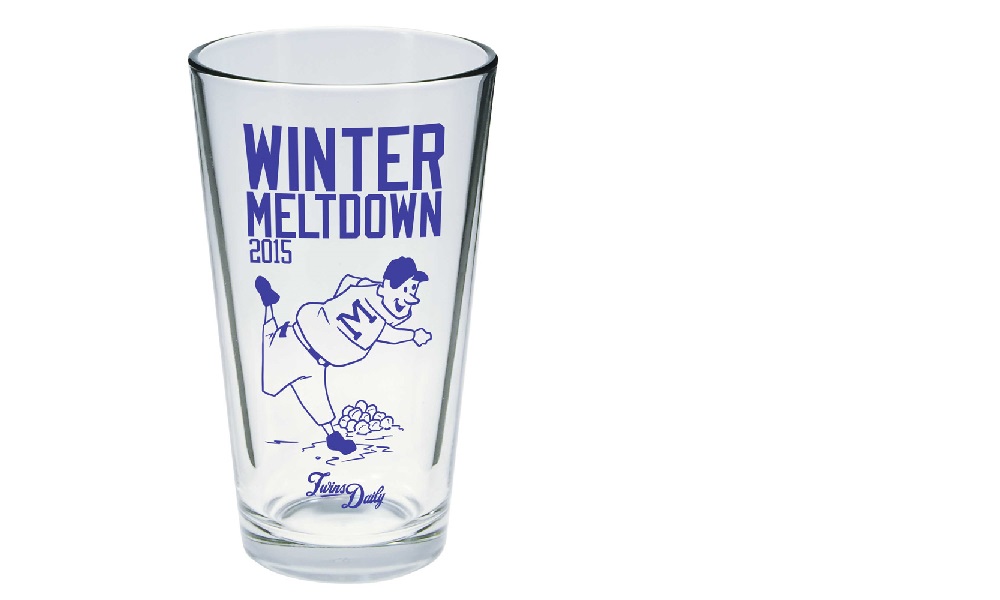 Jacque Jones, Tim Laudner and Twins President Dave St. Peter are on board and now you’re at the plate. Stop by the Twins Daily Store and nab tickets for $30. We've made extra tickets available this year, so we made it through the first day without selling out, but remaining tickets are limited, so please don’t delay. One last time, here are the details: January 24th, from 5-8, at Mason’s. Just walk the block from Target Field and TwinsFest and join us. Question & answers with Minnesota Twins President Dave St. Peter, Twins alum catcher and Jacque Jones! Two free beers from local craft brewery 612 Brew. Drink specials from Dobel Tequila and Three Olives Vodka. NEW: Raffle that include two Twins Opening Day tickets from Ticket King. The limited edition Twins Daily Winter Meltdown Pint Glass Tickets go on sale Tuesday RIGHT HERE. $25 on Tuesday only, $30 after. We'll see you next Saturday! ~~~ Leading off: Twins President Dave St. Peter. Batting second: Twins catcher (and current Fox Sports North analyst) Tim Laudner. And I’m thrilled to announce that Jacque Jones will be our #3 hitter at the Twins Daily Meltdown. Jones patrolled the outfield for Twins for the better part of seven seasons, including being an integral part of the teams that won three division championships from 2002 through 2004. He was the leadoff hitter for those teams, with a .782 OPS and 132 home runs with the Twins, all while playing exceptional corner outfield defense. That shouldn’t be a surprise, considering he played center field for most of his minor league career and as an All-American at USC. He also played with the US Olympic Baseball team in 1996 at Atlanta, winning a bronze medal with future Twins teammate Matt LeCroy. He was drafted that same year by the Twins in the second round. When he left the Twins following the 2005 season, he signed with the Chicago Cubs and played with them for two years. He also spent time with the Tigers, Marlins and Reds organization before returning to the Twins in 2010. As a result, he received loud standing ovations during his at-bats in the two exhibition games played prior to Target Field’s first official MLB game. St. Peter, Laudner and Jones are on board and now you’re at the plate. Stop by the Twins Daily Store tomorrow (Tuesday) morning at 8:00 AM to nab tickets at the one-day price of $25. While we’ve made extra tickets available this year, we sold out last year by noon, so please don’t delay. One last time, here are the details: January 24th, from 5-8, at Mason’s. Just walk the block from Target Field and TwinsFest and join us. Question & answers with Minnesota Twins President Dave St. Peter, Twins alum catcher and Jacque Jones! Two free beers from local craft brewery 612 Brew. Drink specials from Dobel Tequila and Three Olives Vodka. The limited edition Twins Daily Winter Meltdown Pint Glass Tickets go on sale Tuesday RIGHT HERE. $25 on Tuesday only, $30 after. We'll see you next Saturday!
-
Aaron and John hang out at 612 Brew and talk about the Twins' arbitration settlements, whether to offer Trevor Plouffe a long-term deal, FanGraphs' unfavorable projections for the Twins in 2015, the art on 612's new beer cans, Byron Buxton compared to Carlos Gomez, the perfect setting for Aaron's bachelor party, David Price's record-breaking arbitration salary, and next weekend's "Winter Meltdown" event. You can listen by downloading us from iTunes, Stitcher or find it at GleemanAndTheGeek.com. Or just click the Play button below. Aaron and John hang out at 612 Brew and talk about the Twins' arbitration settlements, whether to offer Trevor Plouffe a long-term deal, FanGraphs' unfavorable projections for the Twins in 2015, the art on 612's new beer cans, Byron Buxton compared to Carlos Gomez, the perfect setting for Aaron's bachelor party, David Price's record-breaking arbitration salary, and next weekend's "Winter Meltdown" event. You can listen by downloading us from iTunes, Stitcher or find it at GleemanAndTheGeek.com. Or just click the Play button below. http://traffic.libsyn.com/gleemangeek/Arbitration_Extensions_and_Projections.mp3 View full article


