



Sam Caulder
-
Posts
666 -
Joined
-
Last visited
Content Type
Profiles
Minnesota Twins News, Rumors & Analysis
Minnesota Twins Videos
2026 Minnesota Twins Top Prospect Rankings
2022 Minnesota Twins Draft Picks & Signing Bonuses
Minnesota Twins Trade & Free Agent Rumors
Minnesota Twins Fan Guides & Resources
2023 Minnesota Twins Draft Picks & Signing Bonuses
The Minnesota Twins Players Project
2024 Minnesota Twins Draft Picks & Signing Bonuses
2025 Minnesota Twins Draft Picks & Signing Bonuses
2026 Minnesota Twins Draft Picks & Signing Bonuses
Forums
Blogs
Events
Store
Downloads
Gallery
Everything posted by Sam Caulder
-
After a tough start to 2026, Dasan Hill suddenly has more questions than answers. Is this just early-season rust, or are there real warning signs worth paying attention to?
-
After a tough start to 2026, Dasan Hill suddenly has more questions than answers. Is this just early-season rust, or are there real warning signs worth paying attention to? View full video
-
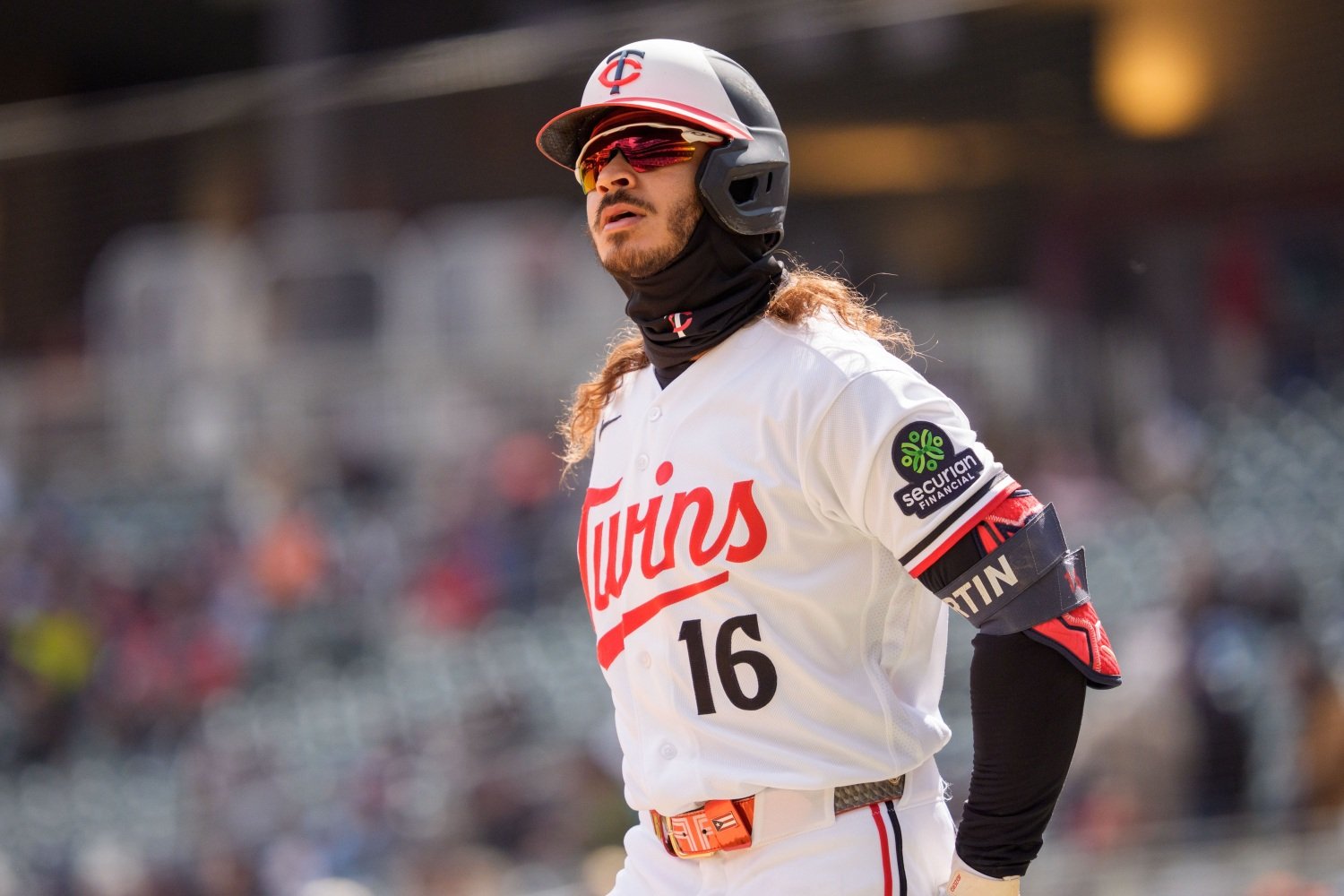 So far in 2026, Austin Martin has mostly been used as a true platoon option. He's started 14 of the team's first 22 games, but that's because the Twins have faced left-handed starters 13 times. Martin has only gotten the nod once in nine games against righties, and he's not in the lineup Tuesday against Mets righthander Nolan McLean. Even with that limited role, you could easily argue Martin has been the Twins’ best hitter. At a certain point, when the production looks like this, it’s fair to start questioning whether that platoon-focused role still fits the player. Entering Tuesday night, Martin is hitting .311 with a .484 on-base percentage, both of which lead the team. More importantly, he hasn’t just been quietly productive. He’s come through in big spots, consistently putting together quality at-bats when the lineup has needed it most. For a player who’s largely been penciled in based on matchups, he’s been far more impactful than that role would suggest. Obviously, the huge caveat must be stated. Martin has had the platoon advantage in 45 of his 62 plate appearances, pushing 73%. That's a ratio more typical of a lefty batter being shielded from southpaws than of a righty; everyday right-handed batters enjoy the platoon edge more like 28% of the time. So far, though, Martin has held his own just fine when he's encountered righties, too. Is it time to let him prove himself against them in more playing time? For his career, Martin is a .257 hitter against righties. On the surface, that number might not jump off the page. But when you zoom out and look at his full offensive profile, it becomes a lot more valuable than it initially appears. His career on-base percentage against right-handers sits at .343, driven largely by an advanced approach and a willingness to take pitches. That approach has been on full display so far this season. Martin leads the Twins with 14 walks, and it’s not the result of a lucky stretch or a handful of passive at-bats. He’s been one of the most disciplined hitters in the league to start the year. His chase rate, whiff rate, and walk rate all sit in the 95th percentile or higher among major-league hitters, and his zone contact rate is up at 94%. That, too, is driven by having the platoon advantage most of the time. It's a lot easier to make good swing decisions when you can pick up the ball sooner, which is one of the crucial advantages for a batter facing an opposite-handed pitcher. Facing more righties would put more pressure on that approach, and with breaking balls moving away from him much more often (the other key to the platoon dynamic), his contact rate would surely fall, too. Up to this point, his role has been pretty clearly defined. He’s been splitting time in left field with Trevor Larnach, with the decision largely dictated by the opposing starting pitcher. If it’s a right-hander on the mound, Larnach gets the nod. If it’s a lefty, Martin’s in the lineup. But what if that doesn’t need to be an either-or situation? There’s a case to be made that both bats should be in the lineup on a daily basis. Coming into the season, Forest Lake native Matt Wallner was expected to handle right field on an everyday basis. His power is real, and when he’s right, it adds a different dimension to the lineup. But through the early part of 2026, it’s getting increasingly difficult to argue that he’s earned that role. The swing-and-miss issues have been extreme. Wallner currently sits near the bottom of the league in both whiff rate and strikeout rate. He’s swinging through just under half of the pitches he offers at, and striking out in 42% of his plate appearances. That’s incredibly difficult to carry in a regular role. It, too, is colored by the distortion of the early season, because a whopping 38 of Wallner's 81 plate appearances have come against lefties. His track record is checkered enough, though, that the cold start still mutes any optimism about him. Defensively, Wallner has been ghastly. He's slow, he takes bad routes, and he did this. OHliS2JfWGw0TUFRPT1fVlFVSEJWRUVBQVVBV1ZFRUF3QUhVZ0VFQUZnTlZsZ0FVRmNIVWxJRFVsQUFDUXBT.mp4 Taking Wallner out of the lineup more often and putting either Larnach or Martin in right field (with the other in left) would improve the team's defense, for certain, and it might be the best way to optimize their run production, too. The Twins are in the middle of a four-game losing streak and about to start a week-long road trip. This is the kind of moment where small adjustments can make a real difference, and the lineup feels like an obvious place to start. Martin has shown that he deserves more than a platoon role. Wallner, at least for the time being, looks like someone in need of a reset. That doesn’t mean Martin is going to step in and start launching balls into the seats every night; that’s not his game. What he will do is give the Twins competitive at-bats, work counts, get on base, and play solid defense in the outfield. You can put him near the top of the order and let him set the table, somewhere in the middle, or even drop him into the nine spot and essentially create a second leadoff hitter. But regardless, he lengthens the lineup and will challenge opposing pitchers. At a certain point, roles have to adjust to production. Right now, Martin's production is making a pretty clear case. The platoon weirdness of this March and April muddies our evaluations, but to the extent that one is possible, it seems like Larnach and Martin should get more playing time, at Wallner's expense.
- 30 comments
-
- 11
-

-

-
- austin martin
- matt wallner
- (and 1 more)
-
Image courtesy of © Matt Blewett-Imagn Images So far in 2026, Austin Martin has mostly been used as a true platoon option. He's started 14 of the team's first 22 games, but that's because the Twins have faced left-handed starters 13 times. Martin has only gotten the nod once in nine games against righties, and he's not in the lineup Tuesday against Mets righthander Nolan McLean. Even with that limited role, you could easily argue Martin has been the Twins’ best hitter. At a certain point, when the production looks like this, it’s fair to start questioning whether that platoon-focused role still fits the player. Entering Tuesday night, Martin is hitting .311 with a .484 on-base percentage, both of which lead the team. More importantly, he hasn’t just been quietly productive. He’s come through in big spots, consistently putting together quality at-bats when the lineup has needed it most. For a player who’s largely been penciled in based on matchups, he’s been far more impactful than that role would suggest. Obviously, the huge caveat must be stated. Martin has had the platoon advantage in 45 of his 62 plate appearances, pushing 73%. That's a ratio more typical of a lefty batter being shielded from southpaws than of a righty; everyday right-handed batters enjoy the platoon edge more like 28% of the time. So far, though, Martin has held his own just fine when he's encountered righties, too. Is it time to let him prove himself against them in more playing time? For his career, Martin is a .257 hitter against righties. On the surface, that number might not jump off the page. But when you zoom out and look at his full offensive profile, it becomes a lot more valuable than it initially appears. His career on-base percentage against right-handers sits at .343, driven largely by an advanced approach and a willingness to take pitches. That approach has been on full display so far this season. Martin leads the Twins with 14 walks, and it’s not the result of a lucky stretch or a handful of passive at-bats. He’s been one of the most disciplined hitters in the league to start the year. His chase rate, whiff rate, and walk rate all sit in the 95th percentile or higher among major-league hitters, and his zone contact rate is up at 94%. That, too, is driven by having the platoon advantage most of the time. It's a lot easier to make good swing decisions when you can pick up the ball sooner, which is one of the crucial advantages for a batter facing an opposite-handed pitcher. Facing more righties would put more pressure on that approach, and with breaking balls moving away from him much more often (the other key to the platoon dynamic), his contact rate would surely fall, too. Up to this point, his role has been pretty clearly defined. He’s been splitting time in left field with Trevor Larnach, with the decision largely dictated by the opposing starting pitcher. If it’s a right-hander on the mound, Larnach gets the nod. If it’s a lefty, Martin’s in the lineup. But what if that doesn’t need to be an either-or situation? There’s a case to be made that both bats should be in the lineup on a daily basis. Coming into the season, Forest Lake native Matt Wallner was expected to handle right field on an everyday basis. His power is real, and when he’s right, it adds a different dimension to the lineup. But through the early part of 2026, it’s getting increasingly difficult to argue that he’s earned that role. The swing-and-miss issues have been extreme. Wallner currently sits near the bottom of the league in both whiff rate and strikeout rate. He’s swinging through just under half of the pitches he offers at, and striking out in 42% of his plate appearances. That’s incredibly difficult to carry in a regular role. It, too, is colored by the distortion of the early season, because a whopping 38 of Wallner's 81 plate appearances have come against lefties. His track record is checkered enough, though, that the cold start still mutes any optimism about him. Defensively, Wallner has been ghastly. He's slow, he takes bad routes, and he did this. OHliS2JfWGw0TUFRPT1fVlFVSEJWRUVBQVVBV1ZFRUF3QUhVZ0VFQUZnTlZsZ0FVRmNIVWxJRFVsQUFDUXBT.mp4 Taking Wallner out of the lineup more often and putting either Larnach or Martin in right field (with the other in left) would improve the team's defense, for certain, and it might be the best way to optimize their run production, too. The Twins are in the middle of a four-game losing streak and about to start a week-long road trip. This is the kind of moment where small adjustments can make a real difference, and the lineup feels like an obvious place to start. Martin has shown that he deserves more than a platoon role. Wallner, at least for the time being, looks like someone in need of a reset. That doesn’t mean Martin is going to step in and start launching balls into the seats every night; that’s not his game. What he will do is give the Twins competitive at-bats, work counts, get on base, and play solid defense in the outfield. You can put him near the top of the order and let him set the table, somewhere in the middle, or even drop him into the nine spot and essentially create a second leadoff hitter. But regardless, he lengthens the lineup and will challenge opposing pitchers. At a certain point, roles have to adjust to production. Right now, Martin's production is making a pretty clear case. The platoon weirdness of this March and April muddies our evaluations, but to the extent that one is possible, it seems like Larnach and Martin should get more playing time, at Wallner's expense. View full article
-
The issues in the Twins' bullpen go deeper than just a few rough outings. Here’s what’s actually going wrong, and some possible changes that could fix it.
-
The issues in the Twins' bullpen go deeper than just a few rough outings. Here’s what’s actually going wrong, and some possible changes that could fix it. View full video
-
Joe Ryan didn’t need a complete overhaul, but the tweaks he made are changing things for the better. A closer look at how his revised arsenal is making an already reliable starter even tougher to solve. View full video
-
Joe Ryan didn’t need a complete overhaul, but the tweaks he made are changing things for the better. A closer look at how his revised arsenal is making an already reliable starter even tougher to solve.
-
TRANSACTIONS Right-handed pitcher Jose Olivares started his rehab assignments with the Fort Myers Mighty Mussels. Right-handed pitcher Ricky Castro was assigned to St. Paul from Wichita. RHP Cory Lewis was returned to the Saints roster. Skor North's Declan Goff tweeted on Sunday night that he's hearing that LHP Kendry Rojas was being called up to the Twins. Presumably, he will be taking the roster spot of Kody Funderburk who Audra Martin reported earlier in the week was going on the paternity list. SAINTS SENTINEL St. Paul 12, Lehigh Valley 8 Box Score The Saints offense showed up in a big way on Sunday. St. Paul racked up 13 hits and drew six walks, and it felt like the lineup was putting pressure on Lehigh Valley all afternoon. The biggest swing of the game came during a six-run third inning. Walker Jenkins got it started with a single and came around to score on a Gabriel Gonzalez double in the very next at-bat. After Emmanuel Rodriguez worked one of his three walks, Orlando Arcia and Kyler Fedko followed with back-to-back doubles to make it 5-1. Eric Wagaman capped off the inning with his first home run of the season, a two-run shot that pushed the lead to 7-1. Wagaman wasn’t done either. He finished with three hits, including a triple later in the game that helped spark another rally. Lehigh Valley didn’t go away quietly, though. The IronPigs chipped away and eventually tied the game at eight in the top of the eighth inning, setting up a tense finish. The Saints answered immediately. Wagaman led off the bottom half with that triple to right-center, and Kaelen Culpepper followed with an RBI single to give St. Paul the lead back. After Tanner Schobel and Jenkins reached, Rodriguez delivered the knockout blow: a bases-clearing double that came off the bat at 110 MPH. Royce Lewis continued his rehab assignment and stayed hot, launching his second home run in as many days. He also got the start at third base after serving as the DH the day before. On the mound, it was far from clean. The Saints allowed 16 hits, but didn’t issue a single walk, which helped limit the damage just enough. John Klein started and gave up two runs over 3 1/3 innings while striking out three. Zak Kent picked up the win after working the ninth. Every starter recorded at least one hit (aside from Noah Cardenas), with Wagaman, Fedko, and Gonzalez all putting together multi-hit performances. WIND SURGE WISDOM Wichita 3, Springfield 1 Box Score This one was quiet for a while, and then it wasn’t. The Wind Surge managed just six hits on the day, and for most of the game, it looked like that might not be enough. Wichita held a 1-1 tie heading into the eighth inning before finally breaking through. Kala’i Rosario provided the big swing, launching his third home run of the season to give Wichita a 2-1 lead. They weren’t done there either. Garrett Spain followed with a two-out double, and Jorel Ortega brought him home with an RBI single to add some insurance. That was more than enough for the pitching staff. Sam Armstrong set the tone with 4 2/3 strong innings, and the bullpen took it from there. Jarret Whorff, Darren Bowen, and Luis Quinones combined to finish things off, with the group allowing just seven total baserunners and one run across the entire game. Not flashy offensively, but clean, efficient, and more than enough. KERNELS CHRONICLE Cedar Rapids 0, Quad Cities 8 Box Score There was a splattering in Cedar Rapids this afternoon. The Kernels ran into issues pretty much everywhere you don’t want them—defense, strikeouts, and situational hitting. They struck out 13 times as a team and committed three errors, which made for a long afternoon. Jay Thomason was one of the few bright spots, collecting two of the team’s four hits and adding his second stolen base of the season. Eduardo Tait didn’t record a hit but did draw a pair of walks. Cedar Rapids had chances but couldn’t capitalize, going 0-for-8 with runners in scoring position. What makes the final score even tougher to swallow is how well parts of the pitching staff actually threw the ball. Of the eight runs allowed, just one was earned. Starter Nolan Santos was solid, tossing five innings of one-run ball with five strikeouts. The lone run he allowed was unearned. The staff as a whole struck out 12 and walked four, which is typically a winning formula. But when the defense doesn’t hold up and the offense can’t push anything across, it doesn’t really matter. MIGHTY MATTERS Ft. Myers 5, Lakeland 0 Box Score it was about as clean as it gets for Fort Myers today. The Mighty Mussels wrapped up their week with a dominant, well-rounded win, led by an outstanding performance on the mound. Jose Olivares set the tone with three perfect innings to start the game, striking out four. From there, Kolten Smith, Matthew DesMarets, and Eric Hammond combined to finish things off, allowing just four hits and two walks over the final six innings while striking out nine. Lakeland never really had a chance to get anything going. Offensively, Fort Myers did most of its damage early. Four of their five runs came in the first three innings. Dameury Pena got things rolling immediately, doubling to lead off the first and eventually scoring on a balk. In the second inning, three walks loaded the bases, and Pena came through again with a two-run knock to make it 3-0. In the third, Irvin Nunez reached on an error, and Eduardo Beltre followed with an RBI hit to extend the lead. The final run came in the sixth inning, when Byron Chourio delivered a two-out RBI double. Pena finished 2-for-4 with a double, a run, and two RBI, and he’s now slashing an impressive .429/.529/.476 to start his season. PLAYERS OF THE DAY Hitter of the Day Eric Wagaman (St. Paul): 3-4, HR(1), 3B(1), 2B(1), 2 R, 2 RBI Pitcher of the Day Jose Olivares (Fort Myers): 3 IP, 0 H, 0 R, 0 BB, 4 K, 40 pitches, 25 strikes (62.5% strikes) PROSPECT SUMMARY Check out the Prospect Tracker for much more on our Twins Top 20 prospects after today's results. #1 - OF Walker Jenkins (St. Paul) - 1-for-4, 1 BB, 2 R, K (batted third, played CF) #2 - IF Kaelen Culpepper (St. Paul) - 1-for-3, 2 BB, 2 R, RBI (batted first, played SS) #3 - OF Emmanuel Rodriguez (St. Paul) - 1-for-2, 3 BB, 2B(3), R, 3 RBI (batted fifth, DHd) #4 - C Eduardo Tait (Cedar Rapids) - 0-for-2, 2 BB (batted second, DHd) #5 - LHP Connor Prielipp (St. Paul) - Did Not Pitch #6 - LHP Dasan Hill (Cedar Rapids) - Did Not Pitch #7 - OF Gabriel Gonzalez (St. Paul) - 2-for-5, 2B(4), R (batted fourth, played LF) #8 - LHP Kendry Rojas (St. Paul) - Did Not Pitch #9 - SS Marek Houston (Cedar Rapids) - 0-for-4 (batted first, played SS) #10 - RHP Charlee Soto (Cedar Rapids) - Injured List #11 - RHP Riley Quick (Ft. Myers) - Did Not Pitch #12 - RHP Andrew Morris (Minnesota) - 1 1/3 IP, 3 H, 3 ER, 2 BB, 2 K, 47 pitches, 27 strikes (57.4%) #13 - 3B/CF Brandon Winokur (Cedar Rapids) - 0-for-4, 4 K (batted fourth, played 3B) #14 - 3B/SS Quentin Young (Ft. Myers) - Did Not Play #15 - RHP Marco Raya (St. Paul) - Did Not Pitch #16 - OF Hendry Mendez (Wichita) - 0-for-4, 3 K (batted third, played LF) #17 - 2B/OF Kyle DeBarge (Wichita) - 0-for-2, 2 BB, 2 K (batted first, played SS) #18 - RHP C.J. Culpepper (Wichita) - Did Not Pitch #19 - C/OF Khadim Diaw (Cedar Rapids) - 0-for-3, BB, K (batted third, played C) #20 - RHP James Ellwanger (Ft. Myers) - Did Not Pitch UPCOMING SCHEDULE Tuesday: St. Paul @ Indianapolis (5:35 pm CT) Wichita @ NW Arkansas (7:05 pm CT) Cedar Rapids @ Peoria (6:05 pm CT) Dunedin @ Ft. Myers (6:05 CT) CURRENT W-L Records Minnesota Twins: 11-11 St. Paul Saints: 9-11 Wichita Wind Surge: 9-6 Cedar Rapids Kernels: 7-8 Fort Myers Mighty Mussels: 9-6 FCL Twins: 0-0 (season begins Monday, May 4) DSL Twins: 0-0 (season begins Monday, June 1) Image courtesy of © Nathan Ray Seebeck-Imagn Images View full article
- 7 replies
-
- 1
-
-
- nolan santos
- jose olivares
- (and 4 more)
-
Twins Minor League Report 4/19: Eric Wagaman Finds His Footing
Sam Caulder posted an article in Minor Leagues
 TRANSACTIONS Right-handed pitcher Jose Olivares started his rehab assignments with the Fort Myers Mighty Mussels. Right-handed pitcher Ricky Castro was assigned to St. Paul from Wichita. RHP Cory Lewis was returned to the Saints roster. Skor North's Declan Goff tweeted on Sunday night that he's hearing that LHP Kendry Rojas was being called up to the Twins. Presumably, he will be taking the roster spot of Kody Funderburk who Audra Martin reported earlier in the week was going on the paternity list. SAINTS SENTINEL St. Paul 12, Lehigh Valley 8 Box Score The Saints offense showed up in a big way on Sunday. St. Paul racked up 13 hits and drew six walks, and it felt like the lineup was putting pressure on Lehigh Valley all afternoon. The biggest swing of the game came during a six-run third inning. Walker Jenkins got it started with a single and came around to score on a Gabriel Gonzalez double in the very next at-bat. After Emmanuel Rodriguez worked one of his three walks, Orlando Arcia and Kyler Fedko followed with back-to-back doubles to make it 5-1. Eric Wagaman capped off the inning with his first home run of the season, a two-run shot that pushed the lead to 7-1. Wagaman wasn’t done either. He finished with three hits, including a triple later in the game that helped spark another rally. Lehigh Valley didn’t go away quietly, though. The IronPigs chipped away and eventually tied the game at eight in the top of the eighth inning, setting up a tense finish. The Saints answered immediately. Wagaman led off the bottom half with that triple to right-center, and Kaelen Culpepper followed with an RBI single to give St. Paul the lead back. After Tanner Schobel and Jenkins reached, Rodriguez delivered the knockout blow: a bases-clearing double that came off the bat at 110 MPH. Royce Lewis continued his rehab assignment and stayed hot, launching his second home run in as many days. He also got the start at third base after serving as the DH the day before. On the mound, it was far from clean. The Saints allowed 16 hits, but didn’t issue a single walk, which helped limit the damage just enough. John Klein started and gave up two runs over 3 1/3 innings while striking out three. Zak Kent picked up the win after working the ninth. Every starter recorded at least one hit (aside from Noah Cardenas), with Wagaman, Fedko, and Gonzalez all putting together multi-hit performances. WIND SURGE WISDOM Wichita 3, Springfield 1 Box Score This one was quiet for a while, and then it wasn’t. The Wind Surge managed just six hits on the day, and for most of the game, it looked like that might not be enough. Wichita held a 1-1 tie heading into the eighth inning before finally breaking through. Kala’i Rosario provided the big swing, launching his third home run of the season to give Wichita a 2-1 lead. They weren’t done there either. Garrett Spain followed with a two-out double, and Jorel Ortega brought him home with an RBI single to add some insurance. That was more than enough for the pitching staff. Sam Armstrong set the tone with 4 2/3 strong innings, and the bullpen took it from there. Jarret Whorff, Darren Bowen, and Luis Quinones combined to finish things off, with the group allowing just seven total baserunners and one run across the entire game. Not flashy offensively, but clean, efficient, and more than enough. KERNELS CHRONICLE Cedar Rapids 0, Quad Cities 8 Box Score There was a splattering in Cedar Rapids this afternoon. The Kernels ran into issues pretty much everywhere you don’t want them—defense, strikeouts, and situational hitting. They struck out 13 times as a team and committed three errors, which made for a long afternoon. Jay Thomason was one of the few bright spots, collecting two of the team’s four hits and adding his second stolen base of the season. Eduardo Tait didn’t record a hit but did draw a pair of walks. Cedar Rapids had chances but couldn’t capitalize, going 0-for-8 with runners in scoring position. What makes the final score even tougher to swallow is how well parts of the pitching staff actually threw the ball. Of the eight runs allowed, just one was earned. Starter Nolan Santos was solid, tossing five innings of one-run ball with five strikeouts. The lone run he allowed was unearned. The staff as a whole struck out 12 and walked four, which is typically a winning formula. But when the defense doesn’t hold up and the offense can’t push anything across, it doesn’t really matter. MIGHTY MATTERS Ft. Myers 5, Lakeland 0 Box Score it was about as clean as it gets for Fort Myers today. The Mighty Mussels wrapped up their week with a dominant, well-rounded win, led by an outstanding performance on the mound. Jose Olivares set the tone with three perfect innings to start the game, striking out four. From there, Kolten Smith, Matthew DesMarets, and Eric Hammond combined to finish things off, allowing just four hits and two walks over the final six innings while striking out nine. Lakeland never really had a chance to get anything going. Offensively, Fort Myers did most of its damage early. Four of their five runs came in the first three innings. Dameury Pena got things rolling immediately, doubling to lead off the first and eventually scoring on a balk. In the second inning, three walks loaded the bases, and Pena came through again with a two-run knock to make it 3-0. In the third, Irvin Nunez reached on an error, and Eduardo Beltre followed with an RBI hit to extend the lead. The final run came in the sixth inning, when Byron Chourio delivered a two-out RBI double. Pena finished 2-for-4 with a double, a run, and two RBI, and he’s now slashing an impressive .429/.529/.476 to start his season. PLAYERS OF THE DAY Hitter of the Day Eric Wagaman (St. Paul): 3-4, HR(1), 3B(1), 2B(1), 2 R, 2 RBI Pitcher of the Day Jose Olivares (Fort Myers): 3 IP, 0 H, 0 R, 0 BB, 4 K, 40 pitches, 25 strikes (62.5% strikes) PROSPECT SUMMARY Check out the Prospect Tracker for much more on our Twins Top 20 prospects after today's results. #1 - OF Walker Jenkins (St. Paul) - 1-for-4, 1 BB, 2 R, K (batted third, played CF) #2 - IF Kaelen Culpepper (St. Paul) - 1-for-3, 2 BB, 2 R, RBI (batted first, played SS) #3 - OF Emmanuel Rodriguez (St. Paul) - 1-for-2, 3 BB, 2B(3), R, 3 RBI (batted fifth, DHd) #4 - C Eduardo Tait (Cedar Rapids) - 0-for-2, 2 BB (batted second, DHd) #5 - LHP Connor Prielipp (St. Paul) - Did Not Pitch #6 - LHP Dasan Hill (Cedar Rapids) - Did Not Pitch #7 - OF Gabriel Gonzalez (St. Paul) - 2-for-5, 2B(4), R (batted fourth, played LF) #8 - LHP Kendry Rojas (St. Paul) - Did Not Pitch #9 - SS Marek Houston (Cedar Rapids) - 0-for-4 (batted first, played SS) #10 - RHP Charlee Soto (Cedar Rapids) - Injured List #11 - RHP Riley Quick (Ft. Myers) - Did Not Pitch #12 - RHP Andrew Morris (Minnesota) - 1 1/3 IP, 3 H, 3 ER, 2 BB, 2 K, 47 pitches, 27 strikes (57.4%) #13 - 3B/CF Brandon Winokur (Cedar Rapids) - 0-for-4, 4 K (batted fourth, played 3B) #14 - 3B/SS Quentin Young (Ft. Myers) - Did Not Play #15 - RHP Marco Raya (St. Paul) - Did Not Pitch #16 - OF Hendry Mendez (Wichita) - 0-for-4, 3 K (batted third, played LF) #17 - 2B/OF Kyle DeBarge (Wichita) - 0-for-2, 2 BB, 2 K (batted first, played SS) #18 - RHP C.J. Culpepper (Wichita) - Did Not Pitch #19 - C/OF Khadim Diaw (Cedar Rapids) - 0-for-3, BB, K (batted third, played C) #20 - RHP James Ellwanger (Ft. Myers) - Did Not Pitch UPCOMING SCHEDULE Tuesday: St. Paul @ Indianapolis (5:35 pm CT) Wichita @ NW Arkansas (7:05 pm CT) Cedar Rapids @ Peoria (6:05 pm CT) Dunedin @ Ft. Myers (6:05 CT) CURRENT W-L Records Minnesota Twins: 11-11 St. Paul Saints: 9-11 Wichita Wind Surge: 9-6 Cedar Rapids Kernels: 7-8 Fort Myers Mighty Mussels: 9-6 FCL Twins: 0-0 (season begins Monday, May 4) DSL Twins: 0-0 (season begins Monday, June 1)
- 7 comments
-
- 5
-
-
-
- minor league report
- eric wagaman
- (and 6 more)
-
The Twins’ Biggest Weakness Has Become Their Greatest Strength
Sam Caulder posted an article in Twins
 For the better part of the last decade, the Minnesota Twins have had a familiar flaw. The lineup could hit for power, draw walks, and put together stretches of explosive offense. But when it came to key moments with runners in scoring position, that production too often disappeared. This year, that’s changed in a significant way. In fact, it hasn’t just improved; it’s become one of the defining strengths of the entire offense. After getting off to a sluggish start in those situations, the Twins have completely flipped the script. They now lead all of Major League Baseball with a .314 batting average with runners in scoring position, a massive jump from where they’ve been in recent seasons. That turnaround is even more impressive when paired with the rest of their production, as they also lead the league in on-base percentage (.415) and OPS (.921) in those spots, while pacing all teams in total runs (82) and RBIs (77). That kind of production doesn’t just show up in the numbers. It’s been obvious on the field. Over the past week alone, the Twins have given a clear picture of what this version of the lineup looks like when it’s clicking. Just in the last week-and-a-half, they’ve done serious damage to some of the best pitchers MLB has to offer. Last week, they tagged Framber Valdez for six runs in the first inning of a game that was essentially over before it began, then hung eight more on Max Scherzer on Sunday. They followed that up on Monday with an 11-spot on Garrett Crochet before he could get out of the second inning. Even in games that didn’t turn into complete blowouts, the pressure has been constant. Tarik Skubal couldn’t make it out of the fifth inning against them, nor could Sonny Gray. Those performances are more than the product of hot bats or good timing. They reflect a lineup that is consistently capitalizing when opportunities present themselves. What makes this shift stand out even more is the context. Over each of the last five seasons, the Twins were always a below league average team with runners in scoring position. That wasn’t a one-year anomaly or a small sample issue, it was a consistent trend that showed up in frustrating ways. Too often, a leadoff double would go wasted, or a bases-loaded opportunity would end with a strikeout or weak contact. Big innings were there for the taking, but rarely materialized. Now, those same situations feel entirely different. Instead of pressing, hitters are staying within themselves and putting together competitive at-bats. Instead of expanding the zone, they’re forcing pitchers to work. And rather than relying almost exclusively on solo home runs, they’re stringing together quality contact that keeps innings alive and creates scoring opportunities for the next hitter. It’s a more complete offensive approach, producing results that feel sustainable beyond a short-term hot streak. There’s a reason situational hitting is often pointed to as a key factor in winning games. While it can be difficult to measure consistently year-over-year, teams that convert with runners in scoring position build leads earlier, extend innings, and create constant pressure on opposing pitching staffs. That’s exactly what the Twins have done during their recent stretch, winning eight of their last 10 games. They’re no longer waiting around for a three-run homer to change the game. Instead, they’re creating those big innings through a string of quality at-bats. The natural question, of course, is whether this level of production can continue over the course of a full season. A .314 average with runners in scoring position is a difficult pace to maintain, and some level of regression is almost inevitable. But even if the numbers come back down to earth, they don’t need to be the best in baseball to represent a substantial improvement. Simply being above league-average would mark a significant step forward from where they’ve been in recent years. And there’s reason to believe they will be. You can sense a level of confidence when runners reach scoring position that hasn’t been there in the past. Brooks Lee’s RBI single against Detroit last Thursday feels like the perfect example of that. A guy who was in a serious slump to start the year, and wasn’t even in the starting lineup that day, broke through and sealed the game. If that continues, it raises the ceiling of this team in a very real way. When you pair solid pitching with an offense that consistently cashes in its opportunities, it creates a formula that can sustain success over the long haul. Right now, the Twins are showing what that looks like, and it’s a version of their offense that has been missing for a long time.
-
Image courtesy of Bruce Kluckhohn-Imagn Images For the better part of the last decade, the Minnesota Twins have had a familiar flaw. The lineup could hit for power, draw walks, and put together stretches of explosive offense. But when it came to key moments with runners in scoring position, that production too often disappeared. This year, that’s changed in a significant way. In fact, it hasn’t just improved; it’s become one of the defining strengths of the entire offense. After getting off to a sluggish start in those situations, the Twins have completely flipped the script. They now lead all of Major League Baseball with a .314 batting average with runners in scoring position, a massive jump from where they’ve been in recent seasons. That turnaround is even more impressive when paired with the rest of their production, as they also lead the league in on-base percentage (.415) and OPS (.921) in those spots, while pacing all teams in total runs (82) and RBIs (77). That kind of production doesn’t just show up in the numbers. It’s been obvious on the field. Over the past week alone, the Twins have given a clear picture of what this version of the lineup looks like when it’s clicking. Just in the last week-and-a-half, they’ve done serious damage to some of the best pitchers MLB has to offer. Last week, they tagged Framber Valdez for six runs in the first inning of a game that was essentially over before it began, then hung eight more on Max Scherzer on Sunday. They followed that up on Monday with an 11-spot on Garrett Crochet before he could get out of the second inning. Even in games that didn’t turn into complete blowouts, the pressure has been constant. Tarik Skubal couldn’t make it out of the fifth inning against them, nor could Sonny Gray. Those performances are more than the product of hot bats or good timing. They reflect a lineup that is consistently capitalizing when opportunities present themselves. What makes this shift stand out even more is the context. Over each of the last five seasons, the Twins were always a below league average team with runners in scoring position. That wasn’t a one-year anomaly or a small sample issue, it was a consistent trend that showed up in frustrating ways. Too often, a leadoff double would go wasted, or a bases-loaded opportunity would end with a strikeout or weak contact. Big innings were there for the taking, but rarely materialized. Now, those same situations feel entirely different. Instead of pressing, hitters are staying within themselves and putting together competitive at-bats. Instead of expanding the zone, they’re forcing pitchers to work. And rather than relying almost exclusively on solo home runs, they’re stringing together quality contact that keeps innings alive and creates scoring opportunities for the next hitter. It’s a more complete offensive approach, producing results that feel sustainable beyond a short-term hot streak. There’s a reason situational hitting is often pointed to as a key factor in winning games. While it can be difficult to measure consistently year-over-year, teams that convert with runners in scoring position build leads earlier, extend innings, and create constant pressure on opposing pitching staffs. That’s exactly what the Twins have done during their recent stretch, winning eight of their last 10 games. They’re no longer waiting around for a three-run homer to change the game. Instead, they’re creating those big innings through a string of quality at-bats. The natural question, of course, is whether this level of production can continue over the course of a full season. A .314 average with runners in scoring position is a difficult pace to maintain, and some level of regression is almost inevitable. But even if the numbers come back down to earth, they don’t need to be the best in baseball to represent a substantial improvement. Simply being above league-average would mark a significant step forward from where they’ve been in recent years. And there’s reason to believe they will be. You can sense a level of confidence when runners reach scoring position that hasn’t been there in the past. Brooks Lee’s RBI single against Detroit last Thursday feels like the perfect example of that. A guy who was in a serious slump to start the year, and wasn’t even in the starting lineup that day, broke through and sealed the game. If that continues, it raises the ceiling of this team in a very real way. When you pair solid pitching with an offense that consistently cashes in its opportunities, it creates a formula that can sustain success over the long haul. Right now, the Twins are showing what that looks like, and it’s a version of their offense that has been missing for a long time. View full article
-
The Twins’ early season has already sparked some intriguing storylines, especially with Mick Abel, Joe Ryan, and Taj Bradley showing flashes of a potential nasty rotation trio. Meanwhile, Byron Buxton’s impact is still undeniable, but his lack of activity on the bases is becoming something worth watching. View full video
-
The Twins’ early season has already sparked some intriguing storylines, especially with Mick Abel, Joe Ryan, and Taj Bradley showing flashes of a potential nasty rotation trio. Meanwhile, Byron Buxton’s impact is still undeniable, but his lack of activity on the bases is becoming something worth watching.
-
The Twins are going to have a decision looming behind the plate that might be more important than it looks on the surface. So far this season, Ryan Jeffers is putting together a strong case for why he should be part of the team’s future. View full video
-
The Twins are going to have a decision looming behind the plate that might be more important than it looks on the surface. So far this season, Ryan Jeffers is putting together a strong case for why he should be part of the team’s future.
-
What the Heck Is Going On with Zebby Matthews?
Sam Caulder posted a topic in Twins Minor League Talk
Image courtesy of © Jesse Johnson-Imagn Images The Minnesota Twins entered spring training with a handful of rotation questions, and Zebby Matthews looked like one of the more straightforward answers. Even with some competition, injuries to Pablo López and David Festa seemed to clear a path for him to break camp in the big-league rotation. Instead, a rough spring changed the equation. Matthews was ultimately optioned to Triple-A, and the expectation at that point felt pretty simple: go to St. Paul, get right, and force the issue again. So far, that hasn’t happened, either. Through his first three starts with the St. Paul Saints, the overall line isn’t pretty. Matthews has thrown 12 1/3 innings, allowing 12 earned runs on 21 hits, including five home runs. He’s also walked four and struck out just 10. Those 21 hits jump off the page, and they’re not coming from a lack of control. Hitters are earning their way on base by putting the ball in play. A big reason for that becomes clear when you look at the swing-and-miss numbers; he’s just not missing bats right now. His swinging strike rate is sitting at just 11% thus far. That’s not a terrible number on its own, but after being in the 13-14% range over the last couple of years, it’s a noticeable decline. He’s also sporting just a 16.4% strikeout rate, which is a significant drop from his 25% rate last year in the majors. When that ability dips, everything else starts to get a little more fragile. More contact means more opportunities for hitters to square balls up, and that’s also showing up in the quality of contact. Opponents' average exit velocity against Matthews is up by about 2 MPH compared to last season, and when that’s paired with more pulled contact, it can lead to exactly what we’ve seen early on. Opponents have pulled 57% of the balls they’ve put in play against him, which is typically a sign that they’re seeing the ball well and getting the barrel out front. The five home runs he’s allowed are a devastating result of that consistent hard, pulled contact, but they're also a product of some bad luck. More than one out of every three fly balls he’s given up has left the yard. That’s not a rate that will hold over time, but it does highlight how little margin for error he’s had. A big part of that comes back to his stuff. Matthews’s velocity is down across the board. His fastball, sinker, and cutter are each sitting about 1 MPH lower than they were last season. His slider has dipped slightly, and his curveball is down even more significantly, by roughly 2.5 MPH. Even small drops like that can have a noticeable impact. If hitters don’t have to respect the same level of velocity, it becomes easier to time things up and make consistent contact. That can snowball quickly, especially when paired with a drop in swing-and-miss. It also helps explain why hitters have been so comfortable putting the ball in play. Without that extra life, Matthews hasn’t been able to generate the same level of deception or separation between his pitches. That said, there are still a couple of underlying indicators that engender optimism. His hard-hit rate currently sits at 38.3%, which is down slightly from last season. He’s also generating ground balls at a 45.7% clip, a strong shift for a pitcher who has historically been much more fly ball-heavy in the majors. In theory, that combination should limit damage, not amplify it. So there’s at least some element of poor luck mixed into these early results. With all that in mind, it’s worth noting that there’s also a mental side to this. Matthews came into camp with a strong shot at a rotation spot, particularly given the injuries around him, and to miss out on that opportunity can’t be an easy situation. Confidence and execution tend to go hand-in-hand, and early struggles can make both harder to regain. It’s important to keep the sample size in perspective. We’re talking about 12 1/3 innings here. That’s nothing over the course of a full season, and a couple of strong outings could shift his entire statistical profile in a hurry. Matthews has shown in the past that he’s capable of missing bats and limiting damage at a much higher level than this. But early trends still matter, especially when they’re tied to underlying changes in stuff. If his velocity and swing-and-miss numbers start to get back to 2025 levels, the results should follow. Right now, that’s the biggest thing to watch. The Twins are going to need starting pitching depth at some point this season, and Matthews is still very much part of that picture. But for now, this is a very slow start for a pitcher who hasn’t found any real consistency. View full article -
 The Minnesota Twins entered spring training with a handful of rotation questions, and Zebby Matthews looked like one of the more straightforward answers. Even with some competition, injuries to Pablo López and David Festa seemed to clear a path for him to break camp in the big-league rotation. Instead, a rough spring changed the equation. Matthews was ultimately optioned to Triple-A, and the expectation at that point felt pretty simple: go to St. Paul, get right, and force the issue again. So far, that hasn’t happened, either. Through his first three starts with the St. Paul Saints, the overall line isn’t pretty. Matthews has thrown 12 1/3 innings, allowing 12 earned runs on 21 hits, including five home runs. He’s also walked four and struck out just 10. Those 21 hits jump off the page, and they’re not coming from a lack of control. Hitters are earning their way on base by putting the ball in play. A big reason for that becomes clear when you look at the swing-and-miss numbers; he’s just not missing bats right now. His swinging strike rate is sitting at just 11% thus far. That’s not a terrible number on its own, but after being in the 13-14% range over the last couple of years, it’s a noticeable decline. He’s also sporting just a 16.4% strikeout rate, which is a significant drop from his 25% rate last year in the majors. When that ability dips, everything else starts to get a little more fragile. More contact means more opportunities for hitters to square balls up, and that’s also showing up in the quality of contact. Opponents' average exit velocity against Matthews is up by about 2 MPH compared to last season, and when that’s paired with more pulled contact, it can lead to exactly what we’ve seen early on. Opponents have pulled 57% of the balls they’ve put in play against him, which is typically a sign that they’re seeing the ball well and getting the barrel out front. The five home runs he’s allowed are a devastating result of that consistent hard, pulled contact, but they're also a product of some bad luck. More than one out of every three fly balls he’s given up has left the yard. That’s not a rate that will hold over time, but it does highlight how little margin for error he’s had. A big part of that comes back to his stuff. Matthews’s velocity is down across the board. His fastball, sinker, and cutter are each sitting about 1 MPH lower than they were last season. His slider has dipped slightly, and his curveball is down even more significantly, by roughly 2.5 MPH. Even small drops like that can have a noticeable impact. If hitters don’t have to respect the same level of velocity, it becomes easier to time things up and make consistent contact. That can snowball quickly, especially when paired with a drop in swing-and-miss. It also helps explain why hitters have been so comfortable putting the ball in play. Without that extra life, Matthews hasn’t been able to generate the same level of deception or separation between his pitches. That said, there are still a couple of underlying indicators that engender optimism. His hard-hit rate currently sits at 38.3%, which is down slightly from last season. He’s also generating ground balls at a 45.7% clip, a strong shift for a pitcher who has historically been much more fly ball-heavy in the majors. In theory, that combination should limit damage, not amplify it. So there’s at least some element of poor luck mixed into these early results. With all that in mind, it’s worth noting that there’s also a mental side to this. Matthews came into camp with a strong shot at a rotation spot, particularly given the injuries around him, and to miss out on that opportunity can’t be an easy situation. Confidence and execution tend to go hand-in-hand, and early struggles can make both harder to regain. It’s important to keep the sample size in perspective. We’re talking about 12 1/3 innings here. That’s nothing over the course of a full season, and a couple of strong outings could shift his entire statistical profile in a hurry. Matthews has shown in the past that he’s capable of missing bats and limiting damage at a much higher level than this. But early trends still matter, especially when they’re tied to underlying changes in stuff. If his velocity and swing-and-miss numbers start to get back to 2025 levels, the results should follow. Right now, that’s the biggest thing to watch. The Twins are going to need starting pitching depth at some point this season, and Matthews is still very much part of that picture. But for now, this is a very slow start for a pitcher who hasn’t found any real consistency.
-
Through the first couple weeks of the season, Walker Jenkins is already showing some interesting trends. The power hasn’t shown up yet, but his approach, contact, and patience at the plate point to a hitter taking a real step forward. View full video
-
Through the first couple weeks of the season, Walker Jenkins is already showing some interesting trends. The power hasn’t shown up yet, but his approach, contact, and patience at the plate point to a hitter taking a real step forward.
-
Walker Jenkins’s Early-Season Offensive Growth in 2026
Sam Caulder replied to Sam Caulder's topic in Twins Minor League Talk
I have to imagine. Presumably he'll be the long-term center fielder, but short term corner outfielder -
Image courtesy of © Jim Rassol-Imagn Images Over the first couple of weeks of the St. Paul Saints’ season, top Twins prospect Walker Jenkins has given a glimpse of both the positives and the areas that still need to come along. On the surface, his numbers might not immediately jump out. He’s hitting just .242, and there’s only one extra-base hit to his name so far. But once you dig a little deeper, there’s quite a bit more going on—and much about which to be hopeful. The most encouraging development has been his approach at the plate. Jenkins currently owns an on-base percentage north of .400, which stands out immediately when paired with that .242 batting average. That disparity is fueled by his ability to consistently reach base via the free pass. Through 42 plate appearances, Jenkins has drawn eight walks, compared to just six strikeouts. That comes out to a 19% walk rate and a 14.3% strikeout rate, both of which are extremely strong marks. For context, he walked just nine times across 102 plate appearances in St. Paul last season. Not only is the discipline there, but it’s taken a very noticeable step forward. Jenkins's swing rate is down to 39.5%, after sitting above 50% in Triple-A last year. He’s being more selective, laying off pitches out of the zone (his chase rate is a sensationally low 17.2%), and consistently working himself into favorable counts. For a hitter his age, that kind of approach is a really strong sign. And when he does decide to swing, he’s connecting. Jenkins currently holds a 90.2% contact rate on pitches in the strike zone. The percentage of pitches on which he swings and misses is lower than it's been since his time with Low-A Fort Myers as a teenager. There are also signs of progress when it comes to the quality of contact. Jenkins’s average exit velocity is up over 91 MPH, with a 90th percentile EV of 109.6. His raw power has never been in question, but more consistent hard contact is an important next step in his development. That said, the power production hasn’t shown up in games just yet. He has just one double so far, and his isolated power (ISO) sits at .030. That’s obviously well below where you’d expect it to be, even with the improved underlying metrics. It's just not possible to stack extra-base hits without elevating the ball more than he is right now. Jenkins is currently sporting a 56% ground-ball rate, which is a notable jump from the 41% mark he posted last year. He'll have to refine his approach to allow that hard contact and that control of the zone to persist as he starts lifting the ball. It’s worth emphasizing just how small a sample this is. A mere 42 plate appearances aren’t enough to draw any firm conclusions, and things like ground-ball rate can fluctuate pretty widely across 30 balls in play. If that number starts to come down even a little bit, the power output should follow. Jenkins dealt with a hamstring strain during spring training, but that appears to be fully behind him. [Ed. note: It would be a HUGE problem if his hamstring were only partly behind him; we believe it is both literally and figuratively behind him for the time being.] He’s already stolen three bases on three attempts, which is a strong indicator that he’s moving well and trusting his body again. That added element on the bases is another part of his overall profile that can impact the game even when the bat is still coming around. Combined with his on-base ability, it gives him multiple ways to contribute offensively. The early returns don’t need to be loud (in terms of raw outcomes) for there to be clear progress in the underlying profile. What stands out most is Jenkins controlling the strike zone at a high level, limiting the swing-and-miss, and showing more consistent impact when he does make contact. Those are the kinds of traits that tend to translate over a full season far more reliably than any short-term, surface-level results. The next step is fairly straightforward: elevating the ball more consistently. If he continues to pair this level of contact quality with a more optimal launch angle, the extra-base production should begin to follow naturally. For now, though, this is an encouraging start to the season for the Twins’ top prospect. The underlying indicators point to a player who is refining his offensive game in real time, even if the box score power hasn’t fully caught up yet. It will likely still be a little while before Jenkins makes his way to the major leagues, but if this early-season foundation holds, he remains firmly on track for a midseason arrival. With his all-around offensive profile, he has the potential to settle in at the top of the Twins’ lineup as soon as this summer. View full article
-
Walker Jenkins’s Early-Season Offensive Growth in 2026
Sam Caulder posted an article in Minor Leagues
 Over the first couple of weeks of the St. Paul Saints’ season, top Twins prospect Walker Jenkins has given a glimpse of both the positives and the areas that still need to come along. On the surface, his numbers might not immediately jump out. He’s hitting just .242, and there’s only one extra-base hit to his name so far. But once you dig a little deeper, there’s quite a bit more going on—and much about which to be hopeful. The most encouraging development has been his approach at the plate. Jenkins currently owns an on-base percentage north of .400, which stands out immediately when paired with that .242 batting average. That disparity is fueled by his ability to consistently reach base via the free pass. Through 42 plate appearances, Jenkins has drawn eight walks, compared to just six strikeouts. That comes out to a 19% walk rate and a 14.3% strikeout rate, both of which are extremely strong marks. For context, he walked just nine times across 102 plate appearances in St. Paul last season. Not only is the discipline there, but it’s taken a very noticeable step forward. Jenkins's swing rate is down to 39.5%, after sitting above 50% in Triple-A last year. He’s being more selective, laying off pitches out of the zone (his chase rate is a sensationally low 17.2%), and consistently working himself into favorable counts. For a hitter his age, that kind of approach is a really strong sign. And when he does decide to swing, he’s connecting. Jenkins currently holds a 90.2% contact rate on pitches in the strike zone. The percentage of pitches on which he swings and misses is lower than it's been since his time with Low-A Fort Myers as a teenager. There are also signs of progress when it comes to the quality of contact. Jenkins’s average exit velocity is up over 91 MPH, with a 90th percentile EV of 109.6. His raw power has never been in question, but more consistent hard contact is an important next step in his development. That said, the power production hasn’t shown up in games just yet. He has just one double so far, and his isolated power (ISO) sits at .030. That’s obviously well below where you’d expect it to be, even with the improved underlying metrics. It's just not possible to stack extra-base hits without elevating the ball more than he is right now. Jenkins is currently sporting a 56% ground-ball rate, which is a notable jump from the 41% mark he posted last year. He'll have to refine his approach to allow that hard contact and that control of the zone to persist as he starts lifting the ball. It’s worth emphasizing just how small a sample this is. A mere 42 plate appearances aren’t enough to draw any firm conclusions, and things like ground-ball rate can fluctuate pretty widely across 30 balls in play. If that number starts to come down even a little bit, the power output should follow. Jenkins dealt with a hamstring strain during spring training, but that appears to be fully behind him. [Ed. note: It would be a HUGE problem if his hamstring were only partly behind him; we believe it is both literally and figuratively behind him for the time being.] He’s already stolen three bases on three attempts, which is a strong indicator that he’s moving well and trusting his body again. That added element on the bases is another part of his overall profile that can impact the game even when the bat is still coming around. Combined with his on-base ability, it gives him multiple ways to contribute offensively. The early returns don’t need to be loud (in terms of raw outcomes) for there to be clear progress in the underlying profile. What stands out most is Jenkins controlling the strike zone at a high level, limiting the swing-and-miss, and showing more consistent impact when he does make contact. Those are the kinds of traits that tend to translate over a full season far more reliably than any short-term, surface-level results. The next step is fairly straightforward: elevating the ball more consistently. If he continues to pair this level of contact quality with a more optimal launch angle, the extra-base production should begin to follow naturally. For now, though, this is an encouraging start to the season for the Twins’ top prospect. The underlying indicators point to a player who is refining his offensive game in real time, even if the box score power hasn’t fully caught up yet. It will likely still be a little while before Jenkins makes his way to the major leagues, but if this early-season foundation holds, he remains firmly on track for a midseason arrival. With his all-around offensive profile, he has the potential to settle in at the top of the Twins’ lineup as soon as this summer.
-
Andrew Morris’s MLB debut might not look dominant in the box score, but the underlying numbers tell a much different story. From upper-90s velocity to advanced command and a deep arsenal, there was a lot more to like than what meets the eye. View full video
-
Andrew Morris’s MLB debut might not look dominant in the box score, but the underlying numbers tell a much different story. From upper-90s velocity to advanced command and a deep arsenal, there was a lot more to like than what meets the eye.


