



Cody Christie
-
Posts
7,515 -
Joined
-
Last visited
-
Days Won
5
Content Type
Profiles
News
Minnesota Twins Videos
2026 Minnesota Twins Top Prospects Ranking
2022 Minnesota Twins Draft Picks
Minnesota Twins Free Agent & Trade Rumors, Notes, & Tidbits
Guides & Resources
2023 Minnesota Twins Draft Picks
The Minnesota Twins Players Project
2024 Minnesota Twins Draft Picks
2025 Minnesota Twins Draft Pick Tracker
2026 Minnesota Twins Draft Tracker: Picks & Bonuses
Forums
Blogs
Events
Store
Downloads
Gallery
Everything posted by Cody Christie
-
 Lewis Thorpe was supposed to be entering a critical season in his young big-league career. Minnesota’s front office has high hopes for him entering 2020 and there was some thought he could earn the fifth starter job out of spring training. Some personal matters took him away from two weeks of spring training and the club sent him back to the minors with their first round of cuts. With spring training on hiatus, I caught up with Thorpe to ask him five questions.Thorpe was coming off a 2019 season where he appeared in 12 big-league games and posted a 6.18 ERA with a 1.74 WHIP. While those numbers, don’t exactly jump off the page, he posted a promising 10.1 K/9 at the MLB level and a 11.1 K/9 at the Triple-A level. The Twins are hoping to see his strikeouts continue as he figures out how to pitch at baseball’s highest level. With uncertainty surrounding the 2020 season, Thorpe continue to train in Fort Myers. Patrick took a stab at what could be next for Thorpe. He has also been increasingly active on social media including helping get pizzas delivered to the Yankees minor league players in quarantine. Twins Daily (TD): How are you preparing with the delayed start to the season? Lewis Thorpe (LT): Keeping on my routine and staying relaxed. TD: How will a delayed start impact other players? LT: Hopefully, it doesn’t affect them, and they can stay positive. TD: What is the biggest change you will make for a shortened season? LT: No changes. Just go out there and do my job to support the team and win. TD: If doubleheaders become a regular part of the schedule, how ill that impact you getting ready for games? LT: Doubleheaders are gonna be tough, but the fellas are strong, and we will take the right measures to get them W. TD: What actor would play you in the movie about your career? LT: I wanna be the guy in the movie. LOL. It would be cool to try that. Make sure to give Thorpe a follow on Twitter as he has been running some fun giveaways for fans. MORE FROM TWINS DAILY — Latest Twins coverage from our writers — Recent Twins discussion in our forums — Follow Twins Daily via Twitter, Facebook or email Click here to view the article
 -
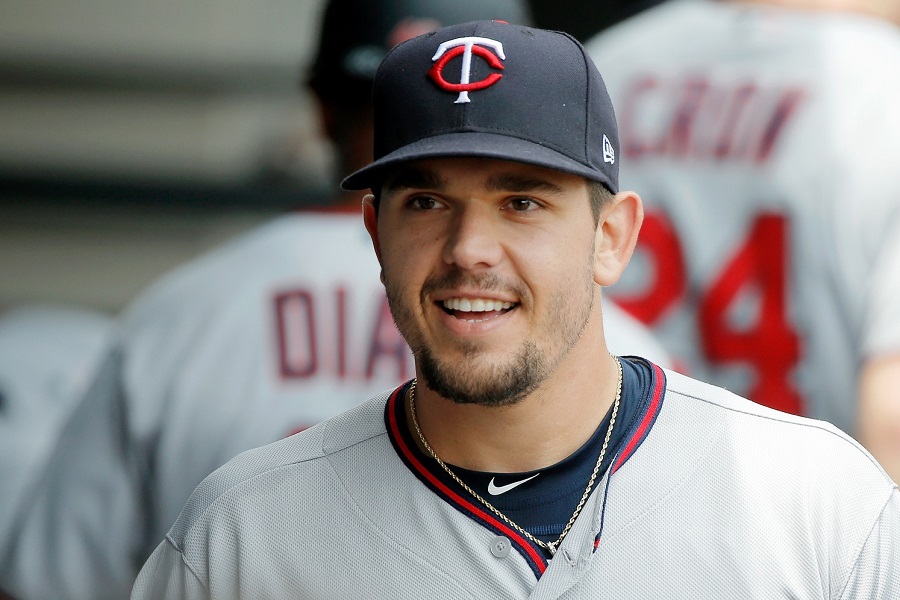 Thorpe was coming off a 2019 season where he appeared in 12 big-league games and posted a 6.18 ERA with a 1.74 WHIP. While those numbers, don’t exactly jump off the page, he posted a promising 10.1 K/9 at the MLB level and a 11.1 K/9 at the Triple-A level. The Twins are hoping to see his strikeouts continue as he figures out how to pitch at baseball’s highest level. With uncertainty surrounding the 2020 season, Thorpe continue to train in Fort Myers. Patrick took a stab at what could be next for Thorpe. He has also been increasingly active on social media including helping get pizzas delivered to the Yankees minor league players in quarantine. https://twitter.com/adoptmilbplayer/status/1241430255052652545 Twins Daily (TD): How are you preparing with the delayed start to the season? Lewis Thorpe (LT): Keeping on my routine and staying relaxed. TD: How will a delayed start impact other players? LT: Hopefully, it doesn’t affect them, and they can stay positive. https://twitter.com/ljthorpe33/status/1240667350636077059?s=20 TD: What is the biggest change you will make for a shortened season? LT: No changes. Just go out there and do my job to support the team and win. TD: If doubleheaders become a regular part of the schedule, how ill that impact you getting ready for games? LT: Doubleheaders are gonna be tough, but the fellas are strong, and we will take the right measures to get them W. TD: What actor would play you in the movie about your career? LT: I wanna be the guy in the movie. LOL. It would be cool to try that. Make sure to give Thorpe a follow on Twitter as he has been running some fun giveaways for fans. MORE FROM TWINS DAILY — Latest Twins coverage from our writers — Recent Twins discussion in our forums — Follow Twins Daily via Twitter, Facebook or email
 -
If and when the baseball season resumes, Minnesota will be sending out Miguel Sano as their everyday first baseman. There have been plenty of legendary players to man first base during their Twins tenure. In fact, four of the team’s players whose numbers have been retired spent multiple seasons manning first base. So how have these legends fared on the defensive side of the ball?Harmon Killebrew Killebrew moved all over the field during his big-league career as the Twins shuffled him between the left field and both corner infield spots. He spent more time at first base than any other position. His fielding percentage at first was the best of any position (.992). His total zone rating in runs above average was -6, but at third he was a -51 and he was a -19 in left field. Like Killebrew, Sano is in the Twins line-up because he can put baseballs into orbit with his powerful swing. Unlike Killebrew, the designated hitter role could impact Sano as his career progresses. Killebrew was forced to play a defensive position because the DH didn’t exist until the tail-end of his career. If Sano struggles with the transition to first, he could move to DH after Nelson Cruz vacates that position for the Twins. Rod Carew While Killebrew and Sano share similarities, Rod Carew and Sano might be the furthest thing apart when it comes to body type and approach at the plate. Carew did not move full time to first base until his age-30 season and his lone MVP award came in his second full season at first base. He played three full seasons there before leaving for the Angels and he amassed an 18 total zone rating. His best season at first base actually came in 1982 when he posted an 18 total zone rating, a career high. With a .991 fielding percentage, he and Killebrew posted nearly identical marks for their careers. Like Carew, Sano started his professional career at another defensive position where he wasn’t exactly strong defensively. Carew provided a -3 total zone rating in nearly 9,500 innings at second base. This included a bad season (1971: -11 TZ) and a couple of good seasons (1969, 1975: 6 TZ). Sano had multiple seasons with a -10 TZ rating at third including last season. His best season (4 TZ) was in 2016 when he was limited to 42 games at third. Kent Hrbek Both players above made the Hall of Fame, but Kent Hrbek was Minnesota born and he was part of some of the most famous plays at first base in team history (See: Final out 1987, Ron Gant). Hrbek posted a .994 fielding percentage at first with a 16 TZ rating. He had multiple seasons with a TZ rating higher than five, but he also had two of his final five seasons with a -7 TZ. Arguably, his best defensive season was 1984 when he finished second for the AL MVP. Like Hrbek, the Twins hope Sano can provide a big target for infielders especially Minnesota’s current middle infield duo. Jorge Polanco and Luis Arraez are both below average on the defensive side of the ball. Last season, Polanco was saved multiple times by CJ Cron after throwing the ball in the dirt. With a big target at first, the team’s advice for this season is to throw it high because those types of throws will be easier for a less experienced first baseman. Joe Mauer Joe Mauer won multiple Gold Gloves in his career, but all of them came as a catcher which is considerably harder defensive position than first base. Most people thought his transition from catcher to first base would be smooth because of his athleticism, but it was a skill he had to improve. In his first three seasons at first, he combined for a -6 TZ ranking, but over his final two seasons he posted positive totals to end his career with an overall 0 TZ at first. He also combined to have a .996 fielding percentage, a higher total than any player mentioned above. Like Mauer, Sano has played his entire career in an advanced analytical age and this means more defensive data to gauge player effectiveness. SABR’s Defensive Index has been used to help pick the Gold and Platinum Glove winners in each league since 2013. Back in 2014, Mauer finished tied with Albert Pujols (3.8 SDI) for the top SDI ranking at first. He tied that SDI total in 2017, but it was only good enough to finish third overall at first base. Last season, only two players ranked worse than Sano (-6.8 SDI) at third base according to SDI. What do you remember about these different defenders? How good can Sano be at first? Leave a COMMENT and start the discussion. MORE FROM TWINS DAILY — Latest Twins coverage from our writers — Recent Twins discussion in our forums — Follow Twins Daily via Twitter, Facebook or email Click here to view the article
-
Miguel Sano and Minnesota’s Legendary Defensive History at First Base
Cody Christie posted an article in Twins
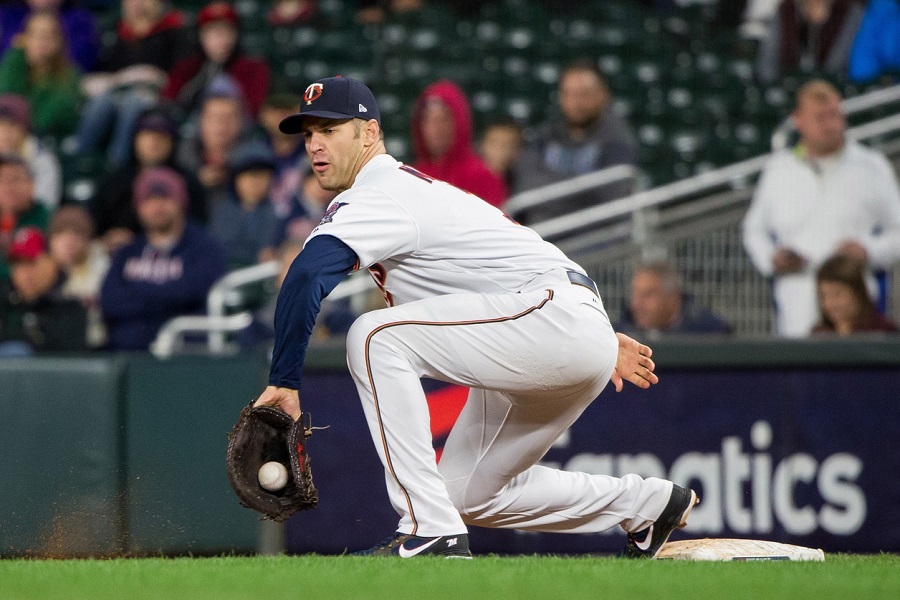 Harmon Killebrew Killebrew moved all over the field during his big-league career as the Twins shuffled him between the left field and both corner infield spots. He spent more time at first base than any other position. His fielding percentage at first was the best of any position (.992). His total zone rating in runs above average was -6, but at third he was a -51 and he was a -19 in left field. Like Killebrew, Sano is in the Twins line-up because he can put baseballs into orbit with his powerful swing. Unlike Killebrew, the designated hitter role could impact Sano as his career progresses. Killebrew was forced to play a defensive position because the DH didn’t exist until the tail-end of his career. If Sano struggles with the transition to first, he could move to DH after Nelson Cruz vacates that position for the Twins. Rod Carew While Killebrew and Sano share similarities, Rod Carew and Sano might be the furthest thing apart when it comes to body type and approach at the plate. Carew did not move full time to first base until his age-30 season and his lone MVP award came in his second full season at first base. He played three full seasons there before leaving for the Angels and he amassed an 18 total zone rating. His best season at first base actually came in 1982 when he posted an 18 total zone rating, a career high. With a .991 fielding percentage, he and Killebrew posted nearly identical marks for their careers. Like Carew, Sano started his professional career at another defensive position where he wasn’t exactly strong defensively. Carew provided a -3 total zone rating in nearly 9,500 innings at second base. This included a bad season (1971: -11 TZ) and a couple of good seasons (1969, 1975: 6 TZ). Sano had multiple seasons with a -10 TZ rating at third including last season. His best season (4 TZ) was in 2016 when he was limited to 42 games at third. Kent Hrbek Both players above made the Hall of Fame, but Kent Hrbek was Minnesota born and he was part of some of the most famous plays at first base in team history (See: Final out 1987, Ron Gant). Hrbek posted a .994 fielding percentage at first with a 16 TZ rating. He had multiple seasons with a TZ rating higher than five, but he also had two of his final five seasons with a -7 TZ. Arguably, his best defensive season was 1984 when he finished second for the AL MVP. Like Hrbek, the Twins hope Sano can provide a big target for infielders especially Minnesota’s current middle infield duo. Jorge Polanco and Luis Arraez are both below average on the defensive side of the ball. Last season, Polanco was saved multiple times by CJ Cron after throwing the ball in the dirt. With a big target at first, the team’s advice for this season is to throw it high because those types of throws will be easier for a less experienced first baseman. Joe Mauer Joe Mauer won multiple Gold Gloves in his career, but all of them came as a catcher which is considerably harder defensive position than first base. Most people thought his transition from catcher to first base would be smooth because of his athleticism, but it was a skill he had to improve. In his first three seasons at first, he combined for a -6 TZ ranking, but over his final two seasons he posted positive totals to end his career with an overall 0 TZ at first. He also combined to have a .996 fielding percentage, a higher total than any player mentioned above. Like Mauer, Sano has played his entire career in an advanced analytical age and this means more defensive data to gauge player effectiveness. SABR’s Defensive Index has been used to help pick the Gold and Platinum Glove winners in each league since 2013. Back in 2014, Mauer finished tied with Albert Pujols (3.8 SDI) for the top SDI ranking at first. He tied that SDI total in 2017, but it was only good enough to finish third overall at first base. Last season, only two players ranked worse than Sano (-6.8 SDI) at third base according to SDI. What do you remember about these different defenders? How good can Sano be at first? Leave a COMMENT and start the discussion. MORE FROM TWINS DAILY — Latest Twins coverage from our writers — Recent Twins discussion in our forums — Follow Twins Daily via Twitter, Facebook or email
 -
Baseball is a sport where tradition is engrained in the fabric of the game. As far as baseball traditions go, the Twins Cities have a long history, but the MLB history in the city is relatively young. Last spring, Paul Goldberger released a book called Ballpark: Baseball in the American City and he chronicled baseball’s different ballpark eras and what they have meant to the cities in which they reside. Here’s how the Twins ballpark history follows closely with trends seen through baseball’s different eras. The Suburban Era: Metropolitan Stadium Metropolitan Stadium was one of the first stadiums to be part of a trend that moved from city centers to the suburbs. One of the biggest reasons for this trend was the lack of space and rising cost of land. Bloomington allowed the Twins to build a large complex with plenty of parking, especially since the team’s fans would be coming from multiple states and cars would be the main form of transportation. Paul Golberger, the author, said, “Metropolitan, in the midst of a huge parking lot, exemplifies the notion of the suburban stadium (and how logical that it would become the site of the Mall of America, the ultimate suburban mall).” Some fans were sad to see the Met’s eventual demise. Goldberger said, “Fans do get attached to places because they have intense emotional experiences there, and understandably they become the source of deep-seated, meaningful memories.” The Met helped convince a franchise to move to Minnesota and it served the team well for multiple decades including the team’s first World Series appearance, but baseball continued to evolve, and the Twins made the move from the suburbs into the city. The Domed Era: The Metrodome Houston’s AstroDome ushered in a new ballpark experience for fans and Minnesota would follow, although it would be 17 years after the AstroDome opened. The Metrodome certainly had its quirks and as a multipurpose stadium it didn’t exactly ever feel like a ballpark. Everything about the stadium was fake from the grass to the pumped in air, but it certainly fit in with some of the stadiums at the time. “The Metrodome was one of the most egregious of the domed stadiums with no connection to anything around it and no natural connection to baseball,” said Goldberger. Some of the Twins’ most memorable moments came under a Teflon roof on artificial grass, but all the Dome’s flaws made the move back outdoors even more impressive. The Return to Downtown Era: Target Field Target Field opened in 2010 and it followed in the footsteps of plenty of ballparks that returned to downtowns across the United States and became part of the city again. Camden Yards in Baltimore, Coors Field in Denver, and PNC Park in Pittsburgh are just a few examples of what a city can do to make a ballpark integrated into a downtown footprint. “Target is a really fine example of the later generation, where baseball not only came back into the city but was of the city, integrated with it,” said Goldberger. Later he said, “The home stadium for any team you care about will become a place you feel emotionally connected to, even if it’s a lousy piece of architecture and doesn’t do its job very well. But in a place like Target you can have the same emotional intensity and the same long-lasting memories and have a much happier environment besides.” The Future Target Field celebrated its 10th anniversary last season and the Twins front office and the Pohlad family continue to make upgrades on a yearly basis. Some teams like Atlanta and Texas abandoned relatively new ballparks in hopes of creating a different type of baseball experience. “There’s no reason a ballpark can’t last for 50, 75 or even 100 years with proper care,” said Goldberger. “There is absolutely no reason that the Texas Rangers had to tear down Globe Life Park, which was only 25.” The Twins have also embraced another budding ballpark trend by creating specific spaces at Target Field. Areas like Bat & Barrel, Minnie & Paul’s and Barrio are open to all fans and combine a social atmosphere that is far from the traditional way of watching a game. Goldberger said, “We’re seeing much more in the way of social spaces in ballparks now, including standing room areas where people can get drinks and wander, treating the experience of the game more like a cocktail party than something you need to observe from a fixed seat.” Moving forward there could be another possibility for growth without leaving Target Field. Some organizations have started to create spaces around the ballpark that make for a full-day experience. “Team owners, wanting to have more sources of revenue, are buying and controlling adjacent properties outside the gate,” said Goldberger. “We see that at Wrigley Field, and also at Busch Stadium, where the Cardinals have developed the adjacent site as Ballpark Village.” Target Field has certainly been a revelation when compared to previous Minnesota ballparks, but fans were very passionate about some of the quirks with Metropolitan Stadium and the Metrodome. Baseball is meant to be outside under the sun and it will be exciting to see what Target Field could be in the future. What are your memories with all of Minnesota’s ballparks? Leave a COMMENT and start the discussion. MORE FROM TWINS DAILY — Latest Twins coverage from our writers — Recent Twins discussion in our forums — Follow Twins Daily via Twitter, Facebook or email View full article
- 7 replies
-
- 1
-

-
- metrodome
- metropolitan stadium
- (and 2 more)
-
 The Suburban Era: Metropolitan Stadium Metropolitan Stadium was one of the first stadiums to be part of a trend that moved from city centers to the suburbs. One of the biggest reasons for this trend was the lack of space and rising cost of land. Bloomington allowed the Twins to build a large complex with plenty of parking, especially since the team’s fans would be coming from multiple states and cars would be the main form of transportation. Paul Golberger, the author, said, “Metropolitan, in the midst of a huge parking lot, exemplifies the notion of the suburban stadium (and how logical that it would become the site of the Mall of America, the ultimate suburban mall).” Some fans were sad to see the Met’s eventual demise. Goldberger said, “Fans do get attached to places because they have intense emotional experiences there, and understandably they become the source of deep-seated, meaningful memories.” The Met helped convince a franchise to move to Minnesota and it served the team well for multiple decades including the team’s first World Series appearance, but baseball continued to evolve, and the Twins made the move from the suburbs into the city. The Domed Era: The Metrodome Houston’s AstroDome ushered in a new ballpark experience for fans and Minnesota would follow, although it would be 17 years after the AstroDome opened. The Metrodome certainly had its quirks and as a multipurpose stadium it didn’t exactly ever feel like a ballpark. Everything about the stadium was fake from the grass to the pumped in air, but it certainly fit in with some of the stadiums at the time. “The Metrodome was one of the most egregious of the domed stadiums with no connection to anything around it and no natural connection to baseball,” said Goldberger. Some of the Twins’ most memorable moments came under a Teflon roof on artificial grass, but all the Dome’s flaws made the move back outdoors even more impressive. The Return to Downtown Era: Target Field Target Field opened in 2010 and it followed in the footsteps of plenty of ballparks that returned to downtowns across the United States and became part of the city again. Camden Yards in Baltimore, Coors Field in Denver, and PNC Park in Pittsburgh are just a few examples of what a city can do to make a ballpark integrated into a downtown footprint. “Target is a really fine example of the later generation, where baseball not only came back into the city but was of the city, integrated with it,” said Goldberger. Later he said, “The home stadium for any team you care about will become a place you feel emotionally connected to, even if it’s a lousy piece of architecture and doesn’t do its job very well. But in a place like Target you can have the same emotional intensity and the same long-lasting memories and have a much happier environment besides.” The Future Target Field celebrated its 10th anniversary last season and the Twins front office and the Pohlad family continue to make upgrades on a yearly basis. Some teams like Atlanta and Texas abandoned relatively new ballparks in hopes of creating a different type of baseball experience. “There’s no reason a ballpark can’t last for 50, 75 or even 100 years with proper care,” said Goldberger. “There is absolutely no reason that the Texas Rangers had to tear down Globe Life Park, which was only 25.” The Twins have also embraced another budding ballpark trend by creating specific spaces at Target Field. Areas like Bat & Barrel, Minnie & Paul’s and Barrio are open to all fans and combine a social atmosphere that is far from the traditional way of watching a game. Goldberger said, “We’re seeing much more in the way of social spaces in ballparks now, including standing room areas where people can get drinks and wander, treating the experience of the game more like a cocktail party than something you need to observe from a fixed seat.” Moving forward there could be another possibility for growth without leaving Target Field. Some organizations have started to create spaces around the ballpark that make for a full-day experience. “Team owners, wanting to have more sources of revenue, are buying and controlling adjacent properties outside the gate,” said Goldberger. “We see that at Wrigley Field, and also at Busch Stadium, where the Cardinals have developed the adjacent site as Ballpark Village.” Target Field has certainly been a revelation when compared to previous Minnesota ballparks, but fans were very passionate about some of the quirks with Metropolitan Stadium and the Metrodome. Baseball is meant to be outside under the sun and it will be exciting to see what Target Field could be in the future. What are your memories with all of Minnesota’s ballparks? Leave a COMMENT and start the discussion. MORE FROM TWINS DAILY — Latest Twins coverage from our writers — Recent Twins discussion in our forums — Follow Twins Daily via Twitter, Facebook or email
 -
No team is certain what the future will hold for the 2020 season, but baseball has dealt with multiple delays and work stoppages throughout its long history. Since the Twins moved to Minnesota, there have been three major shortened seasons, so let’s look back at the Twins in baseball’s previously shortened seasons.1972 Record: 77-77 (3rd in the AL West) The first player strike in baseball history took out the first two weeks of the 1972 season. Players wanted an increase in their pension fund payments and salary arbitration added to the Collective Bargaining Agreement. A total of 86 games were lost over 13-days with most teams losing six to eight games. With teams playing a different number of games, the Detroit Tigers won the AL East by half a game because they played one more game than the Boston Red Sox. Rod Carew and Bert Blyleven were the Twins team leaders in WAR. Carew hit .318/.369/.379 (.749) with 27 extra-base hits in 142 games. Blyleven pitched nearly 290 innings and posted a 2.73 ERA with 228 strikeouts and 69 walks. Harmon Killebrew led the team with 26 home runs, but Bobby Darwin was close behind with 22. Dick Woodson nearly matched Blyleven with 251 2/3 innings and a 2.72 ERA. 1981 Record: 41-68 (7th in the AL West) Every team played roughly 107 games in 1981 after the players walked out on June 11 and didn’t return until August 10. Owners were pushing for draft pick compensation when losing a free agent player and they also wanted to be able to take a player off the roster of the team where the free agent signed. Because the stoppage was in the middle of the year, MLB had division winners from the season’s first and second halves face off in a division series before moving on to a championship series. Unfortunately for baseball, the teams with the top two records (Cincinnati and St. Louis) missed the playoffs because of this format. Minnesota’s final season in Metropolitan Stadium was certainly one to forget as the team struggled out of the gate in the first half and finished with a 17-39 record. The second half went a little better as the team ended up fourth in the AL West with a 24-29 record. There were few notable names among the team’s top WAR contributors. Doug Corbett, Albert Williams, John Castino and Pete Redfern are not exactly a top-tier list of former Twins greats. 1995 Record: 56-88 (5th in the AL Central) In what might be baseball’s most famous work stoppage, the 1994 season had ended early and baseball’s strike wouldn’t end until the beginning of April 1995. Players were given three weeks to get themselves in playing shape at a shortened spring training before heading into a 144-game season. It would be the first year where the playoffs would use a three-division format with a wild card team. For Twins fans, a moment occurred in 1995 that no one saw coming, Kirby Puckett’s final game. On September 28, Puckett stepped in against Dennis Martinez and took a pitch to the head. He would play during spring 1996 before waking up with blurred vision in his right eye. Beside Puckett, Chuck Knoblauch and Marty Cordova were the team’s WAR leaders. Cordova beat out the likes of Garret Anderson and Andy Pettitte to win the AL Rookie of the Year. Baseball messed up the playoffs in 1972 and 1981, so it will be interesting to see how the season will unfold when and if the teams return to action. Minnesota hasn’t fared well in any of baseball’s previously shortened seasons, but on paper, the 2020 version of the Twins are certainly set up to do well. How will this season’s delay compare to the previously shortened seasons? Leave a COMMENT and start the discussion. MORE FROM TWINS DAILY — Latest Twins coverage from our writers — Recent Twins discussion in our forums — Follow Twins Daily via Twitter, Facebook or email Click here to view the article
-
Looking Back at the Twins in Baseball’s Previously Shortened Seasons
Cody Christie posted an article in Twins
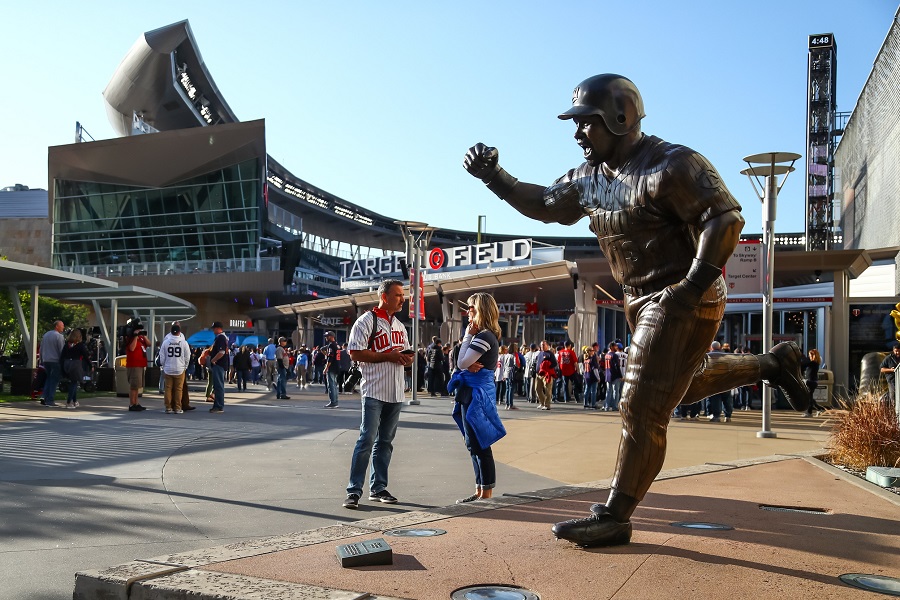 1972 Record: 77-77 (3rd in the AL West) The first player strike in baseball history took out the first two weeks of the 1972 season. Players wanted an increase in their pension fund payments and salary arbitration added to the Collective Bargaining Agreement. A total of 86 games were lost over 13-days with most teams losing six to eight games. With teams playing a different number of games, the Detroit Tigers won the AL East by half a game because they played one more game than the Boston Red Sox. Rod Carew and Bert Blyleven were the Twins team leaders in WAR. Carew hit .318/.369/.379 (.749) with 27 extra-base hits in 142 games. Blyleven pitched nearly 290 innings and posted a 2.73 ERA with 228 strikeouts and 69 walks. Harmon Killebrew led the team with 26 home runs, but Bobby Darwin was close behind with 22. Dick Woodson nearly matched Blyleven with 251 2/3 innings and a 2.72 ERA. 1981 Record: 41-68 (7th in the AL West) Every team played roughly 107 games in 1981 after the players walked out on June 11 and didn’t return until August 10. Owners were pushing for draft pick compensation when losing a free agent player and they also wanted to be able to take a player off the roster of the team where the free agent signed. Because the stoppage was in the middle of the year, MLB had division winners from the season’s first and second halves face off in a division series before moving on to a championship series. Unfortunately for baseball, the teams with the top two records (Cincinnati and St. Louis) missed the playoffs because of this format. Minnesota’s final season in Metropolitan Stadium was certainly one to forget as the team struggled out of the gate in the first half and finished with a 17-39 record. The second half went a little better as the team ended up fourth in the AL West with a 24-29 record. There were few notable names among the team’s top WAR contributors. Doug Corbett, Albert Williams, John Castino and Pete Redfern are not exactly a top-tier list of former Twins greats. 1995 Record: 56-88 (5th in the AL Central) In what might be baseball’s most famous work stoppage, the 1994 season had ended early and baseball’s strike wouldn’t end until the beginning of April 1995. Players were given three weeks to get themselves in playing shape at a shortened spring training before heading into a 144-game season. It would be the first year where the playoffs would use a three-division format with a wild card team. For Twins fans, a moment occurred in 1995 that no one saw coming, Kirby Puckett’s final game. On September 28, Puckett stepped in against Dennis Martinez and took a pitch to the head. He would play during spring 1996 before waking up with blurred vision in his right eye. Beside Puckett, Chuck Knoblauch and Marty Cordova were the team’s WAR leaders. Cordova beat out the likes of Garret Anderson and Andy Pettitte to win the AL Rookie of the Year. https://twitter.com/TwinsAlmanac/status/1045667945462910976?s=20 Baseball messed up the playoffs in 1972 and 1981, so it will be interesting to see how the season will unfold when and if the teams return to action. Minnesota hasn’t fared well in any of baseball’s previously shortened seasons, but on paper, the 2020 version of the Twins are certainly set up to do well. How will this season’s delay compare to the previously shortened seasons? Leave a COMMENT and start the discussion. MORE FROM TWINS DAILY — Latest Twins coverage from our writers — Recent Twins discussion in our forums — Follow Twins Daily via Twitter, Facebook or email
 -
Spring training is getting closer to coming to a close, which means Opening Day is right around the corner. Luckily for the Twins, almost all their regular players [knock on wood] seem to be on track to be on the field in Oakland. Byron Buxton might be the lone exception to players expected to be everyday contributors. So, is Byron Buxton behind schedule for Opening Day?Initial Reports Byron Buxton is recovering from season-ending surgery to repair a torn labrum in his left-shoulder. He started swinging in late January, hitting off a tee in February and taking live batting practice this week. Slow and steady seems to be the name of the game and it’s certainly makes sense with Buxton’s injury history. Near the beginning of spring training, Twins manager Rocco Baldelli said the club anticipated Buxton being ready for game action by mid-March. This deadline is quickly approaching, and Buxton has yet to appear in a game. Even if he does appear in games in the next week, will that be enough time put him on the Opening Day roster by March 26. "There's no rushing this process," Buxton told MLB.com. "I know what I've got to do to be able to get back to being myself, and rushing is not one of them." Manager Rocco Baldelli echoed this sentiment on Monday. "I don't have a schedule for Byron Buxton," Baldelli said. "Our training staff does not have a schedule for Byron. He's going to show us what his schedule will be by how well everything goes as it is laid out." Buxton was off to a strong start last season before getting injured as he seemed to have found himself offensively. In 87 games, he hit .262/.314/.513 (.827) with 44 extra-base hits. His 30 doubles were near the top of the league before he missed time. Matthew Trueblood wrote there could be one seemingly small adjustment that would yield a big payoff. Roster Impact If Buxton isn’t ready for Opening Day, there will be a few moving pieces that impact the overall 26-man roster. Firstly, Max Kepler would move from right field to center field where he played for parts of last season after Buxton’s injury. Secondly, Marwin Gonzalez would likely take over as an everyday player to start the year, but he has been coming back from an offseason knee surgery of his own, so the Twins would need other outfield depth. Jake Cave and LaMonte Wade Jr. would likely be vying to serve in the back-up outfielder role. Cave hit .258/.351/.455 (.805) with 21 extra-base hits in 72 games last season. Wade Jr. dislocated his thumb in his second big-league game and was forced to sit out from early July until the middle of August. He returned to the big-leagues as a September call-up and hit .196/.348/.375 (.723) with five extra-base hits in 26 games last year. Cave is already in a battle for the final roster spot with Willians Astudillo, so it seems more likely for both players to make the Opening Day roster if Buxton is unable to go. Should fans be worried about Buxton? Is it better to take it slow with him because of his injury history? Leave a COMMENT and start the discussion. MORE FROM TWINS DAILY — Latest Twins coverage from our writers — Recent Twins discussion in our forums — Follow Twins Daily via Twitter, Facebook or email Click here to view the article
-
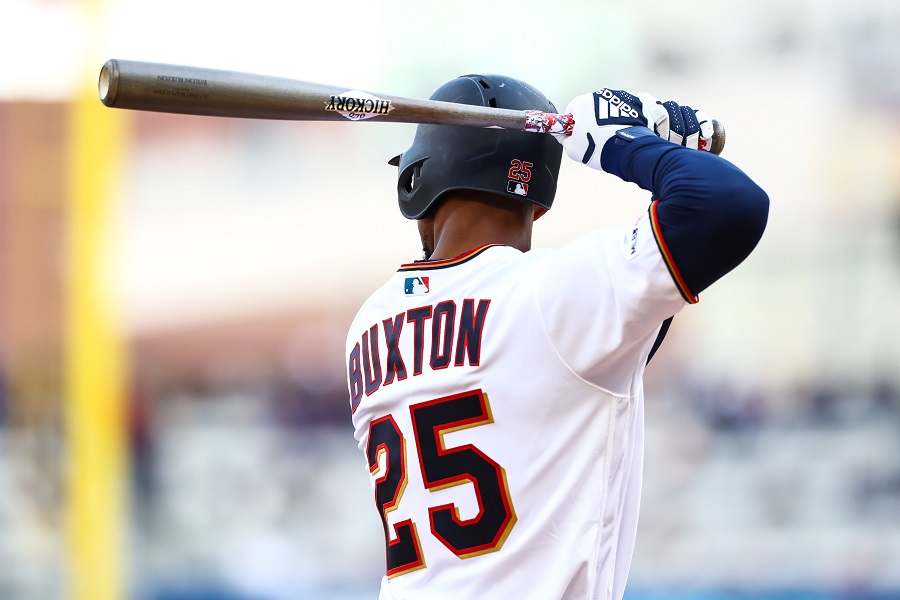 Initial Reports Byron Buxton is recovering from season-ending surgery to repair a torn labrum in his left-shoulder. He started swinging in late January, hitting off a tee in February and taking live batting practice this week. Slow and steady seems to be the name of the game and it’s certainly makes sense with Buxton’s injury history. Near the beginning of spring training, Twins manager Rocco Baldelli said the club anticipated Buxton being ready for game action by mid-March. This deadline is quickly approaching, and Buxton has yet to appear in a game. Even if he does appear in games in the next week, will that be enough time put him on the Opening Day roster by March 26. "There's no rushing this process," Buxton told MLB.com. "I know what I've got to do to be able to get back to being myself, and rushing is not one of them." Manager Rocco Baldelli echoed this sentiment on Monday. "I don't have a schedule for Byron Buxton," Baldelli said. "Our training staff does not have a schedule for Byron. He's going to show us what his schedule will be by how well everything goes as it is laid out." Buxton was off to a strong start last season before getting injured as he seemed to have found himself offensively. In 87 games, he hit .262/.314/.513 (.827) with 44 extra-base hits. His 30 doubles were near the top of the league before he missed time. Matthew Trueblood wrote there could be one seemingly small adjustment that would yield a big payoff. Roster Impact If Buxton isn’t ready for Opening Day, there will be a few moving pieces that impact the overall 26-man roster. Firstly, Max Kepler would move from right field to center field where he played for parts of last season after Buxton’s injury. Secondly, Marwin Gonzalez would likely take over as an everyday player to start the year, but he has been coming back from an offseason knee surgery of his own, so the Twins would need other outfield depth. Jake Cave and LaMonte Wade Jr. would likely be vying to serve in the back-up outfielder role. Cave hit .258/.351/.455 (.805) with 21 extra-base hits in 72 games last season. Wade Jr. dislocated his thumb in his second big-league game and was forced to sit out from early July until the middle of August. He returned to the big-leagues as a September call-up and hit .196/.348/.375 (.723) with five extra-base hits in 26 games last year. Cave is already in a battle for the final roster spot with Willians Astudillo, so it seems more likely for both players to make the Opening Day roster if Buxton is unable to go. Should fans be worried about Buxton? Is it better to take it slow with him because of his injury history? Leave a COMMENT and start the discussion. MORE FROM TWINS DAILY — Latest Twins coverage from our writers — Recent Twins discussion in our forums — Follow Twins Daily via Twitter, Facebook or email
 -
Impending free agents can have a lot to prove in their final year under contract. Can they outperform their career numbers and hit a big payday? Or do they succumb to the pressure and underperform in one of their most important professional seasons? For three Twins players, there might be even more to prove before becoming free agents for the first time.Ehire Adrianza Adrianza has been part of three different organization and gotten claimed off waivers multiple times, but he has never been a free agent. He provides an interesting case, because he has mostly served a role player during his Twins tenure. In three seasons in Minnesota he has hit .260/.321/.391 (.711) while averaging 89 games played. His 2018 season might give the best glimpse of how he could produce if he was an everyday player. Adrianza was given the opportunity to man shortstop while Jorge Polanco started the year suspended. He played in 114 games that season and compiled a .680 OPS and this included playing over 750 innings at shortstop and third base. He could possibly serve as an everyday player on a club, but he would need an opportunity to prove himself this season. It would take an injury to Polanco for Adrianza to play every day and the Twins certainly don’t want that to happen. Trevor May May’s transition from starter to reliever came with some growing pains, but he has turned into one of the team’s best late-inning options. Something clicked for him when he came back from Tommy John surgery back in 2018. Since that time, he has held opponents to a .195 average with a terrific 11.5 strikeouts per nine innings. Outside of Taylor Rogers, May might be Minnesota’s best relief option and that’s saying a lot with the current make-up of the bullpen. He should see plenty of time late in games this year and it will be interesting to see if Rocco Baldelli continues to use him in a similar fashion. He was only used for more than an inning in 10 of his appearances last season. Could that change in 2020? If May continues to pitch like he has over the last two seasons, there’s a chance a team would want to add him as a potential closer, even if the closer role continues to evolve. That could lead to an even bigger payday for the 30-year old free agent-to-be. Jake Odorizzi Odorizzi bet on himself this season by accepting the Twins' one-year qualifying offer. Granted the $17.8 million one-year deal is more money than he has made in his entire career, but now he knows he will be a free agent next winter. He might have been kicking himself for accepting the offer after seeing the contracts being handed out to other starters on the open market. He made his first All-Star team this past season on the heels of a first half where he posted a 3.15 ERA with a 1.12 WHIP. Opponents hit only .214/.285/.335 (.620) against him and he had 96 strikeouts in 88 2/3 innings pitched. The second half didn’t go nearly as well as batters' OPS rose 111 points. He finished the year by starting Game 3 of the ALDS by allowed two earned runs on five hits over five innings. In an offensive environment like 2019, Odorizzi’s first half is certainly impressive. If he can put together a full season like he did last year then he will be looking at a handsome free agent contract next winter and this time it will be a multi-year deal. Which player has the most to prove this season? Who will score big next off-season? Leave a COMMENT and start the discussion. MORE FROM TWINS DAILY — Latest Twins coverage from our writers — Recent Twins discussion in our forums — Follow Twins Daily via Twitter, Facebook or email Click here to view the article
- 16 replies
-
- 1
-
-
- ehire adrianza
- trevor may
- (and 3 more)
-
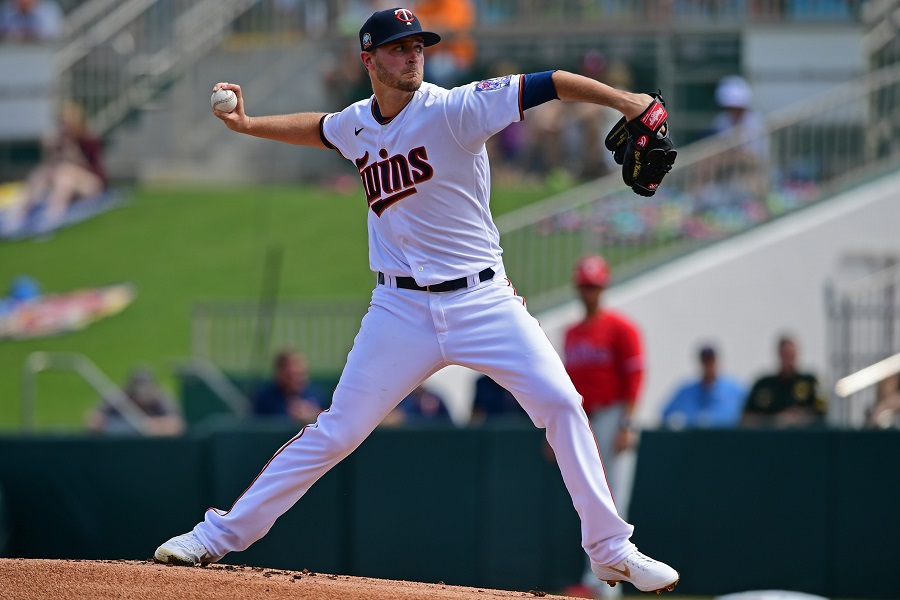 Ehire Adrianza Adrianza has been part of three different organization and gotten claimed off waivers multiple times, but he has never been a free agent. He provides an interesting case, because he has mostly served a role player during his Twins tenure. In three seasons in Minnesota he has hit .260/.321/.391 (.711) while averaging 89 games played. His 2018 season might give the best glimpse of how he could produce if he was an everyday player. Adrianza was given the opportunity to man shortstop while Jorge Polanco started the year suspended. He played in 114 games that season and compiled a .680 OPS and this included playing over 750 innings at shortstop and third base. He could possibly serve as an everyday player on a club, but he would need an opportunity to prove himself this season. It would take an injury to Polanco for Adrianza to play every day and the Twins certainly don’t want that to happen. Trevor May May’s transition from starter to reliever came with some growing pains, but he has turned into one of the team’s best late-inning options. Something clicked for him when he came back from Tommy John surgery back in 2018. Since that time, he has held opponents to a .195 average with a terrific 11.5 strikeouts per nine innings. Outside of Taylor Rogers, May might be Minnesota’s best relief option and that’s saying a lot with the current make-up of the bullpen. He should see plenty of time late in games this year and it will be interesting to see if Rocco Baldelli continues to use him in a similar fashion. He was only used for more than an inning in 10 of his appearances last season. Could that change in 2020? If May continues to pitch like he has over the last two seasons, there’s a chance a team would want to add him as a potential closer, even if the closer role continues to evolve. That could lead to an even bigger payday for the 30-year old free agent-to-be. Jake Odorizzi Odorizzi bet on himself this season by accepting the Twins' one-year qualifying offer. Granted the $17.8 million one-year deal is more money than he has made in his entire career, but now he knows he will be a free agent next winter. He might have been kicking himself for accepting the offer after seeing the contracts being handed out to other starters on the open market. He made his first All-Star team this past season on the heels of a first half where he posted a 3.15 ERA with a 1.12 WHIP. Opponents hit only .214/.285/.335 (.620) against him and he had 96 strikeouts in 88 2/3 innings pitched. The second half didn’t go nearly as well as batters' OPS rose 111 points. He finished the year by starting Game 3 of the ALDS by allowed two earned runs on five hits over five innings. In an offensive environment like 2019, Odorizzi’s first half is certainly impressive. If he can put together a full season like he did last year then he will be looking at a handsome free agent contract next winter and this time it will be a multi-year deal. Which player has the most to prove this season? Who will score big next off-season? Leave a COMMENT and start the discussion. MORE FROM TWINS DAILY — Latest Twins coverage from our writers — Recent Twins discussion in our forums — Follow Twins Daily via Twitter, Facebook or email
 -
Earlier in the week, I looked at Minnesota’s depth across the board and it makes it tough not to be excited about the club’s chances in 2020. That being said, one group of players might be being held back because of the team’s loaded big-league roster. For better or for worse, Minnesota’s top prospects aren’t going to get a long look this season because the club has big goals and depth at nearly every positionTrio of Top Prospects Most outlets, including Twins Daily, have some combination of Royce Lewis, Alex Kirilloff and Trevor Larnach as the to -three prospects in the Twins organization. All three players finished last season at Double-A which usually means a player is getting close to making his big-league debut. Of the trio, Larnach is coming off the best season as he was named the organization’s Minor League Player of the Year. A wrinkle in that plan is the fact that none of the players are on the 40-man roster. Not like a spot couldn’t be opened for him if it was needed. Larnach is actually the oldest member of the trio and his college experience could help him to move up quickly. Kirilloff needs to be added to the 40-man roster next off-season so it wouldn’t be a stretch for him to be added at some point this season. If everything is going well for the Twins, none of their top-3 trio will debut until September or later. Pitching Options Lewis Thorpe is going to be a key contributor to the 2020 Twins roster and other pitching options have an opportunity to make their mark. Randy Dobnak already started a playoff game for the Twins but the club added multiple other playoff- caliber starters. Players in the ilk of Donbak, Thorpe and Devin Smeltzer have already gotten big-league opportunities on a 101-win team and this season could also provide opportunities on a team destined for less than 100 wins. Outside of the trio vying for the fifth starter spot, the Twins have other prospects attempting to make the roster. Sean Poppen could be a breakout candidate for the club and his stuff could be more than capable at the big-league level. Other top prospects like Jhoan Duran, Blayne Enlow, and Edwar Colina also have a shot at making an impact, but it will be tough in a loaded MLB bullpen. 40-Man Roster Options Last season, few people would have expected the impact Luis Arraez made on the big-league roster. One season later and the Twins are relying on Arraez to be a regular in the team’s batting order. Like Arraez, there are other members of the 40-man roster that could impact the 2020 version of the Twins. Travis Blakenhorn has a chance to play a significant nubber of games for the Twins and be an impact player throughout the 2020 season. That’s why this spring with Josh Donaldson is so important. He could impact Minnesota’s roster throughout Donaldson’s tenure with the club. Other prospects like Brent Rooker have a shot at impacting the team’s roster. Do you think prospects are being held back? Leave a COMMENT and start the discussion. MORE FROM TWINS DAILY — Latest Twins coverage from our writers — Recent Twins discussion in our forums — Follow Twins Daily via Twitter, Facebook or email Click here to view the article
-
Are Twins Top Prospects Being Held Back by Loaded MLB Roster?
Cody Christie posted an article in Minor Leagues
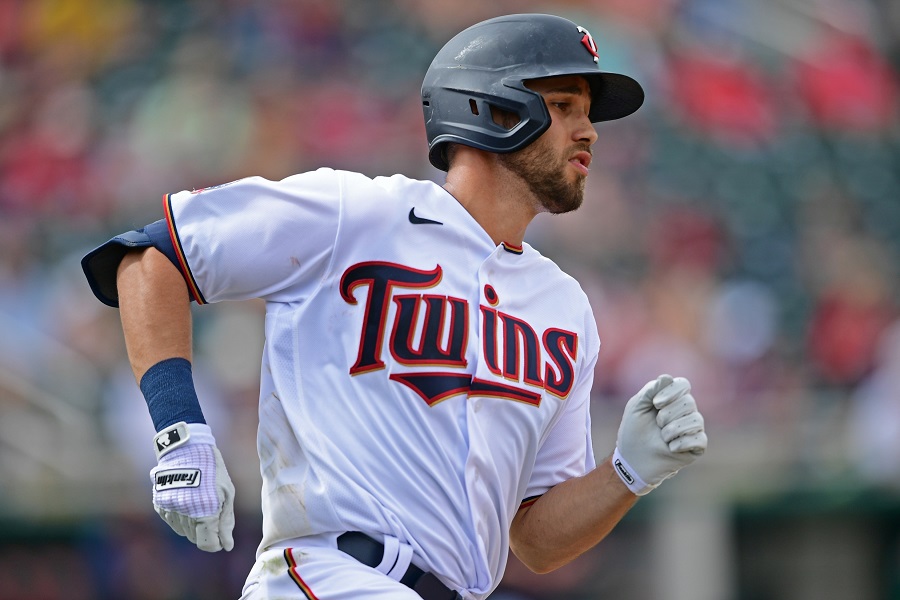 Trio of Top Prospects Most outlets, including Twins Daily, have some combination of Royce Lewis, Alex Kirilloff and Trevor Larnach as the to -three prospects in the Twins organization. All three players finished last season at Double-A which usually means a player is getting close to making his big-league debut. Of the trio, Larnach is coming off the best season as he was named the organization’s Minor League Player of the Year. A wrinkle in that plan is the fact that none of the players are on the 40-man roster. Not like a spot couldn’t be opened for him if it was needed. Larnach is actually the oldest member of the trio and his college experience could help him to move up quickly. Kirilloff needs to be added to the 40-man roster next off-season so it wouldn’t be a stretch for him to be added at some point this season. If everything is going well for the Twins, none of their top-3 trio will debut until September or later. Pitching Options Lewis Thorpe is going to be a key contributor to the 2020 Twins roster and other pitching options have an opportunity to make their mark. Randy Dobnak already started a playoff game for the Twins but the club added multiple other playoff- caliber starters. Players in the ilk of Donbak, Thorpe and Devin Smeltzer have already gotten big-league opportunities on a 101-win team and this season could also provide opportunities on a team destined for less than 100 wins. Outside of the trio vying for the fifth starter spot, the Twins have other prospects attempting to make the roster. Sean Poppen could be a breakout candidate for the club and his stuff could be more than capable at the big-league level. Other top prospects like Jhoan Duran, Blayne Enlow, and Edwar Colina also have a shot at making an impact, but it will be tough in a loaded MLB bullpen. 40-Man Roster Options Last season, few people would have expected the impact Luis Arraez made on the big-league roster. One season later and the Twins are relying on Arraez to be a regular in the team’s batting order. Like Arraez, there are other members of the 40-man roster that could impact the 2020 version of the Twins. Travis Blakenhorn has a chance to play a significant nubber of games for the Twins and be an impact player throughout the 2020 season. That’s why this spring with Josh Donaldson is so important. He could impact Minnesota’s roster throughout Donaldson’s tenure with the club. Other prospects like Brent Rooker have a shot at impacting the team’s roster. Do you think prospects are being held back? Leave a COMMENT and start the discussion. MORE FROM TWINS DAILY — Latest Twins coverage from our writers — Recent Twins discussion in our forums — Follow Twins Daily via Twitter, Facebook or email
 -
Expectations may never have been higher for the Minnesota Twins at the start of a season. The club is coming of a 101-win season and the roster has made improvements to build on last year’s success. Through the course of a 162-game season, there are always going to be injuries and the best clubs are forced to rely on their depth to keep themselves on a playoff path. Below is a ranking of all Minnesota’s position groups by depth from 1-10. Editor’s Note: In the originally posted article, the writer did not have catchers included on the list. Below you will see an updated ranking with catchers included.All depth chart information was taken from MLB.com and the team’s official depth chart. Some players are not listed on the official depth chart at this time due to suspension, injury or contract status. Those players have been added to the depth chart or included in the discussion. 11. Center Field Depth Chart: Buxton, Kepler, Cave, Wade Jr. Byron Buxton might not be ready for the season’s start and this could push Max Kepler from right field to center field where he filled in admirably last season. However, he has flaws as a defensive center fielder. If Buxton and Kepler were both hurt, someone like Jake Cave or LaMonte Wade Jr. would be forced to play up the middle and this would certainly not be ideal for the team. 10. Shortstop Depth Chart: Polanco, Adrianza, Gordon Jorge Polanco was the AL’s starting shortstop in the All-Star Game, but there were some struggles for him in the second half including a nearly 100-point drop in his OPS. Should Polanco go down with an injury, Ehire Adrianza has proven himself to be a strong defensive replacement even if he can’t be at the same offensive level as Polanco. Nick Gordon, a former top-5 pick, has started over 500 games at shortstop throughout his professional career, but he’s been getting more innings at second base in recent years. 9. Second Base Depth Chart: Arraez, Adrianza, Gordon Over his last three seasons, Luis Arraez has averaged 122 games played per seasons including with last year marking a career high 146 games played. as at shortstop, Adrianza would be a defensive upgrade and it would be interesting to see how the Twins would handle a long-term injury to Arraez. Would they consider moving Polanco to second and playing Adrianza at shortstop? 8. First Base Depth Chart: Sano, Gonzalez, Astudillo Sano has missed time in every big-league season, so there is a likelihood he’ll miss time again this year. Luckily for the Twins, Gonzalez and Astudillo could both fill in at first base when Sano is out of the line-up. Outside of the players on the team’s official depth chart, Adrianza logged over 118 innings at first base last season as well. His defensive skills are probably better utilized elsewhere, but he can fill in if there is a need. 7. Left Field Depth Chart: Rosario, Cave, Wade Jr., Gonzalez Minnesota has no shortage of corner outfield options, but the depth can get stretch if Buxton is not in center and Kepler is forced to take his spot. There is no guarantee Jake Cave and Lamonte Wade Jr. make the 26-man roster out of spring training, which would leave Marwin Gonzalez as one of the few on-roster options for the club. Adrianza made appearances at both corner outfield spots last season, but almost all his time was in right field. 6. Right Field Depth Chart: Kepler, Cave, Wade Jr., Gonzalez Like in left field, Cave and Wade Jr. are hardly guaranteed a roster spot to start the year. An injury to Kepler or Buxton, could mean Cave or Wade Jr. end up playing on a regular basis and this might not be a terrible transition for the club. Gonzalez provides some defensive flexibility, but he has played less time in right field than any other position, so it seems more likely for the team to use other outfield options. 5. Designated Hitter Depth Chart: Cruz Nelson Cruz was the team’s MVP last year, but he lost some time on the IL with a ruptured wrist tendon. Sano seems like an easy replacement for Cruz at DH, but then the options at first base become Gonzalez, Astudillo, or Adrianza. Would the club consider bringing up a prospect like Brent Rooker, Trevor Larnach or Alex Kirilloff to take over the DH role if Cruz were injured? 4. Third Base Depth Chart: Donaldson, Adrianza, Gonzalez, Astudillo Josh Donaldson certainly upgrades this group, but an injury to him and Adrianza or Gonzalez would take over regular playing time. Adrianza is in a contract year, so it seems likely that he’d like an opportunity to show he can be an everyday player. Gonzalez took over at third base last season when Sano was on the IL. While the Twins are committed to Sano at first base, the team could always plug him back in at third if Donaldson was going to miss an extended amount of time. 3. Catcher Depth Chart: Garver, Avila, Astudillo Garver established himself as one of the best offensive catchers in baseball last season and he appeared in less than half of the team’s games. Avila and Astudillo add depth to the backstop department and these two could certainly fill in for Garver if he had to miss a considerable amount of time. Ryan Jeffers, the team’s top catching prospect, also played some time at Double-A last season. The team is high on him and the improvements he has made on both sides of the ball. 2. Rotation Depth Chart: Berrios, Odorizzi, Maeda, Bailey, Pineda (Restricted List), Hill (Injured List) Dobnak, Thorpe, Smeltzer, Poppen Minnesota already has built in rotational depth with Michael Pineda (suspension) and Rich Hill (elbow surgery) scheduled to join the rotation in May and June or July, respectively. Another name not included on the Twins depth chart is Jhoulys Chacin who could have the inside route to the fifth starter spot, especially with Thorpe being away from spring training for two weeks for personal reasons. 1. Bullpen Depth Chart: Rogers, May, Duffey, Romo, Clippard, Littell, Stashak, Romero, Wisler, Smeltzer, Thorpe, Dobnak Think back to the middle of last season and it seemed like the Twins were struggling to find reliable late inning relief options. It seemed like the club trusted Taylor Rogers and the rest of the options were question marks. At last year’s trade deadline, the club traded for two relief pitchers, Sam Dyson and Sergio Romo, because the position group was viewed as having some holes. Now this group might be one of the game’s strongest bullpens. Romo was getting some closing opportunities last season and he might be a fifth or sixth inning option on the current roster. Veteran additions like Tyler Clippard and Matt Wisler provide even more depth. If players underperform or get injured, the Twins can turn to other options at Rochester. How would you rank the position groups? Which one has the most depth? Leave a COMMENT and start the discussion. Click here to view the article
- 25 replies
-
- 1
-
-
- byron buxton
- miguel sano
- (and 3 more)
-
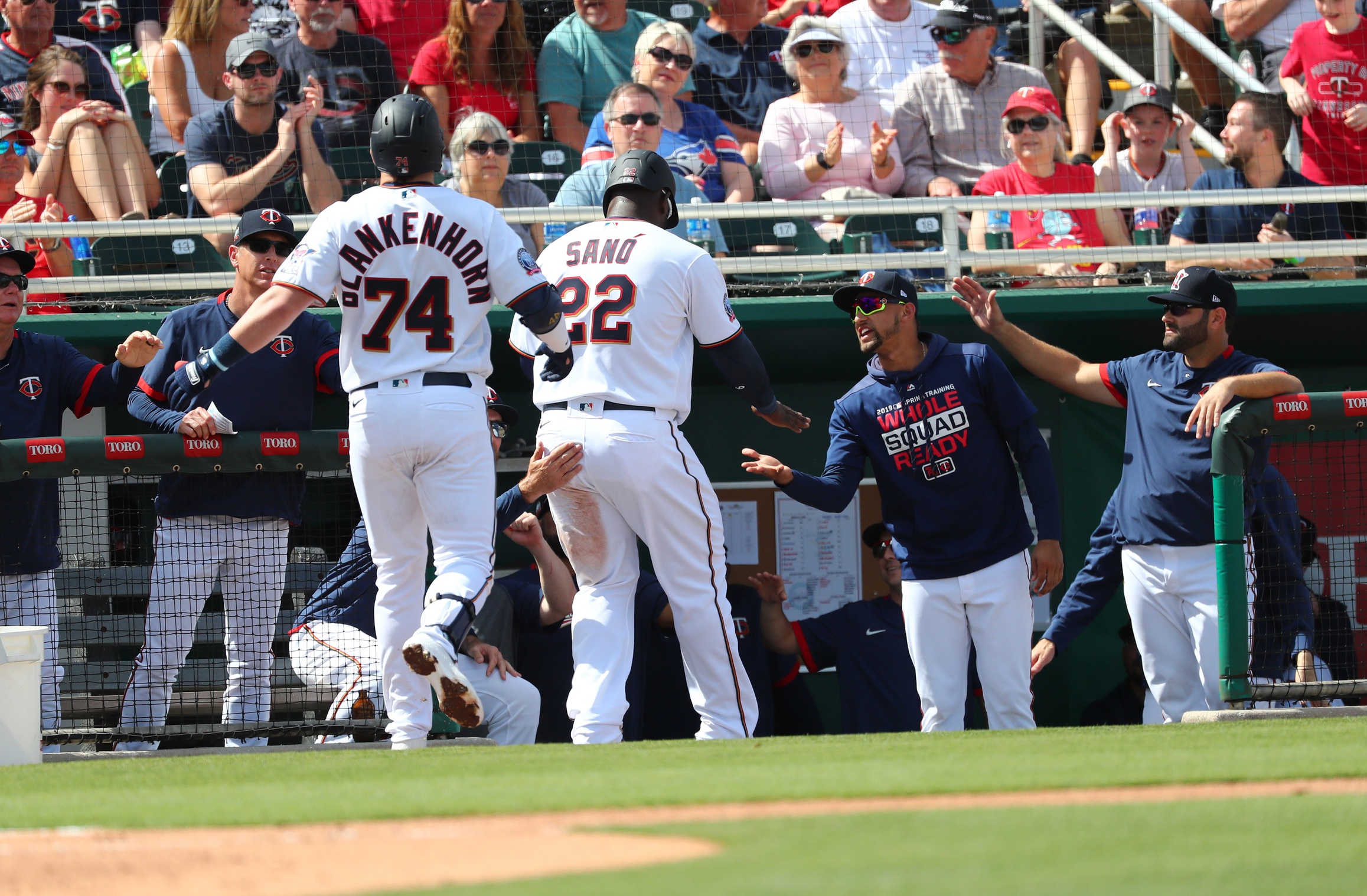 All depth chart information was taken from MLB.com and the team’s official depth chart. Some players are not listed on the official depth chart at this time due to suspension, injury or contract status. Those players have been added to the depth chart or included in the discussion. 11. Center Field Depth Chart: Buxton, Kepler, Cave, Wade Jr. Byron Buxton might not be ready for the season’s start and this could push Max Kepler from right field to center field where he filled in admirably last season. However, he has flaws as a defensive center fielder. If Buxton and Kepler were both hurt, someone like Jake Cave or LaMonte Wade Jr. would be forced to play up the middle and this would certainly not be ideal for the team. 10. Shortstop Depth Chart: Polanco, Adrianza, Gordon Jorge Polanco was the AL’s starting shortstop in the All-Star Game, but there were some struggles for him in the second half including a nearly 100-point drop in his OPS. Should Polanco go down with an injury, Ehire Adrianza has proven himself to be a strong defensive replacement even if he can’t be at the same offensive level as Polanco. Nick Gordon, a former top-5 pick, has started over 500 games at shortstop throughout his professional career, but he’s been getting more innings at second base in recent years. 9. Second Base Depth Chart: Arraez, Adrianza, Gordon Over his last three seasons, Luis Arraez has averaged 122 games played per seasons including with last year marking a career high 146 games played. as at shortstop, Adrianza would be a defensive upgrade and it would be interesting to see how the Twins would handle a long-term injury to Arraez. Would they consider moving Polanco to second and playing Adrianza at shortstop? 8. First Base Depth Chart: Sano, Gonzalez, Astudillo Sano has missed time in every big-league season, so there is a likelihood he’ll miss time again this year. Luckily for the Twins, Gonzalez and Astudillo could both fill in at first base when Sano is out of the line-up. Outside of the players on the team’s official depth chart, Adrianza logged over 118 innings at first base last season as well. His defensive skills are probably better utilized elsewhere, but he can fill in if there is a need. 7. Left Field Depth Chart: Rosario, Cave, Wade Jr., Gonzalez Minnesota has no shortage of corner outfield options, but the depth can get stretch if Buxton is not in center and Kepler is forced to take his spot. There is no guarantee Jake Cave and Lamonte Wade Jr. make the 26-man roster out of spring training, which would leave Marwin Gonzalez as one of the few on-roster options for the club. Adrianza made appearances at both corner outfield spots last season, but almost all his time was in right field. 6. Right Field Depth Chart: Kepler, Cave, Wade Jr., Gonzalez Like in left field, Cave and Wade Jr. are hardly guaranteed a roster spot to start the year. An injury to Kepler or Buxton, could mean Cave or Wade Jr. end up playing on a regular basis and this might not be a terrible transition for the club. Gonzalez provides some defensive flexibility, but he has played less time in right field than any other position, so it seems more likely for the team to use other outfield options. 5. Designated Hitter Depth Chart: Cruz Nelson Cruz was the team’s MVP last year, but he lost some time on the IL with a ruptured wrist tendon. Sano seems like an easy replacement for Cruz at DH, but then the options at first base become Gonzalez, Astudillo, or Adrianza. Would the club consider bringing up a prospect like Brent Rooker, Trevor Larnach or Alex Kirilloff to take over the DH role if Cruz were injured? 4. Third Base Depth Chart: Donaldson, Adrianza, Gonzalez, Astudillo Josh Donaldson certainly upgrades this group, but an injury to him and Adrianza or Gonzalez would take over regular playing time. Adrianza is in a contract year, so it seems likely that he’d like an opportunity to show he can be an everyday player. Gonzalez took over at third base last season when Sano was on the IL. While the Twins are committed to Sano at first base, the team could always plug him back in at third if Donaldson was going to miss an extended amount of time. 3. Catcher Depth Chart: Garver, Avila, Astudillo Garver established himself as one of the best offensive catchers in baseball last season and he appeared in less than half of the team’s games. Avila and Astudillo add depth to the backstop department and these two could certainly fill in for Garver if he had to miss a considerable amount of time. Ryan Jeffers, the team’s top catching prospect, also played some time at Double-A last season. The team is high on him and the improvements he has made on both sides of the ball. 2. Rotation Depth Chart: Berrios, Odorizzi, Maeda, Bailey, Pineda (Restricted List), Hill (Injured List) Dobnak, Thorpe, Smeltzer, Poppen Minnesota already has built in rotational depth with Michael Pineda (suspension) and Rich Hill (elbow surgery) scheduled to join the rotation in May and June or July, respectively. Another name not included on the Twins depth chart is Jhoulys Chacin who could have the inside route to the fifth starter spot, especially with Thorpe being away from spring training for two weeks for personal reasons. 1. Bullpen Depth Chart: Rogers, May, Duffey, Romo, Clippard, Littell, Stashak, Romero, Wisler, Smeltzer, Thorpe, Dobnak Think back to the middle of last season and it seemed like the Twins were struggling to find reliable late inning relief options. It seemed like the club trusted Taylor Rogers and the rest of the options were question marks. At last year’s trade deadline, the club traded for two relief pitchers, Sam Dyson and Sergio Romo, because the position group was viewed as having some holes. Now this group might be one of the game’s strongest bullpens. Romo was getting some closing opportunities last season and he might be a fifth or sixth inning option on the current roster. Veteran additions like Tyler Clippard and Matt Wisler provide even more depth. If players underperform or get injured, the Twins can turn to other options at Rochester. How would you rank the position groups? Which one has the most depth? Leave a COMMENT and start the discussion.
 -
Last season, the Twins had a historically good offense on the way to setting the MLB’s all-time home run record. Coming off this great season, there are still things the club can do to improve. As the old adage goes, good can always get better and that should be the focus for Minnesota this spring. One way to improve is avoiding pitches out of the zone and there are players that could help the Twins make positive strides throughout 2020.Players are going to continue to chase a higher number of pitches especially with launch angle and exit velocity becoming more prevalent in the baseball vernacular. Last season, the MLB average was 28.8% for chase percentage with a 57.6% chase contact percentage. Compared to previous seasons, chase percentage has gone up each year from 27.3% in 2017 to 27.6% in 2018. Not all Twins hitters need to improve their chase rate. Mitch Garver was much better than the league average with a 17.4 chase % and it was no surprise for Luis Arraez to be better than league average (24.3 chase %). Other Twins better than league average included Miguel Sano (26.2%), Jorge Polanco (26.6%), Nelson Cruz (27.2%), and Max Kepler (27.6%). These players could certainly make improvements this year, but they were already better than or close to league average. Sano might be a surprising name to be included in the list above, because of his offensive profile. He is a larger player that is considered a power hitter and this player type typically has big swings that can result in a lot of strikeouts. Sano’s chase % was less than two points lower than Arraez, who became well known for his eye at the plate during his rookie season. Sano was even a full point better than Cruz, his hitting mentor, in relation to chase %. Newly signed Josh Donaldson has fared well with chase percentage even though, like Sano, he fits the profile of a power hitter. For his career, he has a 22.6 chase % while last season he was slightly higher at 23.1%. Last season, he also made more contact outside of the zone (60.0 chase contact %), a career high. His veteran approach at the plate could help other players especially some of the younger players in the organization. Eddie Rosario is an interesting case when it comes to chase percentage. He led all Twins players with a 43.1 chase % and it placed him fifth in all of baseball. What makes him interesting is the amount of contact he makes outside of the zone (over 70% of the time) and that puts him in baseball’s top 20. It’s hard to imagine Rosario changing his offensive approach at this point in his career, but it would be nice if he could get his chase % below 40%. Byron Buxton and Marwin Gonzalez had similar profiles when it came to chase % with Buxton’s chase percentage (33.9 %) only 0.4% higher than Gonzalez. Prior to the 2019 season, Buxton’s career chase % was under 32% and it seems like he could get back to that mark if he is healthy. Gonzalez had his career best chase % with the 2017 Astros and most fans are familiar with the cheating scandal surrounding that club. His chase % last season might have been the best of his career when excluding the 2017-18 seasons. Baseball is continuing to evolve, but some small changes for Twins batters could help the club reach their ultimate goal. Which Twins batters can make the biggest changes with chase % in 2020? Leave a COMMENT and start the discussion. MORE FROM TWINS DAILY — Latest Twins coverage from our writers — Recent Twins discussion in our forums — Follow Twins Daily via Twitter, Facebook or email Click here to view the article
-
Cut to the Chase: Can Twins Hitters Avoid Balls Out of the Zone?
Cody Christie posted an article in Twins
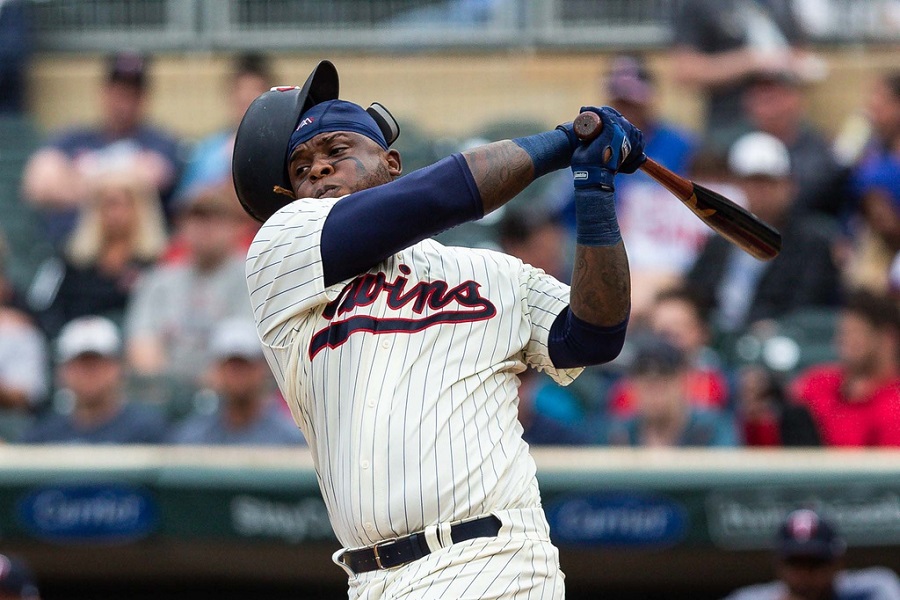 Players are going to continue to chase a higher number of pitches especially with launch angle and exit velocity becoming more prevalent in the baseball vernacular. Last season, the MLB average was 28.8% for chase percentage with a 57.6% chase contact percentage. Compared to previous seasons, chase percentage has gone up each year from 27.3% in 2017 to 27.6% in 2018. Not all Twins hitters need to improve their chase rate. Mitch Garver was much better than the league average with a 17.4 chase % and it was no surprise for Luis Arraez to be better than league average (24.3 chase %). Other Twins better than league average included Miguel Sano (26.2%), Jorge Polanco (26.6%), Nelson Cruz (27.2%), and Max Kepler (27.6%). These players could certainly make improvements this year, but they were already better than or close to league average. Sano might be a surprising name to be included in the list above, because of his offensive profile. He is a larger player that is considered a power hitter and this player type typically has big swings that can result in a lot of strikeouts. Sano’s chase % was less than two points lower than Arraez, who became well known for his eye at the plate during his rookie season. Sano was even a full point better than Cruz, his hitting mentor, in relation to chase %. Newly signed Josh Donaldson has fared well with chase percentage even though, like Sano, he fits the profile of a power hitter. For his career, he has a 22.6 chase % while last season he was slightly higher at 23.1%. Last season, he also made more contact outside of the zone (60.0 chase contact %), a career high. His veteran approach at the plate could help other players especially some of the younger players in the organization. Eddie Rosario is an interesting case when it comes to chase percentage. He led all Twins players with a 43.1 chase % and it placed him fifth in all of baseball. What makes him interesting is the amount of contact he makes outside of the zone (over 70% of the time) and that puts him in baseball’s top 20. It’s hard to imagine Rosario changing his offensive approach at this point in his career, but it would be nice if he could get his chase % below 40%. Byron Buxton and Marwin Gonzalez had similar profiles when it came to chase % with Buxton’s chase percentage (33.9 %) only 0.4% higher than Gonzalez. Prior to the 2019 season, Buxton’s career chase % was under 32% and it seems like he could get back to that mark if he is healthy. Gonzalez had his career best chase % with the 2017 Astros and most fans are familiar with the cheating scandal surrounding that club. His chase % last season might have been the best of his career when excluding the 2017-18 seasons. Baseball is continuing to evolve, but some small changes for Twins batters could help the club reach their ultimate goal. Which Twins batters can make the biggest changes with chase % in 2020? Leave a COMMENT and start the discussion. MORE FROM TWINS DAILY — Latest Twins coverage from our writers — Recent Twins discussion in our forums — Follow Twins Daily via Twitter, Facebook or email
 -
Josh Donaldson was brought to Minnesota because of his MVP-level play on the field, but his impact off the field might be even more important to the organization. Minnesota hasn’t had an MVP since 2009 when Joe Mauer took home the hardware. Now the Twins have signed a former MVP and Josh Donaldson seems to be doing everything in his power to help Minnesota’s top prospects reach their full potential.Travis Blankenhorn, 2B/LF TD Prospect Ranking: 18 Blankenhorn is an intriguing name because he has been in the Twins organization for five seasons and he’s seen his name move up and down their prospect rankings. He climbed all the way to Pensacola last season where he was almost two years younger than the average age of players at that level. His home run swing showed up in 2019 as he clubbed a career high 19 longballs with 18 coming in a Blue Wahoos jersey. While Blankenhorn isn’t necessarily a late-bloomer like Donaldson, there are things the pair could work on together. Offensively, Donaldson has basically made and remade his own swing throughout his career. Blankenhorn has been following Donaldson and working with him in the batting cage. Could he help Blankenhorn to unlock even more power potential? Nick Gordon, 2B/SS TD Prospect Ranking: HM Gordon has seen other players pass him by in the organization’s depth chart, but he’s still on the 40-man roster and he’s been young for every level he has played. Jorge Polanco and Luis Arraez will be manning the big-league infield and that puts Gordon back in Rochester where he has already played 169 games. Last season, he was limited to 70 games due to acute gastritis and a left abductor strain. He still put up strong numbers by hitting .298/.342/.459 with 29 doubles. One area where Donaldson could help Gordon is dealing with challenges. Donaldson has dealt with adversity throughout his entire life and he’s molded himself into one of baseball’s best players. Gordon grew up in a baseball family and was a first-round pick, but it is going to be a challenge for him to crack the big-league roster. Royce Lewis, SS/2B/OF TD Prospect Ranking: 1 While Lewis is still considered the Twins top prospect, the 2019 season wasn’t exactly perfect. There are questions surrounding his future defensive position and his swing has some flaws that could be fixed. Even with the concerns, he ended the year on a high not by being named the Arizona Fall League MVP. Reports out of spring training have him weighing in at 205 pounds after adding 25 pounds this off-season. Lewis might be the most important prospect for Donaldson to impact, especially since their time in Minnesota will likely overlap. Lewis might not debut in 2020, but there is a good chance Lewis will play for the Twins at some point during the life of Donaldson’s four-year deal. Donaldson has tutored Lewis and Blankenhorn on both sides of the ball and now he will have multiple years to make an impact on Minnesota’s top prospects. Which prospect will Donaldson impact the most? Leave a COMMENT and start the discussion. MORE FROM TWINS DAILY — Latest Twins coverage from our writers — Recent Twins discussion in our forums — Follow Twins Daily via Twitter, Facebook or email Click here to view the article
-
 Travis Blankenhorn, 2B/LF TD Prospect Ranking: 18 Blankenhorn is an intriguing name because he has been in the Twins organization for five seasons and he’s seen his name move up and down their prospect rankings. He climbed all the way to Pensacola last season where he was almost two years younger than the average age of players at that level. His home run swing showed up in 2019 as he clubbed a career high 19 longballs with 18 coming in a Blue Wahoos jersey. While Blankenhorn isn’t necessarily a late-bloomer like Donaldson, there are things the pair could work on together. Offensively, Donaldson has basically made and remade his own swing throughout his career. Blankenhorn has been following Donaldson and working with him in the batting cage. Could he help Blankenhorn to unlock even more power potential? https://twitter.com/dohyoungpark/status/1228741178989871104?s=20 Nick Gordon, 2B/SS TD Prospect Ranking: HM Gordon has seen other players pass him by in the organization’s depth chart, but he’s still on the 40-man roster and he’s been young for every level he has played. Jorge Polanco and Luis Arraez will be manning the big-league infield and that puts Gordon back in Rochester where he has already played 169 games. Last season, he was limited to 70 games due to acute gastritis and a left abductor strain. He still put up strong numbers by hitting .298/.342/.459 with 29 doubles. One area where Donaldson could help Gordon is dealing with challenges. Donaldson has dealt with adversity throughout his entire life and he’s molded himself into one of baseball’s best players. Gordon grew up in a baseball family and was a first-round pick, but it is going to be a challenge for him to crack the big-league roster. Royce Lewis, SS/2B/OF TD Prospect Ranking: 1 While Lewis is still considered the Twins top prospect, the 2019 season wasn’t exactly perfect. There are questions surrounding his future defensive position and his swing has some flaws that could be fixed. Even with the concerns, he ended the year on a high not by being named the Arizona Fall League MVP. Reports out of spring training have him weighing in at 205 pounds after adding 25 pounds this off-season. Lewis might be the most important prospect for Donaldson to impact, especially since their time in Minnesota will likely overlap. Lewis might not debut in 2020, but there is a good chance Lewis will play for the Twins at some point during the life of Donaldson’s four-year deal. Donaldson has tutored Lewis and Blankenhorn on both sides of the ball and now he will have multiple years to make an impact on Minnesota’s top prospects. Which prospect will Donaldson impact the most? Leave a COMMENT and start the discussion. MORE FROM TWINS DAILY — Latest Twins coverage from our writers — Recent Twins discussion in our forums — Follow Twins Daily via Twitter, Facebook or email
 -
Even Byron Buxton would likely admit the beginning of his big-league career has come with some frustration. He debuted at age 21 and has played parts of the last five years in the Twins line-up. Injuries and an inconsistent offensive approach have only heightened fans' frustration with the former first-round pick. Lucky for Twins fans, Buxton can still follow in the footsteps of one of the greatest players in team history.During his age-21 through age-23 seasons, Byron Buxton played 278 games at the big-league level. This culminated in a tremendous 2017 season where he won the Platinum Glove for his defense in center field. Also, he ended that season hitting .270/.330/.460 with 10 extra-base hits over his final 26 games. It truly looked like Buxton was putting it all together. At age-23, Kirby Puckett had yet to make his MLB debut and was playing the entire season below the Double-A level. He’d played the entire season for Visalia in the California League by hitting .314/.366/.442 with 45 extra-base hits in 138 games. Puckett’s path to the big leagues could be considered alternative because he wasn’t drafted until he was 21 and he didn’t make his professional debut until age 22. It’s no secret that Buxton is entering a critical year in his career. He has only played more than 92 games once since his rookie season so the Twins need him to prove he can stay healthy and productive. His 2019 season ended early due to a left shoulder labrum injury. Minnesota’s goal is to have him ready for Opening Day but the club has made it clear that there is no intent to rush him. Puckett started to show his Hall of Fame potential during his age-26 season, the same age season Buxton will enter in 2020. Puckett made the first of 10-straight All-Star appearances, he’d win his first Gold Glove and Silver Slugger and he finished sixth in the MVP voting. From that point forward, he’d win six more Gold Gloves, five more Silver Sluggers, and he’d finish in the top-10 for MVP six times. Up to this point in his career, so much of Buxton’s game has relied on speed and his game will need to continue to evolve as he ages. He has continued to add muscle over the last two off-seasons in hopes of avoiding injury. He is still in the prime of his career, but players regress in different ways as they reach their upper 20s and early 30s. Will Buxton be able to make the appropriate adjustments throughout his career? Buxton’s minor league performance got him to the minor leagues faster than some of the best centerfielders in Twins history. He has already accumulated more WAR than Torii Hunter, Denard Span and Puckett through his age-25 season. This is quite the trio to be compared to, but Buxton is in an organization with a long history of strong center fielders. Is it fair to compare Buxton to Puckett? Probably not, but fans shouldn’t give up on the former first-round pick just yet. He has plenty of career still in front of him. MORE FROM TWINS DAILY — Latest Twins coverage from our writers — Recent Twins discussion in our forums — Follow Twins Daily via Twitter, Facebook or email Click here to view the article
-
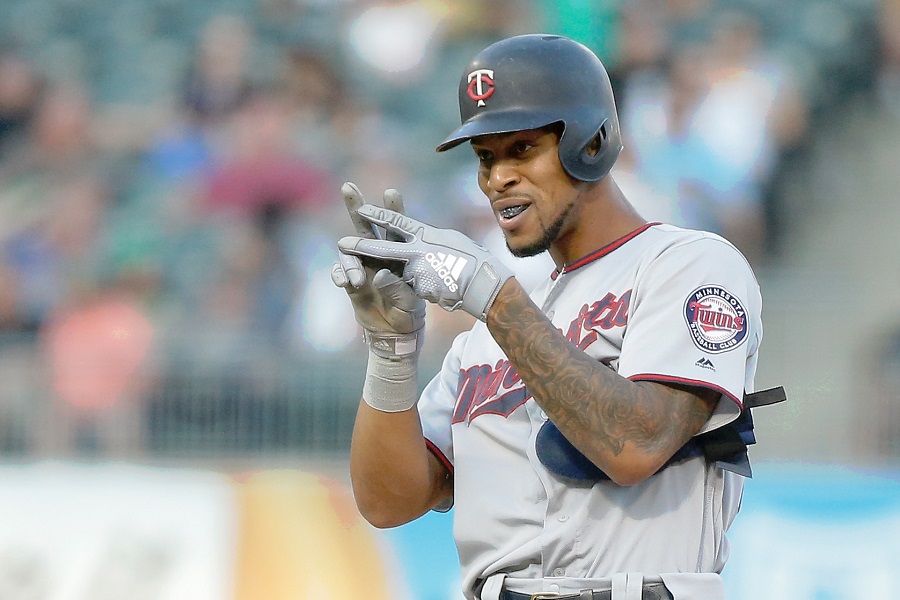 During his age-21 through age-23 seasons, Byron Buxton played 278 games at the big-league level. This culminated in a tremendous 2017 season where he won the Platinum Glove for his defense in center field. Also, he ended that season hitting .270/.330/.460 with 10 extra-base hits over his final 26 games. It truly looked like Buxton was putting it all together. At age-23, Kirby Puckett had yet to make his MLB debut and was playing the entire season below the Double-A level. He’d played the entire season for Visalia in the California League by hitting .314/.366/.442 with 45 extra-base hits in 138 games. Puckett’s path to the big leagues could be considered alternative because he wasn’t drafted until he was 21 and he didn’t make his professional debut until age 22. It’s no secret that Buxton is entering a critical year in his career. He has only played more than 92 games once since his rookie season so the Twins need him to prove he can stay healthy and productive. His 2019 season ended early due to a left shoulder labrum injury. Minnesota’s goal is to have him ready for Opening Day but the club has made it clear that there is no intent to rush him. https://twitter.com/dohyoungpark/status/1228681961994178562?s=20 Puckett started to show his Hall of Fame potential during his age-26 season, the same age season Buxton will enter in 2020. Puckett made the first of 10-straight All-Star appearances, he’d win his first Gold Glove and Silver Slugger and he finished sixth in the MVP voting. From that point forward, he’d win six more Gold Gloves, five more Silver Sluggers, and he’d finish in the top-10 for MVP six times. Up to this point in his career, so much of Buxton’s game has relied on speed and his game will need to continue to evolve as he ages. He has continued to add muscle over the last two off-seasons in hopes of avoiding injury. He is still in the prime of his career, but players regress in different ways as they reach their upper 20s and early 30s. Will Buxton be able to make the appropriate adjustments throughout his career? Buxton’s minor league performance got him to the minor leagues faster than some of the best centerfielders in Twins history. He has already accumulated more WAR than Torii Hunter, Denard Span and Puckett through his age-25 season. This is quite the trio to be compared to, but Buxton is in an organization with a long history of strong center fielders. Is it fair to compare Buxton to Puckett? Probably not, but fans shouldn’t give up on the former first-round pick just yet. He has plenty of career still in front of him. MORE FROM TWINS DAILY — Latest Twins coverage from our writers — Recent Twins discussion in our forums — Follow Twins Daily via Twitter, Facebook or email
 -
Jose Berrios has been a first-round draft pick, a two-time All-Star and a leader for the Twins pitching staff. However, his Achilles heel seems to be his second half performance as his ERA is more than a full run higher from the first half to the second half. Entering his age-26 season, here are four things the Twins could attempt to improve his second-half performance.1. Alter His Workout Routine According to the Star Tribune, Berrios altered some of his workout routines between starts at the end of last season and he saw some positive results. He worked throughout the offseason to develop his stamina and the Twins are hoping this stamina carries throughout the 2020 campaign. Twins pitching coach Wes Johnson was influential in this end-of-season metamorphosis. In his six starts from August 6 through September 4, he got knocked around to the tune of a .971 OPS and an 8.07 ERA. After his meeting of the minds with Johnson, he pitched six innings or more in his final five starts with a 3.08 ERA and opponents being held to a .631 OPS. 2. Extra Rest in the Second Half There was talk throughout last season of giving Jose Berrios extra rest in the second half, which could include skipping his spot in the rotation or being strategic in his second-half usage. In the second half, his ERA was over a run and a half higher than the first half with opponents posting a .268/.328/.428 batting line. There were still some positive signs in those poor second-half numbers. His 9.8 SO/9 was a full strikeout higher than his career mark and he might have been unlucky with a .335 BAbip. Also, Minnesota’s perceived rotational depth could make it easier for Berrios to get extra rest. Rich Hill and Michael Pineda won’t start the year in the rotation and younger players like Devin Smeltzer, Randy Dobnak and Lewis Thorpe will want an opportunity. 3. Add an Early Season Innings Limit Innings limits are usually associated with younger prospects or players coming back from injury, but it could be a strategy utilized by the Twins to save Berrios for the second half. This could allow him to pitch more innings in the second half and keep him fresh. If his entire season as a tube of toothpaste, you don’t want everything squeezed out by the end of July. Historically, August and September have been his worst months. His ERA in August is nearly 6.00 for his career with batters hitting .279/.355/.456 with 42 extra base hits in 21 games. His September ERA is a more respectable 4.64, but that’s still over half a run higher than his next highest month. 4. Throw More Pitches Out of the Zone This might seem like a counterproductive option for a player if you want to be pitching better in the second half, but Berrios threw 50% of his pitches in the zone last season, a career high. His 33.4% chase rate was also a career high, but batters were making solid contact when they weren’t chasing the ball. When it comes to his four-pitch mix, could any of his pitches be thrown out of the zone on a more regular basis? Download attachment: Berrios Pitches Out of the Zone.JPG Being in the zone also likely caused Berrios to post a 6.5% Barrel % and an 86.5 mph Exit Velocity, which were both the highest since his rookie season. Granted the juiced-up baseball might have helped increase the exit velocity for all players. His 36.3% Hard Hit rate was the highest of his career and it was 8.4% higher than his career best mark in 2017. What do you think the Twins need to do with Berrios? Leave a COMMENT and start the discussion. MORE FROM TWINS DAILY — Latest Twins coverage from our writers — Recent Twins discussion in our forums — Follow Twins Daily via Twitter, Facebook or email Click here to view the article
-
Four Ways the Twins Could Avoid a Jose Berrios Second Half Slump
Cody Christie posted an article in Twins
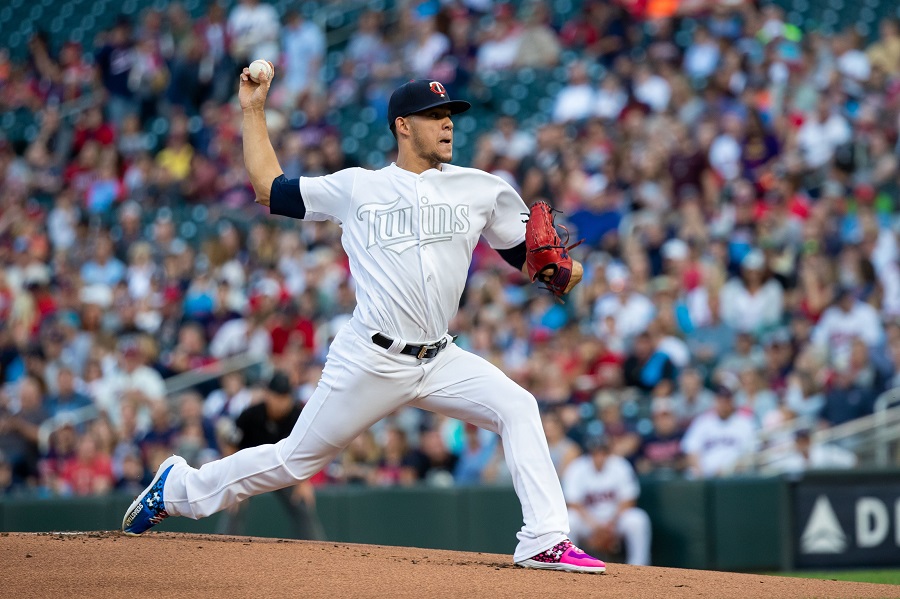 1. Alter His Workout Routine According to the Star Tribune, Berrios altered some of his workout routines between starts at the end of last season and he saw some positive results. He worked throughout the offseason to develop his stamina and the Twins are hoping this stamina carries throughout the 2020 campaign. Twins pitching coach Wes Johnson was influential in this end-of-season metamorphosis. In his six starts from August 6 through September 4, he got knocked around to the tune of a .971 OPS and an 8.07 ERA. After his meeting of the minds with Johnson, he pitched six innings or more in his final five starts with a 3.08 ERA and opponents being held to a .631 OPS. 2. Extra Rest in the Second Half There was talk throughout last season of giving Jose Berrios extra rest in the second half, which could include skipping his spot in the rotation or being strategic in his second-half usage. In the second half, his ERA was over a run and a half higher than the first half with opponents posting a .268/.328/.428 batting line. There were still some positive signs in those poor second-half numbers. His 9.8 SO/9 was a full strikeout higher than his career mark and he might have been unlucky with a .335 BAbip. Also, Minnesota’s perceived rotational depth could make it easier for Berrios to get extra rest. Rich Hill and Michael Pineda won’t start the year in the rotation and younger players like Devin Smeltzer, Randy Dobnak and Lewis Thorpe will want an opportunity. 3. Add an Early Season Innings Limit Innings limits are usually associated with younger prospects or players coming back from injury, but it could be a strategy utilized by the Twins to save Berrios for the second half. This could allow him to pitch more innings in the second half and keep him fresh. If his entire season as a tube of toothpaste, you don’t want everything squeezed out by the end of July. https://twitter.com/ParkerHageman/status/1229868843738243072?s=20 Historically, August and September have been his worst months. His ERA in August is nearly 6.00 for his career with batters hitting .279/.355/.456 with 42 extra base hits in 21 games. His September ERA is a more respectable 4.64, but that’s still over half a run higher than his next highest month. 4. Throw More Pitches Out of the Zone This might seem like a counterproductive option for a player if you want to be pitching better in the second half, but Berrios threw 50% of his pitches in the zone last season, a career high. His 33.4% chase rate was also a career high, but batters were making solid contact when they weren’t chasing the ball. When it comes to his four-pitch mix, could any of his pitches be thrown out of the zone on a more regular basis? Being in the zone also likely caused Berrios to post a 6.5% Barrel % and an 86.5 mph Exit Velocity, which were both the highest since his rookie season. Granted the juiced-up baseball might have helped increase the exit velocity for all players. His 36.3% Hard Hit rate was the highest of his career and it was 8.4% higher than his career best mark in 2017. What do you think the Twins need to do with Berrios? Leave a COMMENT and start the discussion. MORE FROM TWINS DAILY — Latest Twins coverage from our writers — Recent Twins discussion in our forums — Follow Twins Daily via Twitter, Facebook or email
 -
At this point last season, Alex Kirilloff was coming off one of the strongest seasons in the entire minor leagues. Unfortunately, injuries hampered him throughout the 2019 season as he played the entire year at Double-A. Now healthy, Kirilloff will try to get back to the player he was in 2018 and continue to get closer to Target Field.Age: 22 (DOB: 11-9-1997) 2019 Stats (Double-A): 411 PA, .283/.343/.413, 9 HR, 43 RBI ETA: 2020 2019 Ranking: 2 2018 Ranking: 5 National Top 100 Rankings BA: 31 |MLB: 32 | ATH: 25 |BP: 86 What’s To Like Kirilloff’s best tool has always been his hit tool and that is what is going to make him a regular at the big-league level. He started the year on the injured list with a wrist injury and it took him some time to find his swing again. After posting a .682 OPS in May, he hit .327/.400/.510 in June before landing back on the IL because of the same wrist injury. Again, he returned from injury and it took time to find his swing again. However, he was able to end the year strongly as he hit .319/.371/.496 over the season’s final 28 games. This hot hitting followed him into the postseason as he clubbed four home runs in the team’s first four playoff games. It wasn’t enough to help the Blue Wahoos, but it was nice to see Kirilloff getting back into form. Kirilloff has a strong knowledge of the strike zone and he can spray the ball to all fields. His 2018 spray charts (from Baseball Savant) should be hanging in a museum. His wrist injury clearly impacted his ability to turn on the ball last season as almost all of his doubles are to the opposite field. Download attachment: Alex Kirilloff Spray Chart.png Even though he missed an entire season due to Tommy John, he is still facing older pitchers in nearly 96% of his at-bats. After a full off-season to get his wrist healthy, Kirilloff should be driven to prove that 2019 is behind him. What’s Left To Work On Kirilloff is such a strong hitter that he rarely is forced to draw walks. Last season, he had 29 walks compared to 76 strikeouts. He is going to continue to face more advanced pitchers and it could help for him to draw more walks and cut back on strikeouts. He’s a smart hitter and his knowledge of the strike zone should help him as he moves up the ladder. He has shown power potential, but there is room for him to continue to grow. At 6-foot-2 and 220 pounds, he has added muscle since signing with the Twins. During his season rehabbing from Tommy John, he was able to add a lot of strength. He will be in his age-22 season this year, so he is getting close to the point where he could really start hitting his stride. Defensively, he played over 300 innings at first base last season, a first for him in his professional career. Kirilloff will need to continue to get reps at first base if that is going to be his path to the big leagues. He is athletic enough to handle first base or he has the ability to stick at a corner outfield spot, especially since he has a good arm. What’s Next There is certainly a chance for Kirilloff to make his big-league debut in 2020, but it will likely take an injury (or two) for him to get that opportunity. He isn’t on the 40-man roster and there are other players ahead of him on the depth chart. If he does debut, it will likely be due to the fact that he is healthy and hitting the cover off the ball. He could start the year in Pensacola or get the bump up to Rochester and by 2021, he should be a regular in Minnesota’s line-up. Twins Daily 2020 Top 20 Prospects Honorable Mentions 20. Jose Miranda, 3B/2B 19. Cole Sands, RHP 18. Travis Blankenhorn, 2B/LF 17. Misael Urbina, OF 16. Edwar Colina, RP 15. Matt Canterino, RHP 14. Matt Wallner, OF 13. Wander Javier, SS 12. Gilberto Celestino, OF 11. Lewis Thorpe, LHP 10. Blayne Enlow, RHP 9. Brent Rooker, OF 8. Keoni Cavaco, SS 7. Ryan Jeffers, C 6. Jhoan Duran, RHP 5. Jordan Balazovic, RHP 4. Brusdar Graterol, RHP 3. Trevor Larnach, OF 2. Alex Kirilloff, OF/1B Stop by tomorrow for prospect #1! --------------------------------------------------------- Get to know more about Kirilloff and about another 170 minor league players in the 2020 Minnesota Twins Prospect Handbook. ORDER NOW: 2020 Minnesota Twins Prospect Handbook (paperback, $17.99) ORDER NOW: 2019 Minnesota Twins Prospect Handbook (eBook, $12.99) The 2020 Minnesota Twins Prospect Handbook goes in-depth and provides player bios, scouting reports, statistics and much more on about 170 Twins minor leaguers. Click here to view the article
