



Seth Stohs
-
Posts
25,912 -
Joined
-
Last visited
-
Days Won
109
Content Type
Profiles
News
Minnesota Twins Videos
2026 Minnesota Twins Top Prospects Ranking
2022 Minnesota Twins Draft Picks
Minnesota Twins Free Agent & Trade Rumors, Notes, & Tidbits
Guides & Resources
2023 Minnesota Twins Draft Picks
The Minnesota Twins Players Project
2024 Minnesota Twins Draft Picks
2025 Minnesota Twins Draft Pick Tracker
2026 Minnesota Twins Draft Tracker: Picks & Bonuses
Forums
Blogs
Events
Store
Downloads
Gallery
Everything posted by Seth Stohs
-
2017 Minnesota Twins Roster Projections - The Corner Infielders
Seth Stohs posted an article in Minor Leagues
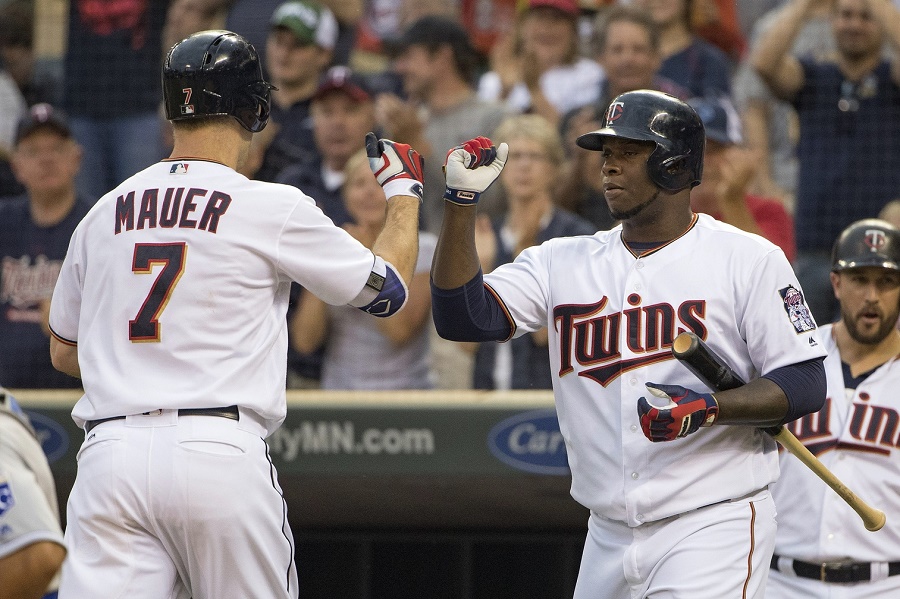 Below you’ll find the corner infielders throughout the Twins organization. Minnesota Twins - 1B - Joe Mauer (33), Kennys Vargas (26) 3B - Miguel Sano (23), Eduardo Escobar (28) Miguel Sano is going to get his shot to prove whether or not he can be the third baseman of the future. His offense struggled some last season and yet he still hit 25 home runs. Hopefully he will start showing us what his full potential is very soon. Eduardo Escobar will likely play the three non-first base infield positions. Joe Mauer is solid at first base. His overall offensive numbers in 2016 were a career-worst. However, if you’re looking for a silver lining, if his season had ended in mid-August when he got hurt, he was hitting .284/.384/.417 (.801). If he can put up those numbers, we’d all be happy. Kennys Vargas appears to be the primary DH to start the season, though he can also play some first base. He posted an .833 OPS in 2016, though in just 47 games. Rochester Red Wings - 1B - Ben Paulsen (29), Reynaldo Rodriguez (31), Byungho Park (30) 3B - Matt Hague (31), Dan Gamache (26), Leonardo Reginnato (26) It was certainly surprising that the Twins DFAd Byungho Park. His big league debut was disappointing, but it also ended early with wrist issues and eventually surgery. But there is no denying the power potential that he’s got. He cleared waivers and will be in spring training. Ben Paulsen has 517 plate appearances over the last three seasons with the Rockies. He played 116 big league games in 2015 and was then DFAd following the 2016 season. He signed with the Twins and will go to spring training with an opportunity to play first base and the corner outfield positions. Reynaldo Rodriguez is now in his fourth season in the Twins organization. He was suspended for 80 games last year, but he’s been a strong source of power. Matt Hague was the International League MVP in 2015. He spent 2016 in Japan where he struggled. He returns to the States this year. Gamache comes over from the Pirates organization. He hit .244/.338/.324 (.662) in just 79 games in AAA last year. Reginnato came to the Twins as a minor league free agent last year. He spent most of the season in Chattanooga before ending the year with the Red Wings. Chattanooga Lookouts - 1B - Dalton Hicks (26), Trey Vavra (25) 3B - Niko Goodrum (24), TJ White (25), Tom Belza (27) Dalton Hicks has spent the last two seasons in Chattanooga, but both years he missed time due to injury. When he’s played, he continues to be a major run producer. Trey Vavra struggled some in 2016 in Ft. Myers and yet he still hit eight home runs for the Miracle. He is finally back to healthy after the ankle injury (and surgery) from 2015. Belza was signed recently. He split last year between AA and AAA with the Diamondbacks and Brewers organizations. He has played the corner infield and outfield positions in recent years. Niko Goodrum could have been a minor league free agent, but he quickly re-signed with the Twins. He’s a great athlete who missed half of the 2016 season with a stress reaction in his foot. He primarily played third base, but he can also play shortstop and center field and more. TJ White was primed for a solid season in Ft. Myers last year, but weeks into the season he was pushed to Chattanooga as an injury replacement. He struggled, but he did have his moments that remind us of the talent (speed and power) that he has. Ft. Myers Miracle - 1B - Zander Wiel (24), Chris Paul (24) 3B - Nelson Molina (21), Chris Ibarra (24) Zander Wiel ended his season very strong and led the Midwest League in RBIs. He was a Twins Daily organizational all-star last year. He was drafted out of Vanderbilt in 2015. In 128 games, he hit .259/.333/.459 (.792) with 27 doubles, eight triples and 19 home runs. When TJ White moved up to AA, Chris Paul was moved up to the Miracle. He played mostly third base, though he had played mostly first base the years before. Nelson Molina was also a Twins minor league all-star in 2016 after his surprise success at Cedar Rapids. He hit .300/.374/.381 (.755) with 15 doubles for the Kernels. He played shortstop most of his career as well as in the playoffs for the Kernels. Chris Ibarra signed out of the independent leagues last year and split his season between Cedar Rapids and Ft. Myers. Cedar Rapids Kernels - 1B - Lewin Diaz (20), Amaurys Minier (21) 3B - Mitchell Kranson (23), Caleb Hamilton (22) Lewin Diaz was the Twins Daily Short-Season Minor League Hitter of the Year. In 46 games in Elizabethton, he hit .310/.353/.575 (.928) with 15 doubles and nine home runs. He was the Twins big international free agent signing in 2013. Their big international free agent signing in 2012 was Amaurys Minier. Things have been more of a struggle for him. In E-Town in 2016, he played 48 games and his .222/.318/.449 (.767) with eight doubles and ten home runs. He was signed as a third baseman, spent one year there, moved to the outfield, spent one year there, and has been at first base, and really DH, since. Mitchell Kranson played a lot of third base at California. He was the Twins ninth-round pick last year and went to Instructional League as a catcher. He will likely spend a lot of time behind the plate. He’s got a ton of power potential. Caleb Hamilton can play all over the diamond. He was the Twins 23rd-round pick last year out of Oregon State. Extended Spring Training - 1B - Zach Featherstone (21), Roni Tapia (19), Kolton Kendrick (20) 3B - Trey Cabbage (19) Trey Cabbage was the Twins fourth-round pick in 2015 out of high school. He fought some back issues right before the Elizabethton season got started. He’ll likely repeat at Elizabethton, although an opening could move him up to Cedar Rapids earlier. Featherstone was the team’s 12th-round pick last year out of junior college. He hit .212 in 34 games in the GCL in his pro debut. Roni Tapia signed with the Twins in 2013. He debuted in 2014 in the DSL. He’s hit .160 and .127 over the last two season in the GCL. Of his 58 plate appearances, he had 29 strikeouts. Kolton Kendrick was the Twins eighth-round pick in 2015. He really struggled in 2016, striking out 24 times in 49 plate appearances. Top Prospects 1.) Lewin Diaz 2.) Trey Cabbage 3.) Amaurys Minier 4.) Zander Wiel 5.) Niko Goodrum 6.) Nelson Molina 7.) TJ White There are a lot of question marks at the corner infield positions throughout the system. What can Joe Mauer do in 2017. Can Kennys Vargas handle a full load of DH time? Can Miguel Sano play third base well enough? Will any of those AAA veterans need to be called upon at some point this season? The prospects are at the lowest levels, so watching their development will be very important as well. Please feel free to discuss in the comments below.
 -
It seems people aren't aware of just how serious his shoulder injury was. It was far worse than even expected. He's not hurt ... again... it's the same injury. He's busted his butt this offseason to come back. He did the same last offseason. Nothing bugs me more than questioning people's effort. There is a chance he doesn't pitch again, but it will be due to the shoulder, not because he doesn't want to.
- 53 replies
-
- 10
-

-
Twins Daily Top Prospect Countdown: 20-16
Seth Stohs replied to Nick Nelson's topic in Twins Daily Front Page News
I thought Granite's lefty-righty splits are fascinating... when I did the story on him in August, he mentioned it and I had to look it up. Pretty impressive. http://twinsdaily.com/articles.html/_/minnesota-twins-news/minnesota-twins-minor-leagues/the-rock-solid-season-of-zach-granite-r4975- 17 replies
-
- 2
-
-
- zack granite
- engelb vielma
- (and 3 more)
-
Quite a bit higher. It does hurt his prospect status, but it doesn't have anything to do with his actual potential. His ability to play SS and get on base are worth watching in 2017!
-
He's my #7 Twins prospect. He's got to figure out a position and a lot of room for growth, but he's got potential.
- 27 replies
-
- 1
-
-
- brian dozier
- jorge polanco
- (and 3 more)
-
No reason to... and I've been fully supportive of Polanco as the shortstop in 2017 all along.
-
Per LaVelle... Park has cleared waivers and will report to Twins big league camp.
-
I don't know if that's the consensus... But it's a reason that trading a 4+ WAR guy has to be given a ton of thought.
-
Yup, Reginnato will be back in 2017. He played mostly 3B for the Red Wings last year and played 3B and SS for the Lookouts in his time there. Like Field, I can see Reginnato playing a few different positions. Maybe I should have included him here, but he's in the Corner Infield predictions.
-
Twins Daily Top Prospect Countdown: 20-16
Seth Stohs replied to Nick Nelson's topic in Twins Daily Front Page News
Yeah, I know he was on the DL twice. Once, I believe, was a groin injury that cost him quite a bit of time. There was a second stint too.- 17 replies
-
- 1
-
-
- zack granite
- engelb vielma
- (and 3 more)
-
He's probably a placeholder at SS. His defense may be adequate for 2B where defense isn't quite as important as SS (though obviously still important). He's going to have to hit to have value, and obviously we think that he can do that. But I wouldn't completely just assume that Brian Dozier is gone after 2018 either.
-
Depends on if they go with 12 or 11 pitchers to start the season.
-
He doesn't walk a lot, but he works pretty well in the leadoff spot because he's got tremendous bat control. He's a lot like Rod Carew in terms of the swing. He isn't tall, and he scrouches, so pitchers have to find a small zone. He's got very little power. He's a slap hitter. He's slow. He's not good defensively. Gordon is a significantly better prospect due to his size, speed, build, defense, arm, pop and more.
- 27 replies
-
- 1
-
-
- brian dozier
- jorge polanco
- (and 3 more)
-
Vielma is little. He's going to be a punch and judy hitter, so all we should worry about is his BA and OBP. SLG and OPS just don't matter, especially if he's playing great defense. Seriously, if he hits .270 in MLB and gets on base .320, he could be a 2-3 WAR player. There are as many people who question whether Polanco can adequately play 2B too, not just SS. He'll never come close to hitting like Dozier and he won't be as good defensively, so it'll be interesting to see how it plays out.
- 27 replies
-
- 2
-
-
- brian dozier
- jorge polanco
- (and 3 more)
-
He'll be in there with the corner infielders when that gets posted. He's mostly played 3B the last several years, though he can also play SS and the outfield positions.
-
Correct... thank you... That puts the number at, I believe, 42.
- 7 replies
-
- 1
-
-
- eddie rosario
- jose berrios
- (and 3 more)
-
The offseason was spent full of rumors about whether or not Brian Dozier would remain with the Twins or be traded. As we knew all along, the decision made on Dozier would cause a trickle-down effect on the whole system. It now appears that Dozier is here, well, at least for the time being. The organization has struggled to develop a shortstop for the last 25 years. They continue to roll out different guys each year. It appears that Jorge Polanco will be that guy to start 2017, but there are questions about him as well. Do the Twins have future shortstops in the farm system? Let’s take a look at the middle infielders in the Twins farm system. If you missed the previous Roster Projections, check out the Catchers and Outfielders articles. Image courtesy of John Rieger, USA Today The offseason was spent full of rumors about whether or not Brian Dozier would remain with the Twins or be traded. As we knew all along, the decision made on Dozier would cause a trickle-down effect on the whole system. It now appears that Dozier is here, well, at least for the time being. The organization has struggled to develop a shortstop for the last 25 years. They continue to roll out different guys each year. It appears that Jorge Polanco will be that guy to start 2017, but there are questions about him as well. Do the Twins have future shortstops in the farm system? Let’s take a look at the middle infielders in the Twins farm system. If you missed the previous Roster Projections, check out the Catchers and Outfielders articles. We will start with the middle infielders of the Minnesota Twins, and then we'll work our way down the organization ladder, all the way to those who will likely remain in extended spring training. Minnesota Twins 2B - Brian Dozier (29), Eduardo Escobar (28) SS - Jorge Polanco (23), Ehire Adrianza (27) As long as Brian Dozier is on the Twins roster, he will be the team’s primary second baseman, and for good reason. He was worth 5.9 fWAR in 2016 and has been worth 16.4 fWAR over the last four years. 42 home runs in 2016. With 25 home runs in 2017, he would jump into the Twins Top 10 of all time (well, back to 1961). Jorge Polanco certainly is a question mark at shortstop with the glove, but at 23, it’s worth giving him every opportunity to improve and get more comfortable there. Plus, his bat is what has people excited. Having Eduardo Escobar on the roster is a must with this roster. He’s still not making much money, and he can give the Twins a solid backup at three infield positions, a guy whom they can feel comfortable starting at each position if there is a DL stint, short-term or long-term. He also can take over at shortstop if the defense there does become too shoddy. This week, the Twins added depth in the middle infield by claiming Ehire Adrianza (Ay-Ray Add-ree-on-zuh), a slick-fielding shortstop who have played in nearly 200 big league games over the past four seasons. Rochester Red Wings 2B - Levi Michael (26), Tommy Field (29) SS - Engelb Vielma (22) If the Twins need a quality defensive-minded shortstop sometime in 2017, they could turn to Engelb Vielma who is the top defensive infielder in the organization. Will he hit? Well, last year at AA, he hit .271/.345/.318 (.663). If he can put up similar numbers in AAA, and eventually in the big leagues, while playing elite defense at shortstop, that is immensely valuable. The Twins brought in several minor league veterans who have the ability to play in the middle infield. Most are utility infield types. Levi Michael ended the 2014 season with 15 games in AA New Britain. He has spent the last two years at AA Chattanooga where his playing time and performance have declined. Maybe a bump up to AAA will help. He becomes a minor league free agent following the 2017 season. To increase his value, to the Twins or other teams, he needs to play other positions besides second base, something he hasn’t done. Tommy Field is tremendous defensively all over the field. He’s a long-time AAA veteran who spent the second half of 2016 in Rochester. His defense is maybe best illustrated by the below tweet: https://twitter.com/RocRedWings/status/746026682298077187 Chattanooga Lookouts 2B - Ryan Walker (24), Tanner Witt (26) SS - Nick Gordon (21), Benji Gonzalez (27) Nick Gordon is a consensus Top 100 prospect, and he’s easily one of the top Twins prospects. He has above average tools and has performed on the field as well. He had a solid season in Ft. Myers last year and a strong showing in the AFL against that league’s competition. He’s ready for AA. Ryan Walker took a big stride forward in his career in 2016. He started in Ft. Myers and moved up to Chattanooga. He hit well and got on base, but as important, he played all around the infield, something that will be important for his career. Tanner Witt signed early last season and spent the season with the Miracle. Benji Gonzalez is a 27-year-old veteran who spent six years in the Pirates organization, two years in the Padres system and last year with the Mariners AA affiliate. While he has played mostly at shortstop in professional baseball, he has played all three non-first base infield positions. Ft. Myers Miracle 2B - Luis Arraez (19), Sean Miller (22), Rafael Valera (22) SS - Alex Perez (24), Nelson Molina (21) Luis Arraez came to the States in 2015 and had a strong showing as a 18-year-old in the GCL. He moved up to Cedar Rapids as an 18-year-old and led the Midwest League with a .347 average. He followed up by hitting .335 in 46 games in Venezuela this winter. While his ability to play second base is still in question, he’s very young and can continue to work and improve. Nelson Molina was a Twins Daily 2016 Minor League All Star for his strong performance with Cedar Rapids. He mostly played third base, but he is a natural shortstop. He hit .300 with a .374 on-base percentage. He played one game in Puerto Rico but broke his hamate bone. He’s in Ft. Myers rehabbing and will be ready for spring training. Sean Miller and Alex Perez were drafted in 2015. Both of them split their seasons between Cedar Rapids and Ft. Myers. Miller played every day in Cedar Rapids, around the infield. Perez got some time in Cedar Rapids, but when he moved up to Ft. Myers, he played nearly every day and showed a good ability to put together strong plate appearances. Cedar Rapids Kernels 2B - Travis Blankenhorn (20), Andre Jernigan (23) SS - Brandon Lopez (23), Jermaine Palacios (20), Ariel Montesino (21) Last year, Jermaine Palacios was the hot prospect, the guy who destroyed the GCL and Appy Leagues as an 18-year-old in 2015. Unfortunately, Palacios really struggled with the bat to start 2016 and his season ended early with a broken bone after being hit by a pitch. He’ll look to get back on track in 2017. Travis Blankenhorn made the move to second base in 2016 in extended spring training. In 34 games in Elizabethton, he hit .297 with seven doubles and nine home runs. His season ended in Cedar Rapids where he hit .286 with five doubles and a homer in 25 games. Brandon Lopez was the Twins 10th-round pick last June after his Miami Hurricanes' run in the College World Series. He went to E-Town where he hit .337 with an incredible .470 on-base percentage in 27 games. He moved up to Cedar Rapids for the final 18 games where he hit .386 with a .393 on-base percentage. Andre Jernigan was also drafted by the Twins last year, in the 14th round out of Xavier. After a slow start in Elizabethton, he came on very strong. He was a conference MVP shortstop in college, and he’s making the transition to second base. Ariel Montesino has slowly moved up the organizational ladder since signing with the Twins in 2013 out of the Dominican Republic. In Elizabethton, he hit .299 in 47 games. Extended Spring Training 2B - Joe Cronin (22), Dane Hutcheon (22), Emmanuel Morel (19) SS - Jose Miranda (18), Jorge Munoz (20), Wander Javier (18) Wander Javier is the $4 million man, or kid. The 18-year-old signed in 2015 for a little more than the Twins maximum international slot. He debuted in the DSL this past summer, but he hurt his hamstring, and when he returned, he re-strained the same hamstring which cost him the rest of the summer. He did participate in Instructional League in Ft. Myers following the season. Jose Miranda was the first of two compensation picks after the second round. The Puerto Rican hit a bit in the GCL and should move up to Elizabethton. Most assume he’ll move to second or third base as he grows. Jorge Munoz is a flashy glove at shortstop, though he played all over the infield in the GCL. He’s not a big guy, but he has some pop in his bat. Emmanuel Morel, like Munoz, is very fast. He can play both middle infield positions. Cronin and Hutcheon were late-round draft picks out of college who are solid ballplayers. Cronin in particular takes quality at-bats, plays solid defense, and is considered a grinder. Hutcheon has some speed and puts the ball in play. Top Prospects 1.) Nick Gordon 2.) Travis Blankenhorn 3.) Wander Javier 4.) Luis Arraez 5.) Jose Miranda 6.) Engelb Vielma 7.) Jermaine Palacios 8.) Brandon Lopez Will Brian Dozier be on the Opening Day roster? Can we assume that yet? How will Jorge Polanco handle a full season of shortstop with the glove? Could we see Engelb Vielma at some point? Will Luis Arraez continue to hit for a very high batting average with the promotion to Ft. Myers. Can Jermaine Palacios have a bounce-back season and reclaim his prospect status? View full article
-
2017 Minnesota Twins Roster Projections - The Middle Infielders
Seth Stohs posted an article in Minor Leagues
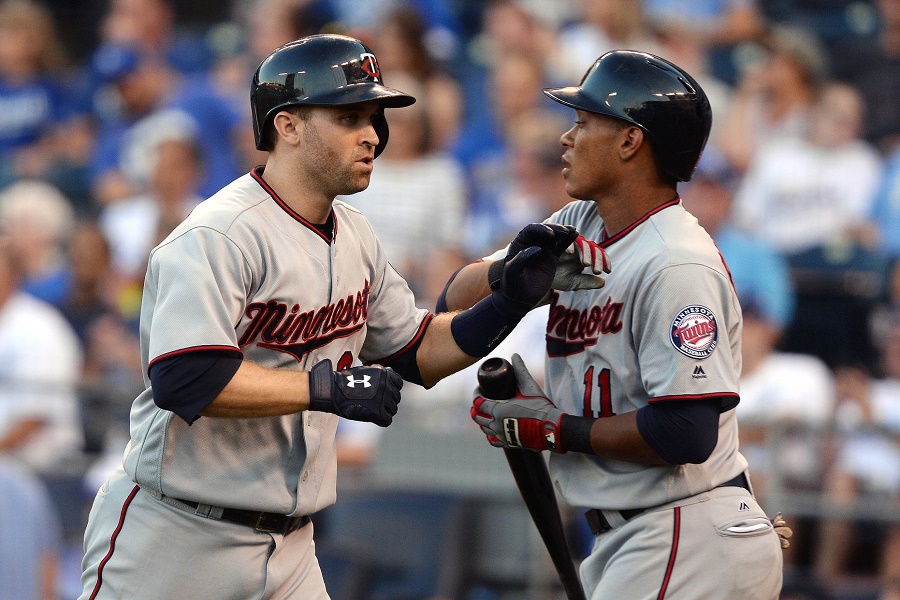 We will start with the middle infielders of the Minnesota Twins, and then we'll work our way down the organization ladder, all the way to those who will likely remain in extended spring training. Minnesota Twins 2B - Brian Dozier (29), Eduardo Escobar (28) SS - Jorge Polanco (23), Ehire Adrianza (27) As long as Brian Dozier is on the Twins roster, he will be the team’s primary second baseman, and for good reason. He was worth 5.9 fWAR in 2016 and has been worth 16.4 fWAR over the last four years. 42 home runs in 2016. With 25 home runs in 2017, he would jump into the Twins Top 10 of all time (well, back to 1961). Jorge Polanco certainly is a question mark at shortstop with the glove, but at 23, it’s worth giving him every opportunity to improve and get more comfortable there. Plus, his bat is what has people excited. Having Eduardo Escobar on the roster is a must with this roster. He’s still not making much money, and he can give the Twins a solid backup at three infield positions, a guy whom they can feel comfortable starting at each position if there is a DL stint, short-term or long-term. He also can take over at shortstop if the defense there does become too shoddy. This week, the Twins added depth in the middle infield by claiming Ehire Adrianza (Ay-Ray Add-ree-on-zuh), a slick-fielding shortstop who have played in nearly 200 big league games over the past four seasons. Rochester Red Wings 2B - Levi Michael (26), Tommy Field (29) SS - Engelb Vielma (22) If the Twins need a quality defensive-minded shortstop sometime in 2017, they could turn to Engelb Vielma who is the top defensive infielder in the organization. Will he hit? Well, last year at AA, he hit .271/.345/.318 (.663). If he can put up similar numbers in AAA, and eventually in the big leagues, while playing elite defense at shortstop, that is immensely valuable. The Twins brought in several minor league veterans who have the ability to play in the middle infield. Most are utility infield types. Levi Michael ended the 2014 season with 15 games in AA New Britain. He has spent the last two years at AA Chattanooga where his playing time and performance have declined. Maybe a bump up to AAA will help. He becomes a minor league free agent following the 2017 season. To increase his value, to the Twins or other teams, he needs to play other positions besides second base, something he hasn’t done. Tommy Field is tremendous defensively all over the field. He’s a long-time AAA veteran who spent the second half of 2016 in Rochester. His defense is maybe best illustrated by the below tweet: https://twitter.com/RocRedWings/status/746026682298077187 Chattanooga Lookouts 2B - Ryan Walker (24), Tanner Witt (26) SS - Nick Gordon (21), Benji Gonzalez (27) Nick Gordon is a consensus Top 100 prospect, and he’s easily one of the top Twins prospects. He has above average tools and has performed on the field as well. He had a solid season in Ft. Myers last year and a strong showing in the AFL against that league’s competition. He’s ready for AA. Ryan Walker took a big stride forward in his career in 2016. He started in Ft. Myers and moved up to Chattanooga. He hit well and got on base, but as important, he played all around the infield, something that will be important for his career. Tanner Witt signed early last season and spent the season with the Miracle. Benji Gonzalez is a 27-year-old veteran who spent six years in the Pirates organization, two years in the Padres system and last year with the Mariners AA affiliate. While he has played mostly at shortstop in professional baseball, he has played all three non-first base infield positions. Ft. Myers Miracle 2B - Luis Arraez (19), Sean Miller (22), Rafael Valera (22) SS - Alex Perez (24), Nelson Molina (21) Luis Arraez came to the States in 2015 and had a strong showing as a 18-year-old in the GCL. He moved up to Cedar Rapids as an 18-year-old and led the Midwest League with a .347 average. He followed up by hitting .335 in 46 games in Venezuela this winter. While his ability to play second base is still in question, he’s very young and can continue to work and improve. Nelson Molina was a Twins Daily 2016 Minor League All Star for his strong performance with Cedar Rapids. He mostly played third base, but he is a natural shortstop. He hit .300 with a .374 on-base percentage. He played one game in Puerto Rico but broke his hamate bone. He’s in Ft. Myers rehabbing and will be ready for spring training. Sean Miller and Alex Perez were drafted in 2015. Both of them split their seasons between Cedar Rapids and Ft. Myers. Miller played every day in Cedar Rapids, around the infield. Perez got some time in Cedar Rapids, but when he moved up to Ft. Myers, he played nearly every day and showed a good ability to put together strong plate appearances. Cedar Rapids Kernels 2B - Travis Blankenhorn (20), Andre Jernigan (23) SS - Brandon Lopez (23), Jermaine Palacios (20), Ariel Montesino (21) Last year, Jermaine Palacios was the hot prospect, the guy who destroyed the GCL and Appy Leagues as an 18-year-old in 2015. Unfortunately, Palacios really struggled with the bat to start 2016 and his season ended early with a broken bone after being hit by a pitch. He’ll look to get back on track in 2017. Travis Blankenhorn made the move to second base in 2016 in extended spring training. In 34 games in Elizabethton, he hit .297 with seven doubles and nine home runs. His season ended in Cedar Rapids where he hit .286 with five doubles and a homer in 25 games. Brandon Lopez was the Twins 10th-round pick last June after his Miami Hurricanes' run in the College World Series. He went to E-Town where he hit .337 with an incredible .470 on-base percentage in 27 games. He moved up to Cedar Rapids for the final 18 games where he hit .386 with a .393 on-base percentage. Andre Jernigan was also drafted by the Twins last year, in the 14th round out of Xavier. After a slow start in Elizabethton, he came on very strong. He was a conference MVP shortstop in college, and he’s making the transition to second base. Ariel Montesino has slowly moved up the organizational ladder since signing with the Twins in 2013 out of the Dominican Republic. In Elizabethton, he hit .299 in 47 games. Extended Spring Training 2B - Joe Cronin (22), Dane Hutcheon (22), Emmanuel Morel (19) SS - Jose Miranda (18), Jorge Munoz (20), Wander Javier (18) Wander Javier is the $4 million man, or kid. The 18-year-old signed in 2015 for a little more than the Twins maximum international slot. He debuted in the DSL this past summer, but he hurt his hamstring, and when he returned, he re-strained the same hamstring which cost him the rest of the summer. He did participate in Instructional League in Ft. Myers following the season. Jose Miranda was the first of two compensation picks after the second round. The Puerto Rican hit a bit in the GCL and should move up to Elizabethton. Most assume he’ll move to second or third base as he grows. Jorge Munoz is a flashy glove at shortstop, though he played all over the infield in the GCL. He’s not a big guy, but he has some pop in his bat. Emmanuel Morel, like Munoz, is very fast. He can play both middle infield positions. Cronin and Hutcheon were late-round draft picks out of college who are solid ballplayers. Cronin in particular takes quality at-bats, plays solid defense, and is considered a grinder. Hutcheon has some speed and puts the ball in play. Top Prospects 1.) Nick Gordon 2.) Travis Blankenhorn 3.) Wander Javier 4.) Luis Arraez 5.) Jose Miranda 6.) Engelb Vielma 7.) Jermaine Palacios 8.) Brandon Lopez Will Brian Dozier be on the Opening Day roster? Can we assume that yet? How will Jorge Polanco handle a full season of shortstop with the glove? Could we see Engelb Vielma at some point? Will Luis Arraez continue to hit for a very high batting average with the promotion to Ft. Myers. Can Jermaine Palacios have a bounce-back season and reclaim his prospect status?
 -
MLB unveiled the World Baseball Classic rosters this evening on MLB Network, and the Minnesota Twins organization has several current and former players (MLB or minor league) playing in the tournament. It's no surprise that Australia leads the way in terms of former and current Twins organization players with 14, but Puerto Rico also has seven players with Twins roots. Several other countries have at least one player with some tie to the Twins organization. Image courtesy of Rick Osentoski, USA Today MLB unveiled the World Baseball Classic rosters this evening on MLB Network, and the Minnesota Twins organization has several current and former players (MLB or minor league) playing in the tournament. It's no surprise that Australia leads the way in terms of former and current Twins organization players with 14, but Puerto Rico also has seven players with Twins roots. Several other countries have at least one player with some tie to the Twins organization. The WBC is coming next month. It is the reason the spring training is starting earlier across baseball. But let's take a look at the teams that have current or former members of the Twins organization. AUSTRALIA Let's start Down Under where there are 14 players with Twins ties. Current Twins minor leaguers RHP Todd Van Steensel, LHP Lachlan Wells and OF Aaron Whitefield are on the team. Wells will be joined by his twin brother Alexander, a member of the Orioles organization. James Beresford will again represent the green and gold of Australia. He remains a free agent following his long-awaited MLB debut last September. Former Twins big leaguers Liam Hendriks and Luke Hughes are also on the roster. There are a bunch of former Twins minor leaguers also on the Australian roster: RHP Tim Atherton, C Allan De San Miguel, RHP Josh Guyer, RHP Peter Moylan, OF Trent Oeltjen, IF/OF Logan Wade, and RHP Matt Williams. Also, former Twins Rule 5 pick, LHP Ryan Rowland-Smith, is on the team. PUERTO RICO We expected the Twins to be well represented on the Puerto Rico team. Big leaguers Kennys Vargas, Eddie Rosario, Hector Santiago and Jose Berrios are on the team. RHP Dereck Rodriguez, who along with Rosario helped capture the Caribbean Series championship for Puerto Rico this past weekend, is a surprise addition to the team. He pitched very well in the Puerto Rico Winter League. Finally, former Twins LHP JC Romero is still pitching, and he is on the team as well. Another former Twins player, catcher Rene Rivera, is also on the roster. CANADA Oh Canada! The team has three former Twins big leaguers on its roster. Justin Morneau is still looking for a big league team to sign him this year, but he's on the WBC roster. Andrew Albers signed a deal with the Braves. The lefty will pitch for Canada. OF Rene Tosoni is also on the team again. COLOMBIA Colombia has two current Twins minor leaguers on its WBC roster. Yohan Pino was another guy who put in his dues in the minor leagues before finally getting a shot with the Twins. He also saw time with the Royals. He is returning to the Twins this spring. 1B Reynaldo Rodriguez has been in the system for a few years now. He played a huge role last spring in giving Colombia a berth in the WBC with a strong Qualifier. NETHERLANDS The Netherlands has a lot of players from Curacao on its roster. One of them, RHP Shairon Martis, spent a season with the Twins and even pitched some in September for the big club. Tom Stuifbergen played hero for the first Netherlands WBC team when he pitched four scoreless innings in a game that eliminated the strong Dominican team from the first round. 7-footer Loek Van Mil had a couple of stints in the Twins organization including in April of 2016. DOMINICAN REPUBLIC Only former Twins RHP Sam Deduno and LHP Fernando Abad have any ties to the Twins organization from the Dominican roster. VENEZUELA Three former Twins minor leaguers are on the Venezuelan roster. Omar Bencomo pitched for the Twins AA and AAA rosters the last couple of seasons. He's a free agent now. Former top prospect Deolis Guerra is a reliever on the team. Finally, Yangervis Solarte, who always hit well in the Twins minor leagues, has put together a solid MLB career as a third baseman for the Yankees and Padres. ISRAEL The team from Israel has three former Twins on their roster too. We all remember the Jason Marquis era. Also, outfielder Sam Fuld is on the roster. And, Craig Breslow, former and current Twins LHP will be on their staff. ITALY Italy was the team that surprised a lot of people in the previous WBC. Drew Butera and Chris Colabello both played a big role in that, and they'll hope to do the same in 2017. CHINA Ray Chang spent a couple of seasons in the Twins organization. Remember the story of Denard Span going up to Chang, thinking he was the newly-signed Tsuyoshi Nishioka. Span politely bowed, introduced himself and asked if he knew any English. To which Chang responded "Sure I do. I'm from Kansas City." Chang is retiring after the WBC to work for MLB. CHINESE TAIPEI Chi-Wei Hu is not on the roster, but former Twins prospect Kuo Hua Lo - who spent the first four months of 2016 with the Kernels - is pitching for them. UNITED STATES OF AMERICA Well, there are not any current Twins on the roster. There was some talk that Brian Dozier might make the roster, but he didn't. However, one Minnesotan and former Twins player, Pat Neshek, is on the Team USA roster. That's it, and that's a lot. So, are we cheering at all for Australia? Maybe Puerto Rico? Or... USA! USA! USA! Discuss your thoughts on the WBC, the players, and what it should do going forward. View full article
- 7 replies
-
- 1
-
-
- eddie rosario
- jose berrios
- (and 3 more)
-
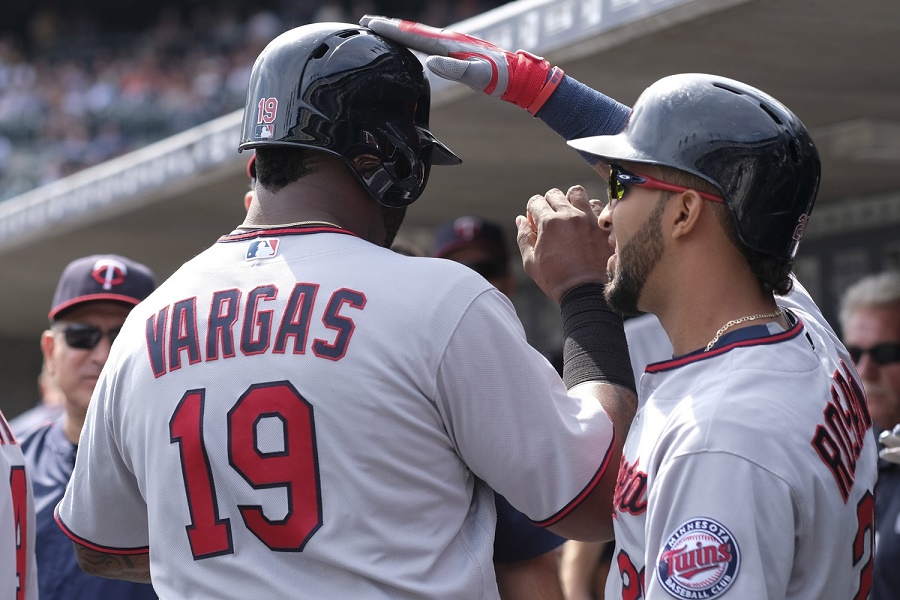 The WBC is coming next month. It is the reason the spring training is starting earlier across baseball. But let's take a look at the teams that have current or former members of the Twins organization. AUSTRALIA Let's start Down Under where there are 14 players with Twins ties. Current Twins minor leaguers RHP Todd Van Steensel, LHP Lachlan Wells and OF Aaron Whitefield are on the team. Wells will be joined by his twin brother Alexander, a member of the Orioles organization. James Beresford will again represent the green and gold of Australia. He remains a free agent following his long-awaited MLB debut last September. Former Twins big leaguers Liam Hendriks and Luke Hughes are also on the roster. There are a bunch of former Twins minor leaguers also on the Australian roster: RHP Tim Atherton, C Allan De San Miguel, RHP Josh Guyer, RHP Peter Moylan, OF Trent Oeltjen, IF/OF Logan Wade, and RHP Matt Williams. Also, former Twins Rule 5 pick, LHP Ryan Rowland-Smith, is on the team. PUERTO RICO We expected the Twins to be well represented on the Puerto Rico team. Big leaguers Kennys Vargas, Eddie Rosario, Hector Santiago and Jose Berrios are on the team. RHP Dereck Rodriguez, who along with Rosario helped capture the Caribbean Series championship for Puerto Rico this past weekend, is a surprise addition to the team. He pitched very well in the Puerto Rico Winter League. Finally, former Twins LHP JC Romero is still pitching, and he is on the team as well. Another former Twins player, catcher Rene Rivera, is also on the roster. CANADA Oh Canada! The team has three former Twins big leaguers on its roster. Justin Morneau is still looking for a big league team to sign him this year, but he's on the WBC roster. Andrew Albers signed a deal with the Braves. The lefty will pitch for Canada. OF Rene Tosoni is also on the team again. COLOMBIA Colombia has two current Twins minor leaguers on its WBC roster. Yohan Pino was another guy who put in his dues in the minor leagues before finally getting a shot with the Twins. He also saw time with the Royals. He is returning to the Twins this spring. 1B Reynaldo Rodriguez has been in the system for a few years now. He played a huge role last spring in giving Colombia a berth in the WBC with a strong Qualifier. NETHERLANDS The Netherlands has a lot of players from Curacao on its roster. One of them, RHP Shairon Martis, spent a season with the Twins and even pitched some in September for the big club. Tom Stuifbergen played hero for the first Netherlands WBC team when he pitched four scoreless innings in a game that eliminated the strong Dominican team from the first round. 7-footer Loek Van Mil had a couple of stints in the Twins organization including in April of 2016. DOMINICAN REPUBLIC Only former Twins RHP Sam Deduno and LHP Fernando Abad have any ties to the Twins organization from the Dominican roster. VENEZUELA Three former Twins minor leaguers are on the Venezuelan roster. Omar Bencomo pitched for the Twins AA and AAA rosters the last couple of seasons. He's a free agent now. Former top prospect Deolis Guerra is a reliever on the team. Finally, Yangervis Solarte, who always hit well in the Twins minor leagues, has put together a solid MLB career as a third baseman for the Yankees and Padres. ISRAEL The team from Israel has three former Twins on their roster too. We all remember the Jason Marquis era. Also, outfielder Sam Fuld is on the roster. And, Craig Breslow, former and current Twins LHP will be on their staff. ITALY Italy was the team that surprised a lot of people in the previous WBC. Drew Butera and Chris Colabello both played a big role in that, and they'll hope to do the same in 2017. CHINA Ray Chang spent a couple of seasons in the Twins organization. Remember the story of Denard Span going up to Chang, thinking he was the newly-signed Tsuyoshi Nishioka. Span politely bowed, introduced himself and asked if he knew any English. To which Chang responded "Sure I do. I'm from Kansas City." Chang is retiring after the WBC to work for MLB. CHINESE TAIPEI Chi-Wei Hu is not on the roster, but former Twins prospect Kuo Hua Lo - who spent the first four months of 2016 with the Kernels - is pitching for them. UNITED STATES OF AMERICA Well, there are not any current Twins on the roster. There was some talk that Brian Dozier might make the roster, but he didn't. However, one Minnesotan and former Twins player, Pat Neshek, is on the Team USA roster. That's it, and that's a lot. So, are we cheering at all for Australia? Maybe Puerto Rico? Or... USA! USA! USA! Discuss your thoughts on the WBC, the players, and what it should do going forward.
 -
I mean, they already announced the players coming to camp. These are just additional.
-
It's a minor league deal. If he's not good, he's not making the roster. But defense and speed are part of the game too. I'm willing to give it a chance.
-
2017 Twins Off-Season top 60 Prospect List: 11-15
Seth Stohs commented on Thrylos's blog entry in Thrylos' Blog - select Tenth Inning Stretch posts
Not understanding the benefit of having Arraez skip a level... I'd be interested in seeing how he hits in Ft. Myers. He's go no power, so I'm curious how his hitting style will play. If he's hitting .330 again at the All Star break, move him up. Right now, he's a one-tool player, so he's got a lot of improvement to warrant promotions. -
He's terrific defensively... ideal for a 5th OF spot, or a platoon righty that isn't an every-lefty platoon guy.
-
Because in his minor league career Kepler always hit lefties as well as righties, and at 23 (he turns 24 on Friday), it's too early to platoon him. But yeah, Stubbs can play all three outfield spots well.
