



Seth Stohs
-
Posts
25,872 -
Joined
-
Last visited
-
Days Won
109
Content Type
Profiles
News
Minnesota Twins Videos
2026 Minnesota Twins Top Prospects Ranking
2022 Minnesota Twins Draft Picks
Minnesota Twins Free Agent & Trade Rumors, Notes, & Tidbits
Guides & Resources
2023 Minnesota Twins Draft Picks
The Minnesota Twins Players Project
2024 Minnesota Twins Draft Picks
2025 Minnesota Twins Draft Pick Tracker
2026 Minnesota Twins Draft Tracker: Picks & Bonuses
Forums
Blogs
Events
Store
Downloads
Gallery
Everything posted by Seth Stohs
-

Article: Sano and the Strikeout
Seth Stohs replied to Seth Stohs's topic in Twins Daily Front Page News
Because from a pitcher/defense standpoint, strikeouts are great. From an offensive perspective, they're kind of meh, at this point. -
Article: Sano and the Strikeout
Seth Stohs replied to Seth Stohs's topic in Twins Daily Front Page News
Possible, but the difference is that if he does, the Twins may (or will likely) send Buxton down. Sano isn't getting sent down. Dozier isn't getting sent down. Park could. That's why I mentioned all four of them as possibly breaking the one-year-old record.- 50 replies
-
- 1
-

-
- miguel sano
- brian dozier
- (and 3 more)
-
More good: Fernando Abad 1.1 IP. Mauer 2 hits. Park first MLB hit, and HBP, and run scored. 3-2 loss in a game with two hour-plus rain delays and a starter only going 2 innings... in another place's home opener...
- 14 replies
-
- 2
-
-
- eduardo escobar
- trevor may
- (and 3 more)
-
I was surprised that Kihle starts in EST, but watching Cavaness, it was clear he was going to CR. I thought Brian Olson would go to CR too, probably over Hayman, but a lot of those catchers are very close. Diemer is in Ft. Myers. Alex Perez worked out with the EST group all of spring training, so he had no shot at Cedar Rapids. I was surprised Arraez is there over Manuel Guzman who was very impressive to me. LeBlanc started in the CR bullpen last year, but then he made a few starts. They're giving him a chance to start, and now we've seen that Ft. Myers starting rotation. Spots hard to come by. He's good.
-
I don't see it, but others may agree... I see Guerrier as having a very smooth delivery and great control. He had some movement but nothing like the movement Reed gets. But Reed right now struggles to control and command his pitches and throws 2-3 mph harder than Guerrier at his peak.
-
I'm guessing you could got through any roster at any level for any organization and have a few guys from each of those categories. Wimmers and Goodrum can become free agents at the end of the year, so it's certainly big for them if they want the Twins to bring them back (add to the 40 man roster), or if they want other organizations to be interested. The rest have time, but it's big for all of them on different levels.
-
In 1969, outfielder Bobby Bonds struck out 187 times to set the single-season record for strikeouts. A year later, as a 24-year-old, he added to that record by striking out 189 times. That record lasted 32 years, until 2004, when Jose Hernandez struck out 188 times. That number has since been topped 21 times. How does this relate to the Minnesota Twins? In his rookie season of 2015, Miguel Sano struck out in 35.5% of his plate appearances (119 K in 335 plate appearances). In my prediction for his 2016 season, I had him playing 158 games. Based on my projections for plate appearances, if he were to strike out at that same rate, he would easily break the single-season strikeout record with 235.Here are the current single-season strikeout leaders in MLB history: Mark Reynolds - 223 - 2009 (44 HR)Adam Dunn - 222 - 2012 (41 HR)Chris Carter - 212 - 2013 (29 HR)Mark Reynolds - 211 - 2010 (37 HR)Chris Davis - 208 - 2015 (47 HR)-------------------------------------------------------------------------------------- Now, that’s not to suggest that it will happen, that Sano will actually break that record. In fact, I would be more than a little surprised if he did. Despite striking out plenty in the minor leagues, it was never close to that 35.5% rate. (Even his two strikeouts on Opening Night don’t worry me much.) Here are the strikeout rates that Miguel Sano posted in the minor leagues: Low A - 26.3% High-A - 25.1% AA (2013) - 29.3% AA (2015) - 23.8% --------------------------------------------------------------------------------------- We all know that strikeouts don’t matter in the league as much as it did even 20 years ago, especially when you are as productive as Miguel Sano was as a rookie. Striking out and not even caring is a concept that I will never understand, and I do think it’s generational. When I was growing up, we were taught a few things. First, “protect the plate.” Don’t give the umpire the opportunity to ring you up. Swing the bat if it’s close. Second, “choke up with two strikes and put the ball in play.” Anything can happen when you put the ball in play. You could get a hit. You could force the defense to make a play, or an error. In fairness, you could also hit into a double play. In today’s game, it appears the general philosophy is to try to crush the ball no matter the count, 3-1 or 1-2. If you strike out, oh well. It’s a trade-off that hitters make, and hitting coaches and teams seem to now accept. Swing hard. You might strike out, or you may rip a double, or a home run. But striking out with a runner on third and less than two outs is commonplace in the game today. Frankly, it’s a trend in the game, and I don’t know if we can really say whether it has helped or hurt baseball. I don’t know if that “strategy” is positive or negative. Consider 2015. The Kansas City Royals struck out 973 times, 134 times less than Atlanta’s 1,107 which was the second fewest. The Royals won the World Series. Atlanta became one of the worst teams in baseball. On the other end of the spectrum, the Chicago Cubs struck out 1,518 times, yet they won nearly 100 games and got to the NLCS. They had had 126 more strikeouts last season than the #2 strikeout team, the Houston Astros who surprised many and reached the playoffs. Here’s a quick look at a couple of the trends over the last 25 years (note, I normalized each of the three data categories in an attempt to keep the data within a range.): There is nothing definitive in the above chart. It doesn’t factor in variables such as the steroid era, the introduction of new baseball fields, or changes in the baseball. It doesn’t credit today’s pitchers for being better, whether that is true or not. What the chart does show is that in the last 25 years, strikeouts have gone up (from about 15% to a little over 20%). Home runs are back to where they were in the early ‘90s, though there was a spike in 2015. Runs scored peaked in 2000 with 5.18 runs/game and in 2015 it was back down to just 4.25. Trend lines certainly indicate that the increase in strikeouts is not helping offensive production, though I won’t pretend to claim that this study is 100% complete or fully answers the question. -------------------------------------------------------------------------- Back to the Twins and Sano, imagine a scenario where he is able to reduce his K-rate from 35.5% down to 25.5% A 10% reduction in strikeout rate would mean about 60 fewer strikeouts per season. Just imagine what damage Sano could do with 60 more plate appearances. How many more walks, doubles and home runs could he produce? I don’t expect him to make up that 10% in one season, but any reduction in strikeout rate should be viewed as a positive. Bobby Darwin held the Twins single-season strikeout record (145) for 43 years. In 2015, Brian Dozier struck out 148 times to take the record. It is safe to say that Dozier’s record will not last 43 years. In fact, it is highly unlikely to last beyond one year. Of course, it’s also possible that as many as four players could top it, Sano, Byung Ho Park, Byron Buxton and Dozier himself. As fans, it’s likely we won’t really care too much about it if the Twins are competing for a playoff spot again. Click here to view the article
- 50 replies
-
- 4
-
-
- miguel sano
- brian dozier
- (and 3 more)
-
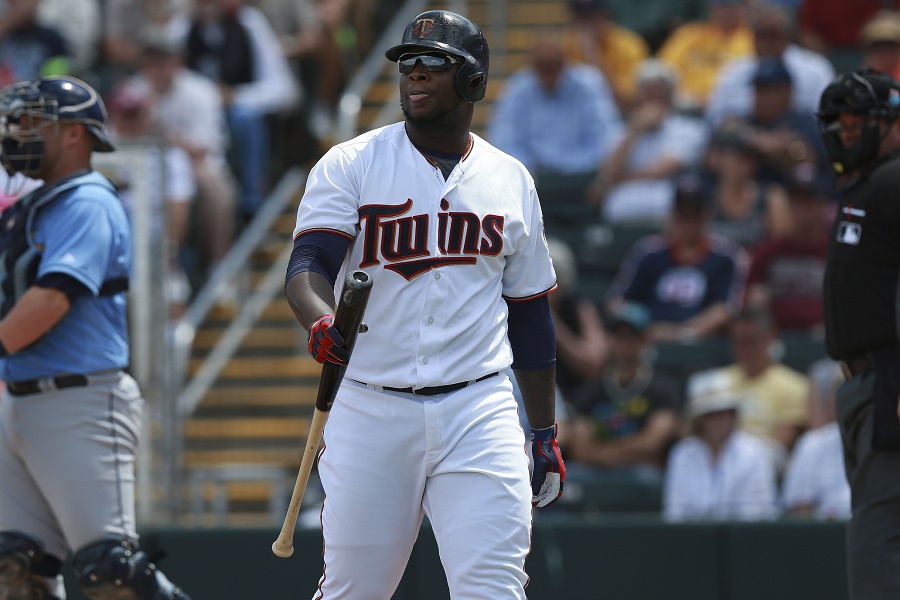 Here are the current single-season strikeout leaders in MLB history: Mark Reynolds - 223 - 2009 (44 HR) Adam Dunn - 222 - 2012 (41 HR) Chris Carter - 212 - 2013 (29 HR) Mark Reynolds - 211 - 2010 (37 HR) Chris Davis - 208 - 2015 (47 HR) -------------------------------------------------------------------------------------- Now, that’s not to suggest that it will happen, that Sano will actually break that record. In fact, I would be more than a little surprised if he did. Despite striking out plenty in the minor leagues, it was never close to that 35.5% rate. (Even his two strikeouts on Opening Night don’t worry me much.) Here are the strikeout rates that Miguel Sano posted in the minor leagues: Low A - 26.3% High-A - 25.1% AA (2013) - 29.3% AA (2015) - 23.8% --------------------------------------------------------------------------------------- We all know that strikeouts don’t matter in the league as much as it did even 20 years ago, especially when you are as productive as Miguel Sano was as a rookie. Striking out and not even caring is a concept that I will never understand, and I do think it’s generational. When I was growing up, we were taught a few things. First, “protect the plate.” Don’t give the umpire the opportunity to ring you up. Swing the bat if it’s close. Second, “choke up with two strikes and put the ball in play.” Anything can happen when you put the ball in play. You could get a hit. You could force the defense to make a play, or an error. In fairness, you could also hit into a double play. In today’s game, it appears the general philosophy is to try to crush the ball no matter the count, 3-1 or 1-2. If you strike out, oh well. It’s a trade-off that hitters make, and hitting coaches and teams seem to now accept. Swing hard. You might strike out, or you may rip a double, or a home run. But striking out with a runner on third and less than two outs is commonplace in the game today. Frankly, it’s a trend in the game, and I don’t know if we can really say whether it has helped or hurt baseball. I don’t know if that “strategy” is positive or negative. Consider 2015. The Kansas City Royals struck out 973 times, 134 times less than Atlanta’s 1,107 which was the second fewest. The Royals won the World Series. Atlanta became one of the worst teams in baseball. On the other end of the spectrum, the Chicago Cubs struck out 1,518 times, yet they won nearly 100 games and got to the NLCS. They had had 126 more strikeouts last season than the #2 strikeout team, the Houston Astros who surprised many and reached the playoffs. Here’s a quick look at a couple of the trends over the last 25 years (note, I normalized each of the three data categories in an attempt to keep the data within a range.): There is nothing definitive in the above chart. It doesn’t factor in variables such as the steroid era, the introduction of new baseball fields, or changes in the baseball. It doesn’t credit today’s pitchers for being better, whether that is true or not. What the chart does show is that in the last 25 years, strikeouts have gone up (from about 15% to a little over 20%). Home runs are back to where they were in the early ‘90s, though there was a spike in 2015. Runs scored peaked in 2000 with 5.18 runs/game and in 2015 it was back down to just 4.25. Trend lines certainly indicate that the increase in strikeouts is not helping offensive production, though I won’t pretend to claim that this study is 100% complete or fully answers the question. -------------------------------------------------------------------------- Back to the Twins and Sano, imagine a scenario where he is able to reduce his K-rate from 35.5% down to 25.5% A 10% reduction in strikeout rate would mean about 60 fewer strikeouts per season. Just imagine what damage Sano could do with 60 more plate appearances. How many more walks, doubles and home runs could he produce? I don’t expect him to make up that 10% in one season, but any reduction in strikeout rate should be viewed as a positive. Bobby Darwin held the Twins single-season strikeout record (145) for 43 years. In 2015, Brian Dozier struck out 148 times to take the record. It is safe to say that Dozier’s record will not last 43 years. In fact, it is highly unlikely to last beyond one year. Of course, it’s also possible that as many as four players could top it, Sano, Byung Ho Park, Byron Buxton and Dozier himself. As fans, it’s likely we won’t really care too much about it if the Twins are competing for a playoff spot again.
 -
Team doesn't seem terribly concerned about it. A lot of pitchers go through a "dead arm" period late in spring training and just need a little time. Hopefully that's all this is.
-
Article: 2016 Ft. Myers Miracle Roster Revealed
Seth Stohs replied to Seth Stohs's topic in Twins Daily Front Page News
Yeah, I had Tyler Jay at #9. Just missed him, but I added him back. -
Today, the Ft. Myers Miracle announced their 2016 Opening Day roster. In 2015, the Miracle put together a record of 76-63 which was best record in the Florida State League South Division, but they did not make the playoffs. Why? They finished second in the division in the first half and third in the division in the second half. They hope to put together a similar season in 2016 but find a way to bring playoff baseball to Hammond Stadium.Nick Gordon is one of the best hitting prospect in the Twins system, but as it relates to this roster, it’s all about starting pitching. This team is loaded with high-ceiling starting pitcher prospects. THE COACHING STAFF Jeff Smith was the Miracle manager in 2008 and 2009. He then moved up to New Britain where he managed through the 2014 season. The Naples, FL, native returned to Southwest Florida last year to manage the Miracle again. Former long-time big leaguer Jim “Slice” Dwyer returns for his 11th season with the Miracle. He has been a hitting coach/coordinator in the Twins system since 1992. Henry Bonilla continues his progression through the Twins system as he moves up to the Miracle. He was with Cedar Rapids last year and with Elizabethton the two previous seasons. THE ROSTER The Miracle roster is comprised of a good mix of young, high-ceiling prospects, some minor league veterans and everything in between. PROJECTED STARTING PITCHERS RHP Kohl StewartLHP Stephen GonsalvesRHP Felix JorgeLHP Randy RosarioRHP Keaton SteeleLHP Tyler JayRight now, LHP Lewis Thorpe is on the Miracle DL. He could return to the diamond as early as mid-May (though no date or timeline is established yet). He is included in the prospects mentioned below, but even without him listed above, that group of six starters is very talented. Despite his lack of strikeouts, many scouts still believe in the future of Kohl Stewart. It is great that he will get additional time in Ft. Myers to continue building. Gonsalves jumped up prospect rankings in 2015. He spent half of the season with the Miracle, and it’s possible that’s how long he’ll stick with the Miracle this year before promotion. Randy Rosario came back from Tommy John surgery last year and showed enough to be added to the 40-man roster. It’ll be good to see the step he takes forward in 2016. Felix Jorge was very consistent in 2015 in Cedar Rapids and earned the top defensive pitcher award in the Twins system last year. Keaton Steele quietly was terrific with the Kernels after moving up midway through the season. And 2015 top pick Tyler Jay begins his transition back to the starting rotation with the Miracle. Although he is not a big man, he is blessed with a big arm and a devastating slider. It will be interesting to see how many innings he goes (and starts he makes) before ending the season in a bullpen. PROJECTED RELIEF PITCHERS Right-Handers: Luke Bard, Raul Fernandez, Brian Gilbert, Trevor Hildenberger, Yorman Landa, Todd Van Steensel Left-Handers: Luke Westphal Hildenberger was our choice for Twins minor league relief pitcher of the year in 2015. The side-winding right-hander was tremendous in Cedar Rapids and then in Ft. Myers. Todd Van Steensel dominated the Florida State League in 2015. It’s purely a numbers game as to why he remains with the Miracle. Brian Gilbert is in his third season with the Miracle. Raul Fernandez is a newcomer to the organization. He was on the 40-man roster of the Rockies and White Sox over the last two seasons. Yorman Landa throws hard. He returned late last season with the Kernels and was added to the Twins 40-man roster. The lone left-hander on the roster is Wisconsinite Luke Westphal who made a lot of starts for the Miracle a year ago. PROJECTED LINEUP Tanner English CF (top defensive outfielder in the minor leagues, can get on base too)Nick Gordon SS (Top 5 Twins prospect has great tools, added strength in offseason)Alex Swim RF (Invited to MLB camp, Swim can hit for average, will catch too.)TJ White 3B (Solid defense, strong, powerful hitter with great speed.)Trey Vavra 1B (professional hitter missed ⅔ of last year with high-ankle injury, still led Kernels in HR in 2015.)Alex Real DH (will play a lot at 1B and behind the plate.)Edgar Corcino LF (A great athlete, Corcino plays strong defense and has some pop.)Ryan Walker 2B (added 15-20 pounds this offseason. Great defense.)Brian Navarreto C (he’s struggled with the bat, but his defense and arm can be elite.)BENCH - Chad Christensen (LF, CF, RF, 1B, 3B), Austin Diemer (all 3 OF spots), Logan Wade (corner OF spots, 3B, 2B, 1B). This lineup is full of guys who have the ability to play a variety of positions, and they likely will. Nick Gordon will play shortstop most every day. Tanner English will play in center most every day. Brian Navarreto will probably only catch. However, the rest of the lineup can and will play multiple positions. THE PROSPECTS Nick Gordon is the highest ranked prospect by most lists. However, looking at the starting rotation we find several others who are easily top 10 Twins prospects. Here is a quick look at which Miracle players found their names in a variety of Twins prospect rankings and then which are in the national rankings. Twins Prospect Rankings Twins Daily Top 10: Gordon (4), Jay (5), Gonsalves (6), Stewart (9) Seth Stohs Top 30: Gordon (4), Gonsalves (6), Jay (9), Stewart (11), Thorpe (13), Rosario (19), Jorge (22), Navarreto (29), Jeremy Nygaard Top 30: Gordon (4), Jay (7), Stewart (8), Gonsalves (9), Thorpe (11), Jorge (18), Navarreto (21), Rosario (29) Cody Christie Top 30: Gordon (4), Gonsalves (7), Stewart (8), Jay (9), Thorpe (12), Jorge (13), Hildenberger (22), Navarreto (26), Rosario (29) Nick Nelson Top 10: Gordon (4), Gonsalves (5), Stewart (6), Jay (7) Steve Buhr Top 15: Jay (5), Gonsalves (6), Gordon (7), Thorpe (11), Stewart (14) Baseball America Top 31: Gordon (4), Jay (5), Stewart (8), Gonsalves (9), Thorpe (12), Rosario (22), Landa (23), Jorge (24), Hildenberger (27) FanGraphs Top 25: Gordon (6), Jay (7), Gonsalves (9), Stewart (10), Thorpe (15) Keith Law Top 20: Stewart (4), Jay (5), Gordon (7), Gonsalves (8), Thorpe (12), Landa (13), John Sickels Top 20: Gordon (4), Jay (5), Gonsalves (7), Stewart (9), Thorpe (13), Aaron Gleeman Top 40:Gordon (5), Jay (7), Gonsalves (8), Thorpe (11), Stewart (12), English (20), Hildenberger (25), Bard (26), Jorge (28), Landa (34) Ted Schwerzler Top 15: Jay (3), Gordon (4), Gonsalves (6), Stewart (10), Thorpe (14) MLB.com Top 30: Berrios (2), Kepler (3), Polanco (6), Walker (11), Meyer (12), Rogers (14) Baseball Essentials Top 20: Gordon (2), Jay (4), Stewart (7), Gonsalves (8), Thorpe (14) Miracle players in National Prospect Rankings Baseball America: Gordon (53), Jay (80) MLB.com: Jay (60), Gordon (91) Baseball Prospectus: Gordon (62) KATOH (FanGraphs): Gordon (82) PREDICTIONS First Hitter Promoted to Twins: 1.) TJ White, 2.) Ryan Walker First Starting Pitcher Promoted to Twins: 1.) Kohl Stewart, 2.) Stephen Gonsalves First Relief Pitcher Promoted to Twins: 1.) Trevor Hildenberger, 2.) Luke Bard TWITTER FOLLOWS Ft. Myers Miracle: @MiracleBaseball Radio Voice:Brice Zimmerman @ZimGlish Miracle Gameday: @MiracleGameDay Beat Writer - News Press: @DavidADorsey Click here to view the article
-
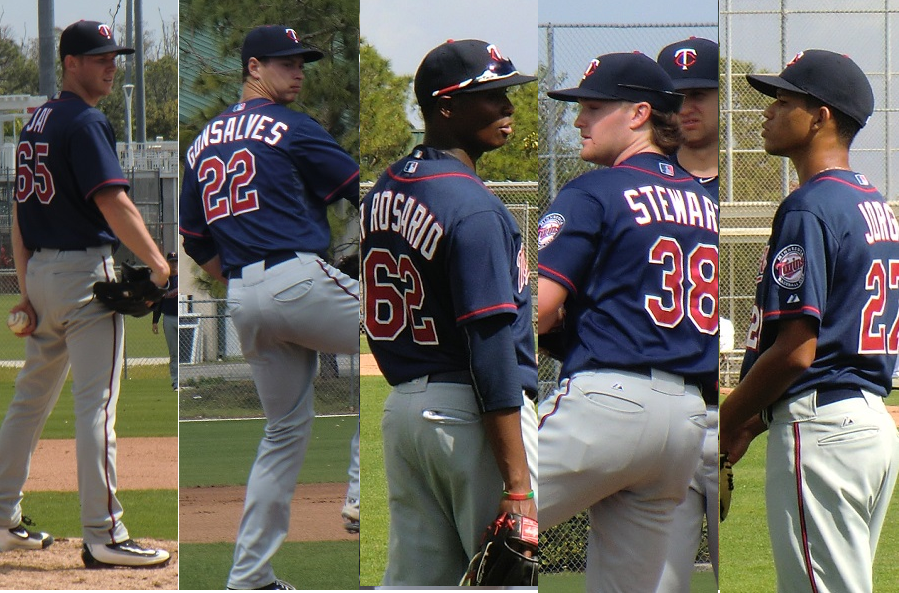 Nick Gordon is one of the best hitting prospect in the Twins system, but as it relates to this roster, it’s all about starting pitching. This team is loaded with high-ceiling starting pitcher prospects. THE COACHING STAFF Jeff Smith was the Miracle manager in 2008 and 2009. He then moved up to New Britain where he managed through the 2014 season. The Naples, FL, native returned to Southwest Florida last year to manage the Miracle again. Former long-time big leaguer Jim “Slice” Dwyer returns for his 11th season with the Miracle. He has been a hitting coach/coordinator in the Twins system since 1992. Henry Bonilla continues his progression through the Twins system as he moves up to the Miracle. He was with Cedar Rapids last year and with Elizabethton the two previous seasons. THE ROSTER The Miracle roster is comprised of a good mix of young, high-ceiling prospects, some minor league veterans and everything in between. PROJECTED STARTING PITCHERS RHP Kohl Stewart LHP Stephen Gonsalves RHP Felix Jorge LHP Randy Rosario RHP Keaton Steele LHP Tyler Jay Right now, LHP Lewis Thorpe is on the Miracle DL. He could return to the diamond as early as mid-May (though no date or timeline is established yet). He is included in the prospects mentioned below, but even without him listed above, that group of six starters is very talented. Despite his lack of strikeouts, many scouts still believe in the future of Kohl Stewart. It is great that he will get additional time in Ft. Myers to continue building. Gonsalves jumped up prospect rankings in 2015. He spent half of the season with the Miracle, and it’s possible that’s how long he’ll stick with the Miracle this year before promotion. Randy Rosario came back from Tommy John surgery last year and showed enough to be added to the 40-man roster. It’ll be good to see the step he takes forward in 2016. Felix Jorge was very consistent in 2015 in Cedar Rapids and earned the top defensive pitcher award in the Twins system last year. Keaton Steele quietly was terrific with the Kernels after moving up midway through the season. And 2015 top pick Tyler Jay begins his transition back to the starting rotation with the Miracle. Although he is not a big man, he is blessed with a big arm and a devastating slider. It will be interesting to see how many innings he goes (and starts he makes) before ending the season in a bullpen. PROJECTED RELIEF PITCHERS Right-Handers: Luke Bard, Raul Fernandez, Brian Gilbert, Trevor Hildenberger, Yorman Landa, Todd Van Steensel Left-Handers: Luke Westphal Hildenberger was our choice for Twins minor league relief pitcher of the year in 2015. The side-winding right-hander was tremendous in Cedar Rapids and then in Ft. Myers. Todd Van Steensel dominated the Florida State League in 2015. It’s purely a numbers game as to why he remains with the Miracle. Brian Gilbert is in his third season with the Miracle. Raul Fernandez is a newcomer to the organization. He was on the 40-man roster of the Rockies and White Sox over the last two seasons. Yorman Landa throws hard. He returned late last season with the Kernels and was added to the Twins 40-man roster. The lone left-hander on the roster is Wisconsinite Luke Westphal who made a lot of starts for the Miracle a year ago. PROJECTED LINEUP Tanner English CF (top defensive outfielder in the minor leagues, can get on base too) Nick Gordon SS (Top 5 Twins prospect has great tools, added strength in offseason) Alex Swim RF (Invited to MLB camp, Swim can hit for average, will catch too.) TJ White 3B (Solid defense, strong, powerful hitter with great speed.) Trey Vavra 1B (professional hitter missed ⅔ of last year with high-ankle injury, still led Kernels in HR in 2015.) Alex Real DH (will play a lot at 1B and behind the plate.) Edgar Corcino LF (A great athlete, Corcino plays strong defense and has some pop.) Ryan Walker 2B (added 15-20 pounds this offseason. Great defense.) Brian Navarreto C (he’s struggled with the bat, but his defense and arm can be elite.) BENCH - Chad Christensen (LF, CF, RF, 1B, 3B), Austin Diemer (all 3 OF spots), Logan Wade (corner OF spots, 3B, 2B, 1B). This lineup is full of guys who have the ability to play a variety of positions, and they likely will. Nick Gordon will play shortstop most every day. Tanner English will play in center most every day. Brian Navarreto will probably only catch. However, the rest of the lineup can and will play multiple positions. THE PROSPECTS Nick Gordon is the highest ranked prospect by most lists. However, looking at the starting rotation we find several others who are easily top 10 Twins prospects. Here is a quick look at which Miracle players found their names in a variety of Twins prospect rankings and then which are in the national rankings. Twins Prospect Rankings Twins Daily Top 10: Gordon (4), Jay (5), Gonsalves (6), Stewart (9) Seth Stohs Top 30: Gordon (4), Gonsalves (6), Jay (9), Stewart (11), Thorpe (13), Rosario (19), Jorge (22), Navarreto (29), Jeremy Nygaard Top 30: Gordon (4), Jay (7), Stewart (8), Gonsalves (9), Thorpe (11), Jorge (18), Navarreto (21), Rosario (29) Cody Christie Top 30: Gordon (4), Gonsalves (7), Stewart (8), Jay (9), Thorpe (12), Jorge (13), Hildenberger (22), Navarreto (26), Rosario (29) Nick Nelson Top 10: Gordon (4), Gonsalves (5), Stewart (6), Jay (7) Steve Buhr Top 15: Jay (5), Gonsalves (6), Gordon (7), Thorpe (11), Stewart (14) Baseball America Top 31: Gordon (4), Jay (5), Stewart (8), Gonsalves (9), Thorpe (12), Rosario (22), Landa (23), Jorge (24), Hildenberger (27) FanGraphs Top 25: Gordon (6), Jay (7), Gonsalves (9), Stewart (10), Thorpe (15) Keith Law Top 20: Stewart (4), Jay (5), Gordon (7), Gonsalves (8), Thorpe (12), Landa (13), John Sickels Top 20: Gordon (4), Jay (5), Gonsalves (7), Stewart (9), Thorpe (13), Aaron Gleeman Top 40:Gordon (5), Jay (7), Gonsalves (8), Thorpe (11), Stewart (12), English (20), Hildenberger (25), Bard (26), Jorge (28), Landa (34) Ted Schwerzler Top 15: Jay (3), Gordon (4), Gonsalves (6), Stewart (10), Thorpe (14) MLB.com Top 30: Berrios (2), Kepler (3), Polanco (6), Walker (11), Meyer (12), Rogers (14) Baseball Essentials Top 20: Gordon (2), Jay (4), Stewart (7), Gonsalves (8), Thorpe (14) Miracle players in National Prospect Rankings Baseball America: Gordon (53), Jay (80) MLB.com: Jay (60), Gordon (91) Baseball Prospectus: Gordon (62) KATOH (FanGraphs): Gordon (82) PREDICTIONS First Hitter Promoted to Twins: 1.) TJ White, 2.) Ryan Walker First Starting Pitcher Promoted to Twins: 1.) Kohl Stewart, 2.) Stephen Gonsalves First Relief Pitcher Promoted to Twins: 1.) Trevor Hildenberger, 2.) Luke Bard TWITTER FOLLOWS Ft. Myers Miracle: @MiracleBaseball Radio Voice:Brice Zimmerman @ZimGlish Miracle Gameday: @MiracleGameDay Beat Writer - News Press: @DavidADorsey
 -
I would guess that 11 out of 26 from this roster having MLB experience would be pretty low relative to other AAA teams in the IL or the PCL. And no, they don't get an extra pitcher for DH. They play 7 inning games in double headers.
-
Paul played a lot of 3B in college. He'll maybe play some at 1B too but there are other guys there. He could move up quickly too. My guess is that Blankenhorn moves up to CR before the ET season. IF not, doesn't hurt him to go to Tennessee again. Cabbage will go to Elizabethton for the season. I'd be more surprised if he went to Cedar Rapids, but it's possible. Doubt he'd stay in the GCL. Yup, Murphy had a disappointing year last year. He's got a lot to prove this year. I think he'll be the first one promoted to FM when needed.
-
Chatted with Mike Radcliff about Wade one day while watching players work out. Asked about Wade... Radcliff talked about how he doesn't have any great tools. Nothing stands out about him... but he does everything well. Doesn't have a weakness... So the upside isn't real high, but it would appear that the floor would be higher than most. Radcliff also talked about him having "elite" character. That is a big thing to the Twins. In talking with Wade several times and a few times down there, that would appear to be very true.
-
I would be shocked (OK, surprised) if it isn't Romero. He's been tossing heat of late... His arm is strong. I learned recently that he had a meniscus surgery last July which is what delayed his return. I don't think it'll be Robinson just because of where he was to start spring... Then it could be any of those 4-year college senior types too.
-
Good decision, and if that is accurate, we will all be thrilled!!
-
Steele in FM. Stashak in EST. He didn't pitch much until late in minor league spring training, though he probably wasn't going to start the season in CR either way.
-
Threw a lot of innings for E-Town last year too. They didn't have starters go too long, so he would come out of the bullpen and eat up some innings. He's solid. Watched him twice when I was down there.
-
Understandable. I saw him throw a couple of bullpens, but not in a game... Reports last fall were him throwing really hard.
-
Re Polanco, they've already said that he'll be playing around the infield and Tovar will likely play the most at shortstop. The list I gave is just the list of the five starters... David Martinez may also start, or could be in long relief. Doesn't really matter what order they start in. Also, weren't they just walking around the clubhouse. There was no other rhyme or reason to the order of the announcements. I know Runzler was a BIG part of those Giants World Series teams... They're both lefty relievers on the AAA Red Wings roster... seem like a couple of guys who could wind up in the same sentence often. I'd be shocked if Strong is on the AAA roster. Same with Walden. Both are bullpen arms, probably in Chattanooga.
-
Nope... they will have to put one guy on the DL before Thursday.
-
I don't see much need for a traditional closers in the minors. This group should be guys used in various roles because those are the roles they'll have in the big leagues. The Twins don't need a closer. They have Perkins and Jepsen, and May and Pressly both have the stuff to be closers too.
-
Today on Periscope, the Rochester Red Wings announced their 2016 Opening Day roster. In 2015, the Red Wings put together a record of 77-67 for the third straight year (which is really quite remarkable, isn’t it?). They look to improve upon that record in 2016 and bring the International League playoffs back to Frontier Field.Several of the Minnesota Twins’ top prospects will begin the season with the Red Wings. Many of them are likely to spend time attempting to help the Minnesota Twins to their first playoff berth since 2010. As you look at this roster, it does help illustrate the type of depth that this organization has. That is something you will see through each of the four affiliates. THE COACHING STAFF Mike Quade returns for his second season as the Red Wings manager. The 59-year-old began coaching over 30 years ago and was the manager of the Chicago Cubs in 2010 and 2011. He will be joined on his staff by a couple of new coaches. Hitting Coach Chad Allen continues to work his way up the system. The former Twins outfielder was the Twins AA hitting coach the last three seasons. He has worked with several of the players on this roster. The pitching coach is Stu Cliburn. It is his 25th year in the Twins organization. He has been in the organization for well over a decade, the last several seasons in AA. He returns to Rochester where he was the pitching coach from 2006 to 2008. THE ROSTER The Rochester Red Wings roster is comprised of a good mix of young, high-ceiling prospects, some minor league veterans and everywhere in between. They are likely to be led by 2015 All Stars James Beresford and Taylor Rogers, but this is a nice, complete roster. (names in bold are on the 40 man roster) PROJECTED STARTING PITCHERS Tyler DuffeyJose BerriosLogan DarnellPat DeanAlex MeyerDuffey’s name was written in pencil for a spot in the Twins rotation, but he struggled immensely with all of his pitchers this spring and will begin the season with the Red Wings.It is likely he won’t need to be there long. That said, it could be a race to the big leagues now between Duffey and Jose Berrios, one of baseball’s best pitching prospects. Berrios struggled with command this spring, but that hasn’t been an issue for him in the past. Expect him to put up strong numbers early again and to be up in the season’s first half.Let’s hope he’s not starting the 2016 Futures Game. Lefty Pat Dean was had a rough 2014 season in AA, but he was still pushed to Rochester last year. He had a terrific season and would up being added to the 40-man roster. The lefty will be joined in the rotation by fellow southpaw Logan Darnell. He began last year in the bullpen but moved back to the rotation and had an incredible month. In fact, some onlookers said that it was the best he had pitched as a pro. He was called up to the Twins but pneumonia meant that the Kentucky product didn’t pitch. He came off the 40 man but when he cleared, he went to big league camp and was among the final cuts. Finally, after being one of the best International League starters in 2014, Alex Meyer had a frustrating 2015 that found him in the bullpen. He debuted with the Twins, but it lasted just two outings. He gets another shot to start in 2016, though it may be just as an attempt to build arm strength, work on pitches and work out of more situations. PROJECTED RELIEF PITCHERS Right-Handers: JR Graham, Brandon Kintzler, Loek Van Mil, David Martinez Left-Handers: Buddy Boshers, Ryan O’Rourke, Taylor Rogers, Dan Runzler The Twins certainly went out and acquired lots of left-handers in the offseason, and most of them pitched well and will stick as the season starts. But there are good right-handed arms too. Let’s start with the guys on the 40-man roster. JR Graham and the Twins have been freed of the Rule 5 restrictions that caused him to need to stay in the big leagues throughout 2015. Hopefully Graham will be able to respond as well as Ryan Pressly did in the same scenario a few seasons ago. Ryan O’Rourke was called up midway through last season. He performed admirably against left-handers as he has throughout his career. He had a great camp. Rogers has been a quality starting pitching prospect since being drafted, but he went to big league camp with an opportunity to pitch out of the bullpen. After a slow start, he pitched well later. It is likely all three will surface with the Twins in 2016. Veteran Brandon Kintzler was among the final cuts. After missing most of last season, he signed a minor league deal with the Twins. If needed, he could be called up early in the season. Van Mil was with the Twins a half-decade ago until he was traded to the Angels for Brian Fuentes. He became a journeyman at that point but returned to the Twins late last year. 28-year-old David Martinez came to the Twins this year on a minor league deal. He pitched in a combined nine games for the Astros in 2013 and 2014. Buddy Boshers and Dan Runzler were both signed out of independent leagues, and both impressed in spring training. They throw hard and each have good breaking balls. If they get to the big leagues, it will mark a great story. PROJECTED LINEUP James Beresford 2B (expect that Beresford will play all around the infield)Jorge Polanco 3B (Polanco will likely play 3B, 2B, SS, and even some OF)Max Kepler LF (Kepler will play all three outfield positions)Kennys Vargas 1B (will also be able to DH)Reynaldo Rodriguez RF (can play both corners and first base)Darin Mastroianni CF (will play all three OF positions)Adam Brett Walker DH (will eventually get some time in LF, maybe 1B)John Hicks C (We’ll see Juan Centeno’s name in the lineup quite a bit too)Wilfredo Tovar (primary SS, but will play 2B and 3B as well)BENCH - Heiker Meneses, Stephen Wickens, Buck Britton, Juan Centeno This lineup has a good mixture of guys with plenty of AAA experience. A year ago, Beresford played in the AAA All Star game in 2015 and was named to the International Leagues’ Postseason All Star team. Reynaldo Rodriguez joined him on the Postseason All Star team. This spring, he helped the Colombian WBC team qualify for next year’s competition. Darin Mastroianni had a terrific spring training this year, hitting over .400 while playing all around the outfield. Wilfredo Tovar has big league time with the Mets in recent years. Known for his defense, he’ll bat lower in the lineup. There are also a couple of highly ranked prospects in this lineup. After a breakout season last year in Chattanooga, he was the Southern League MVP, Max Kepler is now a consensus Top 60 prospect in baseball. Jorge Polanco’s bat is MLB ready, but he needs to find a position he can play regularly. Adam Brett Walker has been discussed frequently in the Twins Daily forums because of his immense power and propensity to swing and miss. THE PROSPECTS Even with Tyler Duffey, Miguel Sano, Trevor May and Eddie Rosario all having graduated from prospect status, but the system is still strong. This Rochester roster has a couple of elite prospects and several players with tremendous upside. Here is a quick look at which Red Wings found their names in a variety of Twins Prospect Rankings and then which rank in the national rankings. Twins Prospect Rankings Twins Daily Top 10: Berrios (2), Kepler (3), Polanco (7), Meyer (8) Seth Stohs Top 30: Berrios (2), Kepler (3), Polanco (8), Walker (10), Meyer (14), Rogers (17), Jeremy Nygaard Top 30: Berrios (2), Kepler (3), Polanco (5), Walker (12), Meyer (14), Rogers (15), Cody Christie Top 30: Berrios (2), Kepler (3), Polanco (6), Walker (11), Meyer (15), Rogers (17) Nick Nelson Top 10: Berrios (2), Kepler (3), Polanco (8), Meyer (9) Steve Buhr Top 15: Berrios (2), Kepler (3), Polanco (8), Rogers (10) Baseball America Top 31: Berrios (2), Kepler (3), Polanco (6), Meyer (12), Rogers (14), Walker (17) FanGraphs Top 25: Berrios (2), Kepler (4), Polanco (5), Meyer (8), Rogers (16), Walker (25) Keith Law Top 20: Berrios (2), Kepler (3), Polanco (6), Meyer (10) John Sickels Top 20: Berrios (2), Kepler (3), Polanco (6), Walker (8), Meyer (11) Aaron Gleeman Top 40: Berrios (2), Kepler (3), Polanco (6), Walker (13), Meyer (14), Rogers (22), O’Rourke (38), Dean (40) Ted Schwerzler Top 15: Berrios (2), Kepler (5), Rogers (8), Walker (11), Meyer (12) MLB.com Top 30: Berrios (2), Kepler (3), Polanco (6), Walker (11), Meyer (12), Rogers (14) Baseball Essentials Top 20: Berrios (3), Kepler (5), Polanco (6), Walker (10), Meyer (11) Twins in National Prospect Rankings Baseball America: Berrios (28), Kepler (30), Polanco (99) MLB.com: Berrios (19), Kepler (44), Polanco (97) Baseball Prospectus: Berrios (17), Kepler (60), KATOH (FanGraphs): Kepler (1), Berrios (18), Gordon (82), Polanco (89) PREDICTIONS First Hitter Promoted to Twins: 1.) Jorge Polanco, 2.) Max Kepler First Starting Pitcher Promoted to Twins: 1.) Tyler Duffey, 2.) JO Berrios First Relief Pitcher Promoted to Twins: 1.) Brandon Kintzler, 2.) Ryan O’Rourke TWITTER FOLLOWS Rochester Red Wings: @RocRedWings Radio Voice: @JoshWhetzel Red Wings Radio Show: @RWRadioShow Beat Writer - Democrat & Chronicle: @KevinoDandC Also: @njrowan, @MorrieSilver8, @CJFee Click here to view the article
-
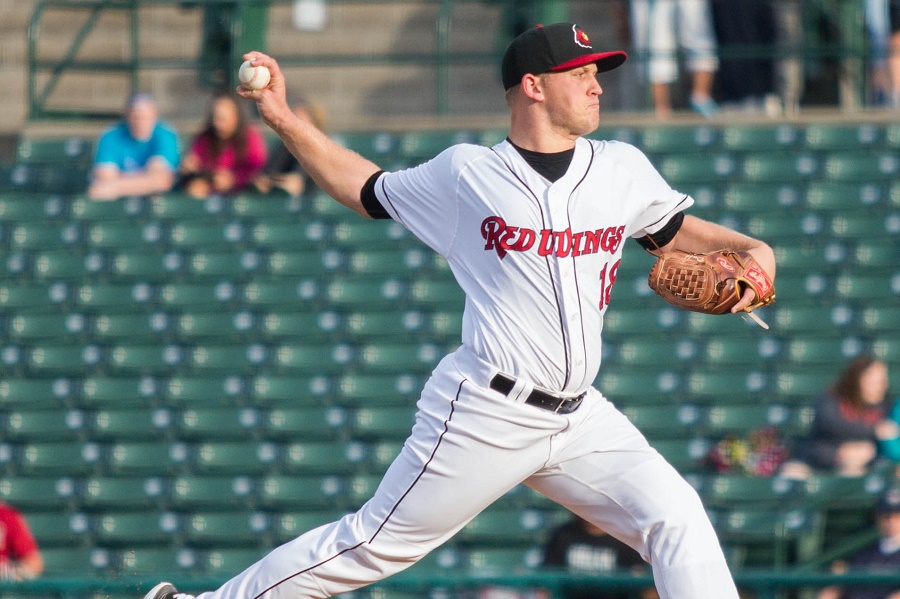 Several of the Minnesota Twins’ top prospects will begin the season with the Red Wings. Many of them are likely to spend time attempting to help the Minnesota Twins to their first playoff berth since 2010. As you look at this roster, it does help illustrate the type of depth that this organization has. That is something you will see through each of the four affiliates. THE COACHING STAFF Mike Quade returns for his second season as the Red Wings manager. The 59-year-old began coaching over 30 years ago and was the manager of the Chicago Cubs in 2010 and 2011. He will be joined on his staff by a couple of new coaches. Hitting Coach Chad Allen continues to work his way up the system. The former Twins outfielder was the Twins AA hitting coach the last three seasons. He has worked with several of the players on this roster. The pitching coach is Stu Cliburn. It is his 25th year in the Twins organization. He has been in the organization for well over a decade, the last several seasons in AA. He returns to Rochester where he was the pitching coach from 2006 to 2008. THE ROSTER The Rochester Red Wings roster is comprised of a good mix of young, high-ceiling prospects, some minor league veterans and everywhere in between. They are likely to be led by 2015 All Stars James Beresford and Taylor Rogers, but this is a nice, complete roster. (names in bold are on the 40 man roster) PROJECTED STARTING PITCHERS Tyler Duffey Jose Berrios Logan Darnell Pat Dean Alex Meyer Duffey’s name was written in pencil for a spot in the Twins rotation, but he struggled immensely with all of his pitchers this spring and will begin the season with the Red Wings.It is likely he won’t need to be there long. That said, it could be a race to the big leagues now between Duffey and Jose Berrios, one of baseball’s best pitching prospects. Berrios struggled with command this spring, but that hasn’t been an issue for him in the past. Expect him to put up strong numbers early again and to be up in the season’s first half.Let’s hope he’s not starting the 2016 Futures Game. Lefty Pat Dean was had a rough 2014 season in AA, but he was still pushed to Rochester last year. He had a terrific season and would up being added to the 40-man roster. The lefty will be joined in the rotation by fellow southpaw Logan Darnell. He began last year in the bullpen but moved back to the rotation and had an incredible month. In fact, some onlookers said that it was the best he had pitched as a pro. He was called up to the Twins but pneumonia meant that the Kentucky product didn’t pitch. He came off the 40 man but when he cleared, he went to big league camp and was among the final cuts. Finally, after being one of the best International League starters in 2014, Alex Meyer had a frustrating 2015 that found him in the bullpen. He debuted with the Twins, but it lasted just two outings. He gets another shot to start in 2016, though it may be just as an attempt to build arm strength, work on pitches and work out of more situations. PROJECTED RELIEF PITCHERS Right-Handers: JR Graham, Brandon Kintzler, Loek Van Mil, David Martinez Left-Handers: Buddy Boshers, Ryan O’Rourke, Taylor Rogers, Dan Runzler The Twins certainly went out and acquired lots of left-handers in the offseason, and most of them pitched well and will stick as the season starts. But there are good right-handed arms too. Let’s start with the guys on the 40-man roster. JR Graham and the Twins have been freed of the Rule 5 restrictions that caused him to need to stay in the big leagues throughout 2015. Hopefully Graham will be able to respond as well as Ryan Pressly did in the same scenario a few seasons ago. Ryan O’Rourke was called up midway through last season. He performed admirably against left-handers as he has throughout his career. He had a great camp. Rogers has been a quality starting pitching prospect since being drafted, but he went to big league camp with an opportunity to pitch out of the bullpen. After a slow start, he pitched well later. It is likely all three will surface with the Twins in 2016. Veteran Brandon Kintzler was among the final cuts. After missing most of last season, he signed a minor league deal with the Twins. If needed, he could be called up early in the season. Van Mil was with the Twins a half-decade ago until he was traded to the Angels for Brian Fuentes. He became a journeyman at that point but returned to the Twins late last year. 28-year-old David Martinez came to the Twins this year on a minor league deal. He pitched in a combined nine games for the Astros in 2013 and 2014. Buddy Boshers and Dan Runzler were both signed out of independent leagues, and both impressed in spring training. They throw hard and each have good breaking balls. If they get to the big leagues, it will mark a great story. PROJECTED LINEUP James Beresford 2B (expect that Beresford will play all around the infield) Jorge Polanco 3B (Polanco will likely play 3B, 2B, SS, and even some OF) Max Kepler LF (Kepler will play all three outfield positions) Kennys Vargas 1B (will also be able to DH) Reynaldo Rodriguez RF (can play both corners and first base) Darin Mastroianni CF (will play all three OF positions) Adam Brett Walker DH (will eventually get some time in LF, maybe 1B) John Hicks C (We’ll see Juan Centeno’s name in the lineup quite a bit too) Wilfredo Tovar (primary SS, but will play 2B and 3B as well) BENCH - Heiker Meneses, Stephen Wickens, Buck Britton, Juan Centeno This lineup has a good mixture of guys with plenty of AAA experience. A year ago, Beresford played in the AAA All Star game in 2015 and was named to the International Leagues’ Postseason All Star team. Reynaldo Rodriguez joined him on the Postseason All Star team. This spring, he helped the Colombian WBC team qualify for next year’s competition. Darin Mastroianni had a terrific spring training this year, hitting over .400 while playing all around the outfield. Wilfredo Tovar has big league time with the Mets in recent years. Known for his defense, he’ll bat lower in the lineup. There are also a couple of highly ranked prospects in this lineup. After a breakout season last year in Chattanooga, he was the Southern League MVP, Max Kepler is now a consensus Top 60 prospect in baseball. Jorge Polanco’s bat is MLB ready, but he needs to find a position he can play regularly. Adam Brett Walker has been discussed frequently in the Twins Daily forums because of his immense power and propensity to swing and miss. THE PROSPECTS Even with Tyler Duffey, Miguel Sano, Trevor May and Eddie Rosario all having graduated from prospect status, but the system is still strong. This Rochester roster has a couple of elite prospects and several players with tremendous upside. Here is a quick look at which Red Wings found their names in a variety of Twins Prospect Rankings and then which rank in the national rankings. Twins Prospect Rankings Twins Daily Top 10: Berrios (2), Kepler (3), Polanco (7), Meyer (8) Seth Stohs Top 30: Berrios (2), Kepler (3), Polanco (8), Walker (10), Meyer (14), Rogers (17), Jeremy Nygaard Top 30: Berrios (2), Kepler (3), Polanco (5), Walker (12), Meyer (14), Rogers (15), Cody Christie Top 30: Berrios (2), Kepler (3), Polanco (6), Walker (11), Meyer (15), Rogers (17) Nick Nelson Top 10: Berrios (2), Kepler (3), Polanco (8), Meyer (9) Steve Buhr Top 15: Berrios (2), Kepler (3), Polanco (8), Rogers (10) Baseball America Top 31: Berrios (2), Kepler (3), Polanco (6), Meyer (12), Rogers (14), Walker (17) FanGraphs Top 25: Berrios (2), Kepler (4), Polanco (5), Meyer (8), Rogers (16), Walker (25) Keith Law Top 20: Berrios (2), Kepler (3), Polanco (6), Meyer (10) John Sickels Top 20: Berrios (2), Kepler (3), Polanco (6), Walker (8), Meyer (11) Aaron Gleeman Top 40: Berrios (2), Kepler (3), Polanco (6), Walker (13), Meyer (14), Rogers (22), O’Rourke (38), Dean (40) Ted Schwerzler Top 15: Berrios (2), Kepler (5), Rogers (8), Walker (11), Meyer (12) MLB.com Top 30: Berrios (2), Kepler (3), Polanco (6), Walker (11), Meyer (12), Rogers (14) Baseball Essentials Top 20: Berrios (3), Kepler (5), Polanco (6), Walker (10), Meyer (11) Twins in National Prospect Rankings Baseball America: Berrios (28), Kepler (30), Polanco (99) MLB.com: Berrios (19), Kepler (44), Polanco (97) Baseball Prospectus: Berrios (17), Kepler (60), KATOH (FanGraphs): Kepler (1), Berrios (18), Gordon (82), Polanco (89) PREDICTIONS First Hitter Promoted to Twins: 1.) Jorge Polanco, 2.) Max Kepler First Starting Pitcher Promoted to Twins: 1.) Tyler Duffey, 2.) JO Berrios First Relief Pitcher Promoted to Twins: 1.) Brandon Kintzler, 2.) Ryan O’Rourke TWITTER FOLLOWS Rochester Red Wings: @RocRedWings Radio Voice: @JoshWhetzel Red Wings Radio Show: @RWRadioShow Beat Writer - Democrat & Chronicle: @KevinoDandC Also: @njrowan, @MorrieSilver8, @CJFee
