



Nick Nelson
-
Posts
8,319 -
Joined
-
Last visited
-
Days Won
56
Content Type
Profiles
News
Minnesota Twins Videos
2026 Minnesota Twins Top Prospects Ranking
2022 Minnesota Twins Draft Picks
Minnesota Twins Free Agent & Trade Rumors, Notes, & Tidbits
Guides & Resources
2023 Minnesota Twins Draft Picks
The Minnesota Twins Players Project
2024 Minnesota Twins Draft Picks
2025 Minnesota Twins Draft Pick Tracker
2026 Minnesota Twins Draft Tracker: Picks & Bonuses
Forums
Blogs
Events
Store
Downloads
Gallery
Everything posted by Nick Nelson
-
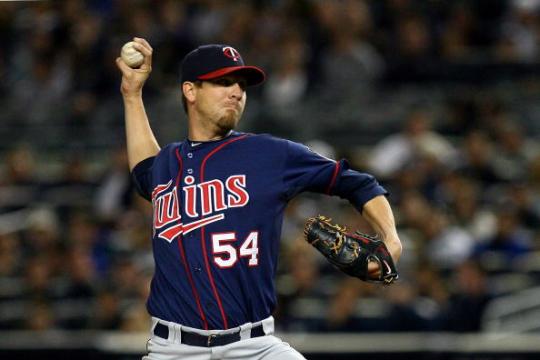 Unfortunately, it appears that each of the signings came with an implicit assurance that the player would receive a chance in the big leagues, regardless of what they did to earn it. I can't think of any other way to explain the way things played out. Bartlett won a spot on the 25-man roster out of spring training despite a horrible camp, then looked predictably lost before taking himself out of the picture by retiring less than three weeks into the season. Kubel also made the team in spite of a poor showing in March, and was allowed to slump for almost two months before finally being let go. Guerrier got the call in early May even though he had put up a 7.20 ERA over four outings in Triple-A as a 35-year-old. None of these guys did anything to actually merit a spot on a major-league roster, and none of them were even good last year, but they all got their opportunities, taking away playing time from younger and more pertinent players. Why? As far as I can tell, it's based mainly on familiarity and comfort. The whole fiasco seems to epitomize what's wrong with the way this organization has been operating. The Twins are in their fourth straight year of being one of the worst teams in baseball, but you'd hardly know it with the way they continue to stay the course and stringently adhere to many of the same principles. When they needed an extra man in the front office, they brought back former assistant Wayne Krivsky. When they shook up the field staff, they moved some people around and brought up a couple coaches from Triple-A, also adding Paul Molitor, but infused no fresh blood from outside the organization. In general, I don't think that being loyal to your people and promoting from within are bad things, but there have got to be limits and exceptions. The Twins have been stuck in a losing rut for almost half a decade now, yet they haven't brought one prominent outside voice into the mix during that entire span. In some respects, this team is evolving and embracing the changing landscape of the game, both economically and philosophically. But the Twins have got to stop making so many decisions based on familiarity and past accomplishments. Going 0-for-3 on Bartlett, Kubel and Guerrier demonstrates either a worrisome lack of evaluative ability, or a very flawed process when it comes to deciding who should receive innings and at-bats on a rebuilding club. Either way, it makes it tougher to have confidence in the plan that is being executed. Wednesday's victory over Cleveland means that on Thursday you can get a half-price large or extra-large pizza at PapaJohns.com by using the code 'TWINSWIN'.
 -
Many were frustrated when the Twins signed Kevin Correia to a multi-year contract in December of 2012. It wasn't the price -- $10 million over two years is a fair rate for a No. 5 starter. It was the fact that, after a 99-loss season in which the rotation was terrible, their biggest offseason signing was a No. 5 starter. To his credit, unlike so many free agents, Correia came as advertised, and maybe a little better. He's been completely healthy in his two seasons with the Twins and has posted a 4.40 ERA. While below average, that's not a terrible mark for the guy at the tail end of your rotation. Of course, Correia hasn't really functioned as the fifth starter. He's been the one stable yet mediocre piece in a starting corps that has been baseball's worst over the past two seasons. He has given the Twins innings, but that's about where his value ends. Or is it? WHY TRADE HIM Because, why not? There's some talk that the Twins need to make room for prospects like Trevor May and Alex Meyer, but I doubt finding space will be a problem whether or not Correia's here. Nevertheless, the Twins are basically out of contention and while Correia might be marginally better than the alternative who would fill his spot, such as Yohan Pino or Kris Johnson or Logan Darnell, the Twins gain more from looking at anyone with a potential future in Minnesota at this point. WHY KEEP HIM Because it's possible that nobody else wants him. Correia has a 4.76 ERA this year at a time where the league average is around 4.00. Teams at the top of their divisions will aim higher in searching for impact arms at the deadline. The type of club Correia might appeal to is one that is more on the fringe of the playoff picture and looking to simply add stability to the back end of its rotation without spending much. WHO NEEDS HIM It's tough to find competitive teams for whom Correia would provide a clear, meaningful upgrade. The Yankees could use some pitching help but Correia is not a fit in that park. You could maybe look at the Indians, who have been juggling young arms with varying success. There are a couple teams in the National League that could have some interest. But the bottom line is that the market will be thin, and it will be very much a "take what you can get" situation. SUMMARY If the Twins can receive anything of even modest value for the 33-year-old vet, they'd have to be pleased. I would expect nothing more than a low-upside mid-level prospect, but Terry Ryan has had a knack for fishing hidden gems out of other organizations in the past. It will be interesting to see if he can find a buyer within the next week.
-
-
Sponsored by Ticket King The forecast for the next few days calls for highs in the 80s and 90s, with a lot of sun. Hot days will give way to warm nights while sunlight glows well past suppertime.Sorry for waxing poetic, but… July in Minnesota. There's hardly anything better. Remember when going to catch a ballgame meant filing into a stuffy Dome and missing out on these glorious summer nights? It wasn't so long ago. Weeks like this are what Target Field was built for. There is an added level of baseball drama -- that being the team's desperate need to embark on a "miraculous run." Getting swept by the last-place Rays was a disastrous start to a crucially important homestand. Now, the reeling Twins need to damn near win out in the next two series to avoid being irrelevant at the trade deadline. Here's what Terry Ryan said at the start of the season: Unless they start winning fast, the Twins are going to fall short of that relatively modest goal. There's really no margin for error left after this past weekend. They're going to have their work cut out for them. Here Come the Indians This team is hot. Cleveland hasn't lost a series since June, and just took three of four from the Tigers in Detroit to move within 5 1/2 games of first place. The Indians' success has been driven, in large part, by intriguing young arms, and we'll see a few on display at Target Field this week. The Twins will counter with… well, that's not 100 percent clear. Let's take a look at the match-ups and see which game might be the best ticket during a hot summer week at Target Field. Monday, 7:10 PM: T.J. House vs. Kris Johnson Forecast: Mostly sunny, high of 93 The bad news is that Johnson hasn't looked very good in either of his two starts for the Twins; he failed to complete five innings in both. The good news is that the rookie House hasn't been great either -- especially on the road where he's 0-2 with a 4.79 ERA and 1.56 WHIP. If the Twins can get a decent outing from Johnson, who had a 2.75 ERA in Triple-A before being called up, they'll stand a good chance of coming away with a win in the series opener. Search for seats in the shade because the sun will likely be hot in the early innings. Tuesday, 7:10 PM: Danny Salazar vs. ??? Forecast: Partly cloudy, high of 84 Salazar has an electric arm, and he racks up tons of strikeouts but is susceptible to the long ball. He was sent to the minors in May with a 5.53 ERA, but he's making his return now after a strong run at Triple-A. If the Twins have announced anywhere who they plan to have starting on Tuesday night, I haven't seen it. It might be Yohan Pino, who's been decent enough in his last couple starts in the majors and is on track after pitching in Triple-A Thursday, but he issued seven walks in that outing. Yuck. Trevor May pitched on Saturday, so he'd be on short rest, but he was removed from that start after three innings and 47 pitches. Hmm... It would be something if May gets the nod. "No pressure kid, we just really, really need to win. Like, really bad." Wednesday, 12:10 PM: Trevor Bauer vs. Kyle Gibson Forecast: Partly cloudy, high of 80 This is the stand-out pitching match-up, from my view. Bauer is the uber-talented young right-hander that Cleveland acquired in the Shin-Soo Choo deal. He has looked good in 13 starts, turning in a 3.89 ERA and 75-to-28 K/BB ratio over 78 innings. Gibson has, of course, been very hot-and-cold, alternating between clunkers and gems. He has faced the Tribe twice this year and has allowed only one run total in 12 innings. This should be a good tilt on what figures to be a beautiful Wednesday afternoon, and is my choice for best ticket of the series, though you might need to play hooky from work to attend. If you want to cheer on the Twins and enjoy some great weather at Target Field, you'll have the opportunity to do so at a pretty reasonable price this week. Monday's game has plenty of tickets available for under 10 bucks. On Tuesday I see some tickets for $16 in the Home Run Porch, which might be a cool spot to sit with the homer-prone Salazar on the hill. And if you can make it out to the day game on Wednesday, there are some good deals available for lower-deck seats. All are an even better deal if you use the promo code DAILYDOUBLE, which will get you 10% off and supports Twins Daily. Whatever your needs, your local ticket broker, Ticket King, can help.
-

Deal or No Deal: Considering Contract Extensions
Nick Nelson posted a blog entry in Nick's Twins Blog
-
As the Twins put the All-Star Game behind them and gear up for the final 68 games on the schedule, they face much uncertainty. They're only six games below .500 -- a marked improvement from recent years -- and although they trail the Tigers by 10.5 games in the Central, they are within seven games of a wild-card spot. While it's nice to be in a spot where contention is a feasible scenario, we've got to keep in mind that the Twins are still behind seven other AL clubs in the wild-card race and -- more importantly -- they just aren't a great team. Not right now, anyway. As such, the focus needs to be on taking steps to build that great team for next year and beyond. This means auditioning young talents here in the final months, and making decisions on which current players are going to be a part of the long-term picture. Below, we'll take a look at the case for extending the contracts of four different players who deserve consideration for various reasons. KURT SUZUKI He represented the Twins at Tuesday's All-Star Game, and will almost certainly go down as one of the most successful free agent signings in franchise history. Should the Twins keep him around going forward? Why they should: Suzuki has been very solid offensively. He leads all AL catchers in batting average (.309) and on-base percentage (.365) and his impressive approach at the plate -- signified by a 25/23 K/BB ratio -- makes it easier to believe that his success is legit despite poor numbers over the past four years. Why they shouldn't: A 30-year-old who is enjoying a career season on a one-year deal is typically a guy you try to trade. His .760 OPS has been largely dependent on his ability to hit singles, and that skill hasn't always manifested in the past and probably won't going forward if his current .328 BABIP slinks back toward his career mark of .274. My Take: NO DEAL. I believe that the future of this team at catcher is Josmil Pinto. While Suzuki would be a nice backup to have around, I somehow doubt he'll be interested in being paid like one considering that he made the All-Star team as a starter this season. The Twins did very well to buy low on the backstop during the offseason, but it'd be a mistake to re-up now with his value (perhaps artificially) high. KENDRYS MORALES Morales' agent, Scott Boras, told ESPN 1500's Darren Wolfson this week that his client is open to a long-term deal with the Twins, which is unsurprising considering that Boras tried fruitlessly to score a multi-year contract for Morales during the offseason and won't have an easier time doing so this winter if his client's bat doesn't wake up. Why they should: Although Morales has gotten off to a slow start, with an ugly .582 OPS through 33 games, he has a long track record of hitting and would give the Twins a veteran building block in the lineup as they gradually add young talent around him. Plus, given his current situation and his probable aversion to another offseason of frustrating uncertainty, they could perhaps strike a pretty good bargain. Why they shouldn't: Morales is 31 and not in the greatest of shape. His bat looks slow right now, and it's hard to tell how much that's attributable to rust. Since Joe Mauer will be holding down first base for the foreseeable future, Morales would be essentially limited to designated hitter here, and that's a pretty easy spot to fill. My Take: DEAL. I'm probably in the minority on this but I trust Morales to return to his solid-hitting ways and I like the idea of having a proven veteran run producer (who happens to be Latin) at the heart of the order while young international players like Oswaldo Arcia, Miguel Sano, Kennys Vargas and Jorge Polanco try to find their way. I'd look into a two-year, $15 million extension, or something along those lines. JOSH WILLINGHAM The Twins got an excellent deal on Willingham when they originally signed him before the 2012 season, and his 57 homers since joining the club lead all Minnesota players. He's set to become a free agent after this year; can the Twins afford to lose his slugging skills? Why they should: Willingham's 2013 campaign was ruined by injury, but he has rebounded this season at age 35. Despite missing some time with a wrist injury and batting only .212, the outfielder is on track to finish with an above-average OPS for the eighth time in his nine big-league seasons. His eight homers rank second on the team even though he's been limited to 49 games. Why they shouldn't: Willingham was a slow mover when he got here and his foot speed has only declined due to age and knee problems. The Twins need to get faster in the outfield, and they're also pretty well stocked with outfield prospects. My Take: NO DEAL. Giving a multi-year contract to a guy on the wrong side of 35 is almost always a bad idea, and while he can still crush the ball Willingham has been showing his age in a variety of ways. BRIAN DOZIER Dozier enters the contract extension conversation for very different reasons than the three guys above, who are all on the verge of free agency. Dozier is under control through 2018, so a long-term deal is a matter of cost certainty and perhaps buying out a year or two of his free agency. Why they should: Dozier just keeps getting better, and at a rapid pace. In his breakout 2013 season, he hit 18 homers, stole 14 bases and drew 51 walks; this year, he has already matched or surpassed all of those totals at the All-Star break. He ranks fourth among AL second basemen in OPS (.777) despite a .242 batting average that has been suppressed by a .257 BABIP. The Twins could probably save themselves some money in the long run by getting a deal done very soon. Why they shouldn't: He's already become a great player, and it's just hard to imagine that he's going to be able to keep improving. At age 27, it seems fair to expect that this season and perhaps his next few will be his best, and the Twins have the luxury of getting those pretty cheaply. It doesn't make a whole lot of sense to unnecessarily commit to paying him a huge salary in five years at this point, and as one of the best infielders in the game right now Dozier would have the right to command it. My Take: NO DEAL. I just don't see much urgency. I like the idea of Dozier being a lifelong Twin, because he's a hell of a player and also a very likable/marketable guy, but it seems more logical to approach a long-term deal once he has reached his arbitration years. That might cost the Twins a little more, but they won't likely be hurting for cash any time soon. What do you think? Would you extend any of these four? Are there other names (Trevor Plouffe, Kevin Correia, Casey Fien) that you would add to the conversation? Sound off the comments section.
-
-
As I write this, I'm feeling pretty giddy. I just got done watching Glen Perkins pitch to Kurt Suzuki in the ninth inning of the All-Star Game, closing out a victory for the American League in Derek Jeter's final hurrah. Admittedly I don't usually get too worked up about pageantry of the so-called Midsummer Classic, but with my lifelong city being showcased -- and with our site holding an event downtown -- I couldn't help but get drawn in this year. Boy, was I impressed. With the exception of some sourpusses who actually forced MLB to publicly apologize for having the gall to set off fireworks during an event that takes place here once every three decades, the city of Minneapolis had a good showing under the national spotlight. And so too, did the Minnesota Twins. The organization doesn't get credit for much these days -- the nature of three straight losing seasons and counting -- but these last few days have been a reminder that they've got some good people in place. Running a baseball club is about a lot more than trades and free agents, and the Twins excel in many of those less-publicized areas. Their world class ballpark, which was universally acclaimed by out-of-towners during the All-Star activities, is a shining example of that. There have been some pretty incendiary and harsh things written about the Twins in recent weeks, here and elsewhere -- what with the team in last place, Joe Mauer on the shelf during a miserable season and Ricky Nolasco thus far shaping up as an epic free agent bust. It reached a point here where a moderator had to preemptively warn people not to launch into negative tirades in the comments section of last week's post entitled "Happy Notes." Believe it or not, people in the front office do pay attention and notice this stuff. It's not lost on them that people are frustrated. They are frustrated too, trust me. I'm no evangelist for the group that's currently in place -- in fact, according to Twin Cities Business Magazine's Adam Platt, I'm "one of the team's sharper critics in the blogosphere" (really?) -- yet they've still been pretty nice to me, along with my colleagues at Twins Daily. The Twins are ahead of the national curve in terms of granting access to and accommodating independent digital media, recognizing the dedicated and adamant readership. Jack Goin, a prominent member of the baseball operations team and a guy with a voice in Terry Ryan's ear, has shown up at Twins Daily and engaged with readers on multiple occasions, most recently last week. They know that the readers here, and at other fan sites, are invested in the product. They do care what you think. I believe that's commendable. I'm all about accountability. I have no problem criticizing the team; I've done so plenty this year and you can believe it'll continue if things don't head in a positive direction in these final months. But I'm also about balance, and with all the vitriol that sometimes fills the comments section here and elsewhere, it seemed appropriate to dole out some healthy praise for the organization after doing a bang-up job hosting baseball's signature summer event. From the strong showings of three top Twins prospects in the Futures Game, to the majestic rainbow that made for an unbelievable view during Monday night's Home Run Derby, to Perkins and Suzuki closing out one of the chillier All-Star Games in memory (of course), the three-day gala could have hardly gone better if it were scripted. And although the game on Tuesday night was almost meaningless, it was pretty cool to see Target Field packed with riveted fans as Perk pulled off the flawless finish. When talking to FOX's Ken Rosenthal after the game, he compared it to a playoff atmosphere. Unfortunately, since his rise has coincided almost exactly with the team's fall, Perkins hasn't had a chance to pitch in a playoff game at Target Field. But with the team showing unprecedented aggressiveness on the market, and with the heralded wave of prospects finally reaching the high levels of the minors, perhaps that day isn't too far off. I just hope that, when Perkins slams the door shut on his first postseason game, folks around downtown don't complain about the celebratory fireworks.
-
Last year, when the Twins reached the All-Star break, they were 14 games below .500 and 12 games back in the AL Central. In 2012, they had entered the break at 13 games below .500, and 11 games back in the division. Against that backdrop, their present standing -- 44-50 and 10.5 games behind the first-place Tigers -- looks downright palatable. The Twins had firmly established their irrelevance by the end of July after crumbling around the break in each of the past two seasons, and a week ago it appeared that they were caught in the exact same downward spiral once again. Yet they rebounded to win five of their last six games and a soft schedule following the All-Star Game could help the team set itself up much more favorably as it enters the latter portion of this season. The Twins will open their unofficial second half with a 10-game homestand, in which they'll be facing teams that are all close to them in the W/L column. Two of those teams (Cleveland and Chicago) are just ahead of them in the Central, giving Minnesota a solid opportunity to escape last place. A good run here isn't going to suddenly put the Twins in position to surge and capture the division, and it probably won't bring them especially close to a wild-card spot, but that was never the realistic mission. The mission -- and likely the standard by which Ron Gardenhire, his staff and perhaps the front office will be chiefly evaluated -- is improvement. Here at the break, they have an improved record compared to the past couple years, but that's meaningless. What matters is how they finish. The complete shut-down in the final months has been a recurring theme over the past three seasons, and a heck of a frustrating one at that. Sure, the late-season losses have helped the Twins accumulate a lot of high draft picks, but ending each year on such a sour note, with few enduring positives to cling to, takes a toll on the fan base. The Twins are determined to avoid a repeat this year, and that's good to see. They've been more proactive with making moves, and they've been spending money (with varying results). To me, the increased efforts to hasten this stalled out rebuilding process are quite apparent. While that's all good to see, hopefully the Twins won't let their resolve to stay afloat and finish better cloud their priorities as the trade deadline approaches. There's really no question that this team needs to be a seller, but playing that role does not equate to waving a white flag. If the Twins are to shake their post-break demons and finish respectably for a change, it needs to be on the shoulders of players who are either young or under contract long-term. Even if the team can stay hot and approach .500 over the next couple weeks, you'd hope the big picture will remain clear, and that guys like Kurt Suzuki, Josh Willingham and Kevin Correia will still be made available, albeit for meager returns. Much like the exhibition that took place at Target Field on Sunday, the rest of the Twins' season is about the future. That doesn't mean it isn't about winning, but they need to find success that is driven by players like Josmil Pinto, Oswaldo Arcia and Trevor May, not aging veterans with expiring contracts. Need some pizza to munch on while watching Brian Dozier and Justin Morneau compete in tonight's Home Run Derby? Since the Twins closed out their first half with a win on Sunday, you can get half off your L or XL pizza from PapaJohns.com with the promo code 'TWINSWIN'!
-
-
-
Things are pretty bleak for Twins fans these days. The club is caught amidst yet another mid-summer free-fall, the coaches and medical staff are once again coming under fire for their handling of injuries, and we're left to ponder who can be called up from Triple-A to plug yet another rotation hole while the offense scuffles. The negative storylines are too easy to grasp onto at this point, so in an effort to change the tone a bit, I thought I'd focus on a few positive developments that are currently taking place within the organization. Times are tough, but there are some very good and very meaningful things happening outside of the general misery that has characterized Twins Baseball lately. Let's dig into a few: 1) Top draft pick Nick Gordon is killing the ball at Elizabethton. It was a bit of a surprise when the Twins announced that they'd be sending Gordon -- freshly added out of high school with the fifth overall pick in the draft -- to advanced rookie ball in Elizabethton rather than the Gulf Coast League, where nearly all prep players start their careers. The club clearly had confidence in Gordon and so far that has proven to be more than justified, as the shortstop is off to a red-hot start at a level where most players are older and more experienced. Through his first 16 games, he's hitting .362 with two doubles, two triples, a homer and four steals. The strong debut puts Gordon on track to join a growing group of upper-echelon prospects within the Twins' system. 2) Jorge Polanco has been on fire since his surprising MLB stint. After joining the Twins a couple weeks ago as an emergency call-up, Polanco was quickly returned to his previous home in Ft. Myers, where he has been playing as though he'd like to get back to Minnesota in a hurry. In seven games since rejoining the Miracle, Polanco is hitting .367 with three doubles and two triples in 33 plate appearances. At this rate, it's hard to imagine he'll remain in Single-A for too much longer, even though he's one of the youngest players in the Florida State League. 3) Fast-rising J.O. Berrios is now in Double-A. If you've been regularly following the minor-league reports here on Twins Daily, then you know that Berrios has been on fire for months now, consistently turning in spectacular outings in which he's blowing away opposing hitters. He hasn't allowed more than two runs in a start since May 1st and his strikeout rate has been off the charts. This week, the Twins finally decided to show some mercy to FSL batters by promoting Berrios to Class-AA New Britain. The righty just turned 20 in late May, so he'll become the youngest player to appear in the Eastern League this year by a fairly wide margin. What Berrios is doing right now -- especially as an undersized specimen at a skinny six foot zero -- is remarkable. It will be interesting to see how he adapts in Double-A, but if he falters a bit, it's important to keep in mind the context of his situation. 4) Free agent success stories. There's understandably a lot of talk right now about Ricky Nolasco; the team's biggest free agent splash ever has thus far proven to be a poor investment. Nolasco follows in the footsteps of fellow free agent signing Mike Pelfrey, who also performed horribly for a stretch before admitting that he'd been bothered by an elbow injury. Very frustrating. But at the other end of the spectrum, the Twins have had two smashing successes in the free agent arena this year, and that's something that has been very rare for this franchise (in large part because they've been so unwilling to spend). Phil Hughes has been one of the American League's better starters, with a league-leading 9.27 K:BB ratio. He's 27 and locked up for the next two seasons at a very reasonable price. You'd have a hard time finding a contract signed during the past offseason that looks better than his right now. Then there's Kurt Suzuki, who has been a revelation on a one-year, $2.75 million deal. With Josmil Pinto needing more seasoning in the minors, Suzuki has been just what the doctor ordered, holding his own both defensively and offensively. He was recently named as one of Minnesota's two All-Star representatives. Suzuki's shockingly strong performance is especially satisfying in light of the fact that John Buck -- who the Twins were reportedly "extremely close" to signing before they ended up going with Suzuki -- was just designated for assignment by the Mariners. 5) Chris Colabello is back at it. Easily one of the best parts of April was Colabello's monstrous performance out of the gates. A great guy and a great story, the well-traveled slugger was also an epic producer during the early weeks of the season, coming through with clutch hit after clutch hit (including a home run while his mother was interviewed on live TV). Watching Colabello fall into a tailspin in May was tough, but after spending some time in Triple-A he's back up with the Twins and once again hitting the ball with plenty of authority. He's only had 16 plate appearances since his return, but has already smashed two doubles and two homers. Will pitchers readjust? Perhaps. But for now, Colabello is once again giving us a tremendous individual story to root for while the team as a whole fades out of relevance. Here's another happy note: Since the Twins beat the Mariners last night, you can get half off your L or XL pizza on Wednesday by ordering online at PapaJohns.com with the promo code 'TWINSWIN'!
-
-
Beyond this season, the Minnesota Twins still owe Ricky Nolasco a total of $37 million over three years. That's something that needs to be kept in mind as we ponder what the best course of action is for the struggling starter. Ron Gardenhire sounded like he was just about ready to be done with Nolasco during a cranky post-game interview on Sunday, and it's hard to blame him. Not exactly what you like to hear regarding a pitcher who was signed to be the stable leading force in the rotation, and paid accordingly, but Gardenhire's frustration is well warranted and the stats speak for themselves. Among qualified major-league pitchers, Nolasco's 5.90 ERA is the worst and nobody else is even close -- Justin Masterson is next at 5.16. Nolasco also ranks last in WHIP (1.62) and opponents' OPS (.902). I've been pretty bullish on the big righty, in part because I might be in denial -- I've liked him as a pitcher and was a fan of the signing -- and in part because there is some evidence that his horrendous results have been a little fluky. After all, he's not walking bunches of people, and his swing-and-miss percentage isn't far out of line with his career mark. Entering Sunday's game, he was averaging 6.4 K/9; over the past three seasons, he averaged 6.6. The difference now is that opponents are absolutely plastering Nolasco's pitches when they make contact and as the clunkers pile up it gets harder and harder to chalk that up to bad luck. On Sunday, he looked as ineffective as he's looked all year, failing to strike out a single batter while allowing eight of the 13 men he faced to reach base. It wasn't even a competitive outing, reminiscent of a Vance Worley performance in late March. Photo by Dan Hamilton, USA TODAY Sports Yes, American League lineups are better than those in the NL. But that doesn't come close to explaining the magnitude of Nolasco's struggles. What is going on, and how can it be fixed? No doubt the Twins' coaches and execs are racking their brains trying to find an answer. Options are somewhat limited when you're in Year One of a lucrative four-year contract. Gardenhire hinted at a possible demotion to the bullpen and Mike Berardino of the Pioneer Press noted that the club could choose to push back Nolasco's next start back until after the All-Star break, saving him from having to pitch at Coors Field and giving him extra time to straighten things out. Those are as good ideas as any, I suppose. You can't really cut him or send him to the minors, and you can't very well keep sending him out there when he's going like this. But there's also this problem: the Twins lack viable replacements for Nolasco at the moment. Trevor May is out with an injury; Alex Meyer has been extremely inconsistent and also hasn't thrown more than 90 pitches in a game since early May. Neither is MLB-ready. I suppose the Twins could go with someone like Kris Johnson or Logan Darnell, but they've already got Yohan Pino plugged in and when you're looking at multiple Triple-A non-prospects filling the big-league rotation, you start to feel a nauseating sense of deja vu. Is this the last three years all over again? When is it going to change? The Twins went out and spent big on free agent pitching during the offseason, and yet they still can't seem to escape the same old outcome: eroded depth and a totally inadequate starting staff.
-
When Chris Colabello's season got off to an insanely hot start, I remember multiple people commenting to me excitedly about how he was on pace for something like 200 RBI. Some folks just love to extrapolate those grandiose "on pace" figures when a guy has a great first couple weeks. It's fun early season fodder, but of course, it's all utterly meaningless. Projecting hypothetical full-season totals at the halfway point is a bit more sensible, because at this point we've got 50 percent of a season as our sample. That's not enough to preclude fluky performances, but 81 games is 81 games. I thought I'd examine some of the crazier first-half stats on the Twins, in the context of what the numbers will look like at year's end if the player replicates his first three months. Joe Mauer is on pace for four home runs and 52 RBI. And he hasn't even missed much time. He played in 75 of the team's 81 first-half games, piled up 336 plate appearances, and managed a total of two home runs and 26 RBI. Many people hoped, perhaps misguidedly, that the transition to first base would yield more prototypical power numbers. Others would have been satisfied with the usual Mauer, whose production would have been good -- not spectacular -- at an offense-oriented position. Instead, Mauer is on pace to play a career-high 150 games and drive in 52 runs. Part of that is on his teammates. Part is bad luck. But… man. Brian Dozier is on pace for 30 home runs and 30 stolen bases. Dozier has been pretty cold lately, so it might be a little difficult to envision him reaching this heralded milestone combo at the moment, but he's proven over the last two years that he's capable of catching fire at any time. Here's a list of players that have joined the 30/30 club since 2010: Matt Kemp, Ryan Braun (twice), Ian Kinsler, Mike Trout. That's it. Dozier's growth continues to amaze. In the minors, he topped out at nine home runs and 24 steals in a season. Photo by Jesse Johnson, USA Today Sports Eduardo Escobar is on pace for 46 doubles. OK, this really came out of nowhere. I have long wondered if the young infielder might have hidden offensive upside, to the extent that he might be a superior option to Pedro Florimon, but there was little in Escobar's track record to suggest this kind of two-bagger tear was possible. The 25-year-old entered this season with a .228/.280/.307 MLB hitting line. In eight minor-league seasons, he slugged .358 and topped out with 26 doubles in a campaign. Last year, only nine major leaguers hit more than 40 doubles, so if Escobar comes anywhere near the projected total it'd be wild. This has the makings of one of those half-season flukes, but if Escobar can keep it up, a doubles-machine shortstop with a decent glove is a quality asset. Phil Hughes is on pace to issue 20 walks. … In 32 starts and 206 innings. Wow. That would be fewer than half the walks Hughes allowed in 145 innings last year with New York, and even then his total wasn't bad. Ricky Nolasco is on pace to allow 250 hits. The Twins have had some hittable, contact-heavy staffs over the years -- they've given up the most hits of any team in the majors since 2011, in fact -- but in the past decade only one Minnesota starter has allowed 250-plus hits in a season: Carl Pavano (262). Ironically, that was in 2012, right after he'd signed what was at the time the most expensive free agent contract for a starting pitcher in franchise history. I don't actually think Nolasco is going to give up 250 hits. I expect big improvement in the second half, and hopefully we saw the beginning of that on Tuesday night. But if he keeps getting knocked around, the Twins aren't going to have much choice but to keep trotting him out. Glen Perkins is on pace to save 40 games with a 90-to-12 K/BB ratio. Obscene. Twins beat the Royals on Tuesday so on Wednesday you can get a half price large or extra-large pizza at PapaJohns.com when using the promo code 'TWINSWIN'.
-
-
-
On Monday night at Target Field, the Twins will play their 81st game, officially marking the halfway point of this 2014 season. As we reach this key milestone, the state of the club can best be summed up by a lineup decision that took place in game No. 80. In the final leg of a six-game road trip, with the Twins trying to snap a five-game losing streak, Ron Gardenhire inserted Chris Parmelee as his center fielder and No. 3 hitter. Now, I don't want to contribute to what could probably be described as a generally overblown reaction to this move. From my view, it was a defensible experiment by Gardenhire to try and coax some offense out of his lineup and pull his team out of the doldrums. But man, it sure says a lot about where this team is at right now. It's a statement about the condition of center field, a position that is so beleaguered by injuries and poor performance that the manager was willing to stick a slow-footed corner outfielder out there despite having one previous inning of MLB experience at the spot. Parmelee is probably least suited to play center out of anyone who's been there this year, and that's really saying something. It's a statement about the condition of the third spot in the lineup, which has yielded a sub-700 OPS in the first half thanks in large part to the struggles of longtime staple Joe Mauer. The lineup as a whole had averaged less than three runs per game in the past four series, prompting the manager to think outside the box. This was Parmelee's first career start batting third. And, on the bright side, it's a statement about Parmelee himself. Here's a 26-year-old former first-round pick who was designated for assignment at the end of spring training, only to go unclaimed by every other team and wind up in the minors. I was pleased that Parmelee was able to remain within the organization, and sure enough he rebounded with a strong showing in Triple-A, earning his way back to the big leagues where he's suddenly got one of the hottest bats on the club. After dropping five of six on their latest tour through the AL West, the Twins find themselves six games below .500 and eight back from the first-place Tigers. While they're still at a point where they could push themselves back into the mix with a strong stretch heading into the All-Star break, the Twins appear to be fading in much the same way they did a year ago. On June 20th last season, the Twins were 33-36, just three games below .500 after sweeping the White Sox at home. Three weeks later, on July 14th, they were 39-53 heading into the break, with all the talk surrounding which parts could be sold off. This year, on June 22nd, the Twins were 36-38, two games below .500 after -- yes -- sweeping the White Sox at home. And now they're on a slide that looks disturbingly similar to the one that pushed them directly out of contention a year ago. Obviously Gardenhire and the Twins are very serious about not allowing that to happen again, as illustrated by the Kendrys Morales signing and borderline desperation moves we're seeing with the lineup, but circumstances continue to tie their hands. The rotation reinforcements that appeared to be ready to make an impact are now a ways away, with Alex Meyer struggling and Trevor May on the disabled list. Oswaldo Arcia is a mired in a terrible ongoing slump. Danny Santana, who has been one of the team's biggest bright spots this year, is hurt with an unclear timeline to return. So as much as Gardenhire might want to shake things up and look for any possible way to get this thing back on track and avoid yet another midseason meltdown, at this point really all he can do is hope. Hope that the barrage of unfortunate injuries comes to an end. Hope that Mauer continues to heat up and become the lineup anchor that we know he can be. Hope that Trevor Plouffe can come back and provide a much needed jolt, with guys like Arcia and Morales joining in. We've still got half a season left, but with the All-Star Game (and, subsequently, the trade deadline) approaching, the Twins are going to need to figure out their identity. In that respect, it could be said that the next couple weeks will be the defining point in their season. Since the Twins snapped their losing streak with a win over the Rangers on Sunday, you can get half off your L or XL pizza from PapaJohns.com on Monday with the promo code 'TWINSWIN'!
-
When we ranked infielder Jorge Polanco as the eighth-best prospect in the Minnesota Twins organization this spring, we noted that a strong first-half performance in High-A could put him on the fast track to the majors. Of course, we never would have suspected it would be this fast. On Thursday, the Twins announced that they have promoted Polanco directly from Single-A to the majors. At age 20, he becomes the youngest player to don a Minnesota uniform since Joe Mauer back in 2004. Now, before you get too worked up, it bears noting that this move is most likely born out of necessity, and not permanent. With Trevor Plouffe and Eduardo Nunez already on the disabled list, the Twins were left dangerously thin on infielders after Danny Santana pulled up lame while rounding the bases on Wednesday night. Polanco was the only available player on the 40-man roster with the ability to play everywhere in the infield, so calling him up was the only way for the club to add infield depth without substantial roster tweaking. Having said that, Polanco deserves plenty of credit for putting himself in a position where Ron Gardenhire and the Twins aren't afraid to potentially put him up against big-league competition. While playing in the pitcher-friendly Florida State League and playing primarily at shortstop, the Dominican was hitting .289/.363/.404 with 20 extra-base hits (five homers), eight steals and a 42-to-35 K/BB ratio in 329 plate appearances. Polanco was the third-youngest qualified position player in the FSL. Now, he becomes the youngest player in the majors, outside of Texas' Rougned Odor. In all likelihood, Polanco's stay will be a short one. He's probably being brought up as insurance and might not even get a start. With Plouffe expected to return from the disabled list on Monday, the Twins can slide Pedro Florimon or Eduardo Escobar back into a backup role. Still, this is a pretty cool and unusual story. Hopefully we'll be able to see the kid get a chance in the coming days. To make room for Polanco on the 25-man roster, starting pitcher Yohan Pino was optioned to Triple-A.
-
-
The rosters for the MLB Futures Game were announced on Tuesday. Representing the Twins organization will be Single-A pitcher Jose Berrios and Double-A slugger Kennys Vargas. None of Minnesota's "Big Three" will be participating. Byron Buxton and Miguel Sano obviously have been injured, and Alex Meyer -- the team's top pitching prospect and its greatest hope for a top-of-the-rotation starter -- simply isn't having a very good season. That's fairly worrisome, especially when you look at his recent performance. Back in late April, it appeared that Meyer had turned a corner after reportedly learning a new changeup grip from his teammates. In his fourth and fifth starts of the season for Class-AAA Rochester, the lanky right-hander was as dominant as could be, striking out a combined 22 hitters over 12 2/3 innings while allowing no runs on five hits. At that point, Meyer was perhaps one or two more strong starts away from joining the big-league rotation and making a major impact. Yet, since that high point in his season, he has largely been a mess. In 10 starts since the beginning of May, Meyer has a 4.43 ERA and 1.54 WHIP, and has completed six innings in an outing only twice. He continues to miss bats with his high-end stuff (he ranks second in the International League with 83 strikeouts) but that's really the only aspect of his game that you could point at as being close to MLB-ready. The short outings are the biggest red flag. As a 24-year-old top prospect, Meyer is at a point where you'd like to see him facing some big-league competition, but the Twins aren't going to call up a guy who is routinely unable to complete five or six innings at Triple-A. Granted, his pitch counts are being watched closely, but he hasn't been effective. In his last three starts, the righty has failed to even reach the fifth. This raises an uncomfortable question: Is everything OK physically? It's hard not to wonder, considering that Meyer missed two months last year with shoulder soreness. Right now, he's laboring through short outings, struggling to throw strikes and uncharacteristically giving up bunches of hits. In his latest start for Rochester, he coughed up multiple home runs for just the second time in his pro career. This is just strange to see from a player of his caliber. If his problems are mechanical, the coaching staff has got to find a way to get him straightened out. If there's an injury at play, well, that's just beyond depressing considering the way things have already played out this year with Sano and Buxton. On the bright side, the Twins have had plenty of positive developments down on the farm. Berrios, who has been absolutely inhuman down in Ft. Myers (2.05 ERA, 10/6 K/9), ranks highly among them. Trevor May also continues to pitch well in Triple-A, providing another MLB-ready option with upside and making Meyer's setbacks a little easier to stomach. But, as I've often stated, I believe that Meyer is the single most important prospect in the organization, so as long as he continues to scuffle through short outings, it's going to be tough to get excited about the Twins' short-term outlook. They need more front-end talent in the rotation and nobody fits that profile better than a healthy, effective Alex Meyer. Despite some flashes, we simply haven't seen that guy consistently.
-
After finishing 0-for-4 with two strikeouts in Sunday's sweep-clinching win over the White Sox, Oswaldo Arcia ran his hitless streak up to 31 consecutive at-bats. As Phil Miller noted in his post-game wrap-up, that's eight short of the franchise record. For all his talent and explosiveness, Arcia has proven to be a slump-prone hitter, with a tendency to look totally lost during extended stretches at the plate. Right now, he's mired in what I have to imagine is one of the worst funks of his life. It's not just the lack of hits -- it's the intensely bad at-bats. Seemingly every other plate appearance involves three or four pitches, a few non-competitive swings, and a strikeout or a pop fly. Arcia is a good hitter. He conquered the minor leagues with remarkable ease and has certainly demonstrated the characteristics of a quality MLB slugger. Why isn't that showing through right now? This isn't a situation like Jason Kubel, where a prolonged slump was evidence of diminished bat speed and declining ability. Arcia is only 23 and strong as a bull. Clearly, a big part of this is mental, but I wonder if that's all it is. I'm reminded of a tweet posted by my colleague, John Bonnes, back on June 10th: I remember reading it at the time and thinking, "Overreact much there, Johnny Boy?" I mean, this was Arcia's second start since the ankle injury. But sure enough, it was only the beginning of what has turned into a three-week cold spell for the young outfielder. So maybe there's something to that after all. Early in the season, Arcia had missed almost two months with a wrist injury, but he came back red-hot in late May, batting .378 with four doubles, four homers and 12 RBI in his first 11 games off the DL. I was at Target Field for the last of those games, in which he sprained the ankle when he was picked off at second base after a double. It was a gut-punch, because at that point Arcia was the star of the offense; he'd smashed a grand slam earlier that night. He was frustrated and in obvious pain as he limped off the field. I was surprised to see him back the next night as a pinch-hitter. The Twins had seemingly dodged a bullet. But since rolling his ankle, Arcia is 2-for-39 (.051) with 15 strikeouts in 47 plate appearances. Could the ankle be the culprit for his ongoing issues? Has the wrist flared up again? Or is he really just stuck in his own head? Whatever the case, his slump is headed toward historic proportions and the Twins are going to have to figure something out. They've already given him a couple days off for a "mental break," and that appears to have helped little. Perhaps some extended rest would help get him back to 100 percent physically. Or maybe a demotion to Triple-A is in order. That seems like an unappealing option, since you'd like to see Arcia fight through this thing in the big leagues and there aren't any clearly superior alternatives available. But I do wonder how much longer Ron Gardenhire is going to be able to tolerate these hideous at-bats. What do you think? What should the Twins do about the struggling, vitally important young outfielder? Since the Twins defeated the White Sox on Sunday to complete a four-game sweep, you get 50% off your L or XL pizza from PapaJohns.com on Monday with the promo code 'TWINSWIN'!
-
-
Three-Bagger: Gibson's Growth, Worley's Wild Ride & NL Pitchers
Nick Nelson posted a blog entry in Nick's Twins Blog
-
Three-Bagger: Gibson's Growth, Worley's Wild Ride & NL Pitchers
Nick Nelson posted an article in Twins
* The Twins came into this season with a lot of intrigue surrounding the rotation. Between the newly signed free agents and the rising prospects with a chance to debut, there were going to be plenty of storylines to follow here in 2014. The most important, though, was always going to be Kyle Gibson. Coming off a rocky MLB debut last year, and entering his first season with no restrictions after Tommy John surgery, Gibson won a spot on the staff in camp, making this his big opportunity to establish himself as a bona fide big-leaguer and a long-term fixture in the rotation. The 26-year-old right-hander was off-and-on over his first 11 starts, but has really come into his own in the last three, delivering seven scoreless innings on each occasion. Every outing has proven to be more impressive than the last. First, he shut down the Astros at Target Field, though success at home was nothing new for him. Next, he went into Detroit and silenced the (then) first-place Tigers. And this week, he took the mound in Fenway -- one of the most intimidating and hitter-friendly parks in the game -- and threw the best game of his career, allowing only one hit and zero walks while striking out eight. Gibson has been absolutely filthy against right-handed hitters this year (they're hitting .183/.256/.254 against him) so the Red Sox loaded their lineup with lefties, but it made no difference. Right now Gibson is pretty much untouchable, and getting better each time out. * After a brutal run with the Twins, Vance Worley was designated for assignment and traded to the Pirates for cash toward the end of spring training this year. While in Ft. Myers, I witnessed what turned out to be his last outing in a Minnesota uniform, and it was about as ugly as could be. In the locker room after that game, Worley seemed utterly flummoxed by his struggles. He claimed he was healthy and couldn't explain why his spring (and his Twins career in general) had been such a mess. After taking a bit of time off to start the season, Worley went to Triple-A for the Pirates, where he posted a sterling 43-to-4 K/BB ratio with only three homers allowed in 46 innings. He was called up last week to replace an injured Francisco Liriano, and in his Pittsburgh debut he fired seven scoreless frames against a solid Marlins lineup in Miami. In eight starts between the minors and majors this year, Worley has looked very much like the pitcher the Twins thought they were acquiring from the Phillies, and nothing like the pitcher they saw during his time here. You certainly can't fault the Twins for letting him go; choosing Gibson over Worley (and Scott Diamond) was clearly the correct choice. But the Jekyll-and-Hyde act is pretty strange to see. * Worley joins names like Jason Marquis, Mike Pelfrey and -- at least so far -- Ricky Nolasco in a line of pitchers who have come over to the Twins after experiencing some level of success in the National League only to get blasted by AL hitters. Sure, the American League is a more difficult pitching environment. Injuries and other factors have also been in play at times (especially for Pelfrey). But does that fully explain the drastic difference in results for all these pitchers? Maybe it's just coincidence, but it's a striking trend. The only one who's been able to buck it, oddly enough, is Kevin Correia, whose ERA in the AL (4.51) has been slightly better than it was in the NL (4.53), though he too has seen his hit rate rise substantially since coming over (from 9.5 H/9 to 10.9). Since the Twins topped the rival White Sox on Thursday night, your L or XL pizza from PapaJohns.com is half off on Friday with the promo code "TWINSWIN"
