



ashbury
-
Posts
42,548 -
Joined
-
Last visited
-
Days Won
473
Content Type
Profiles
News
Minnesota Twins Videos
2026 Minnesota Twins Top Prospects Ranking
2022 Minnesota Twins Draft Picks
Minnesota Twins Free Agent & Trade Rumors, Notes, & Tidbits
Guides & Resources
2023 Minnesota Twins Draft Picks
The Minnesota Twins Players Project
2024 Minnesota Twins Draft Picks
2025 Minnesota Twins Draft Pick Tracker
2026 Minnesota Twins Draft Tracker: Picks & Bonuses
Forums
Blogs
Events
Store
Downloads
Gallery
Everything posted by ashbury
-
Game Thread: Twins vs Brewers, 5/30 - 7:10pm
ashbury replied to Brock Beauchamp's topic in Archived Game Threads
Is the correct protocol still to carry a wallet full of photos? No grandkids on the horizon for me as far as I am told, but I need to know whether the Internet age means I'll have to get with the times when it does happen, and keep an iPad tucked in the back pocket of my relax-fit jeans. -
Game Thread: Twins vs Brewers, 5/30 - 7:10pm
ashbury replied to Brock Beauchamp's topic in Archived Game Threads
Hey-yo! We're up to page 3. What inning is it? The 4th? The 5th? -
Game Thread: Twins vs Brewers, 5/30 - 7:10pm
ashbury replied to Brock Beauchamp's topic in Archived Game Threads
And yet you worry about quizzical looks for "Eye Roast"? -
Game Thread: Twins vs Brewers, 5/30 - 7:10pm
ashbury replied to Brock Beauchamp's topic in Archived Game Threads
Since you had 2 kids and I've got 3, I'll add the other good one I roll out every now and then. It was given to me by a co-worker just a few years older than me at the time (I guess he still is): when you go from 2 kids to 3, you switch from a Man-to-Man defense to a Zone. I thought it was funny at the time, afterward I learned it was dead serious. -
Game Thread: Twins vs Brewers, 5/30 - 7:10pm
ashbury replied to Brock Beauchamp's topic in Archived Game Threads
I won't be condescending, so I'll just say that I view with extreme pity bordering on contempt anyone who hasn't had the privilege of raising at least one of both genders. I'll also add that before I had kids, I had 3 theories on raising children. Now I have 3 children, and no theories. -
Game Thread: Twins vs Brewers, 5/30 - 7:10pm
ashbury replied to Brock Beauchamp's topic in Archived Game Threads
I dunno, GCTF already set the bar pretty high in that exchange. -
Game Thread: Twins vs Brewers, 5/30 - 7:10pm
ashbury replied to Brock Beauchamp's topic in Archived Game Threads
And this will be different, from other times, how exactly? -
Game Thread: Twins vs Brewers, 5/30 - 7:10pm
ashbury replied to Brock Beauchamp's topic in Archived Game Threads
My wife has one Mostly Grown Boy (59). -
Game Thread: Twins vs Brewers, 5/30 - 7:10pm
ashbury replied to Brock Beauchamp's topic in Archived Game Threads
We're good eggs here. Sometimes a person might not notice. But we are. -
Game Thread: Twins vs Brewers, 5/30 - 7:10pm
ashbury replied to Brock Beauchamp's topic in Archived Game Threads
Not necessarily. I remember a game with my daughter, where we were close enough to the warmup pitching mound that she could visibly drool over Johan Santana's physique... she was somewhat over 13 at the time, but they grow up early. -
Game Thread: Twins vs Brewers, 5/30 - 7:10pm
ashbury replied to Brock Beauchamp's topic in Archived Game Threads
And to which RB also contributes. -
Game Thread: Twins vs Brewers, 5/30 - 7:10pm
ashbury replied to Brock Beauchamp's topic in Archived Game Threads
I was going to ask RB the same regarding the age of the young lady, but got scooped. You guys are out in force today. Musta left work early. -
Game Thread: Twins vs Brewers, 5/30 - 7:10pm
ashbury replied to Brock Beauchamp's topic in Archived Game Threads
Captions not being needed, one hopes. -
I don't know how deep of a question you mean by this, and you're not a newbie on this site so I don't mean condescension if I choose to go to basics. Even at the major league level, to compare established veterans runs into this same argument. And yet, front offices have to make these comparisons all the time, for instance in deciding whether to trade a center fielder for a stud starting pitching prospect. You have to have some analytic approach, even if only by long experience and seat-of-the-pants feeling, or you'll get fleeced. So it starts with trying to win the World Series every few years, which comes from winning lots of games over the course of many seasons, which comes from scoring runs and preventing the runs of your opponents, which comes from base hits and walks and homers and so forth... - each level you go down, you get further removed from actually winning championships, but closer to having things you can measure and expect to be repeatable. Hitters get hits and walks and homers, pitchers (and defenders) prevent them, and this forms some basis for comparison. WAR is one approach to this - you can construct others. And now if we're not talking about established major leaguers but college players and high-schoolers, in addition to the abstraction of WAR and/or raw stats versus actually winning championships, you have uncertainty. Not subjectiveness, IMO, but the uncertainty of there being a range of outcomes from drafting a guy. It just means your analytic approach needs to take this into account, rather than just throw up your hands and say anyone could turn into an All-Star if you coach him well enough. Your scouts take their best guess about projections (5 tools or whatever), your front office tries to turn these into guesstimates that turn into possible ranges of output, using WAR or just your best guess, from the guy over his career. And then you compare and decide which player gives you the most value. Did I completely misunderstand your question and waste typing this wall of words?
-
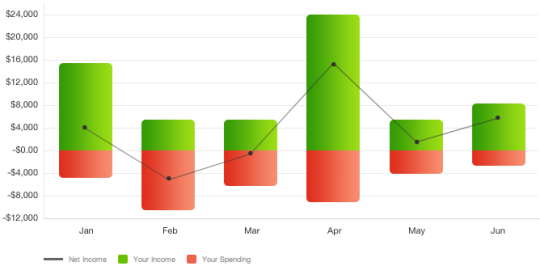
This, to me, is the heart of it. As other responses have pointed out, BPA is not a clearly defined thing; I don't think it's "subjective" as one person put it, but it's definitely subject to great "uncertainty". In particular, you have only an estimate of a guy's floor, and an even less clear estimate of his ceiling. If your scouting is weak, you give everyone a high ceiling (could be a star) and a low floor (could be a bust). If you have good scouting, the estimates have more shape, but they still involve a lot of room, particularly for the HS players. You could end up graphing the results, looking something like this (quickest decent example I could locate, from a totally different context): and if you are drafting high in the first round then maybe one bar like the one in the middle appeals to you, or maybe the one on the left with the higher floor seems like the wiser pick. You might resort to some further analysis regarding risk, to compute some kind of Expectation Value, and that might be the dots on that graph. If any player stands out like this, according to whatever your taste for risk, IMO you take him, regardless of position. However, once past the top 5, at most 10, the bars on the chart for the best players remaining will start to look awfully similar to each other. Then, you pick among those best, according to positional need. Again, IMO. This is why the debate of BPA vs Need always strike me as futile. You normally just don't know enough to really know who the BPA is, until about 10 seasons later. Buxton is turning out to be a great pick at #2 last year, kudos to the scouting team; locating a similar clearcut BPA at #4 will be tougher.
-
Klaw: Astros reverse course and taking Moran
ashbury replied to gunnarthor's topic in Twins Minor League Talk
Standard operating procedure for them, is it not. Also: Free advice to the Astros, that.
-
Walks have some value to an offense, but often they are more an indicator that other parts of the player's offense are clicking. Barry Bonds is the poster child for that. However, it can indicate that pitchers think a player is a chump and stop giving him anything to hit with two strikes, but he has stopped being a chump. Aaron Hicks of April 15-23 was the poster child for that. I normally am wary of SSS, but not for a young guy skipping a level if you can construct a reasonable case.
-
Yep. I was basically quibbling about even trying to use OPS, whether it be .500 or .700 or .900, to understand anything about even part of this season of his, but I failed to come back around to that original point. We can use aggregate stats to say something useful about a Nick Punto or Drew Butera, but not yet about Aaron Hicks's major league future. And, despite rookies having their ups and downs, I'm not sure they all lead to undecipherable aggregates for two months like I see Hicks's being. In the analytic/synthetic paradigm, synthesis does not yet have a place.
-
Perhaps not. #30 picks generally do not have much impact for their careers. You have to go back to 1987-88 to find Travis Fryman and Brian Jordan, both solid players. In years after that, Jack Cust and Noah Lowry seem to be the cream of these crops. Drafting after the first half of the first round is not fertile ground. You find stars below there by cherry-picking with 20/20 hindsight (to mix the metaphors slightly).
-
Hicks's season has been as extreme a case of repeated adjustments between batter and (collective) opposing pitcher as you could dream up. The individual pieces of his season are interesting to look at, but I'm waiting for some kind of consistent pattern to emerge before using any numbers to think seriously about him. He hasn't had a walk in 11 games, right? That's no more sustainable for a batter than his week in April when his nearly .500 OBP was almost entirely from walks. Batter and pitchers, still feeling each other out, at this point, and no equilibrium is apparent yet. The current power surge will subside, not solely due to SSS (though that is always a factor) but because pitchers will stop giving him pitches to hit, and the walks will go back up.
-
Game Thread: Twins vs. Brewers, 5/29 - 7:10pm
ashbury replied to Brock Beauchamp's topic in Archived Game Threads
C'mon man. The thread about a AAA CFer being lost on waivers was just this week. -
Game Thread: Twins vs. Brewers, 5/29 - 7:10pm
ashbury replied to Brock Beauchamp's topic in Archived Game Threads
I'm guessing it would be tougher being anyone else. -
Game Thread: Twins vs. Brewers, 5/29 - 7:10pm
ashbury replied to Brock Beauchamp's topic in Archived Game Threads
Sometimes I just don't find the right wording, and I have to rely on RB or Chief to edit it for me to get the laff. Just bangin' 'em out and hittin' Post and movin' on. In this case I was just saying RB gets the jokes faster than I do. -
Game Thread: Twins vs. Brewers, 5/29 - 7:10pm
ashbury replied to Brock Beauchamp's topic in Archived Game Threads
Some of these remind me of ABBA songs. -
Game Thread: Twins vs. Brewers, 5/29 - 7:10pm
ashbury replied to Brock Beauchamp's topic in Archived Game Threads
Speak to Chief. He'll be by shortly, and will take care of it.

