



Al from SoDak
-
Posts
274 -
Joined
-
Last visited
Content Type
Profiles
News
Minnesota Twins Videos
2026 Minnesota Twins Top Prospects Ranking
2022 Minnesota Twins Draft Picks
Minnesota Twins Free Agent & Trade Rumors, Notes, & Tidbits
Guides & Resources
2023 Minnesota Twins Draft Picks
The Minnesota Twins Players Project
2024 Minnesota Twins Draft Picks
2025 Minnesota Twins Draft Pick Tracker
2026 Minnesota Twins Draft Tracker: Picks & Bonuses
Forums
Blogs
Events
Store
Downloads
Gallery
Everything posted by Al from SoDak
-
Thomas Andrew Brunansky was born August 20, 1960, in West Covina, California. The Angels organization drafted Brunansky out of high school in the first round of the 1978 Amateur Draft. Brunansky worked his way up through the Angels minor league system and in his fourth season made the big-league squad on Opening Day 1981 as a 20-year-old. Shortly thereafter, he hit his first two home runs, finishing that game with four RBI. Unfortunately, he soon tore ligaments in his thumb and played no more Major League games in 1981. By the start of the 1982 season, the Angels were loaded with proven outfielders. Fred Lynn and Brian Downing played for the Angels in 1981. Over that winter they signed Hall of Famer Reggie Jackson as a free agent which made Brunansky expendable. On May 12, 1982, Brunansky was traded to Minnesota along with pitcher Mike Walters for veteran relief pitcher and former All-Star Doug Corbett and starting second baseman Rob Wilfong. I would say the Twins won that trade. In short order, Brunansky proved to be a valuable addition. Bruno played each and every game of the 1982 season after being acquired by the Twins. He finished with 20 home runs and hit .272/.377/.471. In fact, he would go on to hit at least 20 home runs in each of his six seasons with the Twins. His batting numbers during his Twins tenure were .250/.330/.452 with 163 home runs and 469 RBI. He was a very good middle of the order hitter and a decent right fielder. Brunansky also proved to be super durable playing at least 150 games in each season in Twins uniform. 1985 was one of Brunansky’s best seasons and his first half, specifically, was excellent. Before the All-Star break, he batted .265/.358/.508 for an OPS of .867. He had 19 home runs and 56 RBI before the break. He was selected to the American League’s All-Star team and had the honor to play at home in the Metrodome. As part of the festivities, Brunansky participated in the first home run contest. I actually attended that 1985 event. My recollection is that inside the park they promoted the home run contest as an AL vs NL battle. So, while Dave Parker hit the most home runs, the AL won the event behind Brunansky hitting his dingers as the last participant, like the bottom of the ninth, except I think they played two "innings" with each player batting twice and getting ten swings per round or “inning.” In the actual All-Star Game the next day, Brunansky went in to play right field in the seventh inning. He got up to bat once in the bottom of the eighth inning against future Twins closer Jeff Reardon of the Montreal Expos. Brunansky grounded out to shortstop. Tom Brunansky contributed greatly to the upset over the Detroit Tigers in the American League Championship Series by hitting .412 with two home runs and nine RBI in the five-game series. Brunansky finished second to teammate Garry Gaetti for ALCS MVP. In Game One he had two doubles and three RBI in an 8-5 Twins win. In Game Two Brunansky doubled in a run and scored a run in the bottom of the second to help the Twins get even after an early two-run deficit. He walked and scored in the fourth. The Twins won again 6-3. He had a two-run home run in the Game Three loss. Bruno had a couple walks in the Twins Game Four 5-3 victory. In the Game Five clincher in Detroit, the Twins jumped out to a 4-run lead in the second inning during which Brunansky had a two-run double. He also had a home run in the three-run ninth inning when the Twins put the game away. Brunansky’s performance in the World Series victory over the St. Louis Cardinals was less remarkable as he hit only .200 with two RBI. He contributed to the big Game Six win which tied the series. He had a single and scored in the bottom of the fifth which tied the score after an early deficit and drove in a run with a groundout in the eighth inning. The Twins would win 11-5 to tie the series, then of course won Game Seven for the first championship in Minnesota Twins history. While the 1987 championship was fantastic, the Twins came down from that high with a poor start in 1988. After starting 4-10, Andy MacPhail did the unthinkable – he traded one of the core team members, one of that group of six from 1982. Tom Brunansky was traded to St. Louis for Tom Herr which can only be described as a disaster. The Twins not only got rid of an immensely popular, heart-and-soul player, but Herr apparently never wanted to be here. In a 2021 post on STLRedbirds.com, Tom Herr explained the trade and his reaction to it. “The shock of the trade bothered me more than anything…It really hit me out of the blue. I can remember getting on the plane to fly to Minneapolis and crying like a baby. It was hard to go through. Looking back on it, I didn’t handle it very well. I kept looking back instead of forward. I was looking at it more that the Cardinals didn’t want me than that the Twins wanted me. If I had put a more positive spin on it, I would have reacted better.” Brunansky played well for St. Louis, basically continuing his consistent 20 home run, 80 RBI production. However, by 1990, the Cardinals felt they needed an elite relief pitcher so Brunansky was traded for future Hall of Famer, Lee Smith, in a one-for-one deal that sent him to Boston where he played most of three seasons and continued putting up similar numbers. He later played 1993 and part of 1994 for Milwaukee, but that time in Milwaukee was not up to his usual standards. The Brewers traded him back to the Red Sox in June of 1994 where he finished the season which would be his last. That last half season with the Red Sox was much better than his time in Milwaukee. I’m sure he was proud to finish out his career with a respectable OPS+ of 98 with Boston (with the Brewers he had posted a low OPS+ 58 in 1993, then a paltry 34 OPS+ in the first part of 1994). Brunansky’s career numbers were .245/.327/.434. His batting average was a little low for his era, but he did walk a good amount. His career OPS+ was 106 so a little better than average. He had 919 career RBI. He hit 271 home runs, including being in the top ten of his league three times, all with the Twins (28 in 1983, 32 in 1984, 32 in 1987). His 271 career home runs are 208th all-time. View full player
- 1 reply
-
- 1
-

-
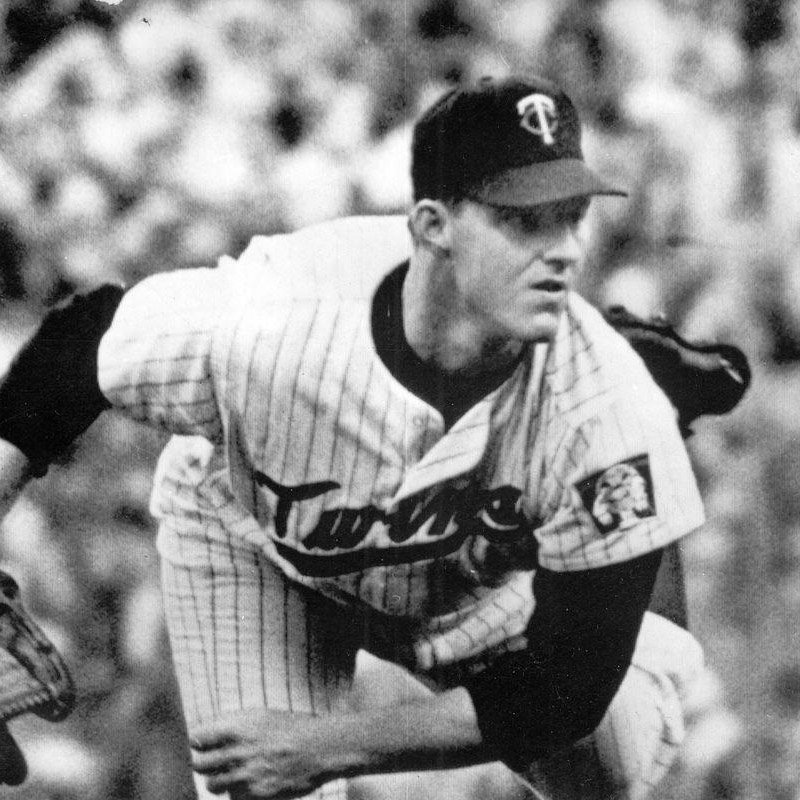 James Lee Kaat was born November 7, 1938, in Zeeland Michigan. He grew up in a family with four children. His next closest sibling was nine years older. Jim was attracted to sports at an early age playing baseball and basketball as a child. He also really enjoyed the history of baseball. Kaat’s father collected Base Ball Guides going back to 1900. Jim studied those books giving him an almost encyclopedic knowledge of the history of the game which must have contributed to his successful post-playing career as a baseball analyst. After High School, Jim went five miles down the road to Holland, Michigan, and to Hope College. The left-handed pitcher joined the baseball team. He played a single season and gave up one single run all season. Somewhere around this point Jim had grown from five-foot-ten to six-four-four, and professional scouts started to notice him. After that first year in college, Jim was signed by the Washington Senators and assigned to the minor leagues. Kaat would spend 1957 to 1959 in the minor leagues. Kaat had a long and successful career with the Twins, and I am not going to rehash it all here but I’ll highlight a few items. In the 1965 World Series Kaat had three starts against Sandy Koufax. The Twins simply couldn’t hit Koufax. Sandy Koufax shut them out twice and won World Series MVP honors. Sometimes the other team just performs better. In 1967, the Twins were in a heated pennant race with the Red Sox and Tigers. Kaat started the second to last game in Boston. He had given up no runs into the third inning. However, he felt something in his elbow and had to come out of the game. It was a tear of the ulnar collateral ligament. In today’s day he would have had the Tommy John surgery immediately and missed at least a year of action. In 1967, the prescribed treatment was to rest all winter and then go out and pitch in 1968. In August of 1973, the Twins waived Kaat, and he was claimed by The Chicago White Sox. The White Sox not only picked him up but immediately gave him a raise for the following season. After leaving the Twins, Kaat bounced around a little. As mentioned, he played for the White Sox. From there he went to the Phillies. Those were some of his favorite years of his career. The team was good and improving, and the players were tight with each other, and all got along. Unfortunately for Kaat, he was sold to the Yankees in 1979, missing the Phillies’ 1980 World Series Championship. Then he was sold to the Cardinals during the 1980 season, missing the Yankees’ 1981 World Series appearance. It was appearing increasingly probable that Kaat was never going to the win a World Series despite his illustrious career. That changed with the 1982 Cardinals when he finally was part of a World Series winner. From the high to the low. Baseball-Reference reports that Kaat was simply released by the Cardinals on July 6, 1983, less than a year after the World Series victory. That was his 25th season.
 -
James Lee Kaat was born November 7, 1938, in Zeeland Michigan. He grew up in a family with four children. His next closest sibling was nine years older. Jim was attracted to sports at an early age playing baseball and basketball as a child. He also really enjoyed the history of baseball. Kaat’s father collected Base Ball Guides going back to 1900. Jim studied those books giving him an almost encyclopedic knowledge of the history of the game which must have contributed to his successful post-playing career as a baseball analyst. After High School, Jim went five miles down the road to Holland, Michigan, and to Hope College. The left-handed pitcher joined the baseball team. He played a single season and gave up one single run all season. Somewhere around this point Jim had grown from five-foot-ten to six-four-four, and professional scouts started to notice him. After that first year in college, Jim was signed by the Washington Senators and assigned to the minor leagues. Kaat would spend 1957 to 1959 in the minor leagues. Kaat had a long and successful career with the Twins, and I am not going to rehash it all here but I’ll highlight a few items. In the 1965 World Series Kaat had three starts against Sandy Koufax. The Twins simply couldn’t hit Koufax. Sandy Koufax shut them out twice and won World Series MVP honors. Sometimes the other team just performs better. In 1967, the Twins were in a heated pennant race with the Red Sox and Tigers. Kaat started the second to last game in Boston. He had given up no runs into the third inning. However, he felt something in his elbow and had to come out of the game. It was a tear of the ulnar collateral ligament. In today’s day he would have had the Tommy John surgery immediately and missed at least a year of action. In 1967, the prescribed treatment was to rest all winter and then go out and pitch in 1968. In August of 1973, the Twins waived Kaat, and he was claimed by The Chicago White Sox. The White Sox not only picked him up but immediately gave him a raise for the following season. After leaving the Twins, Kaat bounced around a little. As mentioned, he played for the White Sox. From there he went to the Phillies. Those were some of his favorite years of his career. The team was good and improving, and the players were tight with each other, and all got along. Unfortunately for Kaat, he was sold to the Yankees in 1979, missing the Phillies’ 1980 World Series Championship. Then he was sold to the Cardinals during the 1980 season, missing the Yankees’ 1981 World Series appearance. It was appearing increasingly probable that Kaat was never going to the win a World Series despite his illustrious career. That changed with the 1982 Cardinals when he finally was part of a World Series winner. From the high to the low. Baseball-Reference reports that Kaat was simply released by the Cardinals on July 6, 1983, less than a year after the World Series victory. That was his 25th season. View full player
-
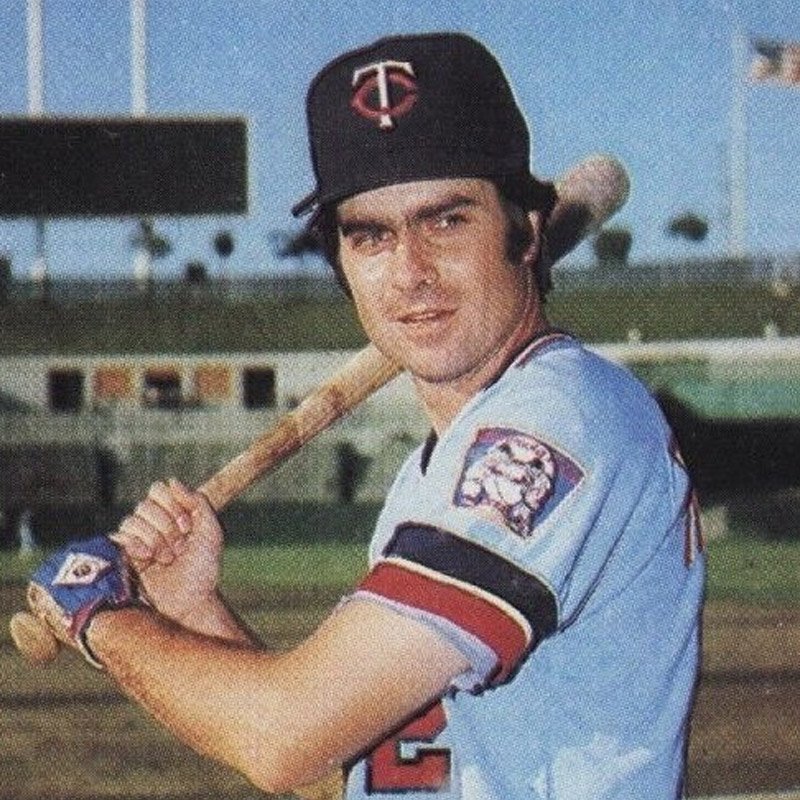 Robert Lee Randall was born June 10, 1948, in Norton, Kansas, a small town in north central Kansas almost 300 miles west of Lawrence and the University of Kansas. He graduated from nearby Gove, Kansas high school. After high school, Randall attended and graduated from Kansas State University. The right-handed hitting Randall was drafted by the Los Angeles Dodgers three different times; 55th round in 1966, 7th round in 1968, and 2nd round in 1969. He played well in the minor leagues, three times leading his league in hits. The Dodgers traded Randall after the 1975 season to Twins for Danny Walton. The trade, coupled with new manager Gene Mauch’s decision to move incumbent second baseman, Rod Carew, to first base created an opportunity for Randall. His first year was his best season and this was when he hit his first and only career home run. That homer came in the third inning of a June 23rd loss against the Chicago White Sox, the second game of a double header. The pitcher was the unremarkable Chris Knapp. Throughout his Twins career, Randall was a hustling, scrappy player. He played significant time immediately in that first season of 1976, then filled a platoon role with the left-handed hitting Rob Wilfong in 1977 and 1978. In 1979 he had limited action playing in only 80 games and getting 199 at bats. In a rare sequence of events in 1980, Randall was released at the end of spring training and was made a coach. But on May 16 he resigned with the Twins, proceeded to get into five games, went 3 for 15, and was released again. The Twins resigned Randall again on June 18, but he did not appear in a game and was released for the final time on July 16, 1980. For his career, Randall batted .257/.310/.311. He had that lone home run and 91 runs batted in. His OPS+ was 74. His best season was 1976 was less than stellar, then he was unable to replicate that in the following four seasons. His career WAR was 3.8. In 1981, Randall was hired as an assistant baseball coach at Iowa State University. The head coach at that time was Larry Corrigan who was a former Twins minor leaguer, later a scout, then ultimately the scouting director. When Corrigan left Iowa State after 1984, Randall was promoted to head coach where he served 11 seasons until 1995 compiling a middling record of 309-311. After the 1995 college baseball season, his home state of Kansas came calling. There is an excellent article in the Iowa State Daily about Randall’s tenure in Ames and how it ended. It sounds like he was a low-paid, quality coach, who simply moved on so he could be closer to home, continue doing what he loved, and work for a better funded athletic department. He was hired as head baseball coach at Kansas University where he remained for seven seasons until 2002. His record was 166-213. Bob Randall had little power (he hit only one home run as a Twin), but he had enough ability and hustle to play Major League Baseball for five seasons. He then went on to an even more impressive college coaching career where shaped and mentored countless athletes. I’m sure that is his biggest legacy.
 -
Robert Lee Randall was born June 10, 1948, in Norton, Kansas, a small town in north central Kansas almost 300 miles west of Lawrence and the University of Kansas. He graduated from nearby Gove, Kansas high school. After high school, Randall attended and graduated from Kansas State University. The right-handed hitting Randall was drafted by the Los Angeles Dodgers three different times; 55th round in 1966, 7th round in 1968, and 2nd round in 1969. He played well in the minor leagues, three times leading his league in hits. The Dodgers traded Randall after the 1975 season to Twins for Danny Walton. The trade, coupled with new manager Gene Mauch’s decision to move incumbent second baseman, Rod Carew, to first base created an opportunity for Randall. His first year was his best season and this was when he hit his first and only career home run. That homer came in the third inning of a June 23rd loss against the Chicago White Sox, the second game of a double header. The pitcher was the unremarkable Chris Knapp. Throughout his Twins career, Randall was a hustling, scrappy player. He played significant time immediately in that first season of 1976, then filled a platoon role with the left-handed hitting Rob Wilfong in 1977 and 1978. In 1979 he had limited action playing in only 80 games and getting 199 at bats. In a rare sequence of events in 1980, Randall was released at the end of spring training and was made a coach. But on May 16 he resigned with the Twins, proceeded to get into five games, went 3 for 15, and was released again. The Twins resigned Randall again on June 18, but he did not appear in a game and was released for the final time on July 16, 1980. For his career, Randall batted .257/.310/.311. He had that lone home run and 91 runs batted in. His OPS+ was 74. His best season was 1976 was less than stellar, then he was unable to replicate that in the following four seasons. His career WAR was 3.8. In 1981, Randall was hired as an assistant baseball coach at Iowa State University. The head coach at that time was Larry Corrigan who was a former Twins minor leaguer, later a scout, then ultimately the scouting director. When Corrigan left Iowa State after 1984, Randall was promoted to head coach where he served 11 seasons until 1995 compiling a middling record of 309-311. After the 1995 college baseball season, his home state of Kansas came calling. There is an excellent article in the Iowa State Daily about Randall’s tenure in Ames and how it ended. It sounds like he was a low-paid, quality coach, who simply moved on so he could be closer to home, continue doing what he loved, and work for a better funded athletic department. He was hired as head baseball coach at Kansas University where he remained for seven seasons until 2002. His record was 166-213. Bob Randall had little power (he hit only one home run as a Twin), but he had enough ability and hustle to play Major League Baseball for five seasons. He then went on to an even more impressive college coaching career where shaped and mentored countless athletes. I’m sure that is his biggest legacy. View full player
-
- 1
-
-
This Former Twins Pitcher Holds A Few Dubious Major League Records
Al from SoDak posted an article in History
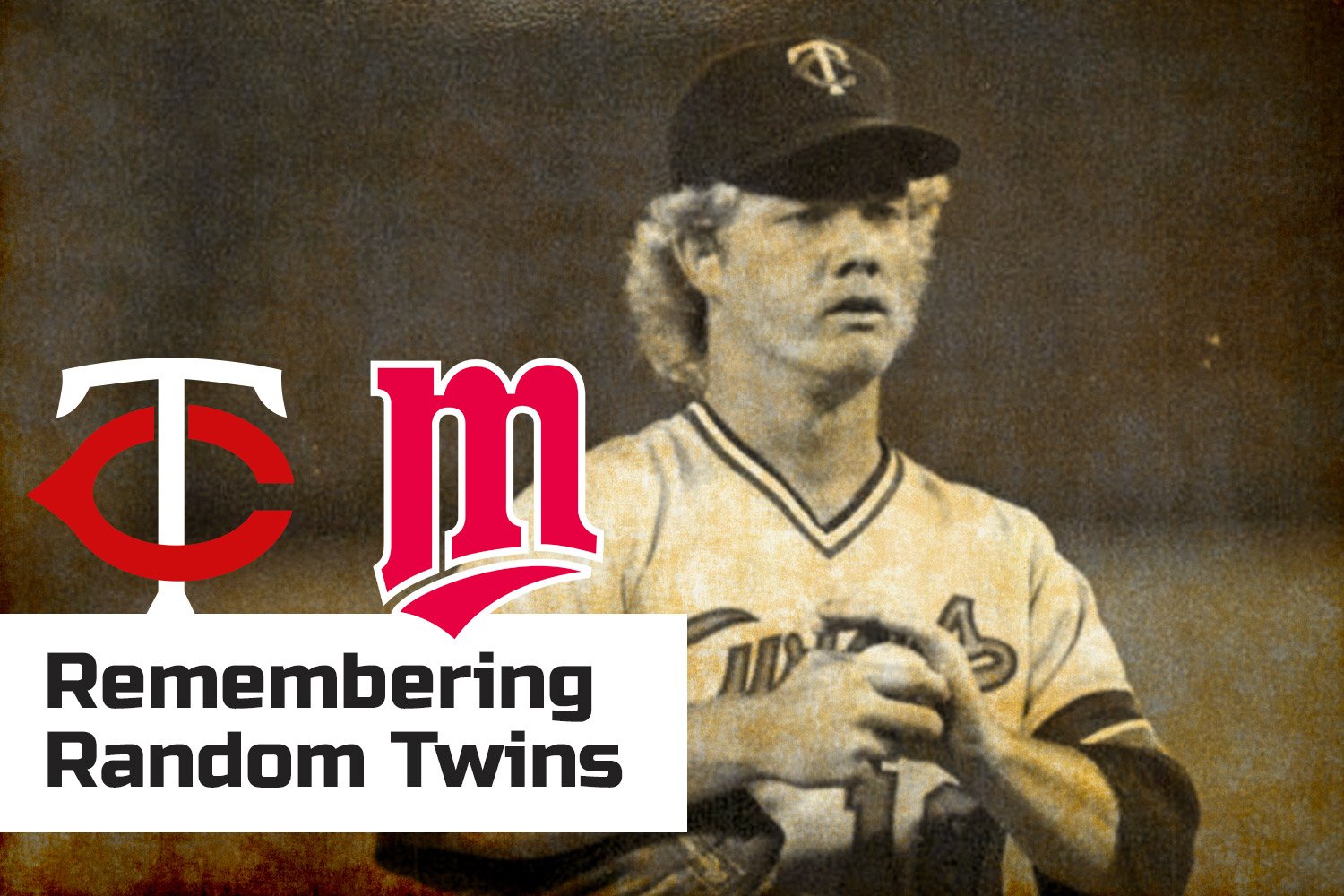 In my judgment, baseball tracks more statistics cares more about numbers and reveres the game’s records more than any other sport. Baseball keeps track of everything: Most home runs, wins, hits, strikeouts, steals (RIP Rickey Henderson), longest-hitting streaks etc., etc. Did you know former Twin Terry Felton holds a couple of obscure records no one would want? Let’s look closer at Terry Felton and his career. Terry Lane Felton was born October 29, 1957, in Texarkana, Arkansas. He graduated from Baker High School 300 miles southeast, in Louisiana, just north of Baton Rouge. The Twins drafted him out of high school in the second round of the 1976 MLB June Amateur Draft. Immediately after being drafted, Felton was assigned to Elizabethton in the Rookie League. He progressed through Double A and Triple A from 1977-79. He had a decent ERA each season but had more walks and fewer strikeouts than you would like to see in a top prospect. However, in that era of Twins baseball, the big-league club was not great, to say the least, and had little pitching depth. Because of this, maybe one could say Felton was rushed to the big leagues. He debuted on September 18, 1979, when he was only 21. He followed that with short stints with the Twins in 1980 and 1981 but mainly pitched at Triple A. He was given a longer look with the Twins on the dreaded 1982 team, which finished with 102 losses. From 1979-1981, the six-foot-one, 180-pound Felton pitched only 21 major league innings where he got smacked around to the tune of an 8.57 ERA. He was charged with three losses. In 1982, he was given a more extensive look. Whether it was all on Felton’s performance or the lack of help from the offense (2.29 runs scored in his six starts), 1982 was a rough year for Terry and the Twins. Felton pitched more innings as a reliever than a starter, where he was a little better. He had a better strikeout-to-walk ratio, lower batting average allowed, and lower OPS allowed. Regardless, Felton lost games in both roles – four as a starter and nine as a reliever. He pitched all season in the major leagues. He finished with a record of 0-13. In 1983, he returned to Triple A and played the 1984 season in the Dodgers organization. He would never pitch again in Major League Baseball and be out of organized baseball entirely by 1985 when he was 27. Now, we get to the obscure records. If you were paying attention to the above, Terry had 16 consecutive losses to start his career. That’s a record. He also never had a win, finishing his career with more losses than any other pitcher who had zero wins. He also finished with the most innings pitched (138 1/3) without a win. His career high point might have been his first appearance in 1979 when he pitched two perfect innings in a 10-1 loss to Milwaukee. He also had a good first start in 1980 when he allowed three runs in seven innings. The Twins won 5-3 but scored all their runs after Felton was removed, so reliever Doug Corbett got the win. Felton’s career record was zero wins and 16 losses. He finished with an ERA of 5.53, ERA+ of 78, and 108 strikeouts in 138 1/3 innings. He had no wins, but, hey, he racked up three saves! Some of his numbers are not horrendous (7.0 strikeouts per nine innings pitched was not bad for his era, and his batting average against .240 was not too shabby). Still, it’s clear he issued way too many walks (5.7 per nine innings pitched) and had a propensity to serve up home runs (1.4 per nine innings pitched) – a bad combination. I found a few sources to suggest Felton was a bit unlucky. In Twenty-Five Seasons: The First Quarter Century of the Minnesota Twins by Dave Mona and Dave Jarzyne, the authors said of Felton, “He had a live arm and a fierce competitive streak, but he had no luck.” Kent Hrbek stated in Kent Hrbek’s Tales from the Minnesota Twins Dugout, “I just couldn’t figure that one [Felton] out because he had some really nasty stuff…the guy had one of the best breaking balls I’d seen and a nasty fastball …I had the feeling that the guy could throw a no-hitter every time he went to the mound.” After reviewing his numbers, I think Felton was not good, but his won-loss record resulted from pitching for a lousy team and having a bit of bad luck. He probably should have achieved a win somewhere along the way. But that’s baseball. After his playing career, he returned to Louisiana and became a detective, then a captain in the East Baton Rouge Parish Sheriff's Office. The East Baton Rouge Sheriff’s Office website reports Felton “Has served the Sheriff’s Office since 1985. He served in various divisions, including Corrections, Narcotics, Traffic, and Detectives. He worked through the ranks and was promoted to Night Supervisor Captain in 2007. He has also been involved on the SWAT Team as a sniper for several years and has been to numerous schools involving SWAT, Homicide, and Crime Scene.” He is still active as a Captain in the Sheriff’s Office today. His baseball career didn’t pan out, but he found his calling and served his community well. Terry Felton had a terrible MLB career. Was he the worst pitcher in Twins history, or just the victim of bad luck? Please share your thoughts in the comments below. If you like looking back at the Twins past, check out my previous articles at Twins Daily History. Sources include Baseball Reference, Wikipedia, Twenty-Five Seasons: The First Quarter Century of the Minnesota Twins, and Kent Hrbek’s Tales from the Minnesota Twins Dugout.
 -
While right-handed pitcher Terry Felton did not enjoy a long, prosperous Major League Baseball career, it appears he had a fulfilling career outside of the game. In my judgment, baseball tracks more statistics cares more about numbers and reveres the game’s records more than any other sport. Baseball keeps track of everything: Most home runs, wins, hits, strikeouts, steals (RIP Rickey Henderson), longest-hitting streaks etc., etc. Did you know former Twin Terry Felton holds a couple of obscure records no one would want? Let’s look closer at Terry Felton and his career. Terry Lane Felton was born October 29, 1957, in Texarkana, Arkansas. He graduated from Baker High School 300 miles southeast, in Louisiana, just north of Baton Rouge. The Twins drafted him out of high school in the second round of the 1976 MLB June Amateur Draft. Immediately after being drafted, Felton was assigned to Elizabethton in the Rookie League. He progressed through Double A and Triple A from 1977-79. He had a decent ERA each season but had more walks and fewer strikeouts than you would like to see in a top prospect. However, in that era of Twins baseball, the big-league club was not great, to say the least, and had little pitching depth. Because of this, maybe one could say Felton was rushed to the big leagues. He debuted on September 18, 1979, when he was only 21. He followed that with short stints with the Twins in 1980 and 1981 but mainly pitched at Triple A. He was given a longer look with the Twins on the dreaded 1982 team, which finished with 102 losses. From 1979-1981, the six-foot-one, 180-pound Felton pitched only 21 major league innings where he got smacked around to the tune of an 8.57 ERA. He was charged with three losses. In 1982, he was given a more extensive look. Whether it was all on Felton’s performance or the lack of help from the offense (2.29 runs scored in his six starts), 1982 was a rough year for Terry and the Twins. Felton pitched more innings as a reliever than a starter, where he was a little better. He had a better strikeout-to-walk ratio, lower batting average allowed, and lower OPS allowed. Regardless, Felton lost games in both roles – four as a starter and nine as a reliever. He pitched all season in the major leagues. He finished with a record of 0-13. In 1983, he returned to Triple A and played the 1984 season in the Dodgers organization. He would never pitch again in Major League Baseball and be out of organized baseball entirely by 1985 when he was 27. Now, we get to the obscure records. If you were paying attention to the above, Terry had 16 consecutive losses to start his career. That’s a record. He also never had a win, finishing his career with more losses than any other pitcher who had zero wins. He also finished with the most innings pitched (138 1/3) without a win. His career high point might have been his first appearance in 1979 when he pitched two perfect innings in a 10-1 loss to Milwaukee. He also had a good first start in 1980 when he allowed three runs in seven innings. The Twins won 5-3 but scored all their runs after Felton was removed, so reliever Doug Corbett got the win. Felton’s career record was zero wins and 16 losses. He finished with an ERA of 5.53, ERA+ of 78, and 108 strikeouts in 138 1/3 innings. He had no wins, but, hey, he racked up three saves! Some of his numbers are not horrendous (7.0 strikeouts per nine innings pitched was not bad for his era, and his batting average against .240 was not too shabby). Still, it’s clear he issued way too many walks (5.7 per nine innings pitched) and had a propensity to serve up home runs (1.4 per nine innings pitched) – a bad combination. I found a few sources to suggest Felton was a bit unlucky. In Twenty-Five Seasons: The First Quarter Century of the Minnesota Twins by Dave Mona and Dave Jarzyne, the authors said of Felton, “He had a live arm and a fierce competitive streak, but he had no luck.” Kent Hrbek stated in Kent Hrbek’s Tales from the Minnesota Twins Dugout, “I just couldn’t figure that one [Felton] out because he had some really nasty stuff…the guy had one of the best breaking balls I’d seen and a nasty fastball …I had the feeling that the guy could throw a no-hitter every time he went to the mound.” After reviewing his numbers, I think Felton was not good, but his won-loss record resulted from pitching for a lousy team and having a bit of bad luck. He probably should have achieved a win somewhere along the way. But that’s baseball. After his playing career, he returned to Louisiana and became a detective, then a captain in the East Baton Rouge Parish Sheriff's Office. The East Baton Rouge Sheriff’s Office website reports Felton “Has served the Sheriff’s Office since 1985. He served in various divisions, including Corrections, Narcotics, Traffic, and Detectives. He worked through the ranks and was promoted to Night Supervisor Captain in 2007. He has also been involved on the SWAT Team as a sniper for several years and has been to numerous schools involving SWAT, Homicide, and Crime Scene.” He is still active as a Captain in the Sheriff’s Office today. His baseball career didn’t pan out, but he found his calling and served his community well. Terry Felton had a terrible MLB career. Was he the worst pitcher in Twins history, or just the victim of bad luck? Please share your thoughts in the comments below. If you like looking back at the Twins past, check out my previous articles at Twins Daily History. Sources include Baseball Reference, Wikipedia, Twenty-Five Seasons: The First Quarter Century of the Minnesota Twins, and Kent Hrbek’s Tales from the Minnesota Twins Dugout. View full article
-
And so concludes my Golden Anniversary Year
Al from SoDak commented on IndianaTwin's blog entry in Un/Necessary Sports Drivel
This retrospective is awesome! Thanks for sharing. -
Ha! I wrote it, but didn't put two and two together that the clincher was on his birthday.
-
The Washington Senators moved to Minnesota prior to the 1961 season. The Senators came into existence in 1901 as a charter member of the American League and, for the most part, had a reputation as a lousy baseball club, prompting famed sportswriter Charley Dryden to joke: “Washington: First in war, first in peace, and last in the American League.” In their 60 years in Washington, the Senators finished in first place only three times and won only a single World Series, which was way back in 1924. From 1955-60, they finished last in the eight-team American League four times in six years. However, the cupboard was not completely bare when they moved to the Upper Midwest. In 1960, their record improved to 73-81, good enough for fifth place. They had a couple of decent young pitchers in Camilo Pascual and Pedro Ramos, but the power hitters had fans excited. There was a young All-Star in Harmon Killebrew, the 1959 Rookie of the Year in Bob Allison, and a promising young catcher in Earl Battey. Additionally, there was also another heralded power-hitting All-Star coming from Washington. His name was Jim Lemon. James Robert Lemon was born in Covington, Virginia, on March 23, 1928. Before the 1948 season, the Cleveland Indians signed Lemon. He grew up going by Bob, but after signing to play pro ball, he changed to Jim to avoid confusion with Hall of Fame pitcher Bob Lemon, who played his entire career with Cleveland from 1946-1958. Their MLB careers and time in Cleveland did overlap, and there most certainly would have been confusion. Jim Lemon, the tall, lanky outfielder, played parts of three minor league seasons before debuting in Major League Baseball on August 20, 1950, against the Chicago White Sox. The 6’4” outfielder batted third and went 1-4 with a sixth-inning single to left. He played in only 11 more games during that 1950 season, collecting six hits in 37 plate appearances. He had his first career home run on September 16 against Washington. In 1951 and 1952, Lemon, like many other MLB players of that era, served in the United States Army during those Korean War years. He was stationed primarily at Fort Meade, Maryland. When he returned to baseball, he played briefly for Cleveland in 1953 before being purchased by Washington early in the 1954 season. He spent most of the 1954 season in Class-A but did get 37 games in Washington. In 1955, he again started in the minors at Double-A. Lemon put up big numbers, batting .278/.387/.525 for a .912 OPS. He slugged 24 home runs, 32 doubles and 12 triples. He had 109 runs batted in. That was enough to prove that he was ready for the major leagues. The Senators called him up for good in September of 1955. Lemon hit his stride in 1956, starting an impressive five-year stretch. In those five seasons (1956-60), his OPS+ was never below 114; he topped 25 home runs four times, hit double-digit doubles each season, and led the league with 11 triples in 1956. Keep in mind, Griffith Stadium had a deep left field wall, which changed many times over the years from 408 feet at its longest to a reported distance of about 358 feet when Lemon played there (still deeper than most left fields throughout MLB). Center field appears to have always been a lengthy 421 feet. Despite the field dimensions, the right-handed slugger was still a top home run hitter. He hit prodigious home runs. Lemon also had over 90 runs batted in three times in those five years. He received MVP votes in 1959 and 1960 and went to both All-Star games in 1960 when he had his career high of 38 home runs, third to Mickey Mantle and Roger Maris. The enormous power hitter was also a free swinger who racked up a lot of strikeouts, leading the American League from 1956-58. But with Lemon, Killebrew, and Allison, Minnesota baseball fans could look forward to a power-hitting foundation as each of the three had topped 30 home runs at least once in their careers. Killebrew (25 years old) and Allison (26) were young up-and-comers in 1961 and would prove to be valuable building blocks in Minnesota. Unfortunately for Twins fans, Lemon was 32 and would start to show signs of decline almost immediately. Additionally, he missed part of the 1961 spring training in a contract dispute. Possibly because of age and the holdout, in 1961, Lemon played his fewest games (129) and hit his fewest home runs (14) since 1955. His best years were behind him. In 1962 and 1963, he played only 12 and seven games for the Twins. His last game with the Twins was April 30, 1963. He was batting only .118 with no extra-base hits. He then bounced around to Philadelphia and the White Sox to end 1963. He sustained a major shoulder injury on September 24, 1963, which ended his career at age 35. Lemon finished his career with a batting line of .262/.332/.460 for an OPS of .792. His career OPS+ was 114. He hit 164 home runs and had 529 RBI. He had four seasons in the top 10 of the American League in home runs. In one game in 1959, Lemon had two home runs and six RBI in one inning. Baseball Reference’s Bullpen page reports that he hit four (some sources say five) home runs in one minor league All-Star game in 1955. Lemon is in the Virginia Sports Hall of Fame. His 144 home runs are the second most to Roy Sievers (180) in the 60-year history of the original Senators. After his playing career, the humble Lemon remained in the game, serving as a coach for the Twins during two different installments – 1965-67 and 1981-84. In 1968, he returned to Washington and managed the expansion Washington Senators. Lemon was fired after a single season in which Washington finished last with a 65-96 record. He also served as a minor league coach and scout through the years. During and after his playing career, Lemon was also involved in the restaurant business. Jim Lemon passed away in 2006 at the age of 78. View full player
-
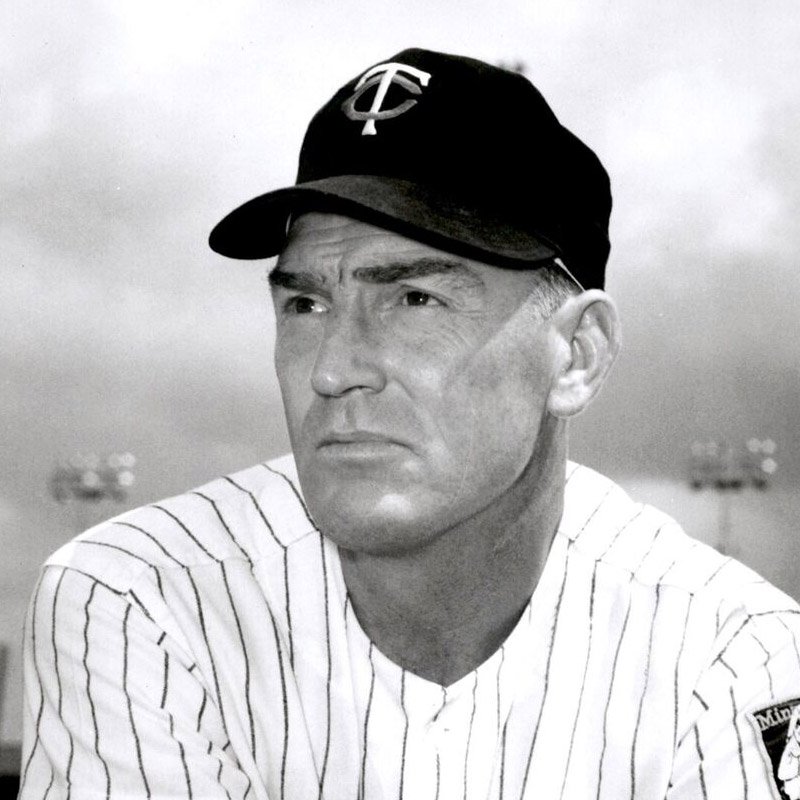 The Washington Senators moved to Minnesota prior to the 1961 season. The Senators came into existence in 1901 as a charter member of the American League and, for the most part, had a reputation as a lousy baseball club, prompting famed sportswriter Charley Dryden to joke: “Washington: First in war, first in peace, and last in the American League.” In their 60 years in Washington, the Senators finished in first place only three times and won only a single World Series, which was way back in 1924. From 1955-60, they finished last in the eight-team American League four times in six years. However, the cupboard was not completely bare when they moved to the Upper Midwest. In 1960, their record improved to 73-81, good enough for fifth place. They had a couple of decent young pitchers in Camilo Pascual and Pedro Ramos, but the power hitters had fans excited. There was a young All-Star in Harmon Killebrew, the 1959 Rookie of the Year in Bob Allison, and a promising young catcher in Earl Battey. Additionally, there was also another heralded power-hitting All-Star coming from Washington. His name was Jim Lemon. James Robert Lemon was born in Covington, Virginia, on March 23, 1928. Before the 1948 season, the Cleveland Indians signed Lemon. He grew up going by Bob, but after signing to play pro ball, he changed to Jim to avoid confusion with Hall of Fame pitcher Bob Lemon, who played his entire career with Cleveland from 1946-1958. Their MLB careers and time in Cleveland did overlap, and there most certainly would have been confusion. Jim Lemon, the tall, lanky outfielder, played parts of three minor league seasons before debuting in Major League Baseball on August 20, 1950, against the Chicago White Sox. The 6’4” outfielder batted third and went 1-4 with a sixth-inning single to left. He played in only 11 more games during that 1950 season, collecting six hits in 37 plate appearances. He had his first career home run on September 16 against Washington. In 1951 and 1952, Lemon, like many other MLB players of that era, served in the United States Army during those Korean War years. He was stationed primarily at Fort Meade, Maryland. When he returned to baseball, he played briefly for Cleveland in 1953 before being purchased by Washington early in the 1954 season. He spent most of the 1954 season in Class-A but did get 37 games in Washington. In 1955, he again started in the minors at Double-A. Lemon put up big numbers, batting .278/.387/.525 for a .912 OPS. He slugged 24 home runs, 32 doubles and 12 triples. He had 109 runs batted in. That was enough to prove that he was ready for the major leagues. The Senators called him up for good in September of 1955. Lemon hit his stride in 1956, starting an impressive five-year stretch. In those five seasons (1956-60), his OPS+ was never below 114; he topped 25 home runs four times, hit double-digit doubles each season, and led the league with 11 triples in 1956. Keep in mind, Griffith Stadium had a deep left field wall, which changed many times over the years from 408 feet at its longest to a reported distance of about 358 feet when Lemon played there (still deeper than most left fields throughout MLB). Center field appears to have always been a lengthy 421 feet. Despite the field dimensions, the right-handed slugger was still a top home run hitter. He hit prodigious home runs. Lemon also had over 90 runs batted in three times in those five years. He received MVP votes in 1959 and 1960 and went to both All-Star games in 1960 when he had his career high of 38 home runs, third to Mickey Mantle and Roger Maris. The enormous power hitter was also a free swinger who racked up a lot of strikeouts, leading the American League from 1956-58. But with Lemon, Killebrew, and Allison, Minnesota baseball fans could look forward to a power-hitting foundation as each of the three had topped 30 home runs at least once in their careers. Killebrew (25 years old) and Allison (26) were young up-and-comers in 1961 and would prove to be valuable building blocks in Minnesota. Unfortunately for Twins fans, Lemon was 32 and would start to show signs of decline almost immediately. Additionally, he missed part of the 1961 spring training in a contract dispute. Possibly because of age and the holdout, in 1961, Lemon played his fewest games (129) and hit his fewest home runs (14) since 1955. His best years were behind him. In 1962 and 1963, he played only 12 and seven games for the Twins. His last game with the Twins was April 30, 1963. He was batting only .118 with no extra-base hits. He then bounced around to Philadelphia and the White Sox to end 1963. He sustained a major shoulder injury on September 24, 1963, which ended his career at age 35. Lemon finished his career with a batting line of .262/.332/.460 for an OPS of .792. His career OPS+ was 114. He hit 164 home runs and had 529 RBI. He had four seasons in the top 10 of the American League in home runs. In one game in 1959, Lemon had two home runs and six RBI in one inning. Baseball Reference’s Bullpen page reports that he hit four (some sources say five) home runs in one minor league All-Star game in 1955. Lemon is in the Virginia Sports Hall of Fame. His 144 home runs are the second most to Roy Sievers (180) in the 60-year history of the original Senators. After his playing career, the humble Lemon remained in the game, serving as a coach for the Twins during two different installments – 1965-67 and 1981-84. In 1968, he returned to Washington and managed the expansion Washington Senators. Lemon was fired after a single season in which Washington finished last with a 65-96 record. He also served as a minor league coach and scout through the years. During and after his playing career, Lemon was also involved in the restaurant business. Jim Lemon passed away in 2006 at the age of 78.
 -
Danny Thompson was a promising shortstop prospect in the 1970s who was drafted in the first round by two teams. Unfortunately, his baseball career never reached its full potential as he was afflicted with a deadly disease and passed away in what should have been the prime of his career. Danny Leon Thompson was born February 1, 1947, in Wichita, Kansas, and grew up down the road in Capron, Oklahoma. Thompson was a star at Capron High School. So much so that the New York Yankees drafted him in the second round of the 1965 Major League Baseball June Amateur Draft following his senior year. Instead of becoming professional, he attended Oklahoma State University, playing two seasons with the Cowboys. He was all-Big Eight both seasons and led the team to the College World Series. Thompson was later drafted in the fourth round of the 1967 draft by Cincinnati, then the first round of the January phase of the 1968 draft by the second incarnation of the Washington Senators, and finally by the Twins in the first round of the June 1968 draft. He signed with the Twins and immediately went to Class-A, St. Cloud, where he produced a solid hitting line of .282/.359/.461. He played the 1969 season for Double-A Charlotte and hit over .300; then in 1970, he advanced to Triple-A Evansville where he started well enough to earn a call-up to the Twins on June 25 to replace injured second baseman Rod Carew. Thompson collected his first two hits in his third career game. In the sixth inning, he singled to center and came around to score. He would collect another hit and his first RBI in the ninth inning in the Twins 9-1 win over the White Sox. Thompson was not a power hitter; he did not collect his first home run until two seasons later – the opener of the 1972 season – his 145th career game. It came in the first inning against Ken Holtzman of the Oakland A’s. By this point, the right-handed hitter was the Twins’ primary shortstop. He played every game of the strike-shortened 1972 season. That season proved to be the best season of Danny’s career, as he batted .276/.318/.674, achieved a WAR of 2.9 and finished 23rd in Most Valuable Player voting. The Twins finished in third place. Little did Thompson know, his world would soon change. During a standard preseason physical in 1973, Danny Thompson was found to have leukemia. Sid Hartman’s Minneapolis Tribune column on February 14, 1973, reported that Thompson’s doctors figured he would not feel the effects of the disease for five years. Thompson said, “I’m going to put the whole thing out of my mind and just think about baseball.” I don’t know how you do that, but true to his word, Thompson forged ahead, continuing as a Twins shortstop from 1973 to 1976. After the 1974 season, he was selected as Major League Baseball’s Hutch Award winner, which is given annually to an active MLB player who best exemplifies the fighting spirit and competitive desire of Fred Hutchinson by persevering through adversity. Hutchinson was a former MLB pitcher and manager who died of lung cancer in 1964. Danny Thompson continued in 1975 with a decent season with a batting average of .270. On June 1, 1976, Thompson was traded to Texas along with pitching ace Bert Blyleven for shortstop Roy Smalley, third baseman Mike Cubbage, and pitchers Jim Gideon and Bill Singer. After the trade, Sid Hartman reported in the Minneapolis Tribune that Thompson was elated. Since his diagnosis, team owner Calvin Griffith seemed to mumble a lot that the Twins needed a shortstop. Thompson, who never needed treatment for his ailment while playing with the Twins, said he was their guy – the Twins had a shortstop. And as always with Griffith, there was a salary question. Immediately after the trade, Texas signed Thompson to a salary increase to $38,000. Thompson called the trade “The biggest break of my baseball career.” It was a winning team, closer to his family in Oklahoma, and they wanted him to play. Thompson reported that it had been a struggle to play for the Twins since his diagnosis – that the Twins “Held it over his head.” Thompson had thought he might have been on his way out of professional baseball, stating, “The way Calvin put it to me is that nobody wanted me.” It’s easy to see why Thompson was eager and excited for a fresh start. Unfortunately, that fresh start was nowhere near long enough. I remember Bert Blyleven and Jim Kaat speaking highly of Danny Thompson in their broadcasting careers. Blyleven said of Thompson’s last at bat, a pinch-hitting appearance in the final game of the 1976 season, more than three and a half years after his leukemia diagnosis, “Shows the guts and determination he had to finish the season in 1976. He just wanted to keep playing. That was Danny, though. He was a battler.” Kaat added, “Always on an even keel. He never got emotionally high or low. Growing up the way I did in the Midwest, that's the way we expected people to conduct themselves. That's what Danny was.” In addition, local sports writing legend Patrick Reusse, who is not known to be liberal or effusive with praise or admiration, called Thompson “One of the greatest guys ever” in his book Tales from the Minnesota Sports Beat. Anecdotes such as those tell me Danny Thompson was a good and fine man. After the 1976 season, Thompson’s health turned for the worse. Forty-five days after that pinch-hitting appearance in the season finale, Thompson was admitted to the Mayo Clinic. He succumbed to the disease on December 10, 1976, at the early age of 29. Thompson was survived by his wife and two young daughters. In 1977, Harmon Killebrew founded the Danny Thompson Memorial Golf Tournament, played in Harmon’s home state of Idaho. That first year, President Gerald Ford and Yankees legend Mickey Mantle played. As a fundraiser for the University of Minnesota Cancer Center, the event became a tremendous success and is still going strong. The tournament is now known as the Killebrew-Thompson Memorial Golf Tournament (Killebrew died of esophageal cancer) and is held in both Maple Grove, Minnesota, and Sun Valley, Idaho. It is now considered one of the leading cancer research fundraisers of its kind. View full player
- 1 reply
-
- 1
-
-
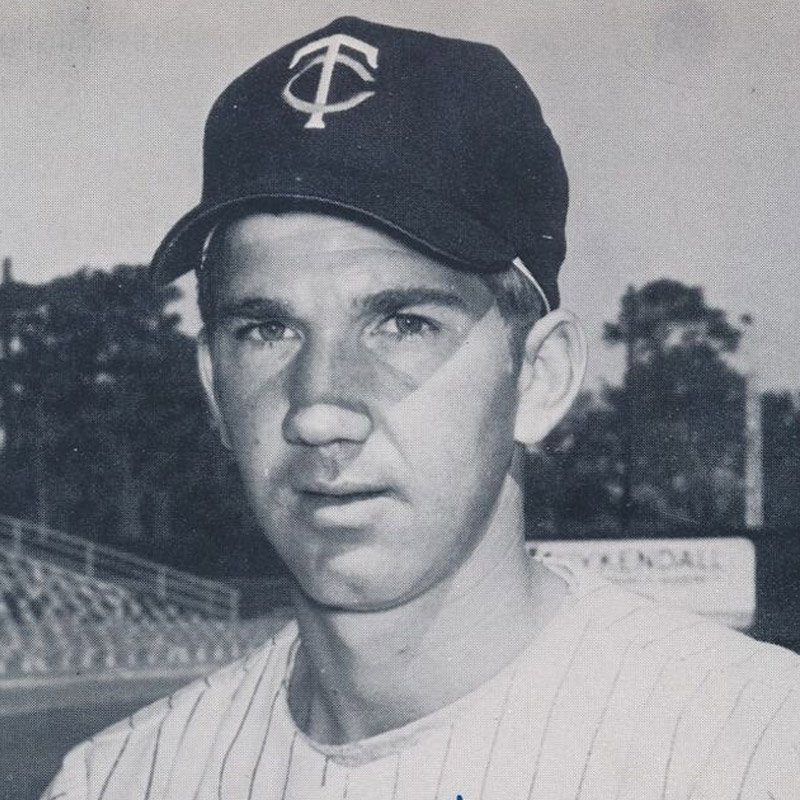 Danny Thompson was a promising shortstop prospect in the 1970s who was drafted in the first round by two teams. Unfortunately, his baseball career never reached its full potential as he was afflicted with a deadly disease and passed away in what should have been the prime of his career. Danny Leon Thompson was born February 1, 1947, in Wichita, Kansas, and grew up down the road in Capron, Oklahoma. Thompson was a star at Capron High School. So much so that the New York Yankees drafted him in the second round of the 1965 Major League Baseball June Amateur Draft following his senior year. Instead of becoming professional, he attended Oklahoma State University, playing two seasons with the Cowboys. He was all-Big Eight both seasons and led the team to the College World Series. Thompson was later drafted in the fourth round of the 1967 draft by Cincinnati, then the first round of the January phase of the 1968 draft by the second incarnation of the Washington Senators, and finally by the Twins in the first round of the June 1968 draft. He signed with the Twins and immediately went to Class-A, St. Cloud, where he produced a solid hitting line of .282/.359/.461. He played the 1969 season for Double-A Charlotte and hit over .300; then in 1970, he advanced to Triple-A Evansville where he started well enough to earn a call-up to the Twins on June 25 to replace injured second baseman Rod Carew. Thompson collected his first two hits in his third career game. In the sixth inning, he singled to center and came around to score. He would collect another hit and his first RBI in the ninth inning in the Twins 9-1 win over the White Sox. Thompson was not a power hitter; he did not collect his first home run until two seasons later – the opener of the 1972 season – his 145th career game. It came in the first inning against Ken Holtzman of the Oakland A’s. By this point, the right-handed hitter was the Twins’ primary shortstop. He played every game of the strike-shortened 1972 season. That season proved to be the best season of Danny’s career, as he batted .276/.318/.674, achieved a WAR of 2.9 and finished 23rd in Most Valuable Player voting. The Twins finished in third place. Little did Thompson know, his world would soon change. During a standard preseason physical in 1973, Danny Thompson was found to have leukemia. Sid Hartman’s Minneapolis Tribune column on February 14, 1973, reported that Thompson’s doctors figured he would not feel the effects of the disease for five years. Thompson said, “I’m going to put the whole thing out of my mind and just think about baseball.” I don’t know how you do that, but true to his word, Thompson forged ahead, continuing as a Twins shortstop from 1973 to 1976. After the 1974 season, he was selected as Major League Baseball’s Hutch Award winner, which is given annually to an active MLB player who best exemplifies the fighting spirit and competitive desire of Fred Hutchinson by persevering through adversity. Hutchinson was a former MLB pitcher and manager who died of lung cancer in 1964. Danny Thompson continued in 1975 with a decent season with a batting average of .270. On June 1, 1976, Thompson was traded to Texas along with pitching ace Bert Blyleven for shortstop Roy Smalley, third baseman Mike Cubbage, and pitchers Jim Gideon and Bill Singer. After the trade, Sid Hartman reported in the Minneapolis Tribune that Thompson was elated. Since his diagnosis, team owner Calvin Griffith seemed to mumble a lot that the Twins needed a shortstop. Thompson, who never needed treatment for his ailment while playing with the Twins, said he was their guy – the Twins had a shortstop. And as always with Griffith, there was a salary question. Immediately after the trade, Texas signed Thompson to a salary increase to $38,000. Thompson called the trade “The biggest break of my baseball career.” It was a winning team, closer to his family in Oklahoma, and they wanted him to play. Thompson reported that it had been a struggle to play for the Twins since his diagnosis – that the Twins “Held it over his head.” Thompson had thought he might have been on his way out of professional baseball, stating, “The way Calvin put it to me is that nobody wanted me.” It’s easy to see why Thompson was eager and excited for a fresh start. Unfortunately, that fresh start was nowhere near long enough. I remember Bert Blyleven and Jim Kaat speaking highly of Danny Thompson in their broadcasting careers. Blyleven said of Thompson’s last at bat, a pinch-hitting appearance in the final game of the 1976 season, more than three and a half years after his leukemia diagnosis, “Shows the guts and determination he had to finish the season in 1976. He just wanted to keep playing. That was Danny, though. He was a battler.” Kaat added, “Always on an even keel. He never got emotionally high or low. Growing up the way I did in the Midwest, that's the way we expected people to conduct themselves. That's what Danny was.” In addition, local sports writing legend Patrick Reusse, who is not known to be liberal or effusive with praise or admiration, called Thompson “One of the greatest guys ever” in his book Tales from the Minnesota Sports Beat. Anecdotes such as those tell me Danny Thompson was a good and fine man. After the 1976 season, Thompson’s health turned for the worse. Forty-five days after that pinch-hitting appearance in the season finale, Thompson was admitted to the Mayo Clinic. He succumbed to the disease on December 10, 1976, at the early age of 29. Thompson was survived by his wife and two young daughters. In 1977, Harmon Killebrew founded the Danny Thompson Memorial Golf Tournament, played in Harmon’s home state of Idaho. That first year, President Gerald Ford and Yankees legend Mickey Mantle played. As a fundraiser for the University of Minnesota Cancer Center, the event became a tremendous success and is still going strong. The tournament is now known as the Killebrew-Thompson Memorial Golf Tournament (Killebrew died of esophageal cancer) and is held in both Maple Grove, Minnesota, and Sun Valley, Idaho. It is now considered one of the leading cancer research fundraisers of its kind.
 -
Roy Frederick Smalley III (Roy Smalley) was born October 25, 1952, in Los Angeles, into a baseball family. His father, Roy Smalley, Jr., was a major league shortstop, as was his uncle, Gene Mauch, who also later managed 26 seasons, five with the Twins. Roy Federick Smalley, Jr. played 11 seasons from 1948 to 1958 with the Chicago Cubs (where he preceded Ernie Banks), Milwaukee Braves, and Philadelphia Phillies. He batted .227/.300/.360 with 61 home runs and 305 runs batted in during his career. He was known for his strong but wild throwing arm. Roy was a teammate of second baseman Wayne Terwilliger with the Cubs from 1949-1951. Many will remember the beloved “Twig,” who served as a Twins coach from 1986 to 1994, and one of the players he coached was his former double-play partner’s son, Roy III. With the MLB pedigree, Roy was brought up in a baseball household and became very good, easily getting the attention of scouts. So much so that he was drafted five times. The first time was after high school, but instead, he chose to attend college, first at Los Angeles City College, then at the University of Southern California. He played two seasons with USC, where he was an All-American and a key piece on back-to-back national championship teams. Following his junior season, he was selected in the first round of the MLB draft by the Texas Rangers. This time, he decided to turn pro and signed with the Rangers. Smalley played parts of two seasons in the minor leagues before debuting with the Rangers on April 30, 1975, as a 22-year-old. He came in during the fourth inning to replace Toby Harrah, who had been hit by a pitch. Smalley got up to bat three times, did not record a hit, but did get an RBI with a fielder’s choice. The Rangers beat the White Sox 8-2. The following day, Smalley started and got his first two hits, both singles, in another Texas win over the Sox. Those first two hits came off former Twin and future Hall of Famer Jim Kaat. Smalley’s first home run would come on May 11 at Detroit. Smalley hit the home run in the ninth inning of an 11-7 win for the Rangers. In Smalley’s second season, unbeknownst to him, trouble was brewing in Minnesota. Star pitcher Bert Blyleven had requested a trade over an intense salary dispute with the Twins. His relationship with new manager Gene Mauch, Smalley’s uncle, was also contentious. Owner Calvin Griffith had previously turned down multiple trade offers. Still, finally, on June 1, 1976, Blyleven and shortstop Danny Thompson (who was battling leukemia) were traded to Texas for Smalley, pitchers Bill Singer and Jim Gideon, and third baseman Mike Cubbage. Losing Blyleven was inevitable. He had the salary dispute (as many Twins did in the 1970s), the new manager, and was just frustrated and unhappy. The Twins did well in dealing with him for the package they received from Texas. Blyleven pitched very well in parts of only two seasons in Texas, while Smalley would be the Twins starting shortstop for most of the next seven seasons. The Twins also got five useful seasons from Cubbage. Tragically, Danny Thompson succumbed to his ailment and passed away after the 1976 season (I don’t know what more to say about this; he deserves his write-up about his life and career). During what would turn out to be his first stint in Minnesota, Smalley hit .263 with 70 home runs and 349 runs batted in, and this period included Smalley’s incredible first half in 1979 when he was selected as the starting shortstop for the All-Star Game. Smalley’s statistics in the first half 1979 included a slash line of .341/.424/.535 for a .959 OPS. He had 15 home runs at the break, with 65 runs batted in. In the All-Star Game, Smalley batted leadoff for the American League. He went 0-3 and was walked intentionally in the American League’s 7-6 loss to the National League. He cooled off in the second half of the season but still finished 16th in Most Valuable Player voting. Smalley continued as a good-hitting shortstop in 1980 and 1981 but battled injuries (and a strike), playing only 133 and 56 games, respectively. By 1982, the Twins were tearing down the roster and rebuilding with rookies all over the field. Smalley saw the writing on the wall, and just four games into the 1982 season, the Twins traded him to the New York Yankees for Paul Boris, Ron Davis, and Greg Gagne. Smalley was worth 6.1 WAR with the Yankees. Despite the abysmal Ron Davis, the Twins still won that trade because Gagne became an essential piece of their 1987 and 1991 World Series championship teams. Gagne was a great fielder and had a little pop with the bat, hitting 111 home runs in his career. Gagne alone achieved a 17.9 WAR with the Twins. In Tales from the Minnesota Twins Dugout, Kent Hrbek said, “Getting Gagne made it one of the best trades in Twins History.” Smalley played parts of three seasons in New York. While he had been almost exclusively a shortstop with the Twins, the Yankees began using him at third base and shortstop. He became more of a utility player. He hit .261/.340/.426 for the Yankees with 45 home runs and 155 runs batted in. He was traded to the White Sox in July of 1984. His half-season in Chicago was, is it too harsh to say, a disaster. He hit only .170 with an OPS of .574. Just before the 1985 season, Smalley was traded back to Minnesota for Ron Scheer and Randy Johnson. I call this trade a win for the Twins again – the third winning trade involving Smalley. While Smalley’s career was winding down, he still provided 2.1 WAR. He was a valuable backup infielder, designated hitter, and pinch hitter on the 1987 World Series team. Scheer never made it to MLB. Randy Johnson, who had played parts of two MLB seasons, never played at the major league level after the trade. Smalley did not play in the 1987 American League Championship Series; however, he did appear in four World Series games – each time being used as a pinch hitter. He was 1-4 with a double and two walks – an impressive .750 on-base percentage. His pinch-hit walk in the sixth inning of the deciding Game Seven came when the game was tied. Smalley’s walk filled the bases. Two batters later, Greg Gagne’s infield single drove in what proved to be the winning run. That was Smalley’s final game. He retired that offseason. For his career, Roy Smalley III hit .257/.345/.395. His OPS+ was 103. He hit 163 home runs and had 694 runs batted in – all good numbers for a shortstop of his era. After finishing his playing career, Smalley has been a financial advisor and has been involved in various businesses. He has served on the Board of Directors for Pitch in for Baseball & Softball, a non-profit dedicated to collecting and distributing new and gently used baseball and softball equipment. Roy Smalley has been part of the Twins' television broadcasts for 22 years. He has been an analyst during games and on their pre-and post-game shows. Smalley is in the USC Athletic Hall of Fame and the College Baseball Hall of Fame. Roy Smalley’s Major League Baseball career resembles a roller coaster. First-round draft pick, traded four times, was an All-Star on bad teams, a veteran player jettisoned on a rebuilding team, and a part-time player on a World Series-winning team. But after all the ups and downs, what a way to finish! View full player
-
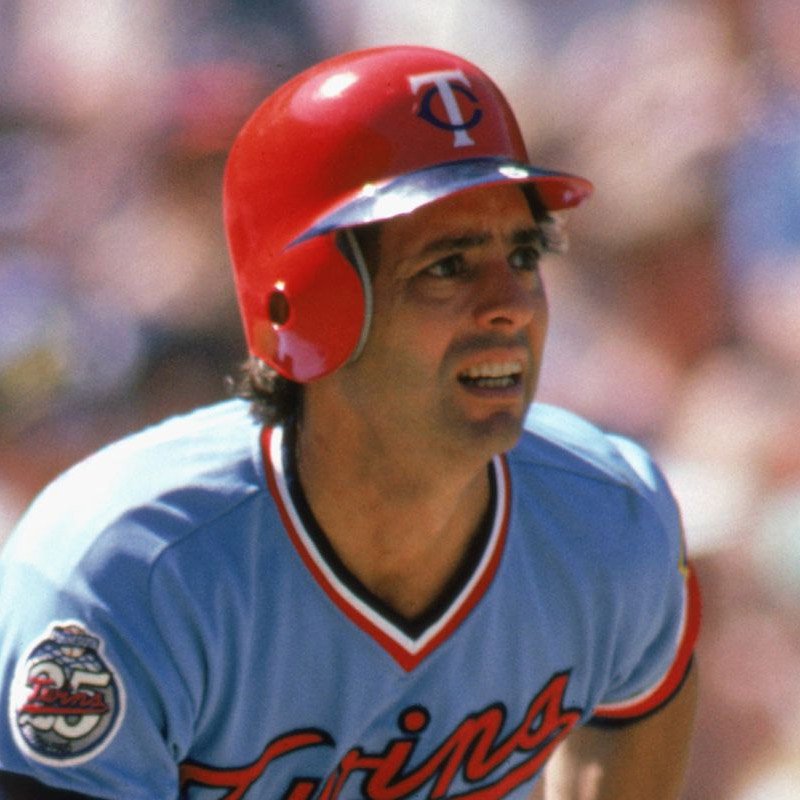 Roy Frederick Smalley III (Roy Smalley) was born October 25, 1952, in Los Angeles, into a baseball family. His father, Roy Smalley, Jr., was a major league shortstop, as was his uncle, Gene Mauch, who also later managed 26 seasons, five with the Twins. Roy Federick Smalley, Jr. played 11 seasons from 1948 to 1958 with the Chicago Cubs (where he preceded Ernie Banks), Milwaukee Braves, and Philadelphia Phillies. He batted .227/.300/.360 with 61 home runs and 305 runs batted in during his career. He was known for his strong but wild throwing arm. Roy was a teammate of second baseman Wayne Terwilliger with the Cubs from 1949-1951. Many will remember the beloved “Twig,” who served as a Twins coach from 1986 to 1994, and one of the players he coached was his former double-play partner’s son, Roy III. With the MLB pedigree, Roy was brought up in a baseball household and became very good, easily getting the attention of scouts. So much so that he was drafted five times. The first time was after high school, but instead, he chose to attend college, first at Los Angeles City College, then at the University of Southern California. He played two seasons with USC, where he was an All-American and a key piece on back-to-back national championship teams. Following his junior season, he was selected in the first round of the MLB draft by the Texas Rangers. This time, he decided to turn pro and signed with the Rangers. Smalley played parts of two seasons in the minor leagues before debuting with the Rangers on April 30, 1975, as a 22-year-old. He came in during the fourth inning to replace Toby Harrah, who had been hit by a pitch. Smalley got up to bat three times, did not record a hit, but did get an RBI with a fielder’s choice. The Rangers beat the White Sox 8-2. The following day, Smalley started and got his first two hits, both singles, in another Texas win over the Sox. Those first two hits came off former Twin and future Hall of Famer Jim Kaat. Smalley’s first home run would come on May 11 at Detroit. Smalley hit the home run in the ninth inning of an 11-7 win for the Rangers. In Smalley’s second season, unbeknownst to him, trouble was brewing in Minnesota. Star pitcher Bert Blyleven had requested a trade over an intense salary dispute with the Twins. His relationship with new manager Gene Mauch, Smalley’s uncle, was also contentious. Owner Calvin Griffith had previously turned down multiple trade offers. Still, finally, on June 1, 1976, Blyleven and shortstop Danny Thompson (who was battling leukemia) were traded to Texas for Smalley, pitchers Bill Singer and Jim Gideon, and third baseman Mike Cubbage. Losing Blyleven was inevitable. He had the salary dispute (as many Twins did in the 1970s), the new manager, and was just frustrated and unhappy. The Twins did well in dealing with him for the package they received from Texas. Blyleven pitched very well in parts of only two seasons in Texas, while Smalley would be the Twins starting shortstop for most of the next seven seasons. The Twins also got five useful seasons from Cubbage. Tragically, Danny Thompson succumbed to his ailment and passed away after the 1976 season (I don’t know what more to say about this; he deserves his write-up about his life and career). During what would turn out to be his first stint in Minnesota, Smalley hit .263 with 70 home runs and 349 runs batted in, and this period included Smalley’s incredible first half in 1979 when he was selected as the starting shortstop for the All-Star Game. Smalley’s statistics in the first half 1979 included a slash line of .341/.424/.535 for a .959 OPS. He had 15 home runs at the break, with 65 runs batted in. In the All-Star Game, Smalley batted leadoff for the American League. He went 0-3 and was walked intentionally in the American League’s 7-6 loss to the National League. He cooled off in the second half of the season but still finished 16th in Most Valuable Player voting. Smalley continued as a good-hitting shortstop in 1980 and 1981 but battled injuries (and a strike), playing only 133 and 56 games, respectively. By 1982, the Twins were tearing down the roster and rebuilding with rookies all over the field. Smalley saw the writing on the wall, and just four games into the 1982 season, the Twins traded him to the New York Yankees for Paul Boris, Ron Davis, and Greg Gagne. Smalley was worth 6.1 WAR with the Yankees. Despite the abysmal Ron Davis, the Twins still won that trade because Gagne became an essential piece of their 1987 and 1991 World Series championship teams. Gagne was a great fielder and had a little pop with the bat, hitting 111 home runs in his career. Gagne alone achieved a 17.9 WAR with the Twins. In Tales from the Minnesota Twins Dugout, Kent Hrbek said, “Getting Gagne made it one of the best trades in Twins History.” Smalley played parts of three seasons in New York. While he had been almost exclusively a shortstop with the Twins, the Yankees began using him at third base and shortstop. He became more of a utility player. He hit .261/.340/.426 for the Yankees with 45 home runs and 155 runs batted in. He was traded to the White Sox in July of 1984. His half-season in Chicago was, is it too harsh to say, a disaster. He hit only .170 with an OPS of .574. Just before the 1985 season, Smalley was traded back to Minnesota for Ron Scheer and Randy Johnson. I call this trade a win for the Twins again – the third winning trade involving Smalley. While Smalley’s career was winding down, he still provided 2.1 WAR. He was a valuable backup infielder, designated hitter, and pinch hitter on the 1987 World Series team. Scheer never made it to MLB. Randy Johnson, who had played parts of two MLB seasons, never played at the major league level after the trade. Smalley did not play in the 1987 American League Championship Series; however, he did appear in four World Series games – each time being used as a pinch hitter. He was 1-4 with a double and two walks – an impressive .750 on-base percentage. His pinch-hit walk in the sixth inning of the deciding Game Seven came when the game was tied. Smalley’s walk filled the bases. Two batters later, Greg Gagne’s infield single drove in what proved to be the winning run. That was Smalley’s final game. He retired that offseason. For his career, Roy Smalley III hit .257/.345/.395. His OPS+ was 103. He hit 163 home runs and had 694 runs batted in – all good numbers for a shortstop of his era. After finishing his playing career, Smalley has been a financial advisor and has been involved in various businesses. He has served on the Board of Directors for Pitch in for Baseball & Softball, a non-profit dedicated to collecting and distributing new and gently used baseball and softball equipment. Roy Smalley has been part of the Twins' television broadcasts for 22 years. He has been an analyst during games and on their pre-and post-game shows. Smalley is in the USC Athletic Hall of Fame and the College Baseball Hall of Fame. Roy Smalley’s Major League Baseball career resembles a roller coaster. First-round draft pick, traded four times, was an All-Star on bad teams, a veteran player jettisoned on a rebuilding team, and a part-time player on a World Series-winning team. But after all the ups and downs, what a way to finish!
 -
With his contorted corkscrew windup, side-arm pitching, and bushy mustache, Luis Tiant was a fan favorite wherever he played. Image courtesy of © Malcolm Emmons-Imagn Images On December 8, 2024, the Classic Baseball Era Committee considered eight candidates for selection to the National Baseball Hall of Fame, including one-time Twins pitcher Luis Tiant. The Cuban right-hander was a Twin for only a single season – 1970. His friend, countryman, contemporary, and teammate Tony Oliva voiced his support for Tiant’s potential selection to the Hall of Fame in Oliva’s acceptance speech in 2022 (starting at the 10:08 mark). Unfortunately for Tiant’s fans and family, this year's committee did not select him for the Hall of Fame. Was he worthy? Let’s look back at his career. Luis Clemente Tiant Vega was born in Cuba on November 23, 1940. He came from a baseball family as his father, also named Luis, was a long-time left-handed pitcher in Cuba, the American Negro Leagues, the Dominican Republic, and Mexico, as well as barnstorming teams from 1926 through 1948. He was a pitcher of some acclaim. Hall of Famer Monte Irvin claimed the elder Tiant would have been a great star in the major leagues if it had not been for the color barrier. In 1959, the younger Tiant left Cuba to play professional baseball in Mexico City. He played three seasons, improving each season to the point that he began to be noticed by major league scouts. Prior to the 1962 season, the Cleveland Indians purchased his rights, and he moved to America. Like Oliva, Tiant came to the United States just as Fidel Castro closed the country to outside travel. Neither player had any idea they would not see their parents for the better of a decade. El Tiante, as he was called, pitched parts of three seasons in the Cleveland minor league system before getting called up to Cleveland in July of 1964. He had an exceptionally strong major league debut, shutting out the Yankees with 11 strikeouts while allowing only four hits. He finished that season with a strong 10-4 record and continued with solid campaigns through 1967. He was just getting warmed up. Tiant’s 1968 season was simply superb, finishing with a 21-9 record. He led the American League pitchers with an 8.5 bWAR, 1.60 ERA, nine shutouts, and many advanced statistics. He put together a stretch of 42 consecutive scoreless innings in April and May and started the All-Star game in July. El Tiante also had a 10-inning shutout against the Twins on July 3, during which he struck out 19 batters. However, he did not get a single vote for the Cy Young award in 1968 (otherwise known as the Year of the Pitcher) as Denny McLain was a unanimous winner because of his incredible 31 wins. 1969 would not be as successful. Tiant led the league (in negative fashion) with 20 losses, 37 home runs allowed, and 129 walks issued. His ERA increased by more than two runs to 3.71. It appears those numbers made Tiant expendable. The Indians packaged him with fellow pitcher Stan Williams and traded the pair to Minnesota for Dean Chance, Bob Miller, Graig Nettles, and Ted Uhlaender. The six-foot, 180-pound Tiant won his first six decisions in his lone season with the Twins. It looked like he was recapturing his 1968 success until he broke his scapula. Tiant was placed on the disabled list and replaced on the roster by a 19-year-old up-and-comer. Somebody from Holland via Canada and California named Bert Blyleven. Tiant returned from the broken shoulder blade in August and finished the 1970 season 7-3. The Twins won the American League West Division that season and faced the Baltimore Orioles in the American League Championship Series, where they were swept 3-0. Tiant only appeared in one game, finishing game two, an ugly 11-3 loss. He got two outs to finish the ninth inning but gave up a home run to Davey Johnson. For the season, he threw 92 2/3 innings with a 3.40 ERA and 50 strikeouts. Tiant’s 1971 spring training was not good. He was hurt and ineffective, resulting in the Twins releasing him. Calvin Griffith believed that Tiant was finished at age 30. Luis believed the move was intended only to save money, which sounds believable. Why did you make a big trade for Tiant only a year earlier if you thought he might be reaching the end, or you didn’t want to pay him moving forward? This was the Twins and Calvin Griffith in the 1970s. The Braves quickly signed him and assigned him to Triple-A Richmond, where he revamped his pitching windup partly due to the shoulder injury. The new windup had him famously turn his back on the batter before spinning and tossing a pitch from a myriad of angles. From the SABR Bio Projects, “He was said to have thrown six pitches (fastball, curve, slider, slow curve, palm ball, and knuckleball) – from three different release points (over the top, three-quarters, and side-arm). His windup and motion seemed to vary on a whim.” However, this revamped motion was not enough to keep him around. The Braves released him only a month later. Two days after being released by Atlanta, Boston signed Tiant. After four games at Triple-A Richmond, he was called to the Red Sox, where he settled in for the best years of his career. He was 1-7 in that first season of 1971, but things improved from there. He won 15 games in his second year in Beantown and again led the AL in ERA (1.91). He won 20 games or more in three of his eight years in Boston. He topped 200 innings five times, including 311 1/3 innings in 1974. Tiant led the league with seven shutouts in 1974. Additionally, he appeared in two more All-Star games. His legend was probably cemented with an incredible 1975 postseason, even though the Red Sox lost the World Series. Tiant pitched four times in the ALCS and World Series, winning three games. His first three appearances were complete game wins, one being a shutout. Then he started the famous game six, giving up six runs in seven innings. But the offense bailed him out, and the Red Sox tied it up before Carlton Fisk hit his classic home run in the 12th inning, forcing game seven, which the Red Sox lost. Tiant won 21 games in 1976 and pitched two more seasons in Boston. After 1978, he was a free agent for the first time in his career, and he signed with the rival Yankees, where he would have one good season and one not-so-good. He finished his career with partial seasons with the Pirates (1981) and the Angels (1982). For his career, Tiant won 229 (67th most all-time) and lost 172. His career ERA was a very good 3.30. His ERA+ was 114. In 3,486 2/3 innings, he struck out 2,416 and walked 1,104. His career WHIP was 1.199. His 49 shutouts are 21st all-time. His career bWAR was 66.1 (the average bWAR for a Hall of Fame Pitcher is 66.0). All those numbers never amounted to much support for Tiant’s candidacy for the Hall of Fame. In the Baseball Writers Association of America voting, he received 30.9% of the vote his first year on the ballot, 1988. However, the 1988 support would be the high point for Tiant; he never again received that level of support from the writers. The pitchers eligible for induction in the years immediately following Tiant included pitching heavyweights Jim Palmer, Gaylord Perry, Fergie Jenkins, Tom Seaver, Steve Carlton, Phil Niekro, Don Sutton, and more. After 15 years on the ballot without selection by the writers, it was up to the Veterans Committee and its various spinoffs, where he never garnered much support. This year, Tiant received less than five votes from the 16-member electorate. After his playing career, he was a minor league pitching coach for the Dodgers and White Sox systems, coached in college, and even appeared in an episode of Cheers (season 1, episode 13, “Now Pitching, Sam Malone). On October 8, 2024, Luis Tiant died at home in Maine at the age of 83. Does Tiant deserve election to the Hall of Fame? Start the discussion below. If you like looking back at the Twins past, check out my previous articles at Twins Daily History. Sources include Baseball Reference, Society for American Baseball Research, and IMDB.com. View full article
-
 On December 8, 2024, the Classic Baseball Era Committee considered eight candidates for selection to the National Baseball Hall of Fame, including one-time Twins pitcher Luis Tiant. The Cuban right-hander was a Twin for only a single season – 1970. His friend, countryman, contemporary, and teammate Tony Oliva voiced his support for Tiant’s potential selection to the Hall of Fame in Oliva’s acceptance speech in 2022 (starting at the 10:08 mark). Unfortunately for Tiant’s fans and family, this year's committee did not select him for the Hall of Fame. Was he worthy? Let’s look back at his career. Luis Clemente Tiant Vega was born in Cuba on November 23, 1940. He came from a baseball family as his father, also named Luis, was a long-time left-handed pitcher in Cuba, the American Negro Leagues, the Dominican Republic, and Mexico, as well as barnstorming teams from 1926 through 1948. He was a pitcher of some acclaim. Hall of Famer Monte Irvin claimed the elder Tiant would have been a great star in the major leagues if it had not been for the color barrier. In 1959, the younger Tiant left Cuba to play professional baseball in Mexico City. He played three seasons, improving each season to the point that he began to be noticed by major league scouts. Prior to the 1962 season, the Cleveland Indians purchased his rights, and he moved to America. Like Oliva, Tiant came to the United States just as Fidel Castro closed the country to outside travel. Neither player had any idea they would not see their parents for the better of a decade. El Tiante, as he was called, pitched parts of three seasons in the Cleveland minor league system before getting called up to Cleveland in July of 1964. He had an exceptionally strong major league debut, shutting out the Yankees with 11 strikeouts while allowing only four hits. He finished that season with a strong 10-4 record and continued with solid campaigns through 1967. He was just getting warmed up. Tiant’s 1968 season was simply superb, finishing with a 21-9 record. He led the American League pitchers with an 8.5 bWAR, 1.60 ERA, nine shutouts, and many advanced statistics. He put together a stretch of 42 consecutive scoreless innings in April and May and started the All-Star game in July. El Tiante also had a 10-inning shutout against the Twins on July 3, during which he struck out 19 batters. However, he did not get a single vote for the Cy Young award in 1968 (otherwise known as the Year of the Pitcher) as Denny McLain was a unanimous winner because of his incredible 31 wins. 1969 would not be as successful. Tiant led the league (in negative fashion) with 20 losses, 37 home runs allowed, and 129 walks issued. His ERA increased by more than two runs to 3.71. It appears those numbers made Tiant expendable. The Indians packaged him with fellow pitcher Stan Williams and traded the pair to Minnesota for Dean Chance, Bob Miller, Graig Nettles, and Ted Uhlaender. The six-foot, 180-pound Tiant won his first six decisions in his lone season with the Twins. It looked like he was recapturing his 1968 success until he broke his scapula. Tiant was placed on the disabled list and replaced on the roster by a 19-year-old up-and-comer. Somebody from Holland via Canada and California named Bert Blyleven. Tiant returned from the broken shoulder blade in August and finished the 1970 season 7-3. The Twins won the American League West Division that season and faced the Baltimore Orioles in the American League Championship Series, where they were swept 3-0. Tiant only appeared in one game, finishing game two, an ugly 11-3 loss. He got two outs to finish the ninth inning but gave up a home run to Davey Johnson. For the season, he threw 92 2/3 innings with a 3.40 ERA and 50 strikeouts. Tiant’s 1971 spring training was not good. He was hurt and ineffective, resulting in the Twins releasing him. Calvin Griffith believed that Tiant was finished at age 30. Luis believed the move was intended only to save money, which sounds believable. Why did you make a big trade for Tiant only a year earlier if you thought he might be reaching the end, or you didn’t want to pay him moving forward? This was the Twins and Calvin Griffith in the 1970s. The Braves quickly signed him and assigned him to Triple-A Richmond, where he revamped his pitching windup partly due to the shoulder injury. The new windup had him famously turn his back on the batter before spinning and tossing a pitch from a myriad of angles. From the SABR Bio Projects, “He was said to have thrown six pitches (fastball, curve, slider, slow curve, palm ball, and knuckleball) – from three different release points (over the top, three-quarters, and side-arm). His windup and motion seemed to vary on a whim.” However, this revamped motion was not enough to keep him around. The Braves released him only a month later. Two days after being released by Atlanta, Boston signed Tiant. After four games at Triple-A Richmond, he was called to the Red Sox, where he settled in for the best years of his career. He was 1-7 in that first season of 1971, but things improved from there. He won 15 games in his second year in Beantown and again led the AL in ERA (1.91). He won 20 games or more in three of his eight years in Boston. He topped 200 innings five times, including 311 1/3 innings in 1974. Tiant led the league with seven shutouts in 1974. Additionally, he appeared in two more All-Star games. His legend was probably cemented with an incredible 1975 postseason, even though the Red Sox lost the World Series. Tiant pitched four times in the ALCS and World Series, winning three games. His first three appearances were complete game wins, one being a shutout. Then he started the famous game six, giving up six runs in seven innings. But the offense bailed him out, and the Red Sox tied it up before Carlton Fisk hit his classic home run in the 12th inning, forcing game seven, which the Red Sox lost. Tiant won 21 games in 1976 and pitched two more seasons in Boston. After 1978, he was a free agent for the first time in his career, and he signed with the rival Yankees, where he would have one good season and one not-so-good. He finished his career with partial seasons with the Pirates (1981) and the Angels (1982). For his career, Tiant won 229 (67th most all-time) and lost 172. His career ERA was a very good 3.30. His ERA+ was 114. In 3,486 2/3 innings, he struck out 2,416 and walked 1,104. His career WHIP was 1.199. His 49 shutouts are 21st all-time. His career bWAR was 66.1 (the average bWAR for a Hall of Fame Pitcher is 66.0). All those numbers never amounted to much support for Tiant’s candidacy for the Hall of Fame. In the Baseball Writers Association of America voting, he received 30.9% of the vote his first year on the ballot, 1988. However, the 1988 support would be the high point for Tiant; he never again received that level of support from the writers. The pitchers eligible for induction in the years immediately following Tiant included pitching heavyweights Jim Palmer, Gaylord Perry, Fergie Jenkins, Tom Seaver, Steve Carlton, Phil Niekro, Don Sutton, and more. After 15 years on the ballot without selection by the writers, it was up to the Veterans Committee and its various spinoffs, where he never garnered much support. This year, Tiant received less than five votes from the 16-member electorate. After his playing career, he was a minor league pitching coach for the Dodgers and White Sox systems, coached in college, and even appeared in an episode of Cheers (season 1, episode 13, “Now Pitching, Sam Malone). On October 8, 2024, Luis Tiant died at home in Maine at the age of 83. Does Tiant deserve election to the Hall of Fame? Start the discussion below. If you like looking back at the Twins past, check out my previous articles at Twins Daily History. Sources include Baseball Reference, Society for American Baseball Research, and IMDB.com.
 -
Jeff Reboulet was the kind of player Twins manager Tom Kelly always had rostered. He wasn't flashy or even particularly good, but he did enough right to have a long-lasting MLB career. The Twins have had many effective utility infielders over the years. Guys who played defense capably at multiple positions. Al Newman, Denny Hocking, Nick Punto, Eduardo Escobar, Marwin González, and recent All-Star Willi Castro quickly come to mind. That doesn’t even include guys from earlier eras, like César Tovar. Some were better hitters than others, but they made their contributions through flexibility to play all over the field. Jeff Reboulet is another player in that mold, and today, I want to look more closely at his career. Jeffrey Allen Reboulet was born in Dayton, Ohio, on April 30, 1964. He came from a baseball family. His older brother, Jim, played minor league baseball in the Cardinals organization. Jim was drafted in 1983 and, like many Cardinals of that era, was a speedster, stealing more than 60 bases three times. But his career peaked at Triple-A. Reboulet first played college baseball at Triton College in River Grove, Illinois. He is one of 88 players from Triton to play professional baseball. Of course, one of the others is the late, great Kirby Puckett. From there, Reboulet went on to Louisiana State University. After his junior year, the Houston Astros selected Reboulet in the 26th round of the 1985 Major League Baseball June Amateur Draft. He did not sign and instead returned to LSU for one more year. After his senior season, the Twins drafted the six-foot, 167-pounder in the tenth round of the 1986 draft. Reboulet spent six full seasons at all Twins minor league system levels, including parts of four seasons at Triple-A. I wonder if he started to question whether he would ever make it. Finally, at 28, he was called to the Twins. He debuted on May 12, 1992, in the seventh inning of a home game against the Red Sox. He was the right-handed hitter pinch hit for Randy Bush and was 0-1 in the 6-3 victory. His first hit came in his fourth game, an RBI double in Cleveland. His first and only home run of that rookie season was on August 2 against Milwaukee in the Metrodome. Reboulet’s numbers that rookie season were .190/.311/.277. He played second, third, shortstop, and all three outfield spots. This versatility would be his calling card, which allowed him to stick to the major league level. The next four years would see similar usage and action. He never played more than 109 games with the Twins and had more than 283 plate appearances. His best season with the bat was 1995 when he posted an OPS+ of 101. He hit .292/.373/.398 with a career-high four home runs. Baseball-Reference calculates his WAR that season at 2.6, which was also a career-high. Sometime during his Twins tenure, I believe Reboulet was gifted the nickname “the Inspector” by WGN’s Ken “Hawk” Harrelson because of his likeness to Peter Sellers of The Pink Panther fame. (I’m totally going off my memory on this one, so if I am wrong or you have a different recollection, please comment below.) I always thought that nickname was funny and appropriate. I suspect that Harrelson appreciated Reboulet a little; otherwise, I don’t think he would have provided a nickname to a nondescript, boring player who didn’t catch his eye. Alas, the Twins of the mid-1990s were not good. While the Pohlads are often labeled cheap, my perception is that the mid-to-late 1990s was the low point on payroll. So, like so many other Twins of that era, Reboulet moved on after 1996. His final numbers in five seasons with the Twins ended at .248/.335/.324. He had nine home runs and exactly 100 RBI. Reboulet moved on to three years with the Orioles, one with the Royals, two seasons with the Dodgers, and then one final season with the Pirates. He was consistent and his seasons with those four teams look awfully similar to his time in Minnesota. His offense was nothing special, but his defensive ability and flexibility allowed him to play until his age-39 season. He got into the playoffs one season; in the 1997 American League Division Series, the Orioles faced off against the Seattle Mariners. Orioles starting second baseman Roberto Alomar had a shoulder injury, which made it difficult to swing right-handed, so Reboulet got to start the first and fourth games of the series against Seattle’s ace, Hall of Famer Randy Johnson. In game one, he did little with the bat. In Game Four, the Orioles led the series two games to one and were looking to clinch the series. In the first inning, Reboulet surprised everybody by hitting a home run against one of the greatest left-handers of all time and gave the Orioles a lead they would never relinquish. The Orioles won the game and the series. They went on to face Cleveland in the American League Championship Series, which Cleveland won in six games. Reboulet appeared in Game Three and scored a tying run as a pinch runner in the top of the ninth, but Cleveland won in 12 innings. That would be the final postseason game he ever experienced. Reboulet’s career statistics, including all his time with all five teams for which he played, were .240/.332/.318 with 20 home runs and 202 RBI. His OPS+ was less than ideal at 72, but he did amass 10.0 WAR. Not too shabby for the third-best player to have played at Triton College - 14-year vet Lance Johnson also played there - but not quite as good as its best alum. In his book Sid!, Sid Hartman talks about similarities between former Vikings coach Bud Grant and Reboulet’s Twins manager Tom Kelly. Grant and Kelly liked having a few stars and then sprinkling role players around them. Bud explained, “He will make the routine plays. He will do what he’s told. He won’t bitch about playing time. He won’t lose a ball game for me.” Sid reported Kelly thought the same way and singled out players who fit that mold, such as Al Newman, Chip Hale, Randy Bush, and our subject, Jeff Reboulet. In my judgment, that truly sums up Jeff Reboulet; he wasn’t a star, but he wasn’t going to screw up a ballgame, team, or season. He was a good team player who probably overachieved and lengthened his career because of his defensive flexibility and coachability. If you had told me in 1992 that Reboulet would play 12 seasons until he was 39, I would not have believed you. Reboulet proved me, and probably many others, wrong. What are your memories of Jeff Reboulet? Who are some memorable Twins utility players from the 1960s and 70s? Was I right about the Inspector nickname? Start the discussion below in the comments. If you like looking back at the Twins past, check out my previous articles at Twins Daily History. Sources include Baseball Reference, Sid!, Society for American Baseball Research. View full article
-
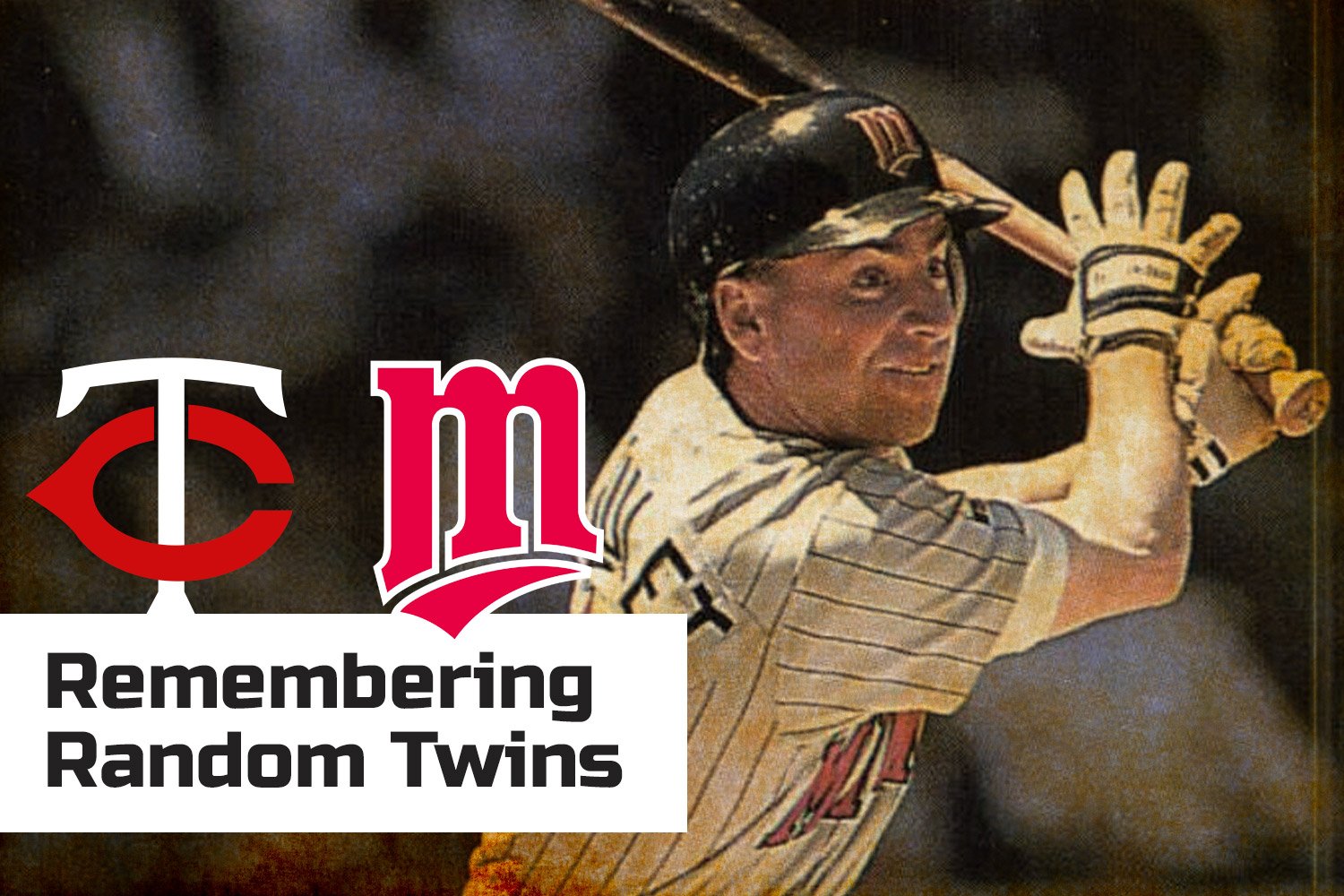 The Twins have had many effective utility infielders over the years. Guys who played defense capably at multiple positions. Al Newman, Denny Hocking, Nick Punto, Eduardo Escobar, Marwin González, and recent All-Star Willi Castro quickly come to mind. That doesn’t even include guys from earlier eras, like César Tovar. Some were better hitters than others, but they made their contributions through flexibility to play all over the field. Jeff Reboulet is another player in that mold, and today, I want to look more closely at his career. Jeffrey Allen Reboulet was born in Dayton, Ohio, on April 30, 1964. He came from a baseball family. His older brother, Jim, played minor league baseball in the Cardinals organization. Jim was drafted in 1983 and, like many Cardinals of that era, was a speedster, stealing more than 60 bases three times. But his career peaked at Triple-A. Reboulet first played college baseball at Triton College in River Grove, Illinois. He is one of 88 players from Triton to play professional baseball. Of course, one of the others is the late, great Kirby Puckett. From there, Reboulet went on to Louisiana State University. After his junior year, the Houston Astros selected Reboulet in the 26th round of the 1985 Major League Baseball June Amateur Draft. He did not sign and instead returned to LSU for one more year. After his senior season, the Twins drafted the six-foot, 167-pounder in the tenth round of the 1986 draft. Reboulet spent six full seasons at all Twins minor league system levels, including parts of four seasons at Triple-A. I wonder if he started to question whether he would ever make it. Finally, at 28, he was called to the Twins. He debuted on May 12, 1992, in the seventh inning of a home game against the Red Sox. He was the right-handed hitter pinch hit for Randy Bush and was 0-1 in the 6-3 victory. His first hit came in his fourth game, an RBI double in Cleveland. His first and only home run of that rookie season was on August 2 against Milwaukee in the Metrodome. Reboulet’s numbers that rookie season were .190/.311/.277. He played second, third, shortstop, and all three outfield spots. This versatility would be his calling card, which allowed him to stick to the major league level. The next four years would see similar usage and action. He never played more than 109 games with the Twins and had more than 283 plate appearances. His best season with the bat was 1995 when he posted an OPS+ of 101. He hit .292/.373/.398 with a career-high four home runs. Baseball-Reference calculates his WAR that season at 2.6, which was also a career-high. Sometime during his Twins tenure, I believe Reboulet was gifted the nickname “the Inspector” by WGN’s Ken “Hawk” Harrelson because of his likeness to Peter Sellers of The Pink Panther fame. (I’m totally going off my memory on this one, so if I am wrong or you have a different recollection, please comment below.) I always thought that nickname was funny and appropriate. I suspect that Harrelson appreciated Reboulet a little; otherwise, I don’t think he would have provided a nickname to a nondescript, boring player who didn’t catch his eye. Alas, the Twins of the mid-1990s were not good. While the Pohlads are often labeled cheap, my perception is that the mid-to-late 1990s was the low point on payroll. So, like so many other Twins of that era, Reboulet moved on after 1996. His final numbers in five seasons with the Twins ended at .248/.335/.324. He had nine home runs and exactly 100 RBI. Reboulet moved on to three years with the Orioles, one with the Royals, two seasons with the Dodgers, and then one final season with the Pirates. He was consistent and his seasons with those four teams look awfully similar to his time in Minnesota. His offense was nothing special, but his defensive ability and flexibility allowed him to play until his age-39 season. He got into the playoffs one season; in the 1997 American League Division Series, the Orioles faced off against the Seattle Mariners. Orioles starting second baseman Roberto Alomar had a shoulder injury, which made it difficult to swing right-handed, so Reboulet got to start the first and fourth games of the series against Seattle’s ace, Hall of Famer Randy Johnson. In game one, he did little with the bat. In Game Four, the Orioles led the series two games to one and were looking to clinch the series. In the first inning, Reboulet surprised everybody by hitting a home run against one of the greatest left-handers of all time and gave the Orioles a lead they would never relinquish. The Orioles won the game and the series. They went on to face Cleveland in the American League Championship Series, which Cleveland won in six games. Reboulet appeared in Game Three and scored a tying run as a pinch runner in the top of the ninth, but Cleveland won in 12 innings. That would be the final postseason game he ever experienced. Reboulet’s career statistics, including all his time with all five teams for which he played, were .240/.332/.318 with 20 home runs and 202 RBI. His OPS+ was less than ideal at 72, but he did amass 10.0 WAR. Not too shabby for the third-best player to have played at Triton College - 14-year vet Lance Johnson also played there - but not quite as good as its best alum. In his book Sid!, Sid Hartman talks about similarities between former Vikings coach Bud Grant and Reboulet’s Twins manager Tom Kelly. Grant and Kelly liked having a few stars and then sprinkling role players around them. Bud explained, “He will make the routine plays. He will do what he’s told. He won’t bitch about playing time. He won’t lose a ball game for me.” Sid reported Kelly thought the same way and singled out players who fit that mold, such as Al Newman, Chip Hale, Randy Bush, and our subject, Jeff Reboulet. In my judgment, that truly sums up Jeff Reboulet; he wasn’t a star, but he wasn’t going to screw up a ballgame, team, or season. He was a good team player who probably overachieved and lengthened his career because of his defensive flexibility and coachability. If you had told me in 1992 that Reboulet would play 12 seasons until he was 39, I would not have believed you. Reboulet proved me, and probably many others, wrong. What are your memories of Jeff Reboulet? Who are some memorable Twins utility players from the 1960s and 70s? Was I right about the Inspector nickname? Start the discussion below in the comments. If you like looking back at the Twins past, check out my previous articles at Twins Daily History. Sources include Baseball Reference, Sid!, Society for American Baseball Research.
 -
I can't argue any of your points. Thanks for reading.
-
Was Jerry Zimmerman The Best Backup Catcher In Twins History?
Al from SoDak posted an article in History
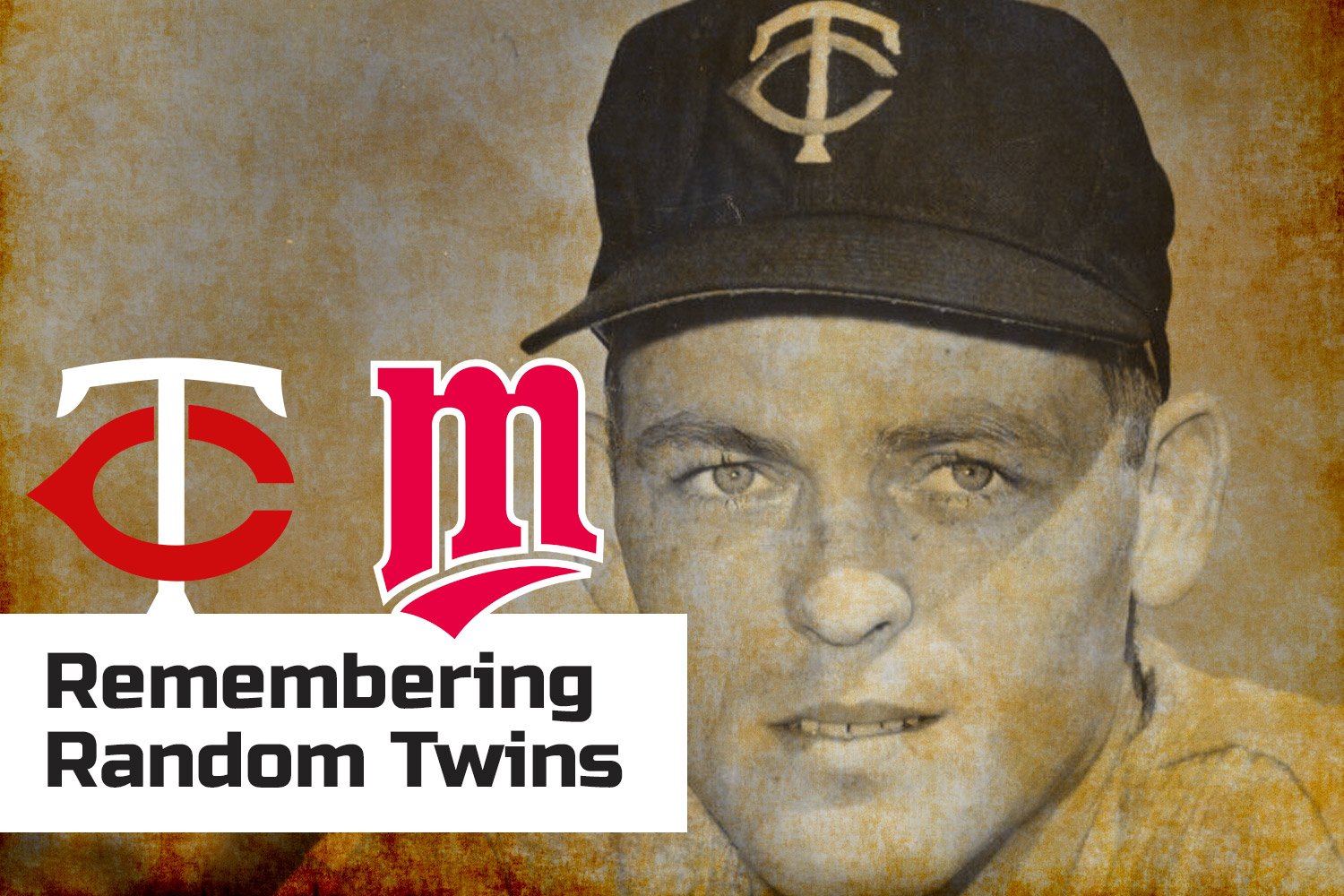 Who is the best, longest-tenured backup catcher in Twins History? I can think of some memorable catchers, such as Junior Ortiz and Matt LeCroy, but they weren’t here particularly long, nor would they be considered the best. What about Phil Roof, Mike Redmond, or either of the father/son Butera tandem, Sal and Drew? But if we look at number of seasons with the Twins, perhaps the answer is the light-hitting, good-fielding, well-liked teammate of the 1960s, Jerry Zimmerman. Let’s take a closer look at Zimmerman’s career. Gerald Robert Zimmerman was born in Omaha, Nebraska, on September 21, 1934. During childhood, his family moved to Oregon, where Jerry attended high school. During his high school baseball career, Jerry, a right-handed batter, had a .425 batting average over the full four years but an incredible .625 as a senior. In addition to his catching prowess, those numbers caught the attention of scouts from 14 of the 16 Major League Baseball teams. After high school, Zimmerman signed with the Boston Red Sox before the 1952 season, well before the MLB amateur draft. The six-foot-two, 185-pound catcher signed for a reported signing bonus of $80,000, a significant amount in that era. However, minor league baseball would prove tougher than high school. Zimmerman played eight long years in Boston’s minor league system at all levels, which included two seasons with the Triple-A Minneapolis Millers, who, during Jerry’s tenure, played their home games at Bloomington’s (new) Metropolitan Stadium. However, Zimmerman never hit well enough to be promoted to the Red Sox and was released in 1959. From there, he bounced around, first to the Baltimore organization, then to Cincinnati, where he performed well enough in minor league Seattle to earn a shot with the big club in 1961. He debuted in the major leagues on April 14, 1961, in a 7-3 win against the St. Louis Cardinals. He was a defensive replacement in the ninth inning who walked and tallied his first two hits a few days later against Pittsburgh in a 4-2 win. That Reds team was particularly good, ending with a 93-61 record, winning the National League, and making the World Series. Unfortunately, they ran into the Yankees with record-breakers Roger Maris and Mickey Mantle. The Reds fell to the Yankees, four games to one. Zimmerman saw little action. He appeared as a defensive replacement in two games but had no plate appearances. The Reds moved on and traded him to the Twins before the 1962 season for outfielder Dan Dobbek. Zimmerman came to the Twins in 1962 and immediately settled into a backup role for Earl Battey. Battey took the lion’s share of the playing time as he was on his way to being a four-time All-Star before injuries struck in 1967, leading to Battey’s retirement. 1967 was the one season when Zimmerman garnered most of the playing time behind the plate. By all reports, Zimmerman was a capable backup. According to Cool of the Evening by Jim Thielman, Manager Sam Mele thought Zimmerman was the best defensive catcher in the American League in 1965. Baseball-Reference backs that up, reporting Zimmerman had the best fielding percentage (.997) by a catcher that season. But after the 1967 season and Battey’s retirement, the Twins did not turn to Zimmerman. They quickly traded for John Roseboro, again relegating Zimmerman to backup duties for 1968. Zimmerman had a negligible effect on the Twins' 1965 World Series loss to the Los Angeles Dodgers. He was used as a defensive replacement in two games. In his lone plate appearance, he hit into a game-ending double play in game three. For his MLB career, Zimmerman batted .204/.269/.239. He had three home runs and 72 RBI in 994 at-bats. Baseball-Reference calculates his career WAR as -2.7. His batting statistics were not very prodigious. His 46 OPS+ during his Twins career is the lowest of any batter with a minimum of 502 at-bats in his career (which is the minimum needed in a season to qualify for a batting title and the cut-off I used for this trivia nugget, i.e., one season’s worth of at-bats). I don’t mean to be critical of Mr. Zimmerman. It speaks to his ability as a defensive catcher and how to handle pitchers if he could stick around as long as he did (seven seasons on some pretty good teams) with a bat that was, to put it bluntly, a liability. Going back to his time in 1958 and 1959 at Triple-A Minneapolis, Zimmerman established a long-lasting relationship with manager Gene Mauch, which benefitted his post-playing career. After Zimmerman’s MLB career, the Montreal Expos immediately hired him as bullpen coach for their inaugural season in 1969, during which he stayed until 1975. The manager during that time? Gene Mauch. When Mauch moved to manage the Twins in 1976, he brought Zimmerman along, where they remained until 1980. During that Twins coaching stint, there was a weird one-inning performance as an umpire on August 25, 1978, during a one-day MLB umpires’ strike. Zimmerman and a Toronto Blue Jays coach, Don Leppert, were pressed into duty to help three amateur umpires working that day's game. Zimmerman and Leppert both umpired as it was deemed fairer to use one coach from each team and have five umpires. The fourth amateur umpire finally arrived in time for the second inning, and Zimmerman and Leppert returned to their respective benches. To this day, Zimmerman and Leppert are the last two active coaches to serve as umpires in an MLB game. After his coaching career, Zimmerman served as a scout for the Yankees and Orioles. While never great, Jerry Zimmerman played seven seasons for those formative Minnesota Twins teams of the 1960s. He parlayed his abilities and positive clubhouse presence into a solid MLB career, then followed that as a coach and scout. He passed away on September 9, 1998, in Oregon at the age of 63. Zimmerman made lasting friendships with teammates. His widow stayed connected with former Twins teammates, such as Frank Kostro, even after Jerry died. Cool of the Evening quoted Kostro, “You just can not believe how those friendships were just a genuine part of the deal.” Do any of you have recollections of Jerry Zimmerman? Add a comment below to start the conversation. If you like looking back at the Twins past, check out my previous articles at Twins Daily History. Sources include Baseball-Reference and Cool of the Evening.
- 6 comments
-
- 1
-
-
- jerry zimmerman
- remembering random twins
- (and 1 more)
-
Backup catchers aren't particularly memorable, which isn't fair to guys who often play 50 or more games in a season. Who is the best, longest-tenured backup catcher in Twins History? I can think of some memorable catchers, such as Junior Ortiz and Matt LeCroy, but they weren’t here particularly long, nor would they be considered the best. What about Phil Roof, Mike Redmond, or either of the father/son Butera tandem, Sal and Drew? But if we look at number of seasons with the Twins, perhaps the answer is the light-hitting, good-fielding, well-liked teammate of the 1960s, Jerry Zimmerman. Let’s take a closer look at Zimmerman’s career. Gerald Robert Zimmerman was born in Omaha, Nebraska, on September 21, 1934. During childhood, his family moved to Oregon, where Jerry attended high school. During his high school baseball career, Jerry, a right-handed batter, had a .425 batting average over the full four years but an incredible .625 as a senior. In addition to his catching prowess, those numbers caught the attention of scouts from 14 of the 16 Major League Baseball teams. After high school, Zimmerman signed with the Boston Red Sox before the 1952 season, well before the MLB amateur draft. The six-foot-two, 185-pound catcher signed for a reported signing bonus of $80,000, a significant amount in that era. However, minor league baseball would prove tougher than high school. Zimmerman played eight long years in Boston’s minor league system at all levels, which included two seasons with the Triple-A Minneapolis Millers, who, during Jerry’s tenure, played their home games at Bloomington’s (new) Metropolitan Stadium. However, Zimmerman never hit well enough to be promoted to the Red Sox and was released in 1959. From there, he bounced around, first to the Baltimore organization, then to Cincinnati, where he performed well enough in minor league Seattle to earn a shot with the big club in 1961. He debuted in the major leagues on April 14, 1961, in a 7-3 win against the St. Louis Cardinals. He was a defensive replacement in the ninth inning who walked and tallied his first two hits a few days later against Pittsburgh in a 4-2 win. That Reds team was particularly good, ending with a 93-61 record, winning the National League, and making the World Series. Unfortunately, they ran into the Yankees with record-breakers Roger Maris and Mickey Mantle. The Reds fell to the Yankees, four games to one. Zimmerman saw little action. He appeared as a defensive replacement in two games but had no plate appearances. The Reds moved on and traded him to the Twins before the 1962 season for outfielder Dan Dobbek. Zimmerman came to the Twins in 1962 and immediately settled into a backup role for Earl Battey. Battey took the lion’s share of the playing time as he was on his way to being a four-time All-Star before injuries struck in 1967, leading to Battey’s retirement. 1967 was the one season when Zimmerman garnered most of the playing time behind the plate. By all reports, Zimmerman was a capable backup. According to Cool of the Evening by Jim Thielman, Manager Sam Mele thought Zimmerman was the best defensive catcher in the American League in 1965. Baseball-Reference backs that up, reporting Zimmerman had the best fielding percentage (.997) by a catcher that season. But after the 1967 season and Battey’s retirement, the Twins did not turn to Zimmerman. They quickly traded for John Roseboro, again relegating Zimmerman to backup duties for 1968. Zimmerman had a negligible effect on the Twins' 1965 World Series loss to the Los Angeles Dodgers. He was used as a defensive replacement in two games. In his lone plate appearance, he hit into a game-ending double play in game three. For his MLB career, Zimmerman batted .204/.269/.239. He had three home runs and 72 RBI in 994 at-bats. Baseball-Reference calculates his career WAR as -2.7. His batting statistics were not very prodigious. His 46 OPS+ during his Twins career is the lowest of any batter with a minimum of 502 at-bats in his career (which is the minimum needed in a season to qualify for a batting title and the cut-off I used for this trivia nugget, i.e., one season’s worth of at-bats). I don’t mean to be critical of Mr. Zimmerman. It speaks to his ability as a defensive catcher and how to handle pitchers if he could stick around as long as he did (seven seasons on some pretty good teams) with a bat that was, to put it bluntly, a liability. Going back to his time in 1958 and 1959 at Triple-A Minneapolis, Zimmerman established a long-lasting relationship with manager Gene Mauch, which benefitted his post-playing career. After Zimmerman’s MLB career, the Montreal Expos immediately hired him as bullpen coach for their inaugural season in 1969, during which he stayed until 1975. The manager during that time? Gene Mauch. When Mauch moved to manage the Twins in 1976, he brought Zimmerman along, where they remained until 1980. During that Twins coaching stint, there was a weird one-inning performance as an umpire on August 25, 1978, during a one-day MLB umpires’ strike. Zimmerman and a Toronto Blue Jays coach, Don Leppert, were pressed into duty to help three amateur umpires working that day's game. Zimmerman and Leppert both umpired as it was deemed fairer to use one coach from each team and have five umpires. The fourth amateur umpire finally arrived in time for the second inning, and Zimmerman and Leppert returned to their respective benches. To this day, Zimmerman and Leppert are the last two active coaches to serve as umpires in an MLB game. After his coaching career, Zimmerman served as a scout for the Yankees and Orioles. While never great, Jerry Zimmerman played seven seasons for those formative Minnesota Twins teams of the 1960s. He parlayed his abilities and positive clubhouse presence into a solid MLB career, then followed that as a coach and scout. He passed away on September 9, 1998, in Oregon at the age of 63. Zimmerman made lasting friendships with teammates. His widow stayed connected with former Twins teammates, such as Frank Kostro, even after Jerry died. Cool of the Evening quoted Kostro, “You just can not believe how those friendships were just a genuine part of the deal.” Do any of you have recollections of Jerry Zimmerman? Add a comment below to start the conversation. If you like looking back at the Twins past, check out my previous articles at Twins Daily History. Sources include Baseball-Reference and Cool of the Evening. View full article
- 6 replies
-
- 1
-
-
- jerry zimmerman
- remembering random twins
- (and 1 more)
-
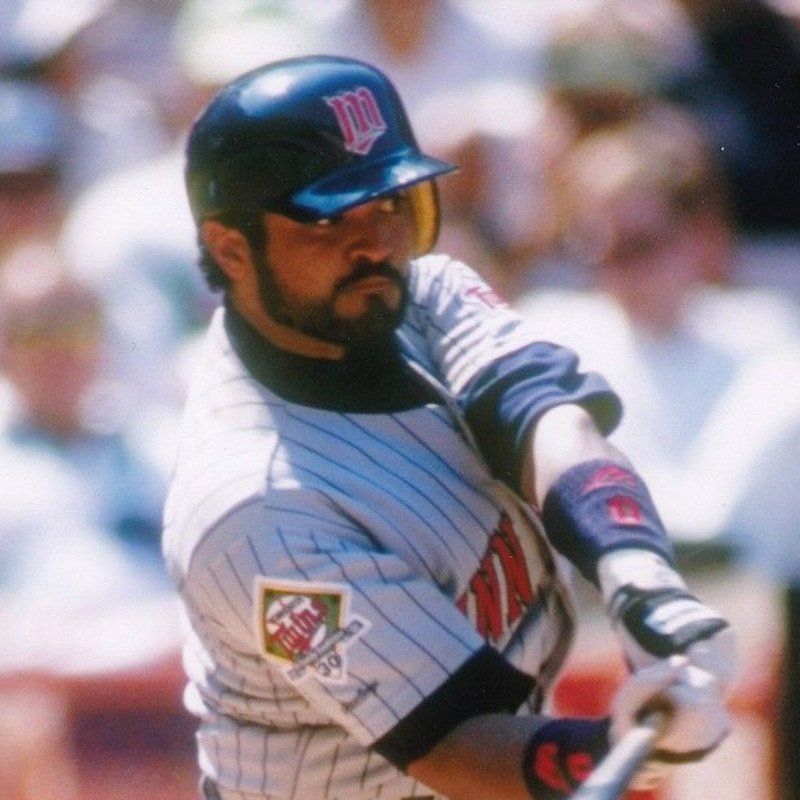 Adalberto “Junior” Oritz Colón was born October 24, 1959, in Humacao, Puerto Rico. The Pittsburgh Pirates signed Junior Ortiz as an undrafted free agent on January 19, 1977. He made his Major League debut on September 20, 1982, as a defensive replacement in the 8th inning. His first hit came ten days later, on September 30, a single against future Hall of Famer and former Twin Jim Kaat of the Cardinals. That 1982 Pittsburgh team also included future Twin and future teammate Brian Harper. Ortiz was traded to the New York Mets in early 1983 but was reacquired by the Pirates in the 1984 Rule 5 Draft. He played the next five seasons for the Pirates, batting .267/.320/.332 in a mostly backup capacity, first to future five-time All-Star and four-time Gold Glove winner Tony Peña, and later to another Gold Glover, Mike Lavalliere. (Peña and Lavalliere were traded for each other just prior to the 1987 season, with Andy Van Slyke also going to Pittsburgh with Lavalliere). The Minnesota Twins acquired Junior Ortiz in an April 1990 trade that sent Mike Pomeranz (yes, the former KARE news anchor) to Pittsburgh after Tim Laudner abruptly left the team near the end of spring training to ponder his future. Oritz was considered a good defensive catcher with a decent arm who could replace Laudner. Unproven Lenny Webster was sent to the minor leagues for depth. Greg Olson had left the Twins and signed as a free agent with the Braves and was not an option. And Orlando Mercado and his abysmally bad -16 OPS+ from 1989 was not an option. Ortiz was acquired as an experienced Major League backup to incumbent Brian Harper. Fortunately for the Twins, Junior Ortiz had the best season in 1990. He was even used as a Designated Hitter three times. “Best” is a term I use loosely. While his .335 batting average and .384 on-base percentage were good, his .388 slugging percentage was less than ideal. His OPS+ was above average at 112, but he hit zero home runs and had only 18 RBI. His 1991 season was not as good; he batted .209/.293/.261. His OPS+ was just 52. Once again, he had no home runs. His RBI total decreased to 11. Junior’s best game for the Twins probably came on June 18, 1990, against Texas. Ortiz had four hits and three RBI against Bobby Witt and the Rangers Bullpen in an 8-6 loss. This was during an astounding 18-game stretch for Ortiz when he hit .482/.517/.554. Ortiz was a positive bench player. The Minneapolis Star Tribune reported on February 23, 1991, that Ortiz saw the potential of the 1991 team, saying, “We’re just so much better than people think. I think we are going to win this thing. I mean the whole thing. You’ll see.” Wow. What a prognosticator! Junior Ortiz played in six games in the 1991 playoffs and World Series. He was the starting catcher in each game started by pitcher Scott Erickson. (At some point, he became Scott Erickson’s personal catcher. He caught 28 of Erickson’s 32 starts that season.) Ortiz got eight at-bats in the American League Championship Series and World Series with one hit, a single in the sixth inning of Game Three of the World Series, a loss. He had an RBI groundout in the Game Five blowout loss. He also came in three times as a defensive replacement. His defense was perfect in both series – no errors, no stolen bases allowed, no passed balls. A reader requested more stories about goofballs and characters who have played for the Minnesota Twins. Junior Ortiz was one of the first to come to mind, probably because of the Junior/Joe mystery. This occurred in mid-August 1991. He felt he was struggling more than normal with the bat (although the game logs don’t show a huge drop-off at that time), so Junior decided to become a new person, “Joe.” Below are snippets I found about that conundrum, all from the Minneapolis Star Tribune. On August 12, Ortiz shaved his beard and said he was changing his name from Junior to Joe because he was hitting so poorly (under .240). He said, “Plus, with no beard, I have better bat speed and can move better. I look better, too, huh?” More from the Star Tribune on August 14, Oritz said, “Since I changed my name to Joe, we’re 2-0. I miss Junior, even though he was a jerk. He was a nice guy with a bad attitude. I think Joe’s a nice guy and doesn’t stutter as much.” Junior was a stutterer. “The only thing I’m worried about is how Erickson will like Joe catching him.” August 15, Ortiz said, “It was something I had to do. It was up to me to get things turned around and ensure we win the pennant. This could do it.” While shaving his beard, Ortiz left the mustache because “Don’t worry about the mustache. I look so good now. If I do that, I’ll just look like any other ugly person.” August 16, "I was struggling, I was hitting so bad, I said, 'I'm going to change everything,'" Ortiz recounted. "So, I shaved my beard and changed my name to Joe. It didn't work. I was still terrible." On August 21, it was reported that Ortiz changed his name back and got two hits in his first game back as Junior. He also scored two runs, walked, and picked off a runner at first base. That was apparently the end of the Joe experiment. Whatever he did, the Twins, of course, did win the World Series that season. Was it Ortiz’s spring training prediction, his change to Joe, or was it something else? After playing for the Twins, Ortiz finished his career with two seasons in Cleveland and one in Texas. He was traded in December 1994, during the baseball strike, to the White Sox. The strike was not resolved when the 1995 season was scheduled to begin, and the owners agreed to try replacement players. Ortiz, whose time in baseball was winding down, agreed to be a replacement player. However, when the situation was resolved in early April, Ortiz was sent to the minor leagues and never returned to play Major League Baseball (Blackballed or just not good enough?). His career numbers were .256/.305/.305, five home runs, 186 runs batted in, and an OPS+ of 70. His career bWAR was actually negative, -0.3. Junior Ortiz was a complementary and fun ballplayer. He was not great but good enough to be on a championship team. Based on what I have read of him, he seems like an optimistic team player, a little goofy but someone who would be good in the clubhouse and a likable teammate. Baseball has always had a few goofballs, and I, for one, would like to see more players like Junior Ortiz.
 -
Adalberto “Junior” Oritz Colón was born October 24, 1959, in Humacao, Puerto Rico. The Pittsburgh Pirates signed Junior Ortiz as an undrafted free agent on January 19, 1977. He made his Major League debut on September 20, 1982, as a defensive replacement in the 8th inning. His first hit came ten days later, on September 30, a single against future Hall of Famer and former Twin Jim Kaat of the Cardinals. That 1982 Pittsburgh team also included future Twin and future teammate Brian Harper. Ortiz was traded to the New York Mets in early 1983 but was reacquired by the Pirates in the 1984 Rule 5 Draft. He played the next five seasons for the Pirates, batting .267/.320/.332 in a mostly backup capacity, first to future five-time All-Star and four-time Gold Glove winner Tony Peña, and later to another Gold Glover, Mike Lavalliere. (Peña and Lavalliere were traded for each other just prior to the 1987 season, with Andy Van Slyke also going to Pittsburgh with Lavalliere). The Minnesota Twins acquired Junior Ortiz in an April 1990 trade that sent Mike Pomeranz (yes, the former KARE news anchor) to Pittsburgh after Tim Laudner abruptly left the team near the end of spring training to ponder his future. Oritz was considered a good defensive catcher with a decent arm who could replace Laudner. Unproven Lenny Webster was sent to the minor leagues for depth. Greg Olson had left the Twins and signed as a free agent with the Braves and was not an option. And Orlando Mercado and his abysmally bad -16 OPS+ from 1989 was not an option. Ortiz was acquired as an experienced Major League backup to incumbent Brian Harper. Fortunately for the Twins, Junior Ortiz had the best season in 1990. He was even used as a Designated Hitter three times. “Best” is a term I use loosely. While his .335 batting average and .384 on-base percentage were good, his .388 slugging percentage was less than ideal. His OPS+ was above average at 112, but he hit zero home runs and had only 18 RBI. His 1991 season was not as good; he batted .209/.293/.261. His OPS+ was just 52. Once again, he had no home runs. His RBI total decreased to 11. Junior’s best game for the Twins probably came on June 18, 1990, against Texas. Ortiz had four hits and three RBI against Bobby Witt and the Rangers Bullpen in an 8-6 loss. This was during an astounding 18-game stretch for Ortiz when he hit .482/.517/.554. Ortiz was a positive bench player. The Minneapolis Star Tribune reported on February 23, 1991, that Ortiz saw the potential of the 1991 team, saying, “We’re just so much better than people think. I think we are going to win this thing. I mean the whole thing. You’ll see.” Wow. What a prognosticator! Junior Ortiz played in six games in the 1991 playoffs and World Series. He was the starting catcher in each game started by pitcher Scott Erickson. (At some point, he became Scott Erickson’s personal catcher. He caught 28 of Erickson’s 32 starts that season.) Ortiz got eight at-bats in the American League Championship Series and World Series with one hit, a single in the sixth inning of Game Three of the World Series, a loss. He had an RBI groundout in the Game Five blowout loss. He also came in three times as a defensive replacement. His defense was perfect in both series – no errors, no stolen bases allowed, no passed balls. A reader requested more stories about goofballs and characters who have played for the Minnesota Twins. Junior Ortiz was one of the first to come to mind, probably because of the Junior/Joe mystery. This occurred in mid-August 1991. He felt he was struggling more than normal with the bat (although the game logs don’t show a huge drop-off at that time), so Junior decided to become a new person, “Joe.” Below are snippets I found about that conundrum, all from the Minneapolis Star Tribune. On August 12, Ortiz shaved his beard and said he was changing his name from Junior to Joe because he was hitting so poorly (under .240). He said, “Plus, with no beard, I have better bat speed and can move better. I look better, too, huh?” More from the Star Tribune on August 14, Oritz said, “Since I changed my name to Joe, we’re 2-0. I miss Junior, even though he was a jerk. He was a nice guy with a bad attitude. I think Joe’s a nice guy and doesn’t stutter as much.” Junior was a stutterer. “The only thing I’m worried about is how Erickson will like Joe catching him.” August 15, Ortiz said, “It was something I had to do. It was up to me to get things turned around and ensure we win the pennant. This could do it.” While shaving his beard, Ortiz left the mustache because “Don’t worry about the mustache. I look so good now. If I do that, I’ll just look like any other ugly person.” August 16, "I was struggling, I was hitting so bad, I said, 'I'm going to change everything,'" Ortiz recounted. "So, I shaved my beard and changed my name to Joe. It didn't work. I was still terrible." On August 21, it was reported that Ortiz changed his name back and got two hits in his first game back as Junior. He also scored two runs, walked, and picked off a runner at first base. That was apparently the end of the Joe experiment. Whatever he did, the Twins, of course, did win the World Series that season. Was it Ortiz’s spring training prediction, his change to Joe, or was it something else? After playing for the Twins, Ortiz finished his career with two seasons in Cleveland and one in Texas. He was traded in December 1994, during the baseball strike, to the White Sox. The strike was not resolved when the 1995 season was scheduled to begin, and the owners agreed to try replacement players. Ortiz, whose time in baseball was winding down, agreed to be a replacement player. However, when the situation was resolved in early April, Ortiz was sent to the minor leagues and never returned to play Major League Baseball (Blackballed or just not good enough?). His career numbers were .256/.305/.305, five home runs, 186 runs batted in, and an OPS+ of 70. His career bWAR was actually negative, -0.3. Junior Ortiz was a complementary and fun ballplayer. He was not great but good enough to be on a championship team. Based on what I have read of him, he seems like an optimistic team player, a little goofy but someone who would be good in the clubhouse and a likable teammate. Baseball has always had a few goofballs, and I, for one, would like to see more players like Junior Ortiz. View full player
-
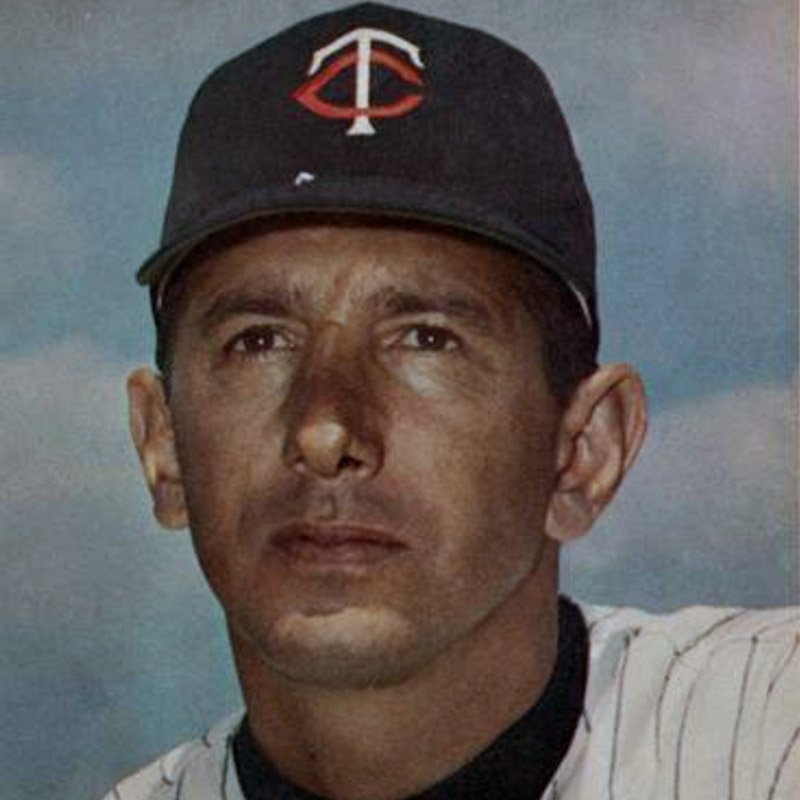 Billy Martin played for the New York Yankees in the 1950s and was part of five championship teams. From 1957 to 1961, he bounced from Kansas City Athletics to the Detroit Tigers, the Cleveland Indians, the Cincinnati Reds, the Milwaukee Braves, and then to Minnesota. Martin had an eight-year stay in Minnesota in the 1960s, first as a player in 1961 and then later as a scout, coach, and manager. After guiding the Twins, he managed the Tigers, Rangers, Yankees, and A’s at different points. He managed the Yankees five separate times. Alfred Manuel “Billy” Martin was born May 16, 1928, in Berkeley, California. His father abandoned the family when Billy was eight months old. His mother taught him to stick up for himself. Billy also spent time in amateur boxing in the San Francisco area. His mother’s feistiness and the youth boxing background stuck with him throughout his entire life, contributing to his combative nature. After high school, Martin played minor league ball on the West Coast, eventually working his way to the Oakland Oaks of the Pacific Coast League, where Hall of Famer Casey Stengel managed him. Martin played infield and was most often utilized as a second baseman, which was the case throughout his playing career. He was a good defensive infielder and could hit a little. After the 1949 season, Martin was sold to the New York Yankees (Stengel had been hired as manager of the Yankees in 1949). The Yankees of the 50s were a powerhouse with Hall of Famer players Yogi Berra, Mickey Mantle, and Whitey Ford. As stated above, Billy was part of five World Series-winning teams (1950, 1951, 1952, 1953, and 1956). He missed the 1954 season while serving in the military—Martin was an All-Star in 1953. After being traded from the Yankees and bouncing around with five other teams, Martin landed with the Twins after a June 1961 trade with the Milwaukee Braves. The Braves received infielder Billy Consolo. Martin finished the 1961 season with the Twins hitting .245/.275/.341 in 108 games. He had six home runs and 36 RBI. That was the end of Billy’s playing career, as the Twins released Martin just before the 1962 season. His career numbers were .257/.300/.369. He hit 64 home runs, had 333 RBI, and an OPS+ of 81. The Twins hired him as a scout, which he did through 1964, but that was not the proper fit for the feisty former player; he was meant to be a manager. He needed to be on the field. He served as third base coach from 1965 to May of 1968 when the Twins assigned him to manage their Triple-A ball club in Denver. In 1969, after the Twins had underperformed since the 1965 AL Championship season, the Twins dismissed Cal Ermer and hired Billy Martin as the team’s fourth manager. In addition to his feisty and fiery leadership, Martin was extremely aggressive as a manager and wanted his players to play that way. He emphasized the running game, taking the extra base, and stealing. He famously encouraged young Rod Carew to steal and taught Carew the art of stealing home. It was so successful that Carew stole home seven times in 1969, tying a Major League record set by Pete Reiser. That record still stands. Miscbasbeball.wordpress.com has a great excerpt from Rod Carew’s autobiography, Carew, about stealing home, some of which I used below. Baseball Almanac lists Carew’s 17 career steals of home as 14th most all-time. Almost all the players ahead of Carew on this list played the vast majority of their careers during the Deadball era (pre-1920), with the limited exceptions of Frankie Frisch and Jackie Robinson. Martin’s aggressiveness led to the Twins stealing 115 bases in 1969, their most since moving from Washington. However, the 1976 squad passed that number and has since been surpassed six more times. Billy Martin’s 1969 team had an excellent record, going 97-65 and finishing first in the newly formed American League West division. They went to the first American League Championship Series but were swept by the Baltimore Orioles. Despite the win-loss record and Division Championship, 1969 was tumultuous. I’m sure longtime fans know of Martin’s battles with players and management, which I won’t rehash here. Those battles, and probably just Martin’s abrasive attitude in general, led to his termination just after the playoff loss to Baltimore. After his Twins career, Martin was hired by Detroit in 1971. He managed three seasons and had a record of 248-203. The Tigers fired Martin late in the 1973 season after disagreements between Martin and the general manager. After Martin’s dismissal in Detroit, the owner of the Texas Rangers quickly jumped at the chance to hire him. Martin managed parts of three seasons in Texas starting in late 1973. He had a 137-141 record. By mid-1975, Texas had a new owner, some higher-priced free agents, and an underwhelming record. Martin was fired. On August 1, 1975, George Steinbrenner hired Billy Martin, starting a chaotic relationship. The Yankees lost the World Series in 1976 but won it all in 1977 for Martin’s one and only managerial championship. He was forced to resign in July of 1978 but was rehired in 1979. He was fired at the end of the 1979 season as the Yankees missed the playoffs. In 1980, Billy Martin returned home to lead the Oakland A’s. His aggressiveness, combined with Rickey Henderson’s ability, resulted in Henderson stealing bases at a ridiculous rate. Henderson broke the single-season stolen base mark with 130 steals in 1982. After some success in 1980 and 1981, Oakland played poorly in 1982, and Martin was fired. Billy returned to the Yankees in 1983 and served as manager again in 1985 and 1987. Steinbrenner fired Billy each of those three times. After his last dismissal, Martin stayed with the Yankees as a special consultant. Billy Martin died on Christmas Day 1989 in an automobile crash. Throughout his life, Billy Martin battled with alcohol. Alcohol was reported to be a factor in the accident, although it’s unclear whether Martin or his friend was the driver. Billy Martin was one of a kind. He was a fiery leader who quickly brought out the best in teams and players, but at the same time, his presence and influence seemed to burn out quickly as others tired of his abrasive personality. SABR summarized, “During his tenure as a major-league manager, Martin’s off-field exploits were legendary; he got into fights with team officials, bar patrons, a cab driver, a marshmallow salesman, various fans, and two of his pitchers.” Billy Martin’s chapter in Minnesota during the 1960s was like everywhere else – successful but short-lived and left fans wondering what could have been.
