

Twins Video
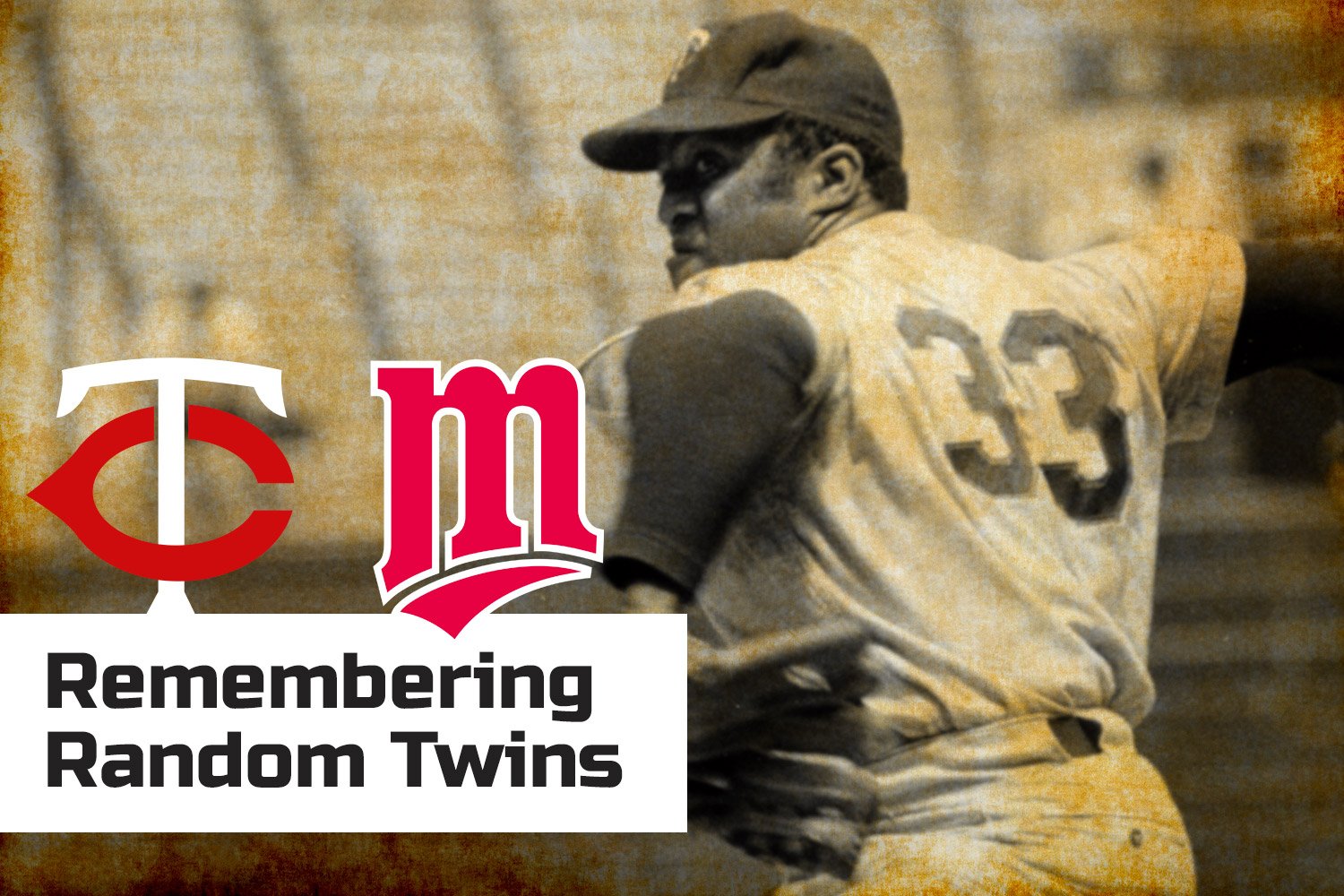
On December 8, 2024, the Classic Baseball Era Committee considered eight candidates for selection to the National Baseball Hall of Fame, including one-time Twins pitcher Luis Tiant. The Cuban right-hander was a Twin for only a single season – 1970. His friend, countryman, contemporary, and teammate Tony Oliva voiced his support for Tiant’s potential selection to the Hall of Fame in Oliva’s acceptance speech in 2022 (starting at the 10:08 mark). Unfortunately for Tiant’s fans and family, this year's committee did not select him for the Hall of Fame. Was he worthy? Let’s look back at his career.
Luis Clemente Tiant Vega was born in Cuba on November 23, 1940. He came from a baseball family as his father, also named Luis, was a long-time left-handed pitcher in Cuba, the American Negro Leagues, the Dominican Republic, and Mexico, as well as barnstorming teams from 1926 through 1948. He was a pitcher of some acclaim. Hall of Famer Monte Irvin claimed the elder Tiant would have been a great star in the major leagues if it had not been for the color barrier.
In 1959, the younger Tiant left Cuba to play professional baseball in Mexico City. He played three seasons, improving each season to the point that he began to be noticed by major league scouts. Prior to the 1962 season, the Cleveland Indians purchased his rights, and he moved to America.
Like Oliva, Tiant came to the United States just as Fidel Castro closed the country to outside travel. Neither player had any idea they would not see their parents for the better of a decade.
El Tiante, as he was called, pitched parts of three seasons in the Cleveland minor league system before getting called up to Cleveland in July of 1964. He had an exceptionally strong major league debut, shutting out the Yankees with 11 strikeouts while allowing only four hits. He finished that season with a strong 10-4 record and continued with solid campaigns through 1967. He was just getting warmed up.
Tiant’s 1968 season was simply superb, finishing with a 21-9 record. He led the American League pitchers with an 8.5 bWAR, 1.60 ERA, nine shutouts, and many advanced statistics. He put together a stretch of 42 consecutive scoreless innings in April and May and started the All-Star game in July. El Tiante also had a 10-inning shutout against the Twins on July 3, during which he struck out 19 batters. However, he did not get a single vote for the Cy Young award in 1968 (otherwise known as the Year of the Pitcher) as Denny McLain was a unanimous winner because of his incredible 31 wins.
1969 would not be as successful. Tiant led the league (in negative fashion) with 20 losses, 37 home runs allowed, and 129 walks issued. His ERA increased by more than two runs to 3.71. It appears those numbers made Tiant expendable. The Indians packaged him with fellow pitcher Stan Williams and traded the pair to Minnesota for Dean Chance, Bob Miller, Graig Nettles, and Ted Uhlaender.
The six-foot, 180-pound Tiant won his first six decisions in his lone season with the Twins. It looked like he was recapturing his 1968 success until he broke his scapula. Tiant was placed on the disabled list and replaced on the roster by a 19-year-old up-and-comer. Somebody from Holland via Canada and California named Bert Blyleven. Tiant returned from the broken shoulder blade in August and finished the 1970 season 7-3. The Twins won the American League West Division that season and faced the Baltimore Orioles in the American League Championship Series, where they were swept 3-0. Tiant only appeared in one game, finishing game two, an ugly 11-3 loss. He got two outs to finish the ninth inning but gave up a home run to Davey Johnson. For the season, he threw 92 2/3 innings with a 3.40 ERA and 50 strikeouts.
Tiant’s 1971 spring training was not good. He was hurt and ineffective, resulting in the Twins releasing him. Calvin Griffith believed that Tiant was finished at age 30. Luis believed the move was intended only to save money, which sounds believable. Why did you make a big trade for Tiant only a year earlier if you thought he might be reaching the end, or you didn’t want to pay him moving forward? This was the Twins and Calvin Griffith in the 1970s.
The Braves quickly signed him and assigned him to Triple-A Richmond, where he revamped his pitching windup partly due to the shoulder injury. The new windup had him famously turn his back on the batter before spinning and tossing a pitch from a myriad of angles. From the SABR Bio Projects, “He was said to have thrown six pitches (fastball, curve, slider, slow curve, palm ball, and knuckleball) – from three different release points (over the top, three-quarters, and side-arm). His windup and motion seemed to vary on a whim.” However, this revamped motion was not enough to keep him around. The Braves released him only a month later.
Two days after being released by Atlanta, Boston signed Tiant. After four games at Triple-A Richmond, he was called to the Red Sox, where he settled in for the best years of his career. He was 1-7 in that first season of 1971, but things improved from there. He won 15 games in his second year in Beantown and again led the AL in ERA (1.91). He won 20 games or more in three of his eight years in Boston. He topped 200 innings five times, including 311 1/3 innings in 1974. Tiant led the league with seven shutouts in 1974.
Additionally, he appeared in two more All-Star games. His legend was probably cemented with an incredible 1975 postseason, even though the Red Sox lost the World Series. Tiant pitched four times in the ALCS and World Series, winning three games. His first three appearances were complete game wins, one being a shutout. Then he started the famous game six, giving up six runs in seven innings. But the offense bailed him out, and the Red Sox tied it up before Carlton Fisk hit his classic home run in the 12th inning, forcing game seven, which the Red Sox lost.
Tiant won 21 games in 1976 and pitched two more seasons in Boston. After 1978, he was a free agent for the first time in his career, and he signed with the rival Yankees, where he would have one good season and one not-so-good. He finished his career with partial seasons with the Pirates (1981) and the Angels (1982).
For his career, Tiant won 229 (67th most all-time) and lost 172. His career ERA was a very good 3.30. His ERA+ was 114. In 3,486 2/3 innings, he struck out 2,416 and walked 1,104. His career WHIP was 1.199. His 49 shutouts are 21st all-time. His career bWAR was 66.1 (the average bWAR for a Hall of Fame Pitcher is 66.0).
All those numbers never amounted to much support for Tiant’s candidacy for the Hall of Fame. In the Baseball Writers Association of America voting, he received 30.9% of the vote his first year on the ballot, 1988. However, the 1988 support would be the high point for Tiant; he never again received that level of support from the writers. The pitchers eligible for induction in the years immediately following Tiant included pitching heavyweights Jim Palmer, Gaylord Perry, Fergie Jenkins, Tom Seaver, Steve Carlton, Phil Niekro, Don Sutton, and more. After 15 years on the ballot without selection by the writers, it was up to the Veterans Committee and its various spinoffs, where he never garnered much support. This year, Tiant received less than five votes from the 16-member electorate.
After his playing career, he was a minor league pitching coach for the Dodgers and White Sox systems, coached in college, and even appeared in an episode of Cheers (season 1, episode 13, “Now Pitching, Sam Malone). On October 8, 2024, Luis Tiant died at home in Maine at the age of 83.
Does Tiant deserve election to the Hall of Fame? Start the discussion below.
If you like looking back at the Twins past, check out my previous articles at Twins Daily History.
Sources include Baseball Reference, Society for American Baseball Research, and IMDB.com.
Are you optimistic about the Twins right now?

Are you interested in Twins history? Then check out the Minnesota Twins Players Project, a community-driven project to discover and collect great information on every player to wear a Twins uniform!
View The Players Project



Recommended Comments
Create an account or sign in to comment
You need to be a member in order to leave a comment
Create an account
Sign up for a new account in our community. It's easy!
Register a new accountSign in
Already have an account? Sign in here.
Sign In Now