


Twins Video
Pending one last week of games, Manuel Margot just set the record for the worst pinch-hitting season in baseball history. He has both the most plate appearances (35) and the most at-bats (30) as a pinch-hitter without a hit in baseball history, within a single season.
You might be tired of hearing about this, especially from me. But Margot's situation has officially become unprecedented. As long as he doesn’t get a hit as a pinch-hitter in the next six games, he’ll go down as the record-holder.
On the same night on which Margot crossed that legendary threshold, Twins utility infielder Willi Castro also made history, becoming the first player in MLB history to appear at five positions 25 or more times in a single season. Castro set this record in one of the most challenging configurations—shortstop and center field (the two most critical defensive positions beyond catcher), then second base, left field, and third base.
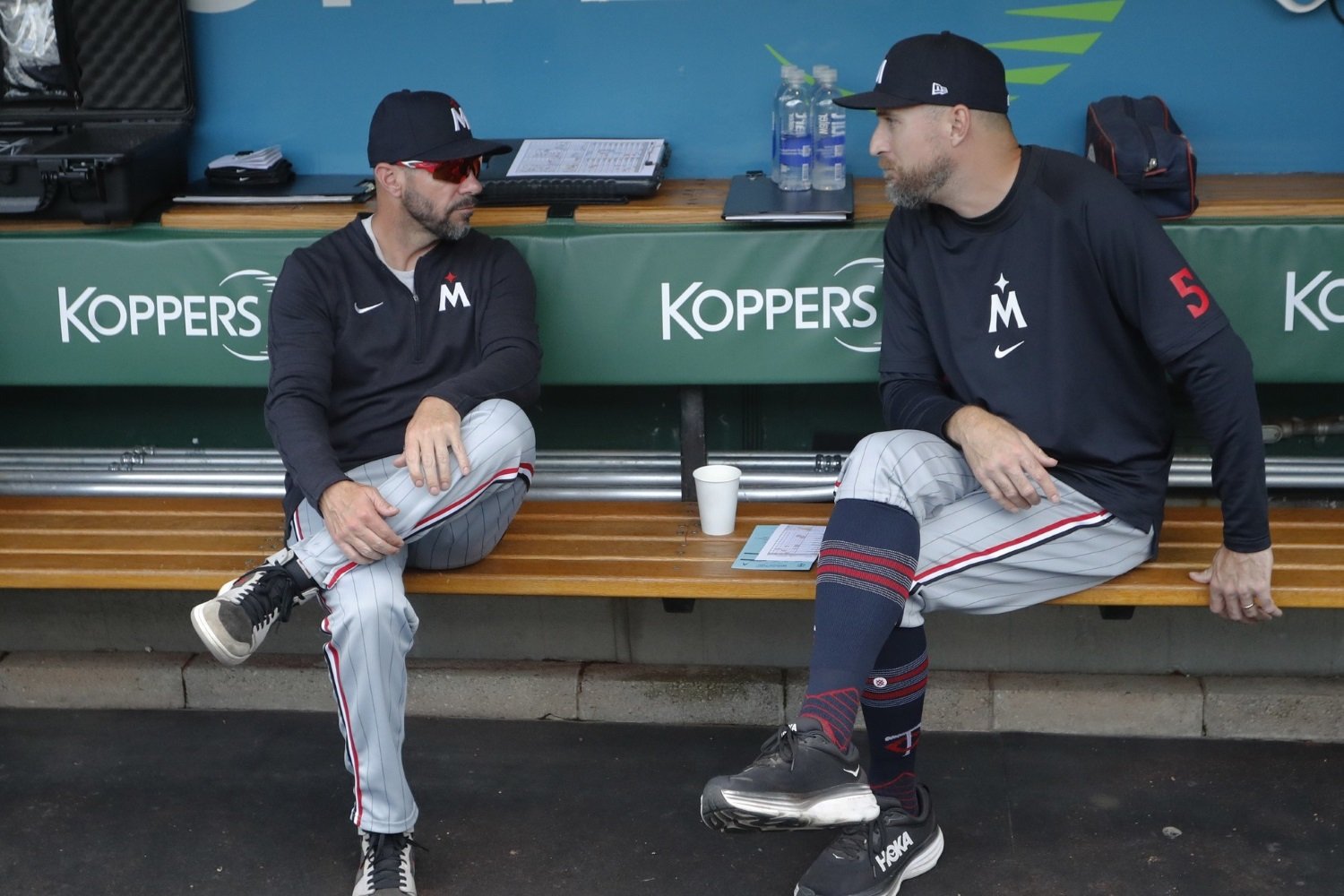
Rocco Baldelli deployed these two players to the tune of two of the most unique seasons in history. Baldelli does nothing if not keep us and his players on their toes. However, both cases, by some interpretations, can be chalked up to the same core Baldelli trait: trust.
By all accounts, Baldelli trusts his guys--perhaps to a fault. The Twins’ skipper will put nearly anyone in any position. Look no further than the next game after Margot and Castro each made their niche history. In the bottom of the fifth inning, with a runner on second and two outs, Baldelli removed rookie starter Zebby Matthews from the game for a reliever—a reasonable choice to protect his young arm from a quick blowup.
But the reliever that he chose was Cole Irvin. If you haven’t paid attention to Twins baseball over the last week, you might not have even known Irvin was in the organization. The lefty slop-thrower and recent starter had been waived by the Orioles and claimed by the Twins last week, reportedly to provide length out of the pen.
This was the guy that Baldelli went to with the tying run at home plate. A few pitches later, the Red Sox took the lead on a three-run homer, and never looked back.
By all appearances, if you’re on Baldelli’s team and you fit the mold for what he wants (in this case, a lefty reliever), he’s going to use you as if he trusts you. The same could be said about Ronny Henriquez, who had 29 unspectacular MLB innings at the time but was given a save opportunity a week ago against division rival Cleveland in the bottom of the 10th inning. If you want to go back even further, you could recall his moves to bring in rookies Zack Littell and Cody Stashak to hold a lead during Game 1 of the 2019 ALDS at Yankee Stadium.
Baldelli is going to trust his guys, through and through, to fill the roles he sees as necessary. Crucially, too, he views all 26 or 28 players on the active roster as his guys. You can probably play the Uno Reverse card here and claim that his ballyhooed quick hooks for starters could be a sign of a lack of trust—but getting into that discussion is another topic, so my quick counter here is that he wouldn’t choose fledgling relievers over starters if he didn’t trust the fledgling relievers to do their job.
Trust is important. That almost goes without saying, but it’s also held up to empirical scrutiny from team scientists. Social scientists define trust as holding a belief that another person will essentially hold up their end of the bargain, and then acting according to that belief—putting your money where your belief is. Believing that your reliever will get you key outs, that your bench bat will be able to hit in a big spot, or that your utility player can reliably play any of five positions, then making a move to play them in that spot would be an example of trust.
This type of trust is generally referred to as cognitive trust—believing that someone else has the required abilities and the right intentions to use them. This definition contrasts with other types of trust, like affective trust—trust that another person has your best interests, can keep a secret, whatever. This distinction might seem trivial, but think about how you trust your coworkers versus your family. You might trust your mother to love you and look out for you, but not to change the oil like your mechanic coworker Jim.
The effects of cognitive trust might be intuitive, but there are clear benefits that might not come to mind immediately. Beyond the confidence that, say, the manager can instill in an individual, he also instills confidence in that individual’s teammates. If the manager never wavers in his belief that, let’s just say, Manuel Margot can pinch-hit, it’s easier for teammates to also trust Margot. This means they are free to focus on their role, rather than worrying about whether their teammate will hold up their end of the bargain.
And that’s where you want players to be: controlling what they can control and not worried about their teammates’ shortcomings. Their cognitive resources are focused on their job, not that of their teammate. That’s the manager’s job. Willi Castro himself had a nice quote alluding to this.
But that goes much farther when those trusted teammates hold up their end of the bargain.
There have been a ton of reports about just how much the players like their manager. Trust can be part of it. But there’s probably a limit to how much trust is responsible. Not every great manager in baseball history has offered this near-unconditional trust to their whole roster. Sparky Anderson, Tony La Russa, Casey Stengel, and Earl Weaver are prominent examples of managers who placed a huge amount of trust in specific players in specific circumstances, but were open about the exclusiveness of that trust and the way it was limited and bounded by the response of those players to that trust in those situations.
In one framing, Baldelli is showing more trust in his own employers--a fundamentally self-serving trust, since it tends both to ingratiate him to his superiors and to give him cover when things go wrong--than in the actual players in whom he's ostensibly investing that faith. If you trust everyone, do you really trust anyone? Or are you just nodding along? Anderson, especially, would say the latter. Baldelli might need to be a little more honest with himself, and embrace the affective trust that comes from experience and emotion, rather than continuing to silo his trust in the cognitive realm and give it indiscriminately. With one week to go, the stakes of his leadership and his tactical choices over the final six games are sky-high, and when the chips are down, not everyone is to be trusted.









Recommended Comments
Create an account or sign in to comment
You need to be a member in order to leave a comment
Create an account
Sign up for a new account in our community. It's easy!
Register a new accountSign in
Already have an account? Sign in here.
Sign In Now