Jump to content
Twins Daily
  • Create Account
  • Twins News & Analysis

    How Will The New CBA Affect The Twins?


    Nick Nelson

    Just hours ahead of the December 1st deadline, Major League Baseball and its Players Association were able to agree on a restructured Collective Bargaining Agreement, ensuring labor peace through 2021.

    The new CBA is largely similar to the one it replaces, with a few distinct alterations. Today, we'll look at at some of those changes, and what impact they might have on the Minnesota Twins specifically.

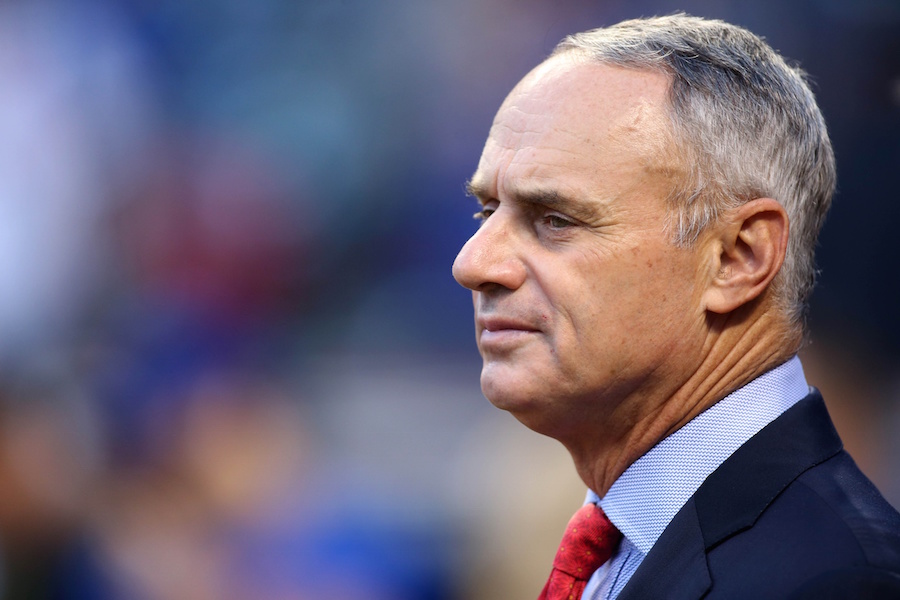
    Image courtesy of Charles LeClaire, USA Today

    Twins Video

    The exact details of the renewed agreement – reached under the watch of MLB commissioner Rob Manfred (pictured above) – aren't public, but plenty of details have trickled out. From what we know, here are the biggest changes:

    Luxury Tax Threshold Increases

    What Changed? In 2017, the spending threshold at which teams start getting penalized will rise from $189 million to $196 million. It will continue to jump each year until 2021 when it reaches $210 million.

    Twins Impact: It's a move that is conducive to higher player salaries, since big market clubs will have slightly less limitation on how much they can dole out. Unless the Pohlads suddenly decide to pump another $90 million into payroll, this won't directly affect the Twins, except that salary inflation league-wide may accelerate a little.

    Shorter Disabled List Stints

    What Changed? The minimum DL stint is being shortened from 15 days to 10 days.

    Twins Impact: The idea here is that when a player is a bit nicked up, his team will feel less handcuffed in making a DL move to get some extra help. It's particularly pertinent for starting pitchers, who stand to miss one less start by returning five days earlier than before. The Twins had no shortage of ailments and injuries on their staff, so this should prove helpful for them.

    (Some have suggested that teams could take advantage of this system by placing a starter on the DL and having him miss one turn – basically giving him a breather – while bringing on an extra reliever in the meantime. Will a Minnesota team that's been as arm-needy as any utilize this strategy? Would it be frowned upon?)

    New International Spending Caps

    What Changed? The previous system involved soft caps in the form of bonus pools. If exceeded, the offending team was penalized 100 percent on overages, with limits imposed the following year. Now, there are hard caps, which will vary by team but generally sit around $5 million.

    Twins Impact: Based on their previous international spending habits, the Twins won't have trouble staying under the limit, which greatly levels the playing field in that it prevents a team like the Dodgers from being able to say 'screw it' and splurge for $45 million to gather up all of the premier foreign young talent, damn the consequences. That's good news for teams like Minnesota, but not so much for these young men and their earning potential. (Boy, does this look like a major capitulation by MLBPA.)

    One other interesting element of this new arrangement is that teams can trade away percentages of their cap. If Derek Falvey and Thad Levine are committed to using the international free agency channel extensively, then don't be surprised to see them exercise this capability and acquire more flexibility. Or vice versa.

    (It's worth noting that international players become exempt from these rules when they turn 25, or they've played six years in a pro league. So this wouldn't alter the pursuit of a player like, say, Byung Ho Park.)

    Free Agent Compensation System Overhauled

    What Changed? Teams no longer must forfeit a first- or second-round draft pick in order to sign a free agent who rejected a qualifying offer.

    Twins Impact: Players HATED this rule, and with good reason. For all but the most elite qualifying free agents, it was a stifling burden. However, it worked out pretty damn well for the Twins over the years. As they watched homegrown stars leave via free agency, they stockpiled high picks, leading to the additions of players like Jose Berrios (comp for Michael Cuddyer) and Glen Perkins (Eddie Guardado). Now, the compensation will generally be a third-round pick.

    Only once did Minnesota sign a free agent with the draft penalty attached. Bringing in Ervin Santana cost them their second-rounder in 2015, but because of this they also got him for less than they otherwise would have. Maybe a lot less. Of course, you will also recall the situation in 2014 where Kendrys Morales elected not to sign until June due to a barren market, and Minnesota was able to eventually snag him. So, those kind of situations won't be happening anymore.

    Offensive Rookie Hazing Banned

    What Changed? When it comes to the age-old ritual of dressing up rookies in funny or embarrassing costumes, there have been some lines drawn. A new policy outlaws "dressing up as women or wearing costumes that may be offensive to individuals based on their race, sex, nationality, age, sexual orientation, gender identity or other characteristic."

    Twins Impact: We'll never see another picture like this one, of Pat Neshek:

    neshekrookiehaze.jpg

    That is not a complaint.

    No More All-Star Home Field Stipulation

    What Changed? The All-Star Game no longer decides World Series home field advantage.

    Twins Impact: Well, obviously, they now no longer need to worry about the outcome of a meaningless midsummer exhibition game dictating whether they play Game 1 at Target Field when they reach the big show this October.

    Or, some October. Hey, a guy can dream.

    Follow Twins Daily For Minnesota Twins News & Analysis

    Recent Twins Articles

    Recent Twins Videos

    Twins Top Prospects

    Marek Houston

    Cedar Rapids Kernels - A+, SS
    The 22-year-old went 2-for-5 on Friday night, his fourth straight multi-hit game. Heading into the week, he was hitting .246/.328/.404 (.732). Four games later, he is hitting .303/.361/.447 (.808).

    User Feedback

    Recommended Comments


    Featured Comments

    In regards to the international spending limits, will this open up these markets and players to other leagues (Japan, Korea, etc.)? If they do not have these strict limits, could teams over there start outbidding MLB clubs for the top under-25 prospects?


    In regards to the international spending limits, will this open up these markets and players to other leagues (Japan, Korea, etc.)? If they do not have these strict limits, could teams over there start outbidding MLB clubs for the top under-25 prospects?

    Interesting question!  The next Moncada or Alvarez (20 year old Cuban stars) could sign a ~4 year deal in Japan, getting more money than any MLB team could offer, and then come to the USA at age 25 and sign a MLB deal with zero restrictions.

    The luxury tax situation is actually good for the Twins in a way. It's the closest thing to a hard cap they could ask for. If you break the threshold in any meaningful way you end up paying a 92% tax. That means you're looking at a $400 mil payroll. No team is going to be willing to do that. So it will hold contracts in check a little bit. It's not a huge thing, and the interesting part will be seeing what it does in the future as inflation continues to grow contracts and how teams like the Yankees and Dodgers will conduct business with having Harper, Machado, etc. coming out as free agents after the 2018 season. You can't sign Harper for the $40 mil a year he's reportedly seeking and then have Kershaw at 30+ and Jansen at 20 and then build your team through other free agents. Having 40% of your payroll wrapped up in 3 guys makes life hard. Even if they're 3 of the best players in the game. It should theoretically open the market up to more teams when it comes to the big time free agents. And if this offseason is any indication the GMs around the league are learning the lesson that huge long term deals to vets are a terrible idea as they get old and become wasted money. Mixing that with the extreme penalties of the luxury tax should make it, at least minimally, easier for the Twins to resign a few homegrown studs. Once we have homegrown studs again that is.


    Interesting question!  The next Moncada or Alvarez (20 year old Cuban stars) could sign a ~4 year deal in Japan, getting more money than any MLB team could offer, and then come to the USA at age 25 and sign a MLB deal with zero restrictions.

    That was my thinking, but certainly the owners thought through that potential and either didn't think it would happen or that if it did, it would have minimal negative effect (this is more of a question than a phrase).

    Edited by sthpstm

    The luxury tax situation is actually good for the Twins in a way. It's the closest thing to a hard cap they could ask for. If you break the threshold in any meaningful way you end up paying a 92% tax. That means you're looking at a $400 mil payroll. No team is going to be willing to do that. So it will hold contracts in check a little bit. It's not a huge thing, and the interesting part will be seeing what it does in the future as inflation continues to grow contracts and how teams like the Yankees and Dodgers will conduct business with having Harper, Machado, etc. coming out as free agents after the 2018 season. You can't sign Harper for the $40 mil a year he's reportedly seeking and then have Kershaw at 30+ and Jansen at 20 and then build your team through other free agents. Having 40% of your payroll wrapped up in 3 guys makes life hard. Even if they're 3 of the best players in the game. It should theoretically open the market up to more teams when it comes to the big time free agents. And if this offseason is any indication the GMs around the league are learning the lesson that huge long term deals to vets are a terrible idea as they get old and become wasted money. Mixing that with the extreme penalties of the luxury tax should make it, at least minimally, easier for the Twins to resign a few homegrown studs. Once we have homegrown studs again that is.

    Is the luxury tax applied to the entire payroll, or only to the amount you went over the cap?

    If it's the latter, then it doesn't really do much to restrict spending.

    There has to be a documented medical reason for putting a player on the DL, so teams won't be able to stash a pitcher on the DL due to the shorter DL in an effort to be clever.

    The CBA states that putting a player on the DL is a "request" and requires paperwork with a doctor's signature to be sent to the commissioner's office.  Within 20 days of the original request, the commissioner's office must receive a written second opinion for the team to avoid breaking the DL rules.  Similar forms have to be filled out to remove a player from the DL.


    So really you are talking about 2 team doctors plus the commissioner's doctor all reviewing the documentation.  If any party asks for a second opinion on top of the automatic one, then there are more doctors involved. 


    Teams have been accused by the union and the commissioner of abusing the DL in the past.  It's not easy to get away with it now. 

    Edited by Doomtints

    I wasn't trying to say they'd game the system by putting a completely healthy pitcher on the disabled list. But MLB players are banged up to some extent at most times throughout the season. With the shorter DL minimum, I suspect players (esp pitchers) will be less opposed to going on it, while the commissioner's office will be less stringent about enforcing those rules you mentioned. Minor soreness, strains and aches are now more plausible causes for a DL trip since it only means missing a week and a half.


    Also, how many times have we seen it where the Twins wait several days to disable a guy because they don't think he needs it, then end up doing it anyway, thus playing at a shorthanded disadvantage in the interim? Hopefully this will help eliminate those kinds of missteps because there will be less reluctance to make a roster move. 


    Under the old CBA, didn't teams get different international spending caps based on their record and now they get the same amount. So in the first year of the new CBA, the Twins would be hurt because their spending pool and competitive advantage will be smaller than it would have been.

    It is even worse than that, as the new system is based upon market size, with small market teams (8) getting $5.75 million, mid-market teams (6, including the Twins) getting $5.25 million, and large market teams (16) getting $4.75 million.


    What a crappy year to have been the worst team in baseball! We lose money on the Rule 4 draft, and lose doubly in the international draft!


    Is the luxury tax applied to the entire payroll, or only to the amount you went over the cap?
    If it's the latter, then it doesn't really do much to restrict spending.

    The amount over the cap. And the 92% rate would only apply to amounts that are 40 million or more over the cap a third time. Payrolls that are always north of $240m or so, ie. the Dodgers.


    http://www.espn.com/blog/sweetspot/post/_/id/76736/how-luxury-tax-penalties-would-work-on-baseballs-biggest-payrolls

    Edited by Willihammer


    Create an account or sign in to comment

    You need to be a member in order to leave a comment

    Create an account

    Sign up for a new account in our community. It's easy!

    Register a new account

    Sign in

    Already have an account? Sign in here.

    Sign In Now

×
×
  • Create New...