


Twins Video
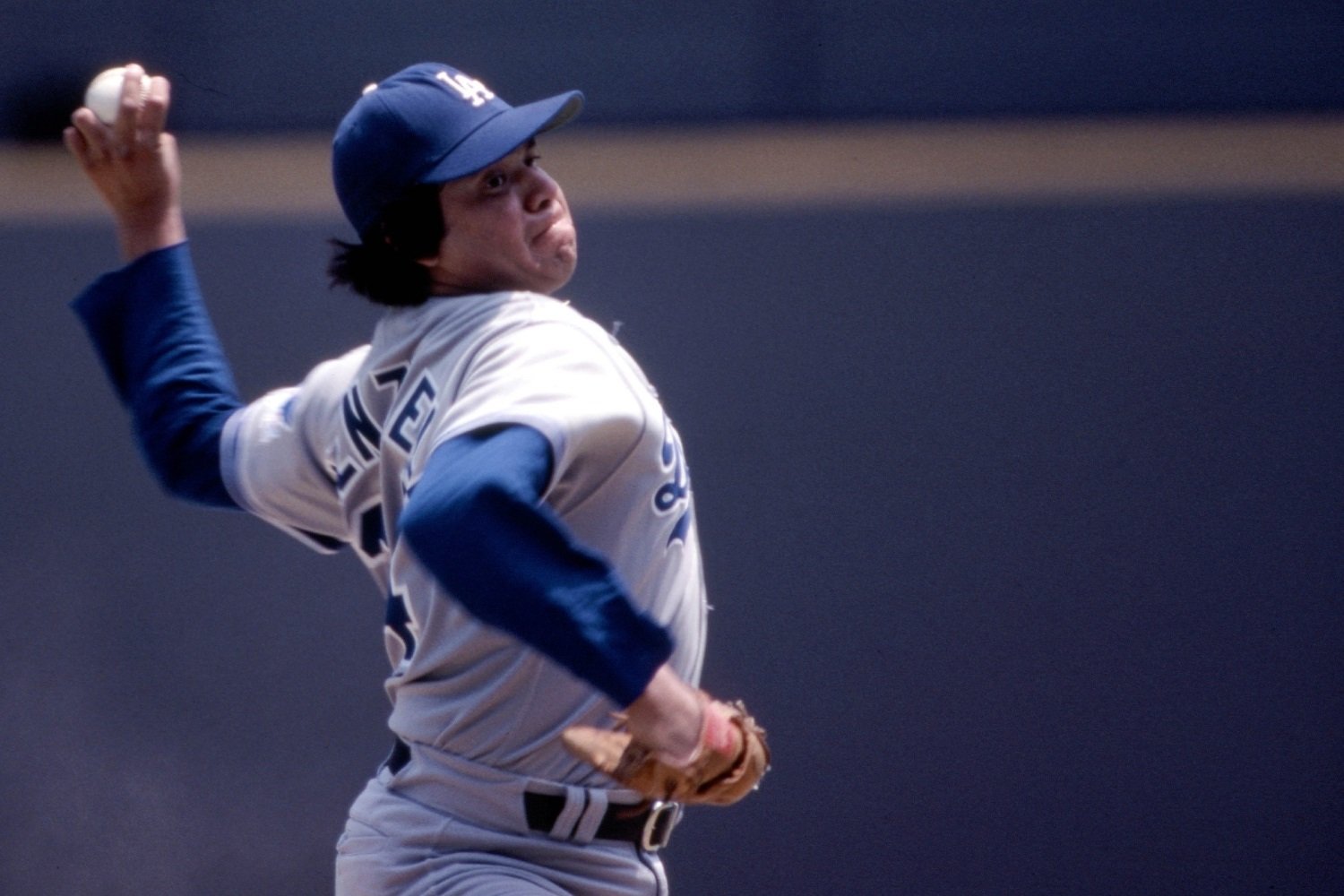
Twelve years after Fernando Valenzuela dazzled the NL as a 20-year-old, he found himself in a different league, donning a different uniform, giving off the aura of a different man. “Fernandomania” may as well have occurred a century before. Like many pitchers who come up young and rack up huge innings counts before their body fully matures, he had experienced a steep dropoff. The same characteristics that drove his stardom—the screwball and the immense workload—wore Valenzuela down, raising his walk rate and ERA as the years between his peak and his present piled up. The Dodgers no longer wanted him. The Angels didn’t care for him, either. Six years after finishing second in the NL Cy Young race, Valenzuela was pitching for Charros de Jalisco.
For a pitcher as successful as he once was, it’s almost impossible to crash out of affiliated baseball, until it's certain there's nothing left in the tank. Valenzuela essentially did so in 1992. He signed with the Orioles before the 1993 season, with little guaranteed. He wasn’t even on the Spring Training roster. But Baltimore decided they could use one more starter, so Valenzuela, once lost in the spring shuffle, became a critical back-end piece for the competing club.
The lefty's season started rough—his ERA was in double digits heading out of April—but he hung around and leveled off in May and June. He even shut out the Blue Jays on Jun. 30.
On Jul. 18 in Baltimore, he faced a new opponent: the Twins. An extensive stay in the NL had shielded the then-32-year-old from the AL-based Minnesota club. They were as alien to him as pitching without spectacles.
Just two years removed from a World Series title, the Twins were in a definite lull, a near-decade-long malaise that would keep the team a loser until 2001 and pose an existential threat to the franchise. Heroes like Kent Hrbek and Kirby Puckett remained, but the pitching staff—shaky even in good times—was a mess. Kevin Tapani and Scott Erickson regressed. Jack Morris was north of the border and on his last legs, anyway. Once the season concluded, only three teams claimed an ERA worse than the gang Minnesota assembled in 1993. All of that added up to a team that entered the match against Valenzuela and the Orioles at 37-52, stuck at the bottom of the AL West.
Nonetheless, it was a gorgeous summer day, about 83 degrees at first pitch, and a Camden Yards bursting at the seams with fans watched Valenzuela turn back the clock in a complete-game effort against the Twins. Minnesota plated a pair of runs in the 2nd, snapping a 24 ⅔ scoreless inning streak for Valenzuela, but Eddie Guardado—a rookie hoping to help the team’s pitching woes—surrendered runs in the 1st, 5th, and 7th to give Baltimore plenty of breathing room.
It would never be the Twins’ day: Orioles left fielder Brady Anderson robbed Shane Mack of a homer in the 4th, leaping high over the wall (since replaced by a much taller one, much farther from the plate) to snag an athletic out.
"Fernando shut us down," said Twins manager Tom Kelly. "We just couldn't do anything with him."
And just a few days later, Valenzuela would do it again.
Facing off against Guardado again—this time on a Friday night in the Metrodome—the lefty one-upped himself, allowing a single run in yet another clobbering of the Twins. He “again mesmerized hitters with tantalizing screwballs and sawed off their bats with inside fastballs.” Minnesota clubbed a trio of doubles, two of which combined for their lone run, but were otherwise made toothless and impotent in the decisive win. The 2-3-4-5 run of Jeff Reboulet, Puckett, Dave Winfield, and Mack went 1-for-15.
“He has this mystique of the screwball, but he doesn’t throw strikes with that pitch. He gets you out with the ‘cutter’ [a fastball that breaks in on right-handed hitters]. It’s a very effective pitch,” Kelly said following Valenzuela’s first complete game on the 18th. “He looks inviting to people and they get caught up in trying to hit home runs or drive the ball, when you should take it the other way.” It’s solid advice for a team that never saw Valenzuela again.
The Twins were only a minor player in the lore of the late, great hurler, but they were a part of it, if only for a week in the summer of 1993. It's a testament to his legacy that, even in that late stage of his career, he could leave such an impression in such a brief exposure to a team.
Do you approve of the job the Twins front office is doing?

Are you interested in Twins history? Then check out the Minnesota Twins Players Project, a community-driven project to discover and collect great information on every player to wear a Twins uniform!
View The Players ProjectFollow Twins Daily For Minnesota Twins News & Analysis



- CharlieDee, Clare and chinmusic
-
 3
3


Recommended Comments
Create an account or sign in to comment
You need to be a member in order to leave a comment
Create an account
Sign up for a new account in our community. It's easy!
Register a new accountSign in
Already have an account? Sign in here.
Sign In Now