


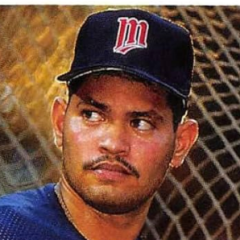
Brian Harper Autograph

Brian Harper Bio
Twins Video
Some will dispute this, but I don’t hear enough people talking about Brian Harper.
I agree with mikelink45’s blog about the best catchers in Twins history. It’s an excellent summary and list of the best Twins catchers. Earl Battey was with the early Twins and a five-time All-Star. Butch Wynegar placed second in the 1976 Rookie of the Year voting behind the phenomenon Mark “the Bird” Fidrych and was an All-Star his first two years. AJ Pierzynski made one All-Star team with the Twins and was part of their resurgence in the early 2000s. Of course, there’s Mauer. I also feel one-time All-Star Tim Laudner is remembered and admired more than Harper, probably because he played for the Twins longer, was the starter on the 1987 World Series team, and is a current member of their pre-and post-game shows on Bally Sports North, which keeps him fresh in Twins fans’ minds. I don’t want to slight any of those, but Brian Harper was a valuable player.
The California Angels drafted Brian Harper in the fourth round of the 1977 amateur draft. In those days, the Angels invested heavily in big-dollar free agents. Despite Harper playing well in the minor leagues, he never received an extensive opportunity with the Angels. For instance, in 1981, he batted .350/.389/.618 for Triple-A Salt Lake City with 28 home runs and 122 runs batted in, but he only played in four games with the Angels. During that season, he played catcher, first base, and outfield. In 1981, the Angels had future Hall of Famer and former MVP and former Twin Rod Carew at first base, former MVP Fred Lynn, former MVP and future Twin Don Baylor, and former Twin Dan Ford in the outfield. In 1982, they signed four-time All-Star and seven-time Gold Glove catcher Bob Boone and future Hall of Famer outfielder Reggie Jackson. With a surplus at Harper’s positions, the Angels traded him to Pittsburgh in 1981, where he was mostly a pinch hitter and outfielder (he played two games as a catcher). He was later traded to St. Louis in 1984 when he received almost no opportunity. Detroit and Oakland subsequently signed him in relatively minor moves before signing with the Twins as a free agent on January 4, 1988.
Harper did not make the opening day squad for the Twins in 1998. He started the season at Triple-A and was phenomenal for two months. He slashed .353/.403/.653 with 13 home runs and 42 batted in. The sizzling-hot Harper was called to the Twins on May 29, played 60 games, mostly at catcher, and batted .295/.344/.428. By 1989, he was the main catcher and continued in that role until 1993. During his six seasons in Minnesota, he hit .306/.342/.431 with 48 home runs and 346 runs batted in. His OPS+ was 110.
During Harper’s tenure, the Twins went from worst to first and made it to the 1991 World Series. Brian Harper was excellent in that series. His statistics showed he hit .381/.435/.476 with two doubles. His defense was better than he was given credit for. He had a great play in Game Four, receiving a throw, blocking the plate, absorbing a freight train, and tagging out Lonnie Smith.
Then, in the top of the 8th inning in the deciding game seven, Harper teamed up with first baseman Kent Hrbek when the bases were loaded with only one out to execute an outstanding and critical 3-2-3 double play.
Ultimately, Harper and Smith acknowledged the hard-fought series, some say the best World Series ever, with a handshake before game seven.
In his career, Brian Harper was nearly impossible to strike out. In 1990 and 1992, he struck less frequently than any other player in the American League and placed second on that list in 1993. His career at-bat per strikeout rate is currently 213th best in MLB history. 213th may not seem great, but more than 23,000 players have played in the major leagues, so he’s in the top one percent in strikeout rate of all players who ever played. Harper’s 16.76 at-bats per strikeout is almost exactly equal to the absolute immortal Ty Cobb (16.86). For context, a notable contemporary with a lower strikeout rate, but not by much, was Tony Gwynn (ranked 92nd), with one strikeout every 21.40 at-bats. It’s an interesting list to look at, and I encourage you to do so. Reviewing the list of those batters better than Harper in the strikeout frequency, almost all the players preceded Harper by 50 years or more. It was a different game then. For context, Harper’s at-bat per strikeout rate was much better than the Twins who led the AL in batting average Tony Oliva (9.77 at bats per strikeout), Rod Carew (9.06 at bats per strikeout), Kirby Puckett (not in the top 1,000), and Joe Mauer (also not in the top 1,000).
Brian Harper also did not draw many walks. Somehow, he walked less often than he struck out, finishing his career with 133 walks (compared to 188 strikeouts) in 3386 plate appearances. We don’t see those kinds of numbers today. I wonder if he would have had a place in today’s game.
My specific memory of Harper is that he would quickly get two strikes against him, but he then would fight off foul balls, take pitches to get deep into the count, and frequently end up with a hit. A decade later, AJ Pierzynski (904th on at bat per strikeout list) was similar to Harper. Likewise, Pierzynski rarely walked – only 308 times in his 19-year career.
Brian Harper left the Twins after the 1993 season, signing as a free agent with Milwaukee, but he never achieved the same success anywhere else. He only played 64 games with the Brewers in the strike-shortened 1994 season with an 81 OPS+, then two games with Oakland in 1995. And that was it; his playing career was over. It’s fair to say Brian Harper is a player whose only good seasons were with the Minnesota Twins.
After his playing career, Harper held various coaching and management positions for the Angels, Giants, Cubs, and Tigers.
I always loved watching Brian Harper. As a batter, the way he battled and fouled off pitches until he got what he wanted was impressive. He was always known as a hitter, but I contend his defense was not horrendous. In 11 seasons as a catcher, his caught-stealing percentage was 31 percent when the league average was 34 percent. Harper came to the Twins in a brief down period but helped them rebound quickly and win the 1991 World Series. For that, he will always have a place in Twins history.
-
Wikipedia
Brian Harper - Wikipedia


Brian Harper Statistics
| Season | Age | Team | Lg | WAR | G | PA | AB | R | H | 2B | 3B | HR | RBI | SB | CS | BB | SO | BA | OBP | SLG | OPS | OPS+ | rOBA | Rbat+ | TB | GIDP | HBP | SH | SF | IBB | Pos | Awards |
|---|---|---|---|---|---|---|---|---|---|---|---|---|---|---|---|---|---|---|---|---|---|---|---|---|---|---|---|---|---|---|---|---|
| 1979 | 19 | CAL | AL | -0.1 | 1 | 2 | 2 | 0 | 0 | 0 | 0 | 0 | 0 | 0 | 0 | 0 | 1 | .000 | .000 | .000 | .000 | -100 | .000 | -133 | 0 | 0 | 0 | 0 | 0 | 0 | /DH | |
| 1981 | 21 | CAL | AL | -0.1 | 4 | 12 | 11 | 1 | 3 | 0 | 0 | 0 | 1 | 1 | 0 | 0 | 0 | .273 | .250 | .273 | .523 | 52 | .253 | 30 | 3 | 0 | 0 | 0 | 1 | 0 | /79DH | |
| 1982 | 22 | PIT | NL | 0.2 | 20 | 31 | 29 | 4 | 8 | 1 | 0 | 2 | 4 | 0 | 0 | 1 | 4 | .276 | .300 | .517 | .817 | 122 | .352 | 110 | 15 | 1 | 0 | 1 | 0 | 1 | H/7 | |
| 1983 | 23 | PIT | NL | -0.1 | 61 | 140 | 131 | 16 | 29 | 4 | 1 | 7 | 20 | 0 | 0 | 2 | 15 | .221 | .232 | .427 | .659 | 77 | .315 | 81 | 56 | 3 | 1 | 2 | 4 | 0 | 7H/39 | |
| 1984 | 24 | PIT | NL | 0.2 | 46 | 121 | 112 | 4 | 29 | 4 | 0 | 2 | 11 | 0 | 0 | 5 | 11 | .259 | .300 | .348 | .648 | 82 | .305 | 79 | 39 | 4 | 2 | 1 | 1 | 0 | 7H/92 | |
| 1985 | 25 | STL | NL | -0.1 | 43 | 55 | 52 | 5 | 13 | 4 | 0 | 0 | 8 | 0 | 0 | 2 | 3 | .250 | .273 | .327 | .600 | 68 | .286 | 66 | 17 | 2 | 0 | 0 | 1 | 0 | H/75923 | |
| 1986 | 26 | DET | AL | -0.5 | 19 | 41 | 36 | 2 | 5 | 1 | 0 | 0 | 3 | 0 | 0 | 3 | 3 | .139 | .200 | .167 | .367 | 2 | .176 | -17 | 6 | 1 | 0 | 1 | 1 | 0 | 9/HD23 | |
| 1987 | 27 | OAK | AL | -0.2 | 11 | 19 | 17 | 1 | 4 | 1 | 0 | 0 | 3 | 0 | 0 | 0 | 4 | .235 | .222 | .294 | .516 | 40 | .219 | 18 | 5 | 1 | 0 | 1 | 1 | 0 | /DH7 | |
| 1988 | 28 | MIN | AL | 1.1 | 60 | 182 | 166 | 15 | 49 | 11 | 1 | 3 | 20 | 0 | 3 | 10 | 12 | .295 | .344 | .428 | .772 | 114 | .341 | 111 | 71 | 12 | 3 | 2 | 1 | 1 | 2H/D5 | |
| 1989 | 29 | MIN | AL | 2.8 | 126 | 412 | 385 | 43 | 125 | 24 | 0 | 8 | 57 | 2 | 4 | 13 | 16 | .325 | .353 | .449 | .802 | 119 | .371 | 124 | 173 | 11 | 6 | 4 | 4 | 3 | 2D/H935 | |
| 1990 | 30 | MIN | AL | 2.8 | 134 | 509 | 479 | 61 | 141 | 42 | 3 | 6 | 54 | 3 | 2 | 19 | 27 | .294 | .328 | .432 | .760 | 107 | .354 | 108 | 207 | 20 | 7 | 0 | 4 | 2 | *2D/5H3 | |
| 1991 | 31 | MIN | AL | 2.0 | 123 | 469 | 441 | 54 | 137 | 28 | 1 | 10 | 69 | 1 | 2 | 14 | 22 | .311 | .336 | .447 | .783 | 111 | .366 | 118 | 197 | 14 | 6 | 2 | 6 | 3 | *2/HD37 | |
| 1992 | 32 | MIN | AL | 2.3 | 140 | 546 | 502 | 58 | 154 | 25 | 0 | 9 | 73 | 0 | 1 | 26 | 22 | .307 | .343 | .410 | .753 | 109 | .346 | 107 | 206 | 15 | 7 | 1 | 10 | 7 | *2/HD | |
| 1993 | 33 | MIN | AL | 2.4 | 147 | 573 | 530 | 52 | 161 | 26 | 1 | 12 | 73 | 1 | 3 | 29 | 29 | .304 | .347 | .425 | .772 | 107 | .352 | 108 | 225 | 15 | 9 | 0 | 5 | 9 | *2H/D | |
| 1994 | 34 | MIL | AL | -0.4 | 64 | 267 | 251 | 23 | 73 | 15 | 0 | 4 | 32 | 0 | 2 | 9 | 18 | .291 | .318 | .398 | .717 | 81 | .321 | 78 | 100 | 8 | 3 | 0 | 4 | 1 | D2/97H | |
| 1995 | 35 | OAK | AL | -0.2 | 2 | 7 | 7 | 0 | 0 | 0 | 0 | 0 | 0 | 0 | 0 | 0 | 1 | .000 | .000 | .000 | .000 | -100 | .000 | -131 | 0 | 0 | 0 | 0 | 0 | 0 | /2 | |
| 1996 | Did not play - Did Not Play | |||||||||||||||||||||||||||||||
| 1997 | Did not play - Did Not Play | |||||||||||||||||||||||||||||||
| 1998 | Did not play - Did Not Play | |||||||||||||||||||||||||||||||
| 1999 | Did not play - Did Not Play | |||||||||||||||||||||||||||||||
| WAR | G | PA | AB | R | H | 2B | 3B | HR | RBI | SB | CS | BB | SO | BA | OBP | SLG | OPS | OPS+ | rOBA | Rbat+ | TB | GIDP | HBP | SH | SF | IBB | Pos | Awards | ||||
| 16 Yrs | 12.3 | 1001 | 3386 | 3151 | 339 | 931 | 186 | 7 | 63 | 428 | 8 | 17 | 133 | 188 | .295 | .329 | .419 | .748 | 103 | .344 | 103 | 1320 | 107 | 44 | 15 | 43 | 27 | 2HD795/3 | ||||
| 162 Game Avg | 2.0 | 162 | 548 | 510 | 55 | 151 | 30 | 1 | 10 | 69 | 1 | 3 | 22 | 30 | .295 | .329 | .419 | .748 | 103 | .344 | 103 | 214 | 17 | 7 | 2 | 7 | 4 | |||||
| MIN (6 Yrs) | 13.4 | 730 | 2691 | 2503 | 283 | 767 | 156 | 6 | 48 | 346 | 7 | 15 | 111 | 128 | .306 | .342 | .431 | .773 | 110 | .356 | 112 | 1079 | 87 | 38 | 9 | 30 | 25 | *2DH/5397 | ||||
| PIT (3 Yrs) | 0.3 | 127 | 292 | 272 | 24 | 66 | 9 | 1 | 11 | 35 | 0 | 0 | 8 | 30 | .243 | .267 | .404 | .672 | 84 | .314 | 83 | 110 | 8 | 3 | 4 | 5 | 1 | 7H/923 | ||||
| OAK (2 Yrs) | -0.4 | 13 | 26 | 24 | 1 | 4 | 1 | 0 | 0 | 3 | 0 | 0 | 0 | 5 | .167 | .160 | .208 | .368 | 0 | .157 | -24 | 5 | 1 | 0 | 1 | 1 | 0 | /DH27 | ||||
| CAL (2 Yrs) | -0.2 | 5 | 14 | 13 | 1 | 3 | 0 | 0 | 0 | 1 | 1 | 0 | 0 | 1 | .231 | .214 | .231 | .445 | 28 | .217 | 4 | 3 | 0 | 0 | 0 | 1 | 0 | /DH79 | ||||
| MIL (1 Yr) | -0.4 | 64 | 267 | 251 | 23 | 73 | 15 | 0 | 4 | 32 | 0 | 2 | 9 | 18 | .291 | .318 | .398 | .717 | 81 | .321 | 78 | 100 | 8 | 3 | 0 | 4 | 1 | D2/97H | ||||
| STL (1 Yr) | -0.1 | 43 | 55 | 52 | 5 | 13 | 4 | 0 | 0 | 8 | 0 | 0 | 2 | 3 | .250 | .273 | .327 | .600 | 68 | .286 | 66 | 17 | 2 | 0 | 0 | 1 | 0 | H/75923 | ||||
| DET (1 Yr) | -0.5 | 19 | 41 | 36 | 2 | 5 | 1 | 0 | 0 | 3 | 0 | 0 | 3 | 3 | .139 | .200 | .167 | .367 | 2 | .176 | -17 | 6 | 1 | 0 | 1 | 1 | 0 | 9/HD23 | ||||
| AL (12 Yrs) | 12.0 | 831 | 3039 | 2827 | 310 | 852 | 173 | 6 | 52 | 385 | 8 | 17 | 123 | 155 | .301 | .336 | .422 | .758 | 105 | .348 | 105 | 1193 | 97 | 41 | 11 | 37 | 26 | 2DH9/357 | ||||
| NL (4 Yrs) | 0.3 | 170 | 347 | 324 | 29 | 79 | 13 | 1 | 11 | 43 | 0 | 0 | 10 | 33 | .244 | .268 | .392 | .660 | 82 | .310 | 80 | 127 | 10 | 3 | 4 | 6 | 1 | 7H9/523 | ||||
See all » Brian Harper Articles
Unbreakable Twins Records: Hitters

Ranking the Top 10 Free Agent Signings in Twins History: 1-5

Your Vote Counts: Choose the 2025 Twins Hall of Fame Hitters

The Minnesota Twins recently announced their Hall of Fame ballot for the 2025 class, and fans have until December 17th at 11:59 pm CDT to vote for up to five of the candidates. Let’s take a look at the hitting candidates on the ballot to help in your decision making!
This Week In The Twins Players Project: Max Kepler, Brian Harper, & Don Cooper

The Minnesota Players Project continues to grow, as we're now well over 75 players in the database. Let's look at some of the newest additions.
Where Does Willi Castro Rank Among the Worst Team MVPs in Twins History?

Willi Castro was an All-Star this season, but his performance collapsed in the second half, like the team's. So, where does he rank among the worst team MVPs in Twins history?
Brian Harper Didn't Strike Out, Didn't Walk, But He Did Hit (For A Catcher)

Joe Mauer’s recent induction into the National Baseball Hall of Fame made me think about some of the better catchers in Twins history. One of their better catchers doesn’t get the recognition he deserves.
See all » Brian Harper Videos
No videos for this player found
See all blogs » See all topics » Community Topics & Blogs
Page Creator:

Other Contributors:






Recommended Comments
There are no comments to display.