Minnesota's roster makeover continued Saturday. Less than 24 hours after adding another starting pitcher before the trade deadline, the Twins announced another round of transactions ahead of their matchup with the Seattle Mariners. The headline move was expected: newly acquired left-handed reliever A.J. Minter was officially activated.
To make room on the 26-man roster, the Twins optioned right-hander Zebby Matthews to Triple-A St. Paul. The move isn't necessarily an indictment of Matthews' performance on Friday night. He gave Minnesota five innings, allowed three earned runs, and struck out an impressive 10 hitters against Seattle. However, his overall July results painted a different picture. Across 24 2/3 innings, Matthews posted a 7.66 ERA and 5.69 FIP while recording 23 strikeouts against 14 walks.
With Dean Kremer acquired to bolster the rotation, Matthews became the logical candidate to head back to Triple-A. The timing gives the Twins a fresh bullpen arm in Minter while creating what appears to be a clear opening for Kremer to slide into the starting rotation.
Minnesota also made a change to its 40-man roster, designating right-hander Cody Laweryson for assignment. Laweryson appeared in 15 games for the Twins this season, logging 16 2/3 innings with a 4.86 ERA and 5.08 FIP while striking out 18 and walking eight. Although he flashed intriguing stuff at times, injuries have impacted him this season. A right forearm strain sidelined Laweryson for much of April and May, and after he was optioned to Triple-A in early July, Laweryson has been on the St. Paul injured list since July 19.
His departure immediately created room for another pitcher. Right-hander Garrett Acton was reinstated from the 60-day injured list and optioned to Triple-A St. Paul. Minnesota acquired Acton from the Miami Marlins this spring in exchange for Logan Whitaker, but he has been limited to four appearances after suffering a right shoulder strain that landed him on the injured list at the end of April.
Acton's rehab assignment offered plenty of encouragement. In six innings for St. Paul, he surrendered just one earned run while striking out eight and walking only one. Opponents managed just a .053 batting average against him during that stretch. If the shoulder continues to respond well, Acton could quickly emerge as another bullpen option for a Twins club that has spent the past week aggressively reshaping its pitching staff.
With Minter now in the bullpen, Kremer expected to join the rotation, and additional depth returning from injury, Minnesota's pitching staff looks noticeably different than it did just a few days ago, and the Twins might not be done adding before Monday’s deadline.
Two years ago, the Twins signed a 32-year-old Matt Bowman to a minor-league contract. He began the season with the Saints, but after a handful of games, he was called up to the Twins. He pitched in five games for the Twins and gave up two runs over 7 2/3 innings. In a numbers game, he was DFAd by the Twins before the end of April and claimed by the Arizona Diamondbacks. He worked in five games for them before again being DFAd. The Mariners claimed him, and he pitched in one game for Seattle. He was released. Early in July, the Twins re-signed him and he spent the next five weeks with the Saints. In mid-August, he was released and signed with the Baltimore Orioles. He pitched well in 15 games down the stretch for the O's. Four teams in one season. A wanted man!
He struggled in 20 games with Baltimore in 2025 and ended the season in the Astros minor leagues.
Now 34, Bowman signed a minor-league contract this week to pitch in the Twins organization in 2026. He will report to Fort Myers next week as a non-roster invitee to spring training. He will certainly have an opportunity to compete for a spot in the Twins bullpen on Opening Day.
A graduate of Princeton, he was drafted by the Mets in the 13th round of the 2012 MLB Draft. He made the Opening Day roster of the St. Louis Cardinals in 2016. Over the next three seasons, he pitched in 156 games out of the Cards bullpen. He spent most of 2019 with the Reds and then didn't pitch at all in 2020. However, in September of 2020, he had Tommy John surgery and didn't pitch again until 2023 when he worked in three games for the Yankees.
The Twins have been quieter than usual in terms of minor-league free agent signings. However, I could make a case that three minor-league free agents could make the Twins roster.
Veteran infielder Orlando Arcia signed with the Twins last month. It would be surprising if he isn't on the Opening Day roster. The 31-year-old infielder debuted in 2016. He had some decent years in Milwaukee, and a couple of solid seasons in Atlanta where he played in his lone All-Star game.
Dan Altavilla is a 33-year-old right-handed pitcher who, you might be surprised to learn, made his big-league debut in 2016. He's mixed in some good years with some bad years. He's had some injuries. Last year with the White Sox, he had a 2.48 ERA over 25 games and 29 innings. The peripherals weren't great (or even particularly good), but if the Twins wanted another veteran in the bullpen, he could see time there.
29-year-old Andrew Bash signed with the Twins earlier this month. He was the Angels 30th round pick in 2019 out of California Baptist. The Angels released him in 2020, and he signed with the Blue Jays. He spent the past six seasons working his way up the Jays' ladder. Last year in Triple-A Buffalo, he went 6-2 with a 2.57 ERA. He made five starts but came out of the bullpen 35 times. He has jumped back-and-forth between Double-A and Triple-A and hasn't had an ERA over 3.00 at either level since the 2022 season.
The Twins signed right-hander Luis Quinones to a minor-league deal in December. Originally drafted in the 34th round by the Blue Jays in 2019, he's slowly worked his way up the ladder showing glimpses of really good stuff. He has also missed a lot time with injuries. In fact, in 2025, he pitched in just three rehab games, rehabbing in the FCL. However, he played winter ball in Puerto Rico and went 4-0 with a 0.00 ERA, a 0.69 WHIP, and two Saves. In 26 innings, he gave up nine hits, walked nine and had 36 strikeouts.
After five years at Miami (Ohio), Grant Hartwig signed as an undrafted free agent with the New York Mets in 2021. Two years later, he debuted and pitched in 28 games for the Mets. In 2024, he made just four appearances. He joined Hanshin in Japan during the 2025 season. His season ended a little early with an oblique injury. The 28-year-old returned to the States and signed with the Twins just a couple weeks later.
Joe Ryan's MRI Sunday came back clean, a Twins source confirmed to Twins Daily Tuesday. As first reported by Dan Hayes of The Athletic, Ryan played catch Tuesday and will throw a bullpen session Wednesday, after which the team will evaluate when he might make his next start.
Ryan left his last start Sunday after just two batters faced, with what the team called "elbow soreness". His scan revealed no damage to his UCL, but until he gets back onto a mound and pitches pain-free, the next steps in getting him back into the starting rotation will not become clear. Wednesday is the last day on which the team can make an injured list stint retroactive to Sunday, so the bullpen session will be important. If it goes well (and Ryan recovers from it well), the team might choose to skate by without placing him on the injured list. If, however, there's any lingering discomfort, a stint on the IL is likely.
For much of the 2026 season, the Twins have been forced to navigate an endless stream of injuries. While the club continues to battle through those setbacks, Friday brought several pieces of positive news.
Three notable names—top prospect Walker Jenkins, right-hander Mick Abel, and left-hander Kendry Rojas—are all progressing toward returns. Each player reached a significant checkpoint in his recovery process this weekend, offering hope that reinforcements could soon be on the way.
Walker Jenkins Nearing Return to Game Action
The Twins expect Jenkins to begin a rehab assignment with Low-A Fort Myers on Saturday, marking his first game action since suffering a Grade 2 AC joint sprain in his left shoulder on May 5. The injury occurred while he crashed into an outfield wall while making a catch for Triple-A St. Paul.
Minnesota's top prospect was still finding his footing early in the season after arriving at Triple-A, but he entered the injured list on a much stronger note than he started. Before getting hurt, Jenkins had improved his season line to .256/.396/.389 (.785) across 111 plate appearances. That followed a 2025 campaign in which he posted a .286/.399/.451 (.850) slash line while climbing all the way to Triple-A.
Since being selected fifth overall in the 2023 MLB Draft, the 21-year-old has dealt with a series of injuries. A hamstring strain cost him significant time in 2024, while an ankle sprain sidelined him for nearly two months in 2025. He also battled another hamstring issue during spring training this year.
When healthy, Jenkins has consistently looked like one of baseball's premier prospects. If he returns from this latest injury and performs well at Triple-A, the possibility of a major-league debut later this season remains very much alive. At minimum, he appears poised to put himself in a position to contribute in Minnesota sometime during 2027.
Mick Abel Closing In on Return to Rotation
Abel's next step comes Saturday when he is scheduled to throw a light bullpen session following an impressive rehab outing earlier this week.
Pitching for Triple-A St. Paul on Wednesday, Abel tossed three scoreless innings, striking out five while allowing only two hits. Perhaps most encouraging was the quality of his stuff. His fastball averaged 96.3 mph and topped out at 97.9 mph, looking much like the weapon that helped him dominate before landing on the injured list.
The Twins shut Abel down on April 20 because of inflammation in his right elbow. His recovery appeared to be nearing completion in early May before lingering soreness in his right triceps after a simulated bullpen session temporarily halted his progress. The setback eventually led to a cortisone injection and additional recovery time.
Before the injury, Abel was pitching some of the best baseball of his young career. He had thrown 13 consecutive scoreless innings over his final two starts and looked increasingly comfortable against major-league hitters.
His return would arrive at an ideal time for Minnesota. Bailey Ober remains sidelined with a right flexor strain, leaving the Twins scrambling to piece together a rotation. The club has relied on multiple bullpen games in recent weeks, with Joe Ryan, Taj Bradley, Connor Prielipp, and Zebby Matthews carrying the workload. If Abel continues progressing without issue, he could soon provide the stability Minnesota desperately needs in the fifth spot.
Kendry Rojas Taking Another Step Forward
Rojas is scheduled to face hitters in a live batting practice session Saturday in Fort Myers as he works his way back from left triceps inflammation. The 22-year-old has been sidelined since May 29.
Few pitchers have exceeded expectations this season the way Rojas has. He quickly established himself as a valuable multi-inning weapon. In 14 1/3 innings, Rojas has posted a sparkling 1.26 ERA while striking out 14 hitters. He has also demonstrated the flexibility to help in multiple roles. Earlier this season, Rojas made a spot start against the Houston Astros and responded by throwing four scoreless innings at Target Field.
That versatility has become increasingly important as injuries continue to pile up throughout Minnesota's pitching staff. Whether he returns as a long reliever, spot starter, or bulk innings option, Rojas would give the Twins another reliable arm capable of reducing the burden on an already stretched pitching corps.
After weeks of discouraging injury news, Minnesota finally has reason for optimism. None of these returns is guaranteed to happen immediately, but the progress of Jenkins, Abel, and Rojas offers a reminder that help may finally be on the horizon.
For a brief moment, it looked like the Twins were about to get one of their most important reinforcements back. Instead, Mick Abel's return to Minnesota's rotation is on hold once again.
According to the Minnesota Star Tribune's Bobby Nightengale Jr., Abel experienced a setback in his recovery process after throwing a 20-pitch bullpen session on Friday. The right-hander will not return from the injured list this week and is scheduled to undergo an MRI when the club gets back to Minnesota. That's an unwelcome development for a pitching staff that has already spent most of the season patching together innings.
A Promising Rehab Assignment Takes a Turn
Abel has been sidelined since April 20 after being placed on the injured list with right elbow inflammation. The injury interrupted what had been an encouraging first season in the Twins organization after arriving as part of last summer's trade deadline haul.
The 24-year-old finally began a rehab assignment with Triple-A St. Paul earlier this month, and the early results couldn't have gone much better.
In his first outing on June 10, Abel tossed three scoreless innings while allowing only two hits and striking out five batters. He followed that performance six days later with an even longer outing, surrendering one run across five innings while once again recording five strikeouts.
Those appearances appeared to put him on the doorstep of a return to the major league rotation. Instead, the Twins are back in wait-and-see mode.
Rotation Questions Continue to Mount
Minnesota's pitching depth has been tested all season, and Abel's setback only adds another layer of uncertainty. Pablo López is already lost for the remainder of the year. Bailey Ober remains on the injured list with a flexor strain, though the organization remains optimistic that his absence won't be a lengthy one. Simeon Woods Richardson was moved to Toronto after struggling to establish himself in the rotation.
That leaves the Twins leaning heavily on Joe Ryan and Taj Bradley at the top of the staff while searching for consistency from a younger group of arms.
Connor Prielipp has shown flashes of why the organization remains excited about his future. Zebby Matthews continues to work through the ups and downs that come with gaining major league experience. Mike Paredes has also been asked to shoulder a larger role than originally anticipated. The group has managed to keep Minnesota competitive, but the margin for error continues to shrink.
Every Game Matters
The timing of Abel's setback couldn't be much worse. Entering Saturday night's action, Minnesota sat 4.5 games behind Cleveland in the American League Central and 2.5 games out of the final Wild Card position. The Twins remain firmly in the postseason conversation, but they can ill afford to lose additional rotation depth for an extended period.
If the MRI reveals only a minor issue, Abel could still rejoin the club relatively soon. However, if the setback leads to another lengthy shutdown, Minnesota may need to explore external options before the trade deadline or continue relying on inexperienced pitchers to navigate meaningful games down the stretch.
The Twins have spent much of the season waiting for reinforcements, and Abel looked poised to become one of the most significant additions to the roster. His strong rehab outings offered hope that help was finally on the way.
Now, the organization is once again waiting on medical results. For a team trying to chase down a division title and climb back into a playoff spot, the news serves as another reminder of just how thin the line can be between contention and crisis. The Twins have survived plenty of pitching injuries already in 2026. Whether they can continue doing so may depend on what Abel's MRI reveals in the coming days.
Minnesota Twins fans can officially stop refreshing trade rumor websites looking for Byron Buxton updates. On Tuesday, Twins general manager Jeremy Zoll delivered something front office executives rarely offer: a definitive answer.
"We have no plans to trade Byron," Zoll said. "It's not something we're exploring. It's not something we plan to explore."
That statement alone carries significant weight. Front offices are typically careful with their wording, especially as the trade deadline approaches. Executives often leave themselves flexibility, speaking in vague terms about listening on players or evaluating opportunities. Even when a team has little intention of moving a player, they rarely remove the possibility altogether.
Zoll did exactly that. With the August 3 trade deadline approaching and Minnesota sitting in the middle of a crowded American League playoff race, recent speculation had connected Buxton's name to potential trade discussions. A national report from ESPN even suggested he could become the second best player traded if the Twins decided to pivot toward selling. Zoll's comments leave little room for interpretation.
Buxton Has Been Carrying the Twins
Part of the reason trade rumors gained traction is because Buxton's value has never been higher. Through 306 plate appearances, the Twins center fielder owns a .275/.333/.596 slash line with an American League-leading 25 home runs. When healthy, he's playing like one of the best players in baseball and has positioned himself squarely in the MVP conversation.
Of course, health remains the lingering question. Durability has followed Buxton throughout his career, and it's impossible to discuss his value without acknowledging that reality. However, when he's on the field, few players impact a game the way he does.
The Twins know that. Even though Minnesota sits four games below .500, they remain very much alive in both the AL Wild Card race and the AL Central. They're only two games out of a playoff spot and 3.5 games behind both Chicago and Cleveland in the division standings.
Trading Buxton would signal a dramatically different organizational direction. Instead, Zoll made it clear the Twins aren't interested in taking that path.
A Different Tone Than Last Year
What's perhaps most interesting about Zoll's comments is how different they are from the organization's approach a year ago. Last summer, rumors circulated around several veteran players as Minnesota struggled to find consistency. While there was never any concrete indication that the Twins seriously considered moving Buxton, the organization never publicly dismissed the possibility either.
That silence didn't go unnoticed. When Buxton arrived at spring training, he acknowledged some frustration with how the situation had been handled.
"All it takes is for somebody at the top to go to the media, 'We're not trading you,'" Buxton said in February. "Trade rumors stop and now we don't have those conversations. That's how simple this could get."
At the time, the comments stood out because Buxton rarely speaks publicly about front-office matters. While the situation clearly didn't damage the relationship between player and organization, it offered a glimpse into how unnecessary speculation can affect even veteran stars.
Fast forward a few months and Zoll essentially provided the exact public backing Buxton had requested. Whether intentional or not, the message was received.
Looking Beyond the Deadline
The bigger story may not be whether Buxton gets traded, but whether the Twins eventually explore keeping him in Minnesota beyond his current contract.
If both sides remain aligned, this offseason could present an opportunity to discuss an extension that allows Buxton to finish his career where it started. That's still speculative, but it's a far more realistic conversation than trade rumors at this point.
For now, both the player and the organization are delivering the same message. Buxton said he isn't interested in leaving. The Twins say they aren't interested in moving him.
Trade rumors may never completely disappear when a star player is involved, but Zoll's comments are about as close to a final answer as a front office executive can provide.
Few decisions in life are bigger than choosing who (and when) you'll marry. For four Minnesota Twins players, that milestone will arrive on the exact same day this offseason. Brooks Lee, Luke Keaschall, Ryan Kreidler and Cole Sands are all scheduled to say "I do" on Saturday, November 14, creating one of the most unusual offseason coincidences in recent baseball memory.
Even more remarkable, none of them coordinated the date. The players planned their weddings independently before discovering during Spring Training that they had all landed on the same weekend. Major League Baseball highlighted the unusual coincidence in a July 22 post on X, jokingly asking, "Poor wedding planning?"
The reality is much less dramatic. For baseball players, the offseason calendar leaves a relatively small window to plan major life events. Waiting until after the World Series avoids conflicts with the postseason, while pushing too deep into November starts running into the holiday season and offseason training schedules.
Lee said that made mid-November the obvious choice.
"You don't want to be too close to the end of October, and don't want to be too far [into November] because Thanksgiving is coming up. Seemed like everyone is going to choose that date."
That explanation also made perfect sense to manager Derek Shelton, because he is a baseball lifer and his own wedding anniversary falls the following day. Shelton also won’t be attending any of the weddings, because he and his wife already have a Napa Valley trip planned.
The overlapping guest lists extend beyond the clubhouse. Lee and Keaschall share the same agent, Adam Karon, creating a unique logistical challenge. Fortunately, both weddings will take place in central California, making it possible to attend portions of each celebration.
"I think he's going to go to Keaschall's first and then ours," Lee said. "But they're both early in the afternoon because the sun sets so early."
Kreidler's ceremony will take place in Southern California, while Sands will celebrate near his home in North Florida.
Despite the scheduling conflict, none of the four players appear overly concerned. No current Twins players are expected to be in each other's wedding parties, making it easier for teammates and staff to choose whichever event best fits their travel plans.
Keaschall said there was some humor in how everyone eventually realized they had picked the same date.
"When you find out somebody's getting married," he said, "you ask when."
Before this quartet celebrates one of the biggest days of their personal lives, Twins fans hope they'll have another reason to celebrate. If Minnesota can make a deep postseason run, the weeks leading up to November 14 could be filled with October memories instead of an early offseason. Then, after chasing a championship together, the four teammates can begin the next chapter of their lives on the very same day.
When Tom Pohlad stepped into the role of Twins chairman last winter, he promised that the organization would provide the resources necessary for the front office to build a sustainable contender. For much of the season, those comments were met with skepticism after years of payroll criticism. The 2026 trade deadline offered the first tangible evidence of that commitment.
Minnesota aggressively upgraded its roster by acquiring A.J. Minter, Dean Kremer, and Jeff Hoffman, adding impact talent while taking on more than $8 million in prorated salary for the remainder of the season. The moves also created meaningful financial obligations beyond 2026, with Hoffman owed $11 million next season and Kremer expected to receive another raise through arbitration after earning $5.75 million this year. Although Toronto will cover $3.75 million of Hoffman's 2027 salary, the Twins still accepted a larger financial commitment than many expected.
According to Pohlad, that willingness to spend was intentional.
“I, and we as an ownership group, were committed to giving [general manager Jeremy Zoll] the financial flexibility to make this team better,” Pohlad said. “I think the results of what happened at the Trade Deadline were in no small part a function of having that financial flexibility and that clarity at the outset. Now, somebody has to go out and execute that, and that is a very hard thing to do, and he did that masterfully.”
The deadline additions addressed immediate needs while also strengthening the roster beyond this season. More importantly, they represented a shift from simply managing payroll to actively investing in a club that believes it can contend over multiple years.
Pohlad made it clear those deadline moves were not a one-time exception. When asked whether Minnesota's willingness to add salary at the deadline signaled an increase in payroll for 2027, he didn't hesitate.
“I’m not hoping -- it will be higher,” he said. “I’ve been consistent, right? For us to accomplish the things that we want to accomplish, and be a consistently competitive team in the playoffs, and going deep, we have to make an investment into this team. We did that in a small way at the Trade Deadline. You’ll see more of it next year.”
That statement could become one of the organization's most significant developments of the season. The Twins have spent the last several years answering questions about shrinking payrolls and financial limitations. Now, ownership is publicly committing to moving in the opposite direction.
Of course, words alone won't erase years of frustration among the fan base. The real test will come this offseason as Minnesota looks to supplement a roster that already appears capable of competing in the American League. If Pohlad follows through on his promise, Jeremy Zoll could have considerably more flexibility to address remaining needs instead of relying solely on internal improvements.
The trade deadline showed the Twins are willing to spend when they believe they have a chance to win. Pohlad's latest comments suggest that philosophy won't end with this season. Instead, they could mark the beginning of a new financial approach—one designed to keep Minnesota in contention not only for the rest of 2026, but well into 2027 and beyond.
The Minnesota Twins have spent much of the season searching for answers on the pitching staff. Injuries and inconsistency have forced the organization to move pitchers between the rotation, bullpen, and minor leagues, creating plenty of roster movement along the way.
Kendry Rojas could soon give the Twins another option. Rojas suffered a mild right oblique strain on August 21 during a start for the St. Paul Saints. He exited after just two innings, creating some concern about whether the injury would end his season. However, general manager Jeremy Zoll provided encouraging news over the weekend.
Rojas could throw a bullpen session as early as this week, with the Twins hopeful that he can return to game action by the middle of September. There is one significant change coming, though. The organization doesn't expect him to have enough time to build back up as a starting pitcher.
“Where we're at calendar-wise, not expecting to be able to stretch him back out at this point,” Zoll said. “If he does get back into game action, it'll probably be a two-inning outing for his first go, and we'll go from there.”
That could still be valuable for the Twins.
Rojas Has Already Shown Enough
Rojas has made a strong first impression during his first taste of the major leagues. Across 12 appearances, including four starts, he has posted a 3.34 ERA with 34 strikeouts over 29 2/3 innings. His 26.2% strikeout rate is particularly encouraging. Rojas has shown the ability to miss bats against major-league hitters, and Minnesota has already demonstrated its willingness to use him in different roles.
The biggest concern has been his control. Rojas has issued 22 walks in his limited major-league sample, resulting in a 16.9% walk rate. That's a number the Twins will want to see improve, especially if he's going to work in shorter outings where free passes can quickly create problems.
Still, the walk issues haven't been nearly as pronounced throughout his minor-league career (8.3 BB% in 2026). That gives Minnesota some reason to believe the major-league number isn't necessarily representative of what Rojas will become. More importantly, the Twins have already seen that he can provide length.
Another Multi-Inning Option
Rojas returned to Triple-A following the trade deadline after Minnesota acquired Jeff Hoffman and added A.J. Minter to its pitching staff. Those additions created some difficult roster decisions, and Rojas ultimately went back to St. Paul.
He resumed working as a starter, but that role is unlikely to continue if he makes it back to Minnesota this season. Instead, Rojas could become another multi-inning weapon for a pitching staff that has needed plenty of them.
That type of role would also allow Minnesota to manage his workload carefully. Rather than immediately asking him to handle a starter's workload after an oblique injury, the Twins can ease him back into competition while still getting meaningful innings from his arm.
September rosters aren't what they used to be, but every healthy arm can matter during the final weeks of a season. The key will be making sure the oblique injury doesn't linger. Rojas has already shown he can handle multiple innings in the majors. If his oblique cooperates, the Twins could see what he looks like in shorter outings where he can amp up his velocity.
Joe Ryan’s return to the Minnesota Twins’ rotation may be close. After completing a three-inning rehab start with Triple-A St. Paul on Tuesday night, Ryan appears to have put himself in position to potentially make his return to the Twins before the middle of September. Manager Derek Shelton acknowledged Wednesday that the possibility of Ryan starting during the team’s upcoming road trip to Chicago and Detroit is being discussed.
“I think it’s on the table,” Shelton said. “I wouldn’t say 50-50, one way or another, but I don’t think it’s completely off the table.”
That represents a significant step forward for a pitcher the Twins have been without since early August.
Ryan threw 42 pitches during Tuesday’s outing in Omaha, with 29 of those pitches finding the strike zone. He then added roughly 10 additional pitches in the bullpen. If everything continues to progress as planned, Ryan could be stretched beyond 60 pitches and potentially work four or five innings in his next appearance.
Before that happens, Ryan is expected to throw a bullpen session this weekend, most likely while the Twins are in Chicago. His next competitive outing would then likely come either with St. Paul or with Minnesota a couple of days later. That timeline could put a Major League return firmly within reach.
The Velocity Question
One of the most notable aspects of Ryan’s rehab appearance was his fastball velocity. Ryan sat around 91-92 mph with his fastball in Omaha, well below his 93.4 mph average for the season. On the surface, that could be viewed as a potential concern for a pitcher whose margin for error is already relatively small.
Neither Ryan nor Shelton seemed particularly worried about the radar gun, however. The conditions in Omaha were extremely hot, and Ryan acknowledged that he wasn't trying to reach back for the same kind of velocity he would during a regular-season Major League start. More importantly, he came away encouraged by the overall quality of his pitches.
That will be the bigger takeaway as Ryan continues building back toward a full workload. After all, velocity wasn't the only issue Ryan was dealing with before landing on the injured list.
A Tale of Two Seasons
Ryan's first half was everything the Twins could have hoped for. He looked like a legitimate frontline starter, posting an ERA below 3.00 and earning his second career All-Star selection. Then something changed after the All-Star break.
Ryan lost all three of his starts following the break and allowed 17 runs over his final 15 1/3 innings. His strikeout numbers also dropped considerably, with just 10 strikeouts against his final 73 batters faced.
His final start before the injured list provided another clue. Ryan's four-seam fastball averaged just 92.1 mph that day, his lowest average in a start since early May and more than a mile per hour below his season average.
An Important Addition for September
Minnesota's postseason chances may be slim, but Ryan's return still carries plenty of importance. The Twins need to determine what their rotation looks like moving forward, and getting Ryan back on the mound would provide valuable information heading into the offseason.
The immediate goal isn't necessarily to see Ryan return and suddenly become the first-half ace he was. It's to see the fastball tick back up, watch his delivery become more consistent and allow him to rebuild the foundation that made him so effective before the All-Star break.
And if Ryan continues moving in the right direction, his return to the Twins' rotation may not have to wait as long as initially anticipated.
The Minnesota Twins received an encouraging update on Joe Ryan’s recovery Monday, but there is still plenty of work to be done before their All-Star right-hander is ready to return to the mound.
Ryan, who is on the injured list with a mild left glute strain, played catch on flat ground Monday. It was a small step, but it was an important one for a pitcher who has been dealing with physical issues that have impacted both his mechanics and his results since the All-Star break.
Twins manager Derek Shelton said Ryan’s throwing session was a positive development.
“I had a brief but very good conversation with him,” Shelton said. “I think we’re going to just have to see how it continues to progress. But the fact that he’s out there throwing is a very encouraging sign. It was flat ground, but he was still playing catch.”
Ryan is not eligible to return from the injured list until August 20, but the Twins don't appear interested in treating that date as a target. Instead, the organization wants to see how Ryan responds as he progresses through his throwing program.
Twins general manager Jeremy Zoll echoed Shelton’s optimism while emphasizing the importance of taking a measured approach.
“We want to make sure we don't try to push him along, and end up on this spiral or hamster wheel,” Zoll said. “We're trying to thread the needle on not having him down too long, so it doesn't require too long of a buildup (to return). But we also want to make sure everything is resolved.”
That last part is especially important. Ryan hasn't simply been dealing with the glute strain. He has also experienced tightness in his back, and the combination disrupted his mechanics. Once those mechanics became compromised, his performance took a significant downturn.
Ryan went 0-3 with a 9.39 ERA across three starts following the All-Star break before landing on the injured list. The Twins don't want to see him return simply because he is technically healthy enough to pitch. They need him to feel like himself again.
“We have to start with that to make sure he feels like that's resolved before being able to progress,” Zoll said. “Obviously these things work all in conjunction. If you feel off physically, it can impact you mechanically and performance-wise. ... First and foremost, we want to get him feeling symptom free to be able to progress.”
That approach makes sense for a pitcher Minnesota cannot afford to get wrong. Ryan is one of the most important pieces of the Twins' rotation, and his importance only increases as the club tries to remain in the American League playoff picture. Minnesota has already made additions to its pitching staff, but replacing a healthy version of Ryan over the long term is not something the organization can realistically expect to do.
The good news is that Monday's throwing session represents progress. The bad news is that it is only one step. Ryan still needs to progress to throwing off a mound, build his workload back up and demonstrate that the physical issues that disrupted his mechanics have been resolved. The Twins will need to balance urgency with patience, particularly with the season entering its most important stretch.
If the Twins are going to stay in the playoff hunt, they need their All-Star starter back. More importantly, they need him back healthy and pitching like the version of Joe Ryan they know he can be. Monday provided a reason for optimism, but the next few weeks will determine whether that optimism turns into a meaningful return.
Fresh off what has arguably been the most successful World Baseball Classic to date, Rob Manfred is already looking at ways to adjust the event’s future. That instinct is understandable given the tournament’s rapid growth, but it also raises a familiar question. Why fix something that is clearly working?
Appearing on The Dan Patrick Show to discuss the beginning of the 2026 MLB season, Manfred was asked whether the WBC could become a more frequent event. His answer made it clear that Major League Baseball is seriously considering changes to the tournament’s cadence.
“We’re gonna have a meeting on the WBC, which we always do after it is completed. I think the event was so successful this time that we need to talk about frequency, regularity of schedule,” Manfred said. “It’s one thing to not to do it every year, our problem because of COVID, labor negotiations, whatever, you can’t even say it’s every four years. It hasn’t been. Given how popular it is, we need to get into a regular rotation.”
The desire for consistency is not unreasonable. Since its debut in 2006, the World Baseball Classic has never truly settled into a rhythm. It began on a three-year cycle before shifting to four years, only to see that plan disrupted by a six-year gap following 2017 due to the pandemic. When the tournament finally returned in 2023, it delivered one of the most iconic moments with a Japan versus the United States championship for the ages. That game alone proved the event had evolved far beyond exhibition status.
By the time the 2026 tournament wrapped up, the momentum had only grown. Television ratings climbed, global interest surged, and the overall product felt bigger than ever. Fans were invested, players were all in, and the atmosphere carried a level of intensity that even October baseball sometimes struggles to match.
That is exactly why Major League Baseball should proceed with caution. Manfred is correct in identifying the need for a clear and predictable schedule. A defined rotation benefits fans trying to plan around the event and gives broadcast partners something concrete to build around in future media negotiations. It is difficult to maximize value when networks are unsure when the next tournament will take place.
However, consistency does not have to mean increased frequency. There has already been discussion of experimenting with more dramatic changes, including moving the WBC to the middle of the MLB season. That concept feels misguided. Players already balance a demanding 162-game schedule, and the mid-summer break serves a purpose. Asking them to replace rest with high-intensity international competition risks diminishing participation, which is the lifeblood of the tournament.
Even a small adjustment, such as shifting to a two-year cycle, could have unintended consequences. Part of what makes the World Baseball Classic special is its rarity. When players know the opportunity only comes around every few years, the urgency is real. National pride carries more weight. The stakes feel higher. If the event becomes more frequent, that edge could soften.
The World Baseball Classic absolutely needs structure. The past two decades have proven that a floating timeline creates confusion and limits its long-term growth. But structure does not require reinvention.
Baseball finally has something that captures global attention in a meaningful way. The solution is not to tinker with its foundation, but to solidify it.
The Twins will have to finish the 2026 season without one of their veteran left-handed relievers. Anthony Banda told reporters that he recently underwent surgery to repair his injured lat, ending his season. The veteran southpaw expects to be fully recovered in time for spring training next February.
While the news isn't entirely surprising, it officially closes the door on any chance of Banda returning for a late-season playoff push.
Banda was placed on the 15-day injured list earlier this month with what the Twins initially described as a lat strain. At the time, manager Derek Shelton acknowledged the injury was significant and suggested Banda's recovery would be measured in months rather than weeks. There was still some optimism that he could return, but this specific surgery eliminates that possibility. Minnesota will eventually transfer him to the 60-day injured list once it needs another spot on the 40-man roster.
Although Banda's overall numbers don't jump off the page, he had quietly become one of the Twins' more dependable relievers before getting hurt. He finished the year with a 4.46 ERA across 34 1/3 innings, but those numbers were heavily skewed by a difficult start to the season. Beginning on May 5, Banda posted a 1.33 ERA over his final 20 1/3 innings. That stretch came with some favorable fortune, including a .259 batting average on balls in play and a 90.6% strand rate, but he consistently gave the Twins quality innings during that stretch.
That's a difficult arm to lose for a bullpen that has struggled to find consistency all season. Minnesota's relievers own a collective 5.24 ERA, tied with the Royals for the worst mark in Major League Baseball. Even if Banda's dominant stretch wasn't completely sustainable, his absence leaves the Twins with even fewer reliable late-inning options as they continue to chase a postseason berth.
Despite those bullpen struggles, Minnesota remains in the thick of the American League playoff race, sitting just a half-game out of a Wild Card spot. For now, Taylor Rogers and Kody Funderburk become the club's primary left-handed relief options, while Kendry Rojas was recalled to provide additional length out of the bullpen. If the Twins remain in contention over the next few weeks, adding another bullpen arm could become an even bigger priority before the trade deadline.
For Banda, the injury comes at an unfortunate time in his career. After spending 2025 with the Dodgers, Banda struggled during the postseason and found himself designated for assignment in February because he was out of minor league options. The Twins acquired him by sending international bonus pool space to Los Angeles, hoping his recent success would carry over to Minnesota.
Financially, the Twins still have a decision looming this offseason. Banda is earning $1.625 million this season and remains arbitration eligible for 2027. Minnesota will need to determine whether to tender him a contract before November, and the progress of his recovery will likely factor into that decision.
Unfortunately for both Banda and the Twins, they'll have to wait until 2027 to find out whether he can continue building on his success with the club.
The Twins have spent much of the 2026 season searching for answers in the bullpen. On Monday, they added another intriguing arm to the mix, acquiring right-handed reliever Taylor Rashi from the Arizona Diamondbacks in exchange for cash considerations.
Minnesota had room on its 40-man roster after designating outfielder James Outman for assignment over the weekend, making the move relatively simple from a roster-management standpoint. Rashi also has minor league options remaining, giving the Twins flexibility to stash him at Triple-A St. Paul while evaluating whether he can become a contributor at the major league level.
The move fits a familiar pattern. Rather than investing heavily in relief pitching, the Twins have spent the season collecting arms with intriguing traits and hoping one or two emerge as reliable options. Earlier additions such as Yoendrys Gómez and Justin Lawrence followed a similar blueprint. Minnesota's front office has taken a quantity-over-certainty approach after dismantling much of its bullpen depth at last year's trade deadline.
Rashi is the latest name to join that list. At 30 years old, he isn't a traditional prospect, but he has shown enough flashes to warrant attention. Over parts of the last two seasons, Rashi has appeared in 13 major league games, posting a 5.40 ERA while striking out nearly 30% of opposing hitters across 20 innings. The results have been uneven, but the ability to miss bats has remained consistent.
His work at Triple-A Reno this season has been far more impressive. Rashi owns a sparkling 1.03 ERA in 26 1/3 innings while holding opposing hitters in check throughout the year. He has paired that success with a solid 25.5% strikeout rate, though his tendency to issue walks remains a concern after posting a walk rate near 12%.
Those command issues, combined with a lack of overpowering velocity, likely explain why Arizona was willing to part ways with him despite dealing with its own bullpen challenges. Rashi's fastball typically sits around 91 mph, well below the league average for modern relievers. Instead of relying on velocity, he attacks hitters with a deep secondary mix that includes a slider, curveball, and splitter.
For the Twins, the appeal is easy to understand. Minnesota's bullpen has struggled for much of the season and currently ranks among baseball's least effective groups in ERA. While the relief corps has shown improvement during the past month, the underlying numbers still reveal concerns. The Twins continue to battle one of the highest walk rates in the league, creating frequent traffic on the bases and placing additional stress on the pitching staff.
Recent success stories such as Gómez and Anthony Banda have demonstrated that imperfect relievers can still provide value when deployed correctly. The Twins have leaned heavily into matchup-based bullpen management, searching for favorable situations rather than relying on established late-inning options.
Rashi now becomes the newest candidate in that experiment. The acquisition is unlikely to generate headlines, and there is no guarantee he ever throws a meaningful inning at Target Field. However, teams rarely build bullpens through blockbuster moves alone. Sometimes a successful relief unit is assembled through a series of small transactions that uncover unexpected contributors.
The Twins are hoping Rashi becomes the next name on that list.
Every franchise wants to believe it has been among baseball’s elite over the last quarter-century. A new set of rankings from The Athletic attempts to answer that question by putting a number on sustained success across Major League Baseball.
Each year, the publication releases its MLB Franchise Rankings, measuring how teams have performed over the last 25 seasons. The system rewards postseason success while also accounting for division titles and long stretches of losing seasons. It is designed to measure consistency rather than simply rewarding a single championship window.
The Athletic’s formula, adapted from Bob Sturm’s football system, fits baseball’s postseason: nine points for a World Series win, six for runner-up, three for losing in the Championship Series, two for Division Series, one for Wild Card loss. Additional adjustments include a point for division titles and a deduction for consecutive 90-loss seasons.
Unlike many rankings that focus on recent performance, this system does not give extra weight to the most recent seasons. The goal is to capture the entire 25-year stretch from 2001 through today and determine which franchises have consistently found ways to stay competitive.
Twins Land at No. 14
Minnesota ranked 14th overall with 25 total points over the 25-year period. That position places them in the top half of baseball but just barely, reflecting a franchise that has experienced bursts of success mixed with frustrating postseason outcomes.
Within the American League, only six teams ranked higher than Minnesota. The teams ahead of the Twins include the New York Yankees at second overall, the Boston Red Sox at fourth, and the Houston Astros at fifth. Those franchises have combined for multiple championships and deep playoff runs during the ranking period. A few more familiar American League rivals also finished ahead of Minnesota. The Cleveland Guardians ranked tenth, the Texas Rangers placed eleventh, and the Los Angeles Angels came in twelfth.
For Twins fans, the ranking feels both fair and frustrating. Minnesota has been competitive in several stretches over the last two decades, but postseason success has been harder to come by. A few deeper October runs could have pushed the franchise comfortably into the top ten.
A Steady Climb in Recent Years
Even though the Twins sit in the middle of the pack today, the trend line has been moving in the right direction. The franchise ranked 14th in 2025 with 24 points. In 2024, Minnesota ranked 15th overall with 22 points. The year before that, they were down at 17th with 19 points. Just a short time ago, the franchise was much closer to the bottom half of baseball.
The biggest jump came between 2022 and 2023. In the 2022 rankings, the Twins placed 22nd with only 11 points. At that point, the organization was still feeling the impact of several losing seasons and limited postseason success during the ranking window. Since then, the club has slowly climbed back toward the middle of the league. It is not a dramatic rise, but it shows that recent competitive seasons have helped stabilize Minnesota’s standing.
What Comes Next
While the recent climb is encouraging, these rankings may soon be challenging for the Twins. The system uses a rolling 25-year window, so Minnesota’s best seasons from the early 2000s will eventually drop out. When those years fall off, the Twins could lose points that now keep them mid-standings. The team will need new postseason appearances and division titles to maintain or boost its position.
Fortunately for Minnesota, the path to those points might not be overly complicated. The American League Central has frequently been one of baseball’s most competitive but unpredictable divisions. No team has completely dominated the division in recent seasons, leaving opportunities for a club that gets hot at the right time.
For now, the latest rankings paint a clear picture of the franchise over the last quarter-century. The Twins have not been among baseball’s true powerhouses, but they also have not fallen into the category of long-term struggling organizations. Instead, Minnesota sits right where the numbers say it belongs. Solid, competitive, and still searching for the October breakthrough that could change the entire conversation.
Rick Renick, a former Minnesota Twins player and a key member of the coaching staff during the franchise’s first World Series championship, died Saturday, January 31, at the age of 81. Renick was living in Sarasota, Florida, at the time of his passing. His baseball life touched the Twins organization across multiple generations.
Renick’s connection to Minnesota began on the field. Signed out of Ohio State University in 1964, he climbed the Twins minor league system and made his major league debut on July 11, 1968, at Metropolitan Stadium. The assignment was not an easy one, as he faced Detroit Tigers left-hander Mickey Lolich, who had led the American League in shutouts the previous season. Renick responded in memorable fashion, homering in his first major league at-bat and becoming the first Twins player to do so.
Primarily a third baseman and left fielder, Renick played five seasons with the Twins from 1968 through 1972, appearing in 276 games. He finished his Twins career as a .221 hitter with 20 home runs and 71 RBI, and his best season came in 1970 when he set career highs with seven home runs, 25 RBI, 81 games played, and a .708 OPS. That season also coincided with a division title, giving Renick his first taste of an AL West championship.
By 1973, Renick’s playing days in the majors had come to an end, but baseball was far from done with him. He transitioned into coaching, first as a coach in the Twins farm system before moving on to a long and winding second career that included stops with the Kansas City Royals, Montreal Expos, Chicago White Sox, Pittsburgh Pirates, and Florida Marlins. Along the way, he also managed nine seasons in the minor leagues and earned American Association Manager of the Year honors twice at Triple-A Nashville.
Renick’s most enduring legacy in Minnesota came in 1987. After Ray Miller was fired late in the 1986 season, Tom Kelly took over as interim manager and was later retained for the following year. When assembling his staff, Kelly passed over ownership’s preferred candidate and instead chose Renick, his former minor league teammate who was then working in the Expos organization. Renick became the lone new coach on the staff, taking over duties at third base.
The Twins defied expectations and captured their first division title since 1970, the last time Renick himself had been part of a championship team in Minnesota.
The magic did not stop there. Minnesota went on to defeat the Detroit Tigers in the American League Championship Series and then beat the St. Louis Cardinals to secure the first World Series title in franchise history. Renick’s aggressive instincts at third base and his work with hitters were part of a coaching staff that maximized a roster few believed could reach that height.
Renick remained with the Twins through the 1990 season, but after a last-place finish that year, he was let go by General Manager Andy MacPhail. He declined an opportunity to stay in the organization at the minor league level and instead continued his career elsewhere, returning to the majors in various roles through 2002.
In total, Renick spent 13 seasons as a major league coach and left an imprint on multiple organizations. Still, his place in Twins history is unique. He was there for two AL West titles separated by 17 years, first as an underestimated utility player and later as a trusted voice on a championship coaching staff.
Renick is survived by three sons, including Josh Renick , who was drafted by the Twins in 2001 and later played for the St. Paul Saints. His wife, Libby, passed away last March at the age of 80. For the Twins, Renick will be remembered as someone who helped guide one of the most improbable and beloved teams in franchise history to the top of the baseball world.
The Twins dipped back into the waiver wire this week, grabbing right-handed pitcher Jackson Kowar after he was cut loose by Seattle. Minnesota had room to make the move and plenty of motivation, continuing a busy stretch of roster shuffling that keeps the back end of the pitching staff very much in flux.
Kowar’s path to Minnesota is a winding one. Seattle designated him for assignment shortly after acquiring catcher Jhonny Pereda from the Twins, creating an odd bit of organizational overlap. Minnesota, meanwhile, had recently cleared space on the 40-man roster through a pair of trades with Colorado, moving Edouard Julien and Pierson Ohl for Jace Kaminska and cash considerations. That left one open 40-man spot, and the Twins chose to use it on a familiar type of gamble: big arm, big questions.
Entering his age-29 season, Kowar still brings eye-catching velocity. His four seamer and sinker live in the upper 90s, and the raw stuff has never really been the concern. Translating that power into outs has been another story. Across 91 major league innings with Kansas City and Seattle, Kowar has been hit hard, posting an ERA north of 8.00, but his FIP is below 6.00. His walk rate sits in the low teens, which is not unheard of for power relievers, but the strikeouts have lagged behind expectations. Even in the high minors, results have been uneven, with an ERA hovering near five.
Seattle also exhausted Kowar’s final minor league option last season, leaving him without roster flexibility. That reality often shortens the leash, especially for a pitcher still searching for consistency. Once the Mariners needed space, Kowar became expendable.
From the Twins' perspective, the fit is obvious. The bullpen has open spots and needs arms that can fill the void after last season’s trade deadline selloff. While the front office has talked about a return to contention in 2026, the relief group remains light on proven arms. Beyond the reunion with Taylor Rogers and the addition of Eric Orze, there has not been much reinforcement.
That context makes Kowar an understandable add. Minnesota can afford to see if a new environment and some mechanical tweaks unlock something closer to the pitcher scouts once dreamed on. The opportunity will be there, simply because innings need to be covered.
There is also very little long-term commitment. Kowar is out of options, and that makes it tough to stick on a big-league roster without a proven track record. If the experiment fails, the Twins can move on just as easily as they claimed him.
For now, this looks like another low-risk attempt to plug a hole with upside. The stuff gives you a reason to watch, even if the track record urges caution. In a bullpen full of question marks, Kowar becomes one more name trying to turn raw velocity into something the Twins can actually trust.
The Minnesota Twins lost a member of their extended family this week with the passing of former outfielder and coach Joe Nossek. While his time as a player may not stand alongside some of the more recognizable names in franchise history, his role in one of the most important seasons the organization has ever experienced ensures that his impact will not be forgotten.
Nossek joined the Twins during their early years in Minnesota and quickly became part of a club that was building toward something special. The 1965 season remains a defining moment in franchise history, and Nossek was a member of that American League pennant-winning team. That group, led by stars like Harmon Killebrew and Tony Oliva, captured the imagination of baseball fans across the Upper Midwest and helped solidify Major League Baseball in Minnesota following the franchise’s relocation just a few years earlier.
Nossek appeared in 87 games for the Twins during that 1965 campaign, serving primarily as a depth outfielder and defensive replacement. While his contributions did not always show up in the box score, his presence on a roster that went on to win the American League pennant connected him forever to one of the greatest teams the organization has fielded.
During Game 7 of the 1965 World Series, Nossek was involved in a controversial play. AL MVP Zolio Versalles singled with one out in the sixth inning and tried to steal second base. As Nossek swung, Versalles broke and had the base stolen easily, but umpire Ed Hurley ruled that Nossek had interfered with catcher John Roseboro’s throw. Versalles had to return to first base, and Nossek was called out for interference.
Nossek denied that he interfered: “I just went for an outside pitch. I tried to duck when I heard Roseboro coming.” The Dodgers, behind Koufax’s three-hit, 10-strikeout performance, defeated the Twins 2-0 to win the World Series.
Following his playing career, Nossek remained involved in the game and returned to the Twins organization in a coaching capacity. He served as the third base coach during the 1976 season but was released following a disappointing season (85-77, 3rd place in the AL West). Nossek bounced around to multiple other organizations during his coaching career, including the Indians, White Sox, Brewers, Mariners, Royals, and Astros.
Baseball is built on more than just the stars who dominate headlines. It is shaped by role players, coaches, and lifelong contributors who help create a culture inside the clubhouse and maintain continuity across eras. Nossek’s career represented exactly that type of impact. His connection to the 1965 pennant winners ensures that his name will always be part of Twins history.
As the organization reflects on the legacy of that era, Nossek’s passing serves as a reminder of how many individuals helped build the foundation that still exists today. His contributions to the Minnesota Twins, both on the field and in the dugout, remain an important chapter in the story of baseball in Minnesota.
Byron Buxton came to the plate for Team USA in the bottom of the fourth inning. The bases were loaded. Team USA led 3-1 but had struggled with runners on base since Aaron Judge's first inning, two-run homer. It felt like a key moment in the game.
Gabriel Barbosa, a 24-year-old right-hander who pitched at three levels for the Phillies in 2025 came to the mound, having replaced Thyago Vieira who left with injury. Barbosa walked Roman Anthony to lead the bases.
Buxton came to the plate, and Barbosa got ahead quickly with two sharp sliders just off the outside corner. After Buxton took another slider and swung out of his shows at a hanging slider (foul ball), Barbosa came inside with a running fastball. It just kept running in on Buxton and when it hit him, you could hear an audible moan.
At first, it appeared he was hit in the hand, something that Twins fans certainly did not want to think about. We've seen that. Replay in slow motion showed that it hit him in the elbow, likely near the funny bone.
Buxton stayed in the game having driven in the team's fourth run "the tough way." The next batter was Brewers second baseman Brice Turang who cleared the bases with a double off of the wall in left field. The USA team led 7-1.
While it doesn't look serious, it only makes sense that manager Mark Derosa pulled Buxton and replaced him with Pete Crow-Armstrong.
Buxton came to the plate three times in four innings. He was 0-for-2. He was hit by a pitch, scored a run, drove in a run and stole a base.
UPDATE: A seventh inning Ken Rosenthal report tells us that Byron Buxton is just fine, taken out for precautionary purposes, but also because they wanted to get "PCA" some at bats too.
I enjoy the WBC. For many, it's about national pride, especially that is visible with the fans and players from the Dominican Republic, Puerto Rico and Mexico. I want to see good baseball, and I want to hear about fun stories. Team Brazil had some that I enjoyed.
A couple of fun baseball stories from the Brazil team. After the USA team took a 2-0 lead to start the team, 20-year-old Lucas Ramirez led off the bottom of the first inning with a home run off of Logan Webb. In the bottom of the eighth, Ramirez came to the plate against left Gabe Speierand hit a lefty-lefty homer. Ramirez is the son of long-time big leaguer Manny Ramirez. The youngster was the 17th round pick of the Angels in the 2024 draft out of high school in Florida. He ended the 2025 season with 11 games above complex league ball. He also went 5-for-13 for Brazil in the WBC Qualifier last year.
Bloodlines are always fun. In the top of the second inning, Brazil turned to 17-year-old Joseph Contreras. He is the son of another long-time major leaguer, Jose Contreras. The son stands 6-4 and is a lanky 190 pounds. He is currently a high school senior at Blessed Trinity Catholic High School in Alpharetta, Georgia. Baseball America ranks him currently as the #15 high school pitcher available in the 2026 MLB Draft. He is committed to Vanderbilt.
Beyond quality genetics, Joseph has some impressive stuff. His first pitch was a 97-mph fastball just above the zone that Byron Buxton swung through. He also has the makings of a really good low-to-mid-80s slider. He also throws a vulcan-gripped pitch that generally acts like a changeup but can move significantly too. He got Buxton to fly out. With the bases loaded and one out, he broke Aaron Judge's bat and coaxed a double play ball to end the inning. In total, he went 1 1/3 innings and gave up one run on two hits and three walks. So, the stat line isn't terribly impressive. But considering his age, experience level, and that he was pitching against Team USA's lineup as a United States citizen. What a cool, scary opportunity! Also, I now want the Twins to draft him and team him with Charlee Soto and Dasan Hill in the 2031 Twins starting rotation.
From the Twins perspective, there were a couple of former Twins minor leaguers on the Brazilian roster. 35-year-old Leonardo Reginatto is completing his playing career with the WBC. He is set to join the Tampa Bay Rays player development staff. He signed with the Rays way back in 2009. His last season with an affiliated organization was back in 2018. That was his third season in the Twins organization. He spent most of 2016 with Chattanooga, He pitched for the Red Wings all three seasons. He has played winter ball in Mexico and Venezuela since then and most of his summer ball was played in Mexico.
Gabriel Maciel batted ninth and played in center field. You may remember that he came to the Twins from the Diamondbacks with Ernie de la Trinidad and Jhoan Duran in the Eduardo Escobar trade in 2018. He played in Fort Myers and Cedar Rapids between 2018 and 2021. He was 0-for-3 with three strikeouts in this game, but his speed and defense in center field keeps him in the lineup. He's played for Brazil in the 2016, 2022 and now 2026.
Team USA is going to play Great Britain on Saturday night. Twins fans will want to check out the lineup when it becomes available.
Seth Level of Concern right now: 2 on a scale of 1-10. (Subject to change)
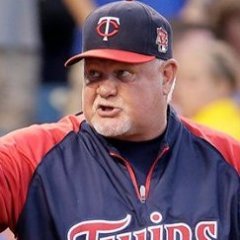
Dan Gladden has been a fixture on Twins radio broadcasts since 2000. Recently, he was named a 2026 inductee into the Minnesota Broadcasters Hall of Fame.
Gladden came to the Twins organization just before the 1987 season began. He is often referred to as the sparkplug that helped the Twins to World Series championships in 1987 and 1991. His final play with the Twins came in the bottom of the 10th inning of Game 7 of the 1991 World Series. He hit a hustle double, advanced to third on a bunt, and scored on Gene Larkin's "single" to give the Twins the 1-0 win.
He continued to play for a few more years, including time in Japan. In 2000, he began his time in the Twins radio broadcast booth. He became the full-time analyst in 203. He has worked in the booth with Herb Carneal, John Gordon, Cory Provus and now Kris Atteberry.
In fact, it was Provus who was able to tell Gladden about his latest career honor.
The honor clearly means a lot to Gladden who got emotional responding to Provus. He thanked Dave St. Peter for giving him an opportunity.
He said, "I didn't even cry when Rod Carew called me (to tell him he'd made the Twins Hall of Fame)." Gladden joined the Minnesota Twins Hall of Fame in 2022.
Join us in congratulating Dan Gladden on this terrific honor.
Developing a pure, native app for either Android or iOS is a breathtakingly expensive endeavor, which is why we haven’t done it, despite so many requests over the years. Thankfully, technology has met us halfway, and PWAs (Progressive Web Applications) have reached maturity in the marketplace.
What is a PWA? It’s effectively a pseudo-app that works much like a native application but doesn’t require tens of thousands of dollars in development to produce. It creates a single browser instance and maintains it as if it were an application. It’s basically a standalone browser tab, dedicated specifically to Twins Daily.
From this app instance, you can receive notifications; the typical browser interface is removed, and the site is presented clearly, using as much screen real estate as possible, all without sacrificing any functionality. The site is faster, more reliable, and offers more mobile functionality than a standard web browser.
Additionally, a newer, completely updated Twins Daily is coming later this year, and that will add even more app-like features, making PWA usage even better for all our users.
With that said, here’s how you turn Twins Daily into an app on your mobile device.
Major League Baseball dropped another sign that draft season is officially here on Wednesday, announcing updated bonus pools and slot values for all 30 clubs. Minnesota enters the 2026 draft cycle with a total bonus pool of $16,929,600, the fourth-largest in the sport. Only the Pirates, Rays, and White Sox sit ahead of them, putting the Twins in a position to be aggressive, flexible, and maybe even a little opportunistic when July rolls around.
Holding the third overall pick certainly helps. That selection alone carries a slot value of $9,740,100, giving Minnesota a massive chunk of spending power right at the top. It is the kind of pick that can shape an entire draft class, whether the Twins choose to go with the best player available or try to manipulate the board with an underslot deal.
The next key checkpoint comes at pick 43, where the assigned value sits at $2,333,200. That is another meaningful piece of the puzzle, especially for a front office that has not been shy about moving money around the board in recent years. Add in the Competitive Balance Round B selection at 74th overall, valued at $1,138,600, and the Twins suddenly have multiple pressure points to build out a deeper strategy.
Around the league, the headlines start at the very top. The White Sox landed the No. 1 overall pick and with it a record-setting slot value of $11,350,600, the largest since the bonus pool system was introduced in 2012. Despite that, it is the Pirates who control the biggest overall pool at $19,130,700, another record and a reminder that volume still matters as much as position.
This year’s increases were modest but notable. Slot values rose by 2.5% across the board, a reflection of the game’s continued revenue growth. In total, the 30 clubs combine for $358,662,500 in bonus pool money, up from $350,357,700 a year ago.
Of course, teams rarely treat those numbers as strict guidelines. The system is built for creativity. Each pick in the first 10 rounds comes with an assigned value, and exceeding the total pool triggers penalties, but there is plenty of room to maneuver within those boundaries. If a player in the top 10 rounds does not sign, his slot value disappears from the pool entirely, raising the stakes on every negotiation.
That is where things get interesting for teams like Minnesota. Clubs picking near the top often look to save money on their first selection, signing a player for less than slot value and redistributing those savings to later picks. It is a strategy that can turn a strong class into a deep one, especially when paired with extra selections like the Twins have this year.
Recent spending trends suggest teams are more willing than ever to push the limits. Clubs handed out $392,533,711 in signing bonuses in 2025, shattering the previous record set just one year earlier. The Orioles led the way with a staggering $21,150,840, showing just how aggressive teams can be when the right opportunities present themselves.
All of this sets the stage for a fascinating summer. The Twins are not just picking high. They are picking often, and they have the financial flexibility to take risks. In a draft that rarely follows a script, Minnesota has the resources to be creative with their spending.
The Minnesota Twins have traded right-handed pitcher Simeon Woods Richardson to the Toronto Blue Jays in exchange for cash considerations.
The move comes just days after the Twins designated Woods Richardson for assignment following his emergency start on Saturday. In that outing, the right-hander allowed five runs in 2 2/3 innings, raising his season ERA to 7.74.
Once Woods Richardson was designated for assignment, the Twins had the opportunity to trade him before placing him on outright waivers. Teams interested in acquiring him could jump the waiver line by working out a trade, and the Blue Jays were seemingly the only club willing to do so. As a result, Minnesota's return was limited to cash considerations.
The trade marks a return to the organization where Woods Richardson first emerged a top pitching prospect. He was acquired by the Twins alongside Austin Martin from Toronto at the 2021 trade deadline in exchange for José Berríos.
Over parts of five seasons with Minnesota, Woods Richardson logged 302 1/3 innings at the major-league level, posting a 4.76 ERA while making 62 appearances.
What do you think of the move? Did the Twins make the right decision by moving on from Woods Richardson, or would you have preferred they hold onto him for additional depth?
It was in September of 2020, the Scott Erickson and his girlfriend Rebecca Grossman (wife of a prominent LA surgeon) made the decision to grab a couple of drinks. Then they decided to race their matching Mercedes-Benz SUVs at speeds between 70 and 80 miles per hour.
Those decisions contributed to the deaths of Mark (11) and Jacob (8) Iskander. The boys were out walking with their mother and a younger sibling. Reports are that the mother grabbed the younger sibling and dove out of the way of Erickson's car. Grossman was driving the car that hit and killed the two boys.
In criminal court in 2024, Grossman was sentenced to 15 years to life for two counts of second-degree murder.
On Wednesday, a civil court, the jurors awarded the Iskander family $176 million. Not only were they negligent, but the jury said that both Erickson and Grossman acted with malice. That could lead to a punitive damages phase of the civil trial. And in that phase, they could be awarded significantly more than the $176 million from this phase.
Darrell Jackson overcame several obstacles throughout his life, but on Sunday, he lost his battle with lung cancer, passing away at the age of 70.
Jackson grew up in Los Angeles in the '60s and early '70s. He and his family were affected by the Watts riots in the mid-to-late-'60s. He attended Locke High School which was established in 1967 to be a safe place for children and families, but they were unable to keep the race issues from coming in. There were frequent fights, and during Jackson's senior year, two people were shot in a targeted gang attack. The following January saw an 18-year-old student killed on the school jogging track in a gang-related shooting. He was just an innocent bystander.
Tyrese Gibson graduated from Locke in 1996, just two years before being signed by RCA Records. He has spent lots of time on Billboard Top 100 lists, and many now may know of him from his roles in the Fast & Furious and Transformers series of films.
Jackson played on a pretty good baseball team in high school. He pitched well, and the Twins made him their sixth-round draft pick in 1973. Fellow 1973 Locke High School grads included future Hall of Famers Eddie Murray and Ozzie Smith. Murray was a third-round pick by the Orioles and signed right away. Smith went undrafted out of high school, went to Cal Poly-San Luis Obispo on an academic scholarship and walked onto the baseball team. The Tigers drafted him in the seventh round in 1976, but he didn't sign. The Padres signed him after making him their fourth-round pick in 1977.
Jackson certainly could have signed out of high school. He didn't, opting to attend Arizona State University. He pitched there for four years and won three College World Series championships.
His time in the minor leagues was very short. His first professional start came in 1978 for the Orlando Twins, the team's Double-A affiliate at the time. He tossed nine no-hit innings. He made 10 starts and was 4-3 with a 1.80 ERA. In 75 innings, he gave up 52 hits, walked 32 and had 68 strikeouts.
On June 16, 1978, Jackson made his MLB debut at Met Stadium against the Detroit Tigers. The southpaw tossed 7 1/3 innings and gave up just one run despite giving up seven hits, walking four, and having seven strikeouts. Veteran Mike Marshall got the final five outs in a 5-2 win. The bottom three hitters in the Tigers lineup that day were all rookies, catcher Lance Parrish, shortstop Alan Trammell, and second baseman Lou Whitaker.
July 7th, he made his fourth career start at Oakland. He tossed a complete game shutout. In nine innings, he gave up just three hits and one walk, while striking out seven batters.
In a start on May 10, 1980, at Yankees Stadium. He tossed 10 scoreless innings. He gave up five hits and walked one batter. The Bronx Bombers lineup including Willie Randolph, Reggie Jackson, Lou Pinella, Graig Nettles, he gave up a double to Bucky Dent, and Bob Watson went 4-for-4 with a double. Doug Corbett got the final three outs for the save.
He went 0-5 with a 6.25 ERA in mid-June of 1982. The Twins released him. He pitched in Mexico briefly in 1983 but at that point, his career was complete.
Jackson pitched for the Twins in parts of five seasons. He went 20-27 with one save. He posted a 4.38 ERA and a 1.49 WHIP. 60 of his 102 career games pitched were starts. He certainly had flashes of greatness at times.
Later, Jackson acknowledged that there was a lot more going on in his life and in his body. He talked about drinking too much starting in college and then drank even more once he became a pro ballplayer. Like so many pro athletes in that era, Jackson struggled with cocaine and its addictive qualities. He said in a 2022 interview that he had mistaken money, drugs, women and attention for success.
When his baseball career ended, he continued to abuse alcohol and drugs. And at that point he found himself really fighting depression. He went to treatment and rehab a few times. It didn't take. He happened to meet former big league pitcher Dock Ellis, who coincidentally is best known for pitching a no-hitter while tripping on LSD. He encouraged Jackson to keep going back to treatment. It didn't work, he would relapse, but finally, it took. Had he lived about three more months, he would have reached 40 years of sobriety.
And in that time, he has done a ton in the Los Angeles area to help kids and families. He led the 10-20 Club. He worked with a treatment center and others to create scholarships for young people who could not otherwise afford it or have the insurance to do so. As the name suggests, the intended audience for the program is between 10- and 20-year-olds.
Beyond working with communities and organizations and law enforcement and others to help fund the program, he was often there for the kids himself. He met with the kids, told his story, and offered his contact information to the kids with the OK to call him whenever necessary, any hour of the day.
Best wishes to the friends and families of Darrell Jackson!