The Minnesota Twins and Royce Lewis avoided arbitration on Thursday, agreeing to a one-year contract for the 2026 season. According to KSTP’s Darren Wolfson, Lewis will earn $2.85 million, slightly below the $3 million projection from MLB Trade Rumors. For a player whose recent seasons have been defined by both brilliance and frustration, the Twins have been hyping him up this winter.
No one needs to be reminded what Lewis is capable of. He remembers it. Twins fans certainly remember it. Even his new manager remembers it.
At his healthiest, Lewis has been one of the most dynamic, most dangerous, and best players in baseball. He keyed the Twins' run to the postseason with a tremendous second-half surge in 2023, and before a late slump in 2024, he was driving them toward another apparent playoff berth. Few players in the organization have shown that kind of ability to change the direction of a season.
Since late 2024, Lewis has searched not only for health but for consistent form at the plate. If he can recapture the magic of his first 100 or so big league games, the entire outlook for the 2026 Twins would change. He slashed .309/.372/.548 (.920) in 58 games in 2023 and was slugging .685 in 23 games before the All-Star break in 2024. When Lewis is right, the lineup looks different. Pitchers approach him differently. Games feel shorter.
“I truly believe if I play at the level that I’ve shown before, that I can be one of the best hitters in the league, on any team,” Lewis said.
The Twins are likely to run back much of the same roster in 2026. Any real optimism for a rebound rests on the young core producing closer to its ceiling. That group includes Brooks Lee and Matt Wallner, but it starts with Lewis.
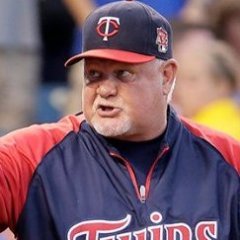
“This guy has a chance to be a superstar,” said Twins manager Derek Shelton.
Lewis’ struggles have come from a complicated mix of factors, with health chief among them. He suffered a hamstring injury in Spring Training in 2025 and now believes he returned too quickly. That decision led to a slow start at the plate, and just as he appeared to be finding his timing again, he aggravated the injury and missed more time. When Lewis finally had an extended stretch of health in the second half of 2025, the consistency still did not fully return.
Soon after being hired, Shelton traveled to Texas to visit Lewis. The gesture resonated.
“We definitely vibed really well,” Lewis said. “He came out to Texas to see me, and honestly I told him that meant my whole year. I was blown away that he came out to see me. I didn’t realize that I was that important to him and to the organization. I felt like I was starting to lose that kind of feeling, and I just felt like a different vibe at the end of last year, parts of last year, but he definitely corrected that. And we’re still keeping in touch.”
Even during an uneven 2025, Lewis showed signs that matter. Defensively, he looked smooth and athletic down the stretch. He began running again, stealing bases and trusting his body. From a physical standpoint, he finally started to resemble the player the Twins envisioned when they drafted him first overall.
Now comes the hard part. Staying healthy. Finding rhythm. Letting confidence snowball instead of doubt. None of that is guaranteed. The Twins still believe in Lewis, and 2026 is the most critical season in his young career.
The Minnesota Twins checked off another vital offseason box by avoiding arbitration with Ryan Jeffers. According to KSTP’s Darren Wolfson, the two sides agreed to a one-year deal worth $6.7 million, covering Jeffers’ final season of arbitration eligibility.
The number landed almost exactly where industry expectations pointed. MLB Trade Rumors projected Jeffers to earn $6.6 million. With free agency now looming next winter, both sides secured cost certainty while keeping flexibility for what comes next.
That flexibility matters because Jeffers’ name continues to surface in trade speculation. Rumors have linked the Philadelphia Phillies to the Twins catcher if they are unable to come to terms with longtime backstop J.T. Realmuto. Minnesota could theoretically hold Jeffers into the regular season and revisit trade discussions closer to the trade deadline. Still, most teams prefer stability at catcher from the first day of spring training. Catchers need time to build trust with a pitching staff, and that reality often pushes deals earlier rather than later.
While Jeffers is not Realmuto, the gap between the two is smaller than it might appear at first glance. During the 2025 season, Jeffers slashed .266/.356/.397, adding nine home runs and 47 RBI across 119 games. Realmuto produced a .257/.315 /.384 line, along with 12 home runs and 52 RBI in 134 games. The larger body of work still favors Realmuto, who owns a .270/.328/.447 career line over 1,373 games, while Jeffers sits at .239/.321/.419 through 515 contests. Even so, Jeffers has quietly grown into a better-than-average offensive catcher, especially over the last three seasons.
Minnesota has leaned on a tandem behind the plate in recent years, splitting time between Jeffers and Christian Vazquez, who is now a free agent. The Twins have indicated that Jeffers will see more regular work moving forward, though few catchers reach 120 games caught in a season. Depth remains a concern. Alex Jackson and Jhonny Pereda currently profile as the next options, leaving the organization thin at the position with no clear answers knocking on the door in the upper minors.
For now, the arbitration agreement keeps things simple. Jeffers remains the Twins’ top catcher, the payroll stays predictable, and the front office retains options. Whether Jeffers spends all of 2026 in a Twins uniform or becomes a trade chip later on, Minnesota has positioned itself well. Avoiding arbitration was not just about dollars and cents. It was about buying time, and in this case, time may prove to be the most valuable asset of all.
The Twins continued their arbitration housekeeping on Thursday by reaching an agreement with Bailey Ober, avoiding a hearing and keeping one of their longest tenured starters in the fold for the 2026 season.
According to KSTP’s Darren Wolfson, Minnesota and Ober settled on a $5.2 million deal that covers the upcoming season. Ober remains under team control through 2027, meaning he will be arbitration eligible one more time before potentially reaching free agency. MLB Trade Rumors projected Ober to earn $4.6 million, so the right-hander came out ahead in the process, earning a notable raise despite a down year.
That dip in production was real. Ober endured the toughest season of his big league career in 2025, never quite getting right after dealing with a lingering hip injury. Even with time off, the issue persisted, and Ober ultimately tried to pitch through it. The results reflected that struggle. His fastball velocity dipped, his margin for error shrank, and hitters punished more mistakes than they had in previous seasons.
Over 146 1/3 innings, Ober posted a 5.10 ERA and a 1.30 WHIP, numbers that looked jarring compared to his typically steady profile. Home runs were a significant problem (1.8 HR/9), and the lack of velocity made his trademark command-based approach far less effective. Still, the Twins clearly believe there is enough of a track record to justify the investment, as his second year of arbitration eligibility brings a $1.65 million raise and a continued spot in the rotation.
Assuming health, Ober remains a key part of Minnesota’s pitching plans. The rotation is expected to be anchored by Pablo Lopez and Joe Ryan, with Ober firmly in that next tier if he looks anything like his pre-2025 self. His ability to eat innings, limit walks, and deliver reliable starts has been invaluable when he is right.
That said, the margin for error is thinner than it once was. Behind the projected top three sits a wave of young arms eager to make their mark. Simeon Woods Richardson showed he belongs. Zebby Matthews is knocking on the door. Mick Abel, Taj Bradley, and David Festa all bring varying degrees of upside and urgency. The competition is real, and it is not going away.
Even deeper down the pipeline, help could arrive by midseason. Kendry Rojas continues to develop into an intriguing option. Marco Raya and Connor Prielipp have the stuff to force the issue if they aren’t moved to bullpen roles. Andrew Morris has quietly put himself on the radar as well. Minnesota’s organizational pitching depth means performance will matter more than pedigree.
For Ober, the path forward is straightforward. He must show that the hip injury is behind him and that his velocity and command have returned. If he does, the Twins have a mid-rotation starter on a reasonable salary who can stabilize things behind Lopez and Ryan. If not, the pressure from below will only intensify.
Thursday’s agreement is a vote of confidence, but it is not unconditional. The Twins avoided arbitration and secured cost certainty, while Ober earned a raise and another opportunity to prove that 2025 was the exception, not the new rule. How he responds will go a long way in shaping Minnesota’s rotation not just in 2026, but beyond.
Los Angeles had the roster flexibility to make the claim after trading outfielder Esteury Ruiz to Miami late last month. That deal sent Ruiz to the Marlins in exchange for minor league pitcher Adriano Marrero and opened a 40-man spot for the Dodgers. Miami then designated Wagaman for assignment, flipped him to the Twins for minor league pitcher Kade Bragg, and in turn pushed Fitzgerald off Minnesota’s roster. A couple of weeks later, Fitzgerald landed with the Dodgers, turning a series of unrelated transactions into something resembling an accidental three-team trade.
Fitzgerald had openly expressed interest on social media in playing professionally in Asia. Still, the Twins blocked that path, likely hoping he would clear waivers and remain in the organization as upper-level depth. Instead, another club with roster space and a reputation for maximizing role players scooped him up.
Fitzgerald’s journey to this point has been anything but conventional. Now 31, he spent the early part of his career in independent ball, where he played well enough to earn a minor league deal with the Red Sox in 2018. Five years later, he was selected by the Royals in the minor league phase of the 2023 Rule 5 draft, the same draft that saw Wagaman head to the Angels. Fitzgerald never cracked the Royals’ big league roster and opted for free agency after the 2024 season.
That decision led him to Minnesota on a minor league contract and, finally, to the majors. Just shy of his 31st birthday, Fitzgerald made his MLB debut in 2025. His first stint lasted less than a week, but he earned another call-up in August after the Twins shifted into sell mode at the trade deadline and remained with the club for the rest of the season.
The production was solid at every stop. Fitzgerald posted an .837 OPS and a 119 wRC+ in 59 games at Triple-A and followed that up with a .758 OPS and a 110 wRC+ across 24 major league games. He also provided defensive versatility, appearing at all four infield positions. Still, with Minnesota prioritizing roster flexibility and younger options heading into 2026, that combination was not enough to secure his spot.
For the Dodgers, Fitzgerald represents a low-risk depth addition with real versatility, the kind of player they have turned into meaningful contributors before. For the Twins, it is another reminder of how thin the margin can be for fringe roster players, especially in an offseason filled with 40-man juggling.
The ending is bittersweet. Fitzgerald’s path to the majors was long and winding, and his time in Minnesota was brief but productive. Now, he heads to Los Angeles with a chance to stick on one of baseball’s deepest rosters. Even if the Twins could not keep him, something is fitting about a late bloomer getting his opportunity with the defending World Series champions.
On Friday afternoon, Major League Baseball announced that former Twins and Phillies outfielder Max Kepler has been suspended 80 games after testing positive for Epitrenbolone, a performance-enhancing substance. It is an item that violates MLB's Joint Drug Prevention and Treatment Program.
Max Kepler will turn 33 years old in a little more than a month. He is currently a free agent looking for his next home. After signing with the Twins in 2009 out of Germany, he spent parts of the 2015-2024 seasons in a Twins uniform. Over those 10 seasons, he was worth 20.5 bWAR. In 1,072 games, he hit .237/.318/.429 (.746) with 205 doubles, 161 homers and 508 RBI.
His best season came in 2019 when he hit .252/.336/.519 (.855) with 32 doubles and he led the Bomba Squad with 36 home runs. He was never able to replicate those numbers.
He became a free agent for the first time last offseason. He signed a one-year, $10 million deal with the Phillies. In 127 games, he hit .216/.300/.391 (.691) with 19 doubles and 18 home runs.
Free agency just became more difficult for Kepler. Some team will sign him and not have to pay him for the first half of the season. He can come back for the final 82 games of the season, but because of the suspension, he will be unable to play in the playoffs should the team make it.
Derek Shelton continues to put his own touch on the Minnesota Twins' coaching staff. Since he's taken the role of manager, Shelton has named a new hitting coach, bench coach, bullpen coach, first base coach, and field coordinator. Recently, he made another addition to the coaching staff by bringing in someone who recently played for the club.
Bobby Nightengale of the Minneapolis Star Tribune is reporting that the Minnesota Twins are hiring Michael A. Taylor as the team's Outfield Instructor. Michael A. Taylor retired following the 2025 season after a 12-year career with five different clubs, most recently with the Chicago White Sox.
For what Taylor lacked in offense (a career 79+ OPS), he made up for in his outfield defense. Throughout his career, Taylor was known as an elite glove-first center fielder, which is evident by being a three-time Rawlings Gold Glove finalist and the award in 2021. It's likely he would have received recognition (and hardware) if his bat had allowed him to stay in the lineup more regularly.
Regardless, Taylor will shift from patrolling the outfield to patrolling the outfielders with the Twins in 2025. A role that he seems perfectly suited for, given the 62 Outs Above Average (OAA) he accrued in the Statcast era.
Do you think Taylor can help strengthen the outfield defense, particularly when it comes to Matt Wallner and Trevor Larnach? Let us know in the comments!
Spring training is always about optimism, but it is also about information. The Minnesota Twins added a healthy dose of both on Friday when they announced their internal non-roster invites for major league camp. These are players already in the organization but not on the 40-man roster who will get a chance to share fields, lockers, and moments with the big-league group in Fort Myers.
The headliners are impossible to miss. Walker Jenkins and Kaelen Culpepper are two of the most important position players in the system, and both arrive with plenty of helium. Jenkins continues to look like the rare prospect who forces timelines to move, not because of need but because of undeniable talent. He finished last season at Triple-A after posting a 154 wRC+ at Double-A.
Culpepper took a massive step forward last season, showing he can impact the game with his bat while sticking at shortstop. In 113 games, he posted a 138 wRC+. The organization named him the minor league player of the year, and he enters 2026 as a consensus top-100 prospect. His presence, along with Jenkins's, guarantees that early-morning workouts will draw extra eyes.
The list also rewards performance: Kala'i Rosario and Kyler Fedko were among the system’s most productive hitters last year. Spring training is typically where that type of momentum earns recognition. Rosario brings loud contact (25 homers, 131 wRC+) and improved plate discipline, while Fedko made his mark on the bases (38 steals, 130 wRC+). Neither is expected to break camp, but both gain from time around the major league staff early.
Beyond the marquee names, this group offers a little of everything. Trent Baker and Cory Lewis provide rotation depth and a chance to evaluate arms against higher-level competition, while Christian MacLeod continues his push back into the picture after showing signs of life last season. Meanwhile, Ricardo Olivar and Noah Cardenas give the catching group extra reps and flexibility during long camp days.
On the position player side, Aaron Sabato, a former first-round pick, remains one of the more fascinating cases in the system. The power is real, and spring training offers another opportunity to show progress in the rest of his game. Tanner Schobel and Patrick Winkel are solid organizational performers who do many things well and help keep the environment competitive.
Non-roster invites rarely tell a complete story on their own, but together these players offer clues about the Twins’ current priorities. By bringing in their best prospects, recent standouts, and valuable depth, the Twins reinforce that spring training isn’t just about preparing the Opening Day roster; it’s also about developing the next wave by giving them firsthand experience of what it takes to succeed.
In a recent roundup on MLB.com, early results on MLB television ratings were revealed. They include:
MLB on Fox is up 10%
MLB on ESPN is up 22%
MLB Tuesday on TBS is up 16%
Perhaps most importantly, it appears substantial gains are being made in the 18-34 age demographic, a decades-long weakness of Major League Baseball.
This is in sharp contrast to the World Series, which has been in decline for years and is often used as a benchmark for the overall popularity of the sport. I was able to find World Series ratings dating back to 1968, and until 2007 the World Series never carried a rating under 10. That slowly spiraled until it hit its low-water mark of 4.7 in 2023 as the Texas Rangers and Arizona Diamondbacks squared off.
MLB and Commissioner Rob Manfred have aggressively pushed rules changes, largely in an attempt to capture younger demographics that have abandoned baseball in favor of football and basketball.
Is baseball on the rebound with fans or is this just a blip on the radar?
Tanner Schobel, the Minnesota Twins second round pick from the 2022 draft, was promoted to Triple-A St. Paul on Wednesday, per Dan Hayes of The Athletic.
Schobel (who has split time at second, third, and shortstop) has a slash line of .292/.372/.465 with seven home runs in 234 plate appearances. His plate discipline has been extremely impressive with a low 14.1% strikeout rate and a high 10.7% walk rate. He's add seven stolen bases to his stat line to boot.
Baseball America has the 24-year-old utility man as the Twins eighth rated prospect with mostly average to above-average tools, although below average power.
View Schobel's scouting report here:
Do you think there is any chance we see Schobel with the Twins in 2025? Are you planning on seeing him in-person at CHS Field? Join the conversation in the comments!
Baseball America released their June top 100 prospect rankings and it doesn't come as a surprise to see one name fall. While Luke Keaschall and Emmanuel Rodriguez saw their stocks jump two spots, Walker Jenkins saw his fall two spots despite two people ahead of him in the May rankings graduate.
It's not surprising to see Jenkins drop on the list, going from #11 in May to #13 in June, as he's been out for a majority of the season. He just returned on June 3rd in the Florida Complex League. A good month could see him back in the top 10 for the July Update.
On the other hand, Rodriguez has been his typical "on-base machine" self with the St. Paul Saints this year carrying a .400 OBP. Along with a high walk rate, he has a high strikeout rate due to his patient plate approach. He's annually towards the bottom of the Minor League leaderboard in swing and contact rates. More than most prospects, Rodriguez is a massive wild card as to whether the prospect pedigree will turn into production at the big-league level.
Finally, Keaschall was moved to the 60-day IL and is expected to be out for the foreseeable future although should return this season.
After injuries to Zebby Matthews and Pablo López, we knew the Twins were going to have to figure out how to manage the pitching staff. This led to promotions of David Festa, Simeon Woods Richardson, Travis Adams, and Danny Coulombe. Adams has since been sent back to Triple-A St. Paul and Woods Richardson is coming off an abysmal outing against a below average Texas Rangers squad. Now, the Twins have transferred López to the 60-day IL and have claimed left-handed reliever, Joey Wentz, from the Pittsburgh Pirates to help eat innings out of the bullpen.
Wentz, 28, has thrown 26 innings across 19 appearances with an ERA of 4.15 (3.77 FIP) and a 9.5% strikeout minus walk rate. He's a typical Falvey-esque pitcher with an extension in the 88th percentile and a mid-to-low 90s fastball that he counters with horizontal movement (cutter). He also has a curveball as his third offering.
This is just a depth move by the Twins, who have relied heavily on their bullpen in the early going, but may also spell the end of the road for the struggling Jorge Alcala.
Do you think this signals the end for Alcala? How long does Wentz last with the Twins? Join the conversation in the comments!
As the standings currently sit, the Minnesota Twins and the Detroit Detroit Tigers are the top two teams in the American League Central.
Major League Baseball and ESPN are rewarding them by flexing their Sunday matinee to Sunday night baseball on June 29 starting at 6 PM.
For the Twins, this will be their first time on Sunday Night Baseball in five seasons. They last played on Sunday Night Baseball in 2020 against the Chicago Cubs. That game featured six shutout innings from then rotation ace Jose Berríos followed by three innings of dominance from the Twins bullpen. Max Kepler had himself a night going 3-for-5 with a two run blast. Also of note, Target Field has not hosted Sunday Night Baseball since its inaugural season, according to Declan Goff.
Hopefully the Twins can play better in front of a national audience than they did in front of their own fans against he Texas Rangers. 😬
Aaron Gleeman of The Athletic is reporting that Minnesota Twins starting pitcher prospect, Andrew Morris, was placed on the 15-day IL with a right forearm strain.
The news is yet another pitcher injury for the Twins, who recently lost Pablo Lopez and Zebby Matthews to injury. In addition, Bailey Ober recently mentioned a hip issue that's impacting his mechanics, though he's been able to continue pitching.
Morris has been very up and down for Triple-A St. Paul with five starts of four earned runs or more and seven starts of two earned runs or less. In all, it had amounted to a 4.41 ERA across 63 1/3 innings.
With all the injuries, Morris was on the short list of pitchers who could be next in line to head West down 94 to Target Field. Now, we await to learn the severity of his injury but it's safe to assume he'll be shut down for awhile.
Do you think there is something to all these injuries or is it just coincidence?
The Minnesota Twins depth took another hit today, but this time it comes on the offensive side of the ball.
After missing multiple games this weekend, Mickey Gasper, has been placed on the Triple-A injured list with plantar fasciitis. An issued that has plagued All-Star shortstop Carlos Correa in previous seasons.
With the Twins in a 3-13 funk, some speculated whether recalling Gasper from Triple-A St. Paul could help the big-league club. Gasper, 30, was dominating with the Saints slashing .318/.418/.609 with 10 home runs. His production has resulted in a 165 wRC+.
However, the same hasn't been true in his cup of coffee with the Twins this season. In 39 plate appearances, the switch hitter has a .488 OPS with just one extra base hit - a double - good for a wRC+ of 47.
If the Twins plan to change things up, they may have to look at getting slugger Carson McCusker some at-bats, though he doesn't answer the Twins need for help on the dirt. Ryan Fitzgerald may be the next man up to fill that need, who has also been very productive for the Saints.
Do you think anyone currently in Triple-A could help the Twins right the ship?
It's been two weeks since Royce Lewis strained his left hamstring leaving the Minnesota Twins scrambling to cover the hot corner.
In a positive development, Aaron Gleeman of The Athletic is reporting that Lewis will begin a rehab assignment in Triple-A St. Paul on Friday, June 27th.
While Lewis struggled to find his bat after missing the first month of the season, but seemed to be turning a corner before his latest injury. In the meantime, Brooks Lee has been a solid replacement for Lewis and is recently enjoyed an 18-game hitting streak and his hit safely in 22 of his last 23 games.
Once Lewis' rehab assignment is over, should he join the Twins ASAP or get extra reps in St. Paul? Join the conversation in the comments!
In the latest update of the sale of the Minnesota Twins, Charley Walters is citing industry sources who say "the [Minnesota] Twins have an offer on the table."
He goes on to say that "Major League Baseball is expected to guarantee the Twins' debt reportedly more than $400 million."
So, why isn't this bigger news? Well, it's not been confirmed outside of an "industry source" and it's in the "Don't print that" section of the article linked in the tweet above. At this point, it's just a rumor.
What does it mean that MLB is "expected to guarantee the Twins' debt?" Well, that answer is also a bit unclear, but our own @Peter Labuza did some speculating and digging saying "If I had to guess, MLB would "buy" the debt and then have the team pay MLB rather than the Pohlad's...?" He goes on to cite the Debt Service Rule from the Atlanta Braves public filings:
"Each MLB Club is subject to certain MLB imposed restrictions on its ability to incur indebtedness in amounts that exceed specified thresholds. In particular, each MLB Club is generally required to keep outstanding indebtedness minus a certain amount of excludable indebtedness at or below 8.0x available cash flow (or in the case of MLB Clubs which have a new stadium, at or below 12.0x available cash flow), with the amount of excludable indebtedness for fiscal year 2023 set at $125 million and for each of fiscal years 2024 through 2026 set at $100 million. This is referred to as the Debt Service Rule. MLB Clubs must certify compliance with the Debt Service Rule annually and the failure of an MLB Club to comply during two consecutive fiscal years may lead to certain remedial measures being imposed by the Commissioner of Baseball, including, but not limited to, prohibitions on the incurrence of additional indebtedness and repayment of outstanding indebtedness."
Moreover, using the NFL as an example, Labuza says "[NFL] owners can "borrow" from the league at a cheaper interest rates than banks, etc."
On the other hand, @John Bonnes speculates at a more simple explanation, asking "rather than come up 1.5B cash, [maybe prospective owners] can come up with 1.1B cash and take on the $400M loan gradually?"
While it's our speculation and educated guesses on our end, it helps provide a little bit of clarity on a somewhat vague and unclear statement from Walters piece.
Do you have any insight on the matter? Please share in the comments!
The Twins selected their third pitcher of the draft with their fourth-round pick. Reitz is an Oregon product and ranked 191st on MLB Pipeline's draft rankings. A 20-year-old junior set to turn 21 in a little over a week, this spring was Reitz's first year with Oregon after he spent his freshman and sophomore years at Saint Mary's.
Reitz made 11 starts and 16 total appearances for the Ducks this spring, posting a 3.50 ERA while striking out 73 in 64 1/3 innings. What immediately stands out about Reitz is his height. At 6'11", Reitz is easily the tallest player in this year's class, and surprisingly moves fairly well. However, his long levers have made it harder for him to repeat his delivery and command the strike zone with consistency. His command has improved throughout his college career, but there's still a lot of progress to be made before you can start dreaming of him as a big league starter.
It's a four-pitch mix right now with Reitz throwing a fastball, cutter, slider, and a changeup. His fastball has reached the upper-90s but actually doesn't create a whole lot of extension. Suppose the Twins can get him down the mound further, that fastball can become quite the weapon. He is pretty reliant on his mid-80s cutter, which has the potential to be an above-average offering, as does his slider and changeup. Aside from his height, there isn't too much that jumps off the page here, but there is definitely a high enough floor for the Twins to work with, potentially turning him into an effective starter at the next level.
With the 149th pick in the draft, the Twins selected their fifth pitcher in seven picks, keeping up with a pitcher-heavy draft. They selected Matt Barr, a JUCO product from Niagara County Community College. Barr was the highest-ranked JUCO prospect in MLB's draft rankings.
After spending his freshman year with Niagara, Barr committed to Tennessee for the 2026 season. Still, it became pretty clear he wasn't making it to campus as he continued to rise on draft boards throughout the cycle. In 57 innings across ten starts, Barr struck out 94 hitters while posting a 1.74 ERA.
Barr is an athletic 6'6" and 195 pounds, and is still very projectable at 19 years old. The feel to spin the ball stands out here as all three of his offerings come with high spin. He throws a mid-90s fastball with a lot of ride, and complements it with a sweeping slider and a more traditional curveball. The mix has the potential to be a nightmare for right-handed hitters, and he has also flashed a cutter as a more platoon-neutral offering. He has yet to develop another arm-side pitch, which should be in the cards for the Twins as he has the upside to be a big league starter. The command also requires further development, but his delivery and athleticism suggest his command could emerge as average to above-average.
With the 2025 MLB draft behind us, many prospectors will be updating their prospect lists. Aaron Gleeman of The Athletic is one of the first to do so.
Of the 21 Minnesota Twins draftees, three of them make Gleeman's top 20 from jump.
Marek Houston, the Twins' 16th overall pick, cracks the top 10, coming in at number 7 on the list. Currently, he looks to be a glove-first shortstop, though his hit tool improved over three seasons for the Wake Forest Demons.
Riley Quick, drafted 36th overall (1st round comp pick), rounds out the top 10. He's been compared to 2023 Twins draftees, Connor Prielipp, as a drafted out of Alabama with big-time stuff but injury concerns.
Quentin Young, drafted 54th overall, comes in at number 15. A prep infielder, Young is extremely young, raw, and projectible.
Other notable movement in his top 20 includes SP Dasan Hill jumping from 20th to 6th, OF Gabriel Gonzalez from 21st to 8th, and SP Jose Olivares from 35th to 20.
The Minnesota Twins have begun locking in their 2025 draft class, announcing the signings of three of their top selections, including their first-rounder, just days after the MLB Draft.
Marek Houston, the Twins' first-round pick at No. 16 overall, has officially signed for $4,497,500, slightly under the assigned slot value of $4,929,600. Houston, widely regarded as the best defensive shortstop in the class, brings elite glove work and advanced instincts to the organization. Though questions remain about the bat, his athleticism and polish make him a potential fast mover in the system.
Joining him is Riley Quick, the Twins' supplemental first-rounder out of Alabama, who signed for his full slot value of $2,692,000. A hard-throwing righty with a deep pitch mix, Quick profiles as a potential rotation mainstay with multiple plus offerings and a competitive SEC pedigree.
Second-round pick Quentin Young, the nephew of former Twin Delmon Young, also signed for full slot value at $1,761,600. One of the more intriguing upside plays in the class, Young brings raw but electric tools, boasting elite athleticism and massive power potential. If the Twins can refine his approach, he could become a high-ceiling force in the lineup down the line.
The Twins are expected to announce additional signings in the coming days as they work to finalize the rest of their 2025 class.
Byron Buxton, in the midst of an MVP caliber season, has also been having the healthiest year of his career.
While we don't know a lot of information at this time, the Twins.TV broadcast reported that Buxton exited Saturday's game in the top of the seventh inning with soreness in his left side. Trevor Larnach replaced Buxton, which in turn shifted Willi Castro to left field and Harrison Bader to center field. There didn't seem to be any specific play that led to Buxton being pulled from the game. One silver lining is that it doesn't sound like it's a lower body injury, which has plagued Buxton for a majority of his career.
Buxton has been on a tear this year with an OPS of .951, including 23 home runs. He's added 17 stolen bases and continues to contribute platinum glove level defense. If he were to miss time, it would almost certainly force the Twins hand to sell their expiring contracts - something that has been rumored but to this point there's been just one report indicating a team is interested in one of those players.
Stay tuned to Twins Daily for updates on Buxton's status.
In his latest article, Bobby Nightengale reported that the Twins had talks with the Mariners at the trade deadline, but a deal never came together because Seattle was unwilling to include two of their best prospects. Minnesota’s ask? Two top-100 prospects.
Nightengale also noted that the Twins actually preferred 18-year-old catcher Eduardo Tait over Phillies shortstop prospect Aidan Miller. The hesitation with Miller, ranked #17 in baseball by MLB Pipeline, came from concerns about his ability to stick at shortstop long-term. Miller, currently in Double A, has posted a .740 OPS this season. The Twins felt Tait carried more upside and made him their request from Philadelphia instead.
The Minnesota Twins are wasting little time challenging their top draft pick. Shortstop Marek Houston, the 16th overall selection in July’s draft, has been promoted to High-A Cedar Rapids after just 12 games with the Fort Myers Mighty Mussels.
Houston impressed immediately in Low-A, slashing .370/.424/.444 with 13 strikeouts, five walks, and plenty of highlight plays in the field. His advanced glove work, considered the best among shortstops in this year’s draft, was a major factor in the Twins selecting him in the first round.
He now joins a Kernels team that already has its ticket punched for the postseason after winning the Midwest League West Division’s first half. Houston will get a taste of playoff baseball right away, with 18 regular-season games left plus Cedar Rapids’ postseason run. His High-A debut could come as soon as tomorrow, August 19, when the Kernels visit the South Bend Cubs.
What do you think of Houston’s early showing in the Twins organization? Is he tracking even faster than expected? Share your thoughts in the comments below.
It's hard to predict how this offseason will unfold, as there is an increasing chance of (yet another) MLB lockout following the 2026 season. Will teams spend big this offseason, hoping to create surety in the face of an unknown collective bargaining agreement? Or will they be hesitant in hopes of a favorable outcome for ownership groups?
No matter how it shakes out, teams will need to compete in the 2026 season, and they'll need to sign free agents this winter. DiamondCentric has compiled a complete list of free agents, sortable and searchable by pretty much any metric you need. Looking for a first baseman? A catcher? We have you covered. We offer two pages for your reference: one for position players, the other for pitchers.
With the World Series nearing its end, teams will soon be allowed to complete trades. With that, you can expect to hear rumors surrounding the Minnesota Twins, who could look to shed more salary by dealing one or both of their top starting pitchers.
Jen McCaffrey, who covers the Boston Red Sox for The Athletic, is already stoking the stove in a recent mailbag article. The team that made a late push at the deadline to acquire the 29-year-old Ryan is expected to add to their starting rotation this offseason and will likely be calling the Twins again.
While they may pursue more elite options, such as Detroit Tigers ace Tarik Skubal, they could also opt for more of a number two type like Ryan. At the deadline, Dan Hayes suggested the Twins would be looking for two top-50 prospects in return - "one with a mid-ceiling and one more of a lottery ticket." McCaffrey goes on to speculate that a package including one of shortstop Franklin Arias or outfielder Jhostynxon "The Password" Garcia, plus 2025 first-rounder right-hander Kyson Witherspoon, would be a good "start" to a potential deal.
Arias, the Red Sox's top prospect and 24th in all of baseball (per MLB Pipeline), started the 2025 season in Single-A Salem before being promoted to High-A Greenville Drive and eventually Double-A Winchester. He posted a .278 AVG with eight home runs, 66 RBI, and 12 stolen bases over 479 at-bats in the minors.
Garcia split his 2025 season between the minor and major leagues for the Red Sox organization. In the minors, he hit 21 home runs and drove in 75 RBI. He appeared in 5 games for the Red Sox, recording one hit (a double) over seven at-bats with two walks. He ranks as the 85th best prospect in baseball and third in the organization.
Witherspoon, who didn't appear in a game for the Red Sox organization, finished his NCAA season with a 2.65 ERA and 124 strikeouts across 95.0 innings for the Oklahoma Sooners. He was named a Golden Spikes Award Semifinalist and a Consensus First Team All-American. He is currently the 89th prospect in baseball and 4th fourth-best prospect in the organization, according to MLB Pipeline.
Who do you think the Twins should look to land if they tango with the Red Sox? Let us know in the comments!