
With the calendar turning toward the final week of spring training, the Minnesota Twins continue to narrow down their roster. On Tuesday, the club reassigned three more non-roster position players to minor league camp, signaling that decisions are becoming more real with each passing day.
Outfielders Kala’i Rosario and Kyler Fedko, along with infielder Tanner Schobel, were the latest cuts. Rosario and Fedko were among a group of Twins prospects announced for the team’s Spring Breakout game on Thursday. The moves come just ahead of an off day on Wednesday, March 18, and leave the Twins with 21 position players remaining in big league camp. That group still includes a handful of non-roster invitees, but the competition is clearly tightening.
Rosario may have made the strongest impression of the trio this spring. The 23-year-old went 5-for-15 in Grapefruit League action, showing some pop with a home run and driving in four. He also drew three walks, though the seven strikeouts highlight the continued development needed in his offensive approach. A fifth-round pick in 2020, Rosario finished last season at Double-A and remains an intriguing power bat in the system.
Fedko, 26, brings versatility with experience at both first base and the outfield, but his spring numbers did not jump off the page. He collected three hits in 23 at-bats while striking out eight times. After splitting last season between Double- and Triple-A, he looks ticketed to provide organizational depth at the upper levels.
Schobel, a 2022 second-round pick, also flashed some ability despite limited opportunities. The 24-year-old recorded two hits in 15 at-bats, including a home run, while working three walks. He reached Triple-A last season, and the Twins have continued to challenge him with aggressive assignments since drafting him.
At this stage of camp, these moves are less about performance and more about roster realities. The Twins need to allocate at-bats and innings to players still competing for Opening Day roles, and that often means sending promising but not quite ready contributors back to the minor league side.
None of Rosario, Fedko, or Schobel was expected to break camp with the major league club, but all three remain firmly in the picture for 2026. Each should factor into Triple-A depth at St Paul, positioning themselves as potential call-up options when injuries or roster needs inevitably arise during the season.
Developing a pure, native app for either Android or iOS is a breathtakingly expensive endeavor, which is why we haven’t done it, despite so many requests over the years. Thankfully, technology has met us halfway, and PWAs (Progressive Web Applications) have reached maturity in the marketplace.
What is a PWA? It’s effectively a pseudo-app that works much like a native application but doesn’t require tens of thousands of dollars in development to produce. It creates a single browser instance and maintains it as if it were an application. It’s basically a standalone browser tab, dedicated specifically to Twins Daily.
From this app instance, you can receive notifications; the typical browser interface is removed, and the site is presented clearly, using as much screen real estate as possible, all without sacrificing any functionality. The site is faster, more reliable, and offers more mobile functionality than a standard web browser.
Additionally, a newer, completely updated Twins Daily is coming later this year, and that will add even more app-like features, making PWA usage even better for all our users.
With that said, here’s how you turn Twins Daily into an app on your mobile device.
Finalized rosters dropped on Wednesday, trimming each organization’s initial 40-player pool down into something much more game-ready. For the Twins, that means a prospect group in the mid-20s taking the field on Thursday afternoon, with a chance to show what the next wave of talent might look like in Minnesota.
Major League Baseball’s third annual Spring Breakout event runs from March 19 through March 22, serving as a four-day window into the future of the sport. The Twins will host the Philadelphia Phillies prospects on Thursday at 12:05 p.m. CT, giving fans a midday look at some of the organization’s most intriguing names. The game will be widely accessible, airing on MLB Network and Twins.TV while also streaming for free on MLB.TV, MLB.com, and the MLB app.
For Minnesota, this is more than just a novelty on the spring calendar. The roster is packed with players who could realistically factor into the club’s long-term plans, and in some cases, sooner rather than later.
Spring Breakout rosters are built primarily from MLB Pipeline’s Top 30 prospects list for each organization, with eligibility tied to players who still qualify as rookies for the 2026 season. This year’s format again featured a two-step process: a 40-player pool, then a final group announced on Wednesday.
One notable absence is Walker Jenkins, who will miss the event for the second straight year. The outfielder dealt with a hamstring injury earlier in camp, but the Twins have indicated he is progressing well. The expectation is that he will return to action later this week and be ready for Opening Day with St. Paul.
Even without Jenkins, the Twins are not lacking in star power. Fourteen of Twins Daily’s top 20 prospects made the cut, giving this roster a legitimate amount of upside across the diamond.
On the position player side, Emmanuel Rodriguez remains one of the most electric bats in the system, capable of changing a game with one swing or one sprint out of the box. Kaelen Culpepper continues to generate buzz as a fast-rising infielder with the tools to stick on the left side. Marek Houston, last year's first-round pick, will also get his first chance to show his lauded defensive skills at shortstop. Behind the plate, Eduardo Tait and Khadim Diaw give the Twins a pair of catching prospects that bring both intrigue and upside, each carving out their own path toward the upper minors.
On the mound, Dasan Hill headlines the group as the highest-ranked pitching prospect on the roster. The left-hander has already turned heads this spring after touching 100 mph, and this setting feels tailor-made for a breakout performance. Marco Raya will be another arm to watch, especially as he continues transitioning into a bullpen role. Short bursts in a showcase environment could play directly into his strengths.
All told, this is a roster that blends proximity with projection. Some of these players are a few adjustments away from knocking on the big league door, while others are just beginning to scratch the surface of what they might become. Either way, Thursday offers a rare opportunity to see that spectrum all at once.
There was nothing unusual about Joe Ryan on Monday afternoon. The right-hander took the ball at Hammond Stadium, worked four innings, allowed a single run on five hits, and struck out six with one walk. It looked like a standard March outing, the kind that blends into the rhythm of spring training. Except it wasn’t supposed to happen there.
Ryan’s latest appearance came against the Pittsburgh Pirates in Fort Myers, not under the lights in Miami at the World Baseball Classic championship. For weeks leading up to this, the expectation was that Ryan would factor into Team USA’s pitching plans deep into the tournament. Instead, as events unfolded, he was left watching as the roster shifted in a different direction. The decision caught him off guard.
“That was a shock,” Ryan told the Star Tribune. “Definitely a weird one to process. I was fully prepared, ready to go, the car was all ready, and excited to go there, obviously, the whole time. Then was told I wasn’t going to go.”
The path to that moment had been anything but straightforward. Back in December, Ryan was originally named to Team USA’s roster as part of a loaded pitching staff assembled for a title run. However, a bout of back inflammation during spring training altered his early availability, keeping him out of pool play but leaving the door open for a return in the knockout rounds as the spring progressed.
As Team USA advanced through the tournament, that opportunity seemed likely to materialize. At one point, Manager Mark DeRosa even indicated publicly that Ryan could step in for Clayton Kershaw if the team reached the later rounds, potentially pitching in the championship mix.
Instead, when it came time to finalize the roster for the later rounds, Team USA ultimately used its available spot on reliever Jeff Hoffman, prioritizing bullpen depth over inserting Ryan into a starting role. This decision, made near the championship stage, left Ryan on the outside looking in, although his throwing schedule was carefully built around the possibility of pitching in the final.
Adding to the frustration was the timing and method of communication. Ryan said he first learned of the roster change through Twins leadership shortly after the decision, not Team USA directly, and didn’t hear from USA Baseball until days later. Still, he made it clear where the support came from.
“The Twins were great, super supportive with a really good plan the whole time,” Ryan said. “They really wanted me to go. It wasn’t up to us at the end of the day.”
From Minnesota’s perspective, there is at least a practical silver lining. The organization had adjusted Ryan’s spring workload to align with a potential WBC appearance, and now that plan rolls seamlessly into the regular season. He remains on track to start Opening Day in Baltimore, a role that carries its own weight even if it lacks the global spotlight.
It is a strange baseball reality. One week, you are penciled into a potential championship game for your country. The next, you are back on a spring mound facing a split-squad lineup. For Ryan, the preparation never changed. The opportunity did.
Joe Ryan Timeline for World Baseball Classic
Dec. 17: Team USA announces that Ryan will be on its roster.
Feb. 21: Ryan is scratched from his Grapefruit League debut due to back discomfort.
Mar. 1: Ryan throws a bullpen session but is removed from consideration for the round robin portion of the tournament.
Mar. 10: Ryan makes his 2026 game debut for the Twins.
Mar. 12: Mark DeRosa says Ryan and Nolan McLean could pitch in some combination during the championship game.
Mar. 13: Team USA adds reliever Jeff Hoffman to the roster instead of Ryan.
Mar. 14: Ryan throws a bullpen session, and the Twins confirm he will remain in camp.
Mar. 15: Ryan makes his second spring start for Minnesota.
The final stretch of spring training is supposed to be about decisions, not diagnoses. For the Twins, that equation shifted quickly on Monday when Austin Martin exited Minnesota’s game against the Pirates with a concussion, creating uncertainty just days before the roster is finalized.
Martin was lifted from the contest after sustaining the injury during Minnesota’s 5-1 victory. The play in question came in the third inning when he tracked a ball into right field off the bat of Henry Davis. Attempting to make a diving grab, Martin hit the ground awkwardly and appeared shaken up as he got back to his feet.
After the impact, Martin remained in the game and collected a single in the bottom of the third. However, he showed signs of discomfort and was removed before the start of the fourth inning, with James Outman replacing him in right field.
Twins manager Derek Shelton provided an update after the game, outlining the immediate plan for Martin’s recovery.
“He won’t do anything through the next two days, and then we’ll reevaluate him,” Shelton said.
The sequence of events raised concern in real time, particularly as Martin began to show signs of discomfort after the play.
“When he dove, I think he kind of jarred himself a little bit,” Shelton said. “I think once he got on the bases, he realized he was a little bit dizzy. And then as he walked past [bench coach Mark Hallberg] and I, we kind of saw a little bit of hesitation, and then [head athletic trainer Nick Paparesta] got to him.”
At this point, there is no firm timetable for Martin’s return, which is less than ideal given how firmly he had worked his way into the roster conversation. The former top prospect had been trending toward a role in the outfield mix, offering defensive flexibility with the ability to handle center field and even contribute at second base if needed.
His trajectory dates back to last season, when he capitalized on an opportunity late in the year following Minnesota’s trade deadline selloff. Martin responded with some of the most productive baseball of his career by posting a 106 OPS+, putting himself squarely on the radar entering camp this spring.
The timing of the injury is what stings most. With Opening Day looming, Martin represented one of the few right-handed-hitting outfield options expected to break camp with the club. If he is unable to clear concussion protocol in time, the Twins may need to pivot quickly.
That could open the door for players on the roster bubble. Ryan Kreidler brings right-handed balance and defensive versatility. Alan Roden offers a left-handed bat with upside. Veteran Orlando Arcia also remains a possibility as a depth option if the team prioritizes experience.
For now, though, the focus remains on Martin. Concussions are unpredictable, and even minor symptoms can linger longer than expected. In a camp where every at-bat and inning matters, the Twins will have to wait and see if one of their most intriguing roster pieces can get back on the field in time.
Spring training is entering its final stretch, and the roster decisions are starting to come quickly.
With Opening Day set for March 26 against the Baltimore Orioles at Camden Yards, the Minnesota Twins are beginning to finalize the final pieces of their pitching staff. On Monday, the club reduced its bullpen competition by sending two relievers out of major league camp.
Minnesota reassigned right-handers Julian Merryweather and Grant Hartwig to minor league camp as the organization inches closer to setting its Opening Day bullpen.
Both pitchers entered camp as non-roster invitees looking to pitch their way onto the major league roster. With the calendar now showing mid-March, the Twins are clearly entering the phase of spring where roster battles become more defined.
The moves leave the organization with 45 players still active in big league camp, including 21 pitchers. However, that number does not fully reflect the group competing for Opening Day jobs. Right-hander David Festa is expected to begin the season on the injured list, while right-hander Travis Adams has been limited by elbow inflammation during camp.
If Adams is not ready for the start of the season, the Twins would be left with roughly 13 relievers competing for what is expected to be eight bullpen spots on the 26-man roster.
Merryweather showed flashes early in camp before his progress was halted by injury. The hard-throwing right-hander strained his left hamstring during his first Grapefruit League appearance on February 24. Since then, he has thrown several bullpen sessions but has not yet returned to game action.
Hartwig saw plenty of work this spring, appearing in seven Grapefruit League games. The results were uneven as he allowed eight earned runs on seven hits and two walks across 7 1/3 innings.
For both pitchers, the reassignment does not necessarily close the door on helping the Twins later this season. Injuries and performance fluctuations often lead to bullpen shuffling throughout the year, and strong outings in the minors can quickly put a reliever back on the radar.
For now, though, Minnesota continues narrowing the field. With only days remaining before the season opener in Baltimore, the Twins are quickly approaching the moment when speculation ends, and the final 26-man roster becomes reality.
Investing heavily in a high school pitcher is always risky. Pitchers are fragile, their development can take longer than planned, and injuries are common. The Twins accepted those risks when they picked Charlee Soto with the 34th overall pick in the 2023 MLB Draft.
Now, the early portion of Soto’s professional career has served as a reminder of that risk. According to MLB.com reporter Matthew Leach, Soto is behind schedule this spring as he continues to recover from bone spur surgery that took place last summer. The Twins Daily No. 10 prospect will open the 2026 season on the injured list, though there is some encouraging progress. Soto is expected to begin throwing live batting practice in early April, which could put him on a path toward returning to game action sometime later in the spring.
Though not ideal, the delay is just another twist in Soto’s development. The Twins rarely use early picks on prep pitchers because it’s a volatile profile, often preferring college arms or position players at the top of the draft.
Soto was an exception. The 17-year-old right-hander out of Reborn Christian Academy in Florida had the type of electric arm talent that made the gamble worthwhile. Minnesota signed him for a 2.48 million bonus and immediately placed him among the most intriguing young arms in the system. Since then, however, the results have been mixed.
Soto made his professional debut in 2024 and spent the year with Fort Myers. The Twins managed his workload carefully, which is common for young pitchers in their first full season. Across 21 appearances, he posted a 5.23 ERA while showing flashes of the raw stuff that made him such an appealing draft target. His fastball velocity and overall athleticism remained impressive, but consistency proved difficult to maintain.
The following season brought even more frustration. In 2025, Soto managed only 13 innings before injuries interrupted his year. A triceps strain sidelined him after just three starts with Cedar Rapids. As he worked his way through that recovery process, another issue emerged. In August, Soto underwent a procedure to remove a partially detached bone spur in his elbow.
The positive news was that doctors found no structural damage in the elbow itself. For a pitcher, that distinction matters. Structural issues involving ligaments often lead to lengthy recoveries and, in some cases, major surgery. Soto avoided that scenario, which allowed the Twins to remain optimistic about his long-term outlook.
This spring represents the first step toward putting those health questions behind him. Even though Soto will begin the season on the injured list, the expectation is that he will gradually build up his workload once he returns to the mound. Live batting practice in early April is typically one of the final checkpoints before pitchers resume competitive innings. If everything progresses as planned, Soto could see game action not long after that.
Soto’s talent has never been the primary concern. His fastball already flashes the type of life that scouts dream about when projecting future big-league starters. His secondary pitches still require refinement, but the foundation of a legitimate pitching arsenal is there. What the Twins need to see now is durability and repetition. That means building innings.
After throwing only a small number of frames over the last two seasons, Soto’s goal in 2026 should be to push past the 100-inning mark. Reaching that threshold would represent a meaningful step in his progression and help answer some of the durability questions that currently surround him.
Equally important will be his ability to refine his command and pitch sequencing. Young pitchers often rely on raw velocity early in their careers, but long-term success requires learning how to navigate lineups, adjust during games, and consistently locate pitches in competitive counts.
If Soto can combine improved health with those developmental gains, his prospect stock could rebound quickly. For now, patience remains the key. His 2026 season may begin later than expected, but it will offer another opportunity for Soto to show why the Twins believed in his potential in the first place.
If he can return to the mound, stay healthy, and steadily build his workload, the narrative surrounding his development could start to shift again. For a pitcher with Soto’s ceiling, simply getting back on the field and logging consistent innings would be a meaningful step toward the future the organization envisioned on draft day.
The Minnesota Twins have spent the past three seasons watching one of the most talented prospects in baseball climb through their farm system. Now, after a brief injury scare this spring, Walker Jenkins appears to be getting back on track.
According to Matthew Leach of MLB.com, Jenkins is “tracking well” to be available for Opening Day with the St. Paul Saints. The update came Sunday from Twins general manager Jeremy Zoll, offering a positive outlook for the organization’s most important young player.
Jenkins suffered a Grade 1 left hamstring strain on February 28, an injury that forced the Twins to slow his spring workload. Fortunately for both the player and the organization, the strain was considered mild, and his recovery has gone smoothly.
The 21-year-old outfielder is expected to begin appearing in Minor League games by the end of the upcoming week as he continues ramping up his activity. His availability for the Twins’ upcoming Spring Breakout showcase on Thursday remains uncertain, and the club is unlikely to rush him into that event if he is not fully ready.
Even without the Spring Breakout appearance, the most important goal for Jenkins is simply returning to a regular schedule before the Minor League season begins. Jenkins is widely considered the top prospect in the Twins system and one of the best prospects in baseball. Baseball America ranks him as the no. 9 overall prospect, a reflection of the tools that made him the fifth overall pick in the 2023 MLB Draft. Last week, Twins Daily profiled him as the organization’s top prospect.
Since entering professional baseball, Jenkins has done little to challenge those expectations. Scouts praise his advanced hitting approach, elite bat-to-ball skills, and the type of plate discipline rarely seen from a player his age. His combination of athleticism and offensive potential has led many evaluators to project him as a future cornerstone in the middle of the Twins' lineup.
The Twins believe the best path forward is allowing Jenkins to start the season with St. Paul, where he can continue facing upper-level pitching while adjusting to the grind of a full professional season. Triple-A will provide the final developmental stage before a potential big league opportunity.
That timeline also gives the organization flexibility. If Jenkins performs well and stays healthy, the Twins could view him as a legitimate option for the major league roster during the second half of the season. For now, the most important step is simply getting back on the field.
A return to Minor League games in the coming days would represent another step in Jenkins’ steady climb through the system. If everything continues trending in the right direction, the Twins may soon have one of baseball’s brightest young talents knocking on the door of the big leagues.
After Team USA clinched a spot in the Quarterfinals round of the World Baseball Classic, speculation was that Joe Ryan would replace Clayton Kershaw on the Team USA roster.
Following their quarterfinal win over Team Canada on Friday night, Kershaw officially said that he was retiring. It was quickly announced that Blue Jays closer Jeff Hoffman was replacing Kershaw. But it was possible there could still be more moves. On Saturday afternoon, we got confirmation that Joe Ryan will be sticking with the Twins rather than joining Team USA in Miami.
Selfishly from the Twins perspective, I think it's a good decision. Since he was slowed to start spring training and is still working his way to be ready near Opening Day, it doesn't make a lot of sense to have him push himself to max effort. Paul Skenes is making the start for the USA in Sunday night's semi-final game against the Dominican Republic. The four pitchers added to the USA roster since pool play have all been relievers. Presumably, Ryan could be lined up to make the start for Team USA in the championship game (if the US gets past the DR).
Logan Webb has been tremendous for Team USA this year. In two starts, he has thrown 8 2/3 scoreless innings. He was in a similar situation during the last WBC. He wasn't quite 100% and he was about to make some money, so he didn't pitch. Likewise, with a strong, healthy 2026 season, Ryan would line himself up for a lucrative extension with the Twins or with another team.
Selfishly as a baseball fan, it would have been fun to watch him pitch for Team USA. Think about it. When the Twins traded Nelson Cruz to the Rays in 2021, Ryan (and Simeon Woods Richardson) was in Tokyo, pitching for Team USA in the Olympics. So had he made the decision to go pitch for Team USA, one really couldn't fault him at all.
This is one of those scenarios that doesn't necessarily have one right and/or wrong answer. My hope is simply that Joe Ryan is happy with the choice and then has another All-Star caliber season.
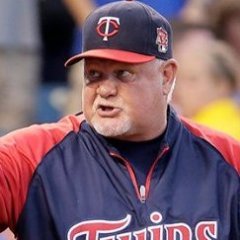
Dan Gladden has been a fixture on Twins radio broadcasts since 2000. Recently, he was named a 2026 inductee into the Minnesota Broadcasters Hall of Fame.
Gladden came to the Twins organization just before the 1987 season began. He is often referred to as the sparkplug that helped the Twins to World Series championships in 1987 and 1991. His final play with the Twins came in the bottom of the 10th inning of Game 7 of the 1991 World Series. He hit a hustle double, advanced to third on a bunt, and scored on Gene Larkin's "single" to give the Twins the 1-0 win.
He continued to play for a few more years, including time in Japan. In 2000, he began his time in the Twins radio broadcast booth. He became the full-time analyst in 203. He has worked in the booth with Herb Carneal, John Gordon, Cory Provus and now Kris Atteberry.
In fact, it was Provus who was able to tell Gladden about his latest career honor.
The honor clearly means a lot to Gladden who got emotional responding to Provus. He thanked Dave St. Peter for giving him an opportunity.
He said, "I didn't even cry when Rod Carew called me (to tell him he'd made the Twins Hall of Fame)." Gladden joined the Minnesota Twins Hall of Fame in 2022.
Join us in congratulating Dan Gladden on this terrific honor.
Spring training schedules can change quickly this time of year, and that is exactly what is happening for Minnesota Twins starter Joe Ryan. Minnesota’s right-hander is departing Twins camp and joining Team USA following the quarterfinal round of the World Baseball Classic. The move comes after Team USA needed to adjust its pitching plans late in the tournament.
Team USA’s immediate focus is on its quarterfinal matchup with Team Canada. That game is scheduled for Friday night in Houston. If the Americans advance, they would move on to the semifinal round on Sunday against the winner of the matchup between Team Korea and Team Dominican Republic.
For Ryan, the next step is to throw a bullpen session on Saturday as part of his normal spring progression. Team USA manager Mark DeRosa confirmed that Ryan is expected to report after the quarterfinal round. That timing would make it extremely difficult for Ryan to be available in Sunday’s semifinal game. Throwing a bullpen on Saturday would effectively rule him out of pitching the following day.
That leaves one realistic opportunity for Ryan to see game action in the tournament. If Team USA reaches the championship game, he could potentially be available either in relief or as a spot starter, depending on how the pitching situation develops.
Ryan has made it clear he would love to contribute if the opportunity arises, but the situation remains fluid. At this point, he would be joining the team more as a depth option rather than with a guaranteed role in the rotation.
Even a small role would be meaningful for the Twins starter. The World Baseball Classic has become one of the sport’s premier international events, and the chance to represent the United States on that stage carries plenty of appeal.
Of course, Minnesota also has its own calendar to consider. Opening Day for the Twins is approaching quickly, with the club set to begin the season on the road against the Baltimore Orioles on March 26. That leaves roughly two weeks between the end of the Classic and the start of the regular season. If Ryan ends up pitching briefly in relief during the championship game or never appears at all, he should remain on track to start Opening Day in Baltimore.
However, if he were to start the championship game, the team could adjust its rotation plans. In that case, another Twins pitcher might take the ball for the opener while Ryan would slide back a few days and make his first start later in the series against the Orioles.
From Minnesota’s perspective, the preference is obviously to have Ryan lined up for the first game of the season. At the same time, the organization understands the significance of the opportunity and has expressed support for his potential participation.
For now, everything hinges on how Team USA performs in the quarterfinal round. If the Americans keep advancing, Ryan’s spring could suddenly include one of the biggest stages in baseball.
Every franchise wants to believe it has been among baseball’s elite over the last quarter-century. A new set of rankings from The Athletic attempts to answer that question by putting a number on sustained success across Major League Baseball.
Each year, the publication releases its MLB Franchise Rankings, measuring how teams have performed over the last 25 seasons. The system rewards postseason success while also accounting for division titles and long stretches of losing seasons. It is designed to measure consistency rather than simply rewarding a single championship window.
The Athletic’s formula, adapted from Bob Sturm’s football system, fits baseball’s postseason: nine points for a World Series win, six for runner-up, three for losing in the Championship Series, two for Division Series, one for Wild Card loss. Additional adjustments include a point for division titles and a deduction for consecutive 90-loss seasons.
Unlike many rankings that focus on recent performance, this system does not give extra weight to the most recent seasons. The goal is to capture the entire 25-year stretch from 2001 through today and determine which franchises have consistently found ways to stay competitive.
Twins Land at No. 14
Minnesota ranked 14th overall with 25 total points over the 25-year period. That position places them in the top half of baseball but just barely, reflecting a franchise that has experienced bursts of success mixed with frustrating postseason outcomes.
Within the American League, only six teams ranked higher than Minnesota. The teams ahead of the Twins include the New York Yankees at second overall, the Boston Red Sox at fourth, and the Houston Astros at fifth. Those franchises have combined for multiple championships and deep playoff runs during the ranking period. A few more familiar American League rivals also finished ahead of Minnesota. The Cleveland Guardians ranked tenth, the Texas Rangers placed eleventh, and the Los Angeles Angels came in twelfth.
For Twins fans, the ranking feels both fair and frustrating. Minnesota has been competitive in several stretches over the last two decades, but postseason success has been harder to come by. A few deeper October runs could have pushed the franchise comfortably into the top ten.
A Steady Climb in Recent Years
Even though the Twins sit in the middle of the pack today, the trend line has been moving in the right direction. The franchise ranked 14th in 2025 with 24 points. In 2024, Minnesota ranked 15th overall with 22 points. The year before that, they were down at 17th with 19 points. Just a short time ago, the franchise was much closer to the bottom half of baseball.
The biggest jump came between 2022 and 2023. In the 2022 rankings, the Twins placed 22nd with only 11 points. At that point, the organization was still feeling the impact of several losing seasons and limited postseason success during the ranking window. Since then, the club has slowly climbed back toward the middle of the league. It is not a dramatic rise, but it shows that recent competitive seasons have helped stabilize Minnesota’s standing.
What Comes Next
While the recent climb is encouraging, these rankings may soon be challenging for the Twins. The system uses a rolling 25-year window, so Minnesota’s best seasons from the early 2000s will eventually drop out. When those years fall off, the Twins could lose points that now keep them mid-standings. The team will need new postseason appearances and division titles to maintain or boost its position.
Fortunately for Minnesota, the path to those points might not be overly complicated. The American League Central has frequently been one of baseball’s most competitive but unpredictable divisions. No team has completely dominated the division in recent seasons, leaving opportunities for a club that gets hot at the right time.
For now, the latest rankings paint a clear picture of the franchise over the last quarter-century. The Twins have not been among baseball’s true powerhouses, but they also have not fallen into the category of long-term struggling organizations. Instead, Minnesota sits right where the numbers say it belongs. Solid, competitive, and still searching for the October breakthrough that could change the entire conversation.
The calendar is inching closer to Opening Day for the Minnesota Twins. In just over two weeks, the club will begin the 2026 season on March 26 in Baltimore. Until then, the focus remains on getting through the final stretch of spring training in Fort Myers.
As the big league roster begins to take shape, the Twins have continued trimming their camp roster. Earlier this week, Minnesota made another round of roster moves, bringing the total number of players in camp down to 49. With minor league games beginning on the back fields, those teams need players as well, especially prospects who need regular at-bats and innings.
After Wednesday’s 2-1 Grapefruit League win over the Detroit Tigers, the Twins made another pair of cuts. Kaelen Culpepper and Aaron Sabato were both reassigned from big league camp, bringing the camp roster down to 47 players. Both players entered camp as non-roster invitees, but they arrived in very different spots in their development.
Culpepper, 23, was Minnesota’s first-round pick in the 2024 draft and has quickly become one of the organization’s most exciting prospects. The shortstop is already a consensus top 100 prospect across the industry, and his first experience in a major league camp offered an encouraging glimpse of what could be ahead.
He made the most of his opportunities this spring. Culpepper finished camp batting .316 with a .749 OPS across limited action, collecting six hits in 19 at-bats. He added a double, drove in two runs, walked once, and struck out five times. His final appearance was also his most productive. Culpepper went 2-for-2 on Wednesday with a walk-off hit. However, the Twins announced his reassignment shortly after the game.
The decision to send him down was never much of a surprise. Culpepper has not yet played at Triple-A, and the organization would prefer he get everyday reps rather than sporadic appearances late in Grapefruit League games.
Still, his performance reinforced the belief that he may not be far away. Last season, he played 113 games between High- and Double-A, producing an .844 OPS that came with a blend of contact ability, emerging power, and the defensive profile to remain in the middle of the infield.
He will open the 2026 season with Triple-A St. Paul, where the next step will be proving that his bat can handle upper-level pitching. If that happens, it would not be surprising to see Culpepper enter the conversation for a big league opportunity sometime this summer.
Sabato’s path has been much different. The first baseman was the 27th overall pick in the 2020 MLB Draft, selected largely for the offensive upside he showed in college. The Twins hoped his power bat could eventually anchor the middle of a lineup.
While there have been flashes, the production has not fully materialized. Sabato reached Triple- A last season and finished the year on a strong stretch, but his overall numbers still left questions. Across the season, he hit .245 with a .741 OPS.
This spring, he appeared in 12 games and hit .231 with a .718 OPS. The power potential remains intriguing, but he has yet to consistently show the type of offensive impact that would force the Twins to clear a spot for him at the big league level.
For Culpepper, the assignment to St. Paul feels more like a step along the path rather than a setback. The Twins wanted to see how one of their most promising young players handled his first big league camp. The answer was encouraging.
Now the next challenge begins in Triple A, where Culpepper will try to prove that his impressive spring was just a preview of what is still to come. If that happens, the conversation about when he reaches Minnesota could arrive sooner than later.
Spring training often offers players on the roster bubble an opportunity to force their way into the conversation. For right-hander Travis Adams, the 2026 camp was shaping up as a chance to earn a role in the Minnesota bullpen. However, rather than moving closer to that goal, his spring has hit pause.
The Minnesota Twins announced Sunday that Adams has been diagnosed with right elbow inflammation and will not resume throwing until at least next weekend. According to Matthew Leach of MLB.com, Adams first experienced soreness on Friday, prompting the club to run additional tests.
The good news, though, is that the initial imaging provided some relief. An MRI revealed no structural damage in the elbow. Even so, the Twins are taking a cautious approach by shutting Adams down from throwing for at least seven days.
Adams originally felt the issue while warming up for a scheduled appearance on Friday against the Atlanta Braves. He was scratched from that outing and later evaluated by the medical staff. While the absence of structural damage is encouraging, any elbow concern for a pitcher during spring training is enough to slow the process.
The timing is not ideal for Adams, who entered camp as a contender for a spot in the Opening Day bullpen. The 26-year-old has the type of versatility that teams value during the long season. He is capable of pitching multiple innings and bridging the gap between the rotation and the late-inning relievers.
That flexibility was part of what made Adams an interesting developmental case for the Twins last season. Adams appeared in 18 games for Minnesota during the 2025 season. Across 33 2/3 innings, he posted a 7.49 ERA with a 1.66 WHIP and a 5.39 FIP. The strikeout and walk numbers told a similar story, as he recorded a 19.6 K% with a 10.8 BB%.
His performance at Triple-A was more encouraging. Pitching in the hitter-friendly environment of the International League, Adams produced a 3.93 ERA with a 19.6 K% and a more manageable 7.9 BB%. Those numbers helped keep him on the radar for a larger role entering 2026.
Part of Adams’s development also came within a unique pitching structure the Twins used throughout the minor leagues last year. When certain pitchers did not fit neatly into a traditional rotation slot, the organization placed them on a consistent four-day schedule. Instead of traditional starts, these pitchers would throw shorter outings more frequently.
The idea was that fewer pitches with quicker turnaround could provide better overall volume while helping pitchers recover more effectively. In those outings, Adams would typically face a lineup once or twice after a traditional starter before turning the game over to the bullpen. That approach allowed the Twins to continue building Adams’s workload while keeping him flexible for a variety of roles.
Entering this spring, it appeared likely that Minnesota would test Adams in shorter one or two-inning stints at the major league level. The hope was that his stuff might play up in shorter bursts, giving the bullpen another option capable of covering multiple frames when needed.
For now, that plan will have to wait. The immediate focus is simply getting Adams back on the mound and healthy. With no structural damage found, the Twins will hope the inflammation subsides quickly and allows him to resume throwing soon. If that happens, Adams could still work his way back into the conversation at some point during the season.
Spring training roster battles can change quickly, and injuries often reshape the competition. For Adams, the priority is making sure this brief scare stays just that. If his elbow responds well over the next week, he will have plenty of time to show the Twins what he can offer later in the year.
The college baseball season has just begun, but draft discussions are already taking shape. As conference play begins nationwide, scouts are evaluating players and identifying early favorites for July’s MLB Draft. That timing has become the unofficial launch point for the year's first mock draft. This week, Baseball America released its Mock Draft 1.0 for 2026, offering an early snapshot of how the top of the class could unfold.
At this stage, the focus is on identifying talent tiers rather than matching teams to players. Teams are already evaluating which prospects need the most scouting focus in the coming months.
For the Minnesota Twins, the early projection is exciting. Holding the third overall pick in the 2026 draft, Minnesota is positioned to add another elite prospect to a farm system that has recently seen several waves of talent graduate to the major league level.
According to the mock draft, the Chicago White Sox are projected to select UCLA shortstop Roch Cholowsky with the first overall pick. Cholowsky entered the spring as the consensus top prospect in the class and has drawn comparisons to other elite shortstops, further supporting his status as a top choice, while maintaining his strong narrative during the opening weeks of the season.
Through his first 15 games, Cholowsky has been electric at the plate. He is slashing .309/.461/.818 for a massive 1.279 OPS while launching eight home runs and adding four doubles. It is the kind of early-season performance that only strengthens his case to go first overall.
With the second pick, the Tampa Bay Rays are projected to choose prep shortstop Grady Emerson. High school prospects can be unpredictable this early, and Emerson has his entire senior season to solidify his status.
That leaves the Twins on the clock at number three. Baseball America’s projection has Minnesota selecting shortstop Justin Lebron from the Alabama Crimson Tide. If his early-season production is any indication, Lebron could be one of the fastest-rising players in the entire class.
In 17 games this spring, Lebron is hitting .302/.458/.730 with a 1.188 OPS. He already has eight home runs and three doubles while adding another dimension with his speed. Lebron is a perfect 16-for-16 in stolen base attempts and has shown strong plate discipline with 14 walks compared to just 12 strikeouts.
That combination of power, speed, and on-base ability is exactly the type of profile that tends to move up draft boards as the season progresses. If Lebron continues producing at this level against SEC competition, there is a real chance he could push his way into the conversation for the top overall pick.
Many other contenders remain in play near the top. Several college hitters have drawn early attention: Jackson Flora, Drew Burress, Ace Reese, AJ Gracia, and Chris Hacopian. The high school class also features promising prospects beyond Emerson. Jacob Lombard and Erick Becker could all factor into the top of the draft, depending on how their spring performances develop.
It is important to remember that March mock drafts are only the starting point. Performances will fluctuate, injuries can change the landscape, and scouting opinions often evolve as teams see players more frequently throughout the spring.
Still, these early projections offer a useful snapshot of the talent pool. By July, the draft board will look different in many ways, but the Twins will likely choose from a group that includes several names already near the top of this mock draft.
As spring training enters its final stretch, roster decisions accelerate. For the Minnesota Twins, Monday brought further clarity as the club trimmed nine players from big-league camp.
The group included several names with at least some path to the Opening Day roster, as well as a few prospects whose strong springs made the timing a little surprising. With less than three weeks until the regular season begins, the Twins are now narrowing their focus to the players who will make the final push.
Among the pitchers sent out of camp, Connor Prielipp and Marco Raya were probably the closest to legitimate Opening Day roster consideration. Both pitchers have already reached Triple-A and could have potentially filled bullpen roles if the Twins wanted to bring a young arm north.
Prielipp, however, is still being stretched out as a starter and did not do enough this spring to earn more time in camp. Across three Grapefruit League appearances, he pitched 5 1/3 innings, allowing four runs on six hits, including two home runs. He also finished with six strikeouts and six walks. The raw stuff is still intriguing, but the command will need to sharpen as he continues building innings.
Raya’s outing this spring was even more difficult. Last season was already a challenging one as he posted a 6.02 ERA across 98 2/3 innings at Triple A. Now transitioning into a relief role, Raya allowed five runs in just 2 1/3 innings this spring while issuing five walks and striking out only two.
Both pitchers still appear likely to factor into the major league picture at some point during the season. For now, though, they will head back to the minor leagues to continue refining their roles and consistency before Minnesota calls again.
The same can be said for Andrew Morris and John Klein. Morris struggled during Grapefruit League action, giving up four runs on seven hits across 6 2/3 innings. He currently sits as the seventh or eighth starter on the organizational depth chart, so he will be in Minnesota at some point this year. Klein appeared in only a single game during camp, limiting his evaluation. However, the Twins added him to the 40-man roster this winter, making him a call-up candidate when the need arises.
The most surprising move from Monday’s cuts was the demotion of top outfield prospect Emmanuel Rodriguez. There was never a strong expectation that Rodriguez would break camp with the Twins, but the timing still stands out considering how well he performed during exhibition play. In 11 Grapefruit League games, Rodriguez slashed an impressive .421/.476/.789 (1.265). He collected a double and two home runs while drawing two walks and striking out nine times.
Rodriguez already has experience at Triple-A after posting an .853 OPS in 52 games there last season. Capable of playing center field, he continues to look like one of the organization’s most dynamic offensive talents. The next step in his development remains familiar. Rodriguez does an excellent job commanding the strike zone and has often produced walk rates north of 20 percent. The issue is that the strikeouts remain high as well, with the outfielder still striking out close to one-third of the time. If he can trim that rate while staying healthy, the Twins may not be able to keep him in St. Paul for very long.
Another hitter sent out at the same time was Gabriel Gonzalez, who also enjoyed an impressive spring. Gonzalez homered on Monday and finished camp 9-for-18 (.500 BA) with three doubles and a home run. If he can carry that momentum into the regular season, he could quickly put himself into the conversation for a corner outfield role. Hendry Mendez remains a bit further from the big league picture, while catcher Patrick Winkel profiles primarily as organizational depth behind the plate.
Kendry Rojas, however, is a name that could become important again this season. The left-hander is expected to serve as part of the starting pitching depth at Triple-A, a role the Twins leaned on heavily a year ago. Rojas was part of the reason Minnesota felt comfortable moving Louie Varland at last year’s trade deadline. A fringe Top 100 prospect at the time, the young left-hander flashed impressive velocity and the type of strikeout ability that caught the organization’s attention.
This spring, Rojas allowed seven runs on seven hits in Grapefruit League action, but the underlying numbers were encouraging. He recorded seven strikeouts compared to just one walk, continuing to show the swing-and-miss ability that has long made him intriguing. A strong start at Triple-A St. Paul could quickly put him back on the radar as a promotion candidate.
For the Twins, these latest cuts help finalize the Opening Day roster and strengthen organizational depth. Players sent down Monday are still key for 2026, and could return if there are injuries or new opportunities, making them important to follow in the coming months.
Trades at the deadline can seem sudden. A contender needs pitching. A rebuilding team moves veterans. In hours, deals are done and players introduced. Yet, most conversations start months before.
That was the case for the Twins and Blue Jays last summer. Long before the trade deadline approached, Toronto had already begun checking in with Minnesota about reliever Louis Varland. According to reporting from the Minnesota Star Tribune, the Blue Jays began making inquiries roughly three months before the deal was finalized.
Minnesota’s front office was assertive in talks. The Twins set a high price, asking for young arms Trey Yesavage and Kendry Rojas. Yesavage, seen as a top Blue Jays pitching prospect, was not available. Still, those talks shaped the final package.
At the deadline, Minnesota traded Varland and Ty France to Toronto for outfielder Alan Roden and left-hander Kendry Rojas. The deal is now shaping the Twins' roster decisions in camp.
Alan Roden: Pushing for an Opportunity Roden joined as an advanced hitter known for his strike zone control. He quickly became a notable new position player after last year’s deadline and is now poised to make an immediate impact.
During spring training, Roden has found himself in the mix for a starting job in the Twins outfield. In his first six spring games, he went 7-for-17 (.412 BA) with a home run, five RBI, and three runs scored. Minnesota's outfield remains unsettled, giving Roden a chance to break in. Even if he starts in the minors, the team sees him as a near-term contributor.
Kendry Rojas: A Power Arm with Upside
While Roden could help sooner, Rojas may ultimately carry the highest ceiling from the deal. The 23-year-old left-hander has been one of the more talked-about pitchers in Twins camp thanks to a fastball that can reach the upper 90s. The raw stuff has always been enticing, but his development will hinge on improving command.
Last year showed more work lies ahead. Rojas struggled in 32 1/3 Triple-A innings in 2025, allowing too many baserunners and posting a 15.9 BB% after the trade. The Twins still see potential for him as a starter and plan to keep developing him there.
At the same time, some evaluators see a future in which his power arsenal plays in high-leverage relief situations. If the Twins decide to bring him to the majors later this season, a bullpen role could offer a natural transition. It would allow Rojas to get his first taste of big league competition without completely closing the door on his long-term potential in the rotation.
The Varland trade was the product of months of dialogue between two front offices. What started as early-season check-ins eventually turned into a deadline deal that sent a pair of intriguing young players to Minnesota.
Spring training has already offered a glimpse of what the Twins might gain from that patience. Roden is fighting for a roster spot in the outfield, while Rojas is flashing the kind of velocity that turns heads around the back fields.
Much like many deadline trades, the full impact of this deal may not be known for years. Still, the proactive conversations that began early last season are already shaping the Twins as they prepare for 2026.
Byron Buxton came to the plate for Team USA in the bottom of the fourth inning. The bases were loaded. Team USA led 3-1 but had struggled with runners on base since Aaron Judge's first inning, two-run homer. It felt like a key moment in the game.
Gabriel Barbosa, a 24-year-old right-hander who pitched at three levels for the Phillies in 2025 came to the mound, having replaced Thyago Vieira who left with injury. Barbosa walked Roman Anthony to lead the bases.
Buxton came to the plate, and Barbosa got ahead quickly with two sharp sliders just off the outside corner. After Buxton took another slider and swung out of his shows at a hanging slider (foul ball), Barbosa came inside with a running fastball. It just kept running in on Buxton and when it hit him, you could hear an audible moan.
At first, it appeared he was hit in the hand, something that Twins fans certainly did not want to think about. We've seen that. Replay in slow motion showed that it hit him in the elbow, likely near the funny bone.
Buxton stayed in the game having driven in the team's fourth run "the tough way." The next batter was Brewers second baseman Brice Turang who cleared the bases with a double off of the wall in left field. The USA team led 7-1.
While it doesn't look serious, it only makes sense that manager Mark Derosa pulled Buxton and replaced him with Pete Crow-Armstrong.
Buxton came to the plate three times in four innings. He was 0-for-2. He was hit by a pitch, scored a run, drove in a run and stole a base.
UPDATE: A seventh inning Ken Rosenthal report tells us that Byron Buxton is just fine, taken out for precautionary purposes, but also because they wanted to get "PCA" some at bats too.
I enjoy the WBC. For many, it's about national pride, especially that is visible with the fans and players from the Dominican Republic, Puerto Rico and Mexico. I want to see good baseball, and I want to hear about fun stories. Team Brazil had some that I enjoyed.
A couple of fun baseball stories from the Brazil team. After the USA team took a 2-0 lead to start the team, 20-year-old Lucas Ramirez led off the bottom of the first inning with a home run off of Logan Webb. In the bottom of the eighth, Ramirez came to the plate against left Gabe Speierand hit a lefty-lefty homer. Ramirez is the son of long-time big leaguer Manny Ramirez. The youngster was the 17th round pick of the Angels in the 2024 draft out of high school in Florida. He ended the 2025 season with 11 games above complex league ball. He also went 5-for-13 for Brazil in the WBC Qualifier last year.
Bloodlines are always fun. In the top of the second inning, Brazil turned to 17-year-old Joseph Contreras. He is the son of another long-time major leaguer, Jose Contreras. The son stands 6-4 and is a lanky 190 pounds. He is currently a high school senior at Blessed Trinity Catholic High School in Alpharetta, Georgia. Baseball America ranks him currently as the #15 high school pitcher available in the 2026 MLB Draft. He is committed to Vanderbilt.
Beyond quality genetics, Joseph has some impressive stuff. His first pitch was a 97-mph fastball just above the zone that Byron Buxton swung through. He also has the makings of a really good low-to-mid-80s slider. He also throws a vulcan-gripped pitch that generally acts like a changeup but can move significantly too. He got Buxton to fly out. With the bases loaded and one out, he broke Aaron Judge's bat and coaxed a double play ball to end the inning. In total, he went 1 1/3 innings and gave up one run on two hits and three walks. So, the stat line isn't terribly impressive. But considering his age, experience level, and that he was pitching against Team USA's lineup as a United States citizen. What a cool, scary opportunity! Also, I now want the Twins to draft him and team him with Charlee Soto and Dasan Hill in the 2031 Twins starting rotation.
From the Twins perspective, there were a couple of former Twins minor leaguers on the Brazilian roster. 35-year-old Leonardo Reginatto is completing his playing career with the WBC. He is set to join the Tampa Bay Rays player development staff. He signed with the Rays way back in 2009. His last season with an affiliated organization was back in 2018. That was his third season in the Twins organization. He spent most of 2016 with Chattanooga, He pitched for the Red Wings all three seasons. He has played winter ball in Mexico and Venezuela since then and most of his summer ball was played in Mexico.
Gabriel Maciel batted ninth and played in center field. You may remember that he came to the Twins from the Diamondbacks with Ernie de la Trinidad and Jhoan Duran in the Eduardo Escobar trade in 2018. He played in Fort Myers and Cedar Rapids between 2018 and 2021. He was 0-for-3 with three strikeouts in this game, but his speed and defense in center field keeps him in the lineup. He's played for Brazil in the 2016, 2022 and now 2026.
Team USA is going to play Great Britain on Saturday night. Twins fans will want to check out the lineup when it becomes available.
Seth Level of Concern right now: 2 on a scale of 1-10. (Subject to change)
The Minnesota Twins will once again get a chance to showcase the future of their organization later this month.
Major League Baseball’s third annual Spring Breakout event will take place from March 19 through March 22, highlighting the game’s top prospects in exhibition matchups during spring training. Minnesota will host the Philadelphia Phillies prospects on Thursday, March 19, at 12:05 p.m. CT. Fans will have several ways to watch the game. It will air on MLB Network and MNNT, and stream for free on MLB.TV, MLB.com, and the MLB app.
For the Twins, this year’s game should feature several players who could eventually factor into the team’s long-term plans.
The Twins were hoping to showcase outfielder Walker Jenkins, the club’s top-ranked prospect. However, his status for the event remains uncertain after he recently suffered a left hamstring injury. He is still included in the initial player pool listed below.
Because pitchers must remain on their scheduled throwing days during spring training, it can be difficult to predict exactly who will appear in the game. Even so, Minnesota has no shortage of candidates who could take the mound during the showcase.
How the roster works
According to MLB.com, Spring Breakout rosters are created using MLB Pipeline’s Top 30 prospects for each organization as a foundation. Players who still maintain rookie eligibility for the 2026 season are eligible to be selected for the event.
This year, the process includes two phases. Teams first submit a preliminary 40-player pool, then trim it down to a final roster of roughly 23 to 27 players shortly before the event.
The larger pool allows teams to adjust for injuries, pitching schedules, and the player movement that can occur during spring training. It also accounts for prospects who may be unavailable because of assignments in the Dominican Summer League or other roster considerations.
Minnesota’s preliminary group features a strong mix of highly ranked prospects and additional depth players. Even if a few names are unavailable by the time the final roster is set, the Twins should still field a group worth watching when they face the Phillies' prospects.
Preseason rankings abound, but MLB.com recently delivered a bleak forecast for the Minnesota Twins. MLB.com’s Mike Petriello recently grouped every Major League club into tiers reflecting their potential to win during the 2026 season. Instead of ranking teams from 1 to 30, he grouped organizations into roughly 8 or 9 groups based on expectations, roster strength, and overall outlook.
At the very top sits a tier of its own occupied by the Los Angeles Dodgers. The next level includes a collection of clear contenders like the Toronto Blue Jays, Chicago Cubs, Seattle Mariners, Philadelphia Phillies, Boston Red Sox, Detroit Tigers, and New York Yankees. Minnesota, however, landed on the opposite end of the spectrum.
Petriello placed the Twins in the lowest league tier, with only the Angels sharing that spot. It's a grouping that raises a pressing question: What is the path forward?
To be clear, Petriello did not suggest these teams will necessarily finish with the worst records in baseball. In fact, he acknowledged that both the Twins and Angels still have talent on their rosters, including superstar players like Byron Buxton and Mike Trout. The concern is less about pure ability and more about the direction of the organizations themselves.
According to Petriello, the issue primarily concerns the vibe around the clubs. For Minnesota, the last several months have shaped those vibes. Uncertainty after last year’s trade deadline and injuries to key pitchers like Pablo Lopez and David Festa have created a sense that the franchise is straddling competing and retooling. Outsiders often struggle to interpret that ambiguity positively.
The data-driven projections do little to calm those concerns either. FanGraphs currently projects the Twins for the 23rd most wins (78 wins) in baseball during the 2026 season. The Angels sit even lower at 27th in those projections (73 wins). Only a handful of teams project worse, including the Chicago White Sox, Washington Nationals, and Colorado Rockies, who FanGraphs expects to finish with fewer than 70 wins.
Ironically, Petriello placed several of those clubs in a higher tier than Minnesota. The Cardinals, Rockies, Nationals, and White Sox all landed in the eighth tier rather than the ninth. His reasoning was that those organizations appear to have a clearer long-term plan in place, even if the short-term results may still be rough. That distinction highlights the real criticism facing the Twins right now. It is not just about wins and losses. It is about perception.
Minnesota still features a roster capable of surprising people if things break the right way. Young players could step forward, the pitching staff could stabilize, and a few early-season wins could quickly change the narrative around a team. But heading into the season, the national view of the franchise remains uncertain.
The Twins may not accept the assessment, but it clearly outlines the challenge they face as they enter 2026. If the organization wants to shift the conversation about its future, it must do so on the field once the games start.
The latest round of spring roster cuts from the Minnesota Twins came as little surprise, but they offer clarity on how the organization is shaping its upper-level depth.
At this stage of camp, decisions are now driven by practicality rather than upside. Veterans and non-roster invites receive longer looks for early-season roles. Prospects needing everyday reps or rehabbing injuries move to the minor league side. These changes don't dramatically alter the long-term outlook but do clarify how the Twins prioritize development and depth as camp concludes.
With those themes in mind, let's break down the implications of this specific group of cuts.
Catching Depth Gets Reassigned
Andrew Cossetti and Ricardo Olivar were both in big league camp to provide depth behind the plate. Neither was realistically pushing for an Opening Day role, but both gave the Twins reliable innings throughout the early Grapefruit League schedule.
Cossetti, a 2022 draft pick, has spent the last two seasons at Double A and posted a .717 OPS across 171 games. He has split time between catcher and first base, giving him some defensive versatility, but his offensive production has remained more steady than spectacular. For now, he remains organizational depth with a chance to climb if the bat takes another step.
Olivar has quietly put together a solid run in the system since signing out of Venezuela. Over five seasons, he has worked his way into fringe top-30 prospect conversations. Last season at Double A, he posted a .768 OPS in 93 games and continued to show a balanced offensive profile. Like Cossetti, he was in camp primarily to support the catching workload. Returning him to the minor league side allows him to prepare for what should be another important season in his development.
There was never any real debate about Jenkins breaking camp with the big league club, especially once the hamstring strain surfaced.
Jenkins remains the top prospect in the organization, but he is not on the 40-man roster and is currently sidelined for a couple of weeks. With his focus on rehab and getting back to full strength, sending him to minor league camp is simply procedural. It allows him to progress at his own pace without occupying a spot on a big league roster.
The Twins are thinking long term here. Jenkins does not need to rush anything in March. His priority is building toward a healthy and productive season, not squeezing in a few extra at-bats in exhibition games.
Sorting Out the Triple-A Bullpen
On the pitching side, several arms now shift their attention toward Triple-A roles.
Christian MacLeod’s path remains one of the more interesting developments. A fifth-round pick in 2021, he reached Triple-A last season after a strong first half at Double-A. As a starter there, he posted a 2.63 ERA in 13 starts and looked to be trending upward. The move to the bullpen in St. Paul brought mixed results. The hitter-friendly environment proved challenging, and his numbers took a hit. Still, the organization appears committed to him as a reliever for now. Returning him to Triple-A in a bullpen role gives him a chance to refine that transition with more experience.
Andrew Bash is a name to keep in mind. He has spent his entire professional career in the Blue Jays organization and quietly put together an impressive 2025 campaign at Triple-A. Over 40 appearances and 84 innings, he logged a 2.57 ERA with a 7.7 K/9. Minnesota brought him into camp for a closer evaluation, and while he will start the season in the minors, he profiles as a potential depth option if the big league bullpen needs reinforcements.
Raul Brito rounds out the group. The 28-year-old spent the last two seasons in the Padres system and showed swing-and-miss ability at Triple-A last year with an 11.7 K/9 across 63 1/3 innings. The problem was consistency. A 6.11 ERA, 5.0 BB/9, and 10.2 H/9 illustrate the volatility. Like Bash and MacLeod, he should factor into the Triple-A bullpen mix and serve as depth if he can tighten the command.
None of these cuts dramatically shifts the outlook for the Opening Day roster. Instead, they represent the natural narrowing of camp competition as the calendar flips toward the regular season. Spring training roster cuts are rarely headline-grabbing. But they often reveal how an organization values depth, flexibility, and patience. This round was no different.
On Friday, former MLB pitcher Dan Serafinireceived a sentence of life in jail. He was found guilty of murdering his father-in-law, attempted murder of his mother-in-law, and burglary. During the hearings, Serafini continued to say he was innocent. He called himself a "broken, imperfect man that makes mistakes."
The Twins drafted Serafini out of Juniper Serra High School in San Mateo, California., in 1992. Ten years earlier, Barry Bonds was drafted out of the same school. In 1985, the Mets drafted Gregg Jefferies out of the same school with the 20th overall pick. In 1995, the Expos selected catcher Tom Brady in the 18th round. (I believe he went to college in Michigan. I wonder what he's been up to the past 30 years?) Players currently at Minnesota Twins spring training from the high school include outfielder James Outman and relief pitcher Julian Merryweather.
Serafini debuted with the Twins as a 22-year-old in 1996. Over parts of three seasons with the Twins, he made 14 starts and pitched in 35 games. He went 9-6 with a 5.88 ERA. He pitched for the Cubs in 1999. He split the 2000 season between the Pirates and Padres.
He pitched in the minor leagues in 2001 and then pitched in China in 2002. He came back to the States in 2003 and got into 18 games for the Reds. He then pitched in Japan for three seasons. In 2017 as a 33-year-old, he got into three more big-league games with the Rockies.
From 2008 through 2013, the southpaw pitched for various teams in Mexico in both summers and winters. He played a couple of seasons of independent ball in the Atlantic League. He was also a part of Team Italy in the 2009 and 2013 World Baseball Classics.
Serafini will serve out his sentence at the California Department of Corrections and Rehabilitation.
When the World Baseball Classic rosters were unveiled, it appeared the Minnesota Twins would have a healthy presence on the international stage. Now, that presence may be nonexistent.
Right-hander Taj Bradley has elected to withdraw from the World Baseball Classic, opting to remain in Fort Myers and continue building toward what the organization hopes will be a breakout season. Bradley had been slated to pitch for Mexico, but after conversations with the coaching staff, he decided his focus belonged in Twins camp.
“He just approached me and said that he would like to stay in camp and be with the club,” manager Derek Shelton said. “And I just listened to him because we committed to him playing, and he committed to playing, and let him express himself. And I think the biggest thing was he felt his priority should be in this camp. He stated, new manager, new staff to some extent, new catcher in terms of Victor Caratini, and he just felt that the best use of his workload during Spring Training was going to be to be in our camp. So we supported him in terms of his decision.”
It is hard to argue with that reasoning. The Twins acquired Bradley from the Tampa Bay Rays at last year’s trade deadline in a deal that sent Griffin Jax the other way. Minnesota was buying into upside. Two years ago, Bradley was viewed as one of the most electric young arms in baseball, ranking as a consensus top-50 prospect entering the 2023 season.
His initial run in Minnesota was uneven. Bradley posted a 6.61 ERA in six starts after the trade, struggling at times to command the zone and keep the ball in the yard. Still, there were flashes. The Twins believe there is another level to reach, and with club control through 2029, they are invested in helping him find it.
At just 25 years old, Bradley already has 385 1/3 innings in the majors between the Rays and Twins. That experience matters, especially for a pitcher still working to harness premium stuff. He owns a 4.86 career ERA, largely inflated by a 1.49 HR/9 rate. The underlying numbers paint a more optimistic picture. Bradley carries a 25 K%, an 8.6 BB%, and a 41.1% ground ball rate. His 4.38 FIP suggests he has pitched better than the surface results indicate.
By staying in camp, Bradley can continue building chemistry with Caratini and work closely with a pitching group that has undergone changes. For a pitcher expected to slot in as the third or fourth starter, those relationships and routines could prove more valuable than a handful of high-intensity innings in March.
Minnesota’s Classic outlook has shifted dramatically. Pablo López underwent season-ending Tommy John surgery earlier this week, and Joe Ryan’s availability remains uncertain as he manages lower back inflammation. What once looked like a showcase of the Twins' arms on the global stage now looks like a spring devoted entirely to getting healthy and aligned.
For Bradley, that alignment starts now. If the Twins are going to surprise people in 2026, they will need their rotation to outperform expectations. Choosing camp over Classic may not generate headlines in the same way, but it could pay dividends when the games start to count.
The Minnesota Twins announced on Thursday that they have claimed right-handed reliever Zak Kent off waivers from the St. Louis Cardinals after he was designated for assignment earlier this week. In a corresponding move, Pablo López was transferred to the 60-day injured list following the internal brace procedure that will sideline him for the entirety of the 2026 season.
Kent is now on his third organization since the start of spring training and his fourth of the offseason after previously bouncing between the Cleveland Guardians, Texas Rangers, and back to St. Louis before landing with Minnesota. He is clearly viewed as a fringe player for the 40-man roster, but the Twins have a bullpen need, and Kent has one minor league option remaining.
The 28-year-old made his big league debut during the 2025 season with Cleveland, logging 17 2/3 innings with a 4.58 ERA to go along with a 21.1 K% and a 10.5 BB%. He spent the bulk of the year at Triple-A, where he posted a 2.84 ERA and struck out an impressive 31.4% of opposing hitters despite a disappointing 13.2 BB%.
Kent does not overpower hitters with velocity as his four-seamer averaged 93.1 miles per hour last season, but his mid-80s slider and low-80s curveball helped generate plenty of swings and misses at the upper levels of the minors. Across parts of four Triple-A seasons, he owns a 3.74 ERA with a 26 K% and a 12 BB%.
Kent is entering what will be his final minor league option year after being granted a fourth option due to injury history and developmental timeline. He now becomes another name in what is shaping up to be a wide-open bullpen competition that currently has Cole Sands, Anthony Banda, Taylor Rogers, and Justin Topa penciled into roles. Other relief options include Liam Hendriks, Eric Orze, and Andrew Chafin. There was a glut of left-handed relievers, so adding a righty to the mix could help to balance the roster.
With López out for the season, Minnesota will need to find value on the margins, and Kent represents the type of low-risk addition that could pay dividends over the course of a long season. If his swing and miss stuff translates consistently at the big league level, the Twins may have quietly added a bullpen arm capable of providing meaningful innings in 2026.
The Minnesota Twins made a small but notable adjustment to their spring training lineup on Thursday when Royce Lewis was scratched before first pitch. In late February, even minor changes draw attention.
According to Dan Hayes of The Athletic, Lewis was removed from the lineup after experiencing tightness on his right side while running the bases during pregame work. The Twins’ media relations department labeled the move as being made out of an abundance of caution.
For an organization that has spent the winter publicly elevating Lewis, there was little incentive to push him through discomfort in a Grapefruit League game. The new regime has been intentional about its messaging, and protecting one of its most talented players in February aligns with that philosophy.
Since being hired, manager Derek Shelton has made it clear that Lewis is central to the Twins’ vision. Lewis was reportedly one of the first players Shelton sought out after taking the job. In radio interviews at the GM Meetings and Winter Meetings, Shelton did not shy away from calling Lewis a “superstar.” That is not language this organization has historically thrown around lightly.
Lewis spent the offseason working with an outside hitting coach recommended by Bobby Witt Jr., another young star who has navigated early expectations with poise. The emphasis this winter has been on simplifying Lewis’s offensive operation.
Observers this spring have noted fewer moving parts and a calmer pre-swing setup. The mechanical work has focused on getting Lewis into the best possible position before the swing even begins. The idea is repeatability. If Lewis can consistently win the pre-swing phase, the athleticism and bat speed take care of the rest.
Early returns have been encouraging. His posture looks quieter. The leg kick appears more controlled. There is less wasted motion and more direct intent. That makes Thursday’s scratch feel more like a pause than a setback.
Still, the Twins are well aware of Lewis’ history and the importance of availability. Even minor tightness becomes headline material when attached to a player who has battled lower-body injuries in previous seasons. Spring training is about preparation, not proof of toughness.
Behind Lewis, the depth chart at third base is serviceable but uninspiring. Ryan Kreidler offers defensive versatility and contact skills. Gio Urshela brings veteran steadiness and familiarity. Tanner Schobel represents more of a developmental option than an immediate solution. None of them carries Lewis’ upside or middle-of-the-order presence. That reality underscores why caution is the correct play.
For now, the Twins appear to be choosing patience over panic. And if Lewis is indeed the superstar Shelton believes him to be, a quiet afternoon in February will be long forgotten by the time the games start to matter.