



Thiéres Rabelo
-
Posts
569 -
Joined
-
Last visited
Content Type
Profiles
News
Minnesota Twins Videos
2026 Minnesota Twins Top Prospects Ranking
2022 Minnesota Twins Draft Picks
Minnesota Twins Free Agent & Trade Rumors, Notes, & Tidbits
Guides & Resources
2023 Minnesota Twins Draft Picks
The Minnesota Twins Players Project
2024 Minnesota Twins Draft Picks
2025 Minnesota Twins Draft Pick Tracker
2026 Minnesota Twins Draft Tracker: Picks & Bonuses
Forums
Blogs
Events
Store
Downloads
Gallery
Everything posted by Thiéres Rabelo
-
 The Tigers didn’t sell this one for cheap, especially with Matthew Boyd on the mound, but everything eventually fell into place for the Twins. Michael Pineda had a decent return from the IL, the bullpen bounced back, Marwin Gonzalez had himself a night and Bombas were hit. It was a fun one in Detroit.Box Score Pineda: 5.0 IP, 8 H, 3 ER, 0 BB, 3 K, 72.1% strikes (57 of 79 pitches) Home Runs: Garver (10), Cron (14), Cruz (9) Multi-Hit Games: Gonzalez (4-for-5, 2B, RBI), Garver (3-for-5, HR, RBI), Cron (2-for-4, HR), Buxton (2-for-4), Polanco (2-for-5) WPA of +0.1: Gonzalez .200, Garver .200, Cruz .150, Cron .170 WPA of -0.1: Rosario -.110, Astudillo - .120, Pineda -.120, Schoop -.140 Download attachment: Win67.png (chart via FanGraphs) There were two opposite games at Comerica Park on Friday night. One while Boyd was out on the mound for the Tigers and a completely different one after he completed his great outing, as usual. Minnesota took advantage of Detroit’s bullpen, which came into this game with the third-worst ERA in the league since the start of May, at 5.60. It took the Twins offense only three pitches into the eighth inning to break the tie and take the lead for good. Gonzalez maintained his great moment and had the fourth four-hit game of his career, the first one since Sept. 25, 2017, while still with the Astros. Mitch Garver also found his swing after a bad start since returning from the IL, hitting the first home run of the game, to go with two other hits. Overall, Minnesota managed to get 14 hits. Michael Pineda was making his first start after 10 days in the IL due to a knee tendinitis. He didn’t pitch as well as in his previous four games, in which he got four consecutive quality starts, but he did deliver a good outing, completing five innings and allowing three earned runs with no walks. That was good enough and you probably couldn’t have hoped for much more than that. If he’s not been great so far, he’s proven to be a solid fifth starter. The bullpen held the Tiger offense scoreless through four innings, bouncing back from a rather bad trip to Cleveland. The Twins improve to 42-20, maintaining the best record in the American League and a 10.5 game lead in the Central Division. Story of the Game Pineda struggled right away, as he loaded the bases in the first inning and saw Brandon Dixon score Christin Stewart on a one-out sac fly. Fortunately, he managed to hold the Tiger offense to that one run. In his 21-pitch effort, he gave up a walk and hit Nicholas Castellanos. In the end of the second, Byron Buxton made yet another fine defensive play in center field, robbing JaCoby Jones of an extra-base hit, to end the inning. Minnesota took the lead in the top of the third. After Buxton snapped his 0-for-18 matchup against Matthew Boyd and advanced to third base on a balk (which got Ron Gardenhire ejected) Mitch Garver hit his first home run since coming back from the IL. That homer also ended his mini-slump since coming back from rehab assignment, as he had hit 2-for-15 in his previous four games. And he crushed that, too. While things appeared to be stabilizing for Big Mike in the fourth, the Tigers had other ideas. They tied the game after Miguel Cabrera led off the inning with a double and was later brought home by a one-out double to left by Ronny Rodriguez. In the fifth, Pineda's struggles continued, as Detroit retook the lead on a Castellanos two-out single to left that scored old friend Niko Goodrum. But just like that, the SotaPop offense was at it again, scoring right after being scored on. C.J. Cron destroyed a curveball from Boyd to hit his 14th homer of the year and tied the game once again. Boyd finished yet another great start against Minnesota having dealt through seven innings. Then, in the third pitch of the eighth, with Joe Jimenez pitching, the tie was broken. Nelson Cruz hit a bomb to right field, making it 4-3 Minnesota. The eighth inning party, sponsored by the Tiger bullpen, continued. Cron doubled off Jimenez, just to be followed by Gonzalez’s fourth hit of the night, bringing him home. Meanwhile, after being roughed up in Cleveland, the Twins bullpen did a superb job to hold on to the victory. Mike Morin and Ryne Harper combined for two flawless innings following Pineda’s departure. Both of them had identical performances of 13 pitches with nine strikes, giving up nothing but a hit. Harper truck out the side and earned his first MLB win. Tyler Duffey, on the other hand, didn’t pitch in the eighth as well as they had in the sixth and seventh. He allowed two runners to reach, and both advanced on a wild pitch, but he managed to deliver scoreless outing. Another Twins insurance run was added in the top of the ninth. Buxton led off the inning with a double, his MLB-leading 21st and his second hit of the game. Then, he was scored by a Garver grounder to center, his third hit of the night, making it 6-3 Twins. Blake Parker got his ninth save of the season, but he made it interesting. Detroit batters demanded 28 pitches from him and two runners reached on walks. But, in the end, Parker pushed through. Postgame With Baldelli Bullpen Usage Here’s a quick look at the number of pitches thrown by the bullpen over the past five days: Download attachment: Pen67.png Next Game Sat at DET, 3:10 pm (Gibson-TBD) Last Game MIN 5, CLE 4: Max Power Against Bauer More from Twins Daily Cali Connection Jumps Draft Boards: Q&A with Keoni Cavaco Twins Bring Local Product Home: Q&A with Matt Wallner Craig Kimbrel and Risk Tolerance Click here to view the article
- 33 replies
-
- 4
-

-
- michael pineda
- mitch garver
- (and 3 more)
-
MIN 6, DET 3: Offense, Bullpen Come Through Late as Twins Take Opener
Thiéres Rabelo posted an article in Twins
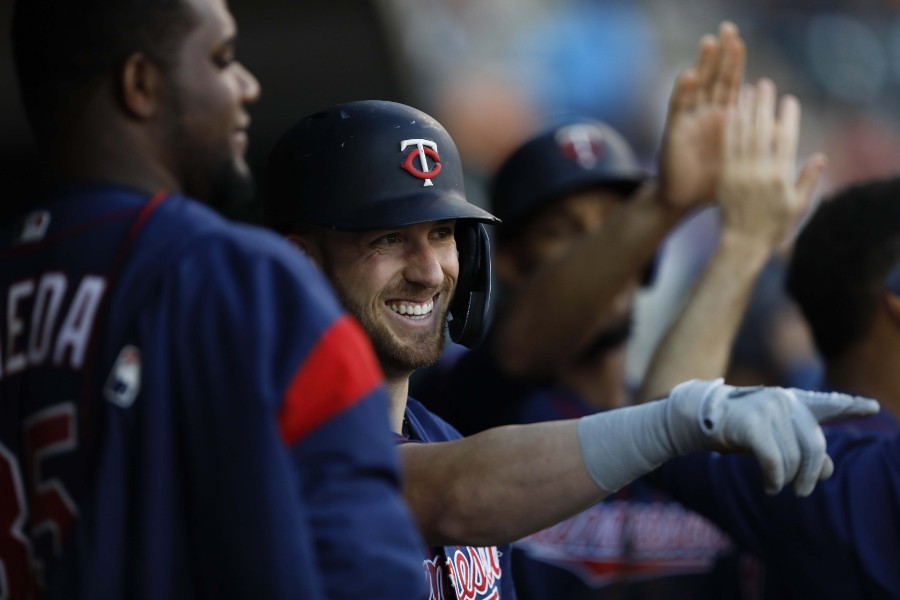 Box Score Pineda: 5.0 IP, 8 H, 3 ER, 0 BB, 3 K, 72.1% strikes (57 of 79 pitches) Home Runs: Garver (10), Cron (14), Cruz (9) Multi-Hit Games: Gonzalez (4-for-5, 2B, RBI), Garver (3-for-5, HR, RBI), Cron (2-for-4, HR), Buxton (2-for-4), Polanco (2-for-5) WPA of +0.1: Gonzalez .200, Garver .200, Cruz .150, Cron .170 WPA of -0.1: Rosario -.110, Astudillo - .120, Pineda -.120, Schoop -.140 (chart via FanGraphs) There were two opposite games at Comerica Park on Friday night. One while Boyd was out on the mound for the Tigers and a completely different one after he completed his great outing, as usual. Minnesota took advantage of Detroit’s bullpen, which came into this game with the third-worst ERA in the league since the start of May, at 5.60. It took the Twins offense only three pitches into the eighth inning to break the tie and take the lead for good. Gonzalez maintained his great moment and had the fourth four-hit game of his career, the first one since Sept. 25, 2017, while still with the Astros. Mitch Garver also found his swing after a bad start since returning from the IL, hitting the first home run of the game, to go with two other hits. Overall, Minnesota managed to get 14 hits. Michael Pineda was making his first start after 10 days in the IL due to a knee tendinitis. He didn’t pitch as well as in his previous four games, in which he got four consecutive quality starts, but he did deliver a good outing, completing five innings and allowing three earned runs with no walks. That was good enough and you probably couldn’t have hoped for much more than that. If he’s not been great so far, he’s proven to be a solid fifth starter. The bullpen held the Tiger offense scoreless through four innings, bouncing back from a rather bad trip to Cleveland. The Twins improve to 42-20, maintaining the best record in the American League and a 10.5 game lead in the Central Division. Story of the Game Pineda struggled right away, as he loaded the bases in the first inning and saw Brandon Dixon score Christin Stewart on a one-out sac fly. Fortunately, he managed to hold the Tiger offense to that one run. In his 21-pitch effort, he gave up a walk and hit Nicholas Castellanos. In the end of the second, Byron Buxton made yet another fine defensive play in center field, robbing JaCoby Jones of an extra-base hit, to end the inning. Minnesota took the lead in the top of the third. After Buxton snapped his 0-for-18 matchup against Matthew Boyd and advanced to third base on a balk (which got Ron Gardenhire ejected) Mitch Garver hit his first home run since coming back from the IL. That homer also ended his mini-slump since coming back from rehab assignment, as he had hit 2-for-15 in his previous four games. And he crushed that, too. https://twitter.com/Twins/status/1137147499788079109 While things appeared to be stabilizing for Big Mike in the fourth, the Tigers had other ideas. They tied the game after Miguel Cabrera led off the inning with a double and was later brought home by a one-out double to left by Ronny Rodriguez. In the fifth, Pineda's struggles continued, as Detroit retook the lead on a Castellanos two-out single to left that scored old friend Niko Goodrum. But just like that, the SotaPop offense was at it again, scoring right after being scored on. C.J. Cron destroyed a curveball from Boyd to hit his 14th homer of the year and tied the game once again. https://twitter.com/Twins/status/1137163991166464000 Boyd finished yet another great start against Minnesota having dealt through seven innings. Then, in the third pitch of the eighth, with Joe Jimenez pitching, the tie was broken. Nelson Cruz hit a bomb to right field, making it 4-3 Minnesota. The eighth inning party, sponsored by the Tiger bullpen, continued. Cron doubled off Jimenez, just to be followed by Gonzalez’s fourth hit of the night, bringing him home. https://twitter.com/fsnorth/status/1137172109078040577 Meanwhile, after being roughed up in Cleveland, the Twins bullpen did a superb job to hold on to the victory. Mike Morin and Ryne Harper combined for two flawless innings following Pineda’s departure. Both of them had identical performances of 13 pitches with nine strikes, giving up nothing but a hit. Harper truck out the side and earned his first MLB win. Tyler Duffey, on the other hand, didn’t pitch in the eighth as well as they had in the sixth and seventh. He allowed two runners to reach, and both advanced on a wild pitch, but he managed to deliver scoreless outing. Another Twins insurance run was added in the top of the ninth. Buxton led off the inning with a double, his MLB-leading 21st and his second hit of the game. Then, he was scored by a Garver grounder to center, his third hit of the night, making it 6-3 Twins. https://twitter.com/Twins/status/1137178212092563456 Blake Parker got his ninth save of the season, but he made it interesting. Detroit batters demanded 28 pitches from him and two runners reached on walks. But, in the end, Parker pushed through. Postgame With Baldelli https://twitter.com/fsnorth/status/1137195776407351297 Bullpen Usage Here’s a quick look at the number of pitches thrown by the bullpen over the past five days: Next Game Sat at DET, 3:10 pm (Gibson-TBD) Last Game MIN 5, CLE 4: Max Power Against Bauer More from Twins Daily Cali Connection Jumps Draft Boards: Q&A with Keoni Cavaco Twins Bring Local Product Home: Q&A with Matt Wallner Craig Kimbrel and Risk Tolerance
 -
The precious, but unnoticed help of Gonzalez
Thiéres Rabelo posted a blog entry in Brazilian Twins Territory
With recent struggles from Twins pitchers, for example, an early season discussion has been brought up this week. Did the Twins address well enough the team’s need during the offseason? Some people sure feel like they didn’t. But one offseason move (out of several others) that we can absolutely tell was right on the money was the Marwin Gonzalez signing. Having played this season in six different positions throughout the field, while also batting DH and pinch hitting, “Margo” is officially one of the most useful pieces a team could have in the sport. Baseball Essential considered Gonzalez the best super-utility player in the game. He was an invaluable help overall during the first couple of months of the season, filling in for injured Miguel Sanó, starting 52 of the team’s 60 games. But it took a while for most Twins fans to see Gonzalez as indispensable. He had a horrible first month offensively, batting .167, with a .501 OPS and 34 wRC+ in 23 games. Even though bad starts offensively have always been a part of his career, people started doubting him, on some level. Overall, he holds a .228 AVG, with a .675 OPS in his eight years in the league. Still, even specialists believed he was bound to lose at bats and become the third option to start at third base, once Willians Astudillo was having himself a hot start of the season. The Turtle was batting .327 with an .870 OPS by the end of April, so it was the natural choice then. But then, things shifted. Since May 1st, he’s batting .304/.376/.500. In that span, only two other players drew more walks than him, who got 11. Also, Gonzalez has been left-handed pitchers’ nightmare, as he’s slashing .378/.425/.541 against them. He completely turned his season around. With 125 PA since the start of May, he’s been the fifth most used player in the offense, with more PA’s than everyday starters Jonathan Schoop and Byron Buxton, for example. He’s become a vital and dependable part of this MLB-best offense. But that’s not even his biggest contribution. Not only is he doing some damage at the plate lately, but he’s also been playing Gold Glove-caliber defense. Being a bench player, he will never win such award, but that doesn’t change the fact that he’s an above average defender. And what’s more impressive about this? He does so in more than one position. Here are some defensive stats. As a 3B (257.2 innings) 3 DRS 1.8 UZR .989 FP 4 DPS 69 Assists 21 PO 1 Error (TE) Gonzalez' three defensive runs saved would be tied for sixth best in MLB, if he qualified. He has as many as 2018 Gold Glove Award winner Nolan Arenado, who's already played over twice as many innings as him this year. He has saved more runs than players such as old friend Eduardo Escobar, Rafael Devers, Yoan Moncada, Matt Carpenter and José Ramírez, all of which have been on the field for at least 446 1/3 innings. Regarding his UZR, he would also be tied for sixth best in the game, beating names like Evan Longoria and Alex Bregman, the AL runner-up for the Gold Glove award last year. When looking at his assists amount, he doesn’t rank very high in the league, but, of course, his sample time on the field is much smaller than the average everyday third baseman. If he had had the opportunity to play, say, 400 innings on the field, he would have an equivalent of 107 assists, which would rank him 5th in the league. Had he been there for 500 innings, we would be talking about a league second best 133 assists. But, of course, this is purely hypothetical mathematics. As an OF (81 innings) 3 DRS 0.9 UZR .933 FP 2 Assists 12 PO 1 error (FE) In the outfield, Gonzalez also has a very small sample, which prevent him from competing with the everyday outfielder in the stats department. But, still, you can tell he’s not at all a bad defender there either. He has as many defensive runs saved as Mike Trout does and one more than NL MVP Christian Yelich. So, the Twins signed a player that, if starting regularly in his primary position, would compete for the league’s highest honours in defense. Not too shabby. Far beyond the numbers, by watching Twins game on a daily basis, you can tell what a great defender he is. There hasn’t been a moment in which I’ve felt insecure about Twins defense in the hot corner or wherever “Margo” is on the field. A lot of things could and should be fixed in the Twins roster. But having Gonzalez in the team guarantees that the bench isn’t one of them. It’s impossible to say for sure if Minnesota would be having the same success that they are having right now if he wasn’t a part of the team, but I imagine things would be much harder. Afterall, he might be the best and most prolific utility player in the game right now. -
José Berríos scared us a little bit early in the game, but an Eddie Rosario-led offense scored in all of the first five innings to promote a powerful comeback and win the fourth in a row. The Twins hit three home runs on the night, becoming only the second team in MLB history to hit at least 100 home runs in the first 50 games of the season. They also maintain the MLB-best record, at 34-16.Box Score Berríos: 6.2 IP, 9 H, 1 ER, 0 BB, 4 K, 75.5% strikes (74 of 98 pitches) Home Runs: Rosario (15), Sanó (5), Kepler (11) Multi-Hit Games: Kepler (3-for-4, 2B, HR), Rosario (4-for-5, 2B, HR) WPA of +0.1: Rosario .270, Kepler .210, Sanó .160, Buxton .100 WPA of -0.1: Berríos -.120 Download attachment: Win524.png (chart via FanGraphs) We don’t know when this Twins offense will slow down, but it’s safe to say that there are no indications that that’s going to happen anytime soon. They lead the league in runs scored, with 300 — a club record — to go with an endless list of offensive stats in which they are the best in baseball. It’s unbelievable. Rosario had a four-hit night, including a home run and an RBI single. He leads Minnesota with 15 homers, becoming the sixth Twin in history to hit that many in the first 50 games of the season, the first since Justin Morneau in 2007. Miguel Sanó is sustaining his unexpected good return to the majors. He now has five home runs in seven games. Berríos had yet another unusually shaky start. Although his final line showed only one earned run allowed and the defense out on the field made some serious mistakes, the Twins ace was not nearly as dominant as he had been earlier in the season. After posting a 2.53 ERA in the first seven starts, Berrios has pitched to a 5.29 ERA in the last three outings. The bullpen held the White Sox scoreless in 2 1/3 innings of work. Making his season debut after being promoted from Triple-A Rochester earlier on Friday, Zack Littell pitched two clean innings, striking out two. Nearly 30,000 fans came to Target Field on Friday night, the first Joe Mauer bobblehead night of the year, to watch the Twins, who not only remain the best team in baseball, but also maintain an eight-game lead over Cleveland in the AL Central. This was only the first of 19 games against the White Sox in the season. Story of the game After a quick, nine-pitch top of the first from Berríos, Kepler ledoff the bottom of the inning with a double to the corner of the right field, fair by a foot. He was later brought home by a two-out single from Rosario, making it 1-0 Twins. But then, Berríos and Minnesota fielders got into trouble. Eloy Jimenez reached to lead off the second, taking advantage of a throwing error from Polanco to first. The ball went over Cron's head. Tim Anderson doubled after another fielding mistake, this time from Gonzalez, playing in the right field. He couldn't catch the line drive coming his way...it hit the tip of his glove and fell on the ground. Yonder Alonso then singled to left field to beat the Twins shift and score the two runners on. With two outs, having trouble stopping the bleeding, Berríos hit Charlie Tilson for the second time in the game. Immediately afterward, Yoan Moncada and José Abreu hit back-to-back singles to score two more runs for Chicago, making it 4-1. But Chicago’s lead didn’t last long. The Twins put two men on early in the bottom of the second, with Sanó being walked and Schoop being hit by a pitch. Then, Buxton hit his MLB-leading 19th double and plated Sanó. Kepler followed by hitting a sac fly to center field to score Schoop and move Buxton to third, cutting the visitor's lead to one. Minnesota retook the lead in bottom of the third. Rosario and Sanó hit back-to-back solo home runs. Those two homers were the 99th and 100th from Minnesota this year, making them the second team in MLB history to reach the 100 homer mark in the first 50 games of the season, along with the 1999 Seattle Mariners (who hit 102). After Berríos allowed two men on, but was then saved by a double play in the top of the fourth, Minnesota went on to score three more runs in the bottom of the inning. Kepler hit a blast to center field for his 11th homer of the year and Gonzalez doubled to score Polanco, who had been walked before him. After a pitching change from Chicago, Rosario got his third hit of the night, to bring in Gonzalez, making it 8-4 Minnesota. All of this after two outs. The Twins never slowed down. After a uneventful top of the fifth for Berríos, Sanó (walk) and Schoop (double) got on, only to be brought home by Kepler’s third hit of the night, a two-out single to right that scored both runners, putting Minnesota in double digits. At this moment, Chicago was already using its second pitcher in relief of starter Reynaldo Lopez. Nothing seemed to work against this Twin lineup. Berríos kept shaking off his bad second inning, pitching his first 1-2-3 inning of the game in the top of the sixth, totaling only 83 pitches. The offense kept pushing, with Rosario smashing a double off the right field wall and Cron reaching on a hit-by- pitch, but for the first time on the night, they had a scoreless inning. Minnesota scored again in the bottom of the seventh. Jason Castro, who was having a quiet night, led off the inning with a double against Brazilian reliever Thyago Vieira. He was brought home when Kepler hit a line drive to right field, scoring the eleventh run of the game for Minnesota. Littell came in and pitched two scoreless innings, in the eighth and ninth, to secure the win. He didn’t give up any hits or walks, while punching out two batters. Bullpen Usage Here’s a quick look at the number of pitches thrown by the bullpen over the past five days:Download attachment: Pen524.png Next Game Sat vs. CHW, 1:10 pm CT (Gibson-Banuelos) Last Game MIN 16, LAA 7: Twins Slug 8 More Home Runs, Sweep Angels More from Twins Daily When the Twins Go Buying... Who Are They Selling? Twins Fan Ready to Overreact to 3-Game Losing Streak Twins Minor League Report (5/24): 2018 Top Draftees Shine in Rough Night Across the System Click here to view the article
- 36 replies
-
- 1
-
-
- eddie rosario
- max kepler
- (and 2 more)
-
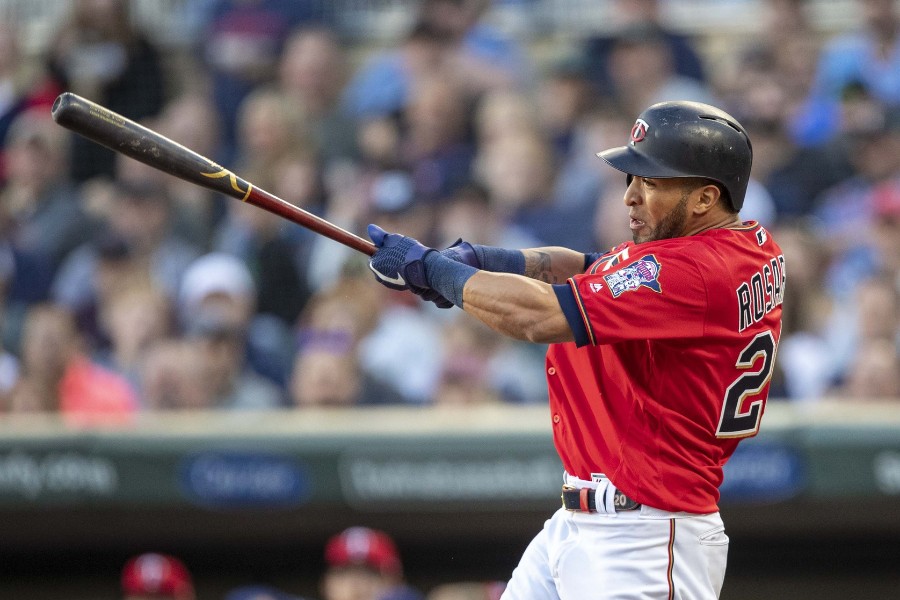 Box Score Berríos: 6.2 IP, 9 H, 1 ER, 0 BB, 4 K, 75.5% strikes (74 of 98 pitches) Home Runs: Rosario (15), Sanó (5), Kepler (11) Multi-Hit Games: Kepler (3-for-4, 2B, HR), Rosario (4-for-5, 2B, HR) WPA of +0.1: Rosario .270, Kepler .210, Sanó .160, Buxton .100 WPA of -0.1: Berríos -.120 (chart via FanGraphs) We don’t know when this Twins offense will slow down, but it’s safe to say that there are no indications that that’s going to happen anytime soon. They lead the league in runs scored, with 300 — a club record — to go with an endless list of offensive stats in which they are the best in baseball. It’s unbelievable. Rosario had a four-hit night, including a home run and an RBI single. He leads Minnesota with 15 homers, becoming the sixth Twin in history to hit that many in the first 50 games of the season, the first since Justin Morneau in 2007. Miguel Sanó is sustaining his unexpected good return to the majors. He now has five home runs in seven games. Berríos had yet another unusually shaky start. Although his final line showed only one earned run allowed and the defense out on the field made some serious mistakes, the Twins ace was not nearly as dominant as he had been earlier in the season. After posting a 2.53 ERA in the first seven starts, Berrios has pitched to a 5.29 ERA in the last three outings. The bullpen held the White Sox scoreless in 2 1/3 innings of work. Making his season debut after being promoted from Triple-A Rochester earlier on Friday, Zack Littell pitched two clean innings, striking out two. Nearly 30,000 fans came to Target Field on Friday night, the first Joe Mauer bobblehead night of the year, to watch the Twins, who not only remain the best team in baseball, but also maintain an eight-game lead over Cleveland in the AL Central. This was only the first of 19 games against the White Sox in the season. Story of the game After a quick, nine-pitch top of the first from Berríos, Kepler ledoff the bottom of the inning with a double to the corner of the right field, fair by a foot. He was later brought home by a two-out single from Rosario, making it 1-0 Twins. But then, Berríos and Minnesota fielders got into trouble. Eloy Jimenez reached to lead off the second, taking advantage of a throwing error from Polanco to first. The ball went over Cron's head. Tim Anderson doubled after another fielding mistake, this time from Gonzalez, playing in the right field. He couldn't catch the line drive coming his way...it hit the tip of his glove and fell on the ground. Yonder Alonso then singled to left field to beat the Twins shift and score the two runners on. With two outs, having trouble stopping the bleeding, Berríos hit Charlie Tilson for the second time in the game. Immediately afterward, Yoan Moncada and José Abreu hit back-to-back singles to score two more runs for Chicago, making it 4-1. https://twitter.com/Twins/status/1132092990405730306 But Chicago’s lead didn’t last long. The Twins put two men on early in the bottom of the second, with Sanó being walked and Schoop being hit by a pitch. Then, Buxton hit his MLB-leading 19th double and plated Sanó. Kepler followed by hitting a sac fly to center field to score Schoop and move Buxton to third, cutting the visitor's lead to one. Minnesota retook the lead in bottom of the third. Rosario and Sanó hit back-to-back solo home runs. Those two homers were the 99th and 100th from Minnesota this year, making them the second team in MLB history to reach the 100 homer mark in the first 50 games of the season, along with the 1999 Seattle Mariners (who hit 102). After Berríos allowed two men on, but was then saved by a double play in the top of the fourth, Minnesota went on to score three more runs in the bottom of the inning. Kepler hit a blast to center field for his 11th homer of the year and Gonzalez doubled to score Polanco, who had been walked before him. After a pitching change from Chicago, Rosario got his third hit of the night, to bring in Gonzalez, making it 8-4 Minnesota. All of this after two outs. The Twins never slowed down. After a uneventful top of the fifth for Berríos, Sanó (walk) and Schoop (double) got on, only to be brought home by Kepler’s third hit of the night, a two-out single to right that scored both runners, putting Minnesota in double digits. At this moment, Chicago was already using its second pitcher in relief of starter Reynaldo Lopez. Nothing seemed to work against this Twin lineup. Berríos kept shaking off his bad second inning, pitching his first 1-2-3 inning of the game in the top of the sixth, totaling only 83 pitches. The offense kept pushing, with Rosario smashing a double off the right field wall and Cron reaching on a hit-by- pitch, but for the first time on the night, they had a scoreless inning. Minnesota scored again in the bottom of the seventh. Jason Castro, who was having a quiet night, led off the inning with a double against Brazilian reliever Thyago Vieira. He was brought home when Kepler hit a line drive to right field, scoring the eleventh run of the game for Minnesota. Littell came in and pitched two scoreless innings, in the eighth and ninth, to secure the win. He didn’t give up any hits or walks, while punching out two batters. Bullpen Usage Here’s a quick look at the number of pitches thrown by the bullpen over the past five days: Next Game Sat vs. CHW, 1:10 pm CT (Gibson-Banuelos) Last Game MIN 16, LAA 7: Twins Slug 8 More Home Runs, Sweep Angels More from Twins Daily When the Twins Go Buying... Who Are They Selling? Twins Fan Ready to Overreact to 3-Game Losing Streak Twins Minor League Report (5/24): 2018 Top Draftees Shine in Rough Night Across the System
 -
Thank you, Mike!
-
Thank you, Vanimal!
-
Thank you for the words!!
-
That means a lot to me! Thank you, USAFChief!
-
Thank you very much, Dman!
-
Even though I'm not a Minnesotan, nor do I live in this beautiful state, I've been observing you guys for years. I see a lot of pessimism when it comes to sports. And who can blame you? Few fans in America love their teams as much as you do and, at the same time, have endured such traumatic playoff moments with the Vikings and Wild or such long playoff droughts with the Twins and Timberwolves. You have the right to be (in the words of Twins Daily's own Parker Hageman) dead inside when it comes to sports. Well, maybe it's time to believe again.I don't live in the US and I haven't set foot there since May 2013. I'm from a country where most people literally have no clue of what baseball is. I met the game of baseball in 2008, at age 16. So, it's nearly impossible for me to have access to any publication (or clothing items, memorabilia, sports gear ...) about the sport. But, miraculously, one of my students gave me a very special gift some weeks ago. Having taken an exchange program to the USA in 2015, he was hosted by a Kansas City family during his time there. He knows nothing about baseball himself, but his family did and they gave him a Sports Illustrated 2015 World Series commemorative issue. Almost four years later, he decided to give that as a present to his all-time favorite teacher. I was thrilled. I almost didn't even care about the fact that the Royals are a Twins division rival. After all, it was the first baseball publication I ever laid hands on. The magazine sat on my desk at home for some days. In the meantime, the Twins flourished as the team with the best record in baseball. I would be lying if I said I saw that coming, but I can't say I'm shocked by that either. But a lot of people are, indeed, shocked. I lost count of how many people on social media are doubting the Twins. “Enjoy 'em while you can, 'cause they won't last,” and that's not even from people outside of Minnesota only. Like I explained on the first paragraph, many Minnesotans don't believe their Twins are for real. That made me a little mad. And then, the magazine spoke to me. In the midst of so much pessimism and disbelief coming from every which way, I started browsing through that $12.99 SI issue from November of 2015 and I thought to myself: Why can't the Twins be this year's version of the 2015 Royals? And believe me or not, I found a lot of similarities between the two teams. I'm not saying here that Minnesota will win the World Series. All I'm saying is that it's OK to believe in it – like I do right now. Even though we've had our hearts broken by the Brett Favre interception, the Gary Anderson and Blair Walsh missed field goals, the Jimmy Butler fiasco, the Joe Nathan blown save in the '09 ALDS and, well, the whole Wild playoff history, you might not be a fool to let your guard down for this Twins team. If you don't believe me, let us go through some of the things these two great ball clubs have in common. A Couple of Underdogs When experts started predicting what would happen that season, almost none of them believed the 2015 Royals would even make the playoffs. Which, in retrospect, is kind of odd, considering they had just been to the World Series less than six months earlier. In his opening piece, Jay Jaffe wrote about how the Royals were picked by specialists to make it to the postseason in only 13 of 149 predictions. Maybe this year’s Twins are not as much discredited as the Royals were then. Per that year’s PECOTA, Kansas City was expected to have a 72-90 record. Instead, they went 95-67. This year’s PECOTA, at first, predicted an 81-81 record for the Twins, but a number of specialists considered them when predicting which team would win the AL Central. A month and a half into the season, with over 25% of games played, Minnesota has the second best record in baseball, after holding the best one overall for over a week. The Twins are on pace to win almost 105 games. I don’t actually believe they will reach triple digits in wins, but at this point it’s plausible to believe that they will surpass the 90-win mark. Curiously enough, after 43 games, the 2015 Royals and the current Twins owned an identical record of 28-15. Another aspect that those teams have in common is the small Opening Day payroll. On that same Jaffe opening piece, he wrote that the Royals were the first team since the 2003 Marlins to win a World Series, even though they were at the bottom half of all MLB payrolls (17th, at $112.9 million). Per Spotrac, the Twins had the 18th payroll in the league on Opening Day, at $122.1 million, almost $12 million below league average. Even their track record leading up to their World Series success is somewhat similar to the Twins. Between 2004 and 2012, Kansas City had nine losing records, never winning more than 75 games and with an average of 66 wins per season in that span. Then, they won 86 and 89 games in the two seasons before their championship year. In the six seasons that followed their last division title, the Twins won an average of 67 games each season, including a 59-103 record in 2016, the worst one in club history. They went on to win 85 and make the playoffs for the first time in seven years in 2017 and came close to an eighty-win season again last year, finishing with 78. I don’t believe in coincidences nor am I saying that all of these will have any effect on the outcome of this season. They won’t. But it’s fun to look at those facts, especially when basically no one believes smaller market teams can actually win a title. Let’s not buy into the notion that a team can only win a ring with a $200 million payroll. A Steamroller Offense In that same issue, Tom Verducci wrote a piece entitled Postmodern Swing in which broke down the main strengths of that Royal offense. According to him, one of the most important features of that offense was its aggressiveness. The Royals saw the fewest pitches per plate appearance that year, with 3.71. Their philosophy was to chase after hittable pitches early and not give up easy strikes. Still, they were the team that struck out the least in MLB that year, with a 15.9% strikeout rate. They also averaged 4.4 runs per game, which ranked seventh in baseball. Which team has done something similar this year? Some weeks ago, Aaron Gleeman wrote this great piece explaining how the Twins have added power and, at the same time, have been striking out much less. They have been the team that strikes out the third least in MLB, currently with a 19.5% strikeout rate. In comparison with the ‘15 Royals, Minnesota is also scoring more, with a 5.4 runs per game average, and has much more power, as they lead the MLB with .236 ISO, against .144 of those Royals.In terms of pitches per plate appearance, Minnesota also doesn’t see a lot of pitches, with an average of 3.78. Both these Twins and those Royals have something else in common. They both swing a lot and get good contact. Here is how they rank: 2015 Royals Contact% - 81.9% (1st in MLB) O-Contact% - 68.8% (2nd) Swing% - 47.6% (9th) O-Swing% - 32.5% (5th) 2019 Twins Contact% - 77.5% (6th in MLB) O-Contact% - 63.2% (7th) Swing% - 48.1% (4th) O-Swing% - 32.3% (6th) And one last nice coincidence that these two offenses have. In 2015, the Royals had Alcides Escobar as their leadoff man, even though he had a low OBP, contradicting modern tendencies. Escobar finished the season with a .293 OBP. He also saw very few pitches, with an average of 3.49 per plate appearance and swung at 51.3% of pitches and managed to make contact in 83.8% of them. Looking at Minnesota’s current leadoff man, Max Kepler, we also have an aggressive hitter (51.5 % Swing% and 82.2% Contact%), who sees few pitches (3.56 per PA) and has a not so high base occupation rate (.308). According to Verducci’s piece, Escobar ‘set the tone’ for the rest of the Royal lineup, making opposing pitchers aware of the fact that they wouldn’t get any easy strikes. Quality Pitching When we talk about the Royals pitching from that World Series campaign, the first thing that comes to our minds is their extraordinary bullpen. One might think that here would lie the biggest difference between the two teams. Yes, that Wade Davis-led group of relievers was no match for this current Minnesota ‘pen, but when comparing the two pitching staffs overall, we can find more identical features. Believe it or not, but the two pitching staffs have virtually the same numbers, with an inversion. Kansas City had a lights-out bullpen and a below average rotation, resulting in the 10th-best ERA in the MLB. The Twins on the other hand, don’t have a stellar rotation nor bullpen, but both those groups are among the 10 best in baseball. 2015 Royals Overall: 3.74 ERA (10th), 4.04 FIP (15th) Starters: 4.34 ERA (22nd), 4.32 FIP (21st) Relievers: 2.72 ERA (2nd), 3.56 FIP (10th) 2019 Twins Overall: 3.88 ERA (9th), 4.13 FIP (13th) Starters: 3.66 ERA (6th), 4.23 FIP (13th) Relievers: 4.31 ERA (19th), 3.96 FIP (9th) Davis was out of this world that season. There has never been a reliever more deserving than him of winning the first Cy Young award in the AL since 1992. I really believe he was the best candidate. Not only did he finish the regular season with a 0.94 ERA in 61 1/3 innings pitched, but he also neared perfection during the postseason, posting a 0.00 ERA in eight games. I don’t see anyone within this Twins pitching staff (so far) with the ability to be what Davis was for that Royals team, but there’s no need for it. Up until now, Minnesota’s pitchers have done a decent job. The overall bullpen numbers are a bit tainted because of bad outings from young arms tested out of Rochester and because of slumps from Trevor Hildenberger and Adalberto Mejía. But, as of this moment, six of the eight bullpen arms in the 25-man roster have an ERA of 2.76 or lower. Newcomer Austin Adams hasn’t yet pitched this season. Their rotations can’t be compared. Twins starters have done an outstanding job. Maybe we’ve set the bar too low after years of bad rotations, but things have looked extremely nice. Which, with this whole exercise of comparing these two teams, can be very exciting. The Royals were world champions even though the four starters they used in the postseason combined for a 4.96 ERA in 16 starts. Deadline Additions: A Blueprint for the Twins To help end the 30-year World Series drought, the Royals traded for two key pieces near the trade deadline. They traded Brandon Finnegan, John Lamb and Cody Reed for Reds’ superstar starter Johnny Cueto and sent Aaron Brooks and Sean Manaea to Oakland in exchange for veteran super-utility player Ben Zobrist. Those proved to be vital additions for achieving their goals. Zobrist had a solid last portion of the regular season with the Royals, slashing .284/.364/.453 (.816). During the postseason, he performed even better, hitting .303/.365/.515 (.880) and with five multi-hit games. But he also provided a much needed boost that might have made a big difference. Before his arrival, Royals second basemen slashed .231/.251/.319 (.570). In 35 games starting at that position in the remainder of the regular season, Zobrist hit .275/.348/.457 (.805). He also played 18 games as a LF, a position in which Kansas City had good production, with .273/.383/.467 (.850). But Zobrist managed to top even that, hitting .299/.392/.463 (.855). Cueto, on the other hand, wasn’t as dominant as Zobrist, but he was still essential to the Kansas City success. He had a 4.76 ERA in 13 starts for the Royals during the regular season and a 5.40 ERA in the postseason, but those numbers alone can be very misleading. In four playoff starts, he had a mediocre outing in Game 2 of the ALDS (6.0 innings, 4 ER), a terrible showing in Game 3 of the ALCS (2.0 IP, 8 ER), but two amazingly good starts to compensate. He pitched a complete game in the World Series, giving up just one run, to help the Royals to open a 2-0 lead in the series. So what’s the lesson the Twins can learn from the Royals shopping at the 2015 trade deadline? It’s hard to imagine at this time that Minnesota is going after big names to help their offense. I mean, all help is welcomed, but if they had to invest top prospects in one area, I don’t believe the offense would be their priority. When we look at the pitching staff, you see a lot of room for improvement. As good as the rotation has pitched so far, the Twins would benefit from a better arm. The bullpen also could use some help, much more so than the rotation. Shopping for one or two dominant arms could make a difference between a World Series victory and a quick visit to the postseason. Earlier this month, Ted Schwerzler identified six pitchers to keep on the radar as potential trade deadline targets here at Twins Daily. There will be much more coverage, speculation and analysis on the trade market here at the site as the trade deadline approaches. In conclusion, smaller market teams will always raise more suspicions than inspire confidence among non-fans. These teams will always be doubted. But the 2015 Royals give Twins fans reason to dream. And, as shown during this article, they have a long list of common features with this year’s Twins. So, it’s OK to believe. Click here to view the article
-
 I don't live in the US and I haven't set foot there since May 2013. I'm from a country where most people literally have no clue of what baseball is. I met the game of baseball in 2008, at age 16. So, it's nearly impossible for me to have access to any publication (or clothing items, memorabilia, sports gear ...) about the sport. But, miraculously, one of my students gave me a very special gift some weeks ago. Having taken an exchange program to the USA in 2015, he was hosted by a Kansas City family during his time there. He knows nothing about baseball himself, but his family did and they gave him a Sports Illustrated 2015 World Series commemorative issue. Almost four years later, he decided to give that as a present to his all-time favorite teacher. I was thrilled. I almost didn't even care about the fact that the Royals are a Twins division rival. After all, it was the first baseball publication I ever laid hands on. The magazine sat on my desk at home for some days. In the meantime, the Twins flourished as the team with the best record in baseball. I would be lying if I said I saw that coming, but I can't say I'm shocked by that either. But a lot of people are, indeed, shocked. I lost count of how many people on social media are doubting the Twins. “Enjoy 'em while you can, 'cause they won't last,” and that's not even from people outside of Minnesota only. Like I explained on the first paragraph, many Minnesotans don't believe their Twins are for real. That made me a little mad. And then, the magazine spoke to me. In the midst of so much pessimism and disbelief coming from every which way, I started browsing through that $12.99 SI issue from November of 2015 and I thought to myself: Why can't the Twins be this year's version of the 2015 Royals? And believe me or not, I found a lot of similarities between the two teams. I'm not saying here that Minnesota will win the World Series. All I'm saying is that it's OK to believe in it – like I do right now. Even though we've had our hearts broken by the Brett Favre interception, the Gary Anderson and Blair Walsh missed field goals, the Jimmy Butler fiasco, the Joe Nathan blown save in the '09 ALDS and, well, the whole Wild playoff history, you might not be a fool to let your guard down for this Twins team. If you don't believe me, let us go through some of the things these two great ball clubs have in common. A Couple of Underdogs When experts started predicting what would happen that season, almost none of them believed the 2015 Royals would even make the playoffs. Which, in retrospect, is kind of odd, considering they had just been to the World Series less than six months earlier. In his opening piece, Jay Jaffe wrote about how the Royals were picked by specialists to make it to the postseason in only 13 of 149 predictions. Maybe this year’s Twins are not as much discredited as the Royals were then. Per that year’s PECOTA, Kansas City was expected to have a 72-90 record. Instead, they went 95-67. This year’s PECOTA, at first, predicted an 81-81 record for the Twins, but a number of specialists considered them when predicting which team would win the AL Central. A month and a half into the season, with over 25% of games played, Minnesota has the second best record in baseball, after holding the best one overall for over a week. The Twins are on pace to win almost 105 games. I don’t actually believe they will reach triple digits in wins, but at this point it’s plausible to believe that they will surpass the 90-win mark. Curiously enough, after 43 games, the 2015 Royals and the current Twins owned an identical record of 28-15. Another aspect that those teams have in common is the small Opening Day payroll. On that same Jaffe opening piece, he wrote that the Royals were the first team since the 2003 Marlins to win a World Series, even though they were at the bottom half of all MLB payrolls (17th, at $112.9 million). Per Spotrac, the Twins had the 18th payroll in the league on Opening Day, at $122.1 million, almost $12 million below league average. Even their track record leading up to their World Series success is somewhat similar to the Twins. Between 2004 and 2012, Kansas City had nine losing records, never winning more than 75 games and with an average of 66 wins per season in that span. Then, they won 86 and 89 games in the two seasons before their championship year. In the six seasons that followed their last division title, the Twins won an average of 67 games each season, including a 59-103 record in 2016, the worst one in club history. They went on to win 85 and make the playoffs for the first time in seven years in 2017 and came close to an eighty-win season again last year, finishing with 78. I don’t believe in coincidences nor am I saying that all of these will have any effect on the outcome of this season. They won’t. But it’s fun to look at those facts, especially when basically no one believes smaller market teams can actually win a title. Let’s not buy into the notion that a team can only win a ring with a $200 million payroll. A Steamroller Offense In that same issue, Tom Verducci wrote a piece entitled Postmodern Swing in which broke down the main strengths of that Royal offense. According to him, one of the most important features of that offense was its aggressiveness. The Royals saw the fewest pitches per plate appearance that year, with 3.71. Their philosophy was to chase after hittable pitches early and not give up easy strikes. Still, they were the team that struck out the least in MLB that year, with a 15.9% strikeout rate. They also averaged 4.4 runs per game, which ranked seventh in baseball. Which team has done something similar this year? Some weeks ago, Aaron Gleeman wrote this great piece explaining how the Twins have added power and, at the same time, have been striking out much less. They have been the team that strikes out the third least in MLB, currently with a 19.5% strikeout rate. In comparison with the ‘15 Royals, Minnesota is also scoring more, with a 5.4 runs per game average, and has much more power, as they lead the MLB with .236 ISO, against .144 of those Royals.In terms of pitches per plate appearance, Minnesota also doesn’t see a lot of pitches, with an average of 3.78. Both these Twins and those Royals have something else in common. They both swing a lot and get good contact. Here is how they rank: 2015 Royals Contact% - 81.9% (1st in MLB) O-Contact% - 68.8% (2nd) Swing% - 47.6% (9th) O-Swing% - 32.5% (5th) 2019 Twins Contact% - 77.5% (6th in MLB) O-Contact% - 63.2% (7th) Swing% - 48.1% (4th) O-Swing% - 32.3% (6th) And one last nice coincidence that these two offenses have. In 2015, the Royals had Alcides Escobar as their leadoff man, even though he had a low OBP, contradicting modern tendencies. Escobar finished the season with a .293 OBP. He also saw very few pitches, with an average of 3.49 per plate appearance and swung at 51.3% of pitches and managed to make contact in 83.8% of them. Looking at Minnesota’s current leadoff man, Max Kepler, we also have an aggressive hitter (51.5 % Swing% and 82.2% Contact%), who sees few pitches (3.56 per PA) and has a not so high base occupation rate (.308). According to Verducci’s piece, Escobar ‘set the tone’ for the rest of the Royal lineup, making opposing pitchers aware of the fact that they wouldn’t get any easy strikes. Quality Pitching When we talk about the Royals pitching from that World Series campaign, the first thing that comes to our minds is their extraordinary bullpen. One might think that here would lie the biggest difference between the two teams. Yes, that Wade Davis-led group of relievers was no match for this current Minnesota ‘pen, but when comparing the two pitching staffs overall, we can find more identical features. Believe it or not, but the two pitching staffs have virtually the same numbers, with an inversion. Kansas City had a lights-out bullpen and a below average rotation, resulting in the 10th-best ERA in the MLB. The Twins on the other hand, don’t have a stellar rotation nor bullpen, but both those groups are among the 10 best in baseball. 2015 Royals Overall: 3.74 ERA (10th), 4.04 FIP (15th) Starters: 4.34 ERA (22nd), 4.32 FIP (21st) Relievers: 2.72 ERA (2nd), 3.56 FIP (10th) 2019 Twins Overall: 3.88 ERA (9th), 4.13 FIP (13th) Starters: 3.66 ERA (6th), 4.23 FIP (13th) Relievers: 4.31 ERA (19th), 3.96 FIP (9th) Davis was out of this world that season. There has never been a reliever more deserving than him of winning the first Cy Young award in the AL since 1992. I really believe he was the best candidate. Not only did he finish the regular season with a 0.94 ERA in 61 1/3 innings pitched, but he also neared perfection during the postseason, posting a 0.00 ERA in eight games. I don’t see anyone within this Twins pitching staff (so far) with the ability to be what Davis was for that Royals team, but there’s no need for it. Up until now, Minnesota’s pitchers have done a decent job. The overall bullpen numbers are a bit tainted because of bad outings from young arms tested out of Rochester and because of slumps from Trevor Hildenberger and Adalberto Mejía. But, as of this moment, six of the eight bullpen arms in the 25-man roster have an ERA of 2.76 or lower. Newcomer Austin Adams hasn’t yet pitched this season. Their rotations can’t be compared. Twins starters have done an outstanding job. Maybe we’ve set the bar too low after years of bad rotations, but things have looked extremely nice. Which, with this whole exercise of comparing these two teams, can be very exciting. The Royals were world champions even though the four starters they used in the postseason combined for a 4.96 ERA in 16 starts. Deadline Additions: A Blueprint for the Twins To help end the 30-year World Series drought, the Royals traded for two key pieces near the trade deadline. They traded Brandon Finnegan, John Lamb and Cody Reed for Reds’ superstar starter Johnny Cueto and sent Aaron Brooks and Sean Manaea to Oakland in exchange for veteran super-utility player Ben Zobrist. Those proved to be vital additions for achieving their goals. Zobrist had a solid last portion of the regular season with the Royals, slashing .284/.364/.453 (.816). During the postseason, he performed even better, hitting .303/.365/.515 (.880) and with five multi-hit games. But he also provided a much needed boost that might have made a big difference. Before his arrival, Royals second basemen slashed .231/.251/.319 (.570). In 35 games starting at that position in the remainder of the regular season, Zobrist hit .275/.348/.457 (.805). He also played 18 games as a LF, a position in which Kansas City had good production, with .273/.383/.467 (.850). But Zobrist managed to top even that, hitting .299/.392/.463 (.855). Cueto, on the other hand, wasn’t as dominant as Zobrist, but he was still essential to the Kansas City success. He had a 4.76 ERA in 13 starts for the Royals during the regular season and a 5.40 ERA in the postseason, but those numbers alone can be very misleading. In four playoff starts, he had a mediocre outing in Game 2 of the ALDS (6.0 innings, 4 ER), a terrible showing in Game 3 of the ALCS (2.0 IP, 8 ER), but two amazingly good starts to compensate. He pitched a complete game in the World Series, giving up just one run, to help the Royals to open a 2-0 lead in the series. So what’s the lesson the Twins can learn from the Royals shopping at the 2015 trade deadline? It’s hard to imagine at this time that Minnesota is going after big names to help their offense. I mean, all help is welcomed, but if they had to invest top prospects in one area, I don’t believe the offense would be their priority. When we look at the pitching staff, you see a lot of room for improvement. As good as the rotation has pitched so far, the Twins would benefit from a better arm. The bullpen also could use some help, much more so than the rotation. Shopping for one or two dominant arms could make a difference between a World Series victory and a quick visit to the postseason. Earlier this month, Ted Schwerzler identified six pitchers to keep on the radar as potential trade deadline targets here at Twins Daily. There will be much more coverage, speculation and analysis on the trade market here at the site as the trade deadline approaches. In conclusion, smaller market teams will always raise more suspicions than inspire confidence among non-fans. These teams will always be doubted. But the 2015 Royals give Twins fans reason to dream. And, as shown during this article, they have a long list of common features with this year’s Twins. So, it’s OK to believe.
 -
It was all about Venezuelans for Minnesota at T-Mobile Park on Friday night. Martín Pérez pitched yet another great game, Ehire Adrianza and Marwin Gonzalez both had multi-hit nights and, of course, Willians Astudillo chipped in too. The Twins win their fourth consecutive game, hold the second best record in baseball and now have a five and a half game lead in the AL Central.Box Score Pérez: 6.2 IP, 5 H, 1 ER, 4 BB, 7 K, 62.1% strikes (64 of 104 pitches) Home Runs: Adrianza (3) Multi-Hit Games: Gonzalez (2-for-5), Kepler (2-for-4, 3 RBI), Adrianza (2-for-3, HR, 2 RBI) WPA of +0.1: Pérez .230, Adrianza .140, Kepler .111 WPA of -0.1: None Download attachment: Win517.png (chart via FanGraphs) Minnesota came into this game with the third-highest batting average (.278) and OPS (.847) against lefties. The Mariners brought in southpaw Marco Gonzales to face them. You can imagine what happened. Twins hitters feasted on the opposing starter, scoring six runs against him (five earned) on eight hits. Martín Pérez looked very sharp in his first game after taking a line drive off the foot against Detroit. He pitched his fifth quality start and keeps making his case to win the Comeback Player of the Year. His ERA now drops to 2.89 overall and 1.35 in the month of May. Fellow Venezuelan Marwin Gonzalez had a two-hit night, also maintaining great numbers in May. He’s now batting .339 this month. Ehire Adrianza had himself a night with his second multi-hit, multi-RBI game of the year. He is now batting .368 in the last eight games. Story of the Game After Gonzales retired all batters in the top of the first inning, Pérez got into trouble early. He gave up a walk to right fielder Mitch Haniger, followed by a ground-rule double to DH Edwin Encarnación, but he went on to strike out the next two opponents. Both starters pitched perfect innings in the second, with Pérez striking out other two batters, totaling four punch outs. The Twins struck first in the top of the third, with Ehire Adrianza smashing the first pitch he saw and hitting his third home run of the year. That extended the Twins homer streak to twelve games. Jorge Polanco drew a walk later on, but he was stranded. Two Mariner hitters reached base in the bottom of the third — a single by Dee Gordon and a walk by Encarnación — but neither of them was able to score. The Twins kept hitting the ball hard in the fourth, loading the bases immediately with three consecutive singles. They came from the bats of Gonzalez, C.J. Cron and Willians Astudillo. Max Kepler hit yet another single, the fourth consecutive, to bring home “Margo” and to make it 2-0 Twins. Another run came in later on with Adrianza hitting a sac fly to earn his second RBI of the night and to extend the Twins lead to three. In the bottom part, Pérez had no problems in pitching another 1-2-3 inning, including his fifth strikeout. The slug fest continued, as Polanco led off the fifth with a single and Gonzalez got his second one (continuing his incredible month of May performance). Cron followed them with a walk to load the bases again and Astudillo plated another run, hitting a sac fly. Domingo Santana's throw actually beat Polanco at the plate, but the catcher Tom Murphy couldn’t hold on to the ball. Kepler blew the game wide open with a sharp single, scoring two more runs and making it 6-0 Minnesota. Pérez had a promising start of his fifth inning, striking out the first two batters he faced. But then he allowed three runners to reach, with a single from Gordon and a walk from Haniger, followed by an RBI-single from Encarnación, scoring Seattle’s first run of the night. The Mariners activated their bullpen in the top of the sixth, bringing in their Austin Adams version and the rookie struck out the side in sixteen pitches. It was the first time since the second inning that Minnesota had no base runners. But Pérez was still red hot, getting three ground ball outs to end the inning quickly, earning him another quality start. The Mariners’ Adams had another 1-2-3 inning in the top of the seventh, including another strikeout. Pérez came back to pitch the bottom part with 94 pitches. He gave up a lead off walk to Mallex Smith and saw Gordon make good contact in the following at-bat, but that ended in a double play with Gordon slipping out of the batter’s box. Pérez was taken out of the game, replaced by Matt Magill, who walked Haniger, but struck out Encarnación to end the inning. Righty Matt Festa retired all batters in the top of the eight, including a strikeout against Miguel Sanó, which kept him hitless on the night. Magill did the same in eight pitches. In the ninth, Adrianza completed his great night by leading off the inning with a single and scoring the Twins’ seventh run of the night, after a double from Jonathan Schoop, who was having a quiet night until that moment. Mike Morin pitched a 1-2-3 ninth with only six pitches to end the game. Postgame With Baldelli Bullpen Usage Here’s a quick look at the number of pitches thrown by the bullpen over the past five days: Download attachment: Pen517.png Next Three Games Sat at SEA, 9:10 pm CT (Berrios-LeBlanc) Sun at SEA, 3:10 pm CT (Gibson-Kikuchi) Mon at LAA, 9:07 pm CT (TBD) Last Game MIN 11, SEA 6: Total System Failure (for the Other Guys) Click here to view the article
- 24 replies
-
- 2
-
-
- martin perez
- ehire adrianza
- (and 2 more)
-
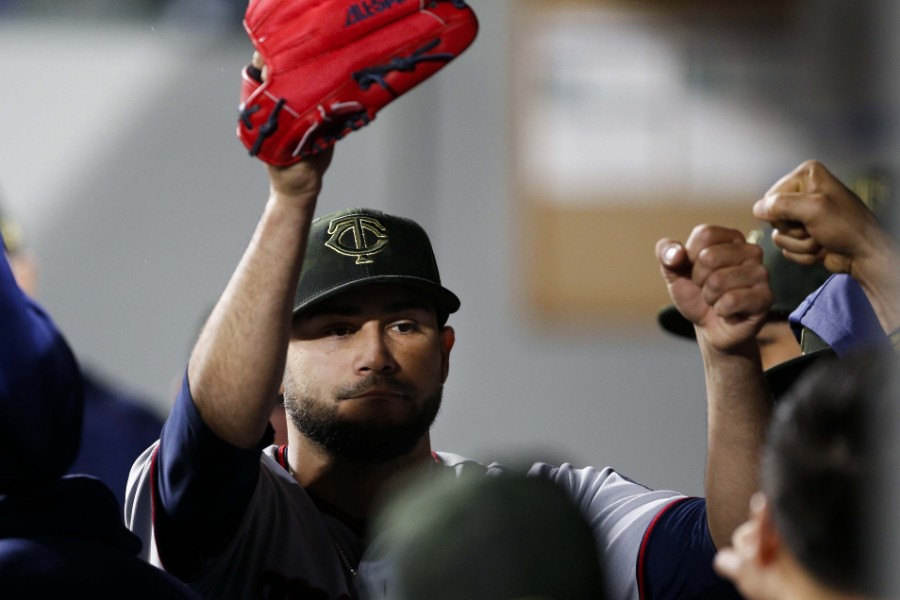 Box Score Pérez: 6.2 IP, 5 H, 1 ER, 4 BB, 7 K, 62.1% strikes (64 of 104 pitches) Home Runs: Adrianza (3) Multi-Hit Games: Gonzalez (2-for-5), Kepler (2-for-4, 3 RBI), Adrianza (2-for-3, HR, 2 RBI) WPA of +0.1: Pérez .230, Adrianza .140, Kepler .111 WPA of -0.1: None (chart via FanGraphs) Minnesota came into this game with the third-highest batting average (.278) and OPS (.847) against lefties. The Mariners brought in southpaw Marco Gonzales to face them. You can imagine what happened. Twins hitters feasted on the opposing starter, scoring six runs against him (five earned) on eight hits. Martín Pérez looked very sharp in his first game after taking a line drive off the foot against Detroit. He pitched his fifth quality start and keeps making his case to win the Comeback Player of the Year. His ERA now drops to 2.89 overall and 1.35 in the month of May. Fellow Venezuelan Marwin Gonzalez had a two-hit night, also maintaining great numbers in May. He’s now batting .339 this month. Ehire Adrianza had himself a night with his second multi-hit, multi-RBI game of the year. He is now batting .368 in the last eight games. Story of the Game After Gonzales retired all batters in the top of the first inning, Pérez got into trouble early. He gave up a walk to right fielder Mitch Haniger, followed by a ground-rule double to DH Edwin Encarnación, but he went on to strike out the next two opponents. Both starters pitched perfect innings in the second, with Pérez striking out other two batters, totaling four punch outs. The Twins struck first in the top of the third, with Ehire Adrianza smashing the first pitch he saw and hitting his third home run of the year. That extended the Twins homer streak to twelve games. Jorge Polanco drew a walk later on, but he was stranded. Two Mariner hitters reached base in the bottom of the third — a single by Dee Gordon and a walk by Encarnación — but neither of them was able to score. https://twitter.com/Twins/status/1129578729603248128 The Twins kept hitting the ball hard in the fourth, loading the bases immediately with three consecutive singles. They came from the bats of Gonzalez, C.J. Cron and Willians Astudillo. Max Kepler hit yet another single, the fourth consecutive, to bring home “Margo” and to make it 2-0 Twins. Another run came in later on with Adrianza hitting a sac fly to earn his second RBI of the night and to extend the Twins lead to three. In the bottom part, Pérez had no problems in pitching another 1-2-3 inning, including his fifth strikeout. The slug fest continued, as Polanco led off the fifth with a single and Gonzalez got his second one (continuing his incredible month of May performance). Cron followed them with a walk to load the bases again and Astudillo plated another run, hitting a sac fly. Domingo Santana's throw actually beat Polanco at the plate, but the catcher Tom Murphy couldn’t hold on to the ball. Kepler blew the game wide open with a sharp single, scoring two more runs and making it 6-0 Minnesota. Pérez had a promising start of his fifth inning, striking out the first two batters he faced. But then he allowed three runners to reach, with a single from Gordon and a walk from Haniger, followed by an RBI-single from Encarnación, scoring Seattle’s first run of the night. The Mariners activated their bullpen in the top of the sixth, bringing in their Austin Adams version and the rookie struck out the side in sixteen pitches. It was the first time since the second inning that Minnesota had no base runners. But Pérez was still red hot, getting three ground ball outs to end the inning quickly, earning him another quality start. The Mariners’ Adams had another 1-2-3 inning in the top of the seventh, including another strikeout. Pérez came back to pitch the bottom part with 94 pitches. He gave up a lead off walk to Mallex Smith and saw Gordon make good contact in the following at-bat, but that ended in a double play with Gordon slipping out of the batter’s box. Pérez was taken out of the game, replaced by Matt Magill, who walked Haniger, but struck out Encarnación to end the inning. Righty Matt Festa retired all batters in the top of the eight, including a strikeout against Miguel Sanó, which kept him hitless on the night. Magill did the same in eight pitches. In the ninth, Adrianza completed his great night by leading off the inning with a single and scoring the Twins’ seventh run of the night, after a double from Jonathan Schoop, who was having a quiet night until that moment. Mike Morin pitched a 1-2-3 ninth with only six pitches to end the game. Postgame With Baldelli https://twitter.com/fsnorth/status/1129617960258064386 Bullpen Usage Here’s a quick look at the number of pitches thrown by the bullpen over the past five days: Next Three Games Sat at SEA, 9:10 pm CT (Berrios-LeBlanc) Sun at SEA, 3:10 pm CT (Gibson-Kikuchi) Mon at LAA, 9:07 pm CT (TBD) Last Game MIN 11, SEA 6: Total System Failure (for the Other Guys)
 -
Could the Twins be the new 2015 Royals?
Thiéres Rabelo posted a blog entry in Brazilian Twins Territory
Even though I'm not a Minnesotan, nor do I live in this beautiful state, I've been observing you guys for years. I see a lot of pessimism when it comes to sports. And who can blame you? Few fans in America love their teams as much as you do and, at the same time, have endured such traumatic playoff moments with the Vikings and Wild or such long playoff draughts with the Twins and Timberwolves. You have the right to be – in the words of our Twins Daily own Parker Hageman – dead inside when it comes to sports. Well, maybe it's time to believe again. I don't live in the US and I haven't set foot there since May 2013. I'm from a country where most people literally have no clue of what baseball is. I met the game of baseball in 2008, at age 16. So, it's nearly impossible for me to have access to any publication (or clothing items, memorabilia, sports gear...) about the sport. But, miraculously, one of my students gave me a very special gift some weeks ago. Having taken an exchange programme to the USA in 2015, he was hosted by a Kansas City family during his time there. He knows nothing about baseball himself, but his family did and they gave him a Sports Illustrated 2015 World Series Commemorative Issue. He kept that, only to, almost four years later, give that as a present to his all-time favorite teacher. I was thrilled. I almost didn't even care about the fact that the Royals are a Twins division rival. Afterall, it was the first baseball publication I ever laid hands on. The magazine sat on my desk at home for some days. In the meantime, the Twins flourished as the team with the best record in baseball. I would be lying if I said I saw that coming, but I can't say I'm shocked by that either. But a lot of people are, indeed, shocked. I lost count of how many people on social media are doubting the Twins. “Enjoy 'em while you can, 'cause they won't last”. And that's not even from people outside of Minnesota only. Like I explained on the first paragraph, many Minnesotans don't believe their Twins are for real. That made me a little mad. And then, the magazine spoke to me. In the midst of so much pessimism and disbelief coming from every which way, I started browsing through that $12.99 SI issue from November of 2015 and I thought to myself: why can't the Twins be this year's version of the 2015 Royals? And believe me or not, I found a lot of similarities between the two teams. I'm not saying here that Minnesota will win the World Series. All I'm saying is that it's OK to believe in it – like I do right now. Even though we've had our hearts broken by the Brett Favre interception, the Gary Anderson and Blair Walsh missed field goals, the Jimmy Butler fiasco, the Joe Nathan blown save in the '09 ALDS and, well, the whole Wild playoff history, you might not be a fool to let your guard down for this Twins team. If you don't believe me, let us go through some of the things these two great ball clubs have in common. A couple of underdogs When experts started predicting what would happen that season, almost none of them believed the 2015 Royals would even make the playoffs. Which, in retrospect, is kind of odd, considering they had just been to the World Series less than six months earlier. In his opening piece, Jay Jaffe wrote about how the Royals were picked by specialists to make it to the postseason in only 13 of 149 predictions. Maybe this year’s Twins are not as much discredited as the Royals were then. Per that year’s PECOTA, Kansas City was expected to have a 72-90 record. Instead, they had a 95-67 one. This year’s PECOTA, at first, predicted an 81-81 record for the Twins, but a number of specialists considered them when predicting which team would win the AL Central. A month and a half into the season, with over 25% of games played, Minnesota has the second best in baseball, after holding the best one overall for over a week. The Twins are on pace to win almost 105 games. I don’t actually believe they will reach triple digits in wins, but at this point it’s plausible to believe that they will surpass the 90-win mark. Curiously enough, after 43 games, the 2015 Royals and the current Twins owned an identical record of 28-15. Another aspect that those teams have in common is the small Opening Day payroll. On that same Jaffe opening piece, he wrote that the Royals were the first team since the 2003 Marlins to win a World Series, even though they were at the bottom half of all MLB payrolls (17th, at $112.9 million). Per Spotrac, the Twins had the 18th payroll in the league on Opening Day, at $122.1 million, almost $12 million below league average. Even their track record leading up to their World Series success is somewhat similar to the Twins. Between 2004 and 2012, Kansas City had nine losing records, never winning more than 75 games and with an average of 66 wins per season on that span. Then, they won 86 and 89 games in the two seasons before their championship year. In the six seasons that follow their last division title, the Twins won an average of 67 games each season, including a 59-103 record in 2016, the worst one in club history. They went on to win 85 and make the playoffs for the first time in seven years in 2017 and came close to an eighty win season again last year, finishing with 78. I don’t believe in coincidences nor am I saying that all of these will have any effect on the outcome of this season. They won’t. But it’s fun to look at those facts, especially when basically no one believes smaller market teams can actually win a title. Let’s not buy into the notion that a team can only win a ring with a $200 million payroll. A steamroller offense Tom Verducci wrote, on that same SI issue, a piece entitled ‘Postmodern Swing’, which broke down the main strengths of that Royal offense. According to him, one of the most important features of that offense was its aggressiveness. The Royals saw the fewest pitches per plate appearance that year, with 3.71. Their philosophy was to chase after hittable pitches early and not give up easy strikes. Still, they were the team that struck out the least in MLB that year, with a 15.9% strikeout rate. They also average an MLB 7th best 4.4 runs per game. Which team has done something similar this year? Some weeks ago, Aaron Gleeman wrote this great piece explaining how the Twins have added power and, at the same time, have been striking out much less. They have been the team that struck out the third least in MLB, currently with a 19.5% strikeout rate. In comparison with the ‘15 Royals, Minnesota is also scoring more, with a 5.4 runs per game average, and has much more power, as they lead the MLB with .236 ISO, against .144 of those Royals. In terms of pitches per plate appearance, Minnesota also doesn’t see a lot of pitches, with an average of 3.78. Both these Twins and those Royals have something else in common. They both swing a lot and get good contact. Here is how they rank: 2015 Royals Contact% - 81.9% (1st in MLB) O-Contact% - 68.8% (2nd) Swing% - 47.6% (9th) O-Swing% - 32.5% (5th) 2019 Twins Contact% - 77.5% (6th in MLB) O-Contact% - 63.2% (7th) Swing% - 48.1% (4th) O-Swing% - 32.3% (6th) And one last nice coincidence that these two offenses have. In 2015, the Royals had Alcides Escobar as their leadoff man, even though he had a low OBP, contradicting modern tendencies. Escobar finished the season with a .293 OBP. He also saw very few pitches, with an average of 3.49 per plate appearance and swung at 51.3% of pitches and managed to make contact in 83.8% of them. Looking at Minnesota’s current leadoff man, Max Kepler, we also have an aggressive hitter (51.5 % Swing% and 82.2% Contact%), who sees fez pitches (3.56 per PA) and has a not so high base occupation (.308). According to Verducci’s piece, Escobar ‘set the tone’ for the rest of the Royal lineup, making opposing pitchers aware of the fact that they wouldn’t get any easy strikes. Quality pitching When we talk about the Royals pitching from that World Series campaign, the first thing that comes to our minds is their extraordinary bullpen. Then, one might think that here would lie the biggest difference between the two teams. Yes, that Wade Davis led group of relievers was no match for this current Minnesota ‘pen, but when comparing the two pitching staffs overall, we can find more identical features. Believe it or not, but the two pitching staffs have virtually the same numbers, with an inversion. Kansas City had a lights-out bullpen and a below average rotation, resulting in the 10th best ERA in the MLB. The Twins on the other hand, don’t have a stellar rotation nor bullpen, but both those groups are among the ten best in baseball. 2015 Royals Overall: 3.74 ERA (10th), 4.04 FIP (15th) Starters: 4.34 ERA (22nd), 4.32 FIP (21st) Relievers: 2.72 ERA (2nd), 3.56 FIP (10th) 2019 Twins Overall: 3.88 ERA (9th), 4.13 FIP (13th) Starters: 3.66 ERA (6th), 4.23 FIP (13th) Relievers: 4.31 ERA (19th), 3.96 FIP (9th) Davis was out of this world that season. If there has been a reliever more deserving than him of winning the first Cy Young award in the AL since 1992, I really believe he was the best candidate. Not only did he finish the regular season with a 0.94 ERA in 61 ⅓ innings pitched, but he also neared perfection during the postseason, posting a 0.00 ERA in eight games. I don’t see anyone within this Twins pitching staff (so far) with the ability to be what Davis was for that Royals team - but there’s no need for it. Up until now, Minnesota’s pitchers have done a decent job. The overall bullpen numbers are a bit tainted because of bad outings from young arms tested out of Rochester and because of slumps from, mainly, Trevor Hildenberger and Adalberto Mejía. But, as of this moment, six of the eight bullpen arms in the 25-man roster have an ERA of 2.76 or lower. Newcomer Austin Adams hasn’t pitched this season yet. Their rotations can’t be compared. At least until this moment, Twins starters have done an outstanding job. Maybe we’ve set the bar too low after years of bad rotations, but things have looked extremely nice. Which, with this whole exercise of comparing these two teams can be very exciting. The Royals were world champions even though the four starters they’ve used in the postseason combined for a 4.96 ERA in 16 starts. Deadline additions: a blueprint for the Twins To help end the 30-year World Series drought, the Royals traded for two key-pieces near the trade deadline. They traded Brandon Finnegan, John Lamb and Cody Reed for Reds’ superstar starter Johnny Cueto and sent Aaron Brooks and Sean Manaea to Oakland in exchange for veteran super utility player Ben Zobrist. Those proved to be vital additions to their goals. Zobrist had a solid last portion of the regular season with the Royals, slashing .284/.364/.453 (.816). During the postseason, he performed even better, hitting .303/.365/.515 (.880) and with five multi-hit games. But he also provided a much needed boost that might have made a big difference. Before his arrival, Royals second basemen slashed .231/.251/.319 (.570). In 35 games starting at that position in the remainder of the regular season, Zobrist hit .275/.348/.457 (.805). He also played 18 games as a LF, a position in which Kansas City had a good production, with .273/.383/.467 (.850). But Zobrist managed to top even that, hitting .299/.392/.463 (.855). Cueto on the other hand wasn’t as dominant as Zobrist, but he was still essential to the Kansas City success. He had a 4.76 ERA in 13 starts for the Royals during the regular season and a 5.40 ERA in the postseason, but those numbers alone can be very misleading. In four playoff starts, he had a mediocre outing (6.0 innings, 4 ER) in game 2 of the ALDS, a terrible one (2.0 IP, 8 ER) in game 3 of the ALCS, but two amazingly good ones to compensate. He pitched a on run complete game in the World Series, helping the Royals to open a 2-0 lead in the series. So what’s the lesson the Twins can learn out of the Royals shopping in the 2015 trade deadline? It’s hard to imagine, at least based on this first quarter of the season, that Minnesota is going after big names to help their offense. I mean, all help is welcomed, but if they had to invest top prospects in one area, I don’t believe the offense would be their priority. But when we look at their pitching staff, you can see a lot of room for improvement. As well as the rotation has pitched so far, the Twins would benefit a lot from a better arm to fill the gap Michael Pineda has been leaving until this moment. He currently has a 5.85 ERA, the worst among starters. The bullpen also could use some help - even more than the rotation. Bottomline is, it doesn’t matter how well the arms might be doing, with their clear exceptions, of course, shopping for one or two dominant arms could make a difference between a World Series victory and a quick visit to the postseason. And who could be the best candidates? Well, if you’re talking about bringing in a starter and a reliever, one can only consider signing the two biggest unsigned names in the last offseason: former Cy Young winner Dallas Keuchel and superstar closer Craig Kimbrel. But this would also represent a great risk, given the fact we don’t know in what shape they would show up. Also, there’s very little, if any, indications that Minnesota would be willing to pay them. I mean, if there’s any interest, why didn’t they pull the trigger yet? Since that’s the most unlikely option, we should look at what possible options they could go after via trade. For rotation help, I believe the best choices that they would have would be Madison Bumgarner or Stephen Strasburg, MadBum being my favorite. For the bullpen, my favorite candidate would be old friend Liam Hendriks. But there are many more options around and I’m sure the Twins front office has a keen eye for that job. In conclusion, smaller market teams will always raise more suspiscions than inspire confidence among non-fans. They will always doubt those teams. But the 2015 Royals are the closest example we have that this dream is doable. And, as shown during this article, they have a long list of common features with this year’s Twins. So, it’s OK to believe. -
After earning the AL Player of the Week honors, Jake Odorizzi didn’t slow down and pitched a gem to lead the Twins to their 24th win of the season, as they beat the Tigers 6-0 in Target Field on Friday night. The Twins improve to a 7-1 record in the AL Central and maintain an MLB-best record.Box Score Odorizzi: 7.0 IP, 1 H, 0 ER, 0 BB, 5 K, 69.4% strikes (66 of 95 pitches) Home Runs: Garver (8), Kepler (8) Multi-Hit Games: None WPA of +0.1: Odorizzi .290, Polanco .150, Garver .130 WPA of -0.1: Rosario -.130 Download attachment: Win510.png (chart via FanGraphs) Things didn’t start as well as one might think for Odorizzi. He gave up a double while facing his second batter of the night and saw a lot of hard contact from Tiger hitters, but he went on to retire 20 consecutive batters, before leaving the game in the end of seventh inning. His ERA now drops to 2.32 overall and 0.86 in his last five outings. That was also his third consecutive scoreless start, all in which he pitched at least six innings. The offense also came up big in support of Odorizzi. Jorge Polanco drove in three runs and Mitch Garver and Max Kepler each hit home runs. Minnesota has the third-best run differential in the AL at +50 and has hit 66 home runs, which is tied for third in the league. Story of the Game Odorizzi gave up a double in the top of the first, but that was pretty much all that happened in the inning. The top of the Twins' lineup couldn’t get anything done against Tyson Ross, who pitched a 1-2-3 inning. Both starters cruised through the second as well, retiring all the batters they’ve faced. In the top of the third, Odo kept dealing, with another 1-2-3 inning, with two strikeouts, but this time the offense showed up in the bottom half. After loading the bases with a couple of walks (Garver and Kepler) and a single in between (Jonathan Schoop), Polanco came through with a two-run double. Still no problems for Odorizzi in the fourth, as he retired all batters with only wight pitches, making it 11 consecutive. Then Garver did some more damage, blasting a two-run home run to the second deck in the left field making it 4-0 Twins. Tiger hitters had no answer to Odorizzi, whatsoever. He had another three up, three down inning in the fifth, with over 73% strikes at this point (50 strikes in 68 pitches), making it fourteen consecutive batters retired. And he got some more run support later on, as Kepler hit a solo shot to right field, driving in the fifth run of the night. Once again the Tiger hitters were dominated in the top of sixth by the Twins starter, who reached seventeen consecutive batters retired. He made it look easy. The offense continued to be effective, as Polanco drew a walk with the bases loaded, making it 6-0 Minnesota, earning his third RBI of the night. Odorizzi completed his majestic outing by getting yet another 1-2-3 inning in the seventh. And even though the offense didn’t produce any more runs, things didn’t get any easier for Detroit’s bats. Matt Magill pitched a three up, three down eighth. Fernando Romero gave up two hits to leadoff the ninth, but he got some fielding help from Ehire Adrianza and Buxton to secure the win and the shutout. After the game it was announced that Martin Perez would be going on the paternity list. Kohl Stewart will take his place on the 25-man roster and is slated to pitch the second game of tomorrow's doubleheader. The bonus 26th man for the doubleheader will be announced Saturday. Postgame With Baldelli Bullpen Usage Here’s a quick look at the number of pitches thrown by the bullpen over the past five days: Download attachment: Bullpen510.png Next Three Games Sat vs. DET, 1:10 pm CT (Pineda-Turnbull) Sat vs. DET, 7:10 pm CT (Stewart-TBD) Sun vs. DET, 1:!0 pm CT (TBD-Norris) Last Game MIN 9, TOR 1: Twins Steamroll Toronto Click here to view the article
- 38 replies
-
- 3
-
-
- jake odorizzi
- jorge polanco
- (and 2 more)
-
MIN 6, DET 0: Odorizzi Deals (Again), Twins Win Fourth in a Row
Thiéres Rabelo posted an article in Twins
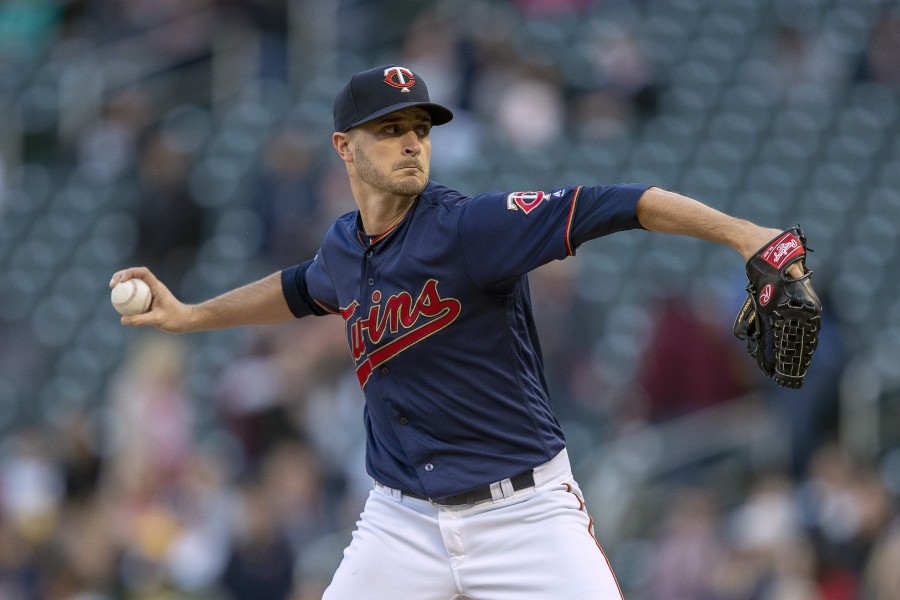 Box Score Odorizzi: 7.0 IP, 1 H, 0 ER, 0 BB, 5 K, 69.4% strikes (66 of 95 pitches) Home Runs: Garver (8), Kepler (8) Multi-Hit Games: None WPA of +0.1: Odorizzi .290, Polanco .150, Garver .130 WPA of -0.1: Rosario -.130 (chart via FanGraphs) Things didn’t start as well as one might think for Odorizzi. He gave up a double while facing his second batter of the night and saw a lot of hard contact from Tiger hitters, but he went on to retire 20 consecutive batters, before leaving the game in the end of seventh inning. His ERA now drops to 2.32 overall and 0.86 in his last five outings. That was also his third consecutive scoreless start, all in which he pitched at least six innings. The offense also came up big in support of Odorizzi. Jorge Polanco drove in three runs and Mitch Garver and Max Kepler each hit home runs. Minnesota has the third-best run differential in the AL at +50 and has hit 66 home runs, which is tied for third in the league. Story of the Game Odorizzi gave up a double in the top of the first, but that was pretty much all that happened in the inning. The top of the Twins' lineup couldn’t get anything done against Tyson Ross, who pitched a 1-2-3 inning. Both starters cruised through the second as well, retiring all the batters they’ve faced. In the top of the third, Odo kept dealing, with another 1-2-3 inning, with two strikeouts, but this time the offense showed up in the bottom half. After loading the bases with a couple of walks (Garver and Kepler) and a single in between (Jonathan Schoop), Polanco came through with a two-run double. Still no problems for Odorizzi in the fourth, as he retired all batters with only wight pitches, making it 11 consecutive. Then Garver did some more damage, blasting a two-run home run to the second deck in the left field making it 4-0 Twins. https://twitter.com/Twins/status/1127020004589830149 Tiger hitters had no answer to Odorizzi, whatsoever. He had another three up, three down inning in the fifth, with over 73% strikes at this point (50 strikes in 68 pitches), making it fourteen consecutive batters retired. And he got some more run support later on, as Kepler hit a solo shot to right field, driving in the fifth run of the night. https://twitter.com/Twins/status/1127024000058691587 Once again the Tiger hitters were dominated in the top of sixth by the Twins starter, who reached seventeen consecutive batters retired. He made it look easy. The offense continued to be effective, as Polanco drew a walk with the bases loaded, making it 6-0 Minnesota, earning his third RBI of the night. Odorizzi completed his majestic outing by getting yet another 1-2-3 inning in the seventh. And even though the offense didn’t produce any more runs, things didn’t get any easier for Detroit’s bats. Matt Magill pitched a three up, three down eighth. Fernando Romero gave up two hits to leadoff the ninth, but he got some fielding help from Ehire Adrianza and Buxton to secure the win and the shutout. After the game it was announced that Martin Perez would be going on the paternity list. Kohl Stewart will take his place on the 25-man roster and is slated to pitch the second game of tomorrow's doubleheader. The bonus 26th man for the doubleheader will be announced Saturday. Postgame With Baldelli https://twitter.com/fsnorth/status/1127051558644899841 Bullpen Usage Here’s a quick look at the number of pitches thrown by the bullpen over the past five days: Next Three Games Sat vs. DET, 1:10 pm CT (Pineda-Turnbull) Sat vs. DET, 7:10 pm CT (Stewart-TBD) Sun vs. DET, 1:!0 pm CT (TBD-Norris) Last Game MIN 9, TOR 1: Twins Steamroll Toronto
 -
After taking the season series against the Astros at home on Thursday and improving to an MLB-best record, the Twins flew to New York to face the Yankees, their long-time nemesis, and lost the series opener, 6-3. It was a night of errors for Minnesota, which allowed three unearned runs.Box Score Gibson: 5.0 IP, 7 H, 2 ER, 2 BB, 5 K, 61.0% strikes (61 of 100 pitches) Home Runs: Cruz (6) Multi-Hit Games: Gonzalez (2-for-4) WPA of +0.1: None WPA of -0.1: Kepler -.139, Adrianza -.178, Gibson -.244 Download attachment: Win53.png Chart via FanGraphs The Twins current record is still tied for their best since 2001. It’s happened three other times since (2002, 2005, 2010) and in two of them the club has finished the season with 94 wins, winning the division in both and, in one of them, reaching the ALCS. Other than that, Minnesota still sits atop of the Central. Kyle Gibson couldn’t repeat the stellar performance he had in his last trip to Yankee Stadium, in April of last year, when he struck out ten batters in six innings of shutout work. This time, he pitched five innings, allowing five runs, but only two earned, while striking out five batters. His outing was tainted by two key-errors by C.J. Cron and … Byron Buxton (yes, you read it right). The offense couldn’t take advantage of the bad outing that James Paxton was having in the first three innings, before he departed due to a knee soreness. They loaded the bases twice against him, but scored only one run. Due to his recent struggles, Eddie Rosario didn’t start in this game. The Twins were held to only four hits and had 16 consecutive batters retired from the second inning until the eighth. A two-run homer from Cruz in the eighth helped create a late threat, but it wasn’t enough. Story of the Game After a 1-2-3 inning by James Paxton, Gibson had a shaky first inning. Buxton made a rare mistake when he couldn’t catch a line drive from Brett Gardner landing near second base, despite being able to get under it in time. This allowed Gardner to reach third. Immediately afterwards, Gibby gave up a walk to Luke Voit. Gleyber Torres scored Gardner later on, with a ground ball towards the gap between Ehire Adrianza and Jorge Polanco. Marwin Gonzalez, playing left field, made a great one-hop throw to home plate after a Gio Urshela single, in time to get Voit to end the inning. The Twins offense started to make some noise in the top of the second, despite not being able to score in the end. Cron led off with a liner for a single, followed by another one by Marwin Gonzalez. Jonathan Schoop earned a one-out walk which loaded the bases, but Adrianza grounded into a double play to end the inning. Gibson's struggles continued in the bottom of the inning, as he he needed 13 pitches to strike out Mike Tauchman and then allowed the next two hitters to get on base. Voit drove in Cameron Maybin from second with a single, but he was put out at second after another great assist from Gonzalez to end the inning. Minnesota cut the Yankee lead in half without a base hit. Buxton walked to lead off the third, after falling 0-2 in the count. Later, the bases were loaded after an error from Torres and another walk, for Nelson Cruz. Cron made it a one-run game with a sac-fly to score Buxton, before Max Kepler flied out to end the inning. Gibson had no major problems to get through the bottom of the inning. Two Yankees reached, but a double play got the job done. Paxton didn’t come back to pitch the fourth, being replaced by the righty Jonathan Holder. He had a 1-2-3 inning, striking out Schoop — on a very questionable check swing — and Adrianza. A series of mistakes allowed the Yankees to score two more runs in the bottom of the fourth. Tauchman reached on an error from Cron. Then, after the runners moved up, the same Tauchman scored on a wild pitch. Gardner grounded out before the end, to score Maybin, making it 4-1 New York. At this point, only one of the four runs scored by the Yankees were earned. Holder came back to cruise through the fifth, once again with a 1-2-3 inning. Gary Sánchez hit a 429 ft leadoff home run in the bottom of the inning, to make it 5-1 Yankees, before Gibby retired the following three batters. Adam Ottavino entered the game and also had a 1-2-3 inning in the top of the sixth, as the Twins hitters continued to have one of their worst games of the season. Recently promoted righty Mike Morin came in the game to pitch a perfect inning on 16 pitches, 11 of which were strikes. While the offense was again dominated by the Yankee bullpen in yet another 1-2-3 inning (this time with Tommy Kahnle on the mound), New York struck again in the seventh. Sánchez hit his second solo homer of the game, off Morin, who had retired the first two batters he saw before him, making it 6-1. After having 16 consecutive batters retired, the Twins struck back in the top of the eighth. Polanco drew a two-out walk and Cruz followed up with a bomb to left field, making it a 6-3 game. Fernando Romero worked a scoreless eighth, with the help of the Twins’ second 6-4-3 double play. He got the job done with nine pitches (six strikes), giving up no hits or walks, but hitting Urshela. In the ninth, Aroldis Chapman gave up a leadoff single to Gonzalez and nearly saw Schoop get another hit two batters later, but he managed to close the deal with a near 100 mph fastball to strike out Adrianza. Postgame With Baldelli Bullpen Usage Here’s a quick look at the number of pitches thrown by the bullpen over the past five days:Download attachment: Bullpen53.png Next Three Games Sat at NYY, 12:05 pm CT (Odorizzi-Happ) Sun at NYY, 12:05 pm CT (Pineda-German) Mon at TOR, 6:07 pm CT (TBD) Last Game MIN 8, HOU 2: Twins Win! Take Season Series vs Astros! Click here to view the article
- 16 replies
-
- 1
-
-
- kyle gibson
- marwin gonzalez
- (and 1 more)
-
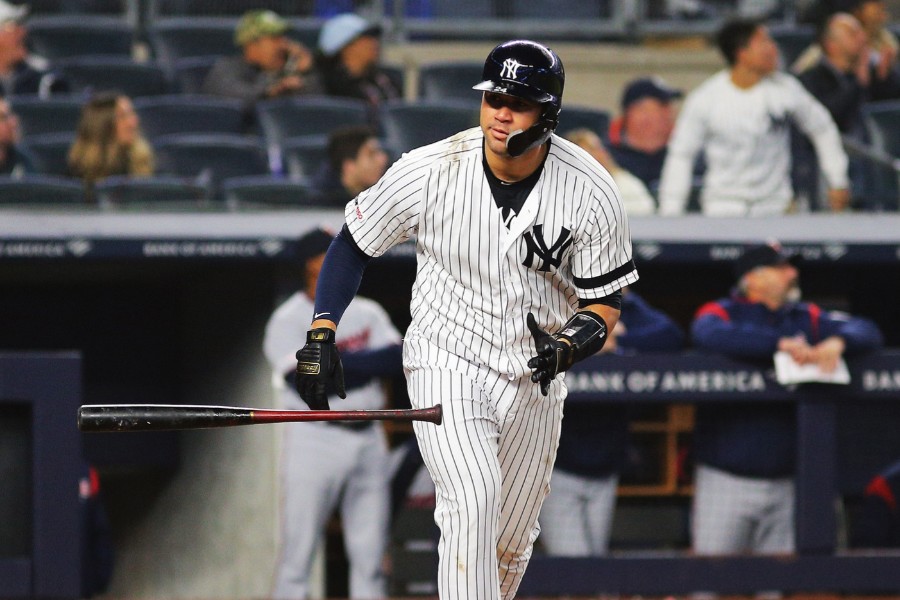 Box Score Gibson: 5.0 IP, 7 H, 2 ER, 2 BB, 5 K, 61.0% strikes (61 of 100 pitches) Home Runs: Cruz (6) Multi-Hit Games: Gonzalez (2-for-4) WPA of +0.1: None WPA of -0.1: Kepler -.139, Adrianza -.178, Gibson -.244 Chart via FanGraphs The Twins current record is still tied for their best since 2001. It’s happened three other times since (2002, 2005, 2010) and in two of them the club has finished the season with 94 wins, winning the division in both and, in one of them, reaching the ALCS. Other than that, Minnesota still sits atop of the Central. Kyle Gibson couldn’t repeat the stellar performance he had in his last trip to Yankee Stadium, in April of last year, when he struck out ten batters in six innings of shutout work. This time, he pitched five innings, allowing five runs, but only two earned, while striking out five batters. His outing was tainted by two key-errors by C.J. Cron and … Byron Buxton (yes, you read it right). The offense couldn’t take advantage of the bad outing that James Paxton was having in the first three innings, before he departed due to a knee soreness. They loaded the bases twice against him, but scored only one run. Due to his recent struggles, Eddie Rosario didn’t start in this game. The Twins were held to only four hits and had 16 consecutive batters retired from the second inning until the eighth. A two-run homer from Cruz in the eighth helped create a late threat, but it wasn’t enough. Story of the Game After a 1-2-3 inning by James Paxton, Gibson had a shaky first inning. Buxton made a rare mistake when he couldn’t catch a line drive from Brett Gardner landing near second base, despite being able to get under it in time. This allowed Gardner to reach third. Immediately afterwards, Gibby gave up a walk to Luke Voit. Gleyber Torres scored Gardner later on, with a ground ball towards the gap between Ehire Adrianza and Jorge Polanco. Marwin Gonzalez, playing left field, made a great one-hop throw to home plate after a Gio Urshela single, in time to get Voit to end the inning. The Twins offense started to make some noise in the top of the second, despite not being able to score in the end. Cron led off with a liner for a single, followed by another one by Marwin Gonzalez. Jonathan Schoop earned a one-out walk which loaded the bases, but Adrianza grounded into a double play to end the inning. Gibson's struggles continued in the bottom of the inning, as he he needed 13 pitches to strike out Mike Tauchman and then allowed the next two hitters to get on base. Voit drove in Cameron Maybin from second with a single, but he was put out at second after another great assist from Gonzalez to end the inning. Minnesota cut the Yankee lead in half without a base hit. Buxton walked to lead off the third, after falling 0-2 in the count. Later, the bases were loaded after an error from Torres and another walk, for Nelson Cruz. Cron made it a one-run game with a sac-fly to score Buxton, before Max Kepler flied out to end the inning. Gibson had no major problems to get through the bottom of the inning. Two Yankees reached, but a double play got the job done. Paxton didn’t come back to pitch the fourth, being replaced by the righty Jonathan Holder. He had a 1-2-3 inning, striking out Schoop — on a very questionable check swing — and Adrianza. https://twitter.com/sung_minkim/status/1124472535171526661 A series of mistakes allowed the Yankees to score two more runs in the bottom of the fourth. Tauchman reached on an error from Cron. Then, after the runners moved up, the same Tauchman scored on a wild pitch. Gardner grounded out before the end, to score Maybin, making it 4-1 New York. At this point, only one of the four runs scored by the Yankees were earned. Holder came back to cruise through the fifth, once again with a 1-2-3 inning. Gary Sánchez hit a 429 ft leadoff home run in the bottom of the inning, to make it 5-1 Yankees, before Gibby retired the following three batters. Adam Ottavino entered the game and also had a 1-2-3 inning in the top of the sixth, as the Twins hitters continued to have one of their worst games of the season. Recently promoted righty Mike Morin came in the game to pitch a perfect inning on 16 pitches, 11 of which were strikes. While the offense was again dominated by the Yankee bullpen in yet another 1-2-3 inning (this time with Tommy Kahnle on the mound), New York struck again in the seventh. Sánchez hit his second solo homer of the game, off Morin, who had retired the first two batters he saw before him, making it 6-1. After having 16 consecutive batters retired, the Twins struck back in the top of the eighth. Polanco drew a two-out walk and Cruz followed up with a bomb to left field, making it a 6-3 game. https://twitter.com/Twins/status/1124493587687845888 Fernando Romero worked a scoreless eighth, with the help of the Twins’ second 6-4-3 double play. He got the job done with nine pitches (six strikes), giving up no hits or walks, but hitting Urshela. In the ninth, Aroldis Chapman gave up a leadoff single to Gonzalez and nearly saw Schoop get another hit two batters later, but he managed to close the deal with a near 100 mph fastball to strike out Adrianza. Postgame With Baldelli https://twitter.com/fsnorth/status/1124515069797076992 Bullpen Usage Here’s a quick look at the number of pitches thrown by the bullpen over the past five days: Next Three Games Sat at NYY, 12:05 pm CT (Odorizzi-Happ) Sun at NYY, 12:05 pm CT (Pineda-German) Mon at TOR, 6:07 pm CT (TBD) Last Game MIN 8, HOU 2: Twins Win! Take Season Series vs Astros!
 -
Article: The Importance of Jason Castro
Thiéres Rabelo replied to Thiéres Rabelo's topic in Twins Daily Front Page News
Hi, Hosken! Not really. I posted a version of this article on my blog on Sunday, just before the Houston series. His offensive numbers didn't change as much as you think after the games against the Astros. You can check them here: http://twinsdaily.com/blog/1250/entry-11454-the-importance-of-castro/- 42 replies
-
- 1
-
-
- jason castro
- mitch garver
- (and 1 more)
-
Article: The Importance of Jason Castro
Thiéres Rabelo replied to Thiéres Rabelo's topic in Twins Daily Front Page News
Neither of the scenarios will ever be answered, but, the same way that you feel like the team wouldn't have won more games, I think the opposite. I do believe that pitchers perform better with Castro. If that's true, it's plausible to believe that instead of 78 wins, this team could have won some more games. Not enough to make the postseason, but still.- 42 replies
-
- 1
-
-
- jason castro
- mitch garver
- (and 1 more)
-
Article: The Importance of Jason Castro
Thiéres Rabelo replied to Thiéres Rabelo's topic in Twins Daily Front Page News
I really appreciate your comment, mate! God bless you!- 42 replies
-
- 1
-
-
- jason castro
- mitch garver
- (and 1 more)
-
Article: The Importance of Jason Castro
Thiéres Rabelo posted a topic in Twins Daily Front Page News
I have seen complaints about many Twins players so far across our comment sections and Twitter. Even Nelson Cruz, who’s been almost unanimously admired by the fan base and maybe the team’s most threatening bat. It happens. No one is to tell you how you should think, no matter how statistically unusual your opinion might be. But there’s one particular take that has spread quickly all over Twins Territory and it puzzles me.I don’t think there is any Twin who has been more complained about this season than Jason Castro has. Even though I don’t agree with the large number of fans (at least that I have seen so far) that have been vocal about wanting him gone from the Twins, it’s completely understandable. After all, Minnesota’s offense has been amazing, especially after this past weekend’s series in Baltimore. Castro, very obviously, hasn’t been nearly as productive as his teammates. But ditching him might be too simple of a solution and, in my opinion, not the wisest of choices. Castro is in the last year of his three-year contract with the Twins, signed in late 2016. Per Baseball Reference, he is the third-highest paid position player on the roster this season, in which he is owed $8 million. At 31 and with two very hot bats battling him for the position of catcher, it’s very unlikely that Minnesota will renew its commitment with Castro after the season is finished. But that doesn’t mean he serves the team no purpose this season. Since the start of the 2017 season, the Twins haven’t won more games while starting any other catcher than Castro. Here’s the team’s record with each starting catcher since then: Jason Castro: 70-63 (.526) Mitch Garver: 38-49 (.436) Chris Gimenez: 32-29 (.524) Bobby Wilson: 24-21 (.533) Willians Astudillo: 10-8 (.555) Juan Graterol: 2-0 (1.000) Whether you associate the team’s record with Castro’s presence or not, the numbers don’t lie. The Twins have been a winning team with him behind home plate. But, of course, this could be highly circumstantial and it’s too hard of a connection to make. But, wait. The list of perks from having Castro on board goes on. The biggest point used by the anti-Castro party so far is how bad he’s been on offense, not only this year, but ever since he came to Minnesota. And that becomes a much stronger point when you have Mitch Garver blossoming into one of the best offensive catchers in the game and also the Willians Astudillo phenomenon captivating our hearts more each day. A lot of folks label Castro as dead weight on offense. But, is he? Well, he isn’t, for sure, as prolific as the remainder of the Twins lineup. But, to be fair, neither are two thirds of all MLB lineups right now. But that doesn’t mean Castro hasn’t done his part. Right now, he holds the team’s fourth-highest OBP at .375. Other than that, such OBP would have Castro tied for MLB’s sixth best among catchers (min. 32 PA). Technically, he has a .355 OBP while playing only as a catcher, as he has one PA as a pinch hitter. Still, that’s good for 11th best among all catchers in MLB (min. 31 PA). One doesn’t just throw away a Joe Mauer-like occupation of bases just like that. Besides that, Castro’s .400 OBP and .789 OPS as an eighth batter rank, respectively, second and 10th in MLB among all such hitters (min. 25 PA). This may sound like very little, but when you look at the fact that Minnesota has one of the league’s best bottom parts of the lineup, you can tell how important Castro’s contribution really is. Currently, when taking into account the positions seven, eight and nine of the lineup, Minnesota has a .281 AVG (second in the league), .346 OBP (second), .487 SLG (third) and .833 OPS (third). Say what you want about how Byron Buxton is the biggest responsible for such productivity. You’re right. But you can’t realistically say that Castro hasn’t done his part. Then, one might point out that Garver and Astudillo have been incomparably more productive on offense and one would definitely be right. They both have been raking, especially my former UNM colleague. If offense was the only aspect on the table, there wouldn’t be a lot of reasons to start Castro over the other two much more than Ehire Adrianza over Jorge Polanco. It wouldn’t make any sense. Well, it isn’t. At the same proportion that Castro’s offense is not as good as his competition’s, his defense is similarly better than his competition’s. And I’m not just talking about widely explored pitch framing stats, Castro’s biggest upside. Twins pitchers have performed much better while being caught by him than by Garver. Jason Castro (80.0 innings) - 4.16 ERA, .755 OPS, 64.1% strikes Mitch Garver (75.0 innings) - 5.88 ERA, .794 OPS, 61.7% strikes Astudillo’s numbers currently are better than both, with pitchers posting a 3.69 ERA when being caught by him, but his sample size is smaller too. He’s caught pitchers for only 39.0 innings this season so far. And it’s also important to note that Castro’s current CERA went up from 3.57 before the Houston series, in which last game he caught recently promoted Kohl Stewart and Fernando Romero, who ended up giving up seven earned runs combined. So we might be talking about abnormal numbers for him at this moment. Finally digging into the somewhat popular pitch framing stats, by using Baseball Prospectus’ Framing Runs metric, we can notice that Castro is the 15th-best catcher at it in the MLB, with +0.6. Garver ranks 52nd, with -0.3 and Astudillo (again, with a smaller sample) ranks 50th, with -0.2. This is not a hit at Garver, whom I absolutely enjoy seeing play and am sure is going to be the team’s main catcher for years, but he is still not on the same defensive level as Castro is. But, hey, that’s not even a bad thing, because now we get to Castro’s biggest importance for the Twins. It’s obvious that Garver can hit. We’ve known this since he was a minor leaguer. But picture this: what if we could get Garver’s offense and combine it with Castro’s defense? That, ladies and gentlemen, could be Jason’s biggest contribution for Minnesota. We have no access to their clubhouse relationship, thus, we can’t say for sure how and if Castro has been helping him. But we do know that Garver has reached out for help on that area, as we saw on this Phil Miller’s story in January. By mentoring Garver, especially defense-wise, Castro could lead him into the Twins best catcher since … well, you know who. Once again, let me make it clear that I’m not trying to change anyone’s opinion here. But I do give a piece of advice. Instead of getting angry and vent over how bad Castro’s bat is, why not look at him as a source of improvement for one of the Twins biggest hopes for the future? I don’t believe it’s good to take his help for granted. Besides, like demonstrated in the beginning of this article, the Twins are a winning team with Castro on board. It has been like that in 2017, culminating in their first playoffs appearance in almost a decade. They were dreadful without him last year. Now, they are back, at least momentarily, at the top of the Central. This can’t be a coincidence. Click here to view the article- 42 replies
-
- 2
-
-
- jason castro
- mitch garver
- (and 1 more)
-
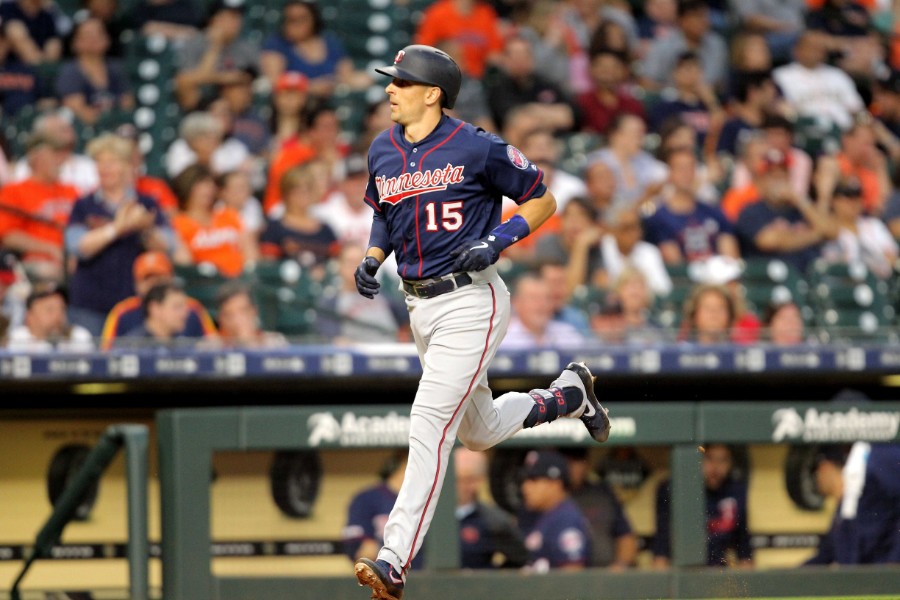 I don’t think there is any Twin who has been more complained about this season than Jason Castro has. Even though I don’t agree with the large number of fans (at least that I have seen so far) that have been vocal about wanting him gone from the Twins, it’s completely understandable. After all, Minnesota’s offense has been amazing, especially after this past weekend’s series in Baltimore. Castro, very obviously, hasn’t been nearly as productive as his teammates. But ditching him might be too simple of a solution and, in my opinion, not the wisest of choices. Castro is in the last year of his three-year contract with the Twins, signed in late 2016. Per Baseball Reference, he is the third-highest paid position player on the roster this season, in which he is owed $8 million. At 31 and with two very hot bats battling him for the position of catcher, it’s very unlikely that Minnesota will renew its commitment with Castro after the season is finished. But that doesn’t mean he serves the team no purpose this season. Since the start of the 2017 season, the Twins haven’t won more games while starting any other catcher than Castro. Here’s the team’s record with each starting catcher since then: Jason Castro: 70-63 (.526) Mitch Garver: 38-49 (.436) Chris Gimenez: 32-29 (.524) Bobby Wilson: 24-21 (.533) Willians Astudillo: 10-8 (.555) Juan Graterol: 2-0 (1.000) Whether you associate the team’s record with Castro’s presence or not, the numbers don’t lie. The Twins have been a winning team with him behind home plate. But, of course, this could be highly circumstantial and it’s too hard of a connection to make. But, wait. The list of perks from having Castro on board goes on. The biggest point used by the anti-Castro party so far is how bad he’s been on offense, not only this year, but ever since he came to Minnesota. And that becomes a much stronger point when you have Mitch Garver blossoming into one of the best offensive catchers in the game and also the Willians Astudillo phenomenon captivating our hearts more each day. A lot of folks label Castro as dead weight on offense. But, is he? Well, he isn’t, for sure, as prolific as the remainder of the Twins lineup. But, to be fair, neither are two thirds of all MLB lineups right now. But that doesn’t mean Castro hasn’t done his part. Right now, he holds the team’s fourth-highest OBP at .375. Other than that, such OBP would have Castro tied for MLB’s sixth best among catchers (min. 32 PA). Technically, he has a .355 OBP while playing only as a catcher, as he has one PA as a pinch hitter. Still, that’s good for 11th best among all catchers in MLB (min. 31 PA). One doesn’t just throw away a Joe Mauer-like occupation of bases just like that. Besides that, Castro’s .400 OBP and .789 OPS as an eighth batter rank, respectively, second and 10th in MLB among all such hitters (min. 25 PA). This may sound like very little, but when you look at the fact that Minnesota has one of the league’s best bottom parts of the lineup, you can tell how important Castro’s contribution really is. Currently, when taking into account the positions seven, eight and nine of the lineup, Minnesota has a .281 AVG (second in the league), .346 OBP (second), .487 SLG (third) and .833 OPS (third). Say what you want about how Byron Buxton is the biggest responsible for such productivity. You’re right. But you can’t realistically say that Castro hasn’t done his part. Then, one might point out that Garver and Astudillo have been incomparably more productive on offense and one would definitely be right. They both have been raking, especially my former UNM colleague. If offense was the only aspect on the table, there wouldn’t be a lot of reasons to start Castro over the other two much more than Ehire Adrianza over Jorge Polanco. It wouldn’t make any sense. Well, it isn’t. At the same proportion that Castro’s offense is not as good as his competition’s, his defense is similarly better than his competition’s. And I’m not just talking about widely explored pitch framing stats, Castro’s biggest upside. Twins pitchers have performed much better while being caught by him than by Garver. Jason Castro (80.0 innings) - 4.16 ERA, .755 OPS, 64.1% strikes Mitch Garver (75.0 innings) - 5.88 ERA, .794 OPS, 61.7% strikes Astudillo’s numbers currently are better than both, with pitchers posting a 3.69 ERA when being caught by him, but his sample size is smaller too. He’s caught pitchers for only 39.0 innings this season so far. And it’s also important to note that Castro’s current CERA went up from 3.57 before the Houston series, in which last game he caught recently promoted Kohl Stewart and Fernando Romero, who ended up giving up seven earned runs combined. So we might be talking about abnormal numbers for him at this moment. Finally digging into the somewhat popular pitch framing stats, by using Baseball Prospectus’ Framing Runs metric, we can notice that Castro is the 15th-best catcher at it in the MLB, with +0.6. Garver ranks 52nd, with -0.3 and Astudillo (again, with a smaller sample) ranks 50th, with -0.2. This is not a hit at Garver, whom I absolutely enjoy seeing play and am sure is going to be the team’s main catcher for years, but he is still not on the same defensive level as Castro is. But, hey, that’s not even a bad thing, because now we get to Castro’s biggest importance for the Twins. It’s obvious that Garver can hit. We’ve known this since he was a minor leaguer. But picture this: what if we could get Garver’s offense and combine it with Castro’s defense? That, ladies and gentlemen, could be Jason’s biggest contribution for Minnesota. We have no access to their clubhouse relationship, thus, we can’t say for sure how and if Castro has been helping him. But we do know that Garver has reached out for help on that area, as we saw on this Phil Miller’s story in January. By mentoring Garver, especially defense-wise, Castro could lead him into the Twins best catcher since … well, you know who. Once again, let me make it clear that I’m not trying to change anyone’s opinion here. But I do give a piece of advice. Instead of getting angry and vent over how bad Castro’s bat is, why not look at him as a source of improvement for one of the Twins biggest hopes for the future? I don’t believe it’s good to take his help for granted. Besides, like demonstrated in the beginning of this article, the Twins are a winning team with Castro on board. It has been like that in 2017, culminating in their first playoffs appearance in almost a decade. They were dreadful without him last year. Now, they are back, at least momentarily, at the top of the Central. This can’t be a coincidence.
 -
The importance of Castro
Thiéres Rabelo commented on Thiéres Rabelo's blog entry in Brazilian Twins Territory
If we talk about the future, I definitely don't see Castro in Minnesota after this season. Astudillo's defensive numbers are, so far, kind of similar to Castro's (except for framing). Pitchers are doing well with him is what I mean. An Astudillo-Garver combo for the next year looks pretty good to me when I picture it. All I'm trying to say is that, as a mentor, Castro can play a big role in shaping Garver's future. And of course, the team can benefit from his upsides one more season, by having a very solid defensive catcher.
