



Tom Froemming
-
Posts
5,260 -
Joined
-
Last visited
-
Days Won
22
Content Type
Profiles
News
Minnesota Twins Videos
2026 Minnesota Twins Top Prospects Ranking
2022 Minnesota Twins Draft Picks
Minnesota Twins Free Agent & Trade Rumors, Notes, & Tidbits
Guides & Resources
2023 Minnesota Twins Draft Picks
The Minnesota Twins Players Project
2024 Minnesota Twins Draft Picks
2025 Minnesota Twins Draft Pick Tracker
2026 Minnesota Twins Draft Tracker: Picks & Bonuses
Forums
Blogs
Events
Store
Downloads
Gallery
Everything posted by Tom Froemming
-
 This is a great point on Stewart. I honestly do not believe Kohl is trying to strike anybody out. I think he's trying to be efficient. That strategy makes a lot of sense for him up to this point in his career. Coming into the draft, one of the biggest question marks surrounding Stewart involved the fact he has Type 1 diabetes. It seemed there were some questions surrounding his durability. While we would have loved to see him dominate, he has certainly answered any questions about his ability to handle a starter's workload. He's gone from 87 to 129.1 to 143.2 innings pitched the past three seasons. And he has been successful, so there was little incentive for him to adjust his approach. But you hit the nail on the head, if he gets clobbered like this on a regular basis we'll see him make some adjustments and try harder to miss bats.
 -
If you want evidence that Paul Molitor has influence over the 25-man roster, I think the fact that Danny Santana is still around is all you need. He's been one of the worst players in baseball for two years and had a poor spring. Hard for me to believe the front office would have been keen on keeping him (though we'll see what happens once Ehire Adrianza is healthy).
- 102 replies
-
- 4
-

-
- craig breslow
- tyler duffey
- (and 2 more)
-
I'd send Duffey down to get him stretched out. If extra bullpen arms are needed eventually, there are a host of other guys should be able to step in and contribute in the middle innings. There are very few Plan B guys for the rotation right now. Berrios sticks out, for sure, but I think teams use an average of something like 10 starters a season. The only other minor league SPs on the 40 man right now are Felix Jorge and Fernando Romero. Other options are guys like Nick Tepesch, Jason Wheeler, Paul Clemens and David Hurlbut.
- 102 replies
-
- 6
-
-
- craig breslow
- tyler duffey
- (and 2 more)
-
I'm really intrigued by Matt Albanese. He's healthy now, correct? Anybody see him on the backfields at all during spring training?
-
I forgot to congratulate Todd Van Steensel, who has been promoted to Chattanooga. Pretty sure he had the craziest work commute ever, which he shared on Twitter today (@toddvs35).
-
The Twins minor league Opening Day was subdued by weather postponements and lack of offense, but their affiliates kicked things into gear on Friday. A top prospect hit a walk off, there was a dominating pitching performance and even the team that didn't pick up a victory made a valiant comeback attempt. Here's a look at everything that happened in the Twins minor league system on Friday.RED WINGS REPORT Rochester, Syracuse (POSTPONED) Rainstorms and even some snow has hit Syracuse, wreaking havoc on the Red Wings' season-opening plans. The first two games of their series in Syracuse have been cancelled, but Saturday's forecast shows only a 20 percent chance of precipitation (though the high is just 47 degrees). Assuming they (finally) get their opener in, Jose Berrios will face off against Joe Ross (3.43 ERA over 19 starts with the Nationals last season) in as good a minor league pitching matchup as you could hope to find. CHATTANOOGA CHATTER Chattanooga 4, Mobile 3 (10 innings) Box Score Nick Gordon gave the Lookouts their first win of the season in dramatic fashion, hitting a game-tying sac fly in the bottom of the seventh before driving in Tanner English on a walk-off single in the bottom of the 10th inning. Gordon finished 3-for-4 at the plate and started a pair of 6-4-3 double plays in the field. English, who reached safely three times on the night, led off the 10th with a double before Gordon, the very next batter, ended it. Dan Rohlfing hit a home run and Travis Harrison just missed one of his own, smacking a double off the wall. Minor league veteran Matt Tracy started for the Lookouts and went 5 2/3 innings while giving up three runs (just one earned) on seven hits. He struck out four and walked one. Nick Burdi came on in relief, and after his first pitch got by Rohlfing for a run-scoring passed ball he settled in to throw 1 1/3 perfect innings with one strikeout. Raul Fernandez handled both the eighth and ninth innings before John Curtiss came in for the 10th, picking up the win in the process. MIRACLE MATTERS Ft. Myers 8, Jupiter 11 Box Score Sam Clay had a night to forget, but the Miracle offense broke out after being shut out in their opener. Last season's Midwest League batting champ Luis Arraez had three hits out of the leadoff spot, Zander Wiel drove in three runs and catcher Brian Navarreto hit a solo home run. Fort Myers trailed 4-1 entering the seventh inning, but Clay surrendered six runs in 2/3 of an inning. There will surely be better days ahead for the former fourth-round pick, who made all of his 24 appearances last season as a starter. His teammates did their best to pick him up, but fell just short. Down 11-1 in the eighth inning, Doug Mientkiewicz's boys showed no signs of giving in, as they rallied back for four runs, followed by another three runs in the top of the ninth. KERNELS NUGGETS Cedar Rapids 4, Beloit 0 (7 innings) Box Score In Game 1 of their doubleheader with the Snappers, Eduardo Del Rosario turned in a dominating performance for the Kernels. The wiry 21-year-old right-hander threw six shutout innings while striking out seven and walking one. Del Rosario surrendered just two hits, one of which was on a bunt. Cedar Rapids scored three of their runs in the top of the second inning. Lewin Diaz led off with a double and scored on Jaylin Davis' two-bagger, which was followed by another RBI double by Mitchel Kranson. Davis later added a sacrifice fly in the third inning. Colton Davis pitched the seventh, sealing the shutout for the Kernels. Cedar Rapids 2, Beloit 3 (7 innings) Box Score The Kernals couldn't quite finish off the doubleheader sweep, as Beloit won it on a walk-off double. Lewin Diaz went 2-for-3 with a double and drove in both runs for Cedar Rapids. Tyler Wells followed up Del Rosario's masterful performance with some swing-and-miss stuff of his own, but he also struggled with his command. Over four innings, Wells had six strikeouts, but he also walked four and hit a batter. That wildness is uncharacteristic of the big right-hander, as he issued just 17 walks over 47 1/3 innings last season. TWINS DAILY PLAYERS OF THE DAY Twins Daily Minor League Pitcher of the Day – Eduardo Del Rosario, Cedar Rapids Kernals (6 IP, 0 ER, 2 H, 1 BB, 7 K) Twins Daily Minor League Hitter of the Day – Nick Gordon, Chattanooga Lookouts (3-for-4, 2 RBI, walk-off single in the bottom of the 10th) SATURDAY’S PROBABLE STARTERS Rochester @ Syracuse - (12:05 CST) RHP Jose Berrios Mobile @ Chattanooga - (6:15 CST) - RHP Fernando Romero Jupiter @ Fort Myers (5:05 CST) - TBD Beloit @ Cedar Rapids (5:05 CST) - RHP Sean Poppen Please feel free to ask any questions and discuss Friday's games. Click here to view the article
-
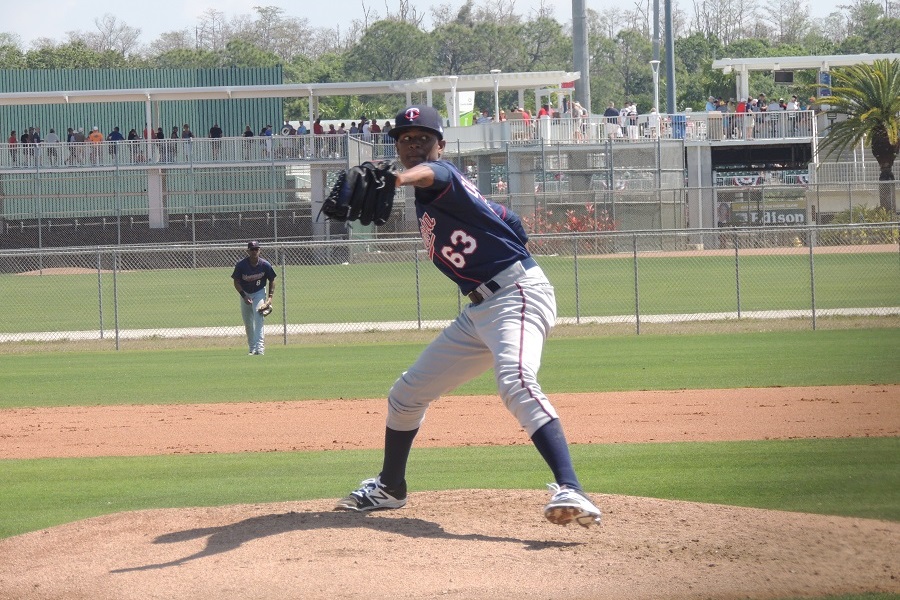 RED WINGS REPORT Rochester, Syracuse (POSTPONED) Rainstorms and even some snow has hit Syracuse, wreaking havoc on the Red Wings' season-opening plans. The first two games of their series in Syracuse have been cancelled, but Saturday's forecast shows only a 20 percent chance of precipitation (though the high is just 47 degrees). Assuming they (finally) get their opener in, Jose Berrios will face off against Joe Ross (3.43 ERA over 19 starts with the Nationals last season) in as good a minor league pitching matchup as you could hope to find. CHATTANOOGA CHATTER Chattanooga 4, Mobile 3 (10 innings) Box Score Nick Gordon gave the Lookouts their first win of the season in dramatic fashion, hitting a game-tying sac fly in the bottom of the seventh before driving in Tanner English on a walk-off single in the bottom of the 10th inning. Gordon finished 3-for-4 at the plate and started a pair of 6-4-3 double plays in the field. English, who reached safely three times on the night, led off the 10th with a double before Gordon, the very next batter, ended it. Dan Rohlfing hit a home run and Travis Harrison just missed one of his own, smacking a double off the wall. Minor league veteran Matt Tracy started for the Lookouts and went 5 2/3 innings while giving up three runs (just one earned) on seven hits. He struck out four and walked one. Nick Burdi came on in relief, and after his first pitch got by Rohlfing for a run-scoring passed ball he settled in to throw 1 1/3 perfect innings with one strikeout. Raul Fernandez handled both the eighth and ninth innings before John Curtiss came in for the 10th, picking up the win in the process. MIRACLE MATTERS Ft. Myers 8, Jupiter 11 Box Score Sam Clay had a night to forget, but the Miracle offense broke out after being shut out in their opener. Last season's Midwest League batting champ Luis Arraez had three hits out of the leadoff spot, Zander Wiel drove in three runs and catcher Brian Navarreto hit a solo home run. Fort Myers trailed 4-1 entering the seventh inning, but Clay surrendered six runs in 2/3 of an inning. There will surely be better days ahead for the former fourth-round pick, who made all of his 24 appearances last season as a starter. His teammates did their best to pick him up, but fell just short. Down 11-1 in the eighth inning, Doug Mientkiewicz's boys showed no signs of giving in, as they rallied back for four runs, followed by another three runs in the top of the ninth. KERNELS NUGGETS Cedar Rapids 4, Beloit 0 (7 innings) Box Score In Game 1 of their doubleheader with the Snappers, Eduardo Del Rosario turned in a dominating performance for the Kernels. The wiry 21-year-old right-hander threw six shutout innings while striking out seven and walking one. Del Rosario surrendered just two hits, one of which was on a bunt. Cedar Rapids scored three of their runs in the top of the second inning. Lewin Diaz led off with a double and scored on Jaylin Davis' two-bagger, which was followed by another RBI double by Mitchel Kranson. Davis later added a sacrifice fly in the third inning. Colton Davis pitched the seventh, sealing the shutout for the Kernels. Cedar Rapids 2, Beloit 3 (7 innings) Box Score The Kernals couldn't quite finish off the doubleheader sweep, as Beloit won it on a walk-off double. Lewin Diaz went 2-for-3 with a double and drove in both runs for Cedar Rapids. Tyler Wells followed up Del Rosario's masterful performance with some swing-and-miss stuff of his own, but he also struggled with his command. Over four innings, Wells had six strikeouts, but he also walked four and hit a batter. That wildness is uncharacteristic of the big right-hander, as he issued just 17 walks over 47 1/3 innings last season. TWINS DAILY PLAYERS OF THE DAY Twins Daily Minor League Pitcher of the Day – Eduardo Del Rosario, Cedar Rapids Kernals (6 IP, 0 ER, 2 H, 1 BB, 7 K) Twins Daily Minor League Hitter of the Day – Nick Gordon, Chattanooga Lookouts (3-for-4, 2 RBI, walk-off single in the bottom of the 10th) SATURDAY’S PROBABLE STARTERS Rochester @ Syracuse - (12:05 CST) RHP Jose Berrios Mobile @ Chattanooga - (6:15 CST) - RHP Fernando Romero Jupiter @ Fort Myers (5:05 CST) - TBD Beloit @ Cedar Rapids (5:05 CST) - RHP Sean Poppen Please feel free to ask any questions and discuss Friday's games.
 -
Can we talk about how stupid the White Sox's new stadium name is? It changed from U.S. Cellular Field to Guaranteed Rate Field for 2017. I get Target Field is named after a sponsor too, but at least it sounds kinda cool.
-
Article: Twins Walk Their Way To 3-0
Tom Froemming replied to Seth Stohs's topic in Twins Daily Front Page News
Oddly enough, in 2015 the team had its worst walk rate during that excellent month of May. March/April: 7.1 BB% May: 6.1 June: 7.0 July: 7.0 Aug.: 7.0 Sept./Oct.: 9.2 And last year's gawd awful team drew significantly more walks than that 2015 squad, 513-439.- 42 replies
-
- 2
-
-
- jason castro
- miguel sano
- (and 2 more)
-
Article: Twins Walk Their Way To 3-0
Tom Froemming replied to Seth Stohs's topic in Twins Daily Front Page News
My favorite play of the series was yesterday when Polanco ranged to his right, made a nice pick, avoided Sano and fired to end the seventh inning. Here's a link to that highlight. This is true, but I like the fact that Molitor is going to keep putting him in the three spot, at least for the time being. If you think Buxton is your third hitter on Opening Day, why let 15 plate appearances change your mind? If Byron has the peace of mind that even if he has a bad series, or a bad few weeks, he's still going to be in there everyday I think we're going to see some very good things happen for him this season.- 42 replies
-
- 9
-
-
- jason castro
- miguel sano
- (and 2 more)
-
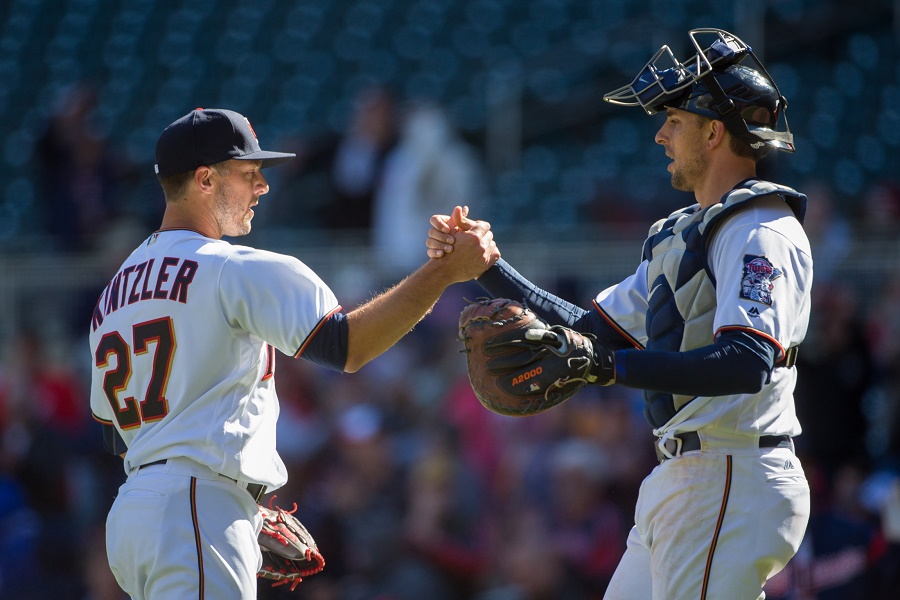 Twins hitters tallied 23 walks in the opening series against the Royals, while the pitching staff issued just nine free passes. To put that into perspective, last season the Twins didn't draw their 23rd walk until the eighth game of the season. Not surprisingly, all those walks did in the Royals, as they were outscored 21-5. The Twins had some great timely hitting, the bullpen has been excellent and even the defense has been solid, but anytime you get that many walks, good things are going to happen. So, what does this mean? Well, in such a small sample we can't be sure. Maybe it means the Royals pitching staff is going to stink. Or maybe they just got off on a bad foot. But, maybe it means we'll see a more patient approach from the Twins this season. With new leadership comes new philosophies and new and different things that are stressed. Maybe patience is especially being preached this season. Or maybe Twins hitters are just more comfortable taking what comes during an at-bat, as opposed to trying to make something happen. One of the things I've really admired about new hitting coach James Rowson's style is he seems to put a big focus on getting hitters confident and comfortable. MikeBerardino of the Pioneer Press did a great feature on how Rowson was trying to help Miguel Sano take the next step in which Rowson said “You look at [sano] and you realize he doesn’t need anyone’s help to be good. He’s a good player right now.” What an outstanding message to send to a young player like Sano. Late last season, the team was threatening to send its young slugger down to the minors. Quite a difference a few months makes. Free agent addition Jason Castro leads the team with six walks, but Sano has three, which is tied for second with Robbie Grossman. Maybe the thing that sticks out the most is the pair of walks Eddie Rosario drew in Thursday's 5-3 win. The free-swinging Rosario entered the season averaging one walk for every 30 plate appearances. Is it possible we're seeing these younger Twins hitters coming into their own? Could this be the year they get comfortable instead of constantly worrying about being sent to the bench, or back to Rochester, after a few bad games? Well, right now it looks just about as possible as the Royals just having a rotten pitching staff. Only time will tell.
 -
The Story of Phil Hughes, of Phillip Hughes, And How I'd Like To Ignore All Of This
Tom Froemming commented on Jon Marthaler's blog entry in Marthaler
Great stuff. I think before long we'll see some sort of head protection become universal for pitchers. Somebody needs to come up with something low-profile and comfortable to wear. We've seen some advancements in the design of batting helmets (though nobody seems to be able to make one that'll stay on Eduardo Nunez's head), but I haven't heard much about studies on catcher's masks or helmets. Seems to me like those goalie-style one-piece ones would be safer, but tons of guys still use the old school two piece ones. Of course, you're never going to be able to protect everybody from everything. There will always be potential for some freak play where a middle infielder's knee nails a guy right in the wrong spot on the head. And none of the protection options I mentioned above would prevent anybody from getting hit in the neck, like Phillip Hughes did. Certainly the more and more velo we're seeing on the mound and the exit velocities we now have access to off the bat make you think of things like this. I'm glad the base coaches wear helmets now, and there's more netting to protect the fans, but it'd be great to see the MLB continue to keep a focus on safety. -
Our Mr. Grossman, whatever you wanna call him, is 6-for-11 with a pair of doubles and a homer off Danny Duffy over his career. So no matter if Park, Vargas or whoever was on the roster, he'd probably be DHing today anyway.
-
Article: 2017 Cedar Rapids Kernels Roster Preview
Tom Froemming replied to Seth Stohs's topic in Twins Daily Front Page News
Hard to project his future due to his lack of size, but Eduardo Del Rosario is a super fun pitcher to watch right now. Really came along as the year progressed. Over his last nine games had a 2.31 ERA, held opponents to a .195/.275/.314 line and had 60 Ks against 15 BBs. His swinging strike % over that stretch was about 15%, which is elite.- 24 replies
-
- 3
-
-
- lewin diaz
- ben rortvedt
- (and 3 more)
-
Article: 2017 Rochester Red Wings Roster Preview
Tom Froemming replied to Seth Stohs's topic in Twins Daily Front Page News
Man, that's a great looking Triple A roster. Is Paulsen strictly a 1B now, or could you see him playing some in the outfield corners? Have any thoughts on Goodrum's defense at shortstop to share?- 19 replies
-
- 1
-
-
- jose berrios
- jt chargois
- (and 3 more)
-
Article: Phil Hughes as 2017's CC Sabathia
Tom Froemming replied to Seth Stohs's topic in Twins Daily Front Page News
Definitely more work and attention has been put on the change than the curve, but the overall vibe is he is working on mixing things up more. Yes, the changeup has not been a pitch Hughes has been comfortable breaking out with any kind of regularity in the past, so he's been throwing it like crazy this spring. He told Patrick Reusse "I’m in. I’m going to throw the changeup this year.” So I think, for better or worse, we're going to see Hughes continue to work on getting the feel for that pitch. -
Article: Phil Hughes as 2017's CC Sabathia
Tom Froemming replied to Seth Stohs's topic in Twins Daily Front Page News
I believe anyone on the 40-man roster with more than five years of service time can refuse an outright assignment to the minors. My guess would be in this scenario Hughes would just elect to become a free agent. The Twins would still have to pay him every penny owed on his contract. I think if you're looking for ways to ditch Hughes, the most likely outcome would be something similar to the Ricky Nolasco trade. The Twins would have to package Hughes with a prospect and chip in some money. -
Article: Phil Hughes as 2017's CC Sabathia
Tom Froemming replied to Seth Stohs's topic in Twins Daily Front Page News
I guess you could say I'm high on Phil Hughes -
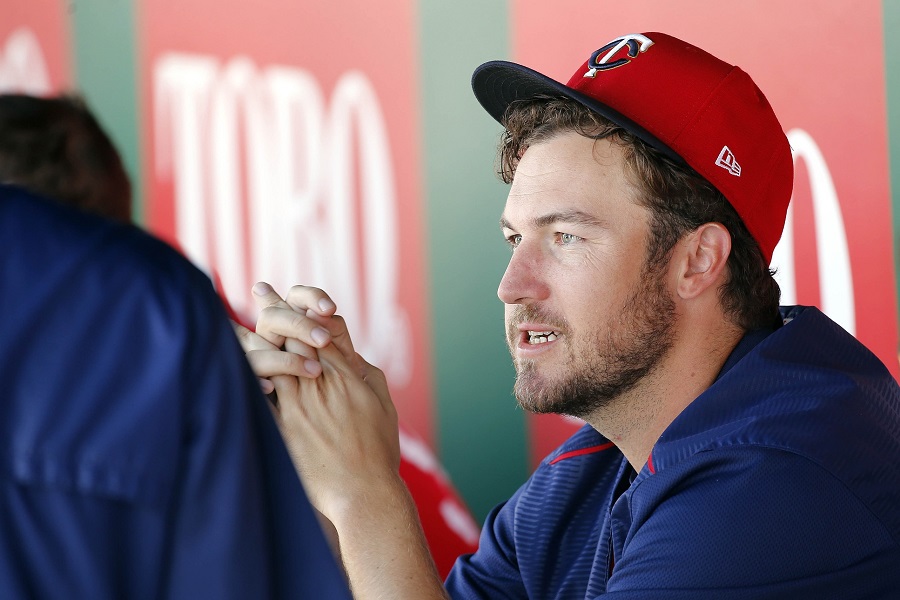 Mike Axisa did a great year-end writeup for River Ave Blues on Sabathia in which he highlighted three key ingredients that contributed to the new and improved CC: 1) His new knee brace; 2) His new cutter, and; 3) His sobriety. Here’s with how Sabathia explained his success to Newsday’s Anthony Rieber in August. “I have more choices. I can use my changeup, I can throw the backdoor slider, my cutter, obviously. I’m more well-equipped with what I have now.” Sabathia and Hughes are two different people and very different pitchers, but I think Twins fans can look to CC’s turnaround as a source of optimism. It sounds like Hughes is finally healthy and he’s working hard on evolving his pitching repertoire. Back in January, Nick Nelson was already warning people not to sleep on Hughes. Considering the amount of work Hughes has been able to get in this spring. I wasn’t ready to hop aboard the comeback train quite yet at that point, but after seeing the amount of work Hughes has been able to log this spring, I’m starting to come around. Yes, even despite some pretty ugly numbers, I’m encouraged about what we’ve seen from Hughes. He has a 6.55 ERA and has given up seven home runs in 22 official innings this spring, but he’s put in a ton of work on his breaking and offspeed pitches. Mike Berardino sent out a Tweet during Hughes’ most recent outing on Monday saying that of his final 24 pitches, Hughes threw just five fastballs. A few months ago I would have confidently bet against Hughes even being ready for the season. Yet here we are, just a few days from the opener, and one could argue he actually appears to be the starter most ready to go out and give the Twins 100 pitches. That’s remarkable considering what he’s been through since June. It’s easy to forget all of Hughes’ most recent injuries don’t have anything directly to do with his pitching arm. His 2016 season ended when a batted ball fractured his leg. He underwent surgery to remove a rib in order to correct thoracic outlet syndrome. That should help solve his issues with nerves and blood vessels that resulted in numbness in his pitching hand. But it’s not like there was anything wrong structurally with Hughes’ elbow or shoulder. Now before people try to have me committed, I’d just like to temper enthusiasm. Even after a successful reinvention, Sabathia is never going to get back to being a perennial Cy Young contender. The Phil Hughes of 2014 is gone, and he’s probably never coming back. Over the past two seasons Hughes has a 4.83 ERA and opposing hitters have teed off on him to the tune of a .296/.320/.502 line. He needs to improve, but coming off a season in which Twins starters posted a league-worst 5.39 ERA, the bar in which we measure Hughes’ success doesn’t need to be set at his 2014 levels. Sabathia’s turnaround was the result of him basically abandoning his four seamer and instead leaning on the cutter. Hughes already features a cutter, but he’s trying to develop his changeup this spring in the hopes that added wrinkle can be the magic ingredient that keeps hitters off balance. This much is for sure: even if he’s 100 percent healthy Hughes cannot continue to pitch the way he has the past two seasons and expect better results. I think we can conclude that his average fastball velocity probably isn’t getting back to over 93 mph like it was in 2014. The good news is he and Neil Allen appear to be well aware of that fact. Here’s what Allen told Mike Berardino earlier this month: “It’s hard for a veteran guy who’s been doing things one way for as many years as he has to change. But we’ve got to make him change.” To Hughes’ credit, he appears to be buying into the evolution. The results haven’t always pretty, but as he explained to La Velle E. Neal III after a recent rocky outing, spring training is the perfect time to tinker. “Obviously I’ve had my struggles the last couple of years and I’m not satisfied with just hoping things will get better because of surgery or something like that. I’m actively trying to become a better pitcher all around. There’s not a better time than spring training to start working on stuff and incorporate different things and get a feel for new pitches you are trying to work on.” Even if he gets off to a rough start, I’m hoping Hughes remains committed to reinventing himself. The Twins have him under contract for another $13.2 million over each of the next two seasons. It may not be this year, but sometime over the life of that contract the Twins are going to look to Hughes to be a contributing member of a winning rotation. I anticipate there to be some rough patches, but it makes all the sense in the world for the Twins to give Hughes every opportunity to solve the riddle of what he needs to do to reinvent himself. It may seem like a long shot, but if CC Sabathia can reignite his career, why not Phil Hughes?
 -
I get what you're saying, but it seems like most of the time closers don't throw in as many close games as top setup men. The following rant has more to do with closing in general than Kintzler/the Twins. Consider these usage numbers from the Orioles bullpen in close games last year. Percentage of games entered with the score either tied or within one run 46.5% Brad Brach (33/71) 43.9% Mychal Givens (29/66) 34.8% Zach Britton (24/69) And just for fun, a couple other data points on the best setup man and the guy who led the league in saves ... 50.7% Dellin Betances (37/73) 35.9% Jeurys Familia (28/78) Looks like 11 of Britton's 47 saves and 14 of Familia's 51 came when they entered with a three-run lead. No offense to relievers, but Eduardo Escobar should be able to get three outs before he gives up three runs more often than not. Britton had maybe the greatest season a relief pitcher has ever put together, but since he had the limitations of the closer role put on him, there were multiple other relievers even on his own team who threw more high-pressure innings. I know calling the closer role stupid at this point isn't very controversial, but I also don't think it's going anywhere. So my argument is I want the closer on my team to be the second or maybe even third best guy in the bullpen, freeing up my studs to come in for the most high-stress situations, no matter the inning. So the reason why I like Kintzler as closer on the Twins right now isn't because I think he's their best reliever. Actually, it's the complete opposite.
- 143 replies
-
- 7
-
-
- brandon kintzler
- matt belisle
- (and 3 more)
-
I actually kinda like Kintzler as closer. Out of 135 qualified relievers, he ranked 4th in BB% and 9th in GB% last season. A good amount of the time, you're just asking him to get three outs before he gives up three runs anyway. Looks like he entered the game with a three-run lead in eight of the 17 games he got saves in last year. My bigger concern is getting to the save situations in the first place. Who's the shutdown guy you can turn to to get a key strikeout with runners on in the 6th/7th/8th innings to keep the game in reach? Pressly, I guess? Will be interesting to see how things shake out.
- 143 replies
-
- 1
-
-
- brandon kintzler
- matt belisle
- (and 3 more)
-
I think bullpen usage will be the No. 1 thing to watch across the league this season. I'm hoping we see the return of the 100-inning reliever. The Reds have already been talking about using Iglesias and/or Lorenzen in that type of role. The Padres could lean on Brad Hand more this year and have him top 100. Even in a strict relief role, I'm hoping Jay exceeds his innings from last season (83 2/3), though I doubt that happens.
-
Biggest challenge I see here is having to add Park, Gimenez and Wimmers all to the 40-man roster. How do you see that playing out? Perkins to the 60-day DL, either O'Rourke or Boshers DFA'd and Tonkin DFA'd?
-
You're right, that has been an issue for Sano. But I'd imagine if that continues to be a problem we'll see him switch back to DH duties. The Big A is known as a pitcher's heaven, but it's worth noting Hector's ERA there (3.89) is slightly worse than his career mark (3.84). He's pitched very well there, but the difference isn't as huge as I would have guessed. I agree, home runs are probably always going to be a problem for Santiago. This is kinda the conclusion I've come to. I get it, he's new so we don't really have any emotional connection to him compared to a guy like Gibson. He also didn't win anybody over in that first month with the team, so he doesn't get the benefit of the doubt like Hughes. Good one I agree he could go either direction, but I disagree about his dependence on defense. A lot of the balls put in play against Santiago are actually easy outs. That's why BABIP is much lower on fly balls than grounders. With an outfield defense of Rosario, Buxton and Kepler, I'm hoping the majority of those fly balls turn into outs. A good number of them will go over the fence, but that's got nothing to do with defense. He kinda is what he is at this point. One would think it would benefit him to walk fewer batters, but if he pitches in the zone more it's likely he'll just get clobbered. I think Hector realizes he doesn't have the greatest stuff, and he can't just go out and challenge hitters, so he nibbles around. Works great when his command is on point, but if he's missing his spots it can get real ugly real fast.
-
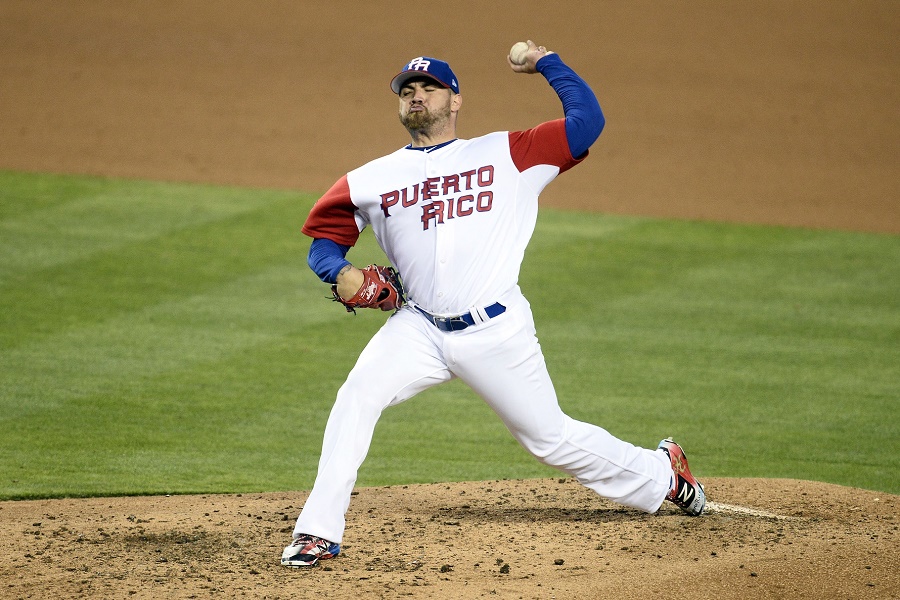 First impressions are important, but everyone deserves a second chance. Santiago got off to an absolutely rotten start with the Twins, but he ended the season pitching well, and there’s reason to believe he could in line for a bounce-back year. Over his final seven starts of 2016, Santiago posted a 3.19 ERA and 1.23 WHIP while limiting hitters to a .207/.294/.389 line. He also may stand to benefit from recent changes in hitting philosophy. Santiago may be the perfect antidote to the "elevate and celebrate" trend so many hitters seem to have (justifiably) gotten behind. Jeff Sullivan of FanGraphs recently wrote a piece about how pitchers could adjust to that trend. I don't want to give away the whole article (it's well worth your time), but in it Sullivan makes a pretty significant discovery: Homer rates are trending up, but only on pitches in the lower and middle third of the zone. The takeaway? "... conventional wisdom has said the best way to avoid a home run is to pitch down. In truth, at least now, it’s probably to pitch up. High fastballs are associated with homers, but they should really be associated with pop-ups and empty whiffs." It just so happens Santiago’s fastball is pretty nasty up in the zone. His career swinging strike percentage is 8.1%, but that number skyrockets on heaters in the upper third of the strike zone, according to data from BrooksBaseball. To put that into perspective, neither Clayton Kershaw nor Stephen Strasburg have a single spot on the grid where their fastballs have a whiff rate of 20 percent, let alone three. Taking a look at the zone profile of slugging percentage against Santiago over his career, you can see even more evidence that staying up in the zone may be advantageous. With a defense led by Byron “Death To Flying Things” Buxton, the Twins are expected to be above average in the outfield. The infield? Not so much, particularly on the left side. Toss in the fact that BABIP is much higher on ground balls than fly balls and it seems to make a lot of sense for Santiago to try to continue his extreme fly ball ways. He led all qualified pitchers with a 50 percent fly ball rate last season. The Castro bump You can’t talk about Twins pitching these days without dropping the F Word: Framing. What did you think I was gonna say? With the arrival of pitch-presenting guru Jason Castro, the hope is the entire Twins staff will take a step forward, but it seems nobody wants to divvy out any of that hope to Hector. Well, Castro's strengths should actually be particularly well-suited to benefit Santiago. Here's a look at Santiago’s called strike percentage against right-handed hitters from FanGraphs: It's very difficult for lefty pitchers to get that up and away corner called as a strike against right-handed batters, but if anybody's going to help it's Jason Castro. Parker Hageman recently wrote an excellent piece on Castro's framing, er ... proper receiving. In that article, was this graphic showing where Castro excelled in getting strikes called: Castro is a wizard at getting outside strikes called on right-handed batters. Dallas Keuchel, a lefty who has thrown primarily to Castro over his career, gets that high and outside pitch to right-handers called strike called 61 percent of the time. Even a small improvement for Santiago up from 54 percent could go a long way toward him becoming a more effective pitcher. There's also evidence that Santiago has benefited from working with other good pitch framers in the past. Here is a breakdown of all the catchers he’s pitched to for at least 50 innings, sorted by ERA: A.J. Pierzynski: 2.84 ERA, .639 OPS Geovany Soto: 3.00 ERA, .653 OPS Tyler Flowers: 3.41 ERA, .692 OPS Hank Conger: 3.47 ERA, .660 OPS Chris Iannetta: 3.74 ERA, .727 OPS Carlos Perez: 4.26 ERA, .766 OPS The only one of those guys who rated out as a below-average framer during his time as a teammate of Santiago’s, according to StatCorner, is Perez (-6.6 RAA over last two seasons). Santiago had the least amount of success working with Perez. Hmm ... Infield flys rule Another part of the “secret sauce” that has made Santiago a deceptively good pitcher his his ability to induce popups. Santiago ranked ninth among qualified pitchers with a 13.5 IFFB percentage last season. If a pitcher can get a high percentage of strikeouts and infield fly balls, good things are going to happen. Here's a look at how Twins pitchers have fared in those categories over the past five seasons: Santiago: 20.5 K% + 12.1 IFFB% = 32.6 Hughes: 18.6 + 11.5 = 30.1 Santana: 19.3 + 9.5 = 28.8 Gibson: 15.6 + 10.0 = 25.6 What about the WBC? Santiago has been away from the team, pitching in a long relief role for Puerto Rico, but it would appear he's still in good shape to be ready for the regular season. Here's a summary of all his appearances this spring: Feb. 28: 12 pitches March 5: 24 pitches March 11: 42 pitches March 14: 52 pitches March 20: 63 pitches Santiago is scheduled to start for the Twins Sunday. I’d imagine he can crank it up to 80 or so pitches in that start before flirting with 100 in his final warmup game of the spring. Having pitchers in the WBC isn't ideal, but Hector looks like should be ready to go. Plus, I imagine he may have learned a thing or two working with Yadier Molina the past few weeks, so maybe that time away from the team turns out to be beneficial. So, he’s Cy Santiago? I’d love to wrap this up by making some bold prediction that Hector is going to be the ace of the staff and lead the Twins rotation back to respectability, but that’s probably not going to happen. Santiago’s command is spotty, his strikeout rate dropped to a career low last season and you can expect him to still give up his share of walks and home runs. But can we be optimistic about Santiago delivering a solid season? Something in line with his career averages prior to last year? I think so, yet most Twins fans are trying to find ways to run him out of town. There’s a reason Hector has made it this far. When he was drafted in the 30th round, he threw a fastball and … nope, that’s it. One pitch. Over time, he evolved a diverse enough pitch mix to become an effective major league starter. He’s been making adjustments his entire career. It seems unwise to count him out now, especially if you have any faith in Derek Falvey’s ability to foster a pitching staff. Santiago is also hitting free agency for the first time at the end of the year, so there’s all the incentive in the world for him to spin out a good season. Hector Santiago’s time with the Minnesota Twins didn’t get off on the right foot, but he deserves another chance.
