



Ted Schwerzler
-
Posts
5,149 -
Joined
-
Last visited
Content Type
Profiles
News
Minnesota Twins Videos
2026 Minnesota Twins Top Prospects Ranking
2022 Minnesota Twins Draft Picks
Minnesota Twins Free Agent & Trade Rumors, Notes, & Tidbits
Guides & Resources
2023 Minnesota Twins Draft Picks
The Minnesota Twins Players Project
2024 Minnesota Twins Draft Picks
2025 Minnesota Twins Draft Pick Tracker
2026 Minnesota Twins Draft Tracker: Picks & Bonuses
Forums
Blogs
Events
Store
Downloads
Gallery
Everything posted by Ted Schwerzler
-
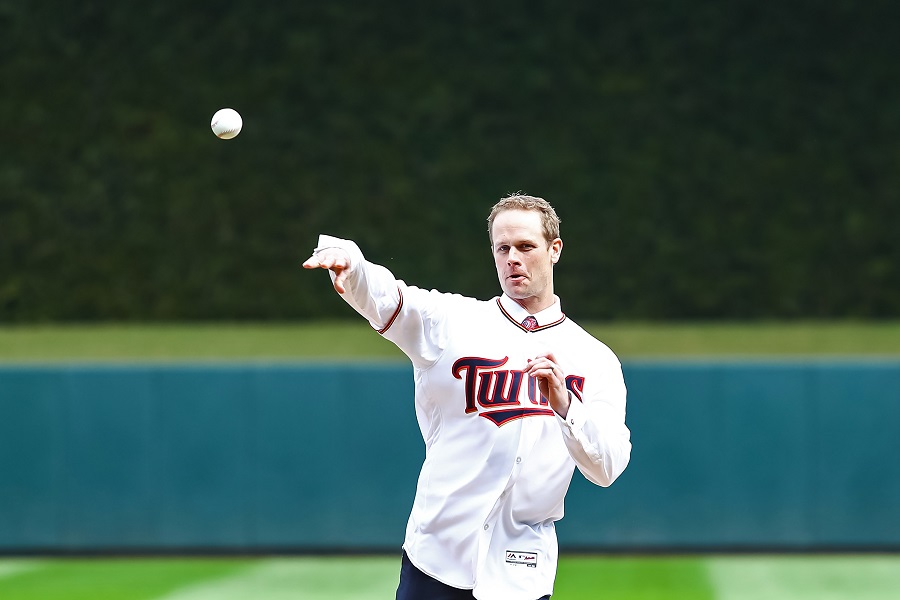 Partnering with Fan HQ, located at both Ridgedale and the Eden Prairie Center, the former Twins great is in search of new or gently used winter coats. The donated coats will be distributed throughout the Twin Cities by the Salvation Army Harbor Light Center and they have already begun handing out coats to those in need. Through the relationship with Fan HQ, Justin has decided to hand out free autographs in exchange for each coat donated. In case you can’t donate in person, a $33 donation can be made to the Salvation Army’s website to receive a signed photo through the mail. The coat drive began at the start of the decade, and since 2010 over 30,000 coats have been donated. This year the drive total will surpass Morneau’s playing number with the hometown team. 33,000 coats coming in over the course of the entire effort is no small feat, and the response has been significant to Justin. Making himself available for a quick conversation, Justin had plenty to add on the drive itself and the state of the Minnesota Twins. Twins Daily- Having been around cold weather climates your whole life, a coat drive seems natural. What specifically about giving back and providing for others is important to you? What has this coat drive meant to you personally? Justin Morneau- At some point we all need help, and this is a simple gesture that can change, or even save, someone’s life. The most amazing thing to me about the coat drive is the people who put in so much time and effort to collect hundreds and even thousands of coats. All coats are appreciated, but the time and effort that people put in for the benefit of others is the type of thing that the world could use a little more of. TD- Minneapolis has been a part of your life for over a decade. What about the city and the people inspire you to use your platform to help those in need? JM- I feel at home in Minnesota and the people have made it that way for me. I tell people all the time, we could live almost anywhere, but we chose to live here. In a place that has been so good to me and my family, the coat drive seems like a small way to say thank you to people who may be going through a tough time and could use someone to help lift them up. TD- The coat drive has been a yearly thing. Where did the idea come from and what has been some of your favorite memories over the years? JM- The coat drive originated out of necessity, not sure who’s idea it was in the first place. My favorite memory of the coat drive has been witnessing a young man named Ben set up coat drive donation boxes all over town and drive with his parents to collect all the coats. He was 7 or 8 when he started doing this. To think of someone so young being able to do something for others is an inspiration for me and should act as one for others as well. TD- Switching to baseball, how do you feel about where the Twins are heading into 2020? Obviously coming off a great season, how serious of a threat do you see them in the immediate future? JM- I’m excited to continue to watch the development of this Twins team. There were so many big years from guys that didn’t have those expectations going in. Garver is one of those guys that comes to mind; he had a great year and I’m looking forward to seeing how he follows that up. I’m also looking forward to the Twins vs. White sox becoming a rivalry again. Chicago is going to be better than people think and those were always series that I looked forward to playing. TD- Finally, how have you enjoyed taking in the game from the booth? Personally, you’ve become one of my favorite broadcasters for how you combine many different aspects of the game. Are you looking for it to be a more expansive role? JM- I have enjoyed being in the booth far more than I ever could’ve imagined. I like being around the game and the preparation that goes into a broadcast. Talking baseball for a few hours on TV with possibly the biggest Twins fan of all in Dick [bremer] has been something that I really look forward to. There will not be anything that will ever replace the feeling of stepping in the batter’s box or running out of the dugout onto the field, but broadcasting does give me an adrenaline rush that I miss from my playing days. I’m looking forward to doing a few more games next season, while still being able to spend time with my family during the summer. For more information regarding the coat drive call Fan HQ at 952-545-6460 or visit JustinMorneau.com. Thanks again to Justin and Fan HQ for the discussion and setting up such a positive event.
 -
Although we have grown accustomed to slower offseason activity when it comes to Major League Baseball free agency, that doesn't make the reality any more exciting. Sure, the Minnesota Twins have spent $30 million already in retaining Nelson Cruz and Jake Odorizzi, but the true free agents are still out there. Before adding new talent to Twins Territory the franchise gave fans something else they've been clamoring for over the past few years; the baby blue's. In 2020 Majestic is being replaced as the official Major League Baseball jersey provider. Initially Under Armour was set to take over the contract, but that deal fell through and now the Maryland based company has a whole different set of problems on their hands. At any rate, it's always been Nike that has pushed the boundaries and set the standard in trends. Before Minnesota made any moves, we got to see this in action. First up it was the San Diego Padres unveiling some new threads. Brown has made cameo appearances on their Swinging Friars jerseys for some time, but it is in 2020 that we'll see it in full force. I remember seeing these come across my timeline on Twitter and thinking that Nike was making a very nice first step. When news leaked that the Milwaukee Brewers would be going back to the ball-in-glove logo for the 2020 season it only made sense there'd be a new configuration. I'm a big fan of the alternate logo as well, depicting an "M" within the state of Wisconsin outline. The absolute highlight of that reveal though was the navy blue offering that set the stage ablaze. Not to be outdone by their eastern neighbors, the Minnesota Twins have decided to bring back the baby blue alternates for the upcoming season. Arguably the most-talked about jersey, and the one reminiscent of everyone from Kirby Puckett to Kent Hrberk, they'll be worn early and often in the upcoming season. Officially a home and road alternate, there is no stipulations as to where the new uniforms can be donned. On top of the colorway itself, the Twins are including patches on both sleeves. Minnie and Paul return to the jersey, as well as a 60 year anniversary logo. Both are very well done and should provide some added flair to a product that will likely fly off the shelves at 1 Twins Way. Although the cream alternates were a fan favorite as well, there's nothing more Minnesota Twins baseball than the baby blues. There has been a slight amount of pushback regarding the chest Swoosh, as opposed to the sleeve Majestic logo. As someone generally opposed to jersey advertisements, this seems hollow at best. The Swoosh is both iconic and aesthetically pleasing. Nike has and will continue to put the right foot forward when it comes to brand design, and there's certainly a company in New York (Hi, Topps!) that will enjoy another uniform patch. I don't think Nike will be controlling the Pohlad's pocketbook any time soon, but here's to hoping the jerseys are just the first of many new additions to debut at Target Field in the year ahead. For more from Off The Baggy, click here. Follow @tlschwerz
- 4 comments
-
- 1
-

-
- minnesota twins
- san diego padres
- (and 1 more)
-
My belief for months has been that the Twins will use two distinct avenues to add pitching this offseason. Derek Falvey and Thad Levine have talked about their desire to add impact arms, and while free agency is a tool, so is the trade market. The good news is that they’re great at exploiting the latter.Jake Odorizzi didn’t experience much of free agency, having accepted the Twins qualifying offer of $17.8 million. Minnesota immediately secured one of the better available arms and did so with a high level of familiarity. Now they still should be attempting to sign one of the top free agent arms available, but with a plethora of prospects at their disposal, swinging a trade makes a ton of sense. When the club made five additions to their 40-man roster, protecting those players from being subject to the Rule 5 draft, there was a handful of takeaways regarding the names in play. Four of the five guys added were acquired via trade in the last calendar year. Getting significant value from veterans like Brian Dozier, Eduardo Escobar, Ryan Pressly, and Fernando Rodney only solidified how well the front office had done in identifying talent. Although they parted with good big leaguers, they did so while outside of a competitive window and by nailing the return. It’s absolutely true that not all prospects pan out, and development isn’t linear, but realizing these commodities needing to be protected and were on a big-league trajectory less than a year later is a significant development. It’s one thing to acquire additional team control or roster flexibility but doing so while also making sure to identify usable and high-performing assets is not an easy task. We may have known the return was strong through production on the farm over the last year, but Wednesday night’s decisions solidified it for us. Going forward, the acumen displayed by Falvey and Levine will be integral to the next step Minnesota takes. On the free agent market, the expectation is that both Gerrit Cole and Stephen Strasburg would have little interest in the Twins. Zack Wheeler and Madison Bumgarner are hardly slouches, but through a player swap, the front office can hope to identify their own version of an ace. Regardless of the name on the back of the jersey, any top tier arm is going to have a league’s worth of options on a yearly basis. When making a deal with another club, it’s a one-on-one discussion that revolves around player development and the knowledge you possess in both what you currently have and who you hope to acquire. At this point in Minnesota’s competitive arc they aren’t in a position to piece out veterans for prospects. Although a big leaguer could be moved, the emphasis will be on a return that strengthens the major league roster. Finding assets that improve postseason posturing is the plan and doing so while mixing the ideal exchange is something every Twins fan should deem the front office capable of. There was a time that the Twins made reactionary moves to trade for positional needs or up-and-coming prospects. Now the Twins should be seen as an organization that can both identify and execute swaps that both help and don’t substantially hurt the overall goals of the club. I don’t foresee Royce Lewis or Alex Kirilloff going anywhere in the immediate future, but you can bank on Minnesota’s brain trust having an iron clad blueprint when working out any deal on the horizon. Knowing how important and valuable that avenue of asset addition is, it’s a skill that puts another feather in the cap of a front office responsible for an exceptional turnaround. More from Twins Daily Jhoan Duran Headlines Twins Roster Additions Should the Twins Look to Add to the Bullpen? Every Team Wants Zack Wheeler Click here to view the article
-
 Jake Odorizzi didn’t experience much of free agency, having accepted the Twins qualifying offer of $17.8 million. Minnesota immediately secured one of the better available arms and did so with a high level of familiarity. Now they still should be attempting to sign one of the top free agent arms available, but with a plethora of prospects at their disposal, swinging a trade makes a ton of sense. https://twitter.com/jeremynygaard/status/1197322836307857408 When the club made five additions to their 40-man roster, protecting those players from being subject to the Rule 5 draft, there was a handful of takeaways regarding the names in play. Four of the five guys added were acquired via trade in the last calendar year. Getting significant value from veterans like Brian Dozier, Eduardo Escobar, Ryan Pressly, and Fernando Rodney only solidified how well the front office had done in identifying talent. Although they parted with good big leaguers, they did so while outside of a competitive window and by nailing the return. It’s absolutely true that not all prospects pan out, and development isn’t linear, but realizing these commodities needing to be protected and were on a big-league trajectory less than a year later is a significant development. It’s one thing to acquire additional team control or roster flexibility but doing so while also making sure to identify usable and high-performing assets is not an easy task. We may have known the return was strong through production on the farm over the last year, but Wednesday night’s decisions solidified it for us. Going forward, the acumen displayed by Falvey and Levine will be integral to the next step Minnesota takes. On the free agent market, the expectation is that both Gerrit Cole and Stephen Strasburg would have little interest in the Twins. Zack Wheeler and Madison Bumgarner are hardly slouches, but through a player swap, the front office can hope to identify their own version of an ace. Regardless of the name on the back of the jersey, any top tier arm is going to have a league’s worth of options on a yearly basis. When making a deal with another club, it’s a one-on-one discussion that revolves around player development and the knowledge you possess in both what you currently have and who you hope to acquire. At this point in Minnesota’s competitive arc they aren’t in a position to piece out veterans for prospects. Although a big leaguer could be moved, the emphasis will be on a return that strengthens the major league roster. Finding assets that improve postseason posturing is the plan and doing so while mixing the ideal exchange is something every Twins fan should deem the front office capable of. There was a time that the Twins made reactionary moves to trade for positional needs or up-and-coming prospects. Now the Twins should be seen as an organization that can both identify and execute swaps that both help and don’t substantially hurt the overall goals of the club. I don’t foresee Royce Lewis or Alex Kirilloff going anywhere in the immediate future, but you can bank on Minnesota’s brain trust having an iron clad blueprint when working out any deal on the horizon. Knowing how important and valuable that avenue of asset addition is, it’s a skill that puts another feather in the cap of a front office responsible for an exceptional turnaround. More from Twins Daily Jhoan Duran Headlines Twins Roster Additions Should the Twins Look to Add to the Bullpen? Every Team Wants Zack Wheeler
 -
Front Page: Was Luis Arraez for Real in 2019?
Ted Schwerzler replied to Ted Schwerzler 's topic in Twins Daily Front Page News
I'm not sure I agree with this. He almost had an even 1/3 split across the board. There were times he was shifted and he intentionally went down the left field line. I don't see Arraez ever needing to hit more than 5 HRs a year to be successful. As a doubles and OBP guy, he can be an absolute menace. -
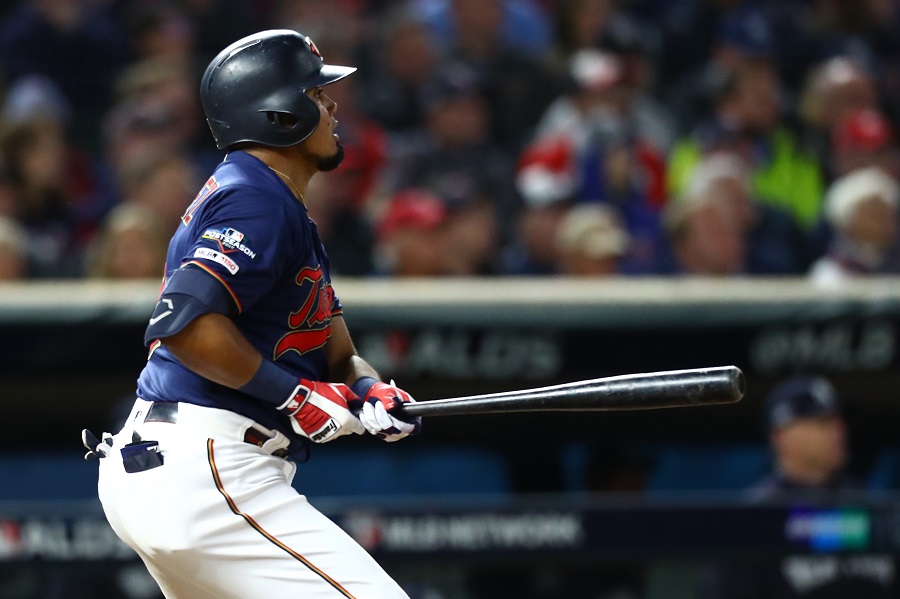
Last winter the Minnesota Twins inked former All-Star Jonathan Schoop to a one-year, $7.5 million pact. He ended up playing in 121 games but was eventually overtaken by Luis Arraez for the starting role. After Arraez looked the part of Tony Gwynn reincarnate, it’s worth wondering what his encore will look like.Playing in 92 games for the Twins in 2019, Arraez posted a .334/.399/.439 slash line. He ripped 20 doubles, notched a career best four homers, and showed plate discipline to the tune of a 29/36 K/BB. Throughout his six-year professional career Arraez has earned the calling card of a tough out that has hit at every level. He’s never owned a batting average south of .300 over the course of a full season, and his .298 tally in 48 games at Double-A Chattanooga was the low-water snapshot. Initially promoted in somewhat of a surprise move, Arraez quickly acclimated himself to the starting lineup. As the Twins experienced injuries through their lineup, Luis added value wherever he was slotted in. Starting most of his games in the six hole, he was able to provide solid at-bats behind Minnesota’s big boppers. With Max Kepler shelved for a time, he also grabbed 13 starts in the leadoff spot, posting a .339 average ther. Obviously, a guy with so little power is never going to substantially benefit from home run-inducing changes to the baseball. That said, finding out whether the Twins have the next 3,000 hit candidate or a guy primed for regression is worth investigating. Often times a lofty average can be picked apart through the BABIP lens. Fortunately for the Twins second basemen, his BABIP checked in at .355 (just 21 points higher than his .334 bating avg). A 34.7% hard hit rate is somewhere among the upper tier of modesty, and the 29.4% line drive rate is suggestive of a guy who knows his strength. 29.1% of batted balls registering as “fly” doesn’t hurt someone who doesn’t leave the yard, and the 41.5% ground ball rate isn’t egregiously negative either. Everything about the batted ball profile suggests that we aren’t getting any significant amount of luck, and then we take a look at the plate discipline. This is where Arraez really shines, and how he’ll continue to see success going forward. From that first at-bat against Edwin Diaz on, the Venezuelan prospect has dictated the action. He posted just a 2.8% whiff rate and chased only 26.9% of the time. No one in baseball (min 350 PA) missed less and the 93.3% contact rate also topped the charts. As we’ve seen with his Twins teammate Willians Astudillo, there’s more to a great contact hitter than plate coverage. The goal isn’t simply to impact the ball, but do so with the optimal pitch, in a location that you can do something with it. Unlike the man fondly known as The Turtle, Arraez can discern which pitches are worth his attention, and then also adequately attack them. He combines plate coverage with discipline and recognition, making the trio a truly lethal combination. In just over 360 career games at the minor league level Luis Arraez posted a .331 average. He ended up trumping that tally with a .334 debut at the major league level. His 109 hits in 92 games would put him near the 200 mark over a full season, and we should get every opportunity to see that in action during 2020. We may never see Arraez hit four homers in a season again, but betting against him remaining in constant contention for a batting title seems foolish at best. Click here to view the article
-
 Playing in 92 games for the Twins in 2019, Arraez posted a .334/.399/.439 slash line. He ripped 20 doubles, notched a career best four homers, and showed plate discipline to the tune of a 29/36 K/BB. Throughout his six-year professional career Arraez has earned the calling card of a tough out that has hit at every level. He’s never owned a batting average south of .300 over the course of a full season, and his .298 tally in 48 games at Double-A Chattanooga was the low-water snapshot. Initially promoted in somewhat of a surprise move, Arraez quickly acclimated himself to the starting lineup. As the Twins experienced injuries through their lineup, Luis added value wherever he was slotted in. Starting most of his games in the six hole, he was able to provide solid at-bats behind Minnesota’s big boppers. With Max Kepler shelved for a time, he also grabbed 13 starts in the leadoff spot, posting a .339 average ther. Obviously, a guy with so little power is never going to substantially benefit from home run-inducing changes to the baseball. That said, finding out whether the Twins have the next 3,000 hit candidate or a guy primed for regression is worth investigating. Often times a lofty average can be picked apart through the BABIP lens. Fortunately for the Twins second basemen, his BABIP checked in at .355 (just 21 points higher than his .334 bating avg). A 34.7% hard hit rate is somewhere among the upper tier of modesty, and the 29.4% line drive rate is suggestive of a guy who knows his strength. 29.1% of batted balls registering as “fly” doesn’t hurt someone who doesn’t leave the yard, and the 41.5% ground ball rate isn’t egregiously negative either. Everything about the batted ball profile suggests that we aren’t getting any significant amount of luck, and then we take a look at the plate discipline. This is where Arraez really shines, and how he’ll continue to see success going forward. From that first at-bat against Edwin Diaz on, the Venezuelan prospect has dictated the action. He posted just a 2.8% whiff rate and chased only 26.9% of the time. No one in baseball (min 350 PA) missed less and the 93.3% contact rate also topped the charts. As we’ve seen with his Twins teammate Willians Astudillo, there’s more to a great contact hitter than plate coverage. The goal isn’t simply to impact the ball, but do so with the optimal pitch, in a location that you can do something with it. Unlike the man fondly known as The Turtle, Arraez can discern which pitches are worth his attention, and then also adequately attack them. He combines plate coverage with discipline and recognition, making the trio a truly lethal combination. In just over 360 career games at the minor league level Luis Arraez posted a .331 average. He ended up trumping that tally with a .334 debut at the major league level. His 109 hits in 92 games would put him near the 200 mark over a full season, and we should get every opportunity to see that in action during 2020. We may never see Arraez hit four homers in a season again, but betting against him remaining in constant contention for a batting title seems foolish at best.
 -
Did Schoop Work for the 2019 Twins?
Ted Schwerzler commented on Ted Schwerzler 's blog entry in Off The Baggy
It seems that I didn't do a great job of outlining my positioning and this is a solid summary. Schoop didn't distance himself from the low-OBP guy he's always been, and his offense wasn't great overall. He did hold down the position until a long-term suitor emerged, and provided plenty of value on a one-year deal.- 16 comments
-
- 1
-
-
- minnesota twins
- jonathan schoop
- (and 1 more)
-
Did Schoop Work for the 2019 Twins?
Ted Schwerzler commented on Ted Schwerzler 's blog entry in Off The Baggy
It's also a full percentage higher than where he was at in 2018. Garver's rise was helped from the ball no doubt, but also in systemic changes he made to his swing, rotation, and launch angle. Without looking into the output from Schoop's batted ball trajectories year over year, I'll wear your criticism. Being uninterested in a guy lacking any OBP prowess was where the initial stance came from, and a reality that ultimately lost him his starting role... -
Did Schoop Work for the 2019 Twins?
Ted Schwerzler commented on Ted Schwerzler 's blog entry in Off The Baggy
I'm not sure where that comes from in relation to this piece? Also, Minnesota already has their starting 2B.- 16 comments
-
- 3
-
-
- minnesota twins
- jonathan schoop
- (and 1 more)
-
In early December 2018 the Minnesota Twins found their replacement for Brian Dozier. With the fan-favorite having been traded to the Los Angeles Dodgers prior to his free agency, Derek Falvey and Thad Levine needed to find another second basemen. Replacing Dozier’s pop wouldn’t be easy, but they tabbed a former All Star to do so when they inked Jonathan Schoop to a one-year deal. Now with the season behind us we can evaluate how it turned out. At the time of his signing I wasn’t too terribly interested in the pact. Dozier provided a significant amount of power, but also displayed strong on-base skills. For a Twins team also losing Joe Mauer, getting guys that could fill the basepaths seemed like a must. Schoop owned just a career .294 OBP and he was coming off a poor .682 OPS. After being dealt from the Orioles to the Brewers for the stretch run, things got even worse. Obviously, it was the goal of Minnesota to rekindle the 25-year-old All Star that picked up MVP votes in 2017. He’d played all but two games from 2016-2017 and could be counted on as an everyday contributor. Although range wasn’t his greatest asset at second base, there was a howitzer attached to his shoulder and the arm would help to substantially upgrade the defense that Dozier brought to the position for the Twins. We didn’t know that Major League Baseball was going to juice the pill for 2019, but it helped a guy like Schoop to launch dingers at a relatively significant rate. With so many power hitters around him in the lineup however, his skillset became somewhat redundant and the emergence of Luis Arraez made him replaceable. The 23 longballs in just 121 games was plenty respectable, and the .777 OPS checked in as the second highest mark over the course of a full big-league season. At the end of the day though, it was the .304 OBP that likely did him in. The bulk of his 2019 was spent batting in the final three spots of the lineup. Even outside of run production lineup positioning, Schoop became a punchline due to the times in which he would come through. Late and close situations saw him post just a .658 OPS while he owned just a .618 OPS with runners in scoring position and two outs. By leverage, he was at his best (.813 OPS) in the lowest stress scenarios. If you needed a hollow home run it seemed that Schoop became a lock. Having just turned 28 there is plenty of runway ahead for the Curacao native. It obviously won’t be with the Twins, and I’m not entirely sure he’s rebuilt his value on the back of his 2019 exploits. Power at second base isn’t exactly guaranteed, but the sport has also shifted much more towards an on-base production model. It was that skill Minnesota appeared to need most, and ultimately that downfall that led to him being replaced. There’s no reason to categorize the $7.5 million Minnesota handed to Schoop as foolish, but I think we can effectively say it worked out as planned. That’s a bit more than you’d like for a replaceable asset, but given the dollars paid to Arraez it should be considered as a wash. Minnesota’s offense was otherworldly in 2019, and whatever Schoop provided became a relative footnote. For more from Off The Baggy, click here. Follow @tlschwerz
- 16 comments
-
- 3
-
-
- minnesota twins
- jonathan schoop
- (and 1 more)
-
When the Minnesota Twins moved on from Terry Ryan and the set up that he’d built within the organization they aimed for a culture shift. The goal was to bring the franchise into the new age of baseball and become a leader rather than a follower. Now being there, Derek Falvey and Thad Levine are in the throws of needing to protect it.Initially saddled with a holdover manager, Falvey and Levine weren’t going to be able to make their mark from the start. They waded in the shallow end and allowed an acclimation process of sorts to take place. Prior to the 2019 season they jumped right off the high dive straight into the deep end. Regardless of the fanfare created by roster reinforcements, it was the infrastructure that seemed so valuable last winter. Having spent time down in Fort Myers for Spring Training, it was immediately evident that this collection was going to do things differently. The Twins can’t change how they’re viewed by potential free agents overnight, but they can position themselves as an industry leader other teams will quickly want to emulate. The former carries a significant monetary cost while the latter is generally accompanied by a level of commitment towards a strong belief in process. Over the past year Minnesota’s front office has reinvigorated the organization to levels it’s likely never seen. Without having yet signed any free agents, there’s been a flurry of activity from the Twins ranks this offseason. Something like five coaches will have been poached when the dust settles, and a five-year extension will have been handed out to the two head men. Those two combining realities are the defining moments of where Minnesota is now, and how they’ll want to operate in the future. Talent has been plucked from the organization to take promotions elsewhere, while the men who picked them for those roles are now tasked with getting it right again. There’s no denying that the Twins have a substantial amount of money to spend this offseason, and coming off a 101-win season, a responsibility to write those checks. What they also must get right is the replacements for the now goner developers of that talent, and a blueprint that continues to make the overall infrastructure an environment conducive of producing success. Minnesota should be looking to add everyone from Gerrit Cole to Anthony Rendon on the diamond over the next handful of months. Jim Pohlad also realizes that it’s equally important Falvey finds the next James Rowson, Jeremy Hefner, or Tanner Swanson as well. Coming over from an Indians organization that generated some steam as being progressive, the Twins head man has left no stone unturned. Plucking a pitching coach from the collegiate ranks and adding support staff based on success rather than tenure, it’s been in the advancements Minnesota has made that ultimately generated hot commodities for other big-league clubs. I’ll be the first to admit disappointment if a certain payroll threshold isn’t reached before Opening Day in 2020. I also believe that the Twins front office duo of Falvey and Levine are the best equipped to construct a process-oriented blueprint both on the field and off it. The Twins seem to believe this as well, evidenced by the lengthy pact made to the tandem, and that’s a very key development. With a window open, and execution at the forefront, I’m not sure we’ve ever had reason to feel so confident in a Minnesota Twins management group at any point in history. It will be on Derek Falvey and Thad Levine to hit on those beliefs, but for now, there’s no stopping this train. More from Twins Daily: Should the Twins Be In on Cole Hamels? Multiple Teams Are Interested in Kyle Gibson. Should the Twins Be? Quick Hitter: New Rules for 2020 Click here to view the article
-
 Initially saddled with a holdover manager, Falvey and Levine weren’t going to be able to make their mark from the start. They waded in the shallow end and allowed an acclimation process of sorts to take place. Prior to the 2019 season they jumped right off the high dive straight into the deep end. Regardless of the fanfare created by roster reinforcements, it was the infrastructure that seemed so valuable last winter. Having spent time down in Fort Myers for Spring Training, it was immediately evident that this collection was going to do things differently. The Twins can’t change how they’re viewed by potential free agents overnight, but they can position themselves as an industry leader other teams will quickly want to emulate. The former carries a significant monetary cost while the latter is generally accompanied by a level of commitment towards a strong belief in process. Over the past year Minnesota’s front office has reinvigorated the organization to levels it’s likely never seen. Without having yet signed any free agents, there’s been a flurry of activity from the Twins ranks this offseason. Something like five coaches will have been poached when the dust settles, and a five-year extension will have been handed out to the two head men. Those two combining realities are the defining moments of where Minnesota is now, and how they’ll want to operate in the future. Talent has been plucked from the organization to take promotions elsewhere, while the men who picked them for those roles are now tasked with getting it right again. There’s no denying that the Twins have a substantial amount of money to spend this offseason, and coming off a 101-win season, a responsibility to write those checks. What they also must get right is the replacements for the now goner developers of that talent, and a blueprint that continues to make the overall infrastructure an environment conducive of producing success. Minnesota should be looking to add everyone from Gerrit Cole to Anthony Rendon on the diamond over the next handful of months. Jim Pohlad also realizes that it’s equally important Falvey finds the next James Rowson, Jeremy Hefner, or Tanner Swanson as well. Coming over from an Indians organization that generated some steam as being progressive, the Twins head man has left no stone unturned. Plucking a pitching coach from the collegiate ranks and adding support staff based on success rather than tenure, it’s been in the advancements Minnesota has made that ultimately generated hot commodities for other big-league clubs. I’ll be the first to admit disappointment if a certain payroll threshold isn’t reached before Opening Day in 2020. I also believe that the Twins front office duo of Falvey and Levine are the best equipped to construct a process-oriented blueprint both on the field and off it. The Twins seem to believe this as well, evidenced by the lengthy pact made to the tandem, and that’s a very key development. With a window open, and execution at the forefront, I’m not sure we’ve ever had reason to feel so confident in a Minnesota Twins management group at any point in history. It will be on Derek Falvey and Thad Levine to hit on those beliefs, but for now, there’s no stopping this train. More from Twins Daily: Should the Twins Be In on Cole Hamels? Multiple Teams Are Interested in Kyle Gibson. Should the Twins Be? Quick Hitter: New Rules for 2020
 -
Prior to the 4pm deadline to decide on the qualifying offer presented to Jake Odorizzi by the Minnesota Twins, a decision was made. The 2019 All Star made the choice to return to Wes Johnson and Rocco Badelli’s staff on a one-year pact. This one will be lucrative at $17.8 million, but in the end all sides win. In 2020 Odorizzi will be just 30 years old and is coming off a career year. He had a mechanics breakdown and blister issue mid-season for the Twins but bookended that performance with excellence. He was tied to draft pick compensation in this cycle, and though that would have worked in Minnesota’s favor, it wasn’t going to earn him any favors in the form of a larger paycheck. Odorizzi could have returned to Minnesota on a multi-year deal (or went elsewhere) but instead is banking on himself with time to cash in. The Twins had only Jose Berrios under team control for 2020 among rotation options. Needing to beef up the unit, the front office immediately suggested that they would be targeting impact pitching this offseason. Bringing back an All-Star you’re familiar with is hardly a bad place to start. Knowing that they can also build off this foundation is more a relief than having four uncertainties. I still believe that the Twins need to sign someone better than Berrios and Odorizzi, while acquiring a second arm with a value able to slot in between them. The open market has ample arms that can be paid to top the rotation, and dangling pieces to acquire that 3rd starter makes a whole lot of sense. When the dust settles, we’ll know how this decision worked out for both sides. Odorizzi is hoping to turn a second strong performance into a three or four year deal that would push over $50 million. If he’s able to put up a repeat performance working with coaches he’s grown accustomed to, then there’s no denying the payday will come. Given the spending flexibility Minnesota has, even the large AAV does little to hurt their overall building blueprint for 2020. The player is taking all the risk here, and both sides come up looking rosy. Welcome back to Twins Territory Jake, it’s like you never left. For more from Off The Baggy, click here. Follow @tlschwerz
-
As a massive proponent of Gold Gloves being a farce (and Gordon didn't deserve his this year over Brantley) the characterization here is incorrect. I definitely made sure to double check before offering that. He was worth 1 DRS and 3.2 UZR. That's above average. He was at 13 DRS last year. Eddie Rosario was an abomination statistically in 2019.
- 53 replies
-
- 1
-
-
- minnesota twins
- anthony rendon
- (and 3 more)
-
Mike Minor is a rental and had a strong year as a SP with a lackluster FIP. Not sure why the Reds would move Gray after just acquiring him, and pairing Bauer in the rotation.
- 53 replies
-
- 2
-
-
- minnesota twins
- anthony rendon
- (and 3 more)
-
What this assumes is that everything is linear. In a best case scenario, Lewis is up in September probably. He struggled at Double-A last year, will go there again, and he'll have new challenges. I think Royce is a star, but you banking on him to be that effective for a team coming off 100 wins is as foolish as anyone thinking the White Sox are immediate contenders because they have prospects. The whole premise for signing Rendon is that you're adding top tier talent wherever you can. The goal absolutely should be to sign Cole or Starsburg. The likelihood is that even if the Twins offered them $40MM AAV, they still have preferred destinations elsewhere. If Rendon is going to the highest bidder, make it be you, and that helps to raise the overall talent level of the roster.
- 53 replies
-
- 1
-
-
- minnesota twins
- anthony rendon
- (and 3 more)
-
Couple of things I just wanted to lay out: Dollars were taken from the Offseason Handbook. I believe those are somewhat crowdsourced between the authors. I struggled with the Alex Gordon acquisition. I hadn't heard the bit about playing for the Royals. What I was trying to accomplish there is a replaceable defense first player. I like Corey Dickerson a lot, but think he gets a two year deal and starts somewhere. Adam Jones could make some sense, but that defense has fallen off. I think one of Minnesota's corner OF prospects steps up sooner rather than later, but they can't be relied upon to start the year. With the time Buxton missed, it'd really be great to have the defensive acumen added as well. Also considered Cameron Maybin, who I'm not sure has any chance to repeat 2019 offensively.
- 53 replies
-
- 1
-
-
- minnesota twins
- anthony rendon
- (and 3 more)
-
There’s no denying that the Minnesota Twins greatest need this offseason is pitching. The front office has stated their focus will be on arms defined as “impact” and filling out a rotation that’s virtually empty is a must. With the premiere arms having plenty of suitors, the Twins could turn to what they did best in 2019.Every team in baseball should be salivating at the thought of adding either Gerrit Cole or Stephen Strasburg to their starting rotation. Young aces simply don’t hit the free agent market often, and when they do the costs will be substantial. Minnesota can afford either (and even both), but I’d expect Cole to look at the West Coast or New York, while Strasburg returns to D.C. with on a hefty raise. That doesn’t mean all is lost for the Twins, but how they react is where this narrative begins. Going into 2019 the front office suggested a wait and see approach that was built on the premise of Byron Buxton and Miguel Sano establishing their value. The former looks the part of a star (when healthy), and the latter showed he’s one of the best power hitters in the game. Neither of them was a linchpin in the 101-win season though, and Rocco Baldelli got strong performance by utilizing the full sum of his parts. Buxton and Sano can be key cogs, but the winning was as much alongside them as opposed to being because of them. Now with an established infrastructure of developmental talent, a big-league roster capable of competing with anyone, and opportunity as abundant as it may ever be, it’s time to follow in the footsteps of recent World Series winners and begin to capitalize on the window. I’d hardly be shocked if the win total takes a slight step backwards, but the goal is an extended presence into October. Here’s how that happens in 2020: 1. Cron is the odd man out in arbitration deals. After a nagging thumb injury in 2019, Cron should be all systems go in 2020. He was great before the thumb issue flared up, and I certainly have no problem with the Twins offering him an arbitration deal. Unfortunately, this projection includes a roster crunch, so C.J. becomes the lone arbitration-eligible player to not be tendered a new deal. 2. Make Anthony Rendon the big splash paying him $33 million for eight years. Last offseason I liked the idea of Josh Donaldson coming to the Twins. He was a former superstar and could be had at a discount. Going home to Georgia he had a very good bounce-back year. With plenty of money to spend, and the top two pitchers likely off the board, the next superstar opportunity is a better one. Anthony Rendon is an MVP-level talent, has been incredibly consistent, and joins one of the best lineups in baseball. I’m not sure Miguel Sano needs to move across the diamond yet, but there’s no reason this isn’t a good enough opportunity for him to do so. 3. Sign Zack Wheeler to a four-year, $72 million contract. At the top of Minnesota’s impact pitching list should be Zack Wheeler. Hiss secondary numbers are drool-inducing, and he’s already got plenty of velocity for Wes Johnson to work with. Allowing the Twins pitching coach to pull more from the 29-year-old and Baldelli would have a very impressive one-two punch at the top of his rotation. 4. Sign Jake Odorizzi to a three-year, $36 million contract. The Twins smartly handed Odorizzi a qualifying offer. He could take that and return at $17.8 million which would be just fine. It may also ward off some competition for his services, keeping the bidding on a longer-term deal. Two-years doesn’t seem enticing for the former Rays hurler if the alternative is a gaudy one-year pact, so go three and bolster the middle of the group. 5. Trade Eddie Rosario and Jhoan Duran to the Colorado Rockies for Jon Gray. Under team control for two more years, the former third overall pick is where I’m setting my sights in a swap for the Minnesota outfielder. Rosario can probably hit a boatload of bombas in the Rockies, while Gray can be expected to build on a career year in 2019. His FIP has suggested there’s more than the ERA has told us for a few years, and while the walks could be reduced, the strikeout stuff is going to play anywhere. At worst you’ve got a number four starter, and the upside is a guy to contend with Wheeler and Jose Berrios at the top. Duran was the main piece in the Eduardo Escobar deal, and he looked impressive during his first full season in the organization. 6. Sign Alex Gordon to a one-year, $2 million contract. Prioritizing defense is a must for the Twins in 2020. With Eddie Rosario gone, adding another plus-glove into the outfield mix as depth makes a lot of sense. Gordon isn’t the player he once was, but he’s still above average in the field and can play left as often as Marwin Gonzalez is elsewhere. Ideally, I’d like some center field depth, but I’d tell Max Kepler and Jake Cave to be as prepared as possible coming into spring training. Gordon is done with his massive Royals payday, and the $4 million buyout should reduce his 2020 ask as well. 7. Sign Robinson Chirinos to a one-year, $6 million contract. I’d be fine with Jason Castro returning on this same exact deal, if he’s open to it. Chirinos is an excellent backstop with a strong bat, and seemingly an impressive clubhouse presence. He recently wrapped up a season coming just shy of winning a World Series and could help push Minnesota toward that same exact goal. 8. Sign Drew Pomeranz and Sergio Romo to one-year deals for $3.5 and $3 million. The former gives Minnesota a second lefty option in the pen, and his former starting experience should allow for some length as well. A reunion with Romo would work in the clubhouse, and his slider is still as devastating as ever. Neither represent earth-shattering pen arms, but this is the easiest avenue toward improvement. Summary The most prolific power offense in the history of baseball returns in 2020, but with an added boost. Eddie Rosario ends up being dangled to acquire pitching but getting the best position player on the market makes up for that and then some. Rendon’s bat plays, and his glove may be even more important. I like Marwin in the outfield more than on the dirt, and Alex Gordon provides a defense-first bench option that the Twins haven’t had. Yes, the outfield prospects are close, but there’s still a clear path to playing time, and the Opening Day roster starts in a very good place. Download attachment: Lineup.PNG From a pitching perspective it’s a season of change. Odorizzi is back with Berrios, but the impact is felt from outside the organization. Wheeler represents a second bullet for Minnesota to mold into an ace, and he can bolster the top of the staff even if he doesn’t get there. Gray should benefit from leaving the Rockies, and a better organization can most certainly take his stuff up another level. I struggled with the idea of giving Brusdar Graterol a rotation spot out of the gate. He has never pitched more than 102 innings in a season, is coming off just 61 in 2019, and is still just 21-years-old. Ideally, he starts at Triple-A and settles back into starting. That said, I like his arm a good deal better than any fringe fifth starter, and if Minnesota deems that he beats out the likes of Lewis Thorpe then take off the training wheels. Download attachment: Rotation.PNG If there’s a weak spot to this roster it’s the same area 2019 started out with. The relief corps is composed of internally developed arms, which is only a strength if regression is to be denied. Rogers, May, Duffey, and Littell all return as near certainties. Stashak earned himself an opportunity to make the Opening Day roster, and Devin Smeltzer could be a nice long man in relief. Free agents, one returning, complete the group and Pomeranz looks to have some serious upside. Should the Twins find themselves cycling through arms too often out of the pen, or if there’s a lack of production, relief arms at the deadline are among the most easily acquirable commodities. Download attachment: Bullpen.PNG When the dust settles this puts the Opening Day payroll at $143.4 million. That’s almost a $30 million jump from 2019, and a step up from the previous high-water mark in 2018 as well. This is the time to build, and this plan leaves the Twins with opportunity to add more in 2021 and puts forth a very strong group to defend their AL Central Division title. ~~~ What would your blueprint look like for the Twins this winter? Download your copy of the Offseason Handbook and use it to construct a champion. Share your vision for discussion in our Create a Blueprint forum thread. Meanwhile, stay tuned to TD as our writers will be formulating offseason plans from different perspectives all week long. Click here to view the article
- 53 replies
-
- 5
-
-
- minnesota twins
- anthony rendon
- (and 3 more)
-
 Every team in baseball should be salivating at the thought of adding either Gerrit Cole or Stephen Strasburg to their starting rotation. Young aces simply don’t hit the free agent market often, and when they do the costs will be substantial. Minnesota can afford either (and even both), but I’d expect Cole to look at the West Coast or New York, while Strasburg returns to D.C. with on a hefty raise. That doesn’t mean all is lost for the Twins, but how they react is where this narrative begins. Going into 2019 the front office suggested a wait and see approach that was built on the premise of Byron Buxton and Miguel Sano establishing their value. The former looks the part of a star (when healthy), and the latter showed he’s one of the best power hitters in the game. Neither of them was a linchpin in the 101-win season though, and Rocco Baldelli got strong performance by utilizing the full sum of his parts. Buxton and Sano can be key cogs, but the winning was as much alongside them as opposed to being because of them. Now with an established infrastructure of developmental talent, a big-league roster capable of competing with anyone, and opportunity as abundant as it may ever be, it’s time to follow in the footsteps of recent World Series winners and begin to capitalize on the window. I’d hardly be shocked if the win total takes a slight step backwards, but the goal is an extended presence into October. Here’s how that happens in 2020: 1. Cron is the odd man out in arbitration deals. After a nagging thumb injury in 2019, Cron should be all systems go in 2020. He was great before the thumb issue flared up, and I certainly have no problem with the Twins offering him an arbitration deal. Unfortunately, this projection includes a roster crunch, so C.J. becomes the lone arbitration-eligible player to not be tendered a new deal. 2. Make Anthony Rendon the big splash paying him $33 million for eight years. Last offseason I liked the idea of Josh Donaldson coming to the Twins. He was a former superstar and could be had at a discount. Going home to Georgia he had a very good bounce-back year. With plenty of money to spend, and the top two pitchers likely off the board, the next superstar opportunity is a better one. Anthony Rendon is an MVP-level talent, has been incredibly consistent, and joins one of the best lineups in baseball. I’m not sure Miguel Sano needs to move across the diamond yet, but there’s no reason this isn’t a good enough opportunity for him to do so. 3. Sign Zack Wheeler to a four-year, $72 million contract. At the top of Minnesota’s impact pitching list should be Zack Wheeler. Hiss secondary numbers are drool-inducing, and he’s already got plenty of velocity for Wes Johnson to work with. Allowing the Twins pitching coach to pull more from the 29-year-old and Baldelli would have a very impressive one-two punch at the top of his rotation. 4. Sign Jake Odorizzi to a three-year, $36 million contract. The Twins smartly handed Odorizzi a qualifying offer. He could take that and return at $17.8 million which would be just fine. It may also ward off some competition for his services, keeping the bidding on a longer-term deal. Two-years doesn’t seem enticing for the former Rays hurler if the alternative is a gaudy one-year pact, so go three and bolster the middle of the group. 5. Trade Eddie Rosario and Jhoan Duran to the Colorado Rockies for Jon Gray. Under team control for two more years, the former third overall pick is where I’m setting my sights in a swap for the Minnesota outfielder. Rosario can probably hit a boatload of bombas in the Rockies, while Gray can be expected to build on a career year in 2019. His FIP has suggested there’s more than the ERA has told us for a few years, and while the walks could be reduced, the strikeout stuff is going to play anywhere. At worst you’ve got a number four starter, and the upside is a guy to contend with Wheeler and Jose Berrios at the top. Duran was the main piece in the Eduardo Escobar deal, and he looked impressive during his first full season in the organization. 6. Sign Alex Gordon to a one-year, $2 million contract. Prioritizing defense is a must for the Twins in 2020. With Eddie Rosario gone, adding another plus-glove into the outfield mix as depth makes a lot of sense. Gordon isn’t the player he once was, but he’s still above average in the field and can play left as often as Marwin Gonzalez is elsewhere. Ideally, I’d like some center field depth, but I’d tell Max Kepler and Jake Cave to be as prepared as possible coming into spring training. Gordon is done with his massive Royals payday, and the $4 million buyout should reduce his 2020 ask as well. 7. Sign Robinson Chirinos to a one-year, $6 million contract. I’d be fine with Jason Castro returning on this same exact deal, if he’s open to it. Chirinos is an excellent backstop with a strong bat, and seemingly an impressive clubhouse presence. He recently wrapped up a season coming just shy of winning a World Series and could help push Minnesota toward that same exact goal. 8. Sign Drew Pomeranz and Sergio Romo to one-year deals for $3.5 and $3 million. The former gives Minnesota a second lefty option in the pen, and his former starting experience should allow for some length as well. A reunion with Romo would work in the clubhouse, and his slider is still as devastating as ever. Neither represent earth-shattering pen arms, but this is the easiest avenue toward improvement. Summary The most prolific power offense in the history of baseball returns in 2020, but with an added boost. Eddie Rosario ends up being dangled to acquire pitching but getting the best position player on the market makes up for that and then some. Rendon’s bat plays, and his glove may be even more important. I like Marwin in the outfield more than on the dirt, and Alex Gordon provides a defense-first bench option that the Twins haven’t had. Yes, the outfield prospects are close, but there’s still a clear path to playing time, and the Opening Day roster starts in a very good place. From a pitching perspective it’s a season of change. Odorizzi is back with Berrios, but the impact is felt from outside the organization. Wheeler represents a second bullet for Minnesota to mold into an ace, and he can bolster the top of the staff even if he doesn’t get there. Gray should benefit from leaving the Rockies, and a better organization can most certainly take his stuff up another level. I struggled with the idea of giving Brusdar Graterol a rotation spot out of the gate. He has never pitched more than 102 innings in a season, is coming off just 61 in 2019, and is still just 21-years-old. Ideally, he starts at Triple-A and settles back into starting. That said, I like his arm a good deal better than any fringe fifth starter, and if Minnesota deems that he beats out the likes of Lewis Thorpe then take off the training wheels. If there’s a weak spot to this roster it’s the same area 2019 started out with. The relief corps is composed of internally developed arms, which is only a strength if regression is to be denied. Rogers, May, Duffey, and Littell all return as near certainties. Stashak earned himself an opportunity to make the Opening Day roster, and Devin Smeltzer could be a nice long man in relief. Free agents, one returning, complete the group and Pomeranz looks to have some serious upside. Should the Twins find themselves cycling through arms too often out of the pen, or if there’s a lack of production, relief arms at the deadline are among the most easily acquirable commodities. When the dust settles this puts the Opening Day payroll at $143.4 million. That’s almost a $30 million jump from 2019, and a step up from the previous high-water mark in 2018 as well. This is the time to build, and this plan leaves the Twins with opportunity to add more in 2021 and puts forth a very strong group to defend their AL Central Division title. ~~~ What would your blueprint look like for the Twins this winter? Download your copy of the Offseason Handbook and use it to construct a champion. Share your vision for discussion in our Create a Blueprint forum thread. Meanwhile, stay tuned to TD as our writers will be formulating offseason plans from different perspectives all week long.
 -
It hasn’t quite been a year, and unfortunately, we aren’t yet to the point of embarking upon Fort Myers for Spring Training, but the Minnesota Twins signed Max Kepler and Jorge Polanco to contract extensions last offseason. Both deals felt incredibly team friendly at the time, but Ozzie Albies and Ronald Acuna Jr. already had preconditioned us for those feelings. Now after the first season into their extensions with the Twins, Kepler and Polanco have already paid for themselves. For two straight seasons the Twins were looking for Kepler to take the next step forward. First, he didn’t hit lefties, and then he didn’t hit righties. After toiling to the tune of a low .700 OPS for his first three big league seasons, the German native broke out with an .855 OPS in 2019. His 36 home runs nearly surpassed the previous two seasons combined, and he took on a bigger role than one may have ever predicted. Like his teammate and extension partner, Jorge Polanco finally arrived as well. There were glimpses of the bat, and that was always his calling card, but inconsistent playing time over his first three years didn’t result in ideal production. Getting into 153 games during 2019, Polanco parlayed the exposure into an .841 OPS that was only watered down by some late season slumping. He finished with a .295 average and was in contention for a batting title through June. When the dust settled Kepler had accumulated 4.4 fWAR which Fangraphs estimates being worth $35.3 million. Polanco posted a 4.0 fWAR, valuing his production at $32.3 million. Both players, in the first years of their $35 and $25 million extensions respectively, outproduced the total contract valuation. It’s that sort of performance that Minnesota was undoubtedly hoping for when offering up both deals, and although Polanco’s sagged in part because of a previous suspension, the reward was an immediate payday in exchange for belief of future production. This offseason the Twins opportunities are less certain. Miguel Sano looks the part of a star slugger, but his defensive acumen leaves much to be desired. Derek Falvey could instead choose to go year-to-year on that type of player, leaving the flexibility to move on if and when things hit the skids. Eddie Rosario is a power hitter that does little else at the plate, and he looks more destined to be jettisoned than act as a future cog in this wheel. It’s Jose Berrios that’s most desirable to lock down, but does a guy knocking on the door of the upper tier really want to give away his earning potential? Then there’s the case of Byron Buxton, a transcendent talent that only remains in the way of himself. Injury has cost him time on the field, and that’s really been the only downfall over the course of his career. Even when the offense lagged behind the exceptional fielding, he was so good in center that it allowed for his lackluster production at the plate to be overlooked. If there’s any sort of belief in keeping him on the field consistently, then 2019 was the embodiment of a turned corner and complete player ready to blast off. Like Berrios, Buxton has plenty of future earnings at stake here, but the injury situation could cloud the future before it ever arrives. Minnesota’s front office made conscious decisions when it came to wrapping up foundational pieces last offseason, and they nailed both. They’ll have similar opportunities this time around, and being flush with cash, there’s little reason for them not to support the belief in their own assessments. These things take two sides to consummate any action, but the Twins certainly would love to come up on the winnings side in year one for the second season in a row. For more from Off The Baggy, click here. Follow @tlschwerz
- 3 comments
-
- 1
-
-
- minnesota twins
- max kepler
- (and 3 more)
-
Going into 2020 the Minnesota Twins can spend to levels the franchise has never before seen. I wrote up how even a marginal offseason accomplishes that, and they’ve already entered uncharted territory by handed out a qualified offer for the first time. What’s more important is that the front office understands why it’s imperative they get the spending done.Let’s rewind over a half decade and land back in 2013. The Chicago Cubs and Houston Astros both employed top five farm systems but were among the worst teams in baseball. Chicago won just 66 games while Houston joined the American League and punted on the season to the tune of 51 victories. The next year both clubs remained in the top five on the farm but also showed life in the majors to the tune of 73 and 70 wins respectively. Pairing their development success with what was happening at the highest level, it became evident that it was time to go. In 2015 the Cubs opened with a $106.6 million payroll, 98% increase from the $53.6 million a year prior. Houston was not as drastic, going from $41.6 million to $64.8 million (a 56% increase). Both teams jumped up in wins, most notably Chicago parlaying their 97 into an NLCS appearance (in which they were swept by the Mets). 2016 saw the Cubs fully realize their goal with a World Series victory, the first since 1908. To get there Theo pushed payroll to $161.3 million, another 51% increase, or jump of 200% since 2014. Download attachment: Capture.PNG Image Credit: Forbes To be fair, Minnesota will never operate on the same revenue stream that a national brand like the Cubs benefit from. Houston is a much more feasible example though, and while they likely have a more lucrative TV deal as well, 2019 revenues highlight the gap being relatively insignificant. The Astros also saw an 86-win successful year in 2015, only to take a step backwards (84 wins) in 2016. That is largely reflective of the cycle Minnesota endured popping up for a one-game Wild Card loss. Payroll growth in Houston has been noteworthy as well. Coming out of the 86-win campaign in 2015 the Astros operated differently than the Twins (who went from $130MM in 2018 to $114MM in 2019) by increasing payroll to $75.4 million, a slight 16% increase. They finished third in the division, but the dam was clearly ready to break. Still with a top farm system, and so much big-league talent, Houston went gangbusters spending $132.5 million in 2017, a 76% increase that culminated in a World Series. Despite being an uncapped sport teams all have a spending threshold. Chicago suggests they’re near theirs and have begun to scale back. The additional funs provided them a window of five straight winning seasons, 90 wins in all but one of them, and the ultimate goal. Houston is in the midst of a stretch where they’ve won three straight division titles, 100 games in three straight seasons, and have gone to the World Series in two of the past three years. Infrastructure and development in baseball is about creating a backbone capable of sustaining excellence at the highest level. Whether prospects contribute to maturing on the biggest stage, or being parlayed into veteran talent, the goal is not a constant state of hording. Minnesota’s window is now fully open, paired with ideal opportunity around them, and the financial flexibility to make waves. You could, and I have, made the argument that significant spending would have provided marginal gains in recent seasons. That is no longer on the table, and the blueprint has already been draw up for these Twins. 2020 isn’t about dabbling at $130 million. This franchise now needs to show up at the checkout counter and make use of what it has built these past few years. Please share your thoughts in the comments below. Not registered? Click here to create an account. To stay up to date, follow Twins Daily on Twitter and Facebook. More from Twins Daily 2020 Offseason Handbook Now Available for Download "Robot Umpires" Coming to Some Affiliated Parks Next Season Eyeing This Year's Most Intriguing Free Agent Click here to view the article
-
 Let’s rewind over a half decade and land back in 2013. The Chicago Cubs and Houston Astros both employed top five farm systems but were among the worst teams in baseball. Chicago won just 66 games while Houston joined the American League and punted on the season to the tune of 51 victories. The next year both clubs remained in the top five on the farm but also showed life in the majors to the tune of 73 and 70 wins respectively. Pairing their development success with what was happening at the highest level, it became evident that it was time to go. In 2015 the Cubs opened with a $106.6 million payroll, 98% increase from the $53.6 million a year prior. Houston was not as drastic, going from $41.6 million to $64.8 million (a 56% increase). Both teams jumped up in wins, most notably Chicago parlaying their 97 into an NLCS appearance (in which they were swept by the Mets). 2016 saw the Cubs fully realize their goal with a World Series victory, the first since 1908. To get there Theo pushed payroll to $161.3 million, another 51% increase, or jump of 200% since 2014. Image Credit: Forbes To be fair, Minnesota will never operate on the same revenue stream that a national brand like the Cubs benefit from. Houston is a much more feasible example though, and while they likely have a more lucrative TV deal as well, 2019 revenues highlight the gap being relatively insignificant. The Astros also saw an 86-win successful year in 2015, only to take a step backwards (84 wins) in 2016. That is largely reflective of the cycle Minnesota endured popping up for a one-game Wild Card loss. Payroll growth in Houston has been noteworthy as well. Coming out of the 86-win campaign in 2015 the Astros operated differently than the Twins (who went from $130MM in 2018 to $114MM in 2019) by increasing payroll to $75.4 million, a slight 16% increase. They finished third in the division, but the dam was clearly ready to break. Still with a top farm system, and so much big-league talent, Houston went gangbusters spending $132.5 million in 2017, a 76% increase that culminated in a World Series. Despite being an uncapped sport teams all have a spending threshold. Chicago suggests they’re near theirs and have begun to scale back. The additional funs provided them a window of five straight winning seasons, 90 wins in all but one of them, and the ultimate goal. Houston is in the midst of a stretch where they’ve won three straight division titles, 100 games in three straight seasons, and have gone to the World Series in two of the past three years. Infrastructure and development in baseball is about creating a backbone capable of sustaining excellence at the highest level. Whether prospects contribute to maturing on the biggest stage, or being parlayed into veteran talent, the goal is not a constant state of hording. Minnesota’s window is now fully open, paired with ideal opportunity around them, and the financial flexibility to make waves. You could, and I have, made the argument that significant spending would have provided marginal gains in recent seasons. That is no longer on the table, and the blueprint has already been draw up for these Twins. 2020 isn’t about dabbling at $130 million. This franchise now needs to show up at the checkout counter and make use of what it has built these past few years. Please share your thoughts in the comments below. Not registered? Click here to create an account. To stay up to date, follow Twins Daily on Twitter and Facebook. More from Twins Daily 2020 Offseason Handbook Now Available for Download "Robot Umpires" Coming to Some Affiliated Parks Next Season Eyeing This Year's Most Intriguing Free Agent
 -
Planning the Twins Winter Moves
Ted Schwerzler commented on Ted Schwerzler 's blog entry in Off The Baggy
That's a heavy reliance on youth and unproven prospects. If you weren't coming off 100 wins, maybe you do that. Instead I'd imagine they make these guys force their way in. -
The thing is the Twins have enough free capital that either of those players could be landed, with a handful of others, and still come in around $140MM
- 31 replies
-
- 1
-
-
- minnesota twins
- madison bumgarner
- (and 3 more)
