



John Bonnes
-
Posts
6,785 -
Joined
-
Last visited
-
Days Won
4
Content Type
Profiles
News
Minnesota Twins Videos
2026 Minnesota Twins Top Prospects Ranking
2022 Minnesota Twins Draft Picks
Minnesota Twins Free Agent & Trade Rumors, Notes, & Tidbits
Guides & Resources
2023 Minnesota Twins Draft Picks
The Minnesota Twins Players Project
2024 Minnesota Twins Draft Picks
2025 Minnesota Twins Draft Pick Tracker
2026 Minnesota Twins Draft Tracker: Picks & Bonuses
Forums
Blogs
Events
Store
Downloads
Gallery
Everything posted by John Bonnes
-
 Aaron and John talk about the Twins calling up Miguel Sano for his MLB debut, Ervin Santana joining the rotation after an 80-game suspension, demoting Trevor May to the bullpen instead of Mike Pelfrey or Tommy Milone, reviewing the St. Paul Saints' new ballpark, Alex Meyer's quick return to Triple-A, Jose Berrios and Jorge Polanco moving one step closer, and why singing on a podcast is generally a bad idea. You can listen by downloading us from iTunes, Stitcher or find it at GleemanAndTheGeek.com. Or just click the Play button below. Click here to view the article
 -
 http://traffic.libsyn.com/gleemangeek/GATG_07052015_final.mp3
 -
Twins Daily's "Saints and BFFs (Baseball, Food, & Fireworks)" July 3rd event was an enormously good time. Most of the 140+ guests showed up right about the time the ballpark opened at 5:30. We made our way through the brand new ballpark to a picnic area in left field for a buffet of hot dogs, brats, burgers, potato salad, dessert, etc hosted by the Saints and "Bill Murray" (who you can see posing with various MinnCentric writers below).After walking around the new ballpark with its unique architecture, most headed to the reserved seats. There was a lot of visiting, especially behind our section as there was a pretty consistent caravan between the Twins Daily seats and the craft beer area just a couple of sections away. The Saints won and nearly immediately afterwards was the impressive fireworks display. Thank you everyone for coming to the event. And if you didn't make it, don't give up hope. We may have another Saints event later this season. Here are a few more pictures: Download attachment: SaintsGame_Bill_Murray_SS_Orig.jpg Download attachment: saintsgame_craftbeer_Me_Orig.JPG Download attachment: SaintGame_Topper_SS_Orig.jpg Click here to view the article
-
Twins Daily & BFFs (Baseball, Food, Fireworks) Celebrate With The Saints
John Bonnes posted an article in Twins
 After walking around the new ballpark with its unique architecture, most headed to the reserved seats. There was a lot of visiting, especially behind our section as there was a pretty consistent caravan between the Twins Daily seats and the craft beer area just a couple of sections away. The Saints won and nearly immediately afterwards was the impressive fireworks display. Thank you everyone for coming to the event. And if you didn't make it, don't give up hope. We may have another Saints event later this season. Here are a few more pictures:
 -
The third home stand of the year at beautiful CHS Field started on Friday, June 19th as the top two teams from the Central Division visited St. Paul. The Gary SouthShore Railcats (2nd) and Sioux City Explorers (1st) both came to town for three games apiece. Like they have all year, the Saints continue to win series after series. Using great pitching and their explosive offense the home team took two of three from each visitor, making the Saints ten for ten in series victories this season. No words needed. Just enjoy the ride.Using both sides of the ball the Saints won two games against the Railcats by a combined score of 24-5. Pedro Hernandez and Dustin Crenshaw both tossed seven innings, allowing only three total runs. Mike Kvasnicka and Joey Paciorek hit back to back jacks in the fifth inning of Sunday's game to fuel the Saints love for runs. Ben Szeremeta writes about the Saints regularly at SaintsTrain.com Along with three close, hard fought games between the league’s top two teams. CHS Field also saw a first in the Saints series against the Explorers: a coach was ejected from a game. Tuesday night Steve Montgomery, the manager from Sioux City, was given the boot for arguing balls and strikes, among other things. He was, let's say, a very animated manager and third base coach. My MVP for the home stand is Vinny DiFazio. Before I show you how good Vinny was at CHS Field this time around, keep in mind that these stats are for only the last six home games: .458 avg, 9 R, 11 RBIs, 2B, 3 BBs, and 3 HRs. Wow. The highlight was a clutch two-run bomb to break a 4-4 tie in the eighth inning of Tuesday night’s win. He also recorded an RBI in nine straight games (June 10th-June 20th), a personal best. In addition to my MVP of the home stand honor Vinny also won the PointsStreak American Association Player of the Week (June 15th-21st) and the Rawlings American Association Player of the Month (June). He enters the month of July as the only player batting over .400 in the entire league. Keep it going Vinny! The week’s fun was highlighted by Saturday's 'Merica night. Where Ushertainers and employees dressed in their best USA or redneck outfits and everyone in attendance was encouraged to drink cheap beer and start watching NASCAR. The night even included a "best beer belly" contest. Again, no words needed. Prior to the game the Saints had the Budweiser Clydesdales lead a parade around the warning track. Before they went into the field we were able to see them up close. By luck their trailer was parked next to the tailgating lot where we just happened to be (imagine that). If you ever have the chance to see them in person, do it. It is incredible how big and majestic they are up close. This night also reminded us why we love the Saints Entertainment Team so much. When a game goes to extra innings there are no planned promotions remaining. This always leads to some of the best improvised and goofy moments of the night. Following Wednesday's day game the Saints started out on their next road trip. This time they visited the Fargo-Moorhead Redhawks (June 25th-June 28th), winning three of four. Then off to the Lincoln Saltdogs for three more (June 30th-July 2nd). As of Wednesday night the teams had split the first two games, making the Saints 30-8 on the year. Come on boys - bring it home Thursday! Keep the series winning streak going! The Saints return home on Friday, July 3rd. They begin a seven-game home stand with three against the Fargo-Moorhead Redhawks and then close it out with four versus the Ottawa Champions. Besides great baseball, the promotion lineup this week in St. Paul is one of the best we've seen in a while. One thing you should not miss is the Saints Fourth of July fireworks super show. It is always one of the best of the year at the ballpark - or anywhere for that matter. This season the show will get a little extra oomph. The oohs and aahs after the game will be for the City of St. Paul's official fireworks show. And, who isn't excited about Coach night and free tube sock giveaway on Wednesday, July 8th? Wonder if anyone will sport the socks and join Coach as he does a push-up for every Saints run scored. Finally, don’t forget that tonight, Twins Daily and other MinnCentric sites will be at the sold out Twins Daily Saints and BFFs (baseball, food, fireworks) Night. If you see one of us, say “Hi.” We love to talk baseball. We’ll see you at the ballpark. Go Saints!!! TRAIN! Click here to view the article
-
Ooh, but I'd like to see Arcia and Hicks heat up. The Twins could use Hicks D and Arcia's bat.
-
Article: Twins To Call Up Miguel Sano
John Bonnes replied to Seth Stohs's topic in Twins Daily Front Page News
Let me ask a question here.... The Twins are pretty clearly hoping Sano fixes their problems at DH. My question is, does his success or failure over the next three weeks really indicate if the Twins can trust him at that position for the rest of the year? If he has success over the next two weeks, should we really trust him? And if he doesn't, should we hand it over to him regardless? I kind of think the answer to both is "no." And if that's the answer ... then isn't he going to be replaced in a few weeks one way or the other?- 86 replies
-
- 1
-

-
- miguel sano
- kennys vargas
- (and 3 more)
-
Article: Twins To Call Up Miguel Sano
John Bonnes replied to Seth Stohs's topic in Twins Daily Front Page News
Well, this should be exciting. It really is amazing all the names we're seeing up here this year. Now we just need some of them to start catching fire. I'd love to see Sano lead the way in that regard.- 86 replies
-
- 7
-
-
- miguel sano
- kennys vargas
- (and 3 more)
-
Aaron and John talk about Byron Buxton's injury and the curse of the elite Twins prospect, Aaron Hicks' re-opened window, Alex Meyer's debut as a reliever, Ervin Santana joining the rotation soon, Danny Santana vs. Eduardo Escobar vs. Eduardo Nunez, Deolis Guerra finally getting to the majors, Ron Gardenhire possibly in Philadelphia, the best Twins leadoff men of all time, and the meaning of being a Sexy Beast. You can listen by downloading us from iTunes, Stitcher or find it at GleemanAndTheGeek.com. Or just click the Play button below. Click here to view the article
-
-
I'm sorry Ben. We tried. There are literally no tickets left, either for us or for the Saints.
-
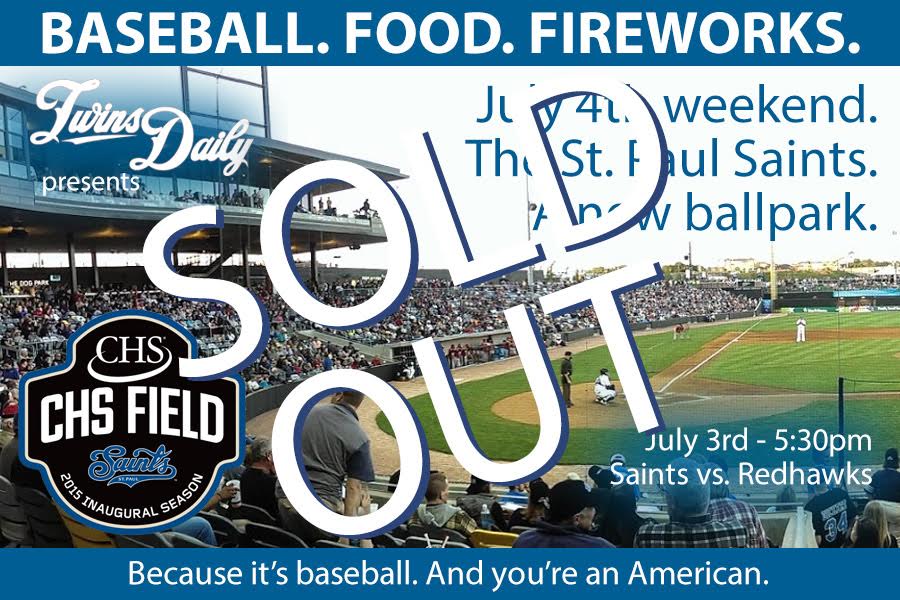 Because It's Baseball. And You're An American. If you have been to our Winter Meltdown or to our Touch ‘Em All Pub Crawl, you know how legendary Twins Daily parties can be. This could top them. We’re going to celebrate our country’s birthday with your BFFs: Beer, Food and Fireworks. On Friday, July 3rd, we’ll check out the Saints brand new ballpark with Twins Daily and other MinnCentric writers that includes a Saints game, a pregame picnic and postgame fireworks. The Saints are playing in a brand new ballpark in downtown St. Paul, that you need to see. Tailgating is part of the Saints tradition, but you'll be tailgating IN THE BALLPARK with a catered picnic. There is also a local craft brew stand steps away with something like 20 taps. And the night ends with a fireworks display. The good news is that we’ve swung a deal to get a limited amount of tickets for both the food and the reserved seat for just $25 apiece. The better news is that we have an even more limited batch available for just $20 apiece. The bad news is that stupid word “limited”; you’ll want to act FAST. I can’t imagine we don’t sell out of these. Details: Cost is just $20, but only until our initial batch sells out. Price will go up to $25 next week and even those are limited. It includes an outfield reserved ticket and a catered picnic starting at 5:30 inside the new Saints Ballpark before the game. Tickets will be available at Will Call. There will also be door prizes, including two front row tickets to a Twins game for one lucky attendee. We are working on also getting guided tours of the ballpark. This is going to be a family friendly event, and for those prices, you can bring the kids or neighbors or friends or BFFs. There is no better way to start out the Fourth of July weekend than with baseball – it’s your darn near patriotic duty to attend this. So get your ticket now at this link.
 -
Article: Twins Promote Alex Meyer
John Bonnes replied to John Bonnes's topic in Twins Daily Front Page News
Honestly, I just think the glut is reaching the end of the pipeline. The pipeline was just longer than we wanted (and there were several injuries that delayed some of the bigger names). It'll be interesting to see how he handles his first taste of the majors, and what that means for his future. Aaron mentioned in this week's GATG that him returning to starting eventually requires him to be very good, but not so good that they just can't consider not having him in the bullpen. Boy, I sure would love to see him become a dependable setup arm this year. The Twins could really use that. Perkins on top with Boyer/Fien under.....that changes a lot about this bullpen. (Now we just need a southpaw...) -
Article: Twins Promote Alex Meyer
John Bonnes replied to John Bonnes's topic in Twins Daily Front Page News
I'm really looking forward to seeing this kid pitch. -
The Minnesota Twins have announced that they will recall right-handed reliever Alex Meyer prior to Friday night's game vs. the Milwaukee Brewers. Meyer was Twins Daily's #5 Twins prospect before the 2015 season and this will be his first time with the big league club. Meyer was acquired in a trade with the Washington Nationals for Denard Span in November of 2012. Armed with a 95+ mph fastball, he was considered a top starting pitching prospect and was moved up to Triple-A Rochester last year where he posted a 3.52 ERA and 153 strikeouts in 130.2 innings.However, his 6' 9" frame has always contributed to control problems and he seemingly took a step backward this year, walking 24 batters in 39.1 innings pitched (along with a 7.09 ERA) as a starting pitcher, before he was moved to the bullpen. That move has seemingly paid off. Since that move, Meyer has posted a 0.53 ERA with 20 strikeouts in 17 innings pitched. Most tellingly, he has only walked six batters, nearly halving his walk rate as a starter. Meyer's role in the Rochester Red Wing's bullpen was mostly as a long reliever; he pitched more than an inning in most of his appearances, including three appearances that were three innings or longer. His role in the Twins bullpen is less clear. He replaces Michael Tonkin, who served as more of a secondary right-handed setup man. It's possible that Meyer could take that role with the goal of moving towards a higher-leverage setup role in the future. Or he could continue to work long relief. The Twins have not said if they now view his future role as a starter or reliever, and longer appearances would allow allow an easier transition back to a starting role later this year. However, given the Twins continued struggles with consistent success at the back of their bullpen, if Meyer succeeds, he'll likely stay in that role with the Twins for the rest of this year. Click here to view the article
-
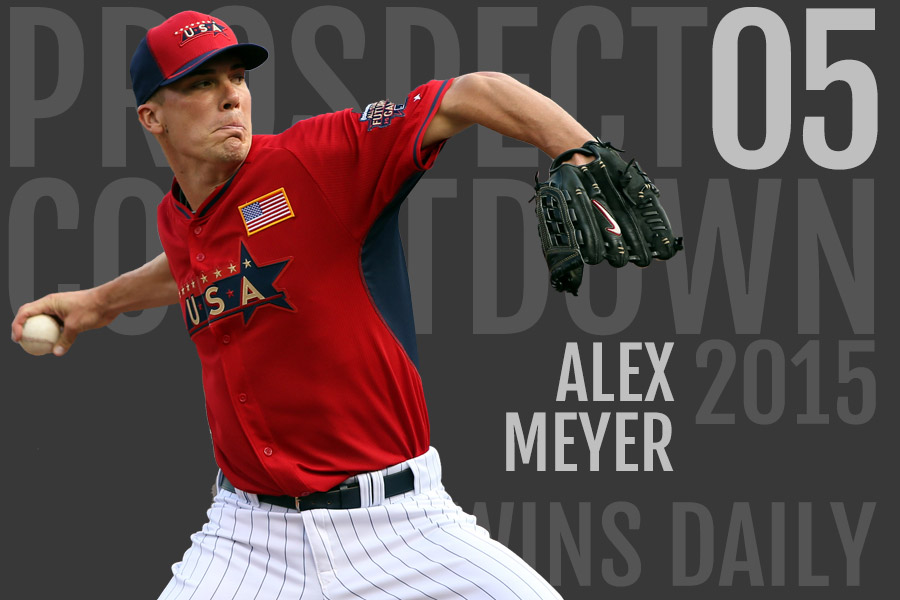 However, his 6' 9" frame has always contributed to control problems and he seemingly took a step backward this year, walking 24 batters in 39.1 innings pitched (along with a 7.09 ERA) as a starting pitcher, before he was moved to the bullpen. That move has seemingly paid off. Since that move, Meyer has posted a 0.53 ERA with 20 strikeouts in 17 innings pitched. Most tellingly, he has only walked six batters, nearly halving his walk rate as a starter. Meyer's role in the Rochester Red Wing's bullpen was mostly as a long reliever; he pitched more than an inning in most of his appearances, including three appearances that were three innings or longer. His role in the Twins bullpen is less clear. He replaces Michael Tonkin, who served as more of a secondary right-handed setup man. It's possible that Meyer could take that role with the goal of moving towards a higher-leverage setup role in the future. Or he could continue to work long relief. The Twins have not said if they now view his future role as a starter or reliever, and longer appearances would allow allow an easier transition back to a starting role later this year. However, given the Twins continued struggles with consistent success at the back of their bullpen, if Meyer succeeds, he'll likely stay in that role with the Twins for the rest of this year.
 -
Aaron and John do a special midweek episode to review the seasons of the top Minnesota Twins prospects, whether their status has moved up or down, and how Harry's Razors are like elite prospects. You can listen by downloading us from iTunes, Stitcher or find it at GleemanAndTheGeek.com. Or just click the Play button below.You can play it directly by clicking below: Click here to view the article
-
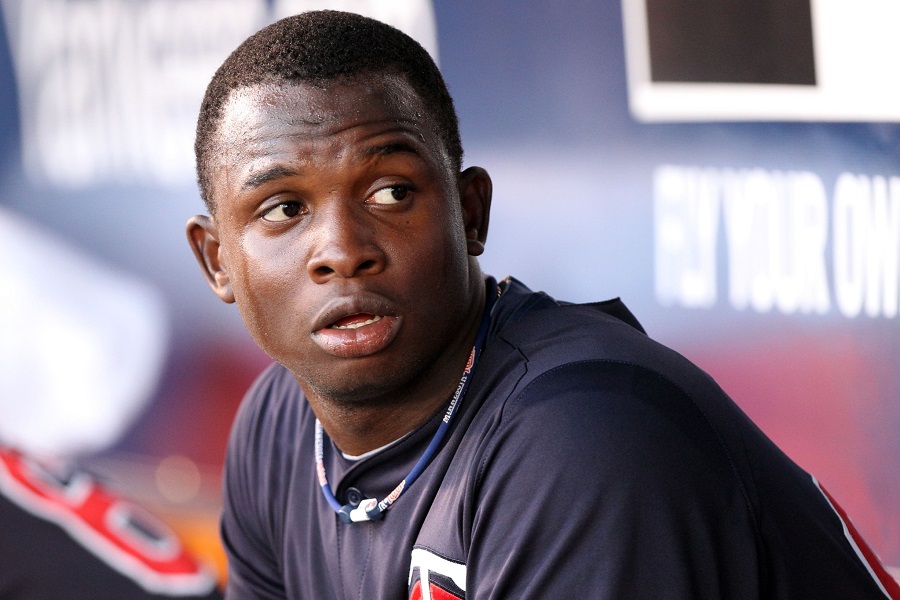 You can play it directly by clicking below: http://traffic.libsyn.com/gleemangeek/Episode_200_Midseason_Prospect_Update.mp3
 -
I found the story. I had trouble at first, because I apparently wrote it on StarTribune.com. But I made a copy in my original site. Here it is: Sucker Punched A few days ago, I wrote of glory, and the opportunity to show Minnesota sports fans that this low budget team is for real, by beating the best in their stadium in the only games that really count to these two teams. I compared it to the Vikings season of 1998, and mentioned their playoff loss in 1999. Today, those who watched feel a familiar sentiment, equal parts hopelessness and rage, mostly directed at a head coach. I'm betting the head coach feels the same way. Except that in baseball, the leader of the coaching staff isn't a coach. He's a manager. That's something that most of us can relate to, because we work for managers, or are managers. So we understand how important it is that good managers, while they have an area of responsibility, focus on their people, and their strengths and weaknesses. We understand that the best managers are often loyal to a fault, that they protect their employees, and that their dedication is usually rewarded. The key word in that last sentence was "usually". This weekend, I heard Ron Gardenhire get savaged on his radio show by callers. Their primary complaint was that he had prioritized resting his players over beating the Yankees, and thus had lost home field advantage in the first round of the playoffs. I suppose some of that sniping came from people with different priorities, but mostly it sounded like it was just habit. It sounded like they had grabbed the most available criticism of the week, lined up their priorities with it, and charged ahead. I honestly felt bad for Gardenhire for having to deal with that. He'll be dealing with a lot more than today. Gardenhire made a number of decisions yesterday. They were mostly consistent with his values of staying loyal to his veterans and protecting his younger players. And without exception, nearly every one blew up in his face. Starting Jason Kubel as designated hitter - This is the one move that runs counter to most of the rest of Gardenhire's moves. Based on Kubel's outing last week versus right-handed Yankees starting pitcher Jon Lieber, Gardenhire substituted the left-handed hitting Kubel for right-handed hitting Lew Ford. Unfortunately, Kubel not only went hitless in six at-bats, he struck out on three terrible pitches in the most critical at-bat for the Twins in the game. Staying with Shannon Stewart in left field - Lew Ford is a better defensive outfielder than Stewart even if both players are healthy, but Stewart isn't healthy. He has a bad hamstring and a bad foot, and yet Ford finds himself batting as the designated hitter most games. He also found himself sitting on the bench in the twelfth inning last night as a drive from Alex Rodriguez landed just beyond Stewart's outstretched glove, and drove in the tying run. This is the second time in two years that the Twins have downgraded themselves defensively in the outfield to make Shannon Stewart feel like he's more than just capable defensively. Last year they moved Jacque Jones, who has far more range than Stewart, to right field from the more spacious left field. One can argue that this doesn't make much of a difference in the overall defensive ability of a team, and if it keeps an important hitter happy and productive, it's worth it. One can also argue that Lew Ford would've made that catch last night and the Twins could have left Yankee stadium up 2-0. Letting Brad Radke start the seventh inning - In the bottom of the sixth, the Twins bullpen phone rang. Brad Radke had contained the Yankees, but had struggled all night, and was clearly tiring as he battled John Olerud with a runner on second and two outs. Radke finally won the battle, keeping the deficit at 4-3, and walked back to the dugout.And in the bottom of the seventh, the same pitcher who looked so gassed a half inning earlier, walked back out of the dugout and to the mound. He would get to start by facing Miguel Cairo at the bottom of the Yankees order. Following Cairo was Derek Jeter, who had homered off of Radke once already. Following Jeter was Alex Rodriguez, who had homered off of Radke once already. And following Rodriguez was Gary Sheffield, who had homered off of Radke once already. So, you can probably guess how that went. The Yankees gained an important insurance run, to make the score 5-3, prior to Grant Balfour replacing Radke as pitcher. The decision to keep Radke in the game was defensible, but that call to the bullpen suggests that Gardenhire knew better. Was he afraid to use a young bullpen in that situation? Did he want to avoid angering Radke (who might need to start his next game on short rest) by taking him out of the game after just six innings? Did he think it important that Radke have a "W" next to his name in the box score? Or has he grown sensitive to the media fracas that results when he removes Radke and a game is lost anyway? Whatever the reason, the move likely cost the Twins another run, and it was a run that would prove costly a half inning later. Letting Joe Nathan pitch in the twelfth inning - And finally we get to the BIG ONE that everyone will be talking about coast to coast. It's almost a carbon copy of the decision Gardenhire made six innings earlier, only with a worse result. Again, the pitcher who had finished the inning before was clearly done. Again, a call had been made to the bullpen to get a different reliever ready. Again, it looks like Gardenhire chose to stick with his veteran rather than submerge a rookie into a tense playoff environment.And again, it proved disastrous. There's consistency in these moves, beyond the tragic result of all of them. They're also consistent with similar moves that Gardenhire has made through the season. And they're consistent with a management philosophy that has allowed this organization to develop a hoard of young talent while simultaneously winning three division titles. That may be of some comfort to Twins fans today, and maybe to a manager that had an especially bad day. It may be, but I doubt it.
-
I'm scarred by that 12th inning. I should go and find the story I wrote that night. Lord, I was bummed, though at the time, it was easy to think "Hey we're tied 1-1 coming home and have been the better team...."
-
Aaron and John talk about Byron Buxton putting his Hall of Fame induction on hold, where all the Twins' run scoring went, what happens to the rotation when Ervin Santana returns, releasing Jordan Schafer, Chris Herrmann's job security, first-round pick Tyler Jay signing for $3.9 million, a July 3rd Saints game with Aaron and John and what to do and not to do while on the toilet, and Towns vs. Okafor. Oh, and apparently their is a surprise ending, as the podcast ended 20 minutes earlier than we thought. Oh well. You can listen by downloading us from iTunes, Stitcher or find it at GleemanAndTheGeek.com. Or just click the Play button below. Click here to view the article
-
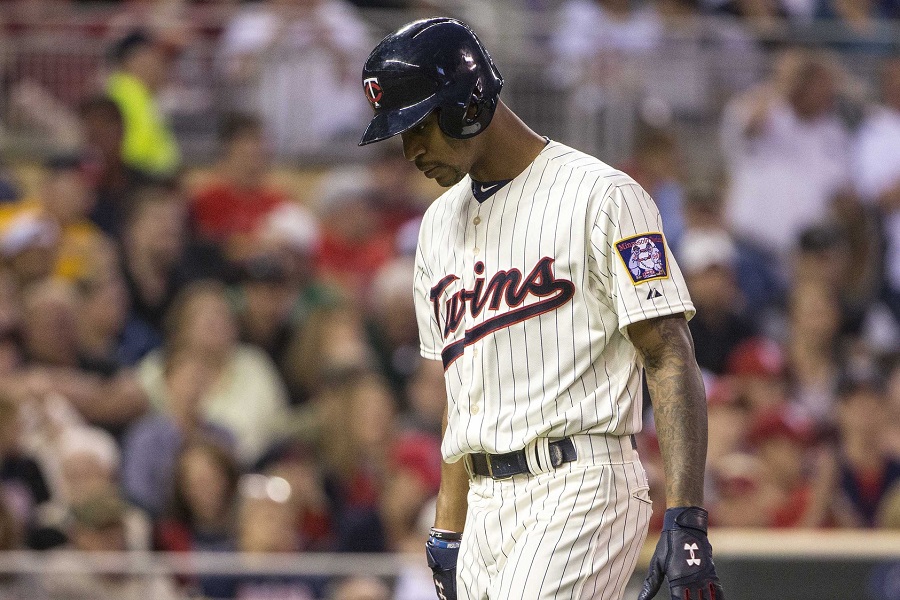 http://traffic.libsyn.com/gleemangeek/GATG_06212015_FINAL.mp3
 -
The Yankees entered the 2002 season in the midst of a dynasty fueled by a record-setting payroll. The Twins entered the 2002 season literally battling for the organization’s life. Contraction had been approved by Major League Baseball's owners and the Twins were one of the two teams reported to be on the chopping block. The Twins also entered the season with a new manager, Ron Gardenhire, replacing Tom Kelly who had retired following the 2001 season. Gardenhire was viewed as a player’s coach, the opposite of the prickly Kelly, and he knew many of the young players from their time in the majors and minors.He succeeded immediately. The underdog Twins not only won 94 games in 2002, they also won the American League Division Series, making it to the AL Championship Series before bowing out to the eventual World Champion Anaheim Angels. There was really only one blemish, barely noted at the time: the Twins had failed to win a single game versus the Yankees. But then that happened again in 2003; the Twins played seven games versus the Yankees in the regular season and lost all seven. And that blemish seemed more important as the Twins prepared to face the Yankees in the ALDS. The team finally beat the Yankees in the first game of that postseason, tallying three runs against Yankees ace Mike Mussina. But that’s as many runs as the Twins would score the rest of the series combined, losing one game in Yankees Stadium and two more at home, ultimately watching the Yankees celebrate on the Metrodome’s turf. Things looked a little brighter in 2004 – the Twins at least won a couple of games versus the Yankees during the regular season – but that led to maybe the most painful of Gardenhire's playoff losses. The Twins beat the Yankees in Game 1 of the 2004 ALDS behind the arm of Johan Santana. And in Game 2, the Twins rallied to tie the Yankees 5-5 in the eighth inning thanks to clutch hits by Justin Morneau and Corey Koskie against none other than Yankees closer Mariano Rivera. To maintain that tie game in extra innings, Gardenhire turned to his own closer, Joe Nathan, in the 10th and 11th innings. That strategy paid off when the Torii Hunter hit a solo home run in the top of the 12th to give the Twins the lead. But Gardenhire stuck with the tiring Nathan in the bottom of the frame. It started well – Nathan struck out John Olerud – but then he walked Miguel Cairo and Derek Jeter before giving up a ground-rule double to Alex Rodriguez, of all people. (Honestly, only the Twins could turn Alex Rodriguez into a hero in New York.) Jeter would score the winning run two batters later, giving the Yankees a 6-5 win. In Game 3, the Yankees beat up Carlos Silva, but the Twins had command of Game 4, leading 5-1 as the game went into the eighth inning. However, the Yankees rallied for four runs in that inning; the biggest hit was a three-run home run by Ruben Sierra against the usually dependable Juan Rincon. Of course, the Twins lost the game in extra innings on a wild pitch and watched the Yankees advance once again. Whatever jinx the Damn Yankees had over Gardenhire’s teams never faltered. Even in the regular season, when the games didn’t mean as much, the Yankees triumphed. Over his managing career, Gardenhire’s Twins teams were only 26-64 against the Yankees. In his thirteen-year career at the helm of the Twins, despite steering teams that won the AL Central division six times, Gardenhire’s Twins teams NEVER had a winning season series record against the Bronx Bombers. And believe it or not, that’s not the worst part. The worst part was that in the six seasons where his team made the postseason, Gardenhire’s Twins faced the Yankees in four of them, lost all four series and won just two of the fourteen games they played. There is a litany of doomed big plays that Twins fans know too well: Nathan’s 12th inning, Sierra’s home run, Cuzzi’s blown call, ARod’s home run. If ever there was a manager who must’ve been tempted to sell his soul to beat the Damn Yankees, it was Ron Gardenhire. Previously: Twins vs Yankees (Part 1): The Rise Of The Damn Yankees Twins vs Yankees (Part 2): How Killebrew Killed The Damn Yankees Twins vs Yankees (Part 3): A Twin Defects To The Damn Yankees Click here to view the article
-
Twins vs. Yankees (Part 4): Ron Gardenhire & Those Damn Yankees
John Bonnes posted an article in Twins
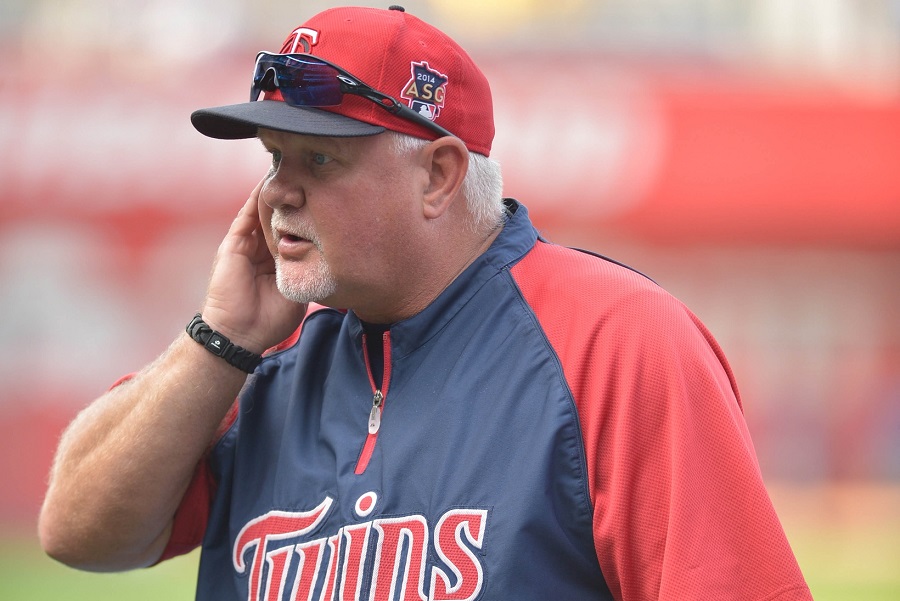 He succeeded immediately. The underdog Twins not only won 94 games in 2002, they also won the American League Division Series, making it to the AL Championship Series before bowing out to the eventual World Champion Anaheim Angels. There was really only one blemish, barely noted at the time: the Twins had failed to win a single game versus the Yankees. But then that happened again in 2003; the Twins played seven games versus the Yankees in the regular season and lost all seven. And that blemish seemed more important as the Twins prepared to face the Yankees in the ALDS. The team finally beat the Yankees in the first game of that postseason, tallying three runs against Yankees ace Mike Mussina. But that’s as many runs as the Twins would score the rest of the series combined, losing one game in Yankees Stadium and two more at home, ultimately watching the Yankees celebrate on the Metrodome’s turf. Things looked a little brighter in 2004 – the Twins at least won a couple of games versus the Yankees during the regular season – but that led to maybe the most painful of Gardenhire's playoff losses. The Twins beat the Yankees in Game 1 of the 2004 ALDS behind the arm of Johan Santana. And in Game 2, the Twins rallied to tie the Yankees 5-5 in the eighth inning thanks to clutch hits by Justin Morneau and Corey Koskie against none other than Yankees closer Mariano Rivera. To maintain that tie game in extra innings, Gardenhire turned to his own closer, Joe Nathan, in the 10th and 11th innings. That strategy paid off when the Torii Hunter hit a solo home run in the top of the 12th to give the Twins the lead. But Gardenhire stuck with the tiring Nathan in the bottom of the frame. It started well – Nathan struck out John Olerud – but then he walked Miguel Cairo and Derek Jeter before giving up a ground-rule double to Alex Rodriguez, of all people. (Honestly, only the Twins could turn Alex Rodriguez into a hero in New York.) Jeter would score the winning run two batters later, giving the Yankees a 6-5 win. In Game 3, the Yankees beat up Carlos Silva, but the Twins had command of Game 4, leading 5-1 as the game went into the eighth inning. However, the Yankees rallied for four runs in that inning; the biggest hit was a three-run home run by Ruben Sierra against the usually dependable Juan Rincon. Of course, the Twins lost the game in extra innings on a wild pitch and watched the Yankees advance once again. Whatever jinx the Damn Yankees had over Gardenhire’s teams never faltered. Even in the regular season, when the games didn’t mean as much, the Yankees triumphed. Over his managing career, Gardenhire’s Twins teams were only 26-64 against the Yankees. In his thirteen-year career at the helm of the Twins, despite steering teams that won the AL Central division six times, Gardenhire’s Twins teams NEVER had a winning season series record against the Bronx Bombers. And believe it or not, that’s not the worst part. The worst part was that in the six seasons where his team made the postseason, Gardenhire’s Twins faced the Yankees in four of them, lost all four series and won just two of the fourteen games they played. There is a litany of doomed big plays that Twins fans know too well: Nathan’s 12th inning, Sierra’s home run, Cuzzi’s blown call, ARod’s home run. If ever there was a manager who must’ve been tempted to sell his soul to beat the Damn Yankees, it was Ron Gardenhire. Previously: Twins vs Yankees (Part 1): The Rise Of The Damn Yankees Twins vs Yankees (Part 2): How Killebrew Killed The Damn Yankees Twins vs Yankees (Part 3): A Twin Defects To The Damn Yankees
 -
The craft beer area is better than I've sen at at any MAJOR league park. It's fantastic. A great addition.
