



Heezy1323
-
Posts
261 -
Joined
-
Last visited
-
Days Won
2
Content Type
Profiles
News
Minnesota Twins Videos
2026 Minnesota Twins Top Prospects Ranking
2022 Minnesota Twins Draft Picks
Minnesota Twins Free Agent & Trade Rumors, Notes, & Tidbits
Guides & Resources
2023 Minnesota Twins Draft Picks
The Minnesota Twins Players Project
2024 Minnesota Twins Draft Picks
2025 Minnesota Twins Draft Pick Tracker
2026 Minnesota Twins Draft Tracker: Picks & Bonuses
Forums
Blogs
Events
Store
Downloads
Gallery
Everything posted by Heezy1323
-
Buxton’s Body and Cave’s Opportunity
Heezy1323 replied to Ted Schwerzler 's topic in Twins Daily Front Page News
Such a bummer to see Byron head back to the IL. He just can't seem to catch a break. Hopefully he can return soon. For those interested, I did a quick blog post about Byron and shoulder subluxations here: http://twinsdaily.com/blog/1036/entry-11598-buxton-shoulder-qa-what-is-a-shoulder-subluxation/- 39 replies
-
- 5
-

-
- minnesota twins
- byron buxton
- (and 2 more)
-
Buxton Shoulder Q&A- What is a shoulder 'subluxation'?
Heezy1323 posted a blog entry in Heezy1323's Blog
Byron Buxton Shoulder Injury Q&A heezy1323 Byron Buxton, as we all know, is an outstanding center fielder for our Twins. Unfortunately, he has dealt with a variety of injuries that have cost him significant time over the past few seasons. This weekend he sustained an injury to his left shoulder that was termed a ‘subluxation’ and is headed back to the IL. By the sound of things, he is likely to be away from the big club for at least a few weeks. This is a tough blow for the Twins as the Indians make a push to catch up to a team that has led the division essentially all season. Medical terminology can be confusing, so I thought a post about shoulder subluxations might be of interest to TD readers. As usual- my disclaimer is that I am not a Twins team physician. I have not examined Byron nor seen any imaging of his injury. I am not speaking on behalf of the Twins. I am only hoping to familiarize TD readers with some of the concerns that may be ahead regarding injuries similar to Buxton’s. Question 1: How does the shoulder normally work? The shoulder is considered a ball-and-socket joint. The round ball (humeral head) sits in the socket (glenoid) similar to how a golf ball sits on a golf tee. Around the perimeter of the golf tee is a strong cartilage tissue called a labrum. The labrum surrounds the socket similar to the red gasket on a mason jar lid. Its function is to help act as a ‘bumper’ to hold the golf ball on the golf tee. It is also an attachment point for ligaments around the shoulder that also contribute to shoulder stability. The ligaments make up the ‘capsule’ of the shoulder joint. I often tell patients that the capsule is like a water balloon that surrounds the joint. The ligaments that make up the capsule form the connection between the ball and the socket. Question 2: What is a shoulder subluxation? The term ‘subluxation’ is typically used in situations where a joint partially (or nearly) dislocates. This is not specific to the shoulder and can happen in a number of other areas of the body as well (such as the kneecap, for example). This is distinct from a true ‘dislocation’ where the ball comes completely out of the socket and then goes back in. If someone dislocates their shoulder and it stays dislocated, it is typically clear what has happened. Xrays will show the ball dislocated from the socket and the shoulder will be manipulated to ‘reduce’ the ball back to its normal position. However, in some cases cases the ball can completely dislocate and go back in on its own very quickly. In these cases, an xray would often look normal. In most cases when there is concern about an injury of this type, an MRI is ordered. This of course shows additional details of the bone and soft tissue that cannot be seen on an xray alone. Usually an MRI will allow for a pretty solid conclusion as to whether the injury that occurred was a ‘subluxation’ (less severe) or a true ‘dislocation’ (more severe). There is, of course, a spectrum of damage that can occur with any injury and this is no exception. It’s possible that there was some minimal stretch to the ligaments around the shoulder and no other significant damage (best case). It’s also possible that there was more significant damage to the ligaments and potentially even a tear of the labrum (more worrisome). The MRI would typically give a good approximation of these issues. In most cases, the damage that occurs with a subluxation is less significant than that which occurs with a dislocation. Question 3: Does it make a difference that the injury is to his left shoulder rather than his right? In my opinion, absolutely. Because it is his non-throwing shoulder, the stresses placed on it are less. Even small issues with the ligaments can be problematic in the throwing shoulder- particularly someone who can approach 100mph on throws from the outfield. That said, the left shoulder is Byron’s front shoulder when hitting. In most hitters it is the front shoulder that is more stressed. It is possible that Buxton’s recovery is more affected at the plate than in the field (though that’s impossible to predict with certainty, of course). Question 4: Does this injury make it more likely that Byron will dislocate his shoulder in the future? Possibly. As discussed above, there is a spectrum of damage that can occur with this injury. If the damage is near the minimal end, it probably doesn’t have a significant effect on his likelihood of injuring this shoulder in the future. If there is more significant structural damage, it may place him at higher risk. Question 5: What is the purpose of the rehab? In addition to the capsule and labrum discussed above in question 1, the muscles around the shoulder also contribute to stability. I often tell patients to imagine that there is canopy over the top of the golf ball pulling it down onto the golf tee and helping to hold it in place. This is similar to the way your rotator cuff functions. I suspect rehab for Buxton will include strengthening exercises for a number of muscles around the shoulder that contribute to stability. Also, these muscles can be strained during the injury, so they can sometimes need additional time to recover along with the ligaments. Question 6: Will Buxton need surgery? This is essentially impossible to answer right now, likely even for the physicians and training staff involved in Byron’s care. As I sometimes tell my patients, “The crystal ball is a little murky.” Without knowing the extent of any structural issues in Byron’s shoulder, I would say that it is somewhat unlikely this will require surgery. I would expect that even if surgery is required, it would only occur after an attempt at non-surgical treatment has been unsuccessful. Question 7: How long will it be before he is able to return to play? This is also a difficult question to answer. The fact that the early word is that he will be out a few weeks is consistent with what I would expect from an injury like this. The rehab often takes time to regain full motion and strength. I would hope he can be back patrolling center field before the end of August, but it’s certainly possible this lingers into September. It seems unlikely that this would be a season-ending injury, but only time will tell. Clearly this Twins team is better when Byron is on the field rather than on the IL. Let’s hope he heals quickly and can help the Twins down the stretch. GO TWINS!- 6 comments
-
- 10
-
-
- byron buxton
- shoulder injury
- (and 1 more)
-
Thanks for the reply- very interesting to hear your take. I'm not even sure we know exactly what TOS is. I know we often divide it into neurogenic and vascular types, but it likely is even more complex than that, IMHO. I believe some component of UCL injury is that we are probably reaching the edges of human performance. Muscles can be made stronger, but ligaments have an intrinsic strength that probably can't be appreciably improved. Nerves and blood vessels likely similar... Did you see the injury Nick Burdi had, that was called basically a brachial plexus strain? He was in excruciating pain... not sure how to explain that one exactly.
-
TOS is a very complicated condition, indeed. I’d love to hear your thoughts about it.
-
For some reason Bonnes says all checks need to be made out to him...?
-
Oh yes. Very familiar with Dr. Clancy.
-
It’s difficult to know for certain, but yes I suspect that rehab will be focused in this area. Refining mechanics and improving overall core strength with the goal of avoiding placing extra stress on any particular anatomic structures.
-
Thanks for comment. Yes, I am an orthopedic surgeon with a subspecialty in sports medicine. I did my sports medicine fellowship (1 year of additional training after completing residency) with Dr. James Andrews, which was a great opportunity to learn first hand about treating throwing athletes.
- 25 replies
-
- 17
-
-
I would guess that yes, he's gotten an MRI. A torn labrum is often part of the spectrum of this problem termed 'internal impingement', so they are not mutually exclusive and are, in fact, often found together.
-
Heralded Twins prospect Brusdar Graterol was recently shut down and placed on the IL for ‘shoulder impingement’. This is concerning given the promising start to the 2019 season Graterol had and what it could mean for his future. So what is ‘shoulder impingement’? And when might it need surgery? Let’s see what we can figure out: Heralded Twins prospect Brusdar Graterol was recently shut down and placed on the IL for ‘shoulder impingement’. This is concerning given the promising start to the 2019 season Graterol had and what it could mean for his future. So what is ‘shoulder impingement’? And when might it need surgery? Let’s see what we can figure out: Disclaimer: I am not a team physician for the Twins. I have not treated or examined any Twins players. The information I am using is only that which is publicly available. My goal with these posts is to provide some education to TD readers around general injuries that are peculiar to baseball players. Question 1: What is shoulder impingement? Shoulder impingement is a sort of catch-all term that can be used to mean a number of different things depending on the specifics of the situation. It Is a term that is often used in application to patients who have pain in their shoulders, often without any specific structural damage or a particular injury. Most frequently, people have pain in their shoulder area that gets worse when working above chest level. It is often treated with physical therapy, activity modification, oral medication and occasional cortisone injections. It is uncommon for these patients to require surgery, but it is sometimes needed after the preceding treatments have failed to provide adequate relief. Some also refer to this condition as shoulder bursitis. It involves irritation of the rotator cuff and the bursa, which lies between the rotator cuff tendons and a part of the bone of the shoulder blade (called the acromion). You may have friends or family members who have been told they have ‘impingement’- this is a fairly commonly used diagnosis. More specifically, this condition is referred to as ‘external impingement’. Shoulder impingement in pitchers, however, often means something entirely different than what is described above. Whereas external impingement occurs between the rotator cuff and the acromion (outside of the ball and socket joint of the shoulder), pitchers more commonly have problems with what is called ‘internal impingement’. This occurs specifically in overhead athletes because of the tremendous motion that is necessary to hurl a baseball 90+ mph accurately. During the course of throwing, the arm is cocked back, placing it in an awkward position. In this position, part of the rotator cuff can get pinched between the bone of the ball and the bone of the socket (also often including pinching of the labrum). This may not seem like a big deal, but over time this repetitive motion can begin to take its toll. Experts agree that some changes/damage to the structures of the shoulder are likely normal and adaptive in pitchers rather than problematic. In some cases, however, these structural changes progress down the spectrum and become an issue- causing pain, lack of velocity and/or control and fatigue of the shoulder. There is not perfect agreement among experts about why exactly these athletes begin to have pain in some cases. Regardless, it is likely a very complex combination of factors ranging from subtle changes in mechanics to core strength to gradual loosening of shoulder ligaments over time (and many others). Each individual case is likely different, and treatment needs to be tailored to the specifics of the athlete. Question 2: How/when did this injury occur? Typically, this is not an injury that results from a single trauma (though theoretically it can happen that way). It is much more typical for this to be the result of an accumulation of ‘microtraumas’ over a long period of time. Question 3: Does this injury always need surgery? No. As mentioned above, painful shoulder impingement in throwers is likely related to a complex set of factors. Because of this, treating any ONE thing with a surgery is somewhat unlikely to be effective. As a result, treatment is almost always begun by trying to calm down inflamed tissues. This typically involves rest from throwing. It may also involve oral medications and in some instances, cortisone injections. There is some discussion around PRP and so-called ‘stem cell’ injections (what orthopedists refer to as Bone Marrow Aspirate Concentrate or BMAC) for these types of problems, though this is not yet something I would consider standard of care. During this time, the athlete is also likely to undergo physical therapy to work on improving some of the other factors mentioned above- core strength, range of motion, rotator cuff strength, etc. As the pain and inflammation improve, the athlete is likely re-examined by trainers and physicians. This can take anywhere from a week or two to several weeks depending on the case. When things have improved sufficiently, the athlete is likely to begin an interval throwing program, which involves progressively more aggressive throwing sessions. Once they have completed this, they would likely return to the mound and begin throwing from there. Once appropriate progress has been made (and of course presuming no setbacks are encountered), they are likely cleared to return to play. The success of non-surgical treatment for these types of problems is all over the map in the literature. There are ranges from percents in the teens to 70%+. Again, it likely depends on a large number of factors which makes prognosticating nearly impossible. Question 4: How do we tell which cases of impingement need surgery and which do not? This can be among the most difficult decisions to make when dealing with pitchers. One of the problematic elements is that surgery to treat this problem is comparatively not very successful. As noted above, in general there are likely a number of different structural abnormalities in the shoulder that are in play with this injury. Some of them are adaptive and are considered ‘normally abnormal’ for pitchers. Others are problematic. Separating these two is something about which even experts readily disagree. It is difficult (and perhaps foolish in this setting) to quote surgery success rates, but in general they are not the best. There is a reason behind the old saying that for pitchers “If it’s the elbow, call the surgeon. If it’s the shoulder, call the preacher.” Question 5: What is done during surgery? This is widely variable depending on the specific structures that are injured, and (quite honestly) the particular views of the operating surgeon. I was recently watching a lecture on just this subject that featured a panel of a number of the preeminent North American surgeons that treat these problems. The differences of opinion and differences in strategy between surgeons were substantial. Yet another reason to make significant efforts to make non-surgical treatment successful. Question 6: How concerning is this for Graterol? This is hard to know from the information available. As stated earlier, the term ‘impingement’ can mean a wide variety of things- some more concerning than others. One of the positives in this case would seem to be that Graterol was pitching very effectively quite recently. Thus, this doesn’t seem to be something that has been festering for months. Hopefully that means they’ve ‘caught it early’ and can get things back on track sooner than later. I would imagine he will be out for a few weeks at least, but I would be surprised if he required any surgery in the near future. Overall, many pitchers have occasional blips on the radar with things like this that are improved with rest and rehab and don’t recur in the future. Predicting the future is difficult for anything- and this type of issue especially- but hopefully Graterol can get back on the mound throwing gas soon. Go Twins! View full article
-
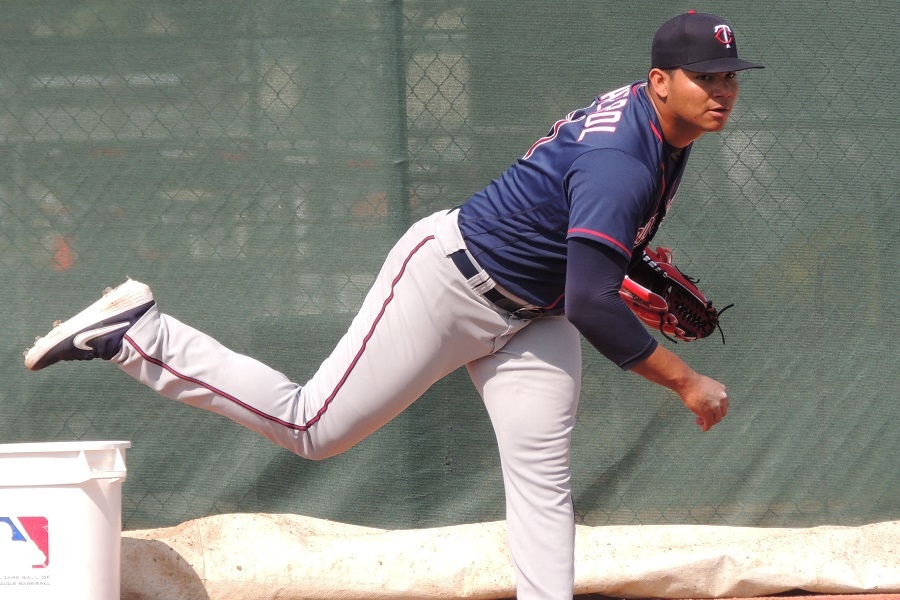 Disclaimer: I am not a team physician for the Twins. I have not treated or examined any Twins players. The information I am using is only that which is publicly available. My goal with these posts is to provide some education to TD readers around general injuries that are peculiar to baseball players. Question 1: What is shoulder impingement? Shoulder impingement is a sort of catch-all term that can be used to mean a number of different things depending on the specifics of the situation. It Is a term that is often used in application to patients who have pain in their shoulders, often without any specific structural damage or a particular injury. Most frequently, people have pain in their shoulder area that gets worse when working above chest level. It is often treated with physical therapy, activity modification, oral medication and occasional cortisone injections. It is uncommon for these patients to require surgery, but it is sometimes needed after the preceding treatments have failed to provide adequate relief. Some also refer to this condition as shoulder bursitis. It involves irritation of the rotator cuff and the bursa, which lies between the rotator cuff tendons and a part of the bone of the shoulder blade (called the acromion). You may have friends or family members who have been told they have ‘impingement’- this is a fairly commonly used diagnosis. More specifically, this condition is referred to as ‘external impingement’. Shoulder impingement in pitchers, however, often means something entirely different than what is described above. Whereas external impingement occurs between the rotator cuff and the acromion (outside of the ball and socket joint of the shoulder), pitchers more commonly have problems with what is called ‘internal impingement’. This occurs specifically in overhead athletes because of the tremendous motion that is necessary to hurl a baseball 90+ mph accurately. During the course of throwing, the arm is cocked back, placing it in an awkward position. In this position, part of the rotator cuff can get pinched between the bone of the ball and the bone of the socket (also often including pinching of the labrum). This may not seem like a big deal, but over time this repetitive motion can begin to take its toll. Experts agree that some changes/damage to the structures of the shoulder are likely normal and adaptive in pitchers rather than problematic. In some cases, however, these structural changes progress down the spectrum and become an issue- causing pain, lack of velocity and/or control and fatigue of the shoulder. There is not perfect agreement among experts about why exactly these athletes begin to have pain in some cases. Regardless, it is likely a very complex combination of factors ranging from subtle changes in mechanics to core strength to gradual loosening of shoulder ligaments over time (and many others). Each individual case is likely different, and treatment needs to be tailored to the specifics of the athlete. Question 2: How/when did this injury occur? Typically, this is not an injury that results from a single trauma (though theoretically it can happen that way). It is much more typical for this to be the result of an accumulation of ‘microtraumas’ over a long period of time. Question 3: Does this injury always need surgery? No. As mentioned above, painful shoulder impingement in throwers is likely related to a complex set of factors. Because of this, treating any ONE thing with a surgery is somewhat unlikely to be effective. As a result, treatment is almost always begun by trying to calm down inflamed tissues. This typically involves rest from throwing. It may also involve oral medications and in some instances, cortisone injections. There is some discussion around PRP and so-called ‘stem cell’ injections (what orthopedists refer to as Bone Marrow Aspirate Concentrate or BMAC) for these types of problems, though this is not yet something I would consider standard of care. During this time, the athlete is also likely to undergo physical therapy to work on improving some of the other factors mentioned above- core strength, range of motion, rotator cuff strength, etc. As the pain and inflammation improve, the athlete is likely re-examined by trainers and physicians. This can take anywhere from a week or two to several weeks depending on the case. When things have improved sufficiently, the athlete is likely to begin an interval throwing program, which involves progressively more aggressive throwing sessions. Once they have completed this, they would likely return to the mound and begin throwing from there. Once appropriate progress has been made (and of course presuming no setbacks are encountered), they are likely cleared to return to play. The success of non-surgical treatment for these types of problems is all over the map in the literature. There are ranges from percents in the teens to 70%+. Again, it likely depends on a large number of factors which makes prognosticating nearly impossible. Question 4: How do we tell which cases of impingement need surgery and which do not? This can be among the most difficult decisions to make when dealing with pitchers. One of the problematic elements is that surgery to treat this problem is comparatively not very successful. As noted above, in general there are likely a number of different structural abnormalities in the shoulder that are in play with this injury. Some of them are adaptive and are considered ‘normally abnormal’ for pitchers. Others are problematic. Separating these two is something about which even experts readily disagree. It is difficult (and perhaps foolish in this setting) to quote surgery success rates, but in general they are not the best. There is a reason behind the old saying that for pitchers “If it’s the elbow, call the surgeon. If it’s the shoulder, call the preacher.” Question 5: What is done during surgery? This is widely variable depending on the specific structures that are injured, and (quite honestly) the particular views of the operating surgeon. I was recently watching a lecture on just this subject that featured a panel of a number of the preeminent North American surgeons that treat these problems. The differences of opinion and differences in strategy between surgeons were substantial. Yet another reason to make significant efforts to make non-surgical treatment successful. Question 6: How concerning is this for Graterol? This is hard to know from the information available. As stated earlier, the term ‘impingement’ can mean a wide variety of things- some more concerning than others. One of the positives in this case would seem to be that Graterol was pitching very effectively quite recently. Thus, this doesn’t seem to be something that has been festering for months. Hopefully that means they’ve ‘caught it early’ and can get things back on track sooner than later. I would imagine he will be out for a few weeks at least, but I would be surprised if he required any surgery in the near future. Overall, many pitchers have occasional blips on the radar with things like this that are improved with rest and rehab and don’t recur in the future. Predicting the future is difficult for anything- and this type of issue especially- but hopefully Graterol can get back on the mound throwing gas soon. Go Twins!
-
Stem cell (BMAC) treatments are not yet FDA approved for bone and joint issues (I think they are technically only approved for blood or bone marrow cancers). That said, they can be used if the provider and patient discuss risks and benefits and decide to proceed. They are not covered by the vast majority of insurances, so most payment is out-of-pocket. They typically run a few thousand bucks or more for one injection. There are starting to be some regulations around this because of some less scrupulous people who were advertising and making false claims about what BMAC can do. We are still in the early phases of trying to figure out when, where and how they can best be used. The science is promising, but we have a ways to go to translate that to treating patients regularly and affordably.
-
Brusdar Graterol Shoulder Impingement Q&A Heezy1323 Heralded Twins prospect Brusdar Graterol was recently shut down and placed on the IL for ‘shoulder impingement’. This is concerning given how promising a start to the 2019 season Graterol has had and what it could mean for his future. So what is ‘shoulder impingement’? And when might it need surgery? Let’s see what we can figure out: [Disclaimer: I am not a team physician for the Twins. I have not treated or examined any Twins players. The information I am using is only that which is publicly available. My goal with these posts is to provide some education to TD readers around general injuries that are peculiar to baseball players.] Question 1: What is shoulder impingement? Shoulder impingement is a sort of catch-all term that can be used to mean a number of different things depending on the specifics of the situation. It Is a term that is often used in application to patients who have pain in their shoulders, often without any specific structural damage or a particular injury. Most frequently, people have pain in their shoulder area that gets worse when working above chest level. It is often treated with physical therapy, activity modification, oral medication and occasional cortisone injections. It is uncommon for these patients to require surgery, but it is sometimes needed after the preceding treatments have failed to provide adequate relief. Some also refer to this condition as shoulder bursitis. It involves irritation of the rotator cuff and the bursa, which lies between the rotator cuff tendons and a part of the bone of the shoulder blade (called the acromion). You may have friends or family members who have been told they have ‘impingement’- this is a fairly commonly used diagnosis. More specifically, this condition is referred to as ‘external impingement’. Shoulder impingement in pitchers, however, often means something entirely different than what is described above. Whereas external impingement occurs between the rotator cuff and the acromion (outside of the ball and socket joint of the shoulder), pitchers more commonly have problems with what is called ‘internal impingement’. This occurs specifically in overhead athletes because of the tremendous motion that is necessary to hurl a baseball 90+ mph accurately. During the course of throwing, the arm is cocked back, placing it in an awkward position. In this position, part of the rotator cuff can get pinched between the bone of the ball and the bone of the socket (also often including pinching of the labrum). This may not seem like a big deal, but over time this repetitive motion can begin to take its toll. Experts agree that some changes/damage to the structures of the shoulder are likely normal and adaptive in pitchers rather than problematic. In some cases, however, these structural changes progress down the spectrum and become an issue- causing pain, lack of velocity and/or control and fatigue of the shoulder. There is not perfect agreement amongst experts about why exactly these athletes begin to have pain in some cases. Regardless, it is likely a very complex combination of factors ranging from subtle changes in mechanics to core strength to gradual loosening of shoulder ligaments over time (and many others). Each individual case is likely different, and treatment needs to be tailored to the specifics of the athlete. Question 2: How/when did this injury occur? Typically, this is not an injury that results from a single trauma (though theoretically it can happen that way). It is much more typical for this to be the result of an accumulation of ‘microtraumas’ over a long period of time. Question 3: Does this injury always need surgery? No. As mentioned above, painful shoulder impingement in throwers is likely related to a complex set of factors. Because of this, treating any ONE thing with a surgery is somewhat unlikely to be effective. As a result, treatment is almost always begun by trying to calm down inflamed tissues. This typically involves rest from throwing. It may also involve oral medications and in some instances, cortisone injections. There is some discussion around PRP and so-called ‘stem cell’ injections (what orthopedists refer to as Bone Marrow Aspirate Concentrate or BMAC) for these types of problems, though this is not yet something I would consider standard of care. During this time, the athlete is also likely to undergo physical therapy to work on improving some of the other factors mentioned above- core strength, range of motion, rotator cuff strength, etc. As the pain and inflammation improve, the athlete is likely re-examined by trainers and physicians. This can take anywhere from a week or two to several weeks depending on the case. When things have improved sufficiently, the athlete is likely to begin an interval throwing program, which involves progressively more aggressive throwing sessions. Once they have completed this, they would likely return to the mound and begin throwing from there. Once appropriate progress has been made (and of course presuming no setbacks are encountered), they are likely cleared to return to play. The success of non-surgical treatment for these types of problems is all over the map in the literature. There are ranges from percents in the teens to 70%+. Again, it likely depends on a large number of factors which makes prognosticating nearly impossible. Question 4: How do we tell which cases of impingement need surgery and which do not? This can be among the most difficult decisions to make when dealing with pitchers. One of the problematic elements is that surgery to treat this problem is comparatively not very successful. As noted above, in general there are likely a number of different structural abnormalities in the shoulder that are in play with this injury. Some of them are adaptive and are considered ‘normally abnormal’ for pitchers. Others are problematic. Separating these two is something about which even experts readily disagree. It is difficult (and perhaps foolish in this setting) to quote surgery success rates, but in general they are not the best. There is a reason behind the old saying that for pitchers “If it’s the elbow, call the surgeon. If it’s the shoulder, call the preacher.” Question 5: What is done during surgery? This is widely variable depending on the specific structures that are injured, and (quite honestly) the particular views of the operating surgeon. I was recently watching a lecture on just this subject that featured a panel of a number of the preeminent North American surgeons that treat these problems. The differences of opinion and differences in strategy between surgeons were substantial. Yet another reason to make significant efforts to make non-surgical treatment successful. Question 6: How concerning is this for Graterol? This is hard to know from the information available. As stated earlier, the term ‘impingement’ can mean a wide variety of things- some more concerning than others. One of the positives in this case would seem to be that Graterol was pitching very effectively quite recently. Thus, this doesn’t seem to be something that has been festering for months. Hopefully that means they’ve ‘caught it early’ and can get things back on track sooner than later. I would imagine he will be out for a few weeks at least, but I would be surprised if he required any surgery in the near future. Overall, many pitchers have occasional blips on the radar with things like this that are improved with rest and rehab and don’t recur in the future. Predicting the future is difficult for anything- and this type of issue especially- but hopefully Graterol can get back on the mound throwing gas soon. Go Twins!
- 7 comments
-
- 8
-
-
- brusdar graterol
- impingement
- (and 2 more)
-
http://twinsdaily.com/blog/1036/entry-11499-graterol-shoulder-impingement-qa/ Hope you enjoy.
-
http://twinsdaily.com/blog/1036/entry-11499-graterol-shoulder-impingement-qa/ Hope you find it informative. Feel free to let me know if there are things that aren't clear- I can do my best to explain further.
- 36 replies
-
- 2
-
-
- wander javier
- stephen gonsalves
- (and 3 more)
-
Here ya go... hopefully it doesn't put you to sleep http://twinsdaily.com/blog/1036/entry-11499-graterol-shoulder-impingement-qa/
- 36 replies
-
- 5
-
-
- wander javier
- stephen gonsalves
- (and 3 more)
-

From the album: Graterol Impingement
-
-
-

From the album: Graterol Impingement
-
#1 it is... gimme a bit
-
I apologize that I haven't been very active on TD thus far this season. One good reason is that the number of injuries (and severity of those that have occurred) has been fairly low. Unfortunately, with this news there are a few things people may have questions about. As such, I'd like to do an informal poll. I'm happy to do a blog post about a topic, but not sure I have the time this week to tackle multiple posts. (Can certainly do additional posts in the future... but we are closing on a new home this week and in preparations for our move) The options would be: 1. What does 'shoulder impingement' in a baseball player mean? 2. What is a 'stress reaction' in the elbow of a pitcher? 3. Tommy John surgery in position players... 4. Other (open to alternate suggestions) If people generally don't have a preference, I can choose one also. Hope everyone has had a great Memorial Day Weekend!
- 36 replies
-
- 4
-
-
- wander javier
- stephen gonsalves
- (and 3 more)
-
This is a complicated area, but generally yes, a substantial trial of non-surgical treatment is tried prior to proceeding with shoulder surgery. This is, in part, due to the fact that conservative treatment often works. It's also due, in part, to the fact that the return to play rates after shoulder surgery in pitchers are... suboptimal.
- 36 replies
-
- 3
-
-
- wander javier
- stephen gonsalves
- (and 3 more)
-
Game Thread: Twins vs. Angels 5/14/19, 6:40pm CST
Heezy1323 replied to twinssporto's topic in Archived Game Threads
I'm concerned about Garver. Seemed more likely to me to be ankle than knee. The fact that he couldn't put any weight down is worrisome. Hopefully I'm wrong. *crosses fingers*- 249 replies
-
- 3
-
-
- game thread
- twins
- (and 1 more)
-
Game thread: Twins vs Jays, 4/16, 6:40 pm CST
Heezy1323 replied to Brock Beauchamp's topic in Archived Game Threads
There is a 500% chance this is absolutely correct -
Miguel Sano To Miss Opening Day
Heezy1323 replied to Parker Hageman's topic in Twins Daily Front Page News
FWIW, the area of skin overlying the Achilles tendon is VERY thin (and has poorer blood supply compared to surrounding tissue) and these types of wounds (whether created surgically or by trauma) are always susceptible to healing problems. As with many things in medicine, hindsight is 20/20, but at the time of the injury it couldn't be known how things would play out. Yes, looking back, could things have been handled differently? Sure! But it's a totally different thing in hindsight than at the time the decisions needed to be made. Since the report is that a number of different physicians were consulted and a consensus was made, then I can only assume these were sound decisions that, unfortunately, didn't turn out as one would hope. Medicine is tough like that.- 112 replies
-
- 14
-
-
- miguel sano
- injury
- (and 1 more)

