



Heezy1323
-
Posts
261 -
Joined
-
Last visited
-
Days Won
2
Content Type
Profiles
News
Minnesota Twins Videos
2026 Minnesota Twins Top Prospects Ranking
2022 Minnesota Twins Draft Picks
Minnesota Twins Free Agent & Trade Rumors, Notes, & Tidbits
Guides & Resources
2023 Minnesota Twins Draft Picks
The Minnesota Twins Players Project
2024 Minnesota Twins Draft Picks
2025 Minnesota Twins Draft Pick Tracker
2026 Minnesota Twins Draft Tracker: Picks & Bonuses
Forums
Blogs
Events
Store
Downloads
Gallery
Everything posted by Heezy1323
-
Dr. Chris Ahmad talking about Tommy John Injuries
Heezy1323 replied to Heezy1323's topic in Other Baseball
To me, the take home from this is 'fatigue is a big deal'. There are very few biomechanics studies that assess how fatigue affects mechanics, but logically if the stress on the UCL is significant under ideal conditions, it's only going to become greater once fatigue sets in. Once muscles that normally share the load begin to tire out, a greater proportion of the stress is transferred to the UCL itself. This = trouble = injuries. I was also shocked by that statistic, btw. Hadn't heard that one before. -
Dr. Chris Ahmad talking about Tommy John Injuries
Heezy1323 replied to Heezy1323's topic in Other Baseball
This is actually somewhat common. Even in a cold weather state like MN, I probably fix 2 or 3 of these every year. Some are repetitive stress and others are a single, traumatic event. Some are probably a combination of the two. The good news is they typically do very well with long term issues being relatively rare. -
Recently came across a link to a video of the Yankees team MD, Chris Ahmad, speaking with Al Leiter on MLB Network about arm injuries, Tommy John surgery and some of the challenges the medical community is facing while trying to reduce the impact of these injuries on players and baseball in general. Thought I'd pass it along for any who might be interested. https://www.mlb.com/video/mlb-tonight-pitcher-injuries/c-2521312683?tid=49502912
-
Offseason Primer: Corner Infield Free Agents
Heezy1323 replied to Nick Nelson's topic in Twins Daily Front Page News
Take this for exactly what it's worth, but I have a friend who plays baseball in the Latino league in the metro. He told me that Escobar came to a few of the games this summer prior to being traded. Apparently they asked him about returning after being traded (once it was apparent he was likely to be traded away from the Twins), and he stated pretty flatly that he wasn't interested in returning. I don't know what his reasoning was, but according to my friend, it was fairly clear we shouldn't expect him back. Who knows, could be totally inaccurate, but that's what I am expecting. -
What's a Blue Wahoo? Might Want to Find Out
Heezy1323 replied to Steven Buhr's topic in Twins Minor League Talk
You are correct- apologies. Had this backward in my head for some reason. -
What's a Blue Wahoo? Might Want to Find Out
Heezy1323 replied to Steven Buhr's topic in Twins Minor League Talk
FWIW, Chattanooga is about 200 miles closer to Pensacola than Fort Myers. Florida is a big state. -
What's a Blue Wahoo? Might Want to Find Out
Heezy1323 replied to Steven Buhr's topic in Twins Minor League Talk
I did a year of my medical training in Pensacola and was an assistant team physician for the Wahoos during the end of the first and the beginning of the second year the stadium was open. It won, if I recall correctly, an award for the best new stadium in all of baseball (and it was the same year the new Mets stadium opened). It is a fantastic venue. Would be very cool to have the Twins affiliate there (just another reason to visit such a beautiful place). Also, a blue wahoo is a type of fish that is common in local waters. Didn't catch any wahoo while I was there, but caught a lot of red drum and red snapper. Also caught a big grouper- maybe 25 lbs.- 52 replies
-
- 13
-

-
Logan Morrison Hip Impingement Q&A
Heezy1323 replied to Heezy1323's topic in Twins Daily Front Page News
I think the more likely scenario is that they realized early on that the hip was an issue. Some people are able to play through this problem and compete at a high level. If he were to have surgery, whether in April or August, his season is over. So I can understand the trial to attempt to play through the pain. Now, whether the decision could or should have been made earlier is difficult to know without knowing the specifics. But I have been involved in enough of these situations (though not necessarily professional athletes), that I know the decision is rarely clear-cut. Logan is a competitor. I suspect he really wanted to compete and try to help the team win. -
Logan Morrison Hip Impingement Q&A
Heezy1323 replied to Heezy1323's topic in Twins Daily Front Page News
I apologize you didn't find the post helpful. The intent is not really to do a deep dive into LoMo specifically. I'm not privy to the details of his case (and even if I was, not at liberty to share due to privacy reasons). My hope for this post (and other similar ones I have done) is to provide some basic background information on a particular condition/injury that a Twin is dealing with. Medical jargon can be confusing, and there are many misconceptions that exist. As to your comment, I'm certain he knew he had pain. The more complicated question would be, "Is the hip the cause of the pain." It often is. However, just as often, it is something else, even with findings on MRI, X-rays, etc. Medicine is funny that way. -
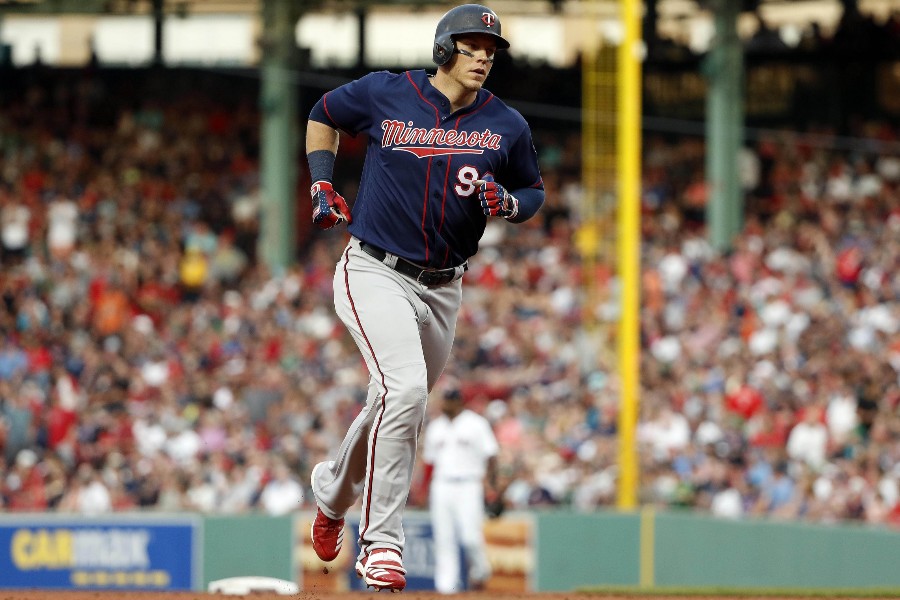
Twins DH/1B Logan Morrison was recently shut down for the remainder of the season and, by reports, is expected to undergo surgery for a hip condition that has been bothering him for much of the year. The problem is being reported as ‘hip impingement’, which is a fairly common diagnosis. Some may recall that the NBA’s Isaiah Thomas dealt with this problem over the past couple seasons and underwent surgery more recently. So what is ‘hip impingement’? And when does it need surgery? And what happens during surgery? Let’s dive in and see what we can find out: Image courtesy of © Winslow Townson-USA TODAY Sports Twins DH/1B Logan Morrison was recently shut down for the remainder of the season and, by reports, is expected to undergo surgery for a hip condition that has been bothering him for much of the year. The problem is being reported as ‘hip impingement’, which is a fairly common diagnosis. Some may recall that the NBA’s Isaiah Thomas dealt with this problem over the past couple seasons and underwent surgery more recently. So what is ‘hip impingement’? And when does it need surgery? And what happens during surgery? Let’s dive in and see what we can find out: Question 1: What is hip impingement? Hip impingement is another term for what orthopedists call ‘femoroacetabular impingement’ or FAI. This term basically means pinching of the hip labrum tissue between the bone of the ball and the bone of the socket of the hip. The hip is a ball and socket joint. Around the rim of the socket is a tissue called ‘labrum’ which acts as a cushion, and also seals the ball into the socket. In an ideal world, the ball is perfectly round and the socket is perfectly hemispherical. In this case, when people move the hip around, there is no pinching. However, in some people, rather than being round the ball is more shaped like a grape or an egg. In these cases the extra bone can cause a pinching of the labrum when the hip is flexed (for example, when seated). Over time, this repetitive minor injury can cause damage to the labrum. There can also be extra bone on the socket side, which can have a similar effect. These two situations are called CAM impingement (extra bone on the ball) and PINCER impingement (extra bone on the socket). In many cases, both CAM and PINCER impingement coexist. Question 2: I don’t remember LoMo getting hurt. When did the labrum get torn? Typically, this is not an injury that results from a single incident (though it can happen that way). It is much more common for this to be the result of an accumulation of ‘microtraumas’ over a long period of time. In addition, the CAM and PINCER deformities are quite common in people who don’t have any pain in their hips. In some studies, >50% of asymptomatic patients have some signs of CAM or PINCER deformity on hip xrays. Simply having the ‘extra bone’ doesn’t automatically mean it is going to be a problem. Our understanding of why people develop these deformities is improving, but we don’t know the cause at this time. It appears to be more common in people participating in athletics (particularly hockey), so we think it has something to do with low-level trauma to the area during growth years. Question 3: Does a labrum tear always need surgery? No. A labrum tear is also a very common finding in patients with no hip pain. In one study of patients between 18-40 years old who had no hip pain, MRI’s of the hip showed a labrum tear about 40% of the time. So clearly not every labrum tear causes pain or requires surgery. There are also a number of conditions that can cause similar pain to hip impingement (ranging from hernias to pinched nerves in the spine to ‘sports hernias’ and many others). Therefore, time is often spent trying to decipher what the actual cause of the pain is in these patients, as it isn’t always as straightforward as we would like it to be. Question 4: How do we tell which labrum tears need surgery and which do not? This can be difficult, but typically rest, anti inflammatory medication, physical therapy and/or injections of cortisone are tried prior to surgery. Many patients can find success with these treatments. However, some do not, and surgery may be warranted. Question 5: What is done during surgery? There has been a significant evolution of techniques in hip surgery over the past decade as surgery for this condition has become more common. It can be done either open (through an incision) or arthroscopically (through the scope). Arthroscopic treatment is much more common, particularly in the United States. The hip is stretched apart by use of a special table that pulls the joint open about 1cm. The scope is put in to the joint and tools are used to examine the joint space. We look at the surface cartilage, labrum and other structures in and around the hip. Once we have looked at everything, any ‘extra’ bone on the socket side is carefully removed with a tool called a burr. The labrum tear is often repaired with small anchors back to the rim of the socket (from where it tore away). The ball is then released back into the socket and we use the burr to reshape the ball, removing extra bone in that area as well. Surgery often takes 2-4 hours depending on the extent of injury. Question 6: How long is the recovery? As with any surgery, the recovery is variable, but most high-level athletes are back to full sports around 6-8 months after the operation. There have been several studies examining the performance of professional athletes in different sports after return from this hip surgery. Most have shown little or no diminished performance after recovery. I’m certain even Morrison would say he didn’t have the season he was hoping to have for the Twins, and this hip issue certainly could’ve been part of the reason. Hopefully he can improve after surgery and get back to his 2017 form, whether for the Twins or elsewhere. View full article
-
 Question 1: What is hip impingement? Hip impingement is another term for what orthopedists call ‘femoroacetabular impingement’ or FAI. This term basically means pinching of the hip labrum tissue between the bone of the ball and the bone of the socket of the hip. The hip is a ball and socket joint. Around the rim of the socket is a tissue called ‘labrum’ which acts as a cushion, and also seals the ball into the socket. In an ideal world, the ball is perfectly round and the socket is perfectly hemispherical. In this case, when people move the hip around, there is no pinching. However, in some people, rather than being round the ball is more shaped like a grape or an egg. In these cases the extra bone can cause a pinching of the labrum when the hip is flexed (for example, when seated). Over time, this repetitive minor injury can cause damage to the labrum. There can also be extra bone on the socket side, which can have a similar effect. These two situations are called CAM impingement (extra bone on the ball) and PINCER impingement (extra bone on the socket). In many cases, both CAM and PINCER impingement coexist. Question 2: I don’t remember LoMo getting hurt. When did the labrum get torn? Typically, this is not an injury that results from a single incident (though it can happen that way). It is much more common for this to be the result of an accumulation of ‘microtraumas’ over a long period of time. In addition, the CAM and PINCER deformities are quite common in people who don’t have any pain in their hips. In some studies, >50% of asymptomatic patients have some signs of CAM or PINCER deformity on hip xrays. Simply having the ‘extra bone’ doesn’t automatically mean it is going to be a problem. Our understanding of why people develop these deformities is improving, but we don’t know the cause at this time. It appears to be more common in people participating in athletics (particularly hockey), so we think it has something to do with low-level trauma to the area during growth years. Question 3: Does a labrum tear always need surgery? No. A labrum tear is also a very common finding in patients with no hip pain. In one study of patients between 18-40 years old who had no hip pain, MRI’s of the hip showed a labrum tear about 40% of the time. So clearly not every labrum tear causes pain or requires surgery. There are also a number of conditions that can cause similar pain to hip impingement (ranging from hernias to pinched nerves in the spine to ‘sports hernias’ and many others). Therefore, time is often spent trying to decipher what the actual cause of the pain is in these patients, as it isn’t always as straightforward as we would like it to be. Question 4: How do we tell which labrum tears need surgery and which do not? This can be difficult, but typically rest, anti inflammatory medication, physical therapy and/or injections of cortisone are tried prior to surgery. Many patients can find success with these treatments. However, some do not, and surgery may be warranted. Question 5: What is done during surgery? There has been a significant evolution of techniques in hip surgery over the past decade as surgery for this condition has become more common. It can be done either open (through an incision) or arthroscopically (through the scope). Arthroscopic treatment is much more common, particularly in the United States. The hip is stretched apart by use of a special table that pulls the joint open about 1cm. The scope is put in to the joint and tools are used to examine the joint space. We look at the surface cartilage, labrum and other structures in and around the hip. Once we have looked at everything, any ‘extra’ bone on the socket side is carefully removed with a tool called a burr. The labrum tear is often repaired with small anchors back to the rim of the socket (from where it tore away). The ball is then released back into the socket and we use the burr to reshape the ball, removing extra bone in that area as well. Surgery often takes 2-4 hours depending on the extent of injury. Question 6: How long is the recovery? As with any surgery, the recovery is variable, but most high-level athletes are back to full sports around 6-8 months after the operation. There have been several studies examining the performance of professional athletes in different sports after return from this hip surgery. Most have shown little or no diminished performance after recovery. I’m certain even Morrison would say he didn’t have the season he was hoping to have for the Twins, and this hip issue certainly could’ve been part of the reason. Hopefully he can improve after surgery and get back to his 2017 form, whether for the Twins or elsewhere.
 -
Logan Morrison Hip Impingement Q&A Heezy1323 Twins DH/1B Logan Morrison was recently shut down for the remainder of the season and, by reports, is expected to undergo surgery for a hip condition that has been bothering him for much of the year. The problem is being reported as ‘hip impingement’, which is a fairly common diagnosis. Some may recall that the NBA’s Isaiah Thomas dealt with this problem over the past couple seasons and underwent surgery more recently. So what is ‘hip impingement’? And when does it need surgery? And what happens during surgery? Let’s dive in and see what we can find out: Question 1: What is hip impingement? Hip impingement is another term for what orthopedists call ‘femoroacetabular impingement’ or FAI. This term basically means pinching of the hip labrum tissue between the bone of the ball and the bone of the socket of the hip. The hip is a ball and socket joint. Around the rim of the socket is a tissue called ‘labrum’ which acts as a cushion, and also seals the ball into the socket. In an ideal world, the ball is perfectly round and the socket is perfectly hemispherical. In this case, when people move the hip around, there is no pinching. However, in some people, rather than being round the ball is more shaped like a grape or an egg. In these cases the extra bone can cause a pinching of the labrum when the hip is flexed (for example, when seated). Over time, this repetitive minor injury can cause damage to the labrum. There can also be extra bone on the socket side, which can have a similar effect. These two situations are called CAM impingement (extra bone on the ball) and PINCER impingement (extra bone on the socket). In many cases, both CAM and PINCER impingement coexist. Question 2: I don’t remember LoMo getting hurt. When did the labrum get torn? Typically, this is not an injury that results from a single incident (though it can happen that way). It is much more common for this to be the result of an accumulation of ‘microtraumas’ over a long period of time. In addition, the CAM and PINCER deformities are quite common in people who don’t have any pain in their hips. In some studies, >50% of asymptomatic patients have some signs of CAM or PINCER deformity on hip xrays. Simply having the ‘extra bone’ doesn’t automatically mean it is going to be a problem. Our understanding of why people develop these deformities is improving, but we don’t know the cause at this time. It appears to be more common in people participating in athletics (particularly hockey), so we think it has something to do with low-level trauma to the area during growth years. Question 3: Does a labrum tear always need surgery? No. A labrum tear is also a very common finding in patients with no hip pain. In one study of patients between 18-40 years old who had no hip pain, MRI’s of the hip showed a labrum tear about 40% of the time. So clearly not every labrum tear causes pain or requires surgery. There are also a number of conditions that can cause similar pain to hip impingement (ranging from hernias to pinched nerves in the spine to ‘sports hernias’ and many others). Therefore, time is often spent trying to decipher what the actual cause of the pain is in these patients, as it isn’t always as straightforward as we would like it to be. Question 4: How do we tell which labrum tears need surgery and which do not? This can be difficult, but typically rest, anti inflammatory medication, physical therapy and/or injections of cortisone are tried prior to surgery. Many patients can find success with these treatments. However, some do not, and surgery may be warranted. Question 5: What is done during surgery? There has been a significant evolution of techniques in hip surgery over the past decade as surgery for this condition has become more common. It can be done either open (through an incision) or arthroscopically (through the scope). Arthroscopic treatment is much more common, particularly in the United States. The hip is stretched apart by use of a special table that pulls the joint open about 1cm. The scope is put in to the joint and tools are used to examine the joint space. We look at the surface cartilage, labrum and other structures in and around the hip. Once we have looked at everything, any ‘extra’ bone on the socket side is carefully removed with a tool called a burr. The labrum tear is often repaired with small anchors back to the rim of the socket (from where it tore away). The ball is then released back into the socket and we use the burr to reshape the ball, removing extra bone in that area as well. Surgery often takes 2-4 hours depending on the extent of injury. Question 6: How long is the recovery? As with any surgery, the recovery is variable, but most high-level athletes are back to full sports around 6-8 months after the operation. There have been several studies examining the performance of professional athletes in different sports after return from this hip surgery. Most have shown little or no diminished performance after recovery. I’m certain even Morrison would say he didn’t have the season he was hoping to have for the Twins, and this hip issue certainly could’ve been part of the reason. Hopefully he can improve after surgery and get back to his 2017 form, whether for the Twins or elsewhere.
- 1 comment
-
- 3
-
-
- logan morrison
- hip impingement
- (and 1 more)
-
-
-

From the album: LoMo Hip Q&A
-

From the album: LoMo Hip Q&A
-

From the album: LoMo Hip Q&A
-

From the album: LoMo Hip Q&A
-
I took my 3 year old son to his first game today. He did pretty well until about the 8th inning (which was over 3:10 from first pitch) so we left after the Twins gave up the lead. Heard them take it back on the radio, then I got home just in time to see them blow the lead in the 9th, then Dozier's slam. Would've been great to see the slam in person, but 4.5 hrs for a ten inning game just ain't happening for a 3 year old. Glad they could pull this one out- would've been a shame to let it slip away as much as they battled.
- 84 replies
-
- 11
-
-
- brian dozier
- eduardo escobar
- (and 3 more)
-
1) Where are you from? Tiny town called Verndale, near the buzzing metropolises (metropoli??) of Wadena and Perham. College in Moorhead at Concordia (Go Cobs). Then lived in Milwaukee, Omaha, Pensacola, Columbia, SC; and now back in the TC Metro for the past 2 years. 2) Age Range? 38 3) What brought you to Twins Daily? BYTO, I think. Can't remember exactly. 4) Highest level of baseball/softball played? I played 2 years in college (until my shoulder said 'I don't think so'). It also became apparent that my career goals required more library time and less baseball time. I then played town ball for a few years, followed by a 15 year hiatus before returning to 35+ ball in the Cities last year. Took me last year to get the timing down, but hovering around hitting .400 this year (with lots of seeing-eye grounders). Working on improving my launch angle... (too much Parker Twitter) I've also attended the Twins Fantasy Camp the past couple of years. For any who may be interested, you should really consider it. It is an absolute BLAST. 5) Favorite Twins player, favorite underappreciated Twins player and current favorite. All-time gotta be Kirby. Under- Al Newman. Current- Berrios 6) Favorite non-Twins site/authors. I spend too much time on ESPN.com 7) Favorite Twitter follows. Aside from those that contribute to this site, mostly people related to my profession 8) Other interests outside of baseball. Family (wife and two young kids- boy 3 and girl 9 mos). As above I play old man baseball and a little (bad) golf. 9) Favorite part of Twins Daily. Reading varied opinions about controversial subjects that help inform my own opinion. 10) Tell us what we can do better. Not sure I have any gems. I thought the player Q&A was a good idea (mentioned earlier) 11) Have you been to any of the Twins Daily "events"? Not at this point, but would like to attend soon
-
2018 Twins Midseason Top Prospect List: 1-5
Heezy1323 replied to Seth Stohs's topic in Twins Daily Front Page News
There are many MLB team physicians that are very active in baseball/throwing related research, though essentially all pro team physicians (as far as I am aware, anyway) maintain a practice that probably limits their ability to spend the needed time on such concerns specifically for an MLB team. However, there are many situations (Rush in Chicago, Hospital for Special Surgery and Columbia in NY, Kerlan-Jobe clinic in LA, Andrews Institute in Pensacola for example) where physicians are part of a team of athletic trainers, biomechanists, research assistants, surgeons/physicians in training, strength and conditioning coaches and others that are studying things like you mention. In most of these situations, this is academic research that is published in the geeky journals I read. I would assume there are some things going on within teams that produces proprietary information, but I'm not privy to that info. More likely (I suspect) is that the teams use the data produced by those mentioned above and apply it to their draft/development strategy as their internal people prefer. -
2018 Twins Midseason Top Prospect List: 1-5
Heezy1323 replied to Seth Stohs's topic in Twins Daily Front Page News
There are some studies that seem to show that a slider places more stress on the elbow, but I haven't seen any studies that directly relate slider % to need for TJ. I think of this in a similar way to the current concussion situation. We are realizing that it's not necessarily the 'big hits' that cause CTE down the road, its the collection of numerous 'subconcussive blows' that end up being the problem. Similarly, it's (usually) not just a single pitch that injures a UCL, rather a collection of thousands of incidents of 'micro damage' done over time that eventually adds up to the ligament being insufficiently strong to support a pitcher's elbow. There may be one pitch that causes the ligament to finally 'tear', but IMHO the ligament is very rarely normal one pitch, then completely torn the next. -
2018 Twins Midseason Top Prospect List: 1-5
Heezy1323 replied to Seth Stohs's topic in Twins Daily Front Page News
A few things worth mentioning regarding this... 1) Graterol is almost certainly done growing, so growth plates are not an issue. 2) Age does not appear to be related to the likelihood of UCL reconstruction in most studies that I am aware of. The UCL is certainly fully formed by this time, and doesn't change considerably in it's constitution after probably 12-13 years of age. 3) Fastball velocity does not appear to be related to likelihood of undergoing TJ 4) About 15% of minor league and 25% of major league pitchers have undergone TJ (so 'nearly every single case' is probably a bit of an overstatement). Here is a portion of an article abstract from the Journal of Shoulder and Elbow Surgery in 2016 (Volume 25, Issue 4, April 2016, Pages 671-675 Keller et al.) Background The number of Major League Baseball (MLB) pitchers requiring ulnar collateral ligament (UCL) reconstructions is increasing. Recent literature has attempted to correlate specific stresses placed on the throwing arm to risk for UCL injury, with limited results. Methods Eighty-three MLB pitchers who underwent primary UCL reconstruction were evaluated. Pitching velocity and percent of pitch type thrown (fastball, curve ball, slider, and change-up) were evaluated 2 years before and after surgery. Data were compared with control pitchers matched for age, position, size, innings pitched, and experience. Results The evaluation of pitch velocity compared with matched controls found no differences in pre-UCL reconstruction pitch velocities for fastballs (91.5 vs. 91.2 miles per hour [mph], P = .69), curveballs (78.2 vs. 77.9 mph, P = .92), sliders (83.3 vs. 83.5 mph, P = .88), or change-ups (83.9 vs. 83.8 mph, P = .96). When the percentage of pitches thrown was evaluated, UCL reconstructed pitchers pitch significantly more fastballs than controls (46.7% vs. 39.4%, P = .035). This correlated to a 2% increase in risk for UCL injury for every 1% increase in fastballs thrown. Pitching more than 48% fastballs was a significant predictor of UCL injury, because pitchers over this threshold required reconstruction (P = .006). Conclusion MLB pitchers requiring UCL reconstruction do not pitch at higher velocities than matched controls, and pitch velocity does not appear to be a risk factor for UCL reconstruction. However, MLB pitchers who pitch a high percentage of fastballs may be at increased risk for UCL injury because pitching a higher percent of fastballs appears to be a risk factor for UCL reconstruction. I recognize it is wordy, but basically it showed no directly correlation between fastball velocity and TJ surgery. It did, however, show a relationship between percentage of fastballs and TJ. Other studies have shown similar results, with some studies conflicting. As always, the truth is likely somewhere in the middle.- 74 replies
-
- 6
-
-
- royce lewis
- alex kirilloff
- (and 3 more)
-
Royce Lewis: Patellar Tendinopathy
Heezy1323 replied to Heezy1323's topic in Twins Daily Front Page News
Thank you for the very kind words. I am fortunate to be able to do something I love. Probably the thing I enjoy most in clinic is when a patient tells me at the end of an appointment, "Thanks for explaining that to me doc, I understand it a lot better now." I'm hopeful that I can occasionally bring some of that to TD. -
Royce Lewis: Patellar Tendinopathy
Heezy1323 replied to Heezy1323's topic in Twins Daily Front Page News
Sure! I love talking elbows! I actually saw two local teenagers this week that need Tommy John surgery. Not my favorite discussion to have, but unfortunately something I see too frequently. Pitching is awfully hard on the shoulder and elbow. To me, it's a wonder that anyone can actually make it to MLB and have a long pro career given the stresses of throwing (though I probably have a bias because I tend to see the injured throwers). We do appear to be in a wave of growing recognition of the problems of overuse and sport specialization, but these injuries can clearly still occur even under ideal conditions. -
Royce Lewis: Patellar Tendinopathy
Heezy1323 replied to Heezy1323's topic in Twins Daily Front Page News
Yes, that's correct. Nearly all tissues in your body are constantly in a state of equilibrium between 'build-up' and 'break-down'. Sometimes, for various reasons, the balance can get tilted in favor of 'break-down', which is when trouble can occur. Usually some rest and rehab will restore the balance, but of course there can be times where that doesn't do the trick, and something else is required (i.e. surgery, PRP, stem cell treatments, etc.)


