



Cody Christie
-
Posts
7,515 -
Joined
-
Last visited
-
Days Won
5
Content Type
Profiles
News
Minnesota Twins Videos
2026 Minnesota Twins Top Prospects Ranking
2022 Minnesota Twins Draft Picks
Minnesota Twins Free Agent & Trade Rumors, Notes, & Tidbits
Guides & Resources
2023 Minnesota Twins Draft Picks
The Minnesota Twins Players Project
2024 Minnesota Twins Draft Picks
2025 Minnesota Twins Draft Pick Tracker
2026 Minnesota Twins Draft Tracker: Picks & Bonuses
Forums
Blogs
Events
Store
Downloads
Gallery
Everything posted by Cody Christie
-
 When fans think back on the 2017 campaign, most are going to remember the breakout performances by young players like Byron Buxton and Miguel Sano. Other position players like Eddie Rosario and Max Kepler also enjoyed solid seasons. All of these players were under the age of 25 with plenty of areas for improvement moving forward. Even with this young core of talent, the Twins were one of the best teams in baseball at avoiding pitches out of the zone.According to FanGraphs, O-Swing% is calculated by taking the number of times players swing at pitches outside the zone and dividing by the number of pitches outside of the zone. Last year in the American League, the Twins had the second lowest O-Swing% (28.6%) as they only trailed the Cleveland Indians. Minnesota finished with the fourth lowest O-Swing% when including teams from the National League. So what players are helping to lead to Minnesota’s patience at the plate? Robbie Grossman collected over 450 plate appearances during the 2017 campaign. He finished with the 13th best O-Swing% among AL batters with over 200 plate appearances. In fact, the Twins had three other players (Chis Gimenez, Joe Mauer, and Brian Dozier) who all ranked in the top-20. Jason Castro finished with a 25.1% O-Swing% which was good enough to be in the top-30. Minnesota’s veteran bats were clearly leading the way at avoiding bad pitches. Of the Twins young core of players, who was able to lay off pitches out of the zone? Jorge Polanco surprised a lot of people in 2017, especially with the way he was able to handle himself at the plate. His 26.3% O-Swing% ranked sixth on the team and placed him in the AL’s top-40. Miguel Sano and Max Kepler both swung at pitches out of the zone around 30% of the time. Eddie Rosario ranked worst on the team as he swung at pitches out of the zone almost 40% of the time. Byron Buxton provides an interesting case from 2017. Buxton struggled through the first half by hitting .216/.288/.306 with 87 strikeouts in 83 games. There were times he looked lost at the plate and pitchers were able to attack the strike zone against him. Something clicked in the second half. He went for a .893 OPS with 24 extra-base hits in 57 games. Even though he became an offensive force in the second half, Buxton still struggled with strikeouts. He averaged more than one strikeout per game and his O-Swing% shows that he was chasing pitches. In the first half when Buxton’s strikeouts were piling up, he posted a 30.6% O-Swing%. During his second half surge, his O-Swing% actually went up to 31.6%. As mentioned earlier, pitchers could impose their will on Buxton in the first half. Most pitches could be around or near the zone and he wasn’t going to be able to do anything with it. In the second half, he was likely seeing better pitches and he was definitely putting together better at-bats. Buxton could still improve in this area and that has to be a scary proposition for opposing pitchers. Minnesota’s veteran hitters are the reason the Twins ranked so well in 2017. Mauer and Dozier might not be part of this organization beyond the 2018 campaign. If Minnesota wants to stay at the top of the AL, some of the young core players are going to have to continue to lay off pitches out of the zone. What player's numbers surprised you? Leave a COMMENT and start the discussion. Click here to view the article
- 14 replies
-
- 1
-

-
- byron buxton
- brian dozier
- (and 3 more)
-
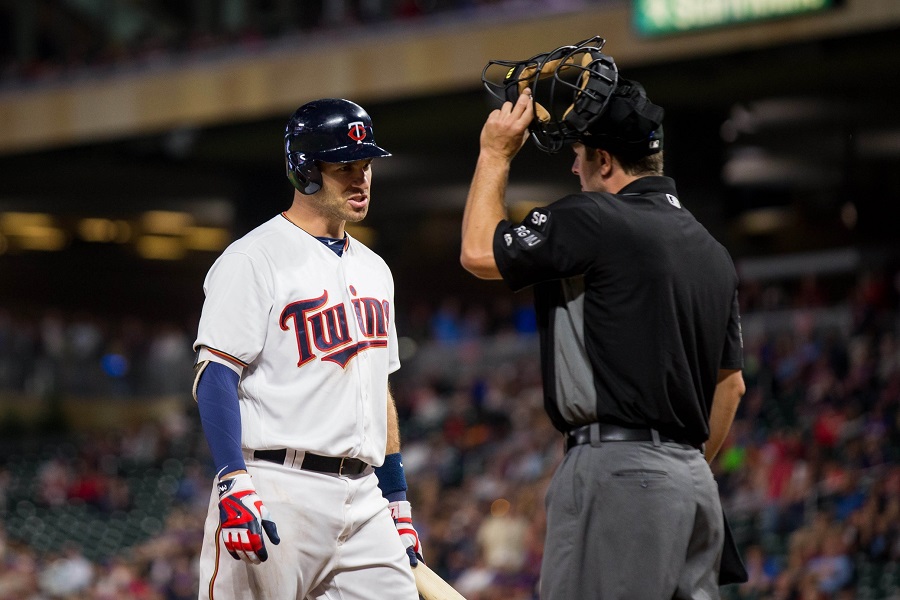 According to FanGraphs, O-Swing% is calculated by taking the number of times players swing at pitches outside the zone and dividing by the number of pitches outside of the zone. Last year in the American League, the Twins had the second lowest O-Swing% (28.6%) as they only trailed the Cleveland Indians. Minnesota finished with the fourth lowest O-Swing% when including teams from the National League. So what players are helping to lead to Minnesota’s patience at the plate? Robbie Grossman collected over 450 plate appearances during the 2017 campaign. He finished with the 13th best O-Swing% among AL batters with over 200 plate appearances. In fact, the Twins had three other players (Chis Gimenez, Joe Mauer, and Brian Dozier) who all ranked in the top-20. Jason Castro finished with a 25.1% O-Swing% which was good enough to be in the top-30. Minnesota’s veteran bats were clearly leading the way at avoiding bad pitches. Of the Twins young core of players, who was able to lay off pitches out of the zone? Jorge Polanco surprised a lot of people in 2017, especially with the way he was able to handle himself at the plate. His 26.3% O-Swing% ranked sixth on the team and placed him in the AL’s top-40. Miguel Sano and Max Kepler both swung at pitches out of the zone around 30% of the time. Eddie Rosario ranked worst on the team as he swung at pitches out of the zone almost 40% of the time. Byron Buxton provides an interesting case from 2017. Buxton struggled through the first half by hitting .216/.288/.306 with 87 strikeouts in 83 games. There were times he looked lost at the plate and pitchers were able to attack the strike zone against him. Something clicked in the second half. He went for a .893 OPS with 24 extra-base hits in 57 games. Even though he became an offensive force in the second half, Buxton still struggled with strikeouts. He averaged more than one strikeout per game and his O-Swing% shows that he was chasing pitches. In the first half when Buxton’s strikeouts were piling up, he posted a 30.6% O-Swing%. During his second half surge, his O-Swing% actually went up to 31.6%. As mentioned earlier, pitchers could impose their will on Buxton in the first half. Most pitches could be around or near the zone and he wasn’t going to be able to do anything with it. In the second half, he was likely seeing better pitches and he was definitely putting together better at-bats. Buxton could still improve in this area and that has to be a scary proposition for opposing pitchers. Minnesota’s veteran hitters are the reason the Twins ranked so well in 2017. Mauer and Dozier might not be part of this organization beyond the 2018 campaign. If Minnesota wants to stay at the top of the AL, some of the young core players are going to have to continue to lay off pitches out of the zone. What player's numbers surprised you? Leave a COMMENT and start the discussion.
 -
Plenty of prospect lists are released during the off-season. One thing prospect lists don’t show is the depth of young talent at the big league level. Minnesota’s farm system would look a lot different if the likes of Byron Buxton or Jose Berrios still populated top-10 lists. Hence, the need for a look at the top ten players in the Twins system under age 25. In the first part of this list, there wasn't a single player who has made their big league debut. Today's portion of the list includes multiple big league assets.Here at Twins Daily, Nick recently finished off his top-20 Minnesota Twins assets. His approach was a little different as he was looking at every player in the organization. Baseball Prospectus just released their list of Top 25-and-under players but their cutoff was 4/1/1992. This allowed Miguel Sano and Max Kepler to be included on their list. The list below is limited to players whose seasonal ages for 2018 are 24 or younger—that is, any player who will not yet have turned 25 on July 1, 2018. Players like Miguel Sano and Max Kepler don’t qualify because they will turn 25 before July 1st. 5. Nick Gordon, SS Date of birth: October 24, 1995 (age-22 season) Entering last off-season, Nick Gordon was near the top of every Twins prospect list. Royce Lewis’ addition to the system has pushed Gordon down a peg. Tom wondered if Gordon has gone from prospect to suspect because of his poor second half. As a 21-year old, he spent all of 2017 at Double-A where he was over three years younger than the competition. His batting average dipped by over 20 points but he bumped up his slugging percentage by 22 points. There are still questions about whether he will stay at shortstop or even if he will still be in the Twins organization at this point next year. If the Twins need to add big league pitching, Gordon might have to be one of the trade pieces. 4. Jorge Polanco, SS Date of birth: July 5, 1993 (age-24 season) It’s hard for me to imagine ranking Jorge Polanco this high but that’s how good he looked in 2017. He got on base over 31% of the time and collected 46 extra-base hits in 133 games. From the beginning of August until season’s end, he hit .316/.377/553 with 10 home runs. Throughout his professional career, there have been questions about his defensive abilities. He committed 18 errors in 507 chances for a .964 fielding percentage. SABR’s Defensive Index had him ranked in the bottom five among American League shortstops. Polanco could help end Minnesota’s revolving door at shortstop if he can make some defensive improvements and continue to hit like he did in August and September. 3. Jose Berrios, RHP Date of birth: May 27, 1994 (age-24 season) This is the year, right? Berrios has shown flashes of being a dominant big league pitcher. In fact, there are times his breaking pitches are completely unhittable. Berrios has shown the ability to be dominant at an individual level during his time in the minor leagues. In 30 starts at Triple-A, he has a 2.79 ERA with a 1.02 WHIP and a 10.0 K/9. Last year at the big league level, he was over 5.5 years younger than the competition. He’s going to put it all together and that’s certainly good news for Twins fans. 2. Royce Lewis, SS Date of birth: June 5, 1999 (age-19 season) In many other organizations, he might be the best player under the age of 25. It’s hard to know what the future will hold. Lewis could end up becoming better than the top player on this list. Right now, there is a lot of projection involved and he projects to be a very good player for a very long time. At his current age, Baseball Prospectus is comparing him to Carlos Correa. If Lewis can lead Minnesota where Correa brought Houston this year, he will become a Twins legend. 1. Byron Buxton, CF Date of birth: December 18, 1993 (age-24 season) Buxton follows quite the impressive line of defensive center fielders in Minnesota that stretches back to the Puckett era. Twins fans have been spoiled with diving catches from the likes of Hunter, Gomez, Span, and Revere. Buxton was honored as the best defensive player in the American League and the scary things is… his bat turned out to be pretty good too. When I predicted the 2021 line-up last week, I wrote about the possibility of Buxton winning an MVP. This isn’t a stretch especially in an era that values all-around players. Minnesota’s base running saw a resurgence in 2017 and Buxton was leading the way as the best runner in the big leagues. He’s going to need to hit and he showed the type of player he could be in the second half of last season. So how would your rankings look? What will the rankings look like next season? Leave a COMMENT and start the discussion. Click here to view the article
-
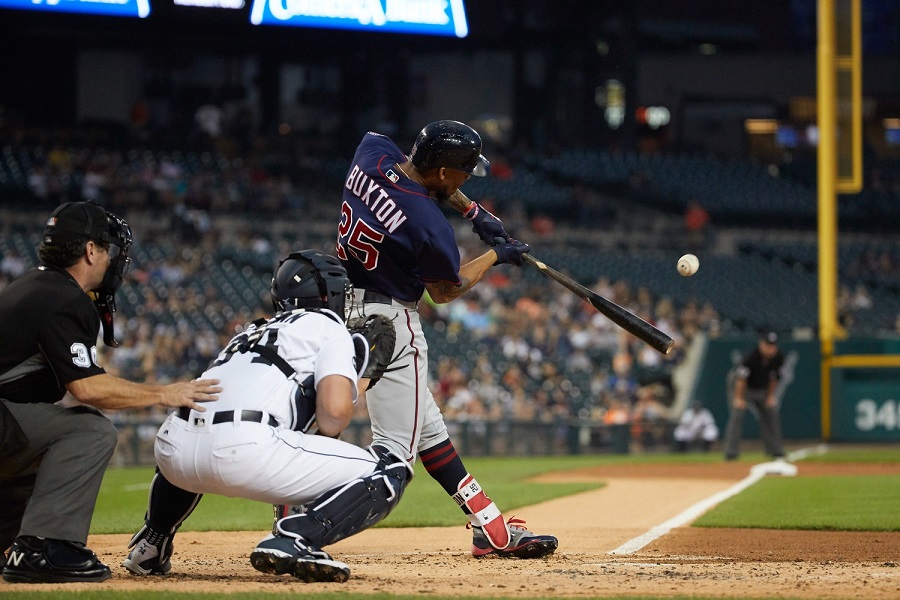 Here at Twins Daily, Nick recently finished off his top-20 Minnesota Twins assets. His approach was a little different as he was looking at every player in the organization. Baseball Prospectus just released their list of Top 25-and-under players but their cutoff was 4/1/1992. This allowed Miguel Sano and Max Kepler to be included on their list. https://twitter.com/AaronGleeman/status/953281637650907136 The list below is limited to players whose seasonal ages for 2018 are 24 or younger—that is, any player who will not yet have turned 25 on July 1, 2018. Players like Miguel Sano and Max Kepler don’t qualify because they will turn 25 before July 1st. 5. Nick Gordon, SS Date of birth: October 24, 1995 (age-22 season) Entering last off-season, Nick Gordon was near the top of every Twins prospect list. Royce Lewis’ addition to the system has pushed Gordon down a peg. Tom wondered if Gordon has gone from prospect to suspect because of his poor second half. As a 21-year old, he spent all of 2017 at Double-A where he was over three years younger than the competition. His batting average dipped by over 20 points but he bumped up his slugging percentage by 22 points. There are still questions about whether he will stay at shortstop or even if he will still be in the Twins organization at this point next year. If the Twins need to add big league pitching, Gordon might have to be one of the trade pieces. 4. Jorge Polanco, SS Date of birth: July 5, 1993 (age-24 season) It’s hard for me to imagine ranking Jorge Polanco this high but that’s how good he looked in 2017. He got on base over 31% of the time and collected 46 extra-base hits in 133 games. From the beginning of August until season’s end, he hit .316/.377/553 with 10 home runs. Throughout his professional career, there have been questions about his defensive abilities. He committed 18 errors in 507 chances for a .964 fielding percentage. SABR’s Defensive Index had him ranked in the bottom five among American League shortstops. Polanco could help end Minnesota’s revolving door at shortstop if he can make some defensive improvements and continue to hit like he did in August and September. 3. Jose Berrios, RHP Date of birth: May 27, 1994 (age-24 season) This is the year, right? Berrios has shown flashes of being a dominant big league pitcher. In fact, there are times his breaking pitches are completely unhittable. https://twitter.com/SInow/status/867445336176025600 Berrios has shown the ability to be dominant at an individual level during his time in the minor leagues. In 30 starts at Triple-A, he has a 2.79 ERA with a 1.02 WHIP and a 10.0 K/9. Last year at the big league level, he was over 5.5 years younger than the competition. He’s going to put it all together and that’s certainly good news for Twins fans. 2. Royce Lewis, SS Date of birth: June 5, 1999 (age-19 season) In many other organizations, he might be the best player under the age of 25. It’s hard to know what the future will hold. Lewis could end up becoming better than the top player on this list. Right now, there is a lot of projection involved and he projects to be a very good player for a very long time. At his current age, Baseball Prospectus is comparing him to Carlos Correa. If Lewis can lead Minnesota where Correa brought Houston this year, he will become a Twins legend. 1. Byron Buxton, CF Date of birth: December 18, 1993 (age-24 season) Buxton follows quite the impressive line of defensive center fielders in Minnesota that stretches back to the Puckett era. Twins fans have been spoiled with diving catches from the likes of Hunter, Gomez, Span, and Revere. Buxton was honored as the best defensive player in the American League and the scary things is… his bat turned out to be pretty good too. When I predicted the 2021 line-up last week, I wrote about the possibility of Buxton winning an MVP. This isn’t a stretch especially in an era that values all-around players. Minnesota’s base running saw a resurgence in 2017 and Buxton was leading the way as the best runner in the big leagues. He’s going to need to hit and he showed the type of player he could be in the second half of last season. So how would your rankings look? What will the rankings look like next season? Leave a COMMENT and start the discussion.
 -
Brian Dozier has clearly become a team leader for the Twins over the last handful of years. His future with the club is up in the air as his contract is set to expire at season’s end. Pitchers and catchers will soon report to Fort Myers and it seems like the Twins are content with letting Dozier play this season without an extension. Besides an extension, other debates involving Dozier have surfaced over the last couple of weeks. Let’s look at some of the conversations surrounding Dozier.Extension Debate There have been plenty of posts here at Twins Daily wondering which players would make sense to lock up with an extension. It might make sense for some young players before they reach arbitration or more veteran players like Dozier and Joe Mauer who will hit free agency at the end of 2018. It doesn’t sound like the Twins have approached Dozier about staying in Minnesota. “There have been none whatsoever, zero conversations about [staying in Minnesota] after next year,” he told Sid Hartman of the Minneapolis Star Tribune. This doesn’t mean something can’t be worked out but the beginning of spring training is quickly approaching. It seems likely that the two sides won’t be talking during the regular season. Houston used a combination of veterans and youth to win the 2017 World Series. Minnesota is going to need to build a similar roster if they hope to make headway in the American League. I was on Bison 1660 in Fargo at the end of last week and we discussed Dozier’s future with the club. Pace of Play Debate Over the last couple weeks, word came out that the Players’ Union rejected MLB’s pace of play proposals. These new rules could include a pitch clock and fewer trips to the mound. A pitch clock has been used at the Double-A and Triple-A level since 2015. Since MLB introduced these ideas before last season, the Commissioner could implement the changes without the approval of the Players’ Union. Dozier was part of a two-hour conference call with player representatives from all 30 teams. His message coming out of that call was that the players are united in their opposition to these proposals. “We don’t want to damage the integrity of the game and change the game completely. If [Manfred’s proposal] does go through, it definitely changes the integrity of the game, and we are all against it,” Dozier told the Star Tribune. “There’s so much gray area in the proposal, it just didn’t sit well with us.” Dozier went on to suggest that it is up to the more veteran players to make the younger players speed up their game. While this might sound like a good suggestion, players knew these rule changes were possibly coming this season and nothing changed in 2017. In fact, nine-inning games were actually longer last season than in 2016. What are your thoughts on the Dozier debates? Should the team extend him? Do you agree with him about the pace of play proposals? Leave a COMMENT and start the discussion. Click here to view the article
-
 Extension Debate There have been plenty of posts here at Twins Daily wondering which players would make sense to lock up with an extension. It might make sense for some young players before they reach arbitration or more veteran players like Dozier and Joe Mauer who will hit free agency at the end of 2018. It doesn’t sound like the Twins have approached Dozier about staying in Minnesota. “There have been none whatsoever, zero conversations about [staying in Minnesota] after next year,” he told Sid Hartman of the Minneapolis Star Tribune. This doesn’t mean something can’t be worked out but the beginning of spring training is quickly approaching. It seems likely that the two sides won’t be talking during the regular season. Houston used a combination of veterans and youth to win the 2017 World Series. Minnesota is going to need to build a similar roster if they hope to make headway in the American League. I was on Bison 1660 in Fargo at the end of last week and we discussed Dozier’s future with the club. https://twitter.com/Bison1660/status/956677584569405440 Pace of Play Debate Over the last couple weeks, word came out that the Players’ Union rejected MLB’s pace of play proposals. These new rules could include a pitch clock and fewer trips to the mound. A pitch clock has been used at the Double-A and Triple-A level since 2015. Since MLB introduced these ideas before last season, the Commissioner could implement the changes without the approval of the Players’ Union. Dozier was part of a two-hour conference call with player representatives from all 30 teams. His message coming out of that call was that the players are united in their opposition to these proposals. “We don’t want to damage the integrity of the game and change the game completely. If [Manfred’s proposal] does go through, it definitely changes the integrity of the game, and we are all against it,” Dozier told the Star Tribune. “There’s so much gray area in the proposal, it just didn’t sit well with us.” Dozier went on to suggest that it is up to the more veteran players to make the younger players speed up their game. While this might sound like a good suggestion, players knew these rule changes were possibly coming this season and nothing changed in 2017. In fact, nine-inning games were actually longer last season than in 2016. What are your thoughts on the Dozier debates? Should the team extend him? Do you agree with him about the pace of play proposals? Leave a COMMENT and start the discussion.
 -
Free agency has been slow moving this off-season. Few of the top free agents have signed and there has even been talk about collusion among MLB’s teams. Realistically, teams are smarter about the way they spend money and this year’s crop of free agents has plenty of flaws. The Twins have been tied to Yu Darvish from the beginning. Minnesota’s front office hasn’t been shy about mentioned their intentions of trying the hook the biggest fish on the free agent market. A thrilling conclusion could be coming and Twins’ fans could have an answer as early as this week.Darvish Decision Looming Jon Morosi of Fox Sports and MLB Network is reporting that Darvish is expected to make his decision this week. He also adds that the Twins are one of the teams still in discussion with the star pitcher. It is interesting that his only note about a current team is the Twins. However, there have been plenty of other teams connected to Darvish in recent weeks. The list of teams includes the Twins, Cubs, Rangers, Dodgers and Brewers. Gimenez Signing Former Twins catcher Chris Gimenez signed a minor league deal with the Chicago Cubs this week. Sporting News compared this move to when the Cubs brought in David Ross to be paired with Jon Lester in 2015. Gimenez worked with Darvish in Texas and helped the pitcher on his way back from Tommy John surgery. Darvish has also called Gimenez his “all-time favorite catcher.” Five-Year Offer Darvish will turn 32 next August and he has only pitched one season of more than 200 innings. This might make it tough for team’s swallow a long-term deal. With many big free agent signings, there is some “dead” money at the end of the deal where the player isn’t playing at the same level as prior to his contract signing. According to reports, Darvish has at least one five-year offer on the table. There are still multiple teams in the mix for Darvish’s services but it sounds like his decision will be made by the end of the week. What are your thoughts on the latest Darvish news? Will he be in a Twins uniform by the end of the week? Leave a COMMENT and start the discussion. Click here to view the article
- 330 replies
-
- 2
-
-
- yu darvish
- chris gimenez
- (and 3 more)
-
Report: Darvish Decision Expected This Week, Twins In Consideration
Cody Christie posted an article in Twins
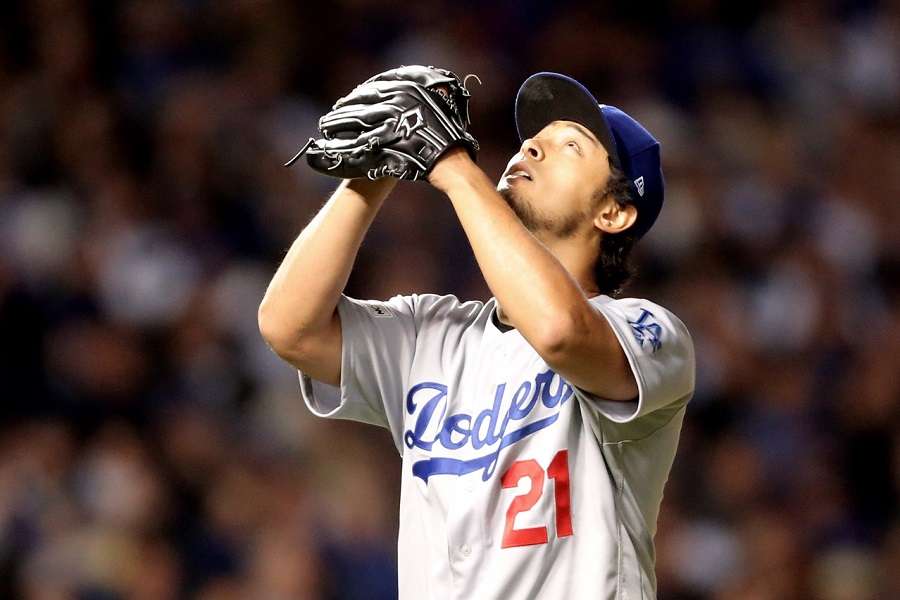 Darvish Decision Looming Jon Morosi of Fox Sports and MLB Network is reporting that Darvish is expected to make his decision this week. He also adds that the Twins are one of the teams still in discussion with the star pitcher. https://twitter.com/jonmorosi/status/956199322433064960 It is interesting that his only note about a current team is the Twins. However, there have been plenty of other teams connected to Darvish in recent weeks. The list of teams includes the Twins, Cubs, Rangers, Dodgers and Brewers. Gimenez Signing Former Twins catcher Chris Gimenez signed a minor league deal with the Chicago Cubs this week. Sporting News compared this move to when the Cubs brought in David Ross to be paired with Jon Lester in 2015. Gimenez worked with Darvish in Texas and helped the pitcher on his way back from Tommy John surgery. Darvish has also called Gimenez his “all-time favorite catcher.” https://twitter.com/MikeBerardino/status/955616565264879617 Five-Year Offer Darvish will turn 32 next August and he has only pitched one season of more than 200 innings. This might make it tough for team’s swallow a long-term deal. With many big free agent signings, there is some “dead” money at the end of the deal where the player isn’t playing at the same level as prior to his contract signing. According to reports, Darvish has at least one five-year offer on the table. There are still multiple teams in the mix for Darvish’s services but it sounds like his decision will be made by the end of the week. https://twitter.com/jcrasnick/status/955526201686323201 What are your thoughts on the latest Darvish news? Will he be in a Twins uniform by the end of the week? Leave a COMMENT and start the discussion.
 -
Prospects lists are in interesting endeavor. In the 2018 Twins Prospect Handbook, all of the writers compiled their own top prospect lists. We even have previous year’s list so you can peruse some of the history of the organization. This year’s book was the tenth edition so there have been plenty of hits and plenty of misses along the way. One thing prospect lists don’t show is the depth of young talent at the big league level. Minnesota’s farm system would look a lot different if the likes of Byron Buxton or Jose Berrios were still populating top-10 lists. Hence, the need for a look at the top ten players in the Twins system under age 25.Here at Twins Daily, Nick recently finished off his top-20 Minnesota Twins assets. His approach was a little different as he was looking at every player in the organization. Baseball Prospectus just released their list of Top 25-and-under players but their cutoff was 4/1/1992. This allowed Miguel Sano and Max Kepler to be included on their list. The list below is limited to players whose seasonal ages for 2018 are 24 or younger—that is, any player who will not yet have turned 25 on July 1, 2018. Players like Miguel Sano and Max Kepler don’t qualify because they will turn 25 before July 1st. 10. Brusdar Graterol, RHP Date of birth: August 26, 1998 (age-19 season) Graterol might be a little unknown to the casual Twins fan. Other pitching prospects like Fernando Romero and Stephen Gonsalves are closer to the big leagues and typically rank higher on prospect lists. When looking to 2018, I identified Graterol as a prospect to watch. He should get his first taste of a full season league by the end of next season. It’s hard not to get excited about a player with a triple-digit fastball. He’s multiple years away from Target Field but he’s certainly an exciting prospect. 9. Alex Kirilloff, OF Date of birth: November 9, 1997 (age-20 season) Kirilloff missed all of 2017 following Tommy John surgery. Minnesota’s top pick from 2016 still has plenty of promise as an outfield prospect. Even after missing time, Kirilloff has an advanced approach at the plate. He should get his first taste of a full-season league and he will be younger than the competition in Cedar Rapids. If his bat plays well, he could be a fast riser of the next handful of seasons. Byron Buxton, Max Kepler, and Eddie Rosario currently have the outfield on lockdown but Kirilloff will be an important part of the future. 8. Fernando Romero, RHP Date of birth: December 24, 1994 (age-23 season) Romero flourished in 2016 after returning from Tommy John surgery. There were more bumps in the road during 2017. However, he was over two years younger than the competition in the Southern League. He pitched over 120 innings for the first time as a professional. His strikeouts per nine matched his career number but his walks per nine was half a walk higher. Romero could spend most of 2018 in Rochester but there’s also a shot he makes his big league debut. 7. Brent Rooker, OF/1B Date of birth: November 1, 1994 (age-23 season) Brent Rooker can bash and the 2018 season could be huge for him as he already has played in Fort Myers. Last season, Rooker combined for a .930 OPS between the Appy League and the Florida State League, which is typically considered a pitcher’s league. In 129 games between college and the pros, he mashed 41 home runs. Rooker was old for being drafted so he should spend time at Chattanooga in the coming year. Injuries, poor play, or even Rooker’s hot bat could put him on the fast track to Target Field. 6. Stephen Gonsalves, LHP Date of birth: July 8, 1994 (age-23 season) For the second straight year, Gonsalves was name the Twins Daily Minor League Starting Pitcher of the Year. Most likely, that’s an honor he won’t want to three-peat in 2018. Over the last two seasons, he has made 28 starts at the Double-A level. During that time he has a 2.28 ERA, 1.05 WHIP, and 10.3 K/9. After making his Triple-A debut this past season, I made him a resolution for 2018. It’s going to be a tough task but he has the chance to be an integral part of Minnesota’s rotation as they fight for positioning in the American League over the next half of a decade. How would your rankings look? Would you have other players on the second-half of your list? Leave a COMMENT and start the discussion. Click here to view the article
-
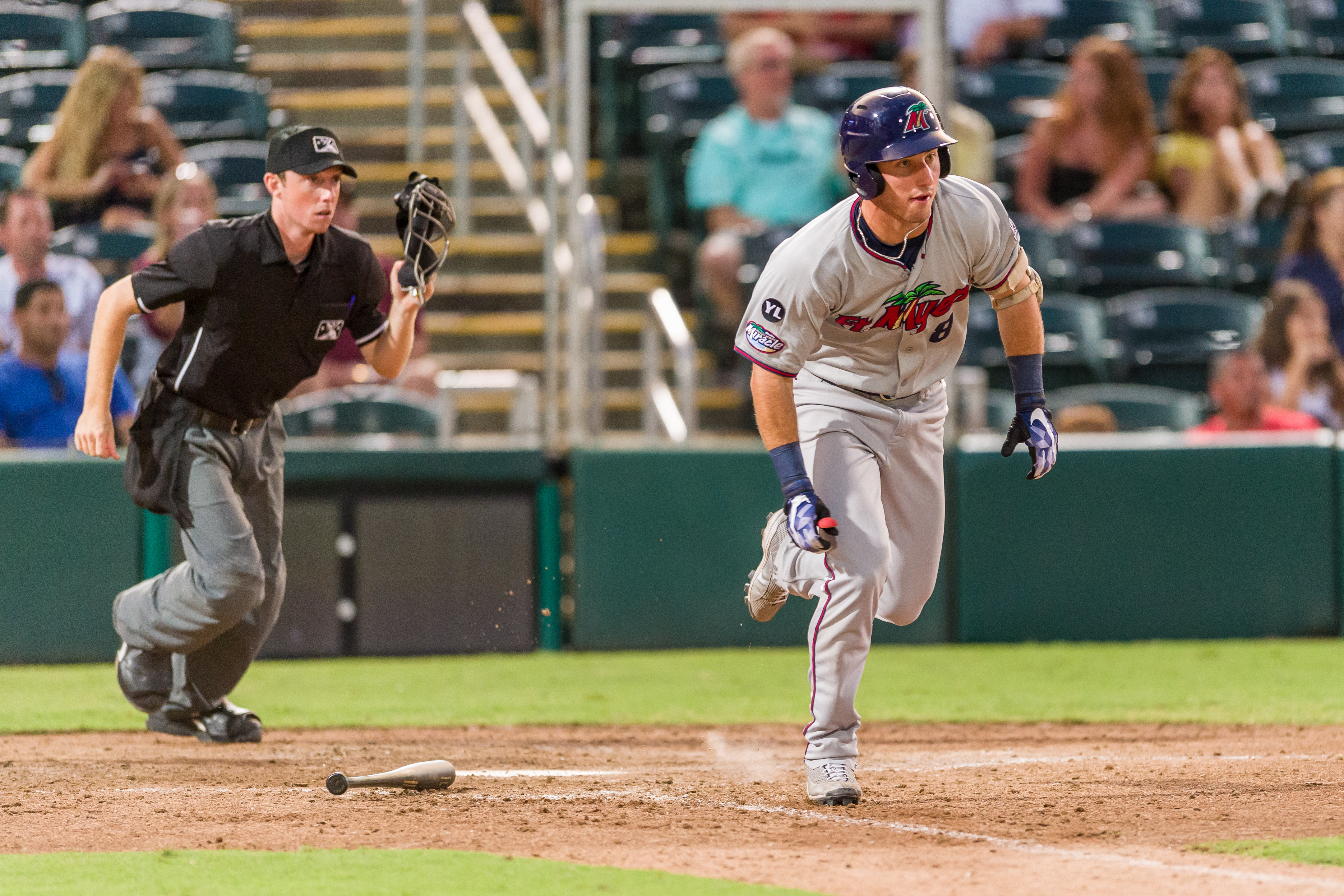 Here at Twins Daily, Nick recently finished off his top-20 Minnesota Twins assets. His approach was a little different as he was looking at every player in the organization. Baseball Prospectus just released their list of Top 25-and-under players but their cutoff was 4/1/1992. This allowed Miguel Sano and Max Kepler to be included on their list. https://twitter.com/AaronGleeman/status/953281637650907136 The list below is limited to players whose seasonal ages for 2018 are 24 or younger—that is, any player who will not yet have turned 25 on July 1, 2018. Players like Miguel Sano and Max Kepler don’t qualify because they will turn 25 before July 1st. 10. Brusdar Graterol, RHP Date of birth: August 26, 1998 (age-19 season) Graterol might be a little unknown to the casual Twins fan. Other pitching prospects like Fernando Romero and Stephen Gonsalves are closer to the big leagues and typically rank higher on prospect lists. When looking to 2018, I identified Graterol as a prospect to watch. He should get his first taste of a full season league by the end of next season. It’s hard not to get excited about a player with a triple-digit fastball. He’s multiple years away from Target Field but he’s certainly an exciting prospect. 9. Alex Kirilloff, OF Date of birth: November 9, 1997 (age-20 season) Kirilloff missed all of 2017 following Tommy John surgery. Minnesota’s top pick from 2016 still has plenty of promise as an outfield prospect. Even after missing time, Kirilloff has an advanced approach at the plate. He should get his first taste of a full-season league and he will be younger than the competition in Cedar Rapids. If his bat plays well, he could be a fast riser of the next handful of seasons. Byron Buxton, Max Kepler, and Eddie Rosario currently have the outfield on lockdown but Kirilloff will be an important part of the future. 8. Fernando Romero, RHP Date of birth: December 24, 1994 (age-23 season) Romero flourished in 2016 after returning from Tommy John surgery. There were more bumps in the road during 2017. However, he was over two years younger than the competition in the Southern League. He pitched over 120 innings for the first time as a professional. His strikeouts per nine matched his career number but his walks per nine was half a walk higher. Romero could spend most of 2018 in Rochester but there’s also a shot he makes his big league debut. 7. Brent Rooker, OF/1B Date of birth: November 1, 1994 (age-23 season) Brent Rooker can bash and the 2018 season could be huge for him as he already has played in Fort Myers. Last season, Rooker combined for a .930 OPS between the Appy League and the Florida State League, which is typically considered a pitcher’s league. In 129 games between college and the pros, he mashed 41 home runs. Rooker was old for being drafted so he should spend time at Chattanooga in the coming year. Injuries, poor play, or even Rooker’s hot bat could put him on the fast track to Target Field. 6. Stephen Gonsalves, LHP Date of birth: July 8, 1994 (age-23 season) For the second straight year, Gonsalves was name the Twins Daily Minor League Starting Pitcher of the Year. Most likely, that’s an honor he won’t want to three-peat in 2018. Over the last two seasons, he has made 28 starts at the Double-A level. During that time he has a 2.28 ERA, 1.05 WHIP, and 10.3 K/9. After making his Triple-A debut this past season, I made him a resolution for 2018. It’s going to be a tough task but he has the chance to be an integral part of Minnesota’s rotation as they fight for positioning in the American League over the next half of a decade. How would your rankings look? Would you have other players on the second-half of your list? Leave a COMMENT and start the discussion.
 -
Pace of play has been one of the major focuses during Rob Manfred’s time as commissioner. Timers have been added for between innings and when new pitchers take the mound. In the minor leagues, a 20-second pitch timer has been used at the Double-A and Triple-A levels since 2015. Major League Baseball wants to see some more changes to baseball’s highest level but the Players’ Association doesn’t agree with these changes.On Thursday, the Players’ Association rejected a proposal to add a 20-second pitch clock and limits on mound visits. These rule changes were proposed last season which means the commissioner’s office could implement the rules without the approval of the Players’ Union. A decision could come as early as the next owner’s meeting scheduled to start on January 30th. Even with attempts to shorten games, the average length of a nine-inning game increased by nearly four and a half minutes. In 2017, it took 3 hours, 5 minutes and 11 second to complete a nine-inning game. Just one year earlier, it was 3 hours and 42 seconds. During last year’s postseason play, the average game took three hours and 29 minutes. The amount of replays also decreased so that wasn’t a factor in adding to the time of games. At November’s quarterly owners’ meeting, Commissioner Rob Manfred made it clear that changes would be coming to the game. He said, “My preferred path is a negotiated agreement with the players, but if we can’t get an agreement we are going to have rule changes in 2018 one way or the other.” According to AP reports, MLB can implement the following changes: 30-second clock between batters20-second clock between pitchesHitters would be required to be in the batter’s box with at least five seconds left on the timerThe clock would start when the pitcher has the ball on the moundThe clock would reset when a pitcher steps off the rubber for a pickoff throwWarnings would be issued for a first offense and then a ball is called against a pitcher and a strike is given to a batterA team would be allowed one mound visit per pitcher each inningThe mound visit could be from a manager, coach or playerA second mound visit must result in a pitching changeWhat are your thought on the potential rule changes? Does MLB need to continue to focus on pace of play? Leave a COMMENT and start the discussion. Click here to view the article
- 103 replies
-
- 1
-
-
- rob manfred
- pace of play
- (and 2 more)
-
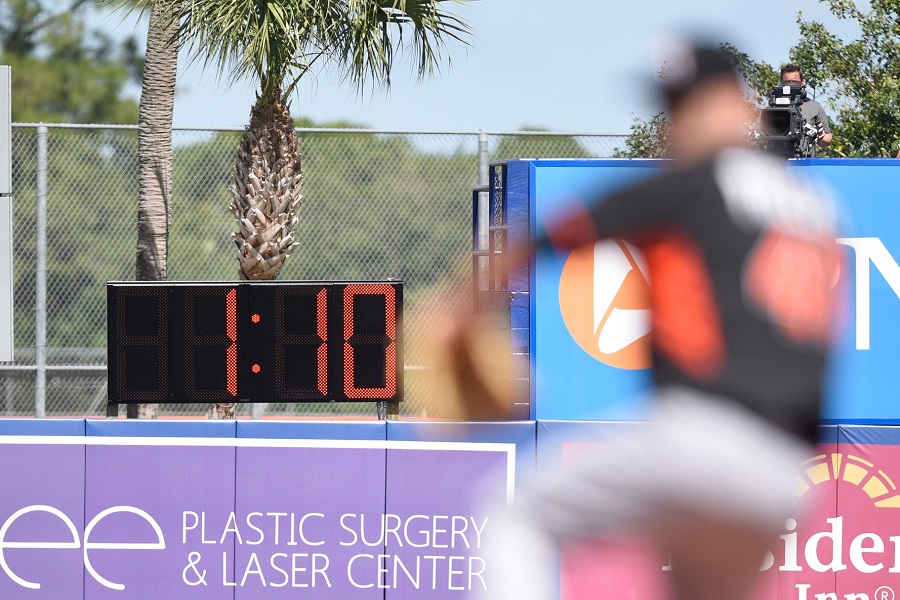 On Thursday, the Players’ Association rejected a proposal to add a 20-second pitch clock and limits on mound visits. These rule changes were proposed last season which means the commissioner’s office could implement the rules without the approval of the Players’ Union. A decision could come as early as the next owner’s meeting scheduled to start on January 30th. Even with attempts to shorten games, the average length of a nine-inning game increased by nearly four and a half minutes. In 2017, it took 3 hours, 5 minutes and 11 second to complete a nine-inning game. Just one year earlier, it was 3 hours and 42 seconds. During last year’s postseason play, the average game took three hours and 29 minutes. The amount of replays also decreased so that wasn’t a factor in adding to the time of games. At November’s quarterly owners’ meeting, Commissioner Rob Manfred made it clear that changes would be coming to the game. He said, “My preferred path is a negotiated agreement with the players, but if we can’t get an agreement we are going to have rule changes in 2018 one way or the other.” According to AP reports, MLB can implement the following changes: 30-second clock between batters 20-second clock between pitches Hitters would be required to be in the batter’s box with at least five seconds left on the timer The clock would start when the pitcher has the ball on the mound The clock would reset when a pitcher steps off the rubber for a pickoff throw Warnings would be issued for a first offense and then a ball is called against a pitcher and a strike is given to a batter A team would be allowed one mound visit per pitcher each inning The mound visit could be from a manager, coach or player A second mound visit must result in a pitching change What are your thought on the potential rule changes? Does MLB need to continue to focus on pace of play? Leave a COMMENT and start the discussion.
 -
During every season, there are players who figure something out and take the next step. It can be a pitcher finally gaining command of a third pitch. It could be a hitter making an adjustment at the plate. In 2017, Twins fans saw Byron Buxton put things together on both sides of the ball. He won numerous postseason awards for his defensive prowess and his bat started to come around in the second half. A couple of weeks ago, I identified three prospects to watch in 2018. At the big league level, what players have the chance to rise above the crowd in 2018? Here are three possibilities…Max Kepler, OF Tom wrote about Kepler’s possible breakout potential and I tend to agree with him. Over the last three seasons, Kepler has played 263 big league games while hitting .239/.310/.422 with 36 home runs and 52 doubles. For multiple years, Kepler was considered one of the team’s best prospects. In his last full minor league season, he compiled a .947 OPS on his way to winning the 2015 Southern League MVP. Left-handed pitchers have been the problem for Kepler in the big leagues. His OPS against righties is over .800 while being limited to .520 versus lefties. During the 2015 season, he combined for an .863 OPS against lefties. If Kepler can solve his lefty conundrum, the rest of the AL better watch out. Trevor Hildenberger, RP Hildenberger, the side-winding relief pitcher, made his MLB debut in 2017. In 37 games (42.0 IP), he posted a 3.21 ERA with a 1.05 WHIP and a 44 to 6 strikeout to walk ratio. Leading into the season, it looked like he was ready to join the big league team after winning back-to-back awards as the Twins Daily Minor League Relief Pitcher of the Year. There are some areas of improvement. Throughout his minor league career, he averaged a 1.57 ERA with a 0.88 WHIP and a 10.5 SO/9. Hildenberger’s experience and deceptiveness have him poised to be a dominant late-inning relief pitcher. Even if Fernando Rodney and Addison Reed are getting the eighth and ninth, Hildenberger can be relied on for more than three outs after a starter has been removed. Jose Berrios, SP As a 23-year old, Berrios hasn’t seen everything click yet at the big league level. However, he’s shown flashes of the brilliance that made him one of the team’s top prospects. During his five minor league seasons, Berrios averaged 9.6 SO/9 and that number has dipped to 8.3 through his first two big league seasons. There were always questions surrounding his size and whether or not his strikeouts would translate to baseball’s highest level. When I wrote about Twins players’ resolutions, I though Berrios should focus on increasing his strikeout rate in 2018. Berrios has another gear to hit and 2018 might be the year for him to take the next step. If Minnesota wants to make it back to the postseason, Berrios needs to decrease his walks and command the strike zone. What players do you think have the chance to take the next step in 2018? Will Kepler, Hildenberger, and Berrios be key to the 2018 Twins? Leave a COMMENT and start the discussion. Click here to view the article
- 38 replies
-
- 3
-
-
- max kepler
- trevor hildenberger
- (and 3 more)
-
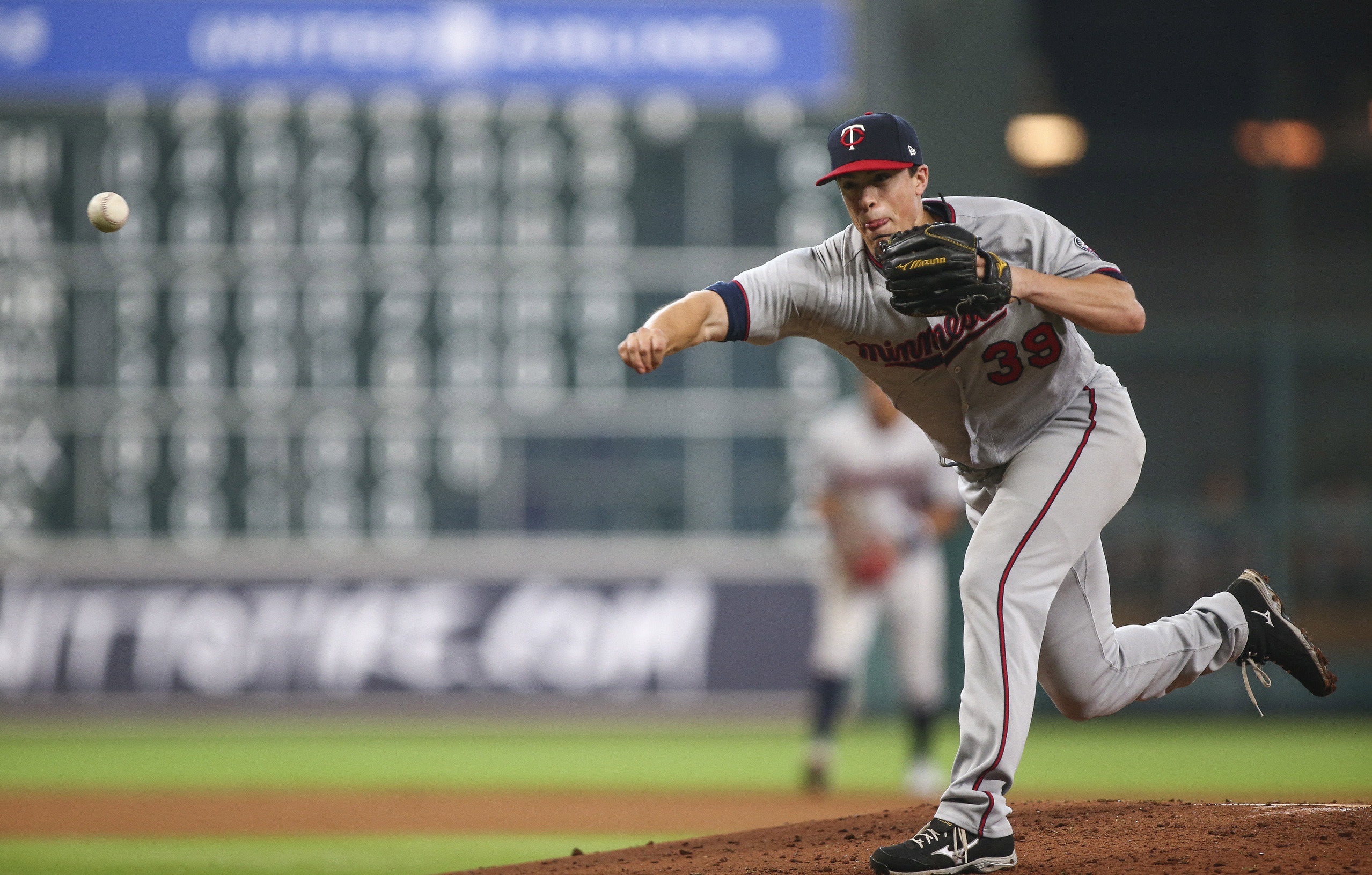 Max Kepler, OF Tom wrote about Kepler’s possible breakout potential and I tend to agree with him. Over the last three seasons, Kepler has played 263 big league games while hitting .239/.310/.422 with 36 home runs and 52 doubles. For multiple years, Kepler was considered one of the team’s best prospects. In his last full minor league season, he compiled a .947 OPS on his way to winning the 2015 Southern League MVP. Left-handed pitchers have been the problem for Kepler in the big leagues. His OPS against righties is over .800 while being limited to .520 versus lefties. During the 2015 season, he combined for an .863 OPS against lefties. If Kepler can solve his lefty conundrum, the rest of the AL better watch out. Trevor Hildenberger, RP Hildenberger, the side-winding relief pitcher, made his MLB debut in 2017. In 37 games (42.0 IP), he posted a 3.21 ERA with a 1.05 WHIP and a 44 to 6 strikeout to walk ratio. Leading into the season, it looked like he was ready to join the big league team after winning back-to-back awards as the Twins Daily Minor League Relief Pitcher of the Year. There are some areas of improvement. Throughout his minor league career, he averaged a 1.57 ERA with a 0.88 WHIP and a 10.5 SO/9. Hildenberger’s experience and deceptiveness have him poised to be a dominant late-inning relief pitcher. Even if Fernando Rodney and Addison Reed are getting the eighth and ninth, Hildenberger can be relied on for more than three outs after a starter has been removed. Jose Berrios, SP As a 23-year old, Berrios hasn’t seen everything click yet at the big league level. However, he’s shown flashes of the brilliance that made him one of the team’s top prospects. During his five minor league seasons, Berrios averaged 9.6 SO/9 and that number has dipped to 8.3 through his first two big league seasons. There were always questions surrounding his size and whether or not his strikeouts would translate to baseball’s highest level. When I wrote about Twins players’ resolutions, I though Berrios should focus on increasing his strikeout rate in 2018. Berrios has another gear to hit and 2018 might be the year for him to take the next step. If Minnesota wants to make it back to the postseason, Berrios needs to decrease his walks and command the strike zone. What players do you think have the chance to take the next step in 2018? Will Kepler, Hildenberger, and Berrios be key to the 2018 Twins? Leave a COMMENT and start the discussion.
 -
If you’re like a lot of Minnesota sports fans, your adrenaline might still be pumping from the Vikings’ thrilling last second win on Sunday. Fans of the purple and gold have been tormented by heartbreak throughout the franchise’s history. The “Minneapolis Miracle” might be the first stop as the team tries to break what some have called a “curse.” There have certainly been some other dramatic moments in Minnesota sports history. For some of the franchises, it was tough to narrow down the list. Here are the moments I picked out. Feel free to disagree in the comments section below.Vikings Moment: Stefon Diggs’ Catch Blair Walsh’s shanked field goal. Brett Farve’s interception. Gary Anderson’s missed field goal. It looked like Sunday would be another addition to the Vikings run of poor postseason luck. With one tremendous catch and scamper into the end zone, Diggs might have rewritten Vikings lore. There are still multiple games left before the organization can fully reverse the curse but this was certainly the first step in the right direction. Twins Moment: Kirby Puckett’s Home Run There have certainly been some dramatic moments throughout Twins history: Jack Morris tossing 10 shutout innings in Game 7 of 1991, the up-and-down moments of Game 163 in 2009, and the last out of Minnesota’s first World Series in 1987. All of those moments are great but Puckett’s walk-off home run was certainly the franchise’s greatest finish. It was an iconic moment that allowed Morris to have his magical Game 7. Timberwolves Moment: Webber’s Missed Three-Pointer The Timberwolves’ playoff history has been almost non-existent. However, the 2004 season saw the club go on a run all the way to the Western Conference Finals. Minnesota matched up with Sacramento in the semifinals and the series went to Game 7. Kevin Garnett and the rest of the T-Puppies were headed where no Timberwolves team had been before and where no team has since returned. Wild Moment: Brunette’s Game 7 Overtime Winner Much like the Timberwolves, there hasn’t been much playoff success in Wild history. The 2002-2003 club went on a run all the way to the Western Conference Finals before falling to the Ducks. The Wild went to the brink of elimination in both the quarterfinals and semifinals. Without this goal, Minnesota might never have made it out of the first round. Lynx Moment: Moore’s Game 3 Buzzer Beater While the Wild and Timberwolves have struggled to find playoff success, the Lynx have been dominant in postseason play. Minnesota has won the WBNA title in 2011, 2013, 2015, and 2017. They’ve also lost two finals during that same stretch. The Lynx would need five games to finish off the Indiana Fever but it was still a shot that will go down in Minnesota sports history. How would you rank these moments? Did I miss any along the way? Leave a COMMENT and start the discussion. Click here to view the article
-
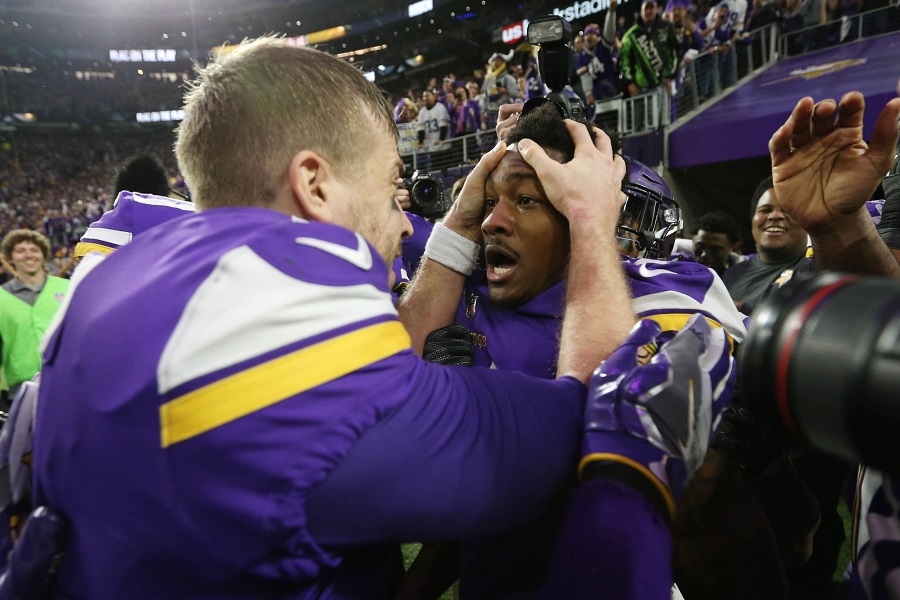 Vikings Moment: Stefon Diggs’ Catch Blair Walsh’s shanked field goal. Brett Farve’s interception. Gary Anderson’s missed field goal. It looked like Sunday would be another addition to the Vikings run of poor postseason luck. With one tremendous catch and scamper into the end zone, Diggs might have rewritten Vikings lore. There are still multiple games left before the organization can fully reverse the curse but this was certainly the first step in the right direction. https://twitter.com/NFL/status/952709230888329219 Twins Moment: Kirby Puckett’s Home Run There have certainly been some dramatic moments throughout Twins history: Jack Morris tossing 10 shutout innings in Game 7 of 1991, the up-and-down moments of Game 163 in 2009, and the last out of Minnesota’s first World Series in 1987. All of those moments are great but Puckett’s walk-off home run was certainly the franchise’s greatest finish. It was an iconic moment that allowed Morris to have his magical Game 7. https://twitter.com/fsnorth/status/923601753701982208 Timberwolves Moment: Webber’s Missed Three-Pointer The Timberwolves’ playoff history has been almost non-existent. However, the 2004 season saw the club go on a run all the way to the Western Conference Finals. Minnesota matched up with Sacramento in the semifinals and the series went to Game 7. Kevin Garnett and the rest of the T-Puppies were headed where no Timberwolves team had been before and where no team has since returned.Wild Moment: Brunette’s Game 7 Overtime Winner Much like the Timberwolves, there hasn’t been much playoff success in Wild history. The 2002-2003 club went on a run all the way to the Western Conference Finals before falling to the Ducks. The Wild went to the brink of elimination in both the quarterfinals and semifinals. Without this goal, Minnesota might never have made it out of the first round.Lynx Moment: Moore’s Game 3 Buzzer Beater While the Wild and Timberwolves have struggled to find playoff success, the Lynx have been dominant in postseason play. Minnesota has won the WBNA title in 2011, 2013, 2015, and 2017. They’ve also lost two finals during that same stretch. The Lynx would need five games to finish off the Indiana Fever but it was still a shot that will go down in Minnesota sports history.How would you rank these moments? Did I miss any along the way? Leave a COMMENT and start the discussion.
 -
Addison Reed’s reported signing is putting the Twins in an interesting spot. Once Reed passes his physical, he is going to need a spot on the 40-man roster. This also holds true for any future free agents the club signs this off-season. If Yu Darvish ends up in Minnesota, he will need a 40-man spot as well. What players are floating at the back-end of Minnesota’s 40-man roster? Here are a few names that could be forced to pass through waivers in the coming weeks.Buddy Boshers, LHP Boshers has made 75 appearances over the last two seasons with the Twins. During that time he has a 4.56 ERA with a 1.25 WHIP and a 65 to 17 strikeout to walk ratio. Last season, the left-handed hurler held lefties to a .655 OPS while righties managed a .904 OPS. Boshers will be 30-years old this season and he has never posted an ERA under 4.00 in any of his three big league seasons. Dietrich Enns, LHP Enns joined the Twins organization last year along with Zack Littell as part of the Jaime Garcia trade. He only made two appearances and allowed three earned runs in four innings. However, he’s posted a 1.86 ERA with a 1.12 WHIP in 116.0 innings at Triple-A. Those numbers are hard to ignore. Enns will turn 27-years old in the middle of May. Minnesota’s new front office saw enough in him to include him in the trade so maybe that keeps him safe. Tyler Kinley, RHP The Twins just acquired Kinley from Miami during December’s Rule 5 Draft. Because of the rules associated with his acquisition, the club has to keep him on their 25-man roster for all of 2018 or offer him back to Miami. Between High-A and Double-A last season, Kinley had a 3.54 ERA with a 1.22 WHIP and a 72 to 22 strikeout to walk ratio (53.1 innings). It’s rare for Rule 5 players to be sent back to their clubs this quickly but the Twins might not have anticipated adding Fernando Rodney and Addison Reed. Gabriel Moya, LHP Originally signed by the Diamondbacks, Moya was dealt to Minnesota for John Ryan Murphy. He made seven big league appearances last year and allowed three runs in 6.1 innings. In the minors last season, he was almost untouchable. He compiled a 0.77 ERA while striking out 13.4 batters per nine innings. Moya was able to do this while being over two years younger than the competition in the Southern League. Kennys Vargas, DH Earlier in the off-season, reports had Vargas open to playing overseas. Vargas is out of options and would need to stick with the Twins next season. His lack of defensive flexibility makes it hard to pencil him into the team’s line-up on a regular basis. Players like Joe Mauer, Robbie Grossman and Mitch Garver might all need to see time at DH. At the big league level over the last four seasons, he has hit .252/.311/.437 including double digit home runs in each of the last two seasons. How would you rank the back end of the 40-man roster? Who will be the first to go? Leave a COMMENT and start the discussion. Click here to view the article
- 39 replies
-
- 2
-
-
- kennys vargas
- gabriel moya
- (and 3 more)
-
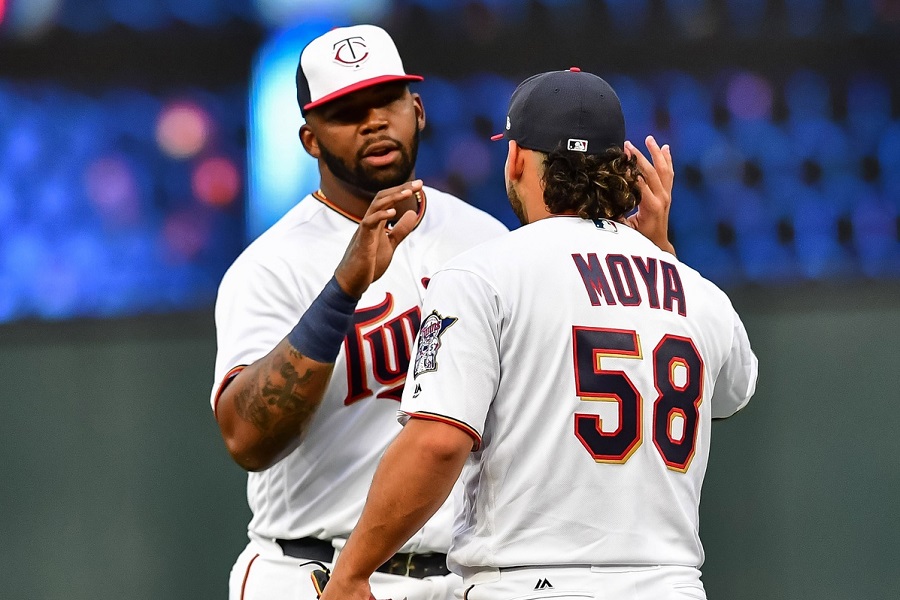 Buddy Boshers, LHP Boshers has made 75 appearances over the last two seasons with the Twins. During that time he has a 4.56 ERA with a 1.25 WHIP and a 65 to 17 strikeout to walk ratio. Last season, the left-handed hurler held lefties to a .655 OPS while righties managed a .904 OPS. Boshers will be 30-years old this season and he has never posted an ERA under 4.00 in any of his three big league seasons. Dietrich Enns, LHP Enns joined the Twins organization last year along with Zack Littell as part of the Jaime Garcia trade. He only made two appearances and allowed three earned runs in four innings. However, he’s posted a 1.86 ERA with a 1.12 WHIP in 116.0 innings at Triple-A. Those numbers are hard to ignore. Enns will turn 27-years old in the middle of May. Minnesota’s new front office saw enough in him to include him in the trade so maybe that keeps him safe. Tyler Kinley, RHP The Twins just acquired Kinley from Miami during December’s Rule 5 Draft. Because of the rules associated with his acquisition, the club has to keep him on their 25-man roster for all of 2018 or offer him back to Miami. Between High-A and Double-A last season, Kinley had a 3.54 ERA with a 1.22 WHIP and a 72 to 22 strikeout to walk ratio (53.1 innings). It’s rare for Rule 5 players to be sent back to their clubs this quickly but the Twins might not have anticipated adding Fernando Rodney and Addison Reed. Gabriel Moya, LHP Originally signed by the Diamondbacks, Moya was dealt to Minnesota for John Ryan Murphy. He made seven big league appearances last year and allowed three runs in 6.1 innings. In the minors last season, he was almost untouchable. He compiled a 0.77 ERA while striking out 13.4 batters per nine innings. Moya was able to do this while being over two years younger than the competition in the Southern League. Kennys Vargas, DH Earlier in the off-season, reports had Vargas open to playing overseas. Vargas is out of options and would need to stick with the Twins next season. His lack of defensive flexibility makes it hard to pencil him into the team’s line-up on a regular basis. Players like Joe Mauer, Robbie Grossman and Mitch Garver might all need to see time at DH. At the big league level over the last four seasons, he has hit .252/.311/.437 including double digit home runs in each of the last two seasons. How would you rank the back end of the 40-man roster? Who will be the first to go? Leave a COMMENT and start the discussion.
 -
When it comes to baseball, there are plenty of parts of the game that are underappreciated. A nicely turned double-play, an assist from the outfield, or a play at the plate can all be exciting moments that make a difference in a game. Base running can be another very important part of the game for a team built like the Minnesota Twins. With a young core and some savvy veterans, the Twins might have been the best base running team in 2017. Can they continue this in 2018 or perhaps they will be able to get even better?According to FanGraphs, Base Running (BsR) is an all-encompassing base running statistic that turns stolen bases, caught stealings, and other base running plays (taking extra bases, being thrown out on the bases, etc.) into runs above and below average. It is a combination of Weighted Stolen Base Runs (wSB), Weighted Grounded Into Double Play Runs (wGDP), and Ultimate Base Running (UBR). The Twins were the top team in baseball when it comes to BsR as they ranked 1.3 runs higher than the Arizona Diamondbacks. Tampa Bay was the closest AL team and they finished 2.8 runs behind Minnesota. To rank this highly, the Twins needed help from some of the American League’s best runners. Leading the way for Minnesota was Byron Buxton, who might have been the best base runner in the big leagues. Buxton was the lone player in baseball to crack double-digits in BsR. His 11.7 BsR bested Billy Hamilton by 2.2 runs and Mookie Betts by 2.5 runs. When it came to raw numbers, Buxton was successful in 29 of his 30 stolen base attempts and he didn’t get caught in the second half. Buxton also ranked well on MLB Statcast’s new sprint speed leaderboard. Sprint speed is foot speed metric, defined as “feet per second in a player’s fastest one-second window.” As with BsR, Buxton ranked as the fastest player in baseball with a 30.2 ft/sec sprint speed. Hamilton was the only other player with a sprint speed over 30.0 ft/sec while Bradeley Zimmer finished just below at 29.9 ft/sec. Even with Buxton’s speed, other Twins players fared well on the bases. Jorge Polanco and Brian Dozier each ranked in the top 15 of the American League in BsR. Dozier’s 3.6 BsR only trailed Whit Merrifield and Jose Altuve among AL second basemen. Polanco finished just better than Dozier with a 3.7 BsR. Among AL shortstops, he finished fourth behind Xander Bogaerts, Francisco Lindor, and Elvis Andrus. Besides the Twins middle-infield combination, three other players scored above 3.0 BsR. Even while being limited to 70 games, Ehire Adrianza (3.6 BsR) finished tied with Dozier for third on the team. Max Kepler (3.1 BsR) and Eduardo Escobar (3.0 BsR) were the other two players to finish north of 3.0 BsR. The three lowest BsR totals on the team belonged to Joe Mauer (-6.2 BsR), Miguel Sano (-3.9 BsR), and Jason Castro (-6.0 BsR). As a team, Minnesota also ranked well with sprint speed. MLB’s average speed is 27.0 ft/sec. Only two qualified players on the team finished more than one ft/sec behind the league average and they were both catchers (Jason Castro and Chris Gimenez). Zack Granite ranked 18th in sprint speed and was one of 21 players to clock in above 29.0 ft/sec. Base running will be key for Minnesota in 2018 especially with a young core. Minnesota’s roster isn’t built on power-hitting sluggers so the team needs to be able to steal bases and take the extra base when the opportunity arises. The Twins saw a base running resurgence in 2017 and now it is time to push it to the next level. Did any of the base running numbers surprise you? Who can make the most adjustments on the base paths? Leave a COMMENT and start the discussion. Click here to view the article
- 18 replies
-
- 3
-
-
- byron buxton
- brian dozier
- (and 3 more)
-
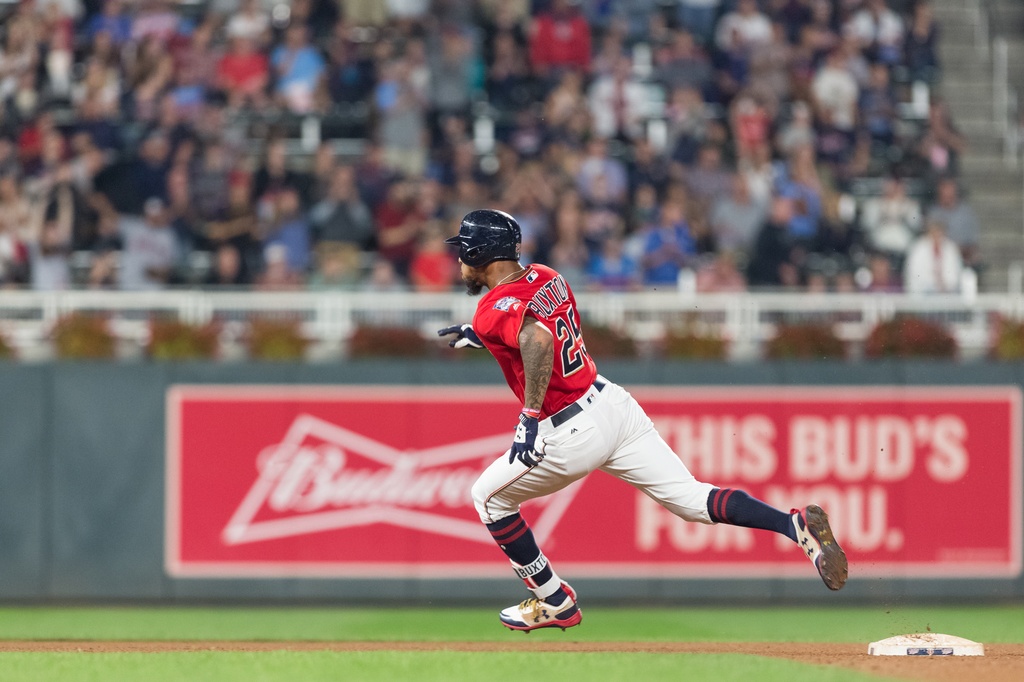 According to FanGraphs, Base Running (BsR) is an all-encompassing base running statistic that turns stolen bases, caught stealings, and other base running plays (taking extra bases, being thrown out on the bases, etc.) into runs above and below average. It is a combination of Weighted Stolen Base Runs (wSB), Weighted Grounded Into Double Play Runs (wGDP), and Ultimate Base Running (UBR). The Twins were the top team in baseball when it comes to BsR as they ranked 1.3 runs higher than the Arizona Diamondbacks. Tampa Bay was the closest AL team and they finished 2.8 runs behind Minnesota. To rank this highly, the Twins needed help from some of the American League’s best runners. Leading the way for Minnesota was Byron Buxton, who might have been the best base runner in the big leagues. Buxton was the lone player in baseball to crack double-digits in BsR. His 11.7 BsR bested Billy Hamilton by 2.2 runs and Mookie Betts by 2.5 runs. When it came to raw numbers, Buxton was successful in 29 of his 30 stolen base attempts and he didn’t get caught in the second half. Buxton also ranked well on MLB Statcast’s new sprint speed leaderboard. Sprint speed is foot speed metric, defined as “feet per second in a player’s fastest one-second window.” As with BsR, Buxton ranked as the fastest player in baseball with a 30.2 ft/sec sprint speed. Hamilton was the only other player with a sprint speed over 30.0 ft/sec while Bradeley Zimmer finished just below at 29.9 ft/sec. Even with Buxton’s speed, other Twins players fared well on the bases. Jorge Polanco and Brian Dozier each ranked in the top 15 of the American League in BsR. Dozier’s 3.6 BsR only trailed Whit Merrifield and Jose Altuve among AL second basemen. Polanco finished just better than Dozier with a 3.7 BsR. Among AL shortstops, he finished fourth behind Xander Bogaerts, Francisco Lindor, and Elvis Andrus. Besides the Twins middle-infield combination, three other players scored above 3.0 BsR. Even while being limited to 70 games, Ehire Adrianza (3.6 BsR) finished tied with Dozier for third on the team. Max Kepler (3.1 BsR) and Eduardo Escobar (3.0 BsR) were the other two players to finish north of 3.0 BsR. The three lowest BsR totals on the team belonged to Joe Mauer (-6.2 BsR), Miguel Sano (-3.9 BsR), and Jason Castro (-6.0 BsR). As a team, Minnesota also ranked well with sprint speed. MLB’s average speed is 27.0 ft/sec. Only two qualified players on the team finished more than one ft/sec behind the league average and they were both catchers (Jason Castro and Chris Gimenez). Zack Granite ranked 18th in sprint speed and was one of 21 players to clock in above 29.0 ft/sec. Base running will be key for Minnesota in 2018 especially with a young core. Minnesota’s roster isn’t built on power-hitting sluggers so the team needs to be able to steal bases and take the extra base when the opportunity arises. The Twins saw a base running resurgence in 2017 and now it is time to push it to the next level. Did any of the base running numbers surprise you? Who can make the most adjustments on the base paths? Leave a COMMENT and start the discussion.
 -
Justin Morneau hasn’t appeared in a big league game since 2016 and it sounds like he is officially ready to hang up his cleats. His 14-year MLB career seemed destined for greatness before multiple concussions limited near the end of his career. There was some talk of Morneau joining a club last season but that never came to fruition. Now it appears, the Canadian slugger is ready to move on to his next chapter in the baseball.Reports are that Morneau will officially retire and become a special assistant in the Twins. The team has yet to make the announcement official but that could come as Twins Fest approaches. Under the Twins new front office, the club has added former players like Torii Hunter, Michael Cuddyer and LaTroy Hawkins as special assistants. Morneau became a star in the Twin Cities on his way to being elected to four All-Star Games. From 2006-2010, he hit .298/.372/.528 (.900) while averaging 27 home runs and over 100 RBI per season. On his way to the 2016 AL MVP, he compiled many of the numbers voters like to see with 34 home runs, 130 RBI and a .934 OPS. In 2010 with the Twins leading the AL Central, Morneau looked well on his way to another MVP. He posted an eye-popping 1.055 OPS with 44 extra-base hits in 81 games. A slide into second base in Toronto resulted in a concussion that ended his season. Over the next two years, multiple concussions limited his playing time. Morneau had plenty of other memorable moments throughout his career. Josh Hamilton’s performance in the 2008 Home Run Derby was legendary but it was actually Morneau who took home the title that year. He returned to Target Field for the 2014 Home Run Derby and received a standing ovation from Twins fans. His 2014 season was also memorable for the fact that he won the National League batting crown. Over 135 games, he hit .319 and outlasted Pittsburgh’s Josh Harrison and Andrew McCutchen. During his time in Minnesota, he also took home two Silver Slugger awards (2006, 2008) as the top hitting first baseman in the American League. Morneau ranks very highly in multiple categories on the Twins all-time lists. His 221 home runs are third behind Harmon Killebrew and Kent Hrbek and one ahead of Tony Oliva. He ranks sixth in RBI, ninth in runs and third in slugging. What was your favorite Justin Morneau moment? Leave a COMMENT and join the discussion. Click here to view the article
- 30 replies
-
- 1
-
-
- justin morneau
- torii hunter
- (and 3 more)
-
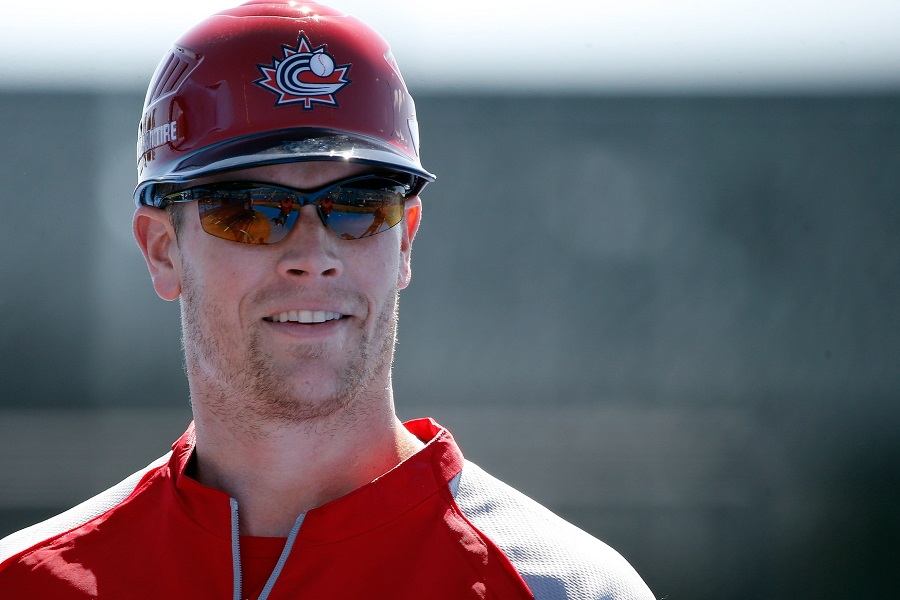 Reports are that Morneau will officially retire and become a special assistant in the Twins. The team has yet to make the announcement official but that could come as Twins Fest approaches. Under the Twins new front office, the club has added former players like Torii Hunter, Michael Cuddyer and LaTroy Hawkins as special assistants. Morneau became a star in the Twin Cities on his way to being elected to four All-Star Games. From 2006-2010, he hit .298/.372/.528 (.900) while averaging 27 home runs and over 100 RBI per season. On his way to the 2016 AL MVP, he compiled many of the numbers voters like to see with 34 home runs, 130 RBI and a .934 OPS. In 2010 with the Twins leading the AL Central, Morneau looked well on his way to another MVP. He posted an eye-popping 1.055 OPS with 44 extra-base hits in 81 games. A slide into second base in Toronto resulted in a concussion that ended his season. Over the next two years, multiple concussions limited his playing time. Morneau had plenty of other memorable moments throughout his career. Josh Hamilton’s performance in the 2008 Home Run Derby was legendary but it was actually Morneau who took home the title that year. He returned to Target Field for the 2014 Home Run Derby and received a standing ovation from Twins fans. His 2014 season was also memorable for the fact that he won the National League batting crown. Over 135 games, he hit .319 and outlasted Pittsburgh’s Josh Harrison and Andrew McCutchen. During his time in Minnesota, he also took home two Silver Slugger awards (2006, 2008) as the top hitting first baseman in the American League. Morneau ranks very highly in multiple categories on the Twins all-time lists. His 221 home runs are third behind Harmon Killebrew and Kent Hrbek and one ahead of Tony Oliva. He ranks sixth in RBI, ninth in runs and third in slugging. What was your favorite Justin Morneau moment? Leave a COMMENT and join the discussion.
 -
One of the best parts of putting together the Twins Prospect Handbook is taking a deep dive into the players who will populate Target Field in the years to come. Projecting the future is one of the hardest parts of being a professional scout or being part of a baseball operations department. A look into the crystal ball can be a little cloudy but it can be a fun exercise to look at what is to come. Roughly a year ago, I took a stab at projecting the 2020 Twins Line-Up. Some things have certainly changed since that point with one player no longer in the organization and another dropping on prospect lists. During a recent mailbag, I took another stab at the 2020 line-up including a handful of the team’s recent top picks. Let’s look one year further into the future. Who will compromise the 2021 Minnesota Twins?C: Mitch Garver Garver could be a regular part of the Twins line-up as soon as 2018. He got a brief taste of the big leagues at the end of 2017. In 46 at-bats, he went 9-for-46 with four extra-base hits. His time in Rochester (88 games) was much better as he posted a .928 OPS with 17 home runs and 29 doubles. Pitchers throughout the system like the way he manages games from behind the plate. If he can hit anywhere close to his 2017 numbers at Triple-A, he will be a very valuable catcher. 1B: Miguel Sano Sano isn’t going to be able to stay at third base and Joe Mauer’s contract expires at the end of 2018. Even if Mauer wants to continue playing past 2018, I don’t know if he will still be in a Twins uniform by 2021. Before the recent allegations brought against Sano, a trade involving Sano might have been possible. For now, I think he sticks in Minnesota and he is going to have to find another home on the diamond. He could split time at first base with the other player I have penciled in as designated hitter. 2B: Nick Gordon There have been questions about Gordon’s defense since the Twins drafted him. He’s only started 16 games at second base in his professional career but I think that will change in the years to come. Minnesota might have drafted their shortstop of the future with last year’s number one overall pick. Gordon showed more power this season but his averaged suffered. In the end, I think he finds his comfort zone at second base and becomes a solid regular with the potential to be an All-Star. 3B: Brian Dozier This was the toughest spot to fill on the diamond. Like Mauer, Dozier’s contract expires at the end of 2018. However, I believe the Twins will find a way to keep Dozier in a Twins uniform. He is a veteran leader who the Twins will want to keep on the roster. Is he going to want to learn a new position later in his career? Time will tell. If Minnesota’s core continues to be made of young players, a veteran voice is going to be needed inside and outside of the locker room. SS: Royce Lewis Gordon is going to get to Target Field before Lewis so he will get the first shot at shortstop. Lewis is a better defender so he will force Gordon to move to second. Minnesota was already aggressive with Lewis in his professional debut as he quickly moved to Cedar Rapids. If that trend continues, there’s no doubt he will be quickly moving towards making his debut. Young shortstops like Francisco Lindor and Carlos Correa have done well in recent years so Twins fans have to hope Lewis can outshine these other top players. LF: Alex Kirilloff Kirilloff, Minnesota’s 2016 first round pick, missed all of 2017 as he recovered from Tommy John surgery. Luckily, it shouldn’t hold him back in 2018. Kirilloff’s bat is his calling card which could make him a dangerous option in the Twins outfield. During his professional debut, he hit .306/.341/.454 with 17 extra-base hits in 216 at-bats. Even with his injury set-back, he should be able to debut by 2020 and become a regular part of the line-up by 2021. CF: Byron Buxton If the 2017 season was a sign of things to come, the future will be bright for Mr. Buxton. In the second half of the season, he hit .300/.347/.546 with 24 extra-base hits in 207 at-bats. Not to mention that he was arguably the best defensive player in the league for the entire season. Buxton will be in his late 20s by 2021 so he should be in the midst of the prime of his career. Will he be on track to be the American League’s Most Valuable Player? Let’s sit back and enjoy the ride. RF: Max Kepler As Tom wrote about last week, Kepler might be poised for a breakout season in 2018. In the minor leagues, Kepler was able to figure out how to hit left-handed pitching. I think he will do that in 2018 and that could be a scary proposition for opposing pitchers. Kepler may never be a MVP candidate but he certainly has the ability to make an All-Star team. With Buxton and Dozier at the top of the line-up, Sano and Kepler can continue to hit in the middle of the order. DH: Brent Rooker If you’ve picked up a copy of the 2018 Twins Prospect Handbook, you’ve no doubt seen that I am high on Brent Rooker. Minnesota’s supplemental first round pick destroyed the baseball in his professional debut. If he continues to hit that well, there’s a good chance he will make his debut in 2018. He can play first base or in a corner outfield spot, so this gives him some flexibility when other players need a day at designated hitter. Rooker is going to be good and he might have been one of the most important pieces of the 2017 MLB Draft. What do you think the 2021 line-up will look like in Minnesota? Check back later this week as Tom tries to pick-out the 2021 rotation. Until then, leave a COMMENT and start the discussion. Click here to view the article
-
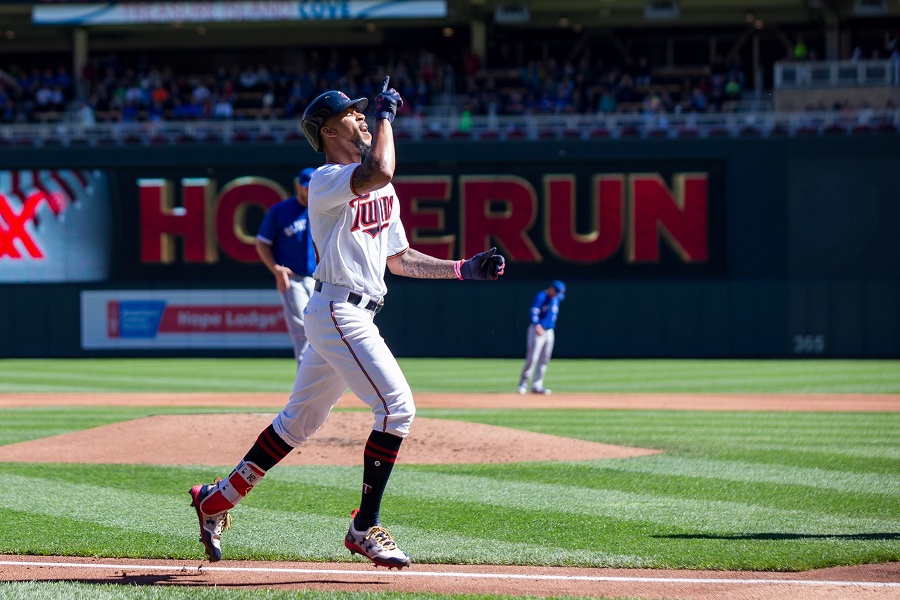 C: Mitch Garver Garver could be a regular part of the Twins line-up as soon as 2018. He got a brief taste of the big leagues at the end of 2017. In 46 at-bats, he went 9-for-46 with four extra-base hits. His time in Rochester (88 games) was much better as he posted a .928 OPS with 17 home runs and 29 doubles. Pitchers throughout the system like the way he manages games from behind the plate. If he can hit anywhere close to his 2017 numbers at Triple-A, he will be a very valuable catcher. 1B: Miguel Sano Sano isn’t going to be able to stay at third base and Joe Mauer’s contract expires at the end of 2018. Even if Mauer wants to continue playing past 2018, I don’t know if he will still be in a Twins uniform by 2021. Before the recent allegations brought against Sano, a trade involving Sano might have been possible. For now, I think he sticks in Minnesota and he is going to have to find another home on the diamond. He could split time at first base with the other player I have penciled in as designated hitter. 2B: Nick Gordon There have been questions about Gordon’s defense since the Twins drafted him. He’s only started 16 games at second base in his professional career but I think that will change in the years to come. Minnesota might have drafted their shortstop of the future with last year’s number one overall pick. Gordon showed more power this season but his averaged suffered. In the end, I think he finds his comfort zone at second base and becomes a solid regular with the potential to be an All-Star. 3B: Brian Dozier This was the toughest spot to fill on the diamond. Like Mauer, Dozier’s contract expires at the end of 2018. However, I believe the Twins will find a way to keep Dozier in a Twins uniform. He is a veteran leader who the Twins will want to keep on the roster. Is he going to want to learn a new position later in his career? Time will tell. If Minnesota’s core continues to be made of young players, a veteran voice is going to be needed inside and outside of the locker room. SS: Royce Lewis Gordon is going to get to Target Field before Lewis so he will get the first shot at shortstop. Lewis is a better defender so he will force Gordon to move to second. Minnesota was already aggressive with Lewis in his professional debut as he quickly moved to Cedar Rapids. If that trend continues, there’s no doubt he will be quickly moving towards making his debut. Young shortstops like Francisco Lindor and Carlos Correa have done well in recent years so Twins fans have to hope Lewis can outshine these other top players. LF: Alex Kirilloff Kirilloff, Minnesota’s 2016 first round pick, missed all of 2017 as he recovered from Tommy John surgery. Luckily, it shouldn’t hold him back in 2018. Kirilloff’s bat is his calling card which could make him a dangerous option in the Twins outfield. During his professional debut, he hit .306/.341/.454 with 17 extra-base hits in 216 at-bats. Even with his injury set-back, he should be able to debut by 2020 and become a regular part of the line-up by 2021. CF: Byron Buxton If the 2017 season was a sign of things to come, the future will be bright for Mr. Buxton. In the second half of the season, he hit .300/.347/.546 with 24 extra-base hits in 207 at-bats. Not to mention that he was arguably the best defensive player in the league for the entire season. Buxton will be in his late 20s by 2021 so he should be in the midst of the prime of his career. Will he be on track to be the American League’s Most Valuable Player? Let’s sit back and enjoy the ride. RF: Max Kepler As Tom wrote about last week, Kepler might be poised for a breakout season in 2018. In the minor leagues, Kepler was able to figure out how to hit left-handed pitching. I think he will do that in 2018 and that could be a scary proposition for opposing pitchers. Kepler may never be a MVP candidate but he certainly has the ability to make an All-Star team. With Buxton and Dozier at the top of the line-up, Sano and Kepler can continue to hit in the middle of the order. DH: Brent Rooker If you’ve picked up a copy of the 2018 Twins Prospect Handbook, you’ve no doubt seen that I am high on Brent Rooker. Minnesota’s supplemental first round pick destroyed the baseball in his professional debut. If he continues to hit that well, there’s a good chance he will make his debut in 2018. He can play first base or in a corner outfield spot, so this gives him some flexibility when other players need a day at designated hitter. Rooker is going to be good and he might have been one of the most important pieces of the 2017 MLB Draft. What do you think the 2021 line-up will look like in Minnesota? Check back later this week as Tom tries to pick-out the 2021 rotation. Until then, leave a COMMENT and start the discussion.
 -
It’s hard to believe that spring training is around the corner with icy cold weather throughout chunks of the United States. The Twins Caravan will soon be starting their routes and Twins Fest will follow shortly afterwards. You also have the opportunity to join Twins Daily at the 2018 Diamond Awards. Baseball is close to being back and with it comes the hope of a new season where anything is possible. There have been a few Twins stories swirling around this week. Here are a few updates on meeting with Darvish, the fallout from Sano, and a look at the “Hot Stove” that has been pretty cold.Minnesota Meeting With Darvish Yu Darvish and his team certainly seem to be doing their due diligence. The top free agent pitcher on the market has already met with multiple clubs as he looks for his next team. Minnesota has not been one of those organizations. It’s hard to know if he is avoiding the Twins or if he’s actually familiar with the organization’s front office so a meeting isn’t necessary. He might also be trying to avoid the cold in Minnesota. For those worried about Darvish not coming to the Twin Cities, local baseball writers have also chimed in. It sounds like he might already know everything he needs about Minnesota. This might be enough to sway his decision. In the meantime, fans will have to sit back and wait for more news from the Darvish camp. Sano Fallout Miguel Sano was in the news for all of the wrong reasons last week. Major League Baseball started its review process of the situation as soon as the allegations were brought to their attention. It’s hard to know how long the process will take. This is the first major allegation against an MLB player since the #MeToo movement has come to light. In 2016, Yankees closer Aroldis Chapman was suspended 30 games for allegedly choking his 22-year-old girlfriend and firing eight shots in the garage of his home. He was never prosecuted by law because there were conflicting account and not enough evidence. Will the Chapman suspension be the baseline for Sano’s potential punishment? Ice Cold Stove There hasn’t been much action on the free agent market so far this year. In fact, it’s the coldest “hot stove” over the last half of a decade. Eric Hosmer, a former AL Central foe, has been offered seven year deals by the Padres and the Royals. The St. Louis Cardinals are also rumored to be interested in Hosmer’s services. As one of the top available free agent bats, his signing could set-off a series of other signings. The Rockies have been busy signing multiple pieces for their bullpen. A “super bullpen” might be the wave of the future. One has to wonder if the Twins will be able to improve some of their relief pieces for 2018. Young players like Trevor Hildenberger and John Curtiss could figure prominently in Minnesota’s plans. Tyler Jay continues to lurk in the minors and could be the team’s wild card in the second half of 2018. Do the Twins need to meet with Darvish? How fast will the Sano situation be resolved? Will the hot stove ever heat up? Leave a COMMENT and start the discussion. Click here to view the article
