



Cody Christie
-
Posts
7,515 -
Joined
-
Last visited
-
Days Won
5
Content Type
Profiles
News
Minnesota Twins Videos
2026 Minnesota Twins Top Prospects Ranking
2022 Minnesota Twins Draft Picks
Minnesota Twins Free Agent & Trade Rumors, Notes, & Tidbits
Guides & Resources
2023 Minnesota Twins Draft Picks
The Minnesota Twins Players Project
2024 Minnesota Twins Draft Picks
2025 Minnesota Twins Draft Pick Tracker
2026 Minnesota Twins Draft Tracker: Picks & Bonuses
Forums
Blogs
Events
Store
Downloads
Gallery
Everything posted by Cody Christie
-
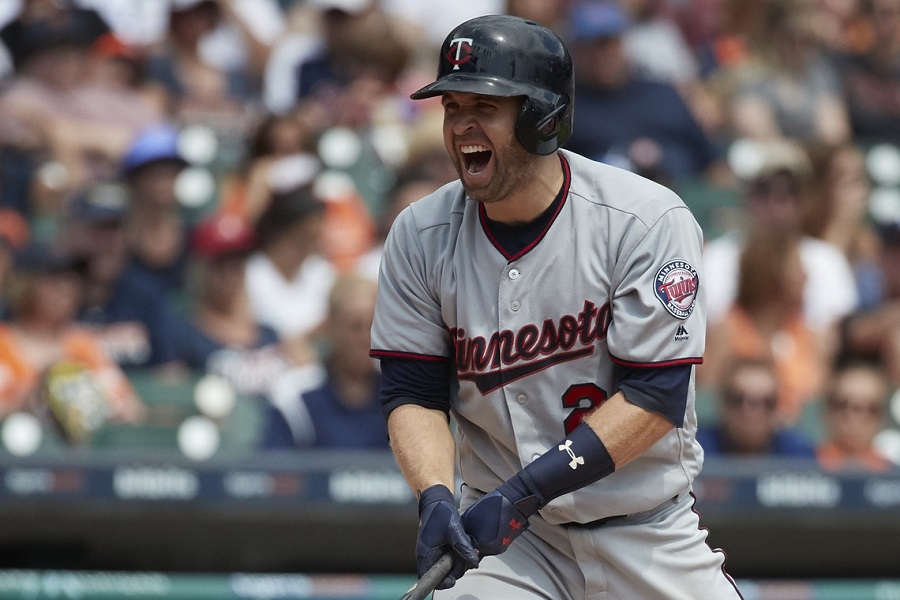 Mission 1: Playoffs or Bust When the Twins traded away multiple pieces before last year’s trade deadline, Dozier was vocal about his unhappiness with the moves. One year later and the Twins are poised to be in the playoff hunt once again. With the Indians expected to lead the AL Central, Minnesota will be forced to battle multiple teams for a Wild Card spot. There have been ups and downs for Dozier over the last couple of seasons but there have been stretches where he has been able to carry the Twins offensively. If he can do that for an entire season, the rest of the American League better get out of the way. Mission 2: Gold Glove Repeat I’ve been very critical of Brian Dozier’s defense in the past. As recently as last April, I called him out for not being able to get to plays that are routine for other second basemen. In his age-30 season, Dozier made some tremendous defensive improvements. He finished the 2015 campaign as the third-worst AL second baseman according to SABR’s Defensive Index. The 2016 season was a little better as he finished in the middle of the pack. Dozier ranked second in the AL last season and finished with a positive SDI for the first time in his career. Now he needs to prove that his defense wasn’t a fluke in 2017. Mission 3: MLB’s Best Power Hitting Second Baseman Since the start of the 2013 season, Brian Dozier leads all MLB second basemen with 145 home runs. He’s also been a terror for teams out from of the leadoff spot. His 21 lead-off home runs since 2015 are the second most in baseball beyond Colorado’s Charlie Blackmon (22). Because of his placement as the leadoff hitter, he has been able to produce four straight 100-plus run seasons. There are two Jose’s who might be battling for the title of best hitting second baseman. Jose Altuve is coming off an MVP season on the way to leading Houston to the World Series. Jose Ramirez spends time at third and second and led the AL in doubles last season. Final Mission: New Contract Contract talks between Dozier and the Twins dried up last week. He and the club don’t want on-going negotiations to be a distraction during the season. That being said, Dozier is playing for what could be the only big payday of his career. Some players get overwhelmed during a contract year and can’t perform up to their previous level. Other players thrive under this pressure and put together one of the best seasons of their careers. It feels like Dozier is in the latter group and he could be on his way to a record-breaking season. Those are his missions and he certainly has chosen to accept them. Any questions? More from Twins Daily Kernels Class of 2018 “Should Be Pretty Entertaining” Twins Rotation Is Starting Strong Twins at Pirates Series Preview
 -
 Minnesota finished up their series with Baltimore on Sunday and the club is off to a strong start. After faltering on Opening Day with Dylan Bundy pitching, the Twins came back and took two of three to win the series. Now the team’s focus turns to Pittsburgh before the Home Opener on Thursday against Seattle. So how does Minnesota’s early season schedule stack up? Can the Twins get off to a hot start?Pirates (4/2 & 4/4) 2018 Projected Record: 77-85 In a quick two game series, the Twins will face Jameson Taillon and Ivan Nova. Taillon will be making his season debut after returning to the mound last season following a battle with testicular cancer. Nova held the Tigers to two runs on Opening Day, as he fought through six hits and three walks. Lance Lynn is scheduled to make his Twins debut on Monday and Jake Odorizzi will look to build off his six scoreless innings from Opening Day. Prediction: Twins Split Series 1-1 Seattle (4/5, 4/7-8) 2018 Projected Record: 80-82 Kyle Gibson should get quite the rousing ovation when he takes the mound on Thursday. Gibson threw six hitless innings to earn the team’s first victory of the season. He’s looking to build off of his strong second half. Minnesota might miss out on Felix Hernandez so this could leave them facing James Paxton, Marco Gonzales, and Mike Leake. It’s also important to remember Minnesota was only one game over .500 at home last season while being seven games over .500 on the road. Prediction: Twins Win Series 2-1 Houston (4/9-4/11) 2018 Projected Record: 99-63 Houston, the defending World Series champions, look like a team destined for greatness again. Having Justin Verlander and Gerrit Cole for an entire season is only going to strengthen a rotation which already includes Dallas Keuchel and Lance McCullers Jr. There also isn’t much of a weakness at any point in their line-up. If things break like they should, this might be Minnesota’s first series loss of the year. Prediction: Twins Lose Series 1-2 Chicago (4/12-4/15) 2018 Projected Record: 68-94 In the midst of a rebuild, the White Sox shouldn’t be taken for granted if the Twins want to be in playoff contention. Young pitchers like Lucas Giolito and Carson Fulmer are looking to make their mark at the big league level. Chicago’s bullpen has a lot of unknowns so the Twins could do some damage in the later innings. Yoan Moncada is only 22 years old and he’s looking to prove he is one of the best young players in the game. Prediction: Twins Win Series 3-1 Cleveland (4/17-18) 2018 Projected Record: 93-69 The Indians are the kings of the AL Central but this two game series in Puerto Rico will come with a lot of emotions for both teams. Minnesota has Jose Berrios line-up to pitch Game 1 so he will have to keep his emotions in check. Minnesota’s Eddie Rosario and Cleveland’s Francisco Lindor will also want to put on a showcase in their home country. For Minnesota to stay in the AL Central race, they are going to need to take games away from Cleveland. Prediction: Twins Split Series 1-1 Tampa Bay (4/20-22) 2018 Projected Record: 78-84 Tampa Bay traded away multiple starting pieces this off-season including dealing Odorizzi to the Twins. Chris Archer and Blake Snell are still a solid one-two punch at the top of their rotation but beyond that there are some question marks. Three former Twins (Denard Span, Carlos Gomez, and Wilson Ramos) will face their old squad. Logan Morrison will also get his first shot back in Tampa Bay. However, 27 of his 38 home runs in 2017 came away from Tropicana Field. Prediction: Twins Win Series 2-1 New York (4/23-26) 2018 Projected Record: 95-67 Minnesota will be looking to get a little revenge after falling to New York in last year’s AL Wild Card Game. Giancarlo Stanton, Aaron Judge, and Gary Sanchez make-up a formidable middle of the line-up that can hit the ball out of the park at any point in the game. New York’s bullpen continues to be a strength so the Twins are going to need to get out to early leads because mounting a comeback would be tough. Prediction: Twins Split Series 2-2 Cincinnati (4/27-29) 2018 Projected Record: 71-91 In a battle of two of the fastest players in baseball, Byron Buxton and Billy Hamilton could make this an exciting series to watch. Last season, MLB’s Statcast ranked Buxton and Hamilton as the two fastest players in relation to sprint speed. The Reds are going to struggle to keep pace with the Cubs, Cardinals, and Brewers at the top of the NL Central. Joey Votto is still a force in the middle of the line-up but there isn’t much help around him. Prediction: Twins Sweep Series 3-0 If all of my predictions come true, the Twins would have a 17-10 record entering their first series of May with Toronto. Is this a realistic expectation? Is the early season schedule in favor of the Twins? Leave a COMMENT and start the discussion. More from Twins Daily MIN 6, BAL 2: Good Gibby Rides Again As Rosario Shows, Raw Power Comes In Many Forms The Twins Almanac For April 1-7 Click here to view the article
 -
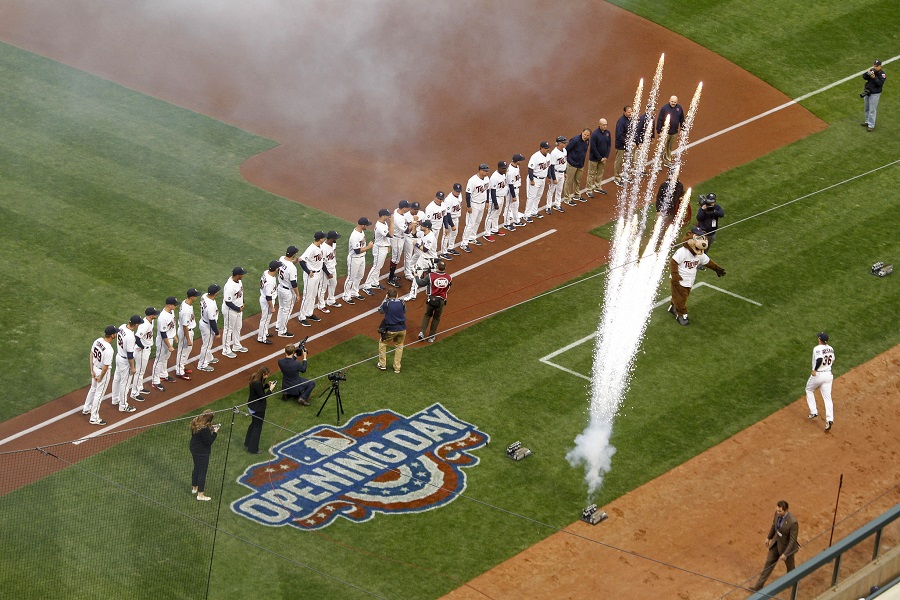 Pirates (4/2 & 4/4) 2018 Projected Record: 77-85 In a quick two game series, the Twins will face Jameson Taillon and Ivan Nova. Taillon will be making his season debut after returning to the mound last season following a battle with testicular cancer. Nova held the Tigers to two runs on Opening Day, as he fought through six hits and three walks. Lance Lynn is scheduled to make his Twins debut on Monday and Jake Odorizzi will look to build off his six scoreless innings from Opening Day. Prediction: Twins Split Series 1-1 Seattle (4/5, 4/7-8) 2018 Projected Record: 80-82 Kyle Gibson should get quite the rousing ovation when he takes the mound on Thursday. Gibson threw six hitless innings to earn the team’s first victory of the season. He’s looking to build off of his strong second half. Minnesota might miss out on Felix Hernandez so this could leave them facing James Paxton, Marco Gonzales, and Mike Leake. It’s also important to remember Minnesota was only one game over .500 at home last season while being seven games over .500 on the road. Prediction: Twins Win Series 2-1 Houston (4/9-4/11) 2018 Projected Record: 99-63 Houston, the defending World Series champions, look like a team destined for greatness again. Having Justin Verlander and Gerrit Cole for an entire season is only going to strengthen a rotation which already includes Dallas Keuchel and Lance McCullers Jr. There also isn’t much of a weakness at any point in their line-up. If things break like they should, this might be Minnesota’s first series loss of the year. Prediction: Twins Lose Series 1-2 Chicago (4/12-4/15) 2018 Projected Record: 68-94 In the midst of a rebuild, the White Sox shouldn’t be taken for granted if the Twins want to be in playoff contention. Young pitchers like Lucas Giolito and Carson Fulmer are looking to make their mark at the big league level. Chicago’s bullpen has a lot of unknowns so the Twins could do some damage in the later innings. Yoan Moncada is only 22 years old and he’s looking to prove he is one of the best young players in the game. Prediction: Twins Win Series 3-1 Cleveland (4/17-18) 2018 Projected Record: 93-69 The Indians are the kings of the AL Central but this two game series in Puerto Rico will come with a lot of emotions for both teams. Minnesota has Jose Berrios line-up to pitch Game 1 so he will have to keep his emotions in check. Minnesota’s Eddie Rosario and Cleveland’s Francisco Lindor will also want to put on a showcase in their home country. For Minnesota to stay in the AL Central race, they are going to need to take games away from Cleveland. Prediction: Twins Split Series 1-1 Tampa Bay (4/20-22) 2018 Projected Record: 78-84 Tampa Bay traded away multiple starting pieces this off-season including dealing Odorizzi to the Twins. Chris Archer and Blake Snell are still a solid one-two punch at the top of their rotation but beyond that there are some question marks. Three former Twins (Denard Span, Carlos Gomez, and Wilson Ramos) will face their old squad. Logan Morrison will also get his first shot back in Tampa Bay. However, 27 of his 38 home runs in 2017 came away from Tropicana Field. Prediction: Twins Win Series 2-1 New York (4/23-26) 2018 Projected Record: 95-67 Minnesota will be looking to get a little revenge after falling to New York in last year’s AL Wild Card Game. Giancarlo Stanton, Aaron Judge, and Gary Sanchez make-up a formidable middle of the line-up that can hit the ball out of the park at any point in the game. New York’s bullpen continues to be a strength so the Twins are going to need to get out to early leads because mounting a comeback would be tough. Prediction: Twins Split Series 2-2 Cincinnati (4/27-29) 2018 Projected Record: 71-91 In a battle of two of the fastest players in baseball, Byron Buxton and Billy Hamilton could make this an exciting series to watch. Last season, MLB’s Statcast ranked Buxton and Hamilton as the two fastest players in relation to sprint speed. The Reds are going to struggle to keep pace with the Cubs, Cardinals, and Brewers at the top of the NL Central. Joey Votto is still a force in the middle of the line-up but there isn’t much help around him. Prediction: Twins Sweep Series 3-0 If all of my predictions come true, the Twins would have a 17-10 record entering their first series of May with Toronto. Is this a realistic expectation? Is the early season schedule in favor of the Twins? Leave a COMMENT and start the discussion. More from Twins Daily MIN 6, BAL 2: Good Gibby Rides Again As Rosario Shows, Raw Power Comes In Many Forms The Twins Almanac For April 1-7
 -
There is plenty of hope at the dawning of a new season. Every team starts with an equal playing field. No batters have struck out. Pitchers have a perfect ERA. There are 162 games to separate the contenders from the pretenders. It’s an exciting time for every fan. The beginning of a new season also means players want to focus on the season. A lot of players and agents don’t want to be bogged down in contract negotiations. For Brian Dozier and the Minnesota Twins, this seems like the situation they are facing.Jerry Crasnick, one of ESPN’s national baseball writers, is reporting that contract talks between Brian Dozier and the Minnesota Twins have come to a halt. For those following the Twins this spring, it seemed like Dozier was destined for free agency. When he signed his current contract with Minnesota, the deal only bought out his remaining arbitration eligible seasons. For Dozier, it provided him some financial stability. At the same time, it allowed the Twins to have some cost certainty. Dozier and his agency took a gamble on Dozier being able to produce in his late 20s to set him up for free agency for his age-32 season. This is typically the time when players start to decline but Dozier has been one of the best hitting second basemen over the last two seasons. Barring an injury, Dozier might be headed for a big pay day. Next year’s free agent class looks stacked. Dozier will join a free agent class including Bryce Harper, Manny Machado, Josh Donaldson, Dallas Keuchel, Craig Kimbrel, Charlie Blackmon, Andrew Miller, Daniel Murphy, Cody Allen, Adam Jones, and Andrew McCutchen. Other players like Clayton Kershaw and David Price could be free agents if they opt out of their current contracts. After this year’s cool free agent market, it will be interesting to see how much money will be thrown around next season. Bryce Harper and Manny Machado could get record-breaking deals. Heck, Harper could be headed for the richest contract of all time. For teams that miss out on the top tier free agents, there will be other options like Dozier waiting in the wings. As I wrote about this spring, Minnesota has a multiple top prospects in the middle infield. Nick Gordon will be knocking on the door of the big leagues this season. Other top prospects like Royce Lewis and Wander Javier also play up the middle. If Dozier signs with another organization, one of these players could take over at second base next year. What are your thoughts on a possible Dozier extension? Leave a COMMENT and start the discussion. Click here to view the article
- 29 replies
-
- 1
-

-
- brian dozier
- bryce harper
- (and 3 more)
-
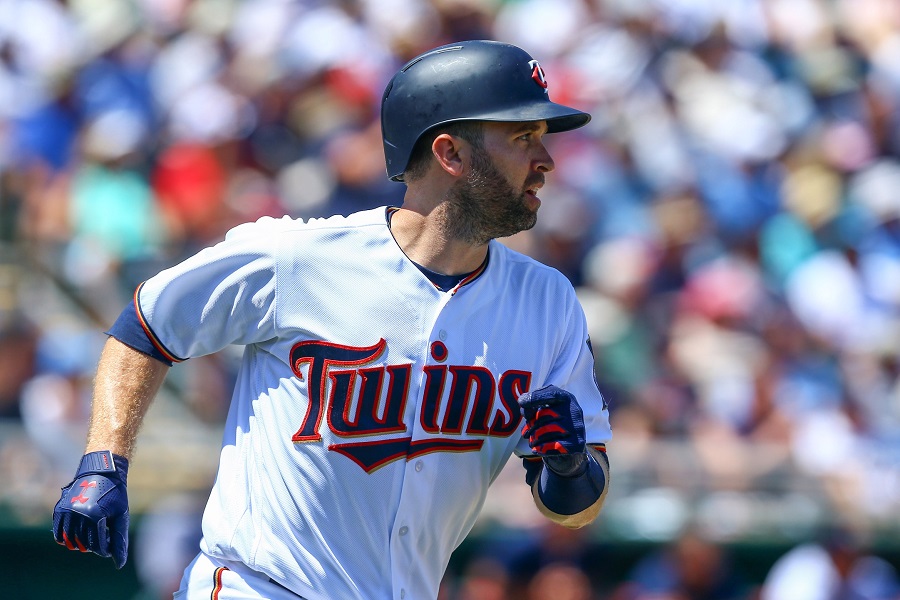 Jerry Crasnick, one of ESPN’s national baseball writers, is reporting that contract talks between Brian Dozier and the Minnesota Twins have come to a halt. https://twitter.com/jcrasnick/status/979140242321100800 For those following the Twins this spring, it seemed like Dozier was destined for free agency. When he signed his current contract with Minnesota, the deal only bought out his remaining arbitration eligible seasons. For Dozier, it provided him some financial stability. At the same time, it allowed the Twins to have some cost certainty. Dozier and his agency took a gamble on Dozier being able to produce in his late 20s to set him up for free agency for his age-32 season. This is typically the time when players start to decline but Dozier has been one of the best hitting second basemen over the last two seasons. Barring an injury, Dozier might be headed for a big pay day. Next year’s free agent class looks stacked. Dozier will join a free agent class including Bryce Harper, Manny Machado, Josh Donaldson, Dallas Keuchel, Craig Kimbrel, Charlie Blackmon, Andrew Miller, Daniel Murphy, Cody Allen, Adam Jones, and Andrew McCutchen. Other players like Clayton Kershaw and David Price could be free agents if they opt out of their current contracts. After this year’s cool free agent market, it will be interesting to see how much money will be thrown around next season. Bryce Harper and Manny Machado could get record-breaking deals. Heck, Harper could be headed for the richest contract of all time. For teams that miss out on the top tier free agents, there will be other options like Dozier waiting in the wings. As I wrote about this spring, Minnesota has a multiple top prospects in the middle infield. Nick Gordon will be knocking on the door of the big leagues this season. Other top prospects like Royce Lewis and Wander Javier also play up the middle. If Dozier signs with another organization, one of these players could take over at second base next year. What are your thoughts on a possible Dozier extension? Leave a COMMENT and start the discussion.
 -
Expectations for the Twins this season might be higher than they have been at the beginning of any campaign during the Target Field era. However, there is likely to be quite the roster turnover before the beginning of the 2019 season. Does that mean the Twins are in win now mode?It seems weird to contemplate the Twins as a win now team. A young core of under-25 players like Byron Buxton, Miguel Sano, Max Kepler, and Jose Berrios should solidify the roster for the next decade. There are plenty of roster pieces that will be shifting by the time the calendar shifts to Opening Day 2019. Team leaders like Brian Dozier and Joe Mauer are set to be free agents for the first time in their career. Other veteran pieces like Eduardo Escobar can test the free agent waters as well. Heck, even Ervin Santana could end up on the market if the team declines his $14 million option for his age-36 season. Brian Dozier might provide the team with the most difficult decision. He’s clearly become the vocal leader in the clubhouse but he’s also made it clear that he will be a free agent at season’s end. It’s tough to think of Joe Mauer in any uniform besides the Twins but there are no guarantees about him playing beyond 2018 either. In fact, there are no guarantees about any of these players returning and Minnesota has given themselves some flexibility when it comes to this year’s free agent additions. Derek Falvey and Thad Levine struck out landing Yu Darvish but this left more money to add multiple other pieces. Lance Lynn, Logan Morrison, Zach Duke and Fernando Rodney were all added on one year contracts. Lynn was considered one of the top starting pitchers on the market but it was a strange off-season with few free agents signing for large contracts. Morrison would have led the Twins in home runs last season and the club inked him to a team friendly $6.5 million deal. Rodney and Duke were signed early to help bolster one of the worst bullpens in the American League. Duke might have had an even more important role before the club signed Addison Reed. Reed seemed to fall into the Twins’ lap and he could be a deadly bullpen weapon over the next two years. So here we are, Twins Territory, on the cusp of a new season with a strangely different feeling. Minnesota should win. Minnesota needs to win. It might be the closest feeling to World Series-or-bust this organization has felt in a long time. Are the Twins in win now mode? It certainly seems so… Click here to view the article
-
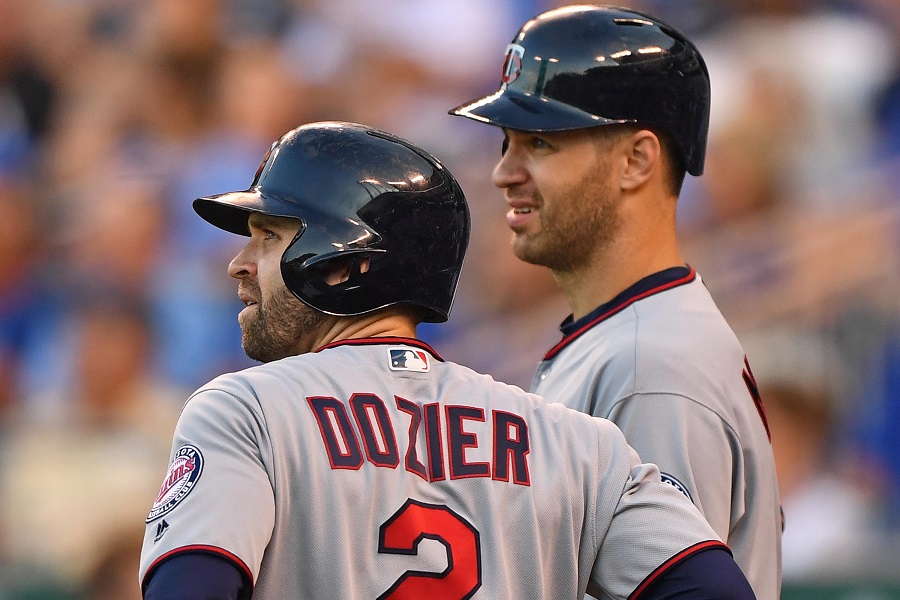 It seems weird to contemplate the Twins as a win now team. A young core of under-25 players like Byron Buxton, Miguel Sano, Max Kepler, and Jose Berrios should solidify the roster for the next decade. There are plenty of roster pieces that will be shifting by the time the calendar shifts to Opening Day 2019. Team leaders like Brian Dozier and Joe Mauer are set to be free agents for the first time in their career. Other veteran pieces like Eduardo Escobar can test the free agent waters as well. Heck, even Ervin Santana could end up on the market if the team declines his $14 million option for his age-36 season. https://twitter.com/MillerStrib/status/977924319220260864 Brian Dozier might provide the team with the most difficult decision. He’s clearly become the vocal leader in the clubhouse but he’s also made it clear that he will be a free agent at season’s end. It’s tough to think of Joe Mauer in any uniform besides the Twins but there are no guarantees about him playing beyond 2018 either. In fact, there are no guarantees about any of these players returning and Minnesota has given themselves some flexibility when it comes to this year’s free agent additions. Derek Falvey and Thad Levine struck out landing Yu Darvish but this left more money to add multiple other pieces. Lance Lynn, Logan Morrison, Zach Duke and Fernando Rodney were all added on one year contracts. Lynn was considered one of the top starting pitchers on the market but it was a strange off-season with few free agents signing for large contracts. Morrison would have led the Twins in home runs last season and the club inked him to a team friendly $6.5 million deal. Rodney and Duke were signed early to help bolster one of the worst bullpens in the American League. Duke might have had an even more important role before the club signed Addison Reed. Reed seemed to fall into the Twins’ lap and he could be a deadly bullpen weapon over the next two years. So here we are, Twins Territory, on the cusp of a new season with a strangely different feeling. Minnesota should win. Minnesota needs to win. It might be the closest feeling to World Series-or-bust this organization has felt in a long time. Are the Twins in win now mode? It certainly seems so…
 -
Opening Day is less than 48 hours away and Minnesota made their final roster moves of the spring on Tuesday. There were multiple questions still to be answered at the back of the 25-man roster with a couple of surprises mixed in. Either way, the Twins will head to Baltimore on Tuesday night with multiple new faces joining the squad.The first moves of the day finalized the final battle for position players. With Granite heading to Rochester, it meant Ryan LaMarre would be joining the Twins outfield for the season’s beginning. LaMarre was crowned the 2018 Sire of Fort Myers. Earlier this week, Seth speculated that LaMarre could break camp with the club. Kennys Vargas also saw his crazy week continue. It looked like he might be heading to the National League with the Reds but they figured out they don’t need a DH. Over the weekend, the Twins claimed him back from Cincinnati. Today, they were able to pass him through waivers and outright him to Triple-A Rochester. This move leaves the Twins with one open spot on the 40-man roster. Phil Hughes also provided an interesting situation for the club. Hughes looked like an option for a long-relief role. During his last spring start, Hughes was pulled with a mild oblique strain. This means he will start the year on the DL. This seemed like a convenient solution to the Twins roster crunch. With all of the moves above, here’s how the Twins 25-man roster will look on Opening Day. C: Jason Castro, Mitch Garver 1B: Joe Mauer, Logan Morrison 2B: Brian Dozier SS: Eduardo Escobar, Ehire Adrianza 3B: Miguel Sano OF: Byron Buxton, Max Kepler, Eddie Rosario, Ryan LaMarre, Robbie Grossman SP: Jose Berrios, Kyle Gibson, Jake Odorizzi, Lance Lynn RP: Fernando Rodney, Addison Reed, Zach Duke, Ryan Pressly, Trevor Hildenberger, Taylor Rogers, Gabriel Moya, Tyler Kinley DL: Ervin Santana, Phil Hughes With a four man starting rotation, the Twins won’t need a fifth starter until April 11th. Last week, I thought that spot start might be filled by Hughes. His injury puts that start into question. Tyler Kinley’s impressive winter in the Dominican and his electric fastball made it easier to keep him around. How do you feel about the final 25-man roster? Obviously, there will be plenty of other players who impact the roster this season. Leave a COMMENT and start the discussion. Click here to view the article
- 41 replies
-
- 3
-
-
- ryan lamarre
- tyler kinley
- (and 3 more)
-
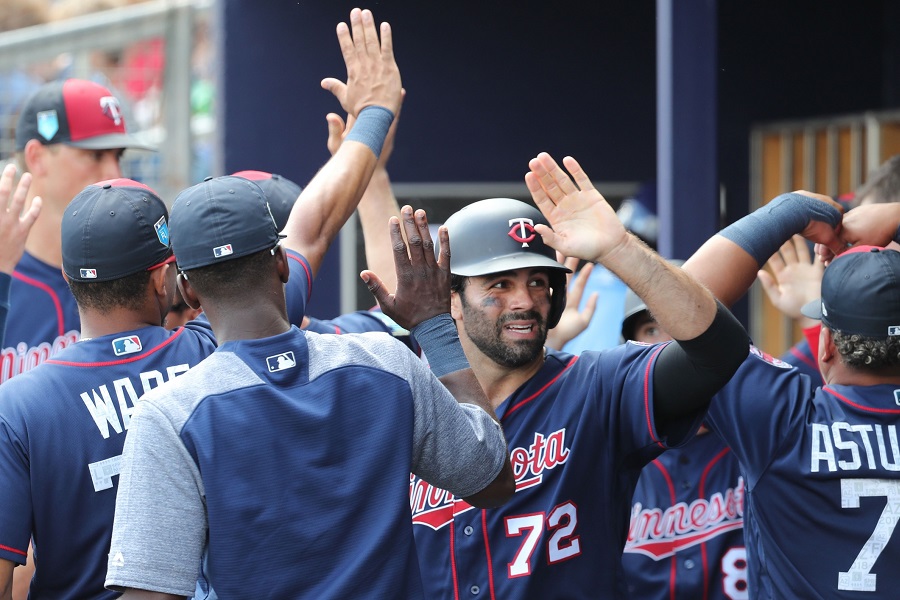 The first moves of the day finalized the final battle for position players. https://twitter.com/morsecode/status/978773643906945027 With Granite heading to Rochester, it meant Ryan LaMarre would be joining the Twins outfield for the season’s beginning. LaMarre was crowned the 2018 Sire of Fort Myers. Earlier this week, Seth speculated that LaMarre could break camp with the club. Kennys Vargas also saw his crazy week continue. It looked like he might be heading to the National League with the Reds but they figured out they don’t need a DH. Over the weekend, the Twins claimed him back from Cincinnati. Today, they were able to pass him through waivers and outright him to Triple-A Rochester. This move leaves the Twins with one open spot on the 40-man roster. Phil Hughes also provided an interesting situation for the club. Hughes looked like an option for a long-relief role. During his last spring start, Hughes was pulled with a mild oblique strain. This means he will start the year on the DL. This seemed like a convenient solution to the Twins roster crunch. https://twitter.com/NickNelsonMN/status/978717018982666241 With all of the moves above, here’s how the Twins 25-man roster will look on Opening Day. C: Jason Castro, Mitch Garver 1B: Joe Mauer, Logan Morrison 2B: Brian Dozier SS: Eduardo Escobar, Ehire Adrianza 3B: Miguel Sano OF: Byron Buxton, Max Kepler, Eddie Rosario, Ryan LaMarre, Robbie Grossman SP: Jose Berrios, Kyle Gibson, Jake Odorizzi, Lance Lynn RP: Fernando Rodney, Addison Reed, Zach Duke, Ryan Pressly, Trevor Hildenberger, Taylor Rogers, Gabriel Moya, Tyler Kinley DL: Ervin Santana, Phil Hughes With a four man starting rotation, the Twins won’t need a fifth starter until April 11th. Last week, I thought that spot start might be filled by Hughes. His injury puts that start into question. Tyler Kinley’s impressive winter in the Dominican and his electric fastball made it easier to keep him around. How do you feel about the final 25-man roster? Obviously, there will be plenty of other players who impact the roster this season. Leave a COMMENT and start the discussion.
 -
Cleveland has been at the top of the AL Central for two consecutive seasons and things seem to be trending that way again in 2018. By season's end, the AL Central might end up being the easiest division in baseball. Besides Minnesota and Cleveland, there are a lot of young, rebuilding clubs. This could help both the Indians and the Twins to separate themselves from the pack in the American League. Will Minnesota be able to catch Cleveland, the Kings of the AL Central?I was on 670 The Score out of Chicago last week to help them preview the AL Central. TAKE A LISTEN HERE. Cleveland Indians 2017: 102-60, first place, lost to New York in ALDS Manager: Terry Fancona (sixth season) New Faces: 1B-DH Yonder Alonso, LF Rajai David, RHP Alexi Ogando Key Losses: 1B Carlos Santana, OF Jay Bruce, RHP Bryan Shaw Outlook: Cleveland hasn’t won the World Series since 1948 and they’ve suffered through some postseason heartaches over the last two years. In the 2016 World Series, they blew a 3-1 to the Cubs. Last year, they were up 2-0 on the Yankees before losing in the divisional round. Cleveland might have the best pitching staff in all of baseball, including the reigning AL Cy Young winner Corey Kluber. Offensively, Jose Ramirez led the AL in doubles and Francisco Lindor smashed 33 home runs. Veteran players Jason Kipnis and Michael Brantley need to stay healthy. It might be World Series or bust for Cleveland this year. Minnesota Twins 2017: 85-77, second place, lost to New York in Wild Card game. Manager: Paul Molitor (fourth season). New Faces: RHP Lance Lynn, RHP Jake Odorizzi, DH-1B Logan Morrison, RHP Fernando Rodney, RHP Addison Reed, LHP Zach Duke, RHP Michael Pineda. Key Losses: C Chris Gimenez, LHP Hector Santiago, LHP Glen Perkins Outlook: Minnesota surprised the baseball world by becoming the first team to finish in the playoffs one year after losing 100 or more games. Now the Twins will need to try to surprise again as they attempt to hunt down the Indians. With a core of players under the age of 25, the Twins seem to rising at the right time. Adding Jake Odorizzi and Lance Lynn to the rotation helps to address a weakness and there are plenty of other arms populating the Rochester staff. While the American League looks a little top heavy, the Twins should have enough to fight for a Wild Card spot. Thankfully, the Twins are scheduled to play each of the teams listed below 19 times in 2018. Kansas City Royals 2017: 80-82, third place. Manager: Ned Yost (ninth season). New Faces: RHP Jesse Hahn, CF Jon Jay, 1B Lucas Duda, RHP Wily Peralta, RHP Justin Grimm. Key Losses: 1B Eric Hosmer, CF Lorenzo Cain, RHP Joakim Soria, LHP Mike Minor, OF Melky Cabrera, DH Brandon Moss. Outlook: Out with the old and in with the new. Eric Hosmer and Lorenzo Cain are off to greener pastures, which is going to put more pressure on new additions Jon Jay and Lucas Duda. Mike Moustakas and Alcides Escobar didn’t get great offers on the free agent market so they returned to Kansas City. Even with them back in Royals blue, it could be tough for this club to be around the .500 mark. There are holes in nearly every part of their roster. Look for them to be busy at the trade deadline as they might be forced to go into full rebuilding mode. Chicago White Sox 2017: 67-95, fourth place. Manager: Rick Renteria (second season). New Faces: RHP Miguel Gonzalez, C Welington Castillo. Key Losses: LHP Derek Holland, RHP Mike Pelfrey, RHP Al Alburquerque, C Geovany Soto. Outlook: While the Royals haven’t hit full rebuild mode yet, Chicago traded away plenty of pieces last season. This means the White Sox have a nice young core with players like Yoan Moncada, Lucas Giolito and Miguel Gonzalez. There are other top prospects on the way but that could mean Chicago is still a year or two away from making a playoff push in the AL. A completely rebuilt bullpen makes it hard to know what to expect in late game situations. Chicago will likely continue to take its bruises this year while the young guns try to figure it all out at the big league level. Detroit Tigers 2017: 64-98, fifth place. Manager: Ron Gardenhire (first season). New Faces: OF Leonys Martin, RHP Mike Fiers, LHP Francisco Liriano, OF Victor Reyes. Key Losses: 2B Ian Kinsler, RHP Anibal Sanchez, INF Andrew Romine, RHP Bruce Rondon. Outlook: Ron Gardenhire’s return to managing doesn’t seem exactly like a dream job. He will have to piece together a roster that traded away Justin Verlander, Justin Upton, J.D. Martinez and Ian Kinsler over the last calendar year. Miguel Cabrera and Victor Martinez are still part of this roster but no one is sure how much they have left in the tank. Gardy is very familiar with the AL Central but he is going to have his hands full in a division that looks top heavy entering 2018. What are your predictions for the AL Central? What will it take to catch the Indians? Leave a COMMENT and start the discussion. Click here to view the article
-
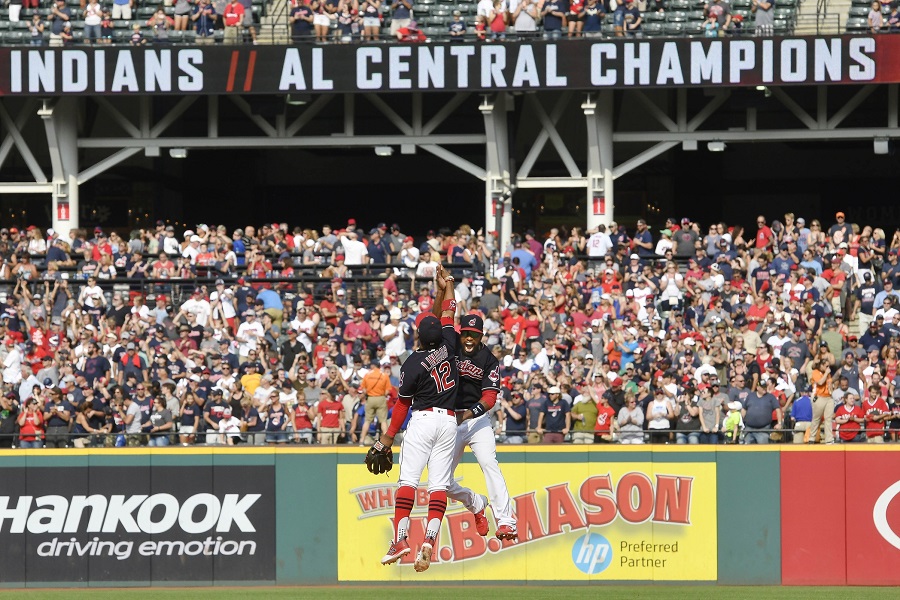 I was on 670 The Score out of Chicago last week to help them preview the AL Central. TAKE A LISTEN HERE. Cleveland Indians 2017: 102-60, first place, lost to New York in ALDS Manager: Terry Fancona (sixth season) New Faces: 1B-DH Yonder Alonso, LF Rajai David, RHP Alexi Ogando Key Losses: 1B Carlos Santana, OF Jay Bruce, RHP Bryan Shaw Outlook: Cleveland hasn’t won the World Series since 1948 and they’ve suffered through some postseason heartaches over the last two years. In the 2016 World Series, they blew a 3-1 to the Cubs. Last year, they were up 2-0 on the Yankees before losing in the divisional round. Cleveland might have the best pitching staff in all of baseball, including the reigning AL Cy Young winner Corey Kluber. Offensively, Jose Ramirez led the AL in doubles and Francisco Lindor smashed 33 home runs. Veteran players Jason Kipnis and Michael Brantley need to stay healthy. It might be World Series or bust for Cleveland this year. Minnesota Twins 2017: 85-77, second place, lost to New York in Wild Card game. Manager: Paul Molitor (fourth season). New Faces: RHP Lance Lynn, RHP Jake Odorizzi, DH-1B Logan Morrison, RHP Fernando Rodney, RHP Addison Reed, LHP Zach Duke, RHP Michael Pineda. Key Losses: C Chris Gimenez, LHP Hector Santiago, LHP Glen Perkins Outlook: Minnesota surprised the baseball world by becoming the first team to finish in the playoffs one year after losing 100 or more games. Now the Twins will need to try to surprise again as they attempt to hunt down the Indians. With a core of players under the age of 25, the Twins seem to rising at the right time. Adding Jake Odorizzi and Lance Lynn to the rotation helps to address a weakness and there are plenty of other arms populating the Rochester staff. While the American League looks a little top heavy, the Twins should have enough to fight for a Wild Card spot. Thankfully, the Twins are scheduled to play each of the teams listed below 19 times in 2018. Kansas City Royals 2017: 80-82, third place. Manager: Ned Yost (ninth season). New Faces: RHP Jesse Hahn, CF Jon Jay, 1B Lucas Duda, RHP Wily Peralta, RHP Justin Grimm. Key Losses: 1B Eric Hosmer, CF Lorenzo Cain, RHP Joakim Soria, LHP Mike Minor, OF Melky Cabrera, DH Brandon Moss. Outlook: Out with the old and in with the new. Eric Hosmer and Lorenzo Cain are off to greener pastures, which is going to put more pressure on new additions Jon Jay and Lucas Duda. Mike Moustakas and Alcides Escobar didn’t get great offers on the free agent market so they returned to Kansas City. Even with them back in Royals blue, it could be tough for this club to be around the .500 mark. There are holes in nearly every part of their roster. Look for them to be busy at the trade deadline as they might be forced to go into full rebuilding mode. Chicago White Sox 2017: 67-95, fourth place. Manager: Rick Renteria (second season). New Faces: RHP Miguel Gonzalez, C Welington Castillo. Key Losses: LHP Derek Holland, RHP Mike Pelfrey, RHP Al Alburquerque, C Geovany Soto. Outlook: While the Royals haven’t hit full rebuild mode yet, Chicago traded away plenty of pieces last season. This means the White Sox have a nice young core with players like Yoan Moncada, Lucas Giolito and Miguel Gonzalez. There are other top prospects on the way but that could mean Chicago is still a year or two away from making a playoff push in the AL. A completely rebuilt bullpen makes it hard to know what to expect in late game situations. Chicago will likely continue to take its bruises this year while the young guns try to figure it all out at the big league level. Detroit Tigers 2017: 64-98, fifth place. Manager: Ron Gardenhire (first season). New Faces: OF Leonys Martin, RHP Mike Fiers, LHP Francisco Liriano, OF Victor Reyes. Key Losses: 2B Ian Kinsler, RHP Anibal Sanchez, INF Andrew Romine, RHP Bruce Rondon. Outlook: Ron Gardenhire’s return to managing doesn’t seem exactly like a dream job. He will have to piece together a roster that traded away Justin Verlander, Justin Upton, J.D. Martinez and Ian Kinsler over the last calendar year. Miguel Cabrera and Victor Martinez are still part of this roster but no one is sure how much they have left in the tank. Gardy is very familiar with the AL Central but he is going to have his hands full in a division that looks top heavy entering 2018. What are your predictions for the AL Central? What will it take to catch the Indians? Leave a COMMENT and start the discussion.
 -
It’s been a whirlwind week for Mr. Kennys Vargas. After spending his entire career in the Twins organization, Vargas was put on waivers earlier this week and claimed by the Reds. His tenure in a Cincinnati uniform didn’t last long. Now just two days later, he finds himself back with the TwinsVargas was designated for assignment by Cincinnati and Minnesota claimed him back. The Reds seemed like a tough spot for Vargas to fit, with Joey Votto occupying first base and no designated hitter in the National League. Because of his switch-hitting ability, there was some thought that he could serve as a bench bat or the club could try to sneak him through waivers to the minors. That plan didn’t work as he is back in Minnesota. Some Twins fans were a little paranoid about losing Vargas. It’s hard to blame fans for remembering when the club made one of the biggest judgment gaffes in baseball history. Letting David Ortiz go was a mistake. Even former General Manager Terry Ryan has admitted as much. But let’s make one thing clear… Kennys Vargas isn’t David Ortiz. It’s easy to see why fans can see similarities between the two players. Both players fit a similar profile as large men who have little to no defensive value. Even more eerie might be the fact that the Twins let both players go entering their age-27 season. Beyond those surface level similarities, there are some stark differences between these two players. Ortiz broke into the majors as a 21-year old in 1997. He played a little over 100 games through his first three seasons before becoming a regular player in 2000. From 1997-2002, he hit 266/.348/.461 (.809) while averaging 10 home runs and 18 doubles per season. He also had 339 strikeouts compared to 186 walks in 455 games. His best season in Minnesota was his last as he hit .272/.339/.500 with 20 home runs and 75 RBIs in 125 games. He battled injuries throughout his time in a Twins uniform. During the 2002-2003 off-season, Ortiz was due to make roughly $2 million through the arbitration process. Matt LeCroy would take over the designated hitter role with Doug Mientkiewicz penciled in at first base. Justin Morneau was closing in on the big leagues as well. “There wasn’t any one thing,” Terry Ryan told MLB.com. “If you look at his numbers across the board, they were very respectable. And not that it was totally about money, but we were a little bit strapped. That would be a good excuse, but it wasn’t that entirely. It was just a bad error in judgment of a guy’s talent.” Ortiz would sign with the Red Sox for $1.25 million and the rest is history. Vargas is a much different story. He made his debut as a 23-year old in 2014. During his four seasons in Minnesota, he hit .252/.311/.437 (.748) with 35 home runs and a more strikeouts (251) than hits (197). While Ortiz showed flashes of brilliance in the upper minors, Vargas posted a .248 batting average in 630 Triple-A at-bats. Vargas might the definition of a replacement level player. Ortiz became known for his clutch hits to help the Red Sox win multiple championships. Vargas struggled to be successful in high-leverage spots on rebuilding Twins teams. Because both the Twins and Red Sox train in Fort Myers, Vargas and Ortiz have become acquaintances over the years. In fact, a friendship has developed between these Caribbean born players. Vargas also knows it took Ortiz multiple years to make it as a big leaguer. “He was in my spot years and years ago,” Vargas told the Pioneer Press. “He just trusted in himself, and he found a spot and (won) three World Series.” Vargas is still searching for his spot and now he’s back with the organization he’s known for his entire career. Click here to view the article
- 48 replies
-
- 3
-
-
- kennys vargas
- david ortiz
- (and 2 more)
-
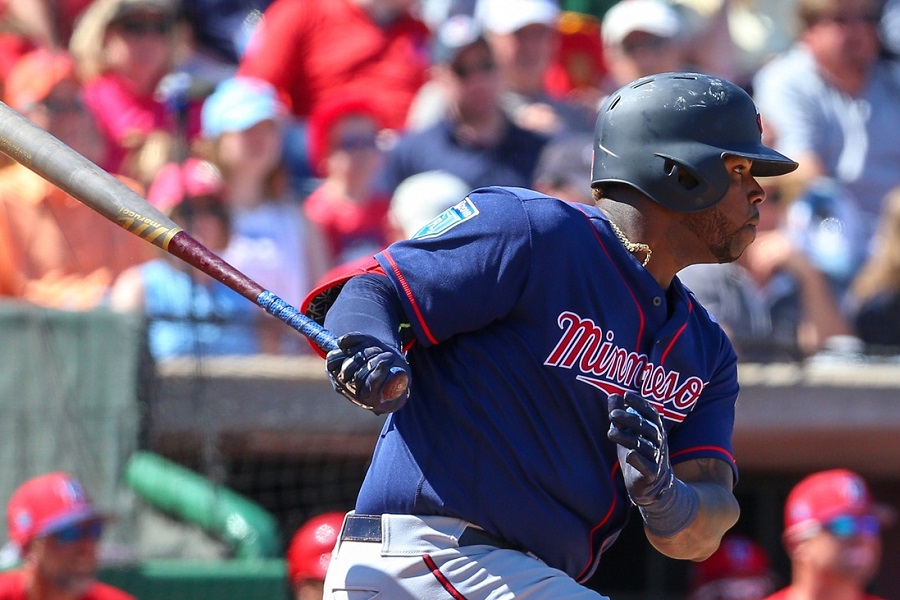 Vargas was designated for assignment by Cincinnati and Minnesota claimed him back. https://twitter.com/DanHayesMLB/status/977603010418348032 The Reds seemed like a tough spot for Vargas to fit, with Joey Votto occupying first base and no designated hitter in the National League. Because of his switch-hitting ability, there was some thought that he could serve as a bench bat or the club could try to sneak him through waivers to the minors. That plan didn’t work as he is back in Minnesota. Some Twins fans were a little paranoid about losing Vargas. It’s hard to blame fans for remembering when the club made one of the biggest judgment gaffes in baseball history. Letting David Ortiz go was a mistake. Even former General Manager Terry Ryan has admitted as much. But let’s make one thing clear… Kennys Vargas isn’t David Ortiz. It’s easy to see why fans can see similarities between the two players. Both players fit a similar profile as large men who have little to no defensive value. Even more eerie might be the fact that the Twins let both players go entering their age-27 season. Beyond those surface level similarities, there are some stark differences between these two players. Ortiz broke into the majors as a 21-year old in 1997. He played a little over 100 games through his first three seasons before becoming a regular player in 2000. From 1997-2002, he hit 266/.348/.461 (.809) while averaging 10 home runs and 18 doubles per season. He also had 339 strikeouts compared to 186 walks in 455 games. His best season in Minnesota was his last as he hit .272/.339/.500 with 20 home runs and 75 RBIs in 125 games. He battled injuries throughout his time in a Twins uniform. During the 2002-2003 off-season, Ortiz was due to make roughly $2 million through the arbitration process. Matt LeCroy would take over the designated hitter role with Doug Mientkiewicz penciled in at first base. Justin Morneau was closing in on the big leagues as well. “There wasn’t any one thing,” Terry Ryan told MLB.com. “If you look at his numbers across the board, they were very respectable. And not that it was totally about money, but we were a little bit strapped. That would be a good excuse, but it wasn’t that entirely. It was just a bad error in judgment of a guy’s talent.” Ortiz would sign with the Red Sox for $1.25 million and the rest is history. Vargas is a much different story. He made his debut as a 23-year old in 2014. During his four seasons in Minnesota, he hit .252/.311/.437 (.748) with 35 home runs and a more strikeouts (251) than hits (197). While Ortiz showed flashes of brilliance in the upper minors, Vargas posted a .248 batting average in 630 Triple-A at-bats. Vargas might the definition of a replacement level player. https://twitter.com/AaronGleeman/status/973962957653553152 Ortiz became known for his clutch hits to help the Red Sox win multiple championships. Vargas struggled to be successful in high-leverage spots on rebuilding Twins teams. Because both the Twins and Red Sox train in Fort Myers, Vargas and Ortiz have become acquaintances over the years. In fact, a friendship has developed between these Caribbean born players. Vargas also knows it took Ortiz multiple years to make it as a big leaguer. “He was in my spot years and years ago,” Vargas told the Pioneer Press. “He just trusted in himself, and he found a spot and (won) three World Series.” Vargas is still searching for his spot and now he’s back with the organization he’s known for his entire career.
 -
Opening Day is a big deal for fans and players. The anticipation of a new season reverberates throughout the stadium. Gates open early and there are plenty of festivities leading up to the year’s first pitch. For the first time since 2015, Ervin Santana won’t be the first man on the mound for the Minnesota Twins. His offseason surgery will keep him on the sidelines for the season’s first 4-6 weeks. This opened an opportunity for a new pitcher to get the Opening Day honors.Twins manager Paul Molitor announced Jake Odorizzi as the Opening Day starter on Thursday. It will be his first Opening Day start and he seems ready for the opportunity. “You always want to set the tone in Game 1 and put one in the win column,” he told the Pioneer Press. “If the team believes in you enough to give you that Opening Day start, I think that’s just a big vote of confidence of how they view you and what type of player they think you are.” Odorizzi will be followed in the rotation by Kyle Gibson, Jose Berrios, and Lance Lynn. Phil Hughes will start the season in the bullpen but could be used as a fifth starter if he is needed. Gibson is lined up to start the Home Opener at Target Field. Berrios would then get the opportunity to start one of the team’s games in Puerto Rico, his homeland. Here’s how the early weeks are schedule to play out: March 29 @ BAL: Odorizzi March 30: OFF March 31 @ BAL: Gibson April 1 @ BAL: Berrios April 2 @ PIT: Lynn April 3: OFF April 4 @ PIT: Odorizzi April 5 SEA: Gibson April 6: OFF April 7 SEA: Berrios April 8 SEA: Lynn April 9 HOU: Odorizzi April 10 HOU: Gibson April 11 HOU: Possibly Hughes April 12 CHW: Berrios April 13 CHW: Lynn April 14 CHW: Odorizzi April 15 CHW: Gibson April 16: OFF April 17 CLE (in Puerto Rico): Berrios April 18 CLE (in Puerto Rico): Lynn Since Target Field opened in 2010, the Twins will have used seven different Opening Day starters. Ervin Santana and Carl Pavano are the only two pitchers to make multiple starts during that stretch. Other Opening Day starters include Scott Baker (2010), Vance Worley (2013), Ricky Nolasco (2014) and Phil Hughes (2015). Brad Radke holds the team record for Opening Day starts (9) and consecutive Opening Day starts (7, 1999-2005). Click here to view the article
- 53 replies
-
- 1
-
-
- jake odorizzi
- kyle gibson
- (and 3 more)
-
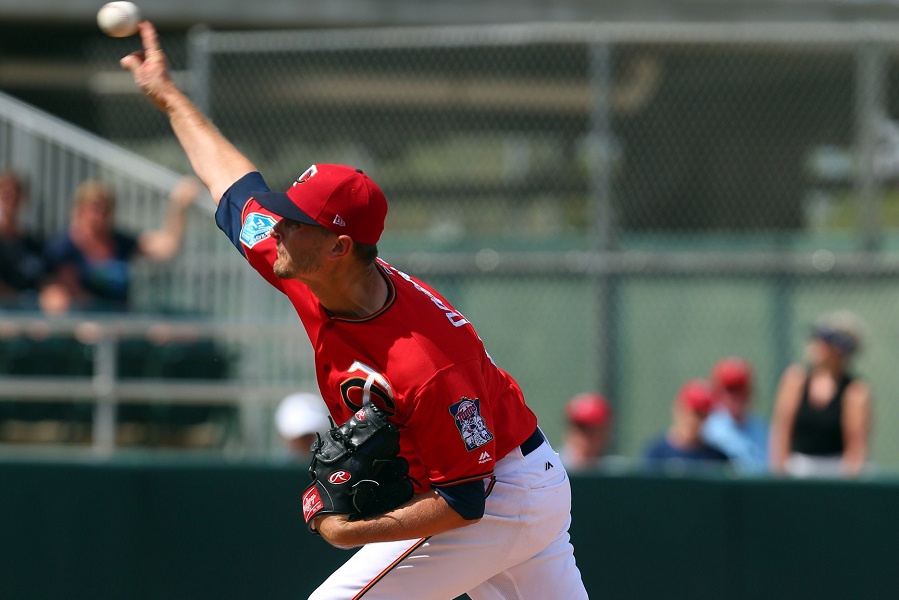 Twins manager Paul Molitor announced Jake Odorizzi as the Opening Day starter on Thursday. https://twitter.com/RhettBollinger/status/976920070059380736 It will be his first Opening Day start and he seems ready for the opportunity. “You always want to set the tone in Game 1 and put one in the win column,” he told the Pioneer Press. “If the team believes in you enough to give you that Opening Day start, I think that’s just a big vote of confidence of how they view you and what type of player they think you are.” Odorizzi will be followed in the rotation by Kyle Gibson, Jose Berrios, and Lance Lynn. Phil Hughes will start the season in the bullpen but could be used as a fifth starter if he is needed. Gibson is lined up to start the Home Opener at Target Field. Berrios would then get the opportunity to start one of the team’s games in Puerto Rico, his homeland. Here’s how the early weeks are schedule to play out: March 29 @ BAL: Odorizzi March 30: OFF March 31 @ BAL: Gibson April 1 @ BAL: Berrios April 2 @ PIT: Lynn April 3: OFF April 4 @ PIT: Odorizzi April 5 SEA: Gibson April 6: OFF April 7 SEA: Berrios April 8 SEA: Lynn April 9 HOU: Odorizzi April 10 HOU: Gibson April 11 HOU: Possibly Hughes April 12 CHW: Berrios April 13 CHW: Lynn April 14 CHW: Odorizzi April 15 CHW: Gibson April 16: OFF April 17 CLE (in Puerto Rico): Berrios April 18 CLE (in Puerto Rico): Lynn Since Target Field opened in 2010, the Twins will have used seven different Opening Day starters. Ervin Santana and Carl Pavano are the only two pitchers to make multiple starts during that stretch. Other Opening Day starters include Scott Baker (2010), Vance Worley (2013), Ricky Nolasco (2014) and Phil Hughes (2015). Brad Radke holds the team record for Opening Day starts (9) and consecutive Opening Day starts (7, 1999-2005).
 -
Opening Day is just a few short days away. For many players, the fate of their careers could be on the line. Twins fans have already seen the club make a decision on Kennys Vargas and there will be other player decisions in the days to come. For Tyler Kinley and other Rule 5 Draft picks, the yet to be made decisions will help determine which organizations they will play for in the coming season. Rule 5 picks must stay on the 25-man roster or the disabled list for the entire season or be offered back to their former organization. Kinley will certainly be packing his bags but will his final destination be Minnesota or back to Miami?Miami left Kinley unprotected this offseason following an up and down minor league season. He posted a 1.98 ERA at High-A but struggled to a 5.19 ERA after being bumped up to Double-A. There were some control issues as he averaged 3.7 walks per nine innings but his 12.7 strikeouts per nine was tough to ignore. Over the winter, Kinley pitched in the Dominican Winter League. In 14 appearances, he posted a 0.47 ERA with a 0.84 WHIP and a 32 to 11 strikeout to walk ratio. During one stretch, he had an 18-inning scoreless streak. It’s hard not to be impressed with those numbers even if it is a limited sample size. Kinley knows his time with Minnesota could be fleeting. “I really try not to think about it. I try to just think about preparing myself the best I can and trying to go out and execute the plan,” he told the Associated Press. “Just to establish myself as a reliable bullpen arm, not only to the coaching staff and front office’s eyes, but to the players as well.” Twins bullpen coach Eddie Guardado likens Kinley to a former Rule 5 pick. “Johan [santana] was willing to work and get better. Kinley reminds me of that. I’m not saying starting-wise, but he wants to learn, works hard, [a] very good person.” Control issues have continued to follow Kinley this spring. In the 10 innings pitched, he has six walks and a hit-by-pitch. According to the Star Tribune, Kinley’s fastball was clocked at 99 miles per hour earlier in the spring. Pair that with his 91 mile per hour slider and he could provide a power arm the Twins need in the bullpen. Minnesota’s addition of Lance Lynn added another wrinkle to fitting Kinley on the roster. The Twins were expected to start the season with a four-man rotation because of additional off-days worked into the schedule. This could allow for an eight man bullpen. Phil Hughes might be pushed to the bullpen to make way for Lynn in the rotation. As far as starters go, the Twins are looking at Jake Odorizzi, Kyle Gibson, Jose Berrios and Lance Lynn. Hughes could serve as a fifth starter or a long-man out of the bullpen. Some of the locks in the bullpen are Fernando Rodney, Addison Reed, Tayler Rogers, Zach Duke and Ryan Pressly. Trevor Hildenberger has struggled this spring so he could be sent down to start the year. He was critical to the Twins in the second half of last season so this might be enough to keep him on the roster. Players like Alan Busenitz, John Curtiss, Tyler Duffey and Gabriel Moya all have at least one option remaining. Things might have been made clear on Thursday with multiple bullpen pieces being optioned to Rochester.This could make Kinley the last player to fit into the bullpen. For the Twins and Kinley, the clock is ticking. One way or another a decision needs to be made. Do you think Kinley stays with the Twins? Leave a COMMENT and start the discussion. Click here to view the article
-
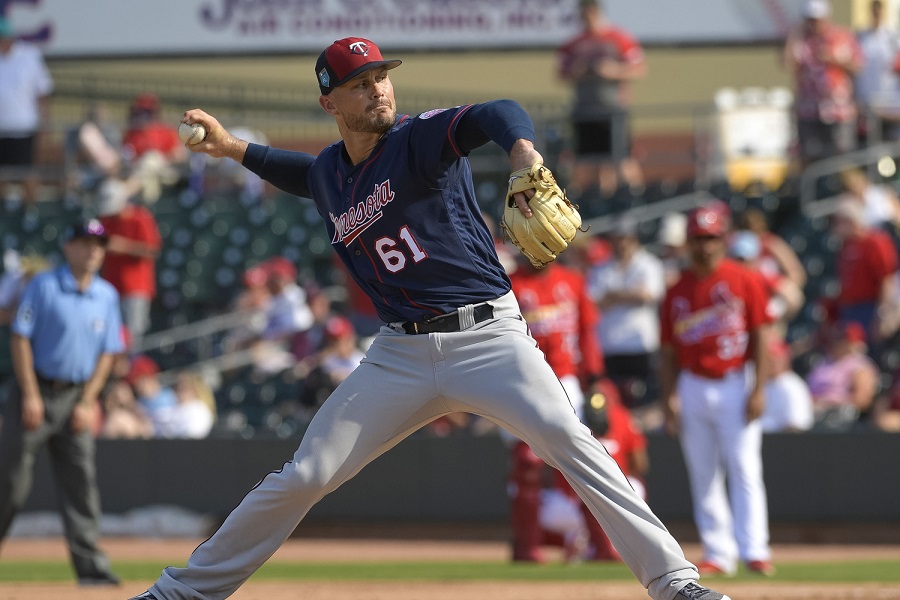 Miami left Kinley unprotected this offseason following an up and down minor league season. He posted a 1.98 ERA at High-A but struggled to a 5.19 ERA after being bumped up to Double-A. There were some control issues as he averaged 3.7 walks per nine innings but his 12.7 strikeouts per nine was tough to ignore. Over the winter, Kinley pitched in the Dominican Winter League. In 14 appearances, he posted a 0.47 ERA with a 0.84 WHIP and a 32 to 11 strikeout to walk ratio. During one stretch, he had an 18-inning scoreless streak. It’s hard not to be impressed with those numbers even if it is a limited sample size. Kinley knows his time with Minnesota could be fleeting. “I really try not to think about it. I try to just think about preparing myself the best I can and trying to go out and execute the plan,” he told the Associated Press. “Just to establish myself as a reliable bullpen arm, not only to the coaching staff and front office’s eyes, but to the players as well.” Twins bullpen coach Eddie Guardado likens Kinley to a former Rule 5 pick. “Johan [santana] was willing to work and get better. Kinley reminds me of that. I’m not saying starting-wise, but he wants to learn, works hard, [a] very good person.” Control issues have continued to follow Kinley this spring. In the 10 innings pitched, he has six walks and a hit-by-pitch. According to the Star Tribune, Kinley’s fastball was clocked at 99 miles per hour earlier in the spring. Pair that with his 91 mile per hour slider and he could provide a power arm the Twins need in the bullpen. Minnesota’s addition of Lance Lynn added another wrinkle to fitting Kinley on the roster. The Twins were expected to start the season with a four-man rotation because of additional off-days worked into the schedule. This could allow for an eight man bullpen. Phil Hughes might be pushed to the bullpen to make way for Lynn in the rotation. As far as starters go, the Twins are looking at Jake Odorizzi, Kyle Gibson, Jose Berrios and Lance Lynn. Hughes could serve as a fifth starter or a long-man out of the bullpen. Some of the locks in the bullpen are Fernando Rodney, Addison Reed, Tayler Rogers, Zach Duke and Ryan Pressly. Trevor Hildenberger has struggled this spring so he could be sent down to start the year. He was critical to the Twins in the second half of last season so this might be enough to keep him on the roster. Players like Alan Busenitz, John Curtiss, Tyler Duffey and Gabriel Moya all have at least one option remaining. Things might have been made clear on Thursday with multiple bullpen pieces being optioned to Rochester. This could make Kinley the last player to fit into the bullpen. For the Twins and Kinley, the clock is ticking. One way or another a decision needs to be made. Do you think Kinley stays with the Twins? Leave a COMMENT and start the discussion.
 -
Prediction season is here across the baseball world. Earlier this week, I made some bold predictions about Minnesota’s upcoming season. Truthfully, there’s a chance none of these predictions come true. Jorge Polanco’s suspension earlier this week also put a damper on the optimism that was surrounding the Twins so far this spring. Minnesota is likely going to finish behind Cleveland in the AL Central. The Indians have more depth and have been near the top of the AL over the last two seasons. Let’s take a realistic look at who the Twins might be competing with this season if they are in the Wild Card hunt.Boston Red Sox The Red Sox and the Yankees are setting up for quite the battle in the AL East. FanGraphs is projecting both teams to finish with more than 90 wins. Boston has claimed back-to-back AL East titles but this might be the year for them to fall a little short. David Price might be the team’s biggest question mark after his 2017 campaign was shrouded with elbow issues. Dustin Pedroia is coming off of off-season knee surgery and isn’t expected to be back until the end of May. JD Martinez could add some offensive pop to a lineup that includes young hitters like Andrew Benintendi, Mookie Betts, and Xander Bogaerts. Los Angeles Angels Mike Trout might be the best player of this generation and the Angels have only been to the playoffs one time during his career. The club’s last win in the playoffs was in 2009. Los Angeles added multiple pieces this off-season with the addition of Justin Upton, Ian Kinsler, Zack Cozart, and two-way Japanese star Shohoei Ohtani. Ohtani has struggled this spring but he wasn’t brought in to help the Angles to win pre-season games. Andrelton Simmons and Kinsler make-up the best defensive middle infield in the AL. Some computer models also think the Angels are set-up for failure this season. Houston should run away with the AL West so LA might be forced to fight for a Wild Card spot. Toronto Blue Jays Toronto should be in the playoff hunt but the division might be out of reach with the Yankees and the Red Sox fighting at the top. In 2017, the Blue Jays missed the playoffs for the first time since 2014. Toronto’s rotation will start the season without their ace, Marcus Stroman, sidelined with shoulder inflammation. Other pitchers like JA Happ, Marco Estrada and Aaron Sanchez help to complete a strong rotation but playing the rest of the AL East could hurt any starting staff. Offensively last season, the Blue Jays scored the fewest runs and Toronto’s lineup isn’t getting any younger. Seattle Mariners Twins fans might think they’ve had it rough but the Mariners haven’t qualified for the playoffs since 2001. Felix Hernandez hasn’t been the King over the last couple of seasons as his fastball dropped to barely over 90 miles an hour. Only three current starters (CC Sabathia, Bartolo Colon, Justin Verlander) have more innings pitched than Hernandez. Adding Dee Gordon should help the top of the lineup but his shift to center field comes with some questions. Some of the key offensive pieces are getting older as well. Robinson Cano will be 35, Nelson Cruz will be 37, and Kyle Seager will be 30. With a top-heavy American League, it looks like the Mariners playoff drought might continue. I was on 670 The Score out of Chicago this week to preview the AL Central. Take a listen here: https://670thescore....central-preview Who is the biggest threat to Minnesota taking a Wild Card spot? Leave a COMMENT and start the discussion. Click here to view the article
-
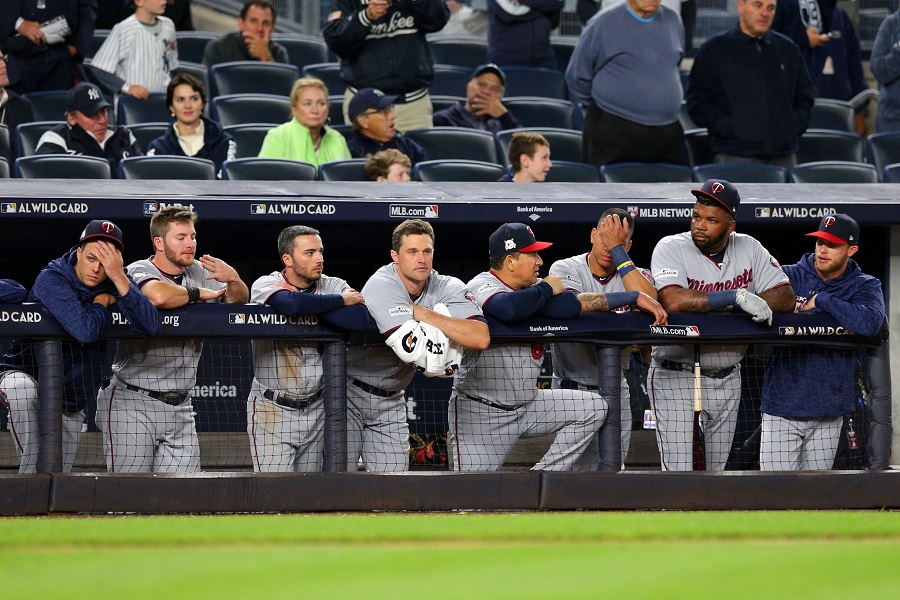 Boston Red Sox The Red Sox and the Yankees are setting up for quite the battle in the AL East. FanGraphs is projecting both teams to finish with more than 90 wins. Boston has claimed back-to-back AL East titles but this might be the year for them to fall a little short. David Price might be the team’s biggest question mark after his 2017 campaign was shrouded with elbow issues. Dustin Pedroia is coming off of off-season knee surgery and isn’t expected to be back until the end of May. JD Martinez could add some offensive pop to a lineup that includes young hitters like Andrew Benintendi, Mookie Betts, and Xander Bogaerts. Los Angeles Angels Mike Trout might be the best player of this generation and the Angels have only been to the playoffs one time during his career. The club’s last win in the playoffs was in 2009. Los Angeles added multiple pieces this off-season with the addition of Justin Upton, Ian Kinsler, Zack Cozart, and two-way Japanese star Shohoei Ohtani. Ohtani has struggled this spring but he wasn’t brought in to help the Angles to win pre-season games. Andrelton Simmons and Kinsler make-up the best defensive middle infield in the AL. Some computer models also think the Angels are set-up for failure this season. Houston should run away with the AL West so LA might be forced to fight for a Wild Card spot. Toronto Blue Jays Toronto should be in the playoff hunt but the division might be out of reach with the Yankees and the Red Sox fighting at the top. In 2017, the Blue Jays missed the playoffs for the first time since 2014. Toronto’s rotation will start the season without their ace, Marcus Stroman, sidelined with shoulder inflammation. Other pitchers like JA Happ, Marco Estrada and Aaron Sanchez help to complete a strong rotation but playing the rest of the AL East could hurt any starting staff. Offensively last season, the Blue Jays scored the fewest runs and Toronto’s lineup isn’t getting any younger. Seattle Mariners Twins fans might think they’ve had it rough but the Mariners haven’t qualified for the playoffs since 2001. Felix Hernandez hasn’t been the King over the last couple of seasons as his fastball dropped to barely over 90 miles an hour. Only three current starters (CC Sabathia, Bartolo Colon, Justin Verlander) have more innings pitched than Hernandez. Adding Dee Gordon should help the top of the lineup but his shift to center field comes with some questions. Some of the key offensive pieces are getting older as well. Robinson Cano will be 35, Nelson Cruz will be 37, and Kyle Seager will be 30. With a top-heavy American League, it looks like the Mariners playoff drought might continue. I was on 670 The Score out of Chicago this week to preview the AL Central. Take a listen here: https://670thescore.radio.com/media/audio-channel/nick-shepkowski-al-central-preview Who is the biggest threat to Minnesota taking a Wild Card spot? Leave a COMMENT and start the discussion.
 -
Baseball is almost officially back. I’ll let that comment sink in a minute. No more practice games where the starters are removed early. No more waiting for free agents to sign contracts. After the Twins front-office compiled a sneaky good off-season, the games will actually start to matter. Plenty of national publications will be making predictions in the days ahead. You will read about the likely front-runners for the major awards and how the playoff picture will shake out. Here are three crazy predictions about the 2018 Minnesota Twins (Spoiler alert: all three could come true).2018 American League MVP: Byron Buxton As a 23-year old, Byron Buxton radically changed his swing while playing every day at the big league level. Say good-bye to his leg kick and say hello to a completely different player at the plate. In the second-half, he hit .300/.347/.546 with 11 home runs and 13 other extra-base hits. His speed also makes him a menace on the bases as he was successful in 29 of his 30 stolen base attempts. The only time he was thrown out, he beat the throw and overslid the bag. His defense was also the best in the league as he was at or near the top according to most advance metrics. For Buxton to be in the consideration for MVP, he is going to have to continue to make strides on the offensive side of the ball. He needs to get better at pitch recognition so he can cut down on his high strikeout total. Buxton also needs to avoid injuries with his reckless pursuit of fly balls in the outfield. Minnesota has the opportunity to be in the playoff hunt and Buxton has the chance to be the best overall player on the team. He might be a long shot for the 2018 AL MVP but he could be in the discussion if he makes some small improvements. 2018 American League All-Star: Jose Berrios Minnesota bolstered its starting staff with the likes of Lance Lynn and Jake Odorizzi. Both pitchers helped to add depth to the rotation but neither is considered an ace. Jose Berrios has a chance to be the leader of the pitching staff this season and he could end up as a 2018 All-Star. His walk-rate shrunk from 5.4 BB/9 in 2016 to 3.0 BB/9 last season. He was also able to post a strong 8.6 K/9 strikeout rate because of his devastating sinker. Berrios will need to improve away from Target Field this season. He made 15 road starts last season and scuffled to a 5.17 ERA because of 12 home runs allowed. His change-up was his least used pitch last season but mixing in more breaking pitches could help to increase his strikeout rate. He’s had plenty of success in the minor leagues and this season will be his opportunity to take the next step at baseball’s highest level. It’s going to take a hot start to the season to get Berrios the recognition he will need to head to the Midsummer Classic. 2018 Gold Glove Winners: Byron Buxton, Joe Mauer, Brian Dozier, and Max Kepler Minnesota had multiple Gold Glove winners last season with Buxton and Dozier taking home the honor. Barring injury, Buxton should lead the planet in most defensive metrics. Dozier made quite the defensive turnaround in 2017 as he only trailed Ian Kinsler in SABR’s Defensive Index. With Dustin Pedroia injured to start the year, Dozier’s main competition might come from the 35-year old Kinsler and Jose Altuve, last year’s AL MVP. Joe Mauer was robbed of being a Gold Glove finalist last season. He ranked as one of the top-3 AL first basemen according to SABR’s Defensive Index, while Eric Hosmer, the eventual winner, was ranked as the second worst. Max Kepler is going to have a tougher hill to climb. He ranked as the fifth best right fielder and Mookie Betts lapped the field. For Kepler to steal a Gold Glove, Betts would need to get injured or shift to a different position. There you have some of my crazy predictions. Do you have any crazy predictions for 2018? Leave a COMMENT and start the discussion. Click here to view the article
-
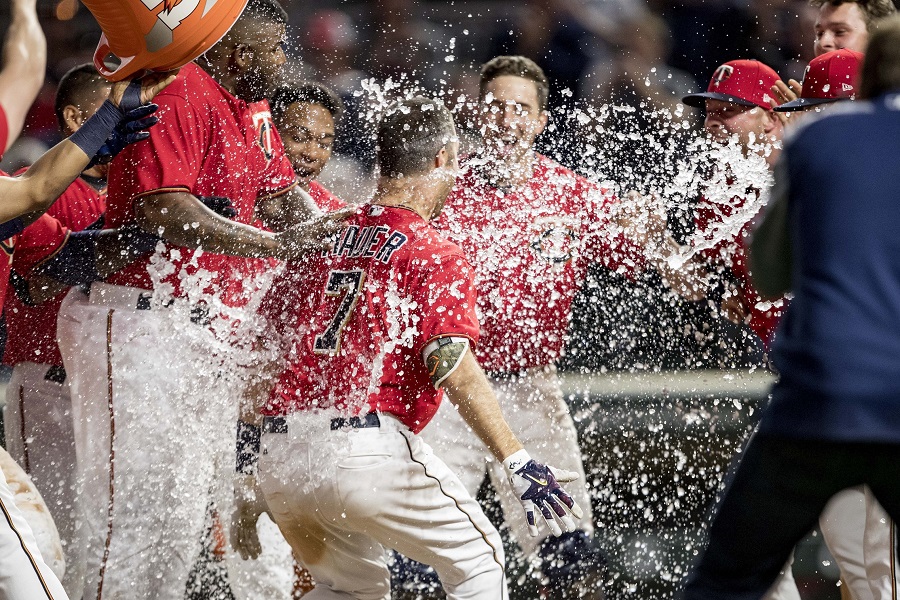 2018 American League MVP: Byron Buxton As a 23-year old, Byron Buxton radically changed his swing while playing every day at the big league level. Say good-bye to his leg kick and say hello to a completely different player at the plate. In the second-half, he hit .300/.347/.546 with 11 home runs and 13 other extra-base hits. His speed also makes him a menace on the bases as he was successful in 29 of his 30 stolen base attempts. The only time he was thrown out, he beat the throw and overslid the bag. His defense was also the best in the league as he was at or near the top according to most advance metrics. For Buxton to be in the consideration for MVP, he is going to have to continue to make strides on the offensive side of the ball. He needs to get better at pitch recognition so he can cut down on his high strikeout total. Buxton also needs to avoid injuries with his reckless pursuit of fly balls in the outfield. Minnesota has the opportunity to be in the playoff hunt and Buxton has the chance to be the best overall player on the team. He might be a long shot for the 2018 AL MVP but he could be in the discussion if he makes some small improvements. 2018 American League All-Star: Jose Berrios Minnesota bolstered its starting staff with the likes of Lance Lynn and Jake Odorizzi. Both pitchers helped to add depth to the rotation but neither is considered an ace. Jose Berrios has a chance to be the leader of the pitching staff this season and he could end up as a 2018 All-Star. His walk-rate shrunk from 5.4 BB/9 in 2016 to 3.0 BB/9 last season. He was also able to post a strong 8.6 K/9 strikeout rate because of his devastating sinker. Berrios will need to improve away from Target Field this season. He made 15 road starts last season and scuffled to a 5.17 ERA because of 12 home runs allowed. His change-up was his least used pitch last season but mixing in more breaking pitches could help to increase his strikeout rate. He’s had plenty of success in the minor leagues and this season will be his opportunity to take the next step at baseball’s highest level. It’s going to take a hot start to the season to get Berrios the recognition he will need to head to the Midsummer Classic. 2018 Gold Glove Winners: Byron Buxton, Joe Mauer, Brian Dozier, and Max Kepler Minnesota had multiple Gold Glove winners last season with Buxton and Dozier taking home the honor. Barring injury, Buxton should lead the planet in most defensive metrics. Dozier made quite the defensive turnaround in 2017 as he only trailed Ian Kinsler in SABR’s Defensive Index. With Dustin Pedroia injured to start the year, Dozier’s main competition might come from the 35-year old Kinsler and Jose Altuve, last year’s AL MVP. Joe Mauer was robbed of being a Gold Glove finalist last season. He ranked as one of the top-3 AL first basemen according to SABR’s Defensive Index, while Eric Hosmer, the eventual winner, was ranked as the second worst. Max Kepler is going to have a tougher hill to climb. He ranked as the fifth best right fielder and Mookie Betts lapped the field. For Kepler to steal a Gold Glove, Betts would need to get injured or shift to a different position. There you have some of my crazy predictions. Do you have any crazy predictions for 2018? Leave a COMMENT and start the discussion.
 -
When it comes to Twins prospects, Fernando Romero is a name that has certainly been gaining some steam. Entering last off-season, Twins Daily ranked him as the best prospect in the organization. The only thing stopping him from repeating that honor was the team’s number one overall pick from last year’s draft. Minnesota’s front office has been busy this off-season by adding five pitchers to the bullpen and starting rotation. This means all of the team’s top pitching prospects will start in the minors. That still doesn’t mean that Romero isn’t making it hard for the front office to consider bringing him north. What role will Romero play in 2018? What can fans expect from the team’s top pitching prospect?For the first time in his professional career, Fernando Romero found himself on multiple national prospect rankings. Jonathan Mayo of MLB.com ranked Romero as the 68th best prospect while Baseball Prospectus saw him sneak into the top-100 at number 97. ESPN’s Keith Law has him just inside his top-50. Most of this buzz is coming off of his potential to be a starting pitcher but he’s done very well this spring as a relief pitcher. Entering play on Sunday, Romero had yet to surrender a hit in five innings pitched. He continued that streak and added three more hitless innings to his resume. One of the knocks on Romero has been his command. During his breakout 2016 campaign, he seemed to put it all together. He posted a 0.90 WHIP and a 1.5 BB/9. Last year, his WHIP bumped up to 1.35 and his BB/9 more than doubled (3.2 BB/9). This spring he has been focusing on attacking hitters. Even with that focus he was only successful on getting ahead of three out of the nine batters he faced on Sunday. When Seth interviewed Romero earlier this off-season, he made it clear that fastball command is where it all starts. “That’s all we do. Try to command the fastball and get them out with the slider or change up. Doesn’t matter.” With a fastball in the mid to upper 90s and a devastating slider, one has to wonder if Romero could help the Twins this season in a bullpen role. Former Cy Young winners like Johan Santana and David Price got their starts as relief pitchers. Romero has only pitched over 100 innings once in his career. If the Twins are in the playoff hunt, a shift to the bullpen could be one way he helps the club in 2018. Obviously, the ultimate goal is to have Romero near the top of a rotation. A one-two punch of Jose Berrios and Romero could be quite the homegrown tandem. Twins coaches, including Ivan Arteaga, have been working with Romero to refine his delivery. During the 2017 campaign, Romero was getting into the habit of falling off toward the first base side of the mound. This impacted his control as one can see from the numbers listed above. Coaches like Arteaga have helped him to focus on finishing with his momentum heading toward home plate. “He doesn’t need to overthrow,” Arteaga told the Pioneer Press. “He’s got velo. He’s got power. He just needed to understand that, which I think he did over time. Watching some video and working in the bullpen, he put a lot of effort into following the plan that we have for him.” Romero has impressed this spring and it seems like he could be destined for Target Field this season. Will it be as a starter or as a reliever? Only time will tell… Click here to view the article
-
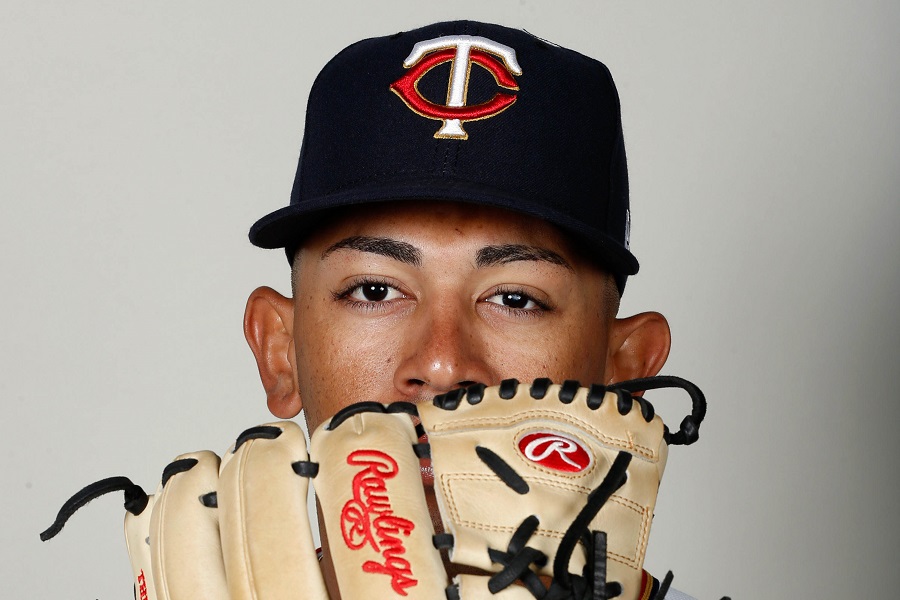 For the first time in his professional career, Fernando Romero found himself on multiple national prospect rankings. Jonathan Mayo of MLB.com ranked Romero as the 68th best prospect while Baseball Prospectus saw him sneak into the top-100 at number 97. ESPN’s Keith Law has him just inside his top-50. Most of this buzz is coming off of his potential to be a starting pitcher but he’s done very well this spring as a relief pitcher. Entering play on Sunday, Romero had yet to surrender a hit in five innings pitched. He continued that streak and added three more hitless innings to his resume. https://twitter.com/MikeBerardino/status/972921086634549254 One of the knocks on Romero has been his command. During his breakout 2016 campaign, he seemed to put it all together. He posted a 0.90 WHIP and a 1.5 BB/9. Last year, his WHIP bumped up to 1.35 and his BB/9 more than doubled (3.2 BB/9). This spring he has been focusing on attacking hitters. Even with that focus he was only successful on getting ahead of three out of the nine batters he faced on Sunday. When Seth interviewed Romero earlier this off-season, he made it clear that fastball command is where it all starts. “That’s all we do. Try to command the fastball and get them out with the slider or change up. Doesn’t matter.” With a fastball in the mid to upper 90s and a devastating slider, one has to wonder if Romero could help the Twins this season in a bullpen role. Former Cy Young winners like Johan Santana and David Price got their starts as relief pitchers. Romero has only pitched over 100 innings once in his career. If the Twins are in the playoff hunt, a shift to the bullpen could be one way he helps the club in 2018. Obviously, the ultimate goal is to have Romero near the top of a rotation. A one-two punch of Jose Berrios and Romero could be quite the homegrown tandem. Twins coaches, including Ivan Arteaga, have been working with Romero to refine his delivery. During the 2017 campaign, Romero was getting into the habit of falling off toward the first base side of the mound. This impacted his control as one can see from the numbers listed above. Coaches like Arteaga have helped him to focus on finishing with his momentum heading toward home plate. “He doesn’t need to overthrow,” Arteaga told the Pioneer Press. “He’s got velo. He’s got power. He just needed to understand that, which I think he did over time. Watching some video and working in the bullpen, he put a lot of effort into following the plan that we have for him.” Romero has impressed this spring and it seems like he could be destined for Target Field this season. Will it be as a starter or as a reliever? Only time will tell…
 -
For Twins fans, the last couple of weeks have brought one piece of good news after another. Derek Falvey and Thad Levine have built on last year’s playoff team by overhauling the pitching staff. Two new starters and multiple relievers have been added to help fix Minnesota’s biggest weakness. Add in the signing of Logan Morrison to bolster the offense and it’s been an almost perfect offseason. That being said, there has been some collateral damage throughout this process. Players who were poised to break camp with the team will be starting in the minors or ending up on another roster. Who has been impacted the most by the current roster’s construction?Starting Pitcher Effect Ervin Santana is going to start the year on the disabled list but there was still other arms vying for a role in the rotation. Jose Berrios and Kyle Gibson seemed like locks and both players should still be in the rotation on Opening Day. Beyond those two players, the rest of the rotation has been impacted by the additions of Jake Odorizzi and Lance Lynn. Adalberto Mejia was penciled into the back-end of the rotation as spring training began. However, he now seems destined for Rochester to join a stacked rotation with many of the team’s top pitching prospects. Phil Hughes also had a chance at a rotation role. With the current roster, it seems like he will be shifted to the bullpen. Anibal Sanchez saw his Twins tenure come to an end on Sunday even if it was a long-shot for him to make the rotation. Pre Off-Season Rotation: Ervin Santana, Jose Berrios, Kyle Gibson, Adalberto Mejia, Phil Hughes Current Rotation: Ervin Santana, Jose Berrios, Lance Lynn, Jake Odorizzi, Kyle Gibson Relief Pitcher Effect Minnesota’s bullpen had some bright spots last season but there were still some question marks as the offseason began. There was very little late-inning experience and it was hard to know who would be called upon for some of the biggest outs in the game. Adding pieces like Fernando Rodney, Addison Reed and Zach Duke might have shifted the bullpen into one of the team’s strengths. Some less experienced players are going to find themselves in the minors to start the year. Tyler Kinely was selected in the Rule 5 Draft but the bullpen is already crowded. The Twins could work out a deal with Miami to keep him in the minors. Hughes is going to have to take the place of another arm. Names like Alan Busenitz, John Curtiss and Gabriel Moya are going to have to continue to prove themselves in the minors as they wait for their opportunity. Pre Off-Season Bullpen: Trevor Hildenberger, Ryan Pressly, Taylor Rogers, Tyler Duffey, Alan Busenitz, John Curtiss, Jake Reed Current Bullpen: Fernando Rodney, Addison Reed, Trevor Hildenberger, Ryan Pressly, Zack Duke, Taylor Rogers, Phil Hughes Designated Hitter Effect Even after having offseason surgery, Miguel Sano will continue to get time on the defensive side of the ball. There may be a time in his career where he is relegated to a designated hitter role. Over the last two seasons, Joe Mauer has averaged 23 starts at DH. Other names like Kennys Vargas and Robbie Grossman entered camp with a chance to earn some time as the designated hitter. Logan Morrison’s signing changed some of those plans. Kennys Vargas seems like the odd-man out in the new DH equation. His lack of defensive position makes him more replaceable than someone like Robbie Grossman. Minnesota can put Grossman on the bench and have him serve in a fourth outfielder role. Vargas seems redundant with more proven hitters like Morrison, Sano and Mauer ahead of him on the DH depth chart. Pre Off-Season DH Options: Robbie Grossman, Kennys Vargas, Miguel Sano, Joe Mauer Current DH Options: Logan Morrison, Robbie Grossman, Miguel Sano, Joe Mauer Who has been impacted the most by the moves of this off-season? Leave a COMMENT and start the discussion. Click here to view the article
