Ted Wiedmann
-
Posts
127 -
Joined
-
Last visited
-
Days Won
1
Content Type
Profiles
News
Minnesota Twins Videos
2026 Minnesota Twins Top Prospects Ranking
2022 Minnesota Twins Draft Picks
Minnesota Twins Free Agent & Trade Rumors, Notes, & Tidbits
Guides & Resources
2023 Minnesota Twins Draft Picks
The Minnesota Twins Players Project
2024 Minnesota Twins Draft Picks
2025 Minnesota Twins Draft Pick Tracker
2026 Minnesota Twins Draft Tracker: Picks & Bonuses
Forums
Blogs
Events
Store
Downloads
Gallery
Everything posted by Ted Wiedmann
-
Pablo Lopez is Better than His ERA
Ted Wiedmann replied to Ted Wiedmann's topic in Twins Daily Front Page News
Based on the current roster construction I don't see a clear path to better defense other than unprecedented improvements from a couple players. Gallo has been unexpectedly underwhelming defensively so far this year (-2 OAA) so maybe there's a chance that's just variance and his metrics improve. -
Pablo Lopez is Better than His ERA
Ted Wiedmann replied to Ted Wiedmann's topic in Twins Daily Front Page News
Evaluating performance through strikeouts as soft contact is looking at results. It's just results on a per batter basis instead of a per game basis and therefore giving us a much larger sample to look at. -
Pablo Lopez is Better than His ERA
Ted Wiedmann replied to Ted Wiedmann's topic in Twins Daily Front Page News
MAT and Kepler have both been as advertised defensively. Joey Gallo and Willi Castro have been below average defenders in the outfield this season according to OAA. Buxton not playing any outfield has a lot to do with that as well. -
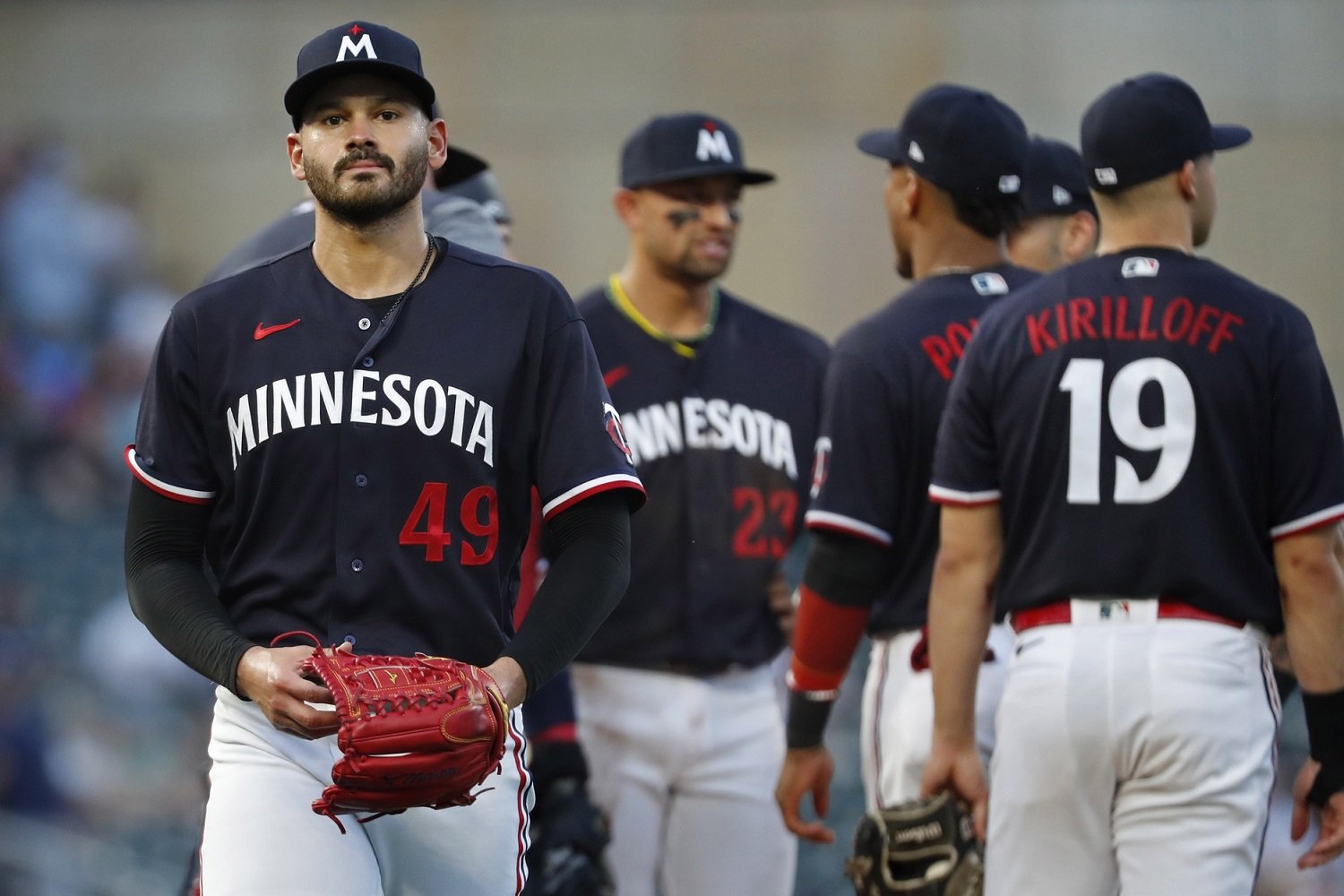 Through Pablo Lopez’s first three starts as a Minnesota Twin, he looked to be the next Venezuelan sensation to come through this organization. However, a 4.25 ERA in May and a 5.04 ERA so far in June seem to tell a different story for the Twins’ starter. But what if we look past that big earned runs average stat? The most significant change in Pablo Lopez’s game this year has been his ability to generate swings and misses. Lopez’s 30.1% K% ranks fifth in all of baseball among qualified starting pitchers, and his 23.3% K-BB% ranks third in the same qualifier. Lopez is also experiencing career highs in chase% at 36.2% and swing and miss% at 29.9%, compared to the league average at 28.4% and 24.8%, respectively. Pablo also has career bests in zone contact% 77.4% and chase contact% 55.1%, compared to the league average of 82.0% and 58.1%. Why is this important? Striking hitters out is the most valuable skill a pitcher can possess. Infield bleeders and pop-up jam shots don’t exist on strikeouts. Neither does hard contact or home runs. I don’t believe it is a coincidence that of the top 30 pitchers in fWAR, only eight have a below-average strikeout rate. Obviously, the counterpoint to all of this is that strikeouts are great, but the objective is not to give up runs, and Lopez has roughly a league average runs per game allowed. Well, that doesn’t all have to be attributed to Lopez. For this, I’ll refer to Carlos Correa’s favorite stat on Baseball Savant, xwOBA. xwOBA, or expected weighted on-base average, measures the culmination of expected outcomes based on the quality of contact, in this case, given up by a pitcher. When you remove defense from the equation, Lopez’s .280 xwOBA is the 83rd percentile among qualified starters in baseball, with the league average being .316, meaning he doesn’t allow much hard contact. Taking this one step further, we can measure his entire performance by adding his strikeout, walk, and hit-by-pitch results to his xwOBA into a single stat, expected ERA (xERA). Pablo Lopez’s xERA is currently 3.15, a much better mark than his 4.41 ERA. Out of pitchers allowing 200 balls in play, Lopez’s +1.26 difference in ERA vs. xERA is the seventh highest in MLB, just ahead of Yu Darvish and Sandy Alcantara. Defense removed statistics apply particularly to Twins’ pitchers because the Twins’ infield ranks 29th in outs above average (OAA) with -15, and their outfield ranks 22nd in OAA at -3. Most notably, the Twins’ -17 OAA to left-handed hitters ranks 30th, with the 29th team having only -7 OAA to LHH, implying the right side of the infield is a huge issue. Being a pitching and defense team without playing defense is pretty challenging. The last point I want to make is that Lopez seems on the wrong side of variance. In 2023 Pablo Lopez’s LOB% is 67.9%, well short of his career average of 72.0% and well below the 2023 league average of 71.9%. LOB% tends to be a highly volatile statistic, and given both his career LOB% and the metrics presented earlier, I would bet on this number settling around league average by the end of the season. Pablo Lopez is producing similarly to the elite pitchers in baseball in many categories, and most importantly, ones that tend to be more predictive than ERA. It’s easy to see a big four in front of his ERA and assume Lopez pitched poorly this season, but if looked deeper, the Twins have gotten everything out of Pablo they could’ve hoped for this year.
 -
A 4.41 ERA may seem disappointing on the surface, but diving a little deeper into Pablo Lopez’s numbers show he’s pitched quite a bit better than that. Image courtesy of © Bruce Kluckhohn-USA TODAY Sports Through Pablo Lopez’s first three starts as a Minnesota Twin, he looked to be the next Venezuelan sensation to come through this organization. However, a 4.25 ERA in May and a 5.04 ERA so far in June seem to tell a different story for the Twins’ starter. But what if we look past that big earned runs average stat? The most significant change in Pablo Lopez’s game this year has been his ability to generate swings and misses. Lopez’s 30.1% K% ranks fifth in all of baseball among qualified starting pitchers, and his 23.3% K-BB% ranks third in the same qualifier. Lopez is also experiencing career highs in chase% at 36.2% and swing and miss% at 29.9%, compared to the league average at 28.4% and 24.8%, respectively. Pablo also has career bests in zone contact% 77.4% and chase contact% 55.1%, compared to the league average of 82.0% and 58.1%. Why is this important? Striking hitters out is the most valuable skill a pitcher can possess. Infield bleeders and pop-up jam shots don’t exist on strikeouts. Neither does hard contact or home runs. I don’t believe it is a coincidence that of the top 30 pitchers in fWAR, only eight have a below-average strikeout rate. Obviously, the counterpoint to all of this is that strikeouts are great, but the objective is not to give up runs, and Lopez has roughly a league average runs per game allowed. Well, that doesn’t all have to be attributed to Lopez. For this, I’ll refer to Carlos Correa’s favorite stat on Baseball Savant, xwOBA. xwOBA, or expected weighted on-base average, measures the culmination of expected outcomes based on the quality of contact, in this case, given up by a pitcher. When you remove defense from the equation, Lopez’s .280 xwOBA is the 83rd percentile among qualified starters in baseball, with the league average being .316, meaning he doesn’t allow much hard contact. Taking this one step further, we can measure his entire performance by adding his strikeout, walk, and hit-by-pitch results to his xwOBA into a single stat, expected ERA (xERA). Pablo Lopez’s xERA is currently 3.15, a much better mark than his 4.41 ERA. Out of pitchers allowing 200 balls in play, Lopez’s +1.26 difference in ERA vs. xERA is the seventh highest in MLB, just ahead of Yu Darvish and Sandy Alcantara. Defense removed statistics apply particularly to Twins’ pitchers because the Twins’ infield ranks 29th in outs above average (OAA) with -15, and their outfield ranks 22nd in OAA at -3. Most notably, the Twins’ -17 OAA to left-handed hitters ranks 30th, with the 29th team having only -7 OAA to LHH, implying the right side of the infield is a huge issue. Being a pitching and defense team without playing defense is pretty challenging. The last point I want to make is that Lopez seems on the wrong side of variance. In 2023 Pablo Lopez’s LOB% is 67.9%, well short of his career average of 72.0% and well below the 2023 league average of 71.9%. LOB% tends to be a highly volatile statistic, and given both his career LOB% and the metrics presented earlier, I would bet on this number settling around league average by the end of the season. Pablo Lopez is producing similarly to the elite pitchers in baseball in many categories, and most importantly, ones that tend to be more predictive than ERA. It’s easy to see a big four in front of his ERA and assume Lopez pitched poorly this season, but if looked deeper, the Twins have gotten everything out of Pablo they could’ve hoped for this year. View full article
-
Willi Castro is Becoming Disturbingly Valuable
Ted Wiedmann replied to Ted Wiedmann's topic in Twins Daily Front Page News
I would be very surprised if Castro was a capable everyday centerfielder. Might be better than Gordon out there since he's faster and has a better arm, but I'm not optimistic about it. Hope he proves me wrong since he's the only non-Michael A option in center right now and may get some run out there. -
Willi Castro is Becoming Disturbingly Valuable
Ted Wiedmann replied to Ted Wiedmann's topic in Twins Daily Front Page News
You bought your insurance from one of them 😂 -
Willi Castro is Becoming Disturbingly Valuable
Ted Wiedmann replied to Ted Wiedmann's topic in Twins Daily Front Page News
I wonder if other teams will start to do this more with oft-injured stars to keep them healthy. Would be interesting to see if guys like Tatis and Acuna start to seeing more DH at bats -
Willi Castro is Becoming Disturbingly Valuable
Ted Wiedmann replied to Ted Wiedmann's topic in Twins Daily Front Page News
Very surprising move from them considering the upside he flashed, the physical tools, and the lack of investment in bats on their part. Maybe it's an organizational thing where they want to stay away from high K%-low BB% guys but their depth of hitting prospects is ROUGH -
Willi Castro is Becoming Disturbingly Valuable
Ted Wiedmann replied to Ted Wiedmann's topic in Twins Daily Front Page News
No inside info but I get the impression the longer that Buck stays healthy the more inclined they'll be to keep him at DH. I don't know if I'd be on board with Willi as an everyday CFer, but hey, he's already surpassed expectations why not keep going? -
Originally signed to fill out the roster in St. Paul, Willi Castro is close to removing himself from the send-down conversation altogether. Image courtesy of Matt Krohn-USA TODAY Sports In December, I was pleasantly surprised when the Twins landed Willi Castro on a minor league contract. Despite some disappointing years in Detroit, I anticipated the toolsy utility man would’ve had a bigger market than what he settled for. I even wrote about how he compared similarly to former Twin Danny Santana. However, all of that excitement on my behalf was with the expectation that Castro would be in St. Paul for most of the year and would be more of a reclamation project than a semi-platoon Big-Leaguer. If you had told me, coming into 2023, that 50 games into the season, Castro would have not only been on the Major League squad for all of those games but eighth on the team in fWAR, I would have guessed some horrible things happened in Minnesota. While this season has undoubtedly had its lumps, the Twins are still on pace to meet their preseason projections. The hope moving forward is the Twins never get to the point where Castro needs to be an everyday player, but it seems like they’re getting dangerously close. There is value in having capable role players, but I would be worried if Castro is ever more than that. His lack of plate discipline and his propensity to swing and miss can infuriate Twins fans, and while defensively versatile, versatility is often caused by the inability to stick in one spot. While not playing a huge role offensively or defensively, Castro has been a nice surprise in demonstrating his ability to hold down a spot as a 26th man on a Major League Roster. He is having his best offensive season since 2020 and has earned the trust of the coaching staff to play all three infield spots and all three outfield spots. Castro’s most significant impact on the team has been his baserunning. Despite having the 11th most plate appearances on the Twins, Castro leads the team in stolen bases with seven. He also ranks sixth on the team in baserunning runs above average. Castro’s utility as a defender and his ability to switch hit earned him a spot on the roster initially, but his performance has kept him in The Show. Having options on his contract ensured he has always been a send-down candidate whenever a prospect has been ready, or a player was coming back from an injury. However, he has played well enough to force the Twins to keep him away from St. Paul. Having out-performed Nick Gordon and Donovan Solano thus far, combined with his ability to create chaos on the basepaths, Castro has proven to be an important piece on the Twins. With the current status of injuries, Castro will likely become even more valuable, and they may need to rely on him in a way they didn’t anticipate coming into the year. You can bet the Detroit Tigers regret DFA-ing the 26-year-old, as both his 93 wRC+ and 0.4 fWAR would rank fifth on the Tigers. Their lineup remains futile. When the Twins are going through a tough stretch, sometimes it’s nice to find some positives with the team and remind yourself it’s about the whole season, not just ten or 20-game samples. Castro isn't putting up eye-popping offensive totals – or at least he wasn't before Saturday's multi-homer outburst – but he's found a role on a division-leading team, and his skill set is helping his team win games. I mean, heck, the guy stole home. Who doesn’t love that? View full article
-
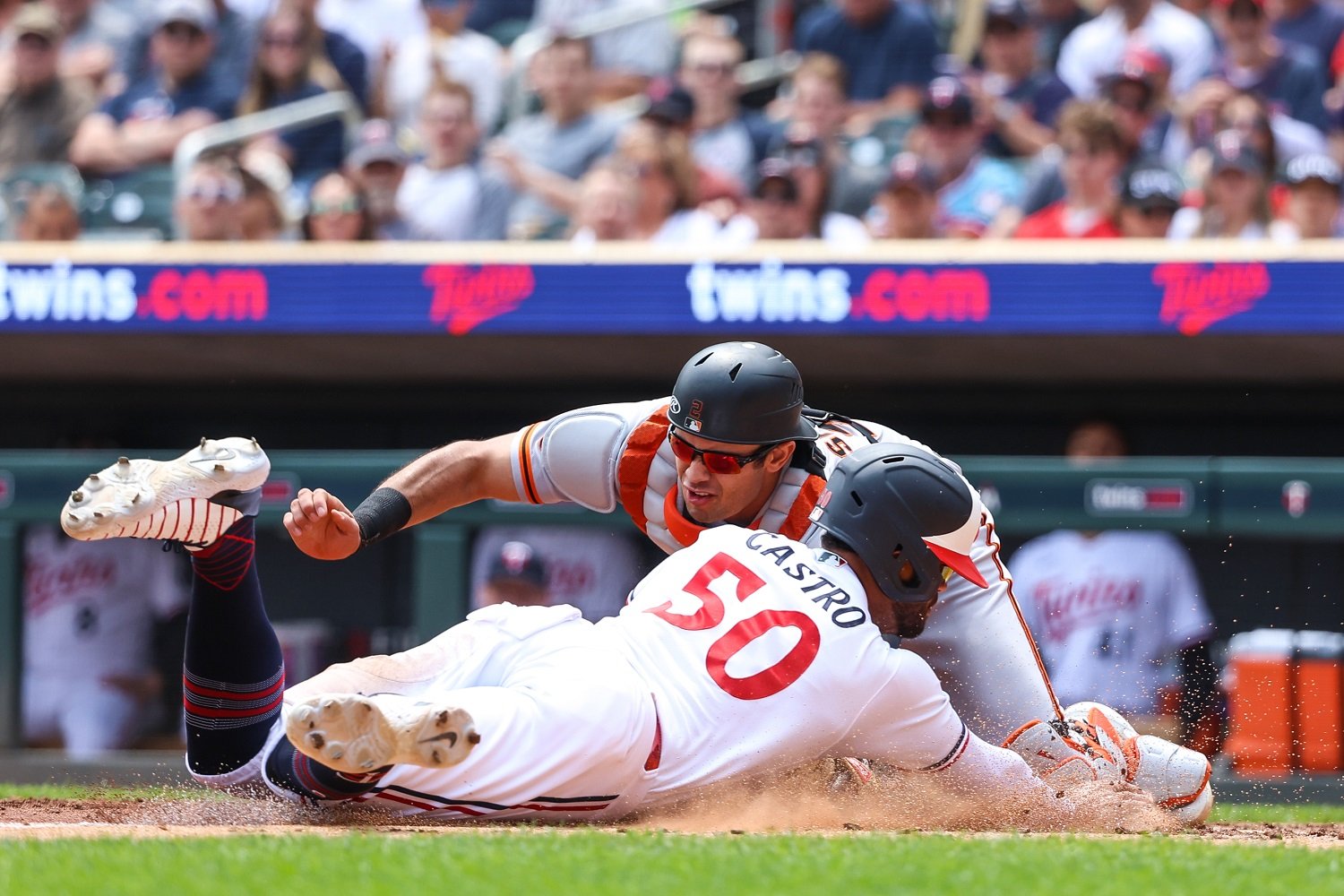 In December, I was pleasantly surprised when the Twins landed Willi Castro on a minor league contract. Despite some disappointing years in Detroit, I anticipated the toolsy utility man would’ve had a bigger market than what he settled for. I even wrote about how he compared similarly to former Twin Danny Santana. However, all of that excitement on my behalf was with the expectation that Castro would be in St. Paul for most of the year and would be more of a reclamation project than a semi-platoon Big-Leaguer. If you had told me, coming into 2023, that 50 games into the season, Castro would have not only been on the Major League squad for all of those games but eighth on the team in fWAR, I would have guessed some horrible things happened in Minnesota. While this season has undoubtedly had its lumps, the Twins are still on pace to meet their preseason projections. The hope moving forward is the Twins never get to the point where Castro needs to be an everyday player, but it seems like they’re getting dangerously close. There is value in having capable role players, but I would be worried if Castro is ever more than that. His lack of plate discipline and his propensity to swing and miss can infuriate Twins fans, and while defensively versatile, versatility is often caused by the inability to stick in one spot. While not playing a huge role offensively or defensively, Castro has been a nice surprise in demonstrating his ability to hold down a spot as a 26th man on a Major League Roster. He is having his best offensive season since 2020 and has earned the trust of the coaching staff to play all three infield spots and all three outfield spots. Castro’s most significant impact on the team has been his baserunning. Despite having the 11th most plate appearances on the Twins, Castro leads the team in stolen bases with seven. He also ranks sixth on the team in baserunning runs above average. Castro’s utility as a defender and his ability to switch hit earned him a spot on the roster initially, but his performance has kept him in The Show. Having options on his contract ensured he has always been a send-down candidate whenever a prospect has been ready, or a player was coming back from an injury. However, he has played well enough to force the Twins to keep him away from St. Paul. Having out-performed Nick Gordon and Donovan Solano thus far, combined with his ability to create chaos on the basepaths, Castro has proven to be an important piece on the Twins. With the current status of injuries, Castro will likely become even more valuable, and they may need to rely on him in a way they didn’t anticipate coming into the year. You can bet the Detroit Tigers regret DFA-ing the 26-year-old, as both his 93 wRC+ and 0.4 fWAR would rank fifth on the Tigers. Their lineup remains futile. When the Twins are going through a tough stretch, sometimes it’s nice to find some positives with the team and remind yourself it’s about the whole season, not just ten or 20-game samples. Castro isn't putting up eye-popping offensive totals – or at least he wasn't before Saturday's multi-homer outburst – but he's found a role on a division-leading team, and his skill set is helping his team win games. I mean, heck, the guy stole home. Who doesn’t love that?
 -
It's Time for More Ryan Jeffers
Ted Wiedmann replied to Ted Wiedmann's topic in Twins Daily Front Page News
For what it’s worth I don’t think there’s a huge difference defensively between the two -
It's Time for More Ryan Jeffers
Ted Wiedmann replied to Ted Wiedmann's topic in Twins Daily Front Page News
I think there are stats that support Jeffers being a better hitter this season. Both players have been struggling mightily at what they have traditionally provided at the plate. Vazquez is displaying swing and miss that's unprecedented for him and Jeffers is having career lows in barrel% and launch. I believe more in Jeffers bounceback in hard contact than I do in Vazquez recovering his contact rates. I also think the difference in defense between the two isn't significant. -
It's Time for More Ryan Jeffers
Ted Wiedmann replied to Ted Wiedmann's topic in Twins Daily Front Page News
Fair to criticize slash lines, and Jeffers lack of quality contact is addressed. However, Vazquez is struggling at the things he's supposed to be good, mainly high contact rates, and has a track record of very weak offensive seasons. At his peak he's a league average hitter and there are no offensive statistics that suggest he's been even close to that. -
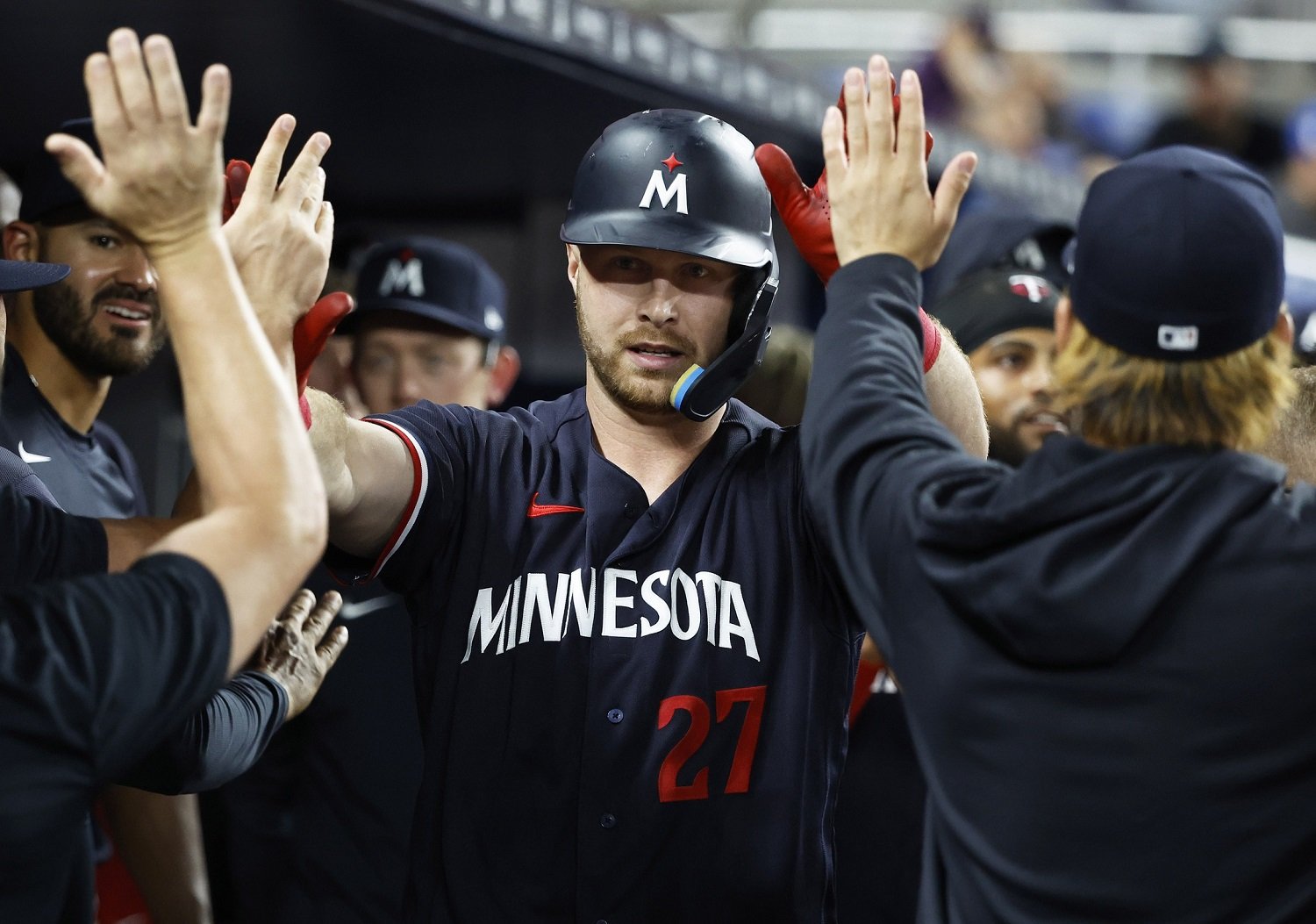 Christian Vazquez is currently on pace for his worst offensive season since 2018, where he hit .207/.257/.283 with a paltry 42 wRC+; Vazquez's current line of .214/.290/.250 with a 57 wRC+ hasn't inspired much confidence. On the other side of the catching tandem, Ryan Jeffers has looked reinvented this season. With career bests in OBP, SLG, wRC+, and wOBA, the Twins' catching rotation of 65/35 Vazquez to Jeffers' playing time split may need some altering. Vazquez has never been a feared hitter in a lineup. He has one non-shortened season with a wRC+ over 100 (102 in 2019) and has four seasons with a wRC+ under 80. The most troubling part of Vazquez's struggles isn't that this type of performance is unprecedented for him, it's that he may have made an approach adjustment at the plate, and so far, it has backfired. Vazquez, throughout his career, has been a low-walk/high-contact player that hasn't hit for much power. However, Vazquez has cut down his swing rate on both pitches outside and inside the strike zone this season. The good news is Vazquez's chase% is significantly lower than it has been in his career, leading to a career-best BB%, but the bad news is he's sacrificed a good amount of contact without adding power. Looking at both zone-contact and chase-contact rates on Baseball Savant, Vazquez has experienced alarming drops in both numbers. A zone-contact% of only 76.8% is almost 10% lower than his career average at 86.6% and has fallen below the league average of 82%. Vazquez has also seen a similar drop in his chase-contact%, with a career-worst 54.9% compared to a career average of 70.4%. Again, he has fallen below the league average mark of 58.2%. If Vazquez showed flashes of power, contact rate dropping is less of a concern, but it's been the opposite case thus far. Vazquez is seeing his lowest average exit velocity since 2017 and according to Statcast, has yet to barrel a single pitch this season. I don't need a blue dot to tell me a barrel% of 0% is the worst in the league. Comparing raw production numbers to Ryan Jeffers, it seems like a no-brainer that Jeffers should start eating a majority of the playing time, but Jeffers' .828 OPS might be fake news. His .273/.373/.455 on the surface is all-star-level production from Jeffers, but his quality of contact would say it's not sustainable. With only 50 plate appearances or so in, Jeffers has career-worst numbers in expected batting average (.200), expected slugging (.365), hard hit% (40.7%), average exit velocity (87.7), and barrel% (11.1%). I should also point out that Jeffers has the best BB% of his career (11.8%) and still has more extra-base hits than Vazquez, despite roughly half the plate appearances. Even if Jeffers is due for some heavy regression, his expected slash line is still better than what Vazquez has been. Jeffers provides an added dimension of power that Vazquez doesn't have. If Vazquez's contact rates have dropped below league averages, he loses his advantage over Jeffers at the plate. Perhaps Vazquez deserves the benefit of the doubt. After all, he is a two-time World Series champion and could be adjusting to a new home. Vazquez is still following through on his heralded defensive value (despite some ugly throwing errors), with his pitch framing ranking in the 76th percentile on Statcast and pitchers having only a 3.26 ERA when throwing to him. Unfortunately, a playing time controversy arises when the team is struggling to score runs, and you're being out-hit by your backup. While not supported by peripheral numbers, at some point, Ryan Jeffers should start to eat into Vazquez's innings and plate appearances if both players continue their current trends. I would like to see the Twins to implement a more 50-50 split for the catching duo moving forward.
 -
Even for a defensive specialist, Christian Vazquez's performance at the plate has left much to be desired. Image courtesy of © Rhona Wise-USA TODAY Sports Christian Vazquez is currently on pace for his worst offensive season since 2018, where he hit .207/.257/.283 with a paltry 42 wRC+; Vazquez's current line of .214/.290/.250 with a 57 wRC+ hasn't inspired much confidence. On the other side of the catching tandem, Ryan Jeffers has looked reinvented this season. With career bests in OBP, SLG, wRC+, and wOBA, the Twins' catching rotation of 65/35 Vazquez to Jeffers' playing time split may need some altering. Vazquez has never been a feared hitter in a lineup. He has one non-shortened season with a wRC+ over 100 (102 in 2019) and has four seasons with a wRC+ under 80. The most troubling part of Vazquez's struggles isn't that this type of performance is unprecedented for him, it's that he may have made an approach adjustment at the plate, and so far, it has backfired. Vazquez, throughout his career, has been a low-walk/high-contact player that hasn't hit for much power. However, Vazquez has cut down his swing rate on both pitches outside and inside the strike zone this season. The good news is Vazquez's chase% is significantly lower than it has been in his career, leading to a career-best BB%, but the bad news is he's sacrificed a good amount of contact without adding power. Looking at both zone-contact and chase-contact rates on Baseball Savant, Vazquez has experienced alarming drops in both numbers. A zone-contact% of only 76.8% is almost 10% lower than his career average at 86.6% and has fallen below the league average of 82%. Vazquez has also seen a similar drop in his chase-contact%, with a career-worst 54.9% compared to a career average of 70.4%. Again, he has fallen below the league average mark of 58.2%. If Vazquez showed flashes of power, contact rate dropping is less of a concern, but it's been the opposite case thus far. Vazquez is seeing his lowest average exit velocity since 2017 and according to Statcast, has yet to barrel a single pitch this season. I don't need a blue dot to tell me a barrel% of 0% is the worst in the league. Comparing raw production numbers to Ryan Jeffers, it seems like a no-brainer that Jeffers should start eating a majority of the playing time, but Jeffers' .828 OPS might be fake news. His .273/.373/.455 on the surface is all-star-level production from Jeffers, but his quality of contact would say it's not sustainable. With only 50 plate appearances or so in, Jeffers has career-worst numbers in expected batting average (.200), expected slugging (.365), hard hit% (40.7%), average exit velocity (87.7), and barrel% (11.1%). I should also point out that Jeffers has the best BB% of his career (11.8%) and still has more extra-base hits than Vazquez, despite roughly half the plate appearances. Even if Jeffers is due for some heavy regression, his expected slash line is still better than what Vazquez has been. Jeffers provides an added dimension of power that Vazquez doesn't have. If Vazquez's contact rates have dropped below league averages, he loses his advantage over Jeffers at the plate. Perhaps Vazquez deserves the benefit of the doubt. After all, he is a two-time World Series champion and could be adjusting to a new home. Vazquez is still following through on his heralded defensive value (despite some ugly throwing errors), with his pitch framing ranking in the 76th percentile on Statcast and pitchers having only a 3.26 ERA when throwing to him. Unfortunately, a playing time controversy arises when the team is struggling to score runs, and you're being out-hit by your backup. While not supported by peripheral numbers, at some point, Ryan Jeffers should start to eat into Vazquez's innings and plate appearances if both players continue their current trends. I would like to see the Twins to implement a more 50-50 split for the catching duo moving forward. View full article
-
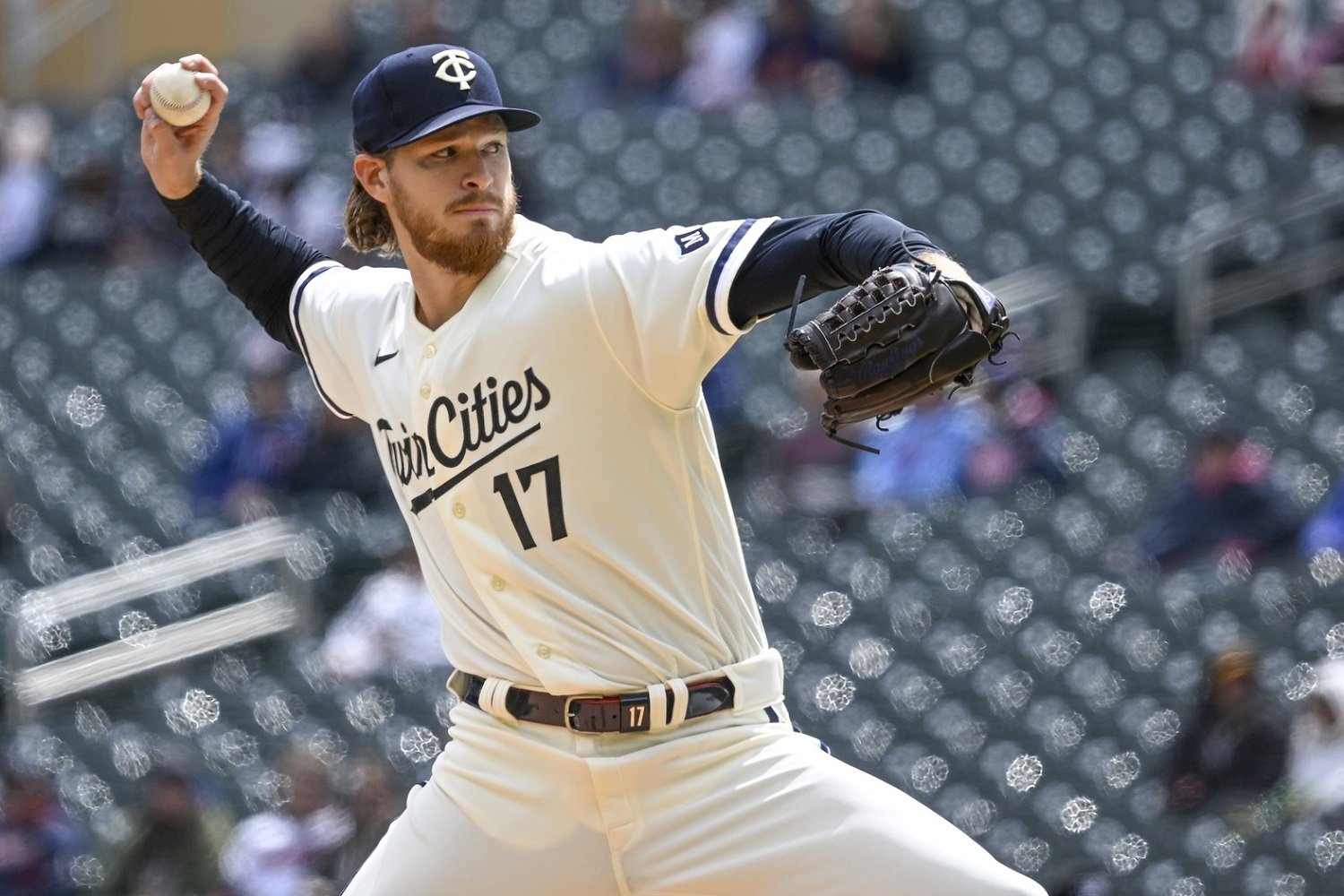 Bailey Ober has experienced moderate success with 2.7 fWAR in almost 160 Major League innings, and he’s looked excellent to start this season. In addition, quality starting pitching is held at a premium, and having depth in that category presents a massive advantage over the rest of the league. So it may seem disingenuous to suggest a starter with a career 3.66 ERA in roughly an entire season’s worth of work to move to the bullpen, especially for a team stretching its starting pitcher depth. However, there are warning signs that Ober’s success may not be sustainable to the level at which he’s performed. Health is the most apparent and straightforward reason to explain this transition. Ober has suffered extended missed time in multiple seasons with multiple lower body injuries that include mostly hip problems; this doesn’t bode well in the future for a six-foot nine-inch 270-pound body entering his late 20s. Bailey Ober has pitched professionally since 2017 and has only once eclipsed the 100-inning mark in a season. Hopefully, this season he can find that number again. However, as far as the data says, Ober is too unreliable to pencil in a starting pitcher’s workload, even with that standard diminishing. Another factor likely affected by his health track record but also has some to do with his stuff is Ober’s inability to pitch deep into games. Ober has recorded over 18 outs only once in 33 starts during his Big League career. One part of this is the Twins likely trying to lessen his workload. In his rookie season in 2021, they ensured he was adequately built up after not pitching a minor league season in 2020 that contributed to short starts. I believe his starts are also cut short because of his splits the first and second time through the order and his splits versus lefties and righties. Here are comparative numbers first time through vs. second time through (per Fangraphs): ERA: 2.42 vs. 4.96 FIP: 3.56 vs. 4.27 Slash: .217/.267/.388 vs .274/.318/.479 wOBA: .283 vs .340 K-BB%: 22.6% vs 16.6% Hard contact%: 30.1% vs. 37.2% He’s only faced 76 total batters the third time through, albeit with relative success, but the sample is small enough that I’m not sure it’s worth much consideration. With the dropoff in results from the first to the second time in the order, there is no reason to trust Ober to be successful a third time, which will limit his ability to work deep into games. As stated before, Ober also suffers from extreme platoon splits. Here are his comparative numbers against left-handed vs. right-handed hitters: (R vs. L) Slash: .217/.237/.411 vs .274/.341/.441 K-BB%: 24.9% vs 11.7% WHIP: 0.89 vs. 1.48 FIP: 3.52 vs. 4.33 wOBA: .273 vs .339 While you may or may not agree with the stance of protecting pitchers who face a lineup multiple times, there is no denying Ober dominates right-handed hitters and struggles against left-handed ones. Being susceptible to platoon matchups, Ober would likely struggle against heavy left-handed or switch-hitting teams (like the Guardians) and would force a manager’s hand to play matchups in a high-leverage situation during the middle innings. Which isn’t to say Ober can’t be a mid-rotation caliber starter. Still, he will need to take steps forward (perhaps with his change-up) to increase his effectiveness against left-handed hitters to reach that ceiling, luckily a correctable problem. The topic of a bullpen move is premature, as this is likely a 2024 or 2025 subject and requires some other arms in the organization to reach their potential. I could also see the Twins having Ober be in the rotation for most of the regular season and transitioning to the bullpen for the postseason, a lot like Kenta Maeda did for the Dodgers for many years. Given his success in the early innings and his domination of right-handed hitters, I believe Ober would be a capable, high-leverage reliever. With a move to the bullpen, you can limit Ober’s workload even further, as health is by far the most impactful reason for this, and possibly get more production from him in the long run. You can also control his matchups, take advantage of his strengths, and mask his weaknesses. I think, if nothing else, these holes in Ober’s game are worth pointing out to level expectations and seeing that a Brad Peacock -type career of a hybrid starting/relief role could be in the balance if adjustments are not made. Ultimately the goal for the Twins should be to reach the level the Astros or Dodgers were at when they could afford to have pitchers like Peacock and Maeda in the bullpen.
 -
Bailey Ober’s tenure in the starting staff has been successful so far, but there are warning signs. Image courtesy of © Nick Wosika-USA TODAY Sports Bailey Ober has experienced moderate success with 2.7 fWAR in almost 160 Major League innings, and he’s looked excellent to start this season. In addition, quality starting pitching is held at a premium, and having depth in that category presents a massive advantage over the rest of the league. So it may seem disingenuous to suggest a starter with a career 3.66 ERA in roughly an entire season’s worth of work to move to the bullpen, especially for a team stretching its starting pitcher depth. However, there are warning signs that Ober’s success may not be sustainable to the level at which he’s performed. Health is the most apparent and straightforward reason to explain this transition. Ober has suffered extended missed time in multiple seasons with multiple lower body injuries that include mostly hip problems; this doesn’t bode well in the future for a six-foot nine-inch 270-pound body entering his late 20s. Bailey Ober has pitched professionally since 2017 and has only once eclipsed the 100-inning mark in a season. Hopefully, this season he can find that number again. However, as far as the data says, Ober is too unreliable to pencil in a starting pitcher’s workload, even with that standard diminishing. Another factor likely affected by his health track record but also has some to do with his stuff is Ober’s inability to pitch deep into games. Ober has recorded over 18 outs only once in 33 starts during his Big League career. One part of this is the Twins likely trying to lessen his workload. In his rookie season in 2021, they ensured he was adequately built up after not pitching a minor league season in 2020 that contributed to short starts. I believe his starts are also cut short because of his splits the first and second time through the order and his splits versus lefties and righties. Here are comparative numbers first time through vs. second time through (per Fangraphs): ERA: 2.42 vs. 4.96 FIP: 3.56 vs. 4.27 Slash: .217/.267/.388 vs .274/.318/.479 wOBA: .283 vs .340 K-BB%: 22.6% vs 16.6% Hard contact%: 30.1% vs. 37.2% He’s only faced 76 total batters the third time through, albeit with relative success, but the sample is small enough that I’m not sure it’s worth much consideration. With the dropoff in results from the first to the second time in the order, there is no reason to trust Ober to be successful a third time, which will limit his ability to work deep into games. As stated before, Ober also suffers from extreme platoon splits. Here are his comparative numbers against left-handed vs. right-handed hitters: (R vs. L) Slash: .217/.237/.411 vs .274/.341/.441 K-BB%: 24.9% vs 11.7% WHIP: 0.89 vs. 1.48 FIP: 3.52 vs. 4.33 wOBA: .273 vs .339 While you may or may not agree with the stance of protecting pitchers who face a lineup multiple times, there is no denying Ober dominates right-handed hitters and struggles against left-handed ones. Being susceptible to platoon matchups, Ober would likely struggle against heavy left-handed or switch-hitting teams (like the Guardians) and would force a manager’s hand to play matchups in a high-leverage situation during the middle innings. Which isn’t to say Ober can’t be a mid-rotation caliber starter. Still, he will need to take steps forward (perhaps with his change-up) to increase his effectiveness against left-handed hitters to reach that ceiling, luckily a correctable problem. The topic of a bullpen move is premature, as this is likely a 2024 or 2025 subject and requires some other arms in the organization to reach their potential. I could also see the Twins having Ober be in the rotation for most of the regular season and transitioning to the bullpen for the postseason, a lot like Kenta Maeda did for the Dodgers for many years. Given his success in the early innings and his domination of right-handed hitters, I believe Ober would be a capable, high-leverage reliever. With a move to the bullpen, you can limit Ober’s workload even further, as health is by far the most impactful reason for this, and possibly get more production from him in the long run. You can also control his matchups, take advantage of his strengths, and mask his weaknesses. I think, if nothing else, these holes in Ober’s game are worth pointing out to level expectations and seeing that a Brad Peacock -type career of a hybrid starting/relief role could be in the balance if adjustments are not made. Ultimately the goal for the Twins should be to reach the level the Astros or Dodgers were at when they could afford to have pitchers like Peacock and Maeda in the bullpen. View full article
-
Michael A Taylor for MVP?
Ted Wiedmann replied to Ted Wiedmann's topic in Twins Daily Front Page News
I admit I'm definitely optimistic about Taylor's offensive production so far this year, but I think there is enough evidence it's somewhat sustainable, but I get the hesitancy about it. Simmons' level on offense when he was a Twin is a different conversation, sub .600 OPS doesn't cut it on any team at any level of contention, but Taylor isn't in that tier of production. However the years Simmons was a league average hitter he was pushing 5-6 wins. I think Taylor as an everyday player doesn't prevent you from being a contender. We've seen multiple WS Champs and perennial contenders with weak 8-9 hitters, worse than Taylor. The difference to me is the top 5-6 bats in the lineup, can Larnach, Kirilloff, and Miranda produce like Kyle Tucker or Will Smith? And is that a Management issue that they didn't provide the support at the top of the lineup to make a run in the postseason? Or maybe they did and they were correct to bet on their young guys? -
Michael A Taylor for MVP?
Ted Wiedmann replied to Ted Wiedmann's topic in Twins Daily Front Page News
I think MAT at a .700 OPS is absolutely a starting caliber player, that's our point of disagreement. He is every bit as good defensively as Buxton, or Kiermaier, or any center fielder you want to throw out there in the last 10 years and if the offense can stay above water, which given he's not in Kauffman anymore it probably can, I see Taylor as a 2-3 war player. -
Michael A Taylor for MVP?
Ted Wiedmann replied to Ted Wiedmann's topic in Twins Daily Front Page News
His career OPS is .680, if he can keep his OBP around .300 I don't think it's that unreasonable? -
Michael A Taylor for MVP?
Ted Wiedmann replied to Ted Wiedmann's topic in Twins Daily Front Page News
Maybe, but also pretty much every hitter in the top 5 has underperformed this season, I doubt they hit this way all year. Taylor can be an everyday centerfielder for a good team if his career averages hold. -
Michael A Taylor for MVP?
Ted Wiedmann replied to Ted Wiedmann's topic in Twins Daily Front Page News
April is Correa's lowest monthly total in wRC+ and second lowest in OPS and I'm not worried about Buxton. Considering the Twins have given out maybe 2-3 big contracts in team history I don't think there are any trends there. Seems too early to react to any offensive struggles from any individual player still. If the offense is still like this at the end of May then we can start making determinations imo. -
Michael A Taylor for MVP?
Ted Wiedmann replied to Ted Wiedmann's topic in Twins Daily Front Page News
It's not a very serious title, more reflective of my liking for Taylor. I think the general consensus is he'll be a slightly below average hitter with elite defense in CF, which is fine for a 9 hitter. I would predict something along the lines of a .250/.300/.400 with 15 home runs and 2 war or so