



Alex Boxwell
-
Posts
131 -
Joined
-
Last visited
-
Days Won
1
Content Type
Profiles
News
Minnesota Twins Videos
2026 Minnesota Twins Top Prospects Ranking
2022 Minnesota Twins Draft Picks
Minnesota Twins Free Agent & Trade Rumors, Notes, & Tidbits
Guides & Resources
2023 Minnesota Twins Draft Picks
The Minnesota Twins Players Project
2024 Minnesota Twins Draft Picks
2025 Minnesota Twins Draft Pick Tracker
2026 Minnesota Twins Draft Tracker: Picks & Bonuses
Forums
Blogs
Events
Store
Downloads
Gallery
Everything posted by Alex Boxwell
-
Image courtesy of Alex Boxwell “The monthly card update is never late, nor is it early. It arrives precisely when it means to.” When it comes to overall card market health, I have fielded a lot of questions on if I think there is a bubble in this marketplace. Unfortunately, I don’t have a very “clicks-friendly” answer. Is there a bubble? Yes and no. In the new products from roughly 2015 and on, there are just too many cards. Even your numbered cards have different variations. Let's say you pull a 2025 Topps Chrome true red parallel, numbered /5, Royce Lewis. Fun pull, but there’s also an /5 sapphire, /5 logofractor, /5 ray wave, /5 red wave, and more! As you can see, you think you have this extremely rare card, but it has a long list of cousins. For these modern cards to do really well over time, you need the card to grade a 10 and it needs to be a very popular player. Otherwise, I think this modern market is certainly a bubble waiting to burst. The card market isn’t all doom and gloom. Like I mentioned above, it’s knowing the right cards and the right players to target. There has been a junk wax era in the past, and we are on the verge of that again (if not already there with the print runs on some of these rookie cards). The early 2000s is the market I am targeting and feels like it’s not as widely collected. Print runs are lower and there are some elite names and “local legends” that I love. The two big ones are Albert Pujols and Ichiro. Both are universally loved and will be remembered by baseball historians until the end of time. The other target for me is local fanbase heroes that were great players but maybe came up short of immortal careers. This could include players like Kris Bryant, Bernie Williams, Torii Hunter, and many others who will likely be short of The Hall. Without hesitation, these people will have a large collection of people who say, “That is my favorite player of all time”. Remember, target rookie cards, on card autographs (not sticker autos), low serial numbered cards before 2020, and cards that have a chance to grade gem mint. Overall, baseball cards are becoming more of an institution in the average household and cards are more visible and more widely accepted than ever before. Before the pandemic card boom, this was far more of a hide in your basement and don’t tell anyone type of activity. Now when you hop on Instagram, there are card accounts all over. You can even be at a party and there’s a good chance if you bring up “cards”, you’ll see someone's eyes light up. Cards aren’t going anywhere, but being able to know what is trash and what is treasure is a huge deal for someone’s enjoyment of the hobby. I always point folks to 130point.com to check on comparable sales and to get an idea of what others have decided certain cards are worth. 5 Twins players and their cards I am looking to add before the turn of the new year: Kaelen Culpepper (Bowman Chrome 1st’s autographs) Royce Lewis (‘22 Topps Chrome Rookie autographs *NON STICKER*, Bowman Chrome 1st’s) Byron Buxton (1/1’s and ‘15 Topps Chrome Rookie autographs) Joe Mauer (‘02 Bowman Chrome autograph, numbered cards and SPs from playing years) Torii Hunter (numbered cards from 2015 and earlier and autographs) View full article
-
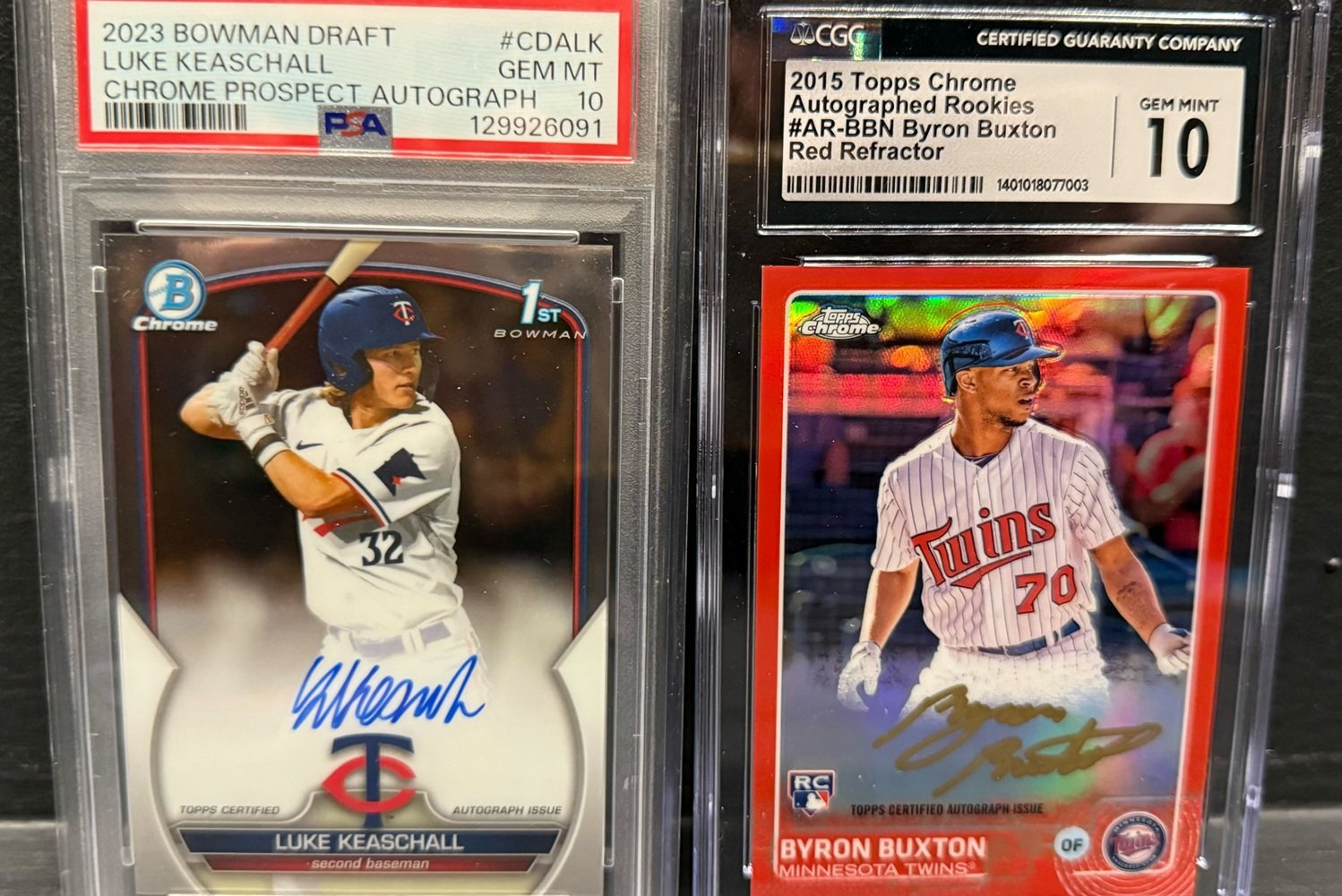 “The monthly card update is never late, nor is it early. It arrives precisely when it means to.” When it comes to overall card market health, I have fielded a lot of questions on if I think there is a bubble in this marketplace. Unfortunately, I don’t have a very “clicks-friendly” answer. Is there a bubble? Yes and no. In the new products from roughly 2015 and on, there are just too many cards. Even your numbered cards have different variations. Let's say you pull a 2025 Topps Chrome true red parallel, numbered /5, Royce Lewis. Fun pull, but there’s also an /5 sapphire, /5 logofractor, /5 ray wave, /5 red wave, and more! As you can see, you think you have this extremely rare card, but it has a long list of cousins. For these modern cards to do really well over time, you need the card to grade a 10 and it needs to be a very popular player. Otherwise, I think this modern market is certainly a bubble waiting to burst. The card market isn’t all doom and gloom. Like I mentioned above, it’s knowing the right cards and the right players to target. There has been a junk wax era in the past, and we are on the verge of that again (if not already there with the print runs on some of these rookie cards). The early 2000s is the market I am targeting and feels like it’s not as widely collected. Print runs are lower and there are some elite names and “local legends” that I love. The two big ones are Albert Pujols and Ichiro. Both are universally loved and will be remembered by baseball historians until the end of time. The other target for me is local fanbase heroes that were great players but maybe came up short of immortal careers. This could include players like Kris Bryant, Bernie Williams, Torii Hunter, and many others who will likely be short of The Hall. Without hesitation, these people will have a large collection of people who say, “That is my favorite player of all time”. Remember, target rookie cards, on card autographs (not sticker autos), low serial numbered cards before 2020, and cards that have a chance to grade gem mint. Overall, baseball cards are becoming more of an institution in the average household and cards are more visible and more widely accepted than ever before. Before the pandemic card boom, this was far more of a hide in your basement and don’t tell anyone type of activity. Now when you hop on Instagram, there are card accounts all over. You can even be at a party and there’s a good chance if you bring up “cards”, you’ll see someone's eyes light up. Cards aren’t going anywhere, but being able to know what is trash and what is treasure is a huge deal for someone’s enjoyment of the hobby. I always point folks to 130point.com to check on comparable sales and to get an idea of what others have decided certain cards are worth. 5 Twins players and their cards I am looking to add before the turn of the new year: Kaelen Culpepper (Bowman Chrome 1st’s autographs) Royce Lewis (‘22 Topps Chrome Rookie autographs *NON STICKER*, Bowman Chrome 1st’s) Byron Buxton (1/1’s and ‘15 Topps Chrome Rookie autographs) Joe Mauer (‘02 Bowman Chrome autograph, numbered cards and SPs from playing years) Torii Hunter (numbered cards from 2015 and earlier and autographs)
- 3 comments
-
- 1
-

-
- kaelen culpepper
- byron buxton
- (and 3 more)
-
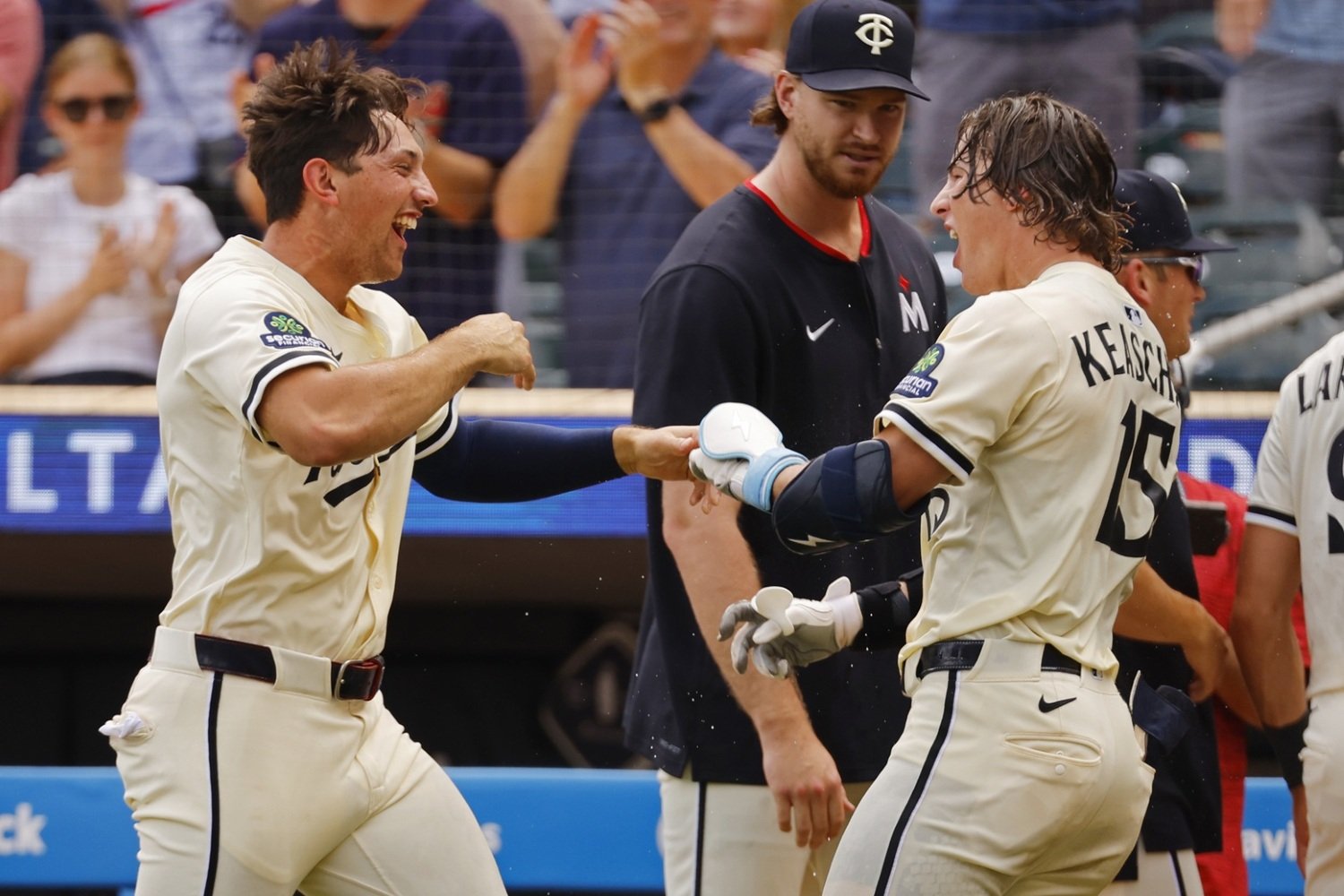 Starting in early 2023, the Twins appeared to have the shortstop position figured out for the foreseeable future, with a Carlos Correa megadeal. Correa has since been shipped back to the Astros, though, and we now have a 189-game sample of Brooks Lee. According to Baseball Savant, last season, he was well below average in batting, baserunning and fielding. However, he did do two things well: squaring up the ball and avoiding strikeouts. In total, he tallied -0.8 bWAR last year. It was really, really bad, but there's a glimmer of hope. What’s the answer for a player like Lee, who needs to get better and is on a team that claims it would like to compete in 2026? He profiles substantially better at second base. With his poor arm strength and slow feet, he is far more palatable on the right side of the infield. He has good actions as a defender, but the reality of the majors is that if he’s going to be a soft-hitting shortstop, he needs to bring above-average defense to that spot. I just don’t see it. Swing him over to second base, and let him continue to develop the bat. He needs to be a high-contact switch-hitter, and a Swiss army knife when constructing a batting order. That introduces a new question: What should the team do with Luke Keaschall? I love his offensive makeup, but he was extremely clunky at second base. His arm was also a source of tsuris and agita. The Twins have been searching for another right-handed bat in the outfield every offseason for a few years now. Left field could be the long-term fit for Keaschall The organization should obviously continue to rehab his arm and have him on a strict throwing program, but with his athletic ability, a move to left could be great for him and the ball club. So, what about the Twins’ need for a shortstop? They have a great candidate to be a long-term solution, in Kaelen Culpepper. I love his swing, and I expect him to knock on the door of the big leagues in 2026. But again, we return to the fact that they want to compete in 2026. It’s not a real answer to say this guy who finished in Double A is going to hop onto the big club after spring training, and they’re rolling with the rookie. That is, it’s not a real answer if you’re trying to be a serious threat in 2026. Regardless of how well he hits in Fort Myers this March, we should expect to see Culpepper in St. Paul, where he will likely be hitting in front of Walker Jenkins for a month or two (talk about a fun Triple-A squad). Well, now what? I just moved Brooks Lee to second base, Keaschall to the outfield, and declared Culpepper to be unready for a club trying to be a contender. With some alleged spending money, the Twins can go to a tried-and-true method: the stopgap shortstop. It’s an extremely unsexy play, but it makes so much sense for the current state of the ball club. Pending his price tag, a guy like Ha-Seong Kim (coming off an injury =-plagued season, likely looking for a prove-it deal) would be a phenomenal fit. This gives us a good look at the infield, with Royce Lewis improving defensively and Kim always grading well at short. Lee will get one final chance to be the answer in the big leagues, and if so, the team will have a long-term home for Keaschall’s top-of-the-order bat and legs. If Culpepper rakes and he gets the call, bump Kim to second or keep Lee rolling, depending on who is playing better. This will allow the other to fall into the “day-off” infielder role, since they can each fill in at all the infield spots. The stopgap move is flat-out boring, but I think it would be a sneaky big move with the Twins' current personnel. This could also give Culpepper a smooth runway to the bigs letting him take the reins as the shortstop when he is ready. The move puts the roster in a very healthy spot to potentially move Trevor Larnach for a bullpen arm or a prospect, which seems increasingly likely as we get further into December. This course of action isn’t ESPN headline-worthy, but it’s a sensible move that could pay huge dividends in the short- and long-term outlook for the Twins.
- 84 comments
-
- 5
-
-
- brooks lee
- ha seong kim
- (and 2 more)
-
Image courtesy of © Bruce Kluckhohn-Imagn Images Starting in early 2023, the Twins appeared to have the shortstop position figured out for the foreseeable future, with a Carlos Correa megadeal. Correa has since been shipped back to the Astros, though, and we now have a 189-game sample of Brooks Lee. According to Baseball Savant, last season, he was well below average in batting, baserunning and fielding. However, he did do two things well: squaring up the ball and avoiding strikeouts. In total, he tallied -0.8 bWAR last year. It was really, really bad, but there's a glimmer of hope. What’s the answer for a player like Lee, who needs to get better and is on a team that claims it would like to compete in 2026? He profiles substantially better at second base. With his poor arm strength and slow feet, he is far more palatable on the right side of the infield. He has good actions as a defender, but the reality of the majors is that if he’s going to be a soft-hitting shortstop, he needs to bring above-average defense to that spot. I just don’t see it. Swing him over to second base, and let him continue to develop the bat. He needs to be a high-contact switch-hitter, and a Swiss army knife when constructing a batting order. That introduces a new question: What should the team do with Luke Keaschall? I love his offensive makeup, but he was extremely clunky at second base. His arm was also a source of tsuris and agita. The Twins have been searching for another right-handed bat in the outfield every offseason for a few years now. Left field could be the long-term fit for Keaschall The organization should obviously continue to rehab his arm and have him on a strict throwing program, but with his athletic ability, a move to left could be great for him and the ball club. So, what about the Twins’ need for a shortstop? They have a great candidate to be a long-term solution, in Kaelen Culpepper. I love his swing, and I expect him to knock on the door of the big leagues in 2026. But again, we return to the fact that they want to compete in 2026. It’s not a real answer to say this guy who finished in Double A is going to hop onto the big club after spring training, and they’re rolling with the rookie. That is, it’s not a real answer if you’re trying to be a serious threat in 2026. Regardless of how well he hits in Fort Myers this March, we should expect to see Culpepper in St. Paul, where he will likely be hitting in front of Walker Jenkins for a month or two (talk about a fun Triple-A squad). Well, now what? I just moved Brooks Lee to second base, Keaschall to the outfield, and declared Culpepper to be unready for a club trying to be a contender. With some alleged spending money, the Twins can go to a tried-and-true method: the stopgap shortstop. It’s an extremely unsexy play, but it makes so much sense for the current state of the ball club. Pending his price tag, a guy like Ha-Seong Kim (coming off an injury =-plagued season, likely looking for a prove-it deal) would be a phenomenal fit. This gives us a good look at the infield, with Royce Lewis improving defensively and Kim always grading well at short. Lee will get one final chance to be the answer in the big leagues, and if so, the team will have a long-term home for Keaschall’s top-of-the-order bat and legs. If Culpepper rakes and he gets the call, bump Kim to second or keep Lee rolling, depending on who is playing better. This will allow the other to fall into the “day-off” infielder role, since they can each fill in at all the infield spots. The stopgap move is flat-out boring, but I think it would be a sneaky big move with the Twins' current personnel. This could also give Culpepper a smooth runway to the bigs letting him take the reins as the shortstop when he is ready. The move puts the roster in a very healthy spot to potentially move Trevor Larnach for a bullpen arm or a prospect, which seems increasingly likely as we get further into December. This course of action isn’t ESPN headline-worthy, but it’s a sensible move that could pay huge dividends in the short- and long-term outlook for the Twins. View full article
-
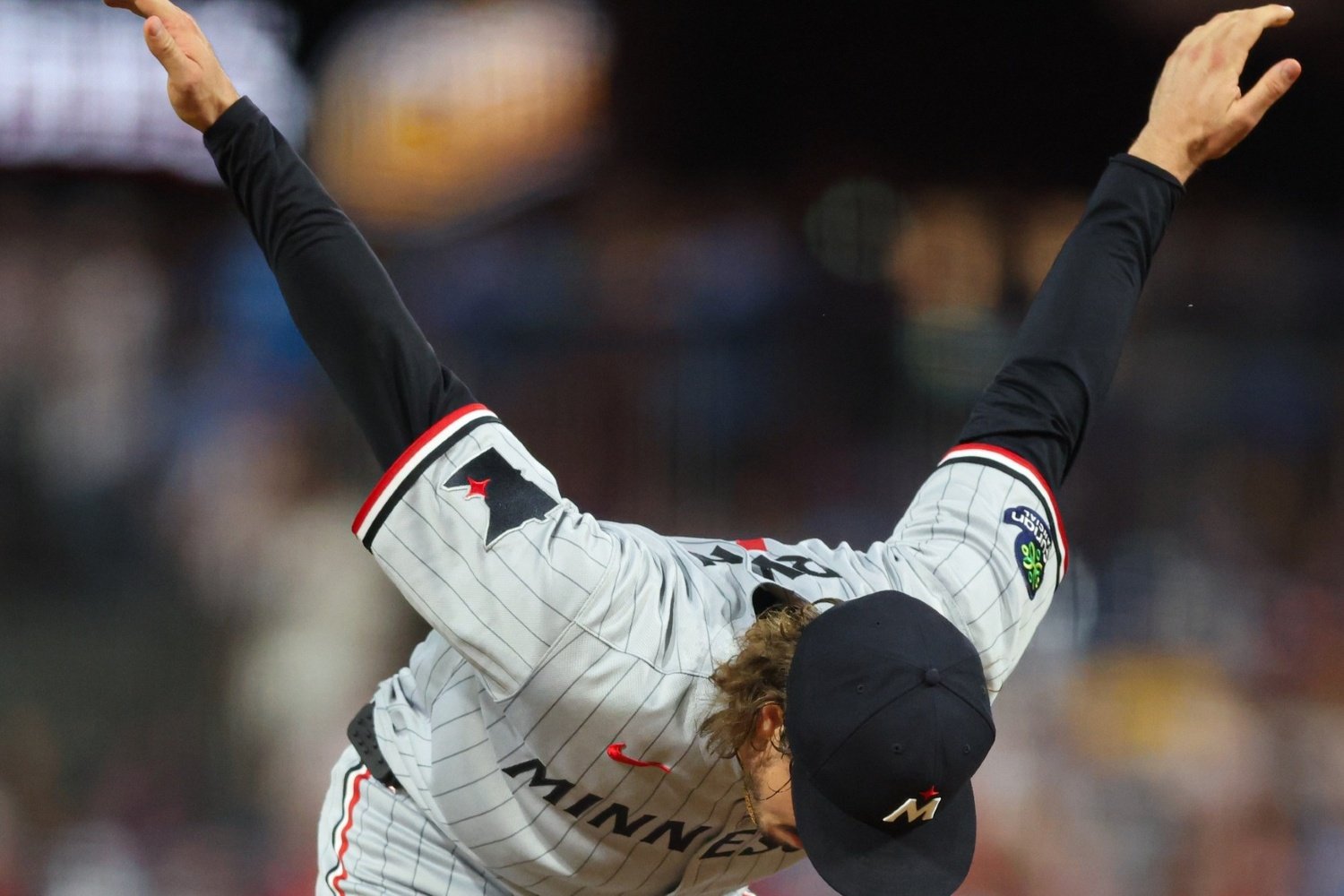
Image courtesy of © Bill Streicher-Imagn Images Since its inception in 2006, the World Baseball Classic has been one of my favorite events. Much like college baseball, it gives fans an exhilarating alternative to traditional MLB action, and it offers unique opportunities for some players who will never play in the American majors. Believe it or not, there are a few Twins who will probably be extended an invitation to participate in the 2026 WBC. Arms that can throw multiple innings are worth their weight in gold when it comes to off-season, tournament-style baseball. There are some notable injuries to the United States starting pitching pool (Zack Wheeler and Gerrit Cole certainly won't be suiting up, for instance) that I think will leave a window of opportunity for Joe Ryan to represent his country again, but this time in the World Baseball Classic. (For those who don't remember, Ryan pitched for the U.S. during the Tokyo Olympics in 2021, winning a silver medal.) With Paul Skenes already penciled in as the ace, Team USA's best options thereafter are Tarik Skubal, Garrett Crochet, Hunter Brown, Max Fried and Bryan Woo. In my eyes, the remaining names become a bit more of a toss-up, with Nick Pivetta, Andrew Abbott, and Nathan Eovaldi among a large group. Usually, there is a solid grouping of arms that just want to prepare for the grind of 162 games and elect not to participate in the WBC, so we could see Ryan get a well-deserved invitation. Next, we have Pablo López. He has proudly represented Team Venezuela in the past, with Twins legend Johan Santana also representing his country as the pitching coach. López is in position to be a staple on his national team. However, with three different injuries having broken up his 2025 campaign, López might need to focus on getting his body in a good place for the grind of the long season ahead. I would imagine he will get the invitation, at least, and whether he takes it will give us an early indication on his health heading into 2026. Lastly, Byron Buxton should have an opportunity to represent his country this spring. Pete Crow-Armstrong was the only American center fielder to record a higher WAR in 2025, and he had 31 more games in which to do so. This comes down to his health and his desire to represent. In terms of talent and production in the outfield, I want to see Corbin Carroll in left field, Aaron Judge in right field and Minnesota’s Buxton holding it down in center. Regardless of how the roster shakes out, I can’t wait for the WBC. The event always delivers, showcasing some of the game's best talents—and it produces some playoff-esque baseball. We will certainly see some Minnesota Twins represent their country to varying levels, and I will be sitting front and center to take in the action. View full article
-
 Since its inception in 2006, the World Baseball Classic has been one of my favorite events. Much like college baseball, it gives fans an exhilarating alternative to traditional MLB action, and it offers unique opportunities for some players who will never play in the American majors. Believe it or not, there are a few Twins who will probably be extended an invitation to participate in the 2026 WBC. Arms that can throw multiple innings are worth their weight in gold when it comes to off-season, tournament-style baseball. There are some notable injuries to the United States starting pitching pool (Zack Wheeler and Gerrit Cole certainly won't be suiting up, for instance) that I think will leave a window of opportunity for Joe Ryan to represent his country again, but this time in the World Baseball Classic. (For those who don't remember, Ryan pitched for the U.S. during the Tokyo Olympics in 2021, winning a silver medal.) With Paul Skenes already penciled in as the ace, Team USA's best options thereafter are Tarik Skubal, Garrett Crochet, Hunter Brown, Max Fried and Bryan Woo. In my eyes, the remaining names become a bit more of a toss-up, with Nick Pivetta, Andrew Abbott, and Nathan Eovaldi among a large group. Usually, there is a solid grouping of arms that just want to prepare for the grind of 162 games and elect not to participate in the WBC, so we could see Ryan get a well-deserved invitation. Next, we have Pablo López. He has proudly represented Team Venezuela in the past, with Twins legend Johan Santana also representing his country as the pitching coach. López is in position to be a staple on his national team. However, with three different injuries having broken up his 2025 campaign, López might need to focus on getting his body in a good place for the grind of the long season ahead. I would imagine he will get the invitation, at least, and whether he takes it will give us an early indication on his health heading into 2026. Lastly, Byron Buxton should have an opportunity to represent his country this spring. Pete Crow-Armstrong was the only American center fielder to record a higher WAR in 2025, and he had 31 more games in which to do so. This comes down to his health and his desire to represent. In terms of talent and production in the outfield, I want to see Corbin Carroll in left field, Aaron Judge in right field and Minnesota’s Buxton holding it down in center. Regardless of how the roster shakes out, I can’t wait for the WBC. The event always delivers, showcasing some of the game's best talents—and it produces some playoff-esque baseball. We will certainly see some Minnesota Twins represent their country to varying levels, and I will be sitting front and center to take in the action.
- 1 comment
-
- 2
-
-
- joe ryan
- pablo lopez
- (and 2 more)
-
They Paid How Much? This Fall's Biggest Twins Baseball Card Sales
Alex Boxwell posted an article in Twins
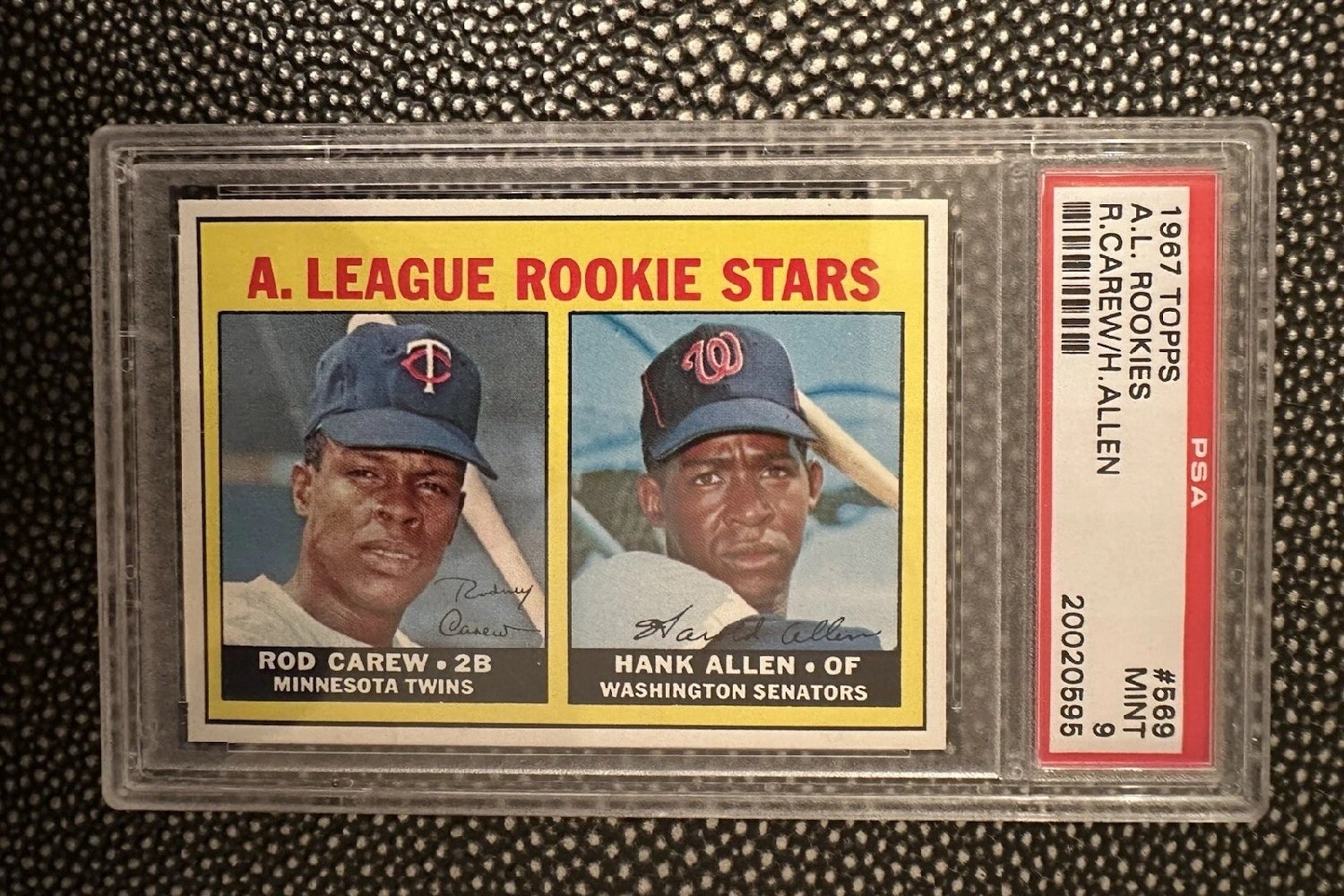 If you've ever seen the price of a baseball card and thought, "No way!" then this series is for you. I'm tracking the top Twins card sales each month, explaining why they sold for what they did, and giving my thoughts on whether the price makes sense. Our first list will be notably longer than the following updates as I feel it’s important to grab some of the big sales we saw in August and September as well. Most of the names on this list will make a ton of sense. As for the purchase price, some make more sense to me than others. Let's dive into the 12 sales. #12 - 2025 Tier One Royce Lewis 1/1 Bat Knob Relic Sale Price: $455.03 via eBay Date: October 5th This one is a solid risk; these bat knob cards are highly desirable, and this one, believe it or not, is on the low end for a bat knob piece. Here is an example: a 2025 Topps Tier One Josh Jung Game-Used Bat Knob Relic 1/1 #ABK-JJ sold for $2,323.06. If Jung can fetch that price as recently as October, this buyer has a chance to make a phenomenal profit on this card. #11 - 2025 Topps Chrome Byron Buxton Superfractor 1/1 Sale Price: $475 via eBay Date: September 20th This is a great card with a very cool image. When you have a 1/1, you are able to squeeze buyers a bit with the scarcity if you do not go the auction route. I think for a non-autographed card, this was a bit of a stretch for a purchase price, but if you believe in Buxton, this buyer has an asset with good upside. #10 - 2025 Topps Zebby Mathews Superfractor rookie autograph 1/1 Sale Price: $700 via eBay Date: August 18th Believe it or not, this is not the only Zebby card on the list. I am not very high on Zebby, mostly because I’m not sold on his ability to stick as a starter, but I do like his stuff. I also like how he attacks hitters, but if he is the odd man out and is moved to the pen… his card prices will crater. Relief pitchers do not fetch nearly as much in the card market unless they are the best of the best. Again, another crazy cool card, but this one comes with tons of risk. #9 - 2013 Panini Select Signatures Joe Mauer Black 1/1 Sale Price: $750 via eBay Date: September 12th This one is a miss for me. The unlicensed product is likely not going to age very well. I have a hard time believing that in a few years or ten years, anyone would pay over $1k for an unlicensed 1/1, even for a legend like Joe Mauer. #8 - 2025 Topps Chrome Zebby Matthews Rookie Superfractor Autograph 1/1 Sale Price: $1,350 via eBay Date: August 17th Zebby Strikes again. This one is about double the price of the other superfractor. I hope Zebby develops into an all-star caliber starting pitcher, which is what you’re betting on if you purchase his card at this price. #7 - 1984 Fleer Update Kirby Puckett PSA 10 Rookie Mint RC U-93 Sale Price: $1,575.00 via eBay Date: September 10th For a PSA 10 grade, the PSA population count for this card is 654 (as I write this piece). Are there a lot of these Puckett cards? Yes. Are there a lot of this card in “Gem Mint” condition? No. For example, Mike Trout’s base rookie, in a PSA 10, sells for around $700 and the population count of PSA 10s is 6,841. Kirby was a legend and will be revered in the Minnesota baseball community forever. The price is high, but the ROI could be there in a big way as this card ages. #6 - 2002 Fleer Greats Kirby Puckett Minnesota Twins AUTO PSA 10 Sale Price: 1,880.00 USD Date: September 14th via eBay I love a legendary auto, but this is a hair steep in my opinion. Could you get a return on this investment? Sure. However, in terms of a big investment in a card, it doesn’t check a lot of boxes for me. #5 - 2025 Bowman Walker Jenkins Topps 100 Superfractor 1/1 (non auto) Sale Price: $3,000 via eBay Date: August 24th The card is not a Bowman 1st and is also not autographed. This one is 100% dependent on the Walker Jenkins hype. Even if he cracks the big leagues, I would not feel confident in a 1/1 card that’s not autographed and not a Bowman 1st, being liquid enough at that price to make any big profits. #4 - 2023 Bowman Draft Luke Keaschall Bowman 1st Red Autograph /5 PSA 10 Sale Price: $3,400 via eBay Date: August 12th I love Keaschall, but this card was purchased at peak hype. The card itself checks all the boxes: Bowman 1st, PSA 10, low number. But can you answer the question of what needs to happen for his value to go up? To me, he’d have to make an All-Star Game next year to keep building on his current hype. I think it’s a super risky entry point on an amazing card. I hope this buyer makes a huge profit, but I have concerns about Keaschall’s long-term ceiling with skeptical defense and a growing list of injuries. #3 - 1963 Topps Pedro (Tony) Oliva #228 Rookie PSA 8.5 Sale Price: $3,550 via eBay Date: September 14th This card obviously checks all the boxes. Will it be a big ROI card? I don’t think so. If this card is in your budget, I think having a high-graded card of a Hall of Famer and Twins legend will make you feel good. This is an insanely cool card to display, and if at some point you want to turn around and sell, you may have to wait a while to find a buyer to pay your price, but this is the type of card that should hold its value. #2 - 1957 Topps Harmon Killebrew #164 PSA 9 Sale Price: $6,802 via eBay Date: August 24th This card had me scratching my head a bit. I understand getting 50’s cards in a high grade is insane, but this purchase price on a card that isn’t a rookie has me a little short of breath, and it’s not even my card. The thought of finding a buyer for this card someday feels impossible. I think Killebrew is a very safe investment, but this purchase price has me a little concerned. #1 - 1967 Topps Rod Carew #569 Rookie PSA 9 Sale Price: $14,300 via eBay Date: August 18th Do you want a used Toyota or a baseball card? This one had my eyes popping out of my head. I did not know Carew cards pulled these kinds of numbers. Again, this one checks all the boxes, and the population count for a PSA 9 is 64 with only 1 PSA 10 in existence… talk about a potential holy grail piece. This data point makes me more optimistic for a card like the PSA 10 Puckett on this list. The population count is way different, but 20 years down the line, a card like the 84 Puckett in a 10 could do really well. As for the Carew, what is the ceiling on a crazy expensive card like this? Only time will tell. I envision this thread of articles being much more concise as we roll over and only evaluate November. I’ll be highlighting a few big sales, how player's cards are trending, and what the outlook will be for their card values heading into 2026 and beyond. Let's hear your thoughts on these big-money cards in the comments below.
 -
If you've ever seen the price of a baseball card and thought, "No way!" then this series is for you. I'm tracking the top Twins card sales each month, explaining why they sold for what they did, and giving my thoughts on whether the price makes sense. Our first list will be notably longer than the following updates as I feel it’s important to grab some of the big sales we saw in August and September as well. Most of the names on this list will make a ton of sense. As for the purchase price, some make more sense to me than others. Let's dive into the 12 sales. #12 - 2025 Tier One Royce Lewis 1/1 Bat Knob Relic Sale Price: $455.03 via eBay Date: October 5th This one is a solid risk; these bat knob cards are highly desirable, and this one, believe it or not, is on the low end for a bat knob piece. Here is an example: a 2025 Topps Tier One Josh Jung Game-Used Bat Knob Relic 1/1 #ABK-JJ sold for $2,323.06. If Jung can fetch that price as recently as October, this buyer has a chance to make a phenomenal profit on this card. #11 - 2025 Topps Chrome Byron Buxton Superfractor 1/1 Sale Price: $475 via eBay Date: September 20th This is a great card with a very cool image. When you have a 1/1, you are able to squeeze buyers a bit with the scarcity if you do not go the auction route. I think for a non-autographed card, this was a bit of a stretch for a purchase price, but if you believe in Buxton, this buyer has an asset with good upside. #10 - 2025 Topps Zebby Mathews Superfractor rookie autograph 1/1 Sale Price: $700 via eBay Date: August 18th Believe it or not, this is not the only Zebby card on the list. I am not very high on Zebby, mostly because I’m not sold on his ability to stick as a starter, but I do like his stuff. I also like how he attacks hitters, but if he is the odd man out and is moved to the pen… his card prices will crater. Relief pitchers do not fetch nearly as much in the card market unless they are the best of the best. Again, another crazy cool card, but this one comes with tons of risk. #9 - 2013 Panini Select Signatures Joe Mauer Black 1/1 Sale Price: $750 via eBay Date: September 12th This one is a miss for me. The unlicensed product is likely not going to age very well. I have a hard time believing that in a few years or ten years, anyone would pay over $1k for an unlicensed 1/1, even for a legend like Joe Mauer. #8 - 2025 Topps Chrome Zebby Matthews Rookie Superfractor Autograph 1/1 Sale Price: $1,350 via eBay Date: August 17th Zebby Strikes again. This one is about double the price of the other superfractor. I hope Zebby develops into an all-star caliber starting pitcher, which is what you’re betting on if you purchase his card at this price. #7 - 1984 Fleer Update Kirby Puckett PSA 10 Rookie Mint RC U-93 Sale Price: $1,575.00 via eBay Date: September 10th For a PSA 10 grade, the PSA population count for this card is 654 (as I write this piece). Are there a lot of these Puckett cards? Yes. Are there a lot of this card in “Gem Mint” condition? No. For example, Mike Trout’s base rookie, in a PSA 10, sells for around $700 and the population count of PSA 10s is 6,841. Kirby was a legend and will be revered in the Minnesota baseball community forever. The price is high, but the ROI could be there in a big way as this card ages. #6 - 2002 Fleer Greats Kirby Puckett Minnesota Twins AUTO PSA 10 Sale Price: 1,880.00 USD Date: September 14th via eBay I love a legendary auto, but this is a hair steep in my opinion. Could you get a return on this investment? Sure. However, in terms of a big investment in a card, it doesn’t check a lot of boxes for me. #5 - 2025 Bowman Walker Jenkins Topps 100 Superfractor 1/1 (non auto) Sale Price: $3,000 via eBay Date: August 24th The card is not a Bowman 1st and is also not autographed. This one is 100% dependent on the Walker Jenkins hype. Even if he cracks the big leagues, I would not feel confident in a 1/1 card that’s not autographed and not a Bowman 1st, being liquid enough at that price to make any big profits. #4 - 2023 Bowman Draft Luke Keaschall Bowman 1st Red Autograph /5 PSA 10 Sale Price: $3,400 via eBay Date: August 12th I love Keaschall, but this card was purchased at peak hype. The card itself checks all the boxes: Bowman 1st, PSA 10, low number. But can you answer the question of what needs to happen for his value to go up? To me, he’d have to make an All-Star Game next year to keep building on his current hype. I think it’s a super risky entry point on an amazing card. I hope this buyer makes a huge profit, but I have concerns about Keaschall’s long-term ceiling with skeptical defense and a growing list of injuries. #3 - 1963 Topps Pedro (Tony) Oliva #228 Rookie PSA 8.5 Sale Price: $3,550 via eBay Date: September 14th This card obviously checks all the boxes. Will it be a big ROI card? I don’t think so. If this card is in your budget, I think having a high-graded card of a Hall of Famer and Twins legend will make you feel good. This is an insanely cool card to display, and if at some point you want to turn around and sell, you may have to wait a while to find a buyer to pay your price, but this is the type of card that should hold its value. #2 - 1957 Topps Harmon Killebrew #164 PSA 9 Sale Price: $6,802 via eBay Date: August 24th This card had me scratching my head a bit. I understand getting 50’s cards in a high grade is insane, but this purchase price on a card that isn’t a rookie has me a little short of breath, and it’s not even my card. The thought of finding a buyer for this card someday feels impossible. I think Killebrew is a very safe investment, but this purchase price has me a little concerned. #1 - 1967 Topps Rod Carew #569 Rookie PSA 9 Sale Price: $14,300 via eBay Date: August 18th Do you want a used Toyota or a baseball card? This one had my eyes popping out of my head. I did not know Carew cards pulled these kinds of numbers. Again, this one checks all the boxes, and the population count for a PSA 9 is 64 with only 1 PSA 10 in existence… talk about a potential holy grail piece. This data point makes me more optimistic for a card like the PSA 10 Puckett on this list. The population count is way different, but 20 years down the line, a card like the 84 Puckett in a 10 could do really well. As for the Carew, what is the ceiling on a crazy expensive card like this? Only time will tell. I envision this thread of articles being much more concise as we roll over and only evaluate November. I’ll be highlighting a few big sales, how player's cards are trending, and what the outlook will be for their card values heading into 2026 and beyond. Let's hear your thoughts on these big-money cards in the comments below. View full article
-
I've always thought high school picks and international signs are more subject to what the player development staff has to offer. As for the college bats we have, I've always thought they're high floor-low ceiling type prospects. They had an approach that worked at a relatively high level and if that doesn't translate it can be difficult to unlearn habits that brought you so much success. I think other players always will have a bigger impact at that level. Hearing from a veteran who's been through it recently can do wonders for players mental game. A player like Buxton I think is a phenomenal vet to have in the clubhouse since he's been through it all a in his career.
-
Love this take! Shelton hasn't done anything wrong yet, let him start with a clean slate and see what happens!
-
Maybe my angle on the hire is a hair nihilistic but I just don't think the “right hire” exists. Would Torii Hunter or Nick Punto be fun to talk about? Sure. Would they be great managers? I don't know. I understand the outrage and that it seems like a sleepy move but the reality is that they need some familiar names to play better or get better players.
-
In regards to Shelton, I think that's fair. And 100% there were so many different approaches and routines that guys had and it was such blast to talk shop around the batting cage. I learned so much from other players and hearing why they do certain things to prepare for a game. It was amazing to see how guys coming from affiliate ball (A+ or AA typically) did a lot more things based on feel and a guy like me coming from college was more drill focused in my preparation. One of my favorites I picked up was from Chris Jacobs. He played in the Dodgers organization, phenomenal hitter. During BP he wanted the BP thrower to mix in breaking balls. By the end of the year I was doing it to. It was so brilliantly simple and so many guys added that to their routine. I've wrote about it a bit before but at that level most guys swing’s stay the same. It's the fine tuning of a batting stance or a routine that gets played around with. Long story short. The college level is still very hands on in my opinion. Especially with your position based coaches where Indy ball they're happy to show you the way out of you don't perform so it's a little more hands off.
-
I was very fortunate to not have a ton of experience with what I would consider a bad coach/manager but I can do a little story time on the glory days: My freshman at the University of Minnesota, before the covid fiasco caused the entire college landscape shift, our 2015 club had one of the two losing seasons in John Anderson’s tenure at Minnesota at that time. I believe Northwestsern had just beat us like 21-4 at home, and I'll never forget the post game in our clubhouse. 14 (we never called him coach Anderson, he was always 14), normally was as cool of a customer as they come and he blew us up post game. It was one of two times in my four years he ever really let us have it and they both came that year. What I'm circling the wagon’s to get to though is after that he met with all us freshman as a group and gave us a more uplifting message that we had a opportunity to change the program. I think that's what being a great manager looks like, knowing how to motivate short and long term and knowing when to give a guy a hug and tell them you care about them. I don't think I ever had a practice where 14 didn't say “Box! How was college today?”even little things like that really add up. I think bad managers miss those opportunities to connect with their players and only tap into “how do I push these guys” and don’t get me wrong there's certainly a time and place for that!
-
I think you probably hit the nail on the head. Almost a middle finger from Rocco to the organization like hey look what we could've been if you let me manage. I also think this could've been a decision from the front office as well. At least in terms of the spike in stolen bases, trying to figure out what certain guys could do at the major league level. Or as some others have mentioned, having more small ball talent plays a role I'm sure as well.
-
I think hitting and pitching coaches have a lot more impact on the on field development of player. I was an an outfielder my whole career, so hitting coach in college, shoutout to Pat Casey, had a huge impact on our approach as a whole and getting the most out of certain guys at the plate. At the professional level things tend to be more hands off unless a player is actively looking for feedback.
-
Image courtesy of © Bruce Kluckhohn-Imagn Images I have had the good fortune of having what some would call a “playing career” in baseball. I have also had the privilege of playing for some of the best leaders at any level that the game has to offer. From 2015 to 2018, I played for the University of Minnesota. I had the honor of suiting up for John Anderson on some of the most talented clubs the Gophers have run out to date. After college, I had parts of four seasons in independent ball, with my longest tenure being with the Fargo-Moorhead RedHawks. For the RedHawks, former big leaguer and World Series champion Chris Coste was at the helm. What were the common threads between these two? They knew how to manage the thermostat of a clubhouse and when to turn the dial one way or the other. They also had a keen understanding of where they could actually impact on-field performance: through strong relationships with their players. In college ball, there are many more opportunities to have formal practices and develop skills. While in professional baseball, you are relegated to spring training and early work before one of the 162 games. Not to mention, most major leaguers have already played hundreds of games in the minors and/or college by the time they’ve reached this level. At this level, most guys have a routine and have become extremely polished in their skills. What most guys need is someone who will coach their mentality and their confidence. The margin for being a good big leaguer to someone who might not be playable is so thin that a lot of times it comes down to who can handle going 0-4 with three punch outs. For all intents and purposes, Derek Shelton is Rocco Baldelli 2.0; anyone who says otherwise is fooling themselves. Anyone who thinks that, with the current organization's structure, the on-field decisions will change is also fooling themselves. It is very clear in my observations of the Twins that the manager has very little power over what goes on. Everyone says the game is run off of a spreadsheet, and I don’t think that’s too far off here. To me, before each game, there’s a meeting and they decide who is available. After this, a flow chart of “what ifs”. Truthfully, if Rocco had full autonomy during his tenure, I think he would’ve been fired sooner. I liked Baldelli, and I like Shelton. I think they both manage personalities well, and players speak highly of them both. The discourse around the managerial position in Minnesota makes me feel like Shelton is going to get considerable innings on the mound this year and maybe take on an Ohtani role while hitting for us, too. The outrage over the hire confuses me. Derek Shelton can’t control whether Royce Lewis, Pablo Lopez, and Byron Buxton are healthy. Derek Shelton will not make us play small ball more often; the front office decides as a whole what the play style will be. He will not convince 30-year-olds with 5,000 at-bats in The Show to choke up with two strikes. At that level, the players are in control of their careers, and if they want to make adjustments, it will be on them. What Derek Shelton will do is the only thing he can. He will make a small impact on the day-to-day feel of the clubhouse and manage personalities. People will point to the Brewers and Pat Murphy (I love Murphy), but he proves my point. He had a great pitching staff, managed personalities, and knew when a guy needed to be pushed or needed an “atta boy”. That’s all a manager can do at that level because they will not be physically performing at any point. If the bullpen stinks and they can’t drive in runs, Joe Torre or Dusty Baker would not save them. The manager's job is to put players in a position to succeed (I’d argue the Twins don’t leave much room for this), build a relationship with the players, and know when to throw a bucket of baseballs onto the field. I know it’s easy to point the blame at a manager, but I would also argue that’s part of why they are there. A good leader will step in front of the arrows the media fires and deflect praise to his players. I know it’s not a sexy hire, but being a major league manager is not a sexy job. Time will also help us understand the hire. If the Twins break this thing down to the studs, he is likely a scapegoat for a 90-100 loss season, and he’s gone in a year, maybe less. If they bring in more talent, it could go the way of Murphy and become a bit of a folk hero. Ultimately, the players' on-field performance will decide his fate. The villains in this story are the people who are pulling the strings, and the echoes from 2023 still vibrate through the fan base (rightfully so). Don’t forget who we beat that year. The ones who bore the cross for the organization's poor decisions were Baldelli and our players traded at last year's deadline. Realistically, it should’ve been the decision makers who had to pack their bags, but we can’t always get what we want. View full article
-
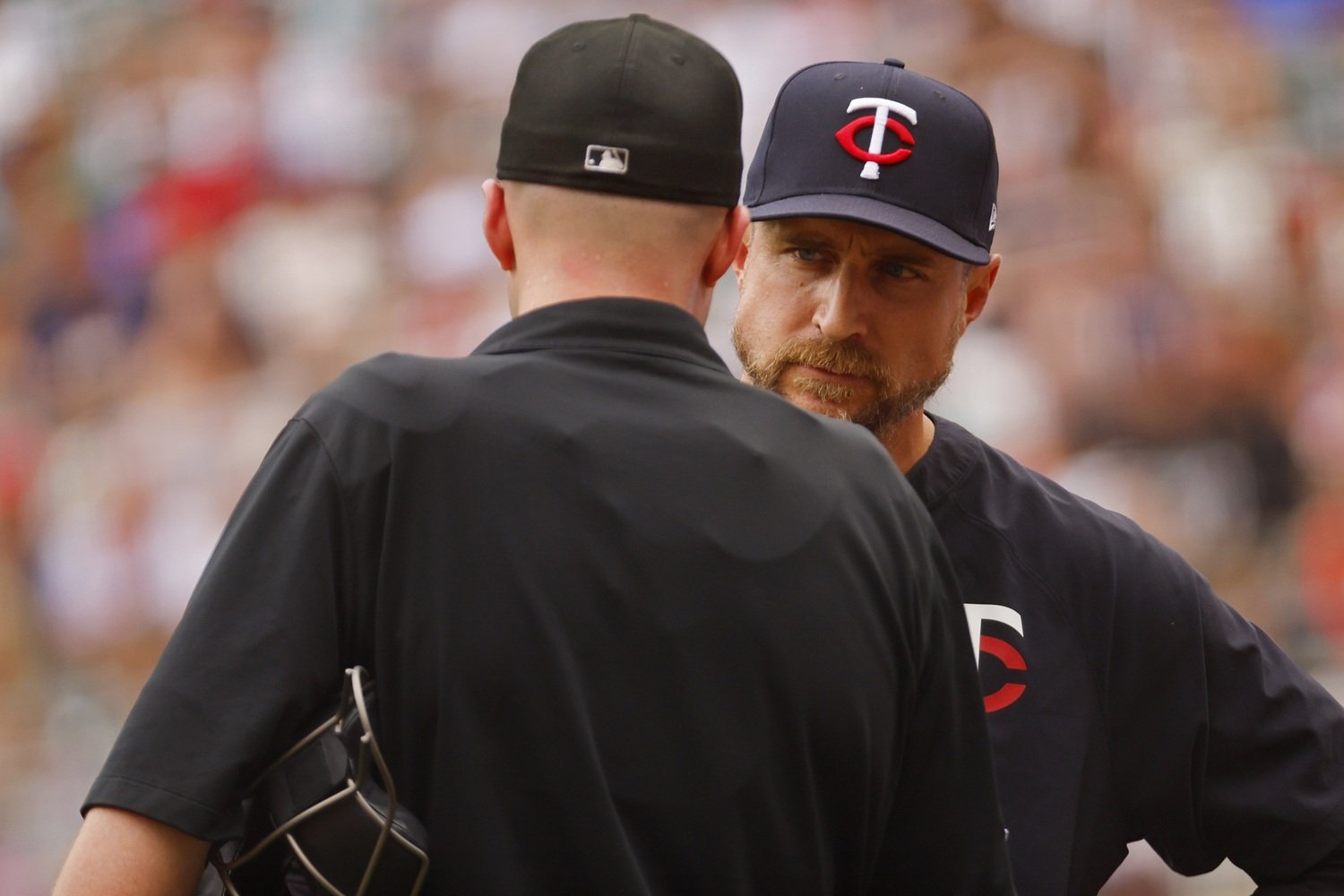 I have had the good fortune of having what some would call a “playing career” in baseball. I have also had the privilege of playing for some of the best leaders at any level that the game has to offer. From 2015 to 2018, I played for the University of Minnesota. I had the honor of suiting up for John Anderson on some of the most talented clubs the Gophers have run out to date. After college, I had parts of four seasons in independent ball, with my longest tenure being with the Fargo-Moorhead RedHawks. For the RedHawks, former big leaguer and World Series champion Chris Coste was at the helm. What were the common threads between these two? They knew how to manage the thermostat of a clubhouse and when to turn the dial one way or the other. They also had a keen understanding of where they could actually impact on-field performance: through strong relationships with their players. In college ball, there are many more opportunities to have formal practices and develop skills. While in professional baseball, you are relegated to spring training and early work before one of the 162 games. Not to mention, most major leaguers have already played hundreds of games in the minors and/or college by the time they’ve reached this level. At this level, most guys have a routine and have become extremely polished in their skills. What most guys need is someone who will coach their mentality and their confidence. The margin for being a good big leaguer to someone who might not be playable is so thin that a lot of times it comes down to who can handle going 0-4 with three punch outs. For all intents and purposes, Derek Shelton is Rocco Baldelli 2.0; anyone who says otherwise is fooling themselves. Anyone who thinks that, with the current organization's structure, the on-field decisions will change is also fooling themselves. It is very clear in my observations of the Twins that the manager has very little power over what goes on. Everyone says the game is run off of a spreadsheet, and I don’t think that’s too far off here. To me, before each game, there’s a meeting and they decide who is available. After this, a flow chart of “what ifs”. Truthfully, if Rocco had full autonomy during his tenure, I think he would’ve been fired sooner. I liked Baldelli, and I like Shelton. I think they both manage personalities well, and players speak highly of them both. The discourse around the managerial position in Minnesota makes me feel like Shelton is going to get considerable innings on the mound this year and maybe take on an Ohtani role while hitting for us, too. The outrage over the hire confuses me. Derek Shelton can’t control whether Royce Lewis, Pablo Lopez, and Byron Buxton are healthy. Derek Shelton will not make us play small ball more often; the front office decides as a whole what the play style will be. He will not convince 30-year-olds with 5,000 at-bats in The Show to choke up with two strikes. At that level, the players are in control of their careers, and if they want to make adjustments, it will be on them. What Derek Shelton will do is the only thing he can. He will make a small impact on the day-to-day feel of the clubhouse and manage personalities. People will point to the Brewers and Pat Murphy (I love Murphy), but he proves my point. He had a great pitching staff, managed personalities, and knew when a guy needed to be pushed or needed an “atta boy”. That’s all a manager can do at that level because they will not be physically performing at any point. If the bullpen stinks and they can’t drive in runs, Joe Torre or Dusty Baker would not save them. The manager's job is to put players in a position to succeed (I’d argue the Twins don’t leave much room for this), build a relationship with the players, and know when to throw a bucket of baseballs onto the field. I know it’s easy to point the blame at a manager, but I would also argue that’s part of why they are there. A good leader will step in front of the arrows the media fires and deflect praise to his players. I know it’s not a sexy hire, but being a major league manager is not a sexy job. Time will also help us understand the hire. If the Twins break this thing down to the studs, he is likely a scapegoat for a 90-100 loss season, and he’s gone in a year, maybe less. If they bring in more talent, it could go the way of Murphy and become a bit of a folk hero. Ultimately, the players' on-field performance will decide his fate. The villains in this story are the people who are pulling the strings, and the echoes from 2023 still vibrate through the fan base (rightfully so). Don’t forget who we beat that year. The ones who bore the cross for the organization's poor decisions were Baldelli and our players traded at last year's deadline. Realistically, it should’ve been the decision makers who had to pack their bags, but we can’t always get what we want.
- 35 comments
-
- 19
-
-

-
Now that the Twins are long eliminated from playoff contention and far away from the media cycle, it’s as good of a time as ever to pick up some baseball cards of your favorite Twins. Here are my top 10 players to grab if you’re looking to add Twins players to your collection or maybe make a quick buck in the spring! Number 10: Justin Morneau Morneau is on the Twins broadcast regularly and some Twins fans whispered the idea of him being a managerial candidate. Morneau has an impressive baseball reference page for a guy who dealt with some very scary concussion issues in the middle of his prime. The trophy case includes: AL MVP, HR Derby Champ, two Silver Sluggers, a batting title, and four all-star selections. With Twins fans from my era starting to get adult money, I think Morneau is a guy who could see his values start creeping north. Number 9: Matt Wallner Let’s cut to the chase here, Wallner is a 40-homer season waiting to happen. What else does he bring to the table? A canon for an arm. He is a stereotypical right fielder that has potential to crank out highlights that get people pumped: 450+ foot homers and throwing 100mph from the outfield? Say less. A nasty hamstring injury got him early in the season but if he gets close to a full sleight of ABs, he should have a fun stat line that people will pay attention to. Card To Collect: His Topps Chrome Rookie Autograph cards go for less than $5. Number 8: Luke Keaschall I wish my boy was higher on the list. I love Keaschall’s offensive profile, and I love how he plays the game, but his ability to stay off the IL is a huge question mark. The other thing that worries me is that he doesn’t really have a position. I thought he was very clunky at second base and threw poorly as well. Hopefully being farther out from tommy john surgery and being on an offseason throwing program will help in that department. He’s already become a fan favorite and for good reason, I’m really rooting for my guy, but he comes in at eight because there are some red flags and his prices are higher than most on my list. Card to Collect: His ungraded Bowman 1st Chrome Autograph card goes for around $45. Number 7: Royce Lewis Public perception is close to all-time lows on the former 1st overall pick. That being said, a couple months of good health, good production, and positive vibes from Lewis could send card prices higher. Lewis finds himself in a very similar predicament to Byron Buxton, we’ve seen flashes of greatness, but can it be sustained? You don’t need to hope for a miracle here, if Royce can get in a rhythm with his physical health, I think he’s in the mix for making some all-star games and being a run producer for the foreseeable future. Card to Collect: Not a huge risk plays here with his ungraded Topps chrome rookie autograph cards going around the $10 range. Number 6: Joe Mauer Rounding out the first half with a timeless classic. We will always remember ‘09 Mauer, the hometown hero and 1st ballot Hall of Famer Joe Mauer. As cards continue gaining popularity with all ages a player like Mauer (already in the hall of fame), has little chance of seeing huge increases in his value. However, his market should steadily increase over time. Be careful of newer stuff since it is being printed like crazy but cards from his playing days should be a sound investment or just a great addition to a collection. Cards to Collect: He has chrome autos that are gettable around $70. Number 5: Walker Jenkins The consensus top prospect in the organization comes in at five because he comes with plenty of hype already. He will get an initial value jump when he gets called up to the big leagues, but he is going to need to really hit for his value to take another noticeable jump. Card to Collect? That paired with his already higher cost, his ungraded Bowman 1st autograph card goes for around $125-$135. Number 4: Byron Buxton Buying cards of the best player on the team should be as safe a play as any right? I love Buxton, but it would be foolish to not consider the risk. His prices took a well-deserved jump this year but if he stacks a couple seasons like ‘25, pushes his career WAR over 40 and near 50, while hopefully staying a career Twin, he will have a very sound card market within the Minnesota fan base for a long time. Card to Collect: His ungraded Topps Chrome rookie autograph card goes for around $30. Number 3: Harmon Killebrew Arguably the greatest Twin of all time. This is my Twins card equivalent to a high yield savings account. Being a hall of famer with 500 homers and a staple within the Minnesota fan base? That never goes out of style. The flip side is you’re probably not going to see a huge jump in value at any point for his cards even though I think he is widely undervalued by the hobby. Card to Collect: You should be able to get a 1955 Topps Killebrew rookie in a PSA 3 for between $155-$180. Number 2: Torii Hunter An all-time fan favorite and someone who is in the news! There was some speculation that Hunter might be a candidate to be named the next manager of the Twins. It was never going to happen. He also didn't get the Angels managerial job. If Torii had been named manager, I think we may have seen a nice bump in his card values. He is also very underrated by the baseball community as a whole. Nine Gold Gloves, 50.6 career bWAR, 353 Homers, 2452 hits, two silver sluggers, and a five-time all-star. He unfortunately was not a career Twin which would’ve helped his card values, but he did play 12 of his 19 big-league seasons. Card to Collect: You can find Topps Chrome Autograph cards of Torii Hunter between $10-$20. Number 1: Kaelen Culpepper My favorite Twins player to collect cards of at the moment who comes with more risk since his highest level of play is only at the AA level. Between two levels of play in 2025, he put together a 20 homer, 20 stolen base season, and he cracked into the Top 100 prospects toward the end of 2025. MLB.com has taken notice and has ranked him as high as the number 52 prospect in all of baseball. After the Twins moved on from Carlos Correa, there is a clear opening at shortstop with Brooks Lee showing flashes with the bat but overall struggling mightily last season posting a bWAR of -1.0. Kaelen Culpepper has a gorgeous swing and a plus arm to stick at shortstop. If he has a strong spring, he will likely start in St. Paul and have a quick path to the big leagues next spring. Card to Collect: His Bowman 1st Chrome autograph cards are gettable between $30-$40. Those are my top offseason plays for Minnesota Twins cards! If you enjoy baseball card content, follow my Instagram page @boxed_well_cards View full article
- 1 reply
-
- 1
-
-
- kaelen culpepper
- harmon killebrew
- (and 8 more)
-
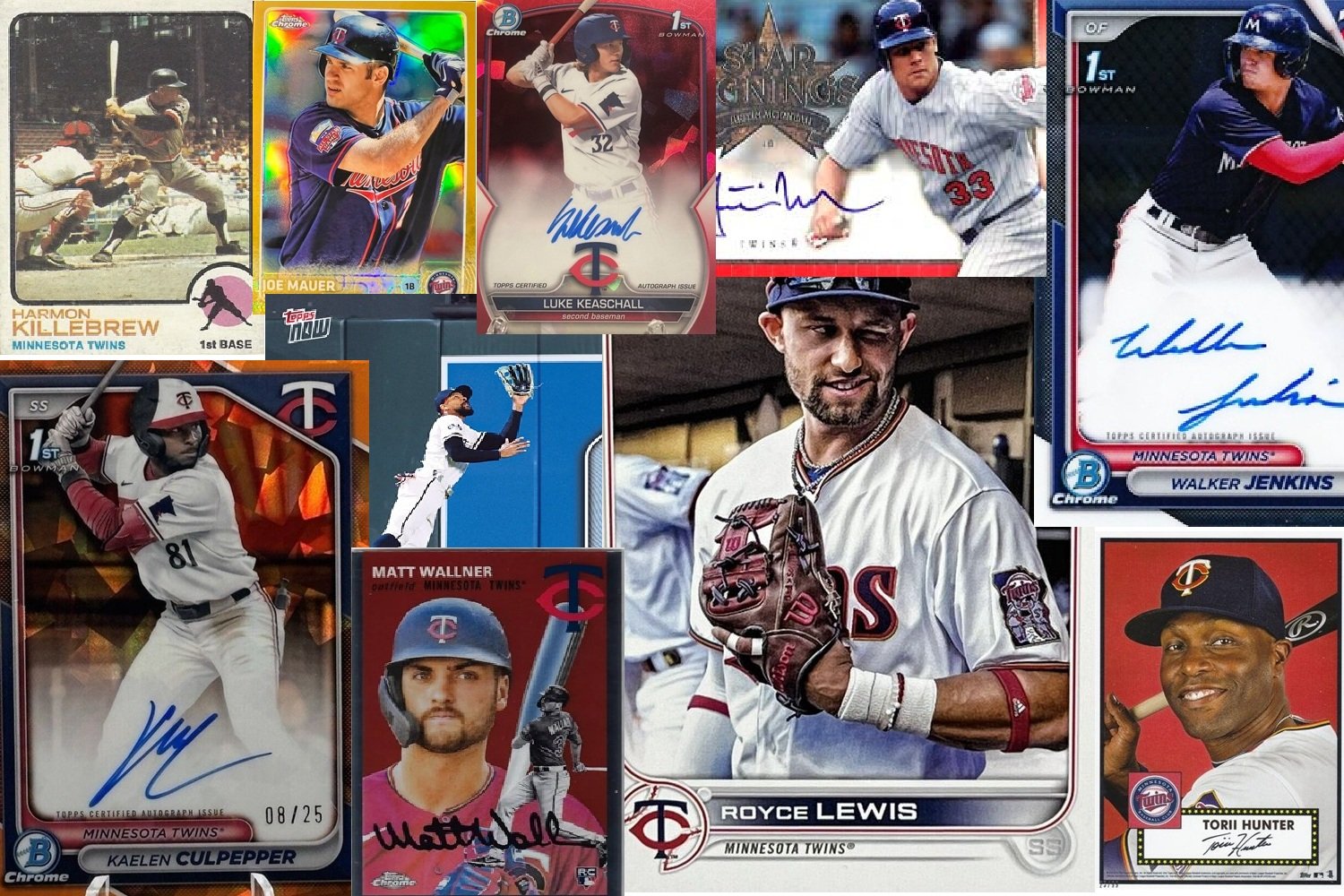 Now that the Twins are long eliminated from playoff contention and far away from the media cycle, it’s as good of a time as ever to pick up some baseball cards of your favorite Twins. Here are my top 10 players to grab if you’re looking to add Twins players to your collection or maybe make a quick buck in the spring! Number 10: Justin Morneau Morneau is on the Twins broadcast regularly and some Twins fans whispered the idea of him being a managerial candidate. Morneau has an impressive baseball reference page for a guy who dealt with some very scary concussion issues in the middle of his prime. The trophy case includes: AL MVP, HR Derby Champ, two Silver Sluggers, a batting title, and four all-star selections. With Twins fans from my era starting to get adult money, I think Morneau is a guy who could see his values start creeping north. Number 9: Matt Wallner Let’s cut to the chase here, Wallner is a 40-homer season waiting to happen. What else does he bring to the table? A canon for an arm. He is a stereotypical right fielder that has potential to crank out highlights that get people pumped: 450+ foot homers and throwing 100mph from the outfield? Say less. A nasty hamstring injury got him early in the season but if he gets close to a full sleight of ABs, he should have a fun stat line that people will pay attention to. Card To Collect: His Topps Chrome Rookie Autograph cards go for less than $5. Number 8: Luke Keaschall I wish my boy was higher on the list. I love Keaschall’s offensive profile, and I love how he plays the game, but his ability to stay off the IL is a huge question mark. The other thing that worries me is that he doesn’t really have a position. I thought he was very clunky at second base and threw poorly as well. Hopefully being farther out from tommy john surgery and being on an offseason throwing program will help in that department. He’s already become a fan favorite and for good reason, I’m really rooting for my guy, but he comes in at eight because there are some red flags and his prices are higher than most on my list. Card to Collect: His ungraded Bowman 1st Chrome Autograph card goes for around $45. Number 7: Royce Lewis Public perception is close to all-time lows on the former 1st overall pick. That being said, a couple months of good health, good production, and positive vibes from Lewis could send card prices higher. Lewis finds himself in a very similar predicament to Byron Buxton, we’ve seen flashes of greatness, but can it be sustained? You don’t need to hope for a miracle here, if Royce can get in a rhythm with his physical health, I think he’s in the mix for making some all-star games and being a run producer for the foreseeable future. Card to Collect: Not a huge risk plays here with his ungraded Topps chrome rookie autograph cards going around the $10 range. Number 6: Joe Mauer Rounding out the first half with a timeless classic. We will always remember ‘09 Mauer, the hometown hero and 1st ballot Hall of Famer Joe Mauer. As cards continue gaining popularity with all ages a player like Mauer (already in the hall of fame), has little chance of seeing huge increases in his value. However, his market should steadily increase over time. Be careful of newer stuff since it is being printed like crazy but cards from his playing days should be a sound investment or just a great addition to a collection. Cards to Collect: He has chrome autos that are gettable around $70. Number 5: Walker Jenkins The consensus top prospect in the organization comes in at five because he comes with plenty of hype already. He will get an initial value jump when he gets called up to the big leagues, but he is going to need to really hit for his value to take another noticeable jump. Card to Collect? That paired with his already higher cost, his ungraded Bowman 1st autograph card goes for around $125-$135. Number 4: Byron Buxton Buying cards of the best player on the team should be as safe a play as any right? I love Buxton, but it would be foolish to not consider the risk. His prices took a well-deserved jump this year but if he stacks a couple seasons like ‘25, pushes his career WAR over 40 and near 50, while hopefully staying a career Twin, he will have a very sound card market within the Minnesota fan base for a long time. Card to Collect: His ungraded Topps Chrome rookie autograph card goes for around $30. Number 3: Harmon Killebrew Arguably the greatest Twin of all time. This is my Twins card equivalent to a high yield savings account. Being a hall of famer with 500 homers and a staple within the Minnesota fan base? That never goes out of style. The flip side is you’re probably not going to see a huge jump in value at any point for his cards even though I think he is widely undervalued by the hobby. Card to Collect: You should be able to get a 1955 Topps Killebrew rookie in a PSA 3 for between $155-$180. Number 2: Torii Hunter An all-time fan favorite and someone who is in the news! There was some speculation that Hunter might be a candidate to be named the next manager of the Twins. It was never going to happen. He also didn't get the Angels managerial job. If Torii had been named manager, I think we may have seen a nice bump in his card values. He is also very underrated by the baseball community as a whole. Nine Gold Gloves, 50.6 career bWAR, 353 Homers, 2452 hits, two silver sluggers, and a five-time all-star. He unfortunately was not a career Twin which would’ve helped his card values, but he did play 12 of his 19 big-league seasons. Card to Collect: You can find Topps Chrome Autograph cards of Torii Hunter between $10-$20. Number 1: Kaelen Culpepper My favorite Twins player to collect cards of at the moment who comes with more risk since his highest level of play is only at the AA level. Between two levels of play in 2025, he put together a 20 homer, 20 stolen base season, and he cracked into the Top 100 prospects toward the end of 2025. MLB.com has taken notice and has ranked him as high as the number 52 prospect in all of baseball. After the Twins moved on from Carlos Correa, there is a clear opening at shortstop with Brooks Lee showing flashes with the bat but overall struggling mightily last season posting a bWAR of -1.0. Kaelen Culpepper has a gorgeous swing and a plus arm to stick at shortstop. If he has a strong spring, he will likely start in St. Paul and have a quick path to the big leagues next spring. Card to Collect: His Bowman 1st Chrome autograph cards are gettable between $30-$40. Those are my top offseason plays for Minnesota Twins cards! If you enjoy baseball card content, follow my Instagram page @boxed_well_cards
- 1 comment
-
- 3
-
-
- kaelen culpepper
- harmon killebrew
- (and 8 more)
-
Image courtesy of © Jesse Johnson-Imagn Images October baseball is the best sports experience in the world. The culmination of 162 games compressed into 3-, 5-, and 7-game series is hard to beat. Every pitch bears the weight of lifelong dreams of hoisting the World Series trophy. Every October, the fans of the teams lucky enough to be playing get turned up to 11. All the stadiums are packed, and the atmosphere is unmatched. One constant in most postseason crowds is the use of a rally towel, rag... or, some may even call it: a Homer Hanky. On Dec. 27, 1975, for an AFC Divisional game between the Pittsburgh Steelers and Baltimore Colts, broadcaster Myron Cope is credited with suggesting fans bring their own yellow/gold towel to the game. The Steelers won the game and went on to win the Super Bowl. Thus, the Terrible Towel became a fixture in their organization. That idea would eventually be monetized, for a good cause. In 1996, Myron Cope gave the rights to the towel to Allegheny Valley School, an organization that supports people with intellectual and developmental disabilities. A portion of all Terrible Towel sales have gone to that school ever since. Just over a decade after Pittsburgh got the party started, the Homer Hanky famously debuted in 1987. It was a wildly successful promotion, from the Star Tribune. As the Twins continued to win, the Homer Hanky’s popularity only grew. CBS claimed over 2.1 million were sold during the 1987 World Series. Let’s not forget that in the 1987 postseason, the Twins went undefeated at the Metrodome on their way to a World Series title, embedding the Homer Hanky in the DNA of Twins fans forever. The Homer Hanky was naturally brought back for the 1991 postseason run, when the team and the hanky found similar success. The Twins were a perfect 2-0 at home against the Blue Jays and went 4-0 at home against the Braves in one of the greatest World Series of all time. That brought the home playoff record of the Twins in the Homer Hanky Era to a perfect 12-0. The Homer Hanky was associated with excellence and sheer joy in the Twin Cities. The sea of white in the Metrodome is as memorable as the pinstriped jerseys on the players' backs. Of course, since then, their record has gotten much worse in the playoffs. Their attempts to revive the Hanky have been a bit cheap; the red ones handed out by the Strib in 2019 were an especially bad idea. Now, October is flooded with teams waving their rally towels, looking to capture a little home-field magic (except the Yankees, because they consider winning very serious business and no fun is allowed). Looking around in October, I certainly miss seeing the Twins in the playoffs. However, they will always have their mark in October, when you see the rally towels waving, hoping to capture a little bit of that 1987 magic. View full article
-
Rally Towels Are Great, But There's Still Just One Homer Hanky
Alex Boxwell posted an article in History
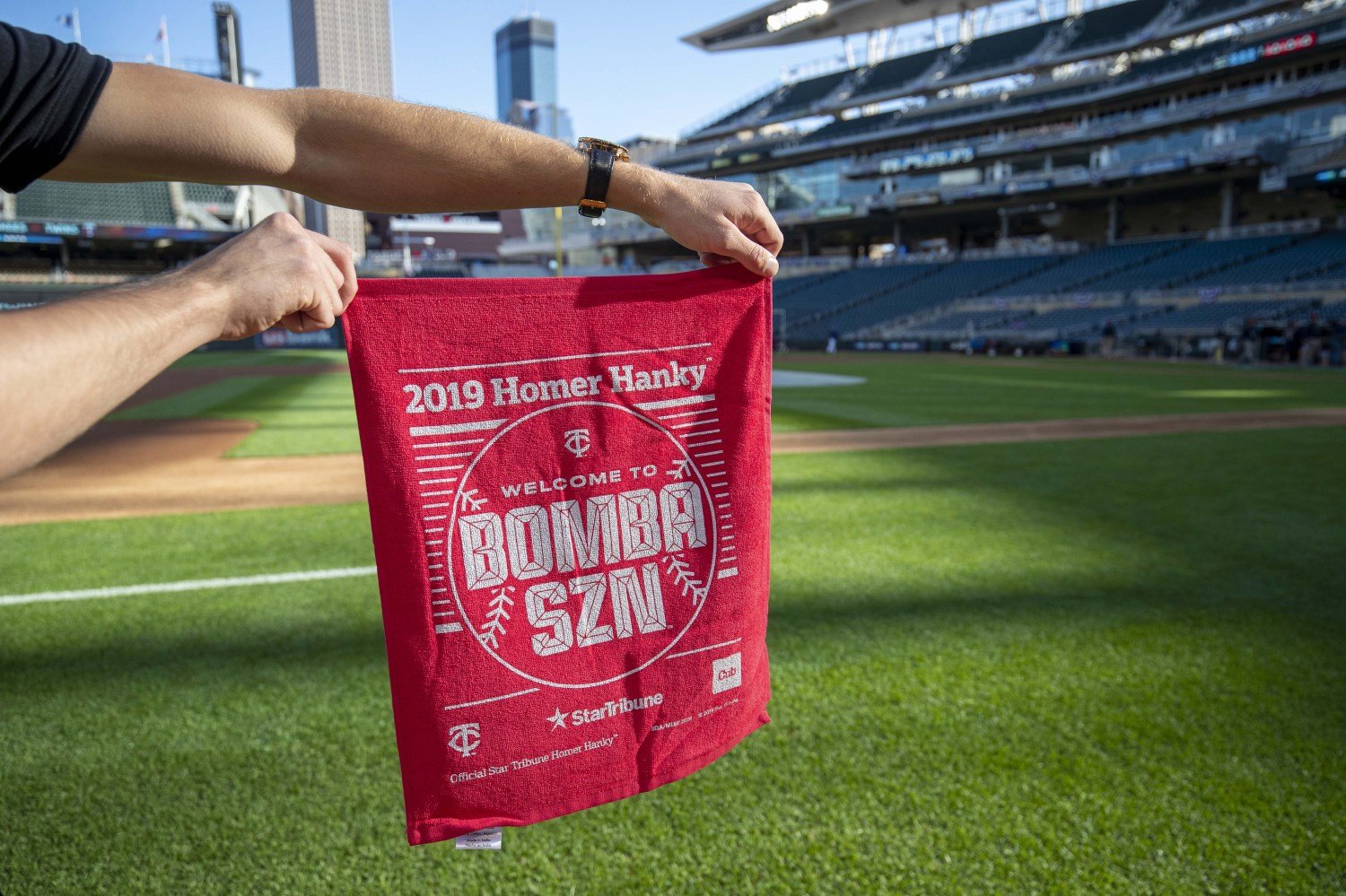 October baseball is the best sports experience in the world. The culmination of 162 games compressed into 3-, 5-, and 7-game series is hard to beat. Every pitch bears the weight of lifelong dreams of hoisting the World Series trophy. Every October, the fans of the teams lucky enough to be playing get turned up to 11. All the stadiums are packed, and the atmosphere is unmatched. One constant in most postseason crowds is the use of a rally towel, rag... or, some may even call it: a Homer Hanky. On Dec. 27, 1975, for an AFC Divisional game between the Pittsburgh Steelers and Baltimore Colts, broadcaster Myron Cope is credited with suggesting fans bring their own yellow/gold towel to the game. The Steelers won the game and went on to win the Super Bowl. Thus, the Terrible Towel became a fixture in their organization. That idea would eventually be monetized, for a good cause. In 1996, Myron Cope gave the rights to the towel to Allegheny Valley School, an organization that supports people with intellectual and developmental disabilities. A portion of all Terrible Towel sales have gone to that school ever since. Just over a decade after Pittsburgh got the party started, the Homer Hanky famously debuted in 1987. It was a wildly successful promotion, from the Star Tribune. As the Twins continued to win, the Homer Hanky’s popularity only grew. CBS claimed over 2.1 million were sold during the 1987 World Series. Let’s not forget that in the 1987 postseason, the Twins went undefeated at the Metrodome on their way to a World Series title, embedding the Homer Hanky in the DNA of Twins fans forever. The Homer Hanky was naturally brought back for the 1991 postseason run, when the team and the hanky found similar success. The Twins were a perfect 2-0 at home against the Blue Jays and went 4-0 at home against the Braves in one of the greatest World Series of all time. That brought the home playoff record of the Twins in the Homer Hanky Era to a perfect 12-0. The Homer Hanky was associated with excellence and sheer joy in the Twin Cities. The sea of white in the Metrodome is as memorable as the pinstriped jerseys on the players' backs. Of course, since then, their record has gotten much worse in the playoffs. Their attempts to revive the Hanky have been a bit cheap; the red ones handed out by the Strib in 2019 were an especially bad idea. Now, October is flooded with teams waving their rally towels, looking to capture a little home-field magic (except the Yankees, because they consider winning very serious business and no fun is allowed). Looking around in October, I certainly miss seeing the Twins in the playoffs. However, they will always have their mark in October, when you see the rally towels waving, hoping to capture a little bit of that 1987 magic.
 -
I don't think that's necessarily an apples to apple comparison since that was roughly 65 years ago and we have the benefit of knowing Killebrew's full body of work. Killebrew was named captain in '61 and at the completion of that season he was a career 12.4 bWAR player and had 130 career homers. I think the Salvador Perez comp is pretty close. I get Byron isn't a catcher but in terms of on field impact/loyalty/fan appreciation it's a worthy conversation.
-
I believe Harmon Killebrew is the only official team captain in Twins history.
-
Image courtesy of Bill Streicher-Imagn Images Baseball has a long and bizarre history with naming a player a team captain. When teams have named captains, it’s something that has intertwined a player with the history of the franchise and with the team's fan base. Notable captains being Derek Jeter, Aaron Judge, Salvador Perez, Barry Larkin, Yadier Molina, Jason Varitek, and others. All of these guys were great players and great leaders. However, most importantly in the times of modern baseball, they were committed to their ballclub. The real-life function of a team captain in baseball is obviously negligible. There are no rules where only the captain can talk to the umpire and there’s really not any player involvement concocting gameday strategy outside of pitchers and catchers game planning. Holding the mantle of team captain in a game like baseball is largely honoring a player and their impact on a clubhouse, on a fanbase, and within the franchise. The Twins currently have a player that fits this mold as well as anyone since the Joe Mauer era (who should have absolutely been a team captain by the way). This player is currently the longest-tenured Twin and has been in the organization 14 seasons. He is the pulse of the clubhouse and in the face of a complete renovation of the roster, he faced the microphones many times and said “I ain’t goin' anywhere”. With all things considered and no sources to prove it, I would imagine the Twins brass begged him to waive his no trade clause, but he stood firm on wanting to be in Minnesota. Byron Buxton should be named captain of the Minnesota Twins. Buxton is already team captain in everything but title. He has gone through huge ups and downs in production, played through pain, continues to suffer a poor supporting cast, and he remains staunch on cementing his legacy with Minnesota. Most players would’ve happily jumped ship at the deadline and we even saw some that did, only to stay at home in October anyways. In baseball, you see players hop franchises at the drop of a hat. Players are always in pursuit of more money, more wins, more glory, which is what the players should be doing, but this cheapens the fan experience. Front offices executing order 66 on their roster every 5-7 years makes you feel like you’re just cheering for laundry. Buxton demanding to stay and extending his tenure here gives meaning to a fanbase of an underperforming team, and it helps fans build real relationships with a franchise. A player of Byron Buxton’s caliber choosing this franchise over and over, while being an anchor during a tumultuous 2025 season, has earned him the right to be named captain of the Minnesota Twins. He has done right by the franchise, but now it is time for the franchise to do right by Byron Buxton. Heading into 2026 it’s time to answer Buxton’s commitment to this franchise by putting a “C” on his jersey for the rest of his career. View full article
-
An Ode to Lord Byron: The Case for Giving Buxton a 'C' Patch
Alex Boxwell posted an article in Twins
.jpg.102881b64279544ed95cbdd5e773bd3d.jpg) Baseball has a long and bizarre history with naming a player a team captain. When teams have named captains, it’s something that has intertwined a player with the history of the franchise and with the team's fan base. Notable captains being Derek Jeter, Aaron Judge, Salvador Perez, Barry Larkin, Yadier Molina, Jason Varitek, and others. All of these guys were great players and great leaders. However, most importantly in the times of modern baseball, they were committed to their ballclub. The real-life function of a team captain in baseball is obviously negligible. There are no rules where only the captain can talk to the umpire and there’s really not any player involvement concocting gameday strategy outside of pitchers and catchers game planning. Holding the mantle of team captain in a game like baseball is largely honoring a player and their impact on a clubhouse, on a fanbase, and within the franchise. The Twins currently have a player that fits this mold as well as anyone since the Joe Mauer era (who should have absolutely been a team captain by the way). This player is currently the longest-tenured Twin and has been in the organization 14 seasons. He is the pulse of the clubhouse and in the face of a complete renovation of the roster, he faced the microphones many times and said “I ain’t goin' anywhere”. With all things considered and no sources to prove it, I would imagine the Twins brass begged him to waive his no trade clause, but he stood firm on wanting to be in Minnesota. Byron Buxton should be named captain of the Minnesota Twins. Buxton is already team captain in everything but title. He has gone through huge ups and downs in production, played through pain, continues to suffer a poor supporting cast, and he remains staunch on cementing his legacy with Minnesota. Most players would’ve happily jumped ship at the deadline and we even saw some that did, only to stay at home in October anyways. In baseball, you see players hop franchises at the drop of a hat. Players are always in pursuit of more money, more wins, more glory, which is what the players should be doing, but this cheapens the fan experience. Front offices executing order 66 on their roster every 5-7 years makes you feel like you’re just cheering for laundry. Buxton demanding to stay and extending his tenure here gives meaning to a fanbase of an underperforming team, and it helps fans build real relationships with a franchise. A player of Byron Buxton’s caliber choosing this franchise over and over, while being an anchor during a tumultuous 2025 season, has earned him the right to be named captain of the Minnesota Twins. He has done right by the franchise, but now it is time for the franchise to do right by Byron Buxton. Heading into 2026 it’s time to answer Buxton’s commitment to this franchise by putting a “C” on his jersey for the rest of his career.
Baseball has a long and bizarre history with naming a player a team captain. When teams have named captains, it’s something that has intertwined a player with the history of the franchise and with the team's fan base. Notable captains being Derek Jeter, Aaron Judge, Salvador Perez, Barry Larkin, Yadier Molina, Jason Varitek, and others. All of these guys were great players and great leaders. However, most importantly in the times of modern baseball, they were committed to their ballclub. The real-life function of a team captain in baseball is obviously negligible. There are no rules where only the captain can talk to the umpire and there’s really not any player involvement concocting gameday strategy outside of pitchers and catchers game planning. Holding the mantle of team captain in a game like baseball is largely honoring a player and their impact on a clubhouse, on a fanbase, and within the franchise. The Twins currently have a player that fits this mold as well as anyone since the Joe Mauer era (who should have absolutely been a team captain by the way). This player is currently the longest-tenured Twin and has been in the organization 14 seasons. He is the pulse of the clubhouse and in the face of a complete renovation of the roster, he faced the microphones many times and said “I ain’t goin' anywhere”. With all things considered and no sources to prove it, I would imagine the Twins brass begged him to waive his no trade clause, but he stood firm on wanting to be in Minnesota. Byron Buxton should be named captain of the Minnesota Twins. Buxton is already team captain in everything but title. He has gone through huge ups and downs in production, played through pain, continues to suffer a poor supporting cast, and he remains staunch on cementing his legacy with Minnesota. Most players would’ve happily jumped ship at the deadline and we even saw some that did, only to stay at home in October anyways. In baseball, you see players hop franchises at the drop of a hat. Players are always in pursuit of more money, more wins, more glory, which is what the players should be doing, but this cheapens the fan experience. Front offices executing order 66 on their roster every 5-7 years makes you feel like you’re just cheering for laundry. Buxton demanding to stay and extending his tenure here gives meaning to a fanbase of an underperforming team, and it helps fans build real relationships with a franchise. A player of Byron Buxton’s caliber choosing this franchise over and over, while being an anchor during a tumultuous 2025 season, has earned him the right to be named captain of the Minnesota Twins. He has done right by the franchise, but now it is time for the franchise to do right by Byron Buxton. Heading into 2026 it’s time to answer Buxton’s commitment to this franchise by putting a “C” on his jersey for the rest of his career.
.jpg.102881b64279544ed95cbdd5e773bd3d.jpg)