



Parker Hageman
-
Posts
4,152 -
Joined
-
Last visited
-
Days Won
6
Content Type
Profiles
Minnesota Twins News, Rumors & Analysis
Minnesota Twins Videos
2026 Minnesota Twins Top Prospect Rankings
2022 Minnesota Twins Draft Picks & Signing Bonuses
Minnesota Twins Trade & Free Agent Rumors
Minnesota Twins Fan Guides & Resources
2023 Minnesota Twins Draft Picks & Signing Bonuses
The Minnesota Twins Players Project
2024 Minnesota Twins Draft Picks & Signing Bonuses
2025 Minnesota Twins Draft Picks & Signing Bonuses
2026 Minnesota Twins Draft Picks & Signing Bonuses
Forums
Blogs
Events
Store
Downloads
Gallery
Everything posted by Parker Hageman
-

Article: Mauer sidelined with back spasms
Parker Hageman replied to Parker Hageman's topic in Twins Daily Front Page News
Mauer said last night that this injury was the first time he's experienced back spasms, which is why he was so uncertain for today's game. -
According to a recent poll conducted by Public Policy Polling (h/t Fox9's Seth Kaplan), only 9% of Minnesotans would like to see manager Ron Gardenhire fired. In spite of his 122-182 record over the past two season a vast majority of those interviewed (57%) believed he should keep his job while another 34% had no opinion on the matter. Had you been polled, how would you have responded?
-
From CBSSPORTS.com, here's Joe Nathan paying up on a bet to teammate Mike Adams after the Giants lost to the Cowboys.
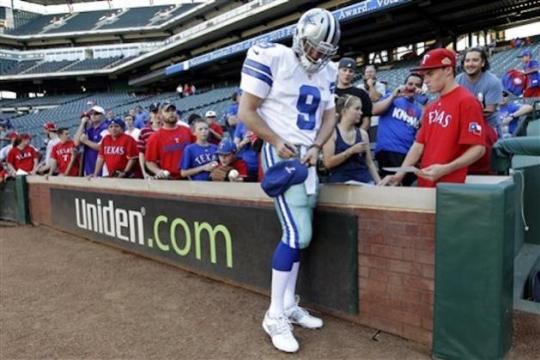
-
You can view the page at http://twinsdaily.com/content.php?1031-Twins-drop-series-opener-to-Royals
-
What happened to all that offense that showed up for the Cleveland series? Or pitching for that matter? After scoring 24 runs, averaging six per game against the Indians, the Will Smith and the Royals stop the Twins bats cold and Kansas City would, as Ron Gardenhire would say after the game, hit the fire out of the ball. The Twins offense was far from the productive group it has shown against Cleveland, and gave the Royals pitchers very little to sweat about. In the bottom of the fifth, down by four runs, the Twins mounted what would end up being their best assault on the Royals. With no one out, Darin Mastroianni and Eduardo Escobar drew back-to-back walks and put pressure on the rookie lefty Will Myers. Myers, to his credit, battled through the two free passes and struck out Pedro Florimon on a slider in the dirt. And then the Twins ran themselves out of opportunities. In the next at bat, Mastroianni broke for third only to be gunned down by Salvador Perez. Up until that point, Mastroianni had been successful in 19 of 21 attempts including eight-for-eight when swiping third – basically money in the bank. Perez, however, has a cannon of an arm behind the plate and had erased 10-of-28 would-be base stealers heading into Tuesday’s game. “You gotta make sure in those situations; you can’t get thrown out in those situations,” Gardenhire said after the game. The Twins manager would go on to rave about Perez’s handling of baserunners, noting the quick feet, quick release and sidearm style in which Perez throw out Mastroianni. Josh Willingham, who went 1-for-4 in Tuesday’s game, summarized what made the rookie Will Smith effective against the Twins lineup. “He didn’t walk too many, pitched ahead in the count, pitched to the corners and did all the good things a pitcher needs to do.” Meanwhile, Scott Diamond, who has now thrown a career high 148.1 innings, was roughed up a bit, leaving some pitches up and walking a season-high three batters. “He was OK,” Gardenhire remarked. “Got a lot of pitches up and didn’t bury the pitches like he normally does.” Diamond was dinged by some early defensive misplays by Josh Willingham in the second inning. Willingham, who took left field for the first time since September 1st, tentatively charged a looping fliner off the bat of Eric Hosmer which fell in for a single. One batter later, Lorenzo Cain got under one of Diamond’s change-ups high above the stadium’s light towers. Willingham immediately threw his hands up, acknowledging he did not see the fly ball. The ball landed ten feet behind him and allowed the two runners on to score and Cain to trot into third with a gimme triple. The Twins left fielder would shrug it off as a bad day at the office. “It’s frustrating when you can’t see the ball. I would like for that stuff not to happen.” Of course, the Royals would not need to assistance of a befuddled Twins defense all night. After all, the racked up another six extra base hits and would give the Target Field grounds crew the night off after they raked everywhere on the field. It would be the fifth time this year the Twins pitchers would allow 16 or more hits in a game – and the second time in the season the Royals would put up that many. Diamond would not blame the outing on the added time off between starts thanks to the expanded rotation. “I feel a little inconsistent right now,” Diamond said following his six inning, ten-hit, four-run outing. “I feel like my stuff is getting to where it needs to be but my fastball’s location is a little off; my command is just a little off. It’s something that you have to battle with.”
-
Twins drop series opener to Royals
Parker Hageman commented on Parker Hageman's blog entry in Over the Baggy
What happened to all that offense that showed up for the Cleveland series? Or pitching for that matter? After scoring 24 runs, averaging six per game against the Indians, the Will Smith and the Royals stop the Twins bats cold and Kansas City would, as Ron Gardenhire would say after the game, hit the fire out of the ball. The Twins offense was far from the productive group it has shown against Cleveland, and gave the Royals pitchers very little to sweat about. In the bottom of the fifth, down by four runs, the Twins mounted what would end up being their best assault on the Royals. With no one out, Darin Mastroianni and Eduardo Escobar drew back-to-back walks and put pressure on the rookie lefty Will Myers. Myers, to his credit, battled through the two free passes and struck out Pedro Florimon on a slider in the dirt. And then the Twins ran themselves out of opportunities. In the next at bat, Mastroianni broke for third only to be gunned down by Salvador Perez. Up until that point, Mastroianni had been successful in 19 of 21 attempts including eight-for-eight when swiping third – basically money in the bank. Perez, however, has a cannon of an arm behind the plate and had erased 10-of-28 would-be base stealers heading into Tuesday’s game. “You gotta make sure in those situations; you can’t get thrown out in those situations,” Gardenhire said after the game. The Twins manager would go on to rave about Perez’s handling of baserunners, noting the quick feet, quick release and sidearm style in which Perez throw out Mastroianni. Josh Willingham, who went 1-for-4 in Tuesday’s game, summarized what made the rookie Will Smith effective against the Twins lineup. “He didn’t walk too many, pitched ahead in the count, pitched to the corners and did all the good things a pitcher needs to do.” Meanwhile, Scott Diamond, who has now thrown a career high 148.1 innings, was roughed up a bit, leaving some pitches up and walking a season-high three batters. “He was OK,” Gardenhire remarked. “Got a lot of pitches up and didn’t bury the pitches like he normally does.” Diamond was dinged by some early defensive misplays by Josh Willingham in the second inning. Willingham, who took left field for the first time since September 1st, tentatively charged a looping fliner off the bat of Eric Hosmer which fell in for a single. One batter later, Lorenzo Cain got under one of Diamond’s change-ups high above the stadium’s light towers. Willingham immediately threw his hands up, acknowledging he did not see the fly ball. The ball landed ten feet behind him and allowed the two runners on to score and Cain to trot into third with a gimme triple. The Twins left fielder would shrug it off as a bad day at the office. “It’s frustrating when you can’t see the ball. I would like for that stuff not to happen.” Of course, the Royals would not need to assistance of a befuddled Twins defense all night. After all, the racked up another six extra base hits and would give the Target Field grounds crew the night off after they raked everywhere on the field. It would be the fifth time this year the Twins pitchers would allow 16 or more hits in a game – and the second time in the season the Royals would put up that many. Diamond would not blame the outing on the added time off between starts thanks to the expanded rotation. “I feel a little inconsistent right now,” Diamond said following his six inning, ten-hit, four-run outing. “I feel like my stuff is getting to where it needs to be but my fastball’s location is a little off; my command is just a little off. It’s something that you have to battle with.” -
What happened to all that offense that showed up for the Cleveland series? Or pitching for that matter? After scoring 24 runs, averaging six per game against the Indians, Will Smith and the Royals stopped the Twins bats cold and Kansas City would, as Ron Gardenhire would say after the game, hit the fire out of the ball. The Twins offense was far from the productive group it has shown against Cleveland, and gave the Royals pitchers very little to sweat about. In the bottom of the fifth, down by four runs, the Twins mounted what would end up being their best assault on the Royals. With no one out, Darin Mastroianni and Eduardo Escobar drew back-to-back walks and put pressure on the rookie lefty Will Myers. Myers, to his credit, battled through the two free passes and struck out Pedro Florimon on a slider in the dirt. And then the Twins ran themselves out of opportunities. In the next at bat, Mastroianni broke for third only to be gunned down by Salvador Perez. Up until that point, Mastroianni had been successful in 19 of 21 attempts including eight-for-eight when swiping third – basically money in the bank. Perez, however, has a cannon of an arm behind the plate and had erased 10-of-28 would-be base stealers heading into Tuesday’s game. “You gotta make sure in those situations; you can’t get thrown out in those situations,” Gardenhire said after the game. The Twins manager would go on to rave about Perez’s handling of baserunners, noting the quick feet, quick release and sidearm style in which Perez throw out Mastroianni. Josh Willingham, who went 1-for-4 in Tuesday’s game, summarized what made the rookie Will Smith effective against the Twins lineup. “He didn’t walk too many, pitched ahead in the count, pitched to the corners and did all the good things a pitcher needs to do.” Meanwhile, Scott Diamond, who has now thrown a career high 148.1 innings, was roughed up a bit, leaving some pitches up and walking a season-high three batters. “He was OK,” Gardenhire remarked. “Got a lot of pitches up and didn’t bury the pitches like he normally does.” Diamond was dinged by some early defensive misplays by Josh Willingham in the second inning. Willingham, who took left field for the first time since September 1, tentatively charged a looping fliner off the bat of Eric Hosmer which fell in for a single. One batter later, Lorenzo Cain got under one of Diamond’s change-ups and lifted it high above the stadium’s light towers. Willingham immediately threw his hands up, acknowledging he did not see the fly ball. The ball landed ten feet behind him and allowed the two runners on to score and Cain to trot into third with a gimme triple. The Twins left fielder would shrug it off as a bad day at the office. “It’s frustrating when you can’t see the ball. I would like for that stuff not to happen.” Of course, the Royals would not need to assistance of a befuddled Twins defense all night. After all, the racked up another six extra base hits and would give the Target Field grounds crew the night off after they raked everywhere on the field. It would be the fifth time this year the Twins pitchers would allow 16 or more hits in a game – and the second time in the season the Royals would put up that many. Diamond would not blame the outing on the added time off between starts thanks to the expanded rotation. “I feel a little inconsistent right now,” Diamond said following his six inning, ten-hit, four-run outing. “I feel like my stuff is getting to where it needs to be but my fastball’s location is a little off; my command is just a little off. It’s something that you have to battle with.”
-
You can view the page at http://twinsdaily.com/content.php?1029-Mauer-sidelined-with-back-spasms
-
Mauer sidelined with back spasms
Parker Hageman commented on Parker Hageman's blog entry in Over the Baggy
[ATTACH=CONFIG]2327[/ATTACH]Heading into Tuesday’s game, Joe Mauer had played in 131 of the 141 games. That was quite a remarkable run considering the amount of time he missed just a year ago. Mauer, however, would not make it to game number 132 just yet as back spasms prior to the game would keep him unavailable. Said Mauer after the game: "As soon as I got on the field to stretch, it just started to come on. It seemed the more I did the worse it got. Right before my BP group, I was trying to get loose, and was going to take some swings in the cage and I couldn’t even get to the cage, it just kind of locked up. It’s calmed down from earlier today, so it’s feeling a little bit better.” Mauer had been surging as of late, going 14-for-34 (.412) with five extra base hits over his last ten games played heading into Tuesday night. He is uncertain for tomorrow’s contest. -
-
Heading into Tuesday’s game, Joe Mauer had played in 131 of the 141 games. That was quite a remarkable run considering the amount of time he missed just a year ago. Mauer, however, would not make it to game number 132 just yet as back spasms prior to the game would keep him unavailable. [PRBREAK][/PRBREAK] Said Mauer after the game: "As soon as I got on the field to stretch, it just started to come on. It seemed the more I did the worse it got. Right before my BP group, I was trying to get loose, and was going to take some swings in the cage and I couldn’t even get to the cage, it just kind of locked up. It’s calmed down from earlier today, so it’s feeling a little bit better.” Mauer had been surging as of late, going 14-for-34 (.412) with five extra base hits over his last ten games played heading into Tuesday night. He is uncertain for Wednesday’s contest.
-
Darren Wolfson reports that Josh Willingham, who is signed through 2014, is opened to a one-year contract extension to give him a little more long-term security - he's even willing to accept below market value for that additional year. He's 33 and coming off a career year that is seemingly hard to repeat. His home run-to-fly ball rate is a career-best 22% and compared to his career norm of 16%, it is likely some of those fly balls won't be reaching the seats next season. Then again, he is one of those few hitters who has had sustained success at Target Field. Your thoughts?
-
This Detroit Free Press piece by John Lowe published the day after the attacks documents what the 2001 Twins team (as well as the Tigers) did when the towers were struck: Of course, nothing will top the story of then-minor leaguer Michael Cuddyer whose game-winning home run in the Eastern League Championship series saved teammate Brad Thomas and his wife from boarding the fateful Boston-to-LA flight which ultimately crashed into the World Trade Center. As Kirby Puckett said, "Don't take life for granted, because tomorrow isn't promised to any one of us."
-
You can view the page at http://twinsdaily.com/content.php?1026-Morneau-s-fast(ball)-improvement
-
What was interesting about Justin Morneau’s second home run of the game yesterday (and the walk-off winner which John Bonnes detailed here) is that it happened to be just his third home run he has hit which was thrown over 90 miles per hour this year. On his second homer of the year back on April 18, he turned on a 91.7 mile an hour Hiroki Kuroda fastball. On July 6, he redirected a 96-mile an hour Tanner Scheppers fastball into the Rangers Ballpark stands. Yesterday’s walk off that came on Vinnie Pestano’s 91 mile an hour fastball marked just the third time this year that he’s managed to put a 90+ fastball into the seats. In 2009, when Morneau was a sure-fire MVP candidate before missing the last month of the year, 14 of his 30 home runs came on fastballs over 90 miles an hour. In 2008, eight of his 23 came on fastballs over 90 miles an hour. Now, just three of his 19 home runs have touched that velocity. The tendency may be to associate this with his concussion, however, during the 2010 season Morneau hit just two of his 18 home runs on 90+ fastballs as well. Perhaps it is a byproduct of aging, or the injured wrist, shoulder or other ailment. Consider his hitting zone against the fastball in the first half compared to the second half of the year: With the green-to-red colors representing the greater production, Morneau’s second-half performance (depicted on the right) shows that he has much better zone coverage against fastballs. Take note of the dramatic difference between his first-half production (left) when being thrown inside in comparison to the second-half (right), in which he was handling the inside fastball far better. Independent of what leaves the park, Morneau’s performance against fastballs overall has improved as the season has gone on.
-
Morneau's fast(ball) improvement
Parker Hageman commented on Parker Hageman's blog entry in Over the Baggy
What was interesting about Justin Morneau’s second home run of the game yesterday (and the walk-off winner which John Bonnes detailed here) is that it happened to be just his third home run he has hit which was thrown over 90 miles per hour this year. On his second homer of the year back on April 18, he turned on a 91.7 mile an hour Hiroki Kuroda fastball. On July 6, he redirected a 96-mile an hour Tanner Scheppers fastball into the Rangers Ballpark stands. Yesterday’s walk off that came on Vinnie Pestano’s 91 mile an hour fastball marked just the third time this year that he’s managed to put a 90+ fastball into the seats. In 2009, when Morneau was a sure-fire MVP candidate before missing the last month of the year, 14 of his 30 home runs came on fastballs over 90 miles an hour. In 2008, eight of his 23 came on fastballs over 90 miles an hour. Now, just three of his 19 home runs have touched that velocity. The tendency may be to associate this with his concussion, however, during the 2010 season Morneau hit just two of his 18 home runs on 90+ fastballs as well. Perhaps it is a byproduct of aging, or the injured wrist, shoulder or other ailment. Consider his hitting zone against the fastball in the first half compared to the second half of the year: [ATTACH=CONFIG]2315[/ATTACH] With the green-to-red colors representing the greater production, Morneau’s second-half performance (depicted on the right) shows that he has much better zone coverage against fastballs. Take note of the dramatic difference between his first-half production (left) when being thrown inside in comparison to the second-half (right), in which he was handling the inside fastball far better. Independent of what leaves the park, Morneau’s performance against fastballs overall has improved as the season has gone on. -
-
1500ESPN's Phil Mackey presented a compelling case for why the Twins will look to trade center fielder Denard Span this offseason. In addition to the current playing situation with the emergence of Ben Revere and the need for starting pitching, I'm told that the relationship between the outfielder and the manager is not all duckies and bunnies. It will be interesting to see how this plays out this winter.
-
Then why worry about spending money on pitching?
-
You can view the page at http://twinsdaily.com/content.php?1018-Should-the-Twins-shop-for-a-shortstop-this-offseason
-
When the Twins front office begins to renovate this mess of a house in the winter, at the top of the list the highest priority has to be fixing the starting rotation. It is the home’s crumbling foundation and that needs the most attention. Afterwards, item number two could be repairing the all-important middle infield position. [PRBREAK][/PRBREAK] Offensively, over the past two seasons the Twins shortstops have hit a combined .241/.303/.326. It was this kind of hitting that had forced the 2009 team into acquiring Orlando Cabrera and the 2010 team to land JJ Hardy. In terms of OPS, just three other American League teams have extracted less production out of the position since the end of the 2010 season: the Mariners, Rays and Athletics. The difference is, while those teams’ shortstops struggled at the dish, they were all good with the glove providing them with some value. What’s more is that two of those three teams either changed direction or will likely change in the near future. In the past two seasons, outside of a geriatric doctor in Sarasota performing physicals, nobody in this country picked up more balls than Seattle’s Brendan Ryan, so it is easy to exchange offense for his defense. Meanwhile, Elliot Johnson in Tampa has been solid, doing more on defense in 2010 over 2011, but he will likely give way to one of the two defensive stalwarts in Tim Beckham or Hak-Ju Lee in the coming future. Over in Oakland, Chad Pennington has been average in the field however his lack of offense encouraged the A’s to grab the equally struggling Stephen Drew, who has yet to rebound after leaving the hitting-haven of Arizona’s Chase Field. In theory, the Twins thought they were getting a strong defensive player in Tsuyoshi Nishioka but realized that the bar for a Gold Glove in Japan was apparently set ridiculously low. For their part, recognizing the lack of depth at the upper levels, the Twins have nabbed a few additional shortstops including Pedro Florimon and Eduardo Escobar to go with the in-house Brian Dozier. Florimon, who has been up with the team for all of 19 games, comes equipped with plenty of range but an error-prone resume. We’ve seen some slick fielding plays thanks to his speed. Consider with a grain of salt based on the sample size yet according to Baseball Info Solution’s data in 158.1 innings he has made 11 out-of-zone plays at short. Compare that to Jamey Carroll - who had 150 more innings than him at short – and made just 18 out-of-zone plays. However, he’s been unable to make the plays within the standard zone. He’s had 42 balls hit into his zone and made just 27 plays (.643 revised zone rating). While Carroll could not touch Florimon’s speed, Carroll compensated by making the vast majority of plays that were hit near him (85 of 105 for a .810 revised zone rating). And although he has turned a corner and has made just 16 errors so far this year, the fewest E’s the 25-year-old shortstop has commitment was 21 in the low-A Sally League. If he does not find a way to harness all of his physical talent and smooth out his glove work, his minor league track record suggests he will not contribute much offensively judging by his .249/.321/.354 batting line in just under 3,000 plate appearances. Escobar has proven to be a much more sure-handed individual over his development but does not necessarily project as a starting shortstop – more likely a second baseman or utility infielder. Even though the White Sox used him at third base, there is nothing in his minor league batting line of .267/.312/.348 that would be indicative of someone capable of hitting like a third baseman. Before they decided against recalling him in September, the accept belief was that Brian Dozier would be the frontrunner for the position in 2013 among all the internal options. For most of the year Dozier played decisively average defense. Compared to the rest of the league’s starting shortstops according to BIS, he made a less than average amount of plays in a shortstop’s zone. Some of that was blamed on lack of awareness of his competition. Upon his demotion, Ron Gardenhire questioned some of his positioning that allowed speedier guys like Cleveland’s Jason Kipnis and Kansas City’s Jarrod Dyson to reach on grounders. Improving his defense would require preparation and ability to position in the field to handle those types of situations. Then again, there are plenty of baseball minds who have believed Dozier to be more of a second baseman than a shortstop. And, offensively, he degraded into a Danny Valencia-like mess at the plate, chasing sliders out of the zone and putting a very high amount of those kinds of pitches in play (74% out of zone contact). To be sure, the gaggle of shortstops has improved the defense a smidge over the 2011 group. Last year the team had a .268 batting average on ground balls in play, well above the league average of .240. This year, that number has dropped to .258. Still on the high-side but an increase of grounders converted to outs, nonetheless. Based on what we know today, it would seem that none of these three players are close to becoming fixtures in the middle infield. They certainly all have skills and plenty of upside, although it is hard to envision a team interested in competing for a division title next year to roll forward with any of these three at the vital position. The point is, when the Twins brass sits down when the season ends on October 3, they should think critically about their plans for shortstop next year. Any one of these players may be able to get a team through a season and it is possible that one of these existing candidates figures things out either defensively or offensively. On the other hand, based on their prior experience, it is more likely that they do not and will leave the organization, once again, hunting for an answer at shortstop.
-
Should the Twins shop for a shortstop this offseason?
Parker Hageman posted a blog entry in Over the Baggy
-
Should the Twins shop for a shortstop this offseason?
Parker Hageman commented on Parker Hageman's blog entry in Over the Baggy
[ATTACH=CONFIG]2295[/ATTACH]When the Twins front office begins to renovate this mess of a house in the winter, at the top of the list the highest priority has to be fixing the starting rotation. It is the home’s crumbling foundation and that needs the most attention. Afterwards, item number two could be repairing the all-important middle infield position. Offensively, over the past two seasons the Twins shortstops have hit a combined .241/.303/.326. It was this kind of hitting that had forced the 2009 team into acquiring Orlando Cabrera and the 2010 team to land JJ Hardy. In terms of OPS, just three other American League teams have extracted less production out of the position since the end of the 2010 season: the Mariners, Rays and Athletics. The difference is, while those teams’ shortstops struggled at the dish, they were all good with the glove providing them with some value. What’s more is that two of those three teams either changed direction or will likely change in the near future. In the past two seasons, outside of a geriatric doctor in Sarasota performing physicals, nobody in this country picked up more balls than Seattle’s Brendan Ryan, so it is easy to exchange offense for his defense. Meanwhile, Elliot Johnson in Tampa has been solid, doing more on defense in 2010 over 2011, but he will likely give way to one of the two defensive stalwarts in Tim Beckham or Hak-Ju Lee in the coming future. Over in Oakland, Chad Pennington has been average in the field however his lack of offense encouraged the A’s to grab the equally struggling Stephen Drew, who has yet to rebound after leaving the hitting-haven of Arizona’s Chase Field. In theory, the Twins thought they were getting a strong defensive player in Tsuyoshi Nishioka but realized that the bar for a Gold Glove in Japan was apparently set ridiculously low. For their part, recognizing the lack of depth at the upper levels, the Twins have nabbed a few additional shortstops including Pedro Florimon and Eduardo Escobar to go with the in-house Brian Dozier. Florimon, who has been up with the team for all of 19 games, comes equipped with plenty of range but an error-prone resume. We’ve seen some slick fielding plays thanks to his speed. Consider with a grain of salt based on the sample size yet according to Baseball Info Solution’s data in 158.1 innings he has made 11 out-of-zone plays at short. Compare that to Jamey Carroll - who had 150 more innings than him at short – and made just 18 out-of-zone plays. However, he’s been unable to make the plays within the standard zone. He’s had 42 balls hit into his zone and made just 27 plays (.643 revised zone rating). While Carroll could not touch Florimon’s speed, Carroll compensated by making the vast majority of plays that were hit near him (85 of 105 for a .810 revised zone rating). And although he has turned a corner and has made just 16 errors so far this year, the fewest E’s the 25-year-old shortstop has commitment was 21 in the low-A Sally League. If he does not find a way to harness all of his physical talent and smooth out his glove work, his minor league track record suggests will not contribute much offensively judging by his .249/.321/.354 batting line in just under 3,000 plate appearances. Escobar has proven to be a much more sure-handed individual over his development but does not necessarily project as a starting shortstop – more likely a second baseman or utility infielder. Even though the White Sox used him at third base, there is nothing in his minor league batting line of .267/.312/.348 that would be indicative of someone capable of hitting like a third baseman. Before they decided against recalling him in September, the accept belief was that Brian Dozier would be the frontrunner for the position in 2013 among all the internal options. For most of the year Dozier played decisively average defense. Compared to the rest of the league’s starting shortstops according to BIS, he made a less than average amount of plays in a shortstop’s zone. Some of that was blamed on lack of awareness of his competition. Upon his demotion, Ron Gardenhire questioned some of his positioning that allowed speedier guys like Cleveland’s Jason Kipnis and Kansas City’s Jarrod Dyson to reach on grounders. Improving his defense would require preparation and ability to position in the field to handle those types of situations. Then again, there are plenty of baseball minds who have believed Dozier to be more of a second baseman than a shortstop. And, offensively, he degraded into a Danny Valencia-like mess at the plate, chasing sliders out of the zone and putting a very high amount of those kinds of pitches in play (74% out of zone contact). To be sure, the gaggle of shortstops has improved the defense a smidge over the 2011 group. Last year the team had a .268 batting average on ground balls in play, well above the league average of .240. This year, that number has dropped to .258. Still on the high-side but an increase of grounders converted to outs, nonetheless. Based on what we know today, it would seem that none of these three players are close to becoming fixtures in the middle infield. They certainly all have skills and plenty of upside, although it is hard to envision a team interested in competing for a division title next year to roll forward with any of these three at the vital position. The point is, when the Twins brass sits down when the season ends on October 3, they should think critically about their plans for shortstop next year. Any one of these players may be able to get a team through a season and it is possible that one of these existing candidates figures things out either defensively or offensively. On the other hand, based on their prior experience, it is more likely that they do not and will leave the organization, once again, hunting for an answer at shortstop. -
The always provocative, always amusing, always lady-slaying Michael Rand from the Star Tribune followed up on the Mauer versus Puckett career comparisons started by Patrick Reusse. Here is Rand's take on his Star Tribune blog.
-
In town in preparation for Tom Kelly's number retirement ceremony this weekend, Frank Viola joined KFAN's Dan Barriero, spoke about the glory days, the current state of the Minnesota Twins and his experience as a low-A pitching coach. You can listen to the podcast here.
