



Seth Stohs
-
Posts
25,912 -
Joined
-
Last visited
-
Days Won
109
Content Type
Profiles
News
Minnesota Twins Videos
2026 Minnesota Twins Top Prospects Ranking
2022 Minnesota Twins Draft Picks
Minnesota Twins Free Agent & Trade Rumors, Notes, & Tidbits
Guides & Resources
2023 Minnesota Twins Draft Picks
The Minnesota Twins Players Project
2024 Minnesota Twins Draft Picks
2025 Minnesota Twins Draft Pick Tracker
2026 Minnesota Twins Draft Tracker: Picks & Bonuses
Forums
Blogs
Events
Store
Downloads
Gallery
Everything posted by Seth Stohs
-
'toooldandslownow' posted this blog on happenings around hammond stadium.
-

Gleeman's Top 40 Twins Prospects Countdown
Seth Stohs replied to Seth Stohs's topic in Twins Minor League Talk
Turner is the better defensively catcher, but Mitch Garver has improved a ton, works really well with pitches, throws out base stealers and is very smart. -
Gleeman's Top 40 Twins Prospects Countdown
Seth Stohs replied to Seth Stohs's topic in Twins Minor League Talk
Original Post updated to include Part 3: Prospects 26-30. -
Twins Ties To The WBC Qualifier In Sydney
Seth Stohs replied to Seth Stohs's topic in Twins Daily Front Page News
Australia topped South Africa 4-1 this morning (several pictures posted on my Twitter feed of some of the Twins-related players on both teams). So, New Zealand (who beat The Phillipines in an elimination game) will play South Africa tomorrow. The winner will play Australia to determine which team gets the invitation to the WBC next year. -
Position Battle: The Bullpen
Seth Stohs replied to Nick Nelson's topic in Twins Daily Front Page News
Yeah, I guess I don't know what the strategy was if any. I'm certain they talked to the agents of guys like Sipp and Bastardo, but we don't know if those guys had any interest in coming here. We also know that part of the strategy was not going multiple years because of the depth and high talent level in the minors. That likely took them out on those two. After those two, frankly, there wasn't a ton, and we always talk about why sign veterans to MLB deals instead of trusting the youth, and now (unless they add a Matt Thornton or someone like that) they appear to be trusting the youth. I know they really like Rogers, Melotakis and Chargois. Rogers is ready, though he hasn't pitched in the role (as Nick mentioned). Not sure that's a big deal or not. I think Chargois is close and is probably the highest upside guy right up there with Burdi. As others have mentioned too, there was a clear focus on getting Perkins to figure out how to stay healthy and get in better shape and I think he has. We'll see how that goes. Having Jepsen a full year will help. Having May in the bullpen all year will be good. And Fien, when healthy, will be quality in the 7th inning. That's four guys to rely on at the end. So, we're talking about three spots. Tonkin and Nolasco are likely to hold two of them at least early in the season, so we're talking about one spot... And Pressly probably deserves one of them. We'll see, but I don't see it as a big concern. The other key, of course is starting pitching. That'll help the bullpen too. -
What To Make Of All These Prospect Lists
Seth Stohs replied to Seth Stohs's topic in Twins Daily Front Page News
I'm awake at 3:30 in the morning because I want to watch current Twins minor leaguers from Australia and South Africa, as well as guys I wrote about at SethSpeaks.net 10 years ago. It is a lot of fun and fun for me to see how it all comes together for every, individual player. There is no template. That makes it a lot of fun.- 16 replies
-
- 4
-

-
- byron buxton
- keith law
- (and 3 more)
-
I'm guessing Gray was coached very well at Vanderbilt.
-
Position Battle: The Bullpen
Seth Stohs replied to Nick Nelson's topic in Twins Daily Front Page News
They always sign a bunch of minor league relievers. Nothing new there.- 93 replies
-
- 1
-
-
- fernando abad
- ricky nolasco
- (and 1 more)
-
Position Battle: The Bullpen
Seth Stohs replied to Nick Nelson's topic in Twins Daily Front Page News
I'd put Mike Strong's chance of making the Twins Opening Day roster at 0.00001% He'll likely go to AA if he clears waivers. I think Chargois has a better chance of making it than Nick Burdi. Very similar prospect. Both throw 100, Burdi with a slider, Chargois with a slurve and a changeup. I think Chargois has a real chance to be the surprise of spring. I actually much prefer Rogers or O'Rourke than any of the remaining lefty relievers. With their depth, they can always keep moving guys up and down. I don't think it's at all just about quantity. There is a lot of good quality. I think we often under value Pressly. He was pitching quite well and is still young and can get better. I can't wait to see how it all plays out.- 93 replies
-
- 10
-
-
- fernando abad
- ricky nolasco
- (and 1 more)
-
'Tis the season, the season for prospect lists. On Thursday, ESPN’s Keith Law released his Top 100 prospect list. Two weeks ago, MLB.com hosted a Top 100 prospect show on the MLB Network. Baseball America will soon be promoting their Top 100 prospect rankings. National sites and local team bloggers will be updating their team-specific Top 10, 20, 30 or 40 lists. In the coming weeks, Twins Daily will be posting our Top 20 Twins Prospects series. So many rankings. What do we do with all of that information? Image courtesy of Linwood Ferguson (photo of Kohl Stewart) 'Tis the season, the season for prospect lists. On Thursday, ESPN’s Keith Law released his Top 100 prospect list. Two weeks ago, MLB.com hosted a Top 100 prospect show on the MLB Network. Baseball America will soon be promoting their Top 100 prospect rankings. National sites and local team bloggers will be updating their team-specific Top 10, 20, 30 or 40 lists. In the coming weeks, Twins Daily will be posting our Top 20 Twins Prospects series. So many rankings. What do we do with all of that information? In the 2016 Minnesota Twins Prospect Handbook, Jeremy Nygaard, Cody Christie and I did a ton of research on over 150 Twins minor leaguers. Upon completing that, we each posted our own individual Top 30 Twins Prospect lists. For all four of us we started the rankings with Byron Buxton, JO Berrios Max Kepler and Nick Gordon. After those four, the three prospect lists branched off in various directions. We all read information. Jeremy researched by talking to many people who know the players well. Cody spent hours upon hours digging into the statistics from various sites and locations, considering improvements or decreases from the previous year. I talked to a lot of people inside the organization, outside the organization and in the industry. We all could read each other’s paragraphs and information and yet, we all interpreted it a little bit different. We all have our “favorites,” guys that we like as prospects a little more (or less) than the other two. Many of you have read through the pages of this year’s (and previous years') prospect handbooks. Steve Buhr and Ted Schwerzler posted their Top 15 Twins prospect rankings in the last month. Thrylos posted his Top 40 and has different criteria on what he considers a “prospect” than the others. Aaron Gleeman started his Top 40 Twins prospect series this week. When Mike Berardino researched and wrote the Twins top prospect reports and rankings for Baseball America, I guarantee he made a ton of phones calls. Keith Law has a background in a front office, in scouting and now in TV for ESPN. He talked to, likely, some of the same people that some of us “locals” talked to, but he also certainly talked to many others. John Sickels has contacts all over baseball. My personal opinion is that it is important to see these players in practice and in game action, if possible. I value the week that I’ve been able to spend in Ft. Myers, trying to keep up with everything that is going on on the minor league fields. I think it’s important to see pitchers work in the bullpen, during PFPs, and interacting with catchers. It’s good to see hitters during batting practice, but also hitting against live pitching. It’s good to see them run the bases and in the outfield. It’s good to see the work ethic and range or the infielders. It’s also good to see the people, their athletic level, and know that they’re much more than just box scores and stat lines. All read, research, watch video and read stats to varying degrees. And there rarely, if ever, is any sort of consensus. That’s why Keith Law can rank Kohl Stewart as the 53rd overall prospect in baseball this spring, fourth among Twins prospects, and I rank him as the 11th Twins prospect in my list. How does that happen? Well, some focus on Stewart’s lack of strikeouts in his two pro seasons. Others choose to focus on his strong arm, his athleticism, his strength, his ground ball rate and his pitches. Both would agree that how he winds up will depend on how he develops over the next three or four years. It’s why I’m the only one who has Aaron Slegers in his top 30 (28th). I look at his height, his arm angle, his tremendous control, a solid three-pitch mix, and I think he can be a back-of-the-rotation starter. He may not get much taller, but he will likely continue to grow, and a 92 mph fastball could become a 94 mph fastball. We shall see. Maybe the best example is Jermaine Palacios. While I ranked him as my #21 Twins prospect, Jeremy ranked him #10, and Palacios didn’t make Cody’s Top 30. Not many players come from Venezuela as an 18-year-old and completely dominate pitchers in both the GCL and the Appy League. Others will note the lack of walks. Some will notice that he had a ton of errors at shortstop and wonder if he can stay at that position. Who is right? Right now there is no way at all to answer that question. In theory, we may have that answer in about five years. In reality, we may have to wait 20 or more years to really know who was right. In fact, I guarantee that if we were all allowed access into the Twins organizational meetings following the season, we would hear differing opinions on each and every player. I guarantee there isn’t a unanimous opinion on any big leaguer or minor leaguer or free agent. Just like in every business, or in every family. If I’ve learned one thing in my 12-13 years of watching, researching and writing about the Twins minor league system and prospect rankings in general, there is just one absolute. The lone absolute is that there are no absolutes. There are exceptions to every rule. There are non-prospects who become stars, and there are guys like Brandon Wood. In 2006 and 2007, Wood was a clear Top 10 prospect in all of baseball. He was putting up huge home run totals in the minor leagues. He was touted as a future 40 home run per year hitter. In parts of five big league seasons he hit a combined 18 home runs. Yes, the same number that Miguel Sano hit in three months with the Twins last year. Sometimes #1 overall prospects pan out. Joe Mauer certainly put together a career worthy of that lofty perch. Delmon Young was also the #1 overall prospect at one time. Jon Rauch was the #4 prospect in baseball in 2001. Baseball America’s 1995 Top 5 prospects were Alex Rodriguez, Ruben Rivera, Chipper Jones, Derek Jeter, and Brian Hunter. Three out of five is pretty good, but it is a reminder that they just don’t all make it. So, what do these prospects rankings do for us? Well, it allows us to dream. The Twins have had Byron Buxton and Miguel Sano. Buxton has been a consensus top two prospect the last three years. Sano was a top ten prospect a couple of times and places. JO Berrios has moved up the prospect ranking ladder consistently since signing. Max Kepler’s tools finally kicked in. Jorge Polanco may not have a clear path to the Twins, but he can certainly hit, even if we don’t know where he’ll play. Top six picks like Buxton, Kohl Stewart, Nick Gordon and Tyler Jay provide plenty of upside. Consider also the relief pitching prospects that the Twins could have pitching for them within the next two years. I’ve said this before, but it remains true. I look at the Twins minor league system, and I see arguably 30-40 players who could spend time in the big leagues. When you consider that there are 160-200 minor league players in the Twins system at any time, that may not sound like a lot, but it’s more than you’ll see in most organizations. Considering where the Twins minor league system was six to eight years ago, it’s even more impressive. Let’s say there are 40 players that the Twins or fans think could get to the big leagues. The reality is that probably one and possibly two will become perennial All-Stars. Maybe five or six will become big league regulars, in the lineup most days or a starting pitcher. Another five or six will likely spend a few years in the big leagues as a role player, a utility player or sixth or seventh inning guy. Another seven or eight will get a proverbial cup of coffee. And that leaves around fifth to twenty that may not even get to the big leagues. Also, there are going to be five or six guys that will play at least a few games in the big league that right now today, we may not think will not play in the big leagues. That’s why having a strong, deep minor league system is so important. It is incredibly hard to get to the big leagues. It takes a ton of work and talent, and sometimes it takes the right situation and a little luck. Consider just how good a baseball player someone has to be to get as much as a cup of coffee in the big leagues. I mean frankly, imagine how good a ballplayer needs to be to get to Low A. That’s the reason that I write the Twins Prospect Handbook. All of the players deserve to be recognized for what they do. It’s important. It’s deserved. You may disagree with Kohl Stewart’s ranking by Keith Law. You may be right. Or you may not. Who will have a better career Stewart, or fellow 2013 pick Stephen Gonsalves? Will Tyler Jay be able to transition to starting, or will he wind up being a dominant reliever? Will Alex Meyer pitch like he did in 2014 when he was one of the best AAA pitchers in baseball, or will he find a way to be successful in the bullpen? Can Adam Brett Walker be a productive big league power hitter, or will the contact rate make that impossible? Will Byron Buxton be a successful big leaguer because of his defense and speed and arm, or will he be able to hit well and become an elite, MVP-caliber player? Can JO Berrios become a top of the rotation starter, or will he be more of a mid-rotation type? In 2015, Max Kepler turned his tools into skills in AA, but can he take that next step and become a five-tool talent in the big leagues? Can he repeat his AA success in the big leagues? Can Nick Burdi and JT Chargois harness their control and command and become a dominant eighth and ninth inning combination for the Twins in the not-too-distant future? Can Taylor Rogers quickly make the transition from starter to a guy the Twins can rely on to get left-handed hitters out in the seventh and eighth innings? How quickly can lefties Mason Melotakis and Corey Williams get to the big leagues after Tommy John surgery? How will high-end pitching prospects like Lewis Thorpe and Fernando Romero return in 2016 from their Tommy John surgeries and return to game action? The questions can go on and on when they refer to prospects. There are probably a half-dozen or more questions per minor leaguer. And for each there is no ‘Wrong’ answer, and there is only one ‘Right’ answer. That answer is “Maybe.” But the best thing about prospect rankings for fans is the discussions that they encourage. They let us dream of what could be for Twins fans. They get us excited about the upcoming season and about what will happen with the Twins and throughout the minor leagues. Which prospects will take the next step? Which prospects will fall from prospect status? Which prospects will jump up to the big leagues? So let’s look at the lists. Let’s see how people rank the Twins prospects, or the Twins farm system. Let’s discuss it. Are they right? Are we right? Maybe. View full article
-
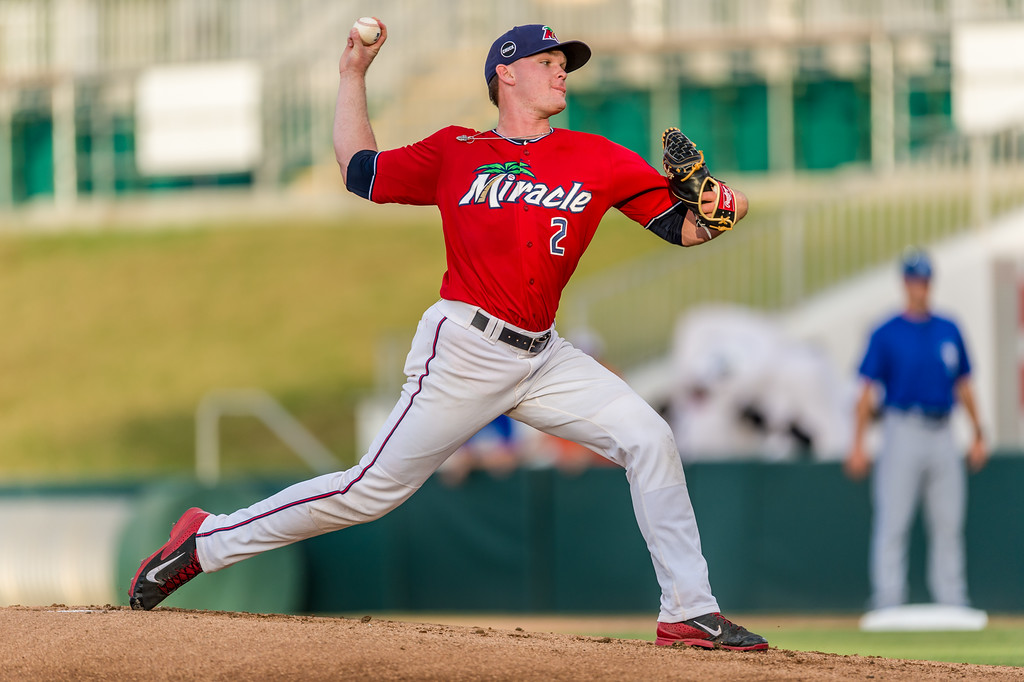 In the 2016 Minnesota Twins Prospect Handbook, Jeremy Nygaard, Cody Christie and I did a ton of research on over 150 Twins minor leaguers. Upon completing that, we each posted our own individual Top 30 Twins Prospect lists. For all four of us we started the rankings with Byron Buxton, JO Berrios Max Kepler and Nick Gordon. After those four, the three prospect lists branched off in various directions. We all read information. Jeremy researched by talking to many people who know the players well. Cody spent hours upon hours digging into the statistics from various sites and locations, considering improvements or decreases from the previous year. I talked to a lot of people inside the organization, outside the organization and in the industry. We all could read each other’s paragraphs and information and yet, we all interpreted it a little bit different. We all have our “favorites,” guys that we like as prospects a little more (or less) than the other two. Many of you have read through the pages of this year’s (and previous years') prospect handbooks. Steve Buhr and Ted Schwerzler posted their Top 15 Twins prospect rankings in the last month. Thrylos posted his Top 40 and has different criteria on what he considers a “prospect” than the others. Aaron Gleeman started his Top 40 Twins prospect series this week. When Mike Berardino researched and wrote the Twins top prospect reports and rankings for Baseball America, I guarantee he made a ton of phones calls. Keith Law has a background in a front office, in scouting and now in TV for ESPN. He talked to, likely, some of the same people that some of us “locals” talked to, but he also certainly talked to many others. John Sickels has contacts all over baseball. My personal opinion is that it is important to see these players in practice and in game action, if possible. I value the week that I’ve been able to spend in Ft. Myers, trying to keep up with everything that is going on on the minor league fields. I think it’s important to see pitchers work in the bullpen, during PFPs, and interacting with catchers. It’s good to see hitters during batting practice, but also hitting against live pitching. It’s good to see them run the bases and in the outfield. It’s good to see the work ethic and range or the infielders. It’s also good to see the people, their athletic level, and know that they’re much more than just box scores and stat lines. All read, research, watch video and read stats to varying degrees. And there rarely, if ever, is any sort of consensus. That’s why Keith Law can rank Kohl Stewart as the 53rd overall prospect in baseball this spring, fourth among Twins prospects, and I rank him as the 11th Twins prospect in my list. How does that happen? Well, some focus on Stewart’s lack of strikeouts in his two pro seasons. Others choose to focus on his strong arm, his athleticism, his strength, his ground ball rate and his pitches. Both would agree that how he winds up will depend on how he develops over the next three or four years. It’s why I’m the only one who has Aaron Slegers in his top 30 (28th). I look at his height, his arm angle, his tremendous control, a solid three-pitch mix, and I think he can be a back-of-the-rotation starter. He may not get much taller, but he will likely continue to grow, and a 92 mph fastball could become a 94 mph fastball. We shall see. Maybe the best example is Jermaine Palacios. While I ranked him as my #21 Twins prospect, Jeremy ranked him #10, and Palacios didn’t make Cody’s Top 30. Not many players come from Venezuela as an 18-year-old and completely dominate pitchers in both the GCL and the Appy League. Others will note the lack of walks. Some will notice that he had a ton of errors at shortstop and wonder if he can stay at that position. Who is right? Right now there is no way at all to answer that question. In theory, we may have that answer in about five years. In reality, we may have to wait 20 or more years to really know who was right. In fact, I guarantee that if we were all allowed access into the Twins organizational meetings following the season, we would hear differing opinions on each and every player. I guarantee there isn’t a unanimous opinion on any big leaguer or minor leaguer or free agent. Just like in every business, or in every family. If I’ve learned one thing in my 12-13 years of watching, researching and writing about the Twins minor league system and prospect rankings in general, there is just one absolute. The lone absolute is that there are no absolutes. There are exceptions to every rule. There are non-prospects who become stars, and there are guys like Brandon Wood. In 2006 and 2007, Wood was a clear Top 10 prospect in all of baseball. He was putting up huge home run totals in the minor leagues. He was touted as a future 40 home run per year hitter. In parts of five big league seasons he hit a combined 18 home runs. Yes, the same number that Miguel Sano hit in three months with the Twins last year. Sometimes #1 overall prospects pan out. Joe Mauer certainly put together a career worthy of that lofty perch. Delmon Young was also the #1 overall prospect at one time. Jon Rauch was the #4 prospect in baseball in 2001. Baseball America’s 1995 Top 5 prospects were Alex Rodriguez, Ruben Rivera, Chipper Jones, Derek Jeter, and Brian Hunter. Three out of five is pretty good, but it is a reminder that they just don’t all make it. So, what do these prospects rankings do for us? Well, it allows us to dream. The Twins have had Byron Buxton and Miguel Sano. Buxton has been a consensus top two prospect the last three years. Sano was a top ten prospect a couple of times and places. JO Berrios has moved up the prospect ranking ladder consistently since signing. Max Kepler’s tools finally kicked in. Jorge Polanco may not have a clear path to the Twins, but he can certainly hit, even if we don’t know where he’ll play. Top six picks like Buxton, Kohl Stewart, Nick Gordon and Tyler Jay provide plenty of upside. Consider also the relief pitching prospects that the Twins could have pitching for them within the next two years. I’ve said this before, but it remains true. I look at the Twins minor league system, and I see arguably 30-40 players who could spend time in the big leagues. When you consider that there are 160-200 minor league players in the Twins system at any time, that may not sound like a lot, but it’s more than you’ll see in most organizations. Considering where the Twins minor league system was six to eight years ago, it’s even more impressive. Let’s say there are 40 players that the Twins or fans think could get to the big leagues. The reality is that probably one and possibly two will become perennial All-Stars. Maybe five or six will become big league regulars, in the lineup most days or a starting pitcher. Another five or six will likely spend a few years in the big leagues as a role player, a utility player or sixth or seventh inning guy. Another seven or eight will get a proverbial cup of coffee. And that leaves around fifth to twenty that may not even get to the big leagues. Also, there are going to be five or six guys that will play at least a few games in the big league that right now today, we may not think will not play in the big leagues. That’s why having a strong, deep minor league system is so important. It is incredibly hard to get to the big leagues. It takes a ton of work and talent, and sometimes it takes the right situation and a little luck. Consider just how good a baseball player someone has to be to get as much as a cup of coffee in the big leagues. I mean frankly, imagine how good a ballplayer needs to be to get to Low A. That’s the reason that I write the Twins Prospect Handbook. All of the players deserve to be recognized for what they do. It’s important. It’s deserved. You may disagree with Kohl Stewart’s ranking by Keith Law. You may be right. Or you may not. Who will have a better career Stewart, or fellow 2013 pick Stephen Gonsalves? Will Tyler Jay be able to transition to starting, or will he wind up being a dominant reliever? Will Alex Meyer pitch like he did in 2014 when he was one of the best AAA pitchers in baseball, or will he find a way to be successful in the bullpen? Can Adam Brett Walker be a productive big league power hitter, or will the contact rate make that impossible? Will Byron Buxton be a successful big leaguer because of his defense and speed and arm, or will he be able to hit well and become an elite, MVP-caliber player? Can JO Berrios become a top of the rotation starter, or will he be more of a mid-rotation type? In 2015, Max Kepler turned his tools into skills in AA, but can he take that next step and become a five-tool talent in the big leagues? Can he repeat his AA success in the big leagues? Can Nick Burdi and JT Chargois harness their control and command and become a dominant eighth and ninth inning combination for the Twins in the not-too-distant future? Can Taylor Rogers quickly make the transition from starter to a guy the Twins can rely on to get left-handed hitters out in the seventh and eighth innings? How quickly can lefties Mason Melotakis and Corey Williams get to the big leagues after Tommy John surgery? How will high-end pitching prospects like Lewis Thorpe and Fernando Romero return in 2016 from their Tommy John surgeries and return to game action? The questions can go on and on when they refer to prospects. There are probably a half-dozen or more questions per minor leaguer. And for each there is no ‘Wrong’ answer, and there is only one ‘Right’ answer. That answer is “Maybe.” But the best thing about prospect rankings for fans is the discussions that they encourage. They let us dream of what could be for Twins fans. They get us excited about the upcoming season and about what will happen with the Twins and throughout the minor leagues. Which prospects will take the next step? Which prospects will fall from prospect status? Which prospects will jump up to the big leagues? So let’s look at the lists. Let’s see how people rank the Twins prospects, or the Twins farm system. Let’s discuss it. Are they right? Are we right? Maybe.
-
Honestly, I don't really know if there is any way to find that. We can assume he made an average of about $2000 per month for the first six years of his minor league career. So, that's $10,000 times six years... $60,000. I think he's had 7 years since then. Minor League free agents get offered a variety a range of deals. 6-year minor league free agents who haven't reached AAA likely will get offered maybe $4000-5000 a month. Someone like Bernier, who had that one-week cup of coffee with the Rockies in 2008 likely was able to get closer to $14,000 per month for a few years. Figure about that amount for 2009-2012... that's about $70,000 a year for four years. So, about $280,000. Then he came to the Twins before the 2013 season. Here are my guesses... 2013 - he spent half of the season with the Twins, so that's 1/2 of the league minimum ($250,000). Let's say $15,000 per month for April through June, and that's another $45,000. ($300,000) 2014 - I'd guess his minor league pay would have been about $90,000. He spent a week or two with the Twins, so that's likely $25,000. ($115,000) 2015 - Probably the same $90,000. A couple weeks in the big leagues, $25,000. ($115,000) So, I would guess he's made somewhere in the neighborhood of $900,000 in baseball... high side would probably be $1 million. The Twins didn't release him. He was a free agent and they didn't bring him back. The Rangers just signed him this week, likely offering that $15,000 to $20,000 per month range again.
-
2/8/2016 Hammond update
Seth Stohs commented on tooslowandoldnow's blog entry in tooslowandoldnow's Blog
Good, fun update. In our Foorum, we've got a Hammond Happenings 2016 thread where you should link this to. I enjoy reading all of this. Reusse is a good guy, but don't tell anyone... -
Baseball is baseball at the end of the day. Molitor shifted more,though that transition had been happening over a couple of years. Other than that not a ton of differences.
-
Twins Ties To The WBC Qualifier In Sydney
Seth Stohs replied to Seth Stohs's topic in Twins Daily Front Page News
Hmmm... interesting question... probably not real good... And honestly, from that picture of Matt Williams, I never noticed that he had glasses.- 6 replies
-
- 1
-
-
- luke hughes
- todd van steensel
- (and 3 more)
-
Each year, USA Today posts a list of the Top 100 Names you need to know in 2016. It is meant to highlight young players who are in the verge of making an impact in the big leagues in 2016. Several Twins made the list: 3: Byron Buxton 9: Byung Ho Park 19: Jose Berrios 39: Max Kepler 85: Jorge Polanco
-
- 1
-
-
He's intriguing because he still has a long ways to go. Reports I had on him said that once every great while in Ft. Myers he would hit 95-96, but most of the time he was 90-93. His mechanics need some work. From inning to inning, his fastball can go from 90 one inning to 94 the next. His slider is good. HE has all the tools, no question about that. And, the reports continue to say that he does not give up much hard contact at all, which is illustrated by that 59% GB rate someone mentioned. I couldn't have him this high, but it is important that numbers in the lower levels shouldn't be used as much as tools and such. Especially at such a young age. HE's got a lot of developing to do, and there is certainly still a lot of hope. Even among scouts, you'll hear vastly different reports on him, so Law likes what he's seen. I'd talked to a few others that really like what they see. And, I've talked to an equal amount that think he's so far off mechanically and stuff wise. That's what makes this fun!
-
Gleeman's Top 40 Twins Prospects Countdown
Seth Stohs replied to Seth Stohs's topic in Twins Minor League Talk
Turner completely skipped the Midwest League and he is a year younger than Garver. I really would like to see them both start in Chattanooga and play every other game working with all the pitchers. They can each DH from time to time to get more at bats, but at this point I'd like to see them playing at the same level. I also think that it would be good for Turner to get to repeat for a half season. He played a bit better in the second half again in 2015. Maybe he can take some strides. -
It’s just two weeks from the start of spring training in Florida and Arizona. However, if you like watching baseball, there is a WBC Qualifier tournament that started on Thursday in Australia (Wednesday night in the States). There are 14 players with Minnesota Twins ties in this tournament (11 from Australia, 3 from South Africa). As you recall, the first World Baseball Classic was in 2006. Japan topped Cuba for that championship. In 2009, Japan won again. In 2013, it was the Dominican Republic that claimed the title. Team USA has finished fourth place once, their only trip to the Final Four. Image courtesy of Linwood Ferguson (photo of Todd Van Steensel It’s just two weeks from the start of spring training in Florida and Arizona. However, if you like watching baseball, there is a WBC Qualifier tournament that started on Thursday in Australia (Wednesday night in the States). There are 14 players with Minnesota Twins ties in this tournament (11 from Australia, 3 from South Africa). As you recall, the first World Baseball Classic was in 2006. Japan topped Cuba for that championship. In 2009, Japan won again. In 2013, it was the Dominican Republic that claimed the title. Team USA has finished fourth place once, their only trip to the Final Four. Certainly there is no surprise that Team Australia is littered with players with Twins connections. The Twins and legendary scout Howie Norsetter have always signed players from Down Under. Briefly, here are the players who have spent time in the Twins system who are on the Australian team. James Beresford played in the ABL after the holidays for Joe Vavra’s Melbourne Aces team. First, it allowed Beresford more time in front of one of the Twins coaches, but it also helped him prepare for this tournament. Beresford has been in the Twins organization since signing in 2005. He was an International League All-Star for the Rochester Red Wings in 2015 and will return again to the organization in 2016. Todd Van Steensel has been in the Twins organization twice. He pitched for Elizabethton in 2011 but was released after the season. He returned before the 2014 season after becoming a strong relief pitcher prospect while pitching in the ABL and in Europe. He has put up strong numbers the last two seasons, including more than a strikeout per inning. He should move up to Chattanooga for the 2016 season. Sam Gibbons has a nice showing once he was promoted to Cedar Rapids in 2015. He posted a 2.89 ERA as a 21-year-old in 15 starts. He signed with the Twins in July of 2011. He is certainly one to watch in 2016. Logan Wade signed with the Twins as a 19-year-old in 2011. He was the number three hitter and shortstop for the Brisbane Bandits team that just won the Claxton Shield (ABL championship) last week. Apparently his father has five Claxton Shield titles. Wade played in Ft. Myers last year. Aaron Whitefield was also on that championship Brisbane team. He is a 19-year-old who signed with the Twins in May. He has been playing baseball now for about a year now after playing softball for years. In fact he’s represented Australia in international softball tournaments. At 6-4 and 200 pounds with very good speed, he is certainly intriguing. He played in just seven games in the GCL in 2015. Luke Hughes signed with the Twins in 2002 and gradually worked his way up the system.In 2010, as a 25-year-old he made his major league debut and in his first at-bat, he homered against Max Scherzer. He played in 96 games for the Twins in 2011 and hit seven homers. He played just four games for the Twins in 2012 before being DFAd and claimed by the A’s. He has not played in the big leagues since 2012. He has played for Perth each winter. Allan de San Miguel signed as a 16-year-old catcher in 2004. Out of necessity, he played 11 games for Ft. Myers as a 17-year-old in 2005, but overall, his progression through the Twins system was slow. An organizational player, in 2009 he actually played games for Beloit, Ft. Myers, New Britain and Rochester. After the 2010 season he moved on to the Orioles. In 2015, he was back with the Twins, providing some catching depth and getting a few games in for Rochester. He remains a free agent. Peter Moylan may not be a name you necessarily associate with the Twins. However, that is where he made his US start. Kind of. He signed with the Twins as a 16-year-old in 1995. He pitched for the GCL Twins in 1996 and 1997, and posted ERAs of 4.08 and 4.05. The Twins let him go, and he did not play again in the States until 2006 when he went to AAA for the Braves and despite a 6.83 ERA in 35 games, he debuted in the big leagues with 15 games. He has played in eight big league seasons since, only missing the 2014 season due to Tommy John surgery. Trent Oeltjen signed with the Twins in 2000. He slowly worked his way up the system. Two years in Elizabethton. Two years in Quad Cities. Two years in Ft. Myers. He had a strong 2006 in New Britain and was solid in Rochester in 2007, but he became a free agent and signed with the Diamondbacks. He played 24 games for the Diamondbacks in 2009 and a combined 75 games for the Dodgers between 2010 and 2011. He continued playing AAA ball through the 2014 season. He played for Sydney in the ABL after the 2014 season but announced that it would be his final season. He retired and didn’t play in 2015 but he’s still on their roster. He is one of the more respected players in Australia. Matt Williams pitched in the Twins minor league system starting in 2005 and culminating with 28 games in New Britain in 2010. Since then, he has been one of the better relief pitchers in the Australian Baseball League and has competed in many international competitions. He is arguably best known, however, for a fantastic beard. Ryan Rowland-Smith never pitched in a regular season game for the Twins or any of their minor league affiliates. However, the Twins picked the then-22-year-old in the December 2004 Rule 5 draft. He went to spring training with the Twins but was returned to Seattle in late March. He debuted with the Mariners in July of 2007 and pitched 115 games for the Mariners between 2007 and 2010. He played AAA ball for five organizations between 2011 and 2013. Arizona signed him before 2014. He made the Opening Day roster but he was released early in the season and hasn’t played since. The Twins have signed a lot of players from Australia and several of them have pitched in the big leagues. Many played for the Twins including Grant Balfour, Glenn Williams, Michael Nakamura, and even Melbourne Ace’s GM Justin Huber. The Phillipines and New Zealand are also in the Sydney WBC Qualifier but they don’t have any Twins connections. However South Africa does have three players with Twins ties. Here is a little bit on each. (Quick Update/Correction - Eric Farris, who got a couple of cups of coffee with the Brewers in 2011 and 2012 and spent 2013-2015 with the Red Wings, was added to the Phillipines roster.) Hein Robb signed with the Twins in 2008 but spent a year pitching in Australia before coming to the States in 2010. He pitched for the GCL Twins in 2010 and 2011. He was with Elizabethton in 2012 and 2013. In 2013, he also pitched in three games for Cedar Rapids. He played independent ball in 2014. He has been on the South African WBC teams since 2009 when he was just 17 years old. Callan Pearce signed with the Twins in July of 2013. He has pitched in the GCL the last two years. He is a great athlete and can throw into the low-90s but he has struggled with his control. 19-year-old Rowan Ebersohn was the starting left fielder and seventh-place hitter for South Africa in their first game of the tournament. Just 5-9 he is stocky, strong and still fast. He played in just 27 games in the GCL and hit just .193, but he showed great improvement even during the three months he was with the team. (In Game 1, Ebersohn went 0-3 with a walk and a hit by pitch.) So there you have it, plenty of reasons to watch the WBC qualifying tournament the next few days. Sure, Team Australia’s games will be played at 2:30 a.m. (Central time) in the United States, but they will be fun to watch. Next month, there will be two more WBC Qualifier Tournaments. In Mexicali, Team Mexico will host the Czech Republic, Nicaragua and Germany. We have already been told that Max Kepler will not be playing for the German team as he will be at Twins big league camp, hoping to earn an Opening Day roster spot. Also in mid-March in Panama City, Panama will host Colombia, France and Spain. The games will be played at Rod Carew Stadium. The fourth WBC Qualifier will not be until late September. In the Bronx, teams from Brazil, Great Britain, Israel and Pakistan will compete for the fourth Qualifier spot in the 2017 WBC. The four teams to win the Qualifiers will join the teams that finished in the top 12 of the 2013 WBC. Those countries are the Dominican Republic, Puerto Rico, Japan, the Netherlands, Cuba, the United States, Italy, Chinese Taipei, South Korea, Venezuela, and Canada. Again, the World Baseball Classic will begin in 2017. View full article
-
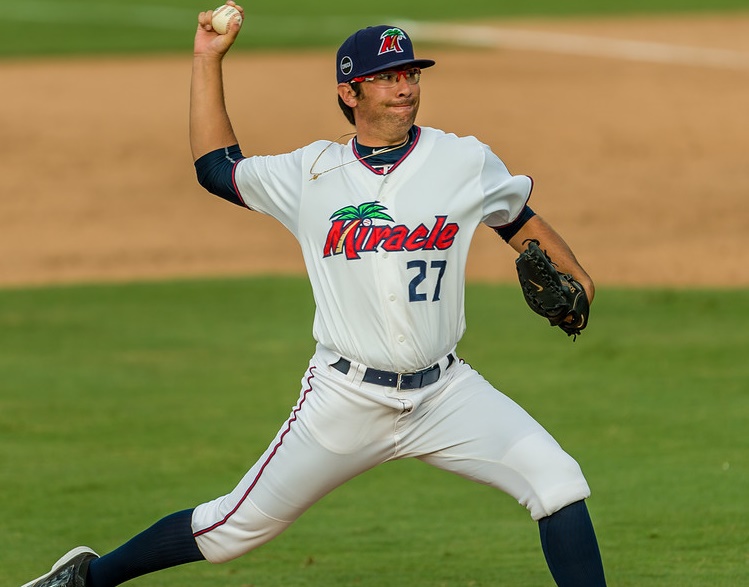 Certainly there is no surprise that Team Australia is littered with players with Twins connections. The Twins and legendary scout Howie Norsetter have always signed players from Down Under. Briefly, here are the players who have spent time in the Twins system who are on the Australian team. James Beresford played in the ABL after the holidays for Joe Vavra’s Melbourne Aces team. First, it allowed Beresford more time in front of one of the Twins coaches, but it also helped him prepare for this tournament. Beresford has been in the Twins organization since signing in 2005. He was an International League All-Star for the Rochester Red Wings in 2015 and will return again to the organization in 2016. Todd Van Steensel has been in the Twins organization twice. He pitched for Elizabethton in 2011 but was released after the season. He returned before the 2014 season after becoming a strong relief pitcher prospect while pitching in the ABL and in Europe. He has put up strong numbers the last two seasons, including more than a strikeout per inning. He should move up to Chattanooga for the 2016 season. Sam Gibbons has a nice showing once he was promoted to Cedar Rapids in 2015. He posted a 2.89 ERA as a 21-year-old in 15 starts. He signed with the Twins in July of 2011. He is certainly one to watch in 2016. Logan Wade signed with the Twins as a 19-year-old in 2011. He was the number three hitter and shortstop for the Brisbane Bandits team that just won the Claxton Shield (ABL championship) last week. Apparently his father has five Claxton Shield titles. Wade played in Ft. Myers last year. Aaron Whitefield was also on that championship Brisbane team. He is a 19-year-old who signed with the Twins in May. He has been playing baseball now for about a year now after playing softball for years. In fact he’s represented Australia in international softball tournaments. At 6-4 and 200 pounds with very good speed, he is certainly intriguing. He played in just seven games in the GCL in 2015. Luke Hughes signed with the Twins in 2002 and gradually worked his way up the system.In 2010, as a 25-year-old he made his major league debut and in his first at-bat, he homered against Max Scherzer. He played in 96 games for the Twins in 2011 and hit seven homers. He played just four games for the Twins in 2012 before being DFAd and claimed by the A’s. He has not played in the big leagues since 2012. He has played for Perth each winter. Allan de San Miguel signed as a 16-year-old catcher in 2004. Out of necessity, he played 11 games for Ft. Myers as a 17-year-old in 2005, but overall, his progression through the Twins system was slow. An organizational player, in 2009 he actually played games for Beloit, Ft. Myers, New Britain and Rochester. After the 2010 season he moved on to the Orioles. In 2015, he was back with the Twins, providing some catching depth and getting a few games in for Rochester. He remains a free agent. Peter Moylan may not be a name you necessarily associate with the Twins. However, that is where he made his US start. Kind of. He signed with the Twins as a 16-year-old in 1995. He pitched for the GCL Twins in 1996 and 1997, and posted ERAs of 4.08 and 4.05. The Twins let him go, and he did not play again in the States until 2006 when he went to AAA for the Braves and despite a 6.83 ERA in 35 games, he debuted in the big leagues with 15 games. He has played in eight big league seasons since, only missing the 2014 season due to Tommy John surgery. Trent Oeltjen signed with the Twins in 2000. He slowly worked his way up the system. Two years in Elizabethton. Two years in Quad Cities. Two years in Ft. Myers. He had a strong 2006 in New Britain and was solid in Rochester in 2007, but he became a free agent and signed with the Diamondbacks. He played 24 games for the Diamondbacks in 2009 and a combined 75 games for the Dodgers between 2010 and 2011. He continued playing AAA ball through the 2014 season. He played for Sydney in the ABL after the 2014 season but announced that it would be his final season. He retired and didn’t play in 2015 but he’s still on their roster. He is one of the more respected players in Australia. Matt Williams pitched in the Twins minor league system starting in 2005 and culminating with 28 games in New Britain in 2010. Since then, he has been one of the better relief pitchers in the Australian Baseball League and has competed in many international competitions. He is arguably best known, however, for a fantastic beard. Ryan Rowland-Smith never pitched in a regular season game for the Twins or any of their minor league affiliates. However, the Twins picked the then-22-year-old in the December 2004 Rule 5 draft. He went to spring training with the Twins but was returned to Seattle in late March. He debuted with the Mariners in July of 2007 and pitched 115 games for the Mariners between 2007 and 2010. He played AAA ball for five organizations between 2011 and 2013. Arizona signed him before 2014. He made the Opening Day roster but he was released early in the season and hasn’t played since. The Twins have signed a lot of players from Australia and several of them have pitched in the big leagues. Many played for the Twins including Grant Balfour, Glenn Williams, Michael Nakamura, and even Melbourne Ace’s GM Justin Huber. The Phillipines and New Zealand are also in the Sydney WBC Qualifier but they don’t have any Twins connections. However South Africa does have three players with Twins ties. Here is a little bit on each. (Quick Update/Correction - Eric Farris, who got a couple of cups of coffee with the Brewers in 2011 and 2012 and spent 2013-2015 with the Red Wings, was added to the Phillipines roster.) Hein Robb signed with the Twins in 2008 but spent a year pitching in Australia before coming to the States in 2010. He pitched for the GCL Twins in 2010 and 2011. He was with Elizabethton in 2012 and 2013. In 2013, he also pitched in three games for Cedar Rapids. He played independent ball in 2014. He has been on the South African WBC teams since 2009 when he was just 17 years old. Callan Pearce signed with the Twins in July of 2013. He has pitched in the GCL the last two years. He is a great athlete and can throw into the low-90s but he has struggled with his control. 19-year-old Rowan Ebersohn was the starting left fielder and seventh-place hitter for South Africa in their first game of the tournament. Just 5-9 he is stocky, strong and still fast. He played in just 27 games in the GCL and hit just .193, but he showed great improvement even during the three months he was with the team. (In Game 1, Ebersohn went 0-3 with a walk and a hit by pitch.) So there you have it, plenty of reasons to watch the WBC qualifying tournament the next few days. Sure, Team Australia’s games will be played at 2:30 a.m. (Central time) in the United States, but they will be fun to watch. Next month, there will be two more WBC Qualifier Tournaments. In Mexicali, Team Mexico will host the Czech Republic, Nicaragua and Germany. We have already been told that Max Kepler will not be playing for the German team as he will be at Twins big league camp, hoping to earn an Opening Day roster spot. Also in mid-March in Panama City, Panama will host Colombia, France and Spain. The games will be played at Rod Carew Stadium. The fourth WBC Qualifier will not be until late September. In the Bronx, teams from Brazil, Great Britain, Israel and Pakistan will compete for the fourth Qualifier spot in the 2017 WBC. The four teams to win the Qualifiers will join the teams that finished in the top 12 of the 2013 WBC. Those countries are the Dominican Republic, Puerto Rico, Japan, the Netherlands, Cuba, the United States, Italy, Chinese Taipei, South Korea, Venezuela, and Canada. Again, the World Baseball Classic will begin in 2017.
-
Draft Blog, Entry 1 (2/9/16)
Seth Stohs replied to Jeremy Nygaard's topic in Twins Daily Front Page News
I don't pretend to know this as well as Jeremy, but I do recall wanting the Twins to take Kevin Gausman in 2012... They took Buxton. I knew Buxton was a great athlete, but some questioned the level of competition he played. Gausman was a front-of-rotation starter who had pitched at LSU. I still really, really like Gausman, but I'm glad the Twins took Buxton. Two years ago, I was completely on the Twins taking Aaron Nola. I think I recall Jeremy was too. But we both knew that the Twins would take Gordon, and now I'm fully comfortable with that, even though I still really like Nola and think that he will have a long and productive MLB career. I would have much preferred it if the Twins had taken Carson Fullmer last year instead of Tyler Jay, but then you read about the Jay slider, and if he can be a starter, it'd be great. Even if he's a reliever, he's their top relief pitching prospect (which says a lot in this organization). The main point of this is that we all pick our favorites, maybe we even watch a little video... but the Twins scouts do their homework. They put in a lot of time watching all of these guys (like every team does, of course). They're going to be right on some and they're going to be wrong on some. That's the nature of writing and talking about humans, much less actually drafting one and then trying to develop them.- 43 replies
-
- 1
-
-
- mlb draft
- logan shore
- (and 1 more)
-
The Sporting News posted a pretty neat little blog/page showing each uniform number (1-99) and highlighting the best player in MLB history to wear it. It also provides Honorable Mention where appropriate. The Twins/Fans should be happy with #s 28, 29, 48, 57, 65, 81 and 97... And we'll probably be understanding at #s 3, 4 and 34. Fun read. Feel free to discuss.
-
I think the days of Twins fans complaining about Keith Law "Hating" the Twins should be over (whether or not it ever should have started may be up for debate). Today, he posted his ranking of the minor league systems in baseball. It's behind a paywall, so I won't post the whole thing, but he has some really comments on the Twins. Said 7 players in their top 20. Only the Braves and Dodgers rank ahead of them.
-
Doug Bernier signed with the Texas Rangers. Minor league deal.
-
Out Of Options But Not Out Of The Plans
Seth Stohs replied to Seth Stohs's topic in Twins Daily Front Page News
Nunez makes the routine plays. He doesn't have much for range. He has a strong arm. Polanco has a little more range, but he often struggles with the routine plays. Many question his arm strength on the left side of the diamond. Santana struggles with routine plays, though he has great range and a very strong arm.
