



Seth Stohs
-
Posts
25,912 -
Joined
-
Last visited
-
Days Won
109
Content Type
Profiles
News
Minnesota Twins Videos
2026 Minnesota Twins Top Prospects Ranking
2022 Minnesota Twins Draft Picks
Minnesota Twins Free Agent & Trade Rumors, Notes, & Tidbits
Guides & Resources
2023 Minnesota Twins Draft Picks
The Minnesota Twins Players Project
2024 Minnesota Twins Draft Picks
2025 Minnesota Twins Draft Pick Tracker
2026 Minnesota Twins Draft Tracker: Picks & Bonuses
Forums
Blogs
Events
Store
Downloads
Gallery
Everything posted by Seth Stohs
-
 I would hope that would never be the case. De Jesus and Ramirez are legit talents, and if they're found at a later age, good for the Twins for giving them a chance.
-
He's a reliever at this point. He can (potentially) be a dominant reliever... he could maybe be a middle-of-the-pack starter with injury concerns. He throws hard.
- 27 replies
-
- 1
-

-
- zander wiel
- travis harrison
- (and 3 more)
-
He's been hurt a ton in his career. This was really the first time he's been able to stay healthy. I can't help but feel bad for him because some team would have paid him a lot of money to be hurt the next 4-5 years.
-
Since the end of the Twins minor league season, he at Twins Daily have handed out several awards. We have named the minor league Starting Pitcher, Relief Pitcher and Hitter of the Year. We named a Twins minor league All Star team. Now it’s time to start thinking about prospects. Today, I’m going to start my preliminary Top 50 Twins prospect rankings by posting choices for prospects 41-50. Over the next week or two, we’ll work our way up to the top prospects in the organization. Your thoughts, suggestions, comments and questions are welcomed. These prospect rankings may look a little different than they have in recent years. Consider the fact that players like Miguel Sano, Byron Buxton, Max Kepler, Jorge Polanco and Jose Berrios have all graduated from “prospect” status. However, the Twins still have several high-end prospects. There are many more who have the potential to get to that level, or to have big league futures in some manner. In Part 1, we’ll look at prospects 41-50. This is an interesting group of prospects. There are several relievers with some upside. There are a couple of pitchers who are a little older and for their level for a variety of reasons, but they still have potential to be big leaguers in time. There are a couple of starters. There are a couple of hitters who have upside or who have put up some numbers at some point. Your input is welcomed. Image courtesy of Seth Stohs (photos of Dereck Rodriguez and Zander Wiel) Since the end of the Twins minor league season, he at Twins Daily have handed out several awards. We have named the minor league Starting Pitcher, Relief Pitcher and Hitter of the Year. We named a Twins minor league All Star team. Now it’s time to start thinking about prospects. Today, I’m going to start my preliminary Top 50 Twins prospect rankings by posting choices for prospects 41-50. Over the next week or two, we’ll work our way up to the top prospects in the organization. Your thoughts, suggestions, comments and questions are welcomed. These prospect rankings may look a little different than they have in recent years. Consider the fact that players like Miguel Sano, Byron Buxton, Max Kepler, Jorge Polanco and Jose Berrios have all graduated from “prospect” status. However, the Twins still have several high-end prospects. There are many more who have the potential to get to that level, or to have big league futures in some manner. In Part 1, we’ll look at prospects 41-50. This is an interesting group of prospects. There are several relievers with some upside. There are a couple of pitchers who are a little older and for their level for a variety of reasons, but they still have potential to be big leaguers in time. There are a couple of starters. There are a couple of hitters who have upside or who have put up some numbers at some point. Your input is welcomed. Players eligible to be on this list include players who remain eligible for Rookie of the Year voting in 2017. That is to say, hitters with less than 130 at-bats and pitchers with less than 50 innings. (The list is preliminary. Following research for the Minnesota Twins Prospect Handbook 2017 - which Cody Christie, Jeremy Nygaard and I are working on - I’ll provide my final Top 30 prospects list.) Top Prospects 41-50 #50 – Tyler Wells - 22 – RHP – Elizabethton Twins The Twins used their 15th round pick this June on the right-hander from Cal State-San Bernadino. There, he made 15 starts and was 4-7 despite a 2.84 ERA. He had 89 strikeouts in 92 innings. At 6-8 and about 265 pounds, he has the potential to be a hard-throwing, strikeout pitcher. Obviously he’s got a long ways to go to get there. He finished the season with 19.1 scoreless innings. In his penultimate start, he gave up just one hit over seven innings and struck out 14 batters. He makes this list as a guy worth watching. #49 – Taylor Clemensia - 19 – LHP – GCL Twins The young Amsterdam native played in the Dutch leagues for a couple of years. He was an outfielder, a very good athlete with a big arm. The Twins signed him and moved him to the mound. He had a solid debut in the GCL this year. He posted a 2.47 ERA in 11 games (43.2 innings). He showed the ability to miss bats, at times, and he fought with control ,at times. However, Clemensia is said to have a good feel for pitching despite the fact he’s still learning. #48 – Travis Harrison - 23 – OF - Chattanooga Lookouts Harrison was the 50th overall pick of the 2011 draft out of high school in California. He’s been around quite some time, but he still is just 23 years old. In 2016, he repeated the AA Southern League level. Unfortunately, it was a difficult season. His batting average, on-base percentage and slugging percentage all dipped. He moved from left field to right field in 2016. In mid-July, he was hit in the head with a pitch and missed about two weeks with a concussion. He hit just .191 in 37 more games for the rest of the season. He’s got a strong work ethic, and 2017 will be a big year as he could become a free agent at the end of the season. #47 – Michael Cederoth - 23 – RHP – Cedar Rapids Kernels Cederoth was the Twins 3rd round pick in 2014 out of San Diego State. He was tried as a starter that season and at the start of the 2015 season. After missing the second half of the 2015 season with an illness, he began 2016 on the DL with an oblique strain. Once he came back to the Kernels, he was very good. He went 4-0 with a 2.45 ERA. In 47.2 innings, he gave up 35 hits, walked 33 and struck out 62 batters. Cederoth throws real hard and now that he’s healthy, he could move up quickly in 2016. #46 – Williams Ramirez - 24 – RHP – Cedar Rapids Kernels Ramirez is already a little bit older, but he’s still worth watching. He signed at an older age and debuted in the DSL at age 20. He spent two seasons there transitioning from infielder to pitcher. He was our choice for Twins Daily short-season pitcher of the year in 2015 when he went 4-2 with a 1.14 ERA and 0.91 WHIp and 10.3 K/9 in the GCL last year. After starting the 2016 season in Extended Spring Training, but by mid-June, he was up with the Kernels. As Jake Mauer told me in late May, his first night game with the Kernels was the first time he had ever pitched under the lights. Ramirez is a max-effort pitcher who works in the mid-90s. He’s also got a very sharp slider. He’s likely going to be a bullpen arm at this point. #45 – Miguel De Jesus - 21 – RHP – GCL Twins/Elizabethton Twins De Jesus signed with the Twins in 2014 from the Dominican Republic. He pitched there in 2015 before coming to the States this year. He began in the GCL where he made seven starts and went 3-1 with a 2.06 ERA. In 35 innings, he walked 11 and struck out 34. He was moved up to Elizabethton where he went 0-2 in four starts with a 3.00 ERA. He turned 21 just last week. He sits 92-96 with a fastball that gets a lot of movement. At 6-2 and a wiry 175 pounds, he has room for growth. #44 – Yorman Landa - 22 – RHP – Ft. Myers Miracle The Twins signed Landa as a 16-year-old out of Venezuela. He slowly works his way up the system, continuing to develop. He missed some time in 2014 and again in 2015 with a shoulder injury, but when he came back in the second half of 2015 in Cedar Rapids, he showed an upper-90s fastball with secondary pitches with big potential. Following the season, he was added to the Twins 40-man roster. He moved up to Ft. Myers this year. He made the Florida State League All Star team and hit 100 mph with three pitches in his inning. He went on the DL in July with more shoulder issues. Injury has been the one thing that has held him back, and keeps him from being higher on this list, but when healthy, he has potential to be a terrific late-inning reliever. #43 – Dereck Rodriguez - 24 – RHP – Cedar Rapids Kernels/Ft. Myers Miracle Rodriguez is the son of soon-to-be Hall of Famer Ivan “Pudge” Rodriguez. The Twins drafted him in the 6th round of the 2011 draft as an outfielder. He spent three seasons in the rookie leagues trying to hit. Starting in 2014, he made the transition to the mound. In 2015, he was the Appalachian League Pitcher of the Year in Elizabethton. He began the 2016 season in the Cedar Rapids rotation. Through his first nine starts, he was 1-7 with a 7.71 ERA. At that point, things started getting better. In his final nine starts with the Kernels, he went 3-4 with a 3.02 ERA and went at least six innings in each of those starts. He moved up to Ft. Myers where he went 1-2 but posted a 2.56 ERA. So while his overall numbers in 2016 don’t look great a deeper look shows that he started figuring things out over the final three months of the season. #42 – Aaron Whitefield - 20 – IF/OF – GCL Twins Signed out of Australia in the summer of 2015, Whitefield is an intriguing prospect. He hadn’t really played much baseball until shortly below that time. He had played for Team Australia in international softball competitions. However, he has great speed and some power potential. He can play all over the diamond. He was one of just a couple of GCL players who played nearly every day. He was the team’s leadoff hitter and hit .298/.370/.366 (.737) with seven doubles and two homers. He also stole 31 bases in 40 attempts. He was encouraged to run and had the green light. He played 1B and 3B and all three outfield positions. He just turned 20 at the start of September. #41 – Zander Wiel - 24 – 1B – Cedar Rapids Kernels Wiel was the Twins’ 12th round pick in 2015 out of Vanderbilt. His debut summer was shortened when he was hit in the wrist with a pitch. He struggled early in 2016 in Cedar Rapids, but as Parker pointed out in a recent article, he made some adjustments and his numbers in the second half were terrific. In July, he posted a .310/.407/.660 (1.067) with nine doubles, a triple and eight home runs. He ended the season strong too. He had nine hits over his final four games including four home runs and 11 RBI. He ended the season with 86 RBI which led the Midwest League. The first baseman had 17 errors at first base during the season. So what do you think of Part 1, Prospects 41-50? Next up will be prospects 31-40. View full article
- 27 replies
-
- 3
-
-
- zander wiel
- travis harrison
- (and 3 more)
-
Seth's Preliminary Top 50 Twins Prospects: Part 1 (41-50)
Seth Stohs posted an article in Minor Leagues
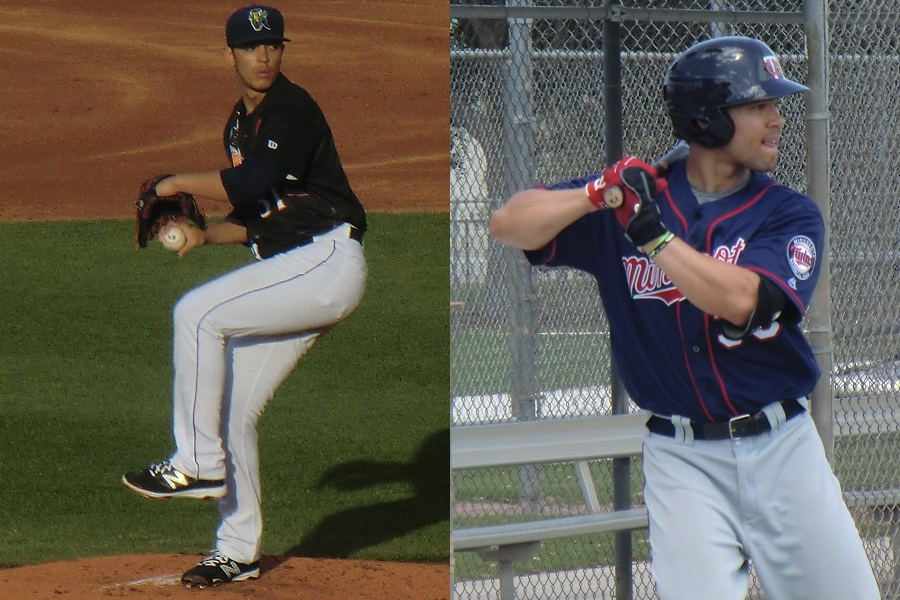 Players eligible to be on this list include players who remain eligible for Rookie of the Year voting in 2017. That is to say, hitters with less than 130 at-bats and pitchers with less than 50 innings. (The list is preliminary. Following research for the Minnesota Twins Prospect Handbook 2017 - which Cody Christie, Jeremy Nygaard and I are working on - I’ll provide my final Top 30 prospects list.) Top Prospects 41-50 #50 – Tyler Wells - 22 – RHP – Elizabethton Twins The Twins used their 15th round pick this June on the right-hander from Cal State-San Bernadino. There, he made 15 starts and was 4-7 despite a 2.84 ERA. He had 89 strikeouts in 92 innings. At 6-8 and about 265 pounds, he has the potential to be a hard-throwing, strikeout pitcher. Obviously he’s got a long ways to go to get there. He finished the season with 19.1 scoreless innings. In his penultimate start, he gave up just one hit over seven innings and struck out 14 batters. He makes this list as a guy worth watching. #49 – Taylor Clemensia - 19 – LHP – GCL Twins The young Amsterdam native played in the Dutch leagues for a couple of years. He was an outfielder, a very good athlete with a big arm. The Twins signed him and moved him to the mound. He had a solid debut in the GCL this year. He posted a 2.47 ERA in 11 games (43.2 innings). He showed the ability to miss bats, at times, and he fought with control ,at times. However, Clemensia is said to have a good feel for pitching despite the fact he’s still learning. #48 – Travis Harrison - 23 – OF - Chattanooga Lookouts Harrison was the 50th overall pick of the 2011 draft out of high school in California. He’s been around quite some time, but he still is just 23 years old. In 2016, he repeated the AA Southern League level. Unfortunately, it was a difficult season. His batting average, on-base percentage and slugging percentage all dipped. He moved from left field to right field in 2016. In mid-July, he was hit in the head with a pitch and missed about two weeks with a concussion. He hit just .191 in 37 more games for the rest of the season. He’s got a strong work ethic, and 2017 will be a big year as he could become a free agent at the end of the season. #47 – Michael Cederoth - 23 – RHP – Cedar Rapids Kernels Cederoth was the Twins 3rd round pick in 2014 out of San Diego State. He was tried as a starter that season and at the start of the 2015 season. After missing the second half of the 2015 season with an illness, he began 2016 on the DL with an oblique strain. Once he came back to the Kernels, he was very good. He went 4-0 with a 2.45 ERA. In 47.2 innings, he gave up 35 hits, walked 33 and struck out 62 batters. Cederoth throws real hard and now that he’s healthy, he could move up quickly in 2016. #46 – Williams Ramirez - 24 – RHP – Cedar Rapids Kernels Ramirez is already a little bit older, but he’s still worth watching. He signed at an older age and debuted in the DSL at age 20. He spent two seasons there transitioning from infielder to pitcher. He was our choice for Twins Daily short-season pitcher of the year in 2015 when he went 4-2 with a 1.14 ERA and 0.91 WHIp and 10.3 K/9 in the GCL last year. After starting the 2016 season in Extended Spring Training, but by mid-June, he was up with the Kernels. As Jake Mauer told me in late May, his first night game with the Kernels was the first time he had ever pitched under the lights. Ramirez is a max-effort pitcher who works in the mid-90s. He’s also got a very sharp slider. He’s likely going to be a bullpen arm at this point. #45 – Miguel De Jesus - 21 – RHP – GCL Twins/Elizabethton Twins De Jesus signed with the Twins in 2014 from the Dominican Republic. He pitched there in 2015 before coming to the States this year. He began in the GCL where he made seven starts and went 3-1 with a 2.06 ERA. In 35 innings, he walked 11 and struck out 34. He was moved up to Elizabethton where he went 0-2 in four starts with a 3.00 ERA. He turned 21 just last week. He sits 92-96 with a fastball that gets a lot of movement. At 6-2 and a wiry 175 pounds, he has room for growth. #44 – Yorman Landa - 22 – RHP – Ft. Myers Miracle The Twins signed Landa as a 16-year-old out of Venezuela. He slowly works his way up the system, continuing to develop. He missed some time in 2014 and again in 2015 with a shoulder injury, but when he came back in the second half of 2015 in Cedar Rapids, he showed an upper-90s fastball with secondary pitches with big potential. Following the season, he was added to the Twins 40-man roster. He moved up to Ft. Myers this year. He made the Florida State League All Star team and hit 100 mph with three pitches in his inning. He went on the DL in July with more shoulder issues. Injury has been the one thing that has held him back, and keeps him from being higher on this list, but when healthy, he has potential to be a terrific late-inning reliever. #43 – Dereck Rodriguez - 24 – RHP – Cedar Rapids Kernels/Ft. Myers Miracle Rodriguez is the son of soon-to-be Hall of Famer Ivan “Pudge” Rodriguez. The Twins drafted him in the 6th round of the 2011 draft as an outfielder. He spent three seasons in the rookie leagues trying to hit. Starting in 2014, he made the transition to the mound. In 2015, he was the Appalachian League Pitcher of the Year in Elizabethton. He began the 2016 season in the Cedar Rapids rotation. Through his first nine starts, he was 1-7 with a 7.71 ERA. At that point, things started getting better. In his final nine starts with the Kernels, he went 3-4 with a 3.02 ERA and went at least six innings in each of those starts. He moved up to Ft. Myers where he went 1-2 but posted a 2.56 ERA. So while his overall numbers in 2016 don’t look great a deeper look shows that he started figuring things out over the final three months of the season. #42 – Aaron Whitefield - 20 – IF/OF – GCL Twins Signed out of Australia in the summer of 2015, Whitefield is an intriguing prospect. He hadn’t really played much baseball until shortly below that time. He had played for Team Australia in international softball competitions. However, he has great speed and some power potential. He can play all over the diamond. He was one of just a couple of GCL players who played nearly every day. He was the team’s leadoff hitter and hit .298/.370/.366 (.737) with seven doubles and two homers. He also stole 31 bases in 40 attempts. He was encouraged to run and had the green light. He played 1B and 3B and all three outfield positions. He just turned 20 at the start of September. #41 – Zander Wiel - 24 – 1B – Cedar Rapids Kernels Wiel was the Twins’ 12th round pick in 2015 out of Vanderbilt. His debut summer was shortened when he was hit in the wrist with a pitch. He struggled early in 2016 in Cedar Rapids, but as Parker pointed out in a recent article, he made some adjustments and his numbers in the second half were terrific. In July, he posted a .310/.407/.660 (1.067) with nine doubles, a triple and eight home runs. He ended the season strong too. He had nine hits over his final four games including four home runs and 11 RBI. He ended the season with 86 RBI which led the Midwest League. The first baseman had 17 errors at first base during the season. So what do you think of Part 1, Prospects 41-50? Next up will be prospects 31-40.
-
Powering Toward 200 Home Runs
Seth Stohs replied to Seth Stohs's topic in Twins Daily Front Page News
Which is why the criticism is so annoying. People have seemingly forgotten how great he was as a player, as a catcher, before the injuries started piling up and his body kind of failed him.- 13 replies
-
- 1
-
-
- brian dozier
- miguel sano
- (and 3 more)
-
http://www.minorleagueball.com/2016/9/26/12992078/prospect-retrospective-and-career-profile-brian-dozier-2b-minnesota Minor League Ball's John Sickels wrote about Brian Dozier and what he looked like as a prospect 5 years ago. Very interesting read.
-
It’s been a really long season for the Minnesota Twins and their fans. Way back in mid-February, as spring training was getting underway in Ft. Myers, Nick wrote an article called Dreaming of 200 Home Runs. In the article, Nick wrote, “For this year’s club it is an unlikely yet not unfeasible possibility.” The Twins have six games remaining; three in Kansas City and three in Chicago against the White Sox. They are currently sitting at 193 home runs. If they hit seven home runs over those final six games, it will be the first time the Twins have hit 200 home runs since 1964. When the Twins hit their 196th home run of 2016, it will match the number hit by the 1986 and 1987 Twins. While we believed coming into this season that the Twins had a chance to be a powerful, home-run hitting team, the fact that they will likely finish with the third-most home runs in Twins history is very impressive. Image courtesy of Jordan Johnson, USA Today It’s been a really long season for the Minnesota Twins and their fans. Way back in mid-February, as spring training was getting underway in Ft. Myers, Nick wrote an article called Dreaming of 200 Home Runs. In the article, Nick wrote, “For this year’s club it is an unlikely yet not unfeasible possibility.” The Twins have six games remaining; three in Kansas City and three in Chicago against the White Sox. They are currently sitting at 193 home runs. If they hit seven home runs over those final six games, it will be the first time the Twins have hit 200 home runs since 1964. When the Twins hit their 196th home run of 2016, it will match the number hit by the 1986 and 1987 Twins. While we believed coming into this season that the Twins had a chance to be a powerful, home-run hitting team, the fact that they will likely finish with the third-most home runs in Twins history is very impressive. In 1964, six players accounted for 181 of their 221 home runs (82%). That team had six players with 20 or more home runs. Harmon Killebrew led the way with his record 49 home runs (which he did again in 1969). Bob Allison and Tony Oliva each had 32 home runs. Jimmie Hall hit 25 homers. Don Mincher hit 23. Zoilo Versalles hit 20 home runs. Two others, Earl Battey and Rich Rollins, added 12 homers each. Those eight players in double-digits accounted for 93% of that team’s home runs. The 2016 team has nine players with double-digit home runs. It’s certainly been fun following Brian Dozier through his 42 home runs, most of which have come in the season’s second half. Miguel Sano has 24 homers. Max Kepler is third on the list with 17 homers. Trevor Plouffe, Byungho Park and Eduardo Nunez each hit 12 homers (and we know none of them will hit more for the Twins this season). Joe Mauer and Robbie Grossman have each hit 11 home runs. Eddie Rosario joined the double-figure homer club with his 10th homer shortly before his season came to an end. Those nine players in double-digits have accounted for 78% of the team’s homers. This is the second time in the team’s history that nine players have reached 10 or more home runs. The other time came in 2004. That year Corey Koskie, Jacque Jones and Torii Hunter all had 23 to 25 home runs. Justin Morneau, Lew Ford, Michael Cuddyer, Shannon Stewart, Henry Blanco and Luis Rivas all had between 10 and 19 homers that year. As interesting, Matthew Lecroy ended the season with nine homers, and Cristian Guzman added eight home runs. As the Twins have six games left in the 2016 season, there are three players sitting at eight homers on the season. Kurt Suzuki, Kennys Vargas and Byron Buxton need two more home runs to join the double-digit dinger club. The Twins have shown some prodigious power in 2016 and hit 193 home runs through their first 156 games. While there are many reasons for the Twins second 100-loss season, the fact that Twins pitchers have allowed 218 home runs so far certainly doesn’t help. Dozier’s Final Week Brian Dozier still has plenty to play for over the final six games. Last week, he hit his 42nd home runs of the season. 40 of those homers have come as a second baseman which set the American League record for home runs by a second baseman in MLB history. If he can hit two more homers this season he will tie Davey Johnson (Atlanta 1973) and Rogers Hornsby (St. Louis 1922) for the Major League record. You’ve seen or read that statistic. However, he’s also approaching another Twins record that I think is just as impressive. To go with his 42 home runs, Dozier has 35 doubles and five triples. That’s 82 extra base hits which is two behind the current Twins record. In 1964, Tony Oliva was a 25-year-old rookie. He won the batting title, the Rookie of the Year award and was an All Star. He hit .323 with 43 doubles, nine triples and 32 home runs. That’s 84 extra base hits which has been the team’s record for 52 years. With three more extra base hits, Dozier would break that Twins record. Dozier went past 100 runs scored for the third straight year. Only Chuck Knoblauch has done that in Twins history. He is sitting at 99 RBI. With one more RBI, he becomes the third Twins player this century to have 100 runs scored and 100 RBI. In 2001, Corey Koskie had 100 runs scored with 103 RBI. In 2006, Michael Cuddyer scored 102 runs and drove in 109 runs. Dozier’s season OPS is sitting at .905. Looking back through the 26 seasons since the 1991 season, Dozier should finish with a Top 10 season (by OPS). Here are the Top 25 Twins seasons in the last 25 years by OPS. If Dozier can keep his OPS above .900, he’ll be just the 7th Twins player in that time period to do so. 1 - Joe Mauer - 2009 - 1.031 2 - Chuck Knoblauch - 1996 - .965 3 - Joe Mauer - 2006 - .936 4 - Justin Morneau - 2004 - .934 5 - Chuck Knoblauch - 1995 - .965 6 - Jason Kubel - 2009 - .907 7 - Brian Dozier - 2016 - .905 8 - Kirby Puckett - 1995 - .894 9 - Chili Davis - 1991 - .892 10 - Josh Willingham - 2012 - .890 11 - Joe Mauer - 2013 - .880 12 - Justin Morneau - 2012 - .878 13 - Justin Morneau - 2008 - .873 14 - Joe Mauer - 2010 - .871 15 - Michael Cuddyer - 2006 - .867 16 - Matt Lawton - 2000 - .865 17 - Joe Mauer - 2008 - .864 Matt Lawton - 1998 - .864 Kirby Puckett - 1992 - .864 20 - Michael Cuddyer - 2009 - .862 21 - Joe Mauer - 2012 - .861 22 - Shane Mack - 1992 - .860 23 - Torii Hunter - 2002 - .859 24 - Paul Molitor - 1996 - .858 25 - Jacque Jones - 2002 - .852 Six games to go. Still plenty of reasons to watch and several milestones still up for grabs. View full article
- 13 replies
-
- 1
-
-
- brian dozier
- miguel sano
- (and 3 more)
-
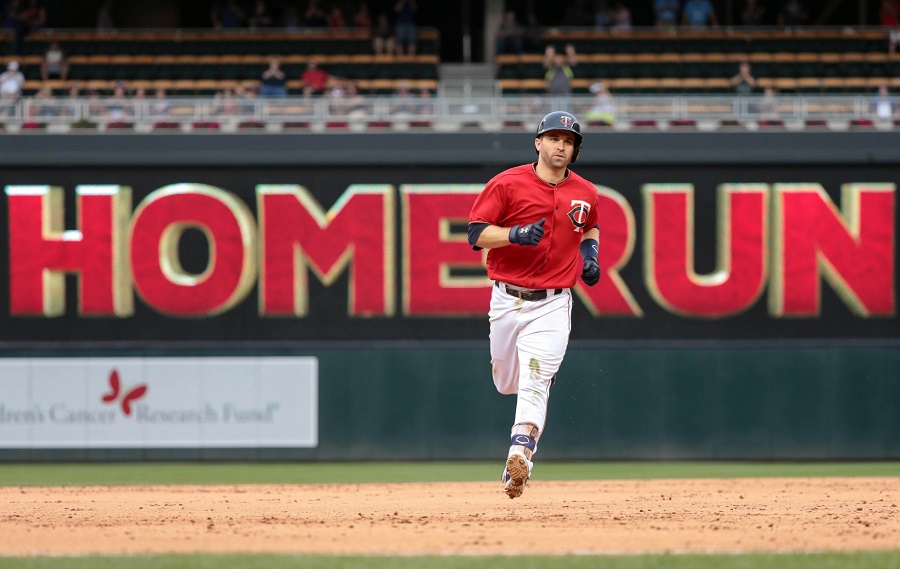 In 1964, six players accounted for 181 of their 221 home runs (82%). That team had six players with 20 or more home runs. Harmon Killebrew led the way with his record 49 home runs (which he did again in 1969). Bob Allison and Tony Oliva each had 32 home runs. Jimmie Hall hit 25 homers. Don Mincher hit 23. Zoilo Versalles hit 20 home runs. Two others, Earl Battey and Rich Rollins, added 12 homers each. Those eight players in double-digits accounted for 93% of that team’s home runs. The 2016 team has nine players with double-digit home runs. It’s certainly been fun following Brian Dozier through his 42 home runs, most of which have come in the season’s second half. Miguel Sano has 24 homers. Max Kepler is third on the list with 17 homers. Trevor Plouffe, Byungho Park and Eduardo Nunez each hit 12 homers (and we know none of them will hit more for the Twins this season). Joe Mauer and Robbie Grossman have each hit 11 home runs. Eddie Rosario joined the double-figure homer club with his 10th homer shortly before his season came to an end. Those nine players in double-digits have accounted for 78% of the team’s homers. This is the second time in the team’s history that nine players have reached 10 or more home runs. The other time came in 2004. That year Corey Koskie, Jacque Jones and Torii Hunter all had 23 to 25 home runs. Justin Morneau, Lew Ford, Michael Cuddyer, Shannon Stewart, Henry Blanco and Luis Rivas all had between 10 and 19 homers that year. As interesting, Matthew Lecroy ended the season with nine homers, and Cristian Guzman added eight home runs. As the Twins have six games left in the 2016 season, there are three players sitting at eight homers on the season. Kurt Suzuki, Kennys Vargas and Byron Buxton need two more home runs to join the double-digit dinger club. The Twins have shown some prodigious power in 2016 and hit 193 home runs through their first 156 games. While there are many reasons for the Twins second 100-loss season, the fact that Twins pitchers have allowed 218 home runs so far certainly doesn’t help. Dozier’s Final Week Brian Dozier still has plenty to play for over the final six games. Last week, he hit his 42nd home runs of the season. 40 of those homers have come as a second baseman which set the American League record for home runs by a second baseman in MLB history. If he can hit two more homers this season he will tie Davey Johnson (Atlanta 1973) and Rogers Hornsby (St. Louis 1922) for the Major League record. You’ve seen or read that statistic. However, he’s also approaching another Twins record that I think is just as impressive. To go with his 42 home runs, Dozier has 35 doubles and five triples. That’s 82 extra base hits which is two behind the current Twins record. In 1964, Tony Oliva was a 25-year-old rookie. He won the batting title, the Rookie of the Year award and was an All Star. He hit .323 with 43 doubles, nine triples and 32 home runs. That’s 84 extra base hits which has been the team’s record for 52 years. With three more extra base hits, Dozier would break that Twins record. Dozier went past 100 runs scored for the third straight year. Only Chuck Knoblauch has done that in Twins history. He is sitting at 99 RBI. With one more RBI, he becomes the third Twins player this century to have 100 runs scored and 100 RBI. In 2001, Corey Koskie had 100 runs scored with 103 RBI. In 2006, Michael Cuddyer scored 102 runs and drove in 109 runs. Dozier’s season OPS is sitting at .905. Looking back through the 26 seasons since the 1991 season, Dozier should finish with a Top 10 season (by OPS). Here are the Top 25 Twins seasons in the last 25 years by OPS. If Dozier can keep his OPS above .900, he’ll be just the 7th Twins player in that time period to do so. 1 - Joe Mauer - 2009 - 1.031 2 - Chuck Knoblauch - 1996 - .965 3 - Joe Mauer - 2006 - .936 4 - Justin Morneau - 2004 - .934 5 - Chuck Knoblauch - 1995 - .965 6 - Jason Kubel - 2009 - .907 7 - Brian Dozier - 2016 - .905 8 - Kirby Puckett - 1995 - .894 9 - Chili Davis - 1991 - .892 10 - Josh Willingham - 2012 - .890 11 - Joe Mauer - 2013 - .880 12 - Justin Morneau - 2012 - .878 13 - Justin Morneau - 2008 - .873 14 - Joe Mauer - 2010 - .871 15 - Michael Cuddyer - 2006 - .867 16 - Matt Lawton - 2000 - .865 17 - Joe Mauer - 2008 - .864 Matt Lawton - 1998 - .864 Kirby Puckett - 1992 - .864 20 - Michael Cuddyer - 2009 - .862 21 - Joe Mauer - 2012 - .861 22 - Shane Mack - 1992 - .860 23 - Torii Hunter - 2002 - .859 24 - Paul Molitor - 1996 - .858 25 - Jacque Jones - 2002 - .852 Six games to go. Still plenty of reasons to watch and several milestones still up for grabs.
-
If it turns out to be the case... Jeremy Nygaard had it first: https://twitter.com/jeremynygaard/status/780196442317131777
-
Sickels: End of 2016 Top 100 Prospects
Seth Stohs replied to Seth Stohs's topic in Twins Minor League Talk
In my preliminary Top 10 list, I have 6 hitters and four pitchers in the top 10. -
Sickels: End of 2016 Top 100 Prospects
Seth Stohs replied to Seth Stohs's topic in Twins Minor League Talk
I could make an argument for 5 guys as the Twins #1 prospect. I'll be coming out with my postseason top 40 soon, and still doin't know what order I'll put the Top 5 in. -
When names like Sano, Buxton, Kepler, Polanco and Berrios come off of prospect lists, things will look a bit different. However John Sickels posted his Top 100 End of Season Prospects and three Twins made the last. Just one in the Top 80. Share your thoughts... http://www.minorleagueball.com/2016/9/24/12932956/top-100-prospects-end-of-2016
-
They were definitely called out on radio and some writing last year at this time. Not many were saying anything about Sano until he came to spring training this year bigger than the end of last year.
-
Coming into spring training, both Hughes and Perkins had lost quite a bit of weight. They were called out this time last year too.
-
Rogers wasn't a lock going into 2016, though he was up within a week. I'm not sure Baxendale will even be put on the 40-man roster, but if he was, he'll certainly have a chance.
-
The Twins drafted 42 players in the June draft this year. A total of 1,216 players were selected in the 40 rounds of this year's draft. Brady Anderson, a right-handed pitcher from Florida Gulf Coast University, did not hear his name called. Needing a few arms to fill the GCL roster, the Twins called on Anderson. Anderson answered the call and pitched great throughout the rest of the summer. He started with the GCL Twins. In 27.2 innings, he went 2-0 with a 0.98 ERA, a .072 WHIP and a 25/2 K/BB rate. When the Cedar Rapids Kernels needed a starter, they had Anderson skip Elizabethton and jump right to the Midwest League. He continued to pitch well, going 3-1 wit ha 2.62 ERA in six starts. He also made a start for the Kernels in the playoffs. Recently, we caught up with the right-hander to learn a little more about him. Image courtesy of Steve Buhr (photo of Brady Anderson) The Twins drafted 42 players in the June draft this year. A total of 1,216 players were selected in the 40 rounds of this year's draft. Brady Anderson, a right-handed pitcher from Florida Gulf Coast University, did not hear his name called. Needing a few arms to fill the GCL roster, the Twins called on Anderson. Anderson answered the call and pitched great throughout the rest of the summer. He started with the GCL Twins. In 27.2 innings, he went 2-0 with a 0.98 ERA, a .072 WHIP and a 25/2 K/BB rate. When the Cedar Rapids Kernels needed a starter, they had Anderson skip Elizabethton and jump right to the Midwest League. He continued to pitch well, going 3-1 wit ha 2.62 ERA in six starts. He also made a start for the Kernels in the playoffs. Recently, we caught up with the right-hander to learn a little more about him. Seth Stohs (SS): Growing up in Southwest Florida, who was your favorite team to follow? Who were some of your favorite players? Brady Anderson (BA): My favorite team was the Cardinals. My dad and mom are both from the Iowa-Illinois area, and my dad was a Cardinals fan and my mom a Cubs fan. I chose the Cardinals to root for.SS: Did you spend much time going to spring training practices and games growing up? BA: I went to spring training games when I was younger but haven't gone to any in a long time. I usually just went to regular season games.SS: What were some of the better memories of your high school baseball career? Did you play other sports or were you involved in other activities? BA: My greatest memories of high school baseball were just playing it with my friends. We never accomplished anything special, but all of my friends and brother played and it was just good to be around them all the time. I tried playing golf as well, but I was really bad at it.SS: What was the recruitment process like for you out of high school, and what was it about Florida Gulf Coast that made you want to go there? BA: I just loved the environment of FGCU. They started following me pretty early, and I loved the place whenever I visited. I decided pretty early on that I wanted to stay in Florida and attend a smaller D1 program that always had a good team, At the time of my commitment, they had won three straight conference titles.SS: Did you have the chance to speak with many scouts before the draft? Was there any thought that you might be drafted? What was your interaction with Twins scouts? BA: I didn't speak to anyone before or during the draft. The first time I heard from the Twins was the Monday after the draft when they called and said they needed another pitcher in the GCL and was wondering if I was interested.SS: What has the adjustment like for you, from the amateur/college game to the professional game, both on and off the field? BA: There actually wasn't much of a transition. Of course, it's a little different, but I spent three summers up in Willmar, Minnesota, playing for the Stingers in the Northwoods League. It was the same as it is here; play every day, long bus rides and late nights. The same off the field. I lived at a dorm on campus at FGCU and then lived at one during the GCL. When I was up in Cedar Rapids, I had a tremendous host family just like when I spent my three summers in Willmar. Of course, there are minor differences, but nothing major, or I really think my college days prepared me well.SS: You dominated the GCL, and have moved up to Cedar Rapids. To what do you attribute the instant success to? BA: I want to attribute my success to just working at it. I've spent my whole life trying to make it to this point, and now that I'm here, I just want to prove myself worthy every time I go out on the field. It definitely helped going to college and being able to fine-tune myself both on the mound and mentally as well.SS: What has the transition to Cedar Rapids and the Midwest League been like? You had a lot of success. BA: The transition to Cedar Rapids was an exciting one. I never really expected it, and it kind of caught me off guard. But I enjoyed the league and everything that it encompassed (town, host family, teammates, coaches, staff). I won't lie though, at first it was a little strange going from waking up early, game at noon, done by 4:00 day in the GCL, compared to the 6:30 game and done at 11. Took a few days to get that transition down, otherwise everything else went pretty smoothly.SS: What has the atmosphere been like around the Kernels, knowing that the playoffs were in reach. . BA: The atmosphere was exciting. It was cool to make the playoffs in my first professional season. You could tell that everyone wanted it, and people believed that we had a team capable of doing some damage in the playoffs. It was a fun atmosphere to be around and play in.SS: At this very early stage in your career, what would you say are your biggest strengths? BA: I would say my strengths are always wanting to improve myself in any way possible. I would also say my ability to adapt to different roles and my mental game. I would say, above all else, the mental game has helped me the most this first year.SS: What are the areas of your game that you would like to spend time working to improve in the offseason and going forward? BA: There really isn't just one or two areas that I want to work on. I want to try to get better in every aspect of my game. Everything can be improved in some way or fashion, and I want to try and improve it all.SS: Will you be going back to school in the offseason? What was your major in school? BA: I have actually been taking an online class ever since the middle of August. I actually already graduated with a degree in Accounting, and I'm currently pursuing my MBA. I have five classes left, and then I am done with it.SS: Who are some of the people who have helped you get to this point in your career? BA: I would definitely say my family. Not only did they allow me to play by taking me to places and paying for stuff, but they were out there every day with me practicing and helping me get better. Apart from them, I would say just about every coach I have ever had from travel ball to high school to college. I feel like I've taken a bit from each person that I've associated with over the years. I can't thank them all enough for what they have done for me.SS: Favorite baseball movie? BA: For the Love of the Game, The Natural is good as well.Thank you to Brady Anderson for taking time to thoughtfully respond to these questions. Congratulations on a terrific professional debut! Feel free to discuss below. View full article
-
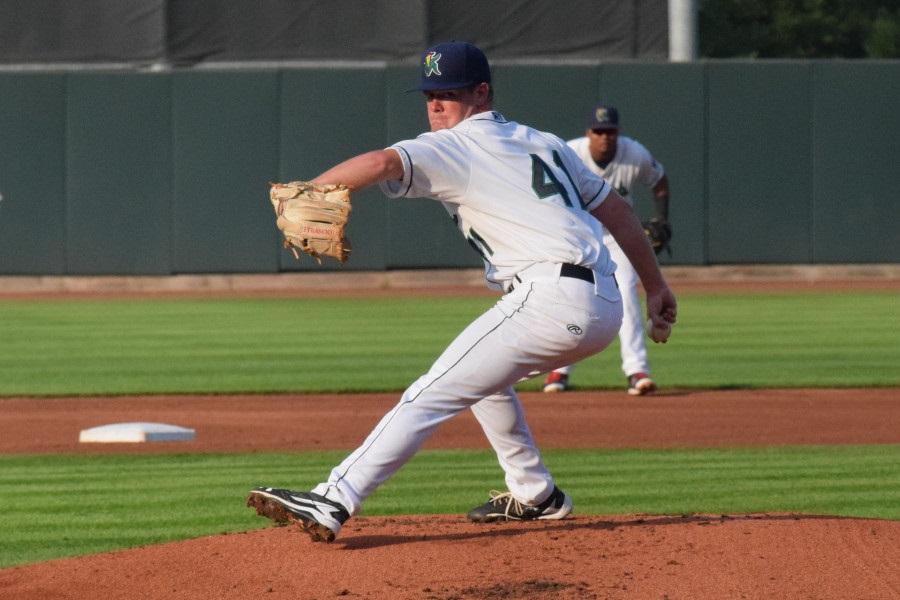 Seth Stohs (SS): Growing up in Southwest Florida, who was your favorite team to follow? Who were some of your favorite players? Brady Anderson (BA): My favorite team was the Cardinals. My dad and mom are both from the Iowa-Illinois area, and my dad was a Cardinals fan and my mom a Cubs fan. I chose the Cardinals to root for. SS: Did you spend much time going to spring training practices and games growing up? BA: I went to spring training games when I was younger but haven't gone to any in a long time. I usually just went to regular season games. SS: What were some of the better memories of your high school baseball career? Did you play other sports or were you involved in other activities? BA: My greatest memories of high school baseball were just playing it with my friends. We never accomplished anything special, but all of my friends and brother played and it was just good to be around them all the time. I tried playing golf as well, but I was really bad at it. SS: What was the recruitment process like for you out of high school, and what was it about Florida Gulf Coast that made you want to go there? BA: I just loved the environment of FGCU. They started following me pretty early, and I loved the place whenever I visited. I decided pretty early on that I wanted to stay in Florida and attend a smaller D1 program that always had a good team, At the time of my commitment, they had won three straight conference titles. SS: Did you have the chance to speak with many scouts before the draft? Was there any thought that you might be drafted? What was your interaction with Twins scouts? BA: I didn't speak to anyone before or during the draft. The first time I heard from the Twins was the Monday after the draft when they called and said they needed another pitcher in the GCL and was wondering if I was interested. SS: What has the adjustment like for you, from the amateur/college game to the professional game, both on and off the field? BA: There actually wasn't much of a transition. Of course, it's a little different, but I spent three summers up in Willmar, Minnesota, playing for the Stingers in the Northwoods League. It was the same as it is here; play every day, long bus rides and late nights. The same off the field. I lived at a dorm on campus at FGCU and then lived at one during the GCL. When I was up in Cedar Rapids, I had a tremendous host family just like when I spent my three summers in Willmar. Of course, there are minor differences, but nothing major, or I really think my college days prepared me well. SS: You dominated the GCL, and have moved up to Cedar Rapids. To what do you attribute the instant success to? BA: I want to attribute my success to just working at it. I've spent my whole life trying to make it to this point, and now that I'm here, I just want to prove myself worthy every time I go out on the field. It definitely helped going to college and being able to fine-tune myself both on the mound and mentally as well. SS: What has the transition to Cedar Rapids and the Midwest League been like? You had a lot of success. BA: The transition to Cedar Rapids was an exciting one. I never really expected it, and it kind of caught me off guard. But I enjoyed the league and everything that it encompassed (town, host family, teammates, coaches, staff). I won't lie though, at first it was a little strange going from waking up early, game at noon, done by 4:00 day in the GCL, compared to the 6:30 game and done at 11. Took a few days to get that transition down, otherwise everything else went pretty smoothly. SS: What has the atmosphere been like around the Kernels, knowing that the playoffs were in reach. . BA: The atmosphere was exciting. It was cool to make the playoffs in my first professional season. You could tell that everyone wanted it, and people believed that we had a team capable of doing some damage in the playoffs. It was a fun atmosphere to be around and play in. SS: At this very early stage in your career, what would you say are your biggest strengths? BA: I would say my strengths are always wanting to improve myself in any way possible. I would also say my ability to adapt to different roles and my mental game. I would say, above all else, the mental game has helped me the most this first year. SS: What are the areas of your game that you would like to spend time working to improve in the offseason and going forward? BA: There really isn't just one or two areas that I want to work on. I want to try to get better in every aspect of my game. Everything can be improved in some way or fashion, and I want to try and improve it all. SS: Will you be going back to school in the offseason? What was your major in school? BA: I have actually been taking an online class ever since the middle of August. I actually already graduated with a degree in Accounting, and I'm currently pursuing my MBA. I have five classes left, and then I am done with it. SS: Who are some of the people who have helped you get to this point in your career? BA: I would definitely say my family. Not only did they allow me to play by taking me to places and paying for stuff, but they were out there every day with me practicing and helping me get better. Apart from them, I would say just about every coach I have ever had from travel ball to high school to college. I feel like I've taken a bit from each person that I've associated with over the years. I can't thank them all enough for what they have done for me. SS: Favorite baseball movie? BA: For the Love of the Game, The Natural is good as well. Thank you to Brady Anderson for taking time to thoughtfully respond to these questions. Congratulations on a terrific professional debut! Feel free to discuss below.
-
President Candidates Narrowed To Five
Seth Stohs replied to Cody Christie's topic in Twins Daily Front Page News
I will be shocked... I wouldn't actually mind it, but i would be completely shocked. -
Is This The Worst Intentional Walk Pitch Ever?
Seth Stohs replied to Parker Hageman's topic in Minnesota Twins Talk
All four Twins full-season affiliates use the Trackman system, so the numbers they're all getting are the same source. -
Is This The Worst Intentional Walk Pitch Ever?
Seth Stohs replied to Parker Hageman's topic in Minnesota Twins Talk
My thoughts... in reality, this happens a lot. I means nothing. It's not lack of effort or apathy or anything like that. I would say this... I don't know if it's something teams practice. It always seems to work better when the pitcher throws it 3/4 speed or more as opposed to lobbing it. Much better control when just throwing it rather than thinking so much. I'm almost surprised it doesn't happen more often. Not that teams should devote hours to it, but it seems like it's done often enough in a season that it should be practiced. For relievers, it happens maybe once or twice a season. -
Is This The Worst Intentional Walk Pitch Ever?
Seth Stohs replied to Parker Hageman's topic in Minnesota Twins Talk
Not to the point of giving up on him, but he has been a little disappointing. More disappointing has been the lost velocity. Even in Rochester, Trackman showed him hitting over 100, but for the most part, he's been 93-95 in the big leagues. The other thing... I mean he was available in a trade for Fernando Abad, so I don't think the expectations should have been real, real high. -
President Candidates Narrowed To Five
Seth Stohs replied to Cody Christie's topic in Twins Daily Front Page News
I don't have any real strong feelings about any of these. To be honest, it's impossible to know what would work best in reality. I might give a slight edge to Chaim Bloom myself. Feels like he's done more at a higher level. But again, I don't think there's a bad choice in this group. It'll be interesting to see how long after they hire a Pres of BB Ops before that person then hires a GM.- 57 replies
-
- 5
-
-
- rob antony
- jason mcleod
- (and 3 more)
-
Not sure how Baxendale would fit into the "Lock" category. He'd fit into the Burdi/Hildy/Reed category for me. I would have liked to see him come up, but it didn't bother me in the least when Wimmers got called up. Much bigger decision to make on him since he's a free agent at the end of the World Series if he hadn't been brought up. At least he got an opportunity, which is is very appreciative of. The decision on Baxendale is whether or not to add him to the 40 man roster in November, and that's far from a given. I just have a hard time saying anyone who has no big league experience should be a "lock." That just doesn't make sense to me. Hildenberger should be given a legit shot in spring training, but so much of that depends on his elbow situation. Melotakis was good in his return. The Twins didn't pitch him more than one inning. He didn't pitch on back-to-back days. He still ended up on the DL a couple of times for additional rest. That's all positive. Let's not think that he suddenly jumps into the big leagues because 1.) AAA time won't hurt him, and 2.) at least early, they'll want to test out a few things first. Can he pitch more than one inning? Can he pitch on back-to-back days. Those were the considerations with Chargois. You can control that all in AAA. As we've seen with Chargois in the big leagues, it's all-hands-on-deck, so he's pitched more than 2 innings once or twice, and back-to-back games often. He likely woudln't have been ready for that earlier in the season and certainly not in 2015. I'm on board with the Twins plans for Chargois now that I understand it and see how it changes in the big leagues, and I"m on board with them doing the same with Melotakis. Pressly turns 28 in December. He's not old! Unless you're like 18.
- 32 replies
-
- 2
-
-
- brandon kintzler
- taylor rogers
- (and 3 more)
-
Yesterday, Nick penciled in a starting rotation for 2017. Improving the Minnesota Twins starting rotation should be (and will be) the top priority for whoever the incoming President of Baseball Operations and General Manager are. Aside from Ervin Santana, the starters have been pretty much awful. The bullpen hasn’t been a whole lot better, so today I’m going to see if I can help pencil in a Twins bullpen for 2017. Image courtesy of Rick Osentoski, USA Today Yesterday, Nick penciled in a starting rotation for 2017. Improving the Minnesota Twins starting rotation should be (and will be) the top priority for whoever the incoming President of Baseball Operations and General Manager are. Aside from Ervin Santana, the starters have been pretty much awful. The bullpen hasn’t been a whole lot better, so today I’m going to see if I can help pencil in a Twins bullpen for 2017. Like Nick, I’m only going to consider internal options for this exercise. In doing so, you will be able to think about which current members of the organization should (or shouldn’t, if you prefer) be in the bullpen in 2018. It can help determine how many free agent arms the team should consider bringing in. In my opinion, these guys should be considered locks for the Twins bullpen in 2017 (again assuming they are not traded): Brandon Kintzler: He signed last December as a minor league free agent after four years of MLB service with the Brewers. After a brief stint in Rochester, Kintzler came up and immediately proved that he’s a big leaguer. The last couple of months, he’s held his own as the team’s closer. It’s clear his ideal role is more of a 7th inning guy with good control of a low-to-mid-90s fastball with a lot of movement. He will have one more year of arbitration, but he shouldn’t make more than $2-2.5 million in 2017. Easy choice to bring back the 32-year-old. Ryan Pressly: In the first three or four months of the season, he was one of the most used, and usually effective, reliever in baseball. It was clear he wasn’t the same pitcher in the second half. However, Pressly showed again that he throws hard and has a strong pitch-mix that can work well out of the bullpen. The 28-year-old will be arbitration-eligible for the first time this offseason, but he shouldn’t make more than about $1.5 million. Taylor Rogers: Rogers was added to the 40-man roster last offseason. He was one of the last players sent to minor league camp in spring. However, within a week of the season opening, he was summoned to the big leagues for his debut. He was sent back down, but it wasn’t long before he was back. The 25-year-old had a very solid rookie season. As he had in the minor leagues, he was great against left-handed hitters. JT Chargois: Maybe “Shaggy’s” name isn’t written in pen yet, but in my mind, it should be. The Twins deserve to be commended how how successfully they brought him back from his Tommy John surgery. He had a terrific minor league campaign, limiting walks better than he has in the past. He not unexpectedly struggled upon his promotions, but in September he appears to have figured some things out. He’ll be 26 throughout 2017. He’s ready. Now let’s say that those four spots of the bullpen are set, that means that there are three (and possibly four) spots that would be considered open. Below are a bunch of pitchers who could factor into those decisions. Glen Perkins: The All-Star closer missed most of the 2016 season and finally had shoulder surgery. All indications are that his rehab is going well, but we can’t state with certainty that he will be ready for spring training, or Opening Day, or when. We do know that when he is deemed ready, he will have a spot in the Twins bullpen. Trevor May: On Wednesday night, Mike Berardino informed us that May learned - finally - that he has a stress fracture in his back, something he suspects has been there for awhile. The talk had already been that he would be given an opportunity to go back to starting. His physically well-being will likely be a huge factor in whether he starts or continues to work out of the bullpen. Michael Tonkin: Out of options, he made the team out of spring training. He’s certainly had moments and continues to get strikeouts but it’s been a rocky first full season for Tonkin. Pat Dean/Ryan O’Rourke/Jason Wheeler/Buddy Boshers/Mason Melotakis/Logan Darnell/David Hurlbut: With Rogers as a lock, in my opinion, there appears to be one more spot for a left-hander. This depends somewhat on Perkins’ status. Also, a long reliever could be left-handed or right-handed. Dean, Wheeler, Darnell and Hurlbut could be long or short relievers. Boshers did a nice job for the Red Wings and Twins in 2016. O’Rourke can certainly get left-handers out and improved against right-handers. Melotakis fits into the left-handed pitcher role, though he has a chance to be a very hard-throwing dominant reliever. Pat Light/Alex Wimmers/Tyler Duffey - These are three pitchers who are currently on the active roster who could factor into the 25-man roster in 2016. Duffey could get another shot to start, or as Nick mentioned yesterday, he could move back to the bullpen where he pitched in college. Light has good stuff, but he hasn’t found success the way Chargois has in September, so he’s more of a question mark right now. Wimmers is a former first-round pick who is finally getting a shot. He’s had his ups and downs in his month with the big club. He’s shown an ability to get strikeouts. He’s walked some. His ERA is inflated by one outing where three runs should have been deemed unearned. Nick Burdi/Trevor Hildenberger/Jake Reed/Alan Busenitz/Zack Jones: There are pitchers who are not on the 40-man roster yet but who all could factor into the Twins bullpen as early as 2017. Burdi impressed at spring training but he lost his 2016 to a bone bruise on his right elbow. Hildenberger was our minor league reliever of the year for the second straight year. He dominated AA and maybe would have seen some big league time. Unfortunately, he was shut down with elbow tendinitis after a great July and is currently rehabbing in Ft. Myers. Jake Reed pitched well, particularly after his late promotion to Rochester. He throws hard and gets a ton of movement. Busenitz came to the Twins from the Angels organization in the Nolasco/Meyer/Santiago trade; he is another hard-thrower who spent time in AA and AAA with the Twins. Zack Jones was the Rule 5 pick of the Brewers. He was hurt in spring training and spent nearly half the season on the DL before coming back to the Twins organization and pitching well in AA. If you’d like, there are several other players who will become free agents after the season’s end. So if you’re in charge, how much time and money would you spend on bringing in bullpen arms? How many of the current pitchers would you say are locks (assuming now trades, and none of these would be completely untouchable)? How many of the young pitchers in the minors would you either want up or not to be blocked? These are some of the tough questions the Twins front office, whoever that may be, will need to determine. View full article
- 32 replies
-
- 2
-
-
- brandon kintzler
- taylor rogers
- (and 3 more)
