



Seth Stohs
-
Posts
25,912 -
Joined
-
Last visited
-
Days Won
109
Content Type
Profiles
News
Minnesota Twins Videos
2026 Minnesota Twins Top Prospects Ranking
2022 Minnesota Twins Draft Picks
Minnesota Twins Free Agent & Trade Rumors, Notes, & Tidbits
Guides & Resources
2023 Minnesota Twins Draft Picks
The Minnesota Twins Players Project
2024 Minnesota Twins Draft Picks
2025 Minnesota Twins Draft Pick Tracker
2026 Minnesota Twins Draft Tracker: Picks & Bonuses
Forums
Blogs
Events
Store
Downloads
Gallery
Everything posted by Seth Stohs
-
Arbitration Decisions - All 5 Tendered Contracts
Seth Stohs replied to Seth Stohs's topic in Minnesota Twins Talk
There is no reason to remove people from the 40 man roster until the 40-man roster space is needed. To add a Rule 5 pick next week someone had to come off the 40 man. That was Landa. If they sign other free agents, they have other guys that can come off. But there's not reason to remove them yet. Also, Zach Granite has a chance to be a nice 4th outfielder. But with his skillset, he needs more time. I don't think adding Granite to the 40 man would affect a decision on a player like Revere. Granite has a chance to be Revere. Granite may be a 4th OF option who could start in CF for a short while in 2017, but he can use the time in AAA. -
Yorman Landa Not Tendered a 2017 Contract
Seth Stohs replied to Seth Stohs's topic in Twins Minor League Talk
As Brandon mentioned, control has been an issue. But also, he's fought shoulder problems most every year. The second half of the 2014 season. The first half of the 2015 season. The second half of the 2016 season. He hasn't been moved too slowly because of Ryan. -
The hard-throwing, 22-year-old becomes a free agent. He didn't pitch after mid-July due to a shoulder injury. I'm told that he's healthy now but will not pitch winter ball this year. Hopefully he would be willing to come back on a minor league deal but I would think he'll have some options.
-
Adam Brett Walker Waived, Claimed By Milwaukee
Seth Stohs replied to Brandon Warne's topic in Twins Minor League Talk
It isn't a choice of Walker or Carter for the O's. Most likely, the Orioles will DFA him at some point and he'll either get claimed again or stay with the O's as depth in Norfolk. -
Arbitration Decisions - All 5 Tendered Contracts
Seth Stohs replied to Seth Stohs's topic in Minnesota Twins Talk
-
Yesterday I wrote about the five arbitration situations with the Twins. The deadline for determining whether or not to tender contracts to these guys is 7:00. Let's discuss any signings here. Jon Heyman reported that the Twins and Eduardo Escobar agreed at $2.6 million for 2017. I like it. With so many questions at SS, a good guy to have. And fair rate for a solid utility guy. UPDATE: https://twitter.com/RhettBollinger/status/804857984308408320
-
Adam Brett Walker Waived, Claimed By Milwaukee
Seth Stohs replied to Brandon Warne's topic in Twins Minor League Talk
Walker has been claimed by the Orioles. -
James Rowson, Twins hitting coach
Seth Stohs replied to Cory Engelhardt's topic in Minnesota Twins Talk
Twins make it official: Minneapolis/St. Paul, MN – The Minnesota Twins announced today that they have named James Rowson as Hitting Coach. “We are excited to add James Rowson to our major league coaching staff,” said Twins Executive Vice President/Chief Baseball Officer Derek Falvey. “James is someone who possesses all of the attributes of an impact coach and he’s held in high regard by those who’ve had the chance to work alongside him. It was clear to Paul, Thad, and myself that James is the perfect fit for our organization moving forward.” Rowson, 40, served the previous three seasons as the minor league hitting coordinator for the New York Yankees. The 2017 season will mark Rowson’s 16th in professional baseball as he previously worked as the major league hitting coach for the Chicago Cubs from June of 2012 through 2013, Cubs minor league hitting coordinator in 2012, Yankees minor league hitting coordinator from 2008-11 and hitting coach at Single-A Tampa from 2006-07. Prior to that, he worked four seasons in the Los Angeles Angels organization as minor league hitting coach for Single-A Rancho Cucamonga from 2004-05, Single-A Cedar Rapids in 2003 and Rookie-Level Provo in 2002. The Mount Vernon, New York native was selected by the Seattle Mariners in the ninth round of the 1994 First-Year Player Draft and played four seasons in the minor leagues for the Mariners and Yankees organizations from 1995-98. -
On Sunday afternoon, executives from all of the major league teams will descend upon our nation's capital for the annual Winter Meetings. It is just one, four-day stretch in the middle of the Hot Stove season, but it is a busy time for transactions. The Twins go into the meetings with some questions and some things that need to be done. Some moves have already been made. Some are part of the bigger picture and some are short-term issues. Today, I'm going to just start typing and see where it goes. I'll cover several topics from the past week and some things to consider as the team heads to the Winter Meetings. Image courtesy of Jordan Johnson, USA Today On Sunday afternoon, executives from all of the major league teams will descend upon our nation's capital for the annual Winter Meetings. It is just one, four-day stretch in the middle of the Hot Stove season, but it is a busy time for transactions. The Twins go into the meetings with some questions and some things that need to be done. Some moves have already been made. Some are part of the bigger picture and some are short-term issues. Today, I'm going to just start typing and see where it goes. I'll cover several topics from the past week and some things to consider as the team heads to the Winter Meetings. In the last couple of weeks, Derek Falvey and Thad Levine have been busy and things are about to get even busier. As we discussed yesterday, the Twins have until Friday night to offer arbitration to five players (Hector Santiago, Kyle Gibson, Brandon Kintzler, Ryan Pressly, and Eduardo Escobar). Be sure to stop by throughout the day to find out if any players were not tendered a contract. Two days after introducing Michael Cuddyer, LaTroy Hawkins and Torii Hunter as new Special Assistants to Baseball Operations, the Twins made official their signing of catcher Jason Castro. The three year, $24.5 million deal is the largest free agent contract handed out to a new Twins position player. In Wednesday's press conference, Derek Falvey acknowledged that Castro was "identified early on as an important target for us this offseason. He was somebody that we talked about from Day 1." On Thursday, George King of the New York Post tweeted the following: https://twitter.com/GeorgeAKingIII/status/804444002225364993 Rowson is apparently a very respected hitting man. He comes from the Yankees organization, but he held similar titles recently in the Cubs system too. You can learn more about him in the discussion on this forum. Now all the Twins need is a first base coach. They will likely want someone who can also work with outfielders, or the catchers. That said, news came out in the last couple of days that former Twins GM Terry Ryan has accepted a job as a Special Assignment scout with the Philadelphia Phillies. Ryan, of course, has been in the organization going back to 1986, 30 years. Likewise, former GM Bill Smith, who also has given over 30 years of service time to the Twins organization, was informed recently that his job with the Twins will be over in January when his contract is complete. The Winter Meetings officially start on Monday in Washington, DC, but teams will start arriving there on Sunday afternoon. As always, there will be a ton of rumors, this GM talking to that GM or that agent, and we’ll hear a bunch of them. However, it’s always a good reminder that these meetings are actually designed to have many meetings set up, official meetings, to discuss the business of baseball. College students will be there, hoping to get an interview and latch on with an organization. Big league, minor league (affiliated or independent) will be there. But it’s those side meetings that will garner the most attention. Brian Dozier will certainly be Topic #1 for the Twins rumor mill over the coming week. Will Falvey-Levine find a taker for the second baseman who hit 42 home runs a year ago? Will there actually be a trade? And, if Dozier is traded, does that mean that Jorge Polanco moves to second base? Would the Twins then be in the market for a shortstop at the Winter Meetings? But then, it all comes down to pitching. What will the new regime’s strategy be to bring in high-end pitching? How much can they get for Brian Dozier, but also will they be active in other trades? WIll they be active in free agency? Are there even starters to find in free agency? What about the bullpen? Will they look to add more bullpen arms? Will they choose to push some of the young flame-throwers? It’s going to be an interesting week, and I would venture to guess that with their new roles, Derek Falvey and Thad Levine will be among the most popular COB/GM combos for agents and executives alike to talk to. What if the Twins don’t actually make a Dozier trade or other moves during the Winter Meetings? I mean, this is one week in early December and there will be plenty of talent available next week, or the week after, or into January. So, it’s not a big deal. But the Winter Meetings provide the opportunity for in-person meetings to set the tone for deals, now, or in the near future. Also, next Thursday, the final day of the Winter Meetings, will be the Rule 5 draft. The Twins will have the first pick. With the Castro signing, they are currently at 40 men on their 40-man roster. They will either have to make a move next week to make room, or DFA someone to make room, if they want to make a pick. Maybe the best, big picture news this week was that there was a new Collective Bargaining Agreement finalized a day before the old one expired. There is a lot in our forums about the new CBA, so be sure to read more if you are interested. Here are a few more topics from our forums that you may enjoy contributing to: News came out last weekend that lefty Pat Dean, who the Twins DFAd last month, has signed with the KIA Tigers in Korea. He recently returned from Korea where he signed the deal. Adam Brett Walker, who was removed from the 40 man roster two weeks ago and claimed by his hometown Milwaukee Brewers, was DFAd by the Brewers this week. It will be interesting to see if he clears and stays in the Brewers organization, or if he is claimed by yet another team. The DFA/Limbo cycle can really stink. Logan Schafer signed a minor league deal with the Orioles. Chris Parmelee signed with the Oakland A’s. Dan Runzler signed with the Pirates. Brandon Warne gave report cards to all 40 members of the Twins 40-man roster in 2016. Find them all here. In the last week or so, we have had Q&As with several Twins minor leaguers including Travis Blankenhorn, Shane Carrier, and Jordan Balazovic. We’ve got more lined up as well. It’s never too early to start thinking about next year’s #1 overall pick in the draft. Baseball America released its Top 100 High School kids this week. Sam Carlson, a 6-4 right-hander from Burnsville who is committed to Florida is on the list. Be sure to check out our sister sites, Vikings Journal and Wild Xtra as well. Finally, we are starting to get a lot of questions on the 2017 Twins Prospect Handbook. I assure you that Cody Christie, Jeremy Nygaard and I are putting in a ton of hours and hope to have it available shortly after the holidays, in early January. Feel free to discuss anything in the comments below, and check out our forums for many more topics. View full article
- 30 replies
-
- 1
-

-
- brian dozier
- torii hunter
- (and 3 more)
-
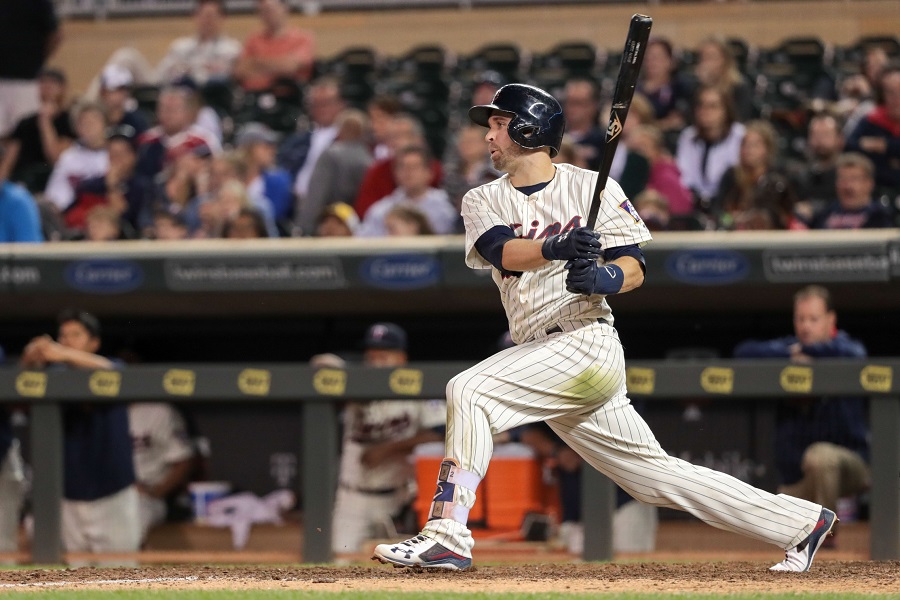 In the last couple of weeks, Derek Falvey and Thad Levine have been busy and things are about to get even busier. As we discussed yesterday, the Twins have until Friday night to offer arbitration to five players (Hector Santiago, Kyle Gibson, Brandon Kintzler, Ryan Pressly, and Eduardo Escobar). Be sure to stop by throughout the day to find out if any players were not tendered a contract. Two days after introducing Michael Cuddyer, LaTroy Hawkins and Torii Hunter as new Special Assistants to Baseball Operations, the Twins made official their signing of catcher Jason Castro. The three year, $24.5 million deal is the largest free agent contract handed out to a new Twins position player. In Wednesday's press conference, Derek Falvey acknowledged that Castro was "identified early on as an important target for us this offseason. He was somebody that we talked about from Day 1." On Thursday, George King of the New York Post tweeted the following: https://twitter.com/GeorgeAKingIII/status/804444002225364993 Rowson is apparently a very respected hitting man. He comes from the Yankees organization, but he held similar titles recently in the Cubs system too. You can learn more about him in the discussion on this forum. Now all the Twins need is a first base coach. They will likely want someone who can also work with outfielders, or the catchers. That said, news came out in the last couple of days that former Twins GM Terry Ryan has accepted a job as a Special Assignment scout with the Philadelphia Phillies. Ryan, of course, has been in the organization going back to 1986, 30 years. Likewise, former GM Bill Smith, who also has given over 30 years of service time to the Twins organization, was informed recently that his job with the Twins will be over in January when his contract is complete. The Winter Meetings officially start on Monday in Washington, DC, but teams will start arriving there on Sunday afternoon. As always, there will be a ton of rumors, this GM talking to that GM or that agent, and we’ll hear a bunch of them. However, it’s always a good reminder that these meetings are actually designed to have many meetings set up, official meetings, to discuss the business of baseball. College students will be there, hoping to get an interview and latch on with an organization. Big league, minor league (affiliated or independent) will be there. But it’s those side meetings that will garner the most attention. Brian Dozier will certainly be Topic #1 for the Twins rumor mill over the coming week. Will Falvey-Levine find a taker for the second baseman who hit 42 home runs a year ago? Will there actually be a trade? And, if Dozier is traded, does that mean that Jorge Polanco moves to second base? Would the Twins then be in the market for a shortstop at the Winter Meetings? But then, it all comes down to pitching. What will the new regime’s strategy be to bring in high-end pitching? How much can they get for Brian Dozier, but also will they be active in other trades? WIll they be active in free agency? Are there even starters to find in free agency? What about the bullpen? Will they look to add more bullpen arms? Will they choose to push some of the young flame-throwers? It’s going to be an interesting week, and I would venture to guess that with their new roles, Derek Falvey and Thad Levine will be among the most popular COB/GM combos for agents and executives alike to talk to. What if the Twins don’t actually make a Dozier trade or other moves during the Winter Meetings? I mean, this is one week in early December and there will be plenty of talent available next week, or the week after, or into January. So, it’s not a big deal. But the Winter Meetings provide the opportunity for in-person meetings to set the tone for deals, now, or in the near future. Also, next Thursday, the final day of the Winter Meetings, will be the Rule 5 draft. The Twins will have the first pick. With the Castro signing, they are currently at 40 men on their 40-man roster. They will either have to make a move next week to make room, or DFA someone to make room, if they want to make a pick. Maybe the best, big picture news this week was that there was a new Collective Bargaining Agreement finalized a day before the old one expired. There is a lot in our forums about the new CBA, so be sure to read more if you are interested. Here are a few more topics from our forums that you may enjoy contributing to: News came out last weekend that lefty Pat Dean, who the Twins DFAd last month, has signed with the KIA Tigers in Korea. He recently returned from Korea where he signed the deal. Adam Brett Walker, who was removed from the 40 man roster two weeks ago and claimed by his hometown Milwaukee Brewers, was DFAd by the Brewers this week. It will be interesting to see if he clears and stays in the Brewers organization, or if he is claimed by yet another team. The DFA/Limbo cycle can really stink. Logan Schafer signed a minor league deal with the Orioles. Chris Parmelee signed with the Oakland A’s. Dan Runzler signed with the Pirates. Brandon Warne gave report cards to all 40 members of the Twins 40-man roster in 2016. Find them all here. In the last week or so, we have had Q&As with several Twins minor leaguers including Travis Blankenhorn, Shane Carrier, and Jordan Balazovic. We’ve got more lined up as well. It’s never too early to start thinking about next year’s #1 overall pick in the draft. Baseball America released its Top 100 High School kids this week. Sam Carlson, a 6-4 right-hander from Burnsville who is committed to Florida is on the list. Be sure to check out our sister sites, Vikings Journal and Wild Xtra as well. Finally, we are starting to get a lot of questions on the 2017 Twins Prospect Handbook. I assure you that Cody Christie, Jeremy Nygaard and I are putting in a ton of hours and hope to have it available shortly after the holidays, in early January. Feel free to discuss anything in the comments below, and check out our forums for many more topics.
 -
Jordan Balazovic was one of the youngest players selected in the 2016 MLB draft when the Twins used their fifth-round pick in the right-handed pitcher. The youngster from the suburbs of Toronto is likely several years from potentially getting to the big leagues, but he is going to be one to watch in coming years. In September, I ranked him as my #38 Twins prospect, and frankly, after several conversations I will likely rank him higher in the 2017 Twins Prospect Handbook. Already 6-4, Balazovic has plenty of room to grow and gain strength. He only turned 18 after the season concluded. Image courtesy of Jon Tarr Jordan Balazovic was one of the youngest players selected in the 2016 MLB draft when the Twins used their fifth-round pick in the right-handed pitcher. The youngster from the suburbs of Toronto is likely several years from potentially getting to the big leagues, but he is going to be one to watch in coming years. In September, I ranked him as my #38 Twins prospect, and frankly, after several conversations I will likely rank him higher in the 2017 Twins Prospect Handbook. Already 6-4, Balazovic has plenty of room to grow and gain strength. He only turned 18 after the season concluded. Recently, Jordan Balazovic was kind enough to take some time to answer questions for us. Continue reading to Get To Know more about a very young, very intriguing pitching prospect in the Twins system. ------------------------------------------------------------------------- Seth Stohs (SS): Growing up in Ontario, I’m guessing that we can guess who your favorite team was to follow, right? Who were some of your favorite players? Jordan Balazovic (JB):Haha! Yes, my favourite team was the Toronto Blue Jays and also the New York Yankees. I have two favourite pitchers that I admire which are Noah Syndergaard and Aaron Sanchez.SS: What were some of the better memories of your high school baseball career? Did you play other sports or were you involved in other activities? JB: Well, high school baseball in Canada does compare to high school baseball in the States. I would play third base which was a lot of fun. Plus, I got to hit a little bit. Haha!SS: What was the recruitment process like for you out of high school. You had committed to Auburn, but did you have a lot of coaches talking to you? JB: Before Perfect Game in Jupiter, I didn't have a lot of schools talking to me. But I pitched pretty well at Perfect Game and then after that week I started to get a lot more interest. But it was between Missouri State and Auburn.SS: Did you have the chance to speak with many scouts before the draft? What was your interaction with the Twins scout? JB: I was speaking to quite a few teams at the time, and honestly, I thought I was going to be a Phillie. But a lot changes during the draft. You never know. Walt Burrows is the Canadian area scout, so he saw me a lot even when I was younger because he would come to the Ontario Blue Jays clubhouse. So he's seen me develop ever since I was 14, I believe. Once it got closer to the draft, he came over for a home visit with my family and I. It went really well. Felt like we have good chemistry and it wasn't awkward at all which was a very good signSS: The Twins took you in the fifth round. Was that about where you expected to be selected? How did you find out that you had been drafted? How busy was your phone at that moment? JB: I was told top 5 rounds by the team I was talking to before the draft, but once it got closer to draft day a couple team had me top 3 rounds. So I wasn't too sure where I was going to go at the time. I was watching the draft since day one. Then I was with my family Day 2 when I got the call from my agent saying I was going to be a Twin.SS: With the Auburn commitment, how difficult was the decision to sign with the Twins? JB: It was very difficult, but you never know if you will get the opportunity to play professional baseball again. It's been my dream ever since I started to play.SS: What has the adjustment like for you, from the high school game to the professional game, both on and off the field? JB: Honestly, it wasn't a big jump because with my travel ball team (Ontario Blue Jays) we would have a fall trip every year to play top universities. So I got to face better hitters which helped my development a lot and helped me this year in professional baseball.SS: You went through the Instructional League for the first time. What were you working on there or was it more about learning and getting more innings? JB: When I went to Instructional League, I was working on my arm angle and mechanics, but it's also a great learning experience with the coaching staff they had down there from higher levels.SS: At this very early stage in your career, what would you say are your biggest strengths? JB: My biggest strength would have to be the way I attack the strike zone, and I'm not afraid to face anybody.SS: What are the areas of your game that you would like to spend time working to improve? JB: I need to improve my slider and curve ball which were also things I was working on during Instructional League.SS: How has your offseason been so far? What do you do when you get away from baseball and training? JB: It's been really good! I've been working out everyday, trying to put on weight and muscle. And when I'm not doing that, I'm spending time with my family and friends.SS: Who are some of the people who have helped you get to this point in your career? JB: I would have to say my parents, both being very supportive, and my dad teaching me a lot about the game and help develop my game. A big part would have also been the Ontario Blue Jays.SS: Favorite Baseball movie? JB: Haha! That's a tough one, but I really enjoy Major League.A Big Thank You to Jordan Balazovic! Please feel free to comment or ask questions below. View full article
-
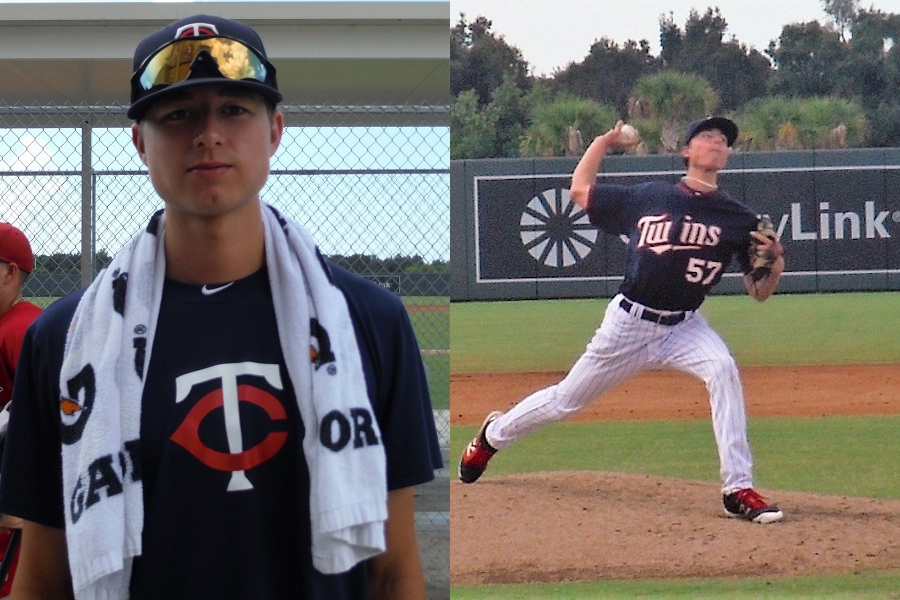 Recently, Jordan Balazovic was kind enough to take some time to answer questions for us. Continue reading to Get To Know more about a very young, very intriguing pitching prospect in the Twins system. ------------------------------------------------------------------------- Seth Stohs (SS): Growing up in Ontario, I’m guessing that we can guess who your favorite team was to follow, right? Who were some of your favorite players? Jordan Balazovic (JB):Haha! Yes, my favourite team was the Toronto Blue Jays and also the New York Yankees. I have two favourite pitchers that I admire which are Noah Syndergaard and Aaron Sanchez. SS: What were some of the better memories of your high school baseball career? Did you play other sports or were you involved in other activities? JB: Well, high school baseball in Canada does compare to high school baseball in the States. I would play third base which was a lot of fun. Plus, I got to hit a little bit. Haha! SS: What was the recruitment process like for you out of high school. You had committed to Auburn, but did you have a lot of coaches talking to you? JB: Before Perfect Game in Jupiter, I didn't have a lot of schools talking to me. But I pitched pretty well at Perfect Game and then after that week I started to get a lot more interest. But it was between Missouri State and Auburn. SS: Did you have the chance to speak with many scouts before the draft? What was your interaction with the Twins scout? JB: I was speaking to quite a few teams at the time, and honestly, I thought I was going to be a Phillie. But a lot changes during the draft. You never know. Walt Burrows is the Canadian area scout, so he saw me a lot even when I was younger because he would come to the Ontario Blue Jays clubhouse. So he's seen me develop ever since I was 14, I believe. Once it got closer to the draft, he came over for a home visit with my family and I. It went really well. Felt like we have good chemistry and it wasn't awkward at all which was a very good sign SS: The Twins took you in the fifth round. Was that about where you expected to be selected? How did you find out that you had been drafted? How busy was your phone at that moment? JB: I was told top 5 rounds by the team I was talking to before the draft, but once it got closer to draft day a couple team had me top 3 rounds. So I wasn't too sure where I was going to go at the time. I was watching the draft since day one. Then I was with my family Day 2 when I got the call from my agent saying I was going to be a Twin. SS: With the Auburn commitment, how difficult was the decision to sign with the Twins? JB: It was very difficult, but you never know if you will get the opportunity to play professional baseball again. It's been my dream ever since I started to play. SS: What has the adjustment like for you, from the high school game to the professional game, both on and off the field? JB: Honestly, it wasn't a big jump because with my travel ball team (Ontario Blue Jays) we would have a fall trip every year to play top universities. So I got to face better hitters which helped my development a lot and helped me this year in professional baseball. SS: You went through the Instructional League for the first time. What were you working on there or was it more about learning and getting more innings? JB: When I went to Instructional League, I was working on my arm angle and mechanics, but it's also a great learning experience with the coaching staff they had down there from higher levels. SS: At this very early stage in your career, what would you say are your biggest strengths? JB: My biggest strength would have to be the way I attack the strike zone, and I'm not afraid to face anybody. SS: What are the areas of your game that you would like to spend time working to improve? JB: I need to improve my slider and curve ball which were also things I was working on during Instructional League. SS: How has your offseason been so far? What do you do when you get away from baseball and training? JB: It's been really good! I've been working out everyday, trying to put on weight and muscle. And when I'm not doing that, I'm spending time with my family and friends. SS: Who are some of the people who have helped you get to this point in your career? JB: I would have to say my parents, both being very supportive, and my dad teaching me a lot about the game and help develop my game. A big part would have also been the Ontario Blue Jays. SS: Favorite Baseball movie? JB: Haha! That's a tough one, but I really enjoy Major League. A Big Thank You to Jordan Balazovic! Please feel free to comment or ask questions below.
 -
After more than 30 years in the organization, Bill Smith will not be back for the 2017 season. The news leaked via a tweet, but David Dorsey from the News Press in Ft. Myers has a story with some quotes from Smith who says he'll stay in the Ft. Myers area. The final quote of the story tells the tale: He'll stick with the organization through January. The timing of this news is interesting, just a day after we learned about Terry Ryan accepting a scouting position with the Phillies. While most fans will not speak well of Smith thanks to his time as the team's GM, he did a lot of good in the organization before and after those years. He's credited with the success of the Hammond Stadium improvements, and the building of the academy.He's credited with the improvements being made in the Dominican Republic. He also was the GM that OKd signing Miguel Sano, Jorge Polanco and Max Kepler in 2009. Of course, he was also the GM who signed Tsuyoshi Nishioka, Traded for JJ Hardy, but then traded him for Jim Hoey... and in general, he is (Right or wrong) blamed by many for the Twins fall from grace. Best wishes to Smith in his next phase, which may be retirement.
-
James Rowson, Twins hitting coach
Seth Stohs replied to Cory Engelhardt's topic in Minnesota Twins Talk
I'd never heard of him, but then again, that means absolutely nothing in terms of his qualifications. -
December is upon us. If you’re from the Upper Midwest, you have recently felt winter’s wrath. Some have had more snow than others. Some have had freezing rain. And temperatures have finally fallen. The calendar has changed. Baseball’s Hot Stove is upon us. December 1st was the deadline for reaching a new Collective Bargaining Agreement. On Wednesday evening, news came out that the players and the owners had reached an agreement on a new, five-year deal. There has not been a work stoppage in MLB since games resumed early in the 1995 season. It’s good to know it’s not something we need to worry about again until (at least) after the 2021 season. On Sunday night, executives from nearly all of the professional baseball teams - Major League, Minor League, Independent teams and more - will head to Houston. On Monday, baseball’s annual Winter Meetings will commence. You’ll definitely want to keep up with Twins Daily for any trade rumors or transactions. And you’ll want to familiarize yourself with our Free Agent Tracker. Image courtesy of Brad Rempel, USA Today December is upon us. If you’re from the Upper Midwest, you have recently felt winter’s wrath. Some have had more snow than others. Some have had freezing rain. And temperatures have finally fallen. The calendar has changed. Baseball’s Hot Stove is upon us. December 1st was the deadline for reaching a new Collective Bargaining Agreement. On Wednesday evening, news came out that the players and the owners had reached an agreement on a new, five-year deal. There has not been a work stoppage in MLB since games resumed early in the 1995 season. It’s good to know it’s not something we need to worry about again until (at least) after the 2021 season. On Sunday night, executives from nearly all of the professional baseball teams - Major League, Minor League, Independent teams and more - will head to Houston. On Monday, baseball’s annual Winter Meetings will commence. You’ll definitely want to keep up with Twins Daily for any trade rumors or transactions. And you’ll want to familiarize yourself with our Free Agent Tracker. Before then, the Twins have one more decision to make. On Friday night (December 2), teams need to determine whether or not to offer their arbitration-eligible players a contract for 2017. The Twins have to make that decision on five more players and the decisions aren’t necessarily as easy as we might think. -------------------------------------------------------------------------- If you haven’t already downloaded the Twins Daily Offseason Handbook, now is the right time! In its 57 pages, there is a chapter written by Nick on the arbitration-eligibles. There is also a lot of information on free agents, some trade scenarios and some special stories written by the Twins Daily founders. So download the Offseason Handbook today. It’s FREE, or you can choose whatever price you would like. --------------------------------------------------------------------------- Of course, in the Handbook you’ll notice that there are six players that the Twins needed to make an arbitration decision on. Now there are just five. Two weeks ago, the Twins made their decision on 3B Trevor Plouffe. Derek Falvey and Thad Levine outrighted the veteran, thus removing him from the 40-man roster. When he cleared waivers, he became a free agent. Here are the five players that Falvey and Levine still have to make the decision on, or at least make those decisions official. STARTING PITCHERS HECTOR SANTIAGO The left-hander came to the Twins at the July trade deadline in exchange for Alex Meyer and Ricky Nolasco. He really struggled in his first month with the Twins, then pitched pretty mediocrely in September. He was an All-Star in 2015. From 2012-2015, he posted ERAs between 3.30 and 3.75. He made 33 starts in 2016 and threw 182 innings. He will turn 29 in two weeks. 2016 Salary - $5.0 million, Twins Daily Projection for 2017 - $8.0 million. MLB Trade Rumors Projection for 2017 - $8.6 million KYLE GIBSON The right-hander was the Twins Pitcher of the Year in 2015 when he went 11-11 with a 3.84 ERA in 194.2 innings. He fought a shoulder injury in 2016 and fell to 6-11 with a 5.07 ERA. The Twins first-round pick in 2009 turned 29 since the season ended. 2016 Salary - approximately $0.55 million Twins Daily Projection for 2017 - $2.5 million MLB Trade Rumors Projection for 2017 - $3.5 million These two starters would typically both be easy choices to bring back.Under a previous regime, both would have been obvious choices to tender. However, with Falvey and Levine, it’s hard to know what their thoughts are on these veterans. We also don’t know what their blueprint is for the offseason, what they would hope to do in free agency, and who they might try to acquire in a trade (specifically a Brian Dozier trade). It all ties together, but I would personally bring back both because having depth at starting pitcher, quality depth, is a good thing. RELIEF PITCHERS BRANDON KINTZLER The former St. Paul Saints pitcher spent parts of 2010 through 2015 in the big leagues with the Brewers. He missed most of 2015 with a knee injury. The Twins signed him to a minor league contract a year ago. He spent a month in Rochester before coming up and becoming the Twins most reliable reliever. He even did well as the team’s closer. 2016 Salary - $1.1 million Twins Daily Projection for 2017 - $2.5 million MLB Trade Rumors Projection for 2017 - $2.2 million RYAN PRESSLY The Twins selected Pressly out of the Red Sox organization in the 2012 Rule 5 draft. He spent all of 2013 with the big league club - as per the Rule 5 rules. He was in the minor leagues in 2014 until late July. He was pitching very well in 2015 until an injury shut down his season in early July. He was one of the most used relievers in the league in 2016. He touches 98 and 99 and has a good breaking ball. He will turn 28 years old in two weeks. 2016 Salary - approximately $0.55 million Twins Daily Projection for 2017 - $1.5 million MLB Trade Rumors Projection for 2017 - $1.1 million The Twins have a lot of relief pitchers in the upper levels of the minor leagues, names we’ve been reading and hearing about for a couple of years. They’ll get there at some point. Glen Perkins is under contract, and he’ll likely be back at some point in 2017. But at the end of the day, these two are easy decisions to add because Kintzler has been reliable when healthy, and Pressly still has a lot of potential. HITTERS EDUARDO ESCOBAR After playing very well in 2014 and 2015 once given an everyday gig, Escobar was the shortstop heading into the 2016 season. Unfortunately for him, he was hurt very early in the season and when he returned Eduardo Nunez had taken off. Escobar was back on the bench and was unable to get things going. Escobar will turn 28 in early January. 2016 Salary - $2.15 million Twins Daily Projection for 2017 - $3.5 million MLB Trade Rumors Projection for 2017 - $2.9 million Will Brian Dozier be back? Depending on that, where will Jorge Polanco play. With no Plouffe, how much can they rely upon Miguel Sano at third base? Having a solid veteran who can play three infield positions, including shortstop, will be very important. So there you have it. The five players that the Twins need to either tender or non-tender a contract to by Friday night are mentioned above. Discuss below what you think the Twins should do in each case. Be sure to explain why. View full article
- 59 replies
-
- 1
-
-
- hector santiago
- kyle gibson
- (and 3 more)
-
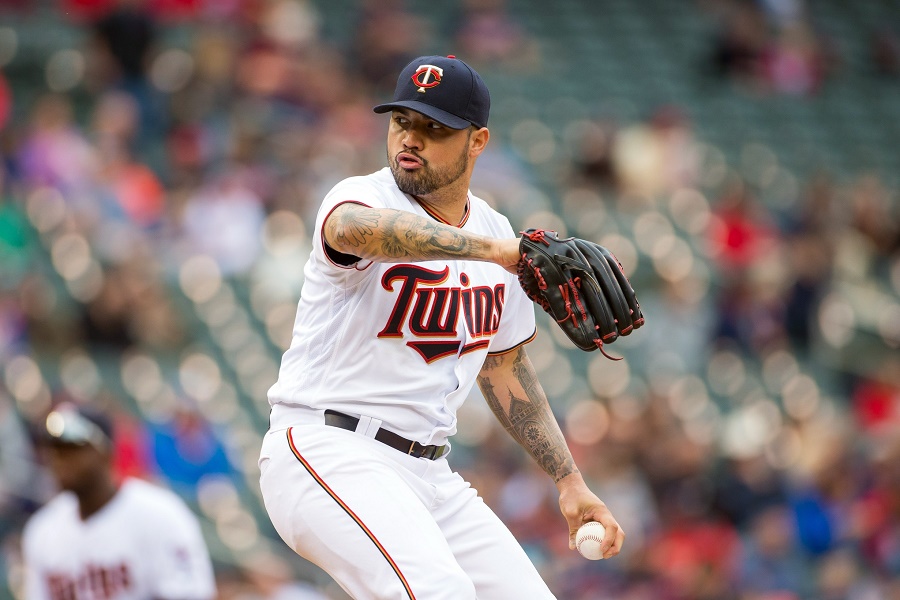 Before then, the Twins have one more decision to make. On Friday night (December 2), teams need to determine whether or not to offer their arbitration-eligible players a contract for 2017. The Twins have to make that decision on five more players and the decisions aren’t necessarily as easy as we might think. -------------------------------------------------------------------------- If you haven’t already downloaded the Twins Daily Offseason Handbook, now is the right time! In its 57 pages, there is a chapter written by Nick on the arbitration-eligibles. There is also a lot of information on free agents, some trade scenarios and some special stories written by the Twins Daily founders. So download the Offseason Handbook today. It’s FREE, or you can choose whatever price you would like. --------------------------------------------------------------------------- Of course, in the Handbook you’ll notice that there are six players that the Twins needed to make an arbitration decision on. Now there are just five. Two weeks ago, the Twins made their decision on 3B Trevor Plouffe. Derek Falvey and Thad Levine outrighted the veteran, thus removing him from the 40-man roster. When he cleared waivers, he became a free agent. Here are the five players that Falvey and Levine still have to make the decision on, or at least make those decisions official. STARTING PITCHERS HECTOR SANTIAGO The left-hander came to the Twins at the July trade deadline in exchange for Alex Meyer and Ricky Nolasco. He really struggled in his first month with the Twins, then pitched pretty mediocrely in September. He was an All-Star in 2015. From 2012-2015, he posted ERAs between 3.30 and 3.75. He made 33 starts in 2016 and threw 182 innings. He will turn 29 in two weeks. 2016 Salary - $5.0 million, Twins Daily Projection for 2017 - $8.0 million. MLB Trade Rumors Projection for 2017 - $8.6 million KYLE GIBSON The right-hander was the Twins Pitcher of the Year in 2015 when he went 11-11 with a 3.84 ERA in 194.2 innings. He fought a shoulder injury in 2016 and fell to 6-11 with a 5.07 ERA. The Twins first-round pick in 2009 turned 29 since the season ended. 2016 Salary - approximately $0.55 million Twins Daily Projection for 2017 - $2.5 million MLB Trade Rumors Projection for 2017 - $3.5 million These two starters would typically both be easy choices to bring back.Under a previous regime, both would have been obvious choices to tender. However, with Falvey and Levine, it’s hard to know what their thoughts are on these veterans. We also don’t know what their blueprint is for the offseason, what they would hope to do in free agency, and who they might try to acquire in a trade (specifically a Brian Dozier trade). It all ties together, but I would personally bring back both because having depth at starting pitcher, quality depth, is a good thing. RELIEF PITCHERS BRANDON KINTZLER The former St. Paul Saints pitcher spent parts of 2010 through 2015 in the big leagues with the Brewers. He missed most of 2015 with a knee injury. The Twins signed him to a minor league contract a year ago. He spent a month in Rochester before coming up and becoming the Twins most reliable reliever. He even did well as the team’s closer. 2016 Salary - $1.1 million Twins Daily Projection for 2017 - $2.5 million MLB Trade Rumors Projection for 2017 - $2.2 million RYAN PRESSLY The Twins selected Pressly out of the Red Sox organization in the 2012 Rule 5 draft. He spent all of 2013 with the big league club - as per the Rule 5 rules. He was in the minor leagues in 2014 until late July. He was pitching very well in 2015 until an injury shut down his season in early July. He was one of the most used relievers in the league in 2016. He touches 98 and 99 and has a good breaking ball. He will turn 28 years old in two weeks. 2016 Salary - approximately $0.55 million Twins Daily Projection for 2017 - $1.5 million MLB Trade Rumors Projection for 2017 - $1.1 million The Twins have a lot of relief pitchers in the upper levels of the minor leagues, names we’ve been reading and hearing about for a couple of years. They’ll get there at some point. Glen Perkins is under contract, and he’ll likely be back at some point in 2017. But at the end of the day, these two are easy decisions to add because Kintzler has been reliable when healthy, and Pressly still has a lot of potential. HITTERS EDUARDO ESCOBAR After playing very well in 2014 and 2015 once given an everyday gig, Escobar was the shortstop heading into the 2016 season. Unfortunately for him, he was hurt very early in the season and when he returned Eduardo Nunez had taken off. Escobar was back on the bench and was unable to get things going. Escobar will turn 28 in early January. 2016 Salary - $2.15 million Twins Daily Projection for 2017 - $3.5 million MLB Trade Rumors Projection for 2017 - $2.9 million Will Brian Dozier be back? Depending on that, where will Jorge Polanco play. With no Plouffe, how much can they rely upon Miguel Sano at third base? Having a solid veteran who can play three infield positions, including shortstop, will be very important. So there you have it. The five players that the Twins need to either tender or non-tender a contract to by Friday night are mentioned above. Discuss below what you think the Twins should do in each case. Be sure to explain why.
 -
Agreed on all counts.
-
According to Ken Rosenthal, former Twins GM Terry Ryan is going to his roots as a special assignment scout by the Phillies today.
-
Bringing Back The Band... And That's Just Fine
Seth Stohs replied to Seth Stohs's topic in Twins Daily Front Page News
It's a way of thinking in every organization. It's wanting players who are passionate about the team, who want to give back, who believe in the process from scouting to player development and all the way up to the big leagues. They all want to bring championships back to Minnesota. They believe in team. They have had a lot of respect and success. They want players to work hard and push each other while cheering for each other. Can't imagine there is an organization in baseball that wouldn't want those things. Also, it's very likely that these three have had these types of conversations with Falvey and Levine and grasp their thinking and their path. These guys won't be decision-makers. They'll each be small voices while learning the other side of the game, the front office side.- 81 replies
-
- 2
-
-
- michael cuddyer
- torii hunter
- (and 3 more)
-
Bringing Back The Band... And That's Just Fine
Seth Stohs replied to Seth Stohs's topic in Twins Daily Front Page News
Adding a Chief Baseball Operator whose job is to set the ton and the plan and the strategy for the whole organization is new. They have a new GM. Those are two pretty huge positions - some might say the biggest - in the baseball operations of the organization. Everyone underneath will have to adjust to the new thinking or not be here this time next year.- 81 replies
-
- 1
-
-
- michael cuddyer
- torii hunter
- (and 3 more)
-
Bringing Back The Band... And That's Just Fine
Seth Stohs replied to Seth Stohs's topic in Twins Daily Front Page News
Again, very well put. It's a new era and fans seem to have the same concerns. Sometimes it's as if every other organization does stuff like this, but when the Twins do it it's hated on by Twins fans. It just makes no sense. Again, they will have multiple roles, and they will have a voice that is heard. But, they aren't going to be heard more than Falvey or Levine, or the analytical groups or the scouts or those that have been doing their jobs. The big thing is it gives them an opportunity to learn what happens behind the scenes, in the front office.- 81 replies
-
- 1
-
-
- michael cuddyer
- torii hunter
- (and 3 more)
-
Bringing Back The Band... And That's Just Fine
Seth Stohs replied to Seth Stohs's topic in Twins Daily Front Page News
Very well summarized... and all three have a passion for helping the Twins organization and giving back. That's a good thing. -
Bringing Back The Band... And That's Just Fine
Seth Stohs replied to Seth Stohs's topic in Twins Daily Front Page News
They spelled it out, though it's certainly subject to change. They talked about them going out and doing some amateur scouting, talking to potential draft picks, their families, etc. They will be brought into the discussions on transactions and trades. They will get into the business side, and learn more about the analytics. From my interpretation of Falvey saying that there wasn't a part of the baseball operations department that they won't touch, they'll be learning a lot and will be asked a lot of questions for another perspective. Like I said, this isn't your typical former player shows up for a week at spring training in a uniform and goes to Twins Fest and maybe another engagement. These are not token positions. -
Bringing Back The Band... And That's Just Fine
Seth Stohs replied to Seth Stohs's topic in Twins Daily Front Page News
Again, on-field-wise, they will be in big league spring training for like 2 weeks. That's about it. The impact will be about someone to talk to. Not about mechanics. That's coming through Falvey and the coaching staff.- 81 replies
-
- 2
-
-
- michael cuddyer
- torii hunter
- (and 3 more)
-
Bringing Back The Band... And That's Just Fine
Seth Stohs replied to Seth Stohs's topic in Twins Daily Front Page News
They aren't being brought in to be hitting coaches. They are buying in to Falvey's plan and will go about their jobs, whatever dozens of things that likely means, with that in mind.
