Seth Stohs
-
Posts
25,909 -
Joined
-
Last visited
-
Days Won
109
Content Type
Profiles
News
Minnesota Twins Videos
2026 Minnesota Twins Top Prospects Ranking
2022 Minnesota Twins Draft Picks
Minnesota Twins Free Agent & Trade Rumors, Notes, & Tidbits
Guides & Resources
2023 Minnesota Twins Draft Picks
The Minnesota Twins Players Project
2024 Minnesota Twins Draft Picks
2025 Minnesota Twins Draft Pick Tracker
2026 Minnesota Twins Draft Tracker: Picks & Bonuses
Forums
Blogs
Events
Store
Downloads
Gallery
Everything posted by Seth Stohs
-
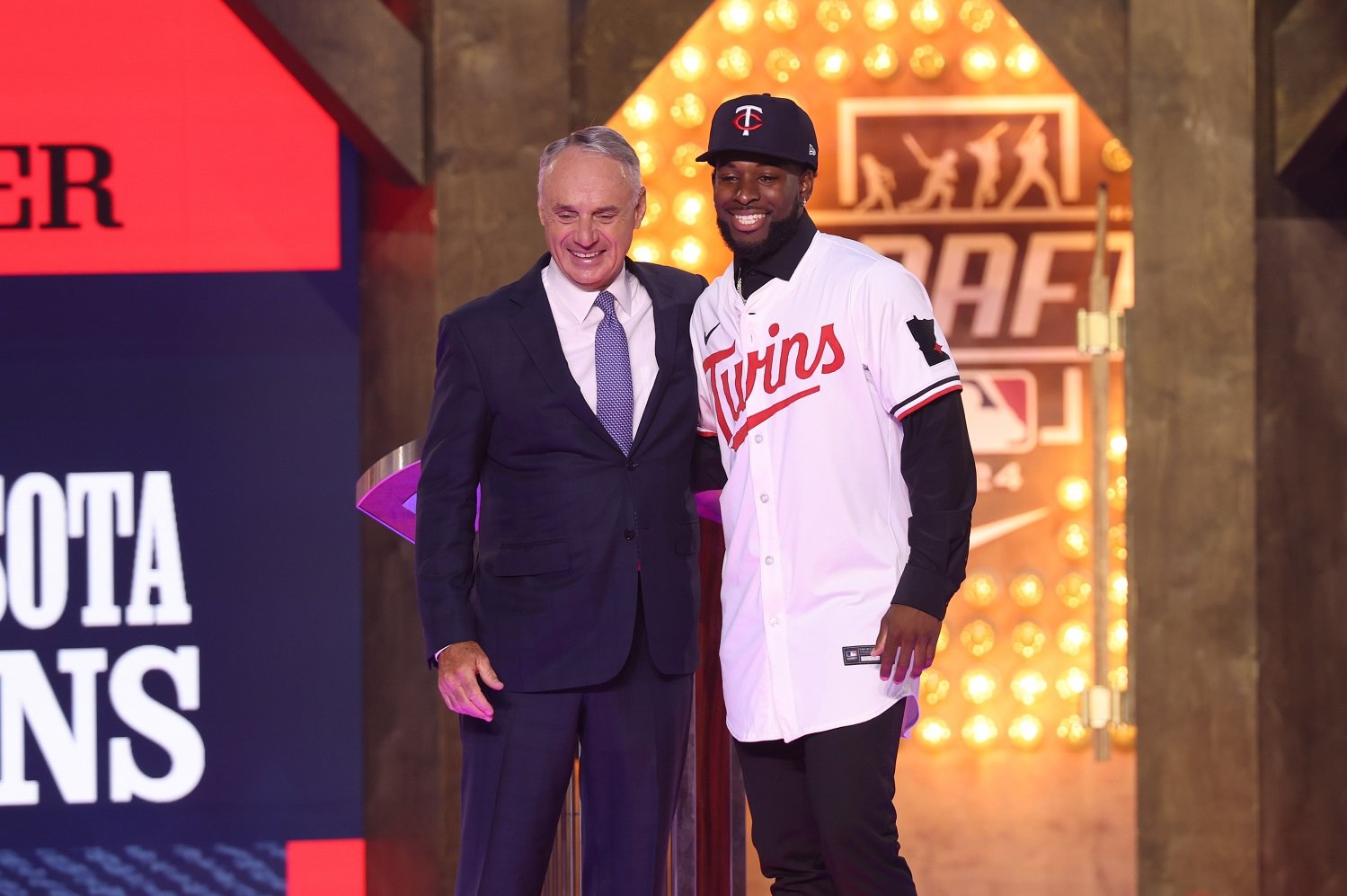 It was a long day on Sunday, even before Day 1 of the 2024 MLB Draft got underway deep in the heart of Texas. The Twins were busy making four draft selections over the next four hours. However, Sean Johnson seemed very happy about the day. The Twins last had four picks on Day 1 of the MLB Draft in 2016. It was the final draft with Deron Johnson as the team’s scouting department. The Twins uniquely drafted four high school bats that night. They took Alex Kirilloff in the first round. In the second round, they took catcher Ben Rortvedt. Then, after the second round, they had two bonus picks and took outfielder Akil Baddoo and infielder Jose Miranda. Impressively, all four have made it to the big leagues, and each has had some big moments. On Day 2, they took right-handed pitchers Griffin Jax and Jordan Balazovic. Then, on Day 3, they added right-handed pitchers Tyler Wells and Sean Poppen, as well as catcher Caleb Hamilton. In addition, they selected Greg Deichmann, Matt Wallner, and Brent Rooker were selected late on Day 3 but did not sign. Director of Scouting Sean Johnson met with the media after their four picks were made. “We knew we were in for a long night!” He continued, “There were some spots we anticipated being a little tricky to navigate, but our group feels good about how things played out. All four players we took tonight we really love. So, that always feels good on the front end. It couldn’t have gone much better from what we thought we were going to get coming into the night and what we ended up with. That’s a rare feeling, so whenever that happens, we’ll take it.” The talk before the draft was that this draft’s strength was college hitters. In previous weeks and interviews, Johnson said they may have to lean into the draft’s strength. And that is generally how Day 1 of this draft went. And the Twins' first three picks were college bats. “I think we’ve learned over the years that you can never fully have a feel for how the draft is going to play out. There are always surprises that you can’t see coming. That happened at various points tonight. That’s just the way it goes. We just try to stick to our plan of attack and take the players we believe in and our scouts believe in, and that is holding up on the board. We ended up with three bats, and that’s not unusual for us.“ Looking back, three of the Twins' first four picks in 2023 were bats. They took Walker Jenkins, Luke Keaschall, and Brandon Winokur. In the Covid-shortened draft of 2020, the Twins had for picks. They drafted Aaron Sabato, Alerick Soularie, and Kala’i Rosario. In 2019, five of their first six picks were hitters (Keoni Cavaco, Matt Wallner, Spencer Steer, Seth Gray, and Will Holland). Trevor Larnach, Ryan Jeffers, and DaShawn Keirsey were the first three Twins draft picks in 2018. And again, that 2016 draft saw the Twins select prep hitters with their first four picks. Let’s talk about the four players the Twins drafted on Sunday night. The Twins used the 21st overall pick to select Kansas State infielder Kaelen Culpepper. Culpepper was in Texas and was quite emotional when the Twins drafted him. Tears welled up in his eyes. He gave big hugs to his parents and walked to the stage wearing a Twins jersey. It was important for him to be at the draft, even if it wasn’t always comfortable. He said, “For one thing, it’s hot. Very hot. But when I heard my name being called, a jolt of emotions ran through my body. I didn’t know what to do. It was all Excitement, joy, and tears, all real. I came a long way, a journey, just to get here. Looking back on it, it’s amazing. I’m just really excited.” However, he was somewhat surprised to hear that the Twins took him. “The only interest I felt was when I met with them at The Combine. That was about it. I was pretty shocked, but I’m also really happy. I’m excited to see what the future holds.” When Sean Johnson was told that, he responded. “That’s probably fair, but some of that’s just us trying to lay low a little bit and not tip our hand. I think Royce said that, too, last fall. He was like, ‘I didn’t know they were going to take me. I didn’t even know if they liked me.’ We absolutely loved him. So there’s some gamesmanship to all of this. We did connect at The Combine. We really enjoyed the interview. They give us extra time slots for players that we want to talk to more. So we spent an hour with him. Really enjoyed the time we got with him. We had a lot of background checks on Kaelen, and everyone across the board liked the way he approached the game of baseball and who he was as a person.” Culpepper starred last summer for Team USA. He’s also had some of his best moments and best streaks in big games. Culpepper noted, “I think when you’re playing for something bigger than yourself, it means a lot more, especially the games. I like playing on the biggest stages.” Johnson contacted a familiar person to get feedback on Culpepper and others. “Going back to last summer and the USA team, a lot of glowing reviews from the coaching staff included Brooks Lee’s dad, who was the head coach of that club. He really vouched for his character and the way he went about his business.” ‘ Asked about himself and his game, Culpepper said, “I consider myself a five-tool player. Definitely speed. I want to always be a guy that steals maybe 40, even 50 bases. There’s always a willingness to get faster.” He’s just trying to be more consistent. While the Twins have had their eyes on Culpepper for a long time, he was not heavily recruited out of Memphis. Kyle DeBarge, their Competitive Balance pick, was a relative unknown out of high school, and Billy Amick, the Twins second-round pick, is a guy they have been watching since high school. According to Johnson, These players aren’t all on a linear path in their development. You just have more comfort in a player who has hit for a long period of time. Sometimes, you have to be opportunistic on players who just had a good year or two. It’s something we discuss, we measure, and we try to quantify. It’s really hard. So we always lean into the players we know best, on and off the field. I think that’s just us trying to stay disciplined in our approach.” After Culpepper, the Twins took another smallish shortstop in Kyle DeBarge from Louisiana-Lafayette. He turns 21 years old today. He’s just 5-9 but probably best described as a “ballplayer.” That said, he put up some impressive Slugging numbers in Lafayette. DeBarge was a three-year starter for the Ragin' Cajuns. This year, he hit .356/.418/.699 (1.117) with 19 doubles, three triples and 21 homers. Those first two picks are contact-type shortstops. “It’s something we certainly value. It’s very difficult for our player development to teach guys to swing at the right pitches and control the strike zone. So we usually lean into those types of performers.” But can they stick at shortstop? Sean Johnson doesn’t worry about that kind of stuff.“ I don’t get hung up on where they’re going to end up. I know we have to talk about where they think they’re going to play. I think all three (including Amick) have a chance to stay in the dirt. I think Culpepper and DeBarge have good chances to play shortstop, but if they have to shift to second base or third base, it’s a lot like Brooks Lee. We didn’t take Lee because we thought he was a shortstop. We thought he could hit. That’s really what drives our decisions on night one. We want a player we believe can hit and play multiple positions. It really is in line with how Rocco (Baldelli) deploys his roster. On a nightly basis, it’s nice to get him potential pieces that can play around the diamond. That’s always a good thing for the way our roster is constructed.” Billy Amick just won a College World Series title with Tennessee. He profiles as more of a power hitter. Johnson noted, “ I think we looked at Billy’s overall track record of performance. He was a good performer at Clemson. Then he was on this decorated Tennessee team that was full of really good hitters. You look at his numbers, and the underlying numbers, beyond the stat sheet, and we just really feel good about his swing and his chance to be offensive, and we were really glad he was still on the board at 60.” He spent two seasons at Clemson. His freshman year, he played in nine games and went 2-for-19 with 11 strikeouts. As a sophomore, he hit .413/.464/.773 (1.236) with 17 doubles and 13 home runs. This season, in 65 games, he hit .306/.387/.639 (1.026) with 14 doubles and 23 home runs. And with their competitive balance pick, they selected long, lanky lefty Dasan Hill. He is listed at 6-5 and 165 pounds. He is drafted out of Grapevine High School in Texas. It’s the same high school that former Twins prospect Mason Melotakis attended. According to Johnson, “We saw Dasan Hill a lot. We’ve seen him since last summer. He made a nice jump from last summer to this spring. Our area scout, Trevor Brown, saw him pitch at least eight times this spring. So we had a lot of looks. He was Trevor Brown’s bullet guy. We had good belief from the intel we received from our area scout, which we lean toward. He’s got a chance with four pitches. He has present velocity. We think once we get him in our system, we can do a lot physically and develop his pitches. That pick was a nice way to end the day today.” Hill has a nice fastball, which actually improved throughout the year. He’s consistently in the low 90s and reached the mid-90s. He also throws two different breaking balls that have the potential to be very good. He’s also continuing to work on a changeup, though he didn’t need to use it in high school. That will become a very important pitch for him in professional baseball. And again, with his size, he’s got room to get bigger and stronger as he continues to develop and mature. On Day 2, the Twins will make eight selections. The day will start in the third round and will go until the 10th round is complete. On Tuesday, teams will make their 11th through 20th-round picks.
- 12 comments
-
- 7
-

-

-
- sean johnson
- kaelen culpepper
- (and 4 more)
-
 Happy MLB Draft Day to all who celebrate. Be sure to keep up with everything draft related here at Twins Daily, at Brewer Fanatic and at North Side Baseball. Image courtesy of © Kinfay Moroti/The News-Press USA Today Network-Florida, Matt Blewett, USA Today. I love drafts. I can eat up any and all content related to the draft. I’ve read through JD Cameron’s Consensus Big Board. I’ve been watching the Destination: The Show episodes with draft conversation That probably doesn’t surprise anyone reading this. What might surprise you is that I love watching pretty much all drafts. I don’t really watch much college football, and aside from being a Minnesota Vikings fan, my other favorite teams are my fantasy teams. However, I can watch the whole NFL draft, all seven rounds. I don’t watch college basketball, and I barely watch any NBA games. However, I can watch the two rounds of the NBA draft. I don’t watch the NHL. I don’t watch college hockey. I don’t watch the USHL, and I certainly don’t watch the European leagues. But I do enjoy following the NHL draft. Maybe that’s because three high school players from the town I live in have been drafted in the past three NHL drafts. There were two kids from the same school that I thought could be drafted in 2024. And, it’s fun seeing any Minnesotans get drafted. I’m pretty sure I even retweeted the Lynx WNBA picks and the Minnesota PWHL team’s draft picks. And no, no watching either of those! I don’t know what it is. I think a big part of it is seeing the excitement and enthusiasm of seeing a player hear his name and fulfill a big dream is exciting. Seeing the players’ families around them, the hugs, the tears, the interviews. It’s always so exciting. But baseball’s annual draft is, of course, my favorite. In May, I passed the 20 years of blogging mark, and following the minor leagues and prospects have always been something I enjoyed. But I also loved following drafts. I remember playing a Babe Ruth ball game, wearing our ugly puke yellow/brown uniforms, and hearing that the Twins had drafted Texas A&M shortstop Chuck Knoblauch. He quickly became one of my favorite players to follow, and almost as quickly found himself on the 1991 Twins Opening Day roster and winning his first World Series championship. In 1990, everyone was talking about Todd Van Poppel. He fell in the draft because of dollars and his comments that he would not play for a team as bad as the Atlanta Braves. I think Atlanta did pretty well with that Larry Jones pick. The Twins picked RHP Todd Ritchie, a high school pitcher from Texas, like Van Poppel. In fact, when they faced each other, Ritchie was the winner. The Twins have had some really strong first round picks the past few decades. Joe Mauer is obviously at the top of that list. Ranking the Twins 1st Round Picks by bWAR (only those that signed with the Twins): 1.) Joe Mauer (2001): 55.2 2.) Torii Hunter (1993): 50.7 3.) Chuck Knoblauch (1989): 44.6 4.) Jay Bell (1984): 37.1 5.) Denard Span (2002): 27.9 6.) Byron Buxton (2012): 23.4 7.) Michael Cuddyer (1997): 17.8 8.) Kyle Gibson (2009): 15.8 9.) Jose Berrios (2012): 14.7 10.) Aaron Hicks (2008): 13.5 Other Successful Picks include: Matt Garza, Todd Walker, Mark Redman, Ben Revere. Glen Perkins was the 22nd overall pick in the 2004 draft. He pitched in three All Star games. Trevor Plouffe had a nice, solid Twins career. Of course, several players are still active and early in their careers. Players like Royce Lewis, Brent Rooker, Matt Wallner, Alex Kirilloff, Brooks Lee, and Trevor Larnach have all contributed. Rooker played in the 2023 All Star game and is hitting again this year with Oakland. The beauty of the draft is that scouting is not a science. Scouts are amazing. In many cases, they are following, taking notes on players when they are 15-16 years old and maybe they get drafted at age 18, and maybe it’s at 21 or 22. They are building relationships with the players, the families, coaches. They have seen it all, and driven many miles on dark, desolate roads in the middle of nowhere and dealing with traffic in metro areas. Consider, in just over 60 years of the June MLB draft, only four #1 overall picks have made the Hall of Fame. Next Sunday, Joe Mauer will join Harold Baines, Chipper Jones and Ken Griffey Jr. Remember when the Padres took Matt Bush #1 overall and Justin Verlander went #2? Danny Goodwin was twice the top pick and you have to be really deep into baseball history to know that name. With the #2 overall pick, the Twins have selected Byron Buxton (23.4 bWAR) and Adam Johnson (-1.1 bWAR). With the #3 overall pick, the Twins have taken Dave McCarty (-2.1 bWAR) and Willie Banks (1.0 bWAR). With the #4 overall pick, the Twins have selected Bryan Oelkers (-0.9 bWAR) and Kohl Stewart (0.2 bWAR). Kohl Stewart was an incredible quarterback in high school and had a full ride to Texas Tech to play football. But he also had a great arm. It wasn’t a stretch at all for the Twins to take him with the #4 pick. So, does that mean the Twins should avoid high school star quarterbacks? They could wind up with a Stewart-like career (which, by the way included a couple of seasons in the big leagues. They could wind up with Bubba Starling, who go a few ABs with the Royals. Or, they could get a first-ballot Hall of Famer like Joe Mauer. Twins fans are incredibly excited about last year’s top pick, Walker Jenkins. He was taken with the #5 overall pick. The other times the Twins have had the #1 overall pick? Nick Gordon in 2014, and BJ Garbe in 1999. If you will be paying attention to the MLB Draft (starting tonight, ending Tuesday afternoon), you will definitely want to bookmark JD Cameron’s Consensus Big Board. He’s got mini-profiles on the top 187 players available in the draft (when consolidating many of the most reliable sources in the industry). But even “the industry” isn’t always right. It is really hard to get to the big leagues, much less stick. So many things can happen. Remember the 2018 MLB draft. With the 59th overall pick, the Minnesota Twins selected Ryan Jeffers, a catcher from UNCW (UNC at Wilmington). As the commentators on MLB Network tried to talk about the pick, they acknowledged that Jeffers wasn’t on most Top 200 draft prospect lists. I believe I remember - and you can correct me if I’m wrong - there was one Top 500 draft prospect list that he wasn’t on. But the Twins absolutely loved him. His bat, approach, power potential. His smarts. But they also saw potential with him defensively that most in The Industry didn’t see. He appeared much higher on the Twins board. They were completely convicted in taking the backstop. That doesn’t always mean that they’re right. There have likely been other picks that they made that were looked at as reaches that didn’t pan out. If you were to re-draft the 2018 draft based on what we know now, where would Jeffers be selected. A catcher who can be adequate behind the plate and hit too? Below is where all players drafted in the 2018 draft, who signed, rank by bWAR (fWAR in parentheses). 2018 Draft by bWAR (through Friday games): Nico Hoerner (24) - 13.0 (12.9) Steven Kwan (163) - 12.5 (11.9) Jeremy Pena (102) - 10.9 (7.8) Logan Gilbert (14) - 9.8 (10.7) Tarik Skubal (255) - 9.5 (10.2) Cal Raleigh (90) - 9.2 (10.7) Shane McClanahan (31) - 8.7 (7.9) Brady Singer (18) - 8.4 (9.4) Ryan Jeffers (59) - 7.2 (6.8) Brendan Donovan (213) - 7.2 (4.9) Jonathan India (5) - 6.8 (7.5) Lars Nootbar (243) - 6.7 (7.3) Joe Ryan (210) - 6.1 (7.5) Kyle Bradish (121) - 6.1 (5.8) Drew Rasmussen (185) - 6.0 (5.7) Jarren Duran (220) - 6.0 (5.4) Brice Turang (21) - 5.7 (2.3) The Twins have four picks in the top 70 picks tonight, and we are going to try to find out as much as we can about each, and we’re going to cheer them on and hope for the best. Will all four make the big leagues? How many will be able to get five (or ten?) years of service time? Will injuries be a factor? I don’t know about you, but I’m excited to find out! No Parker for Twins Of note, in the 2023 draft, the Twins selected 1B/OF Sam Parker out of high school in Georgia. He didn't sign and instead went to Chipola. With recent rule changes, there has been a return of the draft-and-follow. In other words, the Twins could have let him go to Chipola and then tried to work out a deal to bring him into the organization before the 2024 draft. Well, the Twins and Parker were unable to reach an agreement, so he will remain in college. He will also be eligible to be drafted again this year since he went to a two-year school. All About the Helium Recently, the Twins released 2019 top draft pick Keoni Cavaco. He had been the 13th overall pick in that draft. He struggled that summer, and then lost a full development season in 2020. Some may say that he was a "helium pick" that year. Simply put, he wasn't an obvious first round pick and really came on strong his senior year and moved up draft boards late. So, should the Twins never draft a "helium" guy again? I would certainly hope no organization would ever think like that. That's like saying the Tsuyoshi Nishioka didn't pan out so the Twins should never sign a player from Japan again. It's a ridiculous thought, and one person's results have nothing to do with another's. What to expect with pick #21? Last year, the 21st overall pick was the Cardinals. They took OF Chase Davis out of the University of Arizona. A year earlier, the Mariners selected infielder Cole Young with the 21st pick. He played in Saturday's Futures Game. The Cubs took lefty Jordan Wicks from Kansas State in 2021, and he debuted in 2023. Jordan Walker was the Cardinals pick, 21st overall, in the 2020 draft. In 2019, the Braves selected infielder Braden Shewmake from Texas A&M. The Brewers took prep shortstop Brice Turang with the 21st pick in 2018. Fellow Brewer DL Hall was the 21st overall pick, by the Orioles in 2017. OK, not going to go through all of the #21 overall picks. The Twins who have been picked with the 21st overall pick are Alex Wimmers in 2010 and Matt Moses in 2003. Wimmers had been the Big 10 Pitcher of the Year in 2010. He fought injuries and sometimes control issues as a minor leaguer, and got limited opportunity out of the Twins bullpen. Moses was selected, and after a more thorough physical, he was found to have a hole in his heart. It was surgically fixed, but Moses never reached the big leagues. The Twins also drafted catcher Jason Varitek with the 21st overall pick in the 1993 draft out of Georgia Tech, but he didn't sign. Anyone remember Dale Soderholm, a shortstop from Coral Park High School in Miami? The Twins made him the #21 overall pick in 1971. Other names you might recognize who were taken 21st overall include: Rick Sutcliffe, Atlee Hammaker, Todd Worrell, Jake Westbrook, Gorman Thomas, and Ian Kennedy. Other #21 picks Twins should should remember include Jason Tyner (1998, Mets) and Boof Bonser (2000, Giants). Edina High School's Tom Nevers was the #21 overall pick in 1990 by the Astros. In general, you're certainly not going to get a 'sure thing' drafting 21st overall, but that doesn't mean they can't or won't either. There will be high school players hoping to be bought out of a college commitment that slide. And there will be college hitters who may have a couple of solid tools. View full article
- 3 replies
-
- 1
-
-
- ryan jeffers
- todd ritchie
- (and 5 more)
-
Draft Day is Here! Scouting, Science, and the Complete Unknown
Seth Stohs posted an article in Twins
 I love drafts. I can eat up any and all content related to the draft. I’ve read through JD Cameron’s Consensus Big Board. I’ve been watching the Destination: The Show episodes with draft conversation That probably doesn’t surprise anyone reading this. What might surprise you is that I love watching pretty much all drafts. I don’t really watch much college football, and aside from being a Minnesota Vikings fan, my other favorite teams are my fantasy teams. However, I can watch the whole NFL draft, all seven rounds. I don’t watch college basketball, and I barely watch any NBA games. However, I can watch the two rounds of the NBA draft. I don’t watch the NHL. I don’t watch college hockey. I don’t watch the USHL, and I certainly don’t watch the European leagues. But I do enjoy following the NHL draft. Maybe that’s because three high school players from the town I live in have been drafted in the past three NHL drafts. There were two kids from the same school that I thought could be drafted in 2024. And, it’s fun seeing any Minnesotans get drafted. I’m pretty sure I even retweeted the Lynx WNBA picks and the Minnesota PWHL team’s draft picks. And no, no watching either of those! I don’t know what it is. I think a big part of it is seeing the excitement and enthusiasm of seeing a player hear his name and fulfill a big dream is exciting. Seeing the players’ families around them, the hugs, the tears, the interviews. It’s always so exciting. But baseball’s annual draft is, of course, my favorite. In May, I passed the 20 years of blogging mark, and following the minor leagues and prospects have always been something I enjoyed. But I also loved following drafts. I remember playing a Babe Ruth ball game, wearing our ugly puke yellow/brown uniforms, and hearing that the Twins had drafted Texas A&M shortstop Chuck Knoblauch. He quickly became one of my favorite players to follow, and almost as quickly found himself on the 1991 Twins Opening Day roster and winning his first World Series championship. In 1990, everyone was talking about Todd Van Poppel. He fell in the draft because of dollars and his comments that he would not play for a team as bad as the Atlanta Braves. I think Atlanta did pretty well with that Larry Jones pick. The Twins picked RHP Todd Ritchie, a high school pitcher from Texas, like Van Poppel. In fact, when they faced each other, Ritchie was the winner. The Twins have had some really strong first round picks the past few decades. Joe Mauer is obviously at the top of that list. Ranking the Twins 1st Round Picks by bWAR (only those that signed with the Twins): 1.) Joe Mauer (2001): 55.2 2.) Torii Hunter (1993): 50.7 3.) Chuck Knoblauch (1989): 44.6 4.) Jay Bell (1984): 37.1 5.) Denard Span (2002): 27.9 6.) Byron Buxton (2012): 23.4 7.) Michael Cuddyer (1997): 17.8 8.) Kyle Gibson (2009): 15.8 9.) Jose Berrios (2012): 14.7 10.) Aaron Hicks (2008): 13.5 Other Successful Picks include: Matt Garza, Todd Walker, Mark Redman, Ben Revere. Glen Perkins was the 22nd overall pick in the 2004 draft. He pitched in three All Star games. Trevor Plouffe had a nice, solid Twins career. Of course, several players are still active and early in their careers. Players like Royce Lewis, Brent Rooker, Matt Wallner, Alex Kirilloff, Brooks Lee, and Trevor Larnach have all contributed. Rooker played in the 2023 All Star game and is hitting again this year with Oakland. The beauty of the draft is that scouting is not a science. Scouts are amazing. In many cases, they are following, taking notes on players when they are 15-16 years old and maybe they get drafted at age 18, and maybe it’s at 21 or 22. They are building relationships with the players, the families, coaches. They have seen it all, and driven many miles on dark, desolate roads in the middle of nowhere and dealing with traffic in metro areas. Consider, in just over 60 years of the June MLB draft, only four #1 overall picks have made the Hall of Fame. Next Sunday, Joe Mauer will join Harold Baines, Chipper Jones and Ken Griffey Jr. Remember when the Padres took Matt Bush #1 overall and Justin Verlander went #2? Danny Goodwin was twice the top pick and you have to be really deep into baseball history to know that name. With the #2 overall pick, the Twins have selected Byron Buxton (23.4 bWAR) and Adam Johnson (-1.1 bWAR). With the #3 overall pick, the Twins have taken Dave McCarty (-2.1 bWAR) and Willie Banks (1.0 bWAR). With the #4 overall pick, the Twins have selected Bryan Oelkers (-0.9 bWAR) and Kohl Stewart (0.2 bWAR). Kohl Stewart was an incredible quarterback in high school and had a full ride to Texas Tech to play football. But he also had a great arm. It wasn’t a stretch at all for the Twins to take him with the #4 pick. So, does that mean the Twins should avoid high school star quarterbacks? They could wind up with a Stewart-like career (which, by the way included a couple of seasons in the big leagues. They could wind up with Bubba Starling, who go a few ABs with the Royals. Or, they could get a first-ballot Hall of Famer like Joe Mauer. Twins fans are incredibly excited about last year’s top pick, Walker Jenkins. He was taken with the #5 overall pick. The other times the Twins have had the #1 overall pick? Nick Gordon in 2014, and BJ Garbe in 1999. If you will be paying attention to the MLB Draft (starting tonight, ending Tuesday afternoon), you will definitely want to bookmark JD Cameron’s Consensus Big Board. He’s got mini-profiles on the top 187 players available in the draft (when consolidating many of the most reliable sources in the industry). But even “the industry” isn’t always right. It is really hard to get to the big leagues, much less stick. So many things can happen. Remember the 2018 MLB draft. With the 59th overall pick, the Minnesota Twins selected Ryan Jeffers, a catcher from UNCW (UNC at Wilmington). As the commentators on MLB Network tried to talk about the pick, they acknowledged that Jeffers wasn’t on most Top 200 draft prospect lists. I believe I remember - and you can correct me if I’m wrong - there was one Top 500 draft prospect list that he wasn’t on. But the Twins absolutely loved him. His bat, approach, power potential. His smarts. But they also saw potential with him defensively that most in The Industry didn’t see. He appeared much higher on the Twins board. They were completely convicted in taking the backstop. That doesn’t always mean that they’re right. There have likely been other picks that they made that were looked at as reaches that didn’t pan out. If you were to re-draft the 2018 draft based on what we know now, where would Jeffers be selected. A catcher who can be adequate behind the plate and hit too? Below is where all players drafted in the 2018 draft, who signed, rank by bWAR (fWAR in parentheses). 2018 Draft by bWAR (through Friday games): Nico Hoerner (24) - 13.0 (12.9) Steven Kwan (163) - 12.5 (11.9) Jeremy Pena (102) - 10.9 (7.8) Logan Gilbert (14) - 9.8 (10.7) Tarik Skubal (255) - 9.5 (10.2) Cal Raleigh (90) - 9.2 (10.7) Shane McClanahan (31) - 8.7 (7.9) Brady Singer (18) - 8.4 (9.4) Ryan Jeffers (59) - 7.2 (6.8) Brendan Donovan (213) - 7.2 (4.9) Jonathan India (5) - 6.8 (7.5) Lars Nootbar (243) - 6.7 (7.3) Joe Ryan (210) - 6.1 (7.5) Kyle Bradish (121) - 6.1 (5.8) Drew Rasmussen (185) - 6.0 (5.7) Jarren Duran (220) - 6.0 (5.4) Brice Turang (21) - 5.7 (2.3) The Twins have four picks in the top 70 picks tonight, and we are going to try to find out as much as we can about each, and we’re going to cheer them on and hope for the best. Will all four make the big leagues? How many will be able to get five (or ten?) years of service time? Will injuries be a factor? I don’t know about you, but I’m excited to find out! No Parker for Twins Of note, in the 2023 draft, the Twins selected 1B/OF Sam Parker out of high school in Georgia. He didn't sign and instead went to Chipola. With recent rule changes, there has been a return of the draft-and-follow. In other words, the Twins could have let him go to Chipola and then tried to work out a deal to bring him into the organization before the 2024 draft. Well, the Twins and Parker were unable to reach an agreement, so he will remain in college. He will also be eligible to be drafted again this year since he went to a two-year school. All About the Helium Recently, the Twins released 2019 top draft pick Keoni Cavaco. He had been the 13th overall pick in that draft. He struggled that summer, and then lost a full development season in 2020. Some may say that he was a "helium pick" that year. Simply put, he wasn't an obvious first round pick and really came on strong his senior year and moved up draft boards late. So, should the Twins never draft a "helium" guy again? I would certainly hope no organization would ever think like that. That's like saying the Tsuyoshi Nishioka didn't pan out so the Twins should never sign a player from Japan again. It's a ridiculous thought, and one person's results have nothing to do with another's. What to expect with pick #21? Last year, the 21st overall pick was the Cardinals. They took OF Chase Davis out of the University of Arizona. A year earlier, the Mariners selected infielder Cole Young with the 21st pick. He played in Saturday's Futures Game. The Cubs took lefty Jordan Wicks from Kansas State in 2021, and he debuted in 2023. Jordan Walker was the Cardinals pick, 21st overall, in the 2020 draft. In 2019, the Braves selected infielder Braden Shewmake from Texas A&M. The Brewers took prep shortstop Brice Turang with the 21st pick in 2018. Fellow Brewer DL Hall was the 21st overall pick, by the Orioles in 2017. OK, not going to go through all of the #21 overall picks. The Twins who have been picked with the 21st overall pick are Alex Wimmers in 2010 and Matt Moses in 2003. Wimmers had been the Big 10 Pitcher of the Year in 2010. He fought injuries and sometimes control issues as a minor leaguer, and got limited opportunity out of the Twins bullpen. Moses was selected, and after a more thorough physical, he was found to have a hole in his heart. It was surgically fixed, but Moses never reached the big leagues. The Twins also drafted catcher Jason Varitek with the 21st overall pick in the 1993 draft out of Georgia Tech, but he didn't sign. Anyone remember Dale Soderholm, a shortstop from Coral Park High School in Miami? The Twins made him the #21 overall pick in 1971. Other names you might recognize who were taken 21st overall include: Rick Sutcliffe, Atlee Hammaker, Todd Worrell, Jake Westbrook, Gorman Thomas, and Ian Kennedy. Other #21 picks Twins should should remember include Jason Tyner (1998, Mets) and Boof Bonser (2000, Giants). Edina High School's Tom Nevers was the #21 overall pick in 1990 by the Astros. In general, you're certainly not going to get a 'sure thing' drafting 21st overall, but that doesn't mean they can't or won't either. There will be high school players hoping to be bought out of a college commitment that slide. And there will be college hitters who may have a couple of solid tools.
- 3 comments
-
- 1
-
-
- ryan jeffers
- todd ritchie
- (and 5 more)
-
On the eve of the 2024 MLB Draft, 2023 pick Charlee Soto put together the best start of his professional career. Another 2023 draft pick, Kernels infielder Jay Harry, hit a home run and had what ultimately became the game-winning RBI on Saturday night. One more 2023 pick, Luke Keaschall played in the Futures Game. And top 2023 pick, Walker Jenkins reached base three times and had the game-winning hit for the Mussels. Check out what happened throughout the Twins minor leagues on Saturday. Image courtesy of William Parmeter CURRENT W-L Records Minnesota Twins: 54-41 St. Paul Saints: 44-47 Wichita Wind Surge: 36-50 Cedar Rapids Kernels: 50-34 Fort Myers Mighty Mussels: 43-40 FCL Twins: 25-26 DSL Twins: 15-13 The MLB All Star break begins on Monday. The full-season affiliates also get a break. Like the big leaguers, the Saints, Wind Surge, Kernels and Mighty Mussels will play on Sunday and then not again until Friday. TRANSACTIONS The Saints activated LHP Caleb Baragar from the 7-day, IL. The Wind Surge activated IF Dalton Shuffield from the IL. The Kernels placed OF Agustin Ruiz on the 7-Day IL with a right hip strain. Looks like Diego A. Castillo is coming up to the Twins for Sunday's game. He'll likely have to play as well. Jose Miranda appears headed to the IL (though may not miss much game time). Did you know that Castillo spent most of the 2022 season with Derek Shelton and the Pittsburgh Pirates? He played 96 games and hit .206/.251/.382 (.633) with 13 doubles and 11 homers. He played shortstop, second base, right field, first base, third base, and even pitched twice (ERA of 36.00, in case you were wondering). FUTURES GAME Wind Surge infielder Luke Keaschall represented the Minnesota Twins in the 2024 MLB Futures Game. The Twins second-round pick in 2023 has quickly risen to Double-A, and he has quickly risen in prospect rankings. He is now a consensus Top 100 prospect in the game. Brooks Lee was supposed to be the Twins representative. I’m sure he would have enjoyed the opportunity, but I’m guessing that he’s just fine with playing in the big leagues instead. Keaschall entered the game at second base in the fifth inning (of a seven-inning game). He made the plays hit toward him, and he went 0-for-1 with a strikeout. SAINTS SENTINEL St. Paul 4, Louisville 5 (10 innings) Box Score Randy Dobnak was on the mound for another start down in Louisville, Kentucky, on Saturday. He went five innings and gave up three runs (1 earned) on five hits. He walked two and struck out six batters. Matt Bowman pitched the sixth inning and gave up only a solo home run. Josh Winder pitched a perfect seventh inning. Jeff Brigham struck out five batters over two scoreless, one-hit innings. That gets us through nine innings. Let’s back up to the top of the fourth inning. The Saints were down 1-0. Chris Williams led off with a walk. With one out, Anthony Prato also walked. Patrick Winkel hit a ground ball to second, but a fielding error allowed Williams to score and Prato to advance to third. Alex Isola followed with a single to center to score Prato and give the Saints a 2-1 lead. Louisville scored single runs in the fourth, fifth and sixth innings. The Saints entered the eighth inning down by a score of 4-2. With one out, Williams walked. He moved up to second on a ground out. Former Twins reliever Alan Busenitz came in for Louisville. Prato welcomed him with an RBI single to center. After a Winkel walk, Isola lined a single to center to drive in Prato and tie the game at four. That was the score heading to the 10th inning. The Saints were unable to advance their Manfred Man beyond second base. Diego Castillo came in for the bottom of the 10th inning. They made the decision to intentionally walk Jacob Hurtubise. After a sacrifice bunt advanced runners to second and third, Livan Soto was intentionally walked to load the bases in hopes of an inning-ending double play. Instead, on a 1-2 pitch, a 97-mph sinker found its way to the backstop and the Saints lost on the Wild Pitch. The Saints had six hits and walked eight times. They were 3-for-11 with runners in scoring position and left 11 on base. Isola went 2-for-4 with a walk and two RBI. Prato went 1-for-3 with two walks and two runs scored. Williams walked twice. Speaking of Diego Castillo... the Saints had a late lineup change before this game got started. Diego A. Castillo was removed from the lineup and now we know why. WIND SURGE WISDOM Wichita 2, Springfield 10 Box Score Not a great game for the Surge on Saturday. Through four innings, they were behind 8-0. Through eight innings, they were behind 10-0. Cory Lewis was back on the mound. He went the first 3 1/3 innings. He gave up seven runs on nine hits (including two home runs). He had one walk with four strikeouts. Cody Laweryson gave up one run on two hits and a walk and recorded five outs. Ricardo Velez gave up one run over two innings. Jared Solomon pitched the eighth inning and gave up one run on one hit, two walks, and a hit batter. In the top of the ninth, Carson McCusker hit a two-run homer for the Wind Surge’s only runs. He went 2-for-4 in the game. The homer was his eighth of the season. Jeferson Morales went 1-for-3 with a walk. He scored ahead of the McCusker homer. Tanner Schobel went 1-for-3 with a walk. KERNELS NUGGETS Cedar Rapids 3, Beloit 2 (11 innings) Box Score The Kernels fell behind early. They were down 2-0 after four innings. They worked their way back and ended up winning in 11 innings. Lefty Christian MacLeod gave up two runs on five hits over 5 2/3 innings. He had one walk and a career-high 11 strikeouts. Juan Mendez had three strikeouts among the four outs he recorded. He gave up just one hit and no runs. Jarret Whorff tossed two scoreless innings. He gave up three hits, walked one and struck out three batters. Kyle Bischolff faced just six batters and worked two scoreless, extra-inning frames. Down 2-0, Nate Baez led off the top of the seventh by being hit by a pitch. With one out, Misael Urbina singled. Jose Salas grounded out to third but the runners advanced to second and third. Kyle Hess was hit by a pitch to load the bases. Ricardo Olivar then walked in a run. Still down 2-1 going to the ninth inning, Jay Harry led off the inning with his eighth home run of the season. The game was tied at two. Fast-forward to the 11th inning. Kevin Maitan began the inning as the Manfred Man on second base. Rubel Cespedes led off with a single to third base. Maitan moved up to third while Cespedes advanced to second base on a throwing error. With one out, Harry singled to center to drive in Maitan. Cespedes was thrown out at home. Bischoff got three quick outs in the bottom of the 11th, and the Kernels had their win. Harry went 2-for-5 with a home run and the game-winning single. Maitan went 2-for-5 with his seventh and eighth double. Olivar went 2-for-4 with a walk. Jose Salas added his ninth double. MUSSEL MATTERS Fort Myers 4, Daytona 3 Box Score Charlee Soto put together his best and longest start of his professional career. The 2023 draft pick tossed five shutout innings. He gave up just two hits, walked one and struck out six batters. He threw a career-high 78 pitches, and 54 of them were strikes. It may be even more impressive when you consider that the Mussels were supposed to play a double header on Saturday. But there was a rain delay of nearly four-and-a-half hours. They just played one game and postponed the other. Tanner Hall came on and worked the next three innings. He gave up three runs on four hits. He walked two and struck out three batters. Xavier Hamilton recorded his sixth save with three strikeouts in a scoreless ninth. The lineup got off to a fast start in the first inning. Walker Jenkins led off with a walk. He advanced to third base on a Byron Chourio single. Brandon Winokur followed with an RBI single to center. In the fourth inning, the Mussels scored a painful run. With the bases loaded, Chourio was hit by a pitch to score Yohander Martinez and make it 2-0. Daytona tied the score at 2-2 in the top of the sixth. However, Fort Myers reclaimed the lead in the bottom of the inning. Martinez, Angel Del Rosario, and Ryan McCarthy all walked to load the bases. Jenkins came to the plate and grounded a single to center to drive in two runs. Jenkins went 1-for-3 with two walks and two RBI. Chourio went 2-for-4. Ryan McCarthy went 2-for-3 with a walk. COMPLEX CHRONICLES FCL Twins 3, FCL Red Sox 1 Box Score Through three innings, there was little offense on display on Bill Smith Field. Liam Rocha started and had two strikeouts over two scoreless innings. Kyle Bloor came on and tossed a scoreless third frame. Ezequiel Ventura came on for the fourth inning and struck out the side. In the bottom of the fourth, the Twins put a “2” on the scoreboard. Jayson Bass reached on an error and moved to second on a ground out. Hendry Chivilli reached on an error. Next, a double-steal put runners on second and third. Amilcar Vasquez drove in both runs with a double. In the bottom of the sixth, Bass led off with a single. He stole second. With two outs, Vasquez drove him in with a solid single to center to make it 3-0. Ventura had a really nice game. After striking out the side in the fourth, he got three groundouts in the fifth inning. His sixth inning. The sixth inning began with a single and a walk. With one out, there were runners on second and third, but Ventura was able to coax a fielder’s choice and an infield pop up. In the seventh inning, he gave up a leadoff homer, but that was it. In four innings, he gave up one run on three hits. He walked one and had four strikeouts. Amilcar Vasquez went 2-for-3 with his third double. He drove in all three runs and did a terrific job behind the plate with the pitchers. Dameury Pena went 2-for-2 with a walk and his fourth double. Jayson Bass had the only other hit for the Twins. He was 1-for-3 with his seventh and eighth stolen bases. DOMINICAN DAILIES DSL Twins 2, DSL Yankees 6 Box Score The Yankees had three straight, two-run innings in the middle of the game and that was enough to give them the win. Cristian Hernandez started for the Twins and gave up four runs on five hits. Over 3 1/3 innings, he walked two and struck out six batters. Jose Vasquez worked the final 2 2/3 innings. He gave up two runs on two hits. He walked three and struck out one batter. The Twins got on the scoreboard in the fourth inning. With one out, Eduardo Beltre singled to center. He stole second, advanced to third on a throwing error, and he scored on a ground out. Then, with two outs in the top of the seventh inning, Luis Rodriguez walked. He stole second base, and the he stole third base. He scored on a Daiber De Los Santos single. Beltre led the offense. He had two of the team’s four hits in the game. He stole the first two games of his season. Luis Rodriguez’s back-to-back steals were his fifth and sixth of the season. TWINS DAILY MINOR LEAGUE PLAYERS OF THE DAY Pitcher of the Day – Charlie Soto (Fort Myers) - 5 IP, 2 H, 0 R, 1 BB, 6 K, 78 pitches, 54 strikes (69.2%) Hitter of the Day – Jay Harry (Cedar Rapids) - 2-for-5, HR(8), R, 2 RBI, 2 K. PROSPECT SUMMARY Check out the Prospect Tracker for much more on the Twins Top 20 prospects after seeing how they did on Saturday. #1– Walker Jenkins (Fort Myers) – 1-for-3, 2 BB, R, 2 RBI, 2 K. #2 – Brooks Lee (Minnesota) – 0-for-4, BB, SB(1) (played 2B, batted 4th) #5 – Gabriel Gonzalez (Cedar Rapids) – 0-for-4, BB. #7 – Charlee Soto (Fort Myers) – 5 IP, 2 H, 0 R, 1 BB, 6 K, 78 pitches, 54 strikes (69.2%) #9 – Luke Keaschall (Wichita) – 2-for-4, BB, R, 2 RBI #10 – Brandon Winokur (Fort Myers) – 1-for-4, BB, RBI, 2 K. #11 – Simeon Woods Richardson (Minnesota) – 4.1 IP, 7 H, 2 ER, 1 BB, 7 K, WP, 86 pitches, 61 strikes (70.9%) #13 – Tanner Schobel (Wichita) – 1-for-3, BB. #15 – Cory Lewis (Wichita) – 3.1 IP, 9 H, 7 ER, 1 BB, 4 K, 74 pitches, 53 strikes (71.6%) #18 – Yunior Severino (St. Paul) – 0-for-4, BB, K. #20 – Ricardo Olivar (Cedar Rapids) – 2-for-4, BB, RBI, K SUNDAY’S PROBABLE STARTERS St. Paul @ Louisville (12:05 PM CST) – RHP Caleb Boushley (8-3, 4.30 ERA) Wichita @ Springfield (1:05 PM CST) – RHP Andrew Morris (4-1, 1.17 ERA) Cedar Rapids @ Beloit (1:05 PM CST) – RHP Jeremy Lee (1-3, 3.90 ERA) Daytona @ Ft. Myers (11:05 AM CST) – RHP Spencer Bengard (6-1, 1.32 ERA) Please feel free to ask questions and discuss Saturday’s games! View full article
-
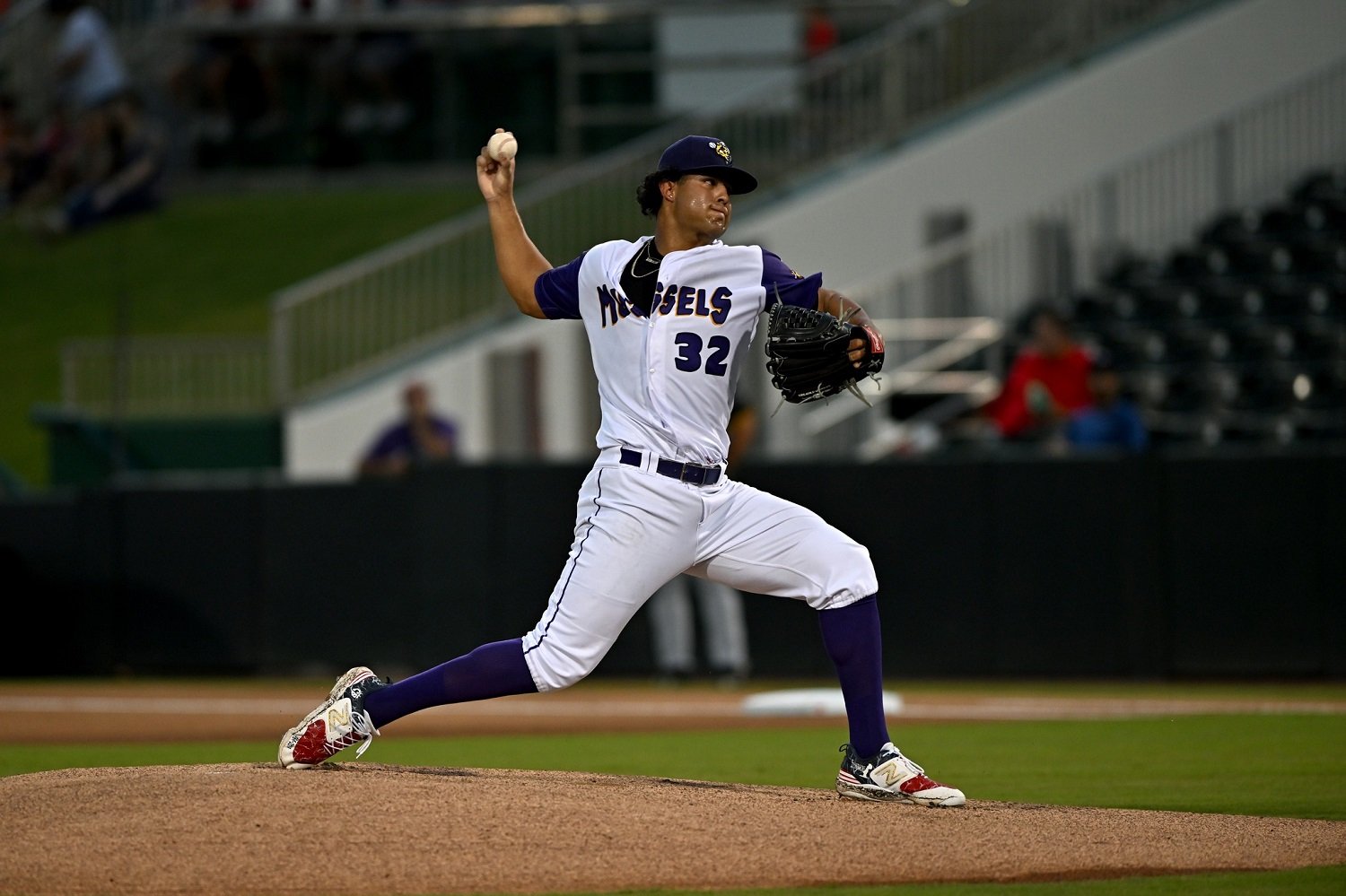 CURRENT W-L Records Minnesota Twins: 54-41 St. Paul Saints: 44-47 Wichita Wind Surge: 36-50 Cedar Rapids Kernels: 50-34 Fort Myers Mighty Mussels: 43-40 FCL Twins: 25-26 DSL Twins: 15-13 The MLB All Star break begins on Monday. The full-season affiliates also get a break. Like the big leaguers, the Saints, Wind Surge, Kernels and Mighty Mussels will play on Sunday and then not again until Friday. TRANSACTIONS The Saints activated LHP Caleb Baragar from the 7-day, IL. The Wind Surge activated IF Dalton Shuffield from the IL. The Kernels placed OF Agustin Ruiz on the 7-Day IL with a right hip strain. Looks like Diego A. Castillo is coming up to the Twins for Sunday's game. He'll likely have to play as well. Jose Miranda appears headed to the IL (though may not miss much game time). Did you know that Castillo spent most of the 2022 season with Derek Shelton and the Pittsburgh Pirates? He played 96 games and hit .206/.251/.382 (.633) with 13 doubles and 11 homers. He played shortstop, second base, right field, first base, third base, and even pitched twice (ERA of 36.00, in case you were wondering). FUTURES GAME Wind Surge infielder Luke Keaschall represented the Minnesota Twins in the 2024 MLB Futures Game. The Twins second-round pick in 2023 has quickly risen to Double-A, and he has quickly risen in prospect rankings. He is now a consensus Top 100 prospect in the game. Brooks Lee was supposed to be the Twins representative. I’m sure he would have enjoyed the opportunity, but I’m guessing that he’s just fine with playing in the big leagues instead. Keaschall entered the game at second base in the fifth inning (of a seven-inning game). He made the plays hit toward him, and he went 0-for-1 with a strikeout. SAINTS SENTINEL St. Paul 4, Louisville 5 (10 innings) Box Score Randy Dobnak was on the mound for another start down in Louisville, Kentucky, on Saturday. He went five innings and gave up three runs (1 earned) on five hits. He walked two and struck out six batters. Matt Bowman pitched the sixth inning and gave up only a solo home run. Josh Winder pitched a perfect seventh inning. Jeff Brigham struck out five batters over two scoreless, one-hit innings. That gets us through nine innings. Let’s back up to the top of the fourth inning. The Saints were down 1-0. Chris Williams led off with a walk. With one out, Anthony Prato also walked. Patrick Winkel hit a ground ball to second, but a fielding error allowed Williams to score and Prato to advance to third. Alex Isola followed with a single to center to score Prato and give the Saints a 2-1 lead. Louisville scored single runs in the fourth, fifth and sixth innings. The Saints entered the eighth inning down by a score of 4-2. With one out, Williams walked. He moved up to second on a ground out. Former Twins reliever Alan Busenitz came in for Louisville. Prato welcomed him with an RBI single to center. After a Winkel walk, Isola lined a single to center to drive in Prato and tie the game at four. That was the score heading to the 10th inning. The Saints were unable to advance their Manfred Man beyond second base. Diego Castillo came in for the bottom of the 10th inning. They made the decision to intentionally walk Jacob Hurtubise. After a sacrifice bunt advanced runners to second and third, Livan Soto was intentionally walked to load the bases in hopes of an inning-ending double play. Instead, on a 1-2 pitch, a 97-mph sinker found its way to the backstop and the Saints lost on the Wild Pitch. The Saints had six hits and walked eight times. They were 3-for-11 with runners in scoring position and left 11 on base. Isola went 2-for-4 with a walk and two RBI. Prato went 1-for-3 with two walks and two runs scored. Williams walked twice. Speaking of Diego Castillo... the Saints had a late lineup change before this game got started. Diego A. Castillo was removed from the lineup and now we know why. WIND SURGE WISDOM Wichita 2, Springfield 10 Box Score Not a great game for the Surge on Saturday. Through four innings, they were behind 8-0. Through eight innings, they were behind 10-0. Cory Lewis was back on the mound. He went the first 3 1/3 innings. He gave up seven runs on nine hits (including two home runs). He had one walk with four strikeouts. Cody Laweryson gave up one run on two hits and a walk and recorded five outs. Ricardo Velez gave up one run over two innings. Jared Solomon pitched the eighth inning and gave up one run on one hit, two walks, and a hit batter. In the top of the ninth, Carson McCusker hit a two-run homer for the Wind Surge’s only runs. He went 2-for-4 in the game. The homer was his eighth of the season. Jeferson Morales went 1-for-3 with a walk. He scored ahead of the McCusker homer. Tanner Schobel went 1-for-3 with a walk. KERNELS NUGGETS Cedar Rapids 3, Beloit 2 (11 innings) Box Score The Kernels fell behind early. They were down 2-0 after four innings. They worked their way back and ended up winning in 11 innings. Lefty Christian MacLeod gave up two runs on five hits over 5 2/3 innings. He had one walk and a career-high 11 strikeouts. Juan Mendez had three strikeouts among the four outs he recorded. He gave up just one hit and no runs. Jarret Whorff tossed two scoreless innings. He gave up three hits, walked one and struck out three batters. Kyle Bischolff faced just six batters and worked two scoreless, extra-inning frames. Down 2-0, Nate Baez led off the top of the seventh by being hit by a pitch. With one out, Misael Urbina singled. Jose Salas grounded out to third but the runners advanced to second and third. Kyle Hess was hit by a pitch to load the bases. Ricardo Olivar then walked in a run. Still down 2-1 going to the ninth inning, Jay Harry led off the inning with his eighth home run of the season. The game was tied at two. Fast-forward to the 11th inning. Kevin Maitan began the inning as the Manfred Man on second base. Rubel Cespedes led off with a single to third base. Maitan moved up to third while Cespedes advanced to second base on a throwing error. With one out, Harry singled to center to drive in Maitan. Cespedes was thrown out at home. Bischoff got three quick outs in the bottom of the 11th, and the Kernels had their win. Harry went 2-for-5 with a home run and the game-winning single. Maitan went 2-for-5 with his seventh and eighth double. Olivar went 2-for-4 with a walk. Jose Salas added his ninth double. MUSSEL MATTERS Fort Myers 4, Daytona 3 Box Score Charlee Soto put together his best and longest start of his professional career. The 2023 draft pick tossed five shutout innings. He gave up just two hits, walked one and struck out six batters. He threw a career-high 78 pitches, and 54 of them were strikes. It may be even more impressive when you consider that the Mussels were supposed to play a double header on Saturday. But there was a rain delay of nearly four-and-a-half hours. They just played one game and postponed the other. Tanner Hall came on and worked the next three innings. He gave up three runs on four hits. He walked two and struck out three batters. Xavier Hamilton recorded his sixth save with three strikeouts in a scoreless ninth. The lineup got off to a fast start in the first inning. Walker Jenkins led off with a walk. He advanced to third base on a Byron Chourio single. Brandon Winokur followed with an RBI single to center. In the fourth inning, the Mussels scored a painful run. With the bases loaded, Chourio was hit by a pitch to score Yohander Martinez and make it 2-0. Daytona tied the score at 2-2 in the top of the sixth. However, Fort Myers reclaimed the lead in the bottom of the inning. Martinez, Angel Del Rosario, and Ryan McCarthy all walked to load the bases. Jenkins came to the plate and grounded a single to center to drive in two runs. Jenkins went 1-for-3 with two walks and two RBI. Chourio went 2-for-4. Ryan McCarthy went 2-for-3 with a walk. COMPLEX CHRONICLES FCL Twins 3, FCL Red Sox 1 Box Score Through three innings, there was little offense on display on Bill Smith Field. Liam Rocha started and had two strikeouts over two scoreless innings. Kyle Bloor came on and tossed a scoreless third frame. Ezequiel Ventura came on for the fourth inning and struck out the side. In the bottom of the fourth, the Twins put a “2” on the scoreboard. Jayson Bass reached on an error and moved to second on a ground out. Hendry Chivilli reached on an error. Next, a double-steal put runners on second and third. Amilcar Vasquez drove in both runs with a double. In the bottom of the sixth, Bass led off with a single. He stole second. With two outs, Vasquez drove him in with a solid single to center to make it 3-0. Ventura had a really nice game. After striking out the side in the fourth, he got three groundouts in the fifth inning. His sixth inning. The sixth inning began with a single and a walk. With one out, there were runners on second and third, but Ventura was able to coax a fielder’s choice and an infield pop up. In the seventh inning, he gave up a leadoff homer, but that was it. In four innings, he gave up one run on three hits. He walked one and had four strikeouts. Amilcar Vasquez went 2-for-3 with his third double. He drove in all three runs and did a terrific job behind the plate with the pitchers. Dameury Pena went 2-for-2 with a walk and his fourth double. Jayson Bass had the only other hit for the Twins. He was 1-for-3 with his seventh and eighth stolen bases. DOMINICAN DAILIES DSL Twins 2, DSL Yankees 6 Box Score The Yankees had three straight, two-run innings in the middle of the game and that was enough to give them the win. Cristian Hernandez started for the Twins and gave up four runs on five hits. Over 3 1/3 innings, he walked two and struck out six batters. Jose Vasquez worked the final 2 2/3 innings. He gave up two runs on two hits. He walked three and struck out one batter. The Twins got on the scoreboard in the fourth inning. With one out, Eduardo Beltre singled to center. He stole second, advanced to third on a throwing error, and he scored on a ground out. Then, with two outs in the top of the seventh inning, Luis Rodriguez walked. He stole second base, and the he stole third base. He scored on a Daiber De Los Santos single. Beltre led the offense. He had two of the team’s four hits in the game. He stole the first two games of his season. Luis Rodriguez’s back-to-back steals were his fifth and sixth of the season. TWINS DAILY MINOR LEAGUE PLAYERS OF THE DAY Pitcher of the Day – Charlie Soto (Fort Myers) - 5 IP, 2 H, 0 R, 1 BB, 6 K, 78 pitches, 54 strikes (69.2%) Hitter of the Day – Jay Harry (Cedar Rapids) - 2-for-5, HR(8), R, 2 RBI, 2 K. PROSPECT SUMMARY Check out the Prospect Tracker for much more on the Twins Top 20 prospects after seeing how they did on Saturday. #1– Walker Jenkins (Fort Myers) – 1-for-3, 2 BB, R, 2 RBI, 2 K. #2 – Brooks Lee (Minnesota) – 0-for-4, BB, SB(1) (played 2B, batted 4th) #5 – Gabriel Gonzalez (Cedar Rapids) – 0-for-4, BB. #7 – Charlee Soto (Fort Myers) – 5 IP, 2 H, 0 R, 1 BB, 6 K, 78 pitches, 54 strikes (69.2%) #9 – Luke Keaschall (Wichita) – 2-for-4, BB, R, 2 RBI #10 – Brandon Winokur (Fort Myers) – 1-for-4, BB, RBI, 2 K. #11 – Simeon Woods Richardson (Minnesota) – 4.1 IP, 7 H, 2 ER, 1 BB, 7 K, WP, 86 pitches, 61 strikes (70.9%) #13 – Tanner Schobel (Wichita) – 1-for-3, BB. #15 – Cory Lewis (Wichita) – 3.1 IP, 9 H, 7 ER, 1 BB, 4 K, 74 pitches, 53 strikes (71.6%) #18 – Yunior Severino (St. Paul) – 0-for-4, BB, K. #20 – Ricardo Olivar (Cedar Rapids) – 2-for-4, BB, RBI, K SUNDAY’S PROBABLE STARTERS St. Paul @ Louisville (12:05 PM CST) – RHP Caleb Boushley (8-3, 4.30 ERA) Wichita @ Springfield (1:05 PM CST) – RHP Andrew Morris (4-1, 1.17 ERA) Cedar Rapids @ Beloit (1:05 PM CST) – RHP Jeremy Lee (1-3, 3.90 ERA) Daytona @ Ft. Myers (11:05 AM CST) – RHP Spencer Bengard (6-1, 1.32 ERA) Please feel free to ask questions and discuss Saturday’s games!
- 6 comments
-
- 2
-
-
-
- charlee soto
- jay harry
- (and 5 more)
-
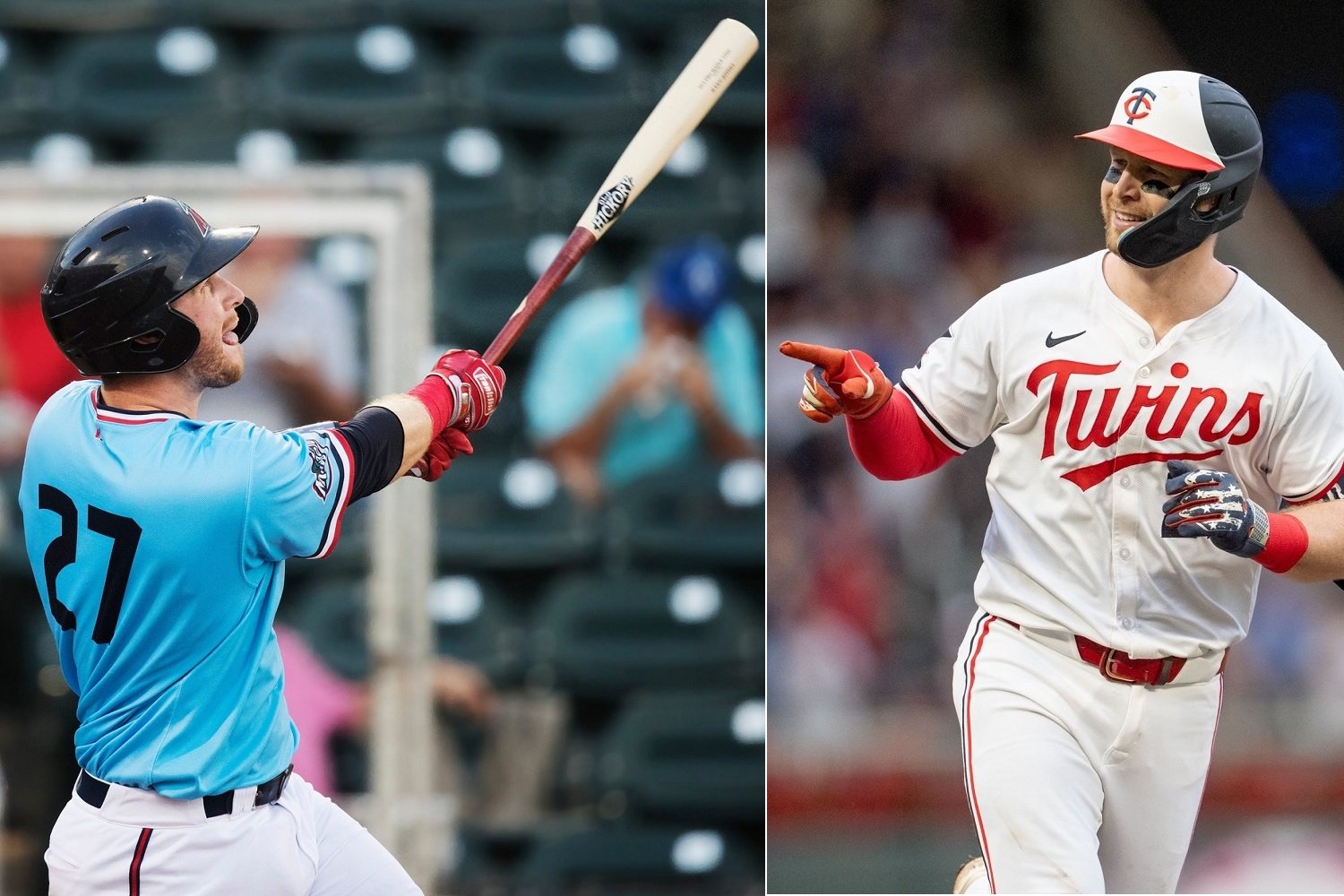
A prospect arrives in the big leagues to fan excitement. Maybe they have success for a little while, but for most players, it requires a trip or three to Triple-A and back. Sometimes it is expected. Other times, it can be semi-shocking. And sometimes, Willi Castro turns into an All-Star. Image courtesy of Danny Medley (Left), Nick Wosika (Right) - USA Today Prospect and Player Development are not Linear! Prospect and Player Development are not Linear! Prospect and Player Development are not Linear! It certainly is obvious. Every baseball prospect has his own story, and they all develop on their own timeline, at their own pace. While Royce Lewis has been incredible since joining the Twins two years ago, he has battled injuries, and even had to overcome some struggles early in his minor-league career. It has been nearly a month since the Twins announced that Alex Kirilloff had been optioned. Of course, since then, he acknowledged back pain and has had his option rescinded, and he is now on the Injured List. His first full professional season was lost due to Tommy John surgery. In 2018, he returned and became a top-10 prospect in baseball. He debuted in the 2020 playoffs after spending that crazy season at the Twins' alternate site in St. Paul. He has fought wrist injuries and ups and downs over the past four seasons. He has shown flashes of the capacity to be a great hitter. He has experienced great moments, and gone through slumps offensively and defensively. One of the most pure hitters coming up, he now has a ton of swing-and-miss in his game. Sound familiar? As Twins fans, we have seen so many similar situations. Trevor Larnach came up and was on fire for six weeks. Then, he struggled mightily. That was in 2021. In 2022, he struggled with injuries. Ditto in 2023. In 2024, after recovering from a minor spring injury, he returned to the Twins and has been good again, often hitting in the top three in the lineup. How about Edouard Julien? His background and story are interesting and complicated, including a season lost to Tommy John surgery (although Covid would have cost him that season, anyway). Once he returned to the lineup in the minors in 2021, he dominated every level for the next two seasons. He was incredibly impressive in his debut last year, showing power and patience at the plate like few others. He and Matt Wallner were part of one of the organization's best rookie classes, maybe even more potent than the 1982 Twins rookie class. Wallner showed power and patience in his time with the Twins. He never really got it going this spring, and three weeks into the season, he was optioned. Julien was optioned in very early June. Both struggled early in their returns to Triple-A, and it took several weeks for them to start performing. Wallner was the International League Player of the Year in June, crushing baseballs all over the field and often over the fence. He is now back with the Twins, hoping this is the time he sticks. Brooks Lee was on his way to an incredibly fast MLB debut. The eighth-overall pick in 2022 out of Cal Poly signed quickly after the draft, got some time in Cedar Rapids, and even ended the season with Double-A Wichita during their playoff run. That’s where he began the 2023 season. He spent about half of the season with the Wind Surge and led the league in doubles before being promoted to Triple-A St. Paul. He slowed a bit there, but was on a trajectory to debut early this season. He was one of the last players to be sent to minor-league camp in spring training. Unfortunately, and probably just because we’re from Minnesota and can’t have nice things, he spent the first two months of the season rehabbing before rejoining the Saints in mid-June. He spent about two weeks in St. Paul before getting that big-league call-up. Even top college players rarely debut less than two years after being drafted. Lee did that even with two missed months. One more? José Miranda was a second-round pick in 2016, but while he put up some decent numbers in his early minor-league years, he did not become a real impact-hitting prospect until 2021. Previous to that, he could not figure out the strike zone. He was a very free swinger. He has such excellent contact skills that he would often get himself out by swinging at pitcher's pitches. Suddenly, in 2021, he had a little better idea of the zone. He better understood not only which pitches he could hit, but also against which pitches (in which locations) he could do damage. He put up some fantastic numbers. He debuted in 2022 and played well. Unfortunately, in 2023, he had a shoulder injury that clearly altered his approach and his swing. He didn’t look like the same hitter, seemingly returning to the overly free-swinging days. He had shoulder surgery in the offseason, and after a slow start this spring, he came up, and Rocco Baldelli has not been able to (or wanted to!) take him out of the lineup too often. Last week, he tied a modern-day record, notching a hit in 12 straight at-bats. Prospect and Player Development are not Linear! Remember Torii Hunter? Of course you do. He’s a Twins Hall of Famer. He was up and down several times before sticking in the big leagues. He made his infamous first All-Star game and was optioned later. Justin Morneau went up and down several times and wasn't a "given" until his one-on-one discussion with Ron Gardenhire in 2004 in Seattle. Michael Cuddyer. Trevor Plouffe. Byron Buxton. Jason Kubel. This list goes on and on. So, are we left to believe that the Twins are just cursed, that all top prospects will experience some significant injury (or injuries) or move up and down from the big leagues to the minor leagues? These were all top-100 global prospects who took a long time to wend their way to success, and didn't just get to the big leagues and stick. Another example? Rochester native Michael Restovich was a Top-100 prospect four times between 1999 and 2003. He got a few promotions to the big leagues over a couple of seasons, but there just wasn't a spot, so he went and played for a couple of other big-league clubs for a couple of years. Garrett Jones couldn't have done more in the Twins' upper minors to earn opportunities. But when he was ready to come up to the Twins, they had Morneau at first base, Delmon Young in left field, and Jason Kubel as an OF/DH. A month before he turned 26, Jones debuted with the Twins and hit just over .200 with minimal power in 31 games. Then, in 2008, he signed with the Pirates. He got called up fairly early in the season, got regular playing time, and hit 139 doubles and 100 home runs in five seasons. How about Brent Rooker? He got some at-bats in the big leagues. He struck out a bunch. He didn’t have a defensive position. But there should never have been any question about whether or not he would wind up crushing baseballs. He just needed a few trips up and down and an opportunity to hit on a regular basis. The focus here has been on hitters, but pitching can be even more non-linear. Injuries play a significant role in that. Kyle Gibson had Tommy John surgery before being added to the Twins 40-man roster. Otherwise, he would have been a quick riser. Matt Canterino has some of the most amazing stuff that I’ve seen from a Twins pitching prospect in the two decades I’ve paid attention to such things, but he can’t get on the mound and stay healthy. That could be another entire article, just talking about pitchers and the up-and-down cycle that the majority of them go through until they stick as starters, stick as relievers, become Quadruple-A players, or whatever the outcome. And there is always the most likely outcome for most draft picks: their career ends before they are able to wear an MLB uniform in a regular-season game. The important thing to remember is that this isn’t a Twins thing. This is true with every organization; it always has been, and always will be. Sure, as a fan, it can be frustrating as it is happening, but I think (or I’d hope) we all realize that Major League Baseball is really, really hard. Maybe what it should do is help us appreciate just how great those players who make it and stick as regulars really are. Prospect and Player Development are not Linear! Prospect and Player Development are not Linear! And that's, OK. View full article
-
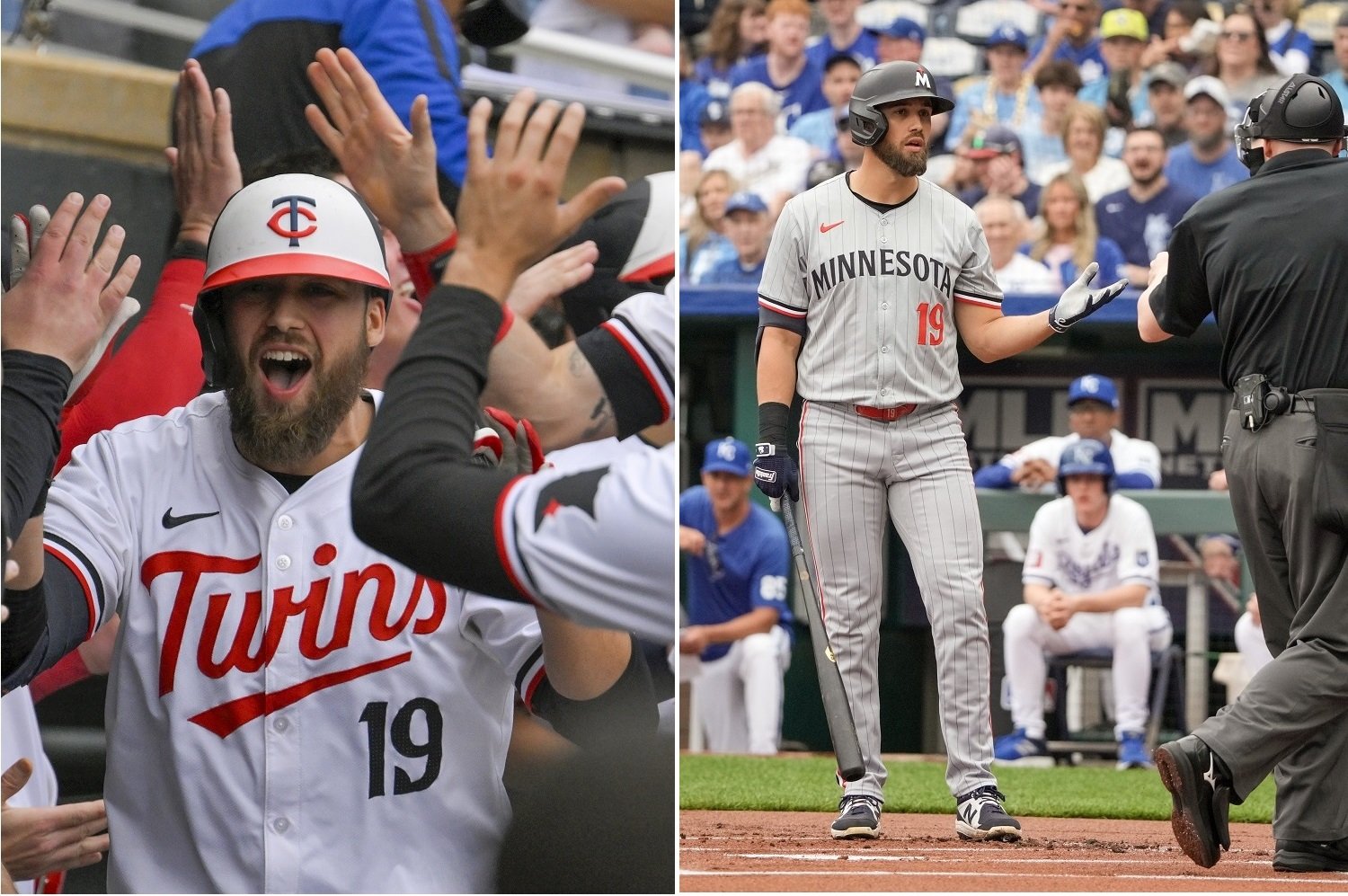 Prospect and Player Development are not Linear! Prospect and Player Development are not Linear! Prospect and Player Development are not Linear! It certainly is obvious. Every baseball prospect has his own story, and they all develop on their own timeline, at their own pace. While Royce Lewis has been incredible since joining the Twins two years ago, he has battled injuries, and even had to overcome some struggles early in his minor-league career. It has been nearly a month since the Twins announced that Alex Kirilloff had been optioned. Of course, since then, he acknowledged back pain and has had his option rescinded, and he is now on the Injured List. His first full professional season was lost due to Tommy John surgery. In 2018, he returned and became a top-10 prospect in baseball. He debuted in the 2020 playoffs after spending that crazy season at the Twins' alternate site in St. Paul. He has fought wrist injuries and ups and downs over the past four seasons. He has shown flashes of the capacity to be a great hitter. He has experienced great moments, and gone through slumps offensively and defensively. One of the most pure hitters coming up, he now has a ton of swing-and-miss in his game. Sound familiar? As Twins fans, we have seen so many similar situations. Trevor Larnach came up and was on fire for six weeks. Then, he struggled mightily. That was in 2021. In 2022, he struggled with injuries. Ditto in 2023. In 2024, after recovering from a minor spring injury, he returned to the Twins and has been good again, often hitting in the top three in the lineup. How about Edouard Julien? His background and story are interesting and complicated, including a season lost to Tommy John surgery (although Covid would have cost him that season, anyway). Once he returned to the lineup in the minors in 2021, he dominated every level for the next two seasons. He was incredibly impressive in his debut last year, showing power and patience at the plate like few others. He and Matt Wallner were part of one of the organization's best rookie classes, maybe even more potent than the 1982 Twins rookie class. Wallner showed power and patience in his time with the Twins. He never really got it going this spring, and three weeks into the season, he was optioned. Julien was optioned in very early June. Both struggled early in their returns to Triple-A, and it took several weeks for them to start performing. Wallner was the International League Player of the Year in June, crushing baseballs all over the field and often over the fence. He is now back with the Twins, hoping this is the time he sticks. Brooks Lee was on his way to an incredibly fast MLB debut. The eighth-overall pick in 2022 out of Cal Poly signed quickly after the draft, got some time in Cedar Rapids, and even ended the season with Double-A Wichita during their playoff run. That’s where he began the 2023 season. He spent about half of the season with the Wind Surge and led the league in doubles before being promoted to Triple-A St. Paul. He slowed a bit there, but was on a trajectory to debut early this season. He was one of the last players to be sent to minor-league camp in spring training. Unfortunately, and probably just because we’re from Minnesota and can’t have nice things, he spent the first two months of the season rehabbing before rejoining the Saints in mid-June. He spent about two weeks in St. Paul before getting that big-league call-up. Even top college players rarely debut less than two years after being drafted. Lee did that even with two missed months. One more? José Miranda was a second-round pick in 2016, but while he put up some decent numbers in his early minor-league years, he did not become a real impact-hitting prospect until 2021. Previous to that, he could not figure out the strike zone. He was a very free swinger. He has such excellent contact skills that he would often get himself out by swinging at pitcher's pitches. Suddenly, in 2021, he had a little better idea of the zone. He better understood not only which pitches he could hit, but also against which pitches (in which locations) he could do damage. He put up some fantastic numbers. He debuted in 2022 and played well. Unfortunately, in 2023, he had a shoulder injury that clearly altered his approach and his swing. He didn’t look like the same hitter, seemingly returning to the overly free-swinging days. He had shoulder surgery in the offseason, and after a slow start this spring, he came up, and Rocco Baldelli has not been able to (or wanted to!) take him out of the lineup too often. Last week, he tied a modern-day record, notching a hit in 12 straight at-bats. Prospect and Player Development are not Linear! Remember Torii Hunter? Of course you do. He’s a Twins Hall of Famer. He was up and down several times before sticking in the big leagues. He made his infamous first All-Star game and was optioned later. Justin Morneau went up and down several times and wasn't a "given" until his one-on-one discussion with Ron Gardenhire in 2004 in Seattle. Michael Cuddyer. Trevor Plouffe. Byron Buxton. Jason Kubel. This list goes on and on. So, are we left to believe that the Twins are just cursed, that all top prospects will experience some significant injury (or injuries) or move up and down from the big leagues to the minor leagues? These were all top-100 global prospects who took a long time to wend their way to success, and didn't just get to the big leagues and stick. Another example? Rochester native Michael Restovich was a Top-100 prospect four times between 1999 and 2003. He got a few promotions to the big leagues over a couple of seasons, but there just wasn't a spot, so he went and played for a couple of other big-league clubs for a couple of years. Garrett Jones couldn't have done more in the Twins' upper minors to earn opportunities. But when he was ready to come up to the Twins, they had Morneau at first base, Delmon Young in left field, and Jason Kubel as an OF/DH. A month before he turned 26, Jones debuted with the Twins and hit just over .200 with minimal power in 31 games. Then, in 2008, he signed with the Pirates. He got called up fairly early in the season, got regular playing time, and hit 139 doubles and 100 home runs in five seasons. How about Brent Rooker? He got some at-bats in the big leagues. He struck out a bunch. He didn’t have a defensive position. But there should never have been any question about whether or not he would wind up crushing baseballs. He just needed a few trips up and down and an opportunity to hit on a regular basis. The focus here has been on hitters, but pitching can be even more non-linear. Injuries play a significant role in that. Kyle Gibson had Tommy John surgery before being added to the Twins 40-man roster. Otherwise, he would have been a quick riser. Matt Canterino has some of the most amazing stuff that I’ve seen from a Twins pitching prospect in the two decades I’ve paid attention to such things, but he can’t get on the mound and stay healthy. That could be another entire article, just talking about pitchers and the up-and-down cycle that the majority of them go through until they stick as starters, stick as relievers, become Quadruple-A players, or whatever the outcome. And there is always the most likely outcome for most draft picks: their career ends before they are able to wear an MLB uniform in a regular-season game. The important thing to remember is that this isn’t a Twins thing. This is true with every organization; it always has been, and always will be. Sure, as a fan, it can be frustrating as it is happening, but I think (or I’d hope) we all realize that Major League Baseball is really, really hard. Maybe what it should do is help us appreciate just how great those players who make it and stick as regulars really are. Prospect and Player Development are not Linear! Prospect and Player Development are not Linear! And that's, OK.
- 34 comments
-
- 22
-
-
-
- alex kirilloff
- edouard julien
- (and 5 more)
-
I've been a bit surprised by Nowlin's lack of strikeouts, but because of that, he's been able to get weak contact and work some extensive innings. E-Rod's been in the FCL now since late last week. They only gave him a week off initially for his hand/thumb injury... thankfully it wasn't a broken hamate bone. But, they're going to want him fully healthy. McCusker's a great story... powerful swing.
- 32 replies
-
- 1
-
-
- wynton bernard
- zack weiss
- (and 5 more)
-
I don't see any reason for him to move up there... He's got maybe a month in Double-A. Let's let him see that level for a little bit.
- 32 replies
-
- 6
-
-
- wynton bernard
- zack weiss
- (and 5 more)
-
There were several very close games throughout the Twins organization. There was a walkoff. There was some late-inning run support. The was a no-hit bid. And there was rain. Check out all that happened in the Twins system on Wednesday. Image courtesy of Rob Thompson, St. Paul Saints CURRENT W-L Records Minnesota Twins: 53-40 St. Paul Saints: 44-43 Wichita Wind Surge: 36-47 Cedar Rapids Kernels: 48-32 Fort Myers Mighty Mussels: 42-39 FCL Twins: 23-25 DSL Twins: 15-10 TRANSACTIONS The Twins played a doubleheader. David Festa was called up as the 27th man. The Twins also signed 33-year-old veteran outfielder Wynton Bernard. Earlier this season, he played 41 games for the Charlotte Knights, the Triple-A affiliate of the White Sox. He hit .306/.328/.446 (.774) with six doubles, a triple, and three home runs. He also had 11 stolen bases in 12 attempts. Bernard was originally the 35th round pick by the San Diego Padres in the 2012 draft out of Niagara University in New York. He has also spent time with the Tigers, Giants, Cubs, Rockies, Blue Jays and White Sox organizations. He has played in 1,051 minor-league games, and he has played in 12 big-league games. In 2022, he got those games with the Rockies and went 12-for-42 (.286) with a double. He had three stolen bases. In the past couple of weeks, the Twins have been promoting guys from A-ball to the Saints, and they’ve done just fine, but bringing in a veteran should help the team. OF/IF Brandon Winokur was activated by the Mighty Mussels. . SAINTS SENTINEL St. Paul 5, Louisville 6 Box Score David Festa was scheduled to start this one for the Saints, but he was summoned to Chicago to be the 27th man in Wednesday’s doubleheader. So the Saints went with a bullpen game which went really well, at least through six innings. And frankly, the Saints offense was really good through six innings as well. From there, things got quite interesting. Were the Saints able to hang on? The bullpen arms started the game with six shutout innings. Scott Blewett got five outs. Nick Wittgren recorded seven outs. Zack Weiss got six outs, four of them on strikeouts. The Saints grabbed the early lead when Yunior Severino knocked his 16th home run of the season to make it 1-0. The Saints made it 2-0 in the third inning when DaShawn Keirsey grounded out to score Maddux Houghton, who had led off with a single. In the sixth inning, Payton Eeles hit a solo, two-out home run to make it 3-0. An Edouard Julien solo homer in the 7th inning gave the Saints a 4-0 lead. Josh Winder came in for the bottom of the seventh and it went a bit like his recent Twins outing. Lots of soft contact, infield singles and a sacrifice fly. By inning’s end, the Saints were hanging on to a 4-3 lead. In the top of the eighth inning, however, Chris Williams knocked his 10th home of the season. Matt Bowman came in for the bottom of the eighth inning and gave up one run. The Saints went scoreless in the top of the ninth. Diego Castillo came in to protect a one-run lead… After getting the first two batters out, Castillo issued a walk. On a 1-0 pitch Michael Trautwein crushed a homer to walkoff the Saints. Julien went 3-for-4 with a walk, his second double and his fifth home run. Anthony Prato went 2-for-3 with a walk and his 15th double. The Saints certainly had more opportunities to score, but they went 0-for-9 with runners in scoring position. WIND SURGE WISDOM Wichita 4, Springfield 3 Box Score This was a bit of a game of back-and-forth, but it started out with three innings of shutout baseball. Kyle Jones was back on the mound for the Wind Surge as he continues to ease his way back after missing the first two months. He worked four innings and gave up one run on two hits. He had three strikeouts with no walks. Wichita got on the scoreboard in the top of the fourth inning. Tanner Schobel led off with a walk and advanced to second on a Ben Ross single to center. With one out, Jorel Ortega drove in a run with a single between third and shortstop that ended up in left field. Ross scored on a Luke Keaschall single. In the bottom of the fourth, Springfield responded with a solo homer to cut the Surge lead in half. Jaylen Nowlin came in for the fifth inning. After a scoreless inning, he gave up single runs in both the sixth and seventh innings. In the top of the seventh inning, Keaschall walked and moved up a base on a Jake Rucker single. Both scored on a double by Jeferson Morales. Through seven innings, the Surge were clinging to a 4-3 lead. With two outs in the top of the eighth inning, Luke Keaschall singled to drive in both Ross and Ortega and give the Surge a 6-3 lead. Nowlin worked the eighth inning. He recorded two outs quickly before back-to-back singles made things a little scary. However, he got another groundball to keep the three-run lead. The Surge added an insurance run in the top of the ninth when Carson McCusker scored on a wild pitch to make it 7-3. Nowlin got the win with five strong innings to close the door. He gave up two runs on seven hits. He had two walks and two strikeouts. Ross went 3-for-5 and stole his 11th bag. Keaschall was 2-for-4 with a walk. Morales went 2-for-5 with his 17th double. KERNELS NUGGETS Cedar Rapids 1, Beloit 3 Box Score The Kernels fell behind and couldn’t muster enough offense to catch up. Michael Paredes started and worked the first four innings. He gave up one run on five hits. He had three strikeouts but not walks. A.J. Labas came in and gave up two runs in the fifth inning and worked a scoreless sixth frame. Gabriel Yanez struck out three batters over the final two innings. The Kernels simply were unable to generate any offense. In fact, Beloit starter Emmett Olson started the game with six no-hit innings. The Kernels only had two hits in the game. Nate Baez knocked his fifth double. In the seventh inning, Kevin Maitan hit his fifth homer since joining the team. Jay Harry had two of the three walks. MUSSEL MATTERS Fort Myers 4, Daytona Beach 5 Box Score The Mussels fell behind early. They attempted a comeback but it fell just short. Down 3-0 going to the bottom of the second inning, Nick Lucky hit a one-out triple. A few batters later, he scored on a wild pitch. Ricky Castro made the start for Fort Myers. He gave up three runs (2 earned) on four hits over three innings. He walked two and had two strikeouts. Paulshawn Pasqualotto came on and worked the next four innings. He gave up two runs on three hits. He had two walks and five strikeouts. Xander Hamilton struck out three batters over two scoreless, one-hit innings. Down 5-1 going to the bottom of the seventh inning, Byron Chourio walked with one out and moved to second on a wild pitch. Poncho Ruiz reached on an error that left runners on second and third. Daniel Pena lined a single to left that drove in both Chourio and Ruiz. In the bottom of the eighth inning, Matthew Clayton was hit by a pitch. He advanced to third base on a Ryan McCarthy double. Angel Del Rosario reached on an error which allowed Clayton to score. Daniel Pena went 2-for-4 with a walk. Nick Lucky was 2-for-5 with his second double since joining the team. McCarthy’s double was his sixth, and Del Rosario hit his third double. The team had six hits and six walks, but went just 1-for-12 with runners in scoring position. They left 11 runners on base. DOMINICAN DAILIES DSL Twins 4, DSL Rangers Red 0 (Suspended in the 4th) Box Score The Twins were supposed to play two games on Wednesday afternoon in the Dominican. Unfortunately, after just three complete innings, the rains came and Game 1 was suspended. Eudy Garcia started and tossed four scoreless innings. He gave up two hits, walked one and struck out. The Twins scored four runs in the top of the second inning. Luis Fragoza led off with a single. Ricardo Paez followed with another single. A passed ball pushed runners to second and third. Fragoza scored on a Victor Leal groundout. Alver Medina reached on an error, and Guillermo Sosa was hit by a pitch to lead the bases. Daiber De Los Santos singled to center to drive in two runners and make it 3-0 Twins. A Ramiro Dominguez double drove in Sosa with the fourth run. This game is scheduled to be completed on July 19th. The second game is set to be made up in mid-August. TWINS DAILY MINOR LEAGUE PLAYERS OF THE DAY Pitcher of the Day – Zack Weiss (Saints) - 2.0 IP, H, 0 R, 0 BB, 4 K; 32 pitches, 23 strikes (71.9%) Hitter of the Day – Edouard Julien (Saints) - 3-for-4, BB, 2B(2), HR(5), R, RBI. PROSPECT SUMMARY Check out the Prospect Tracker for much more on the Twins Top 20 prospects after seeing how they did on Thursday. #2 – Brooks Lee (Minnesota) – Game 1: 0-for-4, K, Game 2: 1-for-5, HR(2), R, RBI. #5 – Gabriel Gonzalez (Cedar Rapids) – 0-for-4 #9 – Luke Keaschall (Wichita) – 2-for-4, BB, R, 2 RBI #13 – Tanner Schobel (Wichita) – 0-for-4, BB, R, 2K #18 – Yunior Severino (St. Paul) – 1-for-5, HR(16), R, RBI. #20 – Ricardo Olivar (Cedar Rapids) – 0-for-3, BB, K THURSDAY’S PROBABLE STARTERS St. Paul @ Louisville (5:35 PM CST) – RHP Louie Varland (3-7, 6.57 ERA) Wichita @ Springfield (7:05 PM CST) – RHP Travis Adams (4-6, 4.80 ERA) Cedar Rapids @ Beloit (6:35 PM CST) – RHP Ty Langenberg (3-0, 4.79 ERA) Daytona @ Ft. Myers (6:05 PM CST) – LHP Ross Dunn (1-2, 5.92 ERA) FCL Twins @ FCL Rays (11:00 AM CT) - TBD DSL Twins @ DSL Phillies (10:00 AM CST) - TBD Please feel free to ask questions and discuss Wednesday’s games! View full article
-
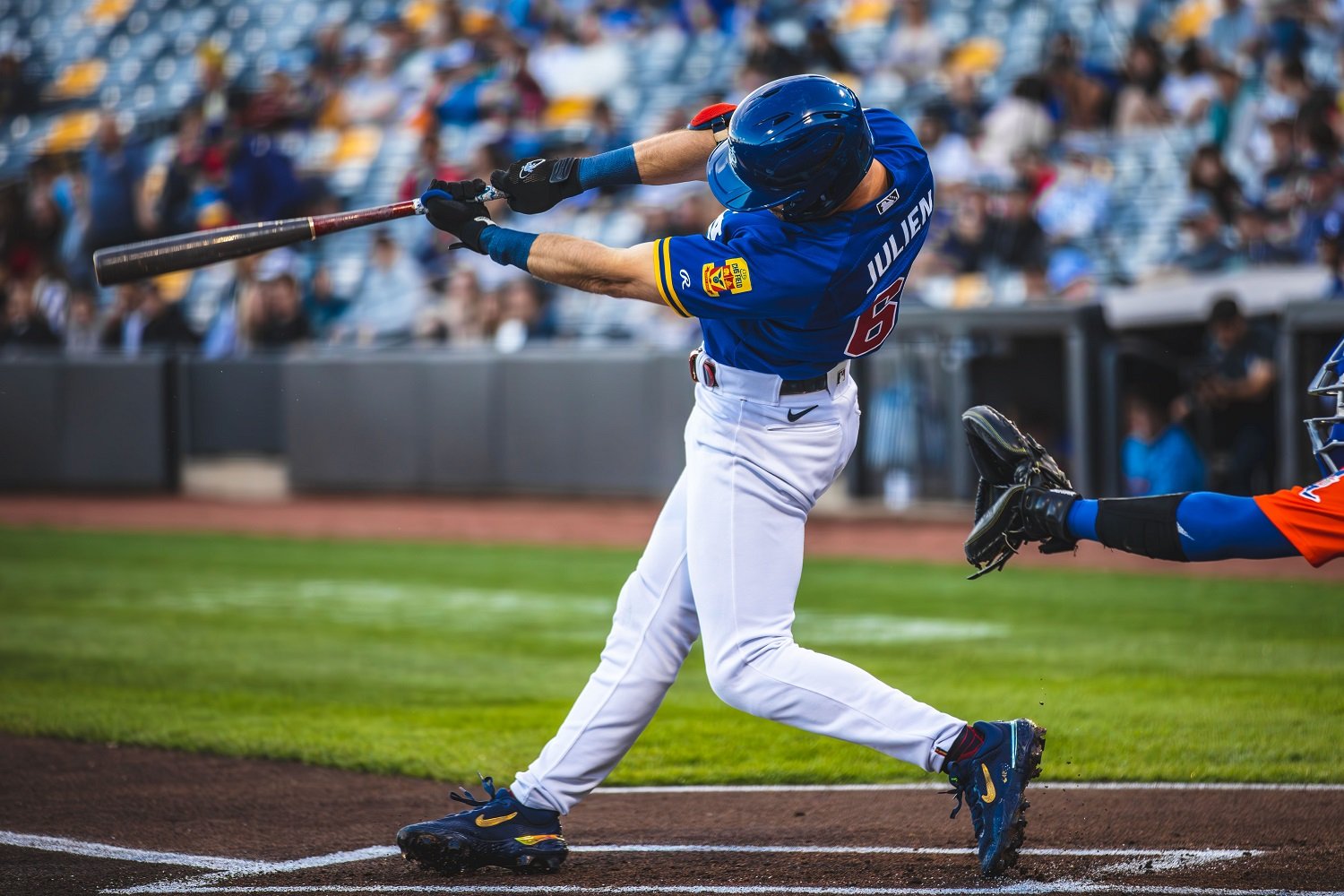 CURRENT W-L Records Minnesota Twins: 53-40 St. Paul Saints: 44-43 Wichita Wind Surge: 36-47 Cedar Rapids Kernels: 48-32 Fort Myers Mighty Mussels: 42-39 FCL Twins: 23-25 DSL Twins: 15-10 TRANSACTIONS The Twins played a doubleheader. David Festa was called up as the 27th man. The Twins also signed 33-year-old veteran outfielder Wynton Bernard. Earlier this season, he played 41 games for the Charlotte Knights, the Triple-A affiliate of the White Sox. He hit .306/.328/.446 (.774) with six doubles, a triple, and three home runs. He also had 11 stolen bases in 12 attempts. Bernard was originally the 35th round pick by the San Diego Padres in the 2012 draft out of Niagara University in New York. He has also spent time with the Tigers, Giants, Cubs, Rockies, Blue Jays and White Sox organizations. He has played in 1,051 minor-league games, and he has played in 12 big-league games. In 2022, he got those games with the Rockies and went 12-for-42 (.286) with a double. He had three stolen bases. In the past couple of weeks, the Twins have been promoting guys from A-ball to the Saints, and they’ve done just fine, but bringing in a veteran should help the team. OF/IF Brandon Winokur was activated by the Mighty Mussels. . SAINTS SENTINEL St. Paul 5, Louisville 6 Box Score David Festa was scheduled to start this one for the Saints, but he was summoned to Chicago to be the 27th man in Wednesday’s doubleheader. So the Saints went with a bullpen game which went really well, at least through six innings. And frankly, the Saints offense was really good through six innings as well. From there, things got quite interesting. Were the Saints able to hang on? The bullpen arms started the game with six shutout innings. Scott Blewett got five outs. Nick Wittgren recorded seven outs. Zack Weiss got six outs, four of them on strikeouts. The Saints grabbed the early lead when Yunior Severino knocked his 16th home run of the season to make it 1-0. The Saints made it 2-0 in the third inning when DaShawn Keirsey grounded out to score Maddux Houghton, who had led off with a single. In the sixth inning, Payton Eeles hit a solo, two-out home run to make it 3-0. An Edouard Julien solo homer in the 7th inning gave the Saints a 4-0 lead. Josh Winder came in for the bottom of the seventh and it went a bit like his recent Twins outing. Lots of soft contact, infield singles and a sacrifice fly. By inning’s end, the Saints were hanging on to a 4-3 lead. In the top of the eighth inning, however, Chris Williams knocked his 10th home of the season. Matt Bowman came in for the bottom of the eighth inning and gave up one run. The Saints went scoreless in the top of the ninth. Diego Castillo came in to protect a one-run lead… After getting the first two batters out, Castillo issued a walk. On a 1-0 pitch Michael Trautwein crushed a homer to walkoff the Saints. Julien went 3-for-4 with a walk, his second double and his fifth home run. Anthony Prato went 2-for-3 with a walk and his 15th double. The Saints certainly had more opportunities to score, but they went 0-for-9 with runners in scoring position. WIND SURGE WISDOM Wichita 4, Springfield 3 Box Score This was a bit of a game of back-and-forth, but it started out with three innings of shutout baseball. Kyle Jones was back on the mound for the Wind Surge as he continues to ease his way back after missing the first two months. He worked four innings and gave up one run on two hits. He had three strikeouts with no walks. Wichita got on the scoreboard in the top of the fourth inning. Tanner Schobel led off with a walk and advanced to second on a Ben Ross single to center. With one out, Jorel Ortega drove in a run with a single between third and shortstop that ended up in left field. Ross scored on a Luke Keaschall single. In the bottom of the fourth, Springfield responded with a solo homer to cut the Surge lead in half. Jaylen Nowlin came in for the fifth inning. After a scoreless inning, he gave up single runs in both the sixth and seventh innings. In the top of the seventh inning, Keaschall walked and moved up a base on a Jake Rucker single. Both scored on a double by Jeferson Morales. Through seven innings, the Surge were clinging to a 4-3 lead. With two outs in the top of the eighth inning, Luke Keaschall singled to drive in both Ross and Ortega and give the Surge a 6-3 lead. Nowlin worked the eighth inning. He recorded two outs quickly before back-to-back singles made things a little scary. However, he got another groundball to keep the three-run lead. The Surge added an insurance run in the top of the ninth when Carson McCusker scored on a wild pitch to make it 7-3. Nowlin got the win with five strong innings to close the door. He gave up two runs on seven hits. He had two walks and two strikeouts. Ross went 3-for-5 and stole his 11th bag. Keaschall was 2-for-4 with a walk. Morales went 2-for-5 with his 17th double. KERNELS NUGGETS Cedar Rapids 1, Beloit 3 Box Score The Kernels fell behind and couldn’t muster enough offense to catch up. Michael Paredes started and worked the first four innings. He gave up one run on five hits. He had three strikeouts but not walks. A.J. Labas came in and gave up two runs in the fifth inning and worked a scoreless sixth frame. Gabriel Yanez struck out three batters over the final two innings. The Kernels simply were unable to generate any offense. In fact, Beloit starter Emmett Olson started the game with six no-hit innings. The Kernels only had two hits in the game. Nate Baez knocked his fifth double. In the seventh inning, Kevin Maitan hit his fifth homer since joining the team. Jay Harry had two of the three walks. MUSSEL MATTERS Fort Myers 4, Daytona Beach 5 Box Score The Mussels fell behind early. They attempted a comeback but it fell just short. Down 3-0 going to the bottom of the second inning, Nick Lucky hit a one-out triple. A few batters later, he scored on a wild pitch. Ricky Castro made the start for Fort Myers. He gave up three runs (2 earned) on four hits over three innings. He walked two and had two strikeouts. Paulshawn Pasqualotto came on and worked the next four innings. He gave up two runs on three hits. He had two walks and five strikeouts. Xander Hamilton struck out three batters over two scoreless, one-hit innings. Down 5-1 going to the bottom of the seventh inning, Byron Chourio walked with one out and moved to second on a wild pitch. Poncho Ruiz reached on an error that left runners on second and third. Daniel Pena lined a single to left that drove in both Chourio and Ruiz. In the bottom of the eighth inning, Matthew Clayton was hit by a pitch. He advanced to third base on a Ryan McCarthy double. Angel Del Rosario reached on an error which allowed Clayton to score. Daniel Pena went 2-for-4 with a walk. Nick Lucky was 2-for-5 with his second double since joining the team. McCarthy’s double was his sixth, and Del Rosario hit his third double. The team had six hits and six walks, but went just 1-for-12 with runners in scoring position. They left 11 runners on base. DOMINICAN DAILIES DSL Twins 4, DSL Rangers Red 0 (Suspended in the 4th) Box Score The Twins were supposed to play two games on Wednesday afternoon in the Dominican. Unfortunately, after just three complete innings, the rains came and Game 1 was suspended. Eudy Garcia started and tossed four scoreless innings. He gave up two hits, walked one and struck out. The Twins scored four runs in the top of the second inning. Luis Fragoza led off with a single. Ricardo Paez followed with another single. A passed ball pushed runners to second and third. Fragoza scored on a Victor Leal groundout. Alver Medina reached on an error, and Guillermo Sosa was hit by a pitch to lead the bases. Daiber De Los Santos singled to center to drive in two runners and make it 3-0 Twins. A Ramiro Dominguez double drove in Sosa with the fourth run. This game is scheduled to be completed on July 19th. The second game is set to be made up in mid-August. TWINS DAILY MINOR LEAGUE PLAYERS OF THE DAY Pitcher of the Day – Zack Weiss (Saints) - 2.0 IP, H, 0 R, 0 BB, 4 K; 32 pitches, 23 strikes (71.9%) Hitter of the Day – Edouard Julien (Saints) - 3-for-4, BB, 2B(2), HR(5), R, RBI. PROSPECT SUMMARY Check out the Prospect Tracker for much more on the Twins Top 20 prospects after seeing how they did on Thursday. #2 – Brooks Lee (Minnesota) – Game 1: 0-for-4, K, Game 2: 1-for-5, HR(2), R, RBI. #5 – Gabriel Gonzalez (Cedar Rapids) – 0-for-4 #9 – Luke Keaschall (Wichita) – 2-for-4, BB, R, 2 RBI #13 – Tanner Schobel (Wichita) – 0-for-4, BB, R, 2K #18 – Yunior Severino (St. Paul) – 1-for-5, HR(16), R, RBI. #20 – Ricardo Olivar (Cedar Rapids) – 0-for-3, BB, K THURSDAY’S PROBABLE STARTERS St. Paul @ Louisville (5:35 PM CST) – RHP Louie Varland (3-7, 6.57 ERA) Wichita @ Springfield (7:05 PM CST) – RHP Travis Adams (4-6, 4.80 ERA) Cedar Rapids @ Beloit (6:35 PM CST) – RHP Ty Langenberg (3-0, 4.79 ERA) Daytona @ Ft. Myers (6:05 PM CST) – LHP Ross Dunn (1-2, 5.92 ERA) FCL Twins @ FCL Rays (11:00 AM CT) - TBD DSL Twins @ DSL Phillies (10:00 AM CST) - TBD Please feel free to ask questions and discuss Wednesday’s games!
- 32 comments
-
- 3
-
-
-
- wynton bernard
- zack weiss
- (and 5 more)
-
I'd love that!! Throw 95+ right handed and left handed. Definitely someone I'd like to see in the Twins system and working with their pitching development group!
- 24 replies
-
- 2
-
-
- mlb draft 2024
- mock draft
- (and 2 more)
-
One year ago today, I never would have imagined that Kepler would be able to get a $40-65 million deal.
-
Analyzing José Miranda’s Improved Swing
Seth Stohs replied to Cody Christie's topic in Twins Daily Front Page News
Pretty impressive that @Peter Labuza pretty much called Miranda's streak... or at least noted the swing changes a couple of weeks ago, just before the streak started. https://twinsdaily.com/news-rumors/minnesota-twins/jose-miranda-swing-rate-approach-video/ -
That wouldn't surprise me, though I don't know that he'll play a ton of 1B at St. Paul... Much easier to move to 1B than somewhere else.
- 30 replies
-
- 1
-
-
- cory lewis
- christian macleod
- (and 5 more)
-
Yeah, I really think that the fact that he is walking so much if very encouraging. Even after missing nearly too months, he's remaining patient. And, he's got a very good idea of the strike zone. The talent will take over in terms of average and power and all that, but starting with a foundation of taking quality plate appearances is exciting.
-
Just shows again the value of being healthy for a hitter. Mercedes struggled last year and was hurt in his jump to the States. This is the player that we got all excited about, a guy who can fill up a stat line really well. I could see him potentially bumping up to Fort Myers after the draft. Doncon is similar. Tremendous tools, but had a disappointing season last year. That's how the Twins got him and Margot for Noah Miller. He sure is impressive physically and very young for the level. Morales is a guy who re-signed with the Twins as a free agent. He's been around for a long time. He's been OK, at times. but never this great. He's not really catching anymore.
- 30 replies
-
- 2
-
-
- cory lewis
- christian macleod
- (and 5 more)
-
Fair point... That's definitely something that they are looking for with the draft. Upside early and then guys that throw strikes and have something. Maybe it's 1 really good pitch, or it's really good command or spin or something... and then just let the pitching development department take over. See if they can get them to add 4-6 mph to the velocity, tighten up the breaking pitches... But all the while throwing strikes. You see it up and down the system (Festa, Zebby, Morris, Ohl, Lewis, Jones, Langenberg, Hall... I could go on). People used to always hate the "Pitch to Contact" phrase... but there is nothing wrong with the phrase in itself. All it is saying is to throw strikes. Of course, having pitchers with better stuff, better pitches makes throwing strikes good because you can still get swings and misses. Johan Santana pitched to contact too. He hardly walked anyone. He just had such great stuff that it still couldn't be hit.
- 30 replies
-
- 2
-
-
- cory lewis
- christian macleod
- (and 5 more)
-
Check out what happened throughout the Twins minor-league system for July 7th. Image courtesy of Ed Bailey, Wichita Wind Surge CURRENT W-L Records Minnesota Twins: 49-39 St. Paul Saints: 42-40 Wichita Wind Surge: 35-43 Cedar Rapids Kernels: 45-31 Fort Myers Mighty Mussels: 39-37 FCL Twins: 20-22 DSL Twins: 11-10 TRANSACTIONS We saw the transaction from the KBO several days ago. Jordan Balazovic was to sign with the Doosan Bears. It took until Friday for him to be released by the Twins. OF Emmanuel Rodriguez began his rehab assignment with a full game in center field in the FCL. He went 2-for-4 with a walk and two doubles. Following the Twins game, news began to leak that the Twins were going to call up Matt Wallner for Sunday’s game. He had been removed from the Saints lineup which started some speculation. SAINTS SENTINEL St. Paul 1, Gwinnett 4 Box Score Not long before game time, the Saints found out that they were losing their most productive hitter over the past six weeks and needed a lineup change. Such is life in the minor leagues. It took breaking a pattern to tie the game at 1-1 in the bottom of the first inning. Edouard Julien led off with a walk. Then there was a strikeout. DaShawn Keirsey walked, but then there was another strikeout. But Payton Eeles walked to load the bases. That brought Chris Williams to the plate, and breaking the patterns, he walked to score Julien with their first (and ultimately only) run. Aaron Rozek put together his best start with the Saints this season. He gave the Saints five solid innings. He gave up three runs (2 earned) on seven hits. He walked three and struck out one batter. Scott Blewett gave up one run on two hits over two innings. Ryan Jensen tossed two scoreless, hitless innings. He walked three and struck out two batters. The Saints had just two hits in the game. Diego Castillo notched his 13th doubles, and Keirsey hit his 15th double. They also had nine walks as a team. Payton Eeles was 0-for-1, but he walked three times as well. The Saints went 0-for-11 with runners in scoring position and left 11 runners on base. WIND SURGE WISDOM Wichita 4, Tulsa 7 Box Score ‘Through six innings, this was quite the pitchers’ duel. The game was just 1-1. After that, a couple of big innings by Tulsa was more than enough to overcome a ninth-inning comeback attempt by the Surge. Cory Lewis was back on the mound, making his fourth start with the Wind Surge. This was easily his best start. He tossed four shutout, one-hit innings. He walked three and struck out four batters. Regi Grace was charged with an unearned run on one hit in two innings. He had three strikeouts. Cody Laweryson came on and gave up four runs on three hits in his inning. He had two walks and two strikeouts. Miguel Rodriguez gave up two runs on two hits in an inning. He walked two and struck out one. Carson McCusker got the Surge offense going in the second inning with his seventh homer of the season. He was 2-for-5 in the game. The Wind Surge didn’t score another run until the top of the ninth inning. Jorel Ortega hit his fifth homer. Jeferson Morales added a one-out, two-run homer. He was 2-for-5, and it was his fifth homer of the year. Jake Rucker went 2-for-5. Noah Cardenas went 2-for-4. Luke Keaschall went 1-for-3 with a walk and was hit by a pitch. Kyler Fedko went 0-for-1 with three walks. KERNELS NUGGETS Cedar Rapids 8, Quad Cities 2 Box Score The Kernels scored in six of the first seven innings. The top eight batters in the Kernels lineup had at least one hit. Rayne Doncon led off and went 3-for-4 with a walk and his eighth double. Ricardo Olivar went 2-for-3 with two walks with his 14th double. Misael Urbina went 2-for-3 and was hit by a pitch. Kevin Maitan went 3-for-5 with his fourth home run. It was a three-run blast in the fourth inning. Tyler Dearden went 3-for-4. Juan Mendez Christian MacLeod had another strong start. The southpaw gave up one run on two hits in 5 1/3 innings. He walked two batters and struck out four. Jacob Wosinski gave up one run on one hit in 1 2/3 innings. Juan Mendez threw a perfect eighth inning. Juan Mercedes threw a scoreless ninth inning. MUSSEL MATTERS Fort Myers 6, Bradenton 1 Box Score The Mussels scored in five different innings on Saturday, but the story of this game was the tremendous pitching by Fort Myers. Tanner Hill made the start. He gave up only an unearned run on one hit through three innings. He had two walks and seven strikeouts. Jack Noble came in and tossed a scoreless fourth inning. Zack Weiss continued his rehab with two scoreless innings. He had one walk. Paulshawn Pasqualotto gave up just one hit over three scoreless innings. He had six strikeouts and no walks. Daniel Pena went 2-for-4 including his second home run. Ryan McCarthy went 2-for-4 with his fifth double. Carlos Aguiar also hit his 11th double. Walker Jenkins went 1-for-2 with two walks. . COMPLEX CHRONICLES Game 1: FCL Twins 4, FCL Red Sox 3 (completion of game from July 5) Box Score After one inning on Friday, the teams got rained on and played the rest on Saturday. Miguel Cordero threw a perfect inning on Friday. When the game resumed, Ezequiel Ventura came on. He worked the next four innings and gave up three runs on eight hits and a walk. Matt Helwig came on and gave up just one hit over two scoreless innings. In the bottom of the sixth inning, the team was down 3-2. Cole Elvis singled to drive in Yilber Herrera and tie the game. Then in the bottom of the ninth, Bryan Acuna singled and advanced to second on a wild pitch. Jayson Bass walked. With two outs, Acuna scored on a passed ball. Javier Roman went 2-for-4. Anderson Nova was 2-for-3. Bass and Roman each hit their fifth double. Game 2: FCL Twins 1, FCL Red Sox 6 (completion of game from July 5) Box Score Through five innings, the game was tied 5-5. The Twins scored two runs in the top of the sixth inning. Then they added four more runs in the top of the seventh. The Red Sox scored two in the bottom of the seventh but it wasn’t enough. The big organizational news in this game is that Emmanuel Rodriguez began a rehab assignment. He played seven innings and went 2-for-4 with a walk and two doubles. The star of the show in this game was Yasser Mercedes. He was also 2-for-4 with a walk, but his two hits were both home runs, and he drove in five runs. Omari Daniel went 1-for-2 with two walks and his second double. On the mound, the Twins went with a couple of their more veteran FCL arms.Liam Rocha signed a year ago as a non-drafted free agent from California Baptist. In 4 1/3 innings, he gave up five runs (3 earned) on five hits and four walks in 4 1/3 innings. He had four strikeouts. Next up was knuckleballer Devin Kirby. The 24-year-old gave up two runs on four hits over 2 2/3 innings. He had three strikeouts. He also signed as a non-drafted free agent last year out of the University of Connecticut. DOMINICAN DAILIES DSL Twins 6, DSL Diamondbacks-Black 3 Box Score The Twins held a 3-1 lead going to the bottom of the seventh inning, but the Diamondbacks scored two to tie it up and send it to extra innings. In the top of the ninth, the Twins scored three runs and held on for the win. The Twins got on the board in the top of the sixth inning when Ricardo Paez doubled to drive in Alver Medina and Eduardo Beltre. The Twins added a run in the top of the seventh inning on a Victor Leal solo homer, his first of the season. In the ninth, Paez was the runner at second base. Luis Fragoza led off with a walk. Victor Leal singled, but Paez was thrown out at home. An intentional walk to Luis Rodriguez loaded the bases. Ruben Velazquez singled in two runs to give the Twins the 5-3 lead. Alver Medina followed with a double to drive in the sixth run. Cristian Hernandez started and gave up one run on four hits over four innings. He walked two and struck out eight batters. Jose Vazquez came in and tossed two scoreless innings. Impressive since he gave up two hits and walked three batters. However, he also struck out five batters. Fabian Herrera gave up two runs on a hit and four walks (two intentional) in 1 1/3 innings. Before this outing, he had appeared in seven games and thrown 9 2/3 scoreless innings. Sebastian Pulido came in with the bases loaded and stranded all three runners. He faced five batters and got all five out, two on strikeouts. Alver Medina went 3-for-5 with his second double. Victor Leal went 2-for-4 his first homer. Ricardo Paez had two hits, including his second double. TWINS DAILY MINOR LEAGUE PLAYERS OF THE DAY Pitcher of the Day – Paulshawn Pasqualotto (Fort Myers) - 3.0 IP, 1 H, 0 R, 0 BB, 6 K; 35 pitches, 24 strikes (68.6%) Hitter of the Day – Yasser Mercedes (FCL Twins) - 2-for-4, BB, 2-HR(6), 2 R, 5 RBI, K. PROSPECT SUMMARY Check out the Prospect Tracker for much more on the Twins Top 20 prospects after seeing how they did on Thursday. #1– Walker Jenkins (Fort Myers) – 1-for-2, 2 BB, R, RBI, K. #2 – Brooks Lee (Minnesota) – 1-for-4, HR(1), R, 2 RBI, K #3 – Emmanuel Rodriguez (Wichita) – IL (Rehab FCL: 2-for-4, BB, 2-2B, R, 2 RBI. #5 – Gabriel Gonzalez (Cedar Rapids) – 1-for-5, RBI. #9 – Luke Keaschall (Wichita) – 1-for-3, BB, HBP, R #13 – Tanner Schobel (Wichita) – 0-for-4 #15 – Cory Lewis (Wichita) – 4 IP, 1 H, 0 R, 3 BB, 4 K, 61 pitches, 30 strikes (48.9%)#18 – Yunior Severino (St. Paul) – 0-for-4, BB, 3 K #20 – Ricardo Olivar (Cedar Rapids) – 2-for-3, 2 BB, 2B(14), 2 R, RBI SUNDAY’S PROBABLE STARTERS St. Paul @ Iowa (2:07 PM CST) – RHP Randy Dobnak (6-5, 4.05 ERA) Please feel free to ask questions and discuss Saturday’s games! View full article
-
Twins Minor League Report (7/6): Saturday in the Minor-League Parks
Seth Stohs posted an article in Minor Leagues
 CURRENT W-L Records Minnesota Twins: 49-39 St. Paul Saints: 42-40 Wichita Wind Surge: 35-43 Cedar Rapids Kernels: 45-31 Fort Myers Mighty Mussels: 39-37 FCL Twins: 20-22 DSL Twins: 11-10 TRANSACTIONS We saw the transaction from the KBO several days ago. Jordan Balazovic was to sign with the Doosan Bears. It took until Friday for him to be released by the Twins. OF Emmanuel Rodriguez began his rehab assignment with a full game in center field in the FCL. He went 2-for-4 with a walk and two doubles. Following the Twins game, news began to leak that the Twins were going to call up Matt Wallner for Sunday’s game. He had been removed from the Saints lineup which started some speculation. SAINTS SENTINEL St. Paul 1, Gwinnett 4 Box Score Not long before game time, the Saints found out that they were losing their most productive hitter over the past six weeks and needed a lineup change. Such is life in the minor leagues. It took breaking a pattern to tie the game at 1-1 in the bottom of the first inning. Edouard Julien led off with a walk. Then there was a strikeout. DaShawn Keirsey walked, but then there was another strikeout. But Payton Eeles walked to load the bases. That brought Chris Williams to the plate, and breaking the patterns, he walked to score Julien with their first (and ultimately only) run. Aaron Rozek put together his best start with the Saints this season. He gave the Saints five solid innings. He gave up three runs (2 earned) on seven hits. He walked three and struck out one batter. Scott Blewett gave up one run on two hits over two innings. Ryan Jensen tossed two scoreless, hitless innings. He walked three and struck out two batters. The Saints had just two hits in the game. Diego Castillo notched his 13th doubles, and Keirsey hit his 15th double. They also had nine walks as a team. Payton Eeles was 0-for-1, but he walked three times as well. The Saints went 0-for-11 with runners in scoring position and left 11 runners on base. WIND SURGE WISDOM Wichita 4, Tulsa 7 Box Score ‘Through six innings, this was quite the pitchers’ duel. The game was just 1-1. After that, a couple of big innings by Tulsa was more than enough to overcome a ninth-inning comeback attempt by the Surge. Cory Lewis was back on the mound, making his fourth start with the Wind Surge. This was easily his best start. He tossed four shutout, one-hit innings. He walked three and struck out four batters. Regi Grace was charged with an unearned run on one hit in two innings. He had three strikeouts. Cody Laweryson came on and gave up four runs on three hits in his inning. He had two walks and two strikeouts. Miguel Rodriguez gave up two runs on two hits in an inning. He walked two and struck out one. Carson McCusker got the Surge offense going in the second inning with his seventh homer of the season. He was 2-for-5 in the game. The Wind Surge didn’t score another run until the top of the ninth inning. Jorel Ortega hit his fifth homer. Jeferson Morales added a one-out, two-run homer. He was 2-for-5, and it was his fifth homer of the year. Jake Rucker went 2-for-5. Noah Cardenas went 2-for-4. Luke Keaschall went 1-for-3 with a walk and was hit by a pitch. Kyler Fedko went 0-for-1 with three walks. KERNELS NUGGETS Cedar Rapids 8, Quad Cities 2 Box Score The Kernels scored in six of the first seven innings. The top eight batters in the Kernels lineup had at least one hit. Rayne Doncon led off and went 3-for-4 with a walk and his eighth double. Ricardo Olivar went 2-for-3 with two walks with his 14th double. Misael Urbina went 2-for-3 and was hit by a pitch. Kevin Maitan went 3-for-5 with his fourth home run. It was a three-run blast in the fourth inning. Tyler Dearden went 3-for-4. Juan Mendez Christian MacLeod had another strong start. The southpaw gave up one run on two hits in 5 1/3 innings. He walked two batters and struck out four. Jacob Wosinski gave up one run on one hit in 1 2/3 innings. Juan Mendez threw a perfect eighth inning. Juan Mercedes threw a scoreless ninth inning. MUSSEL MATTERS Fort Myers 6, Bradenton 1 Box Score The Mussels scored in five different innings on Saturday, but the story of this game was the tremendous pitching by Fort Myers. Tanner Hill made the start. He gave up only an unearned run on one hit through three innings. He had two walks and seven strikeouts. Jack Noble came in and tossed a scoreless fourth inning. Zack Weiss continued his rehab with two scoreless innings. He had one walk. Paulshawn Pasqualotto gave up just one hit over three scoreless innings. He had six strikeouts and no walks. Daniel Pena went 2-for-4 including his second home run. Ryan McCarthy went 2-for-4 with his fifth double. Carlos Aguiar also hit his 11th double. Walker Jenkins went 1-for-2 with two walks. . COMPLEX CHRONICLES Game 1: FCL Twins 4, FCL Red Sox 3 (completion of game from July 5) Box Score After one inning on Friday, the teams got rained on and played the rest on Saturday. Miguel Cordero threw a perfect inning on Friday. When the game resumed, Ezequiel Ventura came on. He worked the next four innings and gave up three runs on eight hits and a walk. Matt Helwig came on and gave up just one hit over two scoreless innings. In the bottom of the sixth inning, the team was down 3-2. Cole Elvis singled to drive in Yilber Herrera and tie the game. Then in the bottom of the ninth, Bryan Acuna singled and advanced to second on a wild pitch. Jayson Bass walked. With two outs, Acuna scored on a passed ball. Javier Roman went 2-for-4. Anderson Nova was 2-for-3. Bass and Roman each hit their fifth double. Game 2: FCL Twins 1, FCL Red Sox 6 (completion of game from July 5) Box Score Through five innings, the game was tied 5-5. The Twins scored two runs in the top of the sixth inning. Then they added four more runs in the top of the seventh. The Red Sox scored two in the bottom of the seventh but it wasn’t enough. The big organizational news in this game is that Emmanuel Rodriguez began a rehab assignment. He played seven innings and went 2-for-4 with a walk and two doubles. The star of the show in this game was Yasser Mercedes. He was also 2-for-4 with a walk, but his two hits were both home runs, and he drove in five runs. Omari Daniel went 1-for-2 with two walks and his second double. On the mound, the Twins went with a couple of their more veteran FCL arms.Liam Rocha signed a year ago as a non-drafted free agent from California Baptist. In 4 1/3 innings, he gave up five runs (3 earned) on five hits and four walks in 4 1/3 innings. He had four strikeouts. Next up was knuckleballer Devin Kirby. The 24-year-old gave up two runs on four hits over 2 2/3 innings. He had three strikeouts. He also signed as a non-drafted free agent last year out of the University of Connecticut. DOMINICAN DAILIES DSL Twins 6, DSL Diamondbacks-Black 3 Box Score The Twins held a 3-1 lead going to the bottom of the seventh inning, but the Diamondbacks scored two to tie it up and send it to extra innings. In the top of the ninth, the Twins scored three runs and held on for the win. The Twins got on the board in the top of the sixth inning when Ricardo Paez doubled to drive in Alver Medina and Eduardo Beltre. The Twins added a run in the top of the seventh inning on a Victor Leal solo homer, his first of the season. In the ninth, Paez was the runner at second base. Luis Fragoza led off with a walk. Victor Leal singled, but Paez was thrown out at home. An intentional walk to Luis Rodriguez loaded the bases. Ruben Velazquez singled in two runs to give the Twins the 5-3 lead. Alver Medina followed with a double to drive in the sixth run. Cristian Hernandez started and gave up one run on four hits over four innings. He walked two and struck out eight batters. Jose Vazquez came in and tossed two scoreless innings. Impressive since he gave up two hits and walked three batters. However, he also struck out five batters. Fabian Herrera gave up two runs on a hit and four walks (two intentional) in 1 1/3 innings. Before this outing, he had appeared in seven games and thrown 9 2/3 scoreless innings. Sebastian Pulido came in with the bases loaded and stranded all three runners. He faced five batters and got all five out, two on strikeouts. Alver Medina went 3-for-5 with his second double. Victor Leal went 2-for-4 his first homer. Ricardo Paez had two hits, including his second double. TWINS DAILY MINOR LEAGUE PLAYERS OF THE DAY Pitcher of the Day – Paulshawn Pasqualotto (Fort Myers) - 3.0 IP, 1 H, 0 R, 0 BB, 6 K; 35 pitches, 24 strikes (68.6%) Hitter of the Day – Yasser Mercedes (FCL Twins) - 2-for-4, BB, 2-HR(6), 2 R, 5 RBI, K. PROSPECT SUMMARY Check out the Prospect Tracker for much more on the Twins Top 20 prospects after seeing how they did on Thursday. #1– Walker Jenkins (Fort Myers) – 1-for-2, 2 BB, R, RBI, K. #2 – Brooks Lee (Minnesota) – 1-for-4, HR(1), R, 2 RBI, K #3 – Emmanuel Rodriguez (Wichita) – IL (Rehab FCL: 2-for-4, BB, 2-2B, R, 2 RBI. #5 – Gabriel Gonzalez (Cedar Rapids) – 1-for-5, RBI. #9 – Luke Keaschall (Wichita) – 1-for-3, BB, HBP, R #13 – Tanner Schobel (Wichita) – 0-for-4 #15 – Cory Lewis (Wichita) – 4 IP, 1 H, 0 R, 3 BB, 4 K, 61 pitches, 30 strikes (48.9%)#18 – Yunior Severino (St. Paul) – 0-for-4, BB, 3 K #20 – Ricardo Olivar (Cedar Rapids) – 2-for-3, 2 BB, 2B(14), 2 R, RBI SUNDAY’S PROBABLE STARTERS St. Paul @ Iowa (2:07 PM CST) – RHP Randy Dobnak (6-5, 4.05 ERA) Please feel free to ask questions and discuss Saturday’s games!
- 30 comments
-
- 3
-
-
-
- cory lewis
- christian macleod
- (and 5 more)
-
Twins Minor League Report (7/4): Fireworks on the Fourth
Seth Stohs replied to Ted Schwerzler 's topic in Twins Minor League Talk
Bengard could move to CR anytime. Culpepper... let's just hope he gets back and pitches this year again. Matthews and Morris could jump to AAA if needed.- 23 replies
-
- 2
-
-
- spencer bengard
- luke keaschall
- (and 3 more)
-
Twins Minor League Report (7/4): Fireworks on the Fourth
Seth Stohs replied to Ted Schwerzler 's topic in Twins Minor League Talk
Shuffield went on the IL, so he wasn't available to be that guy this time. Don't make too much about of Eeles being the choice. St. Paul is an offensive league. He'll probably put up numbers, just as guys like Shuffield and Prato and Mikey Perez and Ernie Yake have when sent there. There certainly is the aspect that he can handle it. He's mature. He takes the type of ABs that will translate into quality ABs there.- 23 replies
-
- 1
-
-
- spencer bengard
- luke keaschall
- (and 3 more)
-
Oh man, let's hope not!!!
-
In a move that seemingly came out of nowhere, Jordan Balazovic has signed with the Doosan Bears in the KBO. Surprising in that to this point, there has been no mention of the deal in Twins reports or any of the transaction pages. Balalzovic was the Twins fifth-round pick in 2016 out of secondary school in Mississauga, Ontario. He was a favorite prospect of Keith Law and reached the status of Top 100 Prospects. Unfortunately, he fought injuries off and on and struggled with injuries and finding any consistency. He did spend almost two months in the big leagues with the Twins in mid-2023. He is expected to make about $250,000 which is more that the minor-league portion of his two-way contract and could lead to more going forward. w to more
-
Making it Rayne for the Kernels on Tuesday. There were a couple of blowouts and some great Image courtesy of David Malamut (@MWLArchives on X)g CURRENT W-L Records Minnesota Twins: 48-38 St. Paul Saints: 42-40 Wichita Wind Surge: 35-43 Cedar Rapids Kernels: 45-31 Fort Myers Mighty Mussels: 39-37 FCL Twins: 20-22 DSL Twins: 11-10 TRANSACTIONS As expected after he left last night’s game, Royce Lewis has been placed on the 10-Day Injured List by the Twins with an adductor strain. Taking his spot on the Twins active roster is infielder Brooks Lee who was also added to the Twins 40-man roster. He had been selected to play in the Futures Game this coming weekend, but I’m guessing he’s just fine with skipping that. To make room on the Twins 40-man roster, RHP Brock Stewart was placed on the 60-Day IL. LHP Aaron Rozek is heading back to St. Paul to join the Saints from Wichita. RHP Ricardo Velez has been promoted from Cedar Rapids to Wichita. Cedar Rapids shortstop Danny De Andrade was transferred from the 7-Day Injured List to the 60-Day Injured List. In addition, the Twins have signed free agent OF Tyler Dearden. The 25-year-old reached Triple-A with the Red Sox in 2023. Unsigned, he played 55 games for Twins legend Lew Ford and the Long Island Ducks in the independent Atlantic League. He was hitting .361/.410/.634 (1.044) with 19 doubles and 12 homers. SAINTS SENTINEL St. Paul 6, Gwinnett 21 Box Score On Wednesday afternoon, the Saints learned the great news that their shortstop, Brooks Lee, was going to the big leagues. The Saints celebrated with six runs on 13 hits, which normally is a pretty good outcome, but on this night, they lost by 15. But let me reiterate… Brooks Lee was called up. Then he started and went 2-for-4. He was able to record his first hit and his first RBI. Seven out of nine Saints batters had at least one hit. Seven out of the Stripers nine hitters had at least two hits (all nine had at least one). Veteran Eli White went 6-for-7 with two doubles, two home runs, and seven RBI. Maybe let’s stick to the Saints. Caleb Boushley was on the mound, and obviously he has been fantastic for the Saints this year. Coming into this game, he was 8-2 with a 3.48 ERA in 14 starts. In this game, he gave up nine runs on 13 hits and a walk over the first four innings. Scott Blewett gave up a run in the fifth frame. Ryan Jensen got four outs and gave up three runs. Austin Brice gave up two runs and recorded two outs. Hobie Harris gave up two runs in the eighth inning. Then infielder Diego A Castillo got to pitch the ninth; he gave up four runs on two hits and two walks. All four runs came on a grand slam. And just to think, Gwinnett left 12 runners on base and ‘only’ went 11-for-26 with runners in scoring position. Alright, let’s talk about the good stuff. Alex Isola led the offense with three hits in the game, including his eighth double. Chris Williams was 2-for-5 with his sixth homer. Patrick Winkel was 2-for-4 with his third home run. Matt Wallner had two doubles in four at-bats and now WIND SURGE WISDOM Wichita 2, Tulsa 3 (10 innings) Box Score It was Zebby Day in Wichita on Wednesday, and the right-hander provided another Quality Start. In six innings, he gave up two runs on four hits. Zebby Matthews had six strikeouts and, of course, no walks. Regi Grace continued his strong run of outings with two scoreless innings. Miguel Rodriguez pitched a perfect ninth with two strikeouts. Ricardo Velez was thrown right into the fire in his Surge debut. He came on for the 10th inning and gave up the Manfred Man to score to put the Surge down a run. They were unable to answer in the bottom of the inning. The Wind Surge managed just five hits in this contest. Carson McCusker went 2-for-4 with his 14th double which sent the game to… Overtime! Ben Ross was 2-for-4. Tanner Schobel had the lone extra base hit, his 12th double. https://x.com/WindSurgeICT/status/1808662238544224421 KERNELS NUGGETS Game 1: Cedar Rapids 4, Beloit 2 Box Score In the first game of the doubleheader, the Kernels jumped ahead only to see their lead disappear in the bottom of the seventh inning. The Kernels grabbed a 1-0 lead in the top of the first inning. Payton Eeles led off with a single and stole second. Ricardo Olivar lined a single to right field. Eeles scored on a sacrifice fly (to the second baseman, though running away from the plate in foul territory). Jeremy Lee started for the Kernels and put together his best start yet. He tossed five shutout innings. He gave up four hits, walked one, and struck out five batters. The score remained the same until the top of the sixth inning when Gonzalez welcomed Connor Fenlong with his second home run of the season. Gabriel Yanez came in and threw a 1-2-3 sixth inning. He came out for the bottom of the seventh and gave up a leadoff single. However, he got a strikeout and an infield pop out to put the Kernels one out from the win. Unfortunately, the next batter doubled so there were runners on second and third base. That was followed by a two-run single that tied the game. The batter advanced to second on a throwing error. Jared Dickey came to the plate and lined a single to right to drive in the game-winning (or game-losing) run. The Kernels managed just five hits in Game 1. Gonzalez went 1-for-2 and drove in both runs. Game 2: Cedar Rapids 5, Quad Cities 0 Box Score The Kernels again jumped out to a quick lead in Game 2. They scored all of their runs over the first two innings - on two big blasts - but this time they held on for the win, and the shutout. But let’s start with the pitch because, I mean, they tossed a shutout. It was a bit of a bullpen game for Cedar Rapids. Mike Paredes and Jarret Whorff, both who have made several starts in their careers, world the first six innings. Paredes gave up four hits and a walk over 3 1/3 innings. He had five strikeouts. Whorff gets the Win. He gave up just one hit over 2 2/3 scoreless innings. Juan Mendez came on for the seventh inning and was perfect, including one strikeouts. The first three games of this series have been played at the picturesque Modern Woodmen Park in Davenport. The next three games of the series will be played in front of the good folks of Cedar Rapids. Oh, you want to know who that hitting hero was and generally how the offense did? Let’s start in the first inning. Eeles again started things with a single in the top of the first. Rayne Doncon followed by launching his fourth homer since joining the Kernels. With two outs in the second inning, Dillon Tatum and Payton Eeles each singled. That brought Doncon back to the plate, and this time he put three runs on the scoreboard with his fifth homer. Eeles went 2-for-4 and his hitting .275 with an OPS of .898 since joining the Kernels. But Doncon was the story in this game, going 2-for-4 with two homers and five RBI. That’s a pretty solid day! MUSSEL MATTERS Fort Myers 5, Bradenton 10 Box Score The Mussels had 12 hits in this game, and they got off to a fast lead in the top of the first inning, but it just wasn’t enough on a rough day for the pitchers. In the top of the first, Walker Jenkins led off with a walk. Byron Chourio singled him to third, and then he stole second. After one out, Matthew Clayton doubled to drive in both runners. Nick Lucky followed with an RBI triple. Following a walk, Maddux Houghton drove in Lucky with a sacrifice fly to make it 4-0. That was about it for highlights for the Mussels. Ross Dunn started and gave up six runs on six hits (including two home runs) and two walks in 2 2/3 innings. He had three strikeouts. A rain delay slowed the momentum. Ben Ethridge came on and calmed things a bit. He gave up one run on four hits and two walks over the next three innings. Sam Perez gave up three runs on three hits and four walks in his 1 2/3 innings. He struck out two batters. Jack Noblegave up one hit, but he got the final two outs. The Mussel bats stayed quiet until the top of thgge ninth. After there were two outs, Angel Del Rosario singled, and Jenkins followed with a walk. Chourio drove in the team’s fifth and final run with a single to left. Nick Lucky went 3-for-4 with his first triple and his sixth and seventh steals. Byron Chourio was 3-for-5 and stole his 16th base. Matthew Clayton went 2-for-4 with his fourth double. Walker Jenkins had a single and two walks. TWINS DAILY MINOR LEAGUE PLAYERS OF THE DAY Pitcher of the Day – Jeremy Lee (Cedar Rapids) - 5.0 IP, 4 H, 0 R, 1 BB, 5 K; 74 pitches, 48 strikes (64.9%) Hitter of the Day – Rayne Doncon (Cedar Rapids) - 2-for-6, BB, 2-HR(5), 2 R, 5 RBI, K. PROSPECT SUMMARY Check out the Prospect Tracker for much more on the Twins Top 20 prospects after seeing how they did on Thursday. #1– Walker Jenkins (Fort Myers) – 1-for-3, 2 BB, K. #2 – Brooks Lee (Minnesota) – 2-for-4, RBI, K (MLB debut, batted 8th, played 3B) #4 – David Festa (Minnesota) – 5 IP, 9 H, 7 ER, 0 BB, 6 K, 81 pitches, 59 strikes (72.8%) #5 – Gabriel Gonzalez (Cedar Rapids) – Game 1: 1-for-2, HR(2), SF, R, 2 RBI ; Game 2: 1-for-3 #8 – Austin Martin (Minnesota) – 0-for-1 #9 – Luke Keaschall (Wichita) – 0-for-4, BB, K #13 – Tanner Schobel (Wichita) - 1-for-4, 2B(12), RBI, K #14 – Zebby Matthews (Wichita) – 6.0 IP, 4 H, 2 ER, 0 BB, 6 K, 92 pitches, 65 strikes (70.7%) #18 – Yunior Severino (St. Paul) – 2-for-5, 2B(7), R #20 – Ricardo Olivar (Cedar Rapids) – Game 1: 1-for-3, K (catcher) THURSDAY’S PROBABLE STARTERS St. Paul @ Iowa (6:07 PM CST) – RHP Louie Varland (2-5, 6.56 ERA) Wichita @ Tulsa (7:00 PM CST) – RHP Kyle Jones (first AA start) Quad Cities @ Cedar Rapids (6:35 PM CST) – RHP Ty Langenberg (2-0, 6.60 ERA) Bradenton @ Ft. Myers (6:05 APM CST) – RHP Spencer Bengard (5-1, 1.51 ERA) Please feel free to ask questions and discuss Wednesday’s games! View full article