



Seth Stohs
-
Posts
25,911 -
Joined
-
Last visited
-
Days Won
109
Content Type
Profiles
News
Minnesota Twins Videos
2026 Minnesota Twins Top Prospects Ranking
2022 Minnesota Twins Draft Picks
Minnesota Twins Free Agent & Trade Rumors, Notes, & Tidbits
Guides & Resources
2023 Minnesota Twins Draft Picks
The Minnesota Twins Players Project
2024 Minnesota Twins Draft Picks
2025 Minnesota Twins Draft Pick Tracker
2026 Minnesota Twins Draft Tracker: Picks & Bonuses
Forums
Blogs
Events
Store
Downloads
Gallery
Everything posted by Seth Stohs
-

Diving Into The Offseason: A Berrios Extension?
Seth Stohs replied to Seth Stohs's topic in Twins Daily Front Page News
I just think that if they're going to pay over 'typical' arbitration values for his arbitration years and only get one year of free agency, then they might as well just go year to year for now. The reason to sign an extension this early is to get good deals, below projected market value by a little bit at least, in the long run. -
Tonight in Los Angeles, the Dodgers will take on the Houston Astros in Game 1 of the 2017 World Series. It will be Clayton Kershaw versus Dallas Keuchel on the mound. There is so much talent, young talent, in this series. From 2012 to 2014, Cory Hepola was the host for Houston Astros Pre & PostGame LIVE, as well as their Emmy Award-winning magazine show called Astros Bases Loaded. The talented anchor from Perham, Minnesota, earned two Emmy nominations for Comcast Sports in Houston where he also anchored daily sportscasts. He got to know some of the Astros biggest stars as they were just entering the big leagues. Today, he shares some of his thoughts and stories from his time covering the team. In 2015, Cory Hepola of Minnesota to be an anchor on the KARE-11’s Sunrise show. He won an . This year, he made the move to weekend anchor where he teams as co-host with his wife Camille Williams. The couple has three kids, all under the age of three.During his years in Houston, Hepola had a front-row seat to some pretty bad baseball teams, and yet they were a team that had new leadership and a clear plan toward winning baseball. Image courtesy of Travis Anderson Tonight in Los Angeles, the Dodgers will take on the Houston Astros in Game 1 of the 2017 World Series. It will be Clayton Kershaw versus Dallas Keuchel on the mound. There is so much talent, young talent, in this series. From 2012 to 2014, Cory Hepola was the host for Houston Astros Pre & PostGame LIVE, as well as their Emmy Award-winning magazine show called Astros Bases Loaded. The talented anchor from Perham, Minnesota, earned two Emmy nominations for Comcast Sports in Houston where he also anchored daily sportscasts. He got to know some of the Astros biggest stars as they were just entering the big leagues. Today, he shares some of his thoughts and stories from his time covering the team. In 2015, Cory Hepola of Minnesota to be an anchor on the KARE-11’s Sunrise show. He won an . This year, he made the move to weekend anchor where he teams as co-host with his wife Camille Williams. The couple has three kids, all under the age of three.During his years in Houston, Hepola had a front-row seat to some pretty bad baseball teams, and yet they were a team that had new leadership and a clear plan toward winning baseball. Perham (MN) native Cory Hepola has worked in several markets around the country. One of his first jobs was as a sports anchor at WROC-TV in Rochester, New York. It was back in the days when Trevor Plouffe and Danny Valencia played for the Red Wings. Recently, Cory was kind enough to spend some time answering our questions about the development of the Astros, who he covered from 2012-2014. Twins Daily (TD): In your three years working in sports in Houston, what was the general feeling in and around the team, the organization and the fans? Cory Hepola (CH): I was around the Astros from 2012-2014, so essentially, the worst years in franchise history. People weren't talking about them; they were completely off the radar. But, at CSN Houston, we all felt very strongly that Jeff Luhnow had a unique, forward-thinking vision. He's brilliant and we knew they'd be much better starting in 2015. He's done an excellent job of adding free agents around their core nucleus of young talent.TD: But things were kind of coming into place as some young players were getting their first opportunities. For instance, Jose Altuve was a rookie and getting playing time. What were your thoughts on him at the time, and are you surprised by what he's become? CH: Jose Altuve is one of the best stories in baseball. Tried out at an open camp in Venezuela and was cut because he was too short. Came back the next year and was signed, for cheap. I think that experience has given him perspective; he knows what it's like to be cut or to be told you're not good enough, and it drives him. In 2014 - I watched him every day in awe. He hit over .340 and stole 56 bags. Honestly, I remember Mike Stanton (my CSN analyst) saying he could get even better and I secretly rolled my eyes. No way. But, since then he's added power, raising his OPS by over 100 points. He hits everything hard and is terrific at 2B.TD: Also, Dallas Keuchel has won a Cy Young since then, but what were your thoughts on him when he first came up? CH: I interviewed Dallas Keuchel at spring training in 2014. He was coming off a couple of years where he really struggled as a starter and in the bullpen. At that point, Keuchel was just hoping to make the team. He told me he wanted that fifth starter spot, but would be fine as a long reliever. But, Brent Strom came in as the Astros new pitching coach that year and he REALLY helped Keuchel develop and control his slider, which turned him into a superstar. It just shows you don't have to throw 100 MPH, just control it.TD: I believe you noted that George Springer had just been called up too. He was the Astros player on the now-popular Sports Illustrated cover that said the Astros would be the 2017 World Series champion. What were your thoughts on Springer, who has now become an All Star too? CH: We couldn't wait for Springer to get called up in 2014. We knew he would be an instant impact player with his speed in center field & his power, but there were concerns about his strikeouts. He brought an instant energy to the clubhouse and is one of the leaders there.TD: In 2012, the Astros had the number one overall pick. At the time, they surprised teams by taking shortstop Carlos Correa out of Puerto Rico. You had the opportunity to interview him after the draft. What were your thoughts on him at the time and now that he's become a star? CH: In 2013, we would look up Correa and Buxton's stats - and compare them - every night while watching the Astros game! I met Correa at spring training in 2014 and knew he was going to be a superstar. He was 19 and already had that "IT" factor. Wasn't intimidated, wasn't cocky, but was mature and confident in who he was and where he as going. He told me: in the offseason, he went back to Puerto Rico to work with his Dad on his house. He didn't spend much of his signing bonus because - as he told me - he hadn't proven anything yet. He was the first one at the facility every day and the last one to leave. He reminded me of a young Alex Rodriguez, to be honest, because of his size and maturity at such a young age.TD: Any other memories or personnel from your time in Houston, covering the Astros? CH: It's so fun to see the Astros in the World Series because of where they were at a few years ago, although I do miss our great team at CSN Houston. I wish we could've been a part of this, watching these guys earn this incredible ride. Also, Art Howe - who was one of our analysts - is an absolute saint. Don't believe the "Moneyball" narrative. I learned so much from watching baseball with Art and he is one of the most genuine, caring people I know.TD: Do you see any comparison between those 2012-2014 Astros teams you covered and the Twins rosters since you've moved back to Minnesota? CH: Yes, I do see some similarities with how the Astros constructed their plan and the Twins. I expect to see the Twins now start to add a few helpful free agents here and there as this new front office has been able to evaluate the players in their system, who they like, who they want to keep and where. I met Derek Falvey in May and was blown away - not only by his baseball knowledge - but his leadership skills. Not many 34-year-olds understand what drives people to succeed, but I believe he does.TD: Astros-Dodgers... what's your prediction for the World Series? CH: Man, it's hard not to like the Dodgers, but I'll go with the Astros because I'd love to see the city of Houston win it all!A big Thank you to Cory Hepola for taking time out of his incredibly busy schedule to answer some of our questions about the Houston Astros as they play Game 1 of World Series tonight. Be sure to follow Cory on Twitter at @CoryHepola, and tune in to KARE-11 news at 5, 6 and 10 on Saturdays and Sundays. ---------------------------------------------------------- As an aside, I’ve known Cory and his family for probably 30 years. I happened to coach him in Little League and Babe Ruth as he was growing up in Perham. I like to tell him that he was ahead of the curve on analytics, understanding the value of getting on base. He knew the strike zone like few others at those ages. He also played a really good first base, able to scoop up almost anything. Basketball was his big sport in high school, but it’s fun for me to see him succeeding in a career that he’s been dreaming about for so long. I’ll close this article with Cory's story of meeting his kindergarten teacher that pulled at a lot of heart strings across the country. https://www.youtube.com/watch?v=jdBT5t_azLs View full article
- 4 replies
-
- 4
-

-
- cory hepola
- jose altuve
- (and 3 more)
-
 Perham (MN) native Cory Hepola has worked in several markets around the country. One of his first jobs was as a sports anchor at WROC-TV in Rochester, New York. It was back in the days when Trevor Plouffe and Danny Valencia played for the Red Wings. Recently, Cory was kind enough to spend some time answering our questions about the development of the Astros, who he covered from 2012-2014. Twins Daily (TD): In your three years working in sports in Houston, what was the general feeling in and around the team, the organization and the fans? Cory Hepola (CH): I was around the Astros from 2012-2014, so essentially, the worst years in franchise history. People weren't talking about them; they were completely off the radar. But, at CSN Houston, we all felt very strongly that Jeff Luhnow had a unique, forward-thinking vision. He's brilliant and we knew they'd be much better starting in 2015. He's done an excellent job of adding free agents around their core nucleus of young talent. TD: But things were kind of coming into place as some young players were getting their first opportunities. For instance, Jose Altuve was a rookie and getting playing time. What were your thoughts on him at the time, and are you surprised by what he's become? CH: Jose Altuve is one of the best stories in baseball. Tried out at an open camp in Venezuela and was cut because he was too short. Came back the next year and was signed, for cheap. I think that experience has given him perspective; he knows what it's like to be cut or to be told you're not good enough, and it drives him. In 2014 - I watched him every day in awe. He hit over .340 and stole 56 bags. Honestly, I remember Mike Stanton (my CSN analyst) saying he could get even better and I secretly rolled my eyes. No way. But, since then he's added power, raising his OPS by over 100 points. He hits everything hard and is terrific at 2B. TD: Also, Dallas Keuchel has won a Cy Young since then, but what were your thoughts on him when he first came up? CH: I interviewed Dallas Keuchel at spring training in 2014. He was coming off a couple of years where he really struggled as a starter and in the bullpen. At that point, Keuchel was just hoping to make the team. He told me he wanted that fifth starter spot, but would be fine as a long reliever. But, Brent Strom came in as the Astros new pitching coach that year and he REALLY helped Keuchel develop and control his slider, which turned him into a superstar. It just shows you don't have to throw 100 MPH, just control it. TD: I believe you noted that George Springer had just been called up too. He was the Astros player on the now-popular Sports Illustrated cover that said the Astros would be the 2017 World Series champion. What were your thoughts on Springer, who has now become an All Star too? CH: We couldn't wait for Springer to get called up in 2014. We knew he would be an instant impact player with his speed in center field & his power, but there were concerns about his strikeouts. He brought an instant energy to the clubhouse and is one of the leaders there. TD: In 2012, the Astros had the number one overall pick. At the time, they surprised teams by taking shortstop Carlos Correa out of Puerto Rico. You had the opportunity to interview him after the draft. What were your thoughts on him at the time and now that he's become a star? CH: In 2013, we would look up Correa and Buxton's stats - and compare them - every night while watching the Astros game! I met Correa at spring training in 2014 and knew he was going to be a superstar. He was 19 and already had that "IT" factor. Wasn't intimidated, wasn't cocky, but was mature and confident in who he was and where he as going. He told me: in the offseason, he went back to Puerto Rico to work with his Dad on his house. He didn't spend much of his signing bonus because - as he told me - he hadn't proven anything yet. He was the first one at the facility every day and the last one to leave. He reminded me of a young Alex Rodriguez, to be honest, because of his size and maturity at such a young age. TD: Any other memories or personnel from your time in Houston, covering the Astros? CH: It's so fun to see the Astros in the World Series because of where they were at a few years ago, although I do miss our great team at CSN Houston. I wish we could've been a part of this, watching these guys earn this incredible ride. Also, Art Howe - who was one of our analysts - is an absolute saint. Don't believe the "Moneyball" narrative. I learned so much from watching baseball with Art and he is one of the most genuine, caring people I know. TD: Do you see any comparison between those 2012-2014 Astros teams you covered and the Twins rosters since you've moved back to Minnesota? CH: Yes, I do see some similarities with how the Astros constructed their plan and the Twins. I expect to see the Twins now start to add a few helpful free agents here and there as this new front office has been able to evaluate the players in their system, who they like, who they want to keep and where. I met Derek Falvey in May and was blown away - not only by his baseball knowledge - but his leadership skills. Not many 34-year-olds understand what drives people to succeed, but I believe he does. TD: Astros-Dodgers... what's your prediction for the World Series? CH: Man, it's hard not to like the Dodgers, but I'll go with the Astros because I'd love to see the city of Houston win it all! A big Thank you to Cory Hepola for taking time out of his incredibly busy schedule to answer some of our questions about the Houston Astros as they play Game 1 of World Series tonight. Be sure to follow Cory on Twitter at @CoryHepola, and tune in to KARE-11 news at 5, 6 and 10 on Saturdays and Sundays. ---------------------------------------------------------- As an aside, I’ve known Cory and his family for probably 30 years. I happened to coach him in Little League and Babe Ruth as he was growing up in Perham. I like to tell him that he was ahead of the curve on analytics, understanding the value of getting on base. He knew the strike zone like few others at those ages. He also played a really good first base, able to scoop up almost anything. Basketball was his big sport in high school, but it’s fun for me to see him succeeding in a career that he’s been dreaming about for so long. I’ll close this article with Cory's story of meeting his kindergarten teacher that pulled at a lot of heart strings across the country. https://www.youtube.com/watch?v=jdBT5t_azLs
 -
First we dove into what an extension for Brian Dozier. He’s had his first long-term contract, and now he’s one year from free agency. Last week, we contemplated long-term deals for the Twins two mammoth stars, Byron Buxton and Miguel Sano. They are one year away from arbitration, so now could be the time to get each extended. Today, I’m going to write about another type of potential long-term contract. This one is about a pitcher instead of a hitter, and this one is for a guy who has only a bit over one year of service time, meaning he won’t even be eligible for arbitration until after the 2019 season. Today, I’ll try to come up with a logical, fair long-term deal for RHP Jose Berrios. Image courtesy of Kim Klement, USA Today First we dove into what an extension for Brian Dozier. He’s had his first long-term contract, and now he’s one year from free agency. Last week, we contemplated long-term deals for the Twins two mammoth stars, Byron Buxton and Miguel Sano. They are one year away from arbitration, so now could be the time to get each extended. Today, I’m going to write about another type of potential long-term contract. This one is about a pitcher instead of a hitter, and this one is for a guy who has only a bit over one year of service time, meaning he won’t even be eligible for arbitration until after the 2019 season. Today, I’ll try to come up with a logical, fair long-term deal for RHP Jose Berrios. The case for Jose Berrios is similar to that of Byron Buxton and Miguel Sano. The hope of the last four years has been in Buxton and Sano, but also in Berrios because obviously, pitching wins. As much as we need to continue to see big offense, to get to where they all (and we all) want to get, they’ll need pitching. Berrios had a rough debut season in 2016, but when he came up in 2017, he pitched very well, at least for the first two months. But he was so much better and we really started to see what he could become. It’s obviously much more difficult to find long-term contracts for players such as Jose Berrios. He’s two seasons from arbitration and five years from free agency. There just aren’t a lot of examples of this for pitchers. In fact, of American League pitchers, I found just two such examples, Chris Archer and Martin Perez. Both came up, like Berrios, as top prospects. Archer pretty much immediately became an ace-level pitcher in Tampa. Perez was with the Rangers (with Thad Levine involved) and was exciting, but he was hurt some and struggled some. But he has become pretty good. They each had two pre-arbitration seasons, three arbitration season and then there were options to cover some free agent seasons. There are several more players who signed with one season before free agency. That’s obviously more ‘normal.’ Part of the reason for signing players early is for some cost certainty. But also, for teams to provide life-long financial security to the players, the players need to accept the risk that they could be underpaid in arbitration years or free agent years. It’s a trade off. Here is a group of players who chose to go year-to-year with arbitration. Because of the risk, these numbers should be the top of the spectrum, and yet they vary a bit. And, of course, we also have to account for the inflation in the game the last several years. To try to help with that, here is a listing of some pitchers who went through the arbitration cycle for the first time in 2017. Again, I only went through the American League. This is already a bunch, and frankly, you don’t want to go through a list double this size, but it gives us a good range for what the Twins could expect to have to pay. So, with all that as background, here is the contract that I would offer to Jose Berrios this offseason, at least as a starting point for discussion. This works out to a seven year, $46 million contract, and with the option, it would be eight years, $60 million. (I put a $2 million buyout to the option in there.) Seven years and $46 million sure doesn’t sound like a lot, does it? And yet, $46 million for a guy with just over a year of experience is a lot of money. Consider that four years ago around this time, Chris Archer signed a contract for six years and $25.5 million with two option years. That's $20 million additional dollars four years later. If I were to guess, I think that the Berrios side would want it to be a year or two shorter so that he can become a free agent at 29 or 30. In that context, does this deal seem to make some sense for the Twins? For Berrios’s camp? What do you think? View full article
-
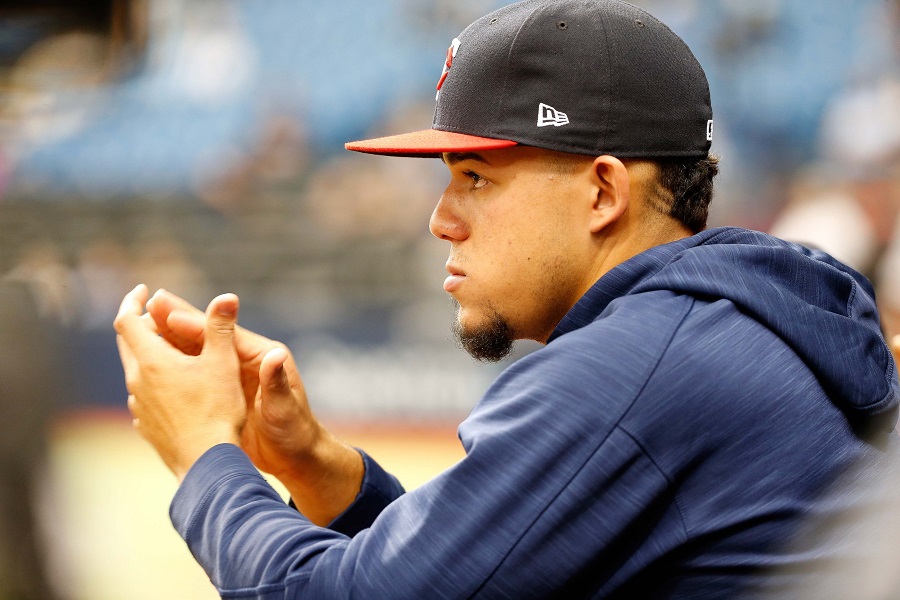 The case for Jose Berrios is similar to that of Byron Buxton and Miguel Sano. The hope of the last four years has been in Buxton and Sano, but also in Berrios because obviously, pitching wins. As much as we need to continue to see big offense, to get to where they all (and we all) want to get, they’ll need pitching. Berrios had a rough debut season in 2016, but when he came up in 2017, he pitched very well, at least for the first two months. But he was so much better and we really started to see what he could become. It’s obviously much more difficult to find long-term contracts for players such as Jose Berrios. He’s two seasons from arbitration and five years from free agency. There just aren’t a lot of examples of this for pitchers. In fact, of American League pitchers, I found just two such examples, Chris Archer and Martin Perez. Both came up, like Berrios, as top prospects. Archer pretty much immediately became an ace-level pitcher in Tampa. Perez was with the Rangers (with Thad Levine involved) and was exciting, but he was hurt some and struggled some. But he has become pretty good. They each had two pre-arbitration seasons, three arbitration season and then there were options to cover some free agent seasons. There are several more players who signed with one season before free agency. That’s obviously more ‘normal.’ Part of the reason for signing players early is for some cost certainty. But also, for teams to provide life-long financial security to the players, the players need to accept the risk that they could be underpaid in arbitration years or free agent years. It’s a trade off. Here is a group of players who chose to go year-to-year with arbitration. Because of the risk, these numbers should be the top of the spectrum, and yet they vary a bit. And, of course, we also have to account for the inflation in the game the last several years. To try to help with that, here is a listing of some pitchers who went through the arbitration cycle for the first time in 2017. Again, I only went through the American League. This is already a bunch, and frankly, you don’t want to go through a list double this size, but it gives us a good range for what the Twins could expect to have to pay. So, with all that as background, here is the contract that I would offer to Jose Berrios this offseason, at least as a starting point for discussion. This works out to a seven year, $46 million contract, and with the option, it would be eight years, $60 million. (I put a $2 million buyout to the option in there.) Seven years and $46 million sure doesn’t sound like a lot, does it? And yet, $46 million for a guy with just over a year of experience is a lot of money. Consider that four years ago around this time, Chris Archer signed a contract for six years and $25.5 million with two option years. That's $20 million additional dollars four years later. If I were to guess, I think that the Berrios side would want it to be a year or two shorter so that he can become a free agent at 29 or 30. In that context, does this deal seem to make some sense for the Twins? For Berrios’s camp? What do you think?
 -
I figured it would be good to start a forum on the managerial changes and new hires. As we all know, the Tigers will replace Brad Ausmus with Ron Gardenhire. There's a lot of discussion about that here. The Mets will hire Cleveland pitching coach Mickey Calloway as their new manager. The rumors are that Astros coach Alex Cora will be the next manager of the Red Sox. The Nationals let Dusty Baker go, so that managerial position is still open.
-
If he's been hired in "Pro Scouting" which is what we've heard, we won't hear or see anything that he's doing. That's the department that Brad Steil moved to. From what I've heard, he'll be scouting teams and players throughout the Carolinas, minor leaguers. Unless there is a trade or minor league signing of a player from that area, we won't hear anything. So, it'll be hard to judge what he's doing and how he's doing. But we know he's got a lot of contacts. Of course, a lot of those contacts won't be able to speak as openly with him anymore, so it's a very interesting signing. I'm encouraged by it... but there's no way to know if it's a good hire or not.
-
Books I am reading, read, or plan to read
Seth Stohs replied to Mike Sixel's topic in The Sports Bar
Random, but my daughter came to my place for MEA, and she didn't bring any of her AR books. So, we looked around and found the Little House books. I bought the set several years ago and meant to sit down and read them when I wasn't writing for Twins Daily, or the Prospect Handbook, or binge watching TV shows... or. or. or... Anyway, we started reading Little House in the Big Woods. It's not difficult reading, and it's something that she's enjoying. I find the mid-to-late 1800s fascinating, so it's fun. -
Eight Predictions For Season 8 Of The Walking Dead
Seth Stohs posted a blog entry in Seth Stohs' Blog
Alright, as many of you know - and maybe many of you are - I'm a huge binge TV watchers. I've got access to Amazon, Hulu and Netflix and watch so many shows. I'll watch almost anything. I've watched shows like Highway to Heaven, and I've watched shows like American Horror Story. I'm currently watching old episodes of 7th Heaven, and I'm very excited for Season 8 of The Walking Dead on AMC! I was late to the show, to be honest. Season 7 was the first season that I watched on AMC as it was happening. I binge-watched the first six seasons and completed them just before Season 7 began. I tell you, needing to wait a week for new episodes was incredibly difficult. Waiting a whole week between episodes? Waiting for months between seasons? On Sunday night at 8:00 central time, Season 8 of The Walking Dead will debut. Of not, it is also the show's 100th episode. In anticipation of the show tonight, I thought I would make eight predictions for Season 8. It should be noted that I haven't read any of the comics, so I don't know what follows that storyline or not. And, until typing this sentence, I never though to google The Walking Dead either. So, these are really just my top-of-head predictions for what should be an interesting season. When we last watched an episode, King Ezekiel, Rick and Maggie were standing before the people from The Kingdom, Alexandria and the Hilltop. They were inspiring their people, sending them off to war against Negan and his many, many followers. So, let's get started: Prediction #1 - Maggie Takes Over I don't know if she'll necessarily take over for Rick as the overall leader, but I think personally that she has shown to be a better, smarter leader. Rick has had his ups and downs in the leadership category over the years, and Maggie's got the intelligence and charisma to lead. Now, she is pregnant, so I don't know how that storyline will work this season. It certainly didn't set her back during the fight with Negan in the season 7 finale, but it may come into play. Prediction #2 - Death In Episode 100 (or Season 8, Episode 1) In the premier episode of Season 7, we saw the brutal deaths of Glen and Abraham at the hands of Negan (with the help of Lucille). I would anticipate that at least one or two of the main characters will be killed off. I don't think it'll be anyone like Rick, Carol, Daryl or Carl, but that next tier of character could be affected. Morgan finally got angry and decided that killing was OK, so he might be one to watch. Maybe someone like Tara or Rosita could also be lost. Shiva was one of the big heroes of the final Season 7 episode, so the hero tiger could play a factor in this as well. Prediction #3 - Carl & Enid It has to happen at some point, right? Carl and Enid have been kind of this cutesy couple of kids who might like each other, but kind of kept their distance, but also walked off in the woods together, and even ended up roller blading together. So, it's got to happen, right? Prediction #4 - A Relationship for Jesus We first saw Jesus in a semi light-hearted episode with Daryl and Rick in which a huge truck loaded with food ended up lost in a lake. At that point, I kind of figured his character would become prevalent. Jesus was a nice character in Season 7, but I would think it would be a bigger role in Season 8. In Season 7, he came out to Maggie as gay, which I'm sure sent shock waves to many, and likely upset some as well. I would guess that Jesus will have some sort of relationship this season. Many wonder if that will be with Daryl, who has pretty much only had platonic inclinations through the first seven seasons. Who knows? Maybe the writers will really go for the upset and hook up Jesus with Father Gabriel. Probably not. Prediction #5 - The Plight of Dwight So, I think that Dwight was being truthful in saying he wanted to help Rick's group against Negan, but in the final fight scene, he was still working with Negan. I am very curious how this plays out, again because I think he will want to be on the side of the good guys. In fact, I could see him being the one to take down Negan. But how will he integrate himself into Alexandria? That could be an episode or two all its own. Another question might be whether or not his wife will show up, maybe with beer and pretzels? Prediction #6 - Eugene will survive, somehow Eugene lied about knowing how to save the world. He is smart, and he's all about self-preservation. That's why he's all about the "I am Negan" right now. He feels comfortable right now, and he probably feels he is in a power position, and he likes it. But if we assume that "Negan" goes down, what will Eugene do to preserve himself again? Will he find a way back into the confidence of Rick and his group? My guess is Yes... Prediction #7 - Rick and Michonne Break Up I don't know. I just never thought they really made sense in the first place. As I watched, bringing them together seemed really forced. Plus, a break up is something that really hasn't happened on the show so far. I mean, there was Carol and her husband's issues early in Season 1, but those were resolved quickly. I mean, the Shane, Rick, Lori situation was kind of fun in Season 1 too, but a break up could create all sorts of intrigue. Prediction #8 - A Few Mini-Predictions/Questions OK, eight predictions for Season 8 just made sense, but I'm going to cheat a bit and throw a few quick predictions at you in #8 for your thoughts. The relationship between Daryl and Carol is interesting to me. They've had a very strong connection, strictly platonic to this point, throughout the show. If they don't have Daryl hook up with Jesus, could he and Carol come together? And, who will be the nemesis of the show is Negan isn't in power? Will Jadis take over as the real bad guy, or will there be another group? Gregory will also obviously be killed, or at least be taken out of the equation. Will it be fighting for the good side, or will it be at the hands of someone from the good side? Oceanside will have to come into play somehow, right? I still think that Tara and Cyndie will wind up together as a couple, so how will they all come together? So, there you have it, Eight-ish predictions for Season 8 of The Walking Dead. Please feel free to leave your comments on any of my predictions or predictions of your own in the Comments. And then after the episode, I may be back with additional thoughts, maybe even more blogs... at least if people are interested.-
- 1
-
-
- rick grimes
- daryl dixon
- (and 3 more)
-
Over at Twinkie Town, they've found a quiz asking how many of the 2017 Twins you can name... It's kind of fun. You get like 10 minutes to come up with as many as you can name. I got 42 out of 52... I missed a couple of obvious ones, and I got some of the more random ones. How do you do? https://www.twinkietown.com/2017/10/21/16512196/can-you-name-every-player-on-the-2017-minnesota-twins-mlb-quiz-sporcle-roster
-
Cubs Pitching Coach fired. Buddy of Molitor.
Seth Stohs replied to ppearson50's topic in Minnesota Twins Talk
They wanted him when Molitor was hired... he's certainly jumped up to the top of the wish list, I would think... but with Falvine, they may have other requirements they're looking for. -
Before spring training, Twins Daily caught up with right-handed reliever Tom Hackimer for a Get to Know Him Q&A. He was preparing for the 2017 season, his first full-season as a professional. Hackimer had been the Twins 4th round pick after playing at St. John’s University in New York. The 23-year-old is currently in Arizona representing the Twins in the Arizona Fall League where he has given up one run over four innings. Image courtesy of Seth Stohs, Twins Daily (photo of Tom Hackimer) Before spring training, Twins Daily caught up with right-handed reliever Tom Hackimer for a Get to Know Him Q&A. He was preparing for the 2017 season, his first full-season as a professional. Hackimer had been the Twins 4th round pick after playing at St. John’s University in New York. The 23-year-old is currently in Arizona representing the Twins in the Arizona Fall League where he has given up one run over four innings. Recently Twins Daily chatted with Hackimer to get caught up on his season and his Arizona Fall League goals. Tom Hackimer began this season with 16 appearances in Cedar Rapids. He went 3-1 with a 1.50 ERA and a 0.58 WHIP. He walked just 1.1 per nine while striking out 10.5 per nine in 24.0 innings. He was promoted to Ft. Myers where he worked 37.1 innings over 27 games. He posted an ERA of 1.93 ERA and a 1.02 WHIP. His walk rate jumped to 4.5 per nine while his strikeout rate stayed high at 10.4 per nine innings. Hackimer saw success at both levels, but he also saw that there were noticeable differences between the Midwest League and the Florida State League. Hackimer said, “The hitters were definitely better. I noticed I really needed to mix offspeed in there a little more. In Cedar Rapids, I was throwing a lot of fastballs.” He continued, explaining that it was a lesson learned quickly, “My first outing when I got up to High-A, I was doing the same thing and it didn’t go quite as well. So I realized that I had to mix it up a little more and really make sure, especially for me as a sidearmer, I had to make sure I could get inside on lefties so they couldn’t just dive out over the plate.” Hackimer played for the Kernels in the first half when they earned their playoff berth. He was also a big part of the Miracle second-half run that led them to the playoffs. Hackimer acknowledged, “It’s always a lot more fun when you’re winning, and a lot more exciting that way.” But a lot of players are amazed by what their first full season of minor league ball can do to their bodies. One Twins player told me recently that he’s learned over time when to start working out, throwing, or even just showing up to spring training to help him get through a season. That took the player several years to figure out. For Hackimer, he was happy with how his first season went physically. “It actually held up better than I thought I would. Toward the end, I’d get a lot more tired, but I learned how to get into a good routine and kind of pare down some of the stuff that I do throughout the season. A little bit of a heavier workload toward the begin and then I lessened what I do in the middle and at the end to make sure that I got to the finish line strong.” And just as his season was coming to an end, Hackimer found out that his season was not complete, at least not quite yet. Late in the season, he found out that he would get the opportunity to represent the Twins in the Arizona Fall League. When invited, there was no question in his mind of whether or not he’d accept the invitation. “It was definitely a for sure thing for me. The way I found out. We were in Clearwater when I was with Ft. Myers. We had just come in from batting practice. Everyone was standing around the pregame spread. Doug Mientkiewicz came over and said, ‘Hey, come into my office and talk to me when you’re done eating.’” Hackimer continued, “I was a little excited, nervous, didn’t know what was happening. But I went in there, and he was like, ‘You got picked to go to the Fall League. Congratulations!’ It was nice. It was exciting.” There are many reasons to send players to the Fall League. Sometimes it is to make up for innings or at bats lost. Sometimes it is to push a player a bit and give them the opportunity to compete against some really good competition. Individually, they all have some goals that they want to accomplish in the season’s seven weeks. Hackimer noted, “One of my goals was to really work on mixing pitches better. I sort of get into a rut of doing that same thing. I started to develop a changeup, but I haven’t been using it a lot. That was one of the things that in spring training, I talked to Trevor Hildenberger about, and that’s obviously his bread and butter, his changeup. So I really wanted to take this opportunity to try to develop that and see where it’s at as a pitch.” Earlier this week, Hackimer worked an inning in a Fall League game. “These guys can hit. I got a rude awakening yesterday (Tuesday). I went out and gave up a few quick hits on pitches that normally I think I would have been OK with throwing, but they were either in the wrong spot or in the wrong sequence. So that’s stuff I have to go back and look at.” In that outing, Hackimer limited the damage to just one run in the inning. “Double play ball. Pitcher’s best friend.” Hackimer had a two-inning outing on Thursday in which he was perfect. As you’ve seen, Tom Hackimer throws from the side. In a lot of ways, he is similar to Twins rookie Trevor Hildenberger. They were both drafted as four-year college relievers. Their first full seasons were spent between Cedar Rapids and Ft. Myers, and they each played in the Arizona Fall League that same season. Last fall, they had their first interaction. “Back when I was in Instructs last year, I had a ten minute conversation with him about his change up. He’s been very kind, very helpful the whole way through.” This spring, the two worked and talked some together. According to Hackimer, “I threw with him once in spring training. I always made sure when he was throwing a bullpen that I hung around to watch it if I could.” When the Twins season ended and they were preparing to play the Yankees in New York, Hackimer received an unexpected message. “One of the things that really impressed me, right before the Wild Card game, maybe a day before, Trevor actually reached out to me to wish me well in the Fall League.” When the Fall League is over, Hackimer will head home and get some rest. No big plans for the offseason. “I didn’t really have any plans, but the potential to come here knocked out any of the plans I might have had. But it’s for a good reason, so I can live with that.” When he was drafted, many thought that Hackimer could be a fast-mover. He could start the 2018 season in AA Chattanooga and get up to AAA Rochester. Who knows, maybe even a late-season call up is possible. View full article
-
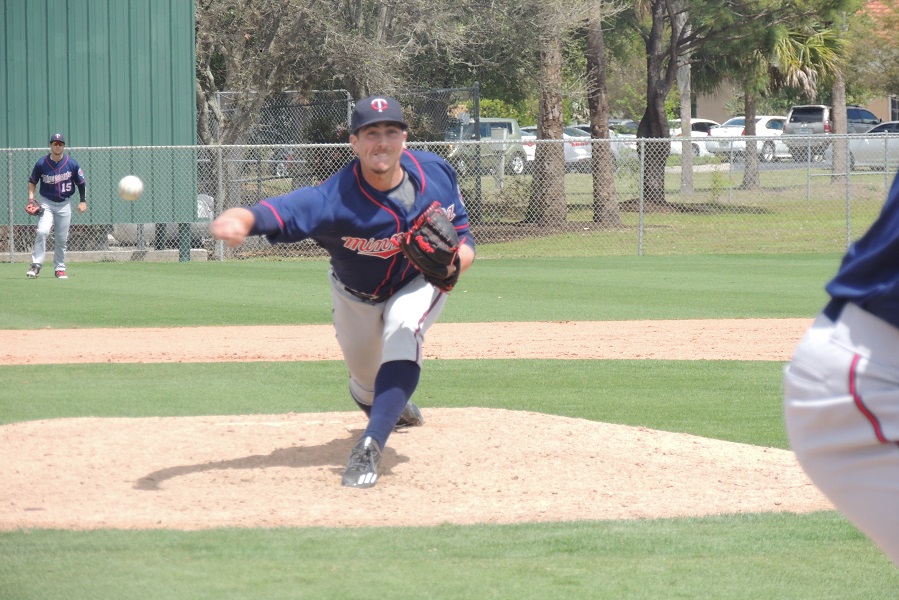 Recently Twins Daily chatted with Hackimer to get caught up on his season and his Arizona Fall League goals. Tom Hackimer began this season with 16 appearances in Cedar Rapids. He went 3-1 with a 1.50 ERA and a 0.58 WHIP. He walked just 1.1 per nine while striking out 10.5 per nine in 24.0 innings. He was promoted to Ft. Myers where he worked 37.1 innings over 27 games. He posted an ERA of 1.93 ERA and a 1.02 WHIP. His walk rate jumped to 4.5 per nine while his strikeout rate stayed high at 10.4 per nine innings. Hackimer saw success at both levels, but he also saw that there were noticeable differences between the Midwest League and the Florida State League. Hackimer said, “The hitters were definitely better. I noticed I really needed to mix offspeed in there a little more. In Cedar Rapids, I was throwing a lot of fastballs.” He continued, explaining that it was a lesson learned quickly, “My first outing when I got up to High-A, I was doing the same thing and it didn’t go quite as well. So I realized that I had to mix it up a little more and really make sure, especially for me as a sidearmer, I had to make sure I could get inside on lefties so they couldn’t just dive out over the plate.” Hackimer played for the Kernels in the first half when they earned their playoff berth. He was also a big part of the Miracle second-half run that led them to the playoffs. Hackimer acknowledged, “It’s always a lot more fun when you’re winning, and a lot more exciting that way.” But a lot of players are amazed by what their first full season of minor league ball can do to their bodies. One Twins player told me recently that he’s learned over time when to start working out, throwing, or even just showing up to spring training to help him get through a season. That took the player several years to figure out. For Hackimer, he was happy with how his first season went physically. “It actually held up better than I thought I would. Toward the end, I’d get a lot more tired, but I learned how to get into a good routine and kind of pare down some of the stuff that I do throughout the season. A little bit of a heavier workload toward the begin and then I lessened what I do in the middle and at the end to make sure that I got to the finish line strong.” And just as his season was coming to an end, Hackimer found out that his season was not complete, at least not quite yet. Late in the season, he found out that he would get the opportunity to represent the Twins in the Arizona Fall League. When invited, there was no question in his mind of whether or not he’d accept the invitation. “It was definitely a for sure thing for me. The way I found out. We were in Clearwater when I was with Ft. Myers. We had just come in from batting practice. Everyone was standing around the pregame spread. Doug Mientkiewicz came over and said, ‘Hey, come into my office and talk to me when you’re done eating.’” Hackimer continued, “I was a little excited, nervous, didn’t know what was happening. But I went in there, and he was like, ‘You got picked to go to the Fall League. Congratulations!’ It was nice. It was exciting.” There are many reasons to send players to the Fall League. Sometimes it is to make up for innings or at bats lost. Sometimes it is to push a player a bit and give them the opportunity to compete against some really good competition. Individually, they all have some goals that they want to accomplish in the season’s seven weeks. Hackimer noted, “One of my goals was to really work on mixing pitches better. I sort of get into a rut of doing that same thing. I started to develop a changeup, but I haven’t been using it a lot. That was one of the things that in spring training, I talked to Trevor Hildenberger about, and that’s obviously his bread and butter, his changeup. So I really wanted to take this opportunity to try to develop that and see where it’s at as a pitch.” Earlier this week, Hackimer worked an inning in a Fall League game. “These guys can hit. I got a rude awakening yesterday (Tuesday). I went out and gave up a few quick hits on pitches that normally I think I would have been OK with throwing, but they were either in the wrong spot or in the wrong sequence. So that’s stuff I have to go back and look at.” In that outing, Hackimer limited the damage to just one run in the inning. “Double play ball. Pitcher’s best friend.” Hackimer had a two-inning outing on Thursday in which he was perfect. As you’ve seen, Tom Hackimer throws from the side. In a lot of ways, he is similar to Twins rookie Trevor Hildenberger. They were both drafted as four-year college relievers. Their first full seasons were spent between Cedar Rapids and Ft. Myers, and they each played in the Arizona Fall League that same season. Last fall, they had their first interaction. “Back when I was in Instructs last year, I had a ten minute conversation with him about his change up. He’s been very kind, very helpful the whole way through.” This spring, the two worked and talked some together. According to Hackimer, “I threw with him once in spring training. I always made sure when he was throwing a bullpen that I hung around to watch it if I could.” When the Twins season ended and they were preparing to play the Yankees in New York, Hackimer received an unexpected message. “One of the things that really impressed me, right before the Wild Card game, maybe a day before, Trevor actually reached out to me to wish me well in the Fall League.” When the Fall League is over, Hackimer will head home and get some rest. No big plans for the offseason. “I didn’t really have any plans, but the potential to come here knocked out any of the plans I might have had. But it’s for a good reason, so I can live with that.” When he was drafted, many thought that Hackimer could be a fast-mover. He could start the 2018 season in AA Chattanooga and get up to AAA Rochester. Who knows, maybe even a late-season call up is possible.
 -
Rosenthal: Gardy to be the new Tigers manager
Seth Stohs replied to Seth Stohs's topic in Other Baseball
I wonder what Yankees fans (and Braves and Mets fans) would have said when the Yankees hired Joe Torre... Now I'm not saying Gardy is Torre, but it's silly to say that he isn't a good manager or can't do the job. I'm sure they talked through what they're looking for, and while wins or losses aren't necessarily the criteria due to his players, he may meet a lot of what they're looking for. He knows this game well, even if a collective 'we' may not think it makes a ton of sense. -
According to Ken Rosenthal, the Tigers have chosen Ron Gardenhire to be their next manager, pending the completion of a contract. https://theathletic.com/132558/2017/10/19/ron-gardenhire-to-be-next-tigers-manager-pending-completion-of-contract/
-
Diving Into The Offseason: A Sano Extension?
Seth Stohs replied to Seth Stohs's topic in Twins Daily Front Page News
How a player/person will handle that kind of future security is a huge consideration in any long-term contract extension... And right or wrong, that it going to be a much larger concern for Sano than it will be for Buxton.- 49 replies
-
- 6
-
-
- miguel sano
- paul goldschmidt
- (and 3 more)
-
In the last week, we have considered potential contract extensions for Brian Dozier and Byron Buxton. Today, we will attempt to consider what a possible long-term extension might look like for Third Baseman/Designated Hitter Miguel Sano. Sano came up and showed his promise in the 2nd half of the 2015 season. He struggled in his sophomore season of 2016, a struggle that still included 25 home runs. In 2017, he was having his best season yet, but it came to an end six weeks too early when he fouled a ball off of his shin, causing a stress reaction. While there are obvious short term and long-term concerns with Sano, it is very clear that he can be a game-changer in the middle of any lineup in the game. He’ll likely set strikeout records, but he can also produce like few can. Image courtesy of Evan Habeeb, USA Today In the last week, we have considered potential contract extensions for Brian Dozier and Byron Buxton. Today, we will attempt to consider what a possible long-term extension might look like for Third Baseman/Designated Hitter Miguel Sano. Sano came up and showed his promise in the 2nd half of the 2015 season. He struggled in his sophomore season of 2016, a struggle that still included 25 home runs. In 2017, he was having his best season yet, but it came to an end six weeks too early when he fouled a ball off of his shin, causing a stress reaction. While there are obvious short term and long-term concerns with Sano, it is very clear that he can be a game-changer in the middle of any lineup in the game. He’ll likely set strikeout records, but he can also produce like few can. Sano will turn 25 in May. He ended the 2017 season with 2.095 years of service. He’ll be eligible for arbitration following the 2018 season unless an extension can be worked out. Sano signed back in 2009 for $3.15 million. He’s made league minimum, or a bit above the first three seasons in the big leagues. In the Byron Buxton article, I mentioned the salaries of Mike Trout and Bryce Harper. While I didn’t put Buxton - and won’t put Sano - in their level, there has to be an understanding that that is the level of player that the Twins tandem could become. Could. That is the risk in a long-term contract for Sano. He could make more going year-to-year and become a free agent at age. That’s the path that Manny Machado has taken. Or, he could take some serious cost certainty for a long time. There are several really good sluggers who have taken the cost certainty of a long-term deal. Here are a few: Those numbers give us something to start with. Paul Goldschmidt is one of the best, most underrated, perennial All Stars who have an MVP you’ll find. Anthony Rizzo’s deal looks like a steal now, but it was signed a year or two earlier in the process. Now obviously Ryan Zimmerman and David Wright signed their first long-term extensions a long time ago, so we’ll have to adjust from there. Kyle Seager, as you can see, signed a year later, and that’s how he got his deal to $100 million level. -------------------------------------------------------------- ** Before we get to unveiling what a potential Miguel Sano contract extension might look like, here is a quick pitch for your quintessential Hot Stove guide: The 2018 Twins Daily Offseason Handbook is now available for preorder. Click the link to claim your copy, and you'll get it as soon as it's ready, after the postseason concludes. Same deal as last year: name your price. Recommendation is $5, but you can pay as little or as much as you wish. We appreciate any and all support! Plenty more details are on the way in the coming weeks. You can check out last year's edition for an idea of what to expect. ** --------------------------------------------------------------- Here is what I would throw at Sano as an offer. Feel free to discuss. So that is a six year, $66 million deal with an option for 2024 at $25 million with a $5 million buyout. In that deal, the Twins buyout Sano’s final pre-arbitration season, three arbitration seasons and two free agency seasons (with an option for one more). Assuming the Twins would pick up that 2024 option on Sano’s contract, he would then become a 31-year-old free agent with the potential for one more huge payday. So what do you think? Is this a contract that the Twins should like? It may feel a little low, but it does include the $1 million pre-arbitration number and a reasonable arbitration-one season. There needs to be incentive for the Twins to make such a deal, rather than going year-to-year. Sano has shown a lot of potential, but he hasn’t done a lot of the things that Goldschmidt or others listed above had at this point in their careers. The dollars in the game are higher, so there’s some adjustment for that. Of course, Sano’s side would ask for more. The Twins side would likely ask for a little less. But to me, this feels like a good medium ground. One other possibility would be a three year deal to buy out two of his arbitration years allow him to get an arbitration offseason and become a free agent. Or, the two sides could re-evaluate the dollars in the game and Sano’s value in it. What would you offer? View full article
- 49 replies
-
- 1
-
-
- miguel sano
- paul goldschmidt
- (and 3 more)
-
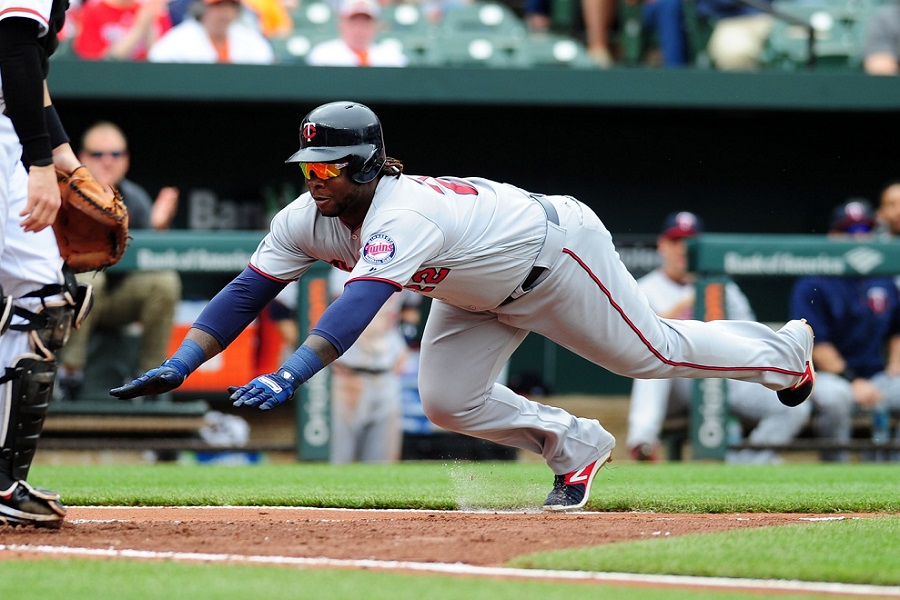 Sano will turn 25 in May. He ended the 2017 season with 2.095 years of service. He’ll be eligible for arbitration following the 2018 season unless an extension can be worked out. Sano signed back in 2009 for $3.15 million. He’s made league minimum, or a bit above the first three seasons in the big leagues. In the Byron Buxton article, I mentioned the salaries of Mike Trout and Bryce Harper. While I didn’t put Buxton - and won’t put Sano - in their level, there has to be an understanding that that is the level of player that the Twins tandem could become. Could. That is the risk in a long-term contract for Sano. He could make more going year-to-year and become a free agent at age. That’s the path that Manny Machado has taken. Or, he could take some serious cost certainty for a long time. There are several really good sluggers who have taken the cost certainty of a long-term deal. Here are a few: Those numbers give us something to start with. Paul Goldschmidt is one of the best, most underrated, perennial All Stars who have an MVP you’ll find. Anthony Rizzo’s deal looks like a steal now, but it was signed a year or two earlier in the process. Now obviously Ryan Zimmerman and David Wright signed their first long-term extensions a long time ago, so we’ll have to adjust from there. Kyle Seager, as you can see, signed a year later, and that’s how he got his deal to $100 million level. -------------------------------------------------------------- ** Before we get to unveiling what a potential Miguel Sano contract extension might look like, here is a quick pitch for your quintessential Hot Stove guide: The 2018 Twins Daily Offseason Handbook is now available for preorder. Click the link to claim your copy, and you'll get it as soon as it's ready, after the postseason concludes. Same deal as last year: name your price. Recommendation is $5, but you can pay as little or as much as you wish. We appreciate any and all support! Plenty more details are on the way in the coming weeks. You can check out last year's edition for an idea of what to expect. ** --------------------------------------------------------------- Here is what I would throw at Sano as an offer. Feel free to discuss. So that is a six year, $66 million deal with an option for 2024 at $25 million with a $5 million buyout. In that deal, the Twins buyout Sano’s final pre-arbitration season, three arbitration seasons and two free agency seasons (with an option for one more). Assuming the Twins would pick up that 2024 option on Sano’s contract, he would then become a 31-year-old free agent with the potential for one more huge payday. So what do you think? Is this a contract that the Twins should like? It may feel a little low, but it does include the $1 million pre-arbitration number and a reasonable arbitration-one season. There needs to be incentive for the Twins to make such a deal, rather than going year-to-year. Sano has shown a lot of potential, but he hasn’t done a lot of the things that Goldschmidt or others listed above had at this point in their careers. The dollars in the game are higher, so there’s some adjustment for that. Of course, Sano’s side would ask for more. The Twins side would likely ask for a little less. But to me, this feels like a good medium ground. One other possibility would be a three year deal to buy out two of his arbitration years allow him to get an arbitration offseason and become a free agent. Or, the two sides could re-evaluate the dollars in the game and Sano’s value in it. What would you offer?
 -
Garver, Slegers win Twins minor league awards
Seth Stohs replied to Seth Stohs's topic in Twins Minor League Talk
I voted for Slegers for starting pitcher of the year and Nick Anderson for relief pitcher of the year. Neither won, but it's fun to see Slegers get the Twins nod. Both very deserving. -
No surprise. In fact, in his article last night, Nick noted that it was an obvious decision. Today the Twins announced that they have declined to pick up the 2018 option on Glen Perkins contract. He is now a free agent.
-
The Twins announced this afternoon that Mitch Garver was named the 2017 Sherry Robertson Award as the minor league player of the year. They also announced that Aaron Slegers had been named the 2017 Jim Rantz Award winner for minor league pitcher of the year. Garver had been named the Twins Daily MInor League Hitter of the Year. The TD voters named Stephen Gonsalves the Starting Pitcher of the Year, and John Curtiss the Relief Pitcher of the Year.
-
Diving Into The Offseason: A Buxton Extension?
Seth Stohs replied to Seth Stohs's topic in Twins Daily Front Page News
Trout signed a year later and didn't have the $1 million year in there... but I don't disagree... I might be a little light, maybe more in the first free agency year or two. But that's the purpose of signing a deal this year as opposed to next year or later. The numbers will keep getting bigger. I shouldn't have done the comparisons to Trout and Harper maybe, but I wanted to make sure people knew that it needs to be below that. I also have him higher than all the other guys I compared him to. I think it'd be hard to turn down $76 million guaranteed. And he'd still be a free agent at 30 and have time to get another big contract.- 53 replies
-
- 3
-
-
- brian dozier
- mike trout
- (and 3 more)
-
Diving Into The Offseason: A Buxton Extension?
Seth Stohs replied to Seth Stohs's topic in Twins Daily Front Page News
If Kevin Kiermeier got 6 years, $53+ million, then I really like my offer. -
Expansion Could Alter MLB's Landscape
Seth Stohs replied to Cody Christie's topic in Twins Daily Front Page News
It's always a fun topic. I haven't heard anything on it in a long time... But it is fun... Here are my four divisions, if those are the two new teams (Portland, Montreal): West: Seattle, Portland, San Francisco, Oakland, Dodgers, Angels, San Diego, Arizona. Northeast: Detroit, Cleveland, Pittsburgh, Philly, Cincinnati, Boston, NYY, NYM. Midwest: Kansas City, St. Louis, Minnesota, Cubs, White Sox, Milwaukee, Toronto, Montreal. South: Colorado, Texas, Houston, Atlanta, Tampa, Miami, Washington, Baltimore.- 125 replies
-
- 3
-
-
- rob manfred
- montreal expos
- (and 1 more)
-
Last week, I considered what a potential long-term extension might look like for All Star Brian Dozier. Today, I want to do a little digging on what a potential long-term deal might be for Byron Buxton. Buxton will not be arbitration-eligible until after the 2018 season. He will have three years of arbitration before becoming a free agent (both sentences assuming that he is done with the minor leagues). While the Twins certainly should not feel like they have to sign him now, this might be the best time to get him at a reasonable cost. Image courtesy of Winslow Townson, USA Today Last week, I considered what a potential long-term extension might look like for All Star Brian Dozier. Today, I want to do a little digging on what a potential long-term deal might be for Byron Buxton. Buxton will not be arbitration-eligible until after the 2018 season. He will have three years of arbitration before becoming a free agent (both sentences assuming that he is done with the minor leagues). While the Twins certainly should not feel like they have to sign him now, this might be the best time to get him at a reasonable cost. As we did in the Dozier article, research was done to consider comparable deals. It can be more difficult to find guys who have signed long-term deals after just over two years of service time, and how many of them put up over four WAR in large part due to his defense? But we tried and we’ll use the information we find to try to project what it might take to sign Buxton to an extension. For this analysis, let’s start out at the top of the spectrum. Mike Trout and Bryce Harper are at the top of the pay scales. One could argue that they are, especially considering their ages and ages at debut, the two more valuable players in the game today. Byron Buxton is at 2.064 years of service. That means, he will be arbitration-eligible following the 2018 season. Mike Trout signed for $1 million in 2014, his final pre-arbitration salary. Following another MVP caliber season, Trout signed a huge six year, $144.5 extension that bought out his three arbitration years and three years of free agency. His three arbitration-year salaries were $5.25 million, $15.25 million and $19.25 million. He then will get $33.25 million each of the next three years (those bought-out free agent years). Bryce Harper was the #1 overall pick in the 2010 draft to a Major League contract. He came up quickly and following the 2014 season, he was already approaching arbitration. Instead, he and the Nationals ripped up the final year of his original deal, and he signed for $2.5 million in 2015 and $5.0 million in 2016. He made $13.625 million this season, and earlier in the year, he signed for $21.65 million in what would have been his fourth arbitration year. *TBD will equal some really, really big numbers Now, Byron Buxton isn’t going to command the same contracts as Trout or Harper if he signs now. Those guys had MVPs and All Star experiences under their belt. Buxton’ hasn’t yet, but his 3.5 bWAR based highly on his defense certainly point in the direction of him being at a level just below those top two guys. So who are some others who signed this type of deal? In the chart below, I’ve listed some players that I think would be pretty comparable to where Buxton is right now, guys who signed long-term extensions. I should note that Christian Yelich signed his deal one year earlier in the process. Justin Upton was the most established at the point of his deal. He was also drafted at the top of his draft. Juan Lugares has won a Gold Glove. Odubel Herrera was an All Star. Christian Yelich was a high-ranking prospect of the Marlins and was part of Team USA this year. I also included Andrelton Simmons. Despite the fact that he’s an infielder, I think he is a good comp for Buxton. Early in Simmons’ career, he really struggled offensively, but his glove was elite. He won several Gold Gloves and was generally considered the best defensive player in baseball for several years. I think Buxton fits into that category, but at the same time, Buxton’s offensive potential is significantly higher. So with that information as the background, he is an estimate of the parameters that might make sense for a Buxton extension. That would equate to a seven year, $76.5 million.Obviously that is a huge investment, but Buxton still has a ton of potential beyond his golden glove and speed. He has power to go with it, and if he can reduce his strikeouts the way he did in 2017 again, he will be a multi-time All Star, and a potential MVP candidate. There is risk for the Twins, but if the Twins choose to go year to year with Buxton, he could cost more per year and could be gone to free agency after the 2021 season. However, the risk for the Twins in not signing him this offseason is that he could take another step forward offensively and end up with 30-50% higher annual salaries if they did a deal in a year. Of course, with Buxton banging into walls with frequency, injury is a potential risk as well. The risk for Buxton is just that. He could potentially make quite a bit more by going year to year and then become a free agent at age 28. At that time, he could look for an eight to ten year deal. So what do you think? Should the Twins consider a multi-year extension for Buxton? At what point would you be less comfortable? How many years of risk would you be willing to take while at the same time being realistic? Discuss. ----------------------------------------------------------------------- COMING SOON! A reminder, Nick Nelson is leading the way in the final steps of creating the Twins Daily Annual Offseason Handbook. More details, and the ability to pre-order, will be made available later this week. As we have in the past, we'll take a look at what options the Twins may have during the upcoming offseason. Trade Targets. Free Agents. Exclusive articles from the Twins Daily owners only available in the electronic book. Definitely something Twins fans will want at their fingertips. View full article
- 53 replies
-
- 1
-
-
- brian dozier
- mike trout
- (and 3 more)
