



Seth Stohs
-
Posts
25,911 -
Joined
-
Last visited
-
Days Won
109
Content Type
Profiles
News
Minnesota Twins Videos
2026 Minnesota Twins Top Prospects Ranking
2022 Minnesota Twins Draft Picks
Minnesota Twins Free Agent & Trade Rumors, Notes, & Tidbits
Guides & Resources
2023 Minnesota Twins Draft Picks
The Minnesota Twins Players Project
2024 Minnesota Twins Draft Picks
2025 Minnesota Twins Draft Pick Tracker
2026 Minnesota Twins Draft Tracker: Picks & Bonuses
Forums
Blogs
Events
Store
Downloads
Gallery
Everything posted by Seth Stohs
-
Part 1: Seth's Updated Top 50 Prospects (41-50)
Seth Stohs replied to Seth Stohs's topic in Twins Daily Front Page News
I've always ranked relief pitchers much lower than most. There are question marks with each of the relievers in this range, at least for me... Injury, Age, stuff... or a combination of the three. There are more relievers ahead as well.- 24 replies
-
- 3
-

-
- jt chargois
- luke bard
- (and 3 more)
-
Part 1: Seth's Updated Top 50 Prospects (41-50)
Seth Stohs replied to Seth Stohs's topic in Twins Daily Front Page News
I agree with this. Chargois, if healthy, should be up a bunch. Bard certainly could be, though he could also be lost in the Rule 5. Hackimer is kind of on the Hildenberger schedule. IF that's true, he would start 2018 in Chattanooga and possibly get to Rochester late in the season.- 24 replies
-
- 2
-
-
- jt chargois
- luke bard
- (and 3 more)
-
As we await the end of the World Series, as well as the Twins Daily Offseason Handbook being available for download, I thought it would be fun to start on my preliminary 2018 Minnesota Twins Top 50 prospect list. As Cody mentioned in his article tonight, he and I, along with Tom and Jeremy, are diving heavily into the 2018 Twins Prospect Handbook. I like to do this preliminary ranking and then see how it changes after doing a ton of research and talking to several people. Image courtesy of Seth Stohs, Twins Daily As we await the end of the World Series, as well as the Twins Daily Offseason Handbook being available for download, I thought it would be fun to start on my preliminary 2018 Minnesota Twins Top 50 prospect list. As Cody mentioned in his article tonight, he and I, along with Tom and Jeremy, are diving heavily into the 2018 Twins Prospect Handbook. I like to do this preliminary ranking and then see how it changes after doing a ton of research and talking to several people. So tonight is the first installment. Here are my choices for Twins prospects 41-50. Be sure to ask questions and share your thoughts in the comments after you’ve had a chance to read through this list. #50 LHP Jovani Moran The 20-year-old southpaw was the Twins seventh-round draft pick in 2015 out of Puerto Rico. He missed the 2016 season due to bone spurs in his elbow, but he had those cleaned up and went to Elizabethton in 2017. He was named the Twins Daily Short-Season Pitcher of the Year. In 24.2 innings, he walked six and struck out 45 (16.4 K/9). That didn’t include the playoffs where he starred for the Appy League champs. Will he remain in the bullpen? That’s to be determined. As E-Twins manager Ray Smith told Twins Daily, ““We didn’t want to force anything with Jovani due to his arm issues last year. I’ve never seen him being utilized in a starting role, but with this ‘stuff’ being so good, it might turn out to be his role once it’s decided that his arm will continue to be 100%”” #49 LHP Andrew Vasquez Vasquez was the Twins 32nd-round pick in 2015 out of Division III Westmost College where he teamed with Hector Lujan. The left-hander split his 2017 season between Cedar Rapids and Ft. Myers. He combined to post a 2.02 ERA. In his 58 innings, he walked 20 and struck out 85 batters. While he works in the low-90s, he’s got a lot of movement on his fastball and has a terrific slider that gets a lot of swings and misses. (Get to know Andrew Vasquez) #48 Alex Robinson There are a lot of quality relief pitcher prospects in the Twins system, and when it comes to pure ceiling, Robinson might be right at the top. The left-hander consistently hits 97-98 mph with his fastball and has a devastating slider. He was the Twins fifth-round pick in 2015 out of Maryland, but he really fought his control. He spent 2015 and 2016 in Elizabethton where he struck out 67 batters in 45 innings, but he also walked 50! He began 2017 in Cedar Rapids and struck out 51 and walked 15 and struck out 51. He moved up to Ft. Myers and in 17.1 innings, he walked 13 and struck out 27. He turned 23 in August, so it is wise for the Twins to be as patient as necessary to maximize his immense talent. #47 Tom Hackimer Hackimer was the Twins fourth-round pick in 2016 out of St. Johns. The side-winding right-hander profiles pretty similarly to Twins rookie of the year Trevor Hildenberger. He began 2017 in Cedar Rapids where he posted a 1.50 ERA and a miniscule 0.58 WHIP in 24 innings. He then worked 37.1 innings in Ft. Myers where he posted a 1.93 ERA and a 1.02 WHIP. Combined, he walked 22 and struck out 71 batters in 61.1 innings. He is now pitching the Arizona Fall League. (Get to know Tom Hackimer, and from last week, Catch Up with him in Arizona) #46 OF Jaylin Davis Jaylin Davis was the Twins 24th-round pick in 2015 out of Appalachian State. He ended the 2016 season with 52 games in Cedar Rapids. That’s where he began his 2017 season as well. In 66 games for the Kernels, he hit .267/.316/.486 (.802) with 13 doubles and 12 home runs. After helping the team to a first half playoff berth, he was promoted up to Ft. Myers where he played in 59 games. He struggled, hitting just .237 with three home runs. But his power is legit. He’s a good athlete who took to playing right field in 2017. (Get to know Jaylin) #45 JT Chargois If you were like me, you were hoping that the 2012 second-round pick would not be on this list. In fact, I had hopes that he would be the Twins closer by midseason. Instead, he fought elbow issues throughout the entire season and did not pitch outside of two games in late April in Rochester. His mid-to-upper 90s fastball, slider, and performance last September make him incredibly intriguing, and he should probably be higher on this list. He’ll turn 27 in December. (Get to know JT.) #44 Luke Bard Bard was the Twins second supplemental first-round pick in 2012 out of Georgia Tech. He has really only been healthy the last two seasons. In 2016, he was known to have one of the top spin rates in the Twins system. In 2017, he was a strikeout machine. In 52.1 innings at Chattanooga, he walked 20 and struck out 78 (13.4 K/9). He moved up to Rochester where he walked four and struck out 21 batters in 13 innings (14.5 K/9). He does struggle with control and command at times, but the soon-to-be-27-year-old should be considered for a 40-man roster spot in November. #43 OF Jean-Carlos Arias Arias returned to the GCL in 2017 after posting a mere .531 OPS there in 2016. He broke out, hitting .298/.359/.476 (.835) with seven doubles, four triples and five home runs. He also stole ten bases. Arias has a lot of tools. He’s got speed and a strong arm. He has the potential to hit for some average, but he also has the potential to grow and add more power. Arias will turn 20 in January and should move up to Elizabethton in 2018. #42 Trey Cabbage Cabbage was the Twins fourth-round pick in 2015 out of high school in Tennessee. He’s missed some time the last couple of years with injury. He returned to Elizabethton to start the Appy League season, but after just 13 games, he was promoted to the Kernels where he played left field and third base. A left-hander with a smooth swing, the 20-year-old is a terrific athlete, big and strong, with a lot of power potential. He’ll have to work to put the ball in play more, but as he grows, the talent is there to be quite good. (Get to know Trey, and Catch Up with him) #41 RHP Tyler Benninghoff 20-year-old Benninghoff was the Twins 11th-round pick in 2016 out of high school in Missouri. Almost immediately after signing, he underwent Tommy John surgery. He worked hard to rehab and returned to the GCL mound for his professional debut. He worked four innings in four outings. Benninghoff likely would have been a second or third round pick had he been healthy. He’s blessed with a strong arm and good offspeed pitches. So this ranking is fully based on projection. Hopefully he’ll be fully recovered and be able to get on the mound consistently in 2018. (Get to know Tyler) So there you have the first installment of my Top 50 Twins Prospects. That was prospects 41-50. In the coming days, the countdown will continue. Feel free to leave any questions or comments that you may have. By the way, there is a complete Organizational Depth chart in the Twins Daily Offseason Handbook, along with much more. To pre-order your copy, click on the banner below. (And as a reminder, there's no reason to not download it since you get to name your price.) View full article
- 24 replies
-
- 1
-
-
- jt chargois
- luke bard
- (and 3 more)
-
 So tonight is the first installment. Here are my choices for Twins prospects 41-50. Be sure to ask questions and share your thoughts in the comments after you’ve had a chance to read through this list. #50 LHP Jovani Moran The 20-year-old southpaw was the Twins seventh-round draft pick in 2015 out of Puerto Rico. He missed the 2016 season due to bone spurs in his elbow, but he had those cleaned up and went to Elizabethton in 2017. He was named the Twins Daily Short-Season Pitcher of the Year. In 24.2 innings, he walked six and struck out 45 (16.4 K/9). That didn’t include the playoffs where he starred for the Appy League champs. Will he remain in the bullpen? That’s to be determined. As E-Twins manager Ray Smith told Twins Daily, ““We didn’t want to force anything with Jovani due to his arm issues last year. I’ve never seen him being utilized in a starting role, but with this ‘stuff’ being so good, it might turn out to be his role once it’s decided that his arm will continue to be 100%”” #49 LHP Andrew Vasquez Vasquez was the Twins 32nd-round pick in 2015 out of Division III Westmost College where he teamed with Hector Lujan. The left-hander split his 2017 season between Cedar Rapids and Ft. Myers. He combined to post a 2.02 ERA. In his 58 innings, he walked 20 and struck out 85 batters. While he works in the low-90s, he’s got a lot of movement on his fastball and has a terrific slider that gets a lot of swings and misses. (Get to know Andrew Vasquez) #48 Alex Robinson There are a lot of quality relief pitcher prospects in the Twins system, and when it comes to pure ceiling, Robinson might be right at the top. The left-hander consistently hits 97-98 mph with his fastball and has a devastating slider. He was the Twins fifth-round pick in 2015 out of Maryland, but he really fought his control. He spent 2015 and 2016 in Elizabethton where he struck out 67 batters in 45 innings, but he also walked 50! He began 2017 in Cedar Rapids and struck out 51 and walked 15 and struck out 51. He moved up to Ft. Myers and in 17.1 innings, he walked 13 and struck out 27. He turned 23 in August, so it is wise for the Twins to be as patient as necessary to maximize his immense talent. #47 Tom Hackimer Hackimer was the Twins fourth-round pick in 2016 out of St. Johns. The side-winding right-hander profiles pretty similarly to Twins rookie of the year Trevor Hildenberger. He began 2017 in Cedar Rapids where he posted a 1.50 ERA and a miniscule 0.58 WHIP in 24 innings. He then worked 37.1 innings in Ft. Myers where he posted a 1.93 ERA and a 1.02 WHIP. Combined, he walked 22 and struck out 71 batters in 61.1 innings. He is now pitching the Arizona Fall League. (Get to know Tom Hackimer, and from last week, Catch Up with him in Arizona) #46 OF Jaylin Davis Jaylin Davis was the Twins 24th-round pick in 2015 out of Appalachian State. He ended the 2016 season with 52 games in Cedar Rapids. That’s where he began his 2017 season as well. In 66 games for the Kernels, he hit .267/.316/.486 (.802) with 13 doubles and 12 home runs. After helping the team to a first half playoff berth, he was promoted up to Ft. Myers where he played in 59 games. He struggled, hitting just .237 with three home runs. But his power is legit. He’s a good athlete who took to playing right field in 2017. (Get to know Jaylin) #45 JT Chargois If you were like me, you were hoping that the 2012 second-round pick would not be on this list. In fact, I had hopes that he would be the Twins closer by midseason. Instead, he fought elbow issues throughout the entire season and did not pitch outside of two games in late April in Rochester. His mid-to-upper 90s fastball, slider, and performance last September make him incredibly intriguing, and he should probably be higher on this list. He’ll turn 27 in December. (Get to know JT.) #44 Luke Bard Bard was the Twins second supplemental first-round pick in 2012 out of Georgia Tech. He has really only been healthy the last two seasons. In 2016, he was known to have one of the top spin rates in the Twins system. In 2017, he was a strikeout machine. In 52.1 innings at Chattanooga, he walked 20 and struck out 78 (13.4 K/9). He moved up to Rochester where he walked four and struck out 21 batters in 13 innings (14.5 K/9). He does struggle with control and command at times, but the soon-to-be-27-year-old should be considered for a 40-man roster spot in November. #43 OF Jean-Carlos Arias Arias returned to the GCL in 2017 after posting a mere .531 OPS there in 2016. He broke out, hitting .298/.359/.476 (.835) with seven doubles, four triples and five home runs. He also stole ten bases. Arias has a lot of tools. He’s got speed and a strong arm. He has the potential to hit for some average, but he also has the potential to grow and add more power. Arias will turn 20 in January and should move up to Elizabethton in 2018. #42 Trey Cabbage Cabbage was the Twins fourth-round pick in 2015 out of high school in Tennessee. He’s missed some time the last couple of years with injury. He returned to Elizabethton to start the Appy League season, but after just 13 games, he was promoted to the Kernels where he played left field and third base. A left-hander with a smooth swing, the 20-year-old is a terrific athlete, big and strong, with a lot of power potential. He’ll have to work to put the ball in play more, but as he grows, the talent is there to be quite good. (Get to know Trey, and Catch Up with him) #41 RHP Tyler Benninghoff 20-year-old Benninghoff was the Twins 11th-round pick in 2016 out of high school in Missouri. Almost immediately after signing, he underwent Tommy John surgery. He worked hard to rehab and returned to the GCL mound for his professional debut. He worked four innings in four outings. Benninghoff likely would have been a second or third round pick had he been healthy. He’s blessed with a strong arm and good offspeed pitches. So this ranking is fully based on projection. Hopefully he’ll be fully recovered and be able to get on the mound consistently in 2018. (Get to know Tyler) So there you have the first installment of my Top 50 Twins Prospects. That was prospects 41-50. In the coming days, the countdown will continue. Feel free to leave any questions or comments that you may have. By the way, there is a complete Organizational Depth chart in the Twins Daily Offseason Handbook, along with much more. To pre-order your copy, click on the banner below. (And as a reminder, there's no reason to not download it since you get to name your price.)
 -
One year ago, Clark Beeker had just completed his first season as a professional baseball player. He was the Twins 33rd-round pick in June after five seasons at Davidson, and after his debut season, we had a chance to Get To Know Him. 2017 was his first full season, and he pitched well enough for the Cedar Rapids Kernels that he was named the right-handed starting pitcher of the Twins Daily Minor League All Star team. Today, we catch up with the right-handed starter. Image courtesy of Seth Stohs, Twins Daily (photo of Clark Beeker) One year ago, Clark Beeker had just completed his first season as a professional baseball player. He was the Twins 33rd-round pick in June after five seasons at Davidson, and after his debut season, we had a chance to Get To Know Him. 2017 was his first full season, and he pitched well enough for the Cedar Rapids Kernels that he was named the right-handed starting pitcher of the Twins Daily Minor League All Star team. Today, we catch up with the right-handed starter. Recently, Clark Beeker answered some questions about his first full season, his offseason and much more. Be sure to leave your questions or comments below. Seth Stohs (SS): It’s been a few weeks now since the season ended. Have you had a chance to reflect on your season? Did you accomplish goals you may have set before the season? Clark Beeker (CB): Looking back on my first full season in professional baseball, I was pleased with the way it went. Cedar Rapids and Fort Myers were both great places to play and having both teams in the playoffs was indicative of the talent of the players and coaching staffs. Going into the season, it wasn’t a definite that I would be one of the starters in the Cedar Rapids’ rotation so making that happen was a nice first step. As the season goes on, you make adjustments based on what in your arsenal is successful, how the hitters respond to certain pitches/sequences, and the overall daily life of being a minor league baseball player. Being open to making adjustments and learning along the way definitely helped my progression up until the culmination of the season. SS: How did you hold up, physically or emotionally, through your first full season of pro ball? CB: I felt that my body held up pretty well – I really didn’t experience any fatigue until the last couple of weeks of the season. Half the battle for playing in your first full season is being able to stay off the DL and handle the rigors of bus rides and weeks without an off day. Taking care of my body, eating right (most of the time), and getting plenty of sleep were keys for me that I focused on throughout the season. SS: You made the Twins Daily Minor League All-Star team as the right-handed starting pitcher. As you look at your stat line, what are you most excited about? CB: I see that the checks I wrote to the voters cleared – so that was a smooth transaction. Being recognized was definitely an honor considering how many strong performances there were throughout the entire organization. My biggest takeaway from the season, numbers wise, was the amount of innings I was able to throw. By averaging roughly 6.25 innings per start, I was able to keep hitters off the bases and pitch deep into games. Although pitching late into games isn’t always indicative of success, you’re not going to keep pitching into the 7th, 8th, 9th innings if you’re not pitching well and giving your team a chance to win. I typically wasn’t pleased with my outing unless I went seven innings or more. SS: To what do you attribute your success throughout the 2017 season at Cedar Rapids? CB: I think the biggest thing for me was having a plan for how I wanted to attack each hitter, every single start. It may not have been the right plan, but based on scouting reports (which video intern Sam Berk did a great job of analyzing and compiling), my pitches, and various sequences, I had a purpose with every pitch. I got away from this in Fort Myers and coupled with better/more advanced hitters, I didn’t pitch as well as I would have liked. SS: When things were going really well, such as during your 30+ inning scoreless streak, what was working well for you? CB: Being able to pitch at home in Cedar Rapids for all 4 games…haha. But all in all, I made a conscious effort to start throwing my changeup more from the first inning on. The first three months of the season, I wouldn’t start incorporating the changeup until the second time through the lineup. I started throwing it more, especially in disadvantage counts (1-0, 2-1) and was able to find some success. The combination of the changeup, limiting walks, some great plays by the defense, and obviously a little bit of luck along the way enabled me to pitch effectively. SS: What was the atmosphere like in Cedar Rapids as the team earned a playoff berth and then did well in the playoffs? CB: To preface this, Cedar Rapids has a phenomenal fan base. The support we had night in and night out definitely gave our team an advantage, especially as the season reached the second half of a long season. In one of our home playoff games, we had about 1800 fans and they were as loud and into the game as any of the 3000-4000 attendances we had throughout the season. SS: Have you been able to get away from baseball so far this offseason with any fun activities? Anything exciting for the rest of the offseason? CB: I haven’t done anything too exciting – it was nice to relax at home for the first few weeks. I have a couple weekend trips planned to visit some former teammates and friends so it will be nice to catch up with friends that you haven’t seen since the previous offseason. SS: When do you start your workouts in preparation for 2017? When do you, as a starting pitcher, pick up a ball and start throwing? CB: I’ve begun the strength training phase after I let my body recover for almost a month. I’ve tried to focus on staying flexible and getting stronger in all aspects of my body to ensure that I’m ready for spring training. I’ll start throwing in December and gradually work my way back to a long toss phase that will prepare me for bullpens in February. I hate feeling rushed, so I’ll give myself a little extra time to slowly build up my arm strength. SS: Have you had a chance to catch up with your old teammates and coaches at Davidson to touch base on their Regional and Super Regional experience in June? CB: I’ve been able to catch up with them a decent amount this offseason – I’m helping out in the athletic fundraising office at Davidson to support the baseball program’s fundraising efforts. Their run was so unlikely in the grand scheme of things, but so deserving for how hard the players work and what Coach Cooke has endured to reach this point. The best thing about looking back at the Super Regional run is seeing the outpouring of support from current players, former teammates, and the community for something that was a first for the Davidson baseball program. SS: What area of your game do you feel you took the furthest strides with in 2017? CB: I thought that my ability to pitch inside with the fastball was the biggest thing for me during the season. We would go entire games where the catcher (usually my roommate Ben Rortvedt) would exclusively call inside fastballs and abandon the fastball away. Being able to pitch inside prevented hitters from extending their hands on pitches over the plate and set up my offspeed pitches to be more effective. SS: What are the areas of your game that you would like to spend time this offseason working to improve? CB: For me, just to improve on my full body strength and arm strength which would hopefully translate to an uptick in velocity. As a pitcher, I definitely don’t scare hitters when they see my fastball velocity on the scouting report, so being able to find a comfort zone where I’m pitching at my maximum velocity every pitch is something I am working to improve. SS: Talk about Tommy Watkins and the coaching staff in Cedar Rapids and how they helped you individually and helped the team succeed. CB: Tommy (Watkins), JP (Martinez), and Dink (Brian Dinkelman) were all great to be around everyday, which is tough to do when you have a 140-game season crammed into five months. Tommy did a great job of keep things loose and challenging us to bring great energy each day at the ballpark. As a pitching coach, JP was able to find an approach that worked best for each guy and helped me create a plan for how I could have success each start. He constantly worked with me to fine tune my delivery and challenged me to not become complacent as the season moved along. SS: What was it like seeing former big leaguers like LaTroy Hawkins, Torii Hunters or other roving instructors come through Cedar Rapids. Any good conversations with any of them?. CB: It was great to hear from not only former big leaguers, but guys who have played longer than most baseball players ever envision. LaTroy talked about focusing on the details and not overlooking the importance of holding runners on base, fielding your position, etc. Even when Sam Perlozzo was around, I would try to pick up bits of information that the hitter deems important – baseball is more mental than a lot of people realize. SS: Rank the top 3-5 TV shows you’ve binge watched… CB: Prison Break, Seinfeld, Breaking Bad, Entourage, The Office (in that order)A big Thank You to Clark Beeker for taking the time to respond to our questions. Please feel free to ask questions and comment below. View full article
-
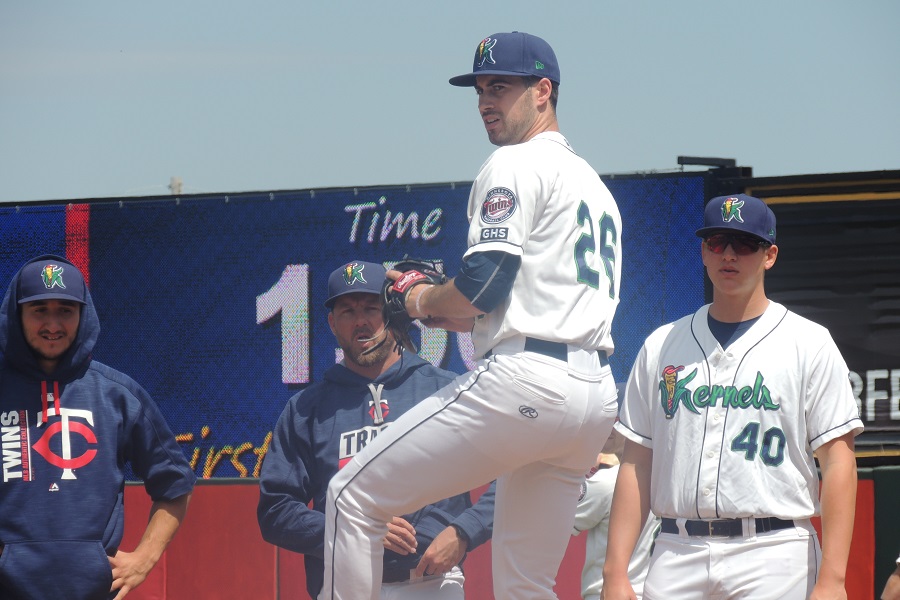 Recently, Clark Beeker answered some questions about his first full season, his offseason and much more. Be sure to leave your questions or comments below. Seth Stohs (SS): It’s been a few weeks now since the season ended. Have you had a chance to reflect on your season? Did you accomplish goals you may have set before the season? Clark Beeker (CB): Looking back on my first full season in professional baseball, I was pleased with the way it went. Cedar Rapids and Fort Myers were both great places to play and having both teams in the playoffs was indicative of the talent of the players and coaching staffs. Going into the season, it wasn’t a definite that I would be one of the starters in the Cedar Rapids’ rotation so making that happen was a nice first step. As the season goes on, you make adjustments based on what in your arsenal is successful, how the hitters respond to certain pitches/sequences, and the overall daily life of being a minor league baseball player. Being open to making adjustments and learning along the way definitely helped my progression up until the culmination of the season. SS: How did you hold up, physically or emotionally, through your first full season of pro ball? CB: I felt that my body held up pretty well – I really didn’t experience any fatigue until the last couple of weeks of the season. Half the battle for playing in your first full season is being able to stay off the DL and handle the rigors of bus rides and weeks without an off day. Taking care of my body, eating right (most of the time), and getting plenty of sleep were keys for me that I focused on throughout the season. SS: You made the Twins Daily Minor League All-Star team as the right-handed starting pitcher. As you look at your stat line, what are you most excited about? CB: I see that the checks I wrote to the voters cleared – so that was a smooth transaction. Being recognized was definitely an honor considering how many strong performances there were throughout the entire organization. My biggest takeaway from the season, numbers wise, was the amount of innings I was able to throw. By averaging roughly 6.25 innings per start, I was able to keep hitters off the bases and pitch deep into games. Although pitching late into games isn’t always indicative of success, you’re not going to keep pitching into the 7th, 8th, 9th innings if you’re not pitching well and giving your team a chance to win. I typically wasn’t pleased with my outing unless I went seven innings or more. SS: To what do you attribute your success throughout the 2017 season at Cedar Rapids? CB: I think the biggest thing for me was having a plan for how I wanted to attack each hitter, every single start. It may not have been the right plan, but based on scouting reports (which video intern Sam Berk did a great job of analyzing and compiling), my pitches, and various sequences, I had a purpose with every pitch. I got away from this in Fort Myers and coupled with better/more advanced hitters, I didn’t pitch as well as I would have liked. SS: When things were going really well, such as during your 30+ inning scoreless streak, what was working well for you? CB: Being able to pitch at home in Cedar Rapids for all 4 games…haha. But all in all, I made a conscious effort to start throwing my changeup more from the first inning on. The first three months of the season, I wouldn’t start incorporating the changeup until the second time through the lineup. I started throwing it more, especially in disadvantage counts (1-0, 2-1) and was able to find some success. The combination of the changeup, limiting walks, some great plays by the defense, and obviously a little bit of luck along the way enabled me to pitch effectively. SS: What was the atmosphere like in Cedar Rapids as the team earned a playoff berth and then did well in the playoffs? CB: To preface this, Cedar Rapids has a phenomenal fan base. The support we had night in and night out definitely gave our team an advantage, especially as the season reached the second half of a long season. In one of our home playoff games, we had about 1800 fans and they were as loud and into the game as any of the 3000-4000 attendances we had throughout the season. SS: Have you been able to get away from baseball so far this offseason with any fun activities? Anything exciting for the rest of the offseason? CB: I haven’t done anything too exciting – it was nice to relax at home for the first few weeks. I have a couple weekend trips planned to visit some former teammates and friends so it will be nice to catch up with friends that you haven’t seen since the previous offseason. SS: When do you start your workouts in preparation for 2017? When do you, as a starting pitcher, pick up a ball and start throwing? CB: I’ve begun the strength training phase after I let my body recover for almost a month. I’ve tried to focus on staying flexible and getting stronger in all aspects of my body to ensure that I’m ready for spring training. I’ll start throwing in December and gradually work my way back to a long toss phase that will prepare me for bullpens in February. I hate feeling rushed, so I’ll give myself a little extra time to slowly build up my arm strength. SS: Have you had a chance to catch up with your old teammates and coaches at Davidson to touch base on their Regional and Super Regional experience in June? CB: I’ve been able to catch up with them a decent amount this offseason – I’m helping out in the athletic fundraising office at Davidson to support the baseball program’s fundraising efforts. Their run was so unlikely in the grand scheme of things, but so deserving for how hard the players work and what Coach Cooke has endured to reach this point. The best thing about looking back at the Super Regional run is seeing the outpouring of support from current players, former teammates, and the community for something that was a first for the Davidson baseball program. SS: What area of your game do you feel you took the furthest strides with in 2017? CB: I thought that my ability to pitch inside with the fastball was the biggest thing for me during the season. We would go entire games where the catcher (usually my roommate Ben Rortvedt) would exclusively call inside fastballs and abandon the fastball away. Being able to pitch inside prevented hitters from extending their hands on pitches over the plate and set up my offspeed pitches to be more effective. SS: What are the areas of your game that you would like to spend time this offseason working to improve? CB: For me, just to improve on my full body strength and arm strength which would hopefully translate to an uptick in velocity. As a pitcher, I definitely don’t scare hitters when they see my fastball velocity on the scouting report, so being able to find a comfort zone where I’m pitching at my maximum velocity every pitch is something I am working to improve. SS: Talk about Tommy Watkins and the coaching staff in Cedar Rapids and how they helped you individually and helped the team succeed. CB: Tommy (Watkins), JP (Martinez), and Dink (Brian Dinkelman) were all great to be around everyday, which is tough to do when you have a 140-game season crammed into five months. Tommy did a great job of keep things loose and challenging us to bring great energy each day at the ballpark. As a pitching coach, JP was able to find an approach that worked best for each guy and helped me create a plan for how I could have success each start. He constantly worked with me to fine tune my delivery and challenged me to not become complacent as the season moved along. SS: What was it like seeing former big leaguers like LaTroy Hawkins, Torii Hunters or other roving instructors come through Cedar Rapids. Any good conversations with any of them?. CB: It was great to hear from not only former big leaguers, but guys who have played longer than most baseball players ever envision. LaTroy talked about focusing on the details and not overlooking the importance of holding runners on base, fielding your position, etc. Even when Sam Perlozzo was around, I would try to pick up bits of information that the hitter deems important – baseball is more mental than a lot of people realize. SS: Rank the top 3-5 TV shows you’ve binge watched… CB: Prison Break, Seinfeld, Breaking Bad, Entourage, The Office (in that order) A big Thank You to Clark Beeker for taking the time to respond to our questions. Please feel free to ask questions and comment below.
 -
Buxton and Dozier Gold Glove Finalists
Seth Stohs replied to Ted Schwerzler 's topic in Twins Daily Front Page News
Carlos Santana Erik Hosmer Mitch Moreland -
Buxton and Dozier Gold Glove Finalists
Seth Stohs replied to Ted Schwerzler 's topic in Twins Daily Front Page News
Yeah, I'm old enough... and again, that was over 15 years ago... -
Expectations For New Pitching Coach Garvin Alston
Seth Stohs replied to Cody Christie's topic in Twins Daily Front Page News
Definitely a good starting point for me for any pitching coach... I like fastball command. I like understanding the importance of a changeup. I also like that he has some experience as a rehab guy with pitchers. That could be really important too. -
It's hard to know... Byron Buxton got something like $6.5 million when he signed, but $50-70 million guaranteed is something entirely different. Kepler and Polanco signed for $750K. Rosario probably signed for a couple hundred thousand. Sano signed for $3.15 million. I don't know what 'enough financial security' means. And it's hard to know what will encourage people to sign, the risk-reward quotient.
-
Mauer Snubbed In Gold Glove Voting
Seth Stohs replied to Ted Schwerzler 's topic in Twins Daily Front Page News
This is a fair point...- 51 replies
-
- 2
-
-
- joe mauer
- minnesota twins
- (and 2 more)
-
Buxton and Dozier Gold Glove Finalists
Seth Stohs replied to Ted Schwerzler 's topic in Twins Daily Front Page News
I think that the Gold Glove has become much better than what it was 15+ years ago. Then it almost was the same as the Silver Slugger. Now at least some thought goes into it. It's gotten better, but there are still some strange things.- 35 replies
-
- 7
-
-
- byron buxton
- joe mauer
- (and 3 more)
-
I'd never heard of him, so here's the press release... TWINS NAME GARVIN ALSTON PITCHING COACH Minneapolis/St. Paul, MN – The Minnesota Twins announced today that they have named Garvin Alston as Pitching Coach. Alston becomes the 16th pitching coach in club history and fourth since 1985. Alston, 45, most recently served as Major League Bullpen Coach for the Oakland Athletics after beginning the 2017 season as Pitching Rehab Coordinator for the San Diego Padres. The 2018 season will mark Alston’s 14th as a coach in some capacity at the professional level. He previously served as the Arizona Diamondbacks’ Major League Bullpen Coach in 2016, Minor League Pitching Coordinator for Oakland in 2015, Minor League Rehab Pitching Coordinator for Oakland from 2009-14, and Oakland’s Single-A Pitching Coach in Stockton (2007-08) and Kane County (2005-06). The Mount Vernon, New York native was selected by the Rockies in the 10th round of the 1992 First-Year Player Draft out of Florida International University in Miami, Florida. The former right-handed pitcher played nine seasons of professional baseball in the Colorado Rockies, Kansas City Royals and Los Angeles Dodgers organizations, including six appearances in the major leagues with the Rockies in 1996.
-
One thing I should have mentioned is that these guys may be the types where signing somewhat shorter deals may make sense. Maybe Rosario gets a three year, $9 million deal... or maybe you sign Kepler to a 3 year, $8 million or a 4 year, $14 million. In that case, they would each have a year or arbitration-eligibility after the contract remaining. Eliminates a lot of the risk for the Twins. Even if they get hurt and miss a year, the Twins only would overpay a couple of million. For the players, they may risk out on losing a couple million during those years, but they can become free agents earlier.
- 40 replies
-
- 1
-
-
- max kepler
- eddie rosario
- (and 3 more)
-
Though he was prominent at a Twins Daily pub crawl a couple of years ago, taking pictures with Twins Daily fans!!
-
I think if they wait on Rosario, and he has the same season in 2018 that he just had in 2017, a long-term deal would cost them 40-50% more. I think if they wait another year on Kepler and he has the same season in 2018 that he had in 2017, it would be pretty similar. If Kepler were to show any improvement versus LHP and go from 19 to 25 HR, it would cost them 60-80% more next year at this time.
- 40 replies
-
- 3
-
-
- max kepler
- eddie rosario
- (and 3 more)
-
Brian Dozier. Byron Buxton. Miguel Sano. Jose Berrios. Now that we’ve offered up suggested long-term contracts for those four players - at about a combined quarter of a billion dollars - today I’ll add two more players who could be in line for long-term extensions this offseason. While their deals won’t cost as much as the four above, they are also young players who have a chance to become really good and become spendy in a hurry. Today, I want to consider potential contract extensions for outfielders Eddie Rosario and Max Kepler. Image courtesy of Troy Taormina, USA Today Brian Dozier. Byron Buxton. Miguel Sano. Jose Berrios. Now that we’ve offered up suggested long-term contracts for those four players - at about a combined quarter of a billion dollars - today I’ll add two more players who could be in line for long-term extensions this offseason. While their deals won’t cost as much as the four above, they are also young players who have a chance to become really good and become spendy in a hurry. Today, I want to consider potential contract extensions for outfielders Eddie Rosario and Max Kepler. Max Kepler and Eddie Rosario are being lumped together today since they are both left-handed hitting outfielders. They both will be arbitration-eligible for the first time after the 2018 season. While they have different styles on the field, they have put up similar numbers. Rosario has 50 home runs in less than three years. Kepler has 36 home runs in less than two years. Rosario had his breakout season in 2017, but Kepler is one year younger. Eddie Rosario has 2.120 years of service time which left him just three days short of being a Super-2 arbitration guy this offseason. Max Kepler has 1.152 years of service time. Assuming he spends all of 2018 in the big leagues, he’s certain to be a Super-2 arbitration guy after the 2018 season. That also means that he will have four arbitration seasons. So where do we start with this discussion? Hey, I think that the ultimate comparable deal for these guys happens to be an infielder. A year ago, Jose Ramirez signed a long-term contract that will guarantee he’s in Cleveland from 2017 through 2021, and includes options for 2022 and 2023. The deal is five years and $25.5 million. In his All-Star 2017 season, he made $571,400. He’ll make $2.48 million in 2018, in what would have been his first arbitration season. That will be followed by salaries of $3.75 million and $6.25 million. The deal then will buy out his first free agent season for just $9.0 million. Cleveland will also have options for two more years, one at $11.0 million and the other at $13.0 million. Based on his 2017 season, that will prove to be a tremendous contract for Cleveland. What would he have made in arbitration coming off that year? $5 million? Maybe more? And, what would a long-term contract have cost Cleveland if they had waited until now? Probably $25-30 million just in his arbitration years, and then at least $18-20 million a year for a couple of free agent seasons. In fact, at that point, is there any true value for Cleveland not to just go year-by-year, other than keeping his rights into his free agent years? Here are some outfielders who have signed extensions in the last half-dozen years or so. Aside from Maybin, the others waited another year, until they had reached arbitration, to reach a long-term agreements. But the numbers still give some range for a potential deal for Rosario or Kepler. Here is a group of players who went year-to-year in arbitration. Nelson Cruz signed a one-year deal in his first arbitration deal. Then he signed a two-year deal after that. Finally, here is a group of outfielders who went through the arbitration process for the first time in 2017. This might give a good idea of what Rosario and Kepler could command or receive in arbitration next offseason. That’s quite a bit of information for you to consume as you consider what the Twins should offer Max Kepler and Eddie Rosario in terms of long-term security. Below is a chart with two offers that I would start with, feeling that it is equitable for both the team and the player, understanding the risk/reward for each side. Again, it is important to note the distinction between the two players in terms of arbitration, as Kepler will have a fourth arbitration season before becoming a free agent. The deal above for Eddie Rosario equates to five years and $28.5 million. The first option year has a $1 million buyout, so it could be a six year, $41 million, and with a second option (also a $1 million option) could make it work seven years and $54 million. For Kepler, the contract is worth $48 million over seven years with an option that could make it work $61 million over eight years. In both cases, the player would likely prefer the deal be for two years less so that they could be free agents at age 30, but again, that is the risk for the player in a long-term deal and obtaining ten lifetime’s worth of guaranteed money. The Twins would have to make an assumption that Rosario will continue to improve his strike zone judgment and continue to become more consistent. For a Kepler deal at this time, the Twins would need to make an assumption that he will improve his performance against southpaws and continue to add more power. So, what do you think? Should the Twins have conversations with Max Kepler, Eddie Rosario, or both? What are the risk factors in your mind? What would you do as the Twins GM? That's what the Twins Daily Offseason Handbook is all about. If you haven't pre-ordered your copy yet, you can click the link below. You can even set your own price. View full article
-
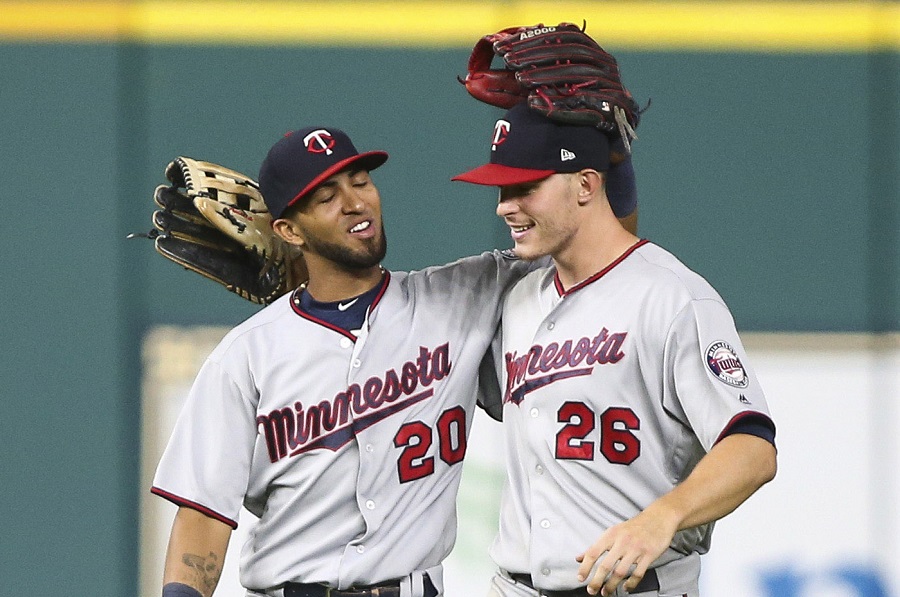 Max Kepler and Eddie Rosario are being lumped together today since they are both left-handed hitting outfielders. They both will be arbitration-eligible for the first time after the 2018 season. While they have different styles on the field, they have put up similar numbers. Rosario has 50 home runs in less than three years. Kepler has 36 home runs in less than two years. Rosario had his breakout season in 2017, but Kepler is one year younger. Eddie Rosario has 2.120 years of service time which left him just three days short of being a Super-2 arbitration guy this offseason. Max Kepler has 1.152 years of service time. Assuming he spends all of 2018 in the big leagues, he’s certain to be a Super-2 arbitration guy after the 2018 season. That also means that he will have four arbitration seasons. So where do we start with this discussion? Hey, I think that the ultimate comparable deal for these guys happens to be an infielder. A year ago, Jose Ramirez signed a long-term contract that will guarantee he’s in Cleveland from 2017 through 2021, and includes options for 2022 and 2023. The deal is five years and $25.5 million. In his All-Star 2017 season, he made $571,400. He’ll make $2.48 million in 2018, in what would have been his first arbitration season. That will be followed by salaries of $3.75 million and $6.25 million. The deal then will buy out his first free agent season for just $9.0 million. Cleveland will also have options for two more years, one at $11.0 million and the other at $13.0 million. Based on his 2017 season, that will prove to be a tremendous contract for Cleveland. What would he have made in arbitration coming off that year? $5 million? Maybe more? And, what would a long-term contract have cost Cleveland if they had waited until now? Probably $25-30 million just in his arbitration years, and then at least $18-20 million a year for a couple of free agent seasons. In fact, at that point, is there any true value for Cleveland not to just go year-by-year, other than keeping his rights into his free agent years? Here are some outfielders who have signed extensions in the last half-dozen years or so. Aside from Maybin, the others waited another year, until they had reached arbitration, to reach a long-term agreements. But the numbers still give some range for a potential deal for Rosario or Kepler. Here is a group of players who went year-to-year in arbitration. Nelson Cruz signed a one-year deal in his first arbitration deal. Then he signed a two-year deal after that. Finally, here is a group of outfielders who went through the arbitration process for the first time in 2017. This might give a good idea of what Rosario and Kepler could command or receive in arbitration next offseason. That’s quite a bit of information for you to consume as you consider what the Twins should offer Max Kepler and Eddie Rosario in terms of long-term security. Below is a chart with two offers that I would start with, feeling that it is equitable for both the team and the player, understanding the risk/reward for each side. Again, it is important to note the distinction between the two players in terms of arbitration, as Kepler will have a fourth arbitration season before becoming a free agent. The deal above for Eddie Rosario equates to five years and $28.5 million. The first option year has a $1 million buyout, so it could be a six year, $41 million, and with a second option (also a $1 million option) could make it work seven years and $54 million. For Kepler, the contract is worth $48 million over seven years with an option that could make it work $61 million over eight years. In both cases, the player would likely prefer the deal be for two years less so that they could be free agents at age 30, but again, that is the risk for the player in a long-term deal and obtaining ten lifetime’s worth of guaranteed money. The Twins would have to make an assumption that Rosario will continue to improve his strike zone judgment and continue to become more consistent. For a Kepler deal at this time, the Twins would need to make an assumption that he will improve his performance against southpaws and continue to add more power. So, what do you think? Should the Twins have conversations with Max Kepler, Eddie Rosario, or both? What are the risk factors in your mind? What would you do as the Twins GM? That's what the Twins Daily Offseason Handbook is all about. If you haven't pre-ordered your copy yet, you can click the link below. You can even set your own price.
 -
Baseball America had a nice story about him. He became a graduate assistant at Clemson, where his son is playing (and apparently a decent prospect). Here's the article... http://www.baseballamerica.com/columnists/now-mark-davidson/?utm_content=buffera97b6&utm_medium=social&utm_source=twitter.com&utm_campaign=buffer#gLVvB8HPdXtKkPtm.97
-
Regarding Slegers... he can be a 4-6 starter in the big leagues. His 3 MLB starts? 1 was fantastic. 1 was really non-good, and the third was solid, especially considering he hadn't pitched in like 3+ weeks. I do wonder if they'll hand over the backup spot to Garver or if they'll bring back Gimenez. I do think they can co-exist, with Garver being the #2 first baseman, a RH DH, and the #2/3 catcher. That can definitely work. Enlow is a long ways away, at least 3 and probably 4-5 years out. As for the AFL guys, clearly Jay has a chance to be really, really good. Wade has a chance to be a decent starting OF and almost certainly at least a 4th OF. Eades can be a long reliever/middle relief guy. Hackimer can be Hildenberger-like. I think Vasquez is underrated and he's left-handed. Miller and Paul can be utility/role player types.
- 3 replies
-
- 3
-
-
- chris paul
- sean miller
- (and 3 more)
-
Diving Into The Offseason: A Berrios Extension?
Seth Stohs replied to Seth Stohs's topic in Twins Daily Front Page News
Which maybe means I'm in the right range. Ha! -
KARE-11's Cory Hepola Discusses The Astros
Seth Stohs replied to Seth Stohs's topic in Twins Daily Front Page News
Wiley Wallaby!! The Australian licorice is amazing! http://wileywallaby.com/ -
LaVelle E Neal wrote and article in the Star-Tribune this morning with the list of 2017 Twins Diamond Awards. http://www.startribune.com/brian-dozier-is-twins-mvp-again-and-ervin-santana-named-top-pitcher/452786053/ Here are the winners: Brian Dozier: Calvin R. Griffith Award as team MVP, Bob Allison Award for determination and leadership on and off the field Ervin Santana: Joseph W. Haynes Award as the Twins' pitcher of the year Trevor Hildenberger: Bill Boni Award as the team's rookie of the year Byron Buxton: Jim Kaat Award, team's defensive player of the year Chris Gimenez: Mike Augustin "Media Good Guy" Award Joe Mauer: Dick Siebert Award for Upper Midwest player of the year (6th time he's won this award) Kyle Gibson: Carl Pohlad Community Service Award Tim Laudner: Kirby Puckett Award for Twins alumni community service Rick Stelmaszek: Herb Carneal Lifetime Achievement Award Mitch Garver: Sherry Robertson Award winner as minor league player of the year Aaron Slegers: Jim Rantz Award as minor league pitcher of the year
-
Glen Perkins: Tribute To A Twins Daily Hall Of Famer
Seth Stohs replied to Nick Nelson's topic in Twins Daily Front Page News
Aaron Gleeman wrote about Glen Perkins as well. https://www.baseballprospectus.com/news/article/34008/banjo-hitter-long-perk/ -
Can Minnesota Follow Houston's Blueprint?
Seth Stohs replied to Cody Christie's topic in Twins Daily Front Page News
And Keuchel wasn't even a prospect, so you just never know who is going to turn into an ace-like pitcher. Definitely isn't always an obvious choice, the hard-throwing guys. Maybe the Twins have a Keuchel-type coming. We can hope.- 54 replies
-
- 5
-
-
- jose altuve
- brian dozier
- (and 3 more)
