Sherry Cerny
-
Posts
581 -
Joined
-
Last visited
Content Type
Profiles
News
Minnesota Twins Videos
2026 Minnesota Twins Top Prospects Ranking
2022 Minnesota Twins Draft Picks
Minnesota Twins Free Agent & Trade Rumors, Notes, & Tidbits
Guides & Resources
2023 Minnesota Twins Draft Picks
The Minnesota Twins Players Project
2024 Minnesota Twins Draft Picks
2025 Minnesota Twins Draft Pick Tracker
2026 Minnesota Twins Draft Tracker: Picks & Bonuses
Forums
Blogs
Events
Store
Downloads
Gallery
Everything posted by Sherry Cerny
-
Over the past week, the Twins (and all other teams) have been busy with their regularly scheduled roster cleaning in preparation for the Winter Meetings. They added six minor leaguers to the 40-man roster. They made a trade, and they tendered contact to all of their arbitration-eligible players. Across baseball, several players were non-tendered by their organizations making them free agents. Here are three non-tendered pitchers that could help the Twins in 2026. IAN HAMILTON - RHP Raise your hand if you can remember when Ian Hamilton pitched in one game for the 2022 Minnesota Twins. Hamilton is a right-handed reliever who joined the Yankees organization in 2023 and made an immediate impact, posting 1.6 bWAR and a stellar 2.64 ERA over 39 appearances and 58 innings, supported by an impressive 2.82 FIP. His wipeout slider and ability to generate whiffs gave New York a valuable mid-to-late inning option. However, the following two seasons were far more turbulent. Hamilton struggled with consistency in 2024 and 2025, and as the Yankees pushed toward a postseason run with a crowded bullpen picture, he was sent down to Triple-A Scranton/Wilkes-Barre in late July. He finished 2025 with 36 MLB outings, logging 40 innings with a 4.28 ERA, 4.39 FIP, and 42 strikeouts. His non-tender was unsurprising given the Yankees’ depth and their preference to lean on a younger, higher-velocity prospect pool for the stretch run. Hamilton’s profile, solid but not dominant, left him squeezed out in a system known for rapid bullpen turnover and constant role competition. Compared to other relievers in New York’s mix, he was no longer a comfortable postseason option, especially after his mid-season demotion. Age also plays a factor. At 30, Hamilton is not old by reliever standards, but he isn’t a long-term developmental project either, and his underwhelming numbers across 2024–2025 raise fair concerns about durability, swing-and-miss sustainability, and whether his best form is behind him. He could easily be the replacement for Jhoan Duran as the closer, but there will never be another Duran. The Twins represent an ideal landing spot, and Minnesota could unlock a resurgence. With the five losses last year at the trade deadline and several of the August and September relievers also becoming free agents, the Twins clearly need arms for competition in the bullpen. Hamilton’s three-pitch mix, led by a slider that generates 69% strikes and a massive 78% whiff rate, gives him a legitimate carrying tool that fits the Twins’ pitching-development model. He limits hard contact, induces chases from left-handed hitters, and shows enough command to profile as a matchup weapon or full-inning reliever. Under pitching coach Pete Maki, the Twins have found success in maximizing relievers, Hamilton could rediscover the sharpness he showed in 2023. For Minnesota, he’s a low-cost, high-upside bullpen addition who fills an immediate need while offering the chance of meaningful rebound value. OMAR CRUZ - LHP Omar Cruz is a left-handed pitcher whose professional journey has taken him from the Padres system to the Pirates in 2021, and back with the Padres in 2023 through the Rule 5 draft. Cruz originally signed out of Mexico in 2017 and made his MLB debut on April 1, 2025, but then was sent down after his second performance on April 5. He was recalled for a couple of days in late May and then again at the end of September but didn't pitch in any games. Cruz built his reputation on a high-performing changeup, solid strike-throwing, and the ability to neutralize left-handed hitters with a mix that plays above its raw velocity. He has shown flashes of potential in both starting and middle relief. While he hasn’t cemented himself as a major-league contributor, he has shown poise and pitchability teams covet in depth arms. And, well, he's left-handed and just 26 years old. He was non-tendered because San Diego faced a roster-crunch. His lack of elite velocity and limited major-league runway made him expendable for a club reshuffling its pitching depth. None of this reflects a lack of skill; it's just the reality of a crowded pitching pipeline, and the Padres need to allocate roster space to higher-ceiling arms. The Twins should consider signing him because his profile fits what their pitching department has excelled at developing: command-first lefties with a plus changeup and room for analytical refinement. In Minnesota, Cruz projects as a depth starter, long reliever, or matchup-friendly lefty who can shuttle between St. Paul and the MLB roster without disrupting roles. The primary concerns are whether his fastball can miss enough bats at the big-league level and whether his margin for error is thin against right-handed hitters. Still, with his age, pitchability, and Twins-friendly toolkit, he represents a low-cost upside player who could become a quietly valuable piece of the 2026 staff, especially as a lefty. JOEY LUCCHESI - LHP Joey Lucchesi is a 32-year-old left-handed pitcher whose career has spanned the Padres, the Mets, and, most recently, the Giants organizations. Once known primarily as a crafty starter with his signature curve, Lucchesi has transitioned effectively into a bullpen role where his ability to neutralize left-handed hitters has become his defining strength. His delivery remains one of the most unusual in baseball, creating a timing disruptor that helps his fastball and changeup play up despite modest velocity. Even as he’s shifted into a relief-focused workload, he’s maintained the pitchability and poise that made him a steady rotation option earlier in his career. Lucchesi was non-tendered due to a combination of age, roster crunch, and the Giants’ increasing push toward younger, higher-octane bullpen arms. San Francisco has spent the past two seasons aggressively turning over its pitching depth, especially in the relief corps, prioritizing velocity and swing-and-miss traits over deception-driven profiles. For a 32-year-old soft-contact lefty, that made him expendable—even if his results and peripherals remained perfectly serviceable. He wasn’t cut because he couldn’t contribute; he was cut because he no longer fit the organizational direction and didn’t offer long-term upside for a club shifting philosophies. For the Twins, however, Lucchesi’s profile is exactly the kind of asset they need. Minnesota lacks reliable left-handed bullpen depth behind Kody Funderburk, and Lucchesi immediately fills that gap with experience, versatility, and a proven track record against tough lefty bats. His “churve”, which is part changeup, part breaking ball, has long been a problem pitch for left-handers, generating weak contact and expanding the zone when leveraged correctly. The concerns are age and ceiling: at 32, he’s not a long-term piece, and his margin for error is smaller than power relievers. But in the short term, he provides the Twins with a steady, matchup-friendly lefty who can handle pockets of left-heavy lineups, piggyback innings, or operate as a multi-out bridge option. Given Minnesota’s bullpen needs and coaching staff’s success with finesse-and-deception arms, Lucchesi is a smart, low-risk fit who could deliver high-value innings right away. Non-tendered pitchers are not going to be the cream of the crop, and it does take the right team to take them on and rebuild them, these three pitchers have a potential to be a good fit for the Twins as short-term options while the teams adjusts to the new structure. View full article
-
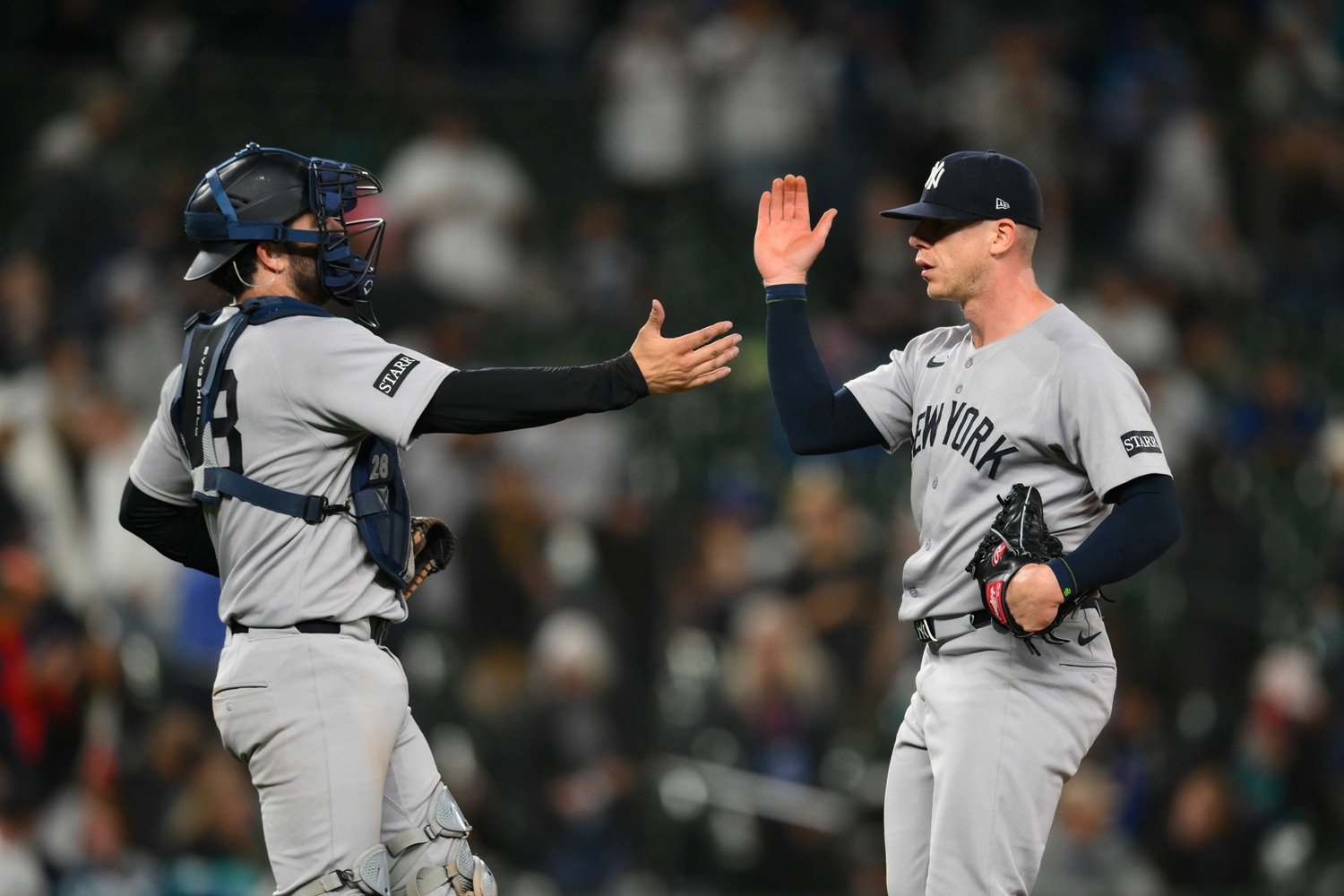 Over the past week, the Twins (and all other teams) have been busy with their regularly scheduled roster cleaning in preparation for the Winter Meetings. They added six minor leaguers to the 40-man roster. They made a trade, and they tendered contact to all of their arbitration-eligible players. Across baseball, several players were non-tendered by their organizations making them free agents. Here are three non-tendered pitchers that could help the Twins in 2026. IAN HAMILTON - RHP Raise your hand if you can remember when Ian Hamilton pitched in one game for the 2022 Minnesota Twins. Hamilton is a right-handed reliever who joined the Yankees organization in 2023 and made an immediate impact, posting 1.6 bWAR and a stellar 2.64 ERA over 39 appearances and 58 innings, supported by an impressive 2.82 FIP. His wipeout slider and ability to generate whiffs gave New York a valuable mid-to-late inning option. However, the following two seasons were far more turbulent. Hamilton struggled with consistency in 2024 and 2025, and as the Yankees pushed toward a postseason run with a crowded bullpen picture, he was sent down to Triple-A Scranton/Wilkes-Barre in late July. He finished 2025 with 36 MLB outings, logging 40 innings with a 4.28 ERA, 4.39 FIP, and 42 strikeouts. His non-tender was unsurprising given the Yankees’ depth and their preference to lean on a younger, higher-velocity prospect pool for the stretch run. Hamilton’s profile, solid but not dominant, left him squeezed out in a system known for rapid bullpen turnover and constant role competition. Compared to other relievers in New York’s mix, he was no longer a comfortable postseason option, especially after his mid-season demotion. Age also plays a factor. At 30, Hamilton is not old by reliever standards, but he isn’t a long-term developmental project either, and his underwhelming numbers across 2024–2025 raise fair concerns about durability, swing-and-miss sustainability, and whether his best form is behind him. He could easily be the replacement for Jhoan Duran as the closer, but there will never be another Duran. The Twins represent an ideal landing spot, and Minnesota could unlock a resurgence. With the five losses last year at the trade deadline and several of the August and September relievers also becoming free agents, the Twins clearly need arms for competition in the bullpen. Hamilton’s three-pitch mix, led by a slider that generates 69% strikes and a massive 78% whiff rate, gives him a legitimate carrying tool that fits the Twins’ pitching-development model. He limits hard contact, induces chases from left-handed hitters, and shows enough command to profile as a matchup weapon or full-inning reliever. Under pitching coach Pete Maki, the Twins have found success in maximizing relievers, Hamilton could rediscover the sharpness he showed in 2023. For Minnesota, he’s a low-cost, high-upside bullpen addition who fills an immediate need while offering the chance of meaningful rebound value. OMAR CRUZ - LHP Omar Cruz is a left-handed pitcher whose professional journey has taken him from the Padres system to the Pirates in 2021, and back with the Padres in 2023 through the Rule 5 draft. Cruz originally signed out of Mexico in 2017 and made his MLB debut on April 1, 2025, but then was sent down after his second performance on April 5. He was recalled for a couple of days in late May and then again at the end of September but didn't pitch in any games. Cruz built his reputation on a high-performing changeup, solid strike-throwing, and the ability to neutralize left-handed hitters with a mix that plays above its raw velocity. He has shown flashes of potential in both starting and middle relief. While he hasn’t cemented himself as a major-league contributor, he has shown poise and pitchability teams covet in depth arms. And, well, he's left-handed and just 26 years old. He was non-tendered because San Diego faced a roster-crunch. His lack of elite velocity and limited major-league runway made him expendable for a club reshuffling its pitching depth. None of this reflects a lack of skill; it's just the reality of a crowded pitching pipeline, and the Padres need to allocate roster space to higher-ceiling arms. The Twins should consider signing him because his profile fits what their pitching department has excelled at developing: command-first lefties with a plus changeup and room for analytical refinement. In Minnesota, Cruz projects as a depth starter, long reliever, or matchup-friendly lefty who can shuttle between St. Paul and the MLB roster without disrupting roles. The primary concerns are whether his fastball can miss enough bats at the big-league level and whether his margin for error is thin against right-handed hitters. Still, with his age, pitchability, and Twins-friendly toolkit, he represents a low-cost upside player who could become a quietly valuable piece of the 2026 staff, especially as a lefty. JOEY LUCCHESI - LHP Joey Lucchesi is a 32-year-old left-handed pitcher whose career has spanned the Padres, the Mets, and, most recently, the Giants organizations. Once known primarily as a crafty starter with his signature curve, Lucchesi has transitioned effectively into a bullpen role where his ability to neutralize left-handed hitters has become his defining strength. His delivery remains one of the most unusual in baseball, creating a timing disruptor that helps his fastball and changeup play up despite modest velocity. Even as he’s shifted into a relief-focused workload, he’s maintained the pitchability and poise that made him a steady rotation option earlier in his career. Lucchesi was non-tendered due to a combination of age, roster crunch, and the Giants’ increasing push toward younger, higher-octane bullpen arms. San Francisco has spent the past two seasons aggressively turning over its pitching depth, especially in the relief corps, prioritizing velocity and swing-and-miss traits over deception-driven profiles. For a 32-year-old soft-contact lefty, that made him expendable—even if his results and peripherals remained perfectly serviceable. He wasn’t cut because he couldn’t contribute; he was cut because he no longer fit the organizational direction and didn’t offer long-term upside for a club shifting philosophies. For the Twins, however, Lucchesi’s profile is exactly the kind of asset they need. Minnesota lacks reliable left-handed bullpen depth behind Kody Funderburk, and Lucchesi immediately fills that gap with experience, versatility, and a proven track record against tough lefty bats. His “churve”, which is part changeup, part breaking ball, has long been a problem pitch for left-handers, generating weak contact and expanding the zone when leveraged correctly. The concerns are age and ceiling: at 32, he’s not a long-term piece, and his margin for error is smaller than power relievers. But in the short term, he provides the Twins with a steady, matchup-friendly lefty who can handle pockets of left-heavy lineups, piggyback innings, or operate as a multi-out bridge option. Given Minnesota’s bullpen needs and coaching staff’s success with finesse-and-deception arms, Lucchesi is a smart, low-risk fit who could deliver high-value innings right away. Non-tendered pitchers are not going to be the cream of the crop, and it does take the right team to take them on and rebuild them, these three pitchers have a potential to be a good fit for the Twins as short-term options while the teams adjusts to the new structure.
-
Twins Arbitration Updates, Decisions, and Discussions (Larnach Tendered!)
Sherry Cerny posted an article in Twins
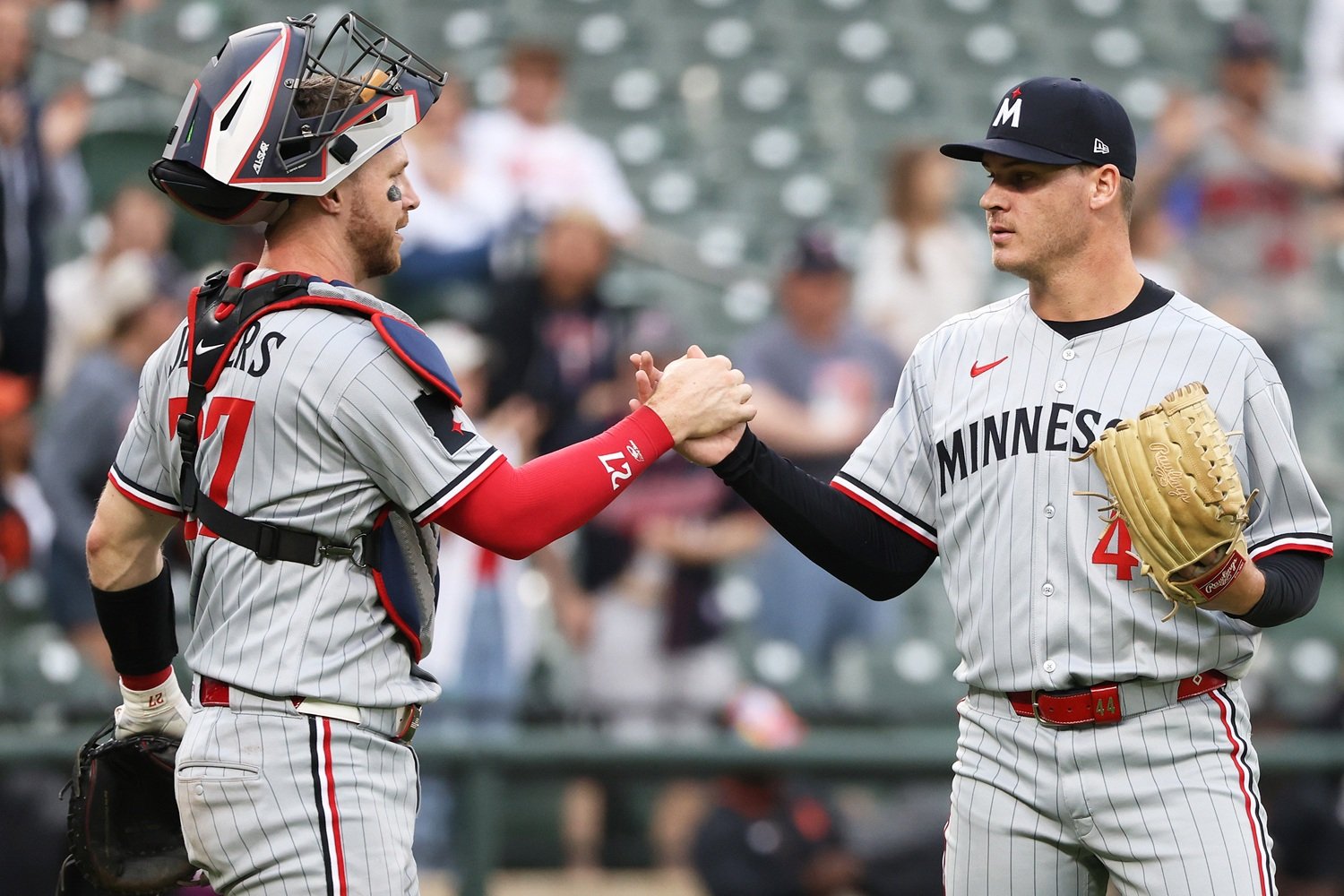 4:30 Update: We are still waiting on Twins news beyond the trade and the Topa contract. we will update this article as soon as we know more. 4:35 Update: Trevor Larnach Tendered, per Darren Wolfson. 4:53 Update: The Twins tendered a contract to all of their arbitration-eligible players. Also, DaShawn Keirsey was released, making him a free agent. Next Steps: On January 8, if the two sides haven't reached an agreement, they will submit their arbitration requests. Soon after, if an agreement is till not reached, the case will be heard with an arbitrator who will determine the player's 2026 contract. It will be either the player's request or the team's requested number. Often the sides just meet somewhere in the middle. Of note, tendering a contract to Trevor Larnach does not guarantee he will be with the Twins in 2026. The front office likely has had enough trade interest to indicate that he could be traded during the offseason. Teams would obviously much rather lose a player, especially a former first-round pick, for something rather than nothing. Baseball's offseason can be long and winding, sometimes boring, and other times hectic. For instance, today (at 3pm central time) marks the deadline for teams to tender 2026 contracts to their arbitration-eligible players and pre-arbitration players. Check back to this article throughout the day to see if the Twins have reached agreements with their arbitration-eligible players or if they will need to exchange values. Some of those decisions have already been made. The Twins DFAd three relievers, right-hander Michael Tonkin and lefties Genesis Cabrera and Anthony Misiewicz. They each became free agents. This morning, the Twins traded Saints utilityman Payton Eeles to the Orioles in exchange for catcher Alex Jackson. To make room on the 40-man roster, DaShawn Keirsey was DFAd. Jackson has played in parts of five big-league seasons and has just over three years of service time which makes him arbitration-eligible for the first time. Here are the eight arbitration-eligible Twins players with their MLB Trade Rumors 2026 salary projection: C Ryan Jeffers: $6.6 million (Arbitrary Thoughts) RHP Justin Topa: $1.7 million (Arbitrary Thoughts) The Twins had a $2 million team option for Topa that they declined. Adding the $225,000 buyout to his $1.225 million 2026 contract, Topa gets $1.45 million in an awkward total. As for the 2026 contract, his salary will be $1 million with an option for $5 million in 2027 with a buyout at $225,000. RHP Bailey Ober: $4.6 million (Arbitrary Thoughts) RHP Joe Ryan: $5.8 million (Arbitrary Thoughts) OF Trevor Larnach: $4.7 million (Arbitrary Thoughts) 3B Royce Lewis: $3.0 million (Arbitrary Thoughts) RHP Cole Sands: $1.3 million (Arbitrary Thoughts) C Alex Jackson: $1.8 million Again, continue to check back throughout the day for more updates and to discuss.
- 108 comments
-
- 6
-

-
- ryan jeffers
- joe ryan
- (and 6 more)
-
Image courtesy of © Daniel Kucin Jr.-Imagn Images 4:30 Update: We are still waiting on Twins news beyond the trade and the Topa contract. we will update this article as soon as we know more. 4:35 Update: Trevor Larnach Tendered, per Darren Wolfson. 4:53 Update: The Twins tendered a contract to all of their arbitration-eligible players. Also, DaShawn Keirsey was released, making him a free agent. Next Steps: On January 8, if the two sides haven't reached an agreement, they will submit their arbitration requests. Soon after, if an agreement is till not reached, the case will be heard with an arbitrator who will determine the player's 2026 contract. It will be either the player's request or the team's requested number. Often the sides just meet somewhere in the middle. Of note, tendering a contract to Trevor Larnach does not guarantee he will be with the Twins in 2026. The front office likely has had enough trade interest to indicate that he could be traded during the offseason. Teams would obviously much rather lose a player, especially a former first-round pick, for something rather than nothing. Baseball's offseason can be long and winding, sometimes boring, and other times hectic. For instance, today (at 3pm central time) marks the deadline for teams to tender 2026 contracts to their arbitration-eligible players and pre-arbitration players. Check back to this article throughout the day to see if the Twins have reached agreements with their arbitration-eligible players or if they will need to exchange values. Some of those decisions have already been made. The Twins DFAd three relievers, right-hander Michael Tonkin and lefties Genesis Cabrera and Anthony Misiewicz. They each became free agents. This morning, the Twins traded Saints utilityman Payton Eeles to the Orioles in exchange for catcher Alex Jackson. To make room on the 40-man roster, DaShawn Keirsey was DFAd. Jackson has played in parts of five big-league seasons and has just over three years of service time which makes him arbitration-eligible for the first time. Here are the eight arbitration-eligible Twins players with their MLB Trade Rumors 2026 salary projection: C Ryan Jeffers: $6.6 million (Arbitrary Thoughts) RHP Justin Topa: $1.7 million (Arbitrary Thoughts) The Twins had a $2 million team option for Topa that they declined. Adding the $225,000 buyout to his $1.225 million 2026 contract, Topa gets $1.45 million in an awkward total. As for the 2026 contract, his salary will be $1 million with an option for $5 million in 2027 with a buyout at $225,000. RHP Bailey Ober: $4.6 million (Arbitrary Thoughts) RHP Joe Ryan: $5.8 million (Arbitrary Thoughts) OF Trevor Larnach: $4.7 million (Arbitrary Thoughts) 3B Royce Lewis: $3.0 million (Arbitrary Thoughts) RHP Cole Sands: $1.3 million (Arbitrary Thoughts) C Alex Jackson: $1.8 million Again, continue to check back throughout the day for more updates and to discuss. View full article
-
Why did I think that we had more.... thank you for this. Other teams for SURE have more. I looked at our FCL and omg......Astros and Padres are tied for first for international free agents. then obviously the Dodgers and Mets....but then weirdly the SF Giants.
-
Thank you, Rufus. You have no idea how excited that makes me as the writer :)
-
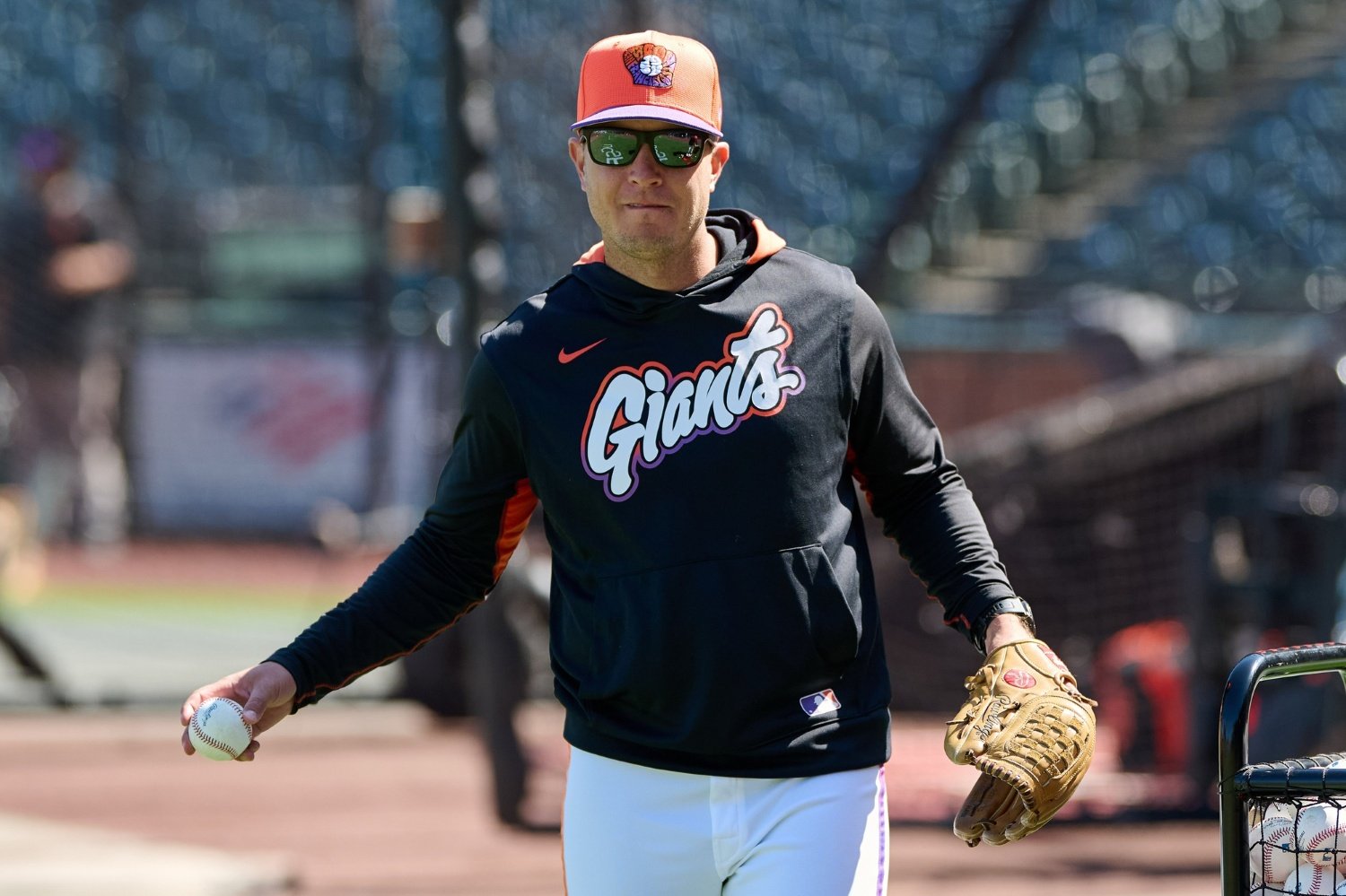 Like many mid-market teams, the Minnesota Twins face the perennial challenge of competing with the Yankees, Dodgers, and other big-spending franchises. Seeing how successful the other programs are, the temptation for Minnesota fans is often to chase established veterans in free agency to boost the roster, thinking it will make a difference. But there is a smarter path: maximize the value of homegrown players by giving them opportunities to flourish. They can do that, in turn, by investing in coaching and player development. Teams like the Twins, Rays, and Guardians generate less local revenue from TV deals, ticket sales, and concessions than teams like the Dodgers, Mets, and Yankees. Even with revenue sharing, in which each team contributes 48% to a pool that is redistributed evenly throughout the league, the differences in income can be massive. By one estimate, 10 teams brought in more than $100 million more than the Twins did in 2024. Therefore, it's unrealistic to hope that the Twins could consistently compete with the league's powerhouses in spending on external talent. The value of emphasizing homegrown talent is not theoretical; nor is it confined to small-market teams. Yes, the Brewers, Rays and Guardians benefit from doing it well, but so do the developmental juggernauts that are the Dodgers and Yankees. The Twins are slowly figuring it out. In fact, halfway through the 2025 season, MLB Pipeline ranked the Twins second in farm system rankings, behind only the Dodgers. Alas, Minnesota's front office can’t seem to crack the code to winning. There is a more efficient version of the process that they can lean into to be successful in the fight for the postseason, but it requires more than smart spending. They have to plunge more resources into development and instruction, and use those resources better, too. The Twins rely heavily on analytics to create the best teams they can. How does that translate to what is on the field? At its core, the formula is simple. Every player’s financial cost is their average salary, plus any developmental costs. FanGraphs estimates the cost for 1 WAR on the free-agent market at around $8 million. A homegrown player earning $1-2 million and producing 3.0 WAR delivers far more efficiency than a $15-million veteran producing the same value. Coaching can be a multiplier, turning raw talent into tangible results by refining mechanics, improving decision-making, and building mental toughness. The Cleveland Guardians provide a clear example. Low payrolls have not stopped them from producing All-Star talent. Take José Ramírez, a $50,000 international signee who became a perennial All-Star, and first-round pick Francisco Lindor, who amassed more than 28 WAR before being traded. The Tampa Bay Rays take the concept even further, serving as the gold standard of “cheap WAR.” They drafted third baseman Evan Longoria, who went on to produce 51.8 WAR while with the Rays. Meanwhile, though, the Yankees can be just as good at the same things. They drafted and developed Aaron Judge, rather than plucking him away from some other club. They traded for and developed Luis Gil, the former Twins farmhand-turned-Rookie of the Year hurler. The Dodgers maintain such a robust farm system that they can trade for any player they want, and they take advantage of this regularly. The reason these teams are each successful is they draft properly and have talent to pull from, but the Twins seem to have a hard time progressing like the others. The Twins have made progress with their in-house prospects, including players like Walker Jenkins, Royce Lewis, Emmanuel Rodriguez, and Bailey Ober. In 2024, 63% of the Twins WAR came from homegrown talent. But the Twins need to make an investment in how those players are grown on a consistent basis. The math for coaching investment is compelling. One homegrown player producing three WAR generates roughly $24 million in market value. While the Twins’ cost is a $1.5 million salary plus development, that creates a surplus of $22.5 million, less whatever hours were poured into that player by coaches and staffers. Scaling up, improving the output of just 10 players by one WAR each translates to roughly $80 million in added value. While costs are private outside of player contracts, the general investment in coaching infrastructure is around $20 million in the major leagues, a fraction of the potential return, making it one of the highest-leverage moves a team can make. It is not just about coaching at the major-league level, but also at the minor-league level. Even highly regarded prospects have not come to the parent club looking as ready to help as fans hoped. Pitcher development has been inconsistent, and the Twins sometimes pay market prices for production that could be cultivated internally. Without deeper investment in coaching, Minnesota risks leaving WAR and payroll efficiency on the table. The Twins minor leaguers also want to be ready to go up to the big-league level and not have to go back down, as Jenkins explained in an interview with Matthew Leach of MLB.com. If the Twins focus on solid development at every level, their output will continue to grow and look like their big-market competition. The Twins need to prioritize coaching that strengthens a team atmosphere (incorporating mechanics, analytics, performance, and mental skills) at every level of the organization. They should build a development “stack” that ensures continuity from A-ball to the majors, and work with players to become good enough to offer extensions rather than go to arbitration. While Derek Shelton certainly is bringing a change of culture to ensure players are developing at every level, he is not in charge of payroll. That's where his power and influence end. Suppose the organization really wants to see a culture shift, as Shelton envisions. In that case, ownership has to get involved and help make the investments with the remaining $40 million for players, which is the amount left to spend of the $130 million they had available in 2025. Finally, the front office should shift payroll focus: spend smarter, not necessarily more. By investing in coaching and development, the Twins can turn modest spending into elite results and compete sustainably in a mid-market environment. This is not to say that the Twins have not already considered most of this, or that they aren't doing their best to become competitive with their own talent. What is the actual difference between the four organizations? Do the Twins not hire enough? Do the Twins not hire the right people? Unfortunately, measuring and finding great, transformative coaches can sometimes be as hard as finding and acquiring great players. Nonetheless, that's where the Twins might have their best chance to get an edge.
-
Image courtesy of © Brad Rempel-Imagn Images The Minnesota Twins, like many mid-market teams, face the perennial challenge of competing with the Yankees, Dodgers, and other big-spending franchises. With limited payroll flexibility, the temptation is often to chase external talent through free agency. But there is a smarter path: maximize the value of homegrown players by paying them fairly as they continue to contribute productive WAR, and by investing in coaching and player development. Teams like the Twins, Rays, and Guardians generate less local revenue from TV deals, ticket sales, and concessions. Even the central revenue sharing, which has each team contribute 48% into a pool that can exceed $110 million, is barely enough to keep the Twins afloat. And we all know why: winning in the AL Central does not pay like the Yankees’ golden goose. The strategy of homegrown talent is not theoretical; it is already yielding results for teams like the Cleveland Guardians and Tampa Bay Rays, two organizations that have consistently produced elite-level talent without breaking the bank. The Twins are slowly figuring it out, but there is a process to the madness that they can lean into to be successful in the fight for the postseason, as the Guardians have been. The Twins front office relies heavily on WAR and analytics to create the best teams. So how does that translate to what is on the field? Baseball success is not just about spending big; it is about maximizing value. At its core, the formula is simple. Fangraphs rates the cost per 1 WAR at around $8 million. Every player’s financial cost is their average salary plus any developmental costs. A homegrown player earning $1–2 million and producing 3.0 WAR delivers far more efficiency than a $15 million veteran producing the same value. Coaching can be a multiplier, turning raw talent into tangible results by refining mechanics, improving decision-making, and building mental toughness. The Cleveland Guardians provide a clear example. Low payroll has not stopped them from producing All-Star talent. Take José Ramírez, a $50,000 international signee who became a perennial All-Star, and first-round pick Francisco Lindor, who amassed more than 28 WAR before being traded. In 2024, 15 homegrown Guardians contributed 25.4 WAR to the playoff roster, showing that low acquisition costs and effective development can yield significant returns. While Lindor moved on to the Mets and has consistently thrived, Ramírez has become the heart of the team and signed a seven-year, $141 million contract extension with the Guardians, much like Byron Buxton, which gives them room to build around the veteran. The Tampa Bay Rays take the concept even further, serving as the gold standard of “cheap WAR.” They drafted star Evan Longoria, who went on to produce 51.8 WAR, which at market value can be $8–10 million per WAR. He brought significant overall value to the team. Kevin Kiermaier delivered his WAR very efficiently; each “unit” of WAR he produced cost the team only about $132,000, according to DraysBay. Behind the scenes, the Rays’ analytics teams, mental skills coaches, and mechanics specialists amplify development, proving that elite performance comes from out-developing, not outspending. When Stu Sternberg sold the team this fall, he used the revenue to give everyone a bonus for their hard work during his tenure, which included nine postseason runs and two World Series appearances. The Twins have made progress. In 2024, 63% of their WAR came from homegrown talent, with players like 12th-round pick Bailey Ober delivering 3.5 WAR seasons. But gaps remain. Pitcher development has been historically inconsistent, coaching depth may lag behind the Guardians or Rays, and the Twins sometimes pay veteran-level prices for production that could be cultivated internally. Without deeper investment in coaching, Minnesota risks leaving WAR and payroll efficiency on the table. The math for coaching investment is compelling. One homegrown player producing three WAR generates roughly $24 million in market value. While the Twins’ cost is a $1.5 million salary plus development, that creates a surplus of $22.5 million. Scaling up, improving the WAR output of just 10 players by one WAR each adds around 10 WAR, translating to roughly $80 million in added value. The required investment in coaching infrastructure, around $5–10 million, is a fraction of the potential return, making it one of the highest-leverage moves a team can make. It is not just about coaching at the major league level but also at the minor league level. Coaching at minor league levels has left a sour taste in fans' mouths when a player comes up and is clearly not club-ready, affecting the whole team. So what should the Twins do? Continue to prioritize coaching that strengthens a team atmosphere across mechanics, analytics, performance, and mental skills at every level of the organization. Build a development “stack” that ensures continuity from A-ball to the majors. Work with players to become elite enough to offer extensions instead of arbitration. Measure ROI by tracking internal WAR and cost-per-WAR, benchmarking against the Rays and Guardians. And finally, shift payroll focus: spend smarter, not necessarily more. By investing in coaching and development, the Twins can turn modest spending into elite results and compete sustainably in a mid-market environment. Derek Shelton is bringing a new emphasis on coaching depth and player development to the Twins, aiming to maximize both performance and financial efficiency. Under his leadership, the club is investing in a full spectrum of coaching expertise, including mechanics, analytics, performance training, mental skills, and video review, to ensure players are developing at every level. Shelton’s approach turns raw talent into measurable WAR, helping homegrown players reach their potential while keeping payroll efficient. He complements coaches like Pete Maki by building a coaching infrastructure that addresses every aspect of the game. Shelton is positioning the Twins to convert modest investments into elite production, following the models of teams like Cleveland and Tampa Bay. It is not to say that the Twins have not already considered most of this and are doing their best to become competitive with their own talent. What is the actual difference between the three organizations? Do the Twins not hire enough? Do the Twins not hire the right people? View full article
-
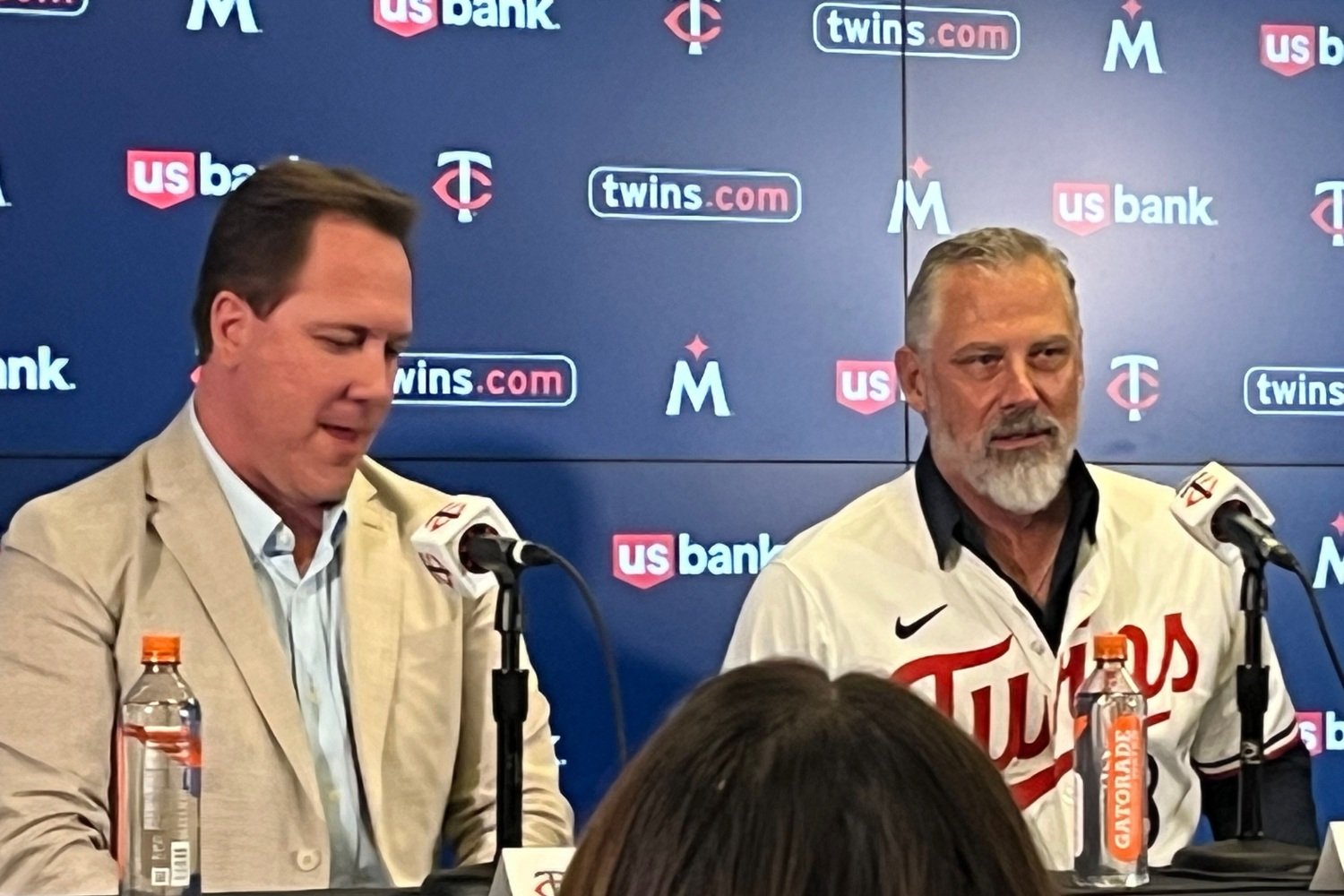 The Twins are going through a major rebuild after a dismal season on the field, which led to the dumping of 11 players at the July trade deadline. In a continuation of that exodus, manager Rocco Baldelli was fired at the end of the season. While fans speculated about an internal or familiar face during the search for Baldelli’s replacement, many were not shocked that it turned out to be a familiar face from another floundering team. Derek Shelton comes to the Twins after being fired in the middle of the 2025 season and leaves with a .410 win percentage for his five-plus years as manager of the Pirates. But the upside of this acquisition is that Shelton is used to a rebuild. In fact, from 2022 to 2024, his Pittsburgh clubs began making improvements, but they weren’t enough.While Shelton was with the Pirates, the talent shortfall led to a mediocre on-field product. Hopefully, with the Twins’ talent already in place, he can start with a solid team capable of producing immediate results. A deep dive into his statements about being a coach shows that his first concern is communication from the top down—something the Twins may have lacked in Baldelli’s latter days. Shelton’s approach has always centered on accountability and communication. Following a tough 5-1 loss to Oakland in August 2024, his message was blunt: “No, we shouldn’t be in better spirits afterwards. We’ve got to get better. This is a situation where we need to focus and we need to get better.” That was a few bruising years into the project. Right away, though, he made clear the nature of his expectations of players and their responsibilities to one another. “It is crucial for players to consider how their daily actions affect their teammates,” Shelton said during his first spring training with Pittsburgh in 2020. “The focus should be on helping teammates and thinking about what each individual needs to do to help the team win.” One major failure of his stint with the Pirates came in the form of trying but not always succeeding that very aspect. When asked Tuesday about what he learned from his sojourn to the Steel City, Shelton had a quick answer, and a plan for how to better execute the ideas he articulated in the past. “I think the first and probably most important thing is, you have to have conversations, and you have to have the follow-up conversations,” he said. “Because what is heard, what is said and how it’s retained sometimes loses its place, and because of that, you don’t end up getting the best out of the situation or the player.” Shelton comes across as direct, often unsatisfied, and focused on improvement. He wants players—and even the front office and coaches—to recognize that you can’t be a team unless individual actions impact everyone as a whole; everyone impacts the win or the loss. Shelton seems to recognize that a loss isn't about blame, as much as it is a chance to improve and reflect on being better. The Twins’ 2025 roster wasn’t short on talent. In fact, they have some of the best prospects in the league, but inconsistency has been a recurring theme. If Shelton's passion and sincerity about accountability are transferable and accepted by the team, could he turn that into success? In March 2025, after early-season defensive miscues, Shelton asserted (as relayed in an article by AP News’ Will Graves) that the players needed to be involved in the conversation for improvement to take root. “Fixing these issues will involve conversations with the players, as these are things the team worked on all spring that need to be cleaned up.” Shelton is no stranger to a rebuild. However, the Pirates under Shelton never had the luxury of depth. A front office still in transition left him trying to make progress with limited pieces. He can only work with what he’s got, and the Pirates didn’t give him much. The Twins have a stronger farm system, and in Byron Buxton, Pablo López and Joe Ryan, they arguably have more proven stars than Pittsburgh had. Shelton’s experience managing through chaos on the field in Pittsburgh may translate into more success in Minnesota. Shelton shows that he wants growth and recognizes there is humanity involved, but he is really focused on fundamentals—proper process and everyone being on the same page to achieve the goal. On Dec. 4, 2019, as he came into the Pirates organization, he said, “We’re going to be very process-driven,” he said. “The fact that we’re 100% aligned—front office, manager, and coaching staff—that’s where it starts.” If Shelton continues to talk about processes, alignment, and growth, one area the Twins need help with is on-field fundamentals, from situational hitting to aggressive gameplay. That certainly was the focus when he was introduced Tuesday, too. “There will be more attention to details, more to fundamentals—and that’s not talking about anything that happened before. It’s just talking about the lessons I’ve learned,” he said, when asked about his vision for the team’s play in 2026. “I think we saw in the World Series this year that three little plays and a matter of like three or four inches determined who was gonna win a World Series game, or who was gonna win the World Series. So the focus of that is going to be very important to me. And I think that’s something that I’ve learned over the course of years, that it’s really important—that there’s no detail that’s too small.” One place where the Twins lack is aggression, on the field, at the plate, on the bases, and from the mound. Shelton has talked a lot about being more aggressive in post-game interviews, and fans would love to see a coach who really breeds that desire and implements a hunger for players to be active in situational hitting and base running. That relentless push for improvement (sometimes to the point of frustration) may be the jolt Minnesota needs. The Twins don’t require a rebuild; they need refinement, aggression, and sharper execution. When Shelton said, “It’s time to win,” it was a message meant for Pittsburgh. But it fits Minnesota perfectly now. Shelton arrives in Minnesota not as a first-time manager, but as a leader shaped by mistakes, pressure, and growth. The Pirates never gave him the roster to showcase his full potential. The Twins might. If his communication, accountability, and culture-first mindset take root, Minnesota may finally see what Shelton can do when talent and vision align.
-
Image courtesy of John Bonnes The Twins are going through a major rebuild after a dismal season on the field, which led to the dumping of 11 players at the July trade deadline. In a continuation of that exodus, manager Rocco Baldelli was fired at the end of the season. While fans speculated about an internal or familiar face during the search for Baldelli’s replacement, many were not shocked that it turned out to be a familiar face from another floundering team. Derek Shelton comes to the Twins after being fired in the middle of the 2025 season and leaves with a .410 win percentage for his five-plus years as manager of the Pirates. But the upside of this acquisition is that Shelton is used to a rebuild. In fact, from 2022 to 2024, his Pittsburgh clubs began making improvements, but they weren’t enough.While Shelton was with the Pirates, the talent shortfall led to a mediocre on-field product. Hopefully, with the Twins’ talent already in place, he can start with a solid team capable of producing immediate results. A deep dive into his statements about being a coach shows that his first concern is communication from the top down—something the Twins may have lacked in Baldelli’s latter days. Shelton’s approach has always centered on accountability and communication. Following a tough 5-1 loss to Oakland in August 2024, his message was blunt: “No, we shouldn’t be in better spirits afterwards. We’ve got to get better. This is a situation where we need to focus and we need to get better.” That was a few bruising years into the project. Right away, though, he made clear the nature of his expectations of players and their responsibilities to one another. “It is crucial for players to consider how their daily actions affect their teammates,” Shelton said during his first spring training with Pittsburgh in 2020. “The focus should be on helping teammates and thinking about what each individual needs to do to help the team win.” One major failure of his stint with the Pirates came in the form of trying but not always succeeding that very aspect. When asked Tuesday about what he learned from his sojourn to the Steel City, Shelton had a quick answer, and a plan for how to better execute the ideas he articulated in the past. “I think the first and probably most important thing is, you have to have conversations, and you have to have the follow-up conversations,” he said. “Because what is heard, what is said and how it’s retained sometimes loses its place, and because of that, you don’t end up getting the best out of the situation or the player.” Shelton comes across as direct, often unsatisfied, and focused on improvement. He wants players—and even the front office and coaches—to recognize that you can’t be a team unless individual actions impact everyone as a whole; everyone impacts the win or the loss. Shelton seems to recognize that a loss isn't about blame, as much as it is a chance to improve and reflect on being better. The Twins’ 2025 roster wasn’t short on talent. In fact, they have some of the best prospects in the league, but inconsistency has been a recurring theme. If Shelton's passion and sincerity about accountability are transferable and accepted by the team, could he turn that into success? In March 2025, after early-season defensive miscues, Shelton asserted (as relayed in an article by AP News’ Will Graves) that the players needed to be involved in the conversation for improvement to take root. “Fixing these issues will involve conversations with the players, as these are things the team worked on all spring that need to be cleaned up.” Shelton is no stranger to a rebuild. However, the Pirates under Shelton never had the luxury of depth. A front office still in transition left him trying to make progress with limited pieces. He can only work with what he’s got, and the Pirates didn’t give him much. The Twins have a stronger farm system, and in Byron Buxton, Pablo López and Joe Ryan, they arguably have more proven stars than Pittsburgh had. Shelton’s experience managing through chaos on the field in Pittsburgh may translate into more success in Minnesota. Shelton shows that he wants growth and recognizes there is humanity involved, but he is really focused on fundamentals—proper process and everyone being on the same page to achieve the goal. On Dec. 4, 2019, as he came into the Pirates organization, he said, “We’re going to be very process-driven,” he said. “The fact that we’re 100% aligned—front office, manager, and coaching staff—that’s where it starts.” If Shelton continues to talk about processes, alignment, and growth, one area the Twins need help with is on-field fundamentals, from situational hitting to aggressive gameplay. That certainly was the focus when he was introduced Tuesday, too. “There will be more attention to details, more to fundamentals—and that’s not talking about anything that happened before. It’s just talking about the lessons I’ve learned,” he said, when asked about his vision for the team’s play in 2026. “I think we saw in the World Series this year that three little plays and a matter of like three or four inches determined who was gonna win a World Series game, or who was gonna win the World Series. So the focus of that is going to be very important to me. And I think that’s something that I’ve learned over the course of years, that it’s really important—that there’s no detail that’s too small.” One place where the Twins lack is aggression, on the field, at the plate, on the bases, and from the mound. Shelton has talked a lot about being more aggressive in post-game interviews, and fans would love to see a coach who really breeds that desire and implements a hunger for players to be active in situational hitting and base running. That relentless push for improvement (sometimes to the point of frustration) may be the jolt Minnesota needs. The Twins don’t require a rebuild; they need refinement, aggression, and sharper execution. When Shelton said, “It’s time to win,” it was a message meant for Pittsburgh. But it fits Minnesota perfectly now. Shelton arrives in Minnesota not as a first-time manager, but as a leader shaped by mistakes, pressure, and growth. The Pirates never gave him the roster to showcase his full potential. The Twins might. If his communication, accountability, and culture-first mindset take root, Minnesota may finally see what Shelton can do when talent and vision align. View full article
-
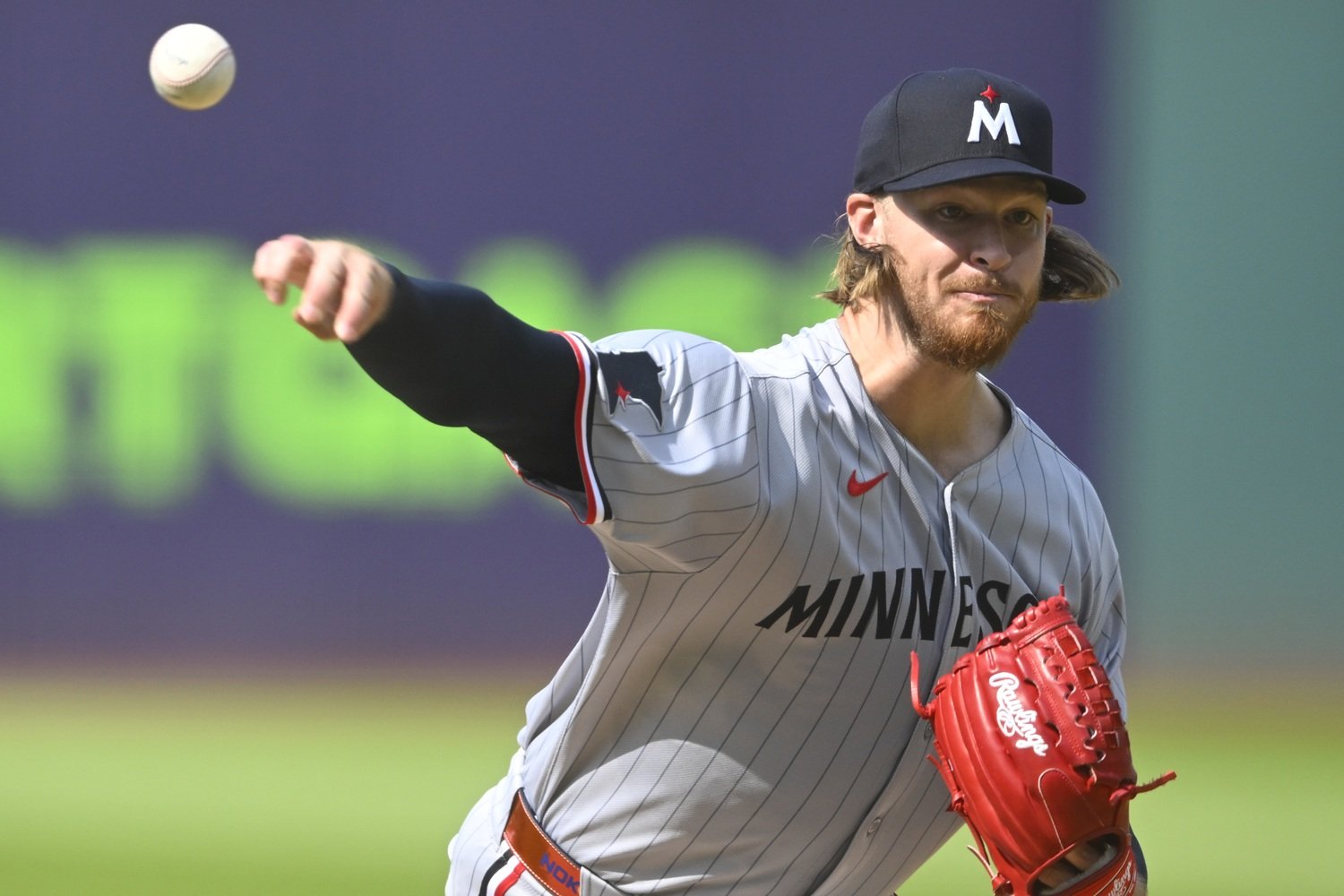 RHP Bailey Ober Age on Opening Day 2026: 30 Service Time: 4 years, 93 days 2023 Salary: $720,000 2024 Salary: $761,580 2025 Salary: $3.55 Million MLB Trade Rumors Estimate for 2026: $4.6 million Background Born in Huntersville, NC, and attending the College of Charleston, Bailey Ober was drafted by the Twins in the 12th round of the 2017 amateur draft, having previously been a 23rd-round selection by the Los Angeles Dodgers in 2015. His decision to stay in college one more year made a huge difference in his talent and draft class. He made his major league at 25 years old with the Twins in 2021, going 3-3, 4.19 in 20 starts and 92 ⅓ innings. He has since turned into a regular in the Twins rotation, accruing a 4.08 ERA over 618 MLB innings. He has spent his entire career in Minnesota. 2025 Season Ober’s 2025 season was a roller coaster. He started slow and inconsistent, taking longer than usual to find his rhythm. By midseason, he was battling through pain in his left hip — a lingering issue that eventually caught up to him. In July, after a rough stretch where he went 0–5 with a 9.00 ERA and surrendered 14 home runs, Ober landed on the injured list. Before the injury, Ober had appeared in 27 games, logging 92 innings with 108 hits, 55 runs, 22 walks, and 74 strikeouts, for a 5.28 ERA and a -1.0 WPA. After a month-long rehab stint, he returned to the mound on August 2 against Cleveland and showed noticeable improvement. Over his final 10 starts, he regained command and consistency, posting a 4.80 ERA with 46 strikeouts and just nine walks, raising his WPA to 0.3. It wasn’t a perfect finish, but it was a strong recovery to close out an uneven season. Overall 2025 Stats: 27 G, 146 1/3 IP, 159 H, 31 BB, 120 K, 5.10 ERA, 1.30 WHIP. Twins Depth at his Position (Starting Pitchers): 40-man roster - David Festa, Mick Abel, Taj Bradley, Marco Raya, Simeon-Woods Richardson Joe Ryan, Pablo Lopez, Travis Adams Arbitration-Eligible: Joe Ryan Triple-A: Andrew Morris, Marco Raya, Cory Lewis, John Klein, Aaron Rozek, Kendry Rojas, Connor Prielipp. Double-A: Ricky Castro, Darren Bowen, Ryan Gallagher, Sam Armstrong, Why the Twins Should Offer Him Arbitration: Despite an uneven 2025, retaining Bailey Ober should be a straightforward decision for the Twins. He’s demonstrated stretches of frontline-caliber pitching in past seasons, remains under 30, and will come at a relatively modest arbitration price. Even for those skeptical of his long-term upside, the combination of cost control, experience, and need makes him a clear asset to keep. Why the Twins Should Non-Tender Him While tendering Ober a contract is a no-brainer, the Twins could weigh the decision to trade him even with his stock depressed. If they aren't confident his mechanics and velocity will rebound, the front office may seek to flip him to a team needing veteran innings. Projection: I think that the Twins keep him, but his future in Minnesota is anything but certain. Ober is a solid pitcher, when he is healthy. In fact, he is downright talented. He has amazing command and control of the strike zone; his height and size make him a weapon on the mound. The concern is the staying healthy part, but there is plenty of time in the offseason for him to work on straightening out his physical issues. Even with his injuries, knowing the ethic of Ober, he can come back better and stronger. His previous three seasons remind us of who he is on the mound. What do you think about Bailey Ober? Consider his stats and his health, then what is seen on the mound when he is healthy. Are there reasons they should keep him? Trade him away? Explore a buy-low extension? What would you do?
- 28 comments
-
- 6
-
-
- bailey ober
- travis adams
- (and 4 more)
-
Image courtesy of © David Richard-Imagn Images RHP Bailey Ober Age on Opening Day 2026: 30 Service Time: 4 years, 93 days 2023 Salary: $720,000 2024 Salary: $761,580 2025 Salary: $3.55 Million MLB Trade Rumors Estimate for 2026: $4.6 million Background Born in Huntersville, NC, and attending the College of Charleston, Bailey Ober was drafted by the Twins in the 12th round of the 2017 amateur draft, having previously been a 23rd-round selection by the Los Angeles Dodgers in 2015. His decision to stay in college one more year made a huge difference in his talent and draft class. He made his major league at 25 years old with the Twins in 2021, going 3-3, 4.19 in 20 starts and 92 ⅓ innings. He has since turned into a regular in the Twins rotation, accruing a 4.08 ERA over 618 MLB innings. He has spent his entire career in Minnesota. 2025 Season Ober’s 2025 season was a roller coaster. He started slow and inconsistent, taking longer than usual to find his rhythm. By midseason, he was battling through pain in his left hip — a lingering issue that eventually caught up to him. In July, after a rough stretch where he went 0–5 with a 9.00 ERA and surrendered 14 home runs, Ober landed on the injured list. Before the injury, Ober had appeared in 27 games, logging 92 innings with 108 hits, 55 runs, 22 walks, and 74 strikeouts, for a 5.28 ERA and a -1.0 WPA. After a month-long rehab stint, he returned to the mound on August 2 against Cleveland and showed noticeable improvement. Over his final 10 starts, he regained command and consistency, posting a 4.80 ERA with 46 strikeouts and just nine walks, raising his WPA to 0.3. It wasn’t a perfect finish, but it was a strong recovery to close out an uneven season. Overall 2025 Stats: 27 G, 146 1/3 IP, 159 H, 31 BB, 120 K, 5.10 ERA, 1.30 WHIP. Twins Depth at his Position (Starting Pitchers): 40-man roster - David Festa, Mick Abel, Taj Bradley, Marco Raya, Simeon-Woods Richardson Joe Ryan, Pablo Lopez, Travis Adams Arbitration-Eligible: Joe Ryan Triple-A: Andrew Morris, Marco Raya, Cory Lewis, John Klein, Aaron Rozek, Kendry Rojas, Connor Prielipp. Double-A: Ricky Castro, Darren Bowen, Ryan Gallagher, Sam Armstrong, Why the Twins Should Offer Him Arbitration: Despite an uneven 2025, retaining Bailey Ober should be a straightforward decision for the Twins. He’s demonstrated stretches of frontline-caliber pitching in past seasons, remains under 30, and will come at a relatively modest arbitration price. Even for those skeptical of his long-term upside, the combination of cost control, experience, and need makes him a clear asset to keep. Why the Twins Should Non-Tender Him While tendering Ober a contract is a no-brainer, the Twins could weigh the decision to trade him even with his stock depressed. If they aren't confident his mechanics and velocity will rebound, the front office may seek to flip him to a team needing veteran innings. Projection: I think that the Twins keep him, but his future in Minnesota is anything but certain. Ober is a solid pitcher, when he is healthy. In fact, he is downright talented. He has amazing command and control of the strike zone; his height and size make him a weapon on the mound. The concern is the staying healthy part, but there is plenty of time in the offseason for him to work on straightening out his physical issues. Even with his injuries, knowing the ethic of Ober, he can come back better and stronger. His previous three seasons remind us of who he is on the mound. What do you think about Bailey Ober? Consider his stats and his health, then what is seen on the mound when he is healthy. Are there reasons they should keep him? Trade him away? Explore a buy-low extension? What would you do? View full article
- 28 replies
-
- 1
-
-
- bailey ober
- travis adams
- (and 4 more)
-
Image courtesy of © Yannick Peterhans / USA TODAY NETWORK via Imagn Images Joe Ryan Age on Opening Day 2026: 29 Service Time: 4 years, 93 days 2023 Salary: $730,250 2024 Salary: $758,850 2025 Salary: $3.0 Million MLB Trade Rumors Projection for 2026: $5.8 million 2025 Season Ryan began his fourth full season with the Twins effectively, posting strong early stretches as the Twins leaned on him heavily amid rotation injuries and uncertainty. Though it wasn't the case on Opening Day, by mid-June, Ryan was clearly the ace of the staff. By midseason, he had posted one of the more impressive first-half ERAs in franchise history: 2.72 over 109 ⅓ innings, the best first-half mark by a Twins starter since Johan Santana in 2007. He was also the only starter who missed no time due to injury, illness or mishap. After the fire sale at the trade deadline in late July, Ryan did scuffle for the final two months of the campaign, perhaps frustrated with the direction of the franchise and perhaps shaken by a misgiven rumor that he himself would be traded just before the deadline. Nonetheless, he finished with the best numbers on the team and the best of his career. He delivered several standout performances throughout the season. He spun seven scoreless innings twice in April; had the capstone pitching performance of the team's terrific win streak on a Friday night in Milwaukee in May; overwhelmed the surging Mariners over six scoreless frames in late June; outdueled Paul Skenes at Target Field just before the All-Star break; pitched angry for 6 2/3 frames to dominate the Yankees in the Bronx; and shut down the playoff-bound Padres at the end of August. Twice, he hit 11 strikeouts, one shy of his career high set in 2024. 2025 Stats: 31 G, 30 GS, 171 IP, 138 H, 39 BB, 194 K, 3.42 ERA, 1.04 WHIP Twins Depth at his Position (Starting Pitchers): Big-League Vets: Mick Abel, Taj Bradley, David Festa, Pablo López, Zebby Matthews, Bailey Ober, Simeon Woods Richardson Triple-A: John Klein, Cory Lewis, Andrew Morris, Connor Prielipp, Marco Raya, Kendry Rojas Double-A: Sam Armstrong, Darren Bowen, Ricky Castro, C.J. Culpepper, Ryan Gallagher, Christian MacLeod Why the Twins Should Offer Him Arbitration: Dollar for dollar and inning for inning, he is the best pitcher the Twins have. He shouldered a heavier load when others were hurt or inconsistent. One of the hardest things about baseball is the mental game, and Ryan does a great job of keeping his intensity even under strain. He is the most durable pitcher on the roster, stabilizing Minnesota’s rotation when they needed it most. Like Byron Buxton, the value that Ryan brings to the team is worth more than twice what he'll actually be paid in 2026. Why the Twins Should Non-Tender Him There is no logical reason to non-tender Joe Ryan, and under no circumstances would the team do so. The only way Ryan won't be back next season is if he's traded—which, alas, is certainly possible, as the team faces the specter of a very limited payroll. Projection The Twins will keep Ryan. The duo of Ryan and López have been a great asset to the team, and the team should do their best to settle and avoid a hearing with him. He's the kind of pitcher who quietly dominates. He is the “Joe Ryan Experience”: precision, confidence, a relentless drive to compete, and the hair of a god. In 2025, he showed exactly what he's capable of when everything is working. He was one of the most consistent arms in the rotation and stepped up when the team needed it most. Ryan has such a great feel for the strike zone. He commands his fastball with confidence and keeps hitters guessing with his off-speed stuff. He’s aggressive, smart, and knows how to finish at-bats. What stood out this season was his ability to stay locked in deep into games and keep the momentum on his side. Will the Twins keep Ryan, or trade him? How much can he make in arbitration, before his earning power becomes a problem for the club? Is there any chance of a long-term deal? Join the discussion below. View full article
-
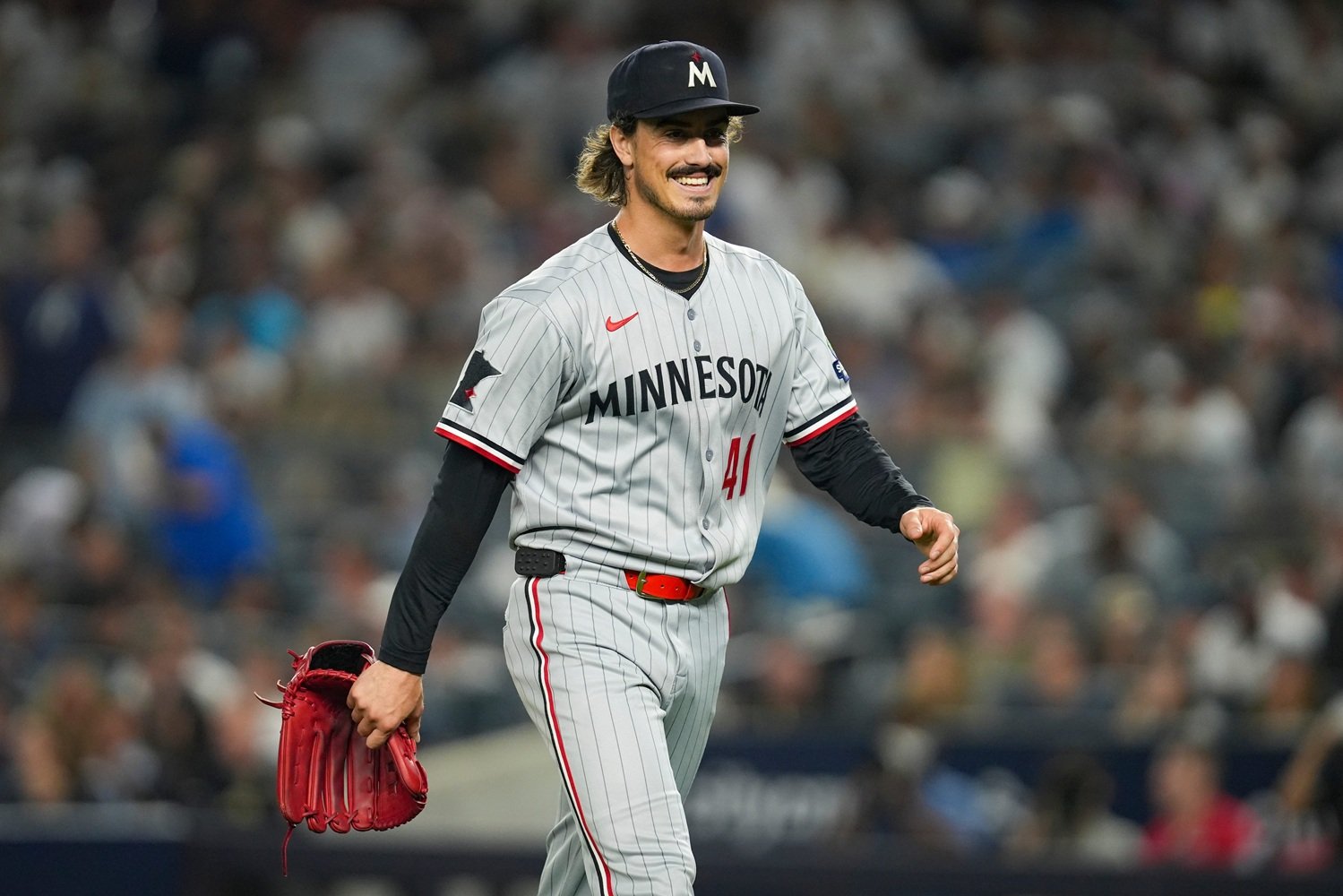 Joe Ryan Age on Opening Day 2026: 29 Service Time: 4 years, 93 days 2023 Salary: $730,250 2024 Salary: $758,850 2025 Salary: $3.0 Million MLB Trade Rumors Projection for 2026: $5.8 million 2025 Season Ryan began his fourth full season with the Twins effectively, posting strong early stretches as the Twins leaned on him heavily amid rotation injuries and uncertainty. Though it wasn't the case on Opening Day, by mid-June, Ryan was clearly the ace of the staff. By midseason, he had posted one of the more impressive first-half ERAs in franchise history: 2.72 over 109 ⅓ innings, the best first-half mark by a Twins starter since Johan Santana in 2007. He was also the only starter who missed no time due to injury, illness or mishap. After the fire sale at the trade deadline in late July, Ryan did scuffle for the final two months of the campaign, perhaps frustrated with the direction of the franchise and perhaps shaken by a misgiven rumor that he himself would be traded just before the deadline. Nonetheless, he finished with the best numbers on the team and the best of his career. He delivered several standout performances throughout the season. He spun seven scoreless innings twice in April; had the capstone pitching performance of the team's terrific win streak on a Friday night in Milwaukee in May; overwhelmed the surging Mariners over six scoreless frames in late June; outdueled Paul Skenes at Target Field just before the All-Star break; pitched angry for 6 2/3 frames to dominate the Yankees in the Bronx; and shut down the playoff-bound Padres at the end of August. Twice, he hit 11 strikeouts, one shy of his career high set in 2024. 2025 Stats: 31 G, 30 GS, 171 IP, 138 H, 39 BB, 194 K, 3.42 ERA, 1.04 WHIP Twins Depth at his Position (Starting Pitchers): Big-League Vets: Mick Abel, Taj Bradley, David Festa, Pablo López, Zebby Matthews, Bailey Ober, Simeon Woods Richardson Triple-A: John Klein, Cory Lewis, Andrew Morris, Connor Prielipp, Marco Raya, Kendry Rojas Double-A: Sam Armstrong, Darren Bowen, Ricky Castro, C.J. Culpepper, Ryan Gallagher, Christian MacLeod Why the Twins Should Offer Him Arbitration: Dollar for dollar and inning for inning, he is the best pitcher the Twins have. He shouldered a heavier load when others were hurt or inconsistent. One of the hardest things about baseball is the mental game, and Ryan does a great job of keeping his intensity even under strain. He is the most durable pitcher on the roster, stabilizing Minnesota’s rotation when they needed it most. Like Byron Buxton, the value that Ryan brings to the team is worth more than twice what he'll actually be paid in 2026. Why the Twins Should Non-Tender Him There is no logical reason to non-tender Joe Ryan, and under no circumstances would the team do so. The only way Ryan won't be back next season is if he's traded—which, alas, is certainly possible, as the team faces the specter of a very limited payroll. Projection The Twins will keep Ryan. The duo of Ryan and López have been a great asset to the team, and the team should do their best to settle and avoid a hearing with him. He's the kind of pitcher who quietly dominates. He is the “Joe Ryan Experience”: precision, confidence, a relentless drive to compete, and the hair of a god. In 2025, he showed exactly what he's capable of when everything is working. He was one of the most consistent arms in the rotation and stepped up when the team needed it most. Ryan has such a great feel for the strike zone. He commands his fastball with confidence and keeps hitters guessing with his off-speed stuff. He’s aggressive, smart, and knows how to finish at-bats. What stood out this season was his ability to stay locked in deep into games and keep the momentum on his side. Will the Twins keep Ryan, or trade him? How much can he make in arbitration, before his earning power becomes a problem for the club? Is there any chance of a long-term deal? Join the discussion below.
- 51 comments
-
- 11
-
-
- joe ryan
- bailey ober
- (and 1 more)
-
Today we continue to hand out awards for the Twins 2025 season. After naming our MVP and Rookie of the Year, we name today's pitcher of the year. 37 pitchers took the mound for the Minnesota Twins in 2025. Well, 33 pitchers and four position players. Ryan Fitzgerald might have been the best, posting a 0.00 ERA over his two innings. Our voters were impressed, but it appears they were looking for pitchers that threw more innings. In reality, it was a pretty easy selection, especially after the team traded seven pitchers at the trade deadline. There were injuries in the big leagues but also in the upper levels of the minors. There we players who didn't pitch as well as they did previously. But the Twins were led by one starting pitcher the whole season, and he was the unanimous choice for Twins Daily pitcher of the year. Here are three pitchers who did well before getting to our choice. #4: Simeon Woods Richardson certainly made the most improvements on the mound this season. SWR started 22 games and posted his lowest career ERA, 4.04. He also struck out 107 in 111 1/3 innings. Compared to the previous season, Woods Richardson improved his command, improved a couple of his pitches, and did a much better job getting out of jams. Toward the end of the season, he was able to complete five to six innings in games. His best game of the season was against the Yankees in September. He struck out a career-high 11 batters over six scoreless innings as the Twins beat the Yankees, 7-0, at Target Field. He gave up just two hits. #3: Jhoan Duran is more than an honorable mention. Coming in at number three in our voting is the best closer that the Twins have had since Joe Nathan. Duran was traded to the Phillies on July 30th, but his impact as a Twin was a fan favorite from his cool entrance to his 104mph fastball to strike out hitters. Duran was arguably having his best season before the trade; he was 6-4 with a 2.01 ERA. He struck out 53 hitters over 49 1/3 innings. Duran was also one of the highest contributors to the Twins fWAR at 1.6, third for pitchers on the Twins roster and sixth on the team, according to fan graphs. He got hitters to swing 53.3% of the time, the most swings were inside at 69.9%. Duran is number 13 on the relief pitcher rankings on FanGraphs but had the sixth most saves of those 13. Duran is dominant, he's 27, and Twins fans deserved to see more years of his show. #2: Pablo Lopez had three stints on the Injured List, but when he was on the mound, he was dominant. López made 14 starts and posted an overall 2.74 ERA, striking out 73 in 75 2/3 innings. There was not a game that Lopez started where fans were worried about getting a solid performance. Lopez is also a candidate for the Roberto Clemente Award, which is given to the player who has made a significant community impact. Lopez, even during his downtime due to injury, was engaging with the fans, making sure to help the younger pitchers, and was present at every game he could attend. Lopez is everything that the team needs in a veteran pitcher. Pitcher of the Year: Joe Ryan Ryan had his best season of his career in 2025. He avoided injury but also anytime on the IL; he started 30 games, attended the All-Star game, and had one of his best seasons since joining the Twins. Ryan struck out 194 over 171 innings. His 3.42 ERA is the lowest it has been since he started with the Twins. He finished in the AL’s Top 10 in WAR for Pitchers (6th), ERA (10th), BB/9 (6th), K/9 (3rd), and K/BB (5th). One fun stat is that he left 76.8% of baserunners on base. Even in his struggles of giving up home runs at least once a game, his numbers show that he is reliable and able to get out of jams. Ryan has not been in a conversation for the Cy Young, but hopefully it’s something he is considered for in the next season or two if he continues to be dominant. Even though the All-Star appearance was a replacement for Houston Astros pitcher Hunter Brown, The Joe Ryan Experience can now check off “All-Star” on his resume. Ryan pitched at the top of the fourth, striking out Manny Machado, Kyle Tucker, and a pop-up to Will Smith. There is no doubt that Ryan is the most dominant and consistent pitcher on the Twins' starting rotation. While there is a lot of fear over the next move of Ryan, the front office has made it clear that they want to keep the Lopez-Ryan duo a part of the Twins. The overall feel of the pitching is that there is a lot of talent. While there were a lot of struggles in the bullpen, the pitchers under the direction of Pete Maki, continue to make adjustments, improve and give their all every game. While there is no talk about what will happen in the off-season, a tip of the cap to the pitchers of 2025. View full article
-
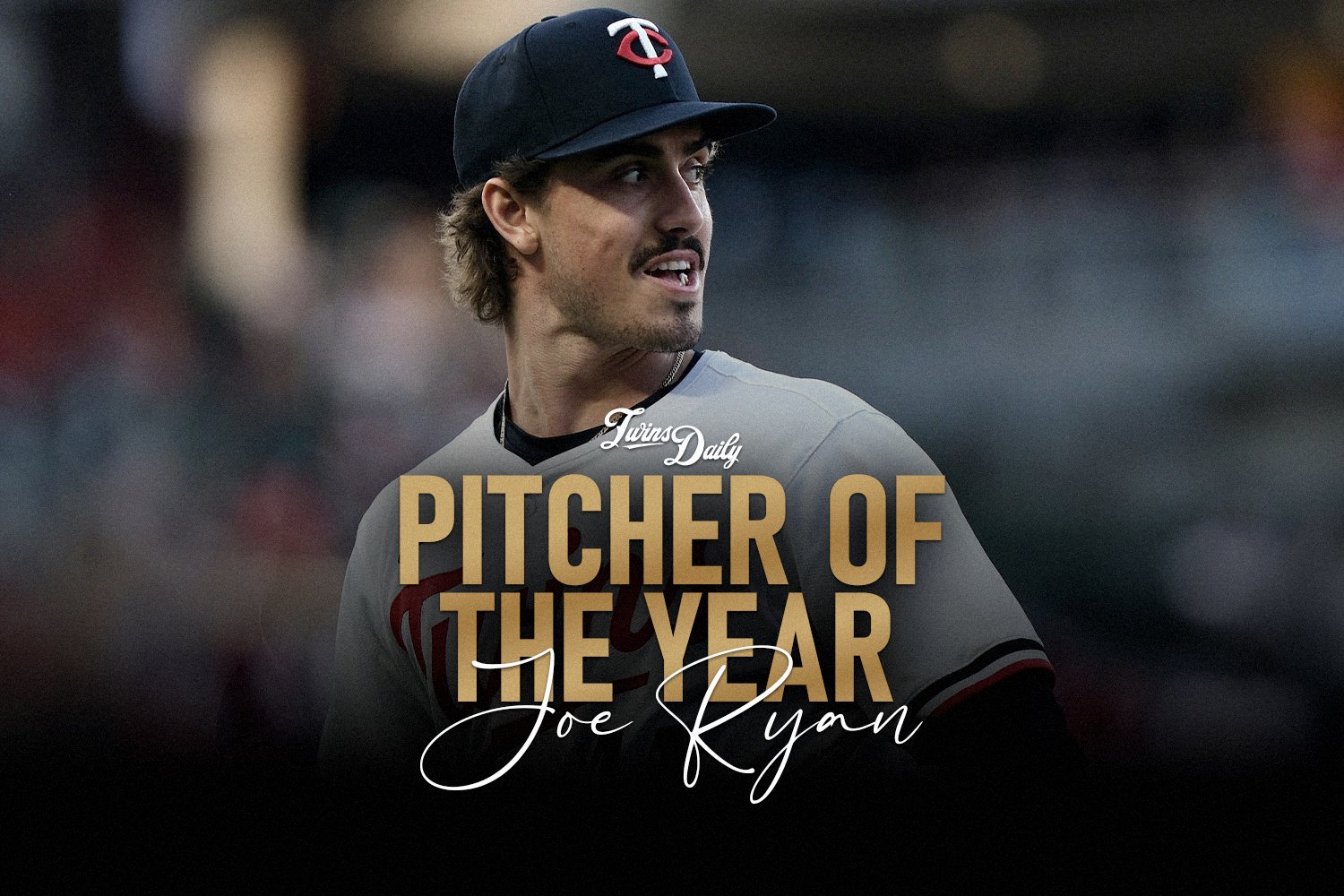 Today we continue to hand out awards for the Twins 2025 season. After naming our MVP and Rookie of the Year, we name today's pitcher of the year. 37 pitchers took the mound for the Minnesota Twins in 2025. Well, 33 pitchers and four position players. Ryan Fitzgerald might have been the best, posting a 0.00 ERA over his two innings. Our voters were impressed, but it appears they were looking for pitchers that threw more innings. In reality, it was a pretty easy selection, especially after the team traded seven pitchers at the trade deadline. There were injuries in the big leagues but also in the upper levels of the minors. There we players who didn't pitch as well as they did previously. But the Twins were led by one starting pitcher the whole season, and he was the unanimous choice for Twins Daily pitcher of the year. Here are three pitchers who did well before getting to our choice. #4: Simeon Woods Richardson certainly made the most improvements on the mound this season. SWR started 22 games and posted his lowest career ERA, 4.04. He also struck out 107 in 111 1/3 innings. Compared to the previous season, Woods Richardson improved his command, improved a couple of his pitches, and did a much better job getting out of jams. Toward the end of the season, he was able to complete five to six innings in games. His best game of the season was against the Yankees in September. He struck out a career-high 11 batters over six scoreless innings as the Twins beat the Yankees, 7-0, at Target Field. He gave up just two hits. #3: Jhoan Duran is more than an honorable mention. Coming in at number three in our voting is the best closer that the Twins have had since Joe Nathan. Duran was traded to the Phillies on July 30th, but his impact as a Twin was a fan favorite from his cool entrance to his 104mph fastball to strike out hitters. Duran was arguably having his best season before the trade; he was 6-4 with a 2.01 ERA. He struck out 53 hitters over 49 1/3 innings. Duran was also one of the highest contributors to the Twins fWAR at 1.6, third for pitchers on the Twins roster and sixth on the team, according to fan graphs. He got hitters to swing 53.3% of the time, the most swings were inside at 69.9%. Duran is number 13 on the relief pitcher rankings on FanGraphs but had the sixth most saves of those 13. Duran is dominant, he's 27, and Twins fans deserved to see more years of his show. #2: Pablo Lopez had three stints on the Injured List, but when he was on the mound, he was dominant. López made 14 starts and posted an overall 2.74 ERA, striking out 73 in 75 2/3 innings. There was not a game that Lopez started where fans were worried about getting a solid performance. Lopez is also a candidate for the Roberto Clemente Award, which is given to the player who has made a significant community impact. Lopez, even during his downtime due to injury, was engaging with the fans, making sure to help the younger pitchers, and was present at every game he could attend. Lopez is everything that the team needs in a veteran pitcher. Pitcher of the Year: Joe Ryan Ryan had his best season of his career in 2025. He avoided injury but also anytime on the IL; he started 30 games, attended the All-Star game, and had one of his best seasons since joining the Twins. Ryan struck out 194 over 171 innings. His 3.42 ERA is the lowest it has been since he started with the Twins. He finished in the AL’s Top 10 in WAR for Pitchers (6th), ERA (10th), BB/9 (6th), K/9 (3rd), and K/BB (5th). One fun stat is that he left 76.8% of baserunners on base. Even in his struggles of giving up home runs at least once a game, his numbers show that he is reliable and able to get out of jams. Ryan has not been in a conversation for the Cy Young, but hopefully it’s something he is considered for in the next season or two if he continues to be dominant. Even though the All-Star appearance was a replacement for Houston Astros pitcher Hunter Brown, The Joe Ryan Experience can now check off “All-Star” on his resume. Ryan pitched at the top of the fourth, striking out Manny Machado, Kyle Tucker, and a pop-up to Will Smith. There is no doubt that Ryan is the most dominant and consistent pitcher on the Twins' starting rotation. While there is a lot of fear over the next move of Ryan, the front office has made it clear that they want to keep the Lopez-Ryan duo a part of the Twins. The overall feel of the pitching is that there is a lot of talent. While there were a lot of struggles in the bullpen, the pitchers under the direction of Pete Maki, continue to make adjustments, improve and give their all every game. While there is no talk about what will happen in the off-season, a tip of the cap to the pitchers of 2025.
-
Image courtesy of © Jerome Miron-Imagn Images Box Score SP: Taj Bradley 6 IP, 2 H, 1 ER, 2 BB, 9 K (90 pitches, 60 strikes (66%)) Home Runs: Byron Buxton (32) Bottom 3 WPA: Travis Adams (-.301), Ryan Jeffers (-.208), Ryan Fitzgerald (-.117) Win Probability Chart (via FanGraphs) Leading off Wednesday night's tussle with the Rangers, Byron Buxton did his best to set the tone. On just the second pitch he saw from Jacob deGrom, Buxton launched a solo shot to dead center, 407 feet, to put the Twins on the board. Kody Clemens did, indeed, seem to take his cue from Buxton, because he hit a fly ball exactly the same distance. Unfortunately, that one died in the glove of Texas center fielder Michael Helman—and that would prove to better reflect the tone of the game. Taj Bradley toed the rubber for the Twins. Making his 27th and final start of the season, Bradley worked a clean first frame, including two strikeouts. He had good heat, touching 98, but the curveball played especially well, earning both punchouts and a key called strike to open a count. Not in the lineup tonight was rookie Luke Keaschall. After sliding into second base Tuesday, he injured his thumb. Audra Martin reported during the broadcast that Keaschall’s season is over. He’ll be seeing a specialist, and surgery is very much on the table. Before that tough break, the rookie was slashing .302/.382/.445 with 55 hits, 28 RBIs, 14 stolen bases, and four home runs. It was a thrilling introduction to the majors, but already, it's clear that injuries will be a major part of the story for yet another top Twins prospect. Bradley struck out the side in the second inning, and again, the curveball looked incredible. He allowed his first hit with two outs in the third, when Helman blooped a double to left, but he was out of trouble almost as soon as he'd gotten into it. He was very, very sharp. Clemens tried to stir up trouble in the fourth, drawing a walk against deGrom before swiping second—his fifth steal of the year. and the Twins' 45th in the last 25 games. He then advanced to third on a wild pitch. With no outs, deGrom looked like he might be losing his edge. Instead, the two-time Cy Young winner locked things down, striking out Trevor Larnach and Ryan Jeffers back-to-back before getting Brooks Lee to fly out. Clemens was stranded. Bradley’s lone mistake came in the fourth, when Texas shortstop Josh Smith took him deep to right. Larnach got back to the wall with time to give it a look, but the ball just cleared the wall to tie things up 1-1. Bradley showed resilience, though. He walked Rowdy Tellez, but stranded him with a strikeout and an easy pop fly. He ended up going six innings and fanning nine, including striking out the side again in the sixth. It was easily his most impressive outing since the Twins traded for him on July 31, and it flashed the front-of-the-rotation upside teams have long seen in him. Unfortunately, the rest of the team offered little support. The offense didn't mount many rallies through the middle of the game. Travis Adams came on to relieve Bradley in the seventh, and quickly, he found himself in big trouble. A single, a steal and another single gave Texas the lead with just one out. Yet another single put runners on the corners. Adams was struggling to control the zone, too. He threw a wild pitch that Jeffers failed to block, and Billy McKinney scored, making it 3-1. Adams was pulled from the game and replaced by Génesis Cabrera to face leadoff hitter Joc Pederson, a lefty-lefty matchup. But the Rangers switched it up, and brought out Adolis García off the bench to pinch-hit. Rocco Baldelli elected to intentionally walk García, to get to the left-handed Smith. Unfortunately, Cabrera then unintentionally walked Smith, loading the bases. With Josh Jung batting, Cabrera then loosed the team's second wild pitch of the frame, scoring the Rangers' third run. He eventually induced a flyout from Jung, but the damage was done. The Rangers brought out reliever Shawn Armstrong, who instantly got into some real trouble. An Edouard Julien double and a Royce Lewis single cut the deficit to 4-2 and brought the tying run to the plate with nobody out—but Armstrong then set the Twins down in order to escape the jam. Twins reliever Cody Laweryson spun a scoreless bottom of the eighth, giving the Twins a chance to come back in the top of the ninth, but the Rangers' defense stifled them. The game ended with the Twins' 90th loss of the season. The Twins only have four games left before the offseason. The restructuring of the bullpen and figuring out how to improve the bats is going to be paramount to the success of the team moving forward. What’s Next? The Twins have their last game of the series against the Rangers Thursday, before heading to Philadelphia to close out their season. They will get to see old friends, and hopefully end the season on a good note. Bailey Ober (5-9; 5.32 ERA) will be back on the mound against another old friend, Tyler Mahle (6-3; 2.20 ERA), at 1:35 PM CT. Bullpen Usage Spreadsheet View full article
-
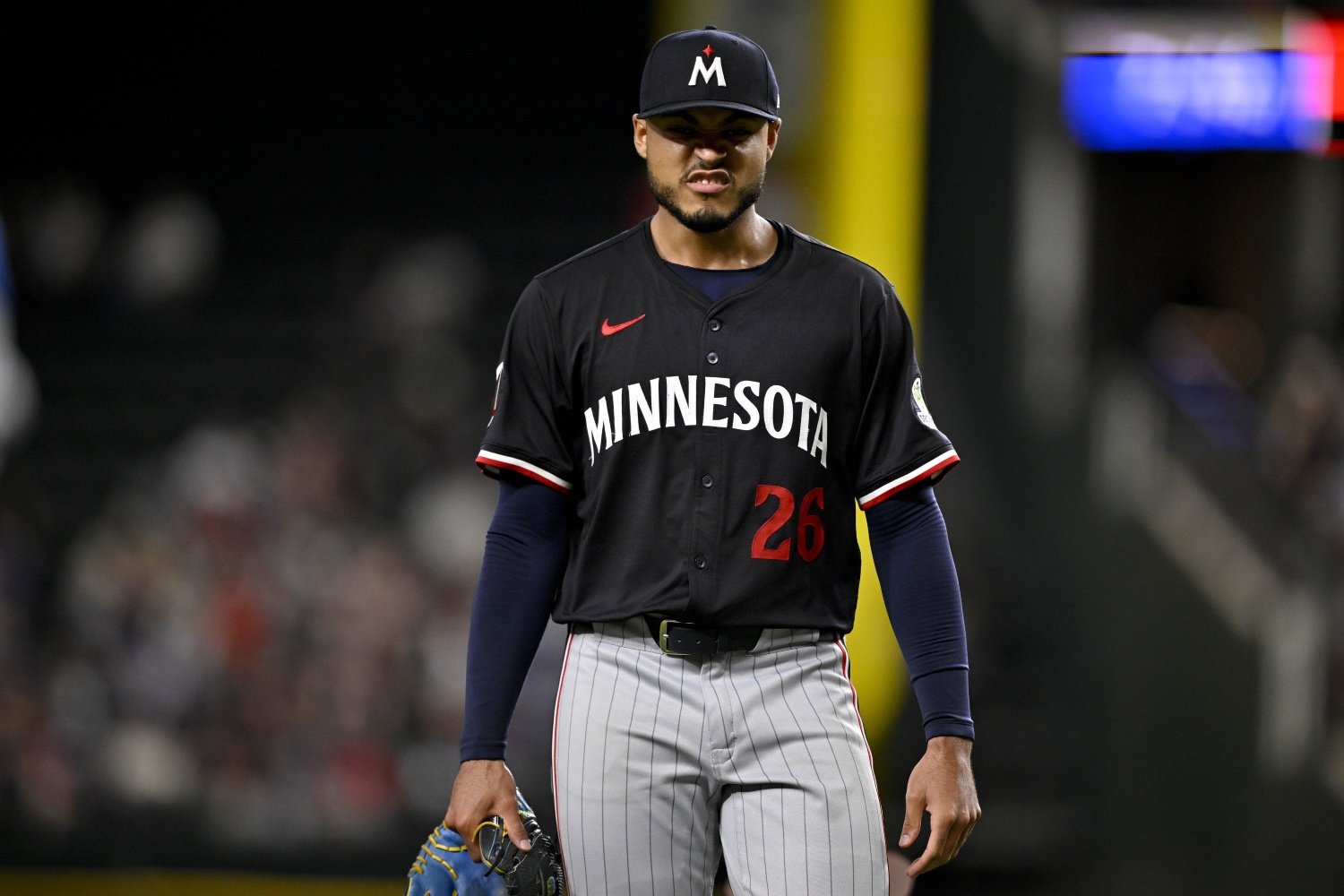 Box Score SP: Taj Bradley 6 IP, 2 H, 1 ER, 2 BB, 9 K (90 pitches, 60 strikes (66%)) Home Runs: Byron Buxton (32) Bottom 3 WPA: Travis Adams (-.301), Ryan Jeffers (-.208), Ryan Fitzgerald (-.117) Win Probability Chart (via FanGraphs) Leading off Wednesday night's tussle with the Rangers, Byron Buxton did his best to set the tone. On just the second pitch he saw from Jacob deGrom, Buxton launched a solo shot to dead center, 407 feet, to put the Twins on the board. Kody Clemens did, indeed, seem to take his cue from Buxton, because he hit a fly ball exactly the same distance. Unfortunately, that one died in the glove of Texas center fielder Michael Helman—and that would prove to better reflect the tone of the game. Taj Bradley toed the rubber for the Twins. Making his 27th and final start of the season, Bradley worked a clean first frame, including two strikeouts. He had good heat, touching 98, but the curveball played especially well, earning both punchouts and a key called strike to open a count. Not in the lineup tonight was rookie Luke Keaschall. After sliding into second base Tuesday, he injured his thumb. Audra Martin reported during the broadcast that Keaschall’s season is over. He’ll be seeing a specialist, and surgery is very much on the table. Before that tough break, the rookie was slashing .302/.382/.445 with 55 hits, 28 RBIs, 14 stolen bases, and four home runs. It was a thrilling introduction to the majors, but already, it's clear that injuries will be a major part of the story for yet another top Twins prospect. Bradley struck out the side in the second inning, and again, the curveball looked incredible. He allowed his first hit with two outs in the third, when Helman blooped a double to left, but he was out of trouble almost as soon as he'd gotten into it. He was very, very sharp. Clemens tried to stir up trouble in the fourth, drawing a walk against deGrom before swiping second—his fifth steal of the year. and the Twins' 45th in the last 25 games. He then advanced to third on a wild pitch. With no outs, deGrom looked like he might be losing his edge. Instead, the two-time Cy Young winner locked things down, striking out Trevor Larnach and Ryan Jeffers back-to-back before getting Brooks Lee to fly out. Clemens was stranded. Bradley’s lone mistake came in the fourth, when Texas shortstop Josh Smith took him deep to right. Larnach got back to the wall with time to give it a look, but the ball just cleared the wall to tie things up 1-1. Bradley showed resilience, though. He walked Rowdy Tellez, but stranded him with a strikeout and an easy pop fly. He ended up going six innings and fanning nine, including striking out the side again in the sixth. It was easily his most impressive outing since the Twins traded for him on July 31, and it flashed the front-of-the-rotation upside teams have long seen in him. Unfortunately, the rest of the team offered little support. The offense didn't mount many rallies through the middle of the game. Travis Adams came on to relieve Bradley in the seventh, and quickly, he found himself in big trouble. A single, a steal and another single gave Texas the lead with just one out. Yet another single put runners on the corners. Adams was struggling to control the zone, too. He threw a wild pitch that Jeffers failed to block, and Billy McKinney scored, making it 3-1. Adams was pulled from the game and replaced by Génesis Cabrera to face leadoff hitter Joc Pederson, a lefty-lefty matchup. But the Rangers switched it up, and brought out Adolis García off the bench to pinch-hit. Rocco Baldelli elected to intentionally walk García, to get to the left-handed Smith. Unfortunately, Cabrera then unintentionally walked Smith, loading the bases. With Josh Jung batting, Cabrera then loosed the team's second wild pitch of the frame, scoring the Rangers' third run. He eventually induced a flyout from Jung, but the damage was done. The Rangers brought out reliever Shawn Armstrong, who instantly got into some real trouble. An Edouard Julien double and a Royce Lewis single cut the deficit to 4-2 and brought the tying run to the plate with nobody out—but Armstrong then set the Twins down in order to escape the jam. Twins reliever Cody Laweryson spun a scoreless bottom of the eighth, giving the Twins a chance to come back in the top of the ninth, but the Rangers' defense stifled them. The game ended with the Twins' 90th loss of the season. The Twins only have four games left before the offseason. The restructuring of the bullpen and figuring out how to improve the bats is going to be paramount to the success of the team moving forward. What’s Next? The Twins have their last game of the series against the Rangers Thursday, before heading to Philadelphia to close out their season. They will get to see old friends, and hopefully end the season on a good note. Bailey Ober (5-9; 5.32 ERA) will be back on the mound against another old friend, Tyler Mahle (6-3; 2.20 ERA), at 1:35 PM CT. Bullpen Usage Spreadsheet
- 24 comments
-
- 5
-
-
- taj bradley
- kody clemens
- (and 4 more)
-
Yankees 10, Twins 5: Bombers Finally Manage to Run Away from Tired Twins
Sherry Cerny posted an article in Twins
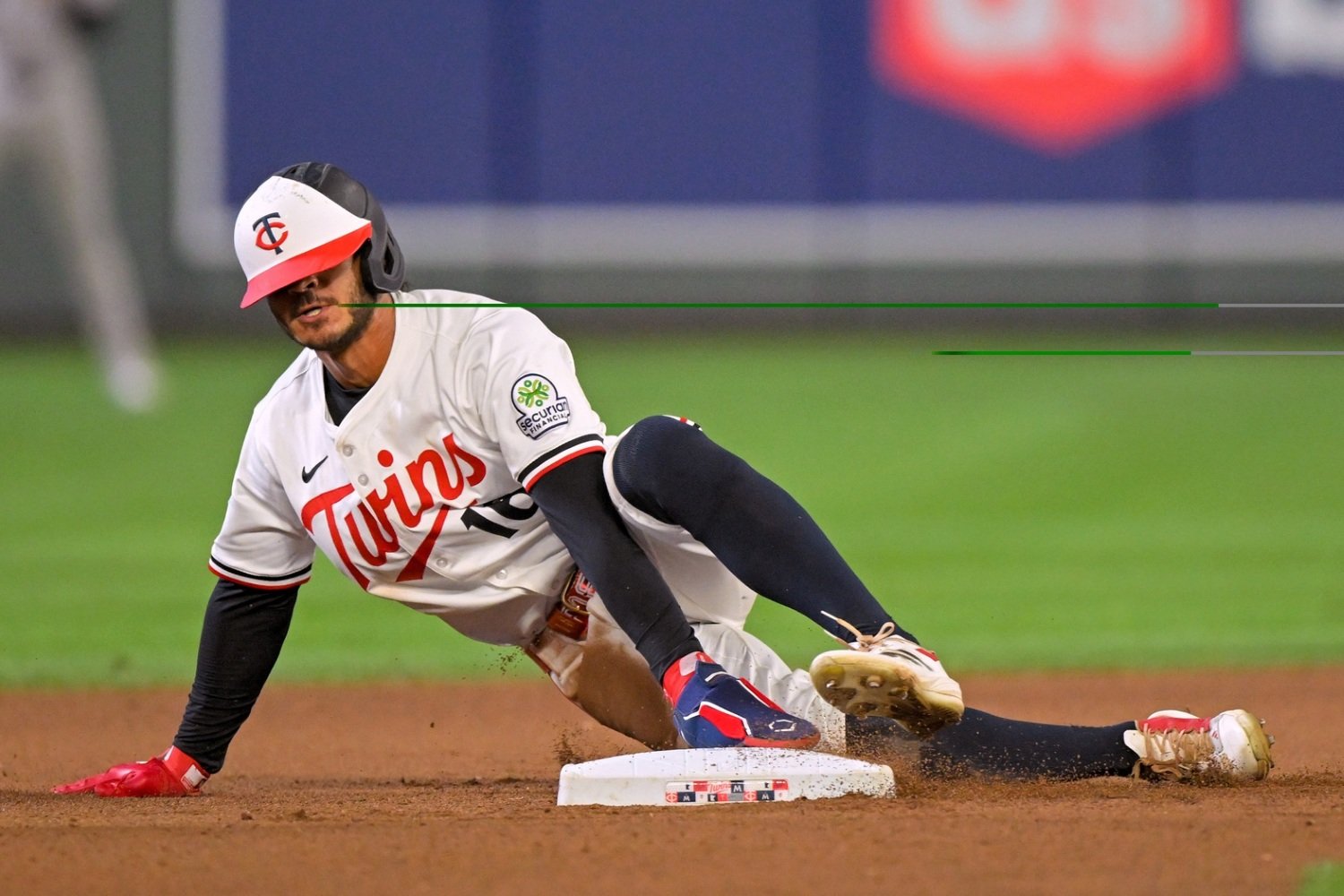 Box Score SP: Taj Bradley 4 IP, 8 H, 7 ER, 3 BB, 4 K (89 pitches, 54 strikes (61%)) Home Runs: None Bottom 3 WPA: Bradley (-.481), Trevor Larnach (-.224), Edouard Julien (-.120) Win Probability Chart (via FanGraphs) Taj Bradley is no stranger to the Yankees. He's spent the bulk of his career in the AL East. Still, the Bronx Bombers are always a slightly intimidating opponent. Bradley took the mound in Wednesday's rubber match, hoping to help the Twins claim an unlikely series victory—but it quickly became clear that it wouldn't be that kind of night. In the top of the first, with Aaron Judge on first base, Cody Bellinger stroked a double to left field. Austin Martin fielded the ball and threw it home to catcher Jhonny Pereda, but Pereda missed it and Judge scored. In the first inning, there was no production at the plate for the Twins, but there were certainly things to talk about. Byron Buxton got his 500th plate appearance in a season for the second time in his career, and Martin got a hit for his sixth game in a row. The Twins' lineup has looked livelier of late, to be sure. The home side's bats came alive in the second inning. A leadoff walk by Matt Wallner turned into an extra base when Luis Gil’s pickoff attempt sailed wide, moving Wallner to second. Brooks Lee followed with a single to push him to third, and Royce Lewis delivered another single to bring Wallner home and tie the game, 1-1. Edouard Julien then hit into a force out, with Lewis cut down at second. But the Twins weren’t done. Lee scored on a two-out wild pitch from Gil, giving Minnesota a 2-1 lead before a Pereda strikeout ended the inning. The Yankees, alas, responded quickly. In the top of the third, Trent Grisham jumped on a splitter from Bradley and drove it well out of the park to even things again. Bradley’s bigger battle, however, wasn’t with the hitters—it was with home plate umpire John Libka, whose strike zone seemed to shrink at just the wrong moments. Even so, Bradley managed to escape trouble, when Bellinger flied out to Martin on a great, far-ranging play near the left-field line. Bradley ran into trouble again in the fourth inning, giving up a string of runs to the Yankees. Back-to-back doubles from Paul Goldschmidt and Jasson Dominguez put New York back on top, 3-2, with just one out. In an ill-timed lapse, Bradley walked José Caballero, bringing up Grisham for a third at-bat in the game and with two runners on. Grisham won the battle, launching his second home run of the night—a three-run shot that cleared the bases and left Bradley reeling. Two more Yankees reached base, and the Twins bullpen began stirring as Bradley continued to falter. He then balked during Bellinger’s at-bat, allowing another run to score. Bradley finally escaped by striking out Bellinger, but the damage was done. The Yankees led 7-2. Travis Adams took over for Bradley in the fifth and delivered exactly what the Twins needed—a clean inning, keeping the deficit in check and giving the offense a chance to climb back. In the bottom half, Buxton and Trevor Larnach reached base. Luke Keaschall stepped to the plate with two outs. The Twins have thrived on two-out rallies lately, and Keaschall came through again, singling to center and trimming the Yankees’ lead to 7-3 as Buxton raced home. The Twins brought in right fielder James Outman to replace Matt Wallner in the lineup (due, we later learned, to back spams for Wallner). Outman drew a walk to load the bases. On the very next pitch, Brooks Lee lined a sharp single, scoring both Larnach and Keaschall to bring the Twins within two, 7–5. That knock forced the Yankees to turn to their bullpen. Pierson Ohl took the mound in the sixth and worked a clean inning to keep the Twins within striking distance. The Twins went down scoreless in the bottom half, sending the game to the seventh with New York still ahead 7–5. Kody Funderburk entered in the seventh and continued his strong September, tossing another clean frame to hold the deficit at two. For the month, Funderburk has allowed just four hits and two runs, posting a 3.00 ERA. Cole Sands took over in the eighth to face the bottom of the Yankees order. Unfortunately, he plunked Dominguez, who then stole second and scored on a single by Ryan McMahon. In the bottom half, Brooks Lee led off with a single, marking the second straight inning the Twins put the leadoff man aboard. This time, they faced reliever Luke Weaver, who had been roughed up by the Twins earlier in the series. Weaver got lucky after Lee, though, as the next two batters’ hits lost steam at the warning track. He struck out Kody Clemens to avert trouble. Génesis Cabrera gave up a two-run homer to Bellinger in the top of the ninth, widening New York's lead. The Twins had no further answer. What’s Next? The Twins have a day off before facing the Guardians over the weekend; their visitors are engaged in a last-second and somewhat desperate (but not hopeless) push for the playoffs. Pablo López (5-4; 2.64 ERA) will be back on the mound, opposite Parker Messick (3-0; 1.84 ERA) at 7:10 PM CST. Postgame Interviews Bullpen Usage Spreadsheet
- 32 comments
-
- 2
-
-
- brooks lee
- austin martin
- (and 4 more)
-
Image courtesy of © Nick Wosika-Imagn Images Box Score SP: Taj Bradley 4 IP, 8 H, 7 ER, 3 BB, 4 K (89 pitches, 54 strikes (61%)) Home Runs: None Bottom 3 WPA: Bradley (-.481), Trevor Larnach (-.224), Edouard Julien (-.120) Win Probability Chart (via FanGraphs) Taj Bradley is no stranger to the Yankees. He's spent the bulk of his career in the AL East. Still, the Bronx Bombers are always a slightly intimidating opponent. Bradley took the mound in Wednesday's rubber match, hoping to help the Twins claim an unlikely series victory—but it quickly became clear that it wouldn't be that kind of night. In the top of the first, with Aaron Judge on first base, Cody Bellinger stroked a double to left field. Austin Martin fielded the ball and threw it home to catcher Jhonny Pereda, but Pereda missed it and Judge scored. In the first inning, there was no production at the plate for the Twins, but there were certainly things to talk about. Byron Buxton got his 500th plate appearance in a season for the second time in his career, and Martin got a hit for his sixth game in a row. The Twins' lineup has looked livelier of late, to be sure. The home side's bats came alive in the second inning. A leadoff walk by Matt Wallner turned into an extra base when Luis Gil’s pickoff attempt sailed wide, moving Wallner to second. Brooks Lee followed with a single to push him to third, and Royce Lewis delivered another single to bring Wallner home and tie the game, 1-1. Edouard Julien then hit into a force out, with Lewis cut down at second. But the Twins weren’t done. Lee scored on a two-out wild pitch from Gil, giving Minnesota a 2-1 lead before a Pereda strikeout ended the inning. The Yankees, alas, responded quickly. In the top of the third, Trent Grisham jumped on a splitter from Bradley and drove it well out of the park to even things again. Bradley’s bigger battle, however, wasn’t with the hitters—it was with home plate umpire John Libka, whose strike zone seemed to shrink at just the wrong moments. Even so, Bradley managed to escape trouble, when Bellinger flied out to Martin on a great, far-ranging play near the left-field line. Bradley ran into trouble again in the fourth inning, giving up a string of runs to the Yankees. Back-to-back doubles from Paul Goldschmidt and Jasson Dominguez put New York back on top, 3-2, with just one out. In an ill-timed lapse, Bradley walked José Caballero, bringing up Grisham for a third at-bat in the game and with two runners on. Grisham won the battle, launching his second home run of the night—a three-run shot that cleared the bases and left Bradley reeling. Two more Yankees reached base, and the Twins bullpen began stirring as Bradley continued to falter. He then balked during Bellinger’s at-bat, allowing another run to score. Bradley finally escaped by striking out Bellinger, but the damage was done. The Yankees led 7-2. Travis Adams took over for Bradley in the fifth and delivered exactly what the Twins needed—a clean inning, keeping the deficit in check and giving the offense a chance to climb back. In the bottom half, Buxton and Trevor Larnach reached base. Luke Keaschall stepped to the plate with two outs. The Twins have thrived on two-out rallies lately, and Keaschall came through again, singling to center and trimming the Yankees’ lead to 7-3 as Buxton raced home. The Twins brought in right fielder James Outman to replace Matt Wallner in the lineup (due, we later learned, to back spams for Wallner). Outman drew a walk to load the bases. On the very next pitch, Brooks Lee lined a sharp single, scoring both Larnach and Keaschall to bring the Twins within two, 7–5. That knock forced the Yankees to turn to their bullpen. Pierson Ohl took the mound in the sixth and worked a clean inning to keep the Twins within striking distance. The Twins went down scoreless in the bottom half, sending the game to the seventh with New York still ahead 7–5. Kody Funderburk entered in the seventh and continued his strong September, tossing another clean frame to hold the deficit at two. For the month, Funderburk has allowed just four hits and two runs, posting a 3.00 ERA. Cole Sands took over in the eighth to face the bottom of the Yankees order. Unfortunately, he plunked Dominguez, who then stole second and scored on a single by Ryan McMahon. In the bottom half, Brooks Lee led off with a single, marking the second straight inning the Twins put the leadoff man aboard. This time, they faced reliever Luke Weaver, who had been roughed up by the Twins earlier in the series. Weaver got lucky after Lee, though, as the next two batters’ hits lost steam at the warning track. He struck out Kody Clemens to avert trouble. Génesis Cabrera gave up a two-run homer to Bellinger in the top of the ninth, widening New York's lead. The Twins had no further answer. What’s Next? The Twins have a day off before facing the Guardians over the weekend; their visitors are engaged in a last-second and somewhat desperate (but not hopeless) push for the playoffs. Pablo López (5-4; 2.64 ERA) will be back on the mound, opposite Parker Messick (3-0; 1.84 ERA) at 7:10 PM CST. Postgame Interviews Bullpen Usage Spreadsheet View full article
-
Angels 4, Twins 3: Twins Outslugged in Anaheim, Despite Pair of Homers
Sherry Cerny posted an article in Twins
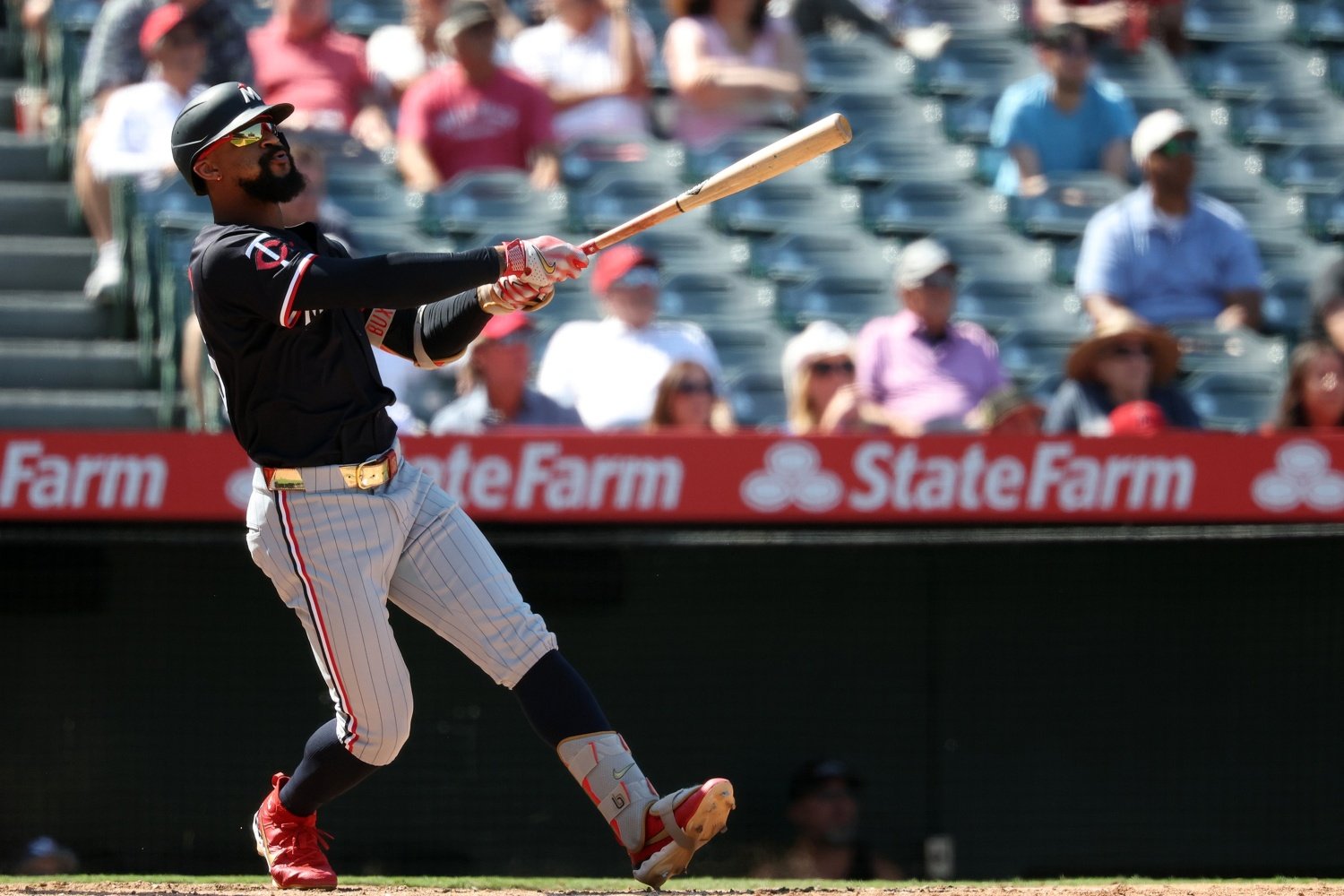 Box Score SP: Taj Bradley 6.1 IP, 4 H, 3 ER, 3 BB, 5 K (98 pitches, 57 strikes (58%)) Home Runs: James Outman (2); Byron Buxton (31) Bottom 3 WPA: Kody Clemens -.230, Austin Martin -.207, Mickey Gasper -.130 Win Probability Chart (via FanGraphs) After getting nothing going Tuesday night, the Twins tried to come out of the gate and create an early advantage Wednesday. Trevor Larnach hit a two-out single in the top of the first, and Luke Keaschall followed with a double to left. As is the Twins' new plan, Larnach pushed the envelope by trying to score from first—but he was gunned down, and it wasn't especially close. Taj Bradley came out firing strikes, though, and the Twins would get that first lead, after all. In the third inning, against recent teammate José Ureña, James Outman tagged his second Twins homer. Ureña, seemingly flustered, then loaded the bases, but a Kody Clemens line drive found the glove of right fielder Jo Adell, forcing the Twins to settle for a lone run. Bradley finally ran into trouble in the bottom half of the frame, though. With two outs, a Mike Trout single brought Sebastián Rivero home to tie the game. Then, a two-run home run from Zach Neto gave the Angels the lead, 3-1. It was a frustrating sequence, as the scoreboard seemed to flip in the blink of an eye. The Angels made a pitching change heading into the fifth, and things looked like they might finally tilt the Twins’ way. Andrew Chafin came in and walked Larnach to lead off the inning, and a wild pitch to Luke Keaschall moved him to second. In the middle of it, Angels coach Ryan Goins was tossed by home plate umpire Junior Valentine, adding even more chaos to the proceedings. Keaschall then reached first when second baseman Luis Rengifo botched a play and dropped the ball. With two on and no outs, momentum was squarely in the Twins’ hands—until it wasn’t. Chafin got a pep talk from his infield, then promptly struck out the next two batters and induced a harmless fly ball from Mickey Gasper, leaving yet another rally wasted. After his minor derailment in the third, Bradley locked back in for the next two innings and moved the game along with no issues. He has been working on his command and gaining confidence. Bradley has been coachable and dedicated, and on Wednesday, he kept his team in the game. The Angels made another pitching change, and the Twins' constant chance creation finally paid off. Another leadoff walk, this time for Ryan Fitzgerald, set the table for Byron Buxton, who hit a 396-foot homer to the opposite field to tie the game, 3-3. Bradley worked into more trouble in the seventh, but getting that deep into the game was a nice change of pace for the Twins lately. With one out and two on, Rocco Baldelli went to Cole Sands, who got out of the jam and kept the score tied. The eighth inning, however, didn't go as well. Sands gave up a triple to Bryce Teodosio, on which Outman (playing center in this game) appeared to have a play but didn't get there. A sacrifice fly from Trout scored Teodosio, giving the Angels a one-run lead, 4-3. Kenley Jansen, the future Hall of Fame closer, pitched a 1-2-3 inning to end the game and secure the series win for the Angels. What’s Next? The Twins head home to play Arizona on Friday. Pablo López (5-4; 2.84 ERA) will be back on the mound, this time against Brandon Pfaadt (13-8; 5.18 ERA) at 7:40 PM CST, after the travel day. Postgame Interviews Bullpen Usage Spreadsheet
- 38 comments
-
- 2
-
-
- luke keaschall
- byron buxton
- (and 3 more)
-
Image courtesy of © Kiyoshi Mio-Imagn Images Box Score SP: Taj Bradley 6.1 IP, 4 H, 3 ER, 3 BB, 5 K (98 pitches, 57 strikes (58%)) Home Runs: James Outman (2); Byron Buxton (31) Bottom 3 WPA: Kody Clemens -.230, Austin Martin -.207, Mickey Gasper -.130 Win Probability Chart (via FanGraphs) After getting nothing going Tuesday night, the Twins tried to come out of the gate and create an early advantage Wednesday. Trevor Larnach hit a two-out single in the top of the first, and Luke Keaschall followed with a double to left. As is the Twins' new plan, Larnach pushed the envelope by trying to score from first—but he was gunned down, and it wasn't especially close. Taj Bradley came out firing strikes, though, and the Twins would get that first lead, after all. In the third inning, against recent teammate José Ureña, James Outman tagged his second Twins homer. Ureña, seemingly flustered, then loaded the bases, but a Kody Clemens line drive found the glove of right fielder Jo Adell, forcing the Twins to settle for a lone run. Bradley finally ran into trouble in the bottom half of the frame, though. With two outs, a Mike Trout single brought Sebastián Rivero home to tie the game. Then, a two-run home run from Zach Neto gave the Angels the lead, 3-1. It was a frustrating sequence, as the scoreboard seemed to flip in the blink of an eye. The Angels made a pitching change heading into the fifth, and things looked like they might finally tilt the Twins’ way. Andrew Chafin came in and walked Larnach to lead off the inning, and a wild pitch to Luke Keaschall moved him to second. In the middle of it, Angels coach Ryan Goins was tossed by home plate umpire Junior Valentine, adding even more chaos to the proceedings. Keaschall then reached first when second baseman Luis Rengifo botched a play and dropped the ball. With two on and no outs, momentum was squarely in the Twins’ hands—until it wasn’t. Chafin got a pep talk from his infield, then promptly struck out the next two batters and induced a harmless fly ball from Mickey Gasper, leaving yet another rally wasted. After his minor derailment in the third, Bradley locked back in for the next two innings and moved the game along with no issues. He has been working on his command and gaining confidence. Bradley has been coachable and dedicated, and on Wednesday, he kept his team in the game. The Angels made another pitching change, and the Twins' constant chance creation finally paid off. Another leadoff walk, this time for Ryan Fitzgerald, set the table for Byron Buxton, who hit a 396-foot homer to the opposite field to tie the game, 3-3. Bradley worked into more trouble in the seventh, but getting that deep into the game was a nice change of pace for the Twins lately. With one out and two on, Rocco Baldelli went to Cole Sands, who got out of the jam and kept the score tied. The eighth inning, however, didn't go as well. Sands gave up a triple to Bryce Teodosio, on which Outman (playing center in this game) appeared to have a play but didn't get there. A sacrifice fly from Trout scored Teodosio, giving the Angels a one-run lead, 4-3. Kenley Jansen, the future Hall of Fame closer, pitched a 1-2-3 inning to end the game and secure the series win for the Angels. What’s Next? The Twins head home to play Arizona on Friday. Pablo López (5-4; 2.84 ERA) will be back on the mound, this time against Brandon Pfaadt (13-8; 5.18 ERA) at 7:40 PM CST, after the travel day. Postgame Interviews Bullpen Usage Spreadsheet View full article
-
White Sox 4, Twins 3: Twins Lose Season Series to 2025 White Sox
Sherry Cerny posted an article in Twins
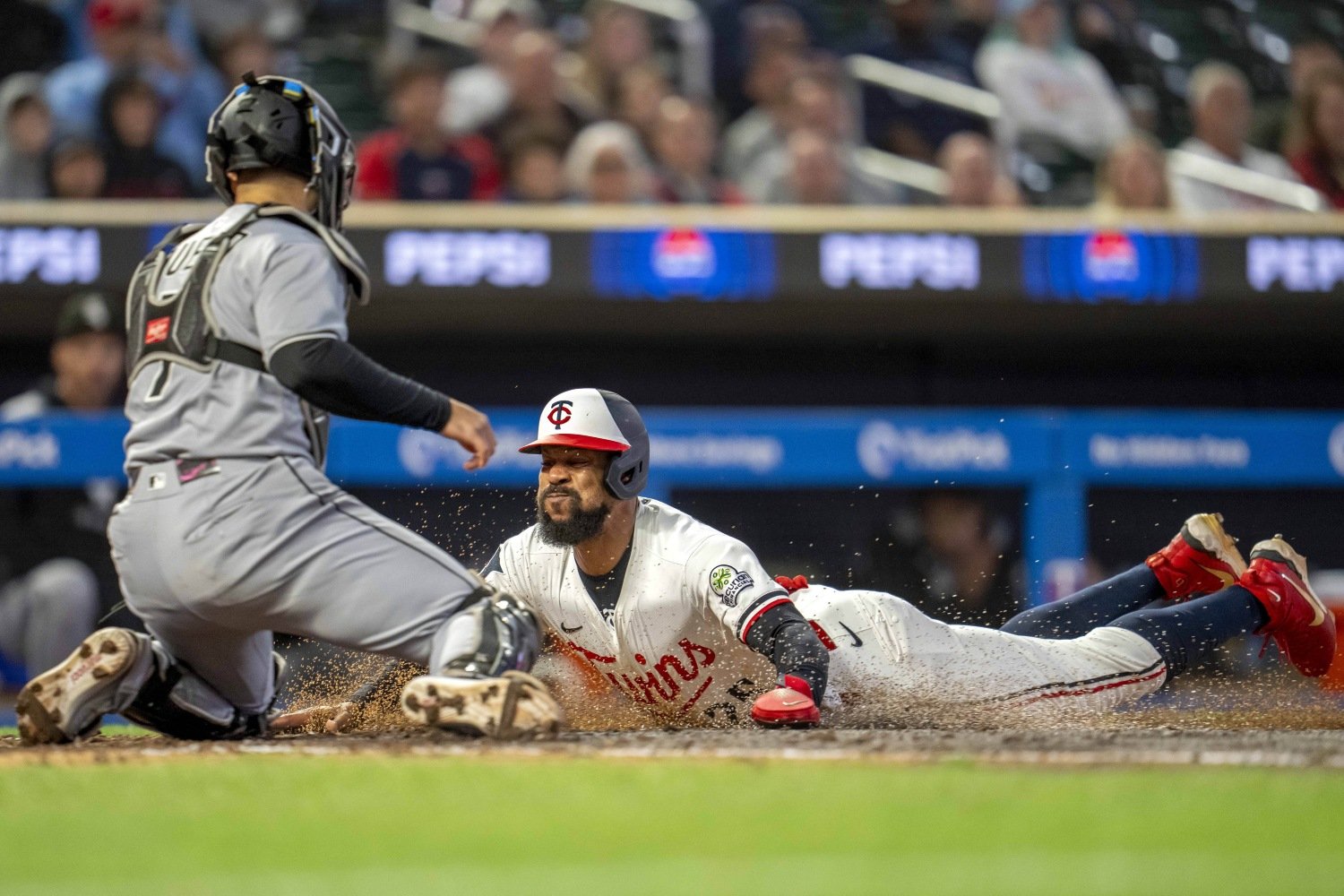 Box Score SP: Zebby Matthews - 6 IP, 1 H, 1 ER, 2 BB, 5 K (84 pitches, 55 strikes (65%)) Home Runs: None Bottom 3 WPA: Justin Topa (-0.641), James Outman (-0.163), Luke Keaschall (-0.145) Win Probability Chart (via FanGraphs) Zebby Matthews pitched last against San Diego, and had probably one of his best outings of the season. Matthews was locked in early against the White Sox, setting them down 1-2-3. On the other side, the bats for the Twins have been swinging back into form, with 25 runs in the last five games. Alas, in this series in particular, the White Sox had already twice found ways to make that not matter. The team's best hope was to split the four-game series. Trevor Larnach created momentum in the first inning with a single to center field and waited patiently for his turn to go. With a 3-2 count on Luke Keaschall, he was off with the pitch, and a Keaschall double that reached the left-field wall scored him easily from first. Matt Wallner then singled to right, and Keaschall scampered home when the ball was misplayed by a charging Brooks Baldwin. The White Sox answered with a second-inning solo homer by Edgar Quero, but Matthews then put it in cruise control. The score held at 2-1 until the sixth, despite a leadoff triple by Byron Buxton in the fifth. He was cut down on a Keaschall dribbler to the pitcher, trying to score. Matt Wallner stranded Keaschall at first by popping out. He was heard later in the game on the hot field mic, saying, "I'm not that good right now" to the umpire—before taking a swing at a ball he thought was low and in the zone, but was a strike that sent him packing. Matthews departed after six frames, having allowed just the one run and needing only 84 pitches. Before any reliever could even toe the rubber, the offense gave their starter a bit more run support. Ryan Jeffers collected his third hit of the night. Brooks Lee moved him into scoring position on a groundout, to set up Royce Lewis. Lewis, in turn, notched a third hit of his own, scoring Jeffers to bump the lead to 3-1. Lewis also stole two bases, and continues a recent surge in all facets of the game. Cole Sands came on in the seventh, and knocked out the White Sox hitters in fast and accurate fashion. Sands has been throwing harder lately, and is turning around his season in its final several weeks. He mowed down Chicago to the tune of two innings, no baserunners and four strikeouts. Kody Funderburk got the nod to start the ninth inning, looking to secure the game against a left-leaning pocket of the White Sox lineup. Funderburk got Colson Montgomery to start his outing, but put the tying run on base by yielding a single to Quero. He battled with Benintendi at the plate, working up a full count, but he ultimately walked him. The Twins moved on to Justin Topa, who has a great ground-ball rate. Although the tying run was aboard, a double play would get the Twins out of the inning and secure the win. But two outs can be awfully hard to find, sometimes. Topa fanned Curtis Mead, but a broken-bat flare over the head of Keaschall off the bat of Baldwin brought home pinch-runner Korey Lee to halve the lead. Maki came out to calm down Topa, and whatever he said, Topa got Michael A. Taylor to chase the first two pitches, both sweepers. Ahead 0-2, though, he kept trying that sweeper out of the zone. Taylor watched two go by, during which time Baldwin stole second to put the go-ahead run in scoring position. Topa's fifth straight sweeper hung on the inner half of the plate, and Taylor crushed it—down the line and hooking, but fair, scoring Benintendi and Baldwin for the White Sox lead 4-3. The Twins had one more chance to make a go at the win, with Buxton up first. He cracked a double to left, and Larnach followed with a hard-won walk. DaShawn Keirsey Jr. came in to pinch-run for Larnach, and just like that, the Twins had great speed on the bases representing both the tying and the winning runs. Keaschall, though, hit a routine fly to Benintendi for the first out, and Outman sliced an equally harmless ball to the same man. Jeffers stood in as the last chance, but instead of heroics, he could produce only a routine ground ball for the final out of the game. The Twins have lost the season series to the White Sox for the first time since 2021. What’s Next? The Twins finish out the series with the White Sox before heading to the Kansas City Royals. Taj Bradley (6-7; 4.83 ERA) will be taking the mound against Shane Smith (4-7; 3.81 ERA) at 6:40 PM CST, Thursday. Bullpen Usage Spreadsheet
- 61 comments
-
- 3
-

-
-
- royce lewis
- trevor larnach
- (and 3 more)
-
Image courtesy of © Jesse Johnson-Imagn Images Box Score SP: Zebby Matthews - 6 IP, 1 H, 1 ER, 2 BB, 5 K (84 pitches, 55 strikes (65%)) Home Runs: None Bottom 3 WPA: Justin Topa (-0.641), James Outman (-0.163), Luke Keaschall (-0.145) Win Probability Chart (via FanGraphs) Zebby Matthews pitched last against San Diego, and had probably one of his best outings of the season. Matthews was locked in early against the White Sox, setting them down 1-2-3. On the other side, the bats for the Twins have been swinging back into form, with 25 runs in the last five games. Alas, in this series in particular, the White Sox had already twice found ways to make that not matter. The team's best hope was to split the four-game series. Trevor Larnach created momentum in the first inning with a single to center field and waited patiently for his turn to go. With a 3-2 count on Luke Keaschall, he was off with the pitch, and a Keaschall double that reached the left-field wall scored him easily from first. Matt Wallner then singled to right, and Keaschall scampered home when the ball was misplayed by a charging Brooks Baldwin. The White Sox answered with a second-inning solo homer by Edgar Quero, but Matthews then put it in cruise control. The score held at 2-1 until the sixth, despite a leadoff triple by Byron Buxton in the fifth. He was cut down on a Keaschall dribbler to the pitcher, trying to score. Matt Wallner stranded Keaschall at first by popping out. He was heard later in the game on the hot field mic, saying, "I'm not that good right now" to the umpire—before taking a swing at a ball he thought was low and in the zone, but was a strike that sent him packing. Matthews departed after six frames, having allowed just the one run and needing only 84 pitches. Before any reliever could even toe the rubber, the offense gave their starter a bit more run support. Ryan Jeffers collected his third hit of the night. Brooks Lee moved him into scoring position on a groundout, to set up Royce Lewis. Lewis, in turn, notched a third hit of his own, scoring Jeffers to bump the lead to 3-1. Lewis also stole two bases, and continues a recent surge in all facets of the game. Cole Sands came on in the seventh, and knocked out the White Sox hitters in fast and accurate fashion. Sands has been throwing harder lately, and is turning around his season in its final several weeks. He mowed down Chicago to the tune of two innings, no baserunners and four strikeouts. Kody Funderburk got the nod to start the ninth inning, looking to secure the game against a left-leaning pocket of the White Sox lineup. Funderburk got Colson Montgomery to start his outing, but put the tying run on base by yielding a single to Quero. He battled with Benintendi at the plate, working up a full count, but he ultimately walked him. The Twins moved on to Justin Topa, who has a great ground-ball rate. Although the tying run was aboard, a double play would get the Twins out of the inning and secure the win. But two outs can be awfully hard to find, sometimes. Topa fanned Curtis Mead, but a broken-bat flare over the head of Keaschall off the bat of Baldwin brought home pinch-runner Korey Lee to halve the lead. Maki came out to calm down Topa, and whatever he said, Topa got Michael A. Taylor to chase the first two pitches, both sweepers. Ahead 0-2, though, he kept trying that sweeper out of the zone. Taylor watched two go by, during which time Baldwin stole second to put the go-ahead run in scoring position. Topa's fifth straight sweeper hung on the inner half of the plate, and Taylor crushed it—down the line and hooking, but fair, scoring Benintendi and Baldwin for the White Sox lead 4-3. The Twins had one more chance to make a go at the win, with Buxton up first. He cracked a double to left, and Larnach followed with a hard-won walk. DaShawn Keirsey Jr. came in to pinch-run for Larnach, and just like that, the Twins had great speed on the bases representing both the tying and the winning runs. Keaschall, though, hit a routine fly to Benintendi for the first out, and Outman sliced an equally harmless ball to the same man. Jeffers stood in as the last chance, but instead of heroics, he could produce only a routine ground ball for the final out of the game. The Twins have lost the season series to the White Sox for the first time since 2021. What’s Next? The Twins finish out the series with the White Sox before heading to the Kansas City Royals. Taj Bradley (6-7; 4.83 ERA) will be taking the mound against Shane Smith (4-7; 3.81 ERA) at 6:40 PM CST, Thursday. Bullpen Usage Spreadsheet View full article
-
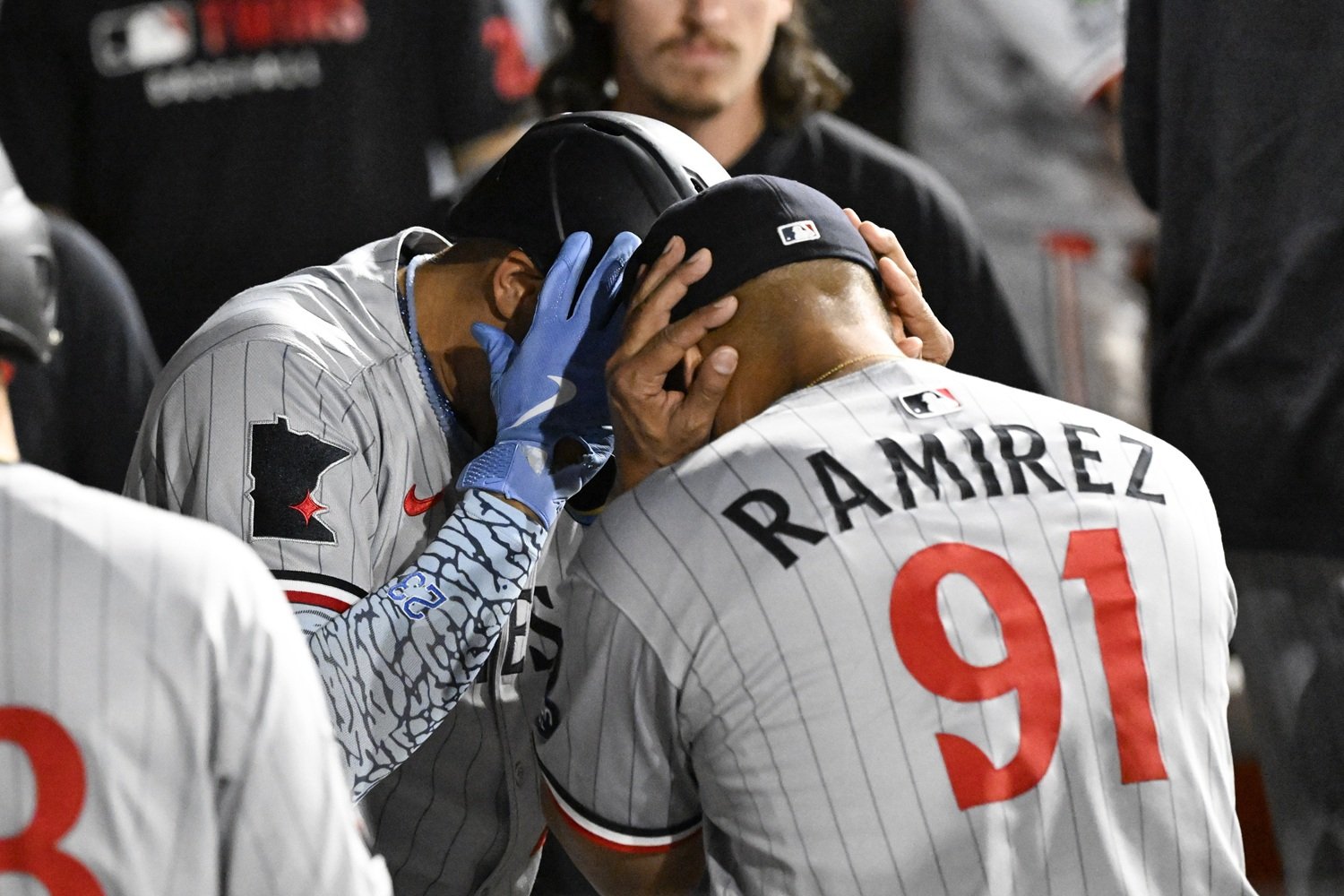 Box Score SP: Mick Abel 3IP, 7H, 6ER, 2BB, 2K (63 pitches, 42 strikes (65%)) Home Runs: Kody Clemens (14), Matt Wallner (17), Royce Lewis(8) Bottom 3 WPA: Mick Abel (-.413); Byron Buxton (-.074); Matt Wallner (-.063) Win Probability Chart (via FanGraphs) Mick Abel made his Twins debut on Saturday in Chicago, just weeks after being acquired from the Phillies in the Jhoan Duran deal at the deadline. The 2020 first-round draft pick has spent most of his 2025 season in the minor leagues. He made six starts for Philadelphia with his MLB debut on May 18th. The Twins started the game with a walk from Trevor Larnach and single from Luke Keaschall, before Matt Wallner hit into a double play to end the inning. Abel’s first inning with the Twins began with a routine pop-out, but the sun was wreaking havoc on any ball hit in the air in the outfield. Miguel Vargas hit a sun double. Colson Montgomery followed by hitting the ball back at Abel, hitting him in the thigh, and got another single. However, Abel responded well, by recording a double play which ended the inning. Abel only threw 11 pitches, avoided injury (thank goodness!) and kept the White Sox off the board. In the top of the second inning, a two-out solo home run by the-one-and-only Kody Clemens put the Twins on the board first. Abel’s second inning was a struggle. He got his second strike-out of the game but allowed three singles, the third was a Chase Meidroth single to center which drove in Andrew Benintendi and evened up the score 1-1. Runners were still on the corners with two outs after former Minnesota Twins outfielder Michael A. Taylor struck out. Abel got ahead of Kyle Teel walked him on seven pitches to load the bases. Abel’s biggest struggle was getting behind in the count, struggling to find the strike zone and racking up his pitch count with foul balls and walks. The second walk from Abel gave the White Sox the lead 2-1. Star rookie Colson Montgomery came up and launched a grand slam which pushed the lead 6-1. Davis Martin had the Twins hitters on the ropes the second inning, a three-up, three-down inning, got the defense back out and Abel joined them. Perhaps a redemption inning. Abel gave up a leadoff single in the bottom of the third frame, but it led to no runs. Abel seemed to come out that inning with a little more command, and a lot more control. He got out of the game after a "confidence inning" and a handshake with manager Rocco Baldelli. Matt Wallner knocked a solo home run in the top of the fourth, to make it 6-2. Thomas Hatch came out to the mound to replace Abel and was again very good. He began by tossing four shutout innings and needed just over 30 pitches to do that. He tired in the ninth and gave up a solo homer to Luis Robert, but that was the only run he allowed. He gave up just three hits, walked none and had five strikeouts. Most important, he allowed the Twins to get through the game with just two pitchers. With uncertainty (and youth and injury concerns, etc.) throughout the pitching staff, innings eaten are quite valuable. It was Hatch's second consecutive "team-saving" outing. The Twins put a little pressure on Martin top of the fifth. A leadoff single from Clemens got things started. Clemens took an aggressive lead on first, making Martin attempt to pick him off and divide his focus, resulting in hitting Outman with a pitch. Two runners on base, but nothing to show for it. The White Sox brought in lefty Tyler Alexander into the game for the top of the sixth. He tossed a scoreless inning. Then with one out in the top of the seventh, he gave up a solo home run to Royce Lewis to cut the team's deficit to 6-3. What are your thoughts on Thomas Hatch? He has had a couple of solid outings of late. Who do you think have been the best waiver claims by the Twins in 2025? The Twins couldn't come back in the last inning, falling 7-3, but have a chance to claim the series with a win on Sunday. What’s Next? The Twins finish out the series with the White Sox before heading into Canada to take on the Blue Jays. The Twins will avoid Jose Berrios, Kevin Gausman, and Shane Bieber, but they will face Max Scherzer, Chris Bassitt, and Eric Lauer Monday through Wednesday. But first, the Twins will finish out this series with the White Sox on the south side of Chicago. The Twins will try to figure out Yoendrys Gomez starting at noon central time on Sunday, The Twins haven't announced their Sunday starter yet, at least not officially. However, we know that Taj Bradley and Simeon Woods Richardson are with the Twins in Chicago. We could see one or both of them. Postgame Interviews Bullpen Usage Spreadsheet
- 23 comments
-
- 5
-
-
- matt wallner
- mick abel
- (and 3 more)