



Patrick Wozniak
-
Posts
383 -
Joined
-
Last visited
-
Days Won
1
Content Type
Profiles
News
Minnesota Twins Videos
2026 Minnesota Twins Top Prospects Ranking
2022 Minnesota Twins Draft Picks
Minnesota Twins Free Agent & Trade Rumors, Notes, & Tidbits
Guides & Resources
2023 Minnesota Twins Draft Picks
The Minnesota Twins Players Project
2024 Minnesota Twins Draft Picks
2025 Minnesota Twins Draft Pick Tracker
2026 Minnesota Twins Draft Tracker: Picks & Bonuses
Forums
Blogs
Events
Store
Downloads
Gallery
Everything posted by Patrick Wozniak
-
12 Prospects Who Could Shape the AL Central for Years to Come
Patrick Wozniak posted an article in Twins
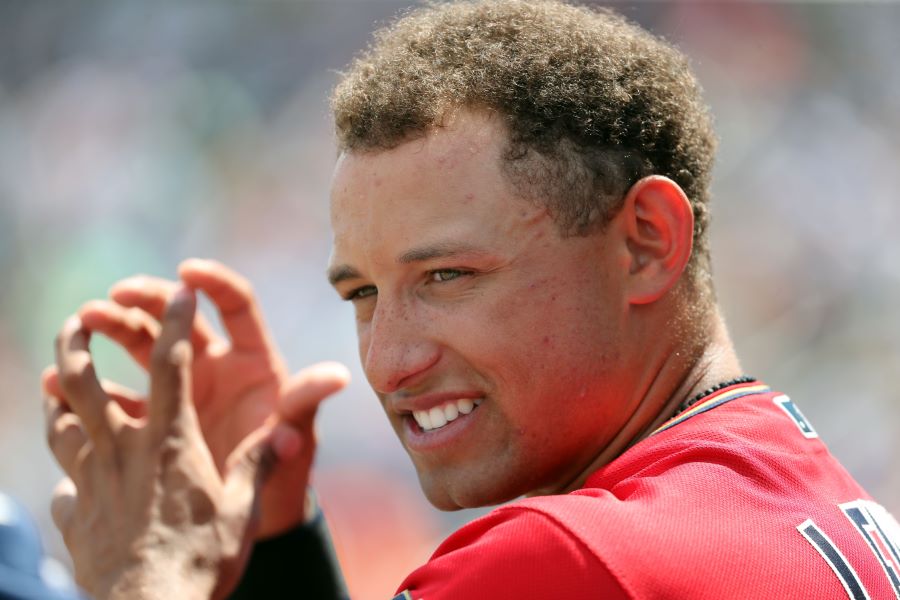 Now, it’s just one list and it definitely differs from some of the other national prospect listings while seeming to favor prospects who are closer to MLB-ready. But the sheer amount of talent that will be premiering in the next year or two will certainly make the AL Central a fun division to watch. Let’s break it down team by team and see where the Twins sit. Not surprisingly, the Chicago White Sox led the list with four top-50 prospects: 1) Luis Robert / CF / Age 22 - .328/.376/.624 (A+, AA, AAA) 11) Michael Kopech / RHP / Age 23 (missed 2019 due to Tommy John surgery) 14) Nick Madrigal / 2B / Age 22 - .311/.377/.414 (A+, AA, AAA) 35) Andrew Vaughn / 1B / Age 21 - .278/.384/.449 (Rk, A, A+) This is an impressive group, especially when you consider that the Sox already have young, star-caliber players like Yoan Moncada and Eloy Jimenez on the MLB roster. Bowden is a bit higher than most prospect lists on these guys, but there’s no denying that Chicago has the making of an exciting young core. Robert will likely open the season as the Sox center fielder after signing a long-term extension and Madrigal isn’t far behind. Kopech, who missed last year with Tommy John surgery, should be ready to join the Sox rotation sometime in 2020, while Vaughn could potentially debut in 2021. Next up are our very own Minnesota Twins with three representatives: 12) Alex Kirilloff / OF/1B / Age 22 - .283/.343/.413 (AA) 18) Royce Lewis / SS / Age 20 - .236/.290/.371 (A+, AA) 48) Brusdar Graterol /RHP/ Age 21 – 1.91 ERA, 61 IP, 61 SO, 21 BB (Rk, AA, AAA) Both Kirilloff's and Lewis’s numbers were below what we’d like to see in 2019 but the talent is there. Plus, Lewis’s Arizona Fall League MVP and Kirilloff’s hot finish in the AA playoffs (4 HRs in 4 games) helped ease any doubts about 2019. It’s interesting to see Kirilloff ranked ahead of Lewis but Bowden is a big believer in his bat, comparing Kirilloff to Christian Yelich. Kirilloff is closer to the big leagues than Lewis, but doesn’t currently have a spot and both players could use extra minor league seasoning. It will be exciting to see how the Twins use Graterol throughout 2020, but it looks like he will begin the season where he finished 2019 - in the bullpen. The Detroit Tigers bring the arms to the table with two exciting righties: 2) Casey Mize / RHP / Age 22 – 2.55 ERA, 109.1 IP, 106 SO, 23 BB (A+, AA) 42) Matt Manning / RHP / Age 21 – 2.56 ERA, 133.2 IP, 148 SO, 38 BB (AA) Mize was the #1 overall pick of the 2018 MLB Draft and features a five-pitch mix (fastball, slider, curveball, changeup, and splitter). While he is unlikely to begin the season in Detroit’s rotation, he should make his debut sometime his year. Manning, who appears higher on many prospect lists, put up really impressive numbers in AA, but may need a little more time to hone his control. If the Tigers hold on to Matthew Boyd, they could have a formidable 1-2-3 punch as early as next year. The Kansas City Royals have their own duo of high-upside youngsters: 10) Bobby Witt Jr. / SS / Age 19 - .262/.317/.354 (Rk) 47) Brady Singer / RHP / Age 23 – 2.85 ERA, 148.1 IP, 138 SO, 39 BB Witt Jr. projects to be a great defensive shortstop with a strong arm (thanks Dad!) who should hit for power. As a 2019 high school draft pick, his timeline is further out, but his natural ability could make him a fast riser. Royals fans shouldn’t have to wait too long to see Singer, who is likely to make his MLB debut this year. The righty has added an improved changeup to his fastball/slider mix, giving Kansas City hope for a front-end starter. Finally, the Cleveland Indians bring a bat: Nolan Jones/ 3B / Age 21 - .272/.409/.442 (A+, AA) Cleveland brings just one top-50 prospect , which is fine by me. Jones certainly knows how to get on base and offers some power to boot. He has a big arm and has improved defensively. Of course, Jose Ramirez is currently entrenched at third, but he could easily slide over to second whenever Jones is deemed ready for the big show. In addition to already having a really good team, Minnesota is well stocked for the future with plenty of other prospects in the top-100 range (Jordan Balazovic, Trevor Larnach, and Jhoan Duran to name a few). Chicago is certainly on the horizon and a busy offseason may have sped up the process. It's unlikely that all of these prospects will pan out, but the AL Central should have plenty of new talent filtering through in the years to come.
 -
4 Options for Twins' Final Bench Spot
Patrick Wozniak replied to Matthew Taylor's topic in Twins Daily Front Page News
I'm really surprised at how much the just-released ZiPS projections like Astudillo (.283/.312/.452, 102 OPS+, 1.5 fWAR). They basically have Astudillo and Cave as equal hitters with Astudillo being the more valuable defender. I would still probably guess that Cave wins the job though. -
Starting Pitcher Analysis: Randy Dobnak
Patrick Wozniak commented on RDLARK's blog entry in You Can Read This For Free
Great analysis - I'm pretty excited to see how Dobnak performs. One thing I did notice was that he had an even lower K/9 (6.65) and much higher walk rate (3.52/9) in 46 innings at AAA. His ERA was still great due to not giving up any homers and a 61.1% GB rate (I imagine plenty of those walks were turned into double plays) but his xFIP was 4.64. And the walks at AAA seem to be an anomaly though so it's not too concerning. I hope he can miss as many bats as you predict, but even if he doesn't he seems like he could still be a pretty useful pitcher. Nice job! -
Because they were much better than the Sox last year and still have really good pitching along with Lindor and Ramirez. I still think Minnesota is significantly better and am not scared of Cleveland, but I would bet that they will win more games than Chicago this year. But in a year or two Chicago should pass Cleveland.
-
With the Cleveland Indians' quiet offseason and Detroit and Kansas City not expecting to compete in 2020, the action in this year’s offseason for the AL Central has taken place between our Minnesota Twins and the Chicago White Sox. Both teams have been busy, with Chicago striking early and Minnesota coming on late. Let’s see where both teams sit.The Impact Player Let’s start with each team’s biggest additions. Chicago struck early by claiming the best catcher on the free agent market in Yasmani Grandal. Grandal has been one of the best catchers in baseball over the last several years and he didn’t disappoint in 2019, as he put up 5.2 fWAR for the Milwaukee Brewers. Grandal is great with the bat, but he also brings great value as a pitch framer and is projected for 5.0 fWAR in 2020. It might have taken a little longer, but the Twins struck back with their own impact player in Josh Donaldson. Although Anthony Rendon was the best third baseman on the market, Donaldson is still one of the top free agents, and was the last impact player left on the board. Donaldson adds another elite bat to the lineup and improves the infield defense as well. He was good for 4.9 fWAR in 2019 and is projected for 5.3 fWAR in 2020. Both players are signed for the next four seasons and show both clubs’ commitment to winning in the near term. New Starters Like the Twins, the White Sox were looking to solidify their starting rotation. And like the Twins, they set their targets on Zach Wheeler and came up short (though they were reportedly the highest bidders). However, they have been able to add a couple of veteran starters in Dallas Keuchel (3 yr, $55 million) and Gio Gonzalez (1 yr, $5 million). Keuchel was good for 0.8 fWAR in a partial season with the Atlanta Braves and is projected for 2.4 fWAR in 2020. Gonzalez put up 1.4 fWAR in just 87.1 innings for the Milwaukee Brewers last year and the 34-year-old projects for 1.1 fWAR this season. Minnesota recently countered with two veteran signings of its own. Rich Hill (1 yr, $3 million + incentives) threw just 582/3 innings in 2019 and the soon-to-be 40-year-old won’t be joining the rotation until sometime in the second half (hopefully!), but when healthy he has been a very good pitcher. He pitched to a 2.45 ERA in 2019 (0.9 fWAR) and is projected for 1.2 fWAR in 2020. The Twins' other signing, Homer Bailey (1 yr, $7 million), has also struggled with injuries throughout his career, but pitched pretty well last season with 2.9 fWAR, and his success using a splitter in the second half gives Minnesota some hope. Bailey is projected for 1.4 fWAR in 2020. Other New Faces Chicago also added veteran slugger Edwin Encarnacion (1 yr, $12 million w/club option), reliever Steve Chishek (1 yr, $6 million w/club option), and outfielder Nomar Mazara (acquired through trade). Encarnacion put up 2.5 fWAR last season and is projected for 1.9 fWAR this year. Chishek pitched to a very good 2.95 ERA for the Chicago Cubs last year, but FanGraphs Steamer sees the 33-year-old as regressing to a 4.71 ERA this year. Mazara is a below average hitter and defender and has never topped 0.9 fWAR, but is projected for 1.4 fWAR this year and is still just 24-years-old. Minnesota was able to bring in left-hand hitting Alex Avila (1 yr, $4.25 million) to back up Mitch Garver behind the plate and brought in Tyler Clippard (1 yr, $2.75 million) to bolster the bullpen. Like Grandal, Avila rates well as a pitch framer and hits righties well. The soon-to-be 34-year old produced 1.3 fWAR last year and is projected for 1.1 fWAR. Clippard was great for the Cleveland Indians in 2019 (2.90 ERA), but like Chicago’s Chisek, is expected to regress (projected 4.99 ERA), due to the fact that he will be 35-years-old this season. Familiar Faces Return Chicago offered long-time first baseman Jose Abreu the qualifying offer and he accepted. However, the two sides quickly agreed to an extension that will keep Abreu in Chicago for the next three seasons at a cost of $50 million. The 33-year-old had 1.9 fWAR in 2019 and is projected for a similar 1.8 fWAR in 2020. Minnesota was able to bring back three important pieces of the 2019 team in starters Jake Odorizzi (1 yr, $17.8 million) and Michael Pineda (2 yr, $20 million), along with veteran reliever Sergio Romo (1 yr, $5 million with club option). Although Twins fans wanted to see the team bring in a big-name FA pitcher, Minnesota did well to bring back two of their best pitchers from last season, while getting a second year of Pineda at a very low cost. Romo is a fan favorite whose slider-heavy approach has aged particularly well. Odorizzi, Pineda, and Romo produced 4.3, 2.7, and 1.0 fWAR respectively in 2019 and project for 2.3, 1.7, and 0.1 fWAR this season. The Extensions Finally, both teams made an important extension this offseason. For the second year in a row, Chicago signed an extension with a player yet to make his MLB debut. Top prospect Luis Robert (6 yr, $50 million with two club options) was dominant in the minors last year and will likely open 2020 as the White Sox’s center fielder, where he is projected for 2.9 fWAR. Not to be outdone, the Twins and Miguel Sano recently agreed to a three-year, $30 million extension with a fourth-year club option. The slugger will make the transition from third to first base this year to make room for Donaldson. Sano put up 2.7 fWAR in 2019 and is projected for 2.3 fWAR this year, but if 2020 is anything like his second half of 2019, Sano could eclipse those numbers. Final Thoughts While Minnesota is coming off a 101-win season, Chicago won just 72 games last season. To expect Chicago to compete for the AL Central this year might be a little overly optimistic, but one can easily appreciate the effort they have made. Their core is younger and still coming along but they’ve done a nice job of supplementing their talent and should see improvement in 2020. Meanwhile, Minnesota was finally able to add an impact player in Josh Donaldson, and while not adding an “ace” to the rotation, they’ve at least filled the rotation with competent starters. Other boxes were checked (backup catcher, additional bullpen arms) and though it seems they may be done, Minnesota will likely continue to monitor the trade market for starting pitching. It’s been an interesting offseason, and although Cleveland probably remains Minnesota’s most dangerous AL Central threat, Chicago has done well to put themselves on the Twins radar. MORE FROM TWINS DAILY — Latest Twins coverage from our writers — Recent Twins discussion in our forums — Follow Twins Daily via Twitter, Facebook or email Click here to view the article
-
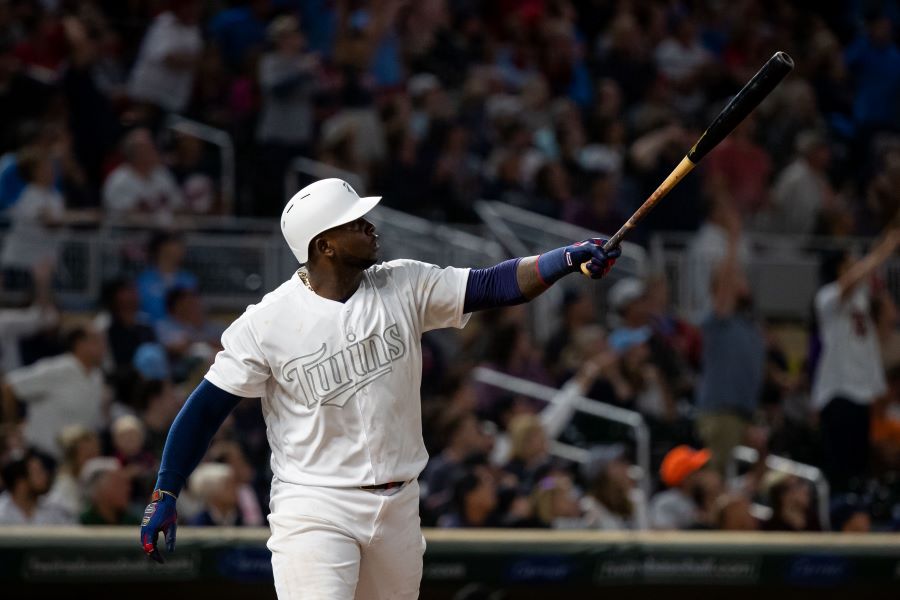 The Impact Player Let’s start with each team’s biggest additions. Chicago struck early by claiming the best catcher on the free agent market in Yasmani Grandal. Grandal has been one of the best catchers in baseball over the last several years and he didn’t disappoint in 2019, as he put up 5.2 fWAR for the Milwaukee Brewers. Grandal is great with the bat, but he also brings great value as a pitch framer and is projected for 5.0 fWAR in 2020. It might have taken a little longer, but the Twins struck back with their own impact player in Josh Donaldson. Although Anthony Rendon was the best third baseman on the market, Donaldson is still one of the top free agents, and was the last impact player left on the board. Donaldson adds another elite bat to the lineup and improves the infield defense as well. He was good for 4.9 fWAR in 2019 and is projected for 5.3 fWAR in 2020. Both players are signed for the next four seasons and show both clubs’ commitment to winning in the near term. New Starters Like the Twins, the White Sox were looking to solidify their starting rotation. And like the Twins, they set their targets on Zach Wheeler and came up short (though they were reportedly the highest bidders). However, they have been able to add a couple of veteran starters in Dallas Keuchel (3 yr, $55 million) and Gio Gonzalez (1 yr, $5 million). Keuchel was good for 0.8 fWAR in a partial season with the Atlanta Braves and is projected for 2.4 fWAR in 2020. Gonzalez put up 1.4 fWAR in just 87.1 innings for the Milwaukee Brewers last year and the 34-year-old projects for 1.1 fWAR this season. Minnesota recently countered with two veteran signings of its own. Rich Hill (1 yr, $3 million + incentives) threw just 582/3 innings in 2019 and the soon-to-be 40-year-old won’t be joining the rotation until sometime in the second half (hopefully!), but when healthy he has been a very good pitcher. He pitched to a 2.45 ERA in 2019 (0.9 fWAR) and is projected for 1.2 fWAR in 2020. The Twins' other signing, Homer Bailey (1 yr, $7 million), has also struggled with injuries throughout his career, but pitched pretty well last season with 2.9 fWAR, and his success using a splitter in the second half gives Minnesota some hope. Bailey is projected for 1.4 fWAR in 2020. Other New Faces Chicago also added veteran slugger Edwin Encarnacion (1 yr, $12 million w/club option), reliever Steve Chishek (1 yr, $6 million w/club option), and outfielder Nomar Mazara (acquired through trade). Encarnacion put up 2.5 fWAR last season and is projected for 1.9 fWAR this year. Chishek pitched to a very good 2.95 ERA for the Chicago Cubs last year, but FanGraphs Steamer sees the 33-year-old as regressing to a 4.71 ERA this year. Mazara is a below average hitter and defender and has never topped 0.9 fWAR, but is projected for 1.4 fWAR this year and is still just 24-years-old. Minnesota was able to bring in left-hand hitting Alex Avila (1 yr, $4.25 million) to back up Mitch Garver behind the plate and brought in Tyler Clippard (1 yr, $2.75 million) to bolster the bullpen. Like Grandal, Avila rates well as a pitch framer and hits righties well. The soon-to-be 34-year old produced 1.3 fWAR last year and is projected for 1.1 fWAR. Clippard was great for the Cleveland Indians in 2019 (2.90 ERA), but like Chicago’s Chisek, is expected to regress (projected 4.99 ERA), due to the fact that he will be 35-years-old this season. Familiar Faces Return Chicago offered long-time first baseman Jose Abreu the qualifying offer and he accepted. However, the two sides quickly agreed to an extension that will keep Abreu in Chicago for the next three seasons at a cost of $50 million. The 33-year-old had 1.9 fWAR in 2019 and is projected for a similar 1.8 fWAR in 2020. Minnesota was able to bring back three important pieces of the 2019 team in starters Jake Odorizzi (1 yr, $17.8 million) and Michael Pineda (2 yr, $20 million), along with veteran reliever Sergio Romo (1 yr, $5 million with club option). Although Twins fans wanted to see the team bring in a big-name FA pitcher, Minnesota did well to bring back two of their best pitchers from last season, while getting a second year of Pineda at a very low cost. Romo is a fan favorite whose slider-heavy approach has aged particularly well. Odorizzi, Pineda, and Romo produced 4.3, 2.7, and 1.0 fWAR respectively in 2019 and project for 2.3, 1.7, and 0.1 fWAR this season. The Extensions Finally, both teams made an important extension this offseason. For the second year in a row, Chicago signed an extension with a player yet to make his MLB debut. Top prospect Luis Robert (6 yr, $50 million with two club options) was dominant in the minors last year and will likely open 2020 as the White Sox’s center fielder, where he is projected for 2.9 fWAR. Not to be outdone, the Twins and Miguel Sano recently agreed to a three-year, $30 million extension with a fourth-year club option. The slugger will make the transition from third to first base this year to make room for Donaldson. Sano put up 2.7 fWAR in 2019 and is projected for 2.3 fWAR this year, but if 2020 is anything like his second half of 2019, Sano could eclipse those numbers. Final Thoughts While Minnesota is coming off a 101-win season, Chicago won just 72 games last season. To expect Chicago to compete for the AL Central this year might be a little overly optimistic, but one can easily appreciate the effort they have made. Their core is younger and still coming along but they’ve done a nice job of supplementing their talent and should see improvement in 2020. Meanwhile, Minnesota was finally able to add an impact player in Josh Donaldson, and while not adding an “ace” to the rotation, they’ve at least filled the rotation with competent starters. Other boxes were checked (backup catcher, additional bullpen arms) and though it seems they may be done, Minnesota will likely continue to monitor the trade market for starting pitching. It’s been an interesting offseason, and although Cleveland probably remains Minnesota’s most dangerous AL Central threat, Chicago has done well to put themselves on the Twins radar. MORE FROM TWINS DAILY — Latest Twins coverage from our writers — Recent Twins discussion in our forums — Follow Twins Daily via Twitter, Facebook or email
 -
I think Graterol will be a real weapon in a fluid multi-inning relief role. It may also help the development of his secondary pitches to be around MLB pitchers who he can learn from and being able to work more directly with Wes Johnson.
-
Thanks! As to the numbers, here's how Eno explained it: "If an infielder’s starting position is a big portion of the difference between UZR and OAA, then wouldn’t major differences in team-level stats for both give us a good sense of which teams are positioning their players best? If the position-based number (OAA) is worse than the position-less number (UZR), then that team was good at positioning!" So basically UZR should be better if the fielders are well positioned but OAA is more showing how well they got to the ball from where they started (based on their speed/reflexes).
-
There’s no denying the Infield Outs Above Average (OAA) stat by Baseball Savant painted an ugly picture for the Minnesota Twins. Sliding Miguel Sano to first base and inserting Josh Donaldson into third will certainly help. Regardless of the Donaldson effect, how concerned do we need to be about the defense?All things being equal, it would be great to have an infield full of slick fielders who can also hit. But in reality, that is a very difficult thing to do and the Twins as they are currently constructed are definitely a bat-first infield. Donaldson, Sano, Jorge Polanco, and Luis Arraez all bring incredibly potent bats (132, 137, 119, and 125 wRC+ respectively – is there a better hitting infield in the MLB?) but Polanco and Arraez still leave a lot to be desired on the defensive side (-16 and -6 OAA respectively) and we don’t know how Sano will fare at first. One thing to consider is the degree of importance infield defense plays in today’s game. In the past when hitters were routinely advised to hit the ball on the ground, having someone like Ozzie Smith in place to gobble it up was invaluable. And while it would still be nice to have someone with Smith’s wizardly defensive skills, although he’s probably lost a step or two, one could argue that it is of lower magnitude with hitters putting the ball on the ground less and less due to increasing strikeout rates and the launch-angle revolution. Another consideration is the amount of shifting teams now do. With the dramatic increase in the shift in recent years, players are put in a better position to field the ball where it is hit, thus somewhat diminishing the value of range. And although the Twins did a lot of shifting in 2019, infield positioning may be an area where the defense could further improve. Eno Sarris of The Athletic recently wrote about his thoughts on OAA and one of the interesting tidbits compares OAA with Ultimate Zone Rating (UZR). Sarris speculates that teams with a higher UZR (which is not position-dependent) than OAA (which is position based), theoretically should be better at positioning their players. Minnesota’s infield had a -15.0 OAA compared to a -20.1 UZR for a difference of -5.1. According to this logic, the infield has some room for improvement based on positioning. Minnesota’s current pitching rotation also helps to mitigate some of the potential damage caused by the infield defense. Of the top-five projected starters, newcomer Homer Bailey leads the staff with just a 44.3% ground ball rate for his career and Jake Odorizzi sits at an extremely low 33.1%. Contrast that with Kyle Gibson and Martin Perez from 2019’s rotation, who have career rates of 51.5% and 50.6%. The only starter likely to see much MLB action who could be defined as a “ground ball” pitcher is Randy Dobnak, and it is not yet known what kind of role he will play. An infield full of Francisco Lindors or Javier Baezes who can hit and field would be great, but given the batting proficiency of the current infield , the offensive benefits certainly seem to outweigh the defensive cost. Combined with a Byron Buxton-led outfield defense, a flyball-oriented pitching staff, increased infield shifting, and a higher strikeout/launch angle environment, Minnesota’s below-average defense may be less of a problem than Outs Above Average is making it seem. Let us know what you think. How big of an issue is the infield defense and does the addition of Josh Donaldson erase any concerns you may have had? Please leave your comments below. For more on Minnesota's infield defense check out these recent Twins Daily Articles: A Bigger Twins Problem Than Pitching - Ted Schwerzler Statcast Reveals Ugly Truth About Minnesota Twins' Infield Defense - Nate Palmer MORE FROM TWINS DAILY — Latest Twins coverage from our writers — Recent Twins discussion in our forums — Follow Twins Daily via Twitter, Facebook or email Click here to view the article
-
Is Infield Defense Really That Important for the 2020 Minnesota Twins?
Patrick Wozniak posted an article in Twins
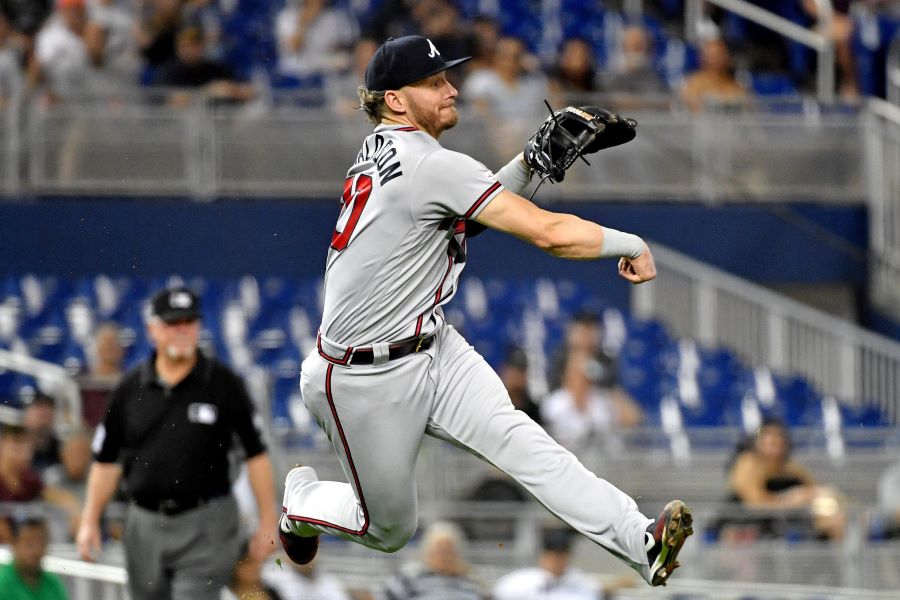 All things being equal, it would be great to have an infield full of slick fielders who can also hit. But in reality, that is a very difficult thing to do and the Twins as they are currently constructed are definitely a bat-first infield. Donaldson, Sano, Jorge Polanco, and Luis Arraez all bring incredibly potent bats (132, 137, 119, and 125 wRC+ respectively – is there a better hitting infield in the MLB?) but Polanco and Arraez still leave a lot to be desired on the defensive side (-16 and -6 OAA respectively) and we don’t know how Sano will fare at first. One thing to consider is the degree of importance infield defense plays in today’s game. In the past when hitters were routinely advised to hit the ball on the ground, having someone like Ozzie Smith in place to gobble it up was invaluable. And while it would still be nice to have someone with Smith’s wizardly defensive skills, although he’s probably lost a step or two, one could argue that it is of lower magnitude with hitters putting the ball on the ground less and less due to increasing strikeout rates and the launch-angle revolution. Another consideration is the amount of shifting teams now do. With the dramatic increase in the shift in recent years, players are put in a better position to field the ball where it is hit, thus somewhat diminishing the value of range. And although the Twins did a lot of shifting in 2019, infield positioning may be an area where the defense could further improve. Eno Sarris of The Athletic recently wrote about his thoughts on OAA and one of the interesting tidbits compares OAA with Ultimate Zone Rating (UZR). Sarris speculates that teams with a higher UZR (which is not position-dependent) than OAA (which is position based), theoretically should be better at positioning their players. Minnesota’s infield had a -15.0 OAA compared to a -20.1 UZR for a difference of -5.1. According to this logic, the infield has some room for improvement based on positioning. Minnesota’s current pitching rotation also helps to mitigate some of the potential damage caused by the infield defense. Of the top-five projected starters, newcomer Homer Bailey leads the staff with just a 44.3% ground ball rate for his career and Jake Odorizzi sits at an extremely low 33.1%. Contrast that with Kyle Gibson and Martin Perez from 2019’s rotation, who have career rates of 51.5% and 50.6%. The only starter likely to see much MLB action who could be defined as a “ground ball” pitcher is Randy Dobnak, and it is not yet known what kind of role he will play. An infield full of Francisco Lindors or Javier Baezes who can hit and field would be great, but given the batting proficiency of the current infield , the offensive benefits certainly seem to outweigh the defensive cost. Combined with a Byron Buxton-led outfield defense, a flyball-oriented pitching staff, increased infield shifting, and a higher strikeout/launch angle environment, Minnesota’s below-average defense may be less of a problem than Outs Above Average is making it seem. Let us know what you think. How big of an issue is the infield defense and does the addition of Josh Donaldson erase any concerns you may have had? Please leave your comments below. For more on Minnesota's infield defense check out these recent Twins Daily Articles: A Bigger Twins Problem Than Pitching - Ted Schwerzler Statcast Reveals Ugly Truth About Minnesota Twins' Infield Defense - Nate Palmer MORE FROM TWINS DAILY — Latest Twins coverage from our writers — Recent Twins discussion in our forums — Follow Twins Daily via Twitter, Facebook or email
 -
Don't forget Tyler Clippard. His reverse splits make him essentially another lefty.
-
Front Page: On Steps and Sano
Patrick Wozniak replied to John Bonnes's topic in Twins Daily Front Page News
Unfortunately my name's too long to make such a purchase economically feasible. -
Front Page: On Steps and Sano
Patrick Wozniak replied to John Bonnes's topic in Twins Daily Front Page News
Next step: Master first base! I'm really happy with the extension and would love to see Sano finish out his career in Minnesota. He's had his ups and downs but it feels like he's ready to really take off. I'm impressed with how seriously he's taking the conditioning and he seems to have matured a lot. I'm excited to see what he does this year. -
Even with the injuries, I'd still do a retroactive extension with Buxton if I had a time machine (I don't yet). I'm still hoping the Twins extend him.
-
The Twins extension of Miguel Sano marks the third long-term agreement Minnesota has come to with its relatively young core in the past 11 months. This is great news, and while it would be nice to add Jose Berrios and Byron Buxton to the list, the Twins might also want to shift their attention to the possibility of extending some of the next wave.Extending a prospect before they have played a game in the big leagues is of course riskier than extending a young player with some MLB experience and its not done nearly as often as the latter. However, this offseason we’ve already seen the Seattle Mariners reach a long-term agreement with AA prospect Evan White and the extension of top prospect Luis Robert marks the second year in a row that the Chicago White Sox have come to a long-term agreement with a player yet to reach the big leagues (Eloy Jimenez was extended in the previous offseason). Chicago’s young outfield prospects signed very similar deals. Both contracts bought out all six years of team control (Robert for $50 million, Jimenez for $43 million) and each deal tacked on two additional years of team options. Evan White’s deal with Seattle was a bit more modest. While Jimenez and Robert were/are among the top of multiple prospect rankings, White usually shows up somewhere in the 50 – 100 range. The 23-year-old also not played above the AA level (outside of four AAA games to end 2019), but is expected to compete for the Mariners opening day first base job. Seattle was able to sign White for $24 million over the next six years along with three additional club options. This brings us to the Twins. Since a pitching prospect has never signed an extension before throwing a pitch in the MLB, we will stick with position players. The three who are both closest to the big leagues and have a high enough prospect status to warrant consideration would seem to be Royce Lewis, Alex Kirilloff, and Trevor Larnach. Like White, these three prospects have topped out at the AA level but are probably not as MLB-ready as both Jimenez and Robert. Royce Lewis is the closest in prospect status to both Jimenez and Robert as he has seen himself placed in the top-10 of several national prospect rankings. Going against Lewis would be his lackluster overall offensive production in 2019 (97 wRC+ in 94 A+ games/88 wRC+ in 33 AA games) and the fact that he is still just 20-years-old (although his age reduces some of the concern about the offensive numbers). He bounced back with an MVP effort in the Arizona Fall League and has loads of potential, but a possible Lewis extension would probably need to wait another year. Like Lewis, Trevor Larnach spent his 2019 season between single- and double-A, but he had a much more successful season with the bat. Larnach managed a 148 wRC+ at both levels and has an advanced approach at the plate. As a collegian draftee, he will turn 23 in February. If the Twins were to work out a deal with Larnach, it would likely be closer in dollars to White’s deal than Robert’s or Jimenez’s, as he’s more of a mid-to-late top-100 prospect. For the Twins to extend Larnach at this point they would need to open up a spot in the outfield, which outside of an Eddie Rosario trade, seems unlikely. That leaves us with Alex Kirilloff. Of the three, he makes the most sense as an extension candidate. After destroying A-ball with a 176 and 168 wRC+ between low- and high-A in 2018, Kirilloff’s 121 wRC+ in 2019 at AA may seem like a step back. However, Kirilloff was battling a wrist injury for much of the season and he really came alive in the playoffs where he homered in four straight games. Kirilloff’s bat is arguably major-league ready and Minnesota may end up with an opening for him. Kirilloff can play first base (along with corner OF) and if the Twins don’t acquire a corner infielder, they could roll with the 22-year-old. There are many obstacles to a long-term extension like this taking place. Although, there have been four in the last three years (the three aforementioned along with Philadelphia’s Scott Kingery) that makes just five total in MLB history (the other being Houston’s Jon Singleton in 2014). Teams must be willing to take a leap of faith that the prospect will turn out (although the financial risk isn’t much) and players, while getting life-changing money, give up potentially valuable free-agent years. Finally, there a few other considerations that may inhibit such a deal in Twins Territory. One of the additional bonuses to the extension is that it erases the need to play the service-time game with MLB-ready prospects. However, Kirilloff is the only extension-worthy candidate that is arguably ready to play for the Twins, and even that is a bit of a stretch. Additionally, both Kirilloff and Lewis are represented by Scott Borras, who in all likelihood would encourage his clients to get to free agency as soon as possible. What do you think? Should the Twins consider a long-term commitment for an unproven commodity? Who of the three would you most like to see Minnesota extend? MORE FROM TWINS DAILY — Latest Twins coverage from our writers — Recent Twins discussion in our forums — Follow Twins Daily via Twitter, Facebook or email Click here to view the article
-
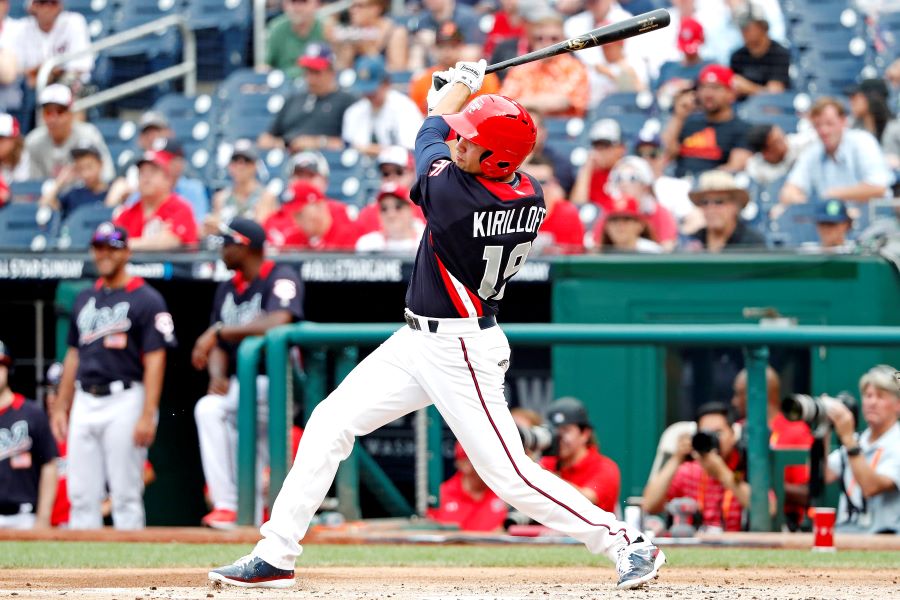 Extending a prospect before they have played a game in the big leagues is of course riskier than extending a young player with some MLB experience and its not done nearly as often as the latter. However, this offseason we’ve already seen the Seattle Mariners reach a long-term agreement with AA prospect Evan White and the extension of top prospect Luis Robert marks the second year in a row that the Chicago White Sox have come to a long-term agreement with a player yet to reach the big leagues (Eloy Jimenez was extended in the previous offseason). Chicago’s young outfield prospects signed very similar deals. Both contracts bought out all six years of team control (Robert for $50 million, Jimenez for $43 million) and each deal tacked on two additional years of team options. Evan White’s deal with Seattle was a bit more modest. While Jimenez and Robert were/are among the top of multiple prospect rankings, White usually shows up somewhere in the 50 – 100 range. The 23-year-old also not played above the AA level (outside of four AAA games to end 2019), but is expected to compete for the Mariners opening day first base job. Seattle was able to sign White for $24 million over the next six years along with three additional club options. This brings us to the Twins. Since a pitching prospect has never signed an extension before throwing a pitch in the MLB, we will stick with position players. The three who are both closest to the big leagues and have a high enough prospect status to warrant consideration would seem to be Royce Lewis, Alex Kirilloff, and Trevor Larnach. Like White, these three prospects have topped out at the AA level but are probably not as MLB-ready as both Jimenez and Robert. Royce Lewis is the closest in prospect status to both Jimenez and Robert as he has seen himself placed in the top-10 of several national prospect rankings. Going against Lewis would be his lackluster overall offensive production in 2019 (97 wRC+ in 94 A+ games/88 wRC+ in 33 AA games) and the fact that he is still just 20-years-old (although his age reduces some of the concern about the offensive numbers). He bounced back with an MVP effort in the Arizona Fall League and has loads of potential, but a possible Lewis extension would probably need to wait another year. Like Lewis, Trevor Larnach spent his 2019 season between single- and double-A, but he had a much more successful season with the bat. Larnach managed a 148 wRC+ at both levels and has an advanced approach at the plate. As a collegian draftee, he will turn 23 in February. If the Twins were to work out a deal with Larnach, it would likely be closer in dollars to White’s deal than Robert’s or Jimenez’s, as he’s more of a mid-to-late top-100 prospect. For the Twins to extend Larnach at this point they would need to open up a spot in the outfield, which outside of an Eddie Rosario trade, seems unlikely. That leaves us with Alex Kirilloff. Of the three, he makes the most sense as an extension candidate. After destroying A-ball with a 176 and 168 wRC+ between low- and high-A in 2018, Kirilloff’s 121 wRC+ in 2019 at AA may seem like a step back. However, Kirilloff was battling a wrist injury for much of the season and he really came alive in the playoffs where he homered in four straight games. Kirilloff’s bat is arguably major-league ready and Minnesota may end up with an opening for him. Kirilloff can play first base (along with corner OF) and if the Twins don’t acquire a corner infielder, they could roll with the 22-year-old. There are many obstacles to a long-term extension like this taking place. Although, there have been four in the last three years (the three aforementioned along with Philadelphia’s Scott Kingery) that makes just five total in MLB history (the other being Houston’s Jon Singleton in 2014). Teams must be willing to take a leap of faith that the prospect will turn out (although the financial risk isn’t much) and players, while getting life-changing money, give up potentially valuable free-agent years. Finally, there a few other considerations that may inhibit such a deal in Twins Territory. One of the additional bonuses to the extension is that it erases the need to play the service-time game with MLB-ready prospects. However, Kirilloff is the only extension-worthy candidate that is arguably ready to play for the Twins, and even that is a bit of a stretch. Additionally, both Kirilloff and Lewis are represented by Scott Borras, who in all likelihood would encourage his clients to get to free agency as soon as possible. What do you think? Should the Twins consider a long-term commitment for an unproven commodity? Who of the three would you most like to see Minnesota extend? MORE FROM TWINS DAILY — Latest Twins coverage from our writers — Recent Twins discussion in our forums — Follow Twins Daily via Twitter, Facebook or email
 -
But they're plastic beer bottles! Thanks for the specifics. If I remember correctly, Chicago offered Wheeler $125. Assuming that's the top offer, that would make the Twins hypothetical offer $137.5 over 5 years - would you go that high? It would be interesting to know exactly what Bumgarner would have been offered had he not been so committed to Arizona. The opt-out is an interesting monkey wretch. I would be fine with that, but I still don't know if that would get him to Minnesota (he loves his horses!) Ryu's interesting. I have to think the Twins were scared off by his injury history.
-
You actually said "party."
-
I was referring specifically to this offseason as I thought you were in your previous post. But yeah, when you stretch it out you can certainly build a stronger case (I would have loved to acquire Gallen as well, especially at that prospect price!). I was really just curious as to what you think the Twins would have had to have done to get one of the top 5 guys and what price you would be willing to pay as I don't think they had much of a realistic shot.
-
Once Wes Johnson gets Bailey to throw his splitter 100% of the time he's going to be truly unstoppable! I'm also probably more optimistic than I should be based on his success towards the end of 2019 and part of that is undoubtedly due to the fact that I haven't actually watched Bailey pitch through his struggles. But that splitter does look really good in the clip and the fact that changing his arsenal led to improvement gives me some hope.
-
While I agree that it would have been nice to land one of the top FA pitchers, I'm curious about the specifics of who you wanted to add and how you would have done that (contract specifics). Outside of possibly Ryu, it doesn't seem like the Twins had much of a chance on any of the others. Not nitpicking, just curious.
-
Love that the Twins were able to extend Sano as well. They've done a really nice job of extending the core while building the future with the farm, player development, good hires, etc.
-
YES!!!
-
Sorry to disappoint...at least it's only a game (Insert smiley face here). Maybe I got a bit carried away with the wording and the logic didn't end up make sense. What might have been better to say is that every thing is very uncertain at this point and I find it hard to understand how angry the fan base has seemed to be. I'm really happy with what Falvey and co. have done with the organization and I'm happy to give them the benefit of the doubt until I see reason not to. We've seen how things have worked out with the top free agents and I don't think Minnesota had a chance of signing any of them aside form maybe Ryu, so with all things considered I think they've done well and may not be finished yet.
-
For the time being the narrative around Minnesota’s offseason begins and ends with “impact pitching.” Derek Falvey and Thad Levine probably want nothing more that to enter a time machine and retract those two words. But over time it will be the results of 2020 that shape the narrative of how we view this offseason.It’s easy to look at the offseason as a failure simply due to the fact that the Twins “failed” to secure what is viewed as one of the top free-agent starters. However, to already call the offseason a failure is short-sighted. The truth is that whatever grades or assessments we attach to the acquisitions, or lack thereof, that the Twins have made thus far, what ultimately matters is what happens when the Twins actually play games. Now we can look back at the World Series and point out how important impact pitching really is. It’s true that both Washington and Houston’s rotations were filled with stars. All things being equal, it would obviously be nice for the Twins to have someone like Stephen Strasberg or Gerrit Cole, but that was never going to happen. Given the fact that they had four rotation spots to fill, Minnesota did well to bring back two starters who were really effective for the Twins in 2019 and two new faces that at least offer some degree of upside. Minnesota seems to be more interested in building a long-term winner and now has the infrastructure, personnel, and prospects in place to make that a reality. While some may argue that it’s better to go all in now, Thieres Rabelo recently wrote a great piece arguing that Minnesota is putting itself in the position for long-term success as the Los Angeles Dodgers have done. Of course, the current regime in L.A. has yet to win it all, but they’ve come close, and putting your team in a position to go all the way year after year should be any front office’s objective. The truth is that we don’t know what will happen in 2020 and it makes little sense to call the offseason a failure at this point. As human beings we tend to experience a result and then go back and retroactively create a narrative to fit whatever happened. In reality we probably don’t have a great idea of what causes bring about the end results but we’re destined to assign some explanation to fill in the blanks. Now that the “impact pitching” narrative has been put in place it will be easy to fall back on, but it’s hard to know exactly what effect adding one of the top free agents would have made (it’s also possible that Minnesota actually did sign some of the most impactful starters of the bunch). Imagine an alternate reality where Milwaukee bull-penned their way around Washington in the NL Wildcard and Tampa Bay squeaked past Houston in ALDS (or, God forbid, if the Yankees had prevailed with their superb bullpen). More of us around Twins Daily would undoubtedly be clamoring for the Twins to add a few impact relievers to complete a super bullpen (which, to some degree, the Twins did do by signing Sergio Romo and Tyler Clippard). Of course, if the Twins should go on to win the World Series in 2020, or if they win it a few years down the road due to the rise of internal options, the offseason "failure" will likely be erased from our memory and we’ll be praising the FO for not mortgaging the future and letting things play out. It seems a bit odd that so much resentment has come the way of the Twins front office after winning over 100 games in 2019. Maybe some of it is deserved due to their own choice of words, but shouldn’t they be given the benefit of the doubt due to level of success and improvement the Twins have shown in just three seasons? Let’s at least let the season play out before we write the narrative. MORE FROM TWINS DAILY — Latest Twins coverage from our writers — Recent Twins discussion in our forums — Follow Twins Daily via Twitter, Facebook or email Click here to view the article

