



Patrick Wozniak
-
Posts
383 -
Joined
-
Last visited
-
Days Won
1
Content Type
Profiles
News
Minnesota Twins Videos
2026 Minnesota Twins Top Prospects Ranking
2022 Minnesota Twins Draft Picks
Minnesota Twins Free Agent & Trade Rumors, Notes, & Tidbits
Guides & Resources
2023 Minnesota Twins Draft Picks
The Minnesota Twins Players Project
2024 Minnesota Twins Draft Picks
2025 Minnesota Twins Draft Pick Tracker
2026 Minnesota Twins Draft Tracker: Picks & Bonuses
Forums
Blogs
Events
Store
Downloads
Gallery
Everything posted by Patrick Wozniak
-
I just saw that Seth posted that Betsey Helfund recently wrote an update on Hill. Sounds like the rehab is going well and he says he'll be ready to go if the season begins in July.
-
If baseball does in fact come back in early July as now proposed, Minnesota will finally get a chance to see some of the “impact” players that were acquired this offseason. Josh Donaldson and Kenta Maeda are big names who should be ready to go, but the other big acquisition, Rich Hill, comes with more questions.Donaldson signed the biggest free-agent contract in Twins history, and Maeda, while less expensive (depending on how you feel about Brusdar Graterol), will presumably be in Minnesota for the next four years. Hill on the other hand, is signed for only 2020 and is guaranteed just $3 million (up to $9.5 million with incentives), so from the Twins perspective the cost and commitment is minimal. However, even at 40-years of age, Hill could prove to be as impactful of any of the other acquisitions Minnesota made. Hill’s last season with an ERA above 3.66 was back in 2013 when he pitched for Cleveland. Since then he’s had an ERA of below 3.00 in all but two seasons. In other words, Hill has been good, in fact very good…when he’s been on the field. Which brings us to three all important questions for the man they call Dick Mountain. Will Hill be healthy? With Hill, health of course is the big question, and it’s unsurprisingly linked to all three questions. Hill underwent modified or experimental Tommy John surgery, which involves reinforcing the UCL with tape that has been soaked in collagen. Although it sounds like the medical equivalent of me trying to fix a leaky pipe, the good news is the recovery time is much shorter than with traditional Tommy John (or calling the plumber). And unlike our leaky pipe, we really only need Hill’s elbow to hold up for half a season. Then again, at age 40, Hill’s elbow has already gone through two Tommy John’s, so it might not be much better off than our proverbial old leaky pipe. When will Hill be ready? Originally Hill was hoping to make it back sometime in June, so with the season presumably pushed back to July, Hill at least has a chance to start the year in the rotation. However, with Covid-19 preventing Hill from working directly with the Twins training staff, matters become more complicated. At this point it’s unclear how Hill’s throwing program has advanced. While the Twins have become one of the teams at the forefront of using technology for player development, distance and the inaccessibility of facilities have likely made a smooth recovery a greater challenge. Teams will likely have an abbreviated spring training of about three weeks, but that doesn’t leave Hill much time. What kind of workload can be expected? The MLB’s most recent plan calls for approximately 80 games in 2020. With the shorter season comes increased variability, making every game that much more important. Winning and avoiding long losing streaks will be paramount, and a healthy and effective Hill would go a long way toward bolstering Minnesota’s rotation. Therefore the Twins will have every reason to try to maximize Hill’s usage in 2020. If Hill is ramped up and ready to go in July, how much can we really expect? With a half-season, the rosiest picture would be somewhere approaching 100 innings. The bad news is that Hill threw only 58 2/3 innings in 2019 while dealing with elbow soreness. They were however, good innings, and we can hope that the surgery took care of the arm issues. If we go back to 2017 and 2018 Hill was actually pretty healthy, pitching 135 2/3 and 132 2/3 innings respectively. So maybe somewhere in the vicinity of 80 innings isn’t such a (rusty) pipe dream? Hill was mostly dealing with nagging blister injuries throughout those two seasons. While annoying, blister injuries usually only cause a brief stint on the IL, and short stints that allow Hill a little extra rest certainly wouldn’t be the end of the world. Minnesota’s rotation was much improved in 2019 and they were able to bring back Jake Odorizzi and Michael Pineda (who must complete his suspension) and add Maeda and Homer Bailey to join Jose Berrios. With uncertainty surrounding a trade deadline and the likelihood of more teams being in contention due to the shorter season and postseason expansion, acquiring starting pitching could be next to impossible. A healthy and effective Hill could go a long way toward helping the Twins ascend the mountain that is baseball in 2020. MORE FROM TWINS DAILY — Latest Twins coverage from our writers — Recent Twins discussion in our forums — Follow Twins Daily via Twitter, Facebook or email Click here to view the article
-
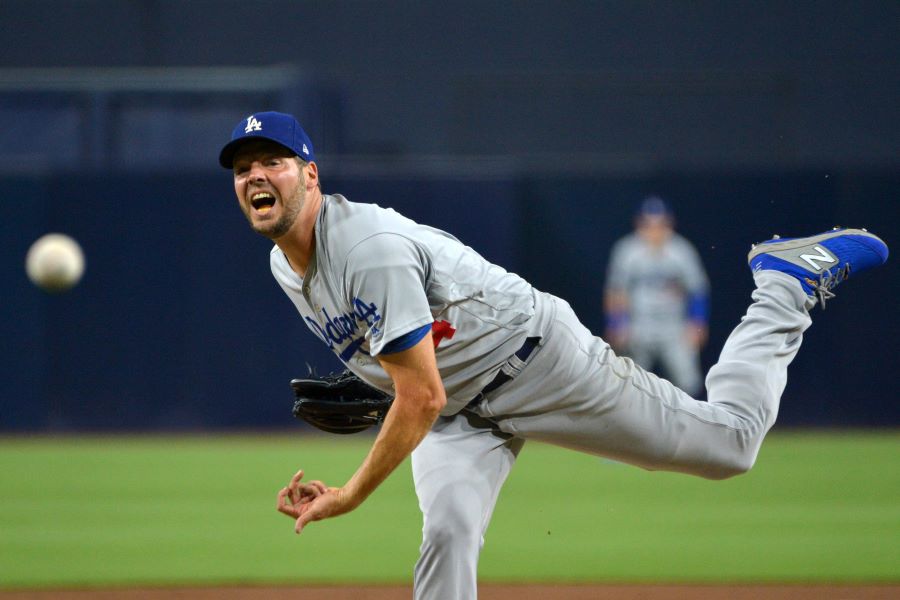 Donaldson signed the biggest free-agent contract in Twins history, and Maeda, while less expensive (depending on how you feel about Brusdar Graterol), will presumably be in Minnesota for the next four years. Hill on the other hand, is signed for only 2020 and is guaranteed just $3 million (up to $9.5 million with incentives), so from the Twins perspective the cost and commitment is minimal. However, even at 40-years of age, Hill could prove to be as impactful of any of the other acquisitions Minnesota made. Hill’s last season with an ERA above 3.66 was back in 2013 when he pitched for Cleveland. Since then he’s had an ERA of below 3.00 in all but two seasons. In other words, Hill has been good, in fact very good…when he’s been on the field. Which brings us to three all important questions for the man they call Dick Mountain. Will Hill be healthy? With Hill, health of course is the big question, and it’s unsurprisingly linked to all three questions. Hill underwent modified or experimental Tommy John surgery, which involves reinforcing the UCL with tape that has been soaked in collagen. Although it sounds like the medical equivalent of me trying to fix a leaky pipe, the good news is the recovery time is much shorter than with traditional Tommy John (or calling the plumber). And unlike our leaky pipe, we really only need Hill’s elbow to hold up for half a season. Then again, at age 40, Hill’s elbow has already gone through two Tommy John’s, so it might not be much better off than our proverbial old leaky pipe. When will Hill be ready? Originally Hill was hoping to make it back sometime in June, so with the season presumably pushed back to July, Hill at least has a chance to start the year in the rotation. However, with Covid-19 preventing Hill from working directly with the Twins training staff, matters become more complicated. At this point it’s unclear how Hill’s throwing program has advanced. While the Twins have become one of the teams at the forefront of using technology for player development, distance and the inaccessibility of facilities have likely made a smooth recovery a greater challenge. Teams will likely have an abbreviated spring training of about three weeks, but that doesn’t leave Hill much time. What kind of workload can be expected? The MLB’s most recent plan calls for approximately 80 games in 2020. With the shorter season comes increased variability, making every game that much more important. Winning and avoiding long losing streaks will be paramount, and a healthy and effective Hill would go a long way toward bolstering Minnesota’s rotation. Therefore the Twins will have every reason to try to maximize Hill’s usage in 2020. If Hill is ramped up and ready to go in July, how much can we really expect? With a half-season, the rosiest picture would be somewhere approaching 100 innings. The bad news is that Hill threw only 58 2/3 innings in 2019 while dealing with elbow soreness. They were however, good innings, and we can hope that the surgery took care of the arm issues. If we go back to 2017 and 2018 Hill was actually pretty healthy, pitching 135 2/3 and 132 2/3 innings respectively. So maybe somewhere in the vicinity of 80 innings isn’t such a (rusty) pipe dream? Hill was mostly dealing with nagging blister injuries throughout those two seasons. While annoying, blister injuries usually only cause a brief stint on the IL, and short stints that allow Hill a little extra rest certainly wouldn’t be the end of the world. Minnesota’s rotation was much improved in 2019 and they were able to bring back Jake Odorizzi and Michael Pineda (who must complete his suspension) and add Maeda and Homer Bailey to join Jose Berrios. With uncertainty surrounding a trade deadline and the likelihood of more teams being in contention due to the shorter season and postseason expansion, acquiring starting pitching could be next to impossible. A healthy and effective Hill could go a long way toward helping the Twins ascend the mountain that is baseball in 2020. MORE FROM TWINS DAILY — Latest Twins coverage from our writers — Recent Twins discussion in our forums — Follow Twins Daily via Twitter, Facebook or email
 -
At The Athletic, Ken Rosenthal recently wrote about the latest details on baseball’s plan to return. The plan calls for an 80-game season (approximately) that would have teams hosting games at their home ballparks and only traveling within their region. Today, we’ll look at one possibility that Rosenthal lays out and how it might favor the Twins.According to Rosenthal, Major League Baseball is currently hoping to have the regular season begin sometime in early July. We’re looking at something like 80 games, but that’s just an approximation, the number could be 78 or 82 as well. Teams would only face opponents from their own region, which for Minnesota would mean AL and NL Central teams. In considering a 78-game season, Rosenthal speculated that teams might play four three-game series against each division opponent and two three-game series against non-division opponents. That would mean the Twins would play 48 of the 78 games (62%) within the division as opposed to just 76 of 162 games (47%) in the pre-COVID-19 regular season schedule. That’s a 15% increase in games against AL Central opponents with the remainder of the games presumably played against NL Central teams. Reducing the schedule to 78-games obviously greatly increases the variability of potential results as the season has less time to play out, favoring fringe teams while generally unfavorable to better teams like Minnesota. However, the negative effects of this variance would potentially be offset for the Twins by facing weaker teams like Detroit and Kansas City more often. The White Sox should be improved but are also far from a sure thing, and although Cleveland has the potential to be a good team, they didn’t do much to bolster their club this past offseason. In 2019 Minnesota was 50-26 in games played within the division and 41-16 against Detroit, Kansas City, and Chicago. Cleveland was the only divisional opponent the Twins had a losing record against, but just barely (9-10). In addition, the Twins were able to add key pieces this offseason, including Josh Donaldson, Kenta Maeda, and Rich Hill and Chicago was the only other AL Central team that really added significant pieces this offseason. Predicting how the Twins will fare against NL Central teams is a more difficult task. The division is certainly more balanced than the AL Central as Pittsburgh is the only club projected to be really bad in 2020. While Cincinnati also struggled in 2019, they have added several pieces and should be an improved team. Of the remaining clubs (St. Louis, Chicago, and Milwaukee), none reached the win totals of either Minnesota or Cleveland but all finished the season with winning records and the Cardinals won 91 games. It's unclear whether or not a universal DH will be adopted, but with so many inter-league games, it seems a possibility. This would obviously be somewhat advantageous for AL teams like the Twins, as NL teams didn’t approach the offseason with DH acquisition in mind. The altered landscape of the 2020 season is a great opportunity for MLB to adopt the universal DH if it is a priority. The latest plan also has MLB expanding the number of teams advancing to the postseason from five in each league to seven. Those extra two slots would go a long way towards mitigating some of the variance of a shorter season that could be harmful to a team like the Twins. Needless to say, this plan isn’t set in stone and a lot of work is left to be done including ensuring the safety of all involved and getting all the financial matters ironed out between the players and owners. But the financial incentives of having a season are huge and the chances of having baseball in 2020 seem likelier by the day. And it looks like it might just work out in the Twins favor. MORE FROM TWINS DAILY — Latest Twins coverage from our writers — Recent Twins discussion in our forums — Follow Twins Daily via Twitter, Facebook or email Click here to view the article
-
 According to Rosenthal, Major League Baseball is currently hoping to have the regular season begin sometime in early July. We’re looking at something like 80 games, but that’s just an approximation, the number could be 78 or 82 as well. Teams would only face opponents from their own region, which for Minnesota would mean AL and NL Central teams. In considering a 78-game season, Rosenthal speculated that teams might play four three-game series against each division opponent and two three-game series against non-division opponents. That would mean the Twins would play 48 of the 78 games (62%) within the division as opposed to just 76 of 162 games (47%) in the pre-COVID-19 regular season schedule. That’s a 15% increase in games against AL Central opponents with the remainder of the games presumably played against NL Central teams. Reducing the schedule to 78-games obviously greatly increases the variability of potential results as the season has less time to play out, favoring fringe teams while generally unfavorable to better teams like Minnesota. However, the negative effects of this variance would potentially be offset for the Twins by facing weaker teams like Detroit and Kansas City more often. The White Sox should be improved but are also far from a sure thing, and although Cleveland has the potential to be a good team, they didn’t do much to bolster their club this past offseason. In 2019 Minnesota was 50-26 in games played within the division and 41-16 against Detroit, Kansas City, and Chicago. Cleveland was the only divisional opponent the Twins had a losing record against, but just barely (9-10). In addition, the Twins were able to add key pieces this offseason, including Josh Donaldson, Kenta Maeda, and Rich Hill and Chicago was the only other AL Central team that really added significant pieces this offseason. Predicting how the Twins will fare against NL Central teams is a more difficult task. The division is certainly more balanced than the AL Central as Pittsburgh is the only club projected to be really bad in 2020. While Cincinnati also struggled in 2019, they have added several pieces and should be an improved team. Of the remaining clubs (St. Louis, Chicago, and Milwaukee), none reached the win totals of either Minnesota or Cleveland but all finished the season with winning records and the Cardinals won 91 games. It's unclear whether or not a universal DH will be adopted, but with so many inter-league games, it seems a possibility. This would obviously be somewhat advantageous for AL teams like the Twins, as NL teams didn’t approach the offseason with DH acquisition in mind. The altered landscape of the 2020 season is a great opportunity for MLB to adopt the universal DH if it is a priority. The latest plan also has MLB expanding the number of teams advancing to the postseason from five in each league to seven. Those extra two slots would go a long way towards mitigating some of the variance of a shorter season that could be harmful to a team like the Twins. Needless to say, this plan isn’t set in stone and a lot of work is left to be done including ensuring the safety of all involved and getting all the financial matters ironed out between the players and owners. But the financial incentives of having a season are huge and the chances of having baseball in 2020 seem likelier by the day. And it looks like it might just work out in the Twins favor. MORE FROM TWINS DAILY — Latest Twins coverage from our writers — Recent Twins discussion in our forums — Follow Twins Daily via Twitter, Facebook or email
 -
Even as pitchers’ workloads have decreased in regard to the amount of innings pitched and pitches thrown per outing, the MLB has not seen a reduction in the amount of Tommy John surgeries. Ian McMahan of the Athletic recently looked into why this might be and the research pointed to some interesting possibilities.The basic premise is that pitching at max velocity puts a pitcher at greater risk for damage to the ulnar collateral ligament (UCL). With increased focus on velocity, pitchers are throwing harder in shorter stints, leading to increased stress on the elbow (and ultimately surgery). Basically, pitchers with varied pitch mixes that are less fastball heavy are less likely to become injured. According to a research study the injury threshold for fastball usage is at 48%. The researchers took group of pitchers who had undergone Tommy John and looked at each pitcher’s two seasons prior to the surgery. They found once a pitcher exceeds 48%, each additional percentage of fastball usage leads to a 2% increase in risk for UCL injury. Of course there are undoubtably additional factors that put pitchers at risk for arm injuries. Twins Daily’s very own medical expert, Lucas Seehafer, did a great job of illustrating the roll proper mechanics can play in pitcher injury prevention and the increase of specialization at a young age has also been cited as a potential cause of injury. College and minor league pitchers have a much higher rate of Tommy John surgery than their MLB counterparts, which fits our narrative as they’re likely to be throwing a higher mix of fastballs and have less developed mechanics. While I’m not at all qualified to break down mechanics for injury risk, I am capable of going over to Baseball Savant and looking through fastball usage to see who crosses the dreaded 48% fastball threshold. We’ll stick with starting pitchers as relievers have less varied pitch mixes and are therefore likely to throw a higher percentage of fastballs (which sounds better than admitting I’m too lazy to bother with relievers). Before we jump in, one thing to consider is if all fastballs are created equal. Some pitchers throw both four-and two-seam fastballs and four seamers are generally thrown at a higher velocity. As apparent in the names, the pitches feature different grips but also use different amounts of finger pressure on the ball. It’s possible that two-seam fastballs could be less damaging due to less velocity which in turn could mean less effort and therefor reduced stress on the elbow. I must also point out that the study alluded to earlier looked at the two seasons prior to Tommy John surgery and I’ll only be showing the 2019 numbers. We’ll start with the highest percentage of fastballs and work our way down. Randy Dobnak – 59.2 % (Sinker – 36.5%, Four-seam – 22.7 %) Dobnak definitely fits into the two-seam issue alluded to in the previous paragraph. He utilizes his sinker more often than the four-seamer and it’s significantly slower than his four-seamer (92.2 mph vs. 93.4 mph). Maybe that will save his arm? Jake Odorizzi – 57.9% According to Baseball Savant, Odorizzi hasn’t thrown a two-seamer since 2016, so he’s strictly a four-seam guy. He throws it quite often, and for good reason as it’s arguably his best pitch. Prior to 2019, Odorizzi spent his offseason at the Florida Baseball Ranch and it led to his fastball velocity increasing from 91.1 mph in 2018 to 92.9 in 2019. While the velo spike could be viewed as a cause for injury concern, Odorizzi was pretty healthy in 2019, and it’s possible that mechanical adjustments increased his velocity without causing additional elbow strain. Jose Berrios – 55.5% (Four-seam – 32.2%, Sinker – 23.3%) Berrios has had his second-half struggles and has lost a bit of velocity throughout his career but he’s been remarkably durable. Berrios has shifted from featuring his sinker more frequently early on to now leaning more heavily on his four-seamer, as has been a trend throughout baseball. He still throws his sinker a fair amount and it was a full mph slower than his four-seamer in 2019. As mention with Dobnak, it’s possible the sinkers might put less stress on his elbow. Michael Pineda – 55.2% (Four-seam – 54.1%, Sinker 1.1%) Previous injury is the best indicator of future injury and Pineda has had his fair share of injuries, including shoulder surgery that caused him to miss the 2012 season and Tommy John surgery that put him out in 2018. In his two seasons prior to his elbow surgery his fastball usage was just above 48% and it was at over 60% the year before his shoulder injury. Pineda will have had some extra rest due to his PED suspension so maybe that will help once he returns. Rich Hill – 52% Hill’s definitely in the “previous injury” club as he’s had both shoulder and Tommy John surgery and had modified Tommy John surgery this offseason. He’s been a two-trick pony for quite some time with the curve being his second pitch, and has thrown 55%, 58%, and 53% heaters for the past three seasons. Coming off surgery and at 40-years of age, it’s hard to know what to expect from Hill, but he’s been extremely effective when healthy. Lewis Thorpe – 51.2% Lewis Thorpe has already had one Tommy John surgery as a minor leaguer after the 2014 season and missed the 2015 and ’16 seasons in recovery (a case of infectious mononucleosis contributed to the length). His 2020 role is up in the air but the increased need for arms should help his cause whether out of the ‘pen or as a swing starter. His MLB sample size is fairly small and minor league pitch usage isn’t widely available, but he tops the 48% threshold based on what we have. Devin Smeltzer – 45.9% Smeltzer was another long shot to make the team who could benefit from expanded rosters in 2020. As was the case with Thorpe we’re dealing with a limited amount of innings, but Smeltzer has been healthy throughout his pro career and comes in safely below 48%. Kenta Maeda – 37.4% (Four-seam – 33.7%, Sinker – 3.7%) Finally, we can breathe a bit with Maeda. He’s been solidly below 48% for the entirety of his MLB career as he relies heavily on sliders and changeups along with his four-seamer and the occasional curve. In his four years with Los Angeles he also frequently shifted to a bullpen role so his inning totals are fairly moderate. Of course, by writing this I’ve cursed Maeda and his ACL is bound to explode. I’m sorry. Again, this is just one potential tool for assessing injury risk and there’s obviously other factors involved including mechanics and genetics. Technology will likely play an ever increasing role in injury prevention as well with devices such as pitching sleeves being used to identify potential risk. It’s also worth pointing out that being above 48% fastball usage isn’t a death sentence (the majority of MLB pitchers are above 48%), but it’s an interesting and potentially useful way to view and possibly lower injury risk. MORE FROM TWINS DAILY — Latest Twins coverage from our writers — Recent Twins discussion in our forums — Follow Twins Daily via Twitter, Facebook or email Click here to view the article
-
Fastballs, Tommy John, and Twins Pitchers Who May Be at Risk
Patrick Wozniak posted an article in Twins
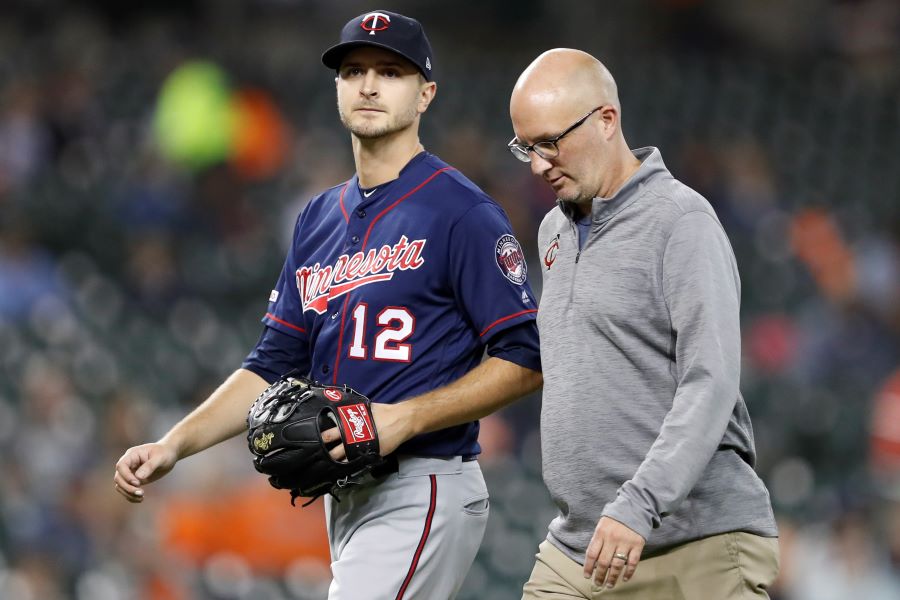 The basic premise is that pitching at max velocity puts a pitcher at greater risk for damage to the ulnar collateral ligament (UCL). With increased focus on velocity, pitchers are throwing harder in shorter stints, leading to increased stress on the elbow (and ultimately surgery). Basically, pitchers with varied pitch mixes that are less fastball heavy are less likely to become injured. According to a research study the injury threshold for fastball usage is at 48%. The researchers took group of pitchers who had undergone Tommy John and looked at each pitcher’s two seasons prior to the surgery. They found once a pitcher exceeds 48%, each additional percentage of fastball usage leads to a 2% increase in risk for UCL injury. Of course there are undoubtably additional factors that put pitchers at risk for arm injuries. Twins Daily’s very own medical expert, Lucas Seehafer, did a great job of illustrating the roll proper mechanics can play in pitcher injury prevention and the increase of specialization at a young age has also been cited as a potential cause of injury. College and minor league pitchers have a much higher rate of Tommy John surgery than their MLB counterparts, which fits our narrative as they’re likely to be throwing a higher mix of fastballs and have less developed mechanics. While I’m not at all qualified to break down mechanics for injury risk, I am capable of going over to Baseball Savant and looking through fastball usage to see who crosses the dreaded 48% fastball threshold. We’ll stick with starting pitchers as relievers have less varied pitch mixes and are therefore likely to throw a higher percentage of fastballs (which sounds better than admitting I’m too lazy to bother with relievers). Before we jump in, one thing to consider is if all fastballs are created equal. Some pitchers throw both four-and two-seam fastballs and four seamers are generally thrown at a higher velocity. As apparent in the names, the pitches feature different grips but also use different amounts of finger pressure on the ball. It’s possible that two-seam fastballs could be less damaging due to less velocity which in turn could mean less effort and therefor reduced stress on the elbow. I must also point out that the study alluded to earlier looked at the two seasons prior to Tommy John surgery and I’ll only be showing the 2019 numbers. We’ll start with the highest percentage of fastballs and work our way down. Randy Dobnak – 59.2 % (Sinker – 36.5%, Four-seam – 22.7 %) Dobnak definitely fits into the two-seam issue alluded to in the previous paragraph. He utilizes his sinker more often than the four-seamer and it’s significantly slower than his four-seamer (92.2 mph vs. 93.4 mph). Maybe that will save his arm? Jake Odorizzi – 57.9% According to Baseball Savant, Odorizzi hasn’t thrown a two-seamer since 2016, so he’s strictly a four-seam guy. He throws it quite often, and for good reason as it’s arguably his best pitch. Prior to 2019, Odorizzi spent his offseason at the Florida Baseball Ranch and it led to his fastball velocity increasing from 91.1 mph in 2018 to 92.9 in 2019. While the velo spike could be viewed as a cause for injury concern, Odorizzi was pretty healthy in 2019, and it’s possible that mechanical adjustments increased his velocity without causing additional elbow strain. Jose Berrios – 55.5% (Four-seam – 32.2%, Sinker – 23.3%) Berrios has had his second-half struggles and has lost a bit of velocity throughout his career but he’s been remarkably durable. Berrios has shifted from featuring his sinker more frequently early on to now leaning more heavily on his four-seamer, as has been a trend throughout baseball. He still throws his sinker a fair amount and it was a full mph slower than his four-seamer in 2019. As mention with Dobnak, it’s possible the sinkers might put less stress on his elbow. Michael Pineda – 55.2% (Four-seam – 54.1%, Sinker 1.1%) Previous injury is the best indicator of future injury and Pineda has had his fair share of injuries, including shoulder surgery that caused him to miss the 2012 season and Tommy John surgery that put him out in 2018. In his two seasons prior to his elbow surgery his fastball usage was just above 48% and it was at over 60% the year before his shoulder injury. Pineda will have had some extra rest due to his PED suspension so maybe that will help once he returns. Rich Hill – 52% Hill’s definitely in the “previous injury” club as he’s had both shoulder and Tommy John surgery and had modified Tommy John surgery this offseason. He’s been a two-trick pony for quite some time with the curve being his second pitch, and has thrown 55%, 58%, and 53% heaters for the past three seasons. Coming off surgery and at 40-years of age, it’s hard to know what to expect from Hill, but he’s been extremely effective when healthy. Lewis Thorpe – 51.2% Lewis Thorpe has already had one Tommy John surgery as a minor leaguer after the 2014 season and missed the 2015 and ’16 seasons in recovery (a case of infectious mononucleosis contributed to the length). His 2020 role is up in the air but the increased need for arms should help his cause whether out of the ‘pen or as a swing starter. His MLB sample size is fairly small and minor league pitch usage isn’t widely available, but he tops the 48% threshold based on what we have. Devin Smeltzer – 45.9% Smeltzer was another long shot to make the team who could benefit from expanded rosters in 2020. As was the case with Thorpe we’re dealing with a limited amount of innings, but Smeltzer has been healthy throughout his pro career and comes in safely below 48%. Kenta Maeda – 37.4% (Four-seam – 33.7%, Sinker – 3.7%) Finally, we can breathe a bit with Maeda. He’s been solidly below 48% for the entirety of his MLB career as he relies heavily on sliders and changeups along with his four-seamer and the occasional curve. In his four years with Los Angeles he also frequently shifted to a bullpen role so his inning totals are fairly moderate. Of course, by writing this I’ve cursed Maeda and his ACL is bound to explode. I’m sorry. Again, this is just one potential tool for assessing injury risk and there’s obviously other factors involved including mechanics and genetics. Technology will likely play an ever increasing role in injury prevention as well with devices such as pitching sleeves being used to identify potential risk. It’s also worth pointing out that being above 48% fastball usage isn’t a death sentence (the majority of MLB pitchers are above 48%), but it’s an interesting and potentially useful way to view and possibly lower injury risk. MORE FROM TWINS DAILY — Latest Twins coverage from our writers — Recent Twins discussion in our forums — Follow Twins Daily via Twitter, Facebook or email
 -
Yeah, not quite the same ring . Though they could still come in with two outs to face one lefty assuming they're replacing a pitcher who already faced three batters but that probably won't happen much.
-
It’s looking increasingly more likely that we’ll get some form of Major League Baseball come late June or early July. One of the interesting aspects will be expanded rosters and the possibility of having players on the 40-man in close proximity to be called upon as needed. With that in mind, today we’ll take a look at players on the Twins 40-man and what roles they may play if baseball returns.First, there are the players who had a decent chance to make the 26-man roster and should be locks to make a slightly expanded roster: The Locks: Jake Cave (OF), Willians Astudillo (C,UTL), Randy Dobnak (RHP) One of Jake Cave or Willians Astudillo would have been the 26th man, with the other likely an injury away. Now they both look like locks to make the team. Randy Dobnak was less certain, due to the presence of veteran camp invitee Jhoulys Chacín. Dobnak may have still had the upper hand, but now seems all but certain to make the team. Chacín’s role might be less certain than it appears as Minnesota may choose to roll with Dobnak since Rich Hill is expected to be available sometime in June or July anyway. The Expanded Hopefuls: Lewis Thorpe (LHP), Devin Smeltzer (LHP), LaMonte Wade Jr. (OF) One of the obvious consequences of a limited spring training is less time for pitchers to build up to full strength. Coupled with potential doubleheaders and fewer off-days, teams are going to need a plethora of arms, and the Twins should be in pretty good shape. None of this group was likely to make the original 26-man roster, but with expansion they should be the favorites. Thorpe and Smeltzer could serve as starters, multi-inning relievers, or as LOOGYs, providing plenty of versatility. And although Minnesota is already well stocked with backup outfielders (Marwin Gonzalez and Jake Cave), Wade Jr. could provide value as a pinch runner or defensive replacement and is capable of playing a passable center field. The Booster Club: Sean Poppen (RHP), Jorge Alcala (RHP) Like everyone listed thus far, Poppen and Alcala have some MLB experience, though significantly less than the others (8.1 IP for Poppen and 1.2 for Alcala). Both are former starters with lively arms who now make their living out of the ‘pen. Neither are likely to make the expanded rosters but would fit well with the Twins philosophy of shuffling arms. And again, much like a Hindu God, the more arms the better. The Replacements: The remainder of the Twins 40-man seems more likely to play the role of injury replacements. We’ll break it down by position. Infield: Nick Gordon (2B, SS), Travis Blankenhorn (2B, 3B, OF) Had he not gotten injured, there is a good chance it would have been Nick Gordon and not Luis Arraez that was called up to fill in for an injured Jonathan Schoop. But Arraez got the call and the rest is history. However, should an injury occur, Gordon would be the favorite to fill in. Travis Blankenhorn offers more power (18 AA home runs in 93 games) and the ability to play outfield (but Cave, Gonzalez, and Wade Jr stand in the way) but his defense is questionable and his bat might not be MLB-ready either. Outfield: Gilberto Celestino (CF) Celestino is an exciting prospect who gained a lot of steam after a sensational second half in 2019, but he’s only played eight games of high-A ball, so he’s a long-shot to see any MLB action in 2020. The one thing he does have going for him is being the best defensive center fielder outside of Byron Buxton on the 40-man roster. Buxton is no stranger to injuries, so one could make an argument for Celestino as an emergency replacement for Buxton, but it’s definitely a long shot. Pitchers: Jhoan Duran (RHP), Dakota Chalmers (RHP) Jhoan Duran is arguably Minnesota’s best pitching prospect and finished 2019 pitching in AA, so he’s not all that far away. Ideally, the Twins would probably target 2021 as his debut year, but if they are in need of a high-upside starter or reliever Duran could fill that role. Dakota Chalmers is a much greater stretch to premier in 2020 as he pitched just 34.2 innings in 2019 between rookie ball and High-A after returning from Tommy John surgery. At this point he is more potential than a finished product though theoretically he might work out of the ‘pen with an upper-90’s heater. That wraps of the list of Twins 40-man players would could potentially see action in 2020. Who do you see having the biggest impact or look most forward to watching? Please leave your comments below. MORE FROM TWINS DAILY — Latest Twins coverage from our writers — Recent Twins discussion in our forums — Follow Twins Daily via Twitter, Facebook or email Click here to view the article
-
What an Altered Season Could Mean for the Rest of the Roster
Patrick Wozniak posted an article in Twins
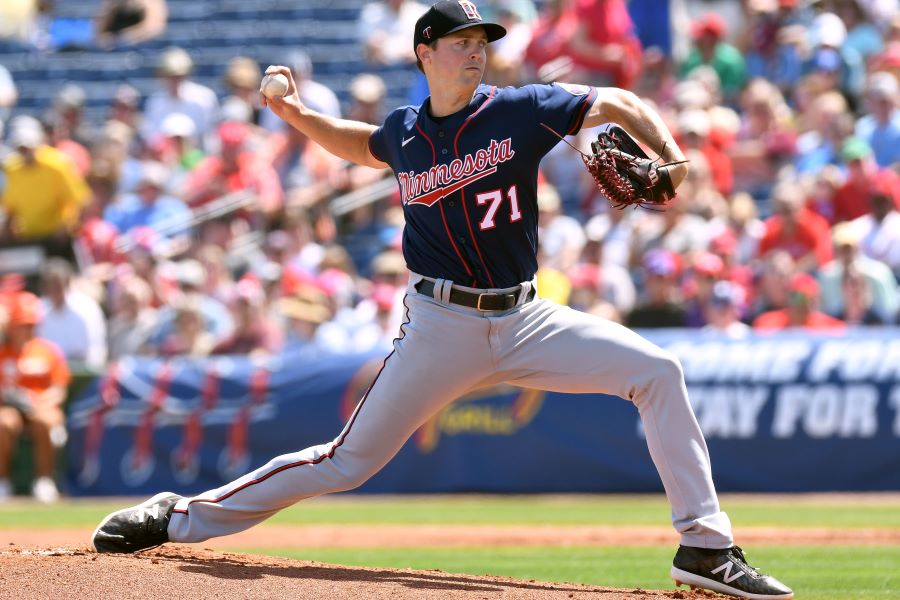 First, there are the players who had a decent chance to make the 26-man roster and should be locks to make a slightly expanded roster: The Locks: Jake Cave (OF), Willians Astudillo (C,UTL), Randy Dobnak (RHP) One of Jake Cave or Willians Astudillo would have been the 26th man, with the other likely an injury away. Now they both look like locks to make the team. Randy Dobnak was less certain, due to the presence of veteran camp invitee Jhoulys Chacín. Dobnak may have still had the upper hand, but now seems all but certain to make the team. Chacín’s role might be less certain than it appears as Minnesota may choose to roll with Dobnak since Rich Hill is expected to be available sometime in June or July anyway. The Expanded Hopefuls: Lewis Thorpe (LHP), Devin Smeltzer (LHP), LaMonte Wade Jr. (OF) One of the obvious consequences of a limited spring training is less time for pitchers to build up to full strength. Coupled with potential doubleheaders and fewer off-days, teams are going to need a plethora of arms, and the Twins should be in pretty good shape. None of this group was likely to make the original 26-man roster, but with expansion they should be the favorites. Thorpe and Smeltzer could serve as starters, multi-inning relievers, or as LOOGYs, providing plenty of versatility. And although Minnesota is already well stocked with backup outfielders (Marwin Gonzalez and Jake Cave), Wade Jr. could provide value as a pinch runner or defensive replacement and is capable of playing a passable center field. The Booster Club: Sean Poppen (RHP), Jorge Alcala (RHP) Like everyone listed thus far, Poppen and Alcala have some MLB experience, though significantly less than the others (8.1 IP for Poppen and 1.2 for Alcala). Both are former starters with lively arms who now make their living out of the ‘pen. Neither are likely to make the expanded rosters but would fit well with the Twins philosophy of shuffling arms. And again, much like a Hindu God, the more arms the better. The Replacements: The remainder of the Twins 40-man seems more likely to play the role of injury replacements. We’ll break it down by position. Infield: Nick Gordon (2B, SS), Travis Blankenhorn (2B, 3B, OF) Had he not gotten injured, there is a good chance it would have been Nick Gordon and not Luis Arraez that was called up to fill in for an injured Jonathan Schoop. But Arraez got the call and the rest is history. However, should an injury occur, Gordon would be the favorite to fill in. Travis Blankenhorn offers more power (18 AA home runs in 93 games) and the ability to play outfield (but Cave, Gonzalez, and Wade Jr stand in the way) but his defense is questionable and his bat might not be MLB-ready either. Outfield: Gilberto Celestino (CF) Celestino is an exciting prospect who gained a lot of steam after a sensational second half in 2019, but he’s only played eight games of high-A ball, so he’s a long-shot to see any MLB action in 2020. The one thing he does have going for him is being the best defensive center fielder outside of Byron Buxton on the 40-man roster. Buxton is no stranger to injuries, so one could make an argument for Celestino as an emergency replacement for Buxton, but it’s definitely a long shot. Pitchers: Jhoan Duran (RHP), Dakota Chalmers (RHP) Jhoan Duran is arguably Minnesota’s best pitching prospect and finished 2019 pitching in AA, so he’s not all that far away. Ideally, the Twins would probably target 2021 as his debut year, but if they are in need of a high-upside starter or reliever Duran could fill that role. Dakota Chalmers is a much greater stretch to premier in 2020 as he pitched just 34.2 innings in 2019 between rookie ball and High-A after returning from Tommy John surgery. At this point he is more potential than a finished product though theoretically he might work out of the ‘pen with an upper-90’s heater. That wraps of the list of Twins 40-man players would could potentially see action in 2020. Who do you see having the biggest impact or look most forward to watching? Please leave your comments below. MORE FROM TWINS DAILY — Latest Twins coverage from our writers — Recent Twins discussion in our forums — Follow Twins Daily via Twitter, Facebook or email
 -
In these strange and trying times do you ever sneak out at night to take a glimpse up to the heavenly bodies above and find yourself wondering, maybe aloud, just who are the nine oldest players to ever don a uniform and take the field for the Minnesota Twins? OMG!!! ME TOO!!!Well, I’ve got good news for you pal, today’s your day! But just how did I stumble upon this coveted information? And why nine and not ten? The answer to these ever-pressing inquiries starts and ends with the 2020 Twins Media Guide. You see, one of the perks of writing for Twins Daily is access to a digital version of the mystical book you’ll occasionally hear Dick and Bert make reference to. I intended combing through all 485 pages and digging out “fun facts” in order to write up some silly article, when the heavens shined down and bestowed this golden nugget upon me: Download attachment: Oldest Twin chart pic.png Hot damn! Plenty of familiar and beloved names on that list. Let’s dig in a bit, and take a look at each player’s stint with the Twins. Jesse Orosco – 46 years, 159 days Let’s be honest, you have no recollection of Orosco’s time with Minnesota, do you? It’s okay, I’m pretty sure he doesn’t remember it either. I say this not because of his advanced age, but due to the fact that he pitched all of 4 2/3 innings with the Twins. He started his age-46 season in San Diego but then was traded to New York, the city where his career began, but this time with the Yankees rather than the Mets, on July 22, 2003. His second stint in the Big Apple would be short, as he was shipped to Minnesota in return for Juan Padilla (I’m pretty sure even Seth doesn’t remember this guy) on August 31. Orosco’s time with the Twins would mark the end of his nine-team, 24-year career as a reliever. Bartolo Colon – 44 years, 130 days Who could ever forget Big Sexy’s time in Minnesota? Colon joined the Twins on July 7, 2017 after being released by the Atlanta Braves. After pitching to an 8.14 ERA in Atlanta, he was a bit better with the Twins (5.18 ERA, 80.0 IP) but not exactly the boost the team was hoping for. Colon would spend his age 45 season in Texas and then hang it up after 21 years. As a Twins fan you’re surely unaware of the fact that Colon won the 2005 Cy Young Award. I’m sure he deserved it. Here’s Big Sexy Night: Joe Niekro – 43 years, 174 days Joe’s older brother Phil would pitch until he was 48 (please take a moment to appreciate how old Phil appears on his ’87 Topps card), but doesn’t concern us as he didn’t pitch for the Twins. We had to settle for slacker Joe, who pitched for Minnesota in 1987 and ’88, when his career ended as a 43-year-old. Both brothers perfected the art of the knuckleball which allowed them to hang around forever, but Joe’s best days were long behind him as he pitched to a 6.67 ERA in Minnesota. He also wasn’t very good at hiding things: Steve Carlton – 43 years, 123 days Like Niekro, Steve Carlton would spend his final two seasons in Minnesota. In fact they were the same years and at the same age. Carlton obviously had a great Hall-of-Fame career but the Twins were a little late to the show. Carlton’s last game would come just six days before Niekro’s, on April 23, 1988. His ERA with Minnesota was 8.54. Dave Winfield – 42 years, 311 days The St. Paul native and Golden Gopher alum finally made his way back to Minnesota as a 41-year-old in 1993. In his two seasons in Minnesota he was a league-average hitter according to OPS+, which is pretty good considering his age. His Hall-of-Fame career lasted one more year with Cleveland, but he managed to get his 3,000th hit at the dome: Terry Mulholland – 42 years, 201 days Terry Mulholland also chose to follow the “get old and play two years for the Twins” model, getting some starts in 2004 before moving to the bullpen for good as a 42-year-old in 2005. He went to pitch three innings for Arizona in 2006 before calling it a career. Paul Molitor – 42 years, 36 days Another Twin Cities boy, Gopher alum, and Hall-of-Famer who like Winfield came from Toronto to collect his 3,000th hit as a Twin. Unlike Winfield, Molitor stayed in Minnesota for three seasons and would finish his career as a Twin. He hit .312 for the Twins and fittingly hit a three-bagger for number 3,000: Fernando Rodney – 41 years, 142 days The Fernando Rodney Experience was never boring. From the tilted cap and arrows fired, to taking a moment to enjoy a nice bite of snow, Rodney’s time in Minnesota was eventful even if no lead ever felt safe. He did get the job done more often than not before being shipped off to Oakland. After winning a World Series as a member of the Washington Nationals, Rodney is still looking for a team in 2020. Godspeed Fernando Rodney! Pat Borders – 41 years, 142 days Borders finishes out our list but actually ties Fernando Rodney for the eighth-oldest final appearance as a Twin. However, we’ll stick with the media guide’s ordering. Borders is best remembered for his role as backstop for the ’92 and ’93 World Series Champion Toronto Blue Jays where he earned MVP honors in the ’92 Series. More important to us are the 19 games he spent with the 2004 team after being acquired from the Seattle Mariners in return for B.J. Garbe (who Minnesota drafted with the fifth overall pick in 1999 – he never made the majors). Border would return to Seattle in 2005 to finish out his career. So why only nine? My theory is the Twins are leaving a spot open for Nelson Cruz or Rich Hill. Both will be 40-years-old for at least part of the potential 2020 season (Hill was born on March 11, 1980 while the younger Cruz was born on July 1). Even though Hill is older, I’ll bet on Cruz since the oft-injured Hill is coming off modified Tommy John surgery and there’s been some chatter about a Cruz extension. It’s also possible Hill will never pitch for the Twins and Cruz has already played his last game. Or maybe, just maybe, a superhuman Cruz will hang on through the 2027 season to take the coveted title of oldest Twin. MORE FROM TWINS DAILY — Latest Twins coverage from our writers — Recent Twins discussion in our forums — Follow Twins Daily via Twitter, Facebook or email Click here to view the article
-
 Well, I’ve got good news for you pal, today’s your day! But just how did I stumble upon this coveted information? And why nine and not ten? The answer to these ever-pressing inquiries starts and ends with the 2020 Twins Media Guide. You see, one of the perks of writing for Twins Daily is access to a digital version of the mystical book you’ll occasionally hear Dick and Bert make reference to. I intended combing through all 485 pages and digging out “fun facts” in order to write up some silly article, when the heavens shined down and bestowed this golden nugget upon me: Hot damn! Plenty of familiar and beloved names on that list. Let’s dig in a bit, and take a look at each player’s stint with the Twins. Jesse Orosco – 46 years, 159 days Let’s be honest, you have no recollection of Orosco’s time with Minnesota, do you? It’s okay, I’m pretty sure he doesn’t remember it either. I say this not because of his advanced age, but due to the fact that he pitched all of 4 2/3 innings with the Twins. He started his age-46 season in San Diego but then was traded to New York, the city where his career began, but this time with the Yankees rather than the Mets, on July 22, 2003. His second stint in the Big Apple would be short, as he was shipped to Minnesota in return for Juan Padilla (I’m pretty sure even Seth doesn’t remember this guy) on August 31. Orosco’s time with the Twins would mark the end of his nine-team, 24-year career as a reliever. Bartolo Colon – 44 years, 130 days Who could ever forget Big Sexy’s time in Minnesota? Colon joined the Twins on July 7, 2017 after being released by the Atlanta Braves. After pitching to an 8.14 ERA in Atlanta, he was a bit better with the Twins (5.18 ERA, 80.0 IP) but not exactly the boost the team was hoping for. Colon would spend his age 45 season in Texas and then hang it up after 21 years. As a Twins fan you’re surely unaware of the fact that Colon won the 2005 Cy Young Award. I’m sure he deserved it. Here’s Big Sexy Night: Joe Niekro – 43 years, 174 days Joe’s older brother Phil would pitch until he was 48 (please take a moment to appreciate how old Phil appears on his ’87 Topps card), but doesn’t concern us as he didn’t pitch for the Twins. We had to settle for slacker Joe, who pitched for Minnesota in 1987 and ’88, when his career ended as a 43-year-old. Both brothers perfected the art of the knuckleball which allowed them to hang around forever, but Joe’s best days were long behind him as he pitched to a 6.67 ERA in Minnesota. He also wasn’t very good at hiding things: Steve Carlton – 43 years, 123 days Like Niekro, Steve Carlton would spend his final two seasons in Minnesota. In fact they were the same years and at the same age. Carlton obviously had a great Hall-of-Fame career but the Twins were a little late to the show. Carlton’s last game would come just six days before Niekro’s, on April 23, 1988. His ERA with Minnesota was 8.54. Dave Winfield – 42 years, 311 days The St. Paul native and Golden Gopher alum finally made his way back to Minnesota as a 41-year-old in 1993. In his two seasons in Minnesota he was a league-average hitter according to OPS+, which is pretty good considering his age. His Hall-of-Fame career lasted one more year with Cleveland, but he managed to get his 3,000th hit at the dome: Terry Mulholland – 42 years, 201 days Terry Mulholland also chose to follow the “get old and play two years for the Twins” model, getting some starts in 2004 before moving to the bullpen for good as a 42-year-old in 2005. He went to pitch three innings for Arizona in 2006 before calling it a career. Paul Molitor – 42 years, 36 days Another Twin Cities boy, Gopher alum, and Hall-of-Famer who like Winfield came from Toronto to collect his 3,000th hit as a Twin. Unlike Winfield, Molitor stayed in Minnesota for three seasons and would finish his career as a Twin. He hit .312 for the Twins and fittingly hit a three-bagger for number 3,000: Fernando Rodney – 41 years, 142 days The Fernando Rodney Experience was never boring. From the tilted cap and arrows fired, to taking a moment to enjoy a nice bite of snow, Rodney’s time in Minnesota was eventful even if no lead ever felt safe. He did get the job done more often than not before being shipped off to Oakland. After winning a World Series as a member of the Washington Nationals, Rodney is still looking for a team in 2020. Godspeed Fernando Rodney! Pat Borders – 41 years, 142 days Borders finishes out our list but actually ties Fernando Rodney for the eighth-oldest final appearance as a Twin. However, we’ll stick with the media guide’s ordering. Borders is best remembered for his role as backstop for the ’92 and ’93 World Series Champion Toronto Blue Jays where he earned MVP honors in the ’92 Series. More important to us are the 19 games he spent with the 2004 team after being acquired from the Seattle Mariners in return for B.J. Garbe (who Minnesota drafted with the fifth overall pick in 1999 – he never made the majors). Border would return to Seattle in 2005 to finish out his career. So why only nine? My theory is the Twins are leaving a spot open for Nelson Cruz or Rich Hill. Both will be 40-years-old for at least part of the potential 2020 season (Hill was born on March 11, 1980 while the younger Cruz was born on July 1). Even though Hill is older, I’ll bet on Cruz since the oft-injured Hill is coming off modified Tommy John surgery and there’s been some chatter about a Cruz extension. It’s also possible Hill will never pitch for the Twins and Cruz has already played his last game. Or maybe, just maybe, a superhuman Cruz will hang on through the 2027 season to take the coveted title of oldest Twin. MORE FROM TWINS DAILY — Latest Twins coverage from our writers — Recent Twins discussion in our forums — Follow Twins Daily via Twitter, Facebook or email
 -
Projecting the Twins Statcast-style
Patrick Wozniak replied to Patrick Wozniak's topic in Twins Daily Front Page News
Yeah, I don't think the Statcast stolen base projections are very useful for prediction, but more as a bar for what a player of similar speed would typically steal. The more traditional projections that consider past performance would better predict how well a player will perform in the "art" of base stealing by virtue of being based on actual results which are influenced by reading the pitcher, good jumps, team's willingness to run, etc. -
Projecting the Twins Statcast-style
Patrick Wozniak replied to Patrick Wozniak's topic in Twins Daily Front Page News
But ZiPS gives us 7 so it must be more accurate. -
Current projection systems such as ZiPS, Steamer, ATC, and the Bat use the results from a player’s previous seasons in an attempt to project their future results. That’s great, but wouldn’t it be cool if there was a system that incorporated Baseball Savant’s Statcast data?Jeff Zimmerman of FanGraphs has attempted to do just that. Instead of using past performance, Zimmerman used Statcast metrics such as Max Exit Velocity, Barrel %, Launch Angle, and Sprint Speed to create projections for the 2020 season. He also used O-and Z-swing and contact rates to account for plate discipline. Next came the normal weighting/age-related regression type stuff and then the conversion of the Statcast results into more standard baseball stats, and finally, out popped the projections. Or something like that. The full results can be viewed in this spreadsheet, but a cursory glance will show the usual suspects at the top (Mike Trout, Yordan Alvarez, and Mookie Betts) and bottom (Dee Gordan, Billy Hamilton, and Ronald Torreyes) when ranked by OPS. The model does not account for shifts (which are obviously a large detriment for heavy pull hitters), league differences, or ball parks so it’s basically projecting how hitters would perform in a vacuum. It also doesn’t attempt to account for playing time, so every hitter gets 600 plate appearances. The obvious advantage is that it’s easy to compare players with all things being equal, the disadvantage being that in reality things aren’t equal. So it goes. With those caveats in mind, let’s check out how our Twins stack up. I’ve included each player’s MLB ranking (based on OPS) and in the last row the ZiPS projections, so we have a more traditional projection system to contrast with the Statcast one. Please take a moment to appreciate the aesthetically pleasing colored rows which represent the pinnacle of my newly-found technological knowhow. Download attachment: Statcast Projections Chart pic.png My takeaways: That truly is a beautiful table.I was surprised that it was ZiPS, rather than the Statcast-based projections, that favored the trio of Nelson Cruz, Miguel Sano, and Josh Donaldson as they were three of the leagues best at “barreling up.” Maybe they were hurt a bit by whiffs in regard to plate discipline?The Statcast method is much more favorable to LaMonte Wade Jr. than ZiPS, which I also wouldn’t really have expected. However, his Statcast numbers are better than I imagined (mandatory small sample size warning), leading to a .373 expected wOBA, and Wade does have a great eye.Luis Arraez’s projected OPS is exactly .773 in both systems (though he gets there with a bit more power in the Statcast projections vs. a higher batting average in ZiPS). Combined with his uninspiring defense, a significant dip in his offensive production would put a damper on Arraez’s overall value (I’m not saying this will happen, but it could).The projection systems disagree on Eddie Rosario as much as Twins fans do (Statcast Eddie might be out of a job).The stolen base projections certainly seem overly optimistic for a team that runs as infrequently as Minnesota (Buxton’s total of 28 would match the entire 2019 club, which includes 2019 Buxton). But the numbers are interesting because they are intended to show how often a runner will take off based on their sprint speed. Although Buxton’s the only burner, could someone like Polanco, Kepler, or Wade Jr. (if he sees enough playing time) take a step forward?How useful is this new projection model? Time will tell, and revisions will probably be warranted, but it’s certainly unique and entertaining (and potentially beneficial for Fantasy purposes). And who can argue with having a little extra nerdy-baseball fun in our lives right now? MORE FROM TWINS DAILY — Latest Twins coverage from our writers — Recent Twins discussion in our forums — Follow Twins Daily via Twitter, Facebook or email Click here to view the article
-
 Jeff Zimmerman of FanGraphs has attempted to do just that. Instead of using past performance, Zimmerman used Statcast metrics such as Max Exit Velocity, Barrel %, Launch Angle, and Sprint Speed to create projections for the 2020 season. He also used O-and Z-swing and contact rates to account for plate discipline. Next came the normal weighting/age-related regression type stuff and then the conversion of the Statcast results into more standard baseball stats, and finally, out popped the projections. Or something like that. The full results can be viewed in this spreadsheet, but a cursory glance will show the usual suspects at the top (Mike Trout, Yordan Alvarez, and Mookie Betts) and bottom (Dee Gordan, Billy Hamilton, and Ronald Torreyes) when ranked by OPS. The model does not account for shifts (which are obviously a large detriment for heavy pull hitters), league differences, or ball parks so it’s basically projecting how hitters would perform in a vacuum. It also doesn’t attempt to account for playing time, so every hitter gets 600 plate appearances. The obvious advantage is that it’s easy to compare players with all things being equal, the disadvantage being that in reality things aren’t equal. So it goes. With those caveats in mind, let’s check out how our Twins stack up. I’ve included each player’s MLB ranking (based on OPS) and in the last row the ZiPS projections, so we have a more traditional projection system to contrast with the Statcast one. Please take a moment to appreciate the aesthetically pleasing colored rows which represent the pinnacle of my newly-found technological knowhow. My takeaways: That truly is a beautiful table. I was surprised that it was ZiPS, rather than the Statcast-based projections, that favored the trio of Nelson Cruz, Miguel Sano, and Josh Donaldson as they were three of the leagues best at “barreling up.” Maybe they were hurt a bit by whiffs in regard to plate discipline? The Statcast method is much more favorable to LaMonte Wade Jr. than ZiPS, which I also wouldn’t really have expected. However, his Statcast numbers are better than I imagined (mandatory small sample size warning), leading to a .373 expected wOBA, and Wade does have a great eye. Luis Arraez’s projected OPS is exactly .773 in both systems (though he gets there with a bit more power in the Statcast projections vs. a higher batting average in ZiPS). Combined with his uninspiring defense, a significant dip in his offensive production would put a damper on Arraez’s overall value (I’m not saying this will happen, but it could). The projection systems disagree on Eddie Rosario as much as Twins fans do (Statcast Eddie might be out of a job). The stolen base projections certainly seem overly optimistic for a team that runs as infrequently as Minnesota (Buxton’s total of 28 would match the entire 2019 club, which includes 2019 Buxton). But the numbers are interesting because they are intended to show how often a runner will take off based on their sprint speed. Although Buxton’s the only burner, could someone like Polanco, Kepler, or Wade Jr. (if he sees enough playing time) take a step forward? How useful is this new projection model? Time will tell, and revisions will probably be warranted, but it’s certainly unique and entertaining (and potentially beneficial for Fantasy purposes). And who can argue with having a little extra nerdy-baseball fun in our lives right now? MORE FROM TWINS DAILY — Latest Twins coverage from our writers — Recent Twins discussion in our forums — Follow Twins Daily via Twitter, Facebook or email
 -
What Ever Happened to Shane Mack?
Patrick Wozniak replied to Patrick Wozniak's topic in Twins Daily Front Page News
Thanks for this! The highlight video was great. -
What Ever Happened to Shane Mack?
Patrick Wozniak replied to Patrick Wozniak's topic in Twins Daily Front Page News
That's exactly how I got into Mack as well! Growing up in Iowa I couldn't watch many games and I remember thinking he was really cool because of the USA jersey. Cards and box scores were pretty much how I followed the game back then. P.S. Go Hawks! -
Shane Mack had some really great years in Minnesota and helped the Twins win their second World Series title in ’91. He was having a career year in ’94 until the strike brought the season to a halt. Then he left for Japan and that’s where the story always ended in my mind. But naturally, there’s more.Mack came to Minnesota from San Diego, where he was a former number 11 overall pick, in the Rule-5 Draft and played his first season for Minnesota as a 26-year-old in 1990. He played five seasons in Minnesota and his numbers stack up well against some of his contemporaries (courtesy of Baseball Reference): Download attachment: What Ever Happened to Shane Mack Mack Chart.png Download attachment: What Ever Happened to Shane Mack Puckett chart.png Download attachment: What Ever Happen to Shane Mack Hrbek chart.png Injuries prevented Mack from playing quite as many games as Kirby Puckett, but Mack had the highest OPS of the group. Mack also leads the group in WAR with 19.6 (5.2 per 650 PA) compared to 19.2 (4.0 per 650 PA) for Puckett and 8.2 (2.2 per 650 PA) for Hrbek. This isn’t to say Mack was a better player than Puckett or Hrbek as the comparison isn’t apples to apples. Mack was aged 26-30 during those years while Puckett and Hrbek were both 30-34. But even if we take Puckett and Hrbek’s 26-30 aged seasons, Mack is in the same ballpark, as Puckett’s OPS+ was 136 while Hrbek’s was 137 (Mack’s was 130). Mack was a really good player. And Terry Ryan realized this. Mack tore it up in the strike shortened ’94 season, slashing .333/.402/.564 in 81 games and Ryan offered Mack a two-year, $6.7 million extension with a club option. Over at Twinkie Town, Devereaux wrote a great fan post a few years back detailing how the Twins lost Shane Mack. Long story short, the Twins were the only team really interested in Mack and he chose to go to Japan on a better offer, signing a two-year, $8.1 million deal with the Tokyo Yomiuri Giants. With the peripherals out of the way, let’s actually tackle the question posed in the headline. We’ll start with Mack’s time in Japan. I couldn’t find much out there in the innerweb related to the mysterious period we’ll refer to as the “Japan years,” but thanks to Baseball Reference we at least have the numbers. In his first season he hit .275/.357/.438 in 120 games. He didn’t exactly set Japan on fire but he did hit 20 home runs (a 21-year-old Ichiro Suzuki would slash .342/.432/.544 with 25 home runs in 130 games). After getting settled, Mack showed some improvement in his second season, hitting .293/.354/.488 with 22 dingers in 127 games (a 22-year-old Ichiro Suzuki would slash .356/.422/.504 with 16 home runs in 130 games). And with that the “Japan years” came to an end. Other than comparing Mack to Ichiro, I’ve given you no context to how Mack’s numbers stack up to the rest of Japan. It’s not because I didn’t want to, there’s just not much out there. I will, however, go out on the limb and suggest that Ichiro’s numbers might be better than the average NPB hitter. But our story doesn’t end yet. Mack would return to the MLB and play pretty well in a part-time role with the Boston Red Sox in 1997, hitting .315/.368/.438 in 60 games at 33-years of age. 1998 would be his final season and it got a bit weird. Mack signed with the Oakland Athletics, but after all of two plate appearances Oakland had apparently seen enough and shipped Mack off to the Kansas City Royals on April 8th. Mack continued to hit pretty well (280/.345/.449), again as a part timer (66 games), but must have decided he had had enough baseball and he retired following the ’98 season. The last news we have of Shane Mack comes from his Wikipedia page. On March 6, 2006 Mack learned of Kirby Puckett’s massive stroke and flew out to Arizona to join his former teammates and to be with Puckett in his last moments. And those unfortunate circumstances are where our story ends. What are your favorite Shane Mack memories? Better yet, do you happen to be Shane Mack? If so, please let us know what you’re up to in the comments section! MORE FROM TWINS DAILY — Latest Twins coverage from our writers — Recent Twins discussion in our forums — Follow Twins Daily via Twitter, Facebook or email Click here to view the article
-
 Mack came to Minnesota from San Diego, where he was a former number 11 overall pick, in the Rule-5 Draft and played his first season for Minnesota as a 26-year-old in 1990. He played five seasons in Minnesota and his numbers stack up well against some of his contemporaries (courtesy of Baseball Reference): Injuries prevented Mack from playing quite as many games as Kirby Puckett, but Mack had the highest OPS of the group. Mack also leads the group in WAR with 19.6 (5.2 per 650 PA) compared to 19.2 (4.0 per 650 PA) for Puckett and 8.2 (2.2 per 650 PA) for Hrbek. This isn’t to say Mack was a better player than Puckett or Hrbek as the comparison isn’t apples to apples. Mack was aged 26-30 during those years while Puckett and Hrbek were both 30-34. But even if we take Puckett and Hrbek’s 26-30 aged seasons, Mack is in the same ballpark, as Puckett’s OPS+ was 136 while Hrbek’s was 137 (Mack’s was 130). Mack was a really good player. And Terry Ryan realized this. Mack tore it up in the strike shortened ’94 season, slashing .333/.402/.564 in 81 games and Ryan offered Mack a two-year, $6.7 million extension with a club option. Over at Twinkie Town, Devereaux wrote a great fan post a few years back detailing how the Twins lost Shane Mack. Long story short, the Twins were the only team really interested in Mack and he chose to go to Japan on a better offer, signing a two-year, $8.1 million deal with the Tokyo Yomiuri Giants. With the peripherals out of the way, let’s actually tackle the question posed in the headline. We’ll start with Mack’s time in Japan. I couldn’t find much out there in the innerweb related to the mysterious period we’ll refer to as the “Japan years,” but thanks to Baseball Reference we at least have the numbers. In his first season he hit .275/.357/.438 in 120 games. He didn’t exactly set Japan on fire but he did hit 20 home runs (a 21-year-old Ichiro Suzuki would slash .342/.432/.544 with 25 home runs in 130 games). After getting settled, Mack showed some improvement in his second season, hitting .293/.354/.488 with 22 dingers in 127 games (a 22-year-old Ichiro Suzuki would slash .356/.422/.504 with 16 home runs in 130 games). And with that the “Japan years” came to an end. Other than comparing Mack to Ichiro, I’ve given you no context to how Mack’s numbers stack up to the rest of Japan. It’s not because I didn’t want to, there’s just not much out there. I will, however, go out on the limb and suggest that Ichiro’s numbers might be better than the average NPB hitter. But our story doesn’t end yet. Mack would return to the MLB and play pretty well in a part-time role with the Boston Red Sox in 1997, hitting .315/.368/.438 in 60 games at 33-years of age. 1998 would be his final season and it got a bit weird. Mack signed with the Oakland Athletics, but after all of two plate appearances Oakland had apparently seen enough and shipped Mack off to the Kansas City Royals on April 8th. Mack continued to hit pretty well (280/.345/.449), again as a part timer (66 games), but must have decided he had had enough baseball and he retired following the ’98 season. The last news we have of Shane Mack comes from his Wikipedia page. On March 6, 2006 Mack learned of Kirby Puckett’s massive stroke and flew out to Arizona to join his former teammates and to be with Puckett in his last moments. And those unfortunate circumstances are where our story ends. What are your favorite Shane Mack memories? Better yet, do you happen to be Shane Mack? If so, please let us know what you’re up to in the comments section! MORE FROM TWINS DAILY — Latest Twins coverage from our writers — Recent Twins discussion in our forums — Follow Twins Daily via Twitter, Facebook or email
 -
That's great! I had a young German friend who lived here for a year and I tried to use Kepler as a conduit to get him into baseball but sadly he didn't take to the game. Glad he brought you to the Twins!
-
Living on the other side of the world undoubtedly alters the experience of being a Minnesota Twins fan, but it does offer some advantages. While I can no longer hop on my bicycle and mosey over to Target Field to catch a game, I do often get to begin my day with a Twins game. Today, I’ll share a bit of my experience of being a Twins fan in Thailand.Although baseball has a long and rich tradition in Asian countries such as Japan, South Korea, and most recently Taiwan (where they’re now playing games) it hasn’t exactly taken off in the Southeast region. After some googling, I learned that some form of youth baseball is played in Bangkok, but I imagine it’s mainly children of ex-pats. I was more surprised to learn that Thailand has a National Baseball Team and Johnny Damon (who’s never lived in Thailand but has a Thai mother) even joined the team in 2012 for the World Baseball Classic qualifiers. There’s even video evidence (I can’t guarantee the quality of play): So, while there might be a few baseball fans scattered around Bangkok I’ve yet to run into one out in the boonies where I live (the Northeast). Anytime I mention baseball to a Thai I have to accompany it with my impersonation of swinging a baseball bat or they think I’m talking about basketball (which is somewhat popular). Remarkably, I do know two other Minnesotans in my neck of the jungle (out of a sample size of about five Americans!), but one happens to be a die-hard Timberwolves fan with no interest in baseball while the other only follows the Vikings (the last time I talked to him he asked me if Mauer was still good). All this is a long way of saying there’s no Twins talk to be had at the water cooler (on the plus side there’s also no Yankees fans). This makes me all the more grateful for the Twins Daily community. Before I began writing for the site I lurked (that word makes me feel like a creep) for many years, reading every article that was published as well as thoroughly enjoying the comments section. Even if I didn’t actively participate, Twins Daily was the first site I went to 365 days a year and it still is. Unfortunately, during my first stint in Thailand (during the 2004 and ’05 seasons) the baseball gods had yet to converge and unleash their greatest creation in Twins Daily. That was really no loss though, as the primitive nature of the internet at that time in Thailand made it all but impossible to do anything online (I could rarely even fire off an email before the internet would cut out). For a few years following the Twins was impossible, but the 2006 team was a nice homecoming present. Times have changed. The internet is much faster and everyone takes pictures of what they eat. Since returning to Thailand in 2012 (presumably for good), following the Twins has been much easier. With mlb.com I’m able to watch the majority of the games, just with breakfast rather than post dinner. We’re 12 hours ahead of Minnesota time (I reside in the future!) so a 7 p.m. start time in Minnesota is a 7 a.m. game here. This works great for me as the early sunrise, multitudes of roosters, and hot weather are very conducive to rising at the crack of dawn. By first pitch I’ve already had time to exercise, eat breakfast, shower and glug down at least a cup of coffee or two. I’m a morning person and there’s nothing better than starting the day off with a baseball game (working in the late afternoon and evening makes this possible). Baseball in the morning also means I don’t have to struggle to stay awake for extra- inning affairs but early afternoon games do present a bit of a quandary. I can either wake up in the middle of the night to watch the game or get a much appreciated goodnight's sleep and catch the highlights in the morning. It usually boils down to the magnitude of the game and time of year (I’m hungrier for baseball in April), but I did write one game recap in the middle of the night. Getting my kids interested and invested in the Twins is one of the difficulties of living abroad. My son knows of a few players (mainly Sano because he hits dingers and Buxton because he flies) but I’ve had little success interesting a 10- and 7-year-old in a slow moving, three hour (plus) long game that no one besides their dad seems to care about (my wife was literally bored to tears at the one and only game I ever brought her to). I think baseball is a game you probably have to have played to love and just hitting a few balls in the backyard only goes so far (though thanks to the food and other side attractions my children don't mind catching a game or two when we’re back to visit). I was, however, offered a glimmer of hope the other night as my daughter watched the first three innings of Game One of the ’91 World Series and seemed to enjoy herself before falling asleep (she also liked that my brother named his hamster after Kirby Puckett – sadly Lil’ Kirby, like big Kirby, is no longer with us). That pretty much sums up my experience as a Twins fan from afar. I can’t say enough how grateful I am to the Twins Daily community – founders, writers, readers, moderators, editors, and commenters for creating and enlivening a space where we can all get together and share our love for the Minnesota Twins. Hopefully sometime in the future, when we can once again enjoy ballgames or social gatherings, I’ll make in back for an event or a game and meet some of you in person. Until then, I’ll see you here! Are you a Twins fan from abroad (or outside Minnesota)? If so, please take a moment to share your location and experience in the comment section. Thanks! MORE FROM TWINS DAILY — Latest Twins coverage from our writers — Recent Twins discussion in our forums — Follow Twins Daily via Twitter, Facebook or email Click here to view the article
-
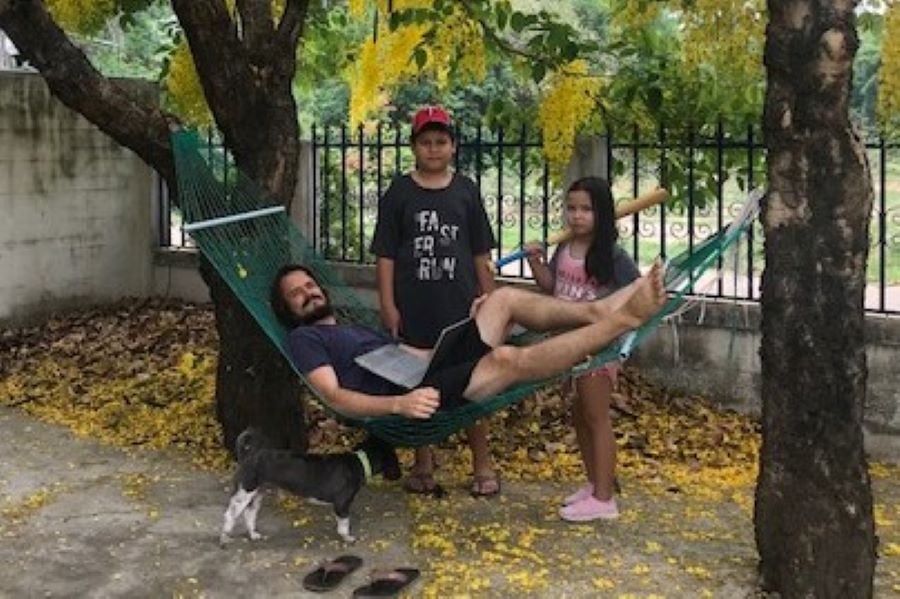 Although baseball has a long and rich tradition in Asian countries such as Japan, South Korea, and most recently Taiwan (where they’re now playing games) it hasn’t exactly taken off in the Southeast region. After some googling, I learned that some form of youth baseball is played in Bangkok, but I imagine it’s mainly children of ex-pats. I was more surprised to learn that Thailand has a National Baseball Team and Johnny Damon (who’s never lived in Thailand but has a Thai mother) even joined the team in 2012 for the World Baseball Classic qualifiers. There’s even video evidence (I can’t guarantee the quality of play): So, while there might be a few baseball fans scattered around Bangkok I’ve yet to run into one out in the boonies where I live (the Northeast). Anytime I mention baseball to a Thai I have to accompany it with my impersonation of swinging a baseball bat or they think I’m talking about basketball (which is somewhat popular). Remarkably, I do know two other Minnesotans in my neck of the jungle (out of a sample size of about five Americans!), but one happens to be a die-hard Timberwolves fan with no interest in baseball while the other only follows the Vikings (the last time I talked to him he asked me if Mauer was still good). All this is a long way of saying there’s no Twins talk to be had at the water cooler (on the plus side there’s also no Yankees fans). This makes me all the more grateful for the Twins Daily community. Before I began writing for the site I lurked (that word makes me feel like a creep) for many years, reading every article that was published as well as thoroughly enjoying the comments section. Even if I didn’t actively participate, Twins Daily was the first site I went to 365 days a year and it still is. Unfortunately, during my first stint in Thailand (during the 2004 and ’05 seasons) the baseball gods had yet to converge and unleash their greatest creation in Twins Daily. That was really no loss though, as the primitive nature of the internet at that time in Thailand made it all but impossible to do anything online (I could rarely even fire off an email before the internet would cut out). For a few years following the Twins was impossible, but the 2006 team was a nice homecoming present. Times have changed. The internet is much faster and everyone takes pictures of what they eat. Since returning to Thailand in 2012 (presumably for good), following the Twins has been much easier. With mlb.com I’m able to watch the majority of the games, just with breakfast rather than post dinner. We’re 12 hours ahead of Minnesota time (I reside in the future!) so a 7 p.m. start time in Minnesota is a 7 a.m. game here. This works great for me as the early sunrise, multitudes of roosters, and hot weather are very conducive to rising at the crack of dawn. By first pitch I’ve already had time to exercise, eat breakfast, shower and glug down at least a cup of coffee or two. I’m a morning person and there’s nothing better than starting the day off with a baseball game (working in the late afternoon and evening makes this possible). Baseball in the morning also means I don’t have to struggle to stay awake for extra- inning affairs but early afternoon games do present a bit of a quandary. I can either wake up in the middle of the night to watch the game or get a much appreciated goodnight's sleep and catch the highlights in the morning. It usually boils down to the magnitude of the game and time of year (I’m hungrier for baseball in April), but I did write one game recap in the middle of the night. Getting my kids interested and invested in the Twins is one of the difficulties of living abroad. My son knows of a few players (mainly Sano because he hits dingers and Buxton because he flies) but I’ve had little success interesting a 10- and 7-year-old in a slow moving, three hour (plus) long game that no one besides their dad seems to care about (my wife was literally bored to tears at the one and only game I ever brought her to). I think baseball is a game you probably have to have played to love and just hitting a few balls in the backyard only goes so far (though thanks to the food and other side attractions my children don't mind catching a game or two when we’re back to visit). I was, however, offered a glimmer of hope the other night as my daughter watched the first three innings of Game One of the ’91 World Series and seemed to enjoy herself before falling asleep (she also liked that my brother named his hamster after Kirby Puckett – sadly Lil’ Kirby, like big Kirby, is no longer with us). That pretty much sums up my experience as a Twins fan from afar. I can’t say enough how grateful I am to the Twins Daily community – founders, writers, readers, moderators, editors, and commenters for creating and enlivening a space where we can all get together and share our love for the Minnesota Twins. Hopefully sometime in the future, when we can once again enjoy ballgames or social gatherings, I’ll make in back for an event or a game and meet some of you in person. Until then, I’ll see you here! Are you a Twins fan from abroad (or outside Minnesota)? If so, please take a moment to share your location and experience in the comment section. Thanks! MORE FROM TWINS DAILY — Latest Twins coverage from our writers — Recent Twins discussion in our forums — Follow Twins Daily via Twitter, Facebook or email
 -
Can I Interest You in a Four-Man Rotation?
Patrick Wozniak replied to Patrick Wozniak's topic in Twins Daily Front Page News
I agree completely. It doesn't make any sense to me why the MLB wouldn't adjust the suspensions to fit the length of the season. -
If we are lucky enough to get a baseball season in 2020, at least one thing is certain – it’s not going to be 162 games. Whatever shortened concoction manifests, it will undoubtably increase volatility, but also provide opportunities for teams to get creative. Tony Wolfe of FanGraphs recently brought up the possibility of a return to the four-man rotation. Could it work for Minnesota?With the increased volatility of a shortened season a four-man rotation could potentially strengthen a team by allowing its best starters to pitch more often. The decreased workload caused by fewer games would theoretically allow pitchers to pitch on less rest while still throwing fewer pitches than they would in a typical season. Russel A. Carleton studied the effect of rest on starting pitchers for Baseball Prospectus back in 2012 and found that the amount of rest between starts doesn’t decrease a starter’s effectiveness (though high pitch counts in previous starts do). Certainly interesting, but considering the current depth of Twins pitching along with the abundance of doubleheaders likely to come with any version of a 2020 season, a six-man rotation might be more realistic. However, Wolfe did a rough study of which teams would most benefit from a four-man rotation and lo and behold, our Minnesota Twins make an appearance. He simply used FanGraphs projected rotations for each team, cut out the fifth starter, and increased the remaining WAR of the rotation by 25%. Obviously with doubleheaders teams would still need swingmen, but it’s just meant to give us a rough picture of which teams would most benefit. Here’s the results: Download attachment: Four-man Rotation FanGraphs Chart pic.png I was initially surprised to see Minnesota amongst the teams listed, but a closer look at our projected rotation brings at least some clarity. FanGraphs projects the top-five starters to be Jose Berrios, Jake Odorizzi, Kenta Maeda, Homer Bailey, and Jhoulys Chacín. Cutting Chacín from the rotation definitely makes it better. One could certainly quibble for Randy Dobnak as the fifth starter (I would!), and maybe he would mitigate some of the drop off that comes with Chacín, but I think the main takeaway is more of Berrios, Odorizzi, and Maeda would be a good thing. Of course, Rich Hill and Michael Pineda further complicate matters. Depending on when the season starts (if ever), Hill could potentially be ready to go from the start. Talentwise, he knocks Bailey from the rotation, but pitching an oft-injured Hill on shortened rest might be a tough sell. Alternately, he would make a lot of sense as a swingman (especially considering the doubleheaders), where his innings could be limited and he could join the rotation for a potential postseason run. If Pineda’s suspension is not reduced he will miss a significant chunk of the season (39 games to be exact). He could potentially be eased into the rotation via a bullpen/swingman role, or injury or ineffectiveness could rear its ugly head and clear a spot for Pineda. Minnesota could also keep things fluid switching from a four-to-five man rotation and mixing in swingmen as needed. With expanded rosters come expanded opportunities and the Twins would be wise to keep all options open. Using only four starters would give the added benefit of multitudes of relievers that could be called upon at any time (whereas starters are unavailable on their rest days). Avoiding injury is imperative so treading with caution is well warranted, but if less overall innings allows Minnesota the opportunity to pitch their best pitchers more often, it’s certainly worthy of consideration. What do you think? Is a four-man rotation something the Twins should consider or just a dumb idea that helped bring this article into fruition? Can you think of any other outside-the-box maneuvers that could be implemented in a shortened/altered season? MORE FROM TWINS DAILY — Latest Twins coverage from our writers — Recent Twins discussion in our forums — Follow Twins Daily via Twitter, Facebook or email Click here to view the article

