



Patrick Wozniak
-
Posts
383 -
Joined
-
Last visited
-
Days Won
1
Content Type
Profiles
News
Minnesota Twins Videos
2026 Minnesota Twins Top Prospects Ranking
2022 Minnesota Twins Draft Picks
Minnesota Twins Free Agent & Trade Rumors, Notes, & Tidbits
Guides & Resources
2023 Minnesota Twins Draft Picks
The Minnesota Twins Players Project
2024 Minnesota Twins Draft Picks
2025 Minnesota Twins Draft Pick Tracker
2026 Minnesota Twins Draft Tracker: Picks & Bonuses
Forums
Blogs
Events
Store
Downloads
Gallery
Everything posted by Patrick Wozniak
-
Yes. I was just trying to write about the starters who could be most impacted by the delay. I didn't really see anything with Odorizzi and I think Dobnak is in line to take the initial 5th starter spot over Chacin.
-
With the uncertainty surrounding both the start date and length of the MLB season comes plenty of questions as to how teams and players will be affected. Will players that were set to start the season on the IL have time to recover? And how will the MLB handle those serving suspensions? Today, we’ll specifically look into the Twins rotation, where both of the prior questions become relevant.We’ll break the rotation down into small pairings who share similar potential impacts based on the delay. All of the results would be magnified or altered depending on the length of the delay. Avoiding the second-half breakdown – Jose Berrios/Kenta Maeda “Breakdown” might be a bit hyperbolic, but both starters have had their struggles in the second half. By now Twins fans are well-versed in Jose Berrios’s annual-August slumps, and he has gone as far as to alter both his late season and offseason routines in an attempt to circumvent the late-season collapse. It may not matter. If the season is delayed long enough, Berrios needn’t worry about wearing down. Less innings could theoretically assist Berrios in maintaining his velocity throughout the season or even ramping it up a bit in the case of a significantly shortened season. Kenta Maeda’s second-half splits aren’t quite as dramatic as Berrios’, but whether due to ineffectiveness or concerns about his durability, he was largely shifted to the bullpen for the late- and post-season while pitching for Los Angeles. Maeda has been vocal about his preference of staying in the starter’s role and the shortened season should all but guarantee it (although he was likely to remain a starter with the Twins regardless). The reduced innings may help both starters to remain effective throughout the season, but I must admit I was looking forward to seeing if Berrios' altered routine would make a difference and how Maeda would hold up after a full season of starts (However, I’ll happily settle for baseball, period!) Assisting the injury-prone – Rich Hill/Homer Bailey The best-case scenario had Rich Hill joining the team in June, which still may or may not happen, but the shortened season means Hill is likely to pitch in a greater percentage of games. The Twins and Hill will want to ensure that he is ready to go, but the shorter the season gets, the more Minnesota may need Hill. Fewer games means less time for the best teams to separate themselves from the pack. A healthy Hill might be Minnesota’s best pitcher and a shortened season would make his impact all the more, well...impactful. Unlike Hill, Homer Bailey will start the season in full health, but the injury-prone label fits Bailey like a glove. The 163.1 innings he threw last season were his most since 2013. That seems like the pinnacle of what we should expect in innings totals at this point in his career, so shortening the season a bit should be to his benefit. Suspension uncertainty – Michael Pineda The world is full of uncertainty right now and baseball is no exception. How MLB will handle players with suspensions remains to be seen. The most likely course would be to reduce the suspension lengths in proportion to the reduction of the season length. This would mean that Pineda would appear in the same percentage of overall games, but the actual amount of time from opening day to Pineda’s first start would be reduced. The reduced real-time length in addition to Hill’s return would most affect guys in the back of the rotation like Bailey and our next pitcher… The fifth starter – Randy Dobnak Based on the end of last season and the results from spring training, Randy Dobnak seems destined to grab the last spot in the rotation. The question will be for how long? The later the delay, the worse for Dobnak, as he would have less time to entrench himself into the rotation before the return of Hill and/or Pineda. It’s not inconceivable that he could out-pitch Bailey, but the veteran’s contract status may give Bailey a longer leash and at some point it becomes a numbers game. Six-man rotation anyone? The Young Guns – Jhoan Duran/Jordan Balazovic If you think hinting at a six-man rotation was ridiculous, you may want to skip this paragraph. A significantly shortened season would erase any innings-limit concerns. While this would be relevant for pitchers returning from injury, it could also apply to minor leaguers who normally would have reached an inning limit by the end of the minor league season. So theoretically, if a high-upside arm like Jhoan Duran or Jordan Balazovic were to spend the majority of the minor league season (which would also have a significant delay in this scenario) dominating AA or even AAA hitters, they will not have reached an innings-limit and would be available if needed at the MLB level. Likely? Not at all. But as has been strikingly apparent of late, we’d be unwise to discount the unexpected. MORE FROM TWINS DAILY — Latest Twins coverage from our writers — Recent Twins discussion in our forums — Follow Twins Daily via Twitter, Facebook or email Click here to view the article
-
How MLB’s Delayed Start Could Impact Minnesota’s Rotation
Patrick Wozniak posted an article in Twins
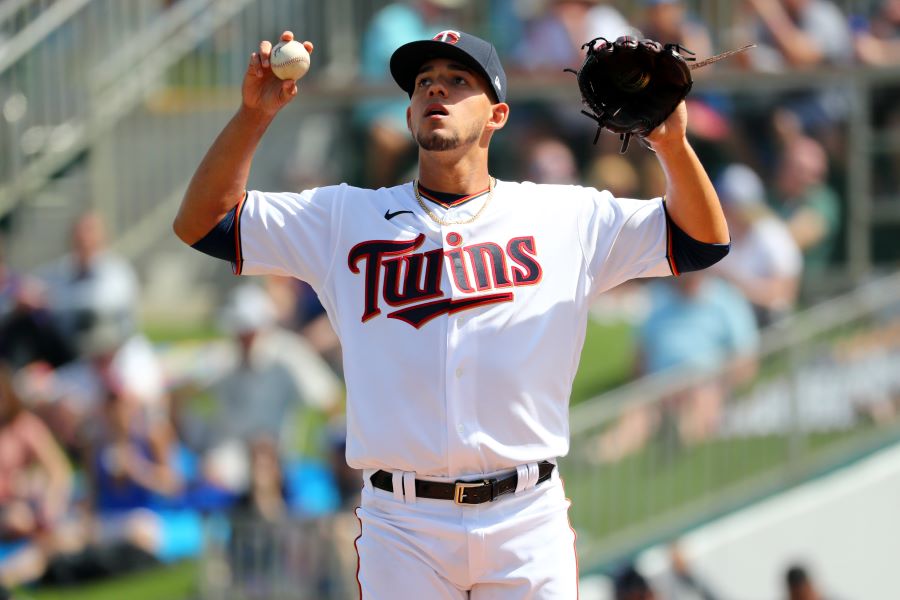 We’ll break the rotation down into small pairings who share similar potential impacts based on the delay. All of the results would be magnified or altered depending on the length of the delay. Avoiding the second-half breakdown – Jose Berrios/Kenta Maeda “Breakdown” might be a bit hyperbolic, but both starters have had their struggles in the second half. By now Twins fans are well-versed in Jose Berrios’s annual-August slumps, and he has gone as far as to alter both his late season and offseason routines in an attempt to circumvent the late-season collapse. It may not matter. If the season is delayed long enough, Berrios needn’t worry about wearing down. Less innings could theoretically assist Berrios in maintaining his velocity throughout the season or even ramping it up a bit in the case of a significantly shortened season. Kenta Maeda’s second-half splits aren’t quite as dramatic as Berrios’, but whether due to ineffectiveness or concerns about his durability, he was largely shifted to the bullpen for the late- and post-season while pitching for Los Angeles. Maeda has been vocal about his preference of staying in the starter’s role and the shortened season should all but guarantee it (although he was likely to remain a starter with the Twins regardless). The reduced innings may help both starters to remain effective throughout the season, but I must admit I was looking forward to seeing if Berrios' altered routine would make a difference and how Maeda would hold up after a full season of starts (However, I’ll happily settle for baseball, period!) Assisting the injury-prone – Rich Hill/Homer Bailey The best-case scenario had Rich Hill joining the team in June, which still may or may not happen, but the shortened season means Hill is likely to pitch in a greater percentage of games. The Twins and Hill will want to ensure that he is ready to go, but the shorter the season gets, the more Minnesota may need Hill. Fewer games means less time for the best teams to separate themselves from the pack. A healthy Hill might be Minnesota’s best pitcher and a shortened season would make his impact all the more, well...impactful. Unlike Hill, Homer Bailey will start the season in full health, but the injury-prone label fits Bailey like a glove. The 163.1 innings he threw last season were his most since 2013. That seems like the pinnacle of what we should expect in innings totals at this point in his career, so shortening the season a bit should be to his benefit. Suspension uncertainty – Michael Pineda The world is full of uncertainty right now and baseball is no exception. How MLB will handle players with suspensions remains to be seen. The most likely course would be to reduce the suspension lengths in proportion to the reduction of the season length. This would mean that Pineda would appear in the same percentage of overall games, but the actual amount of time from opening day to Pineda’s first start would be reduced. The reduced real-time length in addition to Hill’s return would most affect guys in the back of the rotation like Bailey and our next pitcher… The fifth starter – Randy Dobnak Based on the end of last season and the results from spring training, Randy Dobnak seems destined to grab the last spot in the rotation. The question will be for how long? The later the delay, the worse for Dobnak, as he would have less time to entrench himself into the rotation before the return of Hill and/or Pineda. It’s not inconceivable that he could out-pitch Bailey, but the veteran’s contract status may give Bailey a longer leash and at some point it becomes a numbers game. Six-man rotation anyone? The Young Guns – Jhoan Duran/Jordan Balazovic If you think hinting at a six-man rotation was ridiculous, you may want to skip this paragraph. A significantly shortened season would erase any innings-limit concerns. While this would be relevant for pitchers returning from injury, it could also apply to minor leaguers who normally would have reached an inning limit by the end of the minor league season. So theoretically, if a high-upside arm like Jhoan Duran or Jordan Balazovic were to spend the majority of the minor league season (which would also have a significant delay in this scenario) dominating AA or even AAA hitters, they will not have reached an innings-limit and would be available if needed at the MLB level. Likely? Not at all. But as has been strikingly apparent of late, we’d be unwise to discount the unexpected. MORE FROM TWINS DAILY — Latest Twins coverage from our writers — Recent Twins discussion in our forums — Follow Twins Daily via Twitter, Facebook or email
 -
A lot has changed in these last few days. When I started writing this article spring training was going strong and the regular season was just around the corner. Now the remainder of spring training has been canceled, the start of the regular season delayed, and uncertainty reigns. While baseball is on hold, we’ll continue, shifting from the present continuous and into the past tense for today’s article.In general, we can probably all agree that spring training stats are next to useless. However, there are arguably two exceptions. In the case of back-end roster spots and position battles the results have relevance, and in the case of prospects, while the results aren’t paramount per se, they are at least interesting. Today, we’ll take a look at the Twins Daily’s top-20 prospects who made the big league camp and parse the results. With both 40-man and non-roster invites, about half of the top-20 list appeared in spring training games. While the sample sizes are small and the big-league competition may have been rusty or focused specific aspects of their game rather than results, it is fun to see how young players perform against some variance of the best. Whenever the season starts, none of the group will be up with the Twins, but there were some strong performances. We’ll bust the prospects into tiers based on their rankings. Baseball Reference attempts to quantify the quality of competition faced and I included it as the final number in the stat-lines as “OppQual.” The higher the number the better the quality of opponent faced. Tier 1: The Top 5 #1 Royce Lewis – .200/.200/.480 – 25 AB, 5 H, 1 2B, 2 HR, 3 RBI, 0 BB, 7 SO – 7.5 OppQual #2 Alex Kirilloff – .429/.455/.810 – 21 AB, 9 H, 2 2B, 2 HR, 4 RBI, 1 BB, 3 SO – 7.3 OppQual #3 Trevor Larnach – .333/.467/.708 – 24 AB, 8 H, 3 HR, 6 RBI, 1 SB, 5 BB, 3 SO – 6.8 OppQual The baby-bomba squad combined for seven home runs! Royce Lewis used his added muscle to punish the ball, but a few walks would have looked nice next to his seven strikeouts (though he faced the strongest quality of opponent). Lewis also shined defensively where he played at short exclusively. Alex Kirilloff and Trevor Larnach’s spring training numbers do nothing to dispel the notion that they are near MLB-ready. Interestingly, Larnach only appeared in left field once, as he mainly served as a DH, while Kirilloff played in right, left, and made one appearance at first base. Both showed good pop and Larnach’s great plate discipline was on full display with five walks to just three strikeouts. Eddie Rosario’s neck must be getting sore from looking over his shoulder! Tier 2: Prospects 6 – 10 #6 Jhoan Duran – 2 IP, 2 H, 0 ER, 1 BB, 3 SO – 4.9 OppQual #7 Ryan Jeffers – .067/.067/.067 – 15 AB, 1 H, 0 BB, 7 SO – 6.0 OppQual #9 Brent Rooker – .316/.435/.368 – 19 AB, 6 H, 1 2B, 3 BB, 5 SO – 6.6 OppQual The beauty of small sample sizes is that we can use great numbers to fuel our optimism while conversely ignoring ugly numbers because…small sample size. Ryan Jeffers…small sample size. Besides, for a catcher the important thing is learning the pitchers and building rapport, not worrying about a .133 OPS! Jhoan Duran’s two innings don’t give us much to work with, but the three strikeouts are nice. He was in the first round of cuts and would presumably be stretching out in the minor league camp, had things not been put on hold. He’s on the 40-man and will begin the year as a starter in AA. He should stick as a starter but could also serve as a late-season bullpen call-up. Brent Rooker didn’t flex his power like the first-tier group, but it’s there, and the three walks look nice. Tier 3: Prospects 11 – 15 #11 Lewis Thorpe – DNP #12 Gilberto Celestino – .174/.208/.348 – 23 AB, 4 H, 1 2B, 1 HR, 1 BB, 6 SO – 6.0 OppQual I think it’s safe to say Lewis Thorpe’s spring training was a disappointment. Coming into camp he had at least some hope of grabbing the fifth rotation spot, but he missed valuable time attending to a personal matter in Australia and was quickly sent down upon returning. However, Thorpe shouldn’t despair, as he’ll only be a phone call away and could see Minnesota sooner than later. Gilberto Celestino was also included in the first round of cuts but he managed to squeeze in a pretty impressive amount of playing time due to Byron Buxton’s delayed start. The twenty-one-year-old held his own, and if he starts 2020 as hot as he finished 2019, his plus defense in center combined with the fact that he’s already on the 40-man roster could even make him an emergency option in center. Tier 4: 16-20 #17 Edwar Colina – 4.2 IP, 4 H, 2 ER, 2 BB, 3 SO – 5.4 OppQual #18 Travis Blankenhorn – .154/.250/.231 – 13 AB, 2 H, 1 2B, 3 RBI, 2 BB, 4 SO – 6.3 OppQual Edwar Colina hasn’t yet been added to the 40-man roster but it wouldn’t be surprising to see him make a leap to the MLB bullpen at some point a la 2019 Brusdar Graterol. He should continue to get opportunities to start in AA and try to improve his changeup, but his 100-mph heater and slider combo have late-inning relief potential. Travis Blankenhorn is on the 40-man roster and theoretically offers third base depth, but he’s more likely to spend 2020 continuing to develop in the minors. I hope you enjoyed a potentially meaningless breakdown of some likely meaningless numbers. With any luck we’ll get a meaningful season underway before too long, but until then, stay safe out there! MORE FROM TWINS DAILY — Latest Twins coverage from our writers — Recent Twins discussion in our forums — Follow Twins Daily via Twitter, Facebook or email Click here to view the article
-
A Look at How Twins Daily’s Top-20 Prospects Performed This Spring
Patrick Wozniak posted an article in Twins
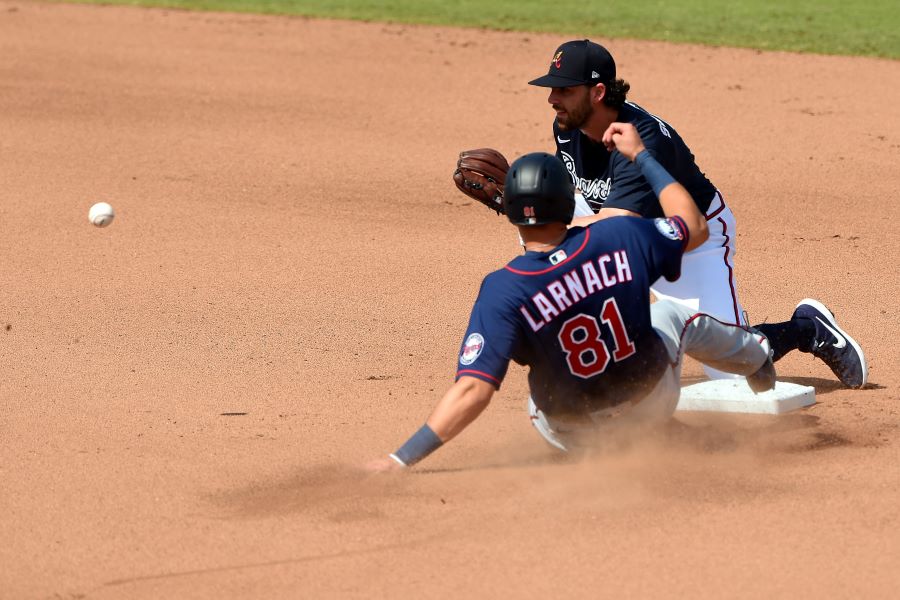 In general, we can probably all agree that spring training stats are next to useless. However, there are arguably two exceptions. In the case of back-end roster spots and position battles the results have relevance, and in the case of prospects, while the results aren’t paramount per se, they are at least interesting. Today, we’ll take a look at the Twins Daily’s top-20 prospects who made the big league camp and parse the results. With both 40-man and non-roster invites, about half of the top-20 list appeared in spring training games. While the sample sizes are small and the big-league competition may have been rusty or focused specific aspects of their game rather than results, it is fun to see how young players perform against some variance of the best. Whenever the season starts, none of the group will be up with the Twins, but there were some strong performances. We’ll bust the prospects into tiers based on their rankings. Baseball Reference attempts to quantify the quality of competition faced and I included it as the final number in the stat-lines as “OppQual.” The higher the number the better the quality of opponent faced. Tier 1: The Top 5 #1 Royce Lewis – .200/.200/.480 – 25 AB, 5 H, 1 2B, 2 HR, 3 RBI, 0 BB, 7 SO – 7.5 OppQual #2 Alex Kirilloff – .429/.455/.810 – 21 AB, 9 H, 2 2B, 2 HR, 4 RBI, 1 BB, 3 SO – 7.3 OppQual #3 Trevor Larnach – .333/.467/.708 – 24 AB, 8 H, 3 HR, 6 RBI, 1 SB, 5 BB, 3 SO – 6.8 OppQual The baby-bomba squad combined for seven home runs! Royce Lewis used his added muscle to punish the ball, but a few walks would have looked nice next to his seven strikeouts (though he faced the strongest quality of opponent). Lewis also shined defensively where he played at short exclusively. Alex Kirilloff and Trevor Larnach’s spring training numbers do nothing to dispel the notion that they are near MLB-ready. Interestingly, Larnach only appeared in left field once, as he mainly served as a DH, while Kirilloff played in right, left, and made one appearance at first base. Both showed good pop and Larnach’s great plate discipline was on full display with five walks to just three strikeouts. Eddie Rosario’s neck must be getting sore from looking over his shoulder! Tier 2: Prospects 6 – 10 #6 Jhoan Duran – 2 IP, 2 H, 0 ER, 1 BB, 3 SO – 4.9 OppQual #7 Ryan Jeffers – .067/.067/.067 – 15 AB, 1 H, 0 BB, 7 SO – 6.0 OppQual #9 Brent Rooker – .316/.435/.368 – 19 AB, 6 H, 1 2B, 3 BB, 5 SO – 6.6 OppQual The beauty of small sample sizes is that we can use great numbers to fuel our optimism while conversely ignoring ugly numbers because…small sample size. Ryan Jeffers…small sample size. Besides, for a catcher the important thing is learning the pitchers and building rapport, not worrying about a .133 OPS! Jhoan Duran’s two innings don’t give us much to work with, but the three strikeouts are nice. He was in the first round of cuts and would presumably be stretching out in the minor league camp, had things not been put on hold. He’s on the 40-man and will begin the year as a starter in AA. He should stick as a starter but could also serve as a late-season bullpen call-up. Brent Rooker didn’t flex his power like the first-tier group, but it’s there, and the three walks look nice. Tier 3: Prospects 11 – 15 #11 Lewis Thorpe – DNP #12 Gilberto Celestino – .174/.208/.348 – 23 AB, 4 H, 1 2B, 1 HR, 1 BB, 6 SO – 6.0 OppQual I think it’s safe to say Lewis Thorpe’s spring training was a disappointment. Coming into camp he had at least some hope of grabbing the fifth rotation spot, but he missed valuable time attending to a personal matter in Australia and was quickly sent down upon returning. However, Thorpe shouldn’t despair, as he’ll only be a phone call away and could see Minnesota sooner than later. Gilberto Celestino was also included in the first round of cuts but he managed to squeeze in a pretty impressive amount of playing time due to Byron Buxton’s delayed start. The twenty-one-year-old held his own, and if he starts 2020 as hot as he finished 2019, his plus defense in center combined with the fact that he’s already on the 40-man roster could even make him an emergency option in center. Tier 4: 16-20 #17 Edwar Colina – 4.2 IP, 4 H, 2 ER, 2 BB, 3 SO – 5.4 OppQual #18 Travis Blankenhorn – .154/.250/.231 – 13 AB, 2 H, 1 2B, 3 RBI, 2 BB, 4 SO – 6.3 OppQual Edwar Colina hasn’t yet been added to the 40-man roster but it wouldn’t be surprising to see him make a leap to the MLB bullpen at some point a la 2019 Brusdar Graterol. He should continue to get opportunities to start in AA and try to improve his changeup, but his 100-mph heater and slider combo have late-inning relief potential. Travis Blankenhorn is on the 40-man roster and theoretically offers third base depth, but he’s more likely to spend 2020 continuing to develop in the minors. I hope you enjoyed a potentially meaningless breakdown of some likely meaningless numbers. With any luck we’ll get a meaningful season underway before too long, but until then, stay safe out there! MORE FROM TWINS DAILY — Latest Twins coverage from our writers — Recent Twins discussion in our forums — Follow Twins Daily via Twitter, Facebook or email
 -
Thanks for taking us under the hood a bit - that was really interesting.
-
Another guy who "beat" his wOBA last year was Alex Avila - .323 wOBA vs. .357 xwOBA. Unfortunately, it can be explained by the shift. His wOBA was .427 with no shift and only .310 against the shift and he was shifted 88.7% of the time. But if they ever ban the shift...
-
After such a great showing of the bats in 2019 it’s probably prudent to expect at least some individual regression. Bringing in a potent bat like Josh Donaldson certainly helps, but can we really expect players such as Mitch Garver, who put up career years, to do the same in 2020?Predicting how much regression or improvement a player will show from year to year is a difficult task, especially with as many young players and breakthrough performances as we saw last season. But today we’ll attempt to do just that by looking at 2019 numbers. Specifically, we’ll turn to Baseball Savant’s statcast numbers and look at Twins batters’ wOBA and xwOBA stats. Weighted on-base average (wOBA) is good for showing a batters actual results while expected weighted on-base average (xwOBA) uses batted-ball data (exit velocity, launch angle, etc.) which gives a better picture of what the results should have been based on how the ball was hit. If a player’s wOBA significantly outperforms his xwOBA we might expect some regression (for reference, the 2019 MLB average for wOBA was .320 while xwOBA was .319). Before we get too deep into this exercise, it’s worth pointing out just how good the Twins hitters are. I previously wrote about Barrel rates (balls hit hard at optimal launch angles) and the likes of Nelson Cruz, Miguel Sano, Mitch Garver, and new friend Josh Donaldson are plastered all across the leaderboard. Even if the ball changes, we should expect plenty more bombas (is this nomenclature still cool?) in 2020. But we’ve got a job to do, so let’s do it! Regression Candidates Byron Buxton - .340 wOBA vs. .309 xwOBA Should we be concerned about the pretty significant looking .031 difference between Buxton’s wOBA and xwOBA? Probably not. For his career Buxton has outperformed his xwOBA by .019 and there’s seemingly a good explanation. Buxton can fly (100th percentile sprint speed) so he can not only leg out some grounders, but more importantly take plenty of extra bases with his speed (stretching would-be singles into doubles, etc.). He also had career high exit velocity (89.3 mph) and launch angle (19.5), so things are looking good. Verdict: Speed kills, just stay healthy. Mitch Garver - .405 wOBA vs. .380 xwOBA Garver comes in second with a .025 difference. Next to no one is expecting Garver to repeat his 2019 numbers (.995 OPS!) and his .380 xwOBA is still in the top 9% of the MLB. His barrel rates are elite and even with some regression he should be among the best hitting catchers in the league. Verdict: Keep pouring on the Garv Sauce! Luis Arraez - .360 wOBA vs. .336 xwOBA Arraez is the first regression candidate who warrants some legitimate concern and I hate it. There’s something seemingly magical about Arraez as he shifts around in the batter’s box and scans the defense for holes to hit through. And he hit .334 last year! But a Statcast darling he is not. His hard hit percentage of 22.1% is in just the fourth-percentile while his 2.7% barrel rate is in the ninth percentile. And while we’re not here to talk about defense, he places in the bottom 3% in Outs Above Average. However, Arraez does show some skills that may allow him to beat his xwOBA. Although he doesn’t hit the ball hard, by putting the ball in the air he does hit a lot of “flares” (30.7% flare/burner rate compared to MLB average of 24.8%), meaning he gets a lot of hits that go over the infield but fall in before outfielders. Of course, outfielders may continue to move in on Arraez, but hopefully he can develop enough “pop” to hit some over their heads. Verdict: Should probably be somewhat concerned, damn you Statcast! Miguel Sano - .379 wOBA vs. .363 xwOBA I’m happily back to being unconcerned. Sano murdered the ball in 2019 (100th percentile hard hit % and exit velocity) and is another member of the barrel club. He’s also outperformed his expected stats throughout his career and will spend another year under the mentorship of Nelson Cruz. He showed significant improvement in the second half and seems fully committed to getting the most out of his talent. Improvement seems more likely than regression. Verdict: All is well, let it Sano! Max Kepler - .355 wOBA vs. .342 xwOBA Kepler had a breakthrough year in 2019, hitting 36 home runs and he rounds out our potential regression list. Some of Kepler’s power could be zapped by a less-lively ball, but like Sano he has outperformed his xwOBA throughout his career. He’s also entering what should be his physical prime so he should be just fine. Verdict: The wunder-kid should continue to awe. All in all, although some degree of individual regression is to be expected, it shouldn’t be much. The addition of Josh Donaldson should certainly help. In 2019 he actually underperformed his xwOBA of .387 with a .377 wOBA and put up career highs (Statcast era) in barrel % and exit velocity. And then there’s Nelson Cruz. With a ridiculous .417 wOBA we might expect some luck, but no, Cruz’s xwOBA was .418! It certainly looks like 2019’s historic offense isn’t going anywhere. MORE FROM TWINS DAILY — Latest Twins coverage from our writers — Recent Twins discussion in our forums — Follow Twins Daily via Twitter, Facebook or email Click here to view the article
-
2020 Minnesota Twins Top-5 Regression Candidates Via xwOBA
Patrick Wozniak posted an article in Twins
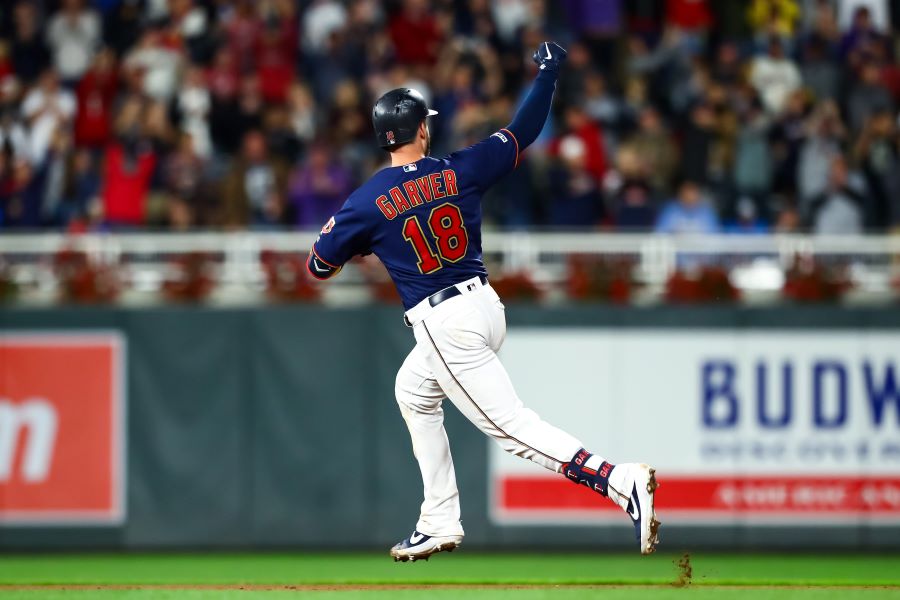 Predicting how much regression or improvement a player will show from year to year is a difficult task, especially with as many young players and breakthrough performances as we saw last season. But today we’ll attempt to do just that by looking at 2019 numbers. Specifically, we’ll turn to Baseball Savant’s statcast numbers and look at Twins batters’ wOBA and xwOBA stats. Weighted on-base average (wOBA) is good for showing a batters actual results while expected weighted on-base average (xwOBA) uses batted-ball data (exit velocity, launch angle, etc.) which gives a better picture of what the results should have been based on how the ball was hit. If a player’s wOBA significantly outperforms his xwOBA we might expect some regression (for reference, the 2019 MLB average for wOBA was .320 while xwOBA was .319). Before we get too deep into this exercise, it’s worth pointing out just how good the Twins hitters are. I previously wrote about Barrel rates (balls hit hard at optimal launch angles) and the likes of Nelson Cruz, Miguel Sano, Mitch Garver, and new friend Josh Donaldson are plastered all across the leaderboard. Even if the ball changes, we should expect plenty more bombas (is this nomenclature still cool?) in 2020. But we’ve got a job to do, so let’s do it! Regression Candidates Byron Buxton - .340 wOBA vs. .309 xwOBA Should we be concerned about the pretty significant looking .031 difference between Buxton’s wOBA and xwOBA? Probably not. For his career Buxton has outperformed his xwOBA by .019 and there’s seemingly a good explanation. Buxton can fly (100th percentile sprint speed) so he can not only leg out some grounders, but more importantly take plenty of extra bases with his speed (stretching would-be singles into doubles, etc.). He also had career high exit velocity (89.3 mph) and launch angle (19.5), so things are looking good. Verdict: Speed kills, just stay healthy. Mitch Garver - .405 wOBA vs. .380 xwOBA Garver comes in second with a .025 difference. Next to no one is expecting Garver to repeat his 2019 numbers (.995 OPS!) and his .380 xwOBA is still in the top 9% of the MLB. His barrel rates are elite and even with some regression he should be among the best hitting catchers in the league. Verdict: Keep pouring on the Garv Sauce! Luis Arraez - .360 wOBA vs. .336 xwOBA Arraez is the first regression candidate who warrants some legitimate concern and I hate it. There’s something seemingly magical about Arraez as he shifts around in the batter’s box and scans the defense for holes to hit through. And he hit .334 last year! But a Statcast darling he is not. His hard hit percentage of 22.1% is in just the fourth-percentile while his 2.7% barrel rate is in the ninth percentile. And while we’re not here to talk about defense, he places in the bottom 3% in Outs Above Average. However, Arraez does show some skills that may allow him to beat his xwOBA. Although he doesn’t hit the ball hard, by putting the ball in the air he does hit a lot of “flares” (30.7% flare/burner rate compared to MLB average of 24.8%), meaning he gets a lot of hits that go over the infield but fall in before outfielders. Of course, outfielders may continue to move in on Arraez, but hopefully he can develop enough “pop” to hit some over their heads. Verdict: Should probably be somewhat concerned, damn you Statcast! Miguel Sano - .379 wOBA vs. .363 xwOBA I’m happily back to being unconcerned. Sano murdered the ball in 2019 (100th percentile hard hit % and exit velocity) and is another member of the barrel club. He’s also outperformed his expected stats throughout his career and will spend another year under the mentorship of Nelson Cruz. He showed significant improvement in the second half and seems fully committed to getting the most out of his talent. Improvement seems more likely than regression. Verdict: All is well, let it Sano! Max Kepler - .355 wOBA vs. .342 xwOBA Kepler had a breakthrough year in 2019, hitting 36 home runs and he rounds out our potential regression list. Some of Kepler’s power could be zapped by a less-lively ball, but like Sano he has outperformed his xwOBA throughout his career. He’s also entering what should be his physical prime so he should be just fine. Verdict: The wunder-kid should continue to awe. All in all, although some degree of individual regression is to be expected, it shouldn’t be much. The addition of Josh Donaldson should certainly help. In 2019 he actually underperformed his xwOBA of .387 with a .377 wOBA and put up career highs (Statcast era) in barrel % and exit velocity. And then there’s Nelson Cruz. With a ridiculous .417 wOBA we might expect some luck, but no, Cruz’s xwOBA was .418! It certainly looks like 2019’s historic offense isn’t going anywhere. MORE FROM TWINS DAILY — Latest Twins coverage from our writers — Recent Twins discussion in our forums — Follow Twins Daily via Twitter, Facebook or email
 -
Thanks! I love writing about this kind of stuff and am always grateful (and pleasantly surprised) when others enjoy reading it. Thanks again!
-
Here's the draft positions of the guys I listed: Bieber- 4th round, Clevinger- 4th round (Angels), Bauer- 1st, 3rd overall (Arizona), Kluber- 4th round (San Diego), Civale- 3rd round, Pleasac- 12th round, Plutko- 11th round (though originally drafted by Houston in the 6th round but did not sign). So, Canterino was drafted ahead of everybody but Bauer while Sands and Valimont went in the 5th (Sands signed over slot) and Winder in the 7th.
-
I'm definitely not counting Cleveland out, though I think the Twins have a big edge offensively. Cleveland's ability to continually churn out quality pitching is what keeps them relevant (and allows them to trade away guys like Bauer and Kluber). They do have some holes in their lineup, but having Lindor and Ramirez certainly helps.
-
Thanks! Glad you enjoyed it.
-
Quick…what do Shane Bieber, Mike Clevinger, Trevor Bauer, Corey Kluber, Aaron Civale, Zach Plesac, and Adam Plutko have in common? Yes, they all pitched for Cleveland last season. But more relevant to today’s article is the fact that they are all college arms who were drafted by, acquired, or pitched for the Tribe during Derrek Falvey’s time in Cleveland.Cleveland is renowned for their ability to continually churn out high-quality starting pitching and the majority of their success stories have been college pitchers, except Carlos Carrasco. Falvey’s known as an expert in the area of pitcher development and he undoubtably played a big role in Cleveland’s success in that area. The question remains as to what it means for the Minnesota Twins? A quick glance at Twins Daily’s top prospect list will show that the Twins top three pitching prospects are not college pitchers. Number five prospect, Jordan Balazovic, was drafted as a high schooler out of Canada by the previous regime, while Jhoan Duran (#6), who was acquired in the Eduardo Escobar trade, was an international signing and Blayne Enlow (#10) was a high schooler picked by Falvey and company. However, if we look beyond the trio, some intriguing collagen arms begin to emerge. Let’s start with Matt Canterino. The 6’2” 222 lb. righty was the Twins second-round pick in the 2019 draft. He only pitched 25 innings between rookie ball and Cedar Rapids due to his heavy workload coming out of Rice University, but as expected, he pitched very well. Canterino sits in the low 90s, topping out at around 95, and possesses two good breaking pitches, a slider and curve, along with a changeup. He brings plenty of funk in his delivery and has the potential to be a fast riser. If all goes well he could end up being a mid-rotation starter, and his fastball/slider combo gives him a solid floor as a reliever. He ranks as Twins Daily’s #15 prospect, while FanGraphs has him at #13 and MLB.com at #11. Here’s a closer look at Canterino from Twins Daily’s Tom Froemming: A slight jump down on the Twins Daily prospect list and we find another intriguing 22-year-old collegian righty in Cole Sands, who comes in at #19 (FanGraphs #15, mlb.com #19). Sands was a fifth-round pick in 2018 (signed over-slot for 600K) but didn’t debut until last year due to some injuries. He dealt with a blister issue and a calf strain in 2019 but no arm injuries and had great results. Over three levels and 18 starts (culminating in one final AA start) Sands pitched 91.1 innings to a 2.68 ERA and 1.03 WHIP with 108 strikeouts and just 19 walks. Cole has a three-pitch mix featuring a tailing fastball that can reach the mid-90s along with a good curveball and changeup, which all have the potential to be above-average pitches. Like Canterino in 2019, Sands was the first pitcher selected by Minnesota in the 2018 draft. from our writers— Recent Twins discussion in our forums — Follow Twins Daily via Twitter, Facebook or email Click here to view the article
-
Quick…what do Shane Bieber, Mike Clevinger, Trevor Bauer, Corey Kluber, Aaron Civale, Zach Plesac, and Adam Plutko have in common? Yes, they all pitched for Cleveland last season. But more relevant to today’s article is the fact that they are all college arms who were drafted by, acquired, or pitched for the Tribe during Derrek Falvey’s time in Cleveland.Cleveland is renowned for their ability to continually churn out high-quality starting pitching and the majority of their success stories have been college pitchers, except Carlos Carrasco. Falvey’s known as an expert in the area of pitcher development and he undoubtably played a big role in Cleveland’s success in that area. The question remains as to what it means for the Minnesota Twins? A quick glance at Twins Daily’s top prospect list will show that the Twins top three pitching prospects are not college pitchers. Number five prospect, Jordan Balazovic, was drafted as a high schooler out of Canada by the previous regime, while Jhoan Duran (#6), who was acquired in the Eduardo Escobar trade, was an international signing and Blayne Enlow (#10) was a high schooler picked by Falvey and company. However, if we look beyond the trio, some intriguing collagen arms begin to emerge. Let’s start with Matt Canterino. The 6’2” 222 lb. righty was the Twins second-round pick in the 2019 draft. He only pitched 25 innings between rookie ball and Cedar Rapids due to his heavy workload coming out of Rice University, but as expected, he pitched very well. Canterino sits in the low 90s, topping out at around 95, and possesses two good breaking pitches, a slider and curve, along with a changeup. He brings plenty of funk in his delivery and has the potential to be a fast riser. If all goes well he could end up being a mid-rotation starter, and his fastball/slider combo gives him a solid floor as a reliever. He ranks as Twins Daily’s #15 prospect, while FanGraphs has him at #13 and MLB.com at #11. Here’s a closer look at Canterino from Twins Daily’s Tom Froemming: A slight jump down on the Twins Daily prospect list and we find another intriguing 22-year-old collegian righty in Cole Sands, who comes in at #19 (FanGraphs #15, mlb.com #19). Sands was a fifth-round pick in 2018 (signed over-slot for 600K) but didn’t debut until last year due to some injuries. He dealt with a blister issue and a calf strain in 2019 but no arm injuries and had great results. Over three levels and 18 starts (culminating in one final AA start) Sands pitched 91.1 innings to a 2.68 ERA and 1.03 WHIP with 108 strikeouts and just 19 walks. Cole has a three-pitch mix featuring a tailing fastball that can reach the mid-90s along with a good curveball and changeup, which all have the potential to be above-average pitches. Like Canterino in 2019, Sands was the first pitcher selected by Minnesota in the 2018 draft. from our writers— Recent Twins discussion in our forums — Follow Twins Daily via Twitter, Facebook or email Click here to view the article
-
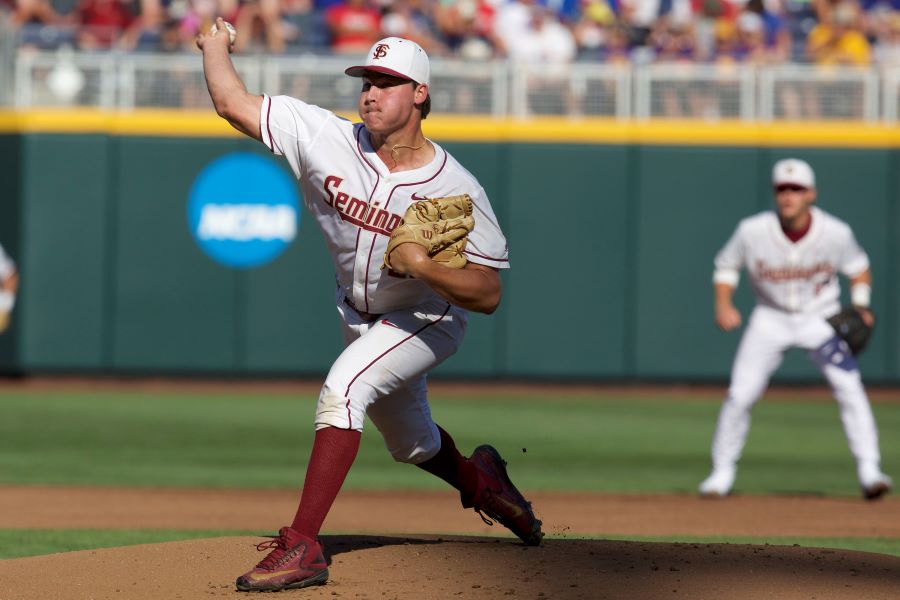 Cleveland is renowned for their ability to continually churn out high-quality starting pitching and the majority of their success stories have been college pitchers, except Carlos Carrasco. Falvey’s known as an expert in the area of pitcher development and he undoubtably played a big role in Cleveland’s success in that area. The question remains as to what it means for the Minnesota Twins? A quick glance at Twins Daily’s top prospect list will show that the Twins top three pitching prospects are not college pitchers. Number five prospect, Jordan Balazovic, was drafted as a high schooler out of Canada by the previous regime, while Jhoan Duran (#6), who was acquired in the Eduardo Escobar trade, was an international signing and Blayne Enlow (#10) was a high schooler picked by Falvey and company. However, if we look beyond the trio, some intriguing collagen arms begin to emerge. Let’s start with Matt Canterino. The 6’2” 222 lb. righty was the Twins second-round pick in the 2019 draft. He only pitched 25 innings between rookie ball and Cedar Rapids due to his heavy workload coming out of Rice University, but as expected, he pitched very well. Canterino sits in the low 90s, topping out at around 95, and possesses two good breaking pitches, a slider and curve, along with a changeup. He brings plenty of funk in his delivery and has the potential to be a fast riser. If all goes well he could end up being a mid-rotation starter, and his fastball/slider combo gives him a solid floor as a reliever. He ranks as Twins Daily’s #15 prospect, while FanGraphs has him at #13 and MLB.com at #11. Here’s a closer look at Canterino from Twins Daily’s Tom Froemming: A slight jump down on the Twins Daily prospect list and we find another intriguing 22-year-old collegian righty in Cole Sands, who comes in at #19 (FanGraphs #15, mlb.com #19). Sands was a fifth-round pick in 2018 (signed over-slot for 600K) but didn’t debut until last year due to some injuries. He dealt with a blister issue and a calf strain in 2019 but no arm injuries and had great results. Over three levels and 18 starts (culminating in one final AA start) Sands pitched 91.1 innings to a 2.68 ERA and 1.03 WHIP with 108 strikeouts and just 19 walks. Cole has a three-pitch mix featuring a tailing fastball that can reach the mid-90s along with a good curveball and changeup, which all have the potential to be above-average pitches. Like Canterino in 2019, Sands was the first pitcher selected by Minnesota in the 2018 draft. https://twitter.com/TFTwins/status/1114718482913005568 Our next college pitcher wasn’t drafted by the Twins, but came their way in return for Lewin Diaz (also known as the Sergio Romo trade). Like Sands, Chris Vallimont (RHP) was a fifth-round pick in the 2018 draft. His pitch-mix is also similar to Canterino and Sands, as he throws a slider, hard curve and change in addition to his fastball, which is also a low-90s offering that tops out around 95. However, Vallimont has molded his fastball into the high spin-rate variety, so he gets a ton of life (and strikeouts) at the top of the zone, which everyone seems to love these days. He’ll need to hone his control a bit to become an effective big-league pitcher, but he has four potentially above-average pitches. Finally, we’ll end with Josh Winder. Like Vallimont, Winder came from a small school (Virginia Military Institute, 7th-round – 2018) but stands tall (6’5”). While he doesn’t have quite the strikeout rate of his list mates, he has the familiar four-pitch mix, and riding fastball. Winder is a strike thrower so control is not an issue. His velo sits in the same general range as the others and his changeup showed improvement in 2019. He’s already 23-years-old and has yet to pitch above Low-A (but had great numbers), so his progression in 2020 will tell us a lot about his future chances with the Twins. Continued success could even lead to his very own Tom Froemming video! Depth is certainly a strength for the organization, and while these four pitchers might not have quite the upside of Balazovic or Duran, they should give Minnesota plenty of appealing starting options within the next few years. Last season we saw some unexpected former college pitchers come up and shine in Randy Dobnak and Devin Smeltzer. 2020 MLB debuts are unlikely for our featured pitchers (due to inexperience and MLB rotation depth), but some multi-level leaps may be in play. We might even make a leap of our own and imagine a glorious world where the Minnesota Twins are heralded for developing great MLB pitchers. Look for at least a few of the “college four” to help bring that dream to fruition. MORE FROM TWINS DAILY — Latest Twins coverage from our writers — Recent Twins discussion in our forums — Follow Twins Daily via Twitter, Facebook or email
 -
Last week I wrote about the admittedly farfetched possibility of prospects Gilberto Celestino or Royce Lewis filling in for an injured Byron Buxton. The idea was that these two prospects give the Twins the best chance of replacing Buxton’s defense while their offense limitations would be covered by the rest of the lineup. That got me to thinking about what we can realistically expect from current prospects, should they get the call.One way to do that would be to look at projections. One of the nice thing about ZiPS projections is that it projects how prospects would play if they were in the majors. With that said, here are the projections for some of Minnesota’s top prospects. 2020 ZiPS projections: Download attachment: Prospect ZiPS 2020 pic.png You’ll notice that none of the bats project to be above average and only Alex Kirilloff and Ryan Jeffers are projected as better than replacement level players (Nick Gordon also projects for 0.6 WAR). It makes sense for a projection system to be rather conservative when projecting prospects, as jumping to the big leagues is obviously difficult, and we’ve seen top prospects like Byron Buxton struggle initially upon being called up. However, across MLB we’re seeing more and more young prospects come up and shine. Since Mike Trout and Bryce Harper premiered we’ve seen Ronald Acuna Jr., Juan Soto, Fernando Tatis Jr., Vladimir Guerrero Jr., and Bo Bichette (to name just a few) come up and shine from the get go. It’s not hard to imagine an advanced bat like Kirilloff or Trevor Larnach succeeding immediately at the MLB level. The young stars I just listed are phenomenal talents, but another reason for their instantaneous success undoubtedably has to do with improving player development and use of technology. Young players are better prepared than ever for the challenges MLB players face. Since taking over the reins, the new Twins regime has put a huge emphasis on player development, and if we look at some of the prospects who appeared with Minnesota last season, the results point to success. On offense, Luis Arraez is really the only prospect who had enough of a sample size to consider (though LaMonte Wade Jr. held his own in his limited time with the Twins). Arraez’s rookie campaign was obviously a massive success as is evident if we look at his actual results compared to his 2019 ZiPS projections. Download attachment: Prospect ZiPS Arraez chart pic.png The fact that nearly no one saw Arraez in 2019 would point to opportunity for the prospects listed above. Minnesota has a stacked lineup with good backups, so opportunities should be limited (yes, I am knocking on wood as I type this), but it wouldn’t be all that shocking if at least one of the listed prospects is called upon sometime this year. In 2019, Arraez wasn’t the only Twins minor leaguer to get called up and look the part of a big-leaguer. The Twins also had several pitchers who fit the narrative: Download attachment: Prospects ZiPS pitcher chart pic.png Of all the pitchers and all the categories, the only actual stat that underperformed the ZiPS projections was Lewis Thorpe’s ERA. Randy Dobnak was so off the radar that he wasn’t even included in the 2019 ZiPS projections! The individual samples are somewhat small, but taken as a whole the results are pretty impressive. Derrek Falvey was well renowned for his ability to develop pitching in his time with Cleveland and it looks like it’s starting to pay dividends for the Twins as well. Outside of Thorpe, there was little to no hype for this group, and the fact that all of them outperformed expectations and didn’t look at all fazed or overmatched on the big stage warrants acclaim not only for the players, but for the coaches and front office as well. The system is strong! Minnesota did a great job of improving the pitching depth this offseason, and the five pitchers who are listed all add to that depth. The unheralded nature of last year’s group shows how difficult predicting who the future contributors will be (and their MLB roles), and the sheer amount of MLB-quality pitching depth should help to alleviate the necessity of reaching into the minor league coffers, but it’s reassuring to know a good system is in place. And if we want to throw a couple of names out there, ZiPS thinks Griffin Jax and Bailey Ober could be fringe fifth-starter types. The Twins have broken the competitive window wide-open, but should some shattered glass fly off and pierce one of its stars, ‘tis good to know the replacements aren’t likely to be blinded by the bright lights. Rest assured, the organization’s ability for mixing in young talent greatly exceeds the author’s capacity in successfully mixing metaphors. Who do you think has a chance to step up and shine if called upon in 2020? Please leave your comments below! MORE FROM TWINS DAILY — Latest Twins coverage from our writers — Recent Twins discussion in our forums — Follow Twins Daily via Twitter, Facebook or email Click here to view the article
-
Will Twins Prospects Continue to Step up and Shine in 2020?
Patrick Wozniak posted an article in Twins
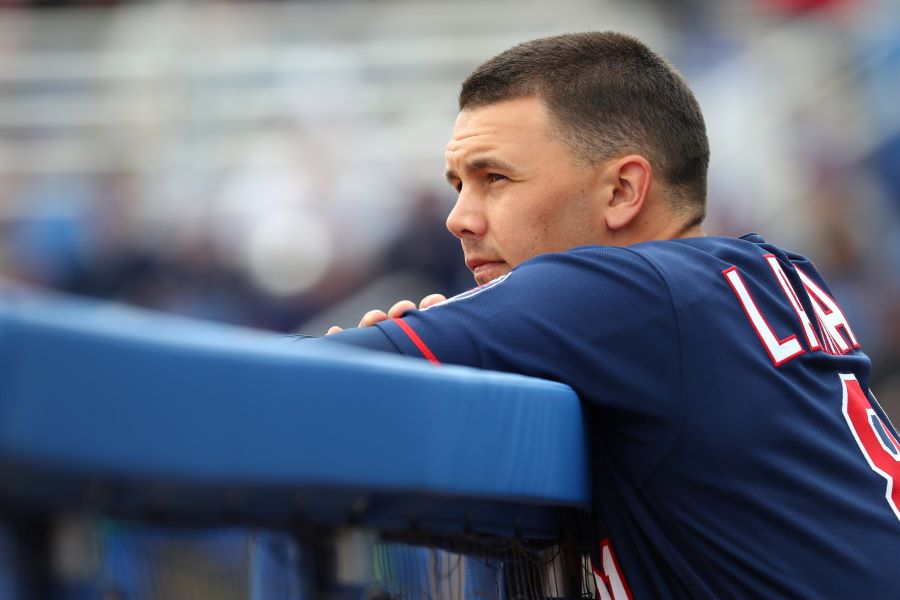 One way to do that would be to look at projections. One of the nice thing about ZiPS projections is that it projects how prospects would play if they were in the majors. With that said, here are the projections for some of Minnesota’s top prospects. 2020 ZiPS projections: You’ll notice that none of the bats project to be above average and only Alex Kirilloff and Ryan Jeffers are projected as better than replacement level players (Nick Gordon also projects for 0.6 WAR). It makes sense for a projection system to be rather conservative when projecting prospects, as jumping to the big leagues is obviously difficult, and we’ve seen top prospects like Byron Buxton struggle initially upon being called up. However, across MLB we’re seeing more and more young prospects come up and shine. Since Mike Trout and Bryce Harper premiered we’ve seen Ronald Acuna Jr., Juan Soto, Fernando Tatis Jr., Vladimir Guerrero Jr., and Bo Bichette (to name just a few) come up and shine from the get go. It’s not hard to imagine an advanced bat like Kirilloff or Trevor Larnach succeeding immediately at the MLB level. The young stars I just listed are phenomenal talents, but another reason for their instantaneous success undoubtedably has to do with improving player development and use of technology. Young players are better prepared than ever for the challenges MLB players face. Since taking over the reins, the new Twins regime has put a huge emphasis on player development, and if we look at some of the prospects who appeared with Minnesota last season, the results point to success. On offense, Luis Arraez is really the only prospect who had enough of a sample size to consider (though LaMonte Wade Jr. held his own in his limited time with the Twins). Arraez’s rookie campaign was obviously a massive success as is evident if we look at his actual results compared to his 2019 ZiPS projections. The fact that nearly no one saw Arraez in 2019 would point to opportunity for the prospects listed above. Minnesota has a stacked lineup with good backups, so opportunities should be limited (yes, I am knocking on wood as I type this), but it wouldn’t be all that shocking if at least one of the listed prospects is called upon sometime this year. In 2019, Arraez wasn’t the only Twins minor leaguer to get called up and look the part of a big-leaguer. The Twins also had several pitchers who fit the narrative: Of all the pitchers and all the categories, the only actual stat that underperformed the ZiPS projections was Lewis Thorpe’s ERA. Randy Dobnak was so off the radar that he wasn’t even included in the 2019 ZiPS projections! The individual samples are somewhat small, but taken as a whole the results are pretty impressive. Derrek Falvey was well renowned for his ability to develop pitching in his time with Cleveland and it looks like it’s starting to pay dividends for the Twins as well. Outside of Thorpe, there was little to no hype for this group, and the fact that all of them outperformed expectations and didn’t look at all fazed or overmatched on the big stage warrants acclaim not only for the players, but for the coaches and front office as well. The system is strong! Minnesota did a great job of improving the pitching depth this offseason, and the five pitchers who are listed all add to that depth. The unheralded nature of last year’s group shows how difficult predicting who the future contributors will be (and their MLB roles), and the sheer amount of MLB-quality pitching depth should help to alleviate the necessity of reaching into the minor league coffers, but it’s reassuring to know a good system is in place. And if we want to throw a couple of names out there, ZiPS thinks Griffin Jax and Bailey Ober could be fringe fifth-starter types. The Twins have broken the competitive window wide-open, but should some shattered glass fly off and pierce one of its stars, ‘tis good to know the replacements aren’t likely to be blinded by the bright lights. Rest assured, the organization’s ability for mixing in young talent greatly exceeds the author’s capacity in successfully mixing metaphors. Who do you think has a chance to step up and shine if called upon in 2020? Please leave your comments below! MORE FROM TWINS DAILY — Latest Twins coverage from our writers — Recent Twins discussion in our forums — Follow Twins Daily via Twitter, Facebook or email
 -
Twins Daily’s Matthew Trueblood recently wrote about the possibility of Minnesota trading for Albert Almora Jr., a defensive-oriented outfielder to potentially serve as a depth piece in the case of a Byron Buxton injury. The scenario had the Twins giving up a young fringe rotation arm or bullpen piece, but does Minnesota have the depth to replace Buxton without a trade?Last season we saw Minnesota shift Max Kepler to center field when Buxton missed significant time with a shoulder injury. This is also probably the likeliest scenario this season, as Marwin Gonzalez or Jake Cave could slide into right. However, while the Twins would still be okay offensively, they would suffer defensively with a significant downgrade in center and right field. This is somewhat problematic with Minnesota’s infield defense being well below average (with the exception of 34-year-old Josh Donaldson) they can ill-afford a sub-par outfield as well. Especially considering that their starting rotation consists exclusively fly-ball oriented pitchers (with the potential exception of Randy Dobnak). Keeping Kepler in right field also seems like the best bet to keep him injury-free and maximize his offensive potential. However, trading for a viable back-up to Buxton might not be as easy as it seems. First, you have to find a team with a good defensive fourth outfielder which is willing to trade. There’s also the question of why Minnesota would want to give up hard-earned pitching depth to acquire something that doesn’t seem to be a huge priority for the team (why didn’t they just sign a fourth outfielder?) The rotation and bullpen depth seem more important than a Buxton backup at this point. While both a trade or sliding Kepler over to center are possibilities, is it also possible that the Twins could replace Buxton from within the farm system? The Twins are loaded with talented corner outfield prospects who are close to MLB- ready, which is certainly one possibility. Brent Rooker, Alex Kirilloff, and Trevor Larnach are all impressive prospects that bring potentially potent bats. Minnesota could take the hottest hand and hope that he will rake at the big-league level. However, this still leaves us with Kepler in center, and none of the three prospects are projected to be above average defensively, even in a corner spot. All three would need to be added to the 40-man roster as well. If we take a look at minor league players capable of playing center field who are currently on the 40-man roster, we find LaMonte Wade Jr. and Gilberto Celestino. Wade Jr. saw some time with the Twins last season, but is less than ideal as a Buxton replacement. Kepler is the better center fielder than Wade Jr., who is better served in a corner role. Wade Jr.’s best asset is his eye, as he can take a walk with the best of them, and he does bring some speed, but he doesn’t seem an adequate replacement for Buxton. With Celestino things get a bit more interesting. As someone who has yet to play above A+ ball and is entering his age-21 season, viewing Celestino’s chances as a Buxton replacement in 2020 warrants a healthy dose of skepticism. He struggled mightily to begin 2019, but had a great second half (.343/.416/.522) that boosted his prospect status. And there’s a lot to like in Celestino. He has good speed, is considered a very good defensive center fielder, and has good exit velocities. With the stacked offense that Minnesota has, Celestino would be up for his defense, and his speed and anything he could contribute in the nine-hole would be a bonus. The defense, arm, and power can be seen in this highlight package put together by Twins Daily’s Tom Froemming: A+ is obviously far from the MLB, but Celestino’s chances might not be as crazy as they seem. Assuming Buxton has recovered from his shoulder injury and starts the season healthy, Celestino would have time to continue his development in A+, potentially moving up to AA with a hot start. And as you may remember, Jorge Polanco made his (albeit brief) MLB debut as a 21-year-old straight from A+ in 2014. While not yet on the 40-man roster, Royce Lewis is another possible Buxton replacement. Lewis isn’t exactly knocking on the door, but he reached AA in 2019 and is widely considered as Minnesota’s best prospect. His numbers in both A+ and AA weren’t great, but he came back with a vengeance in the Arizona Fall League, winning the MVP. He also played multiple positions in the AFL, including center field where he made this catch: Minnesota will likely give Lewis every opportunity to continue playing shortstop, but many feel that center field will be where he eventually ends up. His lack of experience in center would definitely be a concern, but like Buxton, he has incredible speed which could help mitigate any route inefficiencies. As with Celestino, Minnesota would mostly be looking for defense in this scenario, but Lewis’s speed would nearly replace Buxton’s and he could conceivably add some offensive value as well. Due to where he’s at in his development, Lewis would also be more feasible as a second-half replacement for Buxton. Calling up Celestino or Lewis would certainly qualify as aggressive, and Minnesota has to consider both prospects’ long-term development as well. The most likely scenario definitely seems to be the Kepler-to-center-shuffle, but depending on the timing (and progress), either Celestino or Lewis could make at least some sense. Or, with a little luck, Byron Buxton will remain healthy in 2020 and this article can happily remain hypothetical. MORE FROM TWINS DAILY — Latest Twins coverage from our writers — Recent Twins discussion in our forums — Follow Twins Daily via Twitter, Facebook or email Click here to view the article
-
 Last season we saw Minnesota shift Max Kepler to center field when Buxton missed significant time with a shoulder injury. This is also probably the likeliest scenario this season, as Marwin Gonzalez or Jake Cave could slide into right. However, while the Twins would still be okay offensively, they would suffer defensively with a significant downgrade in center and right field. This is somewhat problematic with Minnesota’s infield defense being well below average (with the exception of 34-year-old Josh Donaldson) they can ill-afford a sub-par outfield as well. Especially considering that their starting rotation consists exclusively fly-ball oriented pitchers (with the potential exception of Randy Dobnak). Keeping Kepler in right field also seems like the best bet to keep him injury-free and maximize his offensive potential. However, trading for a viable back-up to Buxton might not be as easy as it seems. First, you have to find a team with a good defensive fourth outfielder which is willing to trade. There’s also the question of why Minnesota would want to give up hard-earned pitching depth to acquire something that doesn’t seem to be a huge priority for the team (why didn’t they just sign a fourth outfielder?) The rotation and bullpen depth seem more important than a Buxton backup at this point. While both a trade or sliding Kepler over to center are possibilities, is it also possible that the Twins could replace Buxton from within the farm system? The Twins are loaded with talented corner outfield prospects who are close to MLB- ready, which is certainly one possibility. Brent Rooker, Alex Kirilloff, and Trevor Larnach are all impressive prospects that bring potentially potent bats. Minnesota could take the hottest hand and hope that he will rake at the big-league level. However, this still leaves us with Kepler in center, and none of the three prospects are projected to be above average defensively, even in a corner spot. All three would need to be added to the 40-man roster as well. If we take a look at minor league players capable of playing center field who are currently on the 40-man roster, we find LaMonte Wade Jr. and Gilberto Celestino. Wade Jr. saw some time with the Twins last season, but is less than ideal as a Buxton replacement. Kepler is the better center fielder than Wade Jr., who is better served in a corner role. Wade Jr.’s best asset is his eye, as he can take a walk with the best of them, and he does bring some speed, but he doesn’t seem an adequate replacement for Buxton. With Celestino things get a bit more interesting. As someone who has yet to play above A+ ball and is entering his age-21 season, viewing Celestino’s chances as a Buxton replacement in 2020 warrants a healthy dose of skepticism. He struggled mightily to begin 2019, but had a great second half (.343/.416/.522) that boosted his prospect status. And there’s a lot to like in Celestino. He has good speed, is considered a very good defensive center fielder, and has good exit velocities. With the stacked offense that Minnesota has, Celestino would be up for his defense, and his speed and anything he could contribute in the nine-hole would be a bonus. The defense, arm, and power can be seen in this highlight package put together by Twins Daily’s Tom Froemming: A+ is obviously far from the MLB, but Celestino’s chances might not be as crazy as they seem. Assuming Buxton has recovered from his shoulder injury and starts the season healthy, Celestino would have time to continue his development in A+, potentially moving up to AA with a hot start. And as you may remember, Jorge Polanco made his (albeit brief) MLB debut as a 21-year-old straight from A+ in 2014. While not yet on the 40-man roster, Royce Lewis is another possible Buxton replacement. Lewis isn’t exactly knocking on the door, but he reached AA in 2019 and is widely considered as Minnesota’s best prospect. His numbers in both A+ and AA weren’t great, but he came back with a vengeance in the Arizona Fall League, winning the MVP. He also played multiple positions in the AFL, including center field where he made this catch: https://twitter.com/wboor/status/1174872875062312961 Minnesota will likely give Lewis every opportunity to continue playing shortstop, but many feel that center field will be where he eventually ends up. His lack of experience in center would definitely be a concern, but like Buxton, he has incredible speed which could help mitigate any route inefficiencies. As with Celestino, Minnesota would mostly be looking for defense in this scenario, but Lewis’s speed would nearly replace Buxton’s and he could conceivably add some offensive value as well. Due to where he’s at in his development, Lewis would also be more feasible as a second-half replacement for Buxton. Calling up Celestino or Lewis would certainly qualify as aggressive, and Minnesota has to consider both prospects’ long-term development as well. The most likely scenario definitely seems to be the Kepler-to-center-shuffle, but depending on the timing (and progress), either Celestino or Lewis could make at least some sense. Or, with a little luck, Byron Buxton will remain healthy in 2020 and this article can happily remain hypothetical. MORE FROM TWINS DAILY — Latest Twins coverage from our writers — Recent Twins discussion in our forums — Follow Twins Daily via Twitter, Facebook or email
 -
Death. That word doesn’t sure doesn’t look good, does it? Death is something we all have to face sooner or later but would like to put off as long as possible. Is this getting weird? Let me try to tie it to baseball. Today we’ll take a look at dead money and how the Minnesota Twins have done a good job of avoiding it.Like death, New York Yankee fans, and Logan Morrison shirseys, dead money is something to be avoided. So, what exactly is dead money? While money is technically a dead tree with a picture of a dead guy on it (at least in the US), that’s not what we’re going for here. Luckily, Craig Edwards of FanGraphs has an answer for us. According to Edwards’ recent article, dead money is, “1. Money paid to players who have been released… 2. Money paid to other teams as compensation for players who have been traded... 3. Money paid to players who are still in the organization but who have been removed from the 40-man roster…” For a smaller-market team like the Minnesota Twins (I know they’ve set a payroll record for 2020 and I’m grateful for that, but still…) whose window is wide open, having every penny available to spend on players who will help the team win now is very important. Plus, arbitration-eligible players like Byron Buxton and Jose Berrios are becoming more expensive by the year, potentially giving the Twins less financial flexibility to spend on free agents. Let’s take a look at the MLB leaders in dead money and see where Minnesota sits. Download attachment: Dead Money chart pic.png Notice the Minnesota Twins aren’t included in that list. Keep dead money out of Minnesota! We see more large-market teams like Boston and LA and thanks to Prince Fielder, Detroit even makes an appearance (they really are still paying him!). In recent years the Twins have dabbled a bit in dead money. The trades of Phil Hughes and Ricky Nolasco (Terry Ryan-Era contracts) left the Twins paying part of their salaries and Adison Reed’s DFA qualifies as dead money, but those were fairly insignificant and didn’t really handcuff the front office in any way. And it’s all out of sight, out of mind now. Our money is alive! Do any current Minnesota Twins pose a threat to become “dead money”? For the most part, the front office has avoided the type of big-money, long-term contracts that tend to degrade into dead money, favoring one and two-year deals. Of the young core who have signed extensions with the team (Max Kepler, Jorge Polanco, and Miguel Sano) none present much threat of becoming bad deals as all three are good, young, and cheap. I suppose one could find risk in Sano’s injury history and past weight issues, but he’s happily situated in “the best shape of his life” interval, and although he’s the priciest of the bunch, the money’s still not all that much. With the Josh Donaldson signing and the trade for Kenta Maeda, Minnesota now possesses a couple of four-year contracts, but the amount of risk is questionable. Maeda’s contract is incentive-laden, with the Twins only on the hook for $3 million a year (and LA covering the cost of 2020, contributing to their pile of dead money), so there is little risk there. 2020 is Donaldson’s age-34 season, and he’ll be making $23 million a year with some injury history to boot, which definitely presents some level of risk. However, he’s in impeccable shape and he brings intangibles like his willingness to share his experience and expertise with younger players, which has already shown at spring training. With the team in full-on, win-now mode, taking on a little dead-money risk (or more generally, bad-contract risk) was practically a necessity. While there’s some risk of future dead money in Minnesota, I’m not exactly shaking in my flipflops (It’s too hot for boots where I live). And technically, to become dead money, Donaldson or Maeda would have to fit the aforementioned parameters, i.e. be traded, released, or removed from the 40-man roster. That means highly-paid players like Albert Pujols, Miguel Cabrera, and Chris Davis, while resembling the dead in performance, have yet to become official dead money. The fact that none of those three players will be donning a Minnesota Twins jersey in 2020 or beyond, should be enough to make any Twins fan happy to be alive! MORE FROM TWINS DAILY — Latest Twins coverage from our writers — Recent Twins discussion in our forums — Follow Twins Daily via Twitter, Facebook or email Click here to view the article
-
 Like death, New York Yankee fans, and Logan Morrison shirseys, dead money is something to be avoided. So, what exactly is dead money? While money is technically a dead tree with a picture of a dead guy on it (at least in the US), that’s not what we’re going for here. Luckily, Craig Edwards of FanGraphs has an answer for us. According to Edwards’ recent article, dead money is, “1. Money paid to players who have been released… 2. Money paid to other teams as compensation for players who have been traded... 3. Money paid to players who are still in the organization but who have been removed from the 40-man roster…” For a smaller-market team like the Minnesota Twins (I know they’ve set a payroll record for 2020 and I’m grateful for that, but still…) whose window is wide open, having every penny available to spend on players who will help the team win now is very important. Plus, arbitration-eligible players like Byron Buxton and Jose Berrios are becoming more expensive by the year, potentially giving the Twins less financial flexibility to spend on free agents. Let’s take a look at the MLB leaders in dead money and see where Minnesota sits. Notice the Minnesota Twins aren’t included in that list. Keep dead money out of Minnesota! We see more large-market teams like Boston and LA and thanks to Prince Fielder, Detroit even makes an appearance (they really are still paying him!). In recent years the Twins have dabbled a bit in dead money. The trades of Phil Hughes and Ricky Nolasco (Terry Ryan-Era contracts) left the Twins paying part of their salaries and Adison Reed’s DFA qualifies as dead money, but those were fairly insignificant and didn’t really handcuff the front office in any way. And it’s all out of sight, out of mind now. Our money is alive! Do any current Minnesota Twins pose a threat to become “dead money”? For the most part, the front office has avoided the type of big-money, long-term contracts that tend to degrade into dead money, favoring one and two-year deals. Of the young core who have signed extensions with the team (Max Kepler, Jorge Polanco, and Miguel Sano) none present much threat of becoming bad deals as all three are good, young, and cheap. I suppose one could find risk in Sano’s injury history and past weight issues, but he’s happily situated in “the best shape of his life” interval, and although he’s the priciest of the bunch, the money’s still not all that much. With the Josh Donaldson signing and the trade for Kenta Maeda, Minnesota now possesses a couple of four-year contracts, but the amount of risk is questionable. Maeda’s contract is incentive-laden, with the Twins only on the hook for $3 million a year (and LA covering the cost of 2020, contributing to their pile of dead money), so there is little risk there. 2020 is Donaldson’s age-34 season, and he’ll be making $23 million a year with some injury history to boot, which definitely presents some level of risk. However, he’s in impeccable shape and he brings intangibles like his willingness to share his experience and expertise with younger players, which has already shown at spring training. With the team in full-on, win-now mode, taking on a little dead-money risk (or more generally, bad-contract risk) was practically a necessity. While there’s some risk of future dead money in Minnesota, I’m not exactly shaking in my flipflops (It’s too hot for boots where I live). And technically, to become dead money, Donaldson or Maeda would have to fit the aforementioned parameters, i.e. be traded, released, or removed from the 40-man roster. That means highly-paid players like Albert Pujols, Miguel Cabrera, and Chris Davis, while resembling the dead in performance, have yet to become official dead money. The fact that none of those three players will be donning a Minnesota Twins jersey in 2020 or beyond, should be enough to make any Twins fan happy to be alive! MORE FROM TWINS DAILY — Latest Twins coverage from our writers — Recent Twins discussion in our forums — Follow Twins Daily via Twitter, Facebook or email
 -
The Case Against Extending Jose Berrios
Patrick Wozniak replied to Patrick Wozniak's topic in Twins Daily Front Page News
Thanks to all for the kindness and great discussion - I really enjoyed reading everyone's comments! I was worried I would come off as anti-Berrios (I like him a lot) and was glad to see my point came across as intended. I'm always really impressed with the general civility and intelligence of the community and the comments section is probably my favorite thing about Twins Daily. Thanks again! -
In the last two offseasons the Minnesota Twins have been able to sign Max Kepler, Jorge Polanco, and most recently Miguel Sano, to team-friendly extensions. Jose Berrios is another member of the young core whose name is frequently brought into consideration. However, extending Berrios might not be as wise as it seems.In general, extending young players is a great way to ensure that teams can keep young players that are entering their prime years under team control. This is especially important for smaller-market teams like the Twins, who risk not being able to afford a player once they reach free-agency. Kepler and Polanco’s extensions already look like absolute steals and Sano doesn’t have to do much to make his extension worthwhile. So, extending a 25-year-old team ace like Jose Berrios should be a no-brainer, right? If we look a little closer at the numbers, there are a few concerns which make extending Berrios more questionable than the others. The first, and possibly most concerning is his decreasing yearly velocity. Berrios started out with plenty of velo, but he’s trending in the wrong direction and reaching a point where his results could begin to diminish. Here’s Berrios’s average four-seam and sinker velocity from 2016 -2019: Download attachment: Berrios Extension Brooksbaseball-Chart FB.jpeg Each season we see a further decrease in velocity for both pitches. Pitching coach Wes Johnson is well-known for his ability to get his pitchers to maximize their velocity, but in his first year under Johnson, Berrios’s velocity continued to decline. This wasn’t the case with his teammates, as Jake Odorizzi’s four-seamer went from 91.1 mph in 2018 to 92.9 mph under Johnson, while Martin Perez increased from 92.8 mph to 94.2 mph. The fact that Berrios’s velocity is continuing to dip under a pitching coach whose modus operandi is getting some extra oomph out of his pitchers is not a good sign. The problem with losing fastball velocity is that batters’ ability to both hit the ball and hit it with power increases as velocity decreases. Here is a chart from a FanGraphs article, looking at how isolated power (slugging % - batting average) corresponds to fastball velocity: Download attachment: ISO VELO FanGraphs chart.png Clearly the more velocity the better. Here’s a chart of Berrios’s ISO allowed by season: Download attachment: Berrios Extension Brooksbaseball-Chart (1) ISO.jpeg We can see that the ISO started moving in the wrong direction in 2019. In both 2018 and 2019 Berrios also lost spin on both his four-seamer and curve. His fastball spin is in just the 26th percentile while his curve is in the 28th. Combined with his now slightly below average fastball velocity (46th percentile) Berrios’s stuff is not heading in the right direction. Berrios’s seemingly annual second-half struggles are also a concern. Although he reached 200 IP for the first time in his career, Berrios had a brutal August (7.57 ERA) and a 4.64 second-half ERA, compared to a sterling 3.00 ERA in the first-half of the season. Unfortunately, this has been a theme throughout Berrios’s young career and brings into question his ability to remain effective when he is most needed by his team. Berrios is famous for his intensive offseason workout routine and stays in great shape. During last season’s August slump (in which he saw a velocity drop) some wondered if Berrios’s intense workout regimen was responsible for his late season struggles. He has altered his workout routine some this offseason (Cody Christie gives his ideas for mitigating Berrios’s second-half slides here) and began focusing more on recovery at the end of last season (incorporating deep tissue massage). Maybe the Twins and Berrios have found a way to keep him going strong through the season, but what if Berrios was already getting the most out of his size and talent? Since being drafted, there have always been questions as to how well his body would hold up due to his size. It seems just as reasonable that his advanced fitness level and impeccable work ethic have allowed him the amount of success he has had rather than hold him back. Now, with all this said, Berrios is still Minnesota’s staff ace and should continue to be a good pitcher in 2020. Encouragingly, he used his changeup more in 2019 and it got great results (check out Matthew Trueblood's recent piece for more on that). Berrios seems a good bet to be a top of the rotation pitcher for the remainder of this three years in Minnesota and the Twins should count themselves lucky to have him. However, due to his smaller stature and already decreasing velocity, some level of decline seems more likely than not. Minnesota and Berrios were unable to come close to any kind of extension agreement last offseason and there haven’t been any rumors of an extension this year. Berrios recently lost his arbitration hearing against the Twins, but it seems he was just trying to set a new precedent for other players and doesn’t hold any grudge against the team. However, Berrios would definitely be more expensive than his recently-extended peers and seems more likely to bet on himself by waiting for free-agency. For a team that has been as starting pitcher deprived as the Minnesota Twins, not extending a young and talented arm like Berrios may seem crazy, but they do have him under team control for the next three seasons. A lot can happen in three years. If Berrios’s velocity continues to drop, he becomes less and less likely to take the next step forward and more likely to take a step back. For three years that should be okay, but anything beyond that becomes a risk Minnesota need not take on. MORE FROM TWINS DAILY — Latest Twins coverage from our writers — Recent Twins discussion in our forums — Follow Twins Daily via Twitter, Facebook or email Click here to view the article
-
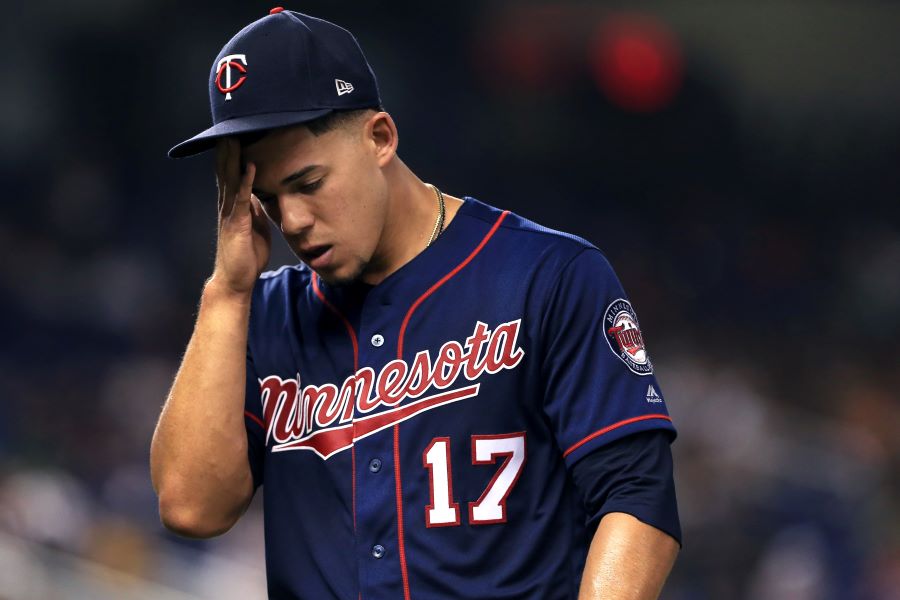 In general, extending young players is a great way to ensure that teams can keep young players that are entering their prime years under team control. This is especially important for smaller-market teams like the Twins, who risk not being able to afford a player once they reach free-agency. Kepler and Polanco’s extensions already look like absolute steals and Sano doesn’t have to do much to make his extension worthwhile. So, extending a 25-year-old team ace like Jose Berrios should be a no-brainer, right? If we look a little closer at the numbers, there are a few concerns which make extending Berrios more questionable than the others. The first, and possibly most concerning is his decreasing yearly velocity. Berrios started out with plenty of velo, but he’s trending in the wrong direction and reaching a point where his results could begin to diminish. Here’s Berrios’s average four-seam and sinker velocity from 2016 -2019: Each season we see a further decrease in velocity for both pitches. Pitching coach Wes Johnson is well-known for his ability to get his pitchers to maximize their velocity, but in his first year under Johnson, Berrios’s velocity continued to decline. This wasn’t the case with his teammates, as Jake Odorizzi’s four-seamer went from 91.1 mph in 2018 to 92.9 mph under Johnson, while Martin Perez increased from 92.8 mph to 94.2 mph. The fact that Berrios’s velocity is continuing to dip under a pitching coach whose modus operandi is getting some extra oomph out of his pitchers is not a good sign. The problem with losing fastball velocity is that batters’ ability to both hit the ball and hit it with power increases as velocity decreases. Here is a chart from a FanGraphs article, looking at how isolated power (slugging % - batting average) corresponds to fastball velocity: Clearly the more velocity the better. Here’s a chart of Berrios’s ISO allowed by season: We can see that the ISO started moving in the wrong direction in 2019. In both 2018 and 2019 Berrios also lost spin on both his four-seamer and curve. His fastball spin is in just the 26th percentile while his curve is in the 28th. Combined with his now slightly below average fastball velocity (46th percentile) Berrios’s stuff is not heading in the right direction. Berrios’s seemingly annual second-half struggles are also a concern. Although he reached 200 IP for the first time in his career, Berrios had a brutal August (7.57 ERA) and a 4.64 second-half ERA, compared to a sterling 3.00 ERA in the first-half of the season. Unfortunately, this has been a theme throughout Berrios’s young career and brings into question his ability to remain effective when he is most needed by his team. Berrios is famous for his intensive offseason workout routine and stays in great shape. During last season’s August slump (in which he saw a velocity drop) some wondered if Berrios’s intense workout regimen was responsible for his late season struggles. He has altered his workout routine some this offseason (Cody Christie gives his ideas for mitigating Berrios’s second-half slides here) and began focusing more on recovery at the end of last season (incorporating deep tissue massage). Maybe the Twins and Berrios have found a way to keep him going strong through the season, but what if Berrios was already getting the most out of his size and talent? Since being drafted, there have always been questions as to how well his body would hold up due to his size. It seems just as reasonable that his advanced fitness level and impeccable work ethic have allowed him the amount of success he has had rather than hold him back. Now, with all this said, Berrios is still Minnesota’s staff ace and should continue to be a good pitcher in 2020. Encouragingly, he used his changeup more in 2019 and it got great results (check out Matthew Trueblood's recent piece for more on that). Berrios seems a good bet to be a top of the rotation pitcher for the remainder of this three years in Minnesota and the Twins should count themselves lucky to have him. However, due to his smaller stature and already decreasing velocity, some level of decline seems more likely than not. Minnesota and Berrios were unable to come close to any kind of extension agreement last offseason and there haven’t been any rumors of an extension this year. Berrios recently lost his arbitration hearing against the Twins, but it seems he was just trying to set a new precedent for other players and doesn’t hold any grudge against the team. However, Berrios would definitely be more expensive than his recently-extended peers and seems more likely to bet on himself by waiting for free-agency. For a team that has been as starting pitcher deprived as the Minnesota Twins, not extending a young and talented arm like Berrios may seem crazy, but they do have him under team control for the next three seasons. A lot can happen in three years. If Berrios’s velocity continues to drop, he becomes less and less likely to take the next step forward and more likely to take a step back. For three years that should be okay, but anything beyond that becomes a risk Minnesota need not take on. MORE FROM TWINS DAILY — Latest Twins coverage from our writers — Recent Twins discussion in our forums — Follow Twins Daily via Twitter, Facebook or email

