



Patrick Wozniak
-
Posts
383 -
Joined
-
Last visited
-
Days Won
1
Content Type
Profiles
News
Minnesota Twins Videos
2026 Minnesota Twins Top Prospects Ranking
2022 Minnesota Twins Draft Picks
Minnesota Twins Free Agent & Trade Rumors, Notes, & Tidbits
Guides & Resources
2023 Minnesota Twins Draft Picks
The Minnesota Twins Players Project
2024 Minnesota Twins Draft Picks
2025 Minnesota Twins Draft Pick Tracker
2026 Minnesota Twins Draft Tracker: Picks & Bonuses
Forums
Blogs
Events
Store
Downloads
Gallery
Everything posted by Patrick Wozniak
-
 With the increased volatility of a shortened season a four-man rotation could potentially strengthen a team by allowing its best starters to pitch more often. The decreased workload caused by fewer games would theoretically allow pitchers to pitch on less rest while still throwing fewer pitches than they would in a typical season. Russel A. Carleton studied the effect of rest on starting pitchers for Baseball Prospectus back in 2012 and found that the amount of rest between starts doesn’t decrease a starter’s effectiveness (though high pitch counts in previous starts do). Certainly interesting, but considering the current depth of Twins pitching along with the abundance of doubleheaders likely to come with any version of a 2020 season, a six-man rotation might be more realistic. However, Wolfe did a rough study of which teams would most benefit from a four-man rotation and lo and behold, our Minnesota Twins make an appearance. He simply used FanGraphs projected rotations for each team, cut out the fifth starter, and increased the remaining WAR of the rotation by 25%. Obviously with doubleheaders teams would still need swingmen, but it’s just meant to give us a rough picture of which teams would most benefit. Here’s the results: I was initially surprised to see Minnesota amongst the teams listed, but a closer look at our projected rotation brings at least some clarity. FanGraphs projects the top-five starters to be Jose Berrios, Jake Odorizzi, Kenta Maeda, Homer Bailey, and Jhoulys Chacín. Cutting Chacín from the rotation definitely makes it better. One could certainly quibble for Randy Dobnak as the fifth starter (I would!), and maybe he would mitigate some of the drop off that comes with Chacín, but I think the main takeaway is more of Berrios, Odorizzi, and Maeda would be a good thing. Of course, Rich Hill and Michael Pineda further complicate matters. Depending on when the season starts (if ever), Hill could potentially be ready to go from the start. Talentwise, he knocks Bailey from the rotation, but pitching an oft-injured Hill on shortened rest might be a tough sell. Alternately, he would make a lot of sense as a swingman (especially considering the doubleheaders), where his innings could be limited and he could join the rotation for a potential postseason run. If Pineda’s suspension is not reduced he will miss a significant chunk of the season (39 games to be exact). He could potentially be eased into the rotation via a bullpen/swingman role, or injury or ineffectiveness could rear its ugly head and clear a spot for Pineda. Minnesota could also keep things fluid switching from a four-to-five man rotation and mixing in swingmen as needed. With expanded rosters come expanded opportunities and the Twins would be wise to keep all options open. Using only four starters would give the added benefit of multitudes of relievers that could be called upon at any time (whereas starters are unavailable on their rest days). Avoiding injury is imperative so treading with caution is well warranted, but if less overall innings allows Minnesota the opportunity to pitch their best pitchers more often, it’s certainly worthy of consideration. What do you think? Is a four-man rotation something the Twins should consider or just a dumb idea that helped bring this article into fruition? Can you think of any other outside-the-box maneuvers that could be implemented in a shortened/altered season? MORE FROM TWINS DAILY — Latest Twins coverage from our writers — Recent Twins discussion in our forums — Follow Twins Daily via Twitter, Facebook or email
 -
The Minnesota Twins All-Speed Team
Patrick Wozniak replied to Patrick Wozniak's topic in Twins Daily Front Page News
I like it! Now if someone could just fire up the simulator and throw this team into OOTP 21! -
The Minnesota Twins All-Speed Team
Patrick Wozniak replied to Patrick Wozniak's topic in Twins Daily Front Page News
He played 84 games in right in 2012 (compared to 5 in left and 39 in center) but in 2011 he played primarily center. -
The Minnesota Twins All-Speed Team
Patrick Wozniak replied to Patrick Wozniak's topic in Twins Daily Front Page News
Before starting this exercise I made sure to consult the all-speed team rule book. It clearly stated whenever humanly possible outfielders should be slotted into the position in which they played the majority of their games. However I was really tempted to throw Mack on my team as he's one of my all-time favorite Twins. But rules are rules and I abide. -
The Minnesota Twins All-Speed Team
Patrick Wozniak replied to Patrick Wozniak's topic in Twins Daily Front Page News
Gomez was the fastest but didn't play any LF for the Twins. Span I considered to be a CF. I used what was available at BR and FanGraphs (Speed scores, baserunning, stolen bases) and Gladden seemed to grade out the best for the most years while playing almost exclusively in left. For pitcher I was thinking Berrios might be pretty fast with all the working out he does. Otherwise I've heard Kaat was a good base runner. -
Are you ready for some speed? No, we’re not popping any “greenies” today. But go ahead and grab yourself a cup of coffee and we’ll assemble the speediest Twins team EVER!We’ll work our way around the diamond using some highly scientific methods, which I’ll leave to the imagination of the reader, to find the fastest Minnesota Twin to fill out each position. But first I must offer my sincerest apologies to all of you Clyde Milan enthusiasts out there as we’re not including any Washington Senators in this exercise. Please comfort yourselves in his franchise-leading 495 career stolen bases. We’ll also skip pitchers, although in my research I did discover that the great Walter Johnson stole 13 bases (and was only caught 4 times) in his Hall-of-Fame Senators career (he also hit 24 dingers). Instead of including the DH position we’ll include one utility player. Let’s start off with the least-speedy position – catcher. Catcher – Joe Mauer Technically Cesar Tovar was probably speedier than Joe Mauer, but his one career inning behind the dish doesn’t quite equate to an appropriate sample size. That’s fine, we’ll fit Tovar in later, and we can definitely afford to have one of the best all-time catchers on our crew. Mauer was a great all-around athlete and ran the bases quite well for a catcher. Welcome aboard Joe! First Base – Rod Carew I initially felt a tinge of apprehension in sticking Carew at first, but a closer analysis of the numbers actually shows that his best baserunning years for the Twins were from ’76 through ’78 – after he became a fulltime first baseman. Carew even swiped a career-high 49 bags in the ’76 season. Now I can remain guilt free and keep Kent Hrbek off of my speed team. Plus, I get an even better base stealer at second base. Second Base – Chuck Knoblauch Knoblauch is the all-time Twins leader (Senators excluded) in stolen bases with 276. He also has the single season record with 62 steals in 1997 (he holds three of the top-four spots). In three seasons from 1995-97 Knoblauch swiped 153 bags. Dude could run. Plus, that speed comes in handy when you’re dodging batteries out in left field. Third Base – Nick Punto Punto. I love me some Nick Punto. He did it all…the grit, the superfluous head-first slides into first base, gravity-defying, sideways-diving off-balance throws to first, and he could run. I fondly remember Ozzie Guillen likening him to Ty Cobb in a postgame interview. Punto was making this team; it was just a matter of where. We’ll settle for third. Long live the Piranhas! Shortstop – Christian Guzman Guzman may have been a light-hitting one-hit wonder, but boy could he fly. Everybody enjoys a nice, wholesome triple and Guzman delivered the goods. He would hit 14 or more three-baggers in three different seasons with Minnesota (leading the league each time), including an absurd 20 triples in the year 2000. Speaking of the absurd, the author of this article may or may not have once proudly donned a Christian Guzman shirsey while attending a game at Wrigley Field in which neither Guzman nor the Twins were playing. But is there anything more absurd than a bunt home run? Left Field – Dan Gladden How fast was Dan Gladden? I don’t know. I do know that he was a good baserunner, swiped his fair share of bags, rocked a bad-ass mullet, and is a World Series hero. That’ll play. Center Field – Byron Buxton While the majority of our speed team played prior to Statcast and publicly available sprint speeds, Buxton’s speed is quantifiable. He’s fast. Legit fast. According to Baseball Savant he was the third fastest player in all of baseball last season with a sprint speed of 30.3 ft/sec. While that’s not as fast as a cheetah, ostrich, or greyhound (dog or bus), it is 35% faster than Albert Pujols. Right Field – Ben Revere Revere’s time with the Twins was pretty short and he wasn’t as fast as Buxton, but he could fly. He didn’t hit for (any) power or take many walks, but he put the ball in play and stole 74 bases in 241 games between 2011 and 2012. And he did this: Utility – Cesar Tovar Tovar finally makes his way on to the list as our utility player. Could you make a case for Tovar switching places with Punto? Yes. Would you probably be right? Yes. But I’ve already declared my love for Punto and Tovar can also play the outfield (or catcher or pitcher) and playing every position in one game officially makes Tovar the ultimate utility man. That’ll do it for our all-time speed team. We have a couple of Hall-of-Fame worthy bats in Carew and Mauer along with a multi-time All-star in Knoblauch. This antithesis of the Bomba-squad would provide plenty of excitement on the basepaths, look pretty solid defensively, and between Gladden and Punto, offer plenty of flair. What do you think? Could our speed team compete? Did I leave any important speedsters off the team (I’m assuming I probably did)? Do you have a personal favorite? Please leave your comments below! MORE FROM TWINS DAILY — Latest Twins coverage from our writers — Recent Twins discussion in our forums — Follow Twins Daily via Twitter, Facebook or email Click here to view the article
-
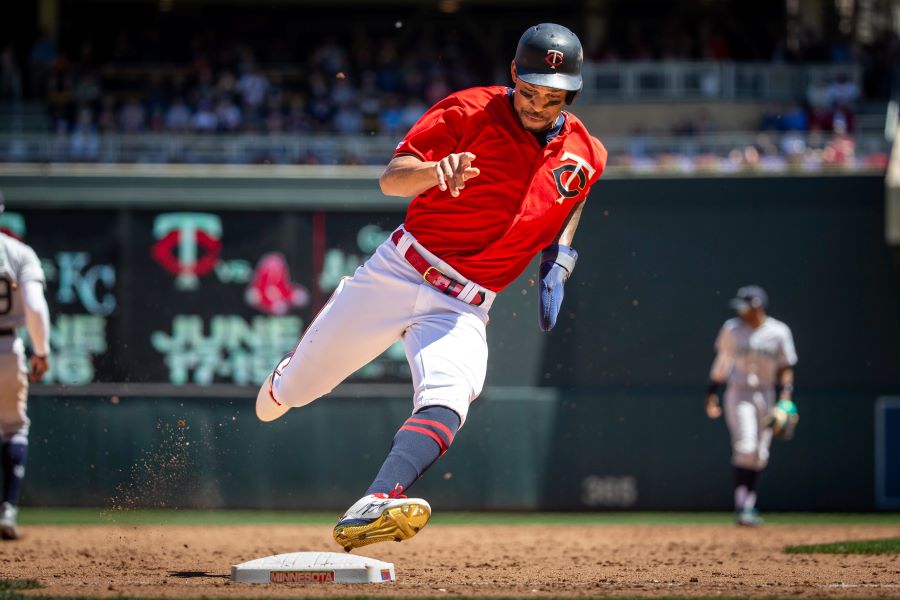 We’ll work our way around the diamond using some highly scientific methods, which I’ll leave to the imagination of the reader, to find the fastest Minnesota Twin to fill out each position. But first I must offer my sincerest apologies to all of you Clyde Milan enthusiasts out there as we’re not including any Washington Senators in this exercise. Please comfort yourselves in his franchise-leading 495 career stolen bases. We’ll also skip pitchers, although in my research I did discover that the great Walter Johnson stole 13 bases (and was only caught 4 times) in his Hall-of-Fame Senators career (he also hit 24 dingers). Instead of including the DH position we’ll include one utility player. Let’s start off with the least-speedy position – catcher. Catcher – Joe Mauer Technically Cesar Tovar was probably speedier than Joe Mauer, but his one career inning behind the dish doesn’t quite equate to an appropriate sample size. That’s fine, we’ll fit Tovar in later, and we can definitely afford to have one of the best all-time catchers on our crew. Mauer was a great all-around athlete and ran the bases quite well for a catcher. Welcome aboard Joe! First Base – Rod Carew I initially felt a tinge of apprehension in sticking Carew at first, but a closer analysis of the numbers actually shows that his best baserunning years for the Twins were from ’76 through ’78 – after he became a fulltime first baseman. Carew even swiped a career-high 49 bags in the ’76 season. Now I can remain guilt free and keep Kent Hrbek off of my speed team. Plus, I get an even better base stealer at second base. Second Base – Chuck Knoblauch Knoblauch is the all-time Twins leader (Senators excluded) in stolen bases with 276. He also has the single season record with 62 steals in 1997 (he holds three of the top-four spots). In three seasons from 1995-97 Knoblauch swiped 153 bags. Dude could run. Plus, that speed comes in handy when you’re dodging batteries out in left field. Third Base – Nick Punto Punto. I love me some Nick Punto. He did it all…the grit, the superfluous head-first slides into first base, gravity-defying, sideways-diving off-balance throws to first, and he could run. I fondly remember Ozzie Guillen likening him to Ty Cobb in a postgame interview. Punto was making this team; it was just a matter of where. We’ll settle for third. Long live the Piranhas! https://www.youtube.com/watch?v=uzzU1W-X3xs Shortstop – Christian Guzman Guzman may have been a light-hitting one-hit wonder, but boy could he fly. Everybody enjoys a nice, wholesome triple and Guzman delivered the goods. He would hit 14 or more three-baggers in three different seasons with Minnesota (leading the league each time), including an absurd 20 triples in the year 2000. Speaking of the absurd, the author of this article may or may not have once proudly donned a Christian Guzman shirsey while attending a game at Wrigley Field in which neither Guzman nor the Twins were playing. But is there anything more absurd than a bunt home run? Left Field – Dan Gladden How fast was Dan Gladden? I don’t know. I do know that he was a good baserunner, swiped his fair share of bags, rocked a bad-ass mullet, and is a World Series hero. That’ll play. Center Field – Byron Buxton While the majority of our speed team played prior to Statcast and publicly available sprint speeds, Buxton’s speed is quantifiable. He’s fast. Legit fast. According to Baseball Savant he was the third fastest player in all of baseball last season with a sprint speed of 30.3 ft/sec. While that’s not as fast as a cheetah, ostrich, or greyhound (dog or bus), it is 35% faster than Albert Pujols. Right Field – Ben Revere Revere’s time with the Twins was pretty short and he wasn’t as fast as Buxton, but he could fly. He didn’t hit for (any) power or take many walks, but he put the ball in play and stole 74 bases in 241 games between 2011 and 2012. And he did this: Utility – Cesar Tovar Tovar finally makes his way on to the list as our utility player. Could you make a case for Tovar switching places with Punto? Yes. Would you probably be right? Yes. But I’ve already declared my love for Punto and Tovar can also play the outfield (or catcher or pitcher) and playing every position in one game officially makes Tovar the ultimate utility man. That’ll do it for our all-time speed team. We have a couple of Hall-of-Fame worthy bats in Carew and Mauer along with a multi-time All-star in Knoblauch. This antithesis of the Bomba-squad would provide plenty of excitement on the basepaths, look pretty solid defensively, and between Gladden and Punto, offer plenty of flair. What do you think? Could our speed team compete? Did I leave any important speedsters off the team (I’m assuming I probably did)? Do you have a personal favorite? Please leave your comments below! MORE FROM TWINS DAILY — Latest Twins coverage from our writers — Recent Twins discussion in our forums — Follow Twins Daily via Twitter, Facebook or email
 -
Thanks...I was using BR and must have just seen the LA as Washington for some reason or mixed it up in my mind when I was looking at Pascual's page. I hate making mistakes like that; at least he was technically with the Senators for a few hours .
-
The 1968 season opened for the Twins back where it all started, in Washington D.C., with a former Twin facing off against a former Senator. It came a few days later than planned due to social unrest in the nation’s capital after the tragic assassination of Martin Luther King Jr., but on April 10th baseball would resume, albeit with a peculiar twist.Twins 2, Washington 0 Box Score Chance: 9 IP, 4 H, 0 R, 0 BB, 8 K Home Runs: Killebrew (1), Allison (1) Multi-hit games: Oliva (3-for-4, 2B) Top 3 WPA: Chance .540, Oliva .140, Alison .072 Download attachment: Twins Flashback Recap WPA pic.png Chart via Baseball-Reference 32,063 fans came out to experience opening day and more than a few of them were armed. No, it wasn’t “bring your gun to the ballpark day"; the National Guard was on hand to ensure opening day went smoothly. It gets stranger. Washington Senators shortstop Ed Brinkman attended the game not in his Senators getup, but in a military uniform, as he was performing his duty as a member of the National Guard. He made the most of the opportunity by heckling his team-and roommate, Frank Howard from the left field stands. “The games going on, and I’m trying to concentrate, and he’s hollering at me,” Howard later told Fredrich Frommer in an interview. “I’m thinking if we have to depend on this guy to save us, we’re in deep trouble.” Howard would go on to strike out in all three of his plate appearances against Minnesota starter Dean Chance, but the way Chance was throwing the ball he didn’t need any help from Brinkman. In fact, both Chance, who came to Minnesota from the former Senators franchise when it relocated to Minnesota, and Camilo Pascual, who rejoined Washington (where his career started) after six seasons and three all-star appearances in Minnesota, traded zeros for the first five innings. Minnesota threatened to score in the first as Rod Carew singled with one out and moved to third on a Tony Oliva double. That brought up the great Harmon Killebrew, who finished runner-up in the 1967 MVP race (to Carl Yastrzemski), but no MVP awards were won in his first plate appearance as he stuck out with the bat on his shoulder. Bob Allison followed with a two out walk to load the bases, but it was all for naught as John Roseboro grounded to first to end the inning. With Chance dealing on the mound, Killebrew got a chance to redeem himself in the top of the sixth, and he did just that, with a solo shot to deep left to lead off the inning and put Minnesota up 1-0. Another shot would be fired into the left field seats, and fortunately for all involved (though less so for the Senators) it came not from the rifle of a guardsman, but off of the bat of Minnesota left fielder Bob Allison with two outs in the top of the eighth. The two runs Minnesota scored were one more than Chance needed, as he scattered four hits across nine scoreless innings to lead Minnesota to a 2-0 opening day victory. Chance didn’t issue any free passes while striking out eight and finishing with a game score of 87 and a Win Probability Added of .540. If game one was a sign of things to come, we might just have been staring at “the year of the pitcher.” FLASHBACKS April 9: Gladden Caps off 3-Run Rally in the 9th to Complete Opening-Series Sweep of A's (1987) April 8: Gladden Puts On a Show For The Twins’ First Defending Champs Home Opener (1988) April 7: Seattle Sinks, Casilla Delivers Finishing Blow in Walk-Off Win (2009) April 6: Oliva Becomes First DH to HR, Blyleven Goes the Distance on 22nd Birthday (1973) April 5: Stewart Hits Walk-Off Homer, Mauer Shines in MLB Debut (2004) MORE FROM TWINS DAILY — Latest Twins coverage from our writers — Recent Twins discussion in our forums — Follow Twins Daily via Twitter, Facebook or email Click here to view the article
-
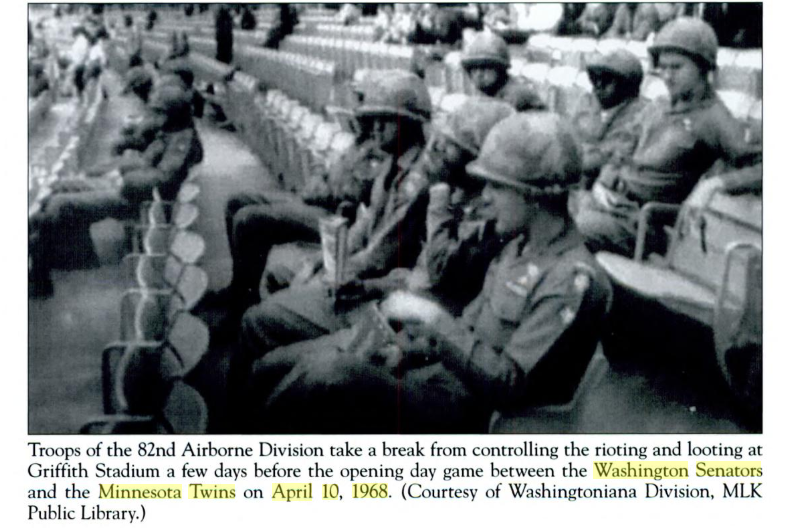 Twins 2, Washington 0 Box Score Chance: 9 IP, 4 H, 0 R, 0 BB, 8 K Home Runs: Killebrew (1), Allison (1) Multi-hit games: Oliva (3-for-4, 2B) Top 3 WPA: Chance .540, Oliva .140, Alison .072 Chart via Baseball-Reference 32,063 fans came out to experience opening day and more than a few of them were armed. No, it wasn’t “bring your gun to the ballpark day"; the National Guard was on hand to ensure opening day went smoothly. It gets stranger. Washington Senators shortstop Ed Brinkman attended the game not in his Senators getup, but in a military uniform, as he was performing his duty as a member of the National Guard. He made the most of the opportunity by heckling his team-and roommate, Frank Howard from the left field stands. “The games going on, and I’m trying to concentrate, and he’s hollering at me,” Howard later told Fredrich Frommer in an interview. “I’m thinking if we have to depend on this guy to save us, we’re in deep trouble.” Howard would go on to strike out in all three of his plate appearances against Minnesota starter Dean Chance, but the way Chance was throwing the ball he didn’t need any help from Brinkman. In fact, both Chance, who came to Minnesota from the former Senators franchise when it relocated to Minnesota, and Camilo Pascual, who rejoined Washington (where his career started) after six seasons and three all-star appearances in Minnesota, traded zeros for the first five innings. Minnesota threatened to score in the first as Rod Carew singled with one out and moved to third on a Tony Oliva double. That brought up the great Harmon Killebrew, who finished runner-up in the 1967 MVP race (to Carl Yastrzemski), but no MVP awards were won in his first plate appearance as he stuck out with the bat on his shoulder. Bob Allison followed with a two out walk to load the bases, but it was all for naught as John Roseboro grounded to first to end the inning. With Chance dealing on the mound, Killebrew got a chance to redeem himself in the top of the sixth, and he did just that, with a solo shot to deep left to lead off the inning and put Minnesota up 1-0. Another shot would be fired into the left field seats, and fortunately for all involved (though less so for the Senators) it came not from the rifle of a guardsman, but off of the bat of Minnesota left fielder Bob Allison with two outs in the top of the eighth. The two runs Minnesota scored were one more than Chance needed, as he scattered four hits across nine scoreless innings to lead Minnesota to a 2-0 opening day victory. Chance didn’t issue any free passes while striking out eight and finishing with a game score of 87 and a Win Probability Added of .540. If game one was a sign of things to come, we might just have been staring at “the year of the pitcher.” FLASHBACKS April 9: Gladden Caps off 3-Run Rally in the 9th to Complete Opening-Series Sweep of A's (1987) April 8: Gladden Puts On a Show For The Twins’ First Defending Champs Home Opener (1988) April 7: Seattle Sinks, Casilla Delivers Finishing Blow in Walk-Off Win (2009) April 6: Oliva Becomes First DH to HR, Blyleven Goes the Distance on 22nd Birthday (1973) April 5: Stewart Hits Walk-Off Homer, Mauer Shines in MLB Debut (2004) MORE FROM TWINS DAILY — Latest Twins coverage from our writers — Recent Twins discussion in our forums — Follow Twins Daily via Twitter, Facebook or email
 -
This article is the byproduct of a little experiment I ran. You see, I don’t drink much these days, but the combination of strange times and available beer in the fridge led me to crack an a.m. beer. The cool, crisp and refreshing taste of cheap Thai beer inexplicably led me to Baseball Reference (I know how to party!) which in turn led to this article. Good times…now let’s talk about Twins hitters and the pitchers they’ve murdered!I went through Twins hitters' records versus individual pitchers and tried to combine the best results with the most acceptable sample size. Since many of the “starting nine” are young and haven’t accumulated tons of plate appearances the sample sizes are relatively small and AL Central heavy. What can you do? Max Kepler vs. Trevor Bauer .351/.400/.811 – 40 PA, 13 H, 2 2B, 5 HR (straight, homey!), 9 RBI, 3BB, 9 SO We’ll start with Max Kepler, because let’s be honest, we don’t really even need a stat line for this one. Five. Straight. Home. Runs. Kepler OWNS Bauer! So much so that Bauer recently made a video about it. If you don’t feel like sitting through a 30-minute breakdown (I don’t), Do-Hyoung Park of mlb.com breaks it down in a nice little piece complete with highlights of all five home runs. Or, if you really want 34 minutes and 48 seconds of Trevor Bauer talking about it, eat your heart out… Nelson Cruz vs. Ricky Nolasco .448/.484/.966 – 31 PA, 13H, 3 2B, 4 HR, 7 RBI, 2 BB, 8 SO Did you know that Ricky Nolasco hasn’t thrown an MLB pitch since 2017? I guess this really shouldn’t be all that surprising, but somewhere in the back of my slightly-warped brain he was still battling it out in the back end of some godforsaken rotation for some desperate team. But I digress. As you can see from the numbers, Cruz has owned Nolasco. As you can probably also piece together based on the fact that Nolasco hasn’t thrown a pitch in the big leagues since 2017, Cruz didn’t do this damage as a Twin. If you haven’t been fortunate enough to block out the fact that Ricky Nolasco pitched for the Twins, you probably realize that some of this damage came at Minnesota’s expense. Don’t worry kids, Ricky Nolasco will never throw another pitch for the Minnesota Twins! Now go out and do whatever you need to do to erase the Nolasco years from your memory. Mitch Garver vs. Matthew Boyd .417/.533/1.167 – 15 PA, 5H, 1 2B, 1 3B, 2 HR, 4 RBI, 3 BB, 1 SO Ah, Matthew Boyd, everyone’s favorite perennial breakout ace candidate. He’s going to need to find some kind of Garv-sauce elixir first! Keep in mind that the 1.167 in Garver’s triple slash is his slugging percentage and not OPS. Byron Buxton vs. Dylan Bundy .417/.462/.750 – 13 PA, 5H, 1 2B, 1 HR, 2 RBI, 1 BB, 3 SO As I typed in Buxton’s name I was excited to see Boyd’s name atop the list again, but I quickly remembered that the list is ordered according to plate appearances. Boyd has actually owned Buxton (.048/.091/.139). But you know who hasn’t owned Buxton? Dylan Bundy. Buxton will no longer have the benefit of facing the homer-prone Bundy in the homer-friendly Camden Yards as Bundy was traded to the Angels, but at least he’s still in the AL. Miguel Sanó vs. Josh Tomlin .316/.381/.842 – 21 PA, 1 2B, 3 HR, 7 RBI, 2 BB, 4 SO With Sanó you have to scroll down a ways to get to the first semi-decent sample size (relatively speaking). Josh Tomlin gets us over the 20 PA threshold so he’ll do. He’s of the soft-tossing variety that you’d expect Sanó to crush and so it is. I noticed quite a few Cleveland starters who Sanó has hit well (including Shane Bieber and Mike Clevinger) so I figured I’d do my due diligence and check out his career vs. Cleveland. Not exactly what I was hoping for: .194/.309/.376. While Sanó hasn’t exactly crushed Cleveland and Tomlin’s no longer with the organization, we’ll always have this: Jorge Polanco vs. Trevor Bauer .241/.324/.690 – 35 PA, 7H, 2 2B, 1 3B, 3 HR, 5 RBI, 4 BB, 6 SO With Polanco some tough choices needed to be made. He has better results against some slightly smaller sample sizes, but we’re trying to find a happy medium here, so have another serving of Trevor Bauer (he will be missed). Josh Donaldson vs. Jake Odorizzi .259/.394/.815 – 33 PA, 7H, 5 HR, 7 RBI, 6 BB, 9 SO Donaldson has been an absolute Twins killer over the years. However, the fact that he’s hit well at Target Field can now be viewed as a positive. And while he won’t be facing Jake Odorizzi this year (though that could change as Odorizzi will become a free agent in 2021), he may still face several other former Twins that he’s terrorized over the years, including Kyle Gibson and Martín Pérez. Eddie Rosario vs. Josh Tomlin .500/.500/.955 – 22 PA, 11H, 1 2B, 3 HR, 6 RBI, 3 SO It was tempting to mix it up a bit and go with another Cleveland pitcher that Rosario has destroyed (Shane Bieber and Cody Allen fit the bill), but his largest sample size was against Tomlin (we’ve got principles) along with the best results. Speaking of principles, I promised my mother I would never reference Josh Tomlin more than twice in anything I write and my beer is empty, so it’s time to say goodbye. P.S. Did you notice the ordering of the hitters doesn’t seem to have any rhyme or reason to it? Good job. You passed the test. Now go grab a beer, kick your shoes off, and enjoy that Trevor Bauer video. You’ve earned it! MORE FROM TWINS DAILY — Latest Twins coverage from our writers — Recent Twins discussion in our forums — Follow Twins Daily via Twitter, Facebook or email Click here to view the article
-
Twins Hitters, the Pitchers They Crush, and Beer in the Morning
Patrick Wozniak posted an article in Twins
 I went through Twins hitters' records versus individual pitchers and tried to combine the best results with the most acceptable sample size. Since many of the “starting nine” are young and haven’t accumulated tons of plate appearances the sample sizes are relatively small and AL Central heavy. What can you do? Max Kepler vs. Trevor Bauer .351/.400/.811 – 40 PA, 13 H, 2 2B, 5 HR (straight, homey!), 9 RBI, 3BB, 9 SO We’ll start with Max Kepler, because let’s be honest, we don’t really even need a stat line for this one. Five. Straight. Home. Runs. Kepler OWNS Bauer! So much so that Bauer recently made a video about it. If you don’t feel like sitting through a 30-minute breakdown (I don’t), Do-Hyoung Park of mlb.com breaks it down in a nice little piece complete with highlights of all five home runs. Or, if you really want 34 minutes and 48 seconds of Trevor Bauer talking about it, eat your heart out… Nelson Cruz vs. Ricky Nolasco .448/.484/.966 – 31 PA, 13H, 3 2B, 4 HR, 7 RBI, 2 BB, 8 SO Did you know that Ricky Nolasco hasn’t thrown an MLB pitch since 2017? I guess this really shouldn’t be all that surprising, but somewhere in the back of my slightly-warped brain he was still battling it out in the back end of some godforsaken rotation for some desperate team. But I digress. As you can see from the numbers, Cruz has owned Nolasco. As you can probably also piece together based on the fact that Nolasco hasn’t thrown a pitch in the big leagues since 2017, Cruz didn’t do this damage as a Twin. If you haven’t been fortunate enough to block out the fact that Ricky Nolasco pitched for the Twins, you probably realize that some of this damage came at Minnesota’s expense. Don’t worry kids, Ricky Nolasco will never throw another pitch for the Minnesota Twins! Now go out and do whatever you need to do to erase the Nolasco years from your memory. Mitch Garver vs. Matthew Boyd .417/.533/1.167 – 15 PA, 5H, 1 2B, 1 3B, 2 HR, 4 RBI, 3 BB, 1 SO Ah, Matthew Boyd, everyone’s favorite perennial breakout ace candidate. He’s going to need to find some kind of Garv-sauce elixir first! Keep in mind that the 1.167 in Garver’s triple slash is his slugging percentage and not OPS. Byron Buxton vs. Dylan Bundy .417/.462/.750 – 13 PA, 5H, 1 2B, 1 HR, 2 RBI, 1 BB, 3 SO As I typed in Buxton’s name I was excited to see Boyd’s name atop the list again, but I quickly remembered that the list is ordered according to plate appearances. Boyd has actually owned Buxton (.048/.091/.139). But you know who hasn’t owned Buxton? Dylan Bundy. Buxton will no longer have the benefit of facing the homer-prone Bundy in the homer-friendly Camden Yards as Bundy was traded to the Angels, but at least he’s still in the AL. Miguel Sanó vs. Josh Tomlin .316/.381/.842 – 21 PA, 1 2B, 3 HR, 7 RBI, 2 BB, 4 SO With Sanó you have to scroll down a ways to get to the first semi-decent sample size (relatively speaking). Josh Tomlin gets us over the 20 PA threshold so he’ll do. He’s of the soft-tossing variety that you’d expect Sanó to crush and so it is. I noticed quite a few Cleveland starters who Sanó has hit well (including Shane Bieber and Mike Clevinger) so I figured I’d do my due diligence and check out his career vs. Cleveland. Not exactly what I was hoping for: .194/.309/.376. While Sanó hasn’t exactly crushed Cleveland and Tomlin’s no longer with the organization, we’ll always have this: Jorge Polanco vs. Trevor Bauer .241/.324/.690 – 35 PA, 7H, 2 2B, 1 3B, 3 HR, 5 RBI, 4 BB, 6 SO With Polanco some tough choices needed to be made. He has better results against some slightly smaller sample sizes, but we’re trying to find a happy medium here, so have another serving of Trevor Bauer (he will be missed). Josh Donaldson vs. Jake Odorizzi .259/.394/.815 – 33 PA, 7H, 5 HR, 7 RBI, 6 BB, 9 SO Donaldson has been an absolute Twins killer over the years. However, the fact that he’s hit well at Target Field can now be viewed as a positive. And while he won’t be facing Jake Odorizzi this year (though that could change as Odorizzi will become a free agent in 2021), he may still face several other former Twins that he’s terrorized over the years, including Kyle Gibson and Martín Pérez. Eddie Rosario vs. Josh Tomlin .500/.500/.955 – 22 PA, 11H, 1 2B, 3 HR, 6 RBI, 3 SO It was tempting to mix it up a bit and go with another Cleveland pitcher that Rosario has destroyed (Shane Bieber and Cody Allen fit the bill), but his largest sample size was against Tomlin (we’ve got principles) along with the best results. Speaking of principles, I promised my mother I would never reference Josh Tomlin more than twice in anything I write and my beer is empty, so it’s time to say goodbye. P.S. Did you notice the ordering of the hitters doesn’t seem to have any rhyme or reason to it? Good job. You passed the test. Now go grab a beer, kick your shoes off, and enjoy that Trevor Bauer video. You’ve earned it! MORE FROM TWINS DAILY — Latest Twins coverage from our writers — Recent Twins discussion in our forums — Follow Twins Daily via Twitter, Facebook or email
 -
Discipline is probably something that we could all use a bit more of, but some are more disciplined than others. Baseball players are no different, and hitters who excel in plate discipline give themselves a huge advantage. By avoiding strikeouts, laying off bad pitches, and taking walks, hitters greatly increase their chances of success. So how disciplined are Twins hitters?Wouldn’t it be nice if we could quantify plate discipline and package it into a nice little number, maybe even a “plus” number like wRC+, where 100 is league average? On my own I wouldn’t know where to begin, but luckily Ben Clemens of FanGraphs has us covered. Clemens recently attempted to quantify plate discipline in a new stat he christened NOC+ (Non-Contact Management +). It basically takes everything a batter does when they don’t hit the ball (strikeout, walk, hit by pitch) and combines the results into the nice plus number we were looking for (based on the values of each non-contact event). A hitter with an above-average NOC+ has more leeway as he could still become an average or better hitter with below-average batted-ball skills, but it’s obviously best to be good at both. For a better picture of how NOC+ is calculated please read Clemens’ piece. That brings us to the Twins. Clemens does us another favor and lists every batter’s NOC+ from 2019. A quick scan of the list and you’ll notice quite a few Twins names near the top. In fact, of the 360 players listed, six members of the would-be 2020 club make the list. Luis Arraez (118.93 NOC+) and Willians Astudillo (117.32) come in at numbers four and eight respectively, while Max Kepler (111.40) is 40th, Ehire Adrianza (110.06) is 55th, Polanco (108.28) is 76th, and Josh Donaldson (108.26) comes in at 77th (though Donaldson obviously did it with the Atlanta Braves). To take Arraez as an example, his 118.93 NOC+ means he was 18.93% better than the average hitter (100 NOC+) in plate discipline. As is evident by the inclusion of Astudillo, a good NOC+ number doesn’t make you a good hitter per se. According to NOC+, Astudillo’s plate discipline is 17 percent above average, but a cursory glance at his statcast numbers tell you that his batted- ball results are well below average (2.7% barrel rate vs. 6.3% league average, the list goes on). Of course, Arraez managed to be a pretty remarkable hitter with similar NOC+ numbers and unflattering statcast results, but Arraez walks more, hits more flares (which fall in for more hits), sprays the ball all over, and gets better pitches to hit by not chasing nearly as much as Astudillo. Still, if Astudillo can find a way to make better contact, his NOC+ numbers point to a decent pad to launch from. As we continue scrolling downward we see a few Twins who are slightly above average in Eddie Rosario (104.53) and Mitch Garver (102.71), and a few who are slightly below average in Nelson Cruz (98.02) and Byron Buxton (97.10). All these guys were better than average when they made contact, so combined with their average non-contact skills they come out as above average hitters. And if Rosario’s ranking gives you some pause (he certainly doesn’t equate with above average plate discipline in my mind) keep in mind that he strikes out at a low clip (14.6 %). As we get to the bottom of the list, we find three Twins hitters. Jake Cave ranks 309th overall with a 90.89 NOC+ while Alex Avila comes in at 336th with an 85.72 NOC+. Miguel Sano comes dangerously close to last place at 350 with an 80.20 NOC+. The common denominator is strikeouts, as all three have strikeout rates north of 30% (Avila and Sano were at 35.1% and 36.2% respectively). Fortunately, all three hit the ball hard and rank well in quality contact skills such as barrel rates. The streaky nature of all three players is likely tied to their inability to make consistent contact and diminished quality of contact skills would be especially detrimental to these types of hitters. This is especially concerning for the 33-year-old Avila, who saw his numbers drop significantly over the second half of 2019. When the 2019 Minnesota Twins made contact with the baseball good things tended to happen. Twins hitters were among the best in barrel rates and their 307 home runs are evident of how potent their bats were. Although Clemens himself questions how useful his NOC+ stat really is (it’s new and needs further study), it’s encouraging to see good overall non-contact skills to go along with the great batted ball results. More of the same would be more than welcome in whatever manifestation the 2020 season takes. MORE FROM TWINS DAILY — Latest Twins coverage from our writers — Recent Twins discussion in our forums — Follow Twins Daily via Twitter, Facebook or email Click here to view the article
-
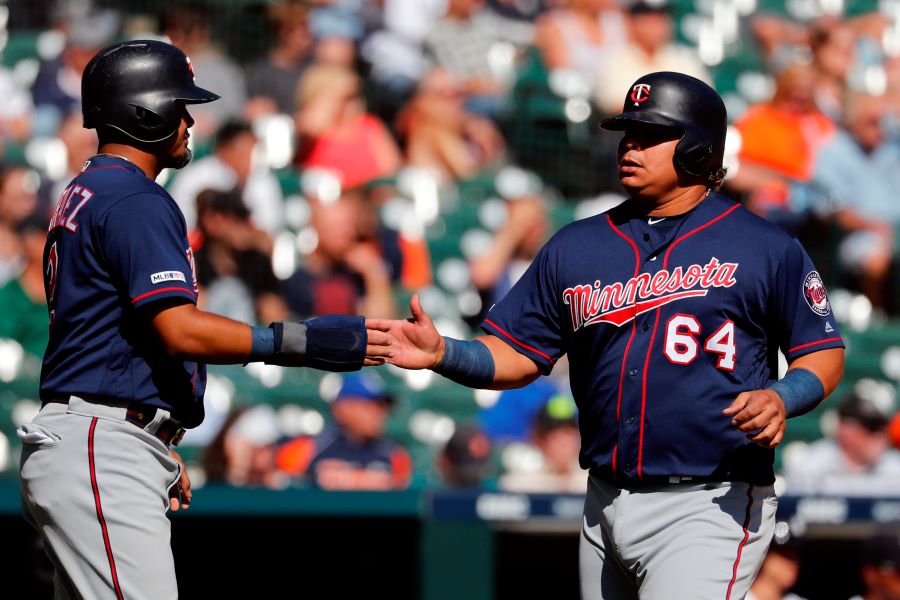 Wouldn’t it be nice if we could quantify plate discipline and package it into a nice little number, maybe even a “plus” number like wRC+, where 100 is league average? On my own I wouldn’t know where to begin, but luckily Ben Clemens of FanGraphs has us covered. Clemens recently attempted to quantify plate discipline in a new stat he christened NOC+ (Non-Contact Management +). It basically takes everything a batter does when they don’t hit the ball (strikeout, walk, hit by pitch) and combines the results into the nice plus number we were looking for (based on the values of each non-contact event). A hitter with an above-average NOC+ has more leeway as he could still become an average or better hitter with below-average batted-ball skills, but it’s obviously best to be good at both. For a better picture of how NOC+ is calculated please read Clemens’ piece. That brings us to the Twins. Clemens does us another favor and lists every batter’s NOC+ from 2019. A quick scan of the list and you’ll notice quite a few Twins names near the top. In fact, of the 360 players listed, six members of the would-be 2020 club make the list. Luis Arraez (118.93 NOC+) and Willians Astudillo (117.32) come in at numbers four and eight respectively, while Max Kepler (111.40) is 40th, Ehire Adrianza (110.06) is 55th, Polanco (108.28) is 76th, and Josh Donaldson (108.26) comes in at 77th (though Donaldson obviously did it with the Atlanta Braves). To take Arraez as an example, his 118.93 NOC+ means he was 18.93% better than the average hitter (100 NOC+) in plate discipline. As is evident by the inclusion of Astudillo, a good NOC+ number doesn’t make you a good hitter per se. According to NOC+, Astudillo’s plate discipline is 17 percent above average, but a cursory glance at his statcast numbers tell you that his batted- ball results are well below average (2.7% barrel rate vs. 6.3% league average, the list goes on). Of course, Arraez managed to be a pretty remarkable hitter with similar NOC+ numbers and unflattering statcast results, but Arraez walks more, hits more flares (which fall in for more hits), sprays the ball all over, and gets better pitches to hit by not chasing nearly as much as Astudillo. Still, if Astudillo can find a way to make better contact, his NOC+ numbers point to a decent pad to launch from. As we continue scrolling downward we see a few Twins who are slightly above average in Eddie Rosario (104.53) and Mitch Garver (102.71), and a few who are slightly below average in Nelson Cruz (98.02) and Byron Buxton (97.10). All these guys were better than average when they made contact, so combined with their average non-contact skills they come out as above average hitters. And if Rosario’s ranking gives you some pause (he certainly doesn’t equate with above average plate discipline in my mind) keep in mind that he strikes out at a low clip (14.6 %). As we get to the bottom of the list, we find three Twins hitters. Jake Cave ranks 309th overall with a 90.89 NOC+ while Alex Avila comes in at 336th with an 85.72 NOC+. Miguel Sano comes dangerously close to last place at 350 with an 80.20 NOC+. The common denominator is strikeouts, as all three have strikeout rates north of 30% (Avila and Sano were at 35.1% and 36.2% respectively). Fortunately, all three hit the ball hard and rank well in quality contact skills such as barrel rates. The streaky nature of all three players is likely tied to their inability to make consistent contact and diminished quality of contact skills would be especially detrimental to these types of hitters. This is especially concerning for the 33-year-old Avila, who saw his numbers drop significantly over the second half of 2019. When the 2019 Minnesota Twins made contact with the baseball good things tended to happen. Twins hitters were among the best in barrel rates and their 307 home runs are evident of how potent their bats were. Although Clemens himself questions how useful his NOC+ stat really is (it’s new and needs further study), it’s encouraging to see good overall non-contact skills to go along with the great batted ball results. More of the same would be more than welcome in whatever manifestation the 2020 season takes. MORE FROM TWINS DAILY — Latest Twins coverage from our writers — Recent Twins discussion in our forums — Follow Twins Daily via Twitter, Facebook or email
 -
The article you’ve been anxiously anticipating all offseason has finally arrived! Today we’ll take a deep, deep dive into the enigma that is…wait for it…backup catcher Alex Avila.We’ll divide Avila into three segments because…well, it’s in the title. We’re generally optimistic here at Twins Daily so I’ll start with the good. The Good Avila hits the ball really hard. Pretty solid analysis, now let’s move on to the bad. Oh, you want a bit more? Avila’s exit velocity in 2019 was an elite 91.4 mph. He wOBAed .323, which is pretty solid for a backup catcher who also excels in pitch framing. However, his .357 expected wOBA and .506 xwOBAcon (expected results based on quality of contact) imply that Avila’s results should have been even better. Way back in 2011 Avila had a career year, slashing .295/.389/.506 with a 140 wRC+ in 140 games. As Mitch Garver’s backup, he’s not coming anywhere close to that 140 games played plateau, but based on his xwOBA could we see a significant uptick in his offensive output this year? The Bad Unfortunately, if we dig a little deeper there seems to be a pretty straight-forward explanation for why Avila underperforms his expected statistics: the shift! Back in Avila’s heyday teams weren’t shifting much (it was a simpler time) but with the analytics movement that has changed. As someone who both hits a lot of ground balls (52.1 GB% in 2019) and pulls the ball (46.9% in 2019) Avila is an ideal candidate for teams to utilize the shift against, and that’s exactly what teams have done. According to Baseball Savant, Avila saw some version of the shift in 88.7% of plate appearances last season, putting up a .310 wOBA against the shift compared to a very good .427 wOBA with no shift. I think it’s safe to assume teams will continue to shift Avila. The Ugly Although Avila can draw a walk with the best of them, he also whiffs a lot. His strikeout rate was 33.8% last year and 38.5% in 2018. At age-33 Avila’s at dangerous crossroad where a dip in his quality of contact combined with diminishing non-contact skills could quickly diminish his offensive output. Avila does bat left-handed and the Twins have the luxury of protecting him from facing lefty pitchers, but 2019 might already point to Avila’s downslide. In the first half Avila hit .236/.409 /.500 with a 21.5% walk rate and 25.8% K-rate. Really nice, but his second half tells a completely different story. Avila hit just .185/.306/.359 while walking 14.8% of the time but striking out at a ghastly 40.7% clip. Could Avila’s second half be a blip in the radar? Maybe, but catchers don’t tend to age well, so concern seems warranted. In the grand scheme of things, Avila is just a backup catcher (with good pitch framing numbers) who will cede the lion’s share of catching duties to starter Mitch Garver, so we probably shouldn’t lose sleep over this (after all, we might not even have a season!). However, a large part of Avila’s appeal was his ability to hit righties and pair perfectly with Garver, which a continuation of his 2019 second half into 2020 would diminish. Fortunately, the Twins have options. Willians Astudillo is still around, and if the turtle power fails, Twins Daily’s #7 prospect Ryan Jeffers and Ben Rortvedt are a great first half and a 40-man roster spot away. Now we just need a baseball season to see how it all shakes out. MORE FROM TWINS DAILY — Latest Twins coverage from our writers — Recent Twins discussion in our forums — Follow Twins Daily via Twitter, Facebook or email Click here to view the article
-
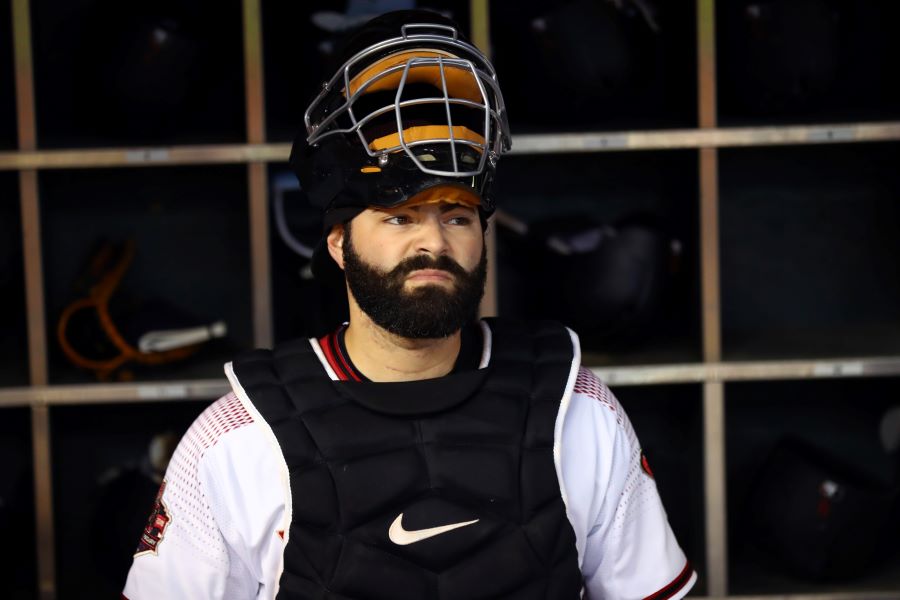 We’ll divide Avila into three segments because…well, it’s in the title. We’re generally optimistic here at Twins Daily so I’ll start with the good. The Good Avila hits the ball really hard. Pretty solid analysis, now let’s move on to the bad. Oh, you want a bit more? Avila’s exit velocity in 2019 was an elite 91.4 mph. He wOBAed .323, which is pretty solid for a backup catcher who also excels in pitch framing. However, his .357 expected wOBA and .506 xwOBAcon (expected results based on quality of contact) imply that Avila’s results should have been even better. Way back in 2011 Avila had a career year, slashing .295/.389/.506 with a 140 wRC+ in 140 games. As Mitch Garver’s backup, he’s not coming anywhere close to that 140 games played plateau, but based on his xwOBA could we see a significant uptick in his offensive output this year? The Bad Unfortunately, if we dig a little deeper there seems to be a pretty straight-forward explanation for why Avila underperforms his expected statistics: the shift! Back in Avila’s heyday teams weren’t shifting much (it was a simpler time) but with the analytics movement that has changed. As someone who both hits a lot of ground balls (52.1 GB% in 2019) and pulls the ball (46.9% in 2019) Avila is an ideal candidate for teams to utilize the shift against, and that’s exactly what teams have done. According to Baseball Savant, Avila saw some version of the shift in 88.7% of plate appearances last season, putting up a .310 wOBA against the shift compared to a very good .427 wOBA with no shift. I think it’s safe to assume teams will continue to shift Avila. The Ugly Although Avila can draw a walk with the best of them, he also whiffs a lot. His strikeout rate was 33.8% last year and 38.5% in 2018. At age-33 Avila’s at dangerous crossroad where a dip in his quality of contact combined with diminishing non-contact skills could quickly diminish his offensive output. Avila does bat left-handed and the Twins have the luxury of protecting him from facing lefty pitchers, but 2019 might already point to Avila’s downslide. In the first half Avila hit .236/.409 /.500 with a 21.5% walk rate and 25.8% K-rate. Really nice, but his second half tells a completely different story. Avila hit just .185/.306/.359 while walking 14.8% of the time but striking out at a ghastly 40.7% clip. Could Avila’s second half be a blip in the radar? Maybe, but catchers don’t tend to age well, so concern seems warranted. In the grand scheme of things, Avila is just a backup catcher (with good pitch framing numbers) who will cede the lion’s share of catching duties to starter Mitch Garver, so we probably shouldn’t lose sleep over this (after all, we might not even have a season!). However, a large part of Avila’s appeal was his ability to hit righties and pair perfectly with Garver, which a continuation of his 2019 second half into 2020 would diminish. Fortunately, the Twins have options. Willians Astudillo is still around, and if the turtle power fails, Twins Daily’s #7 prospect Ryan Jeffers and Ben Rortvedt are a great first half and a 40-man roster spot away. Now we just need a baseball season to see how it all shakes out. MORE FROM TWINS DAILY — Latest Twins coverage from our writers — Recent Twins discussion in our forums — Follow Twins Daily via Twitter, Facebook or email
 -
There are a lot of things I could do but I don't know if I wanna put myself through that ! Plus I really hated making those tables!
-
In difficult times, the last thing most people want is another challenge. However, if you’re reading this, you’re most likely a fan of the Minnesota Twins and followed the team through some difficult seasons in the previous decade. Today’s challenge should be fun and hopefully fulfilling: we get to build a winner!Let me explain. We’re going to use the entire player pool from 2011 – 2018 and attempt to build a winning team (I’m throwing the 2015 and 2017 teams in even though they were technically winners). But this is a civilized exercise so there are some rules to which we must comply. They are as follows: A player can be used only once and must be slotted in the position they played the majority of the time in the corresponding season (One player, one position, one season).Three players must be selected from each year (this makes 24) with the exception of one four-player year to get the team to 25.The bench will consist of four players and the bullpen will have seven slots.Fairly simple. I’ll now unveil the team I came up with. First the starting nine: Download attachment: Building from Losers S9 pic.png The three players to a year rule places some limitations on what you can do but I knew I wanted to build around Joe Mauer’s 2013 and Brian Dozier’s 2015. Mauer’s best years were obviously spent as a catcher so that left him out of first base consideration, which left me with a pretty uninspiring 2012 season from post-concussion Justin Morneau. But the pickings were slim and it wouldn’t feel right not to have the M&M boys on the team. The DH choices also left a lot to be desired as we just miss Jim Thome’s epic 2010 and Nelson Cruz’s absurd 2019. But at least we are left with a decent but partial penultimate season from Thome (he was traded to Cleveland as the Twins fell out of contention and he split his final season between Philadelphia and Baltimore). Danny Santana’s inclusion as center fielder might turn a few heads (I’m not sure why you’d turn your head if your staring at a screen, but you get the point). Byron Buxton’s 2017 and Denard Span’s 2012 seasons were also under consideration, but Santana’s offensive production was ridiculous (his .405 BABIP and future seasons suggest he was more than a bit lucky) and we may just be able to squeeze Span and Buxton onto the bench: Download attachment: Building from Losers bench pic.png One could certainly make an argument for Kurt Suzuki’s All-Star 2014 season for backup catcher (he also bats right-handed unlike Mauer and Castro), but I like Jason Castro’s defense more and 2013 Mauer significantly reduces the importance of backup catcher anyway. Plus, I already had three 2014 position players in my starting lineup and saved my one extra slot for a 2014 starting pitcher: Download attachment: Building from Losers starters pic.png I like this rotation a lot. Like Mauer and Dozier, 2014 Phil Hughes was a no-brainer to build around. The rest of the rotation is pretty solid. I was down to Scott Baker, an uninspiring 2018 Jake Odorizzi, and a very enticing blast from the past in 2012 Scott Diamond (the one-hit wonder) for the fifth and final spot. It came down to a battle of the Scotts and the diamond got baked (I know this makes no sense, but I couldn’t resist). That brings us to the bullpen: Download attachment: Building from Losers bullpen pic.png I really like this ‘pen. 2013 Glen Perkins and 2018 Taylor Rogers were two bad dudes that were must adds. After that, the rest of the bullpen is really solid. I couldn’t decide who the second set-up guy should be, so I’ll leave that to the discretion of manager Raul Mardenhire (AKA Mardy). Overall, I really like this team. The only real offensive weak spots are DH and 1B. The thought of running that defense out there is a little scary, but there are some solid defensive replacements on the bench (at least for the outfield). The rotation is strong and the bullpen is of the shutdown variety. Not bad for a team of losers. What do you think of this Twins compilation? Could this team beat the 2019 Twins in a simulated series? Can you make that a reality with OOTP 21? (I just bought it two days ago. It’s the first video game I’ve played in 20 years. It’s amazing. I’m addicted. I really can’t stop playing it. Please help me.) I challenge you to build a better team within the parameters of the rules. Go for it and share your team! MORE FROM TWINS DAILY — Latest Twins coverage from our writers — Recent Twins discussion in our forums — Follow Twins Daily via Twitter, Facebook or email Click here to view the article
-
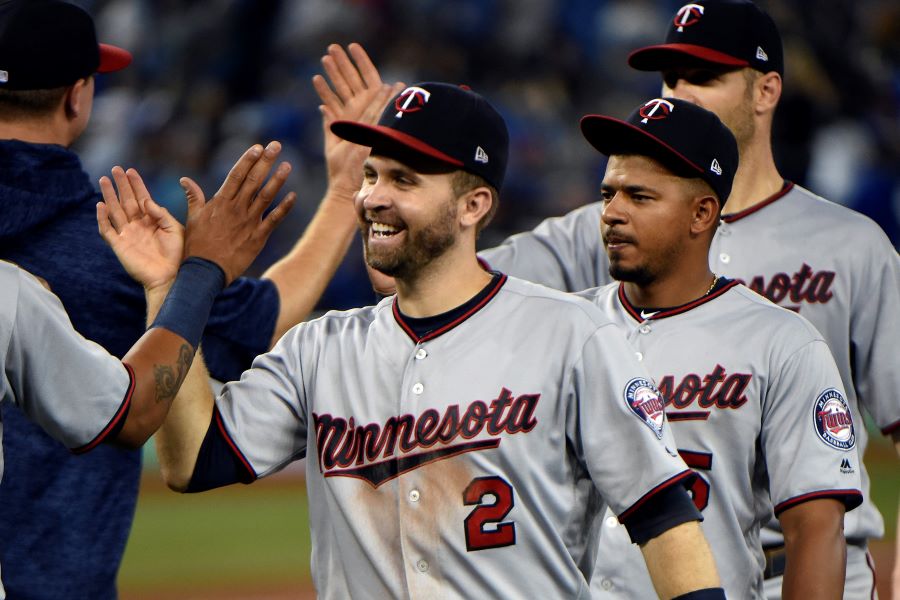 Let me explain. We’re going to use the entire player pool from 2011 – 2018 and attempt to build a winning team (I’m throwing the 2015 and 2017 teams in even though they were technically winners). But this is a civilized exercise so there are some rules to which we must comply. They are as follows: A player can be used only once and must be slotted in the position they played the majority of the time in the corresponding season (One player, one position, one season). Three players must be selected from each year (this makes 24) with the exception of one four-player year to get the team to 25. The bench will consist of four players and the bullpen will have seven slots. Fairly simple. I’ll now unveil the team I came up with. First the starting nine: The three players to a year rule places some limitations on what you can do but I knew I wanted to build around Joe Mauer’s 2013 and Brian Dozier’s 2015. Mauer’s best years were obviously spent as a catcher so that left him out of first base consideration, which left me with a pretty uninspiring 2012 season from post-concussion Justin Morneau. But the pickings were slim and it wouldn’t feel right not to have the M&M boys on the team. The DH choices also left a lot to be desired as we just miss Jim Thome’s epic 2010 and Nelson Cruz’s absurd 2019. But at least we are left with a decent but partial penultimate season from Thome (he was traded to Cleveland as the Twins fell out of contention and he split his final season between Philadelphia and Baltimore). Danny Santana’s inclusion as center fielder might turn a few heads (I’m not sure why you’d turn your head if your staring at a screen, but you get the point). Byron Buxton’s 2017 and Denard Span’s 2012 seasons were also under consideration, but Santana’s offensive production was ridiculous (his .405 BABIP and future seasons suggest he was more than a bit lucky) and we may just be able to squeeze Span and Buxton onto the bench: One could certainly make an argument for Kurt Suzuki’s All-Star 2014 season for backup catcher (he also bats right-handed unlike Mauer and Castro), but I like Jason Castro’s defense more and 2013 Mauer significantly reduces the importance of backup catcher anyway. Plus, I already had three 2014 position players in my starting lineup and saved my one extra slot for a 2014 starting pitcher: I like this rotation a lot. Like Mauer and Dozier, 2014 Phil Hughes was a no-brainer to build around. The rest of the rotation is pretty solid. I was down to Scott Baker, an uninspiring 2018 Jake Odorizzi, and a very enticing blast from the past in 2012 Scott Diamond (the one-hit wonder) for the fifth and final spot. It came down to a battle of the Scotts and the diamond got baked (I know this makes no sense, but I couldn’t resist). That brings us to the bullpen: I really like this ‘pen. 2013 Glen Perkins and 2018 Taylor Rogers were two bad dudes that were must adds. After that, the rest of the bullpen is really solid. I couldn’t decide who the second set-up guy should be, so I’ll leave that to the discretion of manager Raul Mardenhire (AKA Mardy). Overall, I really like this team. The only real offensive weak spots are DH and 1B. The thought of running that defense out there is a little scary, but there are some solid defensive replacements on the bench (at least for the outfield). The rotation is strong and the bullpen is of the shutdown variety. Not bad for a team of losers. What do you think of this Twins compilation? Could this team beat the 2019 Twins in a simulated series? Can you make that a reality with OOTP 21? (I just bought it two days ago. It’s the first video game I’ve played in 20 years. It’s amazing. I’m addicted. I really can’t stop playing it. Please help me.) I challenge you to build a better team within the parameters of the rules. Go for it and share your team! MORE FROM TWINS DAILY — Latest Twins coverage from our writers — Recent Twins discussion in our forums — Follow Twins Daily via Twitter, Facebook or email
 -
RBI Percentage and the Minnesota Twins
Patrick Wozniak posted a topic in Twins Daily Front Page News
As new advanced stats continue to roll out at a dizzying pace, many traditional statistics such as batting average and runs batted in have become somewhat passé. WAR, OPS, and wOBA are among the multitude of newer stats that can more accurately measure a player’s performance. However, Bill James’ RBI percentage puts an interesting twist on the RBI, which we will naturally apply to Twins hitters.The RBI is often seen as problematic because it’s an opportunity stat. The more times a batter comes to the plate with runners on base, the better his chances to collect an RBI. Eddie Rosario led the Twins with 109 RBIs, but is it because he’s good at knocking in runs or is he just fortunate to frequently come to the plate with runners on base? Thanks to Bill James, we’ll be able to answer that question. James created RBI percentage, which he explains in detail in The Bill James 2020 Handbook (This is a great way to get your baseball fix, it’s full of captivating essays and statistical analysis and I can’t recommend it enough). Basically, runners are penalized when they fail to drive in a run by making an out (a missed RBI opportunity). The “charge” of making an out varies based on the situation, meaning failing to knock in a runner on third with less than two outs is a bigger penalty than making an out with the bases empty (where a home run would be the only way to obtain an RBI). Multiple baserunners count as multiple opportunities, weighted accordingly. You end up with a percentage that fits nicely into the range of on base percentage but has a slightly higher standard deviation, meaning more variation (Seriously, read James’ essay! He explains this much better than I have). So, how did Twins hitters perform? As you’d expect from the team that led the MLB with 906 RBIs, there were some efficient RBI producers on the team. In fact, Nelson Cruz led all of baseball with a .486 RBI percentage (finished with 108 RBIs). He was not alone. Although Mitch Garver didn’t put up gaudy RBI totals (67 total RBIs) due to limited playing time, he made the most of his opportunities with a .464 RBI percentage, which was fourth in the MLB! In total, the 2020 Minnesota Twins will have seven players who finished in the top-100, including Max Kepler (24th – .432, 90 RBI), Eddie Rosario (31st – .421, 109 RBI), Miguel Sano (46th – .410, 79 RBI), Josh Donaldson (67th – .394, 94 RBI), and Byron Buxton (90th – .380, 46 RBI). In case you were wondering, Billy Hamilton had the MLB’s worst RBI percentage at .159, while Willians Astudillo was the worst on the Twins at .285. The 2019 MLB average was .326. That brings us back to the ever-polarizing Rosario. While teammate Nelson Cruz was the most efficient RBI producer, Rosario undeniably earned his 109 RBIs with his well above average .421 RBI percentage. And while some of us clamored for Jake Cave to get his cut of Rosario’s playing time (after all, Rosario was playing hurt) with Cave outperforming Rosario in wRC+ (113 to 103), Rosario easily topped Cave (.302 RBI percentage) in run production. So yes, in batting cleanup Rosario was afforded plenty of RBI opportunities, but he was also really good at coming through when it mattered. This naturally leads to the question of how sticky a stat like RBI percentage is from season to season. For that I don’t have an answer, but a hitter with high RBI totals year in and year out is probably doing something right. According to James, “Generally speaking, the best RBI men almost always get the most chances to drive in runs.” This makes sense as you want your best hitters hitting behind the guys who get on base. He goes on to point out that there are exceptions like 2018 Mike Trout and Mookie Betts (hitting at or near the top of the order), but in 2019 all of the 22 hitters with over 100 RBI had high RBI percentages. With the shortened season we don’t know how many RBI to expect, but if the Twins can approach their 2019 efficiency they should be near the top of baseball in runs scored. And while the debate around RBI can continue, James’ RBI percentage at least injects some context into an “old-school” stat. Click here to view the article -
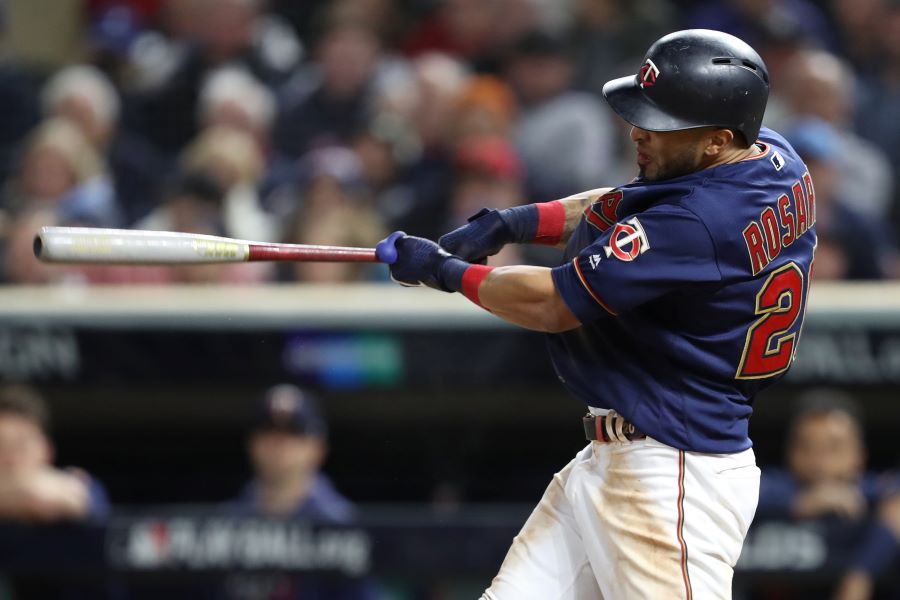 The RBI is often seen as problematic because it’s an opportunity stat. The more times a batter comes to the plate with runners on base, the better his chances to collect an RBI. Eddie Rosario led the Twins with 109 RBIs, but is it because he’s good at knocking in runs or is he just fortunate to frequently come to the plate with runners on base? Thanks to Bill James, we’ll be able to answer that question. James created RBI percentage, which he explains in detail in The Bill James 2020 Handbook (This is a great way to get your baseball fix, it’s full of captivating essays and statistical analysis and I can’t recommend it enough). Basically, runners are penalized when they fail to drive in a run by making an out (a missed RBI opportunity). The “charge” of making an out varies based on the situation, meaning failing to knock in a runner on third with less than two outs is a bigger penalty than making an out with the bases empty (where a home run would be the only way to obtain an RBI). Multiple baserunners count as multiple opportunities, weighted accordingly. You end up with a percentage that fits nicely into the range of on base percentage but has a slightly higher standard deviation, meaning more variation (Seriously, read James’ essay! He explains this much better than I have). So, how did Twins hitters perform? As you’d expect from the team that led the MLB with 906 RBIs, there were some efficient RBI producers on the team. In fact, Nelson Cruz led all of baseball with a .486 RBI percentage (finished with 108 RBIs). He was not alone. Although Mitch Garver didn’t put up gaudy RBI totals (67 total RBIs) due to limited playing time, he made the most of his opportunities with a .464 RBI percentage, which was fourth in the MLB! In total, the 2020 Minnesota Twins will have seven players who finished in the top-100, including Max Kepler (24th – .432, 90 RBI), Eddie Rosario (31st – .421, 109 RBI), Miguel Sano (46th – .410, 79 RBI), Josh Donaldson (67th – .394, 94 RBI), and Byron Buxton (90th – .380, 46 RBI). In case you were wondering, Billy Hamilton had the MLB’s worst RBI percentage at .159, while Willians Astudillo was the worst on the Twins at .285. The 2019 MLB average was .326. That brings us back to the ever-polarizing Rosario. While teammate Nelson Cruz was the most efficient RBI producer, Rosario undeniably earned his 109 RBIs with his well above average .421 RBI percentage. And while some of us clamored for Jake Cave to get his cut of Rosario’s playing time (after all, Rosario was playing hurt) with Cave outperforming Rosario in wRC+ (113 to 103), Rosario easily topped Cave (.302 RBI percentage) in run production. So yes, in batting cleanup Rosario was afforded plenty of RBI opportunities, but he was also really good at coming through when it mattered. This naturally leads to the question of how sticky a stat like RBI percentage is from season to season. For that I don’t have an answer, but a hitter with high RBI totals year in and year out is probably doing something right. According to James, “Generally speaking, the best RBI men almost always get the most chances to drive in runs.” This makes sense as you want your best hitters hitting behind the guys who get on base. He goes on to point out that there are exceptions like 2018 Mike Trout and Mookie Betts (hitting at or near the top of the order), but in 2019 all of the 22 hitters with over 100 RBI had high RBI percentages. With the shortened season we don’t know how many RBI to expect, but if the Twins can approach their 2019 efficiency they should be near the top of baseball in runs scored. And while the debate around RBI can continue, James’ RBI percentage at least injects some context into an “old-school” stat.
 -
What’s Next for Lewis Thorpe?
Patrick Wozniak replied to Patrick Wozniak's topic in Twins Daily Front Page News
Agree 100% with your twitter take. I don't put much or any stock in it either (especially since I've only heard about it second-hand) but felt I should include it, especially if I'm bring up the possibility of a trade (to be clear, I don't think the comments would push the Twins to trade him, but if there is genuine discontent on Thorpe's part it could make at least some difference). Hopefully all is well with Thorpe and the Twins and he can get off to a fresh start whenever things resume. -
Before the 2020 season was put on hold, Lewis Thorpe’s hopes of grabbing the fifth-rotation spot were dashed when it was announced that he was included in the first round of cuts after missing some time in camp attending to personal matters. So, what’s next for Lewis Thorpe?Three possibilities come to mind, with the first seeming the most likely, so we’ll start there. In this scenario, Thorpe begins the season starting in AAA Rochester where he provides rotational depth for the Twins. Although certainly disappointing for Thorpe, it’s not as if he has nothing left to prove in the minors. He showed flashes in his first stint with the Twins last season, with a 25% K-rate and 3.47 FIP, but he only got two starts in his 12 appearances and finished with just 27.2 IP and a 6.18 ERA (though to be fair, he was really hurt by a .438 BABIP). In AAA he got even more strikeouts (29.5%) and his walk rate was better (6.2% vs. 8.1% in MLB) but his ERA was 4.58 (3.72 FIP). There’s a lot to like in Thorpe, but he hasn’t exactly forced his way into the rotation. Some extra seasoning in AAA wouldn’t be the worst thing for Thorpe. It’s all to easy to forget that Thorpe is still just 24-years-old and missed two full years of development due to Tommy John and a bad case of mono. However, with an already-full MLB rotation that has yet to take on Rich Hill and Michael Pineda, Thorpe’s chances of cracking the rotation at any point in a shortened 2020 season looks a bit bleak. This brings us to our second option, which would be using Thorpe as a reliever. He undoubtably views himself as a starter and will likely begin the season in that role at AAA, but should a bullpen need arise at the MLB level (as it surely will), Thorpe makes a lot of sense. First off, he already served in that capacity for the MLB club in 2019, so it’s not exactly uncharted territory. Thorpe also throws left-handed, and Taylor Rogers is currently the only lefty likely to begin the season in the pen (though Tyler Clippard has reverse-splits). As a reliever, Thorpe could scrap his curve and changeup and rely on his fastball, which in shorter outings could see a bump in it’s 91.2 mph average velocity, and his best pitch, the slider (44.6% whiff rate in 2019). One doesn’t have to squint too hard to see a potential late-inning weapon in Lewis Thorpe. The final option is that the Twins could look to trade Thorpe. As counterintuitive as trading away young pitching depth seems for a team like the Twins, it could make sense in Thorpe’s case. The MLB rotation will likely already have more starting pitchers than they know what to do with once Hill and Pineda return, and there’s the possibility of Minnesota obtaining an ace around the trade deadline. Jhoan Duran and Jordan Balazovic will begin the season in AA and both rank ahead of Thorpe in prospect rankings. The farm system also includes an interesting quartet of college draft picks who could move quickly. I’m not on Twitter, but based on some of the remarks I’ve seen in the comments section, Thorpe wasn’t exactly thrilled with the demotion and may even welcome a trade (pure speculation on my part). The 2021 season is a long way off, but Minnesota will presumably still have Jose Berrios, Kenta Maeda, and Michael Pineda in the rotation. That doesn’t even account for the possibility of adding at least one starter in a trade (which Thorpe could well be a part of) or free agency (or Randy Dobnak) and with the quality and quantity of pitching prospects currently in the system, pitching for another organization may be in Thorpe’s best interest. And it’s not as if there aren’t teams out there starved for starting pitching. It’s just nice that it’s not us for a change. What are your thoughts on Thorpe? Do you see a way into Minnesota’s rotation or is the bullpen a better fit? Or would you be down with trading the man from ‘the land Down Under’? MORE FROM TWINS DAILY — Latest Twins coverage from our writers — Recent Twins discussion in our forums — Follow Twins Daily via Twitter, Facebook or email Click here to view the article
-
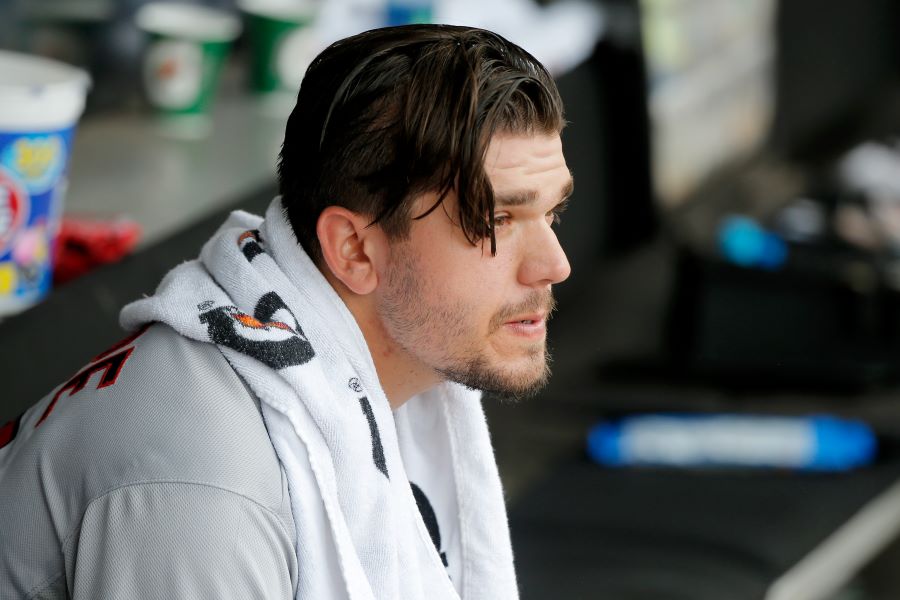 Three possibilities come to mind, with the first seeming the most likely, so we’ll start there. In this scenario, Thorpe begins the season starting in AAA Rochester where he provides rotational depth for the Twins. Although certainly disappointing for Thorpe, it’s not as if he has nothing left to prove in the minors. He showed flashes in his first stint with the Twins last season, with a 25% K-rate and 3.47 FIP, but he only got two starts in his 12 appearances and finished with just 27.2 IP and a 6.18 ERA (though to be fair, he was really hurt by a .438 BABIP). In AAA he got even more strikeouts (29.5%) and his walk rate was better (6.2% vs. 8.1% in MLB) but his ERA was 4.58 (3.72 FIP). There’s a lot to like in Thorpe, but he hasn’t exactly forced his way into the rotation. Some extra seasoning in AAA wouldn’t be the worst thing for Thorpe. It’s all to easy to forget that Thorpe is still just 24-years-old and missed two full years of development due to Tommy John and a bad case of mono. However, with an already-full MLB rotation that has yet to take on Rich Hill and Michael Pineda, Thorpe’s chances of cracking the rotation at any point in a shortened 2020 season looks a bit bleak. This brings us to our second option, which would be using Thorpe as a reliever. He undoubtably views himself as a starter and will likely begin the season in that role at AAA, but should a bullpen need arise at the MLB level (as it surely will), Thorpe makes a lot of sense. First off, he already served in that capacity for the MLB club in 2019, so it’s not exactly uncharted territory. Thorpe also throws left-handed, and Taylor Rogers is currently the only lefty likely to begin the season in the pen (though Tyler Clippard has reverse-splits). As a reliever, Thorpe could scrap his curve and changeup and rely on his fastball, which in shorter outings could see a bump in it’s 91.2 mph average velocity, and his best pitch, the slider (44.6% whiff rate in 2019). One doesn’t have to squint too hard to see a potential late-inning weapon in Lewis Thorpe. The final option is that the Twins could look to trade Thorpe. As counterintuitive as trading away young pitching depth seems for a team like the Twins, it could make sense in Thorpe’s case. The MLB rotation will likely already have more starting pitchers than they know what to do with once Hill and Pineda return, and there’s the possibility of Minnesota obtaining an ace around the trade deadline. Jhoan Duran and Jordan Balazovic will begin the season in AA and both rank ahead of Thorpe in prospect rankings. The farm system also includes an interesting quartet of college draft picks who could move quickly. I’m not on Twitter, but based on some of the remarks I’ve seen in the comments section, Thorpe wasn’t exactly thrilled with the demotion and may even welcome a trade (pure speculation on my part). The 2021 season is a long way off, but Minnesota will presumably still have Jose Berrios, Kenta Maeda, and Michael Pineda in the rotation. That doesn’t even account for the possibility of adding at least one starter in a trade (which Thorpe could well be a part of) or free agency (or Randy Dobnak) and with the quality and quantity of pitching prospects currently in the system, pitching for another organization may be in Thorpe’s best interest. And it’s not as if there aren’t teams out there starved for starting pitching. It’s just nice that it’s not us for a change. What are your thoughts on Thorpe? Do you see a way into Minnesota’s rotation or is the bullpen a better fit? Or would you be down with trading the man from ‘the land Down Under’? MORE FROM TWINS DAILY — Latest Twins coverage from our writers — Recent Twins discussion in our forums — Follow Twins Daily via Twitter, Facebook or email
 -
That's funny, I was feeling the same way when I saw Donaldson's line. I can vividly image the aging-curve pieces we'd be pumping out! Agree with your take on Smeltzer and Gearrin. I guess the computers weren't following spring training as closely as we were . The article was really fun but seeing the results and stats makes me yearn for baseball even more. The simulated Twins better bring us a World Series!


