



obtusebanter
-
Posts
157 -
Joined
-
Last visited
Content Type
Profiles
Minnesota Twins News, Rumors & Analysis
Minnesota Twins Videos
2026 Minnesota Twins Top Prospect Rankings
2022 Minnesota Twins Draft Picks & Signing Bonuses
Minnesota Twins Trade & Free Agent Rumors
Minnesota Twins Fan Guides & Resources
2023 Minnesota Twins Draft Picks & Signing Bonuses
The Minnesota Twins Players Project
2024 Minnesota Twins Draft Picks & Signing Bonuses
2025 Minnesota Twins Draft Picks & Signing Bonuses
2026 Minnesota Twins Draft Picks & Signing Bonuses
Forums
Blogs
Events
Store
Downloads
Gallery
Everything posted by obtusebanter
-
 Real curious to see how many innings Gibson eats.
-
That Jesse Jefferson shutout is a fun one too because Jesse Jefferson was garbage and matched up with Mike Norris in his only good, shoulda been Cy Young campaign. Those two dueled into the 11th tied 0-0 and both threw complete games.
-
I was gonna investigate the ages of the hurlers who spun 12+ inning shutouts and likely conclude that Satchel Paige was unparalleled (as if that was in question) but Mother Nature intervened.
-
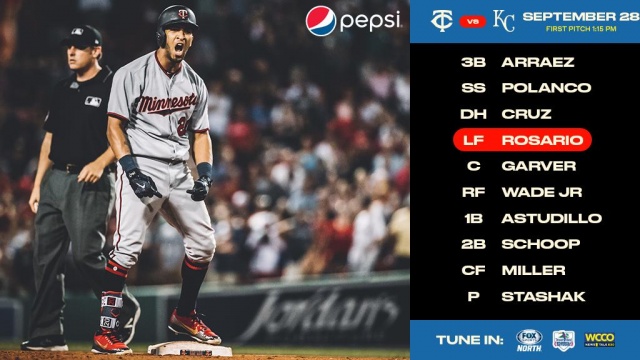
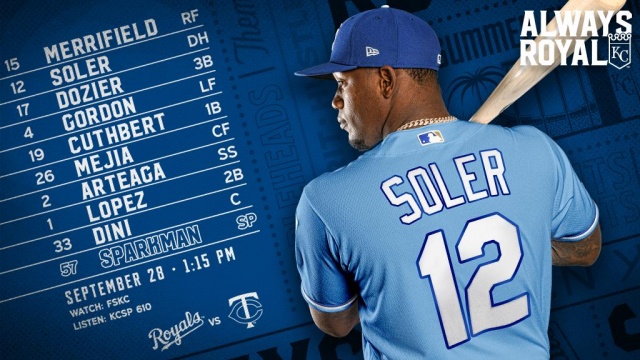
I go down a lot of rabbit holes when it comes to this game we all love. Inevitably, when I was researching those Chip Hale and Jeff Reboulet hit streaks, I came across the name Walt Dropo. Moose was the AL rookie of the year in 1950 for the BoSox and, although he never matched the promise he showed in that first campaign, went on to have a solid career. Alvin Davis, Eric Hosmer, and Sixto Lezcano are some of his comps. All that said, Walt Dropo is best known for getting twelve hits in a row, the major league record (Pinky Higgins also singled in twelve straight ABs but mixed in a pair of walks). But I’m not here to talk about all that. It’s just how I got started. Dropo, you see, had his streak in July of 1952. As one does, I was poking around in those game logs and came across a fun little boxscore. On August 6 of that year the Detroit Tigers lost to the St. Louis Browns 1-0 in twelve innings. What jumped out was that the victor was none other than a forty-six year old Satchel Paige and that victory resulted from a twelve inning shutout. https://www.youtube.com/watch?v=MHxSLwswKuY Leroy Robert Paige arguably had his best year in the bigs in 1952 compiling a record of 12-10 with a 3.07 ERA across 138 innings while tossing two shutouts and “saving” ten games. In other words, Satch was a jack of all trades who had one last magical night. Those twelve shutout innings piqued my curiosity. How often do that happen? Long shutouts were surely more common way back when but this had to be rare. So I checked it out. Starting with the 1950s I found that fourteen hurlers had pitched 12+ inning shutouts across the decade (highlighted by such legends as Jack Harshman and Jerry Walker who both twirled 16 inning masterpieces). The number would have been fifteen if the Buccos could have scored a d*mn run before they made 39 outs when Harvey Haddix pitched the ultimate heartbreaker. Anyway, such feats were rare but not unheard of. But how had they ebbed and waned over time? The 1960s saw six such gems with Juan Marichal spinning 16 and 14 inning shutouts. The 1970s saw five with Ross Grimsley’s twelve innings of dominance on May 22nd 1974 being the last time it happened. And on it went. Jesse Jefferson hurled the lone eleven inning shutout of the ‘80s on May 16th, 1980 and was matched one last time by Dave Stewert on August 1st, 1990. The aughts saw two final 10 inning shutouts. Roy Halladay accomplished the feat on September 6th, 2003 and Mark Mulder tossed the last extra inning shutout on April 23rd, 2005. This past decade hasn’t seen an extra inning complete game so I’d imagine Mulder’s heroics were the coda. Going the other direction, the 1940s saw eighteen 12+ inning shutouts, the 1930s saw fourteen, and the 1920s saw nine. I will note that the truly legendary Carl Hubbell threw an eighteen inning shutout in 1933 against the frickin’ Gashouse Gang. As one would imagine, the numbers pick up in the deadball era so I’ll leave it here. Plus, I gotta get this thing posted. Twins: Royals:
-
Is the plan to piggyback Perez and Gibson for that 3rd playoff game? Trying to test-drive that proposition?Now is the time to try but I feel like I'm fishing.
- 406 replies
-
- 1
-

-
- game thread
- twins
- (and 2 more)
-
https://www.youtube.com/watch?v=7y0ChoYgSek
-
Game Thread: Twins vs. White Sox 4:40 PM PST (6:40PM CST)
obtusebanter replied to Blake's topic in Archived Game Threads
The ol' pick 'em off punch 'em out inning ender.- 272 replies
-
- 4
-
-
- game thread
- twins
- (and 2 more)
-
Game Thread - Twins v Nationals, 9/12 @ 6:40pm
obtusebanter replied to obtusebanter's topic in Archived Game Threads
*sprinkle, sprinkle, sprinkle* -
Game Thread - Twins v Nationals, 9/12 @ 6:40pm
obtusebanter replied to obtusebanter's topic in Archived Game Threads
Researching this was a blast. SABR's Baseball Biography Project is pretty awesome. -
Game Thread - Twins v Nationals, 9/12 @ 6:40pm
obtusebanter replied to obtusebanter's topic in Archived Game Threads
Some first responders found out about his story and got him a headstone in 2009. So there's that at least. https://www.nj.com/news/local/2009/09/cops_raise_money_to_mark_grave.html -
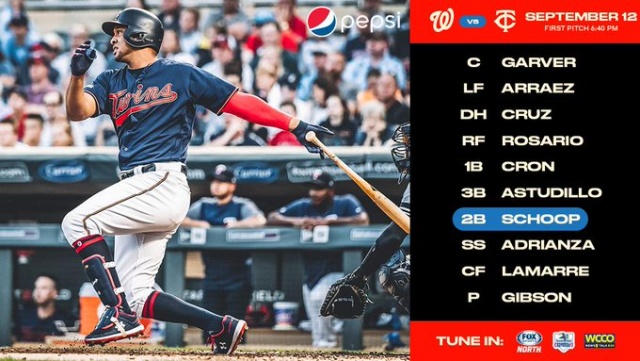
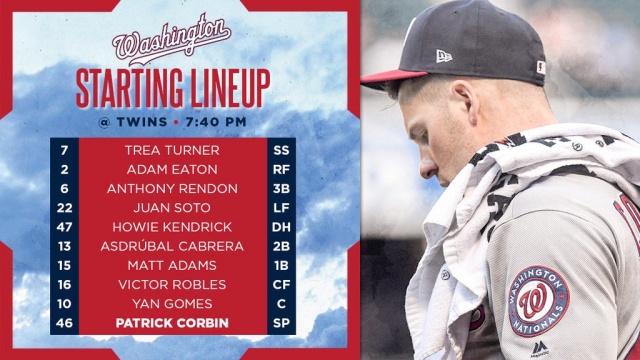
As all on these boards are aware, Justin Verlander’s third no-hitter was a pretty big deal. He joined a short list of all-timers. Nolan Ryan’s seven remain the benchmark. Sandy Koufax’s four had sat in the pole position for ten years before the Ryan Express tied that record when he blitzed the Royals, Tigers, Twins, and Orioles across a two year period in the mid-70s. With three no-hitters, Verlander joined Larry Corcoran, Cy Young, and Bob Feller on a short-list of six: four hall-of-famers, another hurler who is sure to join them, and Larry Corcoran. That last fella’s story is to follow. All of this came to my attention when Dick and [ex-ballplayer] were bantering back and forth shortly after Verlander struck out 14 Blue Jays while twirling his no-no. One of the two remarked that one of those six guys was not like the others. Jokes were cracked. It was fun. Y’all’s guy banter was intrigued. Larry Corcoran burst on to the NL scene in 1880 at the age of twenty with the Chicago White Stockings (they weren’t to be the Cubs until 1903 following flings with the names Colts and Orphans). Little Corcoran stood 5’3”, had a pair of curveballs (one fast, one slow), and threw from both sides of the stripe (though I gather that he preferred to pitch as a righty). Along with Fred Goldsmith, Corcoran was a member of the very first pitching rotation. Skipper Cap Anson had Larry start the first five games of the season before turning to Goldsmith for the next four. Anson then began alternating the two every other game through the rest of the season. The season was highlighted by Corcoran first no-hitter (though I will note that the Chicago Tribune reported that a rain delay in the third inning resulted in a ball that was “mushy and shapeless for the greater part of the play”). Surely such a ball aided in stymieing the hapless Red Stockings of Boston (they weren’t to be the Beaneaters until ’83 and, finally, the Braves until 1912). Corcoran ultimately tossed 5361/3 innings going 43-14 with a 1.95 ERA and 268 strikeouts in his rookie season as the White Stockings won their first of three straight pennants. Beginning in 1881 (due to league-wide pitching dominance and too many underhanded hurlers) the front of the pitcher’s box was moved back from forty-five to fifty feet. Nonetheless, Corcoran continued to dominate the league posting a 31-14 record with a 2.31 ERA across 3962/3 innings. 1882 brought much of the same including no-hitter #2 against a wretched Worcester Ruby Legs squad playing out their string of existence. Little Larry finished his third season with twenty-seven wins against twelve losses matched with a league-leading 1.95 ERA across 3552/3 innings. 1883 brought a change of fortune to Mud City. The White Stockings and Beaneaters engaged in a back and forth pennant race with both squads leading the pack through the spring and summer. It all came to a hilt on the 10th of September. With Chicago atop the league by a game and half they squared off with Boston for a four game series and were promptly swept. Chicago closed the season with a 7-2 mark but Boston was not to be caught as they ran away with the pennant trouncing three squads lost to history (Detroit Wolverines, Buffalo Bisons, and Cleveland Blues) by a combined margin of nine games to one. Our protagonist thrived once again going 34-20 with a 2.49 ERA across 4732/3 innings. Prior to the 1884 campaign, Larry Corcoran held out for a higher salary. Chicago offered $2,100; Corcoran countered with $4,000. Such a sum was deemed outrageous and, thanks to a National Agreement (established in 1883) between the National League, American Association, and Northwestern League, a reserve rule left Corcoran with little recourse. Larry flirted with the upstart Union Association but, in the end, signed for what was offered and got back to work. Unfortunately, the season was quickly lost. A dreadful May put the Pale Hose of yore in a hole from which they would never recover. There was to be one more highlight, however, when Little Corcoran dueled with the Old Hoss himself when the White Stockings faced the Providence Grays in late June. These Grays were fearsome. They took the pennant with an 84-28 record and won the inaugural World Series in a three game sweep of the New York Mets. Their lineup was anchored by the should-be-HOFer Paul Hines (he earned the first Triple Crown in 1878 for starters) while Charles Radbourn manned the box. This was peak Radbourn as he sported a record of 59-12 and an ERA of 1.38 across 6782/3 innings with 441 strikeouts. None of this mattered on June 27th. Corcoran pitched no hitter #3 and finished off his fifth season with a record of 35-23 and an ERA of 2.40 across 5162/3 innings. And that was basically it. Little Larry had pitched 2,279 innings across five years and his arm was dead. John Clarkson had come on for a similarly spent Fred Goldsmith in 1884 and shown great promise with his newfangled, just-legalized overhand method of delivery (though he often alternated his arm slot). He was the new White Stockings ace going forward in 1885 and went on to have a hall of fame career. Corcoran bounced around the NL for a couple more seasons with his last chance coming in the May of 1887 with a 2-9 Indianapolis Hoosiers ballclub looking for a spark. As fate would have it, Larry faced off with the same Chicago club with whom he made his name. He surrendered 11 runs on 12 hits and 10 walks while taking the L. His final start came against the Giants of New York one week later. The Indianapolis News had a write-up declaring “A study of the score is suggestive of profanity.” Four years later, at the age of 32, a penniless Larry Corcoran was dead and buried in an unmarked grave. He deserved better. That's my tribute. Here go some lineups. Let's hope the Twins fare better against the Tribe this weekend than those old socks did against them legume munchers in the September of '83. Twins: Nationals:
- 478 replies
-
- 10
-
-
Game Thread: Twins vs. Nationals 3:40 PM PST (5:40 PM CDT)
obtusebanter replied to Blake's topic in Archived Game Threads
About D*mn Time!- 265 replies
-
- 2
-
-
- game thread
- twins
- (and 2 more)
-
Game Thread: Twins vs. Nationals 3:40 PM PST (5:40 PM CDT)
obtusebanter replied to Blake's topic in Archived Game Threads
Me and you both ... and I think I cracked the case. Pretty sure that critter was an oola****a.- 265 replies
-
- 1
-
-
- game thread
- twins
- (and 2 more)
-
Win. Probability. Added!
-
Au contraire!
-
I just seen Castro do that a couple games back too. Not every pitch need to get framed!
- 330 replies
-
- 1
-
-
- game thread
- hawt taeks
- (and 2 more)
-
Game Thread: Twins @ Red Sox, 9/5/19 @ 6:10 CT
obtusebanter replied to Mill1634's topic in Archived Game Threads
If Jake Cave could handle balls off the ground like he handles them in the air no one would have cause for complaint. -
When May works that FB up in the zone he is lights out.
- 316 replies
-
- 2
-
-
- game thread
- twins
- (and 1 more)
-
Sure hope they don't get too invested. That path was pioneered by eugenicists. https://www.npr.org/sections/codeswitch/2014/02/10/267561895/it-took-a-eugenicist-to-come-up-with-moron
- 316 replies
-
- 1
-
-
- game thread
- twins
- (and 1 more)
-
It helps when them Sox only get one look at their pitches.
- 316 replies
-
- 3
-
-
- game thread
- twins
- (and 1 more)
-
The date was April 3rd, 2013, the 2nd ballgame of the year. An unknown picked up for the seeming ashes of Francisco Liriano's career replaced the sure-handed Pedro Florimon at SS in the top of the 8th following a successful pinch hit appearance by the timeless Wilkin Ramirez. The Twins find themselves trailing the fearsome Tigers 2-1 in the bottom of the 9th. Trevor Plouffe draws a leadoff walk and Jamey Carroll comes on to pinch run. Brian Dozier smacks a one-out single to put runners on the corners. Our hero steps to the plate: fly ball to deep left-center that drives in two runs for a walkoff double. A younger banter scratches his chin and goes hmmm.
-
That was Big Boy HR alright. Deep to right-center.
-
'The Sprinkler' right on cue.
-
5: May 4: Dyson 3: Duffey 2: Romo 1: Rogers. In my *all important* estimation.


